
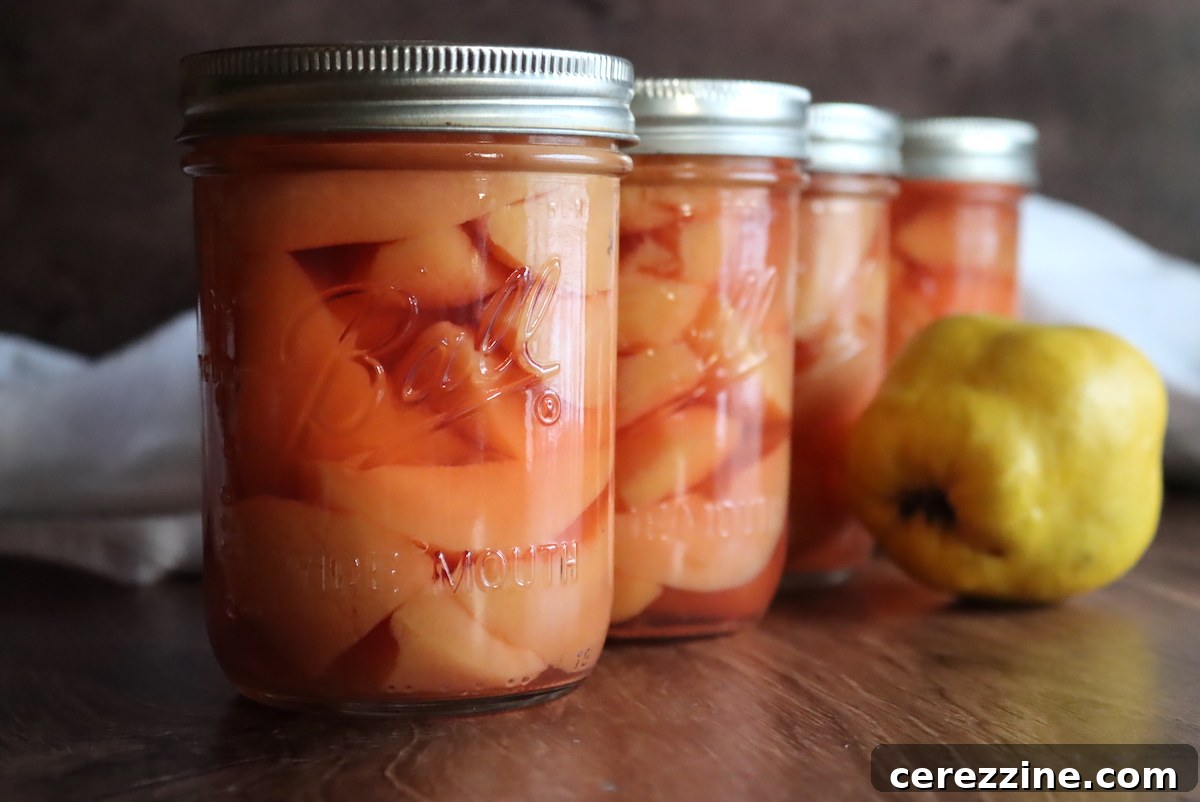
Quince, often overlooked yet brimming with aromatic charm, offers a unique culinary experience unlike any other fruit. While its raw form is famously tart and astringent, proper cooking transforms it into a luscious, fragrant delight. Canning quince is the ultimate method to capture this seasonal bounty, ensuring you have access to its exquisite flavor year-round. Imagine having perfectly tender, rosy-hued quince slices ready at a moment’s notice for pies, tarts, or even a simple, elegant snack straight from the jar.
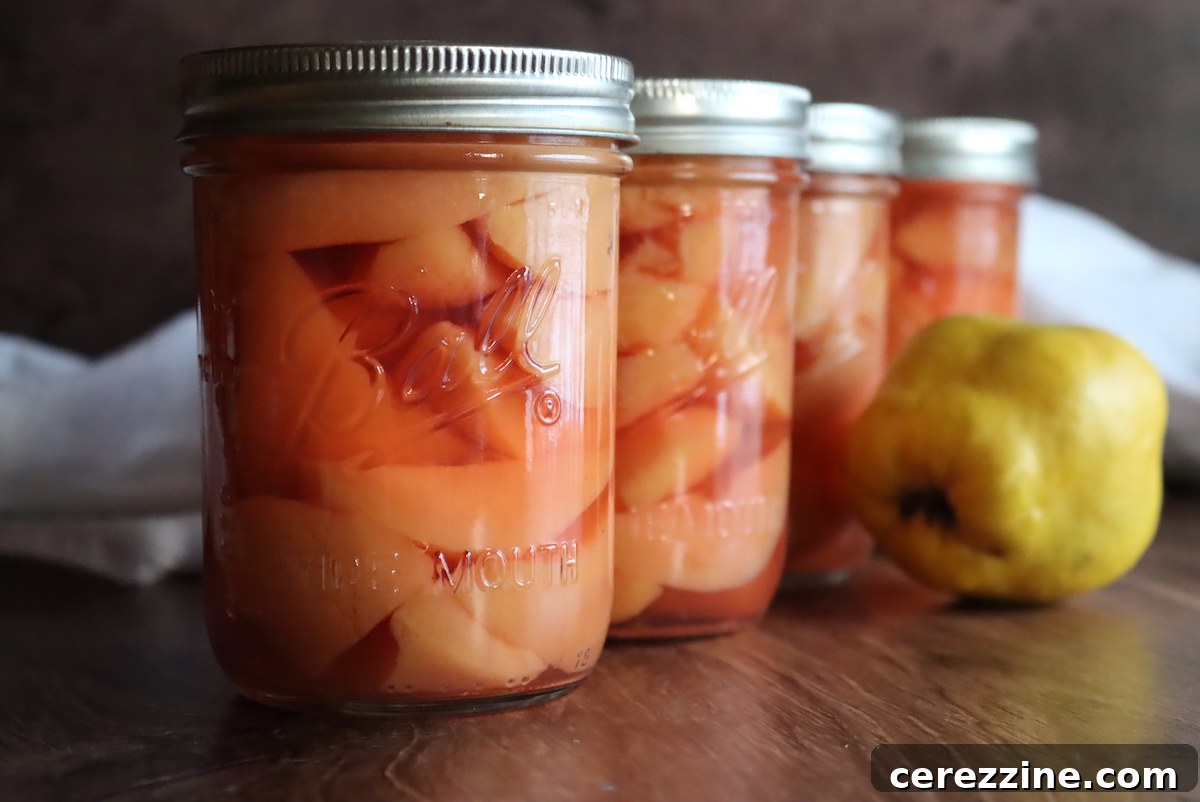
Unveiling the Magic of Quince: A Fragrant Fruit
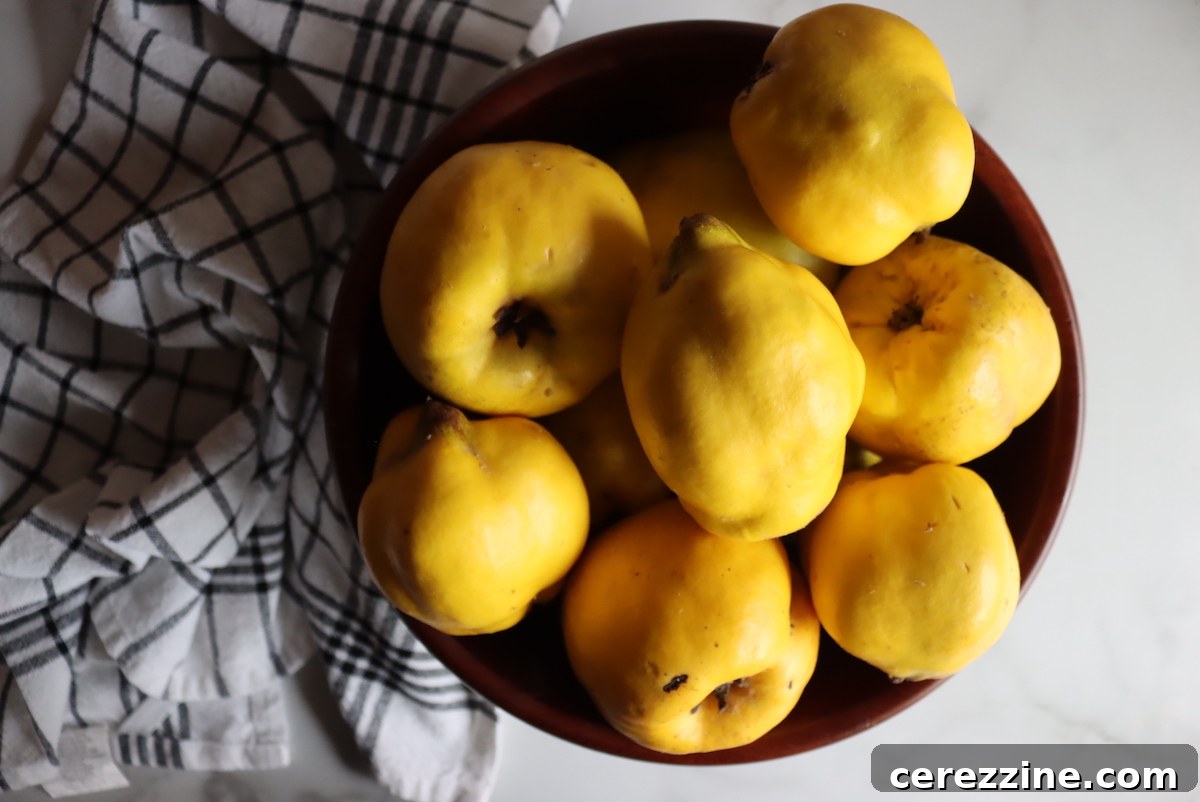
Quince (Cydonia oblonga) is a fascinating fruit, a relative of apples and pears within the rose family, yet distinctly its own. Its appearance can be deceiving, often resembling a gnarled, misshapen pear with a fuzzy skin when unripe. However, beneath its modest exterior lies a treasure trove of aroma and flavor that awakens once cooked.
For many, quince evokes nostalgic memories of homemade jellies and jams, a staple in many households, including my husband’s, who grew up savoring these treats from a backyard quince tree. When we established our Vermont homestead years ago, planting a quince tree was a priority, eager to continue this cherished tradition and explore its culinary potential.
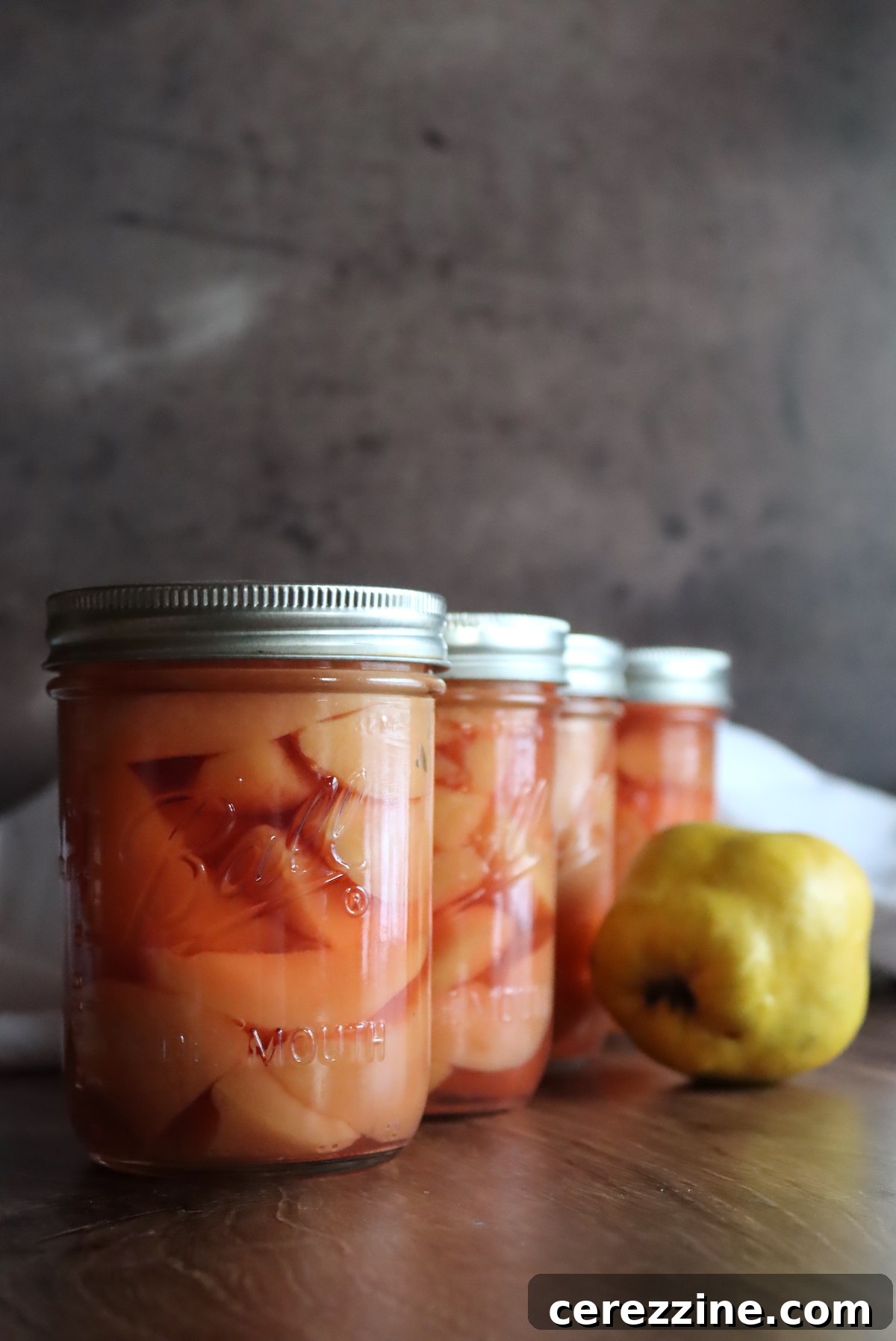
Raw quince is notoriously hard and unpalatable, but through slow cooking, it undergoes a magical transformation. Its flesh softens, its color deepens to a beautiful rosy pink, and it releases an intoxicating perfume, a delicate fusion of sweet pear, subtle rosewater, and a whisper of cardamom. This unique flavor profile makes it a highly prized ingredient for discerning palates.
Why Canning Quince is Essential for Your Pantry
As the harvest season yields an abundance of quince, the question of preservation naturally arises. While I’ve explored various quince recipes – from classic quince paste and rich quince jam to exceptional batches of quince wine – canning offers unparalleled convenience and versatility.
Canning quince slices is a particularly advantageous method because the fruit requires poaching before most culinary applications anyway, even when destined for a warm winter pie. By canning, you pre-cook the quince, locking in its unique flavor and tender texture, making it “pie-ready” or “dessert-ready” at a moment’s notice. This transforms a seasonal delicacy into a year-round pantry staple, perfect for those dark, cold months when fresh produce is scarce.
Is Quince Safe for Home Canning? Understanding the pH
A fundamental question for any home canner is whether a specific fruit is safe for water bath canning. The good news is, quince is an excellent candidate!
Quince possesses a naturally high acidity, with a pH typically ranging from 3.3 to 3.6 (source). This falls well below the critical pH threshold of 4.6 required for safe water bath canning, making it as acidic as or even more acidic than common canning fruits like apples (pH 3.3 to 3.9) and pears (pH 3.5 to 4.6).
While raw quince is considerably harder than apples or pears, the cooking process renders it tender, achieving a texture similar to that of canned pears. It holds its shape remarkably well during canning, resulting in beautifully intact slices. Therefore, provided you poach them thoroughly first, quince are perfectly suitable for home canning, yielding a safe and delicious product.
This reliable canning recipe for quince is a trusted method, featured in reputable canning resources such as:
- Canning for a New Generation
- Saving the Season
- Preserve It!
These books are invaluable resources, offering safe and thoroughly tested canning recipes that ensure both quality and food safety.
Selecting the Perfect Quince for Canning
To ensure the best results, choose ripe, firm quinces that are free from blemishes or soft spots. A ripe quince will typically have a vibrant yellow color and a strong, sweet aroma. Avoid green or overly hard fruits, as they may not soften as well during poaching and might lack the full flavor development. Handle them gently, as even ripe quinces can bruise.
Preparing Quince for Canning: Peeling, Coring, and Slicing
Proper preparation is key to successful quince canning. This involves careful peeling, coring, and slicing, tasks that require a bit of patience due to the fruit’s firm nature.
1. Slicing: Quince must be sliced to fit properly into canning jars. Even if they could fit whole, larger pieces would not process correctly, leading to potential safety issues and uneven cooking. Aim for uniform slices, roughly 1/2 to 3/4 inch thick, for consistent results.
2. Coring: Removing the core is essential. Quince seeds are not desirable, and more importantly, the core itself is incredibly hard, fibrous, and gritty – much more so than an apple or pear core. Even a small sliver of core left behind can introduce an unpleasant texture, like coarse sand, into your beautifully canned fruit. Be thorough in removing all traces of the core.
3. Peeling (Optional but Recommended): While some individuals prefer to leave the peels on for their intense fragrance and flavor, I generally opt to peel fruit for canning. Quince peels do soften significantly during cooking and won’t be stringy, unlike some other fruits. However, peeling ensures a silky-smooth texture in the finished product. Be warned: peeling quince can be challenging due to its hardness. A super sharp peeler, such as a Victorinox peeler, can make this task considerably easier.
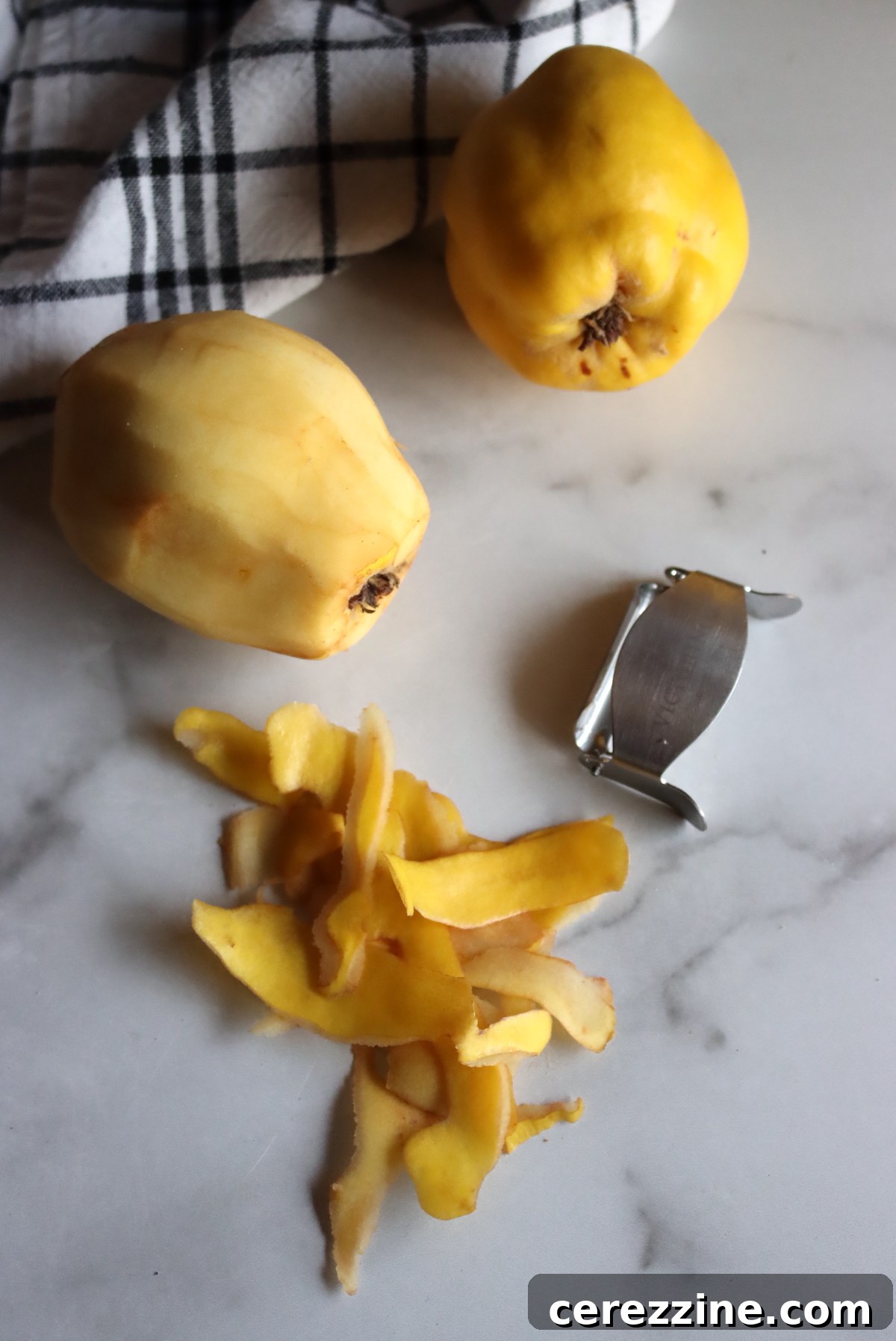
Safety First: Exercise extreme caution when cutting and peeling quince. Its dense flesh makes it harder to chop than apples or pears, even when fully ripe. Always use a sharp knife and a stable cutting surface, keeping your fingers well away from the blade. Riper quinces are slightly easier to manage, but still demand attention.
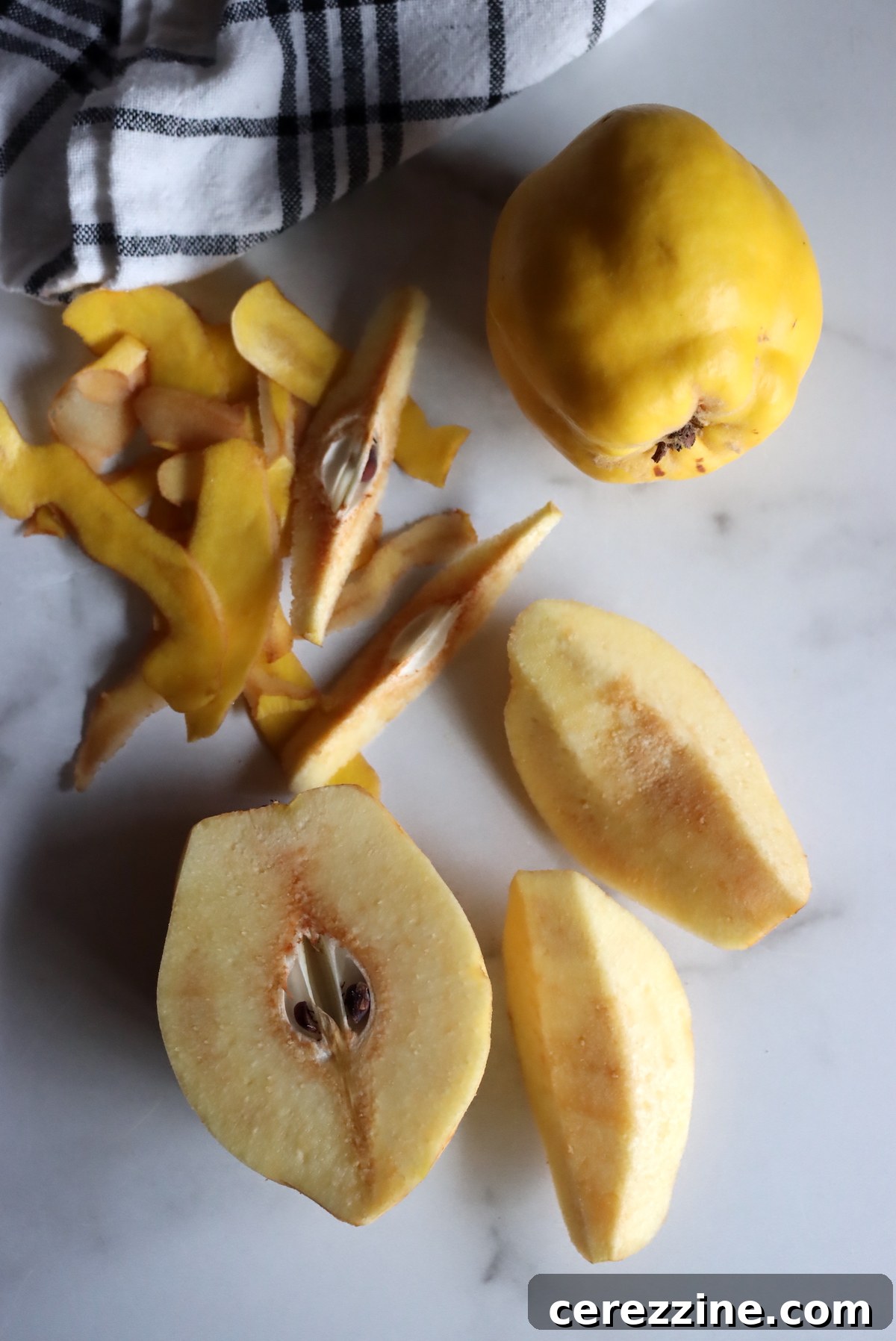
Browning and Color Change: Like apples and pears, cut quince will oxidize and brown when exposed to air. However, this browning is purely cosmetic and will magically disappear during the cooking process. You don’t need to treat them with lemon juice to prevent discoloration. In fact, one of the most charming aspects of quince is its transformation into a beautiful rosy pink hue as it cooks, regardless of initial browning.
Crafting Your Canning Syrup for Quince
Canning syrup plays a crucial role in preserving the flavor and texture of quince. While it might seem counterintuitive to add sugar to fruit, syrup prevents the natural sweetness and delicate flavors from leaching out into plain water during the canning process, which would leave the fruit tasting “washed out.”
For quince, I generally prefer an **extra light syrup**. This concentration of sugar is approximately the same sweetness level as the poached quince itself, meaning it doesn’t *add* sweetness but rather *maintains* the fruit’s natural, delicate flavor and texture. It’s about balance and preservation, not over-sweetening.
Extra Light Syrup Recipe:
- For a 7-quart canner batch: approximately 10 1/2 cups water and 1 1/4 cups sugar.
- For a 9-pint canner batch: approximately 6 1/2 cups water and 3/4 cups sugar.
You can adjust the syrup concentration based on your preference. If you enjoy a sweeter canned quince, you can use light, medium, or even heavy syrup for water bath canning. For detailed measurements for various syrup concentrations, refer to a comprehensive canning syrup table from a trusted source like the NCHFP. Alternatively, honey or maple syrup can be used as alternatives to refined sugar, with honey being a particularly popular choice for antique fruits like quince, complementing its complex flavors.
Canning Quince: The Step-by-Step Process
Unlike canning pears or apples, which only require a brief 5-minute pre-cooking to warm them before jarring, quince demands more extensive poaching. This prolonged cooking is essential to tenderize the fruit and develop its characteristic pink color and aromatic flavor before it enters the canning jars.
1. Prepare Your Canning Setup: Before you begin, set up your water bath canner, ensuring the water is simmering at about 180°F (82°C). Also, prepare your canning jars, lids, and rings by washing and sterilizing them according to standard canning practices.
2. Make the Syrup and Poach the Quince: In a large, non-reactive pot, combine your chosen canning syrup ingredients (water and sugar) and bring to a boil, stirring until the sugar dissolves. Add the prepared quince slices to the simmering syrup. Return the mixture to a boil, then reduce the heat to a gentle simmer. Poach the quince slices, covered, for 30 to 40 minutes, or longer, until they are fork-tender and have developed their beautiful rosy pink color and fragrant aroma. The exact cooking time may vary depending on the quince variety. Throughout the poaching process, ensure the quince remains submerged in liquid by adding more water if necessary; you’ll need this flavorful liquid for canning.
3. Pack the Jars: Once the quince is fully cooked, tender, and rosy pink, remove the pot from the heat. Using a slotted spoon, carefully pack the hot quince slices into your prepared canning jars, leaving 1/2 inch of headspace at the top of each jar.
4. Fill with Hot Syrup: Ladle the hot cooking syrup over the fruit in the jars, maintaining the 1/2 inch headspace. Ensure the fruit is fully covered by the syrup.
5. Debubble and Seal: Use a non-metallic utensil (like a plastic spatula) to gently remove any air bubbles trapped within the jar. Adjust the headspace again if needed by adding more syrup. Wipe the jar rims clean with a damp cloth to ensure a proper seal. Apply the two-part canning lids and rings, tightening them to “finger-tight” – just enough to feel resistance, without overtightening.
6. Process in Water Bath Canner: Carefully place the filled and sealed jars into the pre-heated water bath canner, ensuring they are fully submerged by at least 1 inch of water. Bring the water to a rolling boil and begin your processing time according to the guidelines below, adjusting for altitude.
7. Cool and Check Seals: Once the processing time is complete, turn off the heat and let the jars sit in the canner for 5 minutes before carefully removing them. Place the hot jars on a clean towel on your counter, allowing them to cool undisturbed for 12-24 hours. After cooling, check the seals. A properly sealed lid will be concave and will not flex when pressed. Any unsealed jars should be refrigerated immediately and consumed within a few days.
(Optional Tip: If you have extra cooking liquid leftover from poaching the quince, you can continue to cook it down until it thickens, creating a delicious quince jelly or syrup.)
Altitude Adjustments for Canning Quince
Altitude significantly affects canning processing times. Water boils at lower temperatures at higher elevations, meaning food needs longer processing to achieve safe sterilization. Always adjust your canning times based on your elevation:
- For 0 to 1,000 Feet in Elevation: Process pints for 20 minutes and quarts for 25 minutes.
- For 1,001 to 3,000 Feet in Elevation: Process pints for 25 minutes and quarts for 30 minutes.
- For 3,001 to 6,000 Feet in Elevation: Process pints for 30 minutes and quarts for 35 minutes.
- Above 6,000 Feet in Elevation: Process pints for 35 minutes and quarts for 40 minutes.
Storing and Enjoying Your Canned Quince
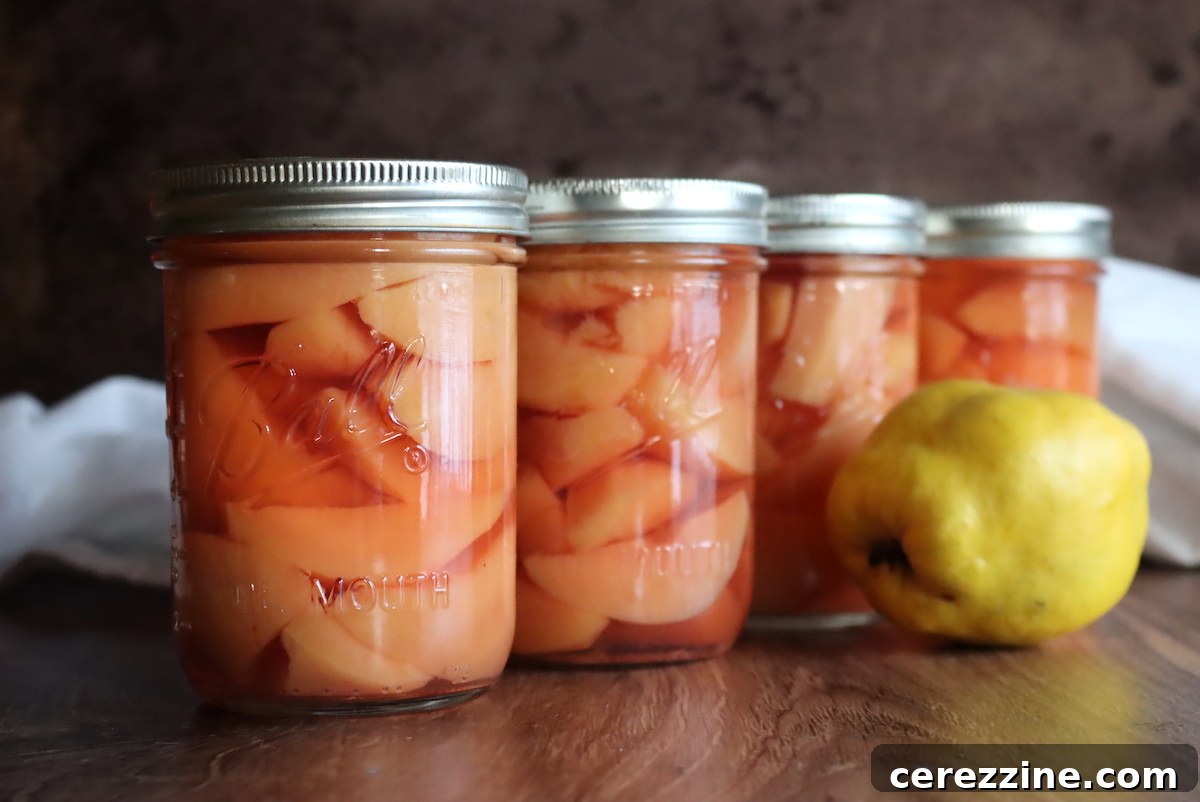
Properly canned and sealed jars of quince will maintain their peak quality on the pantry shelf for 12 to 18 months. Store them in a cool, dark, and dry place. They remain safe to eat for much longer, though their quality may slowly diminish over time. Once a jar is opened, refrigerate any unused portion and consume it within a week.
Delicious Ways to Use Canned Quince
Having a stash of canned quince opens up a world of culinary possibilities. Their unique flavor and tender texture make them versatile for both sweet and savory applications:
- Pies and Tarts: The classic choice! Canned quince is pre-cooked, making it a quick and easy filling for rustic pies, elegant tarts, or crumbles.
- Dessert Topping: Serve warm over vanilla ice cream, yogurt, or oatmeal for a simple yet sophisticated treat.
- Cheese Boards: Pair cold quince slices with sharp cheeses, crusty bread, and nuts for an impressive appetizer.
- Savory Dishes: The subtle sweetness and acidity of quince can complement roasted meats like pork or duck. Use them to make a glaze or a flavorful accompaniment.
- Breakfast Boost: Stir into hot cereal, or blend into smoothies for an aromatic twist.
- Cake and Muffin Add-in: Chop and fold into cake or muffin batter for added moisture and flavor.
Canning Quince Recipe
Canning Quince
By Ashley Adamant
Canning quince at home allows you to preserve these fragrant fruits right on your pantry shelf for year-round enjoyment.
Servings: 32 servings (Makes about 9 Pints)
Prep Time: 10 mins
Cook Time: 40 mins
Canning Time: 20 mins
Total Time: 1 hr 10 mins
Equipment
- Water Bath Canner
- Canning jars (pints or quarts), lids, and rings
- Large pot
- Slotted spoon
- Jar lifter
- Canning funnel (optional)
- Non-metallic spatula or debubbler
Ingredients
- 9 to 10 lbs quince (yields approximately 9 pints)
- 6 1/2 cups water (for syrup)
- 3/4 cups sugar (for extra light syrup)
Instructions
- Prepare your water bath canner by filling it with water and bringing it to a simmer (around 180°F / 82°C). Wash and sterilize your canning jars, lids, and rings according to standard canning procedures.
- Prepare the quince: Peel, core, and slice the quince. Be very careful during this step, as quince can be hard to cut.
- Prepare the syrup: In a large pot, combine the water and sugar. Bring the mixture to a boil, stirring constantly until the sugar is fully dissolved.
- Add the sliced quince to the hot syrup. Return the mixture to a boil, then reduce the heat to low and simmer.
- Poach the quince: Continue to simmer the quince, covered, until the slices are fork-tender, have turned a beautiful pink color, and are very fragrant (this typically takes 30 to 40 minutes, but can be longer depending on the variety). Add additional water if necessary to maintain the liquid level and keep the quince submerged.
- Pack the jars: Remove the pot from the heat. Using a slotted spoon, carefully pack the hot quince slices into your prepared canning jars, leaving 1/2 inch of headspace.
- Fill with syrup: Ladle the hot cooking liquid (syrup) over the quince in the jars, ensuring all fruit is covered and maintaining the 1/2 inch headspace.
- Debubble and seal: Use a non-metallic utensil to remove any air bubbles from the jars. Recheck and adjust headspace if needed. Wipe the jar rims clean. Place the lids and screw on the rings to finger-tight.
- Process the jars: Carefully place the jars into the water bath canner. Process pints for 20 minutes and quarts for 25 minutes, making sure to adjust for your altitude (refer to the altitude adjustment table above).
- Cool and check seals: Once the processing time is complete, turn off the heat and let the jars sit in the canner for 5 minutes. Carefully remove the jars and place them on a towel on your counter to cool completely for 12-24 hours. After cooling, check all seals. Store properly sealed jars in a cool, dark place. Refrigerate any unsealed jars for immediate use.
- Properly canned and sealed quince will maintain peak quality on your pantry shelf for 12 to 18 months and will be safe to eat for much longer. Refrigerate after opening.
Notes
Yield
Approximately 1 pound of fresh, unpeeled, and uncored quince yields about 1 pint of canned quince slices. You can use other jar sizes (half-pint or quart); plan for about 1/2 pound per cup (8 oz), 1 pound per pint (16 oz), or 2 lbs per quart (32 oz). These measurements are approximate. This recipe is scaled for a standard 9-pint canner batch, but you can easily adjust the total quantity to suit your needs.
Canning Syrup
This recipe specifies an extra light syrup to maintain the quince’s natural sweetness without making it overly sweet. You have the flexibility to use more or less sugar based on your personal preference. For reference, here are the extra light syrup measurements:
- For a 7-quart canner batch: approximately 10 1/2 cups water and 1 1/4 cups sugar.
- For a 9-pint canner batch: approximately 6 1/2 cups water and 3/4 cups sugar.
If you prefer sweeter canned quince, you can use light, medium, or heavy syrup. A comprehensive canning syrup table can provide the precise measurements for different concentrations.
Altitude Adjustments for Canning Quince
Always adjust your processing time according to your elevation to ensure food safety:
- For 0 to 1,000 Feet in Elevation: Process pints for 20 minutes and quarts for 25 minutes.
- For 1,001 to 3,000 Feet in Elevation: Process pints for 25 minutes and quarts for 30 minutes.
- For 3,001 to 6,000 Feet in Elevation: Process pints for 30 minutes and quarts for 35 minutes.
- Above 6,000 Feet in Elevation: Process pints for 35 minutes and quarts for 40 minutes.
Nutrition (Approximate per serving)
Calories: 91 kcal, Carbohydrates: 24g, Protein: 1g, Fat: 0.1g, Saturated Fat: 0.01g, Polyunsaturated Fat: 0.1g, Monounsaturated Fat: 0.05g, Sodium: 8mg, Potassium: 251mg, Fiber: 2g, Sugar: 5g, Vitamin A: 51IU, Vitamin C: 19mg, Calcium: 16mg, Iron: 1mg
Nutrition information is automatically calculated and should only be used as an approximation.
More Quince Recipes to Explore
If you find yourself with an abundance of fresh quince or simply wish to explore more ways to enjoy this unique fruit, here are some delightful recipes:
- Quince Jam
- Quince Jelly
- Quince Wine
- Quince Paste
Autumn Canning Recipes: Extend Your Harvest
The autumn season is a prime time for preserving a variety of fruits and vegetables. If you’re busy putting up more than just quince, consider these other fantastic canning recipes:
- Canning Apple Slices
- Canning Apple Pie Filling
- Apple Jam
- Apple Butter
- Pear Jam
- Pear Jelly
- Canning Pumpkin (Note: This requires pressure canning.)
- Canning Sweet Potatoes (Again, these must be pressure canned.)
Expand Your Food Preservation Horizons
While home canning is a rewarding way to preserve the harvest, it’s just one of many traditional food preservation techniques. Diversify your skills with these helpful guides:
- Beginners Guide to Root Cellaring (even without a dedicated root cellar)
- Beginners Guide to Lacto-Fermentation
- 100+ Dehydrator Recipes
- How to Make Apple Cider Vinegar
- Homemade Hard Cider
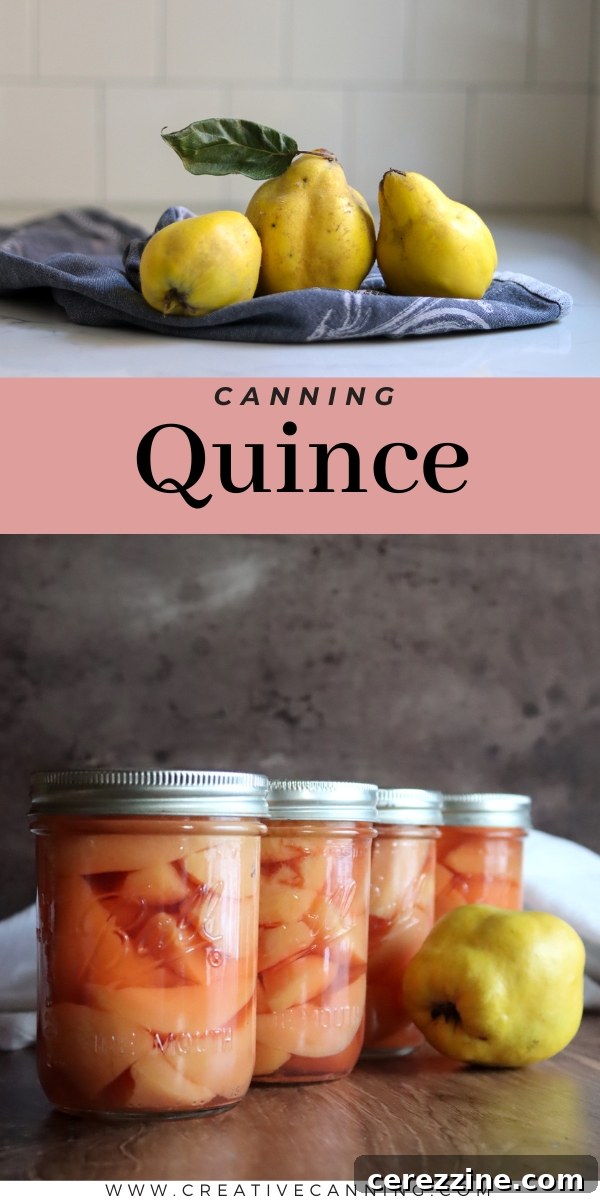
Canning quince is more than just a method of preservation; it’s a way to connect with ancient culinary traditions and ensure that the unique, fragrant essence of this remarkable fruit is available to brighten your meals throughout the year. With a little effort, you can enjoy the exquisite taste of homemade canned quince, a true pantry gem.