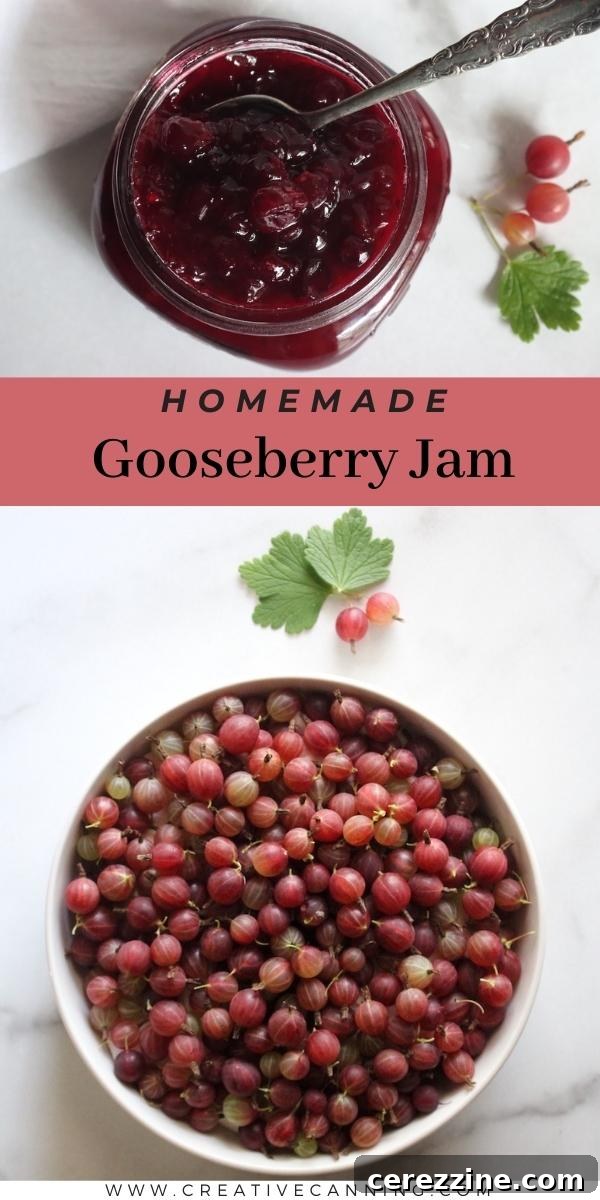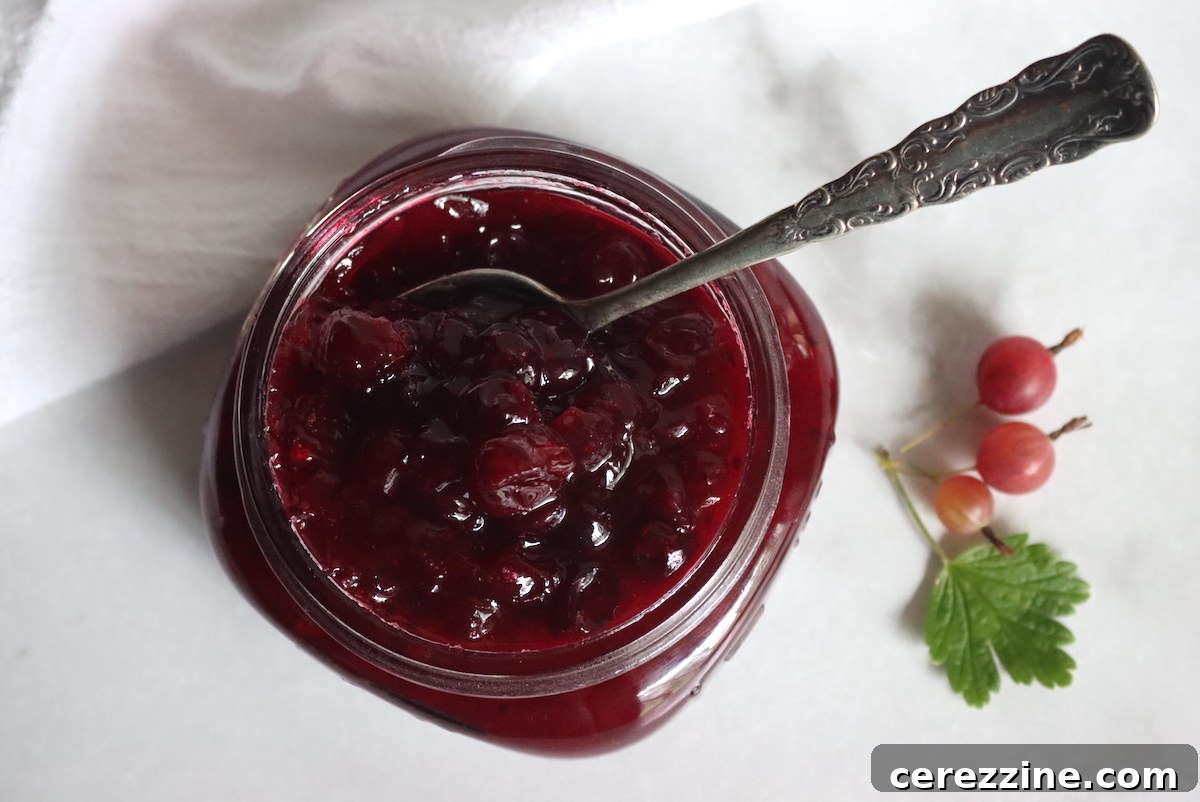
Homemade Gooseberry Jam: A Tangy Old-Fashioned Preserve Recipe
Step into a world of timeless flavor with homemade gooseberry jam, a delightful preserve that truly deserves a grand comeback. Its signature bright, tart flavor, combined with the fruit’s abundant natural pectin, makes it an exceptionally rewarding and surprisingly simple project for any home preserver. The result is a beautifully firm-set jam, bursting with a bold, refreshing taste that captures the unique essence of gooseberries in every spoonful. Whether you’re working with the vibrant green, deep red, or subtly blush-colored varieties, this recipe celebrates the distinctive character of this often-overlooked fruit, turning it into a truly unforgettable spread that will brighten any meal.
Why Gooseberry Jam Deserves a Spot in Your Pantry
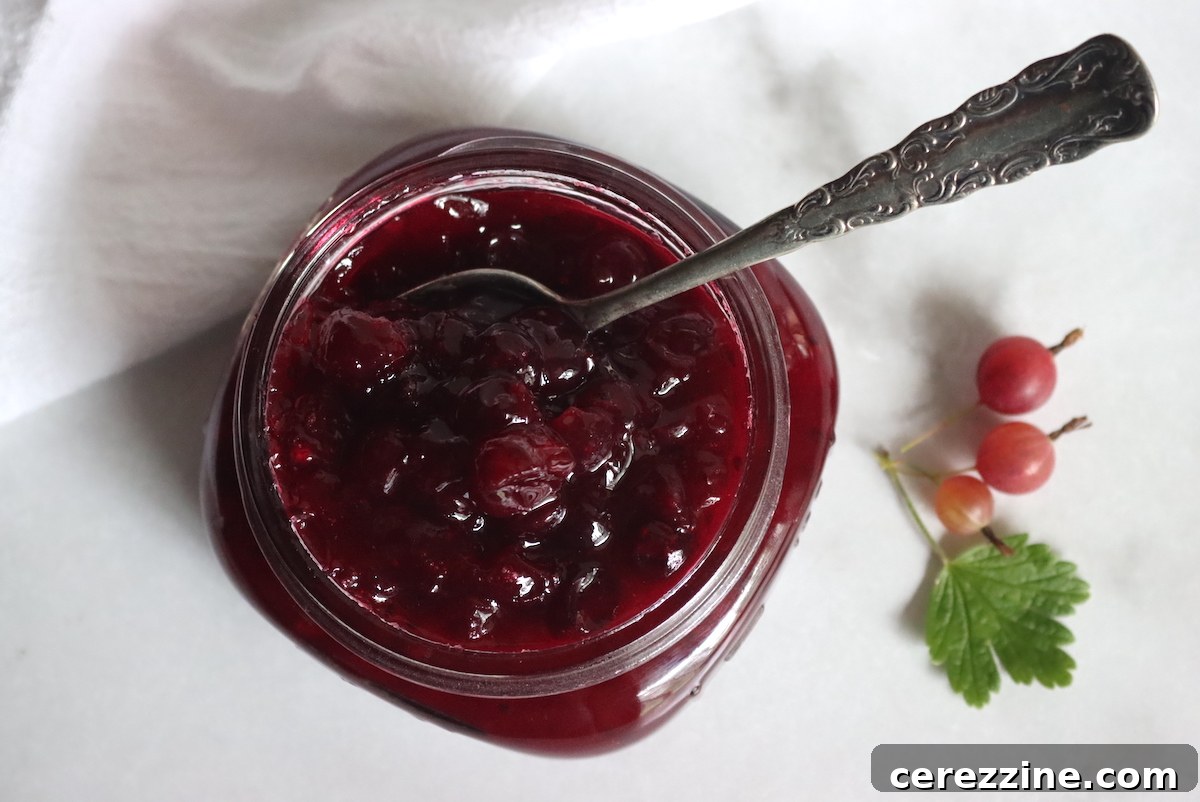
Gooseberries, though perhaps considered an old-fashioned fruit by some, are culinary gems that produce some of the most exquisite jams you’ll ever taste. Their inherent tartness and bright, complex flavor profile distinguish gooseberry jam from more common fruit preserves, offering a refreshing zing that awakens the palate. Beyond their sensational taste, gooseberries are a preserver’s dream: they are naturally high in pectin. This means you can achieve a perfect, firm set for your homemade gooseberry jam without the need for any added commercial pectin, making this an ideal recipe for those who prefer all-natural, small-batch preserves with maximum fruit flavor.
More than just a delicious spread, crafting gooseberry jam often evokes a sense of nostalgia. For many, it’s a sensory journey back to simpler times, perhaps conjuring memories of grandma’s bustling kitchen, brimming with the sweet aroma of bubbling fruit. This preserve isn’t just food; it’s an experience, a connection to culinary traditions that value wholesome ingredients and simple, honest flavors. It’s an opportunity to embrace the joy of seasonal fruit and create something truly special from scratch, proving that some old traditions are simply too good to be forgotten.
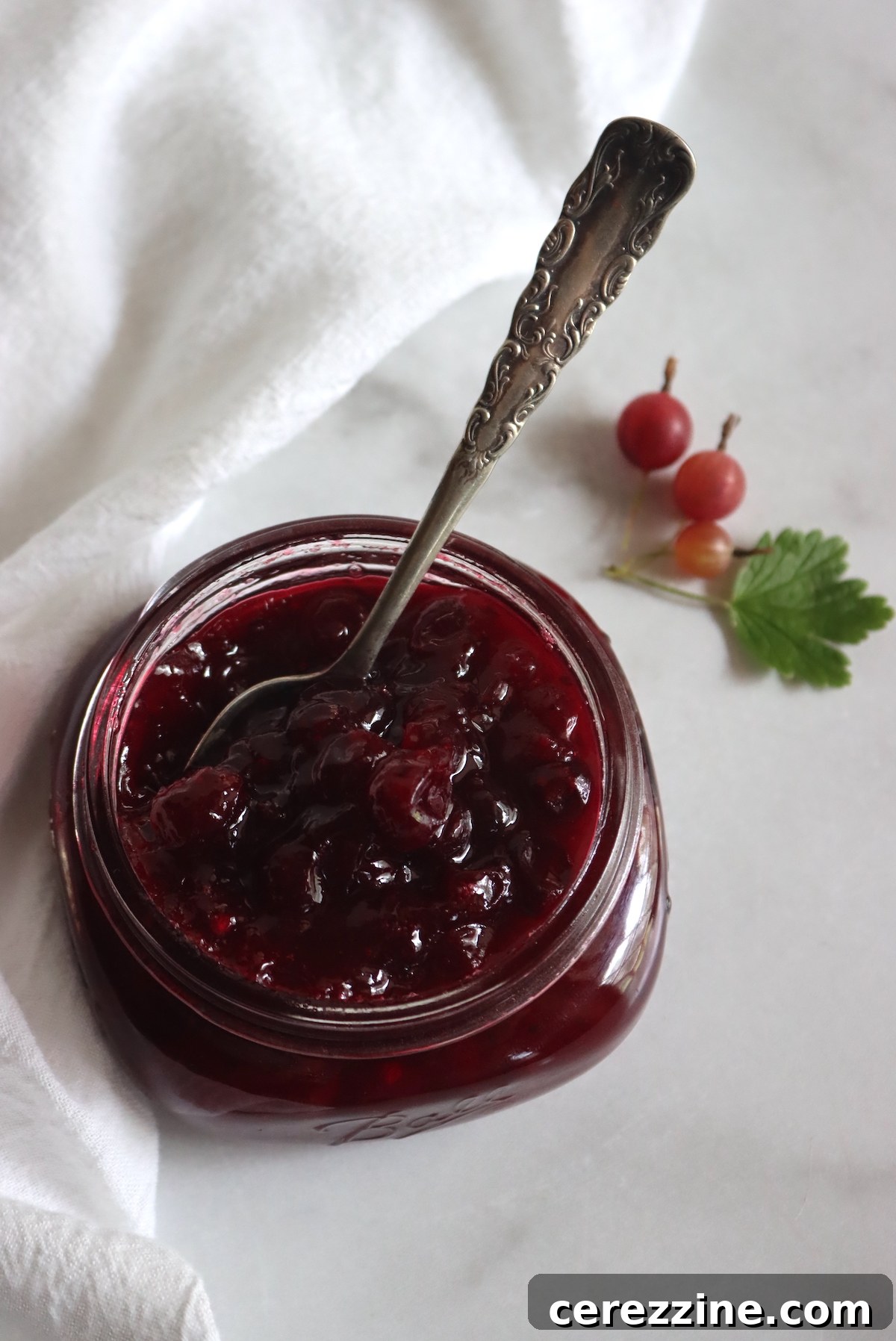
Gooseberry Jam Recipe Snapshot
- Recipe Name: Classic Gooseberry Jam
- Recipe Type: Jam Recipe Without Added Pectin
- Canning Method: Water Bath Canning or Steam Canning
- Prep Time: Approximately 30 minutes
- Cook Time: Approximately 20 minutes
- Canning Time: 10 minutes (adjust for altitude)
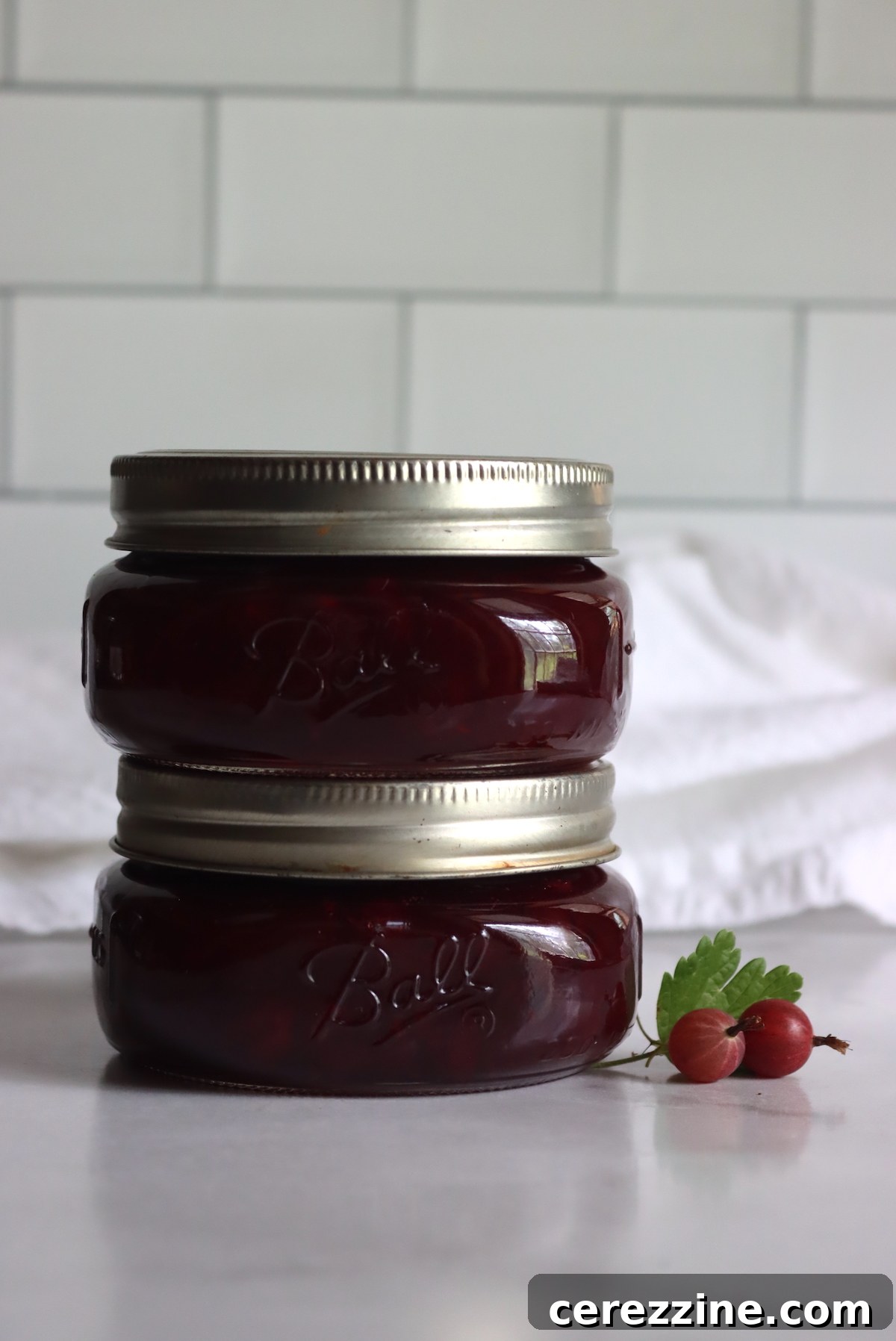
- Yield: About 3 half-pint (8 oz) jars
- Recommended Jar Sizes: Quarter-Pint, Half-Pint, or Pint jars
- Headspace: 1/4 inch
- Key Ingredients: Fresh Gooseberries, Granulated Sugar, Lemon Juice (optional but recommended)
- Difficulty: Moderate. Familiarity with checking for the gel stage in jams without added pectin is beneficial.
- Similar Recipes: This method is perfect for other old-fashioned jams without added pectin, such as Sour Cherry Jam, Blueberry Jam, Strawberry Jam, Blackberry Jam, and Grape Jam.
Essential Ingredients for Your Gooseberry Jam
Crafting a delectable batch of gooseberry jam requires surprisingly few ingredients, allowing the true flavor of the fruit to shine through. For a small batch yielding approximately three half-pint jars, you’ll need these foundational components:
- 1 lb (approximately 3 cups) fresh gooseberries
- ¼ cup water
- 2 cups (approximately 1 lb) granulated sugar
- 1-2 Tbsp fresh lemon juice (optional, but enhances flavor and aids set)
Choosing the Best Gooseberries for Jam
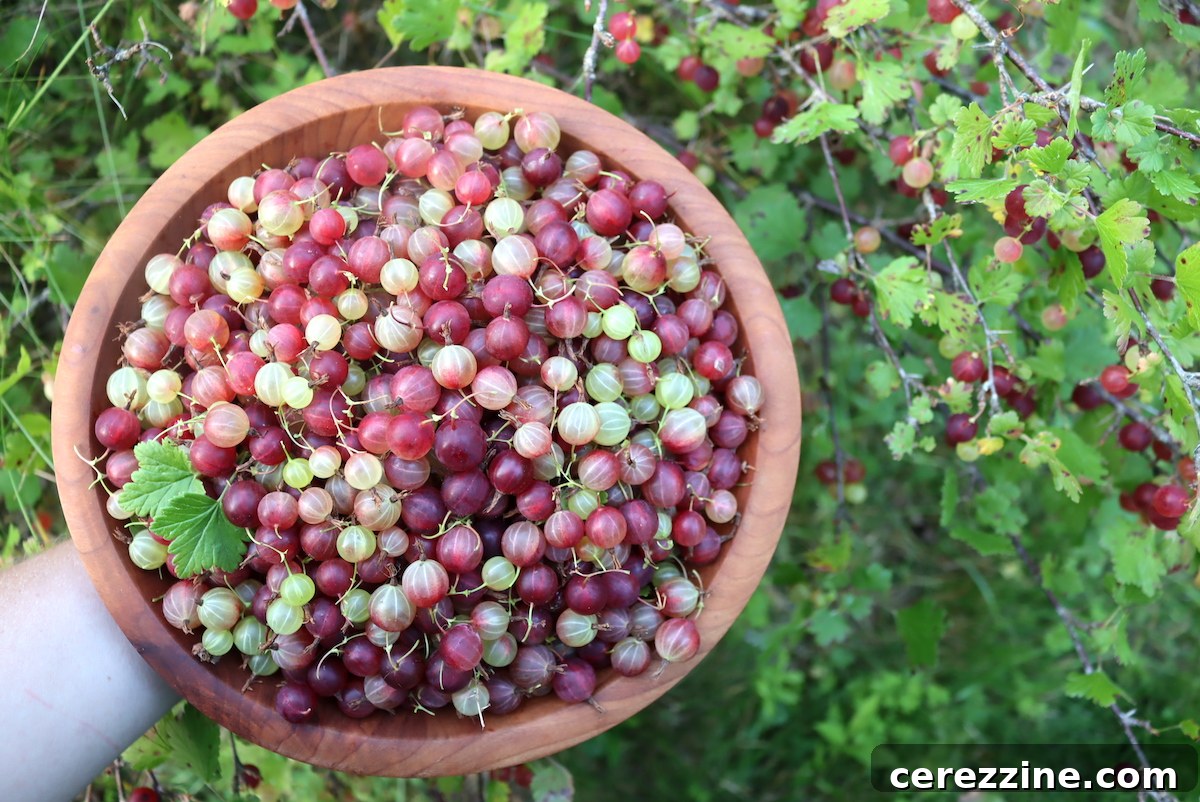
While any variety of gooseberries will make excellent jam, the choice can influence both the color and nuance of your final product. Red gooseberries, in particular, are often favored for their ability to impart a beautiful deep red hue and a richer, slightly more complex flavor profile than their green counterparts. Green gooseberries tend to be intensely tart, offering a bright and lively jam, while blush or pink varieties fall somewhere in between, providing a balanced tart-sweetness. Ultimately, the best gooseberry for your jam is the one you have access to and enjoy the most.
Many traditional recipes suggest incorporating a portion of underripe fruit to boost pectin levels. However, gooseberries are naturally exceptionally rich in pectin, even when fully ripe. This high pectin content is so remarkable that it can actually pose a challenge for gooseberry wine makers, as the fruit sometimes begins to set during fermentation itself, even without cooking! Therefore, diligently selecting underripe berries isn’t strictly necessary for a good set in jam. If you happen to have some greener fruit, rest assured it will typically ripen on your counter within a few days to a week. Feel free to use them slightly green for an extra tart kick, or let them fully ripen for a sweeter, more mellow flavor – the choice is entirely yours, as either will result in a perfectly set jam.
Gooseberry Jam: Exciting Flavor Variations
While classic gooseberry jam is a delight on its own, its robust and tangy flavor makes it an excellent canvas for creative culinary twists. Experimenting with additional ingredients can elevate your jam to new heights, offering unique profiles for different occasions and palates. Here are a few popular and intriguing variations:
- Gooseberry Gin Jam: A sophisticated variation cherished in the UK, this jam adds a delightful botanical complexity. Simply stir in ¼ cup of gin as your jam begins to thicken, just before it reaches the desired gel stage. The alcohol will cook off during the final boiling, leaving behind a subtle, aromatic essence that perfectly complements the gooseberries’ tartness.
- Elderflower Gooseberry Jam: For a delicate and exquisitely floral touch, incorporate ¼ cup of elderflower cordial into the jam during the final few minutes of cooking. The sweet, fragrant notes of elderflower harmonize beautifully with the gooseberries’ zesty character, creating a bright and elegant preserve that’s perfect for afternoon tea.
- Gooseberry Rhubarb Jam: This is a classic and highly recommended pairing. The high natural pectin content of gooseberries brilliantly assists in setting low-pectin rhubarb, making it an ideal combination. You can add up to 2 cups of chopped rhubarb to this recipe, alongside an extra ½ cup of sugar to balance the additional tartness. The resulting jam offers a wonderful blend of sweet, tart, and earthy flavors with a consistently reliable set.
- Spiced Gooseberry Jam: For a warm, inviting, and aromatic twist, consider adding a pinch of ground ginger, a cinnamon stick, or a few star anise pods during the cooking process. These spices can infuse a cozy, autumnal feel into your vibrant summer preserve. Remember to remove whole spices before jarring the jam.
How to Master the Art of Making Gooseberry Jam
Creating a perfect batch of homemade gooseberry jam is a straightforward process that begins with careful fruit preparation and culminates in achieving the ideal gel stage. Follow these steps for a truly rewarding canning experience.
Step 1: Preparing Your Gooseberries
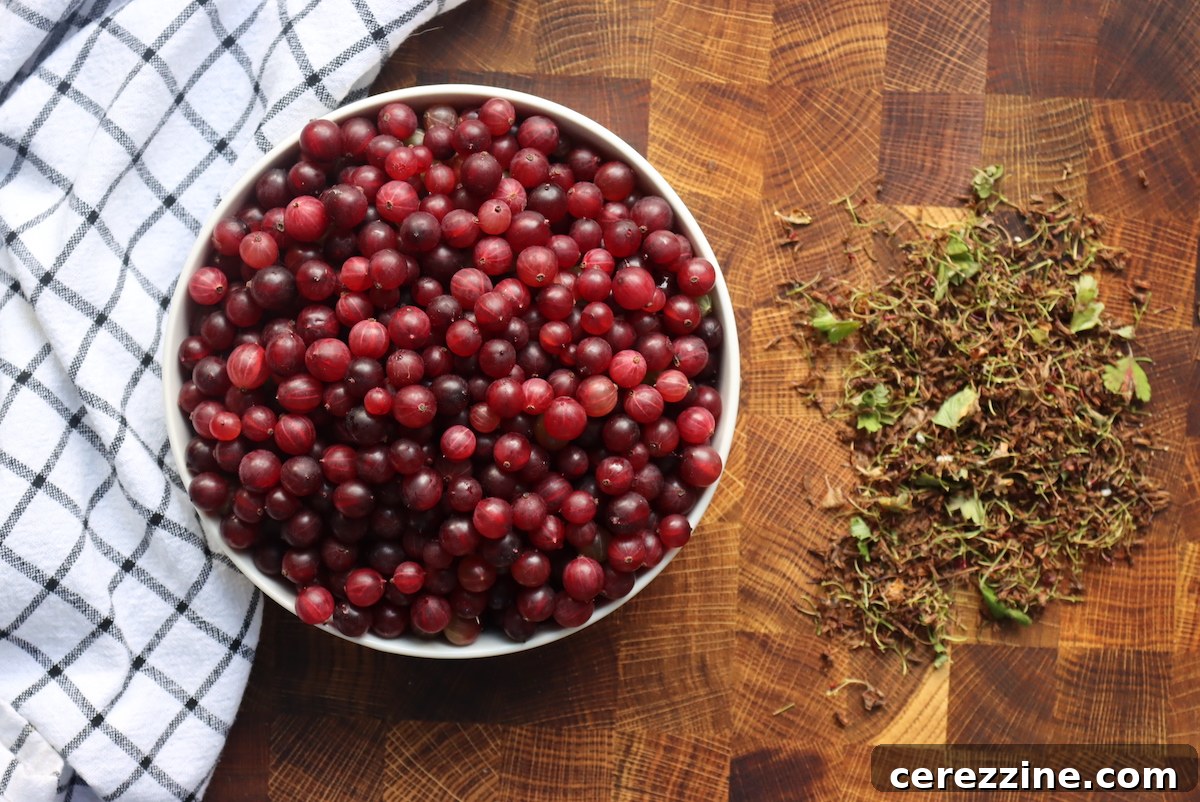
Before you even think about cooking, you must prepare the gooseberries by cleaning them thoroughly and, most importantly, “topping and tailing.” This involves meticulously removing the small, tough stem on one end and the dried, often brittle blossom (tail) on the other. While it can be a bit time-consuming, this step is absolutely crucial. These tiny fibrous ends remain tough even after cooking and can significantly detract from the smooth texture and overall enjoyment of your finished jam. Think of it as a small but essential investment for a much more delightful result.
To execute this, simply use a small paring knife, or even your clean fingernails, to carefully snip or pinch off the stem and blossom ends. Whichever method you prefer, ensure you remove all the fibrous bits. This same meticulous preparation is also essential for other gooseberry canning recipes, such as canning whole gooseberries or canning gooseberry pie filling, so mastering it here will serve you well.
(Pro Tip: If the thought of individually topping and tailing each gooseberry is daunting, consider making gooseberry jelly or gooseberry juice instead. For these preparations, the fruit solids are strained out after cooking, completely eliminating the need for this meticulous prep work!)
You’ll often be surprised at the small pile of stems, blossoms, and leafy debris that accumulates from just one bowl of gooseberries – a clear testament to how much these small efforts improve the quality of your delicious homemade preserve!
Step 2: Cooking the Berries and Achieving the Perfect Set
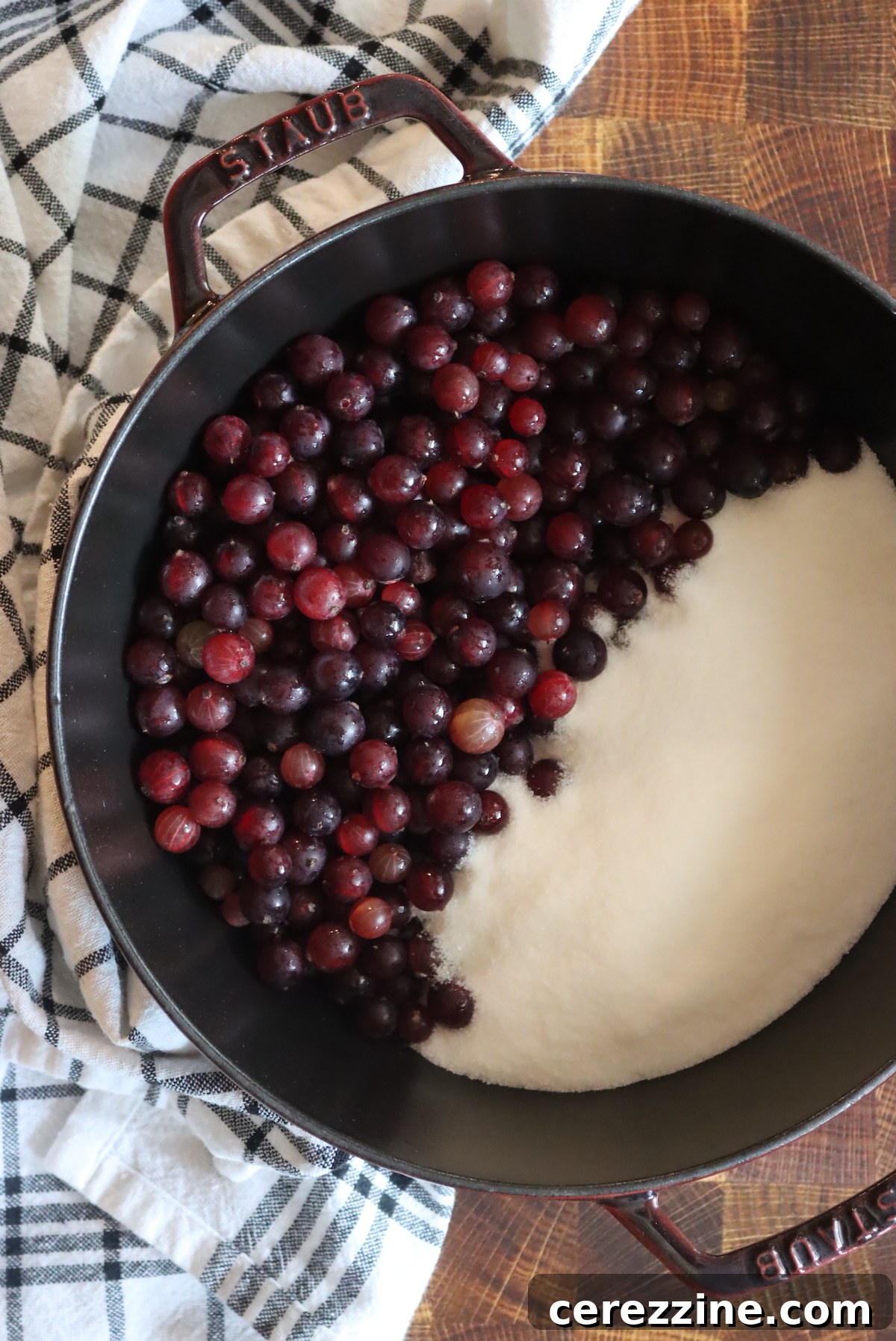
Once your gooseberries are pristine, place them into a large, heavy-bottomed pot. Add the ¼ cup of water and the optional 1-2 tablespoons of fresh lemon juice. While lemon juice isn’t strictly necessary for the jam to set (thanks to gooseberries’ naturally high pectin), it significantly brightens the overall flavor profile and can also help ensure a slightly firmer set. Cook the mixture over medium-high heat, stirring frequently, until the berries soften and begin to disintegrate. This typically takes about five to eight minutes, and you’ll notice the fruit releasing its vibrant juices and softening considerably.
Next, it’s time to introduce the sugar. Gooseberries are notably tart, so do not be tempted to drastically reduce the sugar quantity, especially if you’re making jam without added pectin. Sugar is not just for sweetness; it plays a critical role in the jam’s texture, setting ability, and long-term preservation. Most reliable recipes, including this one, recommend a ratio of ¾ to 1 pound of sugar per pound of fruit. For our small-batch recipe, that translates to approximately 1½ to 2 cups of sugar for three cups of prepared gooseberries.
Add the granulated sugar to the pot and stir continuously until it is fully dissolved. Once dissolved, bring the mixture to a rapid, rolling boil that cannot be stirred down. Maintain this vigorous boil for another 8 to 10 minutes, or until the jam reaches the crucial gel stage. Mastering this stage is the key to a perfectly set jam, and there are several reliable methods you can use to check for it:
- Temperature Method: Use a high-quality kitchen thermometer to monitor the jam’s temperature. At sea level, jam typically reaches its gel point at 220 degrees Fahrenheit (104 degrees Celsius). If you live at a higher altitude, remember to adjust this temperature: subtract 2 degrees Fahrenheit for every 1,000 feet above sea level.
- Freezer Plate Method: Before you begin cooking, place a small ceramic plate or saucer in your freezer. When you suspect the jam is ready, spoon a small amount onto the chilled plate and return it to the freezer for one minute. Gently push the jam with your finger; if it wrinkles and holds its shape, it has set.
- Sheeting Test: Dip a clean, cold metal spoon into the hot jam, allowing any excess to drip off. Tilt the spoon sideways. If the jam “sheets” off the spoon in a single, thick drip rather than individual drops, it’s done.
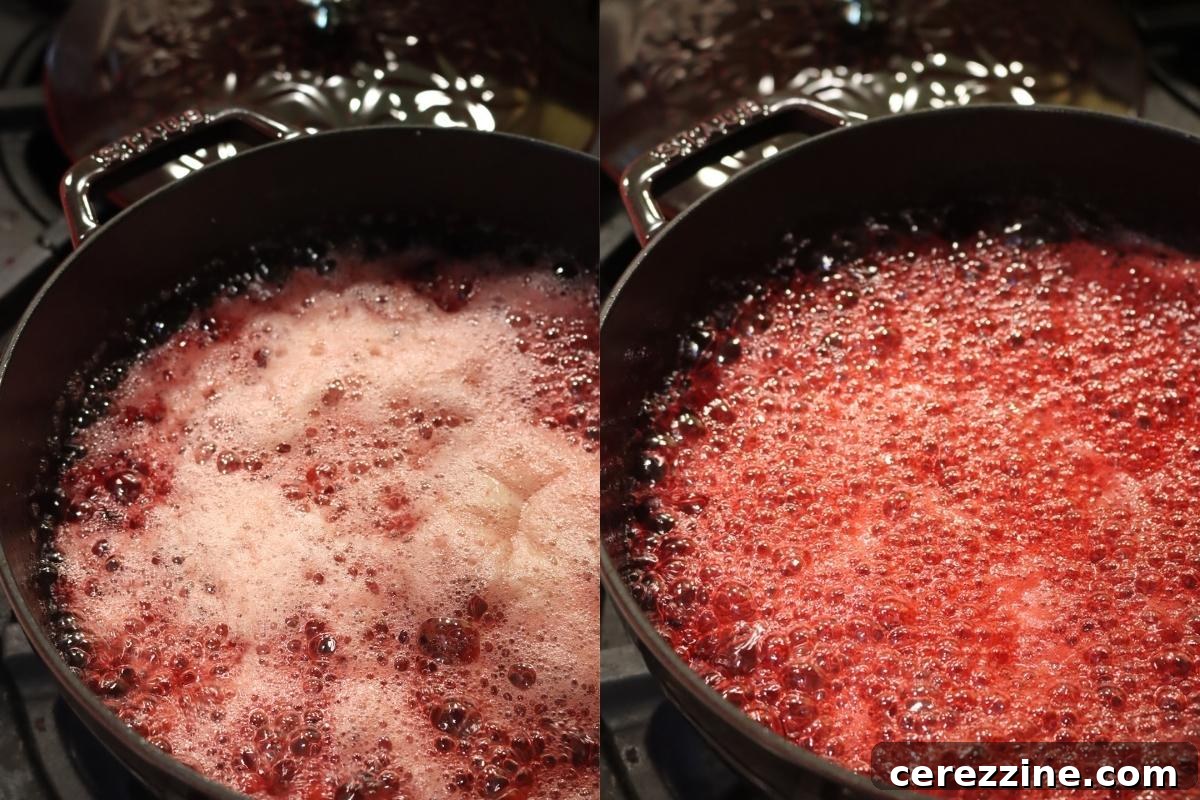
- Visual Cue: Experienced jam makers often rely on visual cues. As the jam approaches the gel stage, the bubbles on the surface will transform from small, foamy, and numerous to larger, clearer, and more glossy. This change in appearance indicates increased viscosity and a thickening consistency.
Canning Your Homemade Gooseberry Jam for Long-Term Storage
Once your homemade gooseberry jam has reached the perfect gel stage, it’s time to preserve its vibrant flavor for months to come. Carefully ladle the hot jam into clean, sterilized canning jars, ensuring you leave precisely ¼ inch of headspace from the rim of the jar. This specific headspace is absolutely vital for proper sealing during the canning process and contributes to safe long-term storage.
For immediate enjoyment, you can simply store the sealed jars (once cooled) in the refrigerator, where the jam will keep beautifully for several weeks. However, to make your delicious gooseberry jam truly shelf-stable for up to a year or even longer, processing it in a water bath canner is the recommended and safest method. Place the filled jars, fitted with new lids and screw bands (rings tightened finger-tip tight), into a boiling water bath canner. Ensure the jars are covered by at least 1 inch of water. Bring the water back to a full, rolling boil, and then begin your processing time. Process for 10 minutes. Remember to adjust processing time for altitude: add an extra minute for every 1,000 feet above sea level (for example, if you are above 6,000 feet in elevation, process for 15 minutes).
Once the processing time is complete, carefully turn off the heat and remove the canner lid. Allow the jars to rest in the hot water for 5 minutes before carefully lifting them out onto a towel-lined counter or cooling rack. Let them cool undisturbed for 12-24 hours. You’ll hear satisfying “pops” as the jars seal, indicating a vacuum has formed. After cooling, check for a proper seal by pressing the center of each lid; it should not flex or spring back. Any unsealed jars should be refrigerated and consumed promptly. Store properly sealed jars in a cool, dark place away from direct sunlight and temperature fluctuations. Once an individual jar is opened, always keep it in the refrigerator and consume its contents within a few weeks to enjoy its peak freshness and quality.
Serving Suggestions for Gooseberry Jam
With its delightful balance of vibrant tartness and subtle sweetness, homemade gooseberry jam is incredibly versatile and can elevate a wide array of dishes. Beyond the classic pairing with toast or scones, here are some creative and delicious ways to enjoy your freshly made preserve:
- Breakfast Brilliance: Spread it generously on warm buttered toast, flaky croissants, crumpets, or toasted bagels. Stir a spoonful into your morning oatmeal, Greek yogurt, or cottage cheese for a burst of fruity flavor and a touch of tang.
- Dessert Delight: Use it as a luscious filling for tarts, classic thumbprint cookies, or delicate layer cakes. Drizzle it over scoops of vanilla bean ice cream, creamy panna cotta, or a rich cheesecake for an elegant and refreshing finish. It also makes a fantastic topping for thin crêpes, fluffy pancakes, or golden waffles.
- Savory Pairings: Don’t limit this exceptional jam to sweet dishes alone! Gooseberry jam’s bright tartness perfectly cuts through richness, making it an excellent accompaniment to various roasted meats like succulent pork loin, tender lamb, or rich duck breast. Its acidity also complements a carefully curated cheese board, pairing beautifully with sharp cheddar, creamy goat cheese, or a soft, ripe brie.
- Beverage Booster: Stir a small amount into sparkling water or your favorite cocktail for a refreshing, fruity twist. It can add a unique depth to iced tea or a summer lemonade.
If you’ve tried this Gooseberry Jam Recipe, or any other recipe from Creative Canning, we’d love to hear from you! Leave a ⭐ star rating and share your thoughts in the 📝 comments below!
Stay connected with us for more canning inspiration and seasonal recipes by following on social media!
- Substack
Explore More Gooseberry Canning Recipes
Gooseberry Jam
Canning Gooseberry Pie Filling
Canning Whole Gooseberries
Gooseberry Jelly
Gooseberry Jam
Pin Recipe
Rate This
Print Recipe
Equipment
-
Water Bath Canner
Ingredients
- 3 cups gooseberries, roughly 1 lb
- ¼ cup water
- 2 cups sugar, about 1 lb
- 1-2 Tbsp lemon juice, optional
Instructions
-
Clean the gooseberries thoroughly by meticulously removing the small stem at one end and the dried blossom (tail) at the other. This crucial step prevents tough, fibrous bits from affecting the smooth texture of your finished jam.
-
Place the cleaned gooseberries into a heavy-bottomed pot along with ¼ cup of water and the optional 1-2 tablespoons of lemon juice.
-
Cook the mixture over medium-high heat, stirring frequently, until the berries soften and begin to disintegrate, typically taking about 5 to 8 minutes.
-
Stir in the 2 cups of granulated sugar until fully dissolved.
-
Bring the jam mixture to a rapid, rolling boil that cannot be stirred down. Continue to cook for 8 to 10 minutes, or until the jam reaches the gel stage (220 degrees F at sea level). Test for set using an instant-read thermometer, the freezer plate method, or the sheeting test.
-
Ladle the hot jam into prepared, sterilized canning jars, ensuring you leave ¼ inch of headspace.
-
For immediate use, store the sealed jars in the refrigerator. For long-term preservation, process the jars in a boiling water bath canner for 10 minutes (adjust to 15 minutes if above 6,000 feet in elevation).
Notes
Lower Sugar Variation
To achieve a firm set without added boxed pectin, this recipe requires at least 1 ½ cups of sugar. You can slightly reduce the sugar from the recommended 2 cups, but be cautious not to go below 1 ½ cups, as this may compromise the jam’s texture and shelf stability.
Variations
Gooseberry jam is wonderfully delicious on its own, but its naturally tart and vibrant flavor also makes it an excellent base for incorporating additional flavors, allowing you to create unique preserves.
- Gooseberry Gin Jam – For a sophisticated twist, add ¼ cup of gin as the jam begins to thicken, just before it reaches the gel stage. Stir well to combine, then continue cooking until set.
- Elderflower Gooseberry Jam – Infuse your jam with delicate floral notes by adding ¼ cup of elderflower cordial during the final few minutes of cooking.
- Gooseberry Rhubarb Jam – Combine the tartness of gooseberries with the unique flavor of rhubarb. Add up to 2 cups of chopped rhubarb along with an extra ½ cup of sugar. The high pectin in the gooseberries will naturally help the rhubarb jam set beautifully.
Nutrition
Nutrition information is automatically calculated and should only be used as an approximation. Individual results may vary based on specific ingredient choices and preparation methods.
Enjoyed this recipe? Share your thoughts!
More Old-Fashioned Preserve Recipes to Try
If you’re making homemade gooseberry jam, chances are you appreciate the charm and distinct flavors of unique and traditional preserves. Expand your canning repertoire with these other creative and delicious recipes, perfect for filling your pantry with variety and homemade goodness:
- Gooseberry Jelly – For those who prefer a perfectly smooth, seedless spread, this jelly captures the pure essence of gooseberries after straining the fruit’s juice, offering a clearer, brighter taste.
- Blackcurrant Jam – With its intensely tart and rich flavor, blackcurrant jam is a delightful preserve on its own, and currants also pair beautifully with gooseberries for a vibrant mixed jam that offers double the berry goodness.
- Elderberry Jelly – Harvested from wild elderberries, this jelly boasts a deep, inviting color and is packed with antioxidants, making it a flavorful and beneficial addition to your canning shelf, especially delicious in cooler months.
- Rhubarb Jam – Another wonderfully tangy favorite, rhubarb makes an excellent standalone jam and, as mentioned, is a superb partner for gooseberries, benefiting from their natural pectin to achieve a perfect set.
- Black Raspberry Jelly – Sweet, earthy, and intensely flavored, this luscious jelly is a true summer classic, often enjoyed during its short, precious picking window, providing a rich, dark fruit flavor.
Each of these preserves offers a unique and satisfying taste experience, allowing you to celebrate seasonal fruits and enjoy homemade flavors throughout the year, enriching your culinary adventures with the magic of canning.