
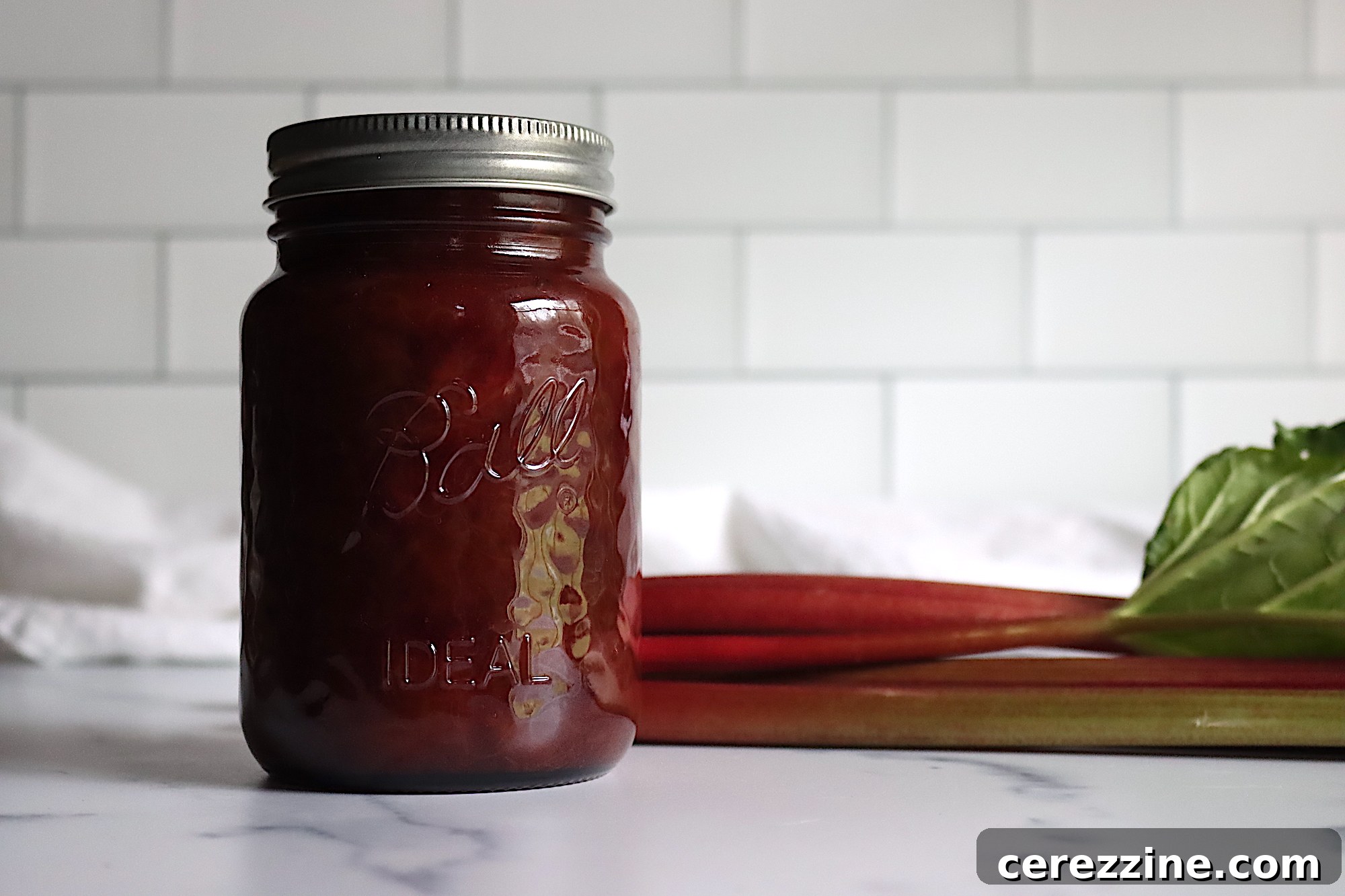
Experience the unparalleled taste of spring with homemade Rhubarb Jam, a truly delightful preserve straight from the garden. This simple recipe for luscious rhubarb jam comes together effortlessly with just three natural ingredients – no added pectin required!
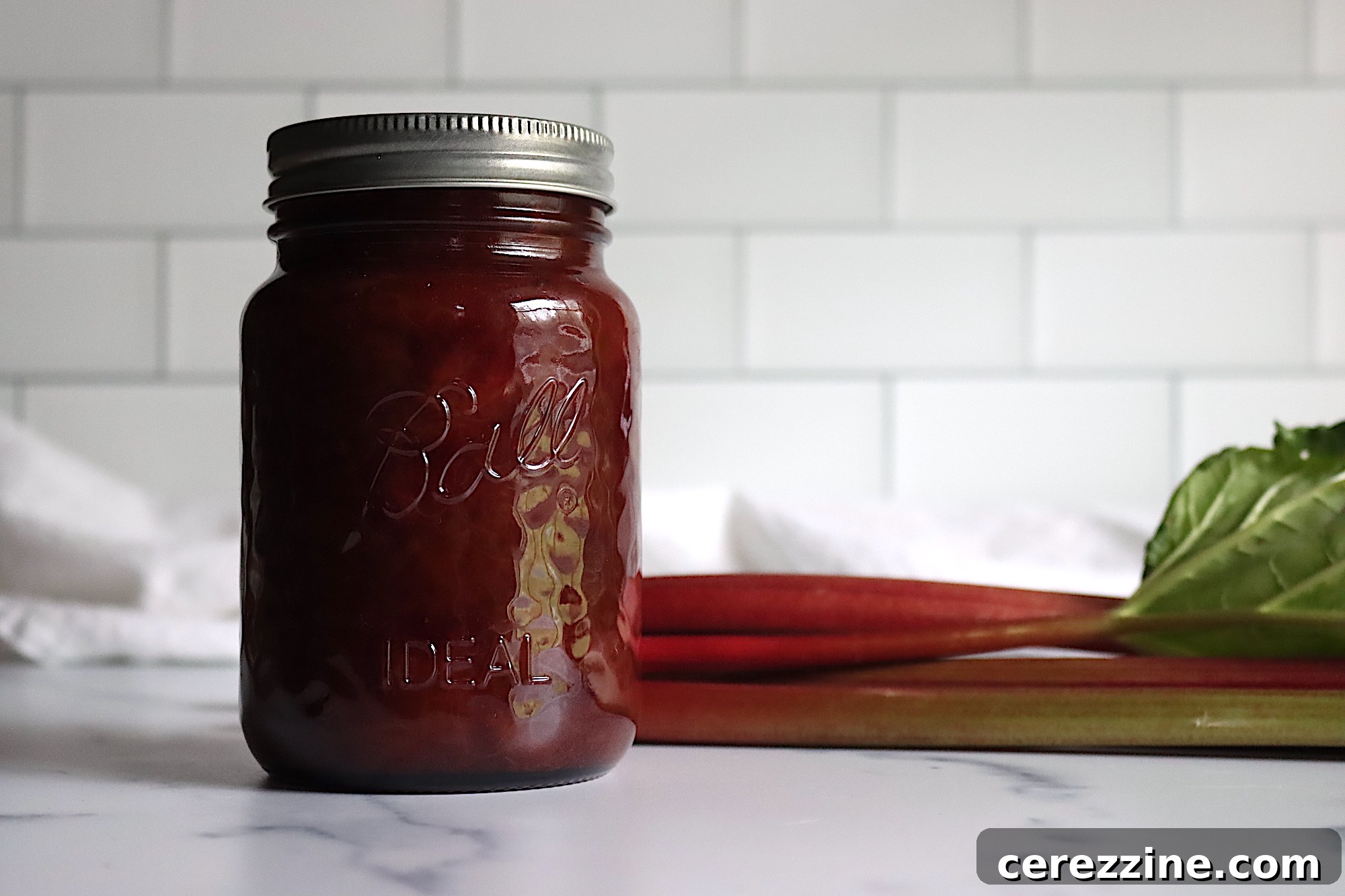
For those of us blessed with a perennial rhubarb patch, the arrival of spring signifies the beginning of preserve season. On our Vermont homestead, our seemingly modest rhubarb bed yields an astonishing abundance, enough to fill wheelbarrows with its vibrant, tart stalks. This annual bounty allows us to explore numerous rhubarb canning recipes, and we even venture into crafting homemade rhubarb wine.
Among the many ways to enjoy this versatile plant, a simple rhubarb jam stands out as a true family favorite. Its beauty lies in allowing the unique, tangy flavor of rhubarb to truly shine. Unlike many recipes that pair rhubarb with strawberries, this particular jam celebrates pure rhubarb, complemented only by a touch of lemon, which naturally aids in setting the jam without the need for artificial pectin. The result is a truly luscious, vibrant, and incredibly flavorful rhubarb jam – perfect in its delightful simplicity!
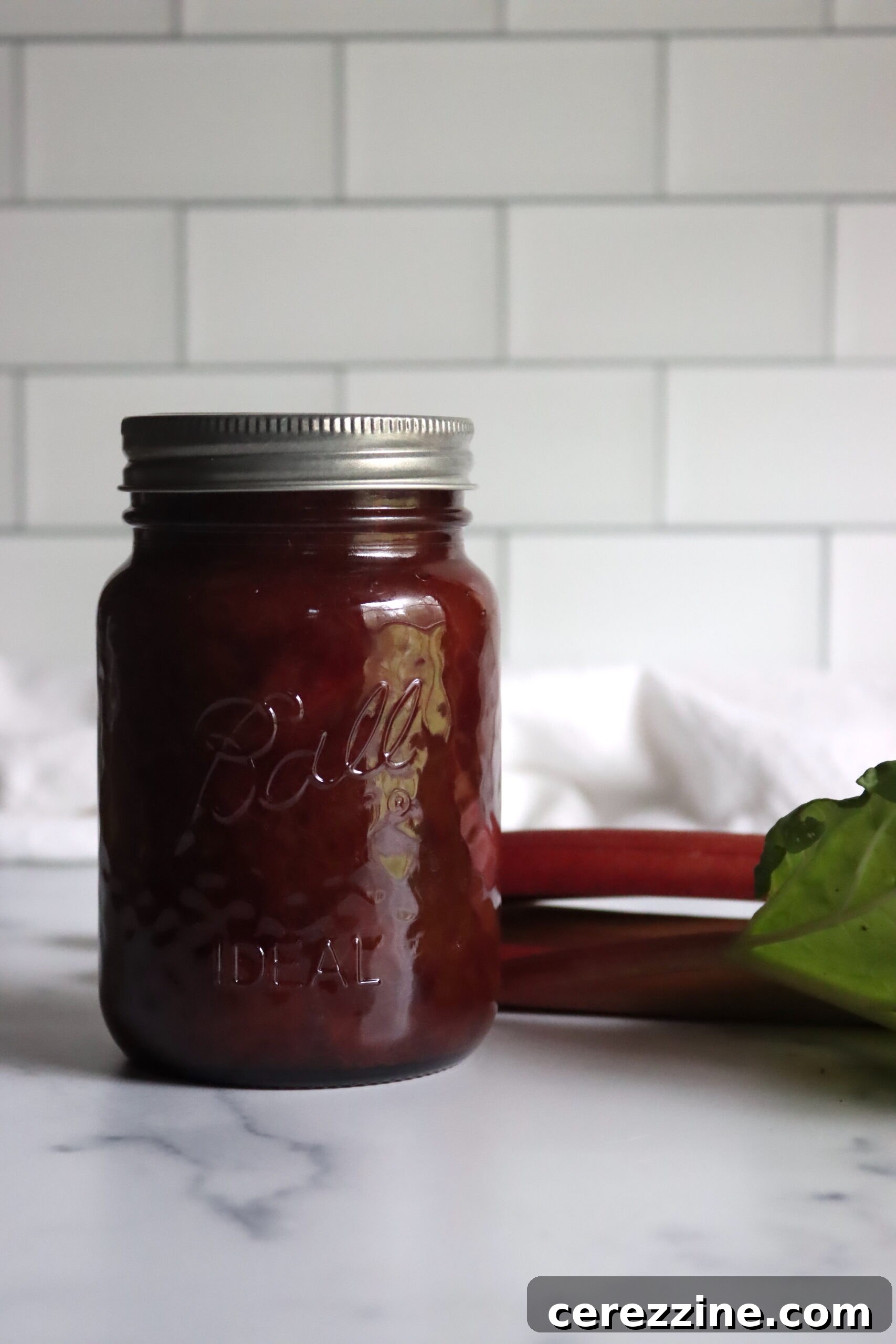
While fresh rhubarb jam naturally boasts a beautiful reddish hue, especially when made with homegrown stalks, presenting it in rose-tinted canning jars enhances its visual appeal, making it as pleasing to the eye as it is to the palate. This small detail adds an extra touch of charm to your homemade preserves, making them ideal for gifting or simply gracing your pantry shelves.
Essential Ingredients for Homemade Rhubarb Jam (Pectin-Free!)
This classic rhubarb jam recipe, inspired by preserving traditions, focuses on simple ingredients and a mindful process to achieve a beautifully thick and flavorful preserve without relying on commercial pectin. The secret lies in a technique called maceration, where the rhubarb sits with sugar, drawing out its natural juices and helping the jam to thicken naturally.
You have the flexibility to create a “chunky” jam, retaining more discernible pieces of rhubarb, or a “smooth” jam, where the rhubarb softens and breaks down further during cooking for a more uniform texture. Rest assured, regardless of your preferred consistency, the core ingredients remain the same. This recipe yields approximately 6 half-pint (8-ounce) jars or 3 pint jars of delicious rhubarb jam.
- 2 lbs. rhubarb (yielding approximately 8 cups when diced)
- 3 cups granulated sugar
- 1 lemon (or for a milder tang, use ½ lemon and ½ orange)
When selecting your rhubarb, keep in mind that early, young shoots tend to be less bitter and more pliable than stalks harvested later in the season. Late-season rhubarb can sometimes retain a bit more stiffness, which might slightly alter the texture of your finished jam. Consider making a batch with early-season rhubarb and another a few months later to discover your preferred harvest time.
The magic of this recipe is achieving a rich, thick jam with no added pectin. The natural pectin in rhubarb, combined with the sugar and lemon’s acidity, creates the perfect gel. The lemon juice plays a crucial role not only in flavor balance but also in providing the necessary acidity to ensure your homemade rhubarb jam remains shelf-stable and retains its quality for up to 18 months when properly canned. If you prefer a slightly softer, less tart flavor profile, simply substitute half of the lemon juice with fresh orange juice.
Mastering the Art of Making Rhubarb Jam: A Step-by-Step Guide
Crafting homemade rhubarb jam is a rewarding process, bringing the fresh flavors of spring into your pantry. Follow these detailed steps to create your perfect batch:
Rhubarb Preparation
Begin by preparing your rhubarb. Trim off the leaf ends (which are toxic) and the fibrous root tips from each stalk. Wash the stalks thoroughly under cool running water. While rhubarb typically doesn’t require peeling, late-season stalks might have a tougher, stringy outer layer. If you notice this, or if the stalks are difficult to cut, you may wish to peel them lightly with a vegetable peeler to ensure a smooth texture in your jam.
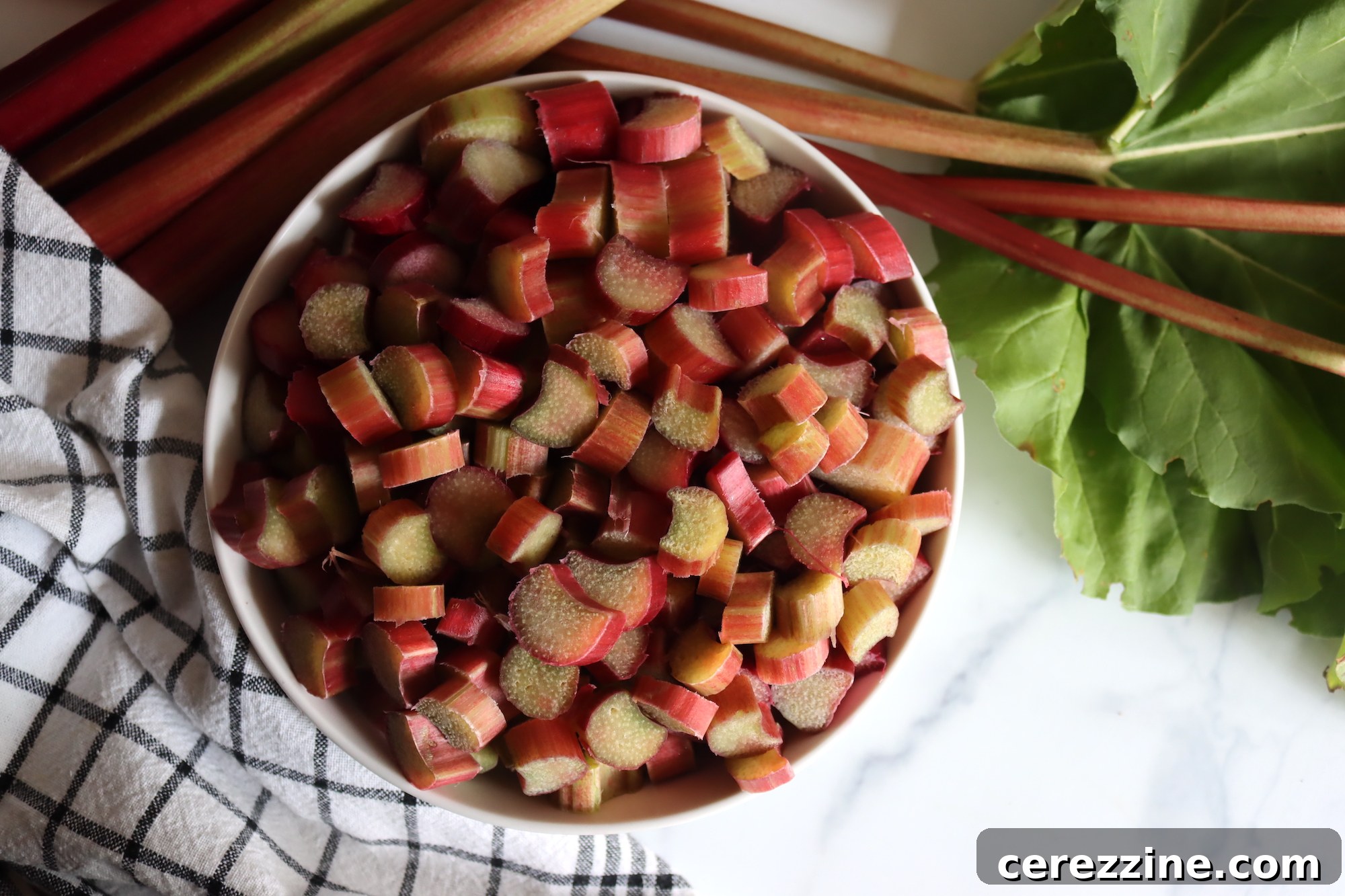
Next, dice the rhubarb into small pieces, aiming for approximately ½ inch in length or even smaller. The finer you chop the rhubarb, the smoother and less fibrous the final jam will be. For this recipe, you’ll need about 8 cups of diced rhubarb.
Maceration: The Key to Natural Pectin
In a large, non-reactive pot (stainless steel is ideal), combine the diced rhubarb, granulated sugar, and the fresh juice from your lemon (or lemon and orange mixture). Stir gently to ensure all the rhubarb pieces are evenly coated with sugar.
Allow this mixture to sit and macerate. The traditional method involves letting it rest overnight at room temperature. This crucial step draws out the natural juices from the rhubarb, creating a flavorful syrup that is essential for setting the jam without added pectin.
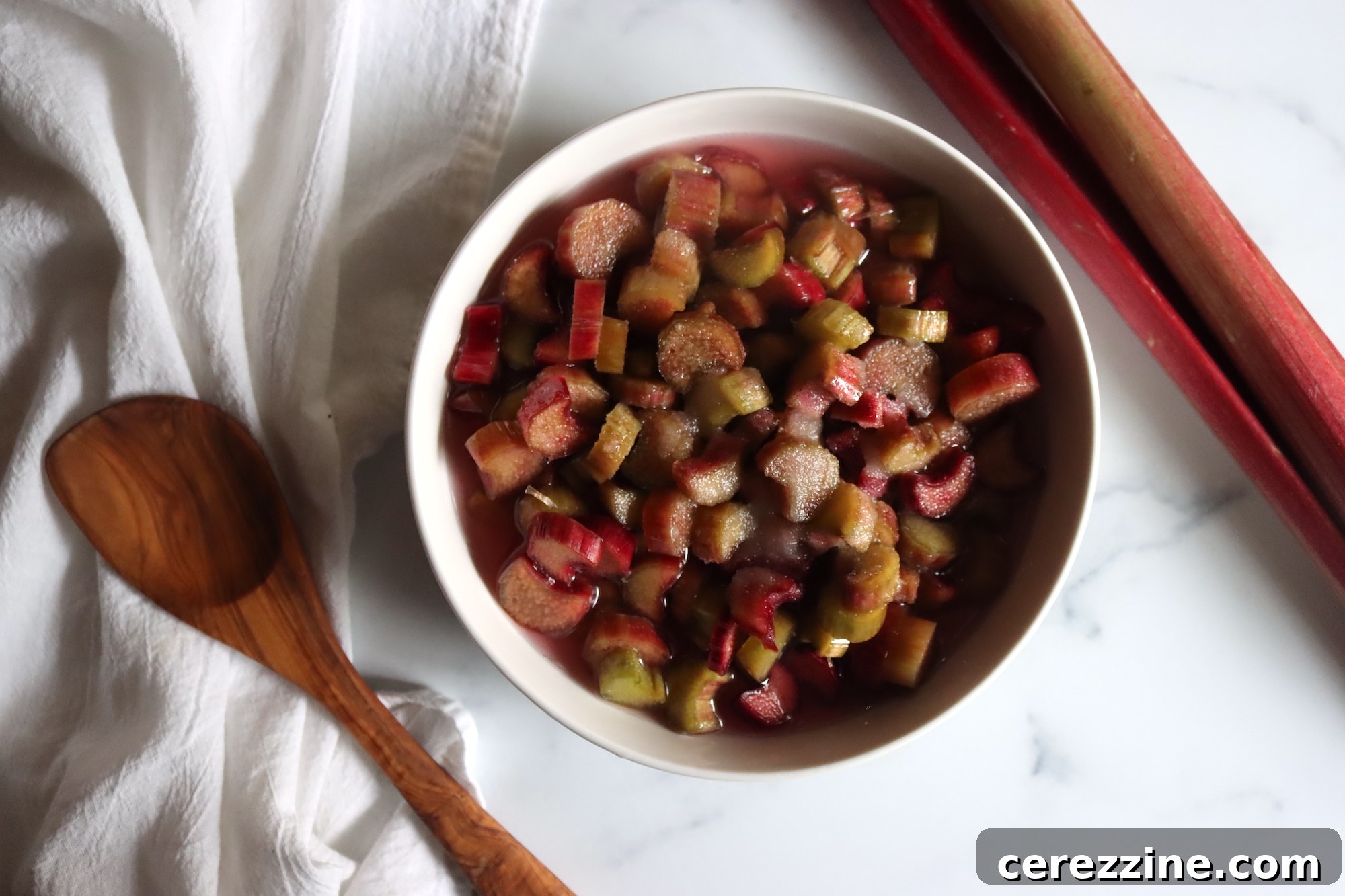
If you’re pressed for time and can’t wait overnight, you can accelerate the maceration process. Place the rhubarb, sugar, and citrus juices in the pot over medium-high heat. Bring the mixture to a boil, stirring frequently to prevent scorching and ensure even heating. Once it reaches a full boil, cook for 2 minutes, then remove the pot from the heat and let it sit undisturbed for 2 hours. This quick heat treatment helps to release the juices more rapidly.
Prepping for the Preserve
While the rhubarb is macerating or cooling, prepare your canning jars, lids, and equipment. If you plan to water bath can your jam for long-term storage, refer to a comprehensive beginner’s guide to water bath canning for detailed instructions on sterilizing jars and ensuring safety. Additionally, place three or four small ceramic plates in your freezer; these will be essential for testing the gel stage of your jam.
Now, decide on your preferred jam texture: chunky or smooth. Proceed with the instructions below accordingly.
Creating Chunky Rhubarb Jam
For a delightful chunky rhubarb jam, you’ll need a slotted spoon and a colander placed over a bowl. Carefully transfer as many rhubarb pieces as you wish to retain their shape into the colander using the slotted spoon, allowing the juices to drain back into the pot. You don’t need to remove every single piece, but aim to separate most of the larger rhubarb chunks from the liquid. Keep the strained rhubarb in the colander, with the bowl underneath to collect any additional draining juices.
With the majority of the rhubarb chunks removed, bring the remaining juices and any small pieces of rhubarb in the pot to a boil over medium-high heat, stirring often to prevent sticking. Reduce the heat and simmer the juice until it reaches 220°F (104°C) on a candy thermometer, or until it passes the cold plate test (explained below) for the gel stage.
Once the juice reaches the desired gel consistency, gently return the strained rhubarb pieces and any collected juices from the bowl back into the pot. Bring the entire mixture to a boil over medium-high heat, stirring constantly for about 5 minutes. This ensures the chunks are thoroughly heated and integrated. Test for the gel stage again using a fresh, clean plate from the freezer.
Crafting Smooth Rhubarb Jam
If you prefer a smooth, spreadable jam, place the pot containing all the macerated rhubarb and its accumulated juices directly onto the stove. Cook over medium-high heat, bringing the mixture to a full rolling boil. Stir frequently and watch carefully, as the mixture can quickly boil over and scorch if left unattended. Once boiling, reduce the heat to medium and maintain a slow boil for 15 to 20 minutes, or until the jam passes the cold plate test.
Testing for the Gel Stage (Cold Plate Method)
Achieving the perfect consistency is key to a great jam. To test for the gel stage, retrieve one of your chilled plates from the freezer. Drop a small spoonful of hot jam onto the cold plate, then return the plate to the freezer for 1-2 minutes. Remove the plate and gently push the edge of the jam dollop with your fingertip.
If the jam forms a “skin” on top or wrinkles when pushed, it has reached the gel stage and is ready. If your finger slides right through it, or if the juices appear runny when you slightly tip the plate, the jam needs more cooking time. Be patient, continue cooking, and remain vigilant against scorching, perhaps reducing the heat to medium-low as it thickens. Another reliable method is using a candy thermometer; the jam is ready when it reaches 220°F (104°C).
Once your jam has reached the perfect gel stage, remove the pot from the heat. You can either ladle the finished jam into prepared containers for immediate refrigeration or proceed to the “Canning Rhubarb Jam” section below for long-term storage.
Fresh rhubarb jam stored in the refrigerator should be consumed within approximately one month. For extended enjoyment, homemade rhubarb jam freezes beautifully and will keep well for up to 6 months. However, for true pantry stability and enjoyment for a year or more, canning is the ideal method.
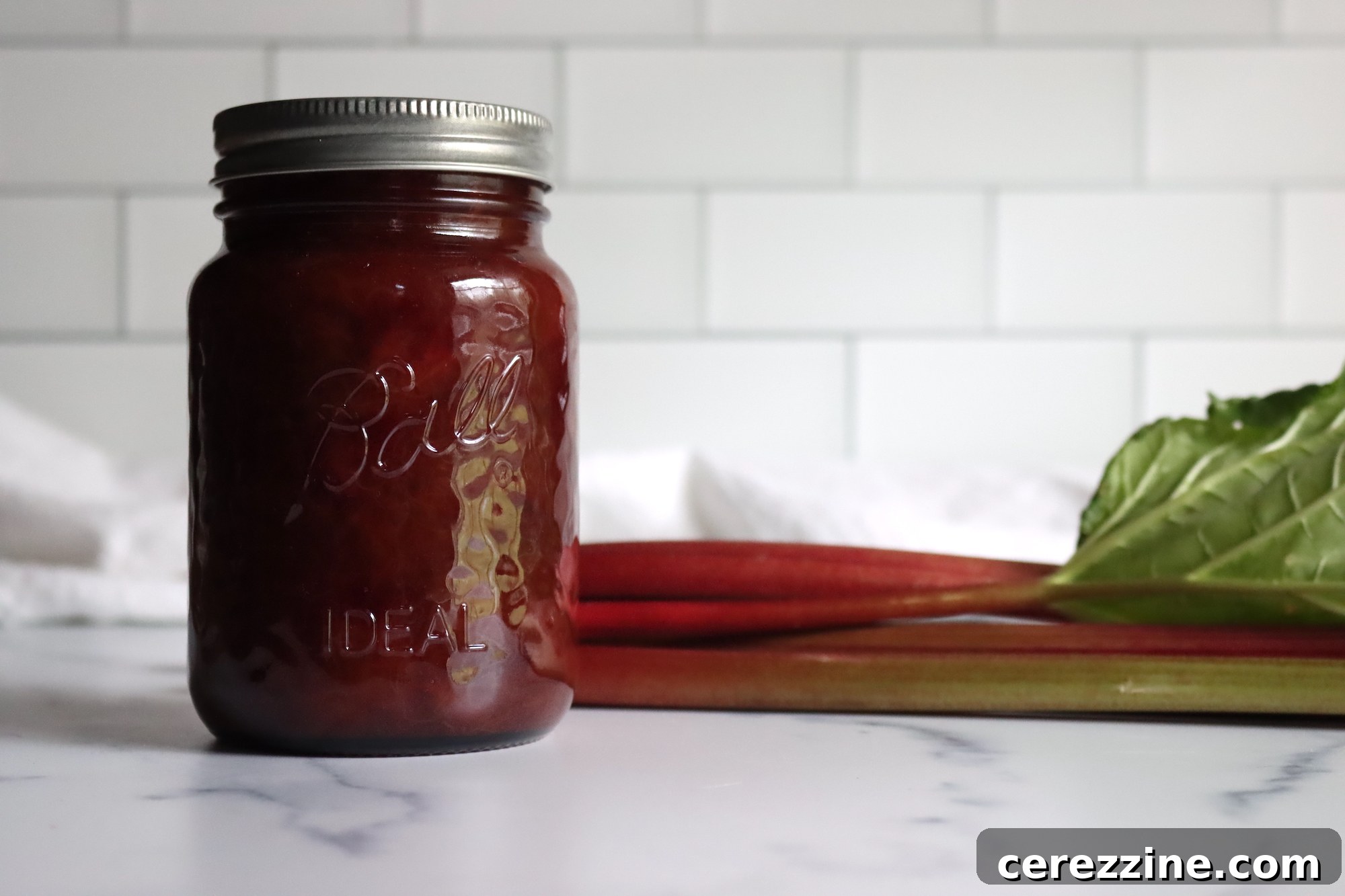
Preserving Freshness: Canning Rhubarb Jam for Your Pantry
Canning allows you to store your delicious homemade rhubarb jam for up to 18 months or even longer when safely processed and kept in a cool, dry pantry. If you are new to water bath canning, please take a moment to review a beginner’s guide to water bath canning before you begin to ensure safe practices.
Canning Instructions:
- Prepare Equipment: Ensure your jars and lids are clean and warm. Have your water bath canner preheated and simmering with water.
- Fill Jars: Once the jam has reached its gel stage, carefully ladle the hot jam into the prepared warm jars, leaving ¼ inch of headspace at the top. This headspace is critical for proper sealing; avoid overfilling. A canning funnel with headspace measurements can simplify this step.
- Clean Rims and Seal: Wipe the rims of the filled jars with a clean, damp cloth to remove any jam residue. Apply two-part canning lids (flat lid and screw band). Tighten the canning rings only until they are “finger-tight”; do not overtighten, as this can prevent proper sealing.
- Process Jars: Carefully load the filled jars into your preheated water bath canner, ensuring they are fully submerged in water by at least an inch. Bring the canner to a full rolling boil. Once actively boiling, process pint and half-pint jars for 10 minutes. If you are at an elevation above 6,000 feet, increase processing time to 15 minutes.
- Cool Down: After the processing time is complete, turn off the heat and allow the jars to remain in the hot water for an additional 5 minutes. This helps prevent siphoning and aids in a stronger seal.
- Remove and Check Seals: Using a jar lifter, carefully remove the hot jars from the canner and place them on a towel-lined counter. Leave some space between the jars for proper airflow as they cool. Allow them to cool undisturbed for 12-24 hours. After cooling, check the seals on the lids. A properly sealed lid will be concave and will not flex when pressed. Any jars that have not sealed should be stored in the refrigerator for immediate consumption.
- Store: Store your safely canned jam in a cool, dark, and dry place, such as a pantry. It will maintain its best quality for about 18 months but remains safe to eat as long as the seal is intact. Refrigerate any opened jars after use.
Delicious Rhubarb Jam Variations to Explore
While plain rhubarb jam is a celebrated treat for its distinct tart and subtly bitter profile, its versatility also lends itself wonderfully to various flavor combinations. If you wish to temper rhubarb’s inherent tartness or simply explore new tastes, consider these delightful variations:
- Strawberry Rhubarb Jam: A timeless and beloved pairing! The sweetness of strawberries perfectly balances rhubarb’s tang. For an excellent example, try this recipe for Rhubarb Berry Jam, which beautifully combines rhubarb, strawberries, and even blueberries for a truly superb spread.
- Raspberry Rhubarb Jam: Similar to strawberry, raspberries introduce a lovely tart-sweet complexity and a deeper red hue to the jam, enhancing the berry notes.
- Orange Rhubarb Jam: Incorporating fresh orange juice and a bit of grated orange zest (pulp can also be added) into this rhubarb jam recipe introduces a softer, sweeter citrus undertone. This mellows the tartness while adding a bright, aromatic dimension.
- Apple Rhubarb Jam with Cinnamon: A comforting and unique combination! Peel and dice firm apples (like Granny Smith or Honeycrisp) and add them to the rhubarb mixture at the beginning of the cooking process. A pinch of ground cinnamon or a cinnamon stick can further deepen the flavor. The apples will soften and become mushy, giving the jam a slightly richer, apple butter-like texture with a fantastic spiced fruit flavor.
Creative Ways to Enjoy Your Homemade Rhubarb Jam
Your freshly made rhubarb jam is incredibly versatile and can elevate a wide array of dishes, beyond just a simple spread:
- Classic Spreads: The most obvious and beloved use! Spoon it generously onto your favorite morning staples: crusty bread, warm toast, flaky croissants, fluffy English muffins, tender biscuits, or even scones.
- Baking Enhancements: Incorporate rhubarb jam into your baking endeavors. Use it as a vibrant filling for tarts, turnovers, or delicate Danish pastries. Swirl it into a cream cheese frosting for cupcakes, or use it as a delicious layer in cakes. It can also be baked into the center of muffins or sweet rolls.
- Dessert Toppings: Drizzle warm rhubarb jam over vanilla bean ice cream or Greek yogurt for a simple yet elegant dessert. It makes a fantastic topping for pancakes, waffles, or crepes. Consider pairing it with strawberries or raspberries in a shortcake or as a filling for filled donuts.
- Savory Pairings: Don’t limit jam to sweet dishes! The tartness of rhubarb jam makes it an excellent accompaniment to savory white meats. Serve a dollop alongside roasted turkey breast, succulent pork loin, or even grilled chicken for a surprising burst of flavor that cuts through richness. It can also be incorporated into glazes for ham or pork.
- Cheese Boards: A sophisticated addition to any cheese board. Its tart-sweet profile pairs beautifully with soft cheeses like brie, goat cheese, or tangy sharp cheddar.
Rhubarb Jam Recipe
Ashley Adamant
2 hours
30 minutes
10 minutes
2 hours
40 minutes
Equipment
-
Water Bath Canner
Ingredients
- 8 cups rhubarb, diced, approximately 2 lbs.
- 3 cups granulated sugar
- Juice from one lemon, or juice from ½ lemon and ½ orange
Instructions
-
Cut off the leaf and root end of the rhubarb stalk, then wash the stalk under cool water.
-
Dice the rhubarb into small pieces (1/2″ or less), peeling the rhubarb if the outer skin is tough and difficult to cut. You should have approximately 8 cups of diced rhubarb.
-
Place the rhubarb into a large pot, and add the sugar and fresh lemon juice (or lemon and orange juice). Stir gently to coat the rhubarb with sugar.
-
Allow the mixture to sit overnight to macerate. Alternatively, bring the mixture to a boil over medium-high heat, stirring often, cook for 2 minutes, then remove from heat and allow to sit for 2 hours to speed up juicing.
-
For a “chunky” jam, continue with step 6. For a “smooth” texture jam, skip down to step 9, cooking the rhubarb with all the juices.
-
For Chunky Jam: Using a slotted spoon, remove most of the rhubarb pieces from the pot into a colander, retaining as much juice in the pot as possible. Place the strained rhubarb in a colander with a bowl under it to catch additional juices.
-
Cook the remaining juice in the pot over medium-high heat until boiling, stirring frequently. Reduce the heat to medium and cook until the juice has reached 220°F (104°C) on a candy thermometer or until it passes the cold plate test (not runny).
-
Once the rhubarb juice has reached the gel stage, carefully add the rhubarb chunks from the colander and any captured juices back into the hot juice mixture.
-
Place the pot with the rhubarb and juices on the stove, and cook over medium-high heat. Bring this mixture to a boil, stirring frequently to prevent scorching and boiling over.
-
For Smooth Jam (or continued cooking for chunky): Cook the jam until it reaches the gel stage, which should take approximately 15-20 minutes of active boiling.
-
Test the jam to see if it has reached the gel stage by using the cold plate test, or until the temperature reaches 220°F (104°C).
-
Ladle or pour the hot jam into prepared, warm jars or containers, leaving ¼ inch headspace.
-
If canning for long-term storage, process the jars in a water bath canner for 10 minutes (or 15 minutes if above 6,000 feet in elevation).
Nutrition
Calories: 52kcal
,
Carbohydrates: 13g
,
Protein: 0.2g
,
Fat: 0.1g
,
Saturated Fat: 0.01g
,
Polyunsaturated Fat: 0.02g
,
Monounsaturated Fat: 0.01g
,
Sodium: 1mg
,
Potassium: 59mg
,
Fiber: 0.4g
,
Sugar: 13g
,
Vitamin A: 21IU
,
Vitamin C: 2mg
,
Calcium: 18mg
,
Iron: 0.1mg
Nutrition information is automatically calculated, so should only be used as an approximation.
Expand Your Skills: More Rhubarb Canning Recipes
If you’re looking for even more ways to transform a plentiful harvest of rhubarb into delightful pantry staples, explore these additional canning ideas:
- 12+ Rhubarb Canning Recipes
- Canning Rhubarb: Simple & Effective
- Canning Rhubarb Juice for Refreshing Drinks
- Canning Rhubarb Pie Filling: Ready for Dessert!
Discover More Old-Fashioned Jam Recipes (No Pectin Added!)
If you cherish the traditional method of making jams – relying solely on fruit, sugar, and a touch of lemon, without any added pectin – then you’ll love these other classic recipes, each brimming with homemade goodness:
- Homemade Raspberry Jam
- Sweet & Tart Cranberry Apple Jam
- Succulent Nectarine Jam
- Apricot Jam: A Taste of Sunshine
- Exotic Persimmon Jam
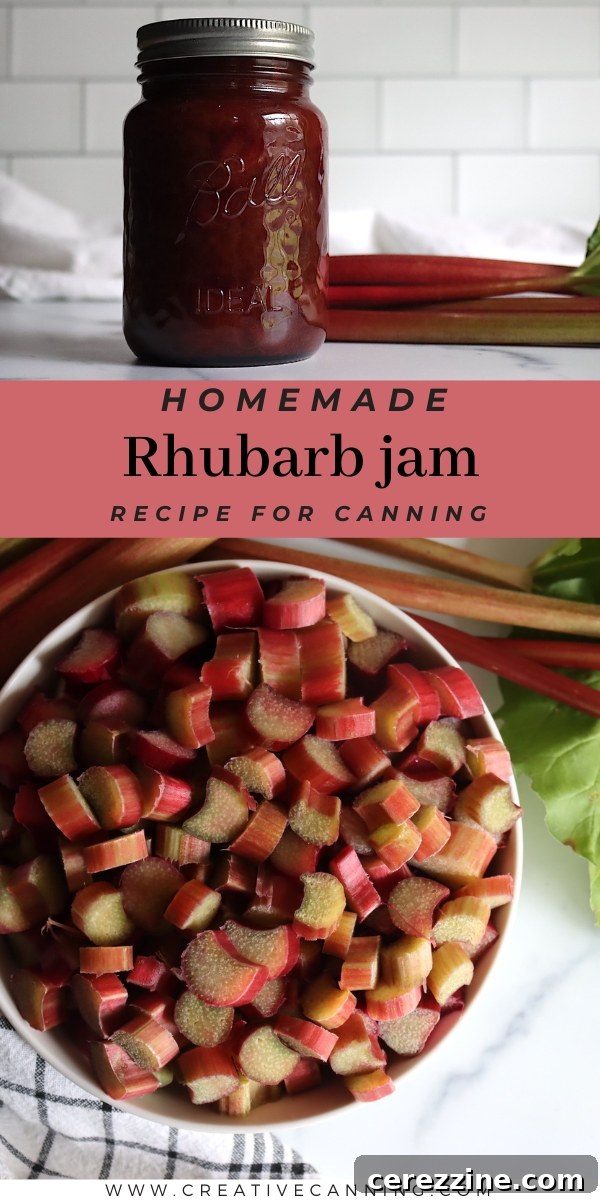
Embrace the joy of homemade preserves and fill your pantry with the vibrant flavors of the season. Happy jamming!