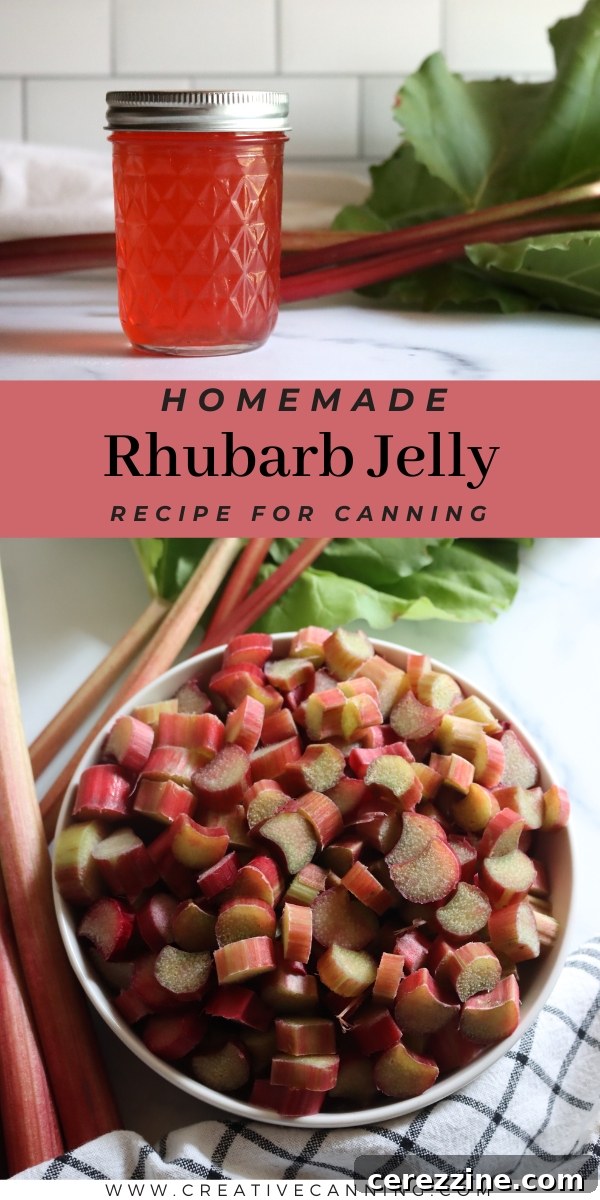
Homemade Rhubarb Jelly: A Taste of Spring in Every Jar
Capture the vibrant essence of spring with this exquisite homemade Rhubarb Jelly recipe. Smooth, luscious, and bursting with the fresh, tart flavor of early-season rhubarb, this jelly is a versatile delight. Perfect for spreading on warm toast, adding a unique twist to thumbprint cookies, or simply stirring into a comforting mug of tea, it brings a touch of sunshine to your pantry all year round.
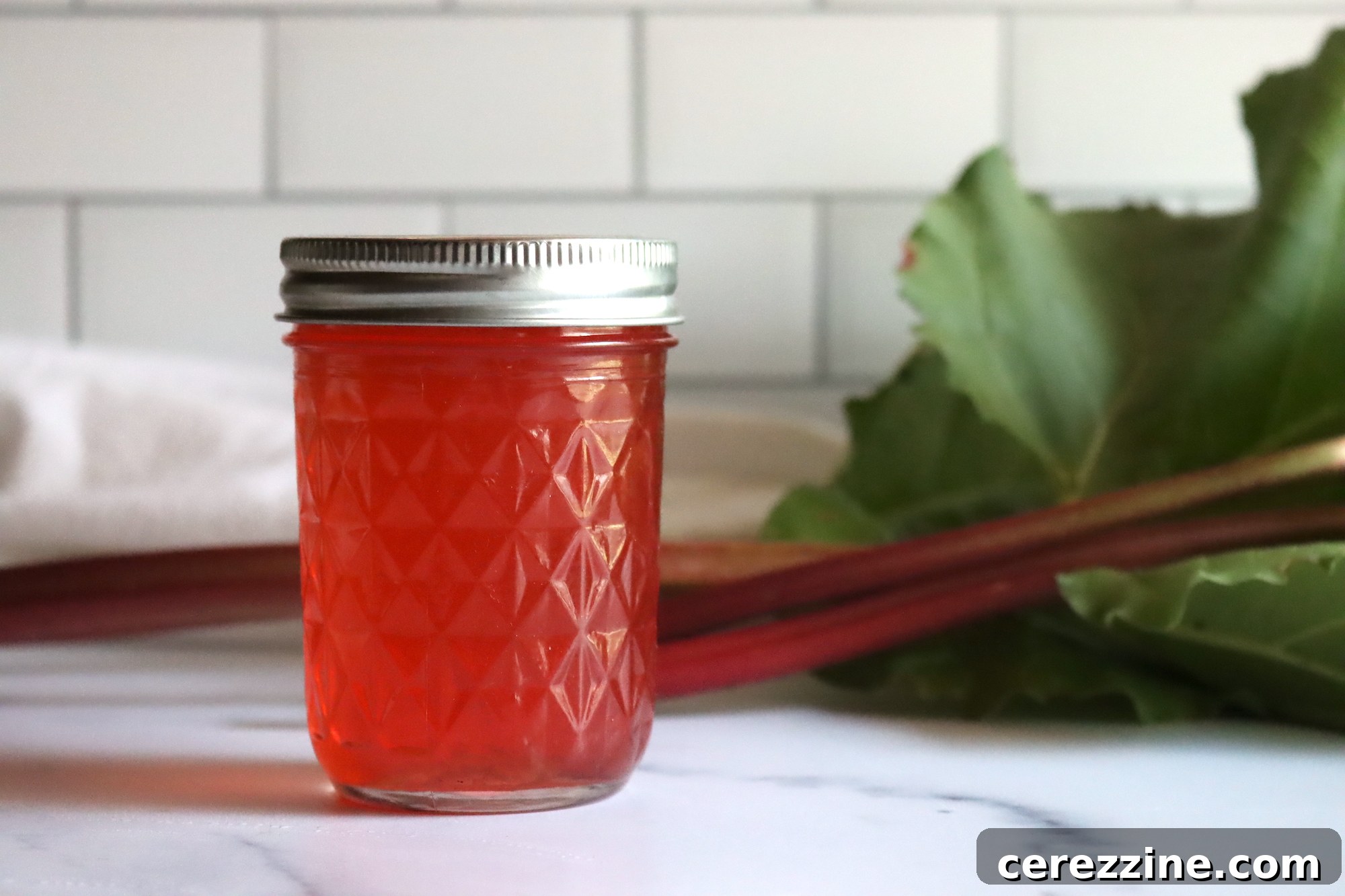
There’s an undeniable magic in homemade preserves, especially when they perfectly encapsulate the true flavor of the fruit. While I adore the rustic charm and texture of fruit jams – and indeed, I make rhubarb jam and strawberry rhubarb jam every year – there’s something uniquely elegant about a smooth, clear jelly. It’s the pure essence of the fruit, transformed into a spread that can elevate a simple piece of toast into a gourmet experience, all without the distraction of chunky fruit pieces.
My own children, true Vermont farm kids at heart, will happily pluck and munch on fresh rhubarb stalks straight from the garden. For them, and for anyone who appreciates the pure, unadulterated taste of spring, this Rhubarb Jelly recipe is an absolute must-make. It’s a preserve that speaks to the heart of the season, offering a bright, tangy sweetness that’s both nostalgic and refreshing.
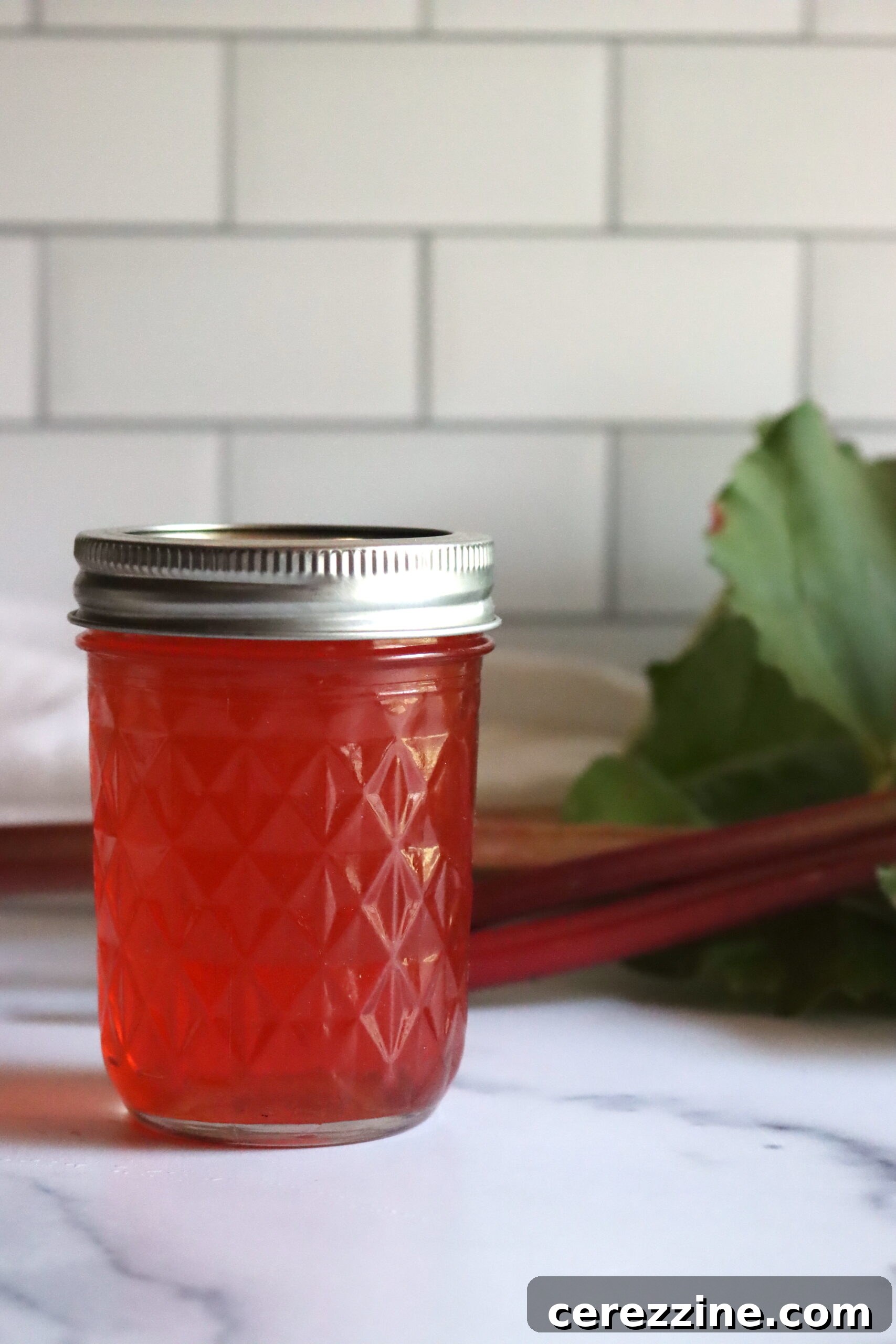
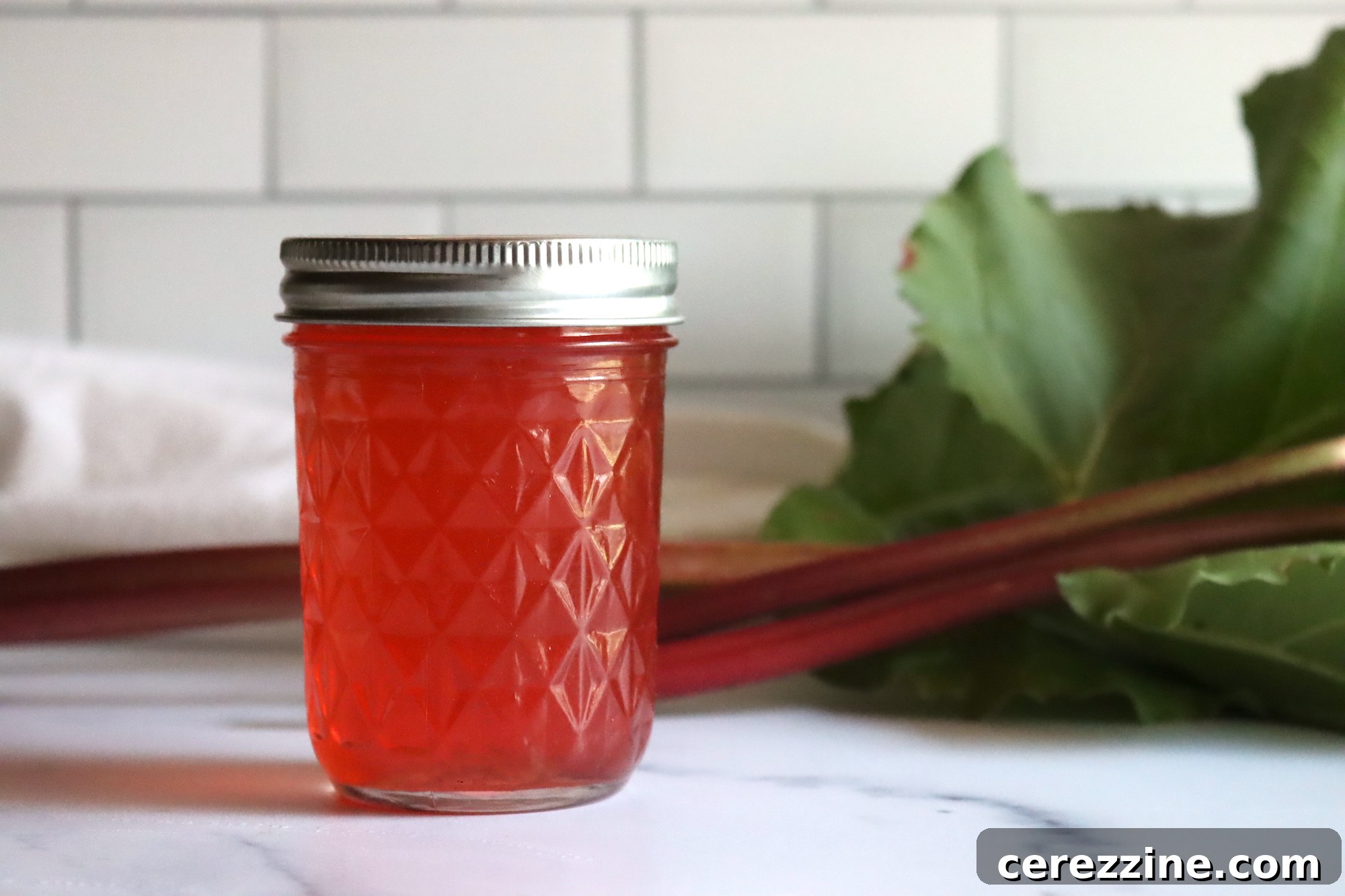
Essential Ingredients for Perfect Rhubarb Jelly
Rhubarb, with its vibrant red stalks, naturally yields a stunningly beautiful, tart, and deeply flavorful jelly. This particular recipe for Rhubarb Jelly is thoughtfully adapted from “Food In Jars: Preserving in Small Batches Year Round” by Marisa McClellan (available here), a fantastic resource for any home preserver.
To produce approximately four half-pint jars of this delightful Rhubarb Jelly, you will need just a few key components:
- 1½ lbs. fresh rhubarb, ensuring bright, firm stalks for the best flavor and color.
- 4 cups granulated sugar, providing the necessary sweetness and aiding in the gelling process.
- One package (1.75 oz.) powdered regular pectin, such as Sure-Jell, which is crucial for achieving the perfect set.
The star of this recipe, fresh rhubarb, is typically one of the earliest perennials to emerge in spring, making this jelly a wonderful way to bottle that early season freshness. Its natural tang provides a rich, distinctive juice that truly makes this homemade jelly stand out. By preserving it, you can enjoy the taste of spring long after the last stalks have been harvested.
For achieving a reliable gel, we consistently use regular pectin. Sure-Jell has always proven to be a trustworthy brand in my canning kitchen, delivering consistent results. If you’re looking to reduce your sugar intake, Sure-Jell also offers a Low Sugar option (identifiable by its pink box). When using low-sugar pectin, you would typically reduce the granulated sugar to between 1 and 3 cups, though it’s important to note that this will result in a slightly smaller yield of jelly. Always follow the specific instructions on your chosen pectin package for best results when modifying sugar content.
Crafting Your Own Rhubarb Jelly: A Step-by-Step Guide
Making homemade rhubarb jelly is a rewarding process that transforms humble stalks into a shimmering, flavorful preserve. Follow these detailed steps to ensure a delicious outcome:
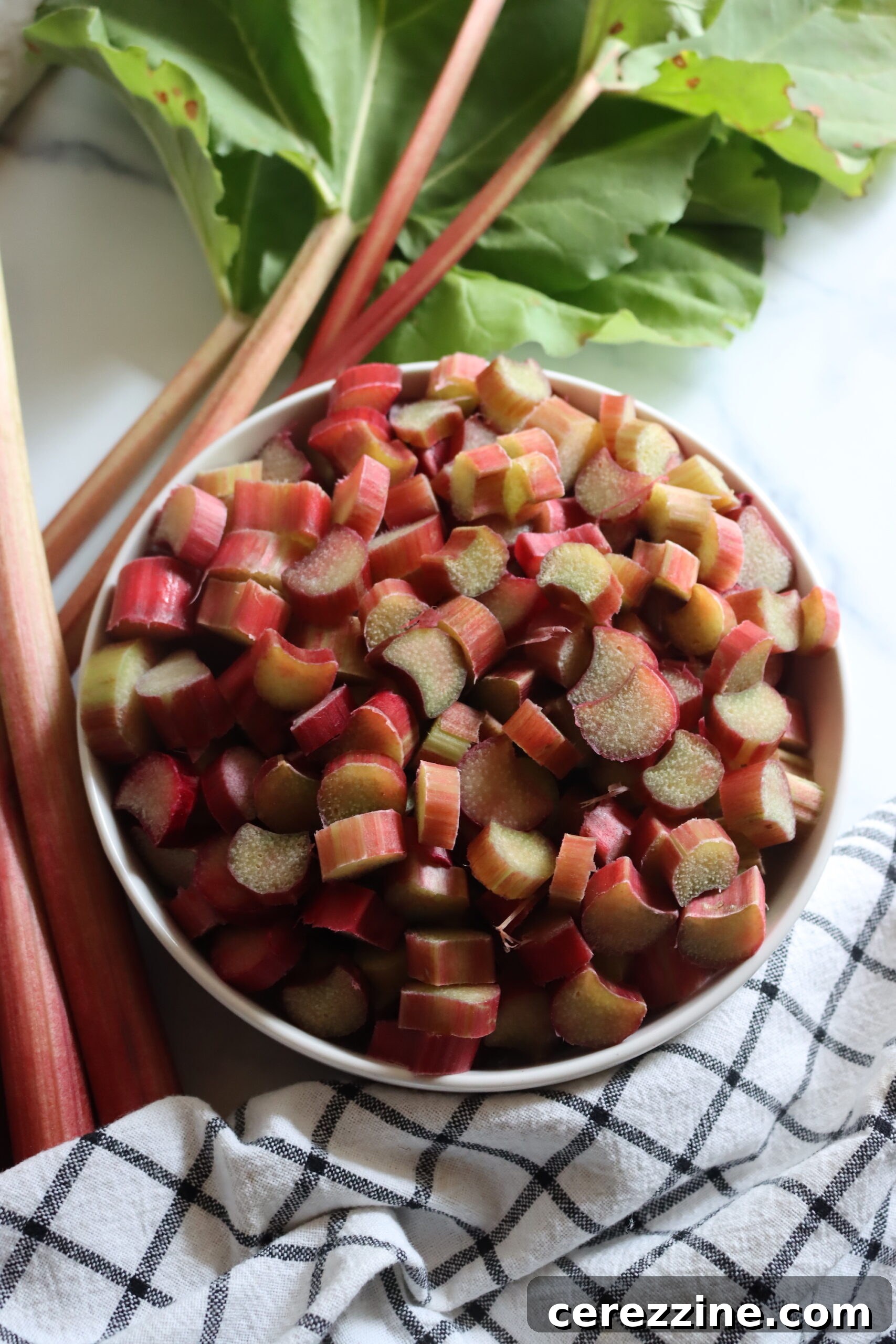
- Prepare the Rhubarb: Begin by trimming off the leafy ends and any tough root tips from your rhubarb stalks. Inspect the stalks carefully and remove any brown or damaged spots. Then, wash the rhubarb thoroughly under cool running water, gently rubbing the stalks with your hands to remove any dirt or residue.
- Chop and Simmer: Roughly chop the cleaned rhubarb into 1-inch pieces. Place these pieces into a large saucepan or a dedicated jam pot. Add 3 cups of water to the chopped rhubarb.
- Extract the Juice: Cook the rhubarb and water mixture over medium-high heat. Bring it to a gentle boil, then immediately reduce the heat to a simmer. Cover the pot and allow the rhubarb to simmer for 15 to 20 minutes, or until the pieces have completely broken down and the water has transformed into a vibrant, bright pink juice. Stir occasionally to prevent sticking and ensure even cooking.
- Strain for Clarity: To obtain clear jelly, proper straining is crucial. Line a large, fine-mesh strainer or sieve with several layers of cheesecloth. Position this over a large bowl, ensuring there’s ample space for the juice to collect. Carefully pour the cooked rhubarb mixture into the cheesecloth-lined strainer.
- Allow to Drip Naturally: Resist the temptation to squeeze or press the rhubarb pulp in the cheesecloth. While doing so might extract a little more juice, it will inevitably force fine pulp particles through the cloth, resulting in cloudy jelly. For a perfectly clear, jewel-toned jelly, simply let the juices drain naturally for 1 to 2 hours, or even longer if needed, until most of the liquid has seeped through. Discard the rhubarb solids once straining is complete.
- Prepare Your Canning Equipment: While the juice is straining, take this time to prepare your jars, lids, and any necessary canning equipment. Sterilize your jars and ensure your water bath canner is ready. If you’re new to water bath canning, I highly recommend consulting a beginner’s guide for additional information and safety protocols.
- Measure Juice and Sugar: Measure out exactly 4 cups of your strained rhubarb juice. Set aside the remaining juice if you have any. In a separate bowl, pre-measure 4 cups of granulated sugar (or less, if you plan to use low-sugar pectin, adjusting according to the pectin package instructions). Do not add the sugar to the juice yet.
- Combine Juice and Pectin: Pour the 4 cups of rhubarb juice into a clean medium saucepan or jam pot. Place the pot on the stove over medium-high heat. Bring the liquid to a rolling boil, stirring occasionally to prevent scorching.
- Add Pectin: Once the juice is boiling, slowly add the powdered pectin, stirring continuously and vigorously to ensure it dissolves completely and no lumps form.
- Boil Pectin Mixture: Continue to boil the mixture vigorously for exactly one minute, stirring constantly. This step is crucial for activating the pectin.
- Add Sugar: Gradually add the pre-measured sugar to the boiling juice, continuing to stir constantly. Stir until all the sugar has fully dissolved and the mixture returns to a full, rolling boil.
- Final Boil: Maintain a hard boil for 1 to 2 minutes, stirring non-stop. This final boiling period helps achieve the perfect gel set. Then, remove the pan from the stove.
- Fill Jars: Carefully ladle or pour the hot jelly mixture into your prepared, hot jelly jars. Leave precisely ¼ inch of headspace at the top of each jar. This space is essential for proper sealing and preventing siphoning during canning.
- Clean Rims and Cap: With a clean, damp cloth, meticulously wipe the rims of each filled jar to remove any jelly residue. Residue can prevent a proper seal. Place a new, clean two-part canning lid onto each jar, then screw on the ring, tightening only until “finger-tight.” Avoid over-tightening, as this can hinder the sealing process.
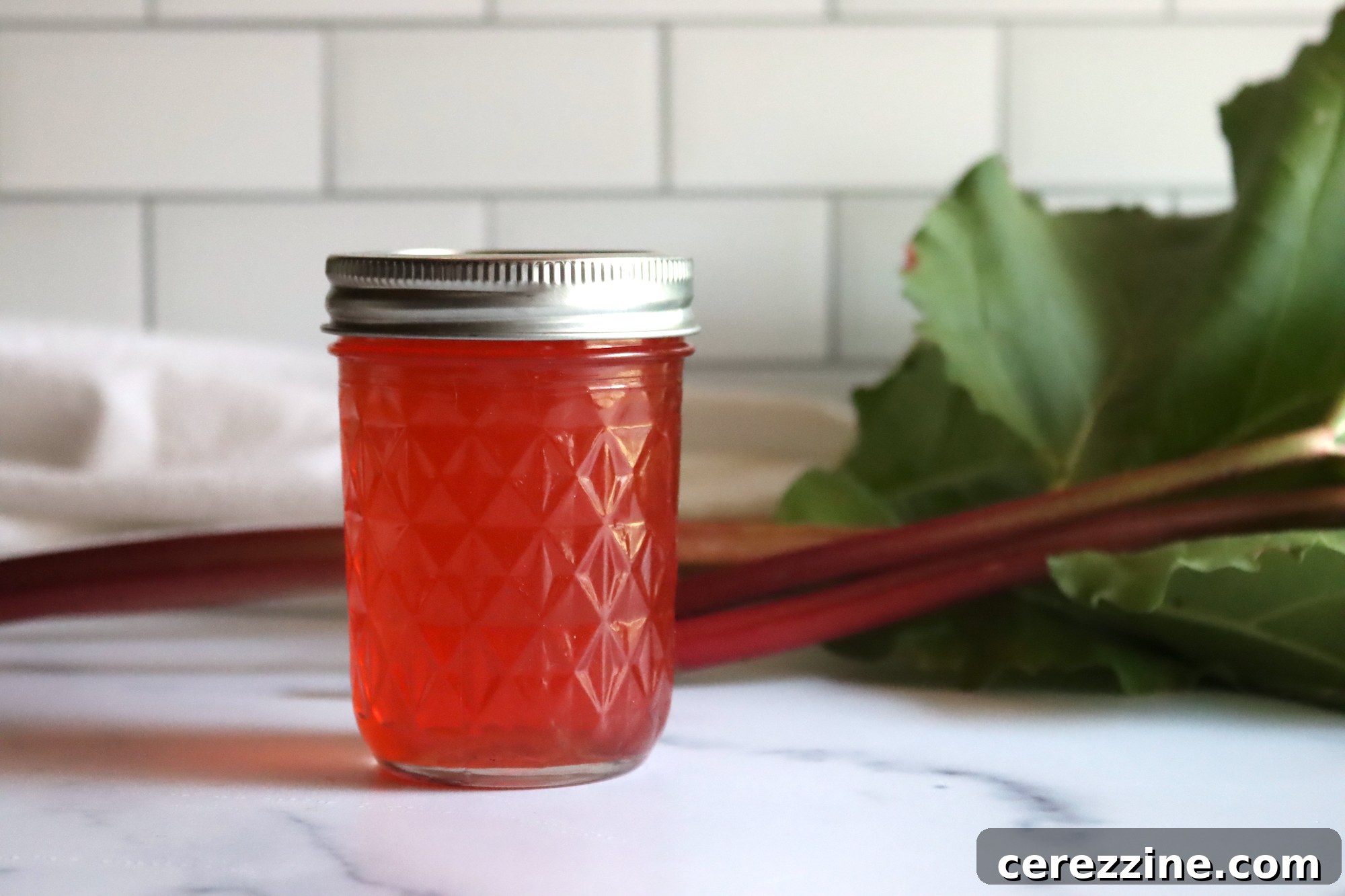
- Set or Can: At this stage, your jelly is essentially complete. You can either proceed directly to water bath canning for shelf-stable storage (instructions below), or simply allow the jars to sit undisturbed on your counter for 24-48 hours until the jelly has fully set. Jelly not processed by canning must be stored in the refrigerator for up to 1 month, or frozen for up to 6 months. For long-term, shelf-stable storage, follow the canning instructions below.
Safe and Successful Water Bath Canning for Rhubarb Jelly
Canning your rhubarb jelly is an excellent way to preserve its fresh flavor for extended periods, allowing you to enjoy the taste of spring far beyond its season. For those new to the hot water bath canning method, please prioritize safety and proper technique. I strongly recommend reviewing my comprehensive Beginner’s Guide to Water Bath Canning before you begin this process, ensuring you are familiar with all safety guidelines.
Here’s how to safely can your homemade rhubarb jelly:
- Prepare Your Canning Setup: Before you even start making the jelly, ensure your jars and lids are sterilized and your hot water bath canner is preheated and simmering. Having everything ready streamlines the process and maintains proper temperatures.
- Fill Hot Jars with Jelly: Once your jelly mixture has reached the desired gel stage (after its final boil), carefully ladle the hot jelly into the prepared hot jars. It is absolutely crucial to leave exactly ¼ inch of headspace at the top of each jar. Using a canning funnel can be incredibly helpful for minimizing spills and accurately measuring this headspace, which is vital for a successful seal and safe preservation.
- Clean Rims and Apply Lids: Use a clean, damp cloth to meticulously wipe the rims of the filled jars. Any jelly residue on the rim can prevent the lid from sealing properly. Once clean, apply new, two-part canning lids (flat lid and screw band). Tighten the canning rings only until they are “finger-tight” – meaning snug but not overly tight. Over-tightening can impede air escape during processing, leading to seal failures.
- Process in Water Bath Canner: Carefully load the filled and capped jars into your preheated water bath canner, ensuring they are fully submerged in water by at least an inch. Bring the canner to a full, rolling boil. Once it reaches a consistent boil, process the jars for 10 minutes. If you are canning at an elevation above 6,000 feet, you will need to increase the processing time to 15 minutes to account for lower boiling points.
- Cool and Rest: After the required processing time has elapsed, turn off the heat. Allow the jars to remain in the hot water bath for an additional 5 minutes. This gentle cooling period helps prevent “siphoning” (loss of liquid from the jars) and promotes a strong seal.
- Remove and Cool: Using a jar lifter, carefully remove the hot jelly jars from the canner. Place them on a towel-lined counter or a wire rack, ensuring there is adequate space between each jar for air circulation. Avoid disturbing the jars for a full 24 hours. During this time, the jars will cool, and you should hear the satisfying “ping” sound as the lids seal.
- Check Seals and Store: After 24 hours, check the seals on all your jars. Press gently on the center of each lid; if it doesn’t flex or pop, the jar is sealed. Any jars that did not seal properly should be stored in the refrigerator and consumed within a month. Store your successfully sealed, canned jelly in a cool, dark, and dry place, such as a pantry. It will maintain excellent quality for about 18 months, though it will remain safe to eat for longer as long as the seal remains intact. Always refrigerate canned jelly after opening.
Exciting Rhubarb Jelly Flavor Variations
While classic rhubarb jelly is a true standalone delight with its characteristic tart and crisp taste, its robust flavor profile also makes it an excellent base for creative variations. These adjustments typically aim to complement the rhubarb’s tartness with added sweetness or aromatic notes, creating unique and delicious preserves.
- Lighter Apple-Rhubarb Blend: For a jelly with a slightly milder flavor and a lighter color, consider replacing a portion of the rhubarb juice with apple juice. The apple juice introduces a subtle sweetness and can mellow the rhubarb’s intensity, creating a beautifully balanced preserve.
- Berry Infusion: To enhance both the color and sweetness of your rhubarb jelly, incorporate fresh strawberries or raspberries during the initial cooking phase with the rhubarb and water. The berries will release their juices, resulting in a deeper red appearance and a delightful sweet berry flavor that harmonizes wonderfully with the tart rhubarb.
- Spiced Rhubarb Jelly: Rhubarb pairs exceptionally well with a variety of warming spices. Experiment by adding a pinch of ground cinnamon, a few thin slices of fresh ginger, a sprig of mint, or a splash of pure vanilla extract to the juice mixture during the final boiling stage. These spices can add depth and complexity to the jelly.
- Honey-Sweetened Alternative: For a more natural sweetener, honey is a fantastic complement to rhubarb. You can substitute some of the granulated sugar with honey when adding the sweetener to the boiling juice. Remember that honey is sweeter than sugar, so you may want to slightly reduce the overall amount of sweetener depending on how much honey you incorporate.
Delicious Ways to Enjoy Your Homemade Rhubarb Jelly
Beyond the classic spread on toast, homemade rhubarb jelly offers a myriad of culinary possibilities. Its bright, tangy flavor can enhance both sweet and savory dishes, making it a versatile staple in your kitchen.
- Breakfast and Brunch Staples: Rhubarb jelly is a natural fit for scones, English muffins, warm biscuits, croissants, and various types of bread. It adds a vibrant, refreshing counterpoint to rich, buttery pastries.
- Dessert Enhancements: Use it as a filling for thumbprint cookies, tarts, or even as a flavorful layer in trifles. A dollop of rhubarb jelly can also elevate a plain yogurt parfait or a scoop of vanilla ice cream.
- Savory Pairings: Don’t limit rhubarb jelly to sweet applications! Its tartness makes it an excellent accompaniment to grilled or roasted meats. Mix it with a little honey and brush it onto chicken, pork, or even duck during the last few minutes of grilling or roasting for a delightful sweet and tangy glaze. It can also be served alongside a cheese board, complementing creamy cheeses beautifully.
- Beverage Boost: Stir a spoonful of rhubarb jelly into a warm mug of black or green tea for a fruity, comforting beverage. You can also dissolve it in hot water and cool it to make a refreshing rhubarb-flavored drink.
Homemade Rhubarb Jelly Recipe
This recipe ensures a vibrant, clear, and perfectly set rhubarb jelly that captures the fresh taste of spring. It’s an easy-to-follow guide for creating a preserve you’ll love.
Rhubarb Jelly
By Ashley Adamant
Rhubarb jelly captures the fresh flavor of rhubarb in an easy to make homemade jelly.
Prep Time: 2 hrs | Cook Time: 20 mins | Additional Time: 10 mins | Total Time: 2 hrs 30 mins
Yields: 40 servings, Makes four half-pint (8 oz) jars
Ingredients
- 1½ lb rhubarb
- 4 cups granulated sugar
- 1 box powdered pectin (1.75 oz), like Sure-Jell
Instructions
- Cut off the leaf and root end of the rhubarb stalks, then wash the stalks under cool water.
- Chop the rhubarb and place it in a large pot. Add 3 cups of water to the rhubarb in the pot.
- Place the pot over medium-high heat, and bring the rhubarb to a low boil. Watch this carefully as rhubarb tends to foam up and overflow the pot quickly when it begins to boil. Stirring regularly will help keep the foam down.
- Reduce the heat and simmer the rhubarb for 15 to 20 minutes, or until the rhubarb has completely broken up and the liquid is bright pink.
- Using a fine mesh strainer or sieve, line the strainer with cheesecloth and place a large bowl under the strainer to capture the juice. Pour the rhubarb mixture into the strainer and allow the juices to drip through, for 1-2 hours or more.
- Measure out 4 cups of juice and pour into a medium jam pot or saucepan.
- Measure 4 cups of sugar and set aside, or 2 ½ cups if you use low-sugar pectin.
- Cook the juice over medium-high heat until boiling, stirring frequently.
- Stirring continuously, slowly add the powdered pectin to the boiling juice, dissolving the pectin.
- Allow the juice with pectin to boil for one full minute.
- Add the sugar slowly to the boiling juice, stirring continuously as the sugar dissolves.
- Bring the mixture back to a hard boil, stirring while boiling for 1-2 minutes.
- Pour the hot jelly into prepared jelly jars using a canning funnel, leaving ¼” headspace, and wipe the rims of the jars with a clean cloth.
- Secure lids to the jars and continue the canning process using the hot water bath method. If canning, process jars in a water bath canner for 10 minutes (or 15 minutes if above 6,000 feet in elevation).
- If you do not plan on canning your jelly, leave the jars to cool on the counter until the jelly has set, for 24 – 48 hours. Jelly that has not been canned should be stored in the refrigerator for up to 1 month or in the freezer for six months. Jelly that has been processed and sealed using a canning method can be stored in a cool, dry place, where it will maintain quality for 18 months. For all jelly, refrigerate once opened.
Notes
*Using less sugar and low-sugar pectin will result in a lower yield. You can use up to 5 cups of juice for rhubarb jelly to yield 5 half-pint jars.
Low-sugar pectin can be used to make jelly, which calls for less sugar than the regular pectin recipe.
Sure-Jell low-sugar pectin is a reliable brand for making jelly with less sugar.
For making rhubarb jelly using low-sugar pectin, use 1 to 3 cups of sugar for 4-5 cups of juice. Low-sugar jelly is a great option for people who need to (or want to) keep their sugar intake low.
Nutrition
Calories: 85kcal, Carbohydrates: 22g, Protein: 0.2g, Fat: 0.1g, Saturated Fat: 0.01g, Polyunsaturated Fat: 0.02g, Monounsaturated Fat: 0.01g, Sodium: 3mg, Potassium: 49mg, Fiber: 0.4g, Sugar: 20g, Vitamin A: 17IU, Vitamin C: 1mg, Calcium: 15mg, Iron: 0.1mg
Nutrition information is automatically calculated, so should only be used as an approximation.
Liked this recipe? Leave a comment below!
More Delightful Spring Jelly Recipes
Spring is truly the season of abundance, offering a wide array of fruits and florals perfect for transforming into shimmering, homemade jellies. It’s the ideal time to fill your pantry with these seasonal treasures!
- Classic Strawberry Jelly
- Unique Spruce Tip Jelly
- Fragrant Lilac Jelly
- Golden Dandelion Jelly
- Beautiful Redbud Jelly
Beyond Jelly: More Rhubarb Canning Recipes
If you find yourself with a bountiful harvest of rhubarb, there are countless ways to preserve its distinct flavor for enjoyment throughout the year. Don’t let a bumper crop go to waste – explore these additional rhubarb canning recipes to stock your pantry!
- 12+ Creative Rhubarb Canning Recipes
- Simple Canning Rhubarb Chunks
- Versatile Canning Rhubarb Juice
- Ready-to-Use Canning Rhubarb Pie Filling