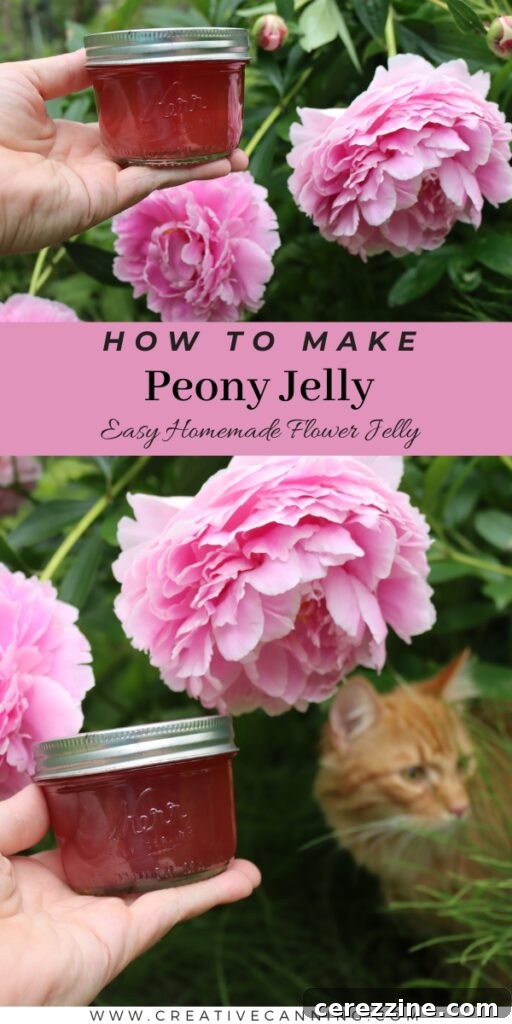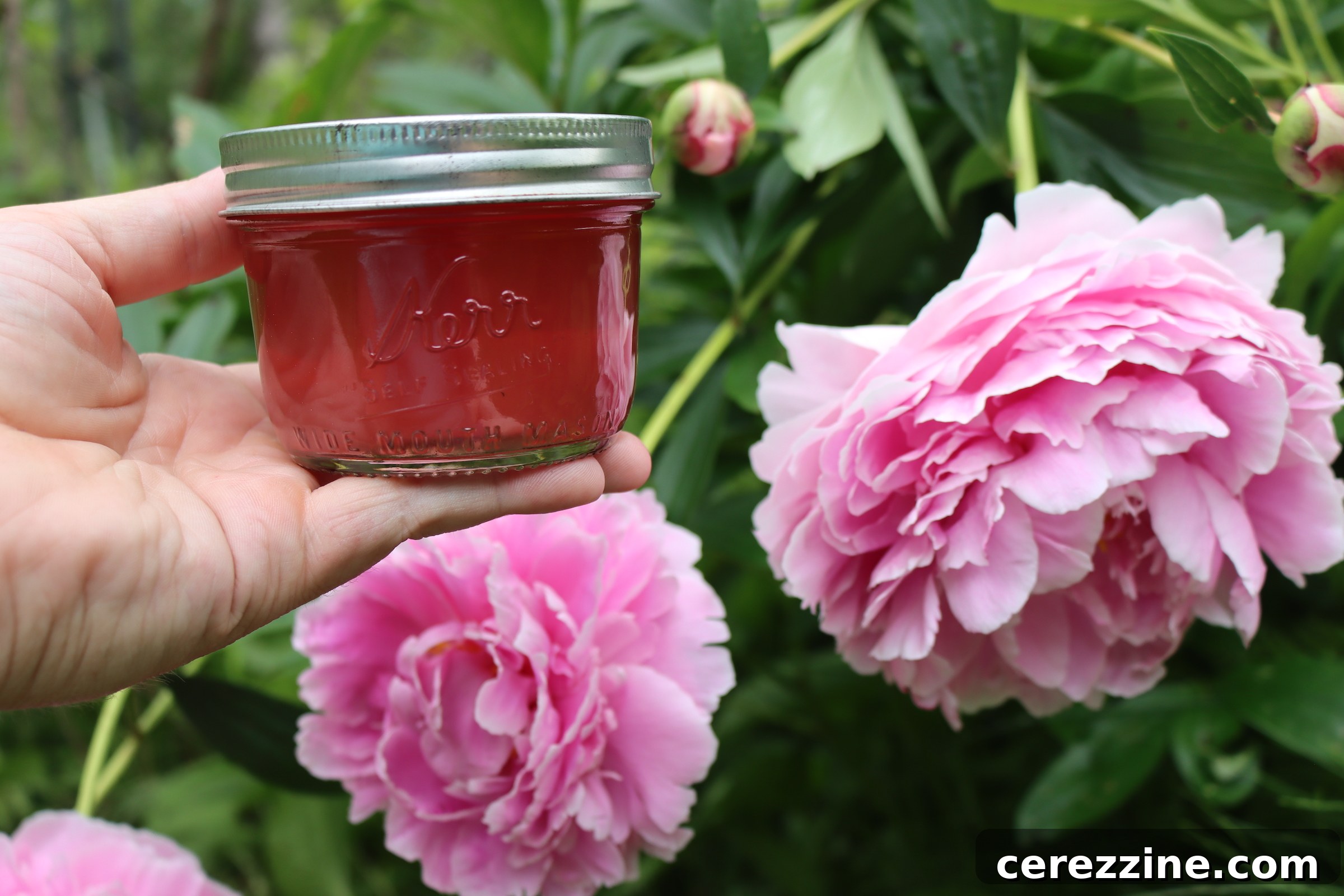
Welcome to a culinary journey that transforms the ephemeral beauty of spring peonies into a delectable, aromatic preserve: Peony Jelly. Imagine capturing the gentle essence of your garden’s most magnificent blooms in a jar, ready to brighten your day with every spoonful. Peony jelly isn’t just a sweet spread; it’s an experience, a delicate symphony of floral notes and subtle sweetness that promises to elevate your breakfast toast, scones, or even a sophisticated cheese board. This exquisite homemade jelly offers a unique way to savor the enchanting fragrance and beauty of peonies long after their season has passed, bringing a touch of botanical elegance to your kitchen all year round.
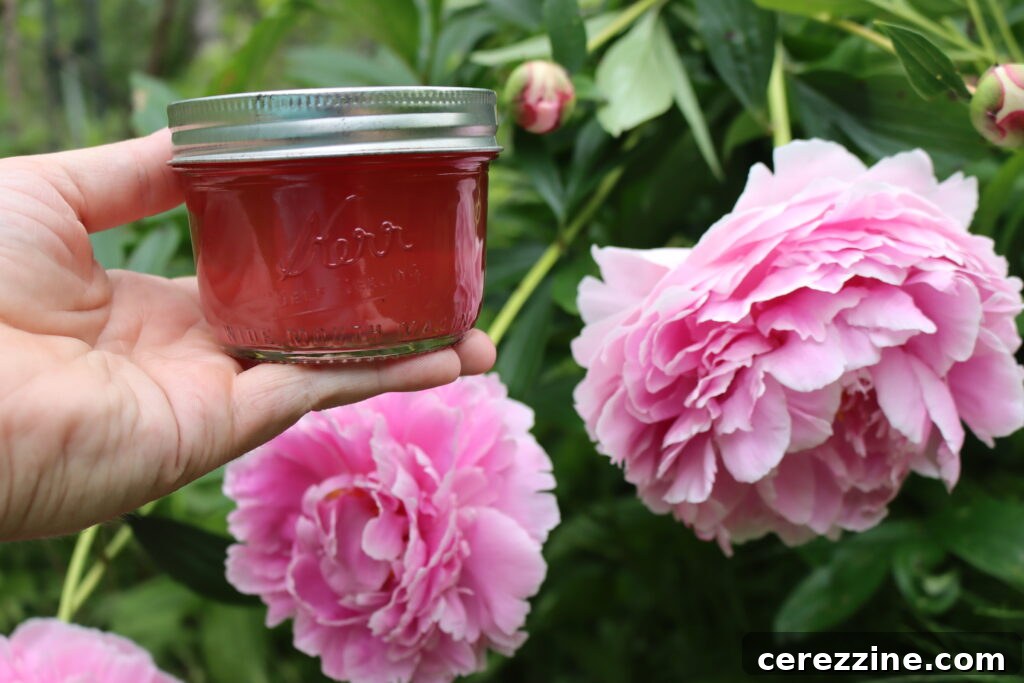
Peonies, renowned for their lavish, often intoxicatingly fragrant blossoms, are more than just ornamental garden showstoppers. Their delicate petals harbor a subtle, enchanting flavor that is perfectly suited for culinary creations. While most gardeners adore peonies for their visual appeal, discovering their edible qualities opens up a new realm of enjoyment. Making peony jelly is a delightful and surprisingly straightforward process that allows you to preserve the fleeting magic of these magnificent flowers, turning them into a pantry staple that feels incredibly luxurious.
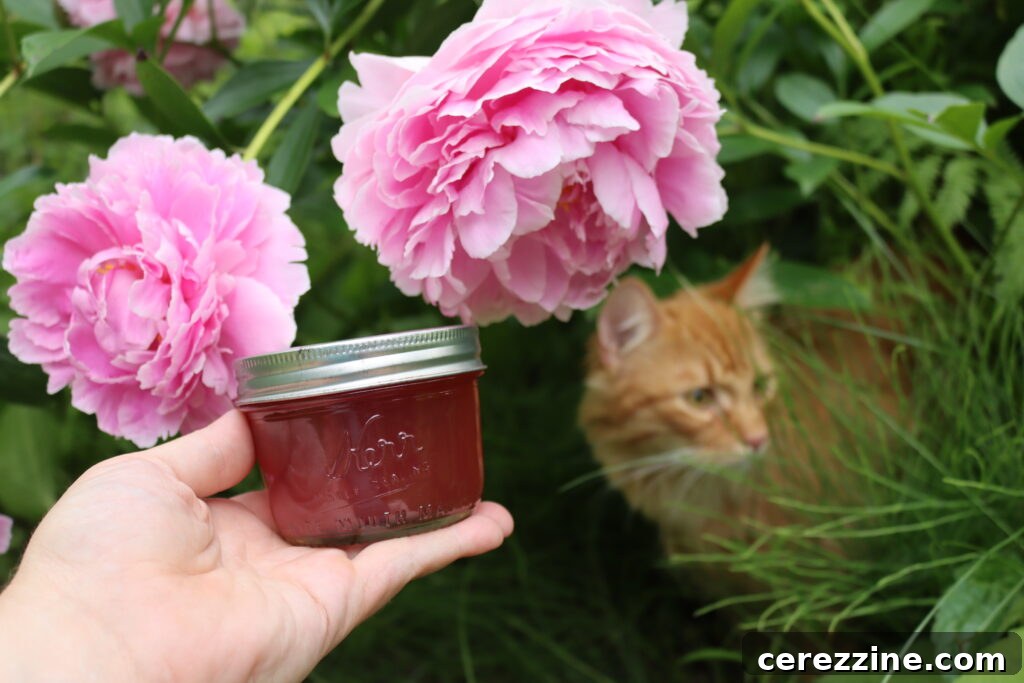
A Quick Look at Peony Jelly Essentials
For those eager to dive right in, here’s an overview of what you’ll need and what to expect when crafting your very own batch of this floral delicacy.
- Recipe Name: Peony Jelly
- Recipe Type: Flower Jelly Recipe, perfect for edible garden blooms.
- Canning Method: Water Bath Canning, ensuring shelf-stable preservation.
- Prep Time: Approximately 15-20 Minutes (for petal harvesting and steeping).
- Cook Time: Roughly 15-20 Minutes (for boiling and setting the jelly).
- Canning Time: 10 Minutes (for processing jars in a water bath).
- Yield: 4 to 5 half-pint (8 oz) jars.
- Jar Sizes: Quarter pint, half pint, or pint jars can be used.
- Headspace: A crucial 1/4 inch is required for proper sealing during canning.
- Key Ingredients: Fresh, edible peony petals, water, fresh lemon juice (absolutely essential!), and granulated sugar.
- Difficulty: Easy! If you can brew a tea and follow simple setting instructions, you can make peony jelly.
- Similar Recipes: The method closely mirrors other delightful edible flower jellies, such as Tulip Jelly, Pansy Jelly, Forsythia Jelly, Lilac Jelly, and Rose Petal Jelly.
The Allure of Peony Jelly: Why Choose These Blooms?
Peonies hold a special place in the hearts of gardeners worldwide, cherished for their grand, opulent blooms and rich, captivating scent. These resilient perennial flowers, available in a spectrum of soft pinks, deep reds, and pure whites, transform any garden into a masterpiece. While their ornamental value is undeniable, the culinary potential of peony flowers is often overlooked. Their petals are entirely edible and can be ingeniously used to craft a variety of gourmet treats, from delicate syrups to the star of our show: exquisite floral jelly.
The flavor profile of peony petals is subtly enchanting – gentle, distinctively floral, and faintly sweet, with undertones reminiscent of classic roses. This delicate bouquet makes them an ideal candidate for jelly-making, as the process effectively captures their nuanced essence, bottling the very spirit of springtime. Each jar becomes a vessel of floral elegance, ready to infuse your meals with a unique charm.
While the roots of peonies have historically been utilized in traditional medicine, the flowers themselves offer a different kind of nourishment—a peaceful, soothing sensory experience. Beyond their culinary delights, creating peony jelly is a wonderful way to honor and extend the brief, beautiful lifespan of these seasonal blossoms. It’s a mindful practice that results in a tangible celebration of nature’s transient beauty, allowing you to enjoy a taste of spring’s splendor for many months to come.
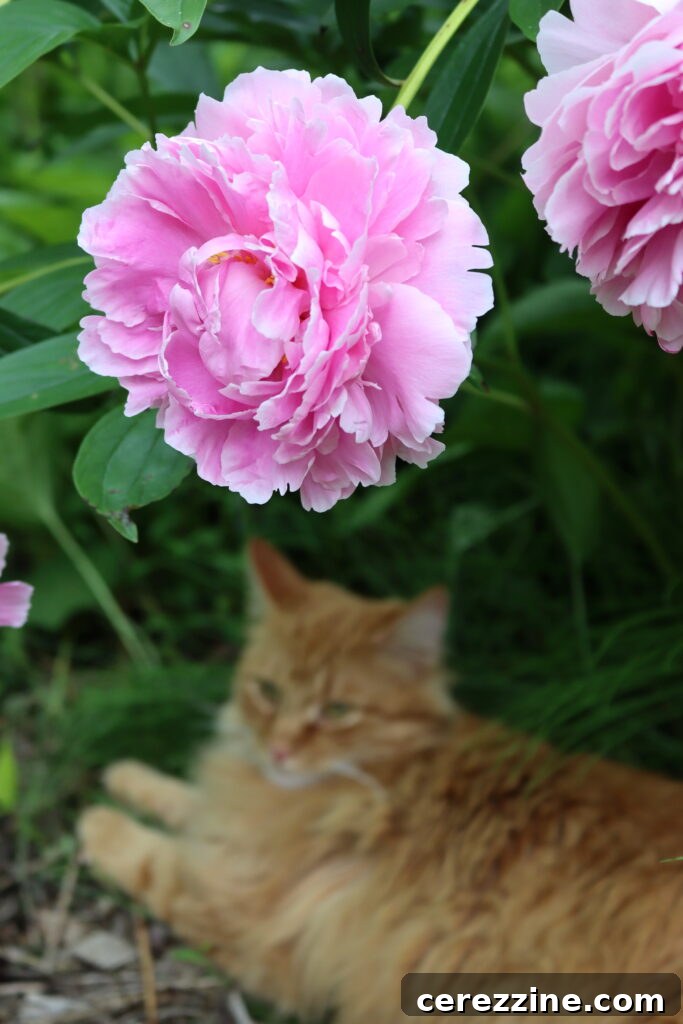
What Does Peony Jelly Taste Like? A Sensory Journey
To taste peony jelly is to experience a gentle breath of fresh spring air, bottled and ready for enjoyment. The flavor is soft, ethereal, and wonderfully fragrant, unfolding with mild floral notes that gracefully dance between the familiar sweetness of roses, a hint of golden honey, and a whisper of soothing lavender. Its sweetness is refined and never overwhelming, making it a sophisticated choice for palates that favor subtle, nuanced floral flavors over more intense, fruit-forward preserves.
The gentle, almost elusive essence of peonies bestows upon the jelly a truly refined and sophisticated sweetness. This unique flavor profile pairs exquisitely with a wide array of foods. Imagine it melting delicately on warm, buttery biscuits, providing an unexpected counterpoint to creamy, tangy cheeses, or adding a surprising floral twist to your morning yogurt. Peony jelly is an ideal choice for those who appreciate light, elegant floral flavors that linger pleasantly without dominating the palate. Its soft, honey-kissed sweetness, coupled with that touch of complex floral aroma, creates a truly unforgettable culinary delight that captures the magic of a blossoming garden.
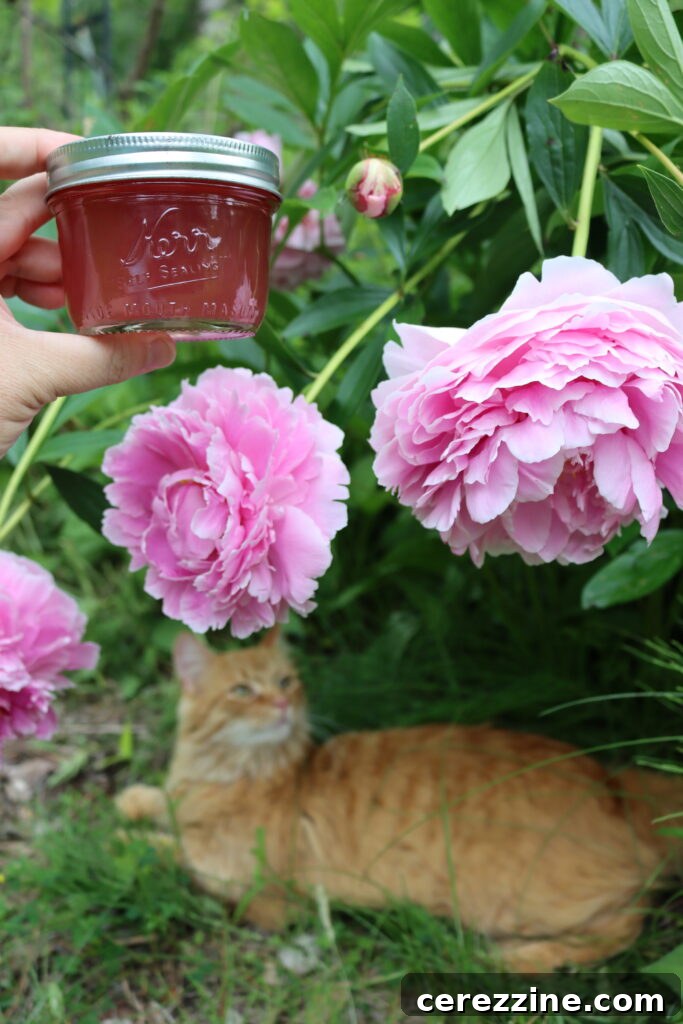
Crafting Your Own Peony Jelly: A Step-by-Step Guide
If you’re new to the world of floral jellies, fear not! The process for making peony jelly is remarkably similar to other herbal or botanical preserves, and the exquisite results are undeniably worth the simple effort. Here’s everything you’ll need to create your own enchanting batch of peony jelly, bringing the elegance of your garden to your pantry.
Essential Ingredients for Peony Jelly
- 2 to 4 cups fresh peony petals: Ensure these are clean, free of pesticides, and only the petals (discard all stems and green parts).
- 4 cups water: For steeping and creating the peony tea base.
- 2 tablespoons fresh lemon juice: Absolutely non-negotiable! This is crucial for balancing flavor and, most importantly, for safety in canning by lowering the pH.
- 1 box (1.75 oz) powdered pectin: A reliable brand like Sure-Jell works wonderfully. Be sure to check if it’s regular or low-sugar variety, as this impacts sugar ratios.
- 4 cups granulated sugar: Adjust down to 1/2 to 1 cup if using a low-sugar pectin.
A Note on Lemon Juice: This ingredient plays a dual role: it provides a refreshing tang that brightens the delicate floral notes, and it significantly lowers the pH of the jelly mixture. This acidity is absolutely vital for pectin to set properly and for ensuring a safe product if you plan on water bath canning. Do not, under any circumstances, omit or reduce the amount of lemon juice.
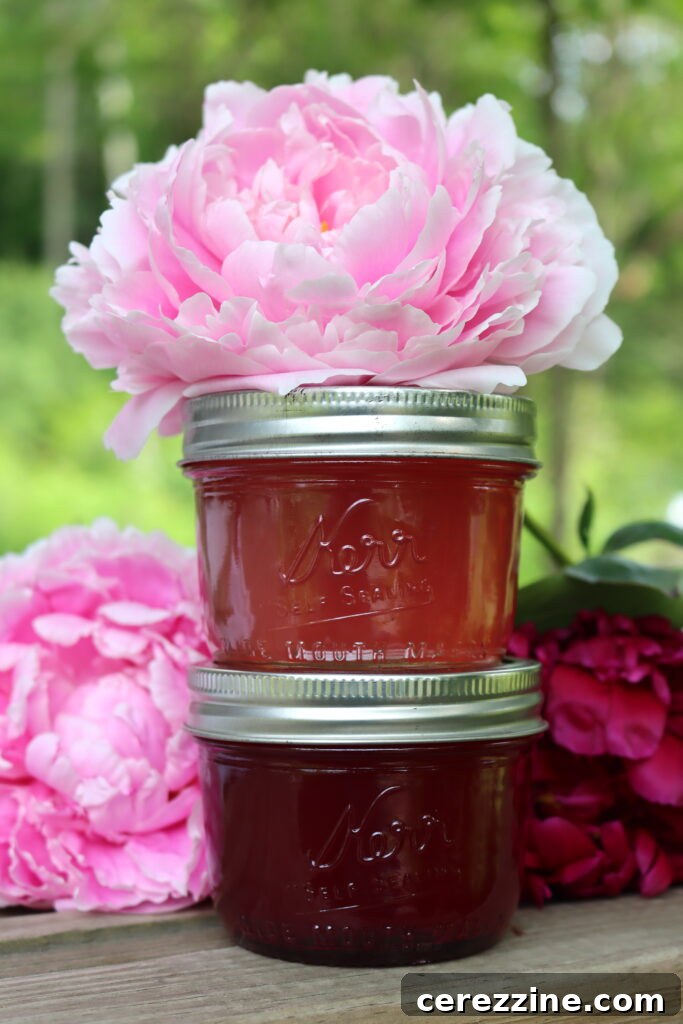
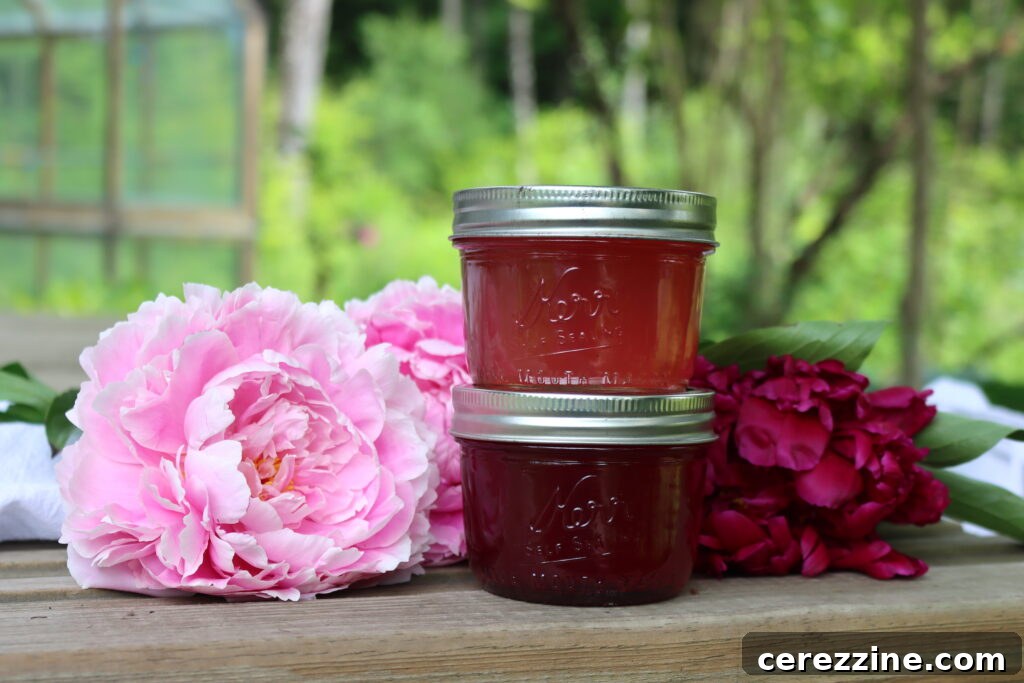
Color and Fragrance: The color of your finished jelly will largely depend on the hue of your peonies; darker petals generally yield a more vibrant jelly. For flavor, however, prioritize the most fragrant peony varieties you can find, as the jelly’s taste is a direct reflection of the flower’s natural aroma.
The Peony Jelly Making Process
- Harvest and Prepare Petals: Begin by carefully selecting the freshest, most vibrant peony flowers from your garden. Choose blooms that are fully open and at their peak fragrance. Crucially, ensure your peonies have not been treated with any pesticides or chemicals. Gently pluck the petals from the flower heads, making sure to discard all stems and any green parts, as these can impart a bitter flavor. Aim for about 2 to 4 cups of loosely packed fresh petals, adjusting based on the intensity of flavor you desire.
- Steep the Peony Tea: Place the harvested peony petals into a clean, heatproof bowl or jar. Bring 4 cups of fresh water to a rolling boil, then immediately pour the boiling water over the petals. Allow the petals to steep for approximately 15 to 20 minutes. During this time, you’ll observe the water gradually transforming into a beautiful pale pink or lavender hue, and a delightful floral fragrance will begin to fill your kitchen. Once steeped, strain the liquid through a fine-mesh sieve or cheesecloth, pressing lightly on the petals to extract as much liquid as possible, then discard the spent petals and reserve the fragrant liquid.
- Form the Jelly Base: Transfer the strained peony tea into a large, heavy-bottomed pot or a dedicated jam pot. Add the 2 tablespoons of fresh lemon juice. The lemon juice is vital as its acidity not only brightens the floral flavor but also plays a critical role in activating the pectin and ensuring a safe, properly set jelly, especially if you plan to can it.
- Incorporate Pectin and Boil: Sprinkle the powdered pectin evenly over the liquid in the pot. Stir continuously until the pectin is completely dissolved. Bring the mixture to a vigorous, rolling boil over high heat, stirring frequently to prevent sticking. Allow it to boil for precisely 1 minute. It is important at this stage to add only the pectin; the sugar will be added next.
- Add Sugar and Re-boil: Once the pectin has boiled for one minute, stir in the 4 cups of granulated sugar. Continue stirring constantly until the sugar is fully dissolved and the mixture returns to a full, rolling boil. For those using a “low-sugar” pectin, you can reduce the sugar significantly, typically to about 1/2 to 1 cup, depending on your preferred sweetness and the pectin’s instructions. Remember that the amount of sugar affects both the sweetness and the final texture of your jelly. Let the mixture boil vigorously for another 1 minute, ensuring constant stirring. This final boil is crucial for the jelly to reach its proper setting point and desired consistency.
- Jar the Hot Jelly: Immediately after the final boil, remove the pot from the heat. Carefully ladle the hot peony jelly into sterilized canning jars. Fill the jars, leaving a precise 1/4 inch of headspace at the top of each jar. Use a clean, damp cloth to wipe the rims of the jars thoroughly, ensuring no jelly residue prevents a proper seal. Place new canning lids on top of the clean rims.
Mastering Pectin and Sugar for Perfect Jelly
The type of pectin you choose can significantly influence the final sweetness and texture of your peony jelly. Understanding the different options will help you achieve your desired result.
- Avoid Liquid Pectin: For peony jelly, it’s generally best to steer clear of liquid pectin. Liquid pectins typically require a much higher sugar content—often around 7 cups of sugar for just 4 cups of liquid—to achieve a proper set. Powdered pectin offers a more balanced approach to flavor and sweetness, allowing for more flexibility.
- Standard Powdered Pectin: When using a standard powdered pectin, such as Sure-Jell, you’ll typically follow a 1:1 ratio of liquid to sugar. For this peony jelly recipe, that means 4 cups of peony tea will require 4 cups of granulated sugar. This combination results in a beautifully sweet, traditionally set jelly that appeals to those who love classic preserves.
- Low-Sugar Pectin Options: If you prefer a less sweet jelly, a low-sugar pectin is your best friend. Brands like Sure-Jell Low Sugar allow you to dramatically reduce the sugar content, often to as little as 1 to 2 cups per batch. Keep in mind that reducing the sugar will naturally result in a less sweet jelly and may also lead to a slightly smaller yield—expect around 3-4 jars compared to 5 half-pints with a full-sugar recipe.
- Pomona’s Universal Pectin: Another excellent choice for low-sugar jelly makers is Pomona’s Universal Pectin. This particular pectin relies on calcium to set, rather than a high sugar content. Always follow the specific instructions provided with Pomona’s Universal Pectin for the best and most consistent results.
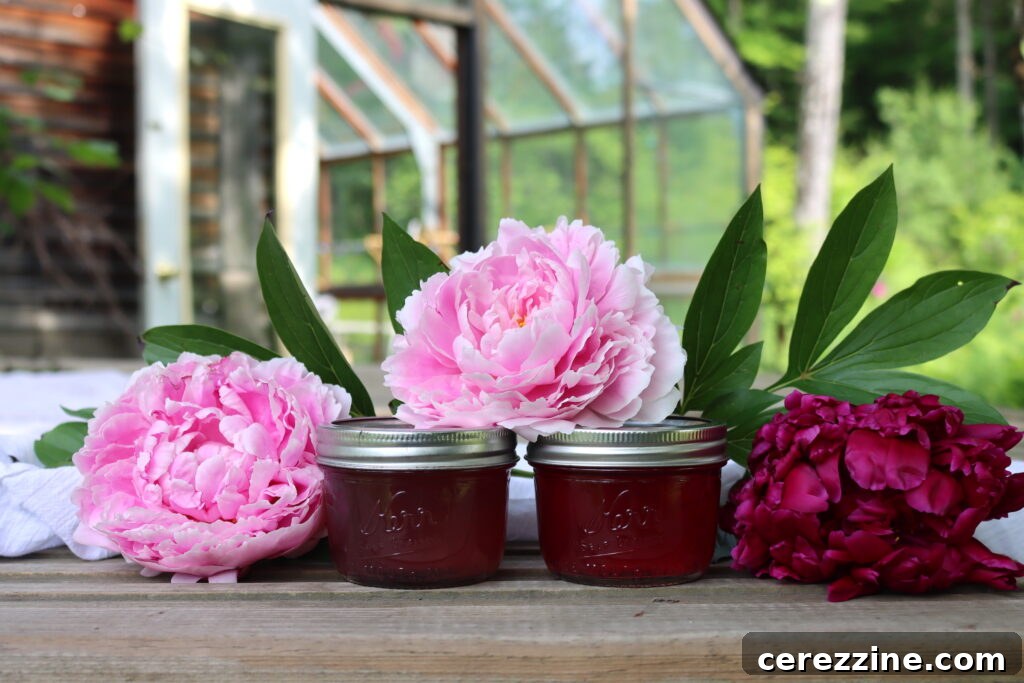
Preserving Perfection: Water Bath Canning Your Peony Jelly (Optional)
Canning your homemade peony jelly is an excellent way to extend its shelf life, allowing you to enjoy the delicate flavors of spring for many months, even years, to come. It’s a straightforward process that ensures safety and preserves quality.
Canning Equipment Checklist
Before you begin the canning process, gather all necessary supplies:
- Water Bath Canner: A large pot with a lid and a rack to keep jars off the bottom.
- Clean Canning Jars: Sterilized and warm (quart, pint, or half-pint sizes are suitable).
- New Canning Lids: Always use new lids for proper sealing.
- Screw Bands: Reusable metal rings.
- Jar Lifter: For safely moving hot jars.
- Headspace Tool or Ruler: To measure the 1/4 inch headspace accurately.
- Non-Metallic Utensil: To remove air bubbles from jars.
- Clean Cloths: For wiping jar rims.
The Water Bath Canning Procedure
- Prepare the Canner: Fill your water bath canner with enough water to cover the tallest jars by at least 1 inch. Bring the water to a simmer (around 180°F or 82°C) while you prepare your jelly.
- Fill and Seal Jars: Once your jars are filled with hot jelly and the rims are wiped clean, place the new canning lids on top. Screw on the metal bands until they are “finger-tight” – firm but not overly tight.
- Process in Water Bath: Carefully lower the filled jars onto the rack in the simmering water bath canner, ensuring they do not touch each other. Once all jars are in, increase the heat to bring the water to a full, rolling boil.
- Process Time: Begin timing when the water reaches a full boil. Process half-pint or pint jars for 10 minutes. If you are at an elevation above 6,000 feet, increase the processing time to 15 minutes to account for lower boiling points.
- Cool and Check Seals: After the processing time is complete, turn off the heat and carefully remove the canner lid. Let the jars rest in the hot water for 5 minutes before carefully lifting them out with a jar lifter. Place the hot jars on a clean towel on your counter, ensuring there is space between them for air circulation. Allow them to cool undisturbed for 12 to 24 hours. As they cool, you should hear a “pop” sound as the lids seal. Check the seals after cooling by pressing the center of each lid; if it doesn’t flex, it’s sealed.
Storage and Shelf Life
Properly sealed jars of peony jelly can be stored in a cool, dark place for up to 12-18 months. Once a jar has been opened, it must be refrigerated and consumed within 2-3 weeks. By canning your peony jelly, you ensure that the delicate charm and exquisite flavor of your homemade preserve can be enjoyed throughout the year, making it perfect for personal indulgence or thoughtful gifts for friends and family.
If you tried this Peony Jelly Recipe, or any other recipe on Creative Canning, we’d love to hear from you! Please leave a comment below to share your experience!
And make sure you stay in touch with us by following on social media!
- Substack
Explore More Garden Flower Jellies
How to Make Flower Jelly (with 20+ Recipes!)
Redbud Jelly & Syrup
Rose Petal Jelly
Peony Jelly Recipe
Prep Time: 15 mins
Cook Time: 15 mins
Canning Time: 10 mins
Total Time: 40 mins
Yield: 32 Servings, or 4 to 5 half-pint jars
Ingredients
- 2 to 4 cups fresh peony petals (only the petals, no stems or green parts)
- 4 cups water
- 2 Tbsp fresh lemon juice
- 1 Box Powdered Pectin (1.75 oz, regular or low sugar, see notes)
- 4 cups granulated sugar (or less, see notes)
Instructions
- Harvest the Peony Petals: Start by picking the freshest peony flowers from your garden. Choose blossoms that are fully open and vibrant, but make sure they are free of pesticides or other chemicals. Gently pull the petals from the flowers, discarding the stems and green parts. You’ll need about 2 to 4 cups of fresh petals, depending on the size of your blooms.
- Steep the Petals: Place the peony petals in a heatproof jar or bowl. Pour 4 cups of boiling water over the petals and let them steep for about 15 to 20 minutes. As the petals steep, the water will take on a lovely pale pink or lavender hue and begin to smell incredibly fragrant. After steeping, strain out the petals, reserving the liquid.
- Prepare the Jelly Base: Pour the strained peony tea into a large pot or jam pot. Add 2 tablespoons of fresh lemon juice. The acidity from the lemon juice helps balance the sweetness of the sugar and also ensures the jelly will set properly.
- Add Pectin and Boil: Sprinkle in the powdered pectin and stir until it’s fully dissolved. Bring the mixture to a boil, and allow it to boil for 1 minute. It’s important not to add the sugar just yet—only the pectin at this stage.
- Add Sugar: Once the pectin has dissolved and the liquid is boiling, stir in 4 cups of granulated sugar. Stir until the sugar is completely dissolved. If you’re using a “low-sugar” pectin, you can reduce the sugar to as little as 1/2 to 1 cup, depending on your preference. The amount of sugar you use will affect both the sweetness and the texture of the jelly, so adjust to your taste.
- Final Boil: Bring the mixture back to a full, rolling boil and let it cook for 1 more minute. This final boil ensures the jelly thickens properly and reaches the right consistency.
- Jar the Jelly: After the final boil, remove the pot from the heat. Carefully ladle the hot jelly into sterilized canning jars, leaving about 1/4 inch of headspace at the top of each jar. Wipe the rims clean before sealing with the jar lids.
- Canning (Optional): Before you begin, make sure you have a water bath canner, clean jars, and new canning lids. You’ll need enough water in the canner to cover the jars by at least 1 inch.
- Seal and Process: Once the jars are filled with jelly, wipe the rims clean and place the lids on top. Screw on the metal rings until they’re just finger-tight. Process the jars in the water bath canner for 10 minutes (or 15 minutes if you’re above 6,000 feet in elevation).
- Cool and Store: After the processing time is up, carefully remove the jars from the canner and let them cool on a towel on the counter. If the jars seal correctly, they will be shelf-stable for up to 12-18 months. Be sure to refrigerate the jelly after opening.
Notes
- Standard Pectin: If you’re using a standard pectin like Sure-Jell, you’ll need a 1:1 ratio of liquid to sugar. So, for every 4 cups of peony tea, you’ll need 4 cups of sugar. This results in a sweet, traditional jelly that’s perfect for those who love a classic taste.
- Low-Sugar Options: For a lower sugar version, you can use a low-sugar pectin like Sure-Jell Low Sugar. This allows you to reduce the sugar to as little as 1-2 cups. Keep in mind that using less sugar will result in a less sweet jelly and a slightly smaller yield—about 3-4 jars compared to 5 half-pints with a full-sugar recipe.
- Pomona’s Universal Pectin: Another great option for low-sugar jelly is Pomona’s Universal Pectin. Just follow the instructions that come with it for the best results.
- Avoid Liquid Pectin: It’s generally best to avoid liquid pectin, as it requires a lot more sugar to set—about 7 cups of sugar for 4 cups of liquid. Stick with powdered pectin for a better balance of flavor and sweetness.
Nutrition
Nutrition information is automatically calculated, so should only be used as an approximation.