
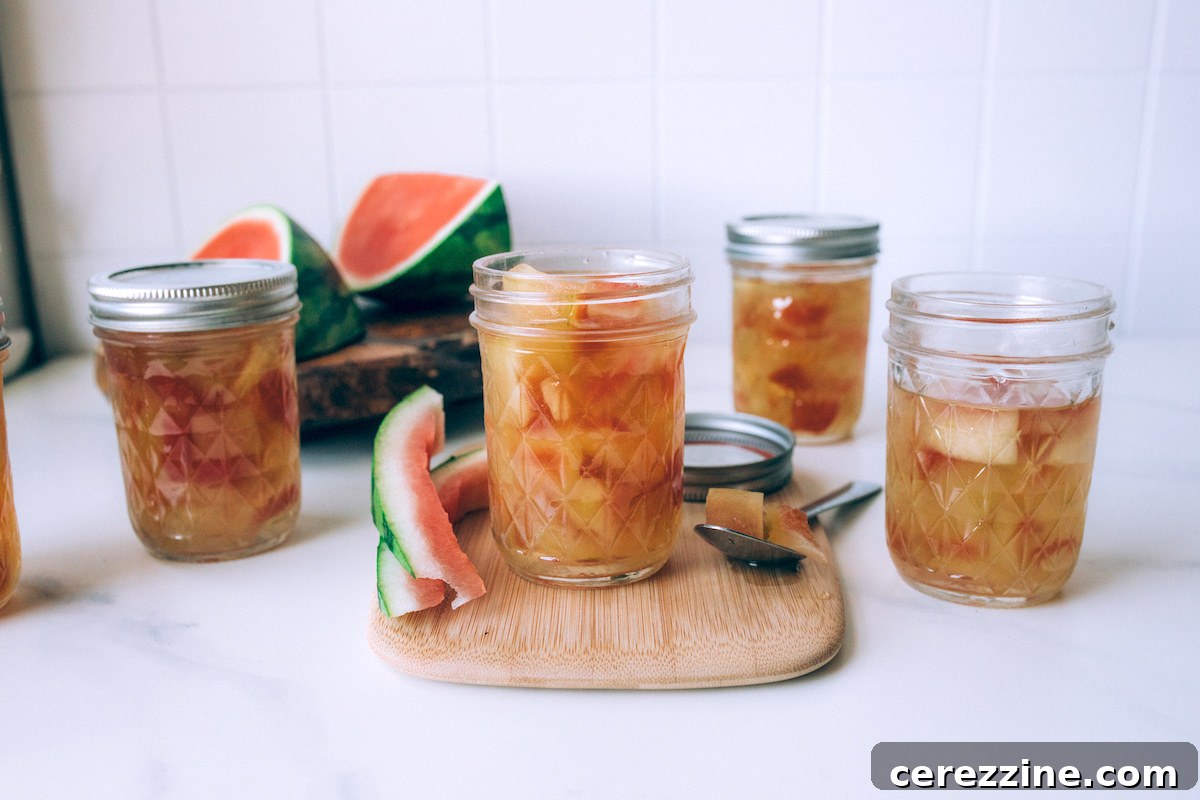
Old-Fashioned Watermelon Rind Preserves: A Sweet & Tangy Canning Delight
Embark on a culinary journey to a bygone era with watermelon rind preserves, a truly unique sweet treat that breathes new life into an often-discarded part of summer’s favorite fruit. While the crisp tang of watermelon rind pickles might be more widely known today, these shimmering, tender preserves held an equally cherished place in pantries of the past. They represent a delightful fusion of sweetness, a hint of spice, and a surprising tang, offering a versatile spread that transcends expectations and celebrates the art of resourceful preserving.
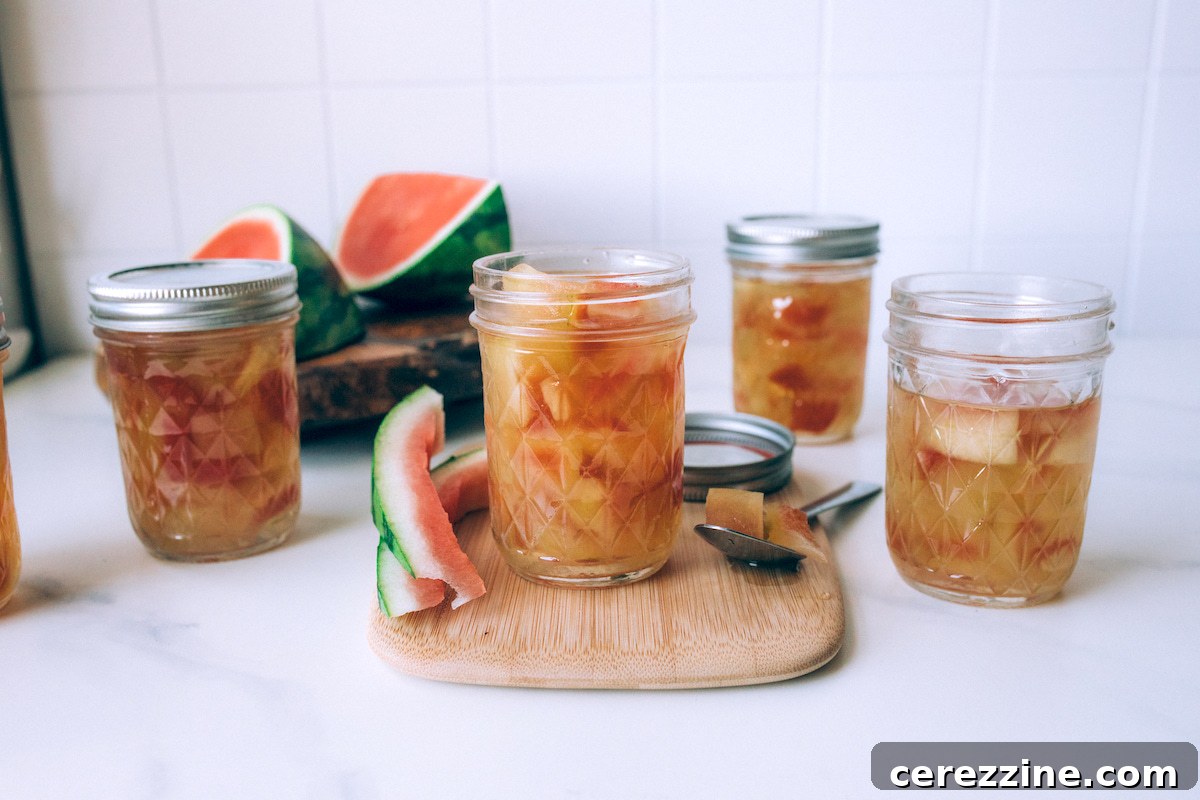
The tradition of making preserves from fruit rinds is a testament to the ingenuity and “waste not, want not” philosophy that once guided home cooks. Every part of the harvest was valued, and turning something seemingly humble into a gourmet delight was a common practice. Watermelon rind preserves are a prime example, transforming the firm white pith of the melon into a candied, translucent delicacy that offers a nuanced flavor profile, far richer than one might anticipate. This recipe invites you to connect with those timeless traditions, extending the vibrant flavors of summer long after the season ends.
A Story of Resourcefulness: The Farmer Boy Legacy
The enduring popularity and practical value of watermelon rind preserves are beautifully illustrated in Laura Ingalls Wilder’s classic, Farmer Boy, part of the beloved Little House on the Prairie series. In a charming and often chaotic scene, the Wilder children, ranging from 10 to 16 years old, are left to manage the family farm while their parents are away. Amidst playful antics and the inevitable challenges of farm life, they indulge in fresh watermelons, relishing the sweet fruit while lounging in the shade.
As the feast concludes, the young boy begins to carry the discarded watermelon rinds towards the pigpen, a common practice for farm scraps. However, his older sister quickly intervenes with a firm admonition: “Don’t you dare waste that watermelon rind on a pig; I’m making preserves!” This pivotal moment highlights a deep-seated respect for every part of nature’s bounty and the art of traditional food preservation.
The Wilder family was by no means lacking. Their pantry was a picture of abundance, boasting a perpetual supply of fresh donuts, rich butter, and homemade jams. “Farmer Boy” himself is often depicted enjoying copious plates of delicious home-cooked meals, fueled by his hard work on the farm. Yet, even in such a well-provisioned household, the watermelon rind was seen as a valuable ingredient, not mere animal feed. The sister’s insistence underscores a profound understanding that these rinds possessed the potential for an “absolutely delicious” transformation into preserves.
This historical vignette serves as a wonderful reminder that making watermelon rind preserves is more than just a recipe; it’s an homage to sustainable living, culinary creativity, and the enduring wisdom of past generations. It encourages us to look beyond the obvious and discover the hidden potential in ingredients we might otherwise overlook, transforming them into something truly special that can be savored for months to come.
A Quick Overview: Watermelon Rind Preserves Recipe
- Recipe Name: Watermelon Rind Preserves
- Recipe Type: Old-Fashioned Preserve (High Sugar, Candied Rind)
- Canning Method: Waterbath Canning
- Prep Time (Active): Approximately 1 hour
- Soak/Brine Time (Passive): 5-6 hours
- Cook Time: Approximately 1 hour
- Canning Time: 10-15 Minutes
- Yield: 4 to 5 half-pint jars
- Jar Sizes: Half Pint or Pint
- Headspace: 1/4 inch
- Ingredients Overview: Watermelon Rind, Lemon, Granulated Sugar, Salt, and Ground Ginger
- Difficulty: Moderate. This recipe requires a multi-hour brine soak to achieve the ideal texture, followed by simmering the rind in a flavorful sugar syrup. Both steps are essential and should not be skipped.
- Similar Recipes: The traditional, high-sugar preserving method is akin to making other classic preserves from the era before widespread refrigeration, including traditional strawberry preserves, plum preserves, pear preserves, and fig preserves.
Understanding Watermelon Rind Preserves
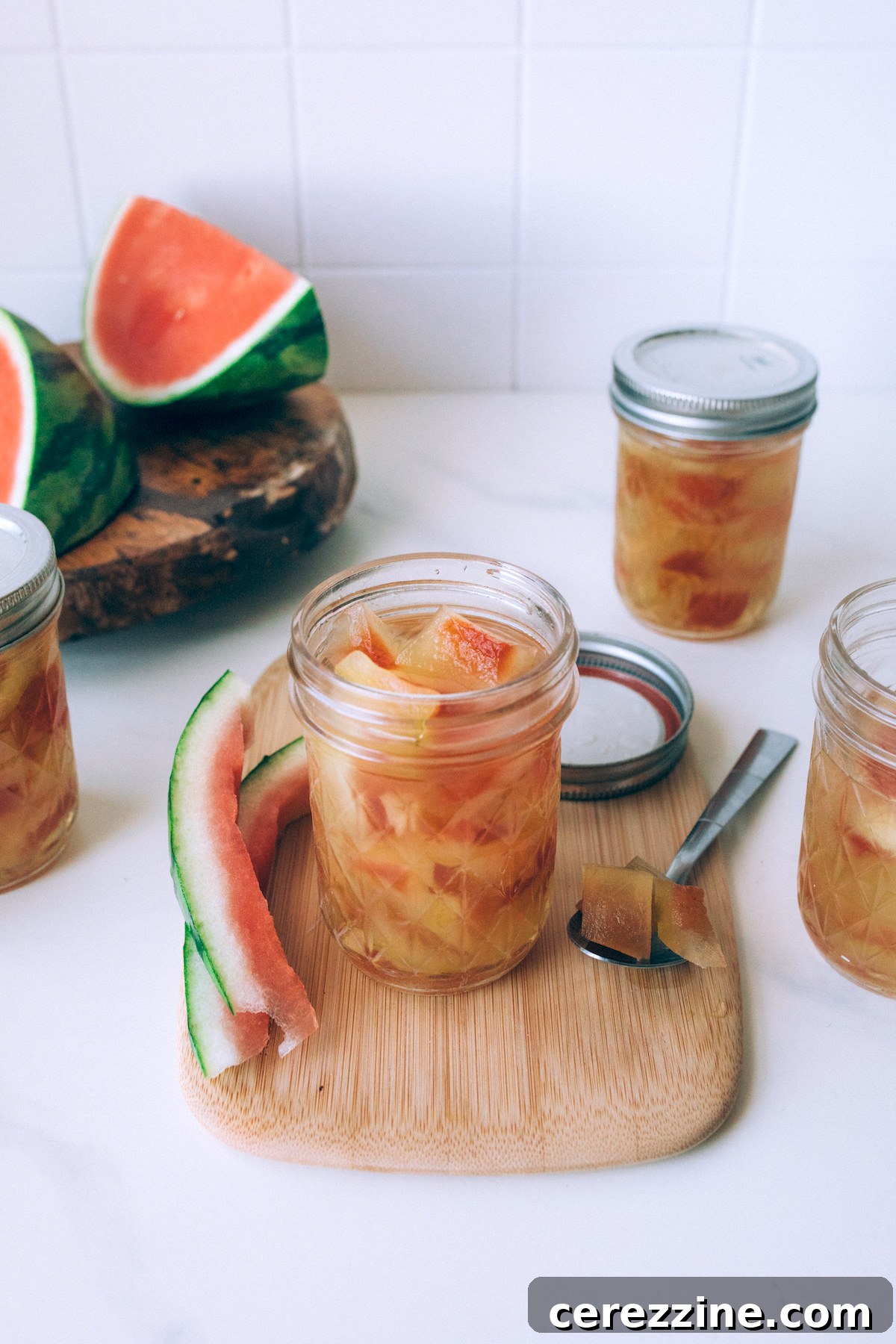
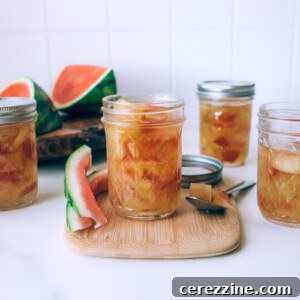
At its heart, watermelon rind preserves are a classic culinary creation from the Southern United States, often likened to a delightful hybrid between a fruit jam and a loose jelly. Small, uniformly cut pieces of watermelon rind are meticulously candied, slowly absorbing a sweet and tangy liquid. These tender, translucent rind pieces are then suspended within a rich, lemon-spiked syrup, which is finally sealed through the process of hot water bath canning, ensuring its longevity and freshness.
A distinctive element of this preserve is the subtle inclusion of salt. While not commonly found in most fruit preserves, salt plays a crucial role here, harmonizing exquisitely with the inherent sweetness of watermelon. This savory counterpoint is a secret known by many, as evidenced by the age-old practice of sprinkling salt on fresh watermelon slices to intensify their flavor. In the preserves, this touch of salt elevates the overall taste, balancing the sweetness and adding an unexpected depth that makes each spoonful truly captivating.
Key Ingredients for Crafting Your Preserves
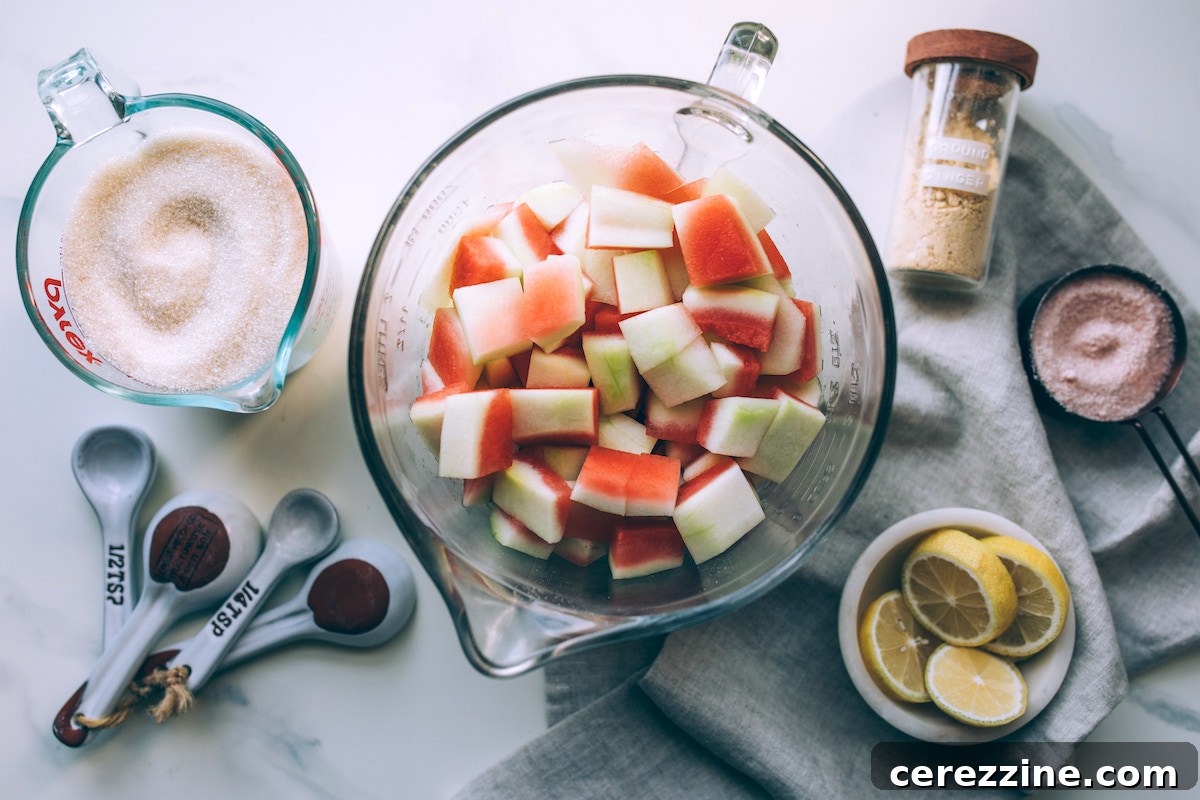
To create a batch of these exquisite watermelon rind preserves, you will need a straightforward selection of common kitchen staples. The star ingredient, of course, is the watermelon rind itself. Don’t worry if you don’t have enough rind from one watermelon; you can collect and store rinds in the refrigerator for up to a week until you accumulate the necessary amount. For this specific recipe, you’ll need approximately 1 ½ quarts of unpared watermelon rind, which should still include the green, tough exterior, the white pith, and a slight hint of pale pink flesh.
Here is a detailed list of the ingredients:
- Watermelon Rind, unpared: About 1 ½ quarts, ensuring a small amount of pink flesh remains for color and flavor.
- Salt: Essential for the brining process, helping to firm the rind. High-quality varieties like Himalayan, sea salt, or kosher salt are ideal.
- Ground Ginger: Provides a warm, subtly spicy note that beautifully complements the sweet and tangy profile of the preserves.
- Granulated Sugar: The primary sweetening agent that forms the syrup and acts as a preserving agent.
- Fresh Lemon Juice: Crucial for balancing the sweetness, adding brightness, and contributing to the preserves’ overall tang.
- One Lemon, thinly sliced: (Optional, but highly recommended) These slices infuse the preserves with an intensified citrus aroma and flavor, and they also add visual appeal to the finished jars.
This carefully balanced recipe is designed to yield enough watermelon rind preserves to fill six (1/2-pint) jars, making it perfect for sharing or stocking your own pantry with this unique delicacy.
Step-by-Step Guide: How to Make Watermelon Rind Preserves
Crafting watermelon rind preserves is an enjoyable and gratifying process. While it requires a few distinct stages, each step is straightforward and contributes significantly to the delightful final product. Patience, especially during the brining and simmering phases, is key to achieving the perfect texture and flavor.
Preparing the Rind for Preserves
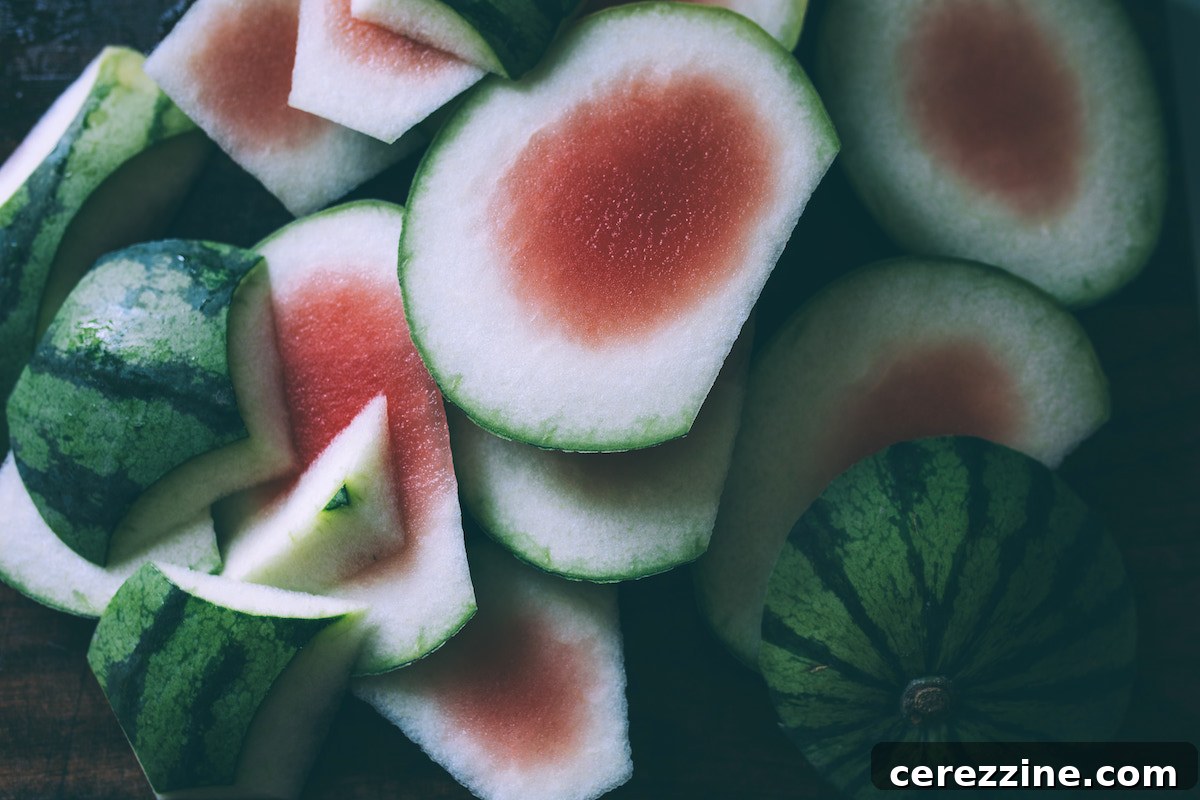
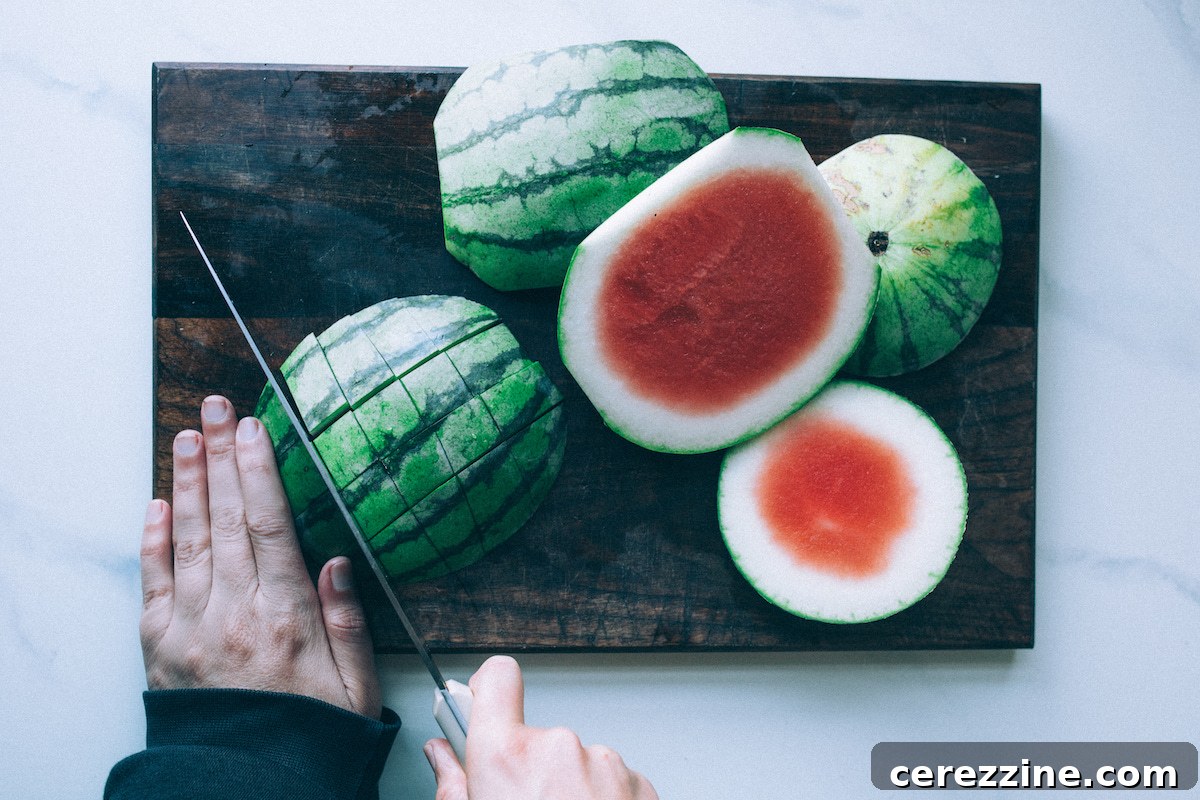
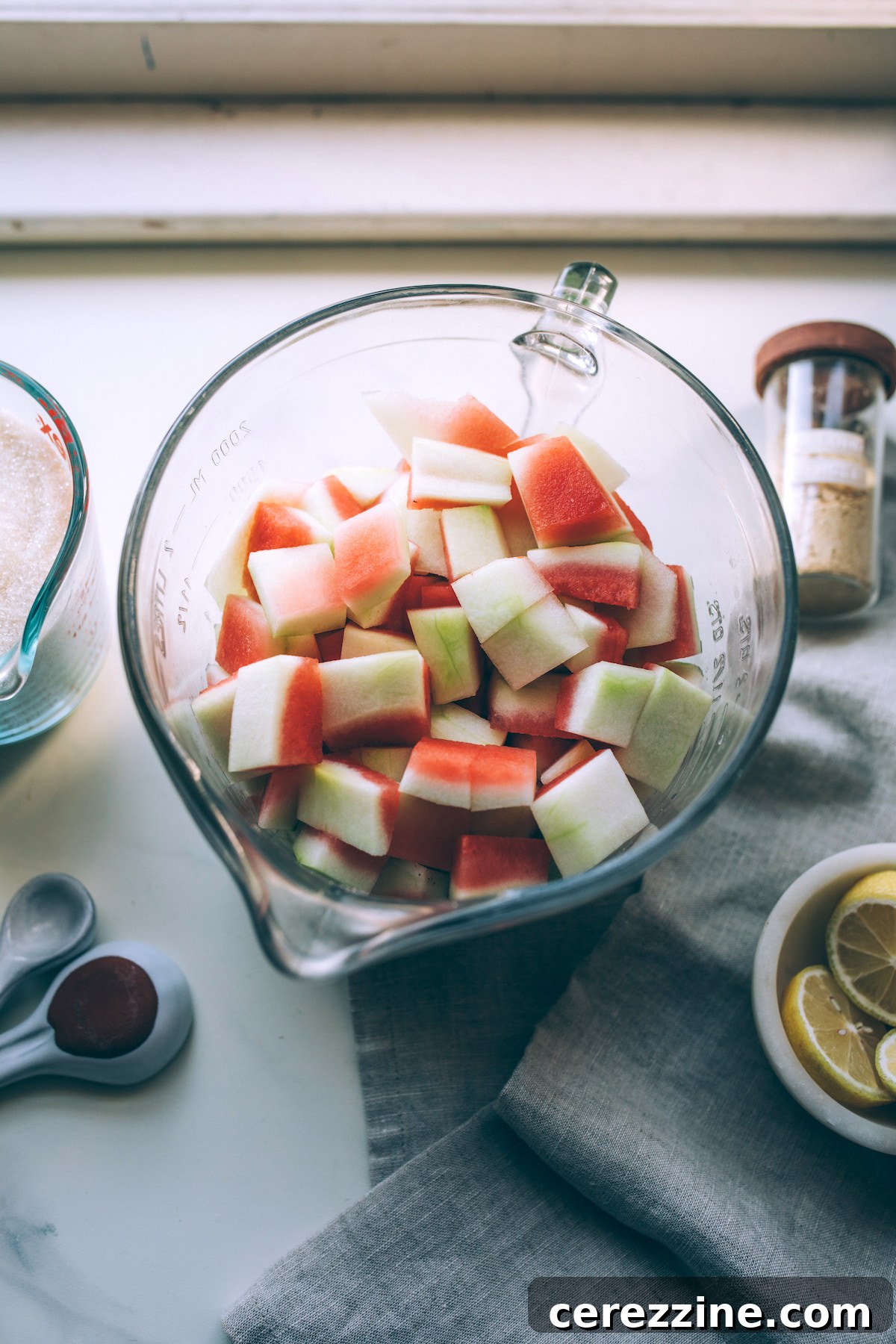
The journey begins with meticulous preparation of the watermelon rind. The goal is to remove the tough, dark green outer layer, leaving only the white pith and a faint strip of pale pink flesh. For safety and precision, it’s advisable to cut the large watermelon rind into smaller, more manageable sections first. Then, using a sharp paring knife, carefully carve away the green exterior. This step is crucial for ensuring that your preserves have a consistently tender texture, free from any fibrous or unpalatable bits.
You can use rinds collected from freshly eaten watermelons, or those leftover from making other watermelon-based delights like watermelon jelly or watermelon lemonade concentrate. To efficiently prepare the rind, consider cutting off the stem and blossom ends of the watermelon to create flat surfaces. This allows you to stand the melon upright and carefully shave off the rind from all four sides. Subsequently, cut the de-rinded sections into 1-inch cubes. This cubing makes the paring process safer and more efficient, leaving you with perfectly prepared rind pieces and the sweet melon flesh ready for other uses or an immediate snack.
The Essential Brine Soak
Once your rind pieces are cubed and perfectly pared, the next critical step is the brine soak. This multi-hour soak is not for pickling, but rather for firming the rind and helping it achieve that desirable crisp-tender texture in the finished preserves. Submerge the rind in a simple cold water brine, allowing it to sit for 5 to 6 hours in the refrigerator. To prepare the brine, dissolve 4 tablespoons of your preferred salt (Himalayan, sea salt, or kosher work wonderfully) into 2 quarts of cold water. If you encounter difficulty dissolving the salt in cold water, you can gently warm a small portion of the water to facilitate dissolution, then ensure the entire brine mixture is thoroughly chilled before adding the rind. The cold temperature is important for optimal firming.
Rinsing and Pre-Cooking the Tender Rind
After the extensive brine soak, it’s crucial to thoroughly rinse the watermelon rind to remove excess saltiness. Drain the rind in a colander, then rinse it exceptionally well under cold running water. Drain again. Following this, cover the rinsed watermelon rind with fresh cold water and let it stand for another 30 minutes, then drain once more. This repeated rinsing and soaking ensures a perfectly balanced flavor profile for your preserves.
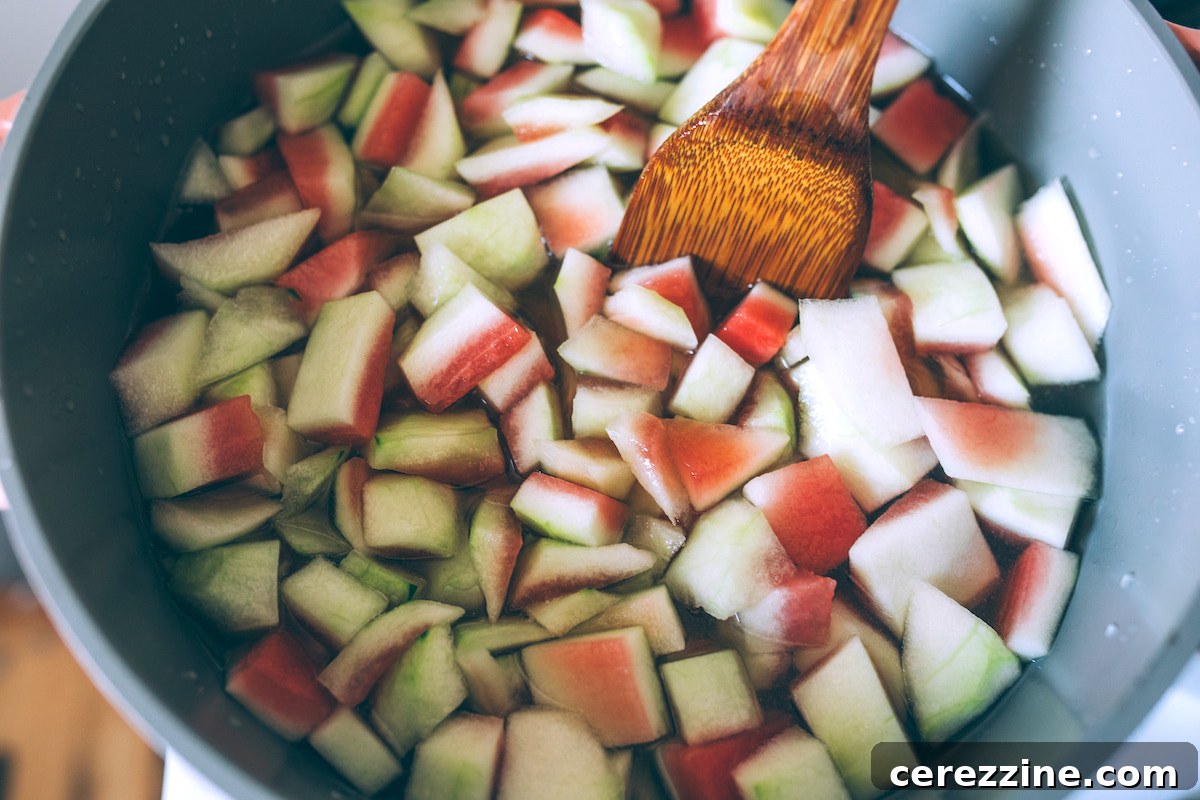
Next, transfer the drained rind to a large saucepan and sprinkle 1 tablespoon of fresh ground ginger over it. Cover the rind with more cold water, bring the mixture to a boil, and cook for approximately 10 minutes, or until the rind pieces are fork-tender. This pre-cooking step further tenderizes the rind, preparing it to readily absorb the sweet syrup in the next stage. Once tender, drain the rind thoroughly in a colander, ready for the final cooking process.
Crafting the Syrup and Simmering to Perfection
Now, we move to the heart of the preserve-making process: creating the rich, flavorful syrup. In a large, heavy-bottomed saucepan, combine 4 cups of granulated sugar, ¼ cup of fresh lemon juice, and 7 cups of water. Bring this mixture to a rolling boil, allowing it to simmer for 5 minutes to ensure the sugar is fully dissolved and the syrup begins to slightly thicken. Then, very carefully add the pre-cooked, tender watermelon rind pieces to the hot syrup.
Continue to gently boil this mixture for approximately 30 minutes. At this point, add the thinly sliced whole lemon pieces to the saucepan with the rind and syrup. Continue cooking, stirring occasionally, until the watermelon rind pieces become beautifully translucent and clear. This visual transformation indicates that the rind has fully absorbed the sweet syrup, achieving the perfect candied texture. Maintain a gentle boil to prevent scorching and allow the flavors to meld beautifully.
Jar Preparation and Filling
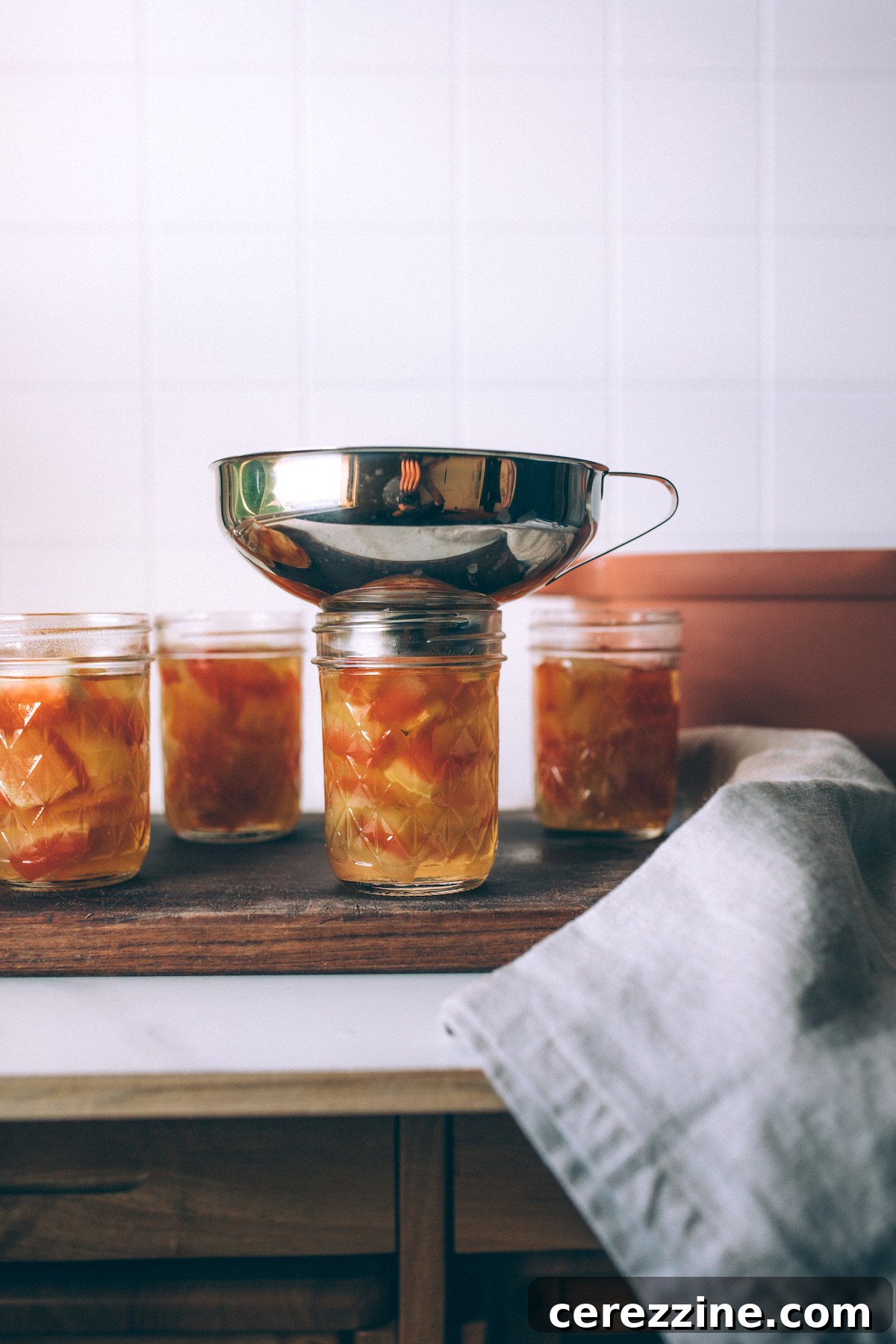
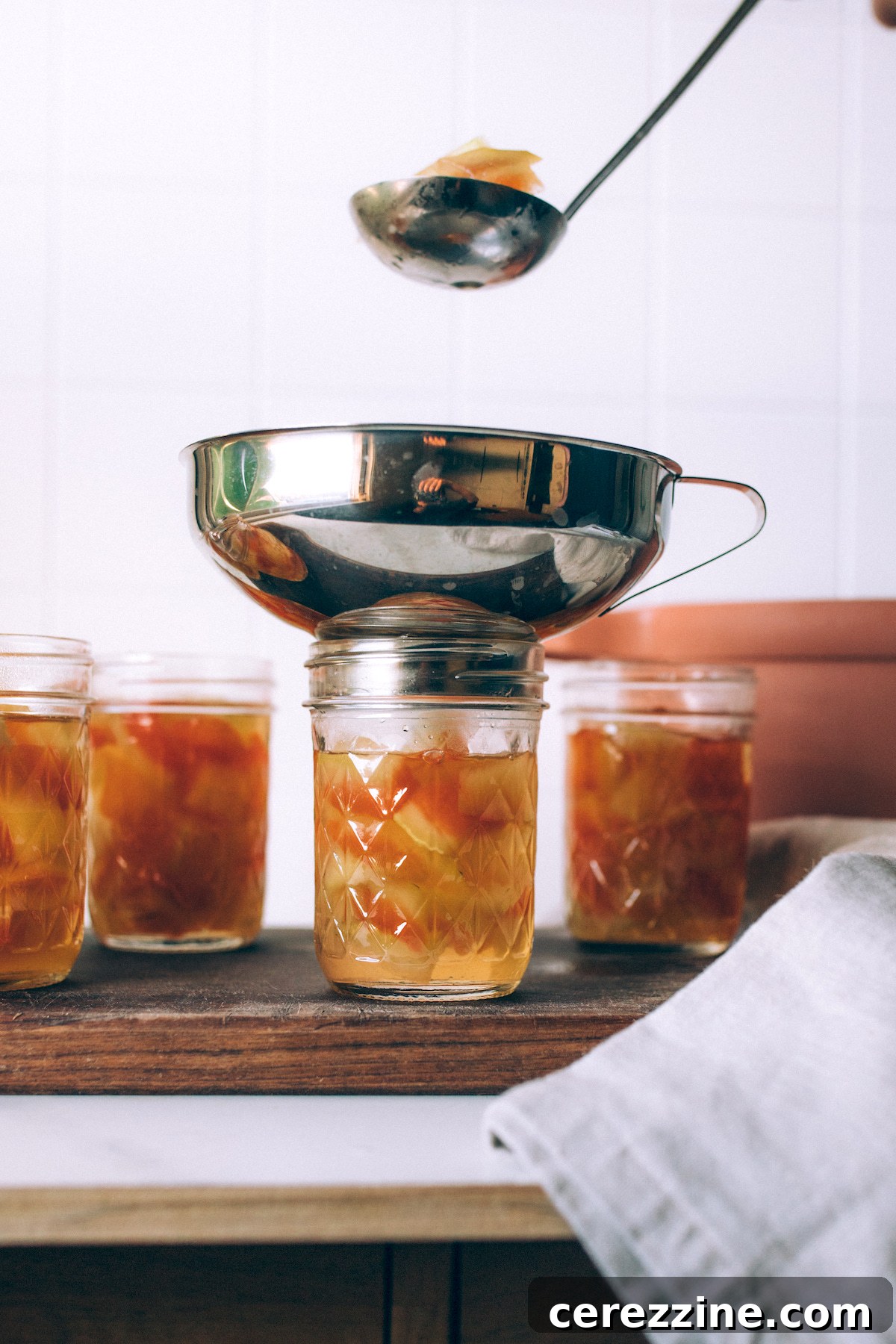
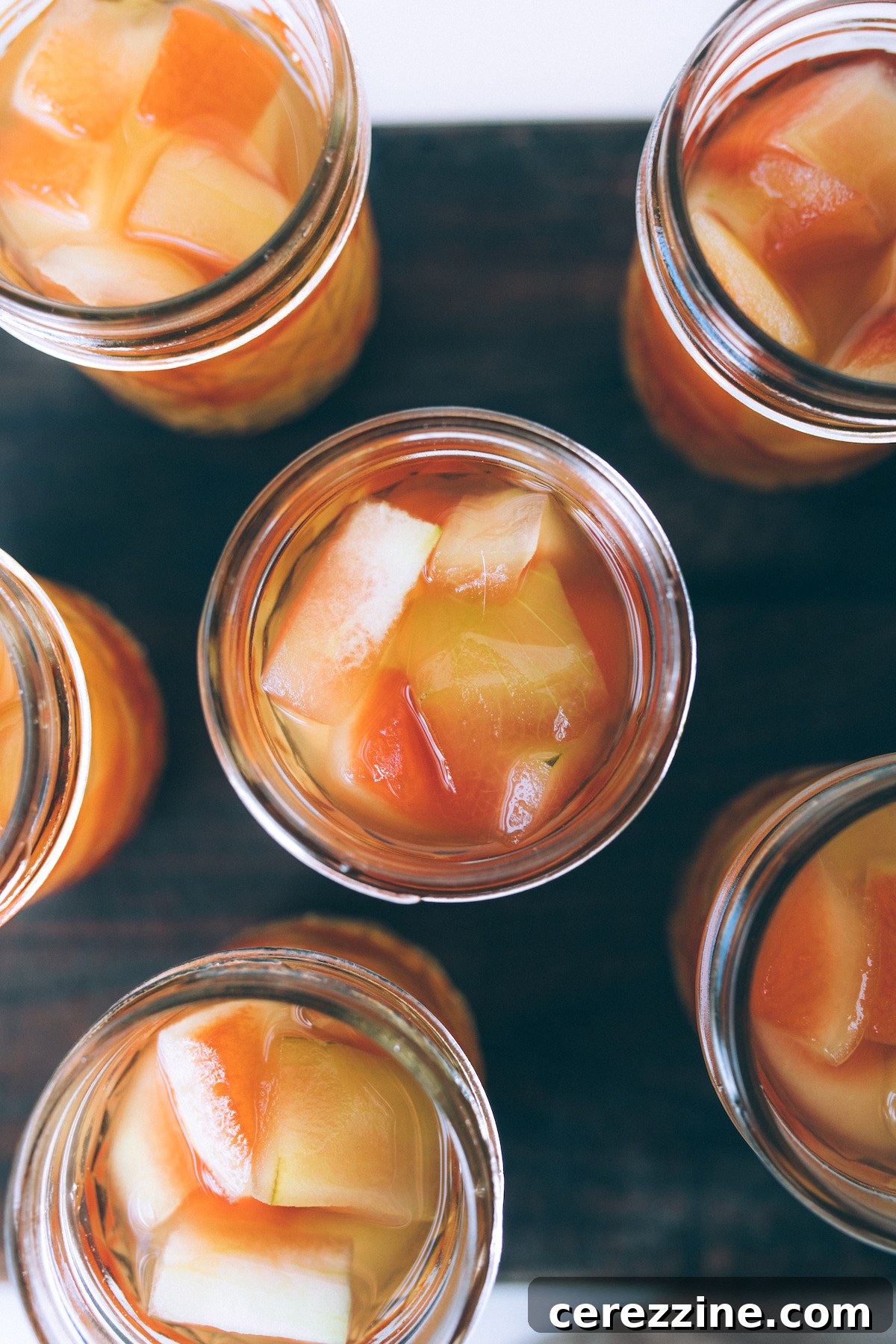
As your preserves simmer, prepare your canning jars. For this recipe, have 6 (1/2-pint) jars ready. It’s essential that your jars are clean and hot to prevent thermal shock when they come into contact with the boiling hot preserves. You can heat them in your waterbath canner, a warm oven, or a dishwasher cycle. Using a canning funnel, carefully ladle the hot watermelon rind preserves into each hot jar, ensuring an even distribution of rind pieces and that they are fully covered with the sweet syrup. Leave a precise ¼-inch headspace at the top of each jar. This measurement is critical for proper sealing and to allow for content expansion during the canning process.
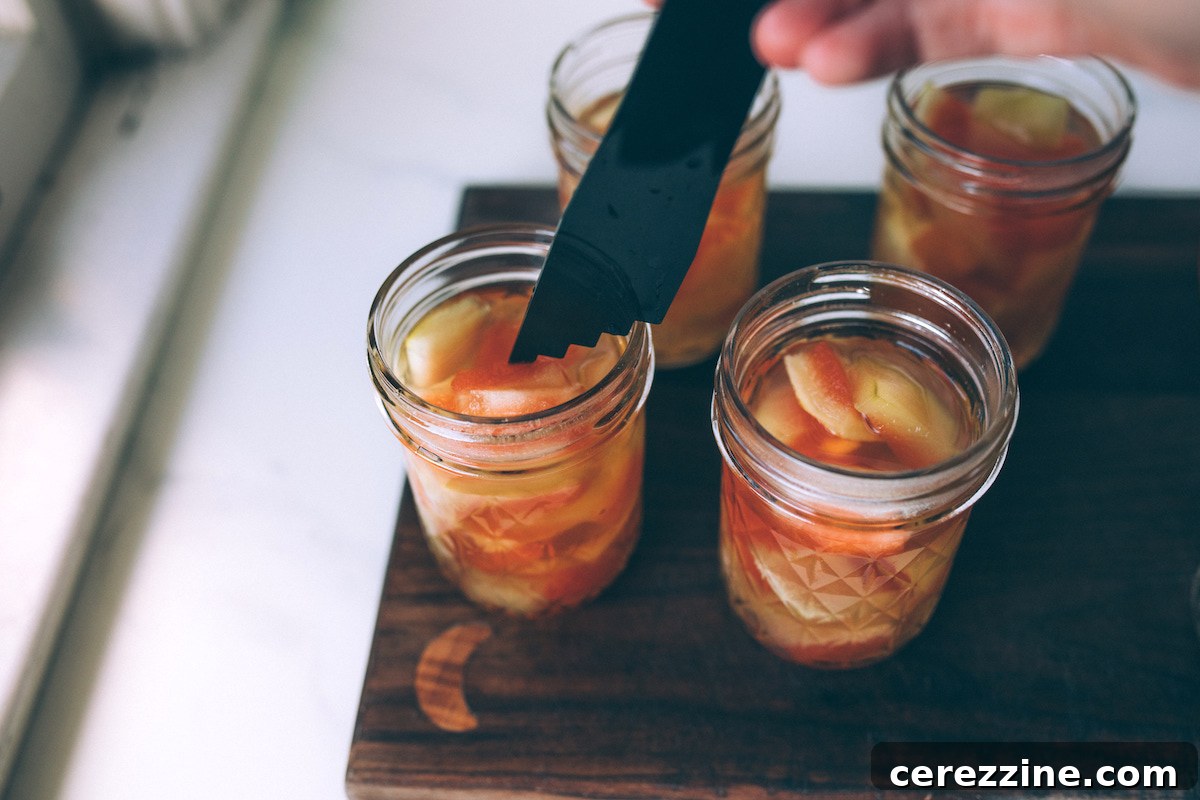
A canning funnel, especially one equipped with a built-in headspace measurer, is an invaluable tool for this step. It aids in achieving accurate headspace and, importantly, protects your hands from hot, splashing liquid. After filling, use a wooden chopstick or a plastic de-bubbling tool to gently remove any trapped air bubbles from around the preserves. If the syrup level drops below ¼-inch after de-bubbling, add more hot syrup to restore the correct headspace.
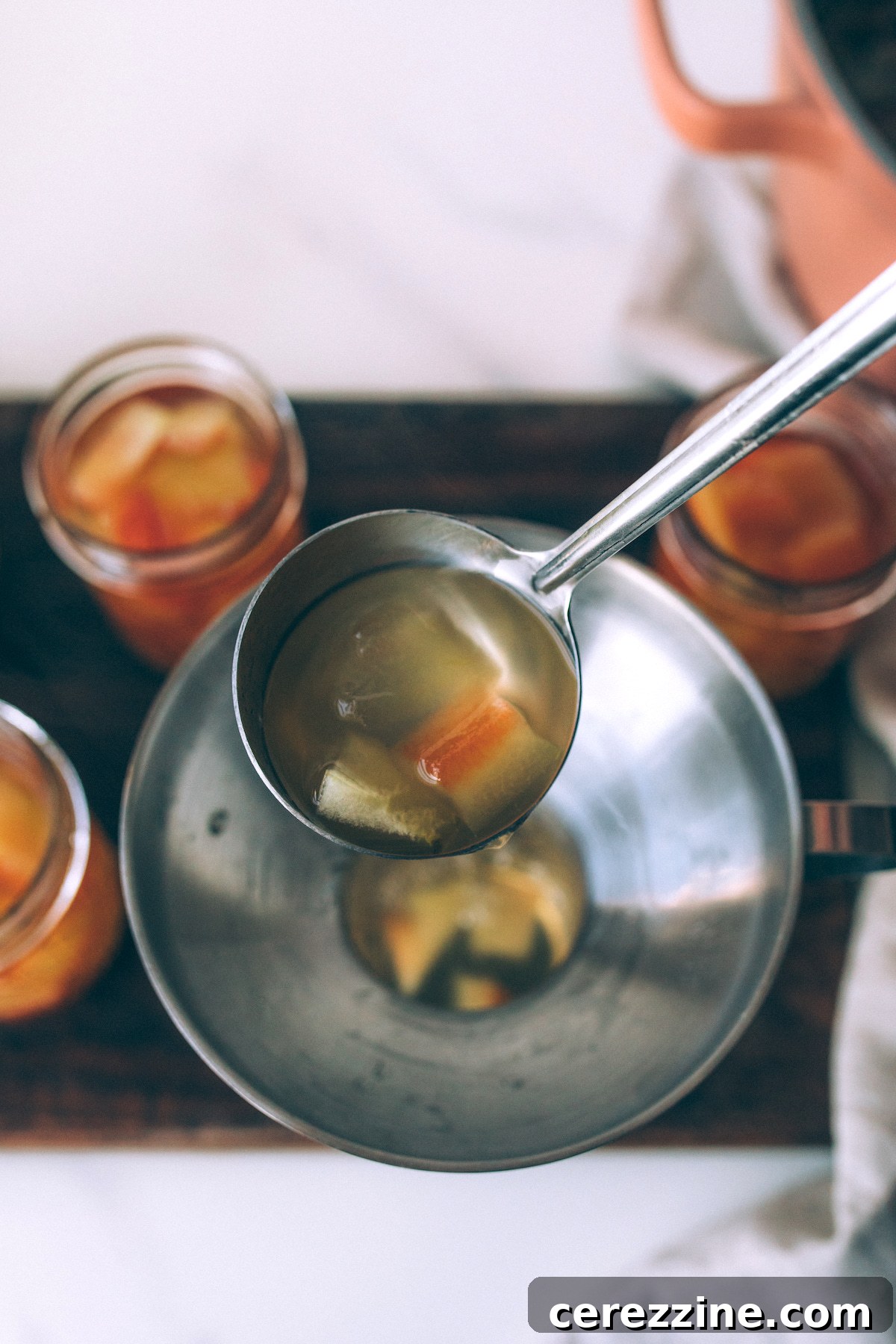
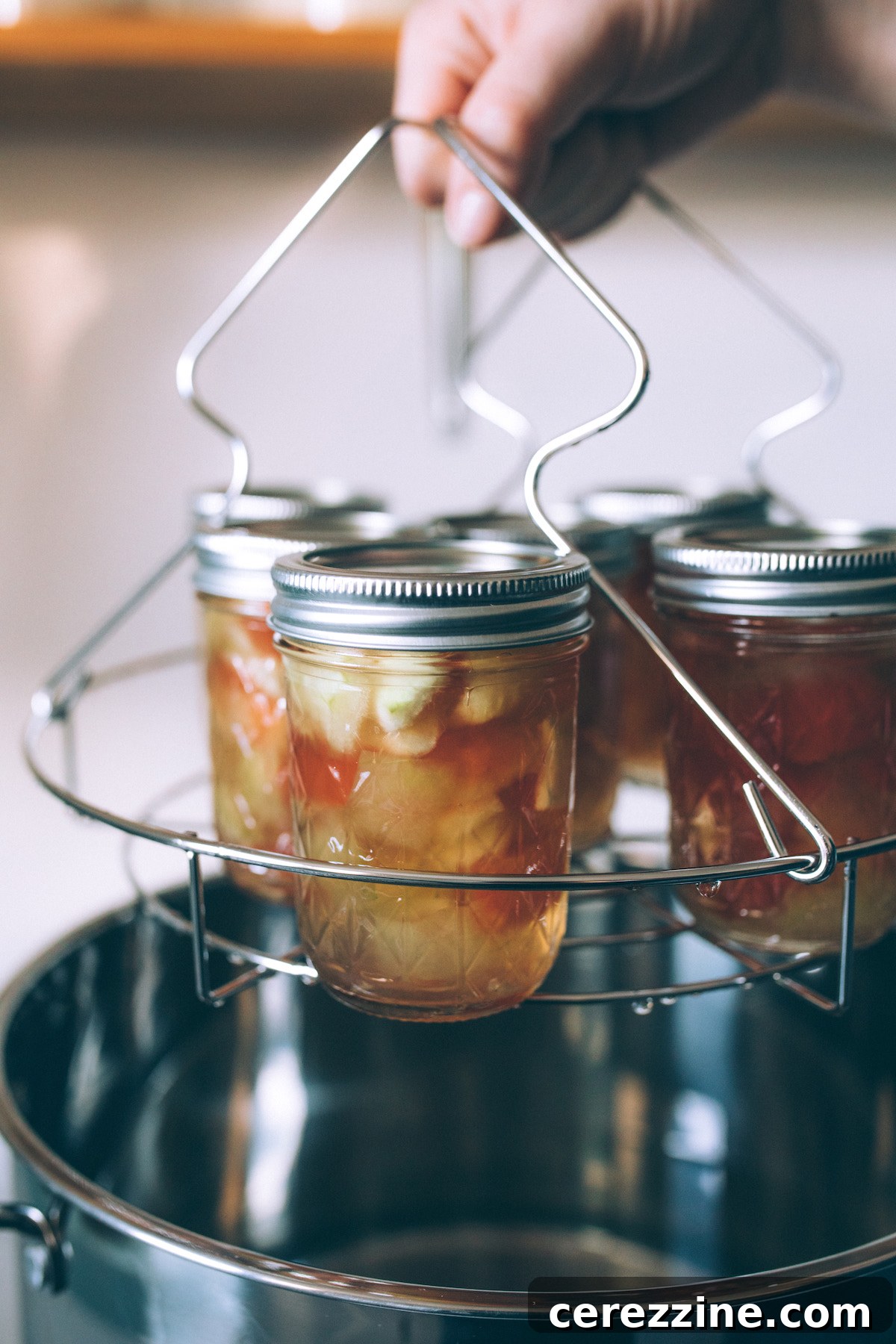
Finally, carefully wipe down the sides and rims of each jar with a clean, damp kitchen towel to remove any food residue that could interfere with a proper seal. Place two-piece metal canning lids (flats and rings) onto each jar. Tighten them “fingertip tight,” meaning just until you feel resistance, without overtightening. Using a jar lifter, carefully load the filled jars into your prepared hot water bath canner, ensuring that all jars are covered by at least one inch of water. Bring the water to a full, rolling boil before starting your timer.
Canning Watermelon Rind Preserves for Safe Storage
Proper canning is essential for the safety and long-term preservation of your homemade watermelon rind preserves. Once your jars are loaded into the canner and covered with water, bring the water to a vigorous, rolling boil. Begin timing only when the water has reached this full boil.
Process half-pint or pint jars for 10 minutes. If you live at an altitude over 6,000 feet, you will need to increase the processing time to 15 minutes to compensate for the lower boiling point of water. Always refer to a trusted altitude adjustment chart for your specific location if you are unsure.
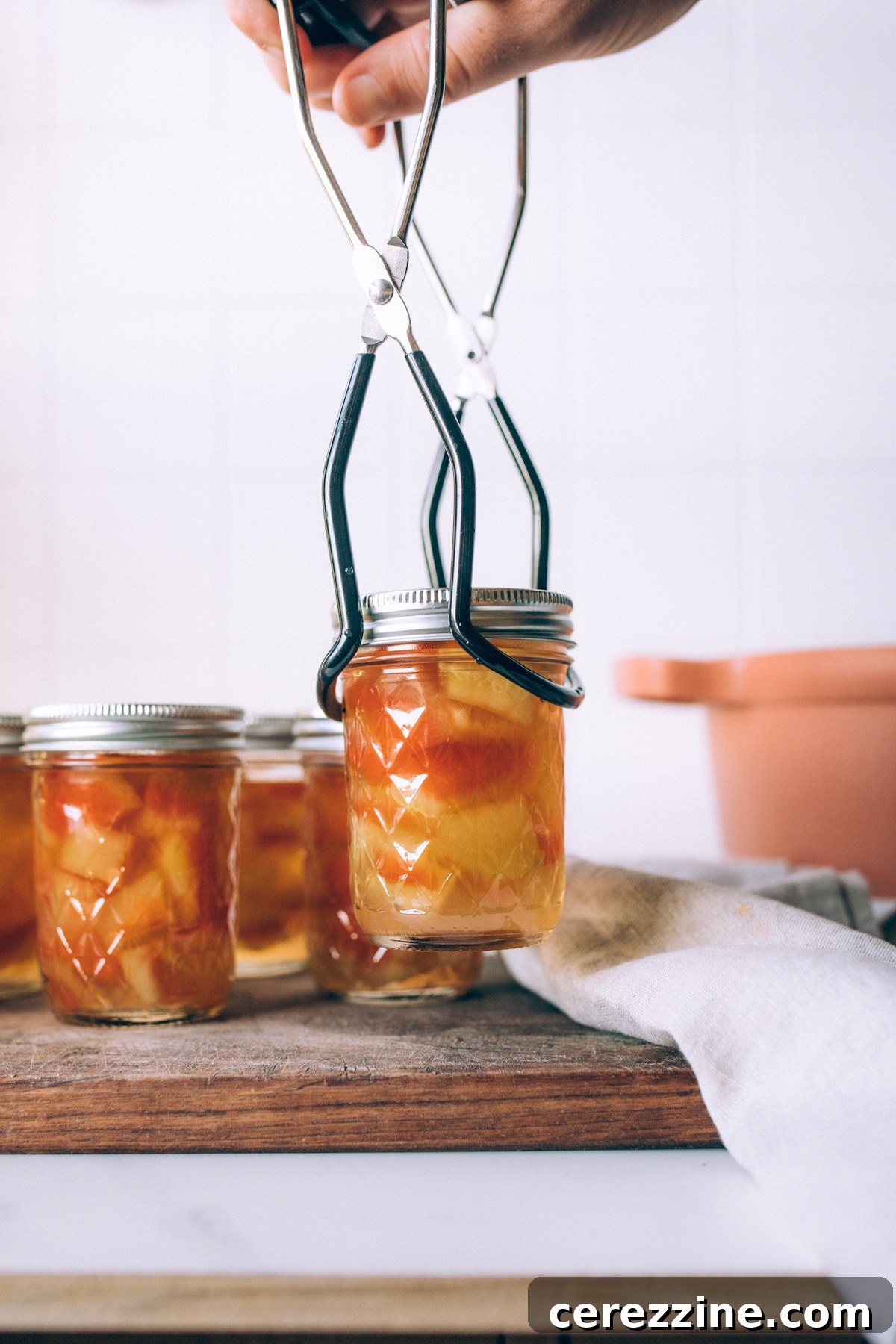
Once the processing time is complete, turn off the heat and carefully remove the canner lid. Allow the jars to rest in the hot water for an additional 5 minutes. This brief resting period helps to equalize the pressure, reducing the risk of siphoning (liquid loss) and thermal shock when the jars are removed. Using a jar lifter, carefully transfer the hot jars to a clean, sturdy surface lined with a kitchen towel. Ensure that there is at least 1 inch of space between each jar to allow for proper air circulation and even cooling. Do not retighten the screw bands, tilt the jars, or cover them during this cooling phase.
Let the jars cool completely to room temperature, which typically takes between 12 and 24 hours. During this cooling period, you should hear a series of satisfying “pings” as the lids seal. After the jars have fully cooled, check the seals by pressing down on the center of each lid. If the lid does not flex up or down, the jar is sealed. Any jars that have not sealed properly should be stored in the refrigerator and consumed within a few weeks. Properly sealed jars can be stored in a cool, dry, dark place, away from direct sunlight, for up to 18 months, ready to bring a taste of summer to your table at any time.
Beyond Preserves: Other Delicious Ways to Preserve Watermelon
Watermelon, with its refreshing sweetness, is a quintessential summer fruit. But its utility extends far beyond just slicing and eating fresh. If you find yourself with an abundance of watermelon or wish to enjoy its unique flavor throughout the year, explore these fantastic alternative preservation methods. Each offers a distinct way to capture and savor watermelon’s essence:
- Watermelon Wine Recipe: Ferment your watermelon juice into a surprisingly complex and refreshing homemade wine, a truly unique beverage for special occasions.
- Freeze Dried Watermelon: Achieve a light, crispy, and intensely flavorful snack. Perfect for trail mix, yogurt toppings, or simply munching on its own.
- Freezing Watermelon: The simplest method for long-term storage. Cubes of frozen watermelon are ideal for smoothies, slushies, or as a cooling addition to drinks.
- Watermelon Relish: A savory and tangy condiment, often spiced with vinegar, bell peppers, and onions, offering a stark contrast to sweet preserves.
- Watermelon and Maraschino Cherry Pickles: A delightful Southern tradition, these pickles combine the tartness of the rind with the sweetness of cherries for a festive, vibrant side dish.
- Watermelon Jelly: For those who prefer a smooth spread, watermelon jelly captures the pure, sweet flavor of the fruit in a silky, clear form.
- Watermelon Lemonade Concentrate: A fantastic way to preserve the refreshment of watermelon and lemon, ready to be diluted for instant summer beverages.
If you tried this Watermelon Rind Preserves Recipe, or any other recipe on Creative Canning, leave a ⭐ star rating and let me know what you think in the 📝 comments below!
And make sure you stay in touch with me by following on social media!
More Melon Canning Recipes to Explore
A Collection of Watermelon Canning Recipes
Canning Watermelon Lemonade Concentrate
Watermelon Rind Preserves (This Recipe)
48 servings, makes 6 half-pint jars
Watermelon Rind Preserves
Ashley Adamant
6 hours
20 minutes
10 minutes
6 hours 30 minutes
Print Recipe
Equipment
-
Water Bath Canner
Ingredients
- 1 1/2 Quart watermelon rind pieces
- 4 Tbsp. salt
- 2 Quart cold water
- 1 Tbsp. ground ginger
- 4 cups sugar
- 1/4 cup lemon juice
- 7 cups water
- 1 whole lemon, deseeded and thinly sliced
Instructions
-
Using a sharp paring knife, remove the hard green exterior from each piece of watermelon rind. Cut pieces into 1-inch squares. You should have pieces that are white rind (no green) with a tiny bit of red flesh remaining on the inside edge.
-
Make a cold brine by dissolving salt in cold water. Pour the brine over the watermelon rind and let stand for 5-6 hours in the refrigerator.
-
Drain the watermelon rind and rinse well with cold water over a colander.
-
Cover the rinsed watermelon rind with more cold water and let stand for 30 minutes. Drain.
-
Place the watermelon rind in a large saucepan and sprinkle with dried ginger. Cover with cold water and cook until fork tender, about 10 minutes. Drain.
-
In a large saucepan, combine sugar, lemon juice, and 7 cups of water. Boil for 5 minutes and then add watermelon rind and cook for 30 minutes.
-
Add sliced lemon pieces and continue to cook until the watermelon rind is clear.
-
Prepare jars for canning. Ladle hot preserves into jars and cover with hot syrup, leaving 1/4-inch headspace. Wipe sides and rim of jars, apply two-piece metal canning lids.
-
Load jars into hot water canner and process for 10 minutes, adjusting for altitude.
-
Remove jars from canner and transfer to a clean surface lined with a kitchen towel; leave 1 inch of space between each jar.
-
Let the jars come to room temperature, about 12-24 hours, and then check seals on each jar. Unsealed jars should be stored in the fridge, sealed jars can be kept in a cool, dry place away from direct light for up to 18 months.
Notes
Nutrition
Carbohydrates: 19g,
Protein: 0.2g,
Fat: 0.1g,
Saturated Fat: 0.01g,
Polyunsaturated Fat: 0.02g,
Monounsaturated Fat: 0.01g,
Sodium: 480mg,
Potassium: 39mg,
Fiber: 0.2g,
Sugar: 19g,
Vitamin A: 168IU,
Vitamin C: 3mg,
Calcium: 4mg,
Iron: 0.1mg
Nutrition information is automatically calculated, so should only be used as an approximation.
Enjoyed this recipe? Share your thoughts below!Your feedback helps other home canners discover delightful new recipes.
The lovely photography in this post is by Stephanie at My Tiny Laguna Kitchen.
More Summer Canning Recipes to Master
As the summer harvest peaks, the opportunities for preserving abound! Expand your home canning repertoire with these fantastic seasonal recipes, perfect for capturing the fresh, vibrant flavors of the warmer months and enjoying them throughout the year:
- Pickled Corn Salad: A tangy, crunchy salad bursting with summer corn, bell peppers, and herbs, perfect as a side dish or condiment.
- Strawberry Lemonade Concentrate: A vibrant, sweet-tart syrup that makes refreshing homemade lemonade a breeze to prepare.
- Nectarine Jam: Capture the delicate sweetness and fragrant aroma of ripe nectarines in a luscious, spreadable jam.
- Canned Gooseberries: Preserve these tart, jewel-toned berries to use in pies, crumbles, sauces, or as a unique addition to your breakfast table.
- Homemade Peach Salsa: A delightful blend of sweet peaches, spicy peppers, and savory aromatics, perfect with grilled chicken or tortilla chips.
- Zucchini Relish: A versatile, tangy relish that transforms abundant zucchini into a flavorful condiment for burgers, hot dogs, or sandwiches.
Embrace the satisfying tradition of home canning and discover the surprising joy of transforming humble watermelon rinds into a truly special preserve. This recipe is not just about making a delicious spread; it’s about connecting with historical foodways, practicing sustainability in your kitchen, and creating cherished pantry staples that will delight your family and friends. So, gather those rinds, follow these comprehensive steps, and prepare to savor a taste of preserved summer sunshine!