Embarking on the rewarding journey of home food preservation? Whether you’re making tangy pickles, vibrant relishes, or pressure canning garden vegetables, the type of salt you use is far more critical than you might imagine. Canning salt, often interchangeably called pickling salt, stands as a fundamental ingredient specified in countless traditional and modern preservation recipes. But what exactly is this specialized salt, and why can’t you simply grab any salt from your pantry? Understanding the nuanced differences between pickling salt and regular table salt, or even other gourmet salts, is key to achieving crystal-clear brines, vibrant colors, and unblemished flavors in your preserved foods. This comprehensive guide will demystify pickling salt, explore its essential role, provide valuable insights into suitable substitutes, and help you master the art of successful home canning.
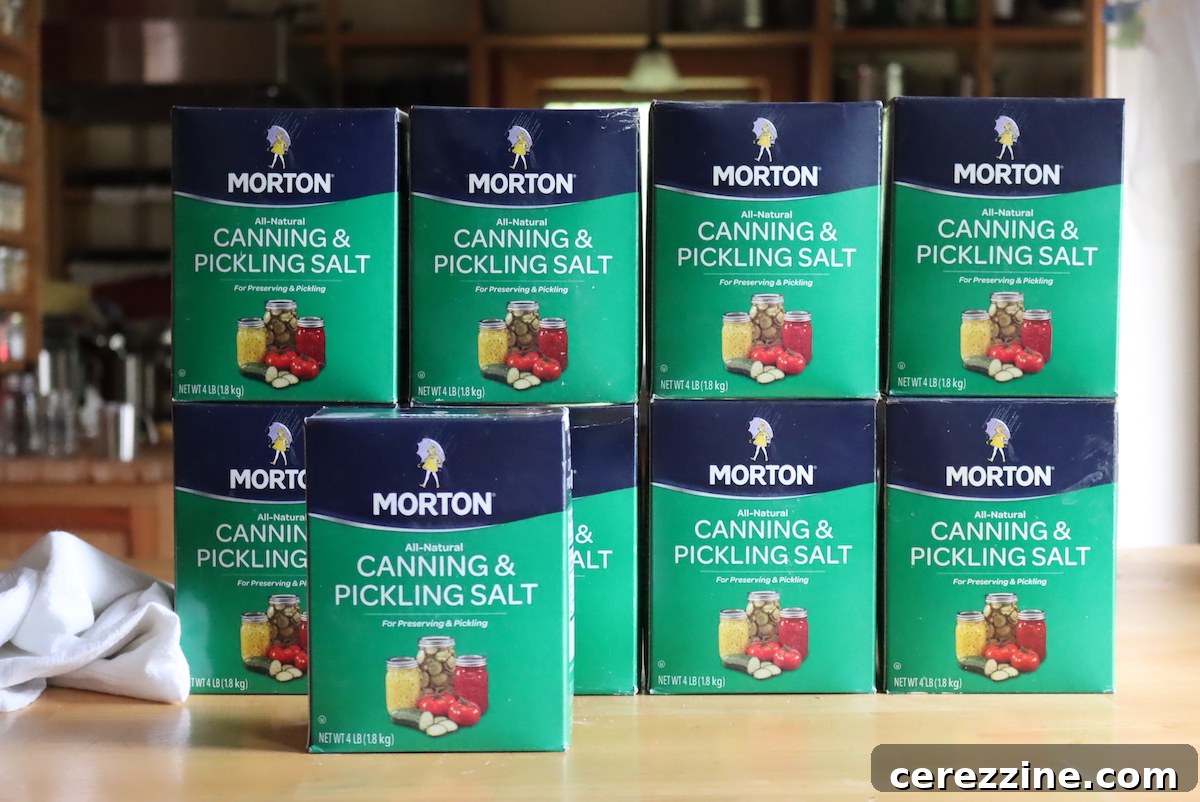
A quick trip to most grocery stores reveals an astonishing array of salt varieties: regular table salt, kosher salt, sea salt, Himalayan pink salt, and many more, often with various salt substitutes mixed in. Amidst this selection, you’ll typically find a package specifically labeled “pickling salt” or “canning salt.” This naturally leads to the question: what differentiates pickling salt from its counterparts, and is its use truly mandatory for safe and delicious canning? While not always “strictly required” in the sense of food safety for all tested recipes, using the correct type of salt, like pickling salt, consistently yields superior results in terms of both appearance and taste compared to many common table salts. Furthermore, for certain traditional preservation methods like fermentation or meat curing, the specific properties of pickling salt are absolutely indispensable. Even if you don’t have pickling salt on hand, fret not; there are several effective substitutions, provided you know what to look for on the ingredient label.
What is Pickling Salt (or Canning Salt)? The Purest Form of Preservation Salt
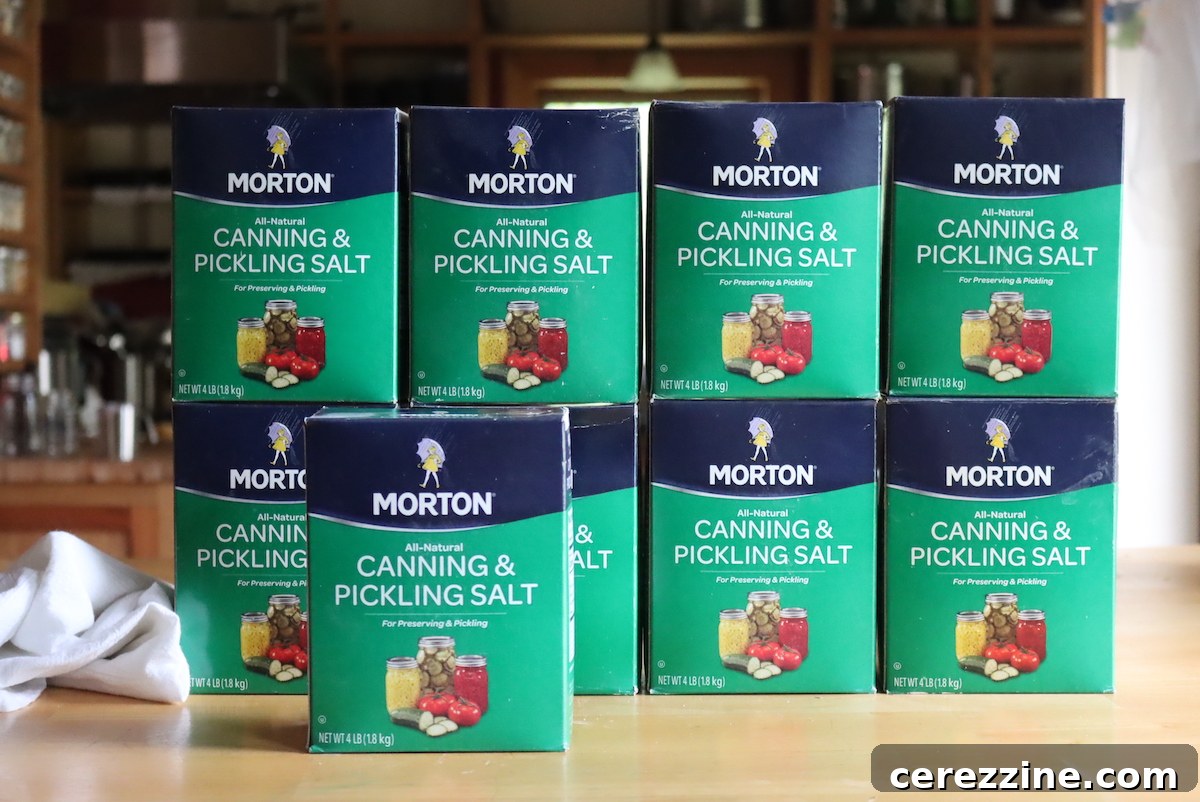
At its core, pickling salt is remarkably simple: it is pure, refined sodium chloride (NaCl) with absolutely nothing else added. This simplicity is precisely what makes it ideal for food preservation. In an age where most grocery store salts contain various additives, pickling salt remains true to its unadulterated form. Think of it as the foundational salt, free from the extra ingredients that might be beneficial for other culinary uses but detrimental to canning outcomes.
Many consumers naturally assume that any product labeled “salt” is just that—pure salt. However, modern table salt, in particular, is often fortified with a range of additives. These can include anti-caking agents, which are chemicals designed to prevent the salt crystals from clumping, ensuring they flow smoothly from a shaker. While convenient for seasoning at the dinner table, these agents can cause undesirable effects in the canning jar. The beauty of pickling salt lies in its purity, guaranteeing that only the salt itself interacts with your food and brine.
Beyond table salt, other types of salt available on the market may also be additive-free. It’s always advisable to inspect the ingredient label carefully. For a salt to be considered a suitable pickling or canning salt, its ingredient list should explicitly state “salt” and nothing more. This commitment to purity ensures that your preserved goods maintain their intended flavor, clarity, and safety without unexpected chemical reactions or undesirable aesthetic changes.
The Diverse Applications of Pickling Salt in Food Preservation
As its name implies, pickling salt is a cornerstone of pickling, a process that relies heavily on salt to draw out moisture, inhibit spoilage, and develop flavor. But its utility extends far beyond just making crunchy dill pickles. Pickling salt is a versatile ingredient used across a wide spectrum of other canning and food preservation methods, including:
- Water Bath Canning: For acidic foods like fruits, jams, jellies, and many pickled vegetables, water bath canning is common. While salt often plays a flavor role here, using pure pickling salt prevents cloudiness and off-flavors.
- Pressure Canning: When preserving low-acid foods such as meats, poultry, seafood, and most vegetables, pressure canning is the only safe method. In these recipes, salt is primarily for flavor. Again, the purity of pickling salt ensures the integrity of the product without introducing unwanted elements that could alter taste or appearance.
- Lacto-Fermentation: For traditional fermented foods like sauerkraut, kimchi, and fermented pickles, salt is not just a flavor enhancer but a critical agent for controlling microbial growth. It creates an environment where beneficial lactic acid bacteria thrive while inhibiting harmful spoilage organisms. The precise measurement and purity of pickling salt are crucial here to ensure a safe and successful fermentation process.
- Curing Meats (Charcuterie): In the delicate art of charcuterie, from making bacon to preparing sausages, pickling salt is paramount. Curing recipes often demand extremely precise salt measurements to ensure both food safety and desired flavor development. Using a salt that isn’t 100% sodium chloride by weight can throw off these crucial ratios, potentially compromising the safety or quality of the cured product.
- Dry Brining: For meats and poultry, dry brining with pure salt is an effective way to enhance moisture retention and flavor. Pickling salt works perfectly here, dissolving evenly and penetrating the meat without introducing any foreign tastes.
The consistent purity of pickling salt is its greatest asset. Since there are no additives, it dissolves completely and won’t lead to cloudiness in your brines or contribute any unintended flavors, ensuring your preserves look as good as they taste.
Effective Substitutes for Pickling Salt: What to Look For
While pickling salt is the gold standard for its neutral results and complete dissolution, you might find yourself without it. Fortunately, several other types of plain salt can serve as suitable substitutes, provided they meet one crucial criterion: they must be additive-free. The key is to scrutinize the ingredient label – it should simply state “salt” and nothing else.
- Sea Salt: Most pure sea salts are excellent substitutes for pickling salt. They are minimally processed and typically contain only sodium chloride, along with a trace amount of natural minerals. These minerals are perfectly fine for canning and preservation and generally do not impact the process or safety. Brands like pure, unrefined sea salt are often additive-free.
- Himalayan Pink Salt: Similar to sea salt, Himalayan salt is a natural, unrefined salt known for its trace mineral content, which gives it its characteristic pink hue and sometimes a slightly richer flavor profile. Provided it lists only “Himalayan salt” as the ingredient, it makes a fine substitute. We often prefer using Himalayan Salt in our canning for its enhanced flavor, though it’s worth noting that its mineral content can sometimes cause the brine to appear ever so slightly cloudy. This cloudiness is purely a cosmetic issue; it does not affect the flavor, safety, or shelf-stability of your preserves.
- Redmond’s Real Salt: This is another natural, unrefined salt that is typically free of additives. Like other natural salts, it contains trace minerals that are harmless for canning purposes. Check the label to ensure it’s pure salt. Brands like Redmond’s Real Salt are widely trusted.
- Kosher Salt: Most brands of kosher salt are excellent, additive-free options. Historically, kosher salt was prized for its purity and larger, flaky crystal structure. Diamond Crystal Kosher Salt is a widely recommended brand known for being consistently additive-free. However, it’s imperative to read the label, as I have recently encountered a few brands of kosher salt that have started including anti-caking agents. If the label only lists “salt” or “kosher salt,” it’s generally safe to use. Be mindful that kosher salt’s larger flakes mean it takes up more volume per unit of weight compared to pickling salt, so if a recipe calls for salt by volume (e.g., “1 cup salt”), you may need to adjust the quantity of kosher salt to achieve the correct salinity by weight.
The absolute main thing you want to meticulously avoid is any salt that contains additives, especially anti-caking agents, or iodine. These substances will not only lead to unsightly cloudy brines but will also impart undesirable off-flavors to your carefully prepared preserves, potentially ruining your batch.
Pickling Salt vs. Regular Table Salt: A Crucial Distinction for Canners
This is perhaps the most significant difference to understand for anyone involved in home food preservation. Regular table salt, while a kitchen staple for seasoning, is fundamentally different from pickling salt due to its composition. It is not simply pure salt; it contains several additional ingredients designed to enhance its usability for everyday cooking, but which are detrimental to canning.
Consider the ingredients list for Morton’s Table Salt, a ubiquitous brand in many households:
- Salt (Sodium Chloride)
- Calcium Silicate (an Anticaking Agent): This additive is designed to keep salt free-flowing. In canning, it’s a primary culprit for causing cloudy brines and a potentially gritty texture in your preserves. It does not dissolve completely and can leave sediment.
- Dextrose: This is a simple sugar. While seemingly benign, the addition of sugar can feed unwanted microorganisms, potentially compromising the safety or shelf-stability of certain preserves, and can also lead to discoloration or fermentation where it’s not desired.
- Potassium Iodide: Table salt is often iodized for public health reasons to prevent iodine deficiency. However, iodine reacts with the ingredients in many pickled foods, especially cucumbers, causing them to darken significantly and develop an unappetizing metallic or bitter taste. It can also soften vegetables, ruining their crisp texture.
All of these additives can profoundly impact the flavor, appearance, and quality of your pickled and preserved foods. The calcium silicate, in particular, is notorious for creating visually unappealing cloudy brines. In stark contrast, pickling and canning salt contains just one ingredient: pure salt. This purity ensures that your preserved goods remain clear, crisp, and true to their intended flavor.
Pickling Salt vs. Kosher Salt: Understanding the Nuances
The distinction between pickling salt and kosher salt can often be a source of confusion, as they frequently share similar ingredient profiles. In many cases, canning salt and kosher salt are indeed identical in their fundamental ingredient: pure sodium chloride. The majority of reputable kosher salt brands are, in fact, simply salt, without any added anti-caking agents, iodine, or other compounds.
However, the landscape of food products is constantly evolving. It’s becoming increasingly important for consumers to exercise vigilance and always scrutinize ingredient labels. While traditionally pure, I have personally observed a growing number of kosher salt brands that now include anti-caking agents or other unwanted ingredients. Therefore, to ensure successful and clear preserves, make it a habit to read the label carefully. If the ingredient list unequivocally states “salt” or “kosher salt” and nothing else, then that kosher salt brand is a perfectly acceptable substitute for pickling salt. Brands like Diamond Crystal Kosher Salt are generally a safe bet, but always double-check to be certain.
One additional consideration when substituting kosher salt for pickling salt involves their crystal structure. Kosher salt typically has larger, coarser flakes than the fine granules of pickling salt. This difference in crystal size means that a cup of kosher salt will weigh less than a cup of pickling salt, as the larger flakes take up more volume. For recipes that specify salt by weight, this difference is negligible, but if a recipe calls for salt by volume (e.g., “1 cup salt”), you may need to use a slightly higher volume of kosher salt to achieve the same salinity, or, ideally, convert the measurement to weight for accuracy. For most pickling and canning, measuring salt by weight is the most reliable method.
Can I Use Salt Substitutes for Pickling? Navigating Low-Sodium Options
Many traditional pickling recipes call for what appears to be a substantial amount of salt, which can understandably be a concern for individuals following a low-sodium diet. The question of using salt substitutes in pickling is complex and depends heavily on the specific canning method and the role of salt in the recipe.
It’s crucial to distinguish between recipes where salt is added purely for flavor and those where salt is a vital component for preservation and food safety:
- Salt for Flavor Only: For modern canning recipes developed and tested by authoritative bodies like the National Center for Home Food Preservation (NCHFP) in the US, especially those for water bath canning acidic foods, salt is often included primarily for flavor enhancement. In these specific, tested, and approved recipes, the salt can often be reduced, entirely omitted, or safely replaced by a non-clouding salt substitute without compromising the preservation safety. Examples of suitable non-clouding salt substitutes include Herbamare Sodium Free and Also Salt Sodium Free Salt Substitute, which are typically based on potassium chloride.
-
Salt for Preservation and Safety: For certain traditional preservation methods, salt is absolutely non-negotiable for food safety. This includes:
- Salt-Cured Meats: Recipes for bacon, corned beef, or other cured meats rely on the osmotic properties of salt to draw out moisture and inhibit bacterial growth. Replacing salt with a substitute in these recipes is unsafe.
- Lacto-Fermented Pickles: For naturally fermented pickles (like traditional dill pickles or sauerkraut), salt creates the necessary anaerobic environment, inhibits spoilage organisms, and fosters the growth of beneficial lactic acid bacteria. Reducing or substituting salt here would compromise the fermentation process and could lead to unsafe products.
- Refrigerator Pickles (Non-Canned): While not shelf-stable, many refrigerator pickle recipes still depend on salt to draw out water from vegetables, firm them up, and contribute to their flavor and short-term preservation. Altering the salt content significantly can impact texture and taste.
If you opt to use salt substitutes in recipes where it is safe to do so, be aware that many substitutes may have different density or potency compared to regular salt, so always consult the packaging for specific usage rates. Beyond that, since they are “substitutes,” the taste will inevitably differ from true salt. Some potassium chloride-based substitutes are known to leave a slight metallic or bitter aftertaste. The two brands linked above (Herbamare Sodium Free and Also Salt Sodium Free) tend to be among the best in terms of mimicking a salt-like flavor. To avoid disappointment, it’s always wise to try a small test batch of pickles or preserves with a salt substitute before committing to a large quantity.
For a truly thorough and detailed discussion on the safe use of salt substitutes in home canning, the website HealthyCanning.com offers invaluable research-based insights.
The Benefits of Choosing the Right Salt for Your Preserves
To summarize, opting for pickling salt or a verified pure salt substitute offers distinct advantages that contribute to the overall success and enjoyment of your home-canned goods:
- Crystal-Clear Brines: No anti-caking agents mean no cloudy solutions, allowing the vibrant colors of your produce to shine through.
- True, Unaltered Flavors: The absence of additives like iodine or dextrose ensures that the natural flavors of your ingredients are preserved without metallic tastes or unwanted sweetness.
- Consistent Results: Pure salt provides a predictable salinity, which is crucial for both flavor balance and, in some methods, safe preservation.
- Optimal Texture: Avoiding iodine helps maintain the crispness of pickled vegetables.
- Peace of Mind: Knowing you’re using a safe, appropriate ingredient for each preservation method instills confidence in your finished products.
Tips for Purchasing and Storing Pickling Salt
When you’re ready to purchase pickling salt, you’ll typically find it in the baking or canning aisle of most well-stocked grocery stores, often near other preserving supplies. It’s also readily available from online retailers. Look for packages specifically labeled “Pickling Salt” or “Canning Salt.” For storage, like any salt, it’s best kept in an airtight container in a cool, dry place. While pickling salt doesn’t contain anti-caking agents, exposure to humidity can still cause it to clump slightly, which is a natural characteristic of pure salt and doesn’t affect its usability.
Ready to Preserve? Explore More Home Canning Guides!
Understanding the role of pickling salt is just one step in becoming a confident home canner. Dive deeper into the world of food preservation with these additional resources:
- What is Jam Sugar? (Coming Soon)
- Beginner’s Guide to Water Bath Canning
- Beginner’s Guide to Pressure Canning
- How to Make Jam