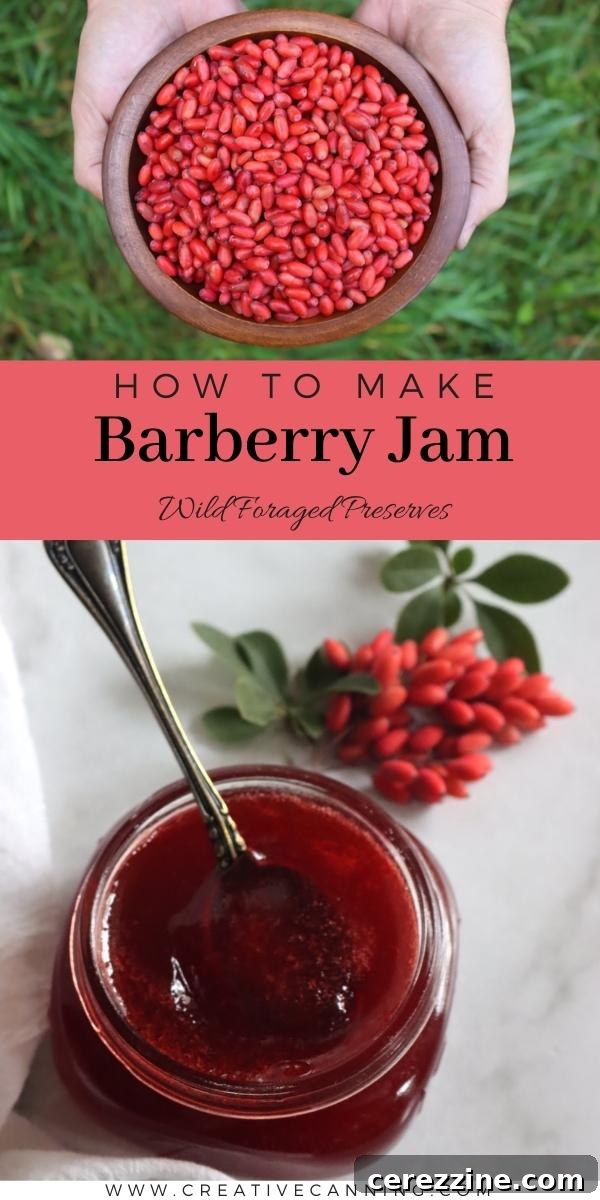
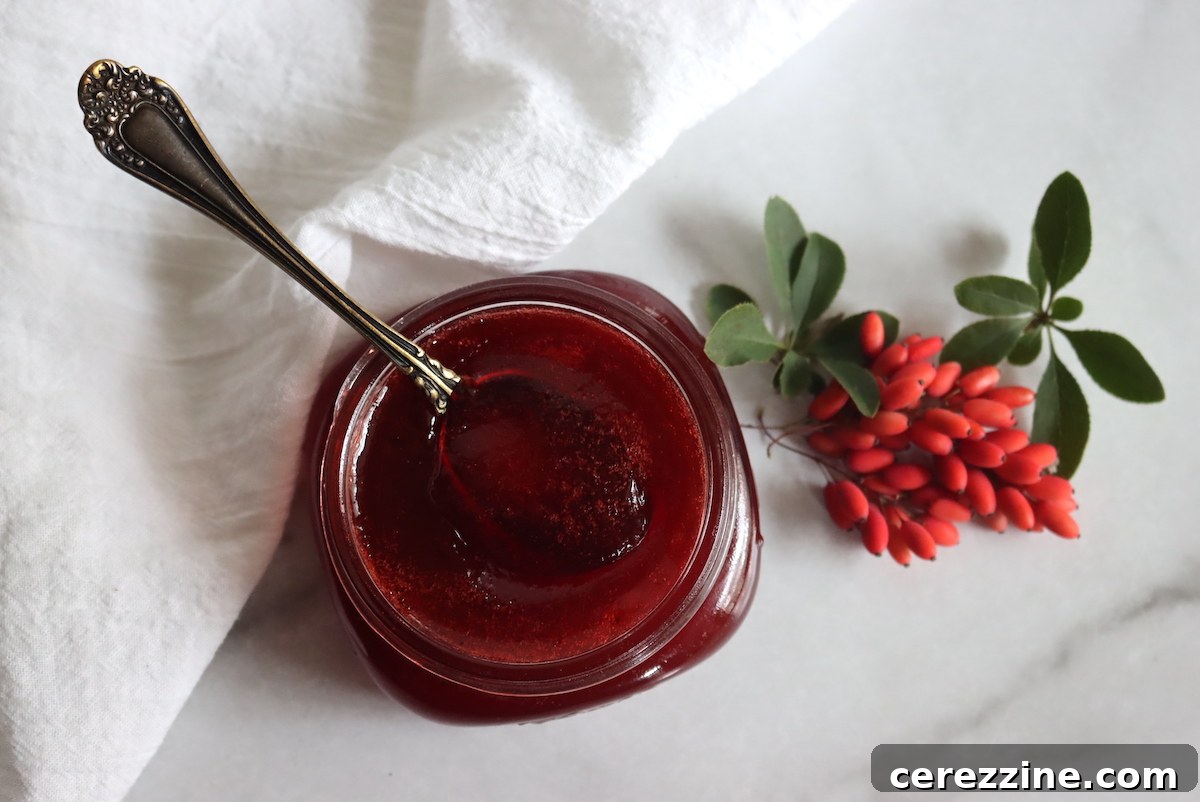
Barberry jam is a distinctive, brightly flavored preserve crafted from the small, vibrant red fruits of the barberry shrub. Whether harvested from wild thickets or cultivated gardens, these tart berries offer a unique flavor profile that lies somewhere between the sharp tang of cranberries and the zesty brightness of citrus. What truly sets barberries apart for jam makers is their naturally high pectin and acid content. This inherent characteristic means you can create a perfectly set, delicious preserve without the need for commercial pectin or added lemon juice, making it an ideal choice for natural and traditional canning methods.
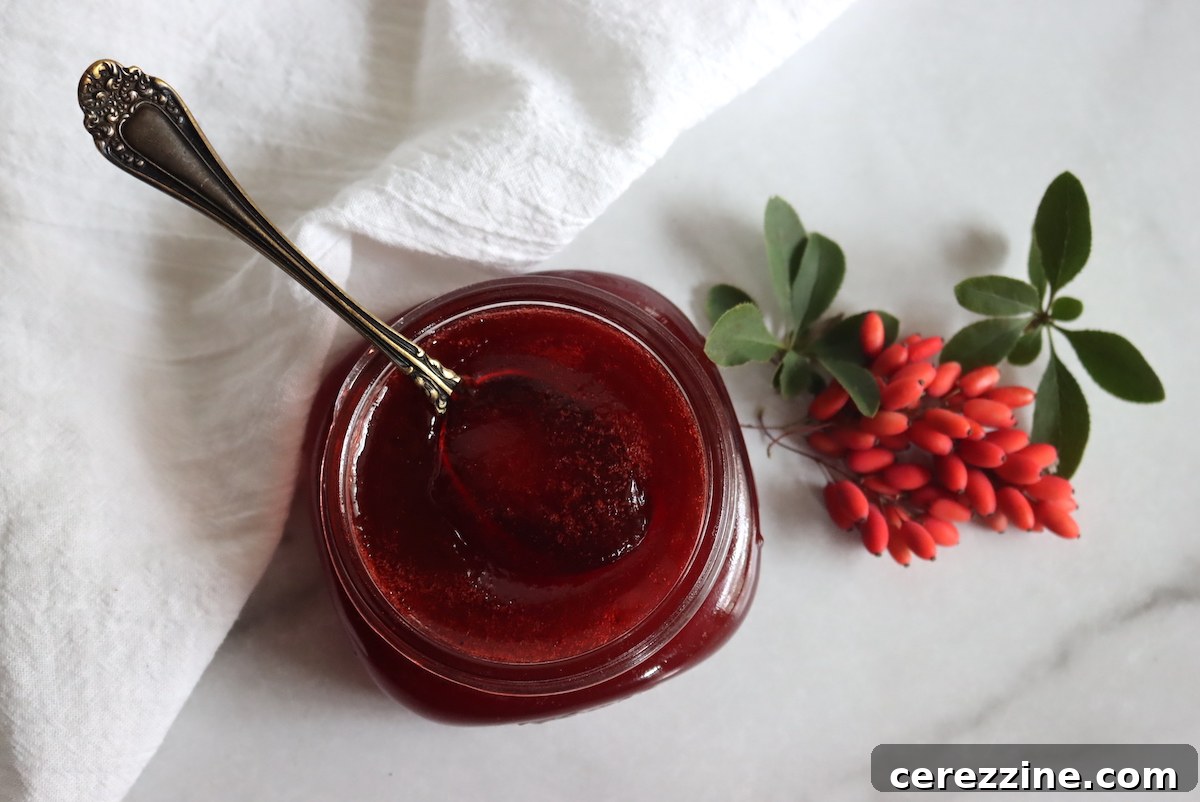
This exquisite barberry jam recipe captures the essence of these tiny, powerful berries. The European barberry, scientifically known as Berberis vulgaris, yields fruits with a complex, tangy, and subtly sweet taste that transforms beautifully into a preserve. Despite their diminutive size, barberries pack a surprising punch of flavor and are rich in natural gelling agents, making them perfectly suited for quick, small-batch jam making. The resulting jam is a culinary delight – intensely flavored and incredibly versatile. Imagine spreading its bright tang on a warm slice of toast, pairing its sharpness with a creamy, aged cheese, or using it as a sophisticated glaze for roasted poultry or game meats.
Foraging for wild barberries is a rewarding autumnal ritual for many enthusiasts. These hardy shrubs often grow in hedgerows and along property lines, offering a bounty of nature’s goodness. While the process of removing the berries from their thorny stems and tiny blossoms requires a bit of patience and effort, the exceptional taste of homemade barberry jam makes every moment worthwhile. This particular recipe yields two half-pint jars, providing just enough to enjoy fresh or to safely preserve for later enjoyment.
What are Barberries? Exploring the Berberis Shrub
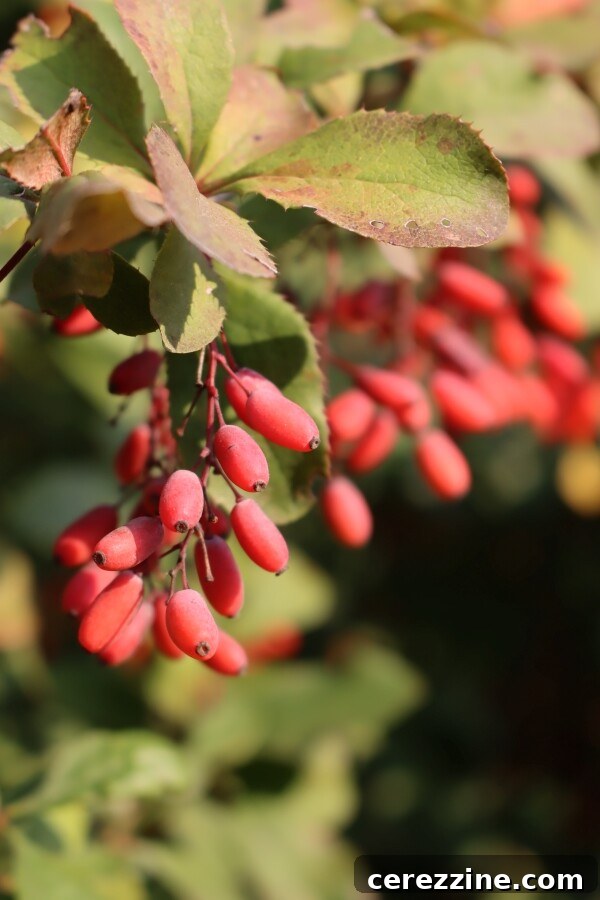
Barberries are the jewel-toned fruits of the Berberis genus, a family of deciduous shrubs known for their thorny branches and vibrant berries. The most commonly recognized species for culinary use is the European barberry (Berberis vulgaris), which produces elongated, rice-grain-sized red berries in hanging clusters during the autumn months. These berries, celebrated for their sharp, distinctive flavor, are a staple in many traditional cuisines, particularly in the Middle East.
When embarking on a foraging adventure for barberries, careful identification is paramount. While there are other wild red berries in nature, few resemble the unique clusters and growth habit of Berberis species. Japanese barberry (Berberis thunbergii), a shorter, ornamental shrub, also produces edible berries, though they are generally considered less flavorful than their European counterparts. Always consult reliable field guides and, if in doubt, err on the side of caution. Focus on identifying the distinctive thorns, the oval-to-oblong shape of the berries, and their bright red hue.
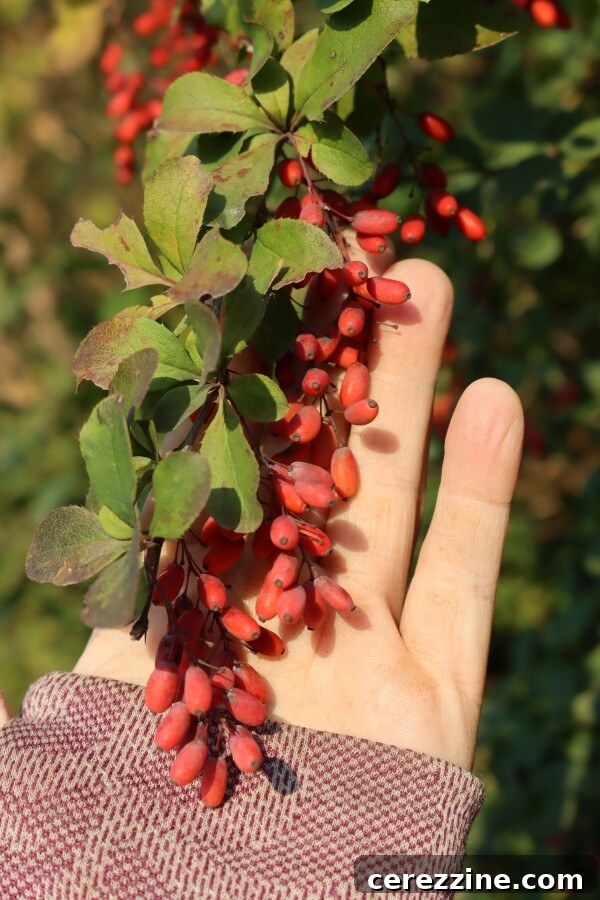
The Berberis vulgaris species is highly prized in culinary applications, particularly in Persian cuisine, where the dried berries, known as zereshk, are a key ingredient in dishes like zereshk polo. Beyond their culinary appeal, barberries have a rich history in traditional medicine and are recognized for their potential health benefits, though their primary use today for many is in delicious preserves. The high acidity not only makes them safe for canning but also contributes to their refreshing and palate-cleansing qualities.
When it’s time to harvest these beautiful berries, preparation is key. The shrubs are famously thorny, so wearing sturdy gloves is essential to protect your hands. Once gathered, the berries should be carefully removed from their stems and any lingering blossoms. For this small batch of barberry jam, you’ll need approximately 3 cups of stemmed barberries, which typically weighs about 1 pound. This initial cleaning step ensures a smooth, high-quality jam that is free from unwanted bits.
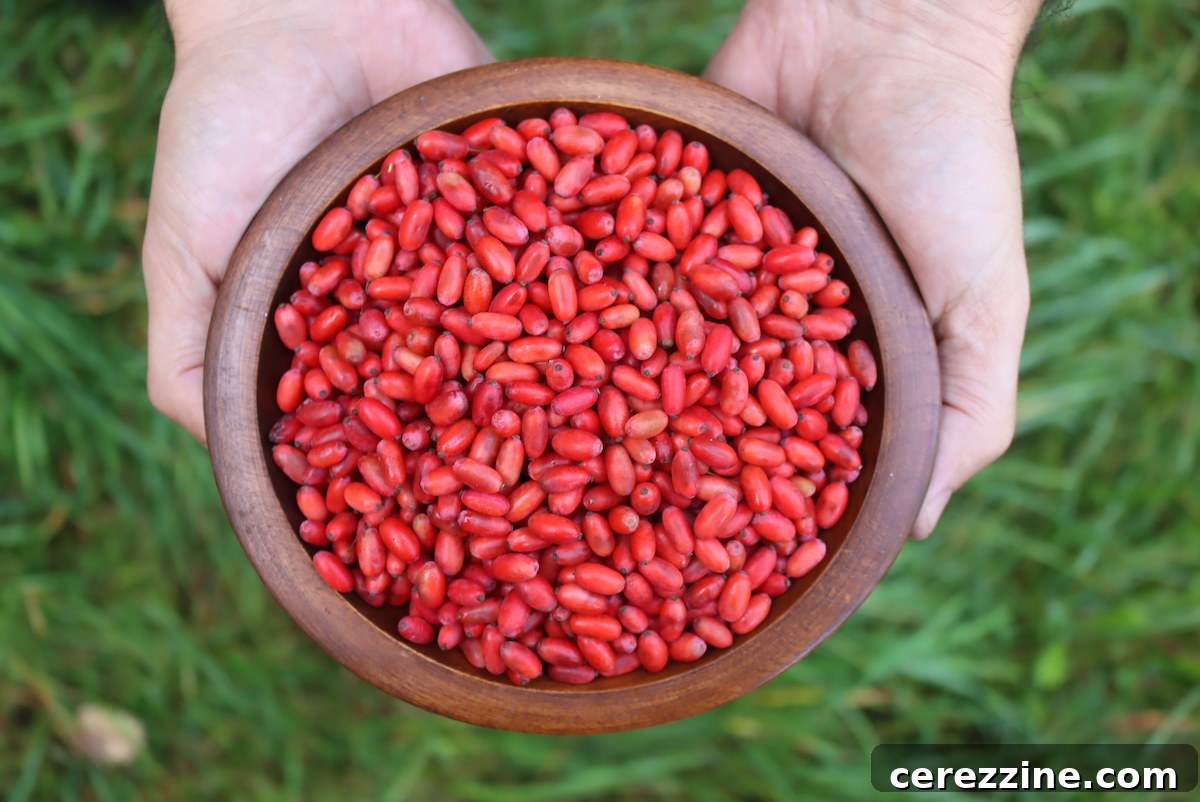
Preparing Barberries for an Exquisite Jam
The journey to a perfect jar of barberry jam begins with proper preparation of the fruit. After meticulously stemming your barberries, place them into a clean, heavy-bottomed saucepan. Add 1 cup of water, which will help them break down and release their juices without scorching. Bring the mixture to a gentle simmer over medium heat, allowing the berries to soften and burst. Continue to cook for about 5 minutes, gently mashing them with a spoon or potato masher as they soften. You’ll know they’re ready when the mixture transforms into a deep, inviting ruby red color, and the berries are tender enough to easily fall apart.
The next crucial step is to separate the delicious pulp from the seeds and any remaining tiny stem fragments or blossom ends. Barberries, despite their small size, contain relatively large seeds that can detract from the jam’s texture. Carefully press the cooked berry mixture through a fine mesh strainer, using the back of a sturdy spoon or a silicone spatula to work the rich pulp through. This process extracts the maximum amount of flavor and pectin-rich goodness while leaving behind the undesirable elements.
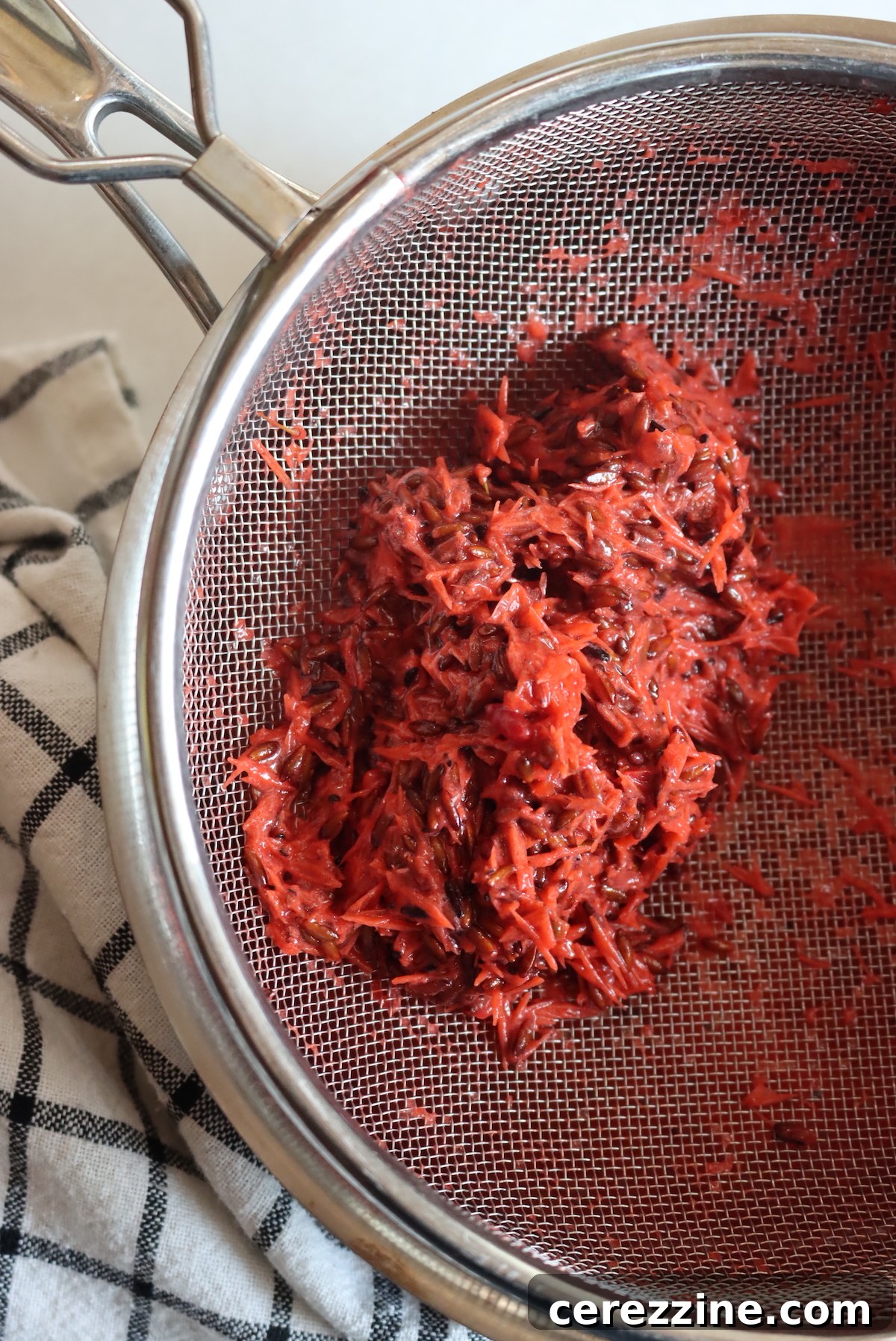
For those who prefer an even smoother jam, or a true jelly consistency, consider a second straining. This can be achieved by passing the pulp through an extra-fine strainer or through several layers of cheesecloth lining a colander. While making a pure barberry jelly involves discarding all solids, many jam makers, myself included, prefer to retain as much of the vibrant fruit pulp as possible. The pulp contributes to the jam’s rich body and concentrated flavor. After this meticulous straining process, you should be left with approximately 1½ cups of rich, tart barberry pulp, perfectly prepped for transforming into a delightful preserve.
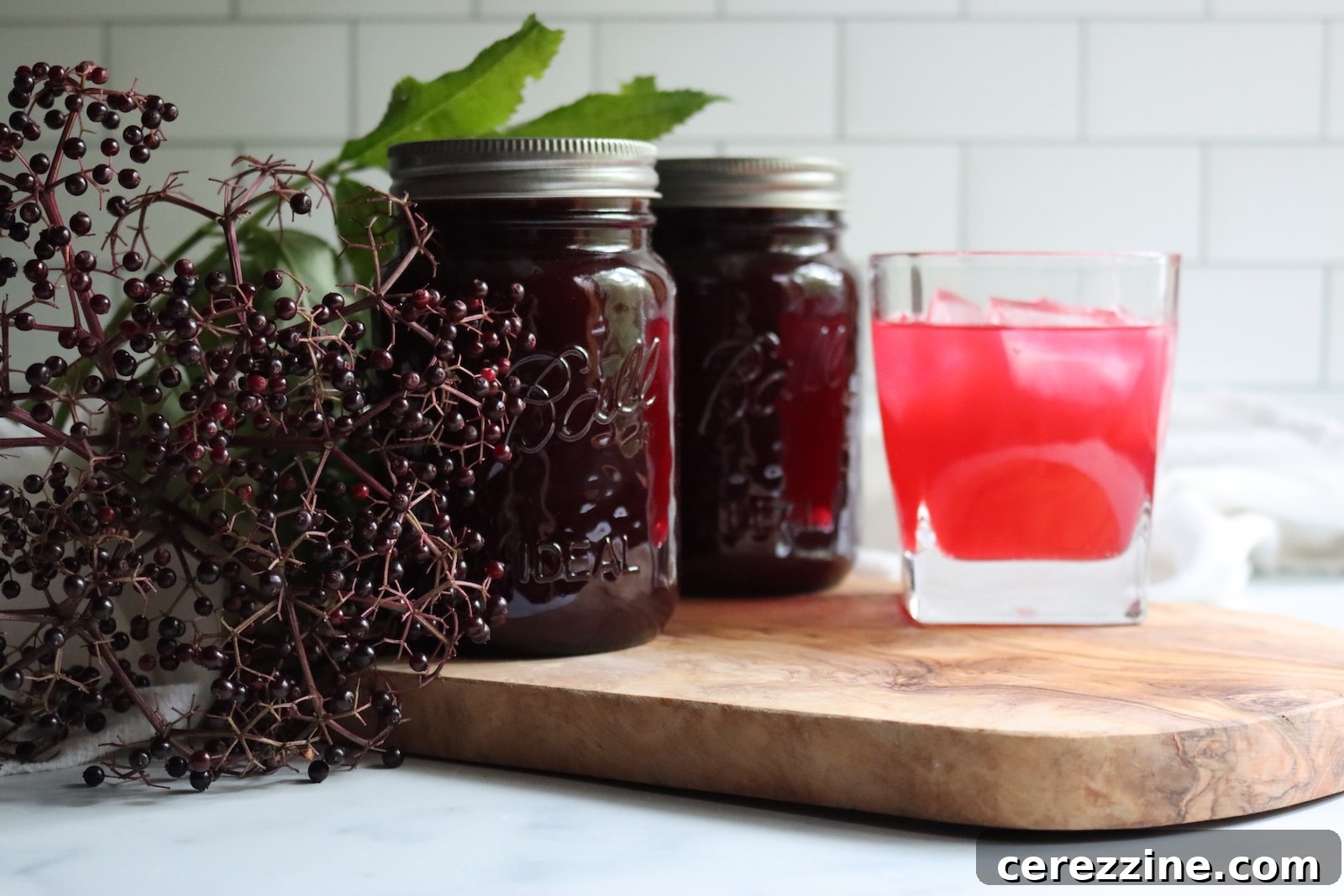
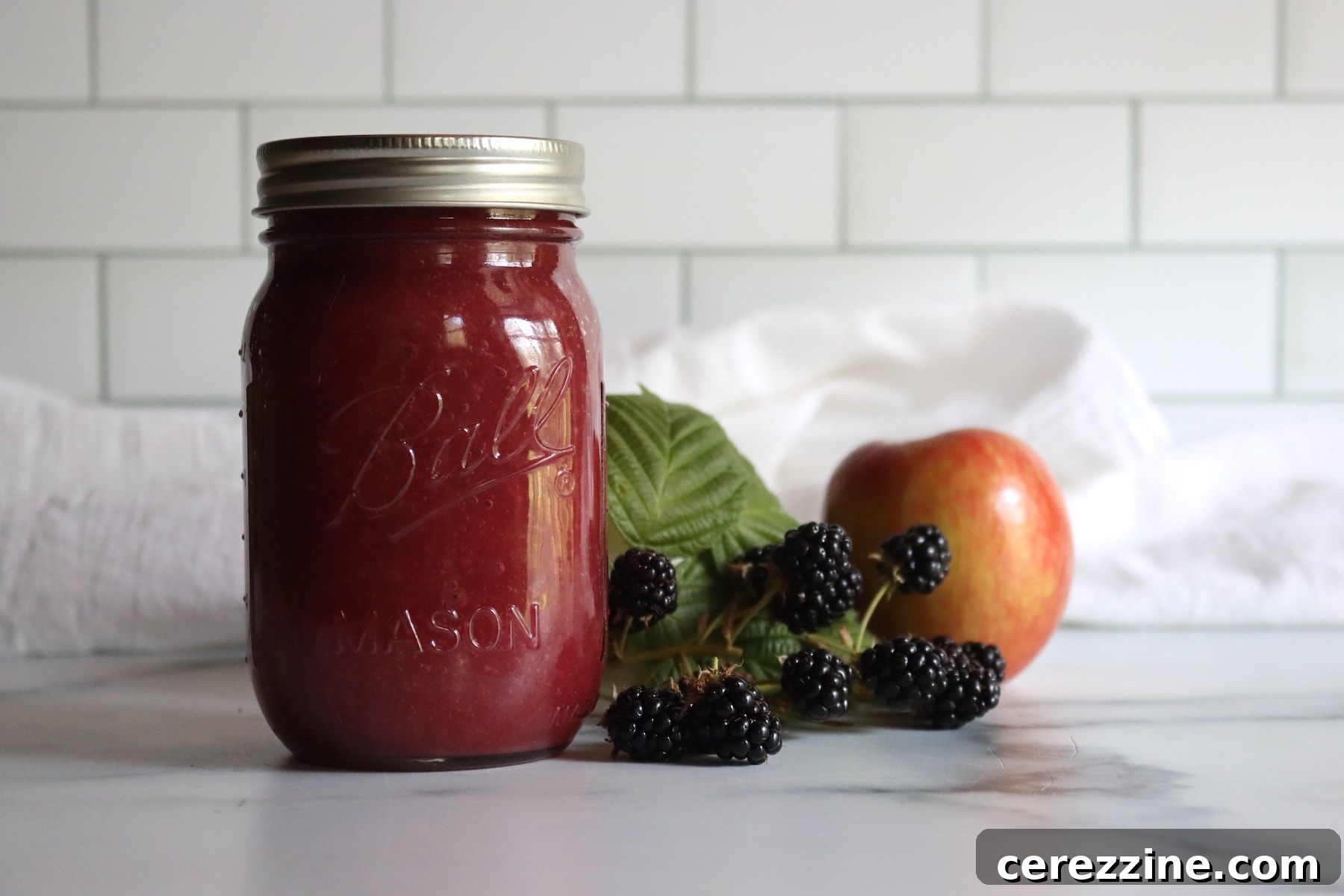
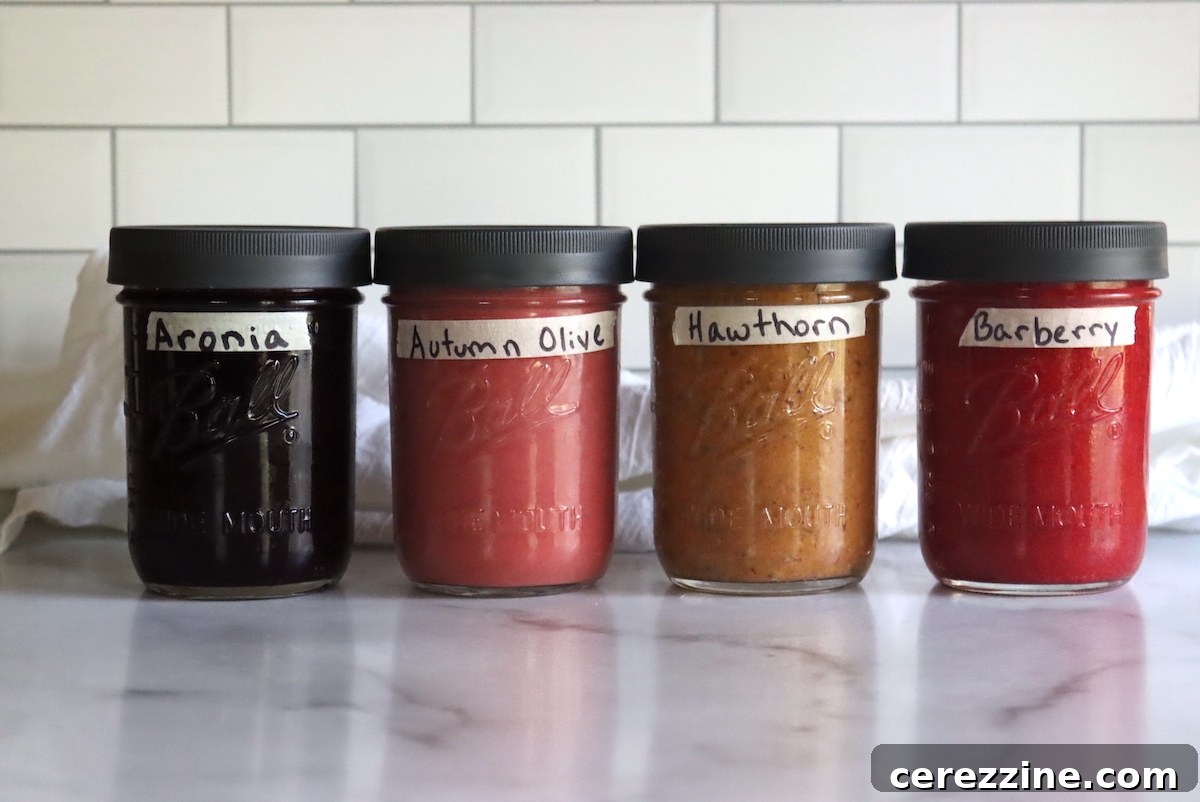
On days when the wild harvest is bountiful, the kitchen often becomes a hub of preserving activity. The day this batch of barberry jam was made, other wild treasures were also being transformed, creating a vibrant spread of Autumn Olive Jam, Hawthorn Sauce, and Aronia Jelly. Each offers its own unique flavor, but barberry jam truly stands out with its distinctive tang.
Crafting the Perfect Barberry Jam
With your meticulously prepared barberry pulp ready, it’s time for the magic of jam making. Return the strained pulp to your clean jam pot. Now, stir in 1½ cups of granulated sugar. This typically follows a desirable 1:1 ratio by volume of fruit pulp to sugar, which is ideal for a beautifully balanced tart-sweet jam. However, it’s always wise to measure your pulp precisely after straining; if you end up with a slightly different amount, simply adjust the sugar accordingly to maintain this crucial ratio. The natural acidity and high pectin levels of barberries are your allies here, eliminating the need for any artificial thickeners or additional acids.
Bring the mixture to a vigorous rolling boil over high heat, stirring constantly to prevent the sugar from sticking and scorching. This is where barberry jam truly shines – its natural pectin content means it reaches its gel stage remarkably quickly, often in just 2 to 3 minutes of intense boiling. This rapid setting time requires your full attention; do not step away from the pot! Continuous stirring ensures even cooking and prevents the jam from boiling over or burning at the bottom.
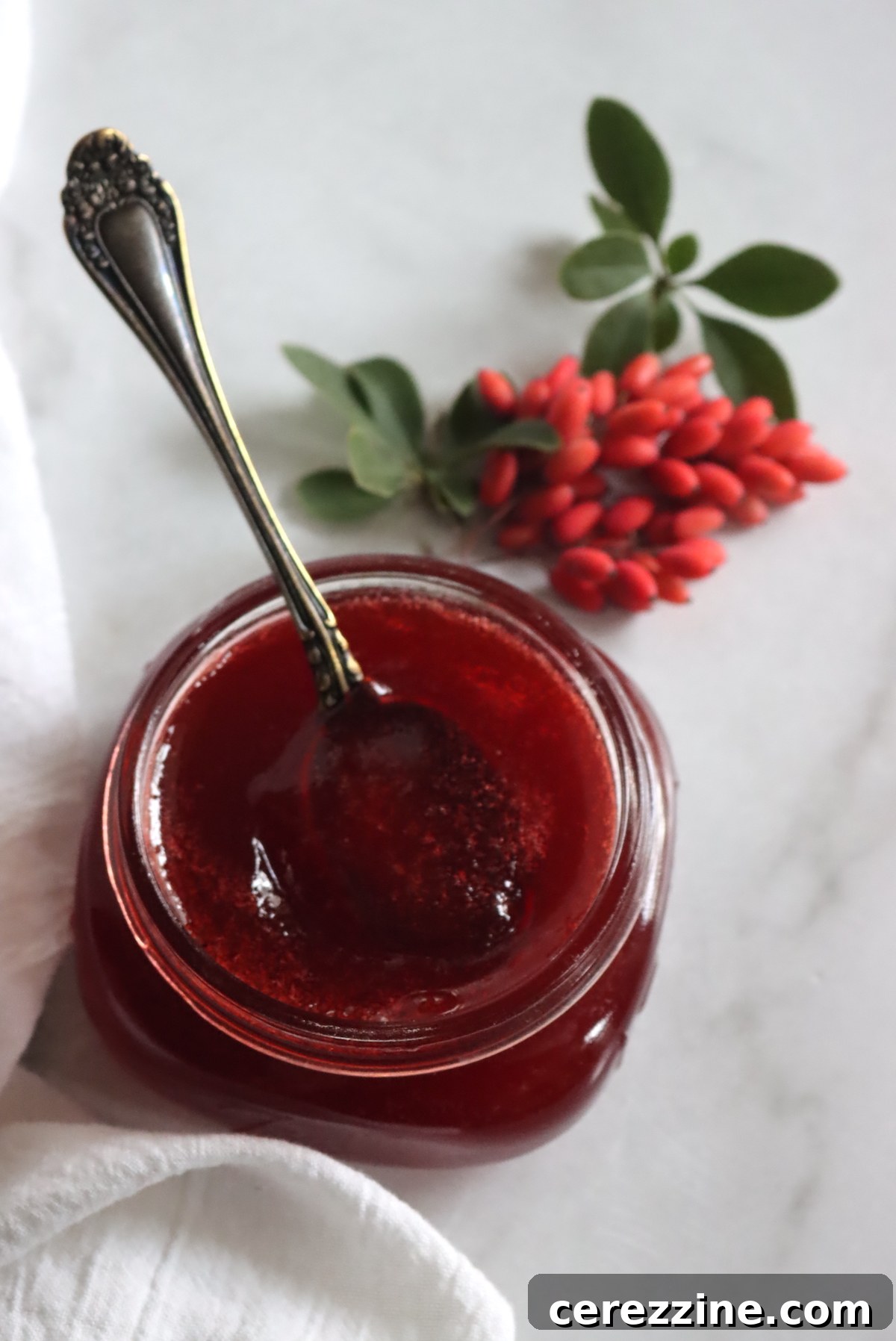
To confirm your barberry jam has reached the perfect set, use the classic cold plate test. Keep a small ceramic plate or spoon in the freezer while you cook. Once you believe the jam is ready, dollop a small amount onto the chilled plate. Let it sit for about 30 seconds, then push it with your finger. If the surface wrinkles and holds its shape, your jam is set! Alternatively, an instant-read thermometer can be used, with the gel point typically reached around 220°F (104°C) at sea level. Barberry jam characteristically sets with a looser, spoonable texture, which is utterly delightful spread on toast, swirled into yogurt, or served as an elegant accompaniment to sharp cheeses. It offers a glorious sheen and an intensely fruity, complex flavor that is far superior to most commercial pectin jams.
Safe Canning and Storage for Barberry Jam
This recipe yields a modest batch of barberry jam, typically filling just two 8-ounce (half-pint) jars. For immediate enjoyment, you can simply cool the jam and store it in the refrigerator for up to 2-3 weeks, or freeze it for longer-term storage of up to 6 months. However, if you wish to preserve this exquisite jam for a shelf-stable pantry staple, water bath canning is the safest and most reliable method.
To safely water bath can your homemade barberry jam, start by ensuring your half-pint jars are clean and sterilized. Ladle the hot jam into these prepared jars, leaving precisely ¼ inch of headspace from the rim. This critical space allows for proper sealing and prevents jar breakage during processing. Carefully wipe the rims of the jars with a clean, damp cloth to remove any jam residue, which could interfere with the seal. Apply two-piece lids, ensuring the flats are centered, and tighten the screw bands to fingertip-tight. This means tightening until resistance is met, then a slight bit more, without over-tightening.
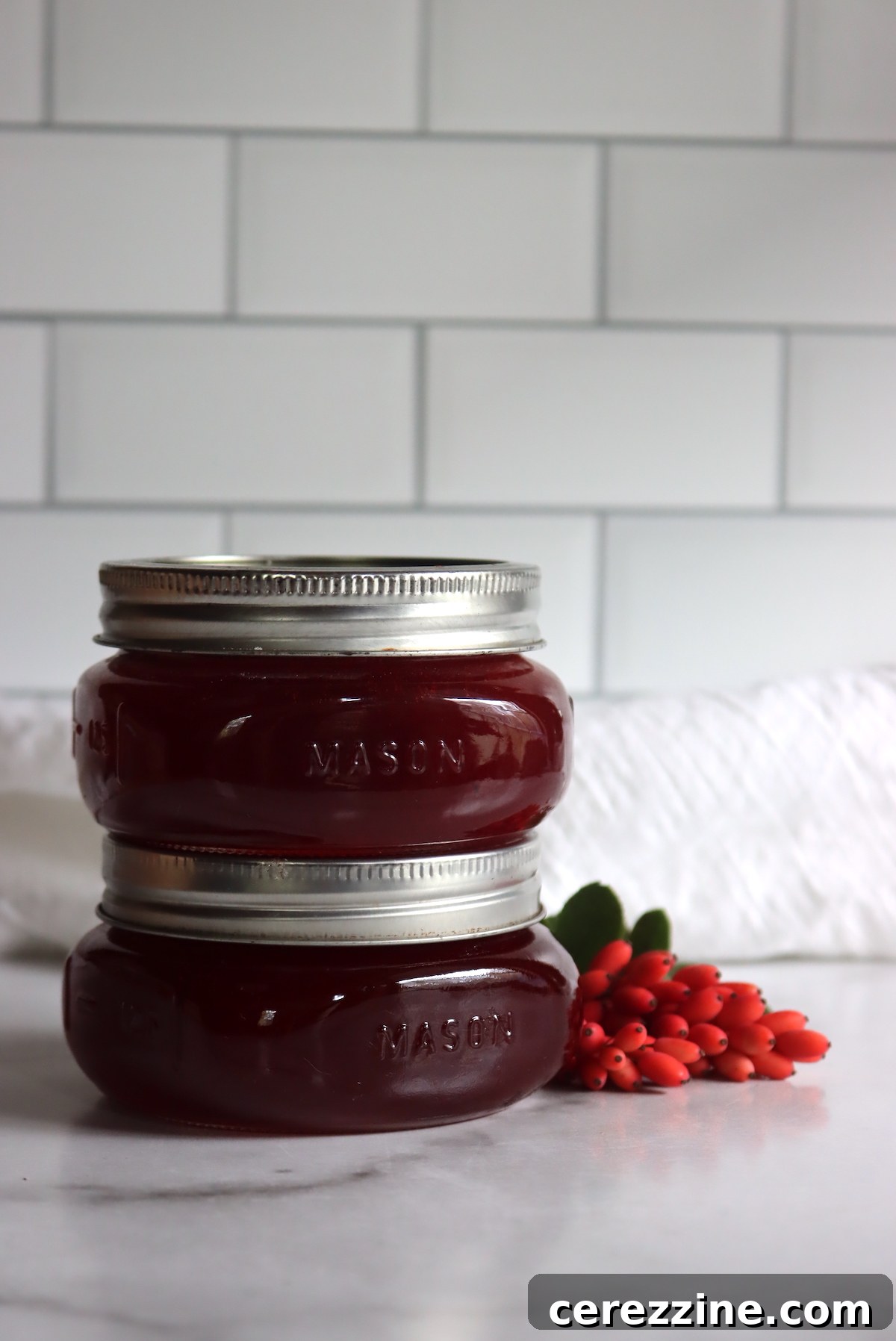
Process the filled jars in a boiling water bath canner for 10 minutes. If you reside at an elevation above 6,000 feet, increase the processing time to 15 minutes to account for lower boiling temperatures. Once the processing time is complete, turn off the heat and let the jars remain in the canner for an additional 5 minutes before carefully removing them to a towel-lined counter. Allow the jars to cool undisturbed for 12–24 hours. During this cooling period, you should hear the satisfying “ping” sound as the lids seal. After cooling, check all seals by pressing on the center of the lid; if it doesn’t flex, the jar is sealed. Properly sealed jars of barberry jam will keep beautifully in a cool, dark pantry for 12 to 18 months. Once a jar is opened, store it in the refrigerator and aim to use it within 2–3 weeks to maintain its peak freshness and flavor.
Frequently Asked Questions About Barberry Jam
Yes, barberries (Berberis vulgaris) are exceptionally safe for water bath canning due to their naturally high acidity. This inherent characteristic makes them an ideal fruit for preserves, as sufficient acidity is crucial for inhibiting bacterial growth during canning. A 2020 study published inEuropean Food Research and Technology confirmed that barberry fruits consistently register a pH between 3.07 and 3.25. This range is significantly below the USDA’s safety threshold of 4.6 for boiling water bath canning, ensuring a secure and stable preserve. Furthermore, their total acidity, measured as malic acid, typically ranges from 2.03% to 2.56%, which is notably higher than many other fruits commonly used in canning. This high natural acidity means there’s absolutely no need to add lemon juice or other acidifiers when preparing barberry jam, jelly, or preserves, allowing the pure, vibrant flavor of the fruit to shine through. The abundant malic acid also naturally promotes excellent gelling, eliminating the requirement for added pectin. As always, when sourcing wild or purchased fruits, ensure proper identification of the species and avoid any ornamental varieties not intended for culinary use.
No, this recipe is specifically formulated for fresh barberries. Dried barberries, often found in specialty stores, are typically salted or oiled for their common culinary applications (like in pilafs) and will not rehydrate or perform in the same manner as fresh fruit in jam making. Their texture and flavor profile will be altered, and the natural pectin necessary for setting the jam may not be as effective.
Absolutely not. Barberries are one of nature’s perfect jam-making fruits, naturally abundant in both acid and pectin. Their high acidity ensures safety for canning, and their pectin content guarantees a beautiful set without any additional acidifiers or commercial pectin products. This allows for a pure, unadulterated barberry flavor.
Barberry jam offers a truly unique and memorable taste experience. It shares the delightful tartness often associated with cranberry jam, but with a distinctively brighter, more complex, and almost tropical undertone. Many describe its flavor as a lively blend of cranberry and citrus, while others note hints of sour cherry with an intriguing twist of lemon. It’s a flavor that excites the palate and leaves a refreshing finish, making it a standout preserve.
Beyond Jam: Versatile Culinary Uses for Barberries
While barberry jam is an undeniably delicious way to savor these unique berries, their tart, citrusy flavor profile makes them incredibly versatile in the kitchen, extending far beyond the realm of preserves. Both fresh and dried barberries can elevate a wide array of dishes, bridging the gap between sweet and savory creations with their bright, distinctive tang.
In Middle Eastern cuisine, particularly in Persian cooking, dried barberries (known as zereshk) are celebrated for their ability to add a vibrant burst of color and acidity. They are most famously incorporated into rice dishes like zereshk polo, where they are lightly sautéed in butter with a touch of sugar and then folded into fragrant saffron rice. This combination offers a delightful textural contrast and a refreshing counterpoint to rich flavors. Beyond traditional pilafs, you can experiment by adding fresh or rehydrated dried barberries to couscous, quinoa, or other grain salads for pops of bright acidity and visual appeal. They also make an excellent addition to stews and tagines, lending a subtle fruity depth.
For bakers, barberries present an exciting opportunity to introduce a new layer of flavor. Try substituting them anywhere you would typically use dried cranberries, currants, or sour cherries in baked goods. Their robust tang works beautifully in scones, muffins, quick breads, and even tarts, providing a more complex and sophisticated note. Imagine a barberry-almond scone or a barberry-oatmeal cookie! Their acidity helps balance the sweetness of baked goods, creating a more dynamic flavor.
Barberries are also a natural pairing for a variety of savory dishes, complementing richer meats with their sharp fruitiness. Consider incorporating them into marinades for poultry, lamb, or duck, where their acid content can tenderize and infuse flavor. They can also be added to stuffings for a festive touch or simmered into pan sauces to cut through the richness of a main course. For a quick and impressive homemade condiment, gently simmer fresh barberries with finely diced shallots, a splash of vinegar, and a hint of spice to create a vibrant barberry chutney or a simple compote. This makes an excellent accompaniment to grilled meats, roasted vegetables, or even a robust cheese board. Explore the possibilities and let the unique flavor of barberries inspire your culinary adventures!
More Unique Canning Recipes
Barberry Jam
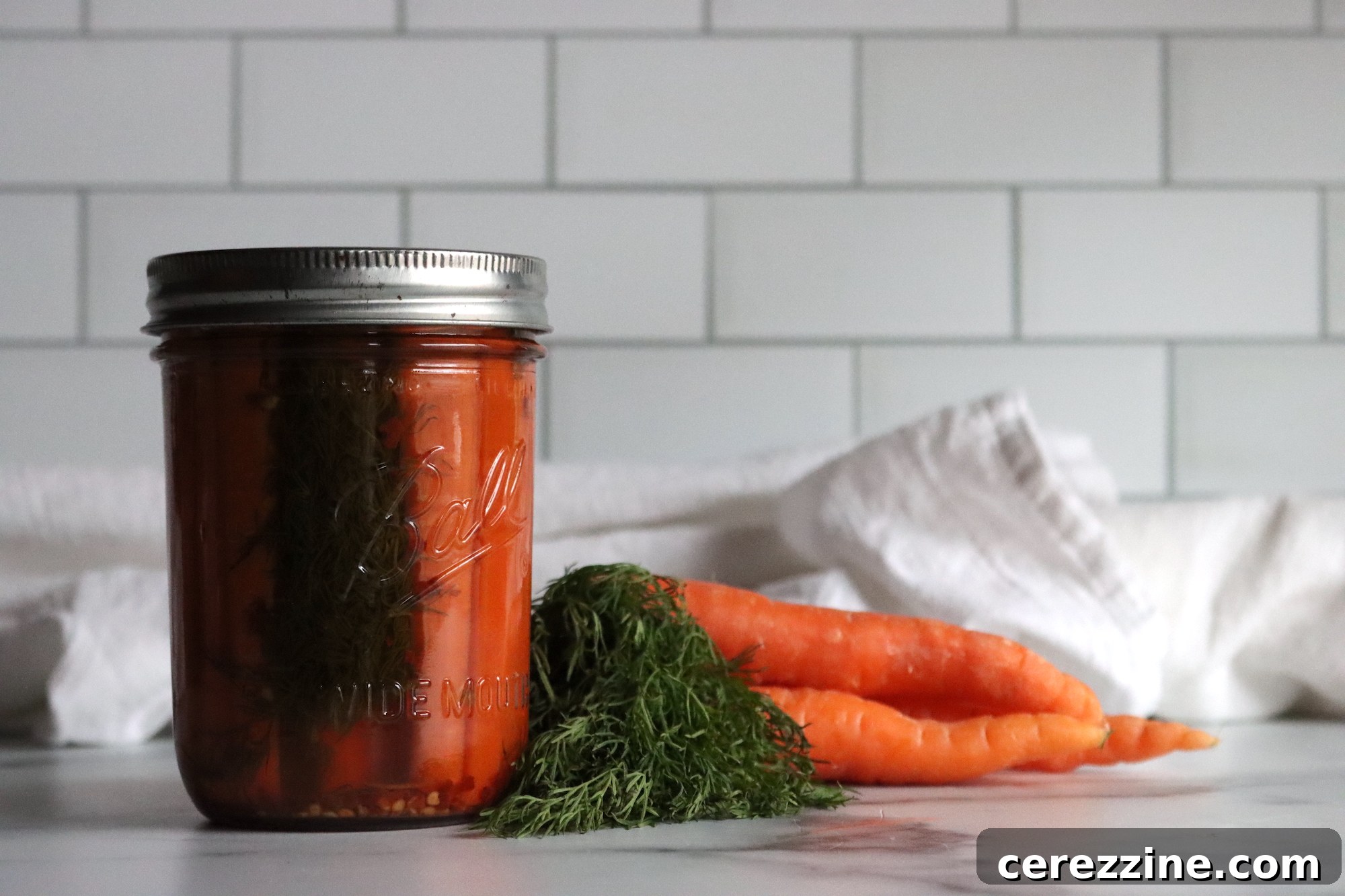
Cucamelon Pickles
Sea Buckthorn Jam (& Jelly)
Sea Buckthorn Juice
Homemade Barberry Jam
This old-fashioned barberry jam boasts a bright, tart flavor and a delightful soft, spreadable texture. Crafted with just fresh fruit, water, and sugar, it comes together quickly and is perfectly safe for water bath canning, thanks to barberries’ remarkable natural acidity and pectin content.
16 servings (makes 2 half-pint jars)
10 mins
10 mins
10 mins
30 mins
Equipment
- Water Bath Canner
- Fine Mesh Strainer
- Saucepan (preferably heavy-bottomed)
- Sterilized half-pint canning jars with lids and bands
- Jar lifter, canning funnel, headspace tool
Ingredients
- 3 cups fresh barberries, stemmed (approximately 1 pound)
- 1 cup water
- 1½ cups granulated sugar (see notes for adjustment)
Instructions
- Simmer the fruit: Place the stemmed barberries and water into a heavy-bottomed saucepan. Bring the mixture to a gentle simmer over medium heat and cook for about 5 minutes, using a spoon or potato masher to mash the berries until they soften and release their brilliant red juice. The mixture should look like a rich, ruby-colored pulp.
- Strain the pulp: Carefully press the cooked barberry mixture through a fine mesh strainer set over a bowl. Use a sturdy spoon or silicone spatula to work the pulp through, leaving behind seeds and any tough stem remnants. For an even smoother consistency, you can strain the pulp a second time through an extra-fine sieve or a few layers of clean cheesecloth.
- Measure and adjust sugar: You should yield approximately 1½ cups of thick, seedless barberry pulp from every pound of fresh fruit. Measure the exact amount of pulp you have. For optimal results, you will want a 1:1 ratio by volume of fruit pulp to sugar. Return the measured pulp to the clean jam pot.
- Add sugar: Stir the granulated sugar into the barberry pulp in the pot. Mix thoroughly until the sugar is dissolved.
- Cook to gel stage: Place the pot over high heat and bring the jam to a vigorous, rolling boil. Stir constantly to prevent scorching and ensure even cooking. The natural pectin in barberries means the jam will reach its gel stage very quickly, typically within 2 to 3 minutes of boiling.
- Test for set: To check for doneness, perform the cold plate test: place a small dollop of hot jam onto a chilled plate from the freezer. Allow it to cool for 30 seconds, then gently push it with your finger. If the surface wrinkles and holds its shape, the jam is ready. If not, continue boiling for another minute and retest.
- Jar the jam: Once the jam has reached its set, immediately ladle the hot jam into pre-sterilized half-pint canning jars, leaving ¼ inch of headspace. Wipe the jar rims thoroughly with a clean, damp cloth to ensure a good seal. Place the lids and screw bands on, tightening to fingertip-tight.
- Water bath canning (optional): For shelf-stable storage, carefully place the jars into a boiling water bath canner. Ensure the jars are covered by at least 1 inch of water. Bring the water to a full boil and process the jars for 10 minutes. If you are at an altitude above 6,000 feet, process for 15 minutes.
- Cool and store: After processing, turn off the heat and let the jars remain in the hot water for 5 minutes before carefully removing them to a towel-lined counter. Allow the jars to cool undisturbed for 12–24 hours. Once completely cool, check the seals (lids should be concave and not flex when pressed). Store properly sealed jars in a cool, dark pantry for up to 18 months. Refrigerate opened jars and use within 2–3 weeks.
Notes
- Barberry Measurements: Start with approximately 1 pound of fresh barberries, which typically yields about 3 cups of stemmed fruit. After cooking and thorough straining, you should obtain around 1½ cups of rich, seedless pulp—an ideal quantity for making two half-pint jars of this vibrant jam.
- Sugar Amounts: The key to a balanced barberry jam is a 1:1 ratio by volume of fruit pulp to sugar. While the recipe suggests 1½ cups of sugar, always measure your strained fruit pulp first. If your pulp yield is slightly more or less than 1½ cups, adjust the sugar proportionally to match the pulp’s volume.
- Straining Tips: Barberries contain small, hard seeds and can have tiny black blossom ends that, if left in, might affect the jam’s smooth texture. A good quality fine mesh strainer will remove most of these. For an exceptionally smooth, gourmet-quality jam, consider a second straining pass through an extra-fine sieve or by lining your strainer with several layers of cheesecloth. If a completely seedless, clear product is desired, you can opt to make a true barberry jelly by only collecting the juice and discarding all solids.
- Pectin & Set: One of the many advantages of barberries is their naturally high content of both acid and pectin. This means there’s no need whatsoever for adding commercial pectin, lemon juice, or other acidifiers. The jam sets quickly and beautifully on its own. Be vigilant during the boiling stage; the jam can reach its gel point in as little as 2 to 3 minutes, so constant stirring and prompt testing are crucial to avoid overcooking and a too-stiff jam.
- Flavor Notes: Barberry jam offers a distinctively tart, bright, and complex flavor. It’s often likened to cranberries but with a more pronounced citrusy, almost tropical, edge. Some connoisseurs detect notes of sour cherries mingled with a lively lemon zest. Its unique profile makes it incredibly versatile, pairing equally well with sweet breakfast pastries, savory roasted meats, or as a sophisticated addition to a gourmet cheese board.
- Yield: A batch made with 1 pound of fresh barberries typically yields about 2 half-pint (8 oz) jars of jam. Slight variations in yield may occur depending on the juiciness of the fruit and how thoroughly the pulp is strained.
Nutrition
Calories: 119 kcal, Carbohydrates: 28g, Protein: 1g, Fat: 1g, Sodium: 1mg, Potassium: 0.4mg, Sugar: 19g, Calcium: 1mg, Iron: 0.01mg
Please note: Nutrition information is an approximation and can vary based on ingredients and preparation methods.
Like this unique recipe? We’d love to hear your thoughts! Leave a comment below and share your experience!