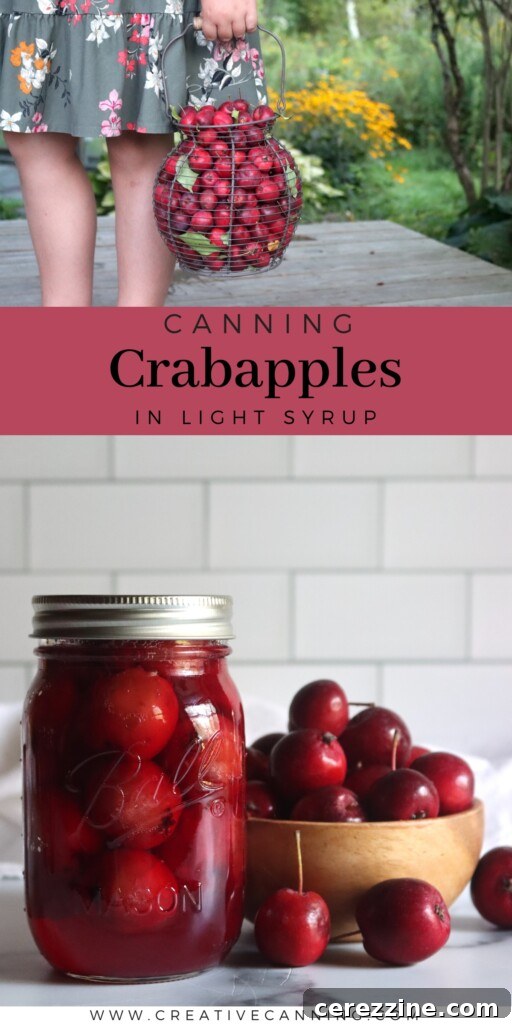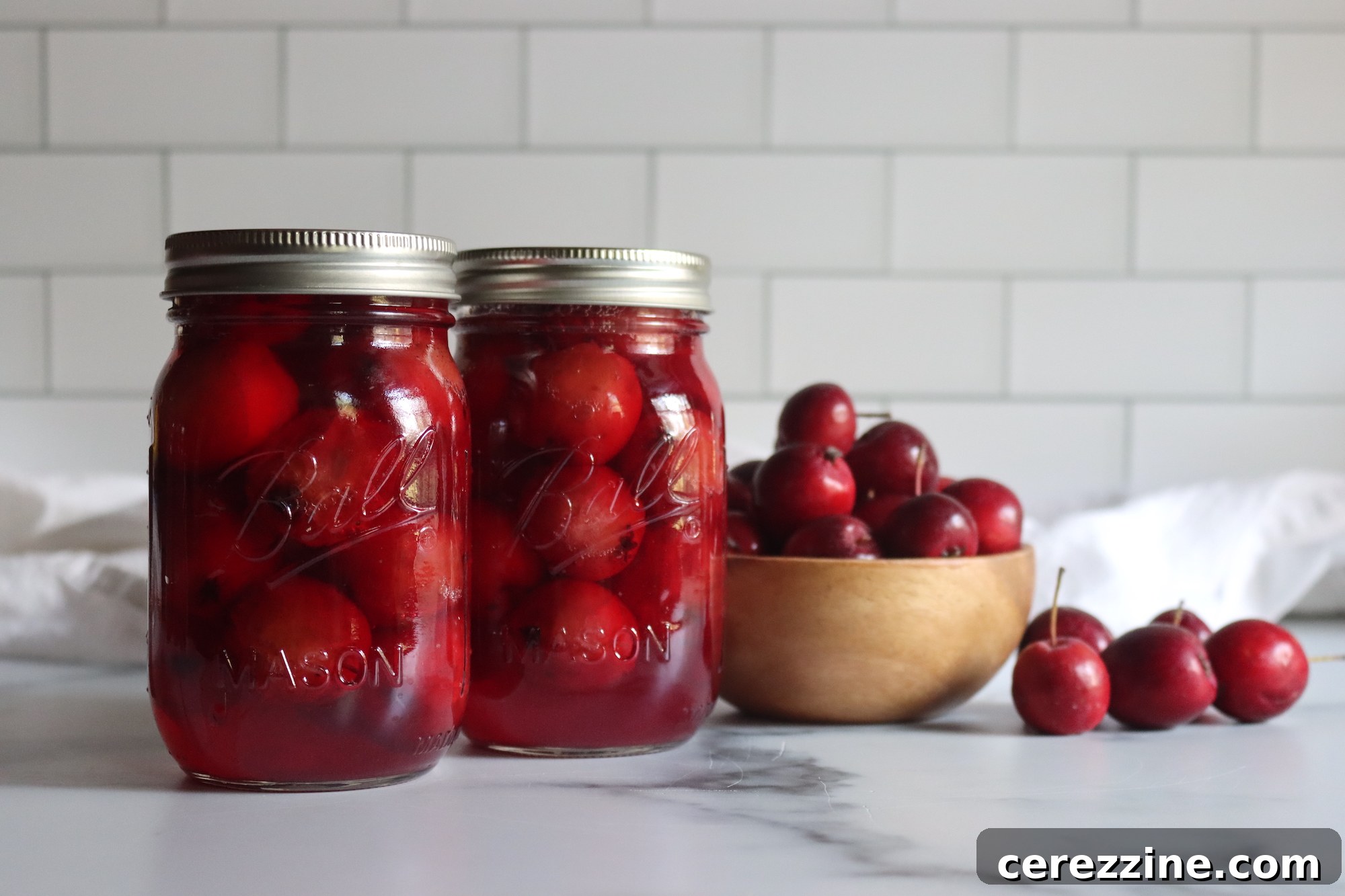
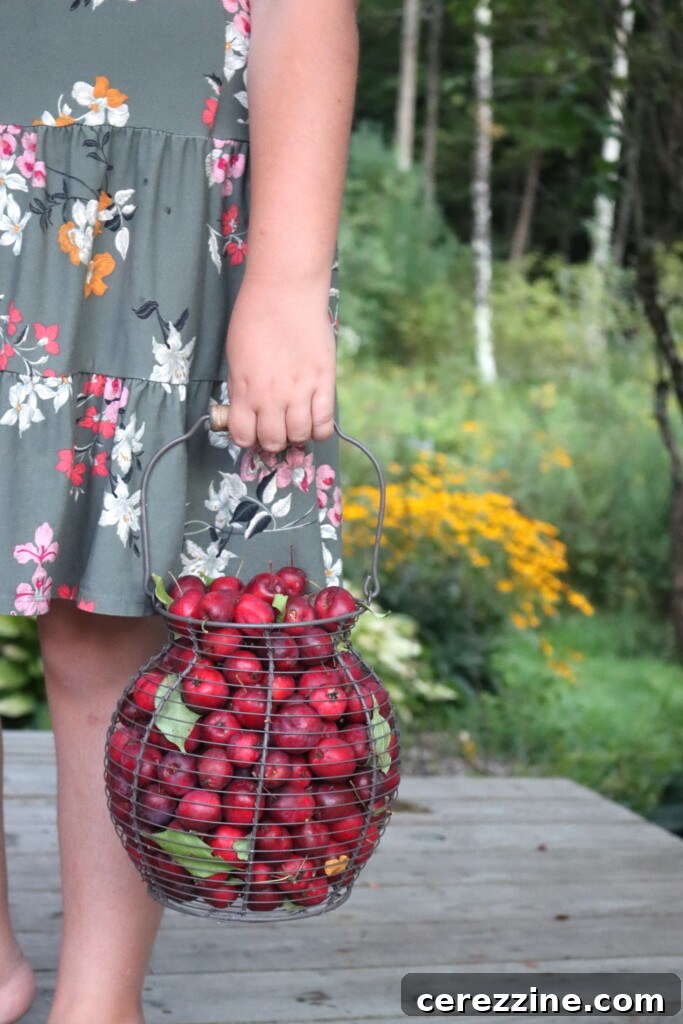
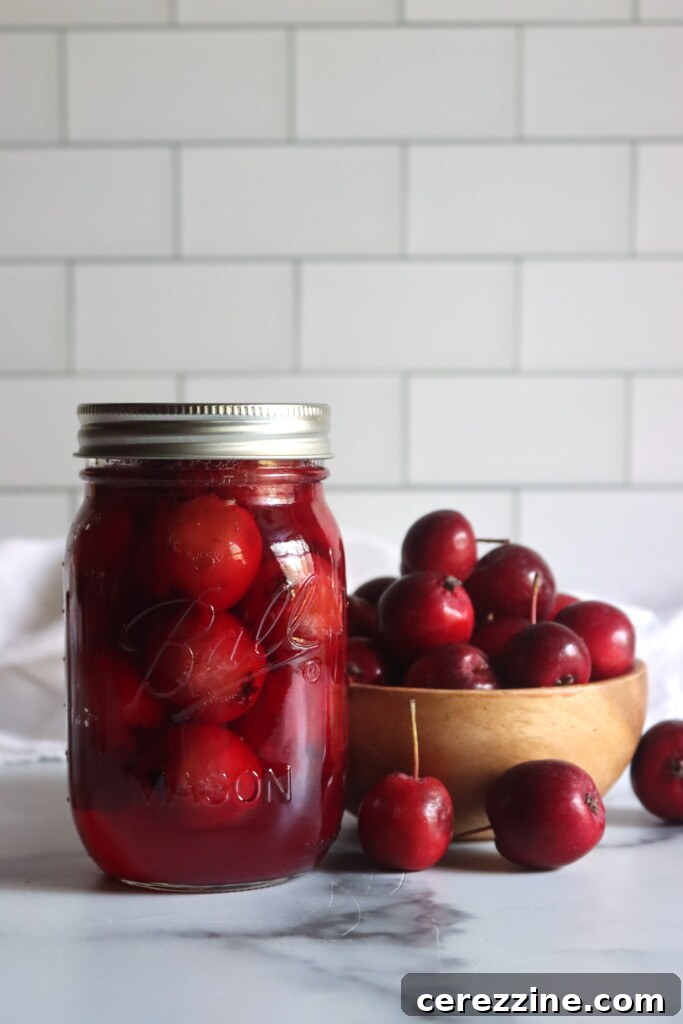
Canning whole crabapples stands out as one of the most delightful and visually appealing methods to preserve the autumn harvest. These petite, vibrant fruits are renowned for their ability to hold their shape beautifully when submerged in syrup within glass jars, creating an exquisite sweet-tart treat. Perfect for enhancing holiday platters, serving as a unique side dish, or simply enjoyed as a refreshing snack straight from the pantry, canned crabapples are a testament to the simple joys of home preservation.
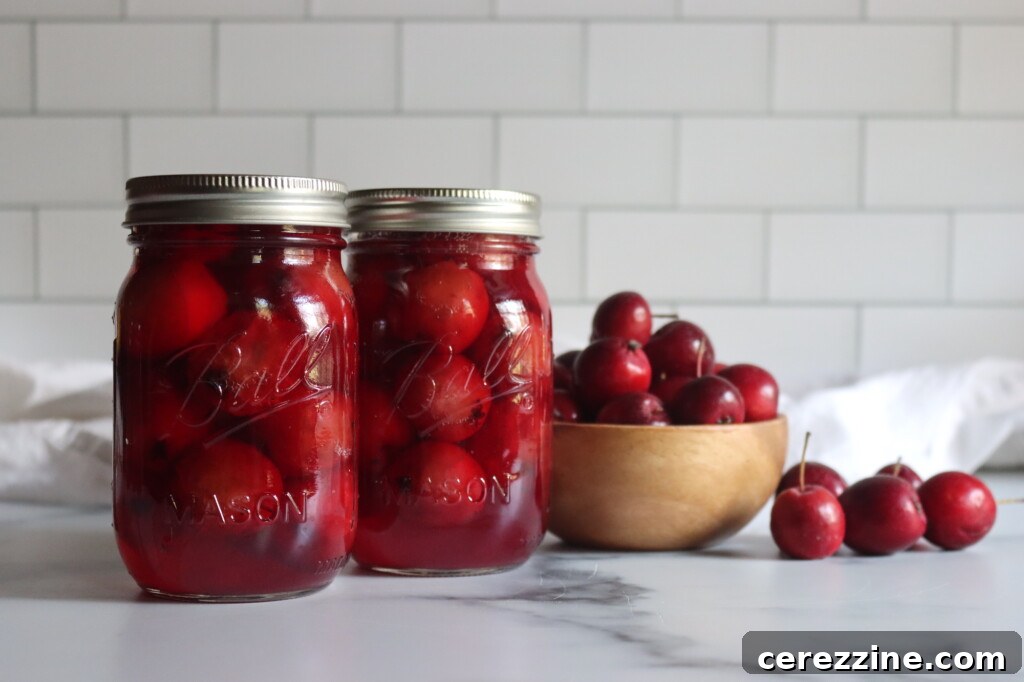
Crabapples, often celebrated for their hardiness and ornamental beauty, frequently surprise with their culinary versatility once properly prepared. Their naturally rosy, sometimes crimson skins, coupled with a distinct tart-sweet flavor profile, make them ideal candidates for water bath canning. The process gently transforms these small fruits, preserving their integrity and turning them into shimmering, jeweled orbs suspended in a luscious syrup. While their raw acidity can be quite intense, canning in a carefully balanced syrup mellows their sharp edges, resulting in a tender, palate-pleasing delicacy.
A significant advantage of canning crabapples is the flexibility it offers in terms of sweetness. You can customize the syrup strength to perfectly match your personal taste, ranging from an extra-light syrup that allows the fruit’s natural tartness to dominate, to a heavy syrup for a more pronounced sweetness. This recipe focuses on utilizing a light syrup, which we believe offers the ideal balance—it delicately enhances the crabapples’ inherent flavors without making them overly saccharine. For those mindful of sugar intake, it’s reassuring to know that crabapples can be safely canned in plain water or unsweetened apple juice, although this may result in a slightly different texture and a less complex flavor profile.
Beyond the fruit itself, the residual canning syrup is a culinary treasure not to be wasted. It captures the vibrant color and tangy essence of the crabapples, making it an excellent base for crafting unique cocktails, sweetening your morning tea, or adding a sophisticated twist to desserts by soaking sponge cakes. Whether you are fortunate enough to forage for wild crabapples, harvest them from a backyard tree, or find them at a local market, this straightforward and highly adaptable canning method ensures that you can extend the enjoyment of their fleeting season far beyond autumn.
For this tested and reliable recipe, we draw inspiration from authoritative sources within the home canning community: the foundational Ball Blue Book of Canning and the comprehensive Ball Complete Book of Home Preserving. Adhering to these established guidelines guarantees a safe, high-quality, and utterly delicious outcome, providing an excellent way to make the most of an abundant crabapple harvest.
Canning Whole Crabapples: Recipe Summary
- Recipe Name: Canning Whole Crabapples in Light Syrup
- Recipe Type: Whole Fruit Preserve
- Canning Method: Water Bath Canning
- Estimated Preparation Time: 10 minutes
- Estimated Cooking Time: 5-10 minutes (for simmering fruit)
- Canning Processing Time: 20 minutes (for elevations 0-1,000 feet)
- Yield: Approximately 6 to 8 pint jars
- Recommended Jar Sizes: Half-pints, pints, or quarts
- Required Headspace: 1/2 inch
- Key Ingredients: Fresh crabapples, granulated sugar, and water (or apple juice)
- Difficulty Level: Easy – approachable for both novice and experienced canners
Preparing Crabapples for Canning: Essential Steps for Best Results
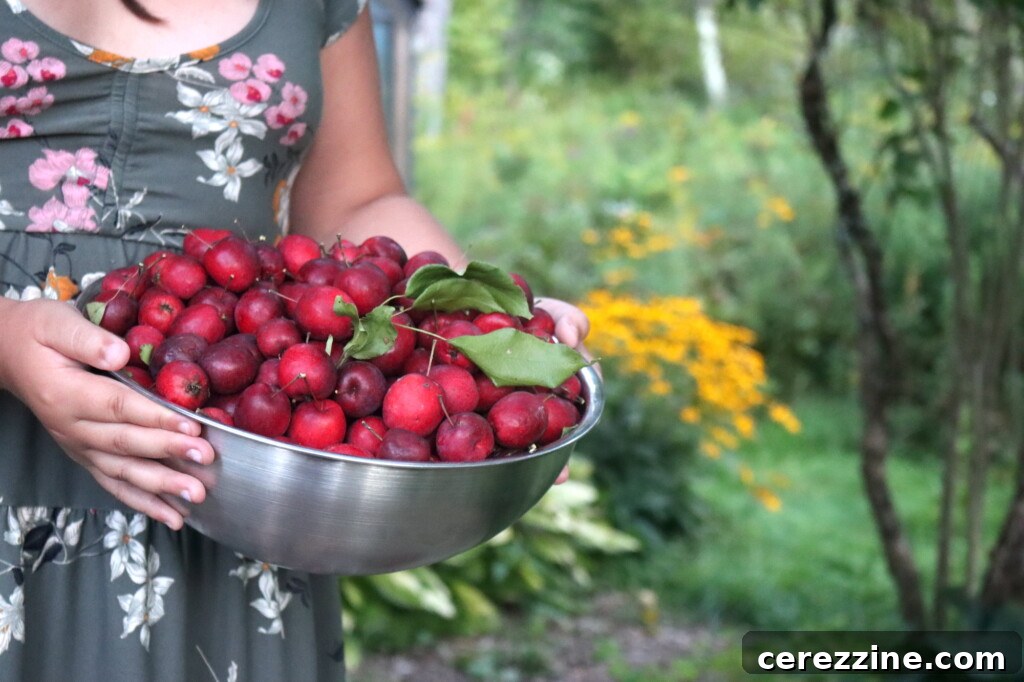
The success of your home-canned crabapples hinges significantly on the initial preparation of the fruit. Begin by selecting firm, perfectly ripe crabapples that show no signs of blemishes, soft spots, or bruising. Quality at this stage ensures a superior final product, both in appearance and taste. A common misconception is the need to peel or core these small fruits; thankfully, this is not required. Crabapple skins are delicate enough to soften during the canning process and contribute to the beautiful color and complex flavors of the finished preserve.
However, two preparation steps are absolutely critical for safe and aesthetically pleasing results: First, you must meticulously remove all stems from each individual crabapple. Stems can introduce unwanted bacteria and detract from the overall quality of your preserve during storage. Second, and equally important, you need to prick each fruit several times with a fork or a sharp skewer. This crucial step creates small punctures in the skin, which allows heat to penetrate the fruit evenly and, more importantly, prevents the crabapples from bursting open during the simmering and water bath processing. This ensures they maintain their delightful, whole shape in the jar. This step is particularly vital for crabapple varieties known to have tougher skins.
Regarding the blossom ends, your decision to leave them on or remove them is purely a matter of personal preference. Some canners prefer to remove them for a tidier, more uniform presentation, while others find the effort unnecessary and choose to leave them intact. Rest assured, this choice will not compromise the safety or the delicious flavor of your preserved crabapples.
Crafting the Ideal Canning Syrup: Balancing Sweetness and Flavor
The syrup you choose for canning crabapples is far more than just a sweetener; it plays a vital role in preserving the fruit’s texture, color, and overall flavor. Standard canning practices, endorsed by trusted resources like the Ball Blue Book, offer a range of syrup concentrations. This allows you to tailor the sweetness to your exact preference and the natural tartness of your specific crabapple variety. Here are the USDA-approved syrup options commonly used for fruit canning:
- Extra Light Syrup: Made with ¾ cup sugar to 6½ cups water. This option is perfect if you desire to showcase the crabapples’ intense natural tartness with only a hint of sweetness.
- Light Syrup: Prepared with 1½ cups sugar to 5¾ cups water. This is the recommended choice for this recipe, offering a harmonious balance that enhances the crabapple flavor without making it excessively sweet or masking its characteristic tang.
- Medium Syrup: Consists of 2¼ cups sugar to 5¼ cups water. Opt for this if you prefer a noticeably sweeter preserve, especially suitable for serving as a dessert component or with less sweet dishes.
- Heavy Syrup: Created with 3¼ cups sugar to 5 cups water. This is typically reserved for very tart fruits or when a rich, dessert-like preserve is the goal.
For this guide, we’ve carefully selected the light syrup ratio. This concentration provides just the right amount of sweetness to complement the crabapples, ensuring they retain their refreshing tartness while becoming wonderfully palatable. If your crabapples are exceptionally tart, or if you simply prefer a sweeter outcome, feel free to adjust the sugar-to-water ratio to a medium or even heavy syrup. To prepare the syrup, combine your chosen amount of sugar and water in a large, clean pot. Bring the mixture to a gentle boil over medium heat, stirring continuously until all the sugar crystals have completely dissolved and the liquid is clear. Once dissolved, reduce the heat to a low simmer, keeping the syrup hot and ready for the next step.
The Gentle Simmer: Achieving Perfect Crabapple Texture
Once your fragrant syrup is gently simmering, it’s time for the crucial step of introducing the prepared crabapples. Carefully add the pricked crabapples to the hot syrup in the large pot, taking care not to overcrowd them. Overcrowding can drastically lower the syrup’s temperature, leading to uneven cooking. The objective here is a gentle, controlled simmer, rather than a vigorous, rolling boil. Allow the crabapples to cook gently for approximately 5 to 10 minutes. This brief simmering period is essential for several reasons: it ensures the fruit heats through thoroughly, begins to soften slightly, and starts to absorb the delicious sweetness of the syrup. You’ll likely observe a subtle deepening of their color and a beautiful infusion of their pigments into the syrup.
The key to mastering this stage is careful monitoring and gentle handling. It is paramount to avoid boiling the crabapples aggressively or, worse yet, overcooking them. Excessive heat or prolonged cooking will cause the delicate fruit to become mushy, lose its structural integrity, and often split apart, compromising the appealing whole-fruit presentation you’re aiming for. You want the crabapples to emerge from the simmer tender enough to be easily pierced with a spoon, yet still firm, intact, and perfectly capable of retaining their charming shape once they are packed into the jars. A good visual cue is when their skin appears slightly translucent and they offer a slight give when gently squeezed or poked. Remove them from the heat immediately once this desirable tender-crisp stage is achieved.
Detailed Canning Instructions: Safe and Successful Preservation
With your crabapples gently simmering, now is the perfect time to ensure your water bath canning setup is thoroughly prepared. Successful home canning relies on meticulous organization and strict adherence to food safety protocols. Begin by preparing your water bath canner, making sure its rack is positioned at the bottom. Wash your chosen canning jars (half-pints, pints, or quarts) meticulously in hot, soapy water, then rinse them thoroughly. Keep these clean jars hot in the simmering water of the canner or a separate pot until they are ready to be filled; this prevents thermal shock when introducing hot fruit and syrup. Ensure your new two-piece canning lids (flats and rings) are also washed and that the flat lids are kept warm in hot, non-boiling water (around 180°F or 82°C) to properly soften their sealing compound.
Step-by-Step Canning Process:
- Pack Hot Jars with Crabapples: Using a clean, slotted spoon, carefully transfer the hot, simmered crabapples into your hot, prepared canning jars. Pack them as snugly as possible to maximize space without crushing the fruit. Leave a consistent ½ inch headspace from the very top rim of each jar. This headspace is absolutely critical for proper sealing and to prevent siphoning (liquid loss) during the processing cycle.
- Add Hot Syrup and Remove Air: Next, carefully ladle the hot canning syrup over the packed crabapples, ensuring that all fruit is completely submerged. Once again, verify that you maintain the essential ½ inch headspace. Insert a clean, non-metallic utensil (such as a plastic spatula or a chopstick) along the inside edge of each jar, gently moving it up and down to release any trapped air bubbles. Re-measure the headspace and, if necessary, add more hot syrup to bring it back to the ½-inch mark.
- Clean Rims and Apply Lids: Using a clean, damp cloth or paper towel, meticulously wipe the rims of each jar. Any food residue, syrup, or grease on the rim can prevent a proper, airtight seal. Place a warm, prepared lid (the flat sealing disc) centered on each jar. Then, screw on the metal band (ring) until it is “fingertip tight”—this means you tighten it until you feel resistance, then give it just a slight extra turn. Do not overtighten, as this can hinder the sealing process.
- Process in Water Bath Canner: Carefully lower the filled, lidded jars onto the rack within your preheated water bath canner. Ensure that all jars are completely covered by at least 1 to 2 inches of boiling water. Place the lid securely on the canner and bring the water to a full, vigorous, rolling boil.
- Processing Time: Once the water in the canner reaches a consistent, rolling boil, begin timing the process. The standard processing time for canned crabapples is 20 minutes for both pint and quart jars. It is vital to remember that this timing applies to elevations below 1,000 feet. You must make necessary adjustments for higher altitudes; please refer to the specific guidelines provided in the next section.
- Cooling and Checking Seals: After the processing time is complete, turn off the heat under the canner. Allow the jars to rest undisturbed in the hot water bath for an additional 5 minutes before carefully removing them with a jar lifter. Place the hot jars upright on a clean towel or a sturdy wire cooling rack, ensuring they are not touching each other and are in an area free from drafts. Allow them to cool completely and undisturbed for 12 to 24 hours. During this cooling period, you should hear the distinct “ping” or “pop” as the lids seal, a satisfying sound for any home canner.
- Final Storage: Once fully cooled, thoroughly check that all lids have sealed properly. A good seal is indicated by a concave lid center that does not flex or pop when pressed. If any jar has not sealed, refrigerate its contents and consume within a few weeks, or re-process immediately with a fresh, new lid after checking headspace and repeating the full processing steps. Remove the screw bands for long-term storage, wipe the jars clean, label them clearly with the contents and date of canning, and store them in a cool, dark, and dry pantry. Properly home-canned crabapples can maintain their best quality for 12 to 18 months.
Crucial Altitude Adjustments for Water Bath Canning Safety
When preserving food using a water bath canner, it’s critically important to adjust processing times based on your geographical elevation. Water boils at a lower temperature at higher altitudes, meaning the internal temperature reached during processing is lower. To ensure adequate heat penetration and the destruction of potential spoilage organisms, increased processing times are necessary:
- 0–1,000 feet elevation: Process for 20 minutes for both pints and quarts.
- 1,001–3,000 feet elevation: Increase processing time to 25 minutes for both pints and quarts.
- 3,001–6,000 feet elevation: Increase processing time to 30 minutes for both pints and quarts.
- Above 6,000 feet elevation: Process for 35 minutes for both pints and quarts.
Always identify your local elevation and adjust your canning times precisely to ensure the safety, quality, and long-term shelf stability of your cherished home-canned goods.
Frequently Asked Questions About Canning Crabapples
Can I can crabapples whole with stems and blossom ends?
While it’s technically possible, it is strongly recommended to remove the stems from each crabapple before canning. Stems can harbor unwanted debris and may negatively impact the flavor and texture of your preserve over time. Removing the blossom ends is purely an aesthetic choice and does not affect the safety or taste.
Do I need to peel crabapples before canning?
No, peeling crabapples is unnecessary and not recommended for this canning method. The skins are thin and will naturally soften during the simmering and processing stages. Furthermore, leaving the skins on contributes significantly to the beautiful color of the canned fruit and adds depth to its natural flavor profile. Peeling such small fruits would also be an incredibly tedious and time-consuming task.
Can I can crabapples without sugar?
Yes, it is entirely safe to can crabapples without adding sugar. You can choose to pack them in plain hot water or unsweetened fruit juice (such as apple or white grape juice). However, be mindful that sugar plays a role beyond just sweetness; it helps to firm the fruit’s texture and maintain its vibrant color. Crabapples canned without sugar may have a softer texture and a milder, potentially blander flavor.
What type of crabapples are best for canning?
For whole-fruit canning, it’s best to select firm, crisp, and distinctly tart crabapple varieties that are known to hold their shape well during the cooking and processing stages. Excellent choices include varieties like Dolgo and Chestnut crabapples, which are prized for their vibrant color and robust flavor that beautifully translates into preserves. In this particular recipe, we utilized delicious Dolgo crabapples harvested from our own backyard tree.
Can I add spices to the canning syrup for extra flavor?
Absolutely! Infusing your canning syrup with aromatic spices is a fantastic way to introduce an additional layer of complexity and warmth to your preserved crabapples. Consider simmering your syrup with whole spices such as a cinnamon stick, a few whole cloves, or a star anise pod. You can choose to remove these spices before ladling the syrup into the jars, or you can leave a small piece in each jar for a beautiful, decorative touch. If you opt to leave spices in the jars, remember that their flavors will intensify over time, so you might want to use a smaller quantity initially to achieve a subtle hint rather than an overpowering spice note.
Explore More Delicious Apple & Crabapple Canning Recipes
If you’ve thoroughly enjoyed the process of preserving these exquisite crabapples, you’ll be thrilled to delve into the wider world of apple and crabapple canning. The fall season offers a bounty of opportunities to capture the essence of these versatile fruits in various forms. From luscious sauces to sparkling jellies, there’s always a new preserving adventure awaiting. Discover more recipes to expand your pantry with homemade goodness:
More Apple & Crabapple Preserves
Cranberry Applesauce
Crabapple Juice (and Syrup)
Crabapple Jelly
Crabapple Sauce
6 to 8 pints
Canning Whole Crabapples in Light Syrup
10
5-10
20
Approx. 40
Jump to Recipe
Equipment Needed
-
Water Bath Canner with Rack
-
Large stockpot (for syrup and simmering crabapples)
-
Canning jars (6-8 pint jars, or equivalent in quarts/half-pints) with new two-piece lids and bands
-
Essential canning tools: jar lifter, canning funnel, headspace tool, bubble remover (non-metallic)
-
Slotted spoon
-
Clean towels
Ingredients for 6-8 Pints
-
5
pounds
whole crabapples,
firm, ripe, with stems removed and each fruit pricked 2-3 times with a fork (do not peel) -
1½
cups
granulated sugar (for light syrup) -
5 ¾
cups
water (for light syrup, or substitute with unsweetened apple juice)
Step-by-Step Instructions
-
1. Prepare Canning Setup: Thoroughly wash 6 to 8 pint jars (or equivalent) in hot, soapy water, then rinse well. Place them in your water bath canner on the rack, cover with water, and heat to a gentle simmer (approximately 180°F/82°C) to keep them hot. Wash new two-piece canning lids (flats and bands); keep the flats warm in hot, non-boiling water (around 180°F/82°C) to soften the sealing compound.
-
2. Create the Syrup: In a large stockpot, combine the granulated sugar and water (using the light syrup ratio: 1½ cups sugar to 5¾ cups water). Bring the mixture to a rolling boil over medium-high heat, stirring constantly until all sugar crystals are completely dissolved. Reduce heat to a gentle simmer and keep the syrup hot.
-
3. Prepare Crabapples: Rinse crabapples thoroughly and remove all stems. Do not peel or core. Using a fork or sharp skewer, prick each crabapple 2 to 3 times around its surface to prevent bursting during cooking.
-
4. Gently Simmer Fruit: Carefully add the pricked crabapples to the hot, simmering syrup. Simmer gently (do not allow a hard boil) for 5 to 10 minutes, or until the fruit is heated through and just tender when pierced. Avoid overcooking to prevent splitting or mushy texture.
-
5. Pack Jars: Using a slotted spoon, carefully pack the hot crabapples into your hot, prepared jars, leaving exactly ½ inch headspace from the rim. Ladle the hot syrup over the fruit, ensuring all crabapples are submerged and maintaining that ½ inch headspace. Remove any trapped air bubbles by running a non-metallic utensil around the inside of the jar. Adjust syrup level if needed to maintain headspace.
-
6. Apply Lids and Process: Wipe jar rims thoroughly with a clean, damp cloth. Center a warm lid on each jar, then apply a screw band and tighten to “fingertip tight.” Carefully lower the filled, lidded jars onto the rack in the boiling water bath canner, ensuring they are covered by at least 1-2 inches of water. Place the canner lid on. Bring the water back to a full, rolling boil.
-
7. Processing Time: Once the water is at a vigorous boil, begin your timer. Process both pints and quarts for 20 minutes. Remember to adjust this time for higher altitudes (refer to the altitude adjustment chart in the Notes section).
-
8. Cool and Store: After processing, turn off the heat and allow jars to rest in the canner for 5 minutes before carefully removing them. Place jars upright on a clean towel or cooling rack, ensuring they are undisturbed and not touching, to cool for 12–24 hours. Check seals (lids should be concave and not flex). Remove screw bands for storage, wipe jars, label, and store sealed jars in a cool, dark, dry pantry for up to 18 months for best quality.
Important Notes for Perfect Crabapple Canning
- Crabapple Quantity: For 6 to 8 pint jars of whole crabapples, you will typically need about 5 pounds of fresh fruit. The exact yield can vary slightly depending on the size and variety of your crabapples; smaller fruits tend to pack more densely.
- Pricking the Skin: This step is non-negotiable for successful whole-fruit canning. Puncturing each crabapple multiple times with a fork or skewer allows for even heat penetration and, critically, prevents the fruit from bursting or splitting during the simmering and water bath processing.
- Color Changes: It is entirely normal for some crabapple varieties to experience a slight loss of their bright red or pink blush during the cooking and canning process. This cosmetic change is due to the heat and does not affect the flavor, safety, or quality of your preserved crabapples.
- Versatile Serving Ideas: Canned crabapples are incredibly versatile. Serve them warm or chilled as a striking and tangy accompaniment to roasted meats such as pork, chicken, or game. They also make an elegant addition to charcuterie and cheese boards, a unique topping for ice cream, yogurt, or oatmeal, or even pureed into a distinctive sauce or glaze.
- Syrup Customization Options: While this recipe specifically uses a light syrup to achieve a balanced sweet-tart profile, you have the flexibility to safely substitute with an extra light, medium, or heavy syrup. You may also safely can crabapples in plain hot water or unsweetened fruit juice; however, be aware that omitting sugar may result in a blander flavor and a softer texture. For your convenience, here are the USDA-approved syrup ratios:
- Extra Light Syrup: ¾ cup granulated sugar to 6½ cups water
- Light Syrup: 1½ cups granulated sugar to 5¾ cups water (as used in this recipe)
- Medium Syrup: 2¼ cups granulated sugar to 5¼ cups water
- Heavy Syrup: 3¼ cups granulated sugar to 5 cups water
Crucial Altitude Adjustments for Water Bath Canning Crabapples
Always remember to adjust your water bath canning processing time based on your local elevation to ensure optimal food safety and preservation:
- 0–1,000 feet elevation: Process for 20 minutes for both pints and quarts.
- 1,001–3,000 feet elevation: Process for 25 minutes for both pints and quarts.
- 3,001–6,000 feet elevation: Process for 30 minutes for both pints and quarts.
- Above 6,000 feet elevation: Process for 35 minutes for both pints and quarts.
Approximate Nutrition Information (Per Serving)
Carbohydrates: 10g,
Protein: 0.1g,
Fat: 0.1g,
Saturated Fat: 0.01g,
Polyunsaturated Fat: 0.02g,
Monounsaturated Fat: 0.003g,
Sodium: 1mg,
Potassium: 38mg,
Fiber: 1g,
Sugar: 8g,
Vitamin A: 19IU,
Vitamin C: 2mg,
Calcium: 3mg,
Iron: 0.04mg
Note: Nutrition information is an estimate and can vary based on specific ingredients, portion sizes, and preparation methods.
Loved this recipe? Share your thoughts below!
Your valuable feedback helps fellow canners discover and enjoy delicious homemade preserves.