
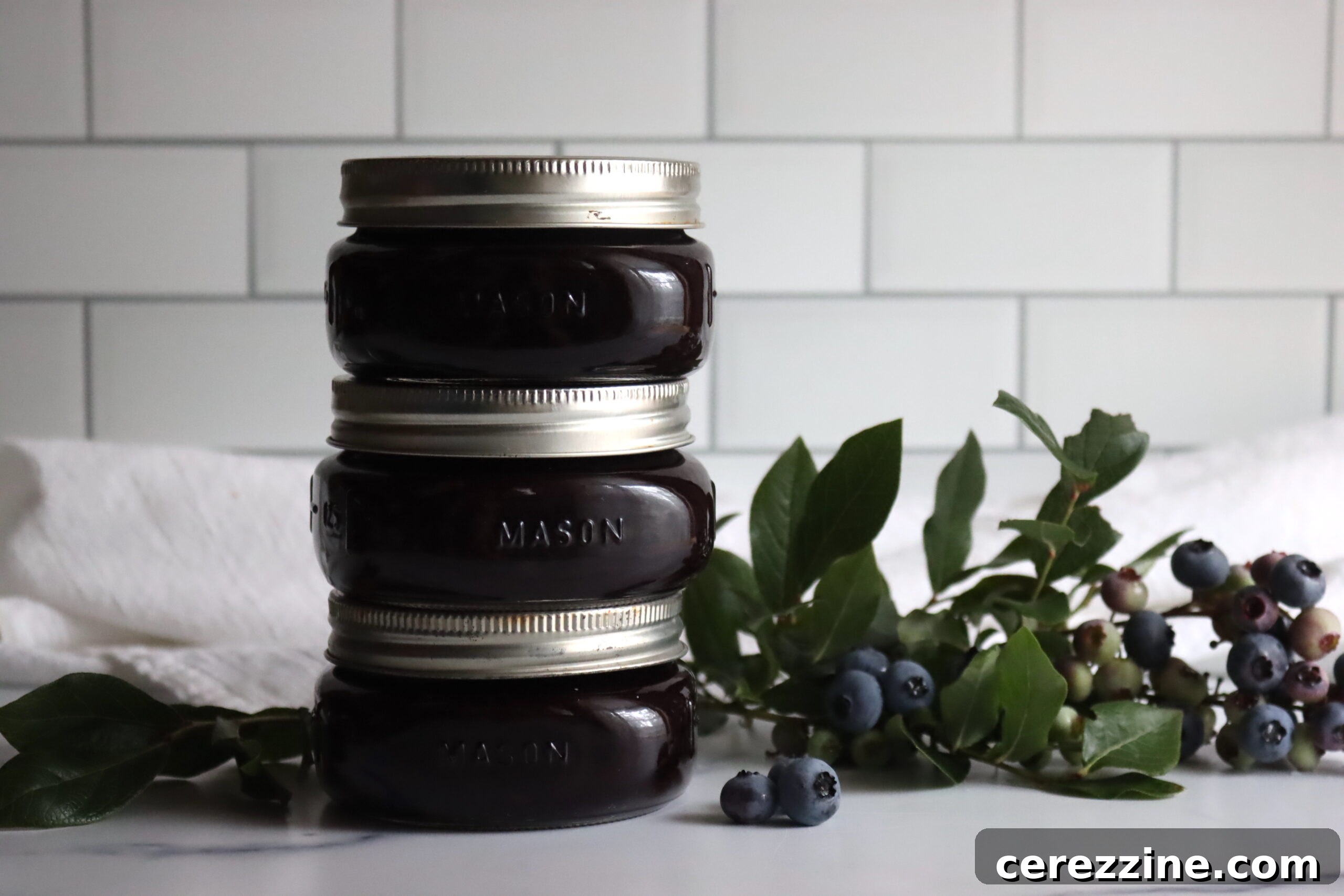
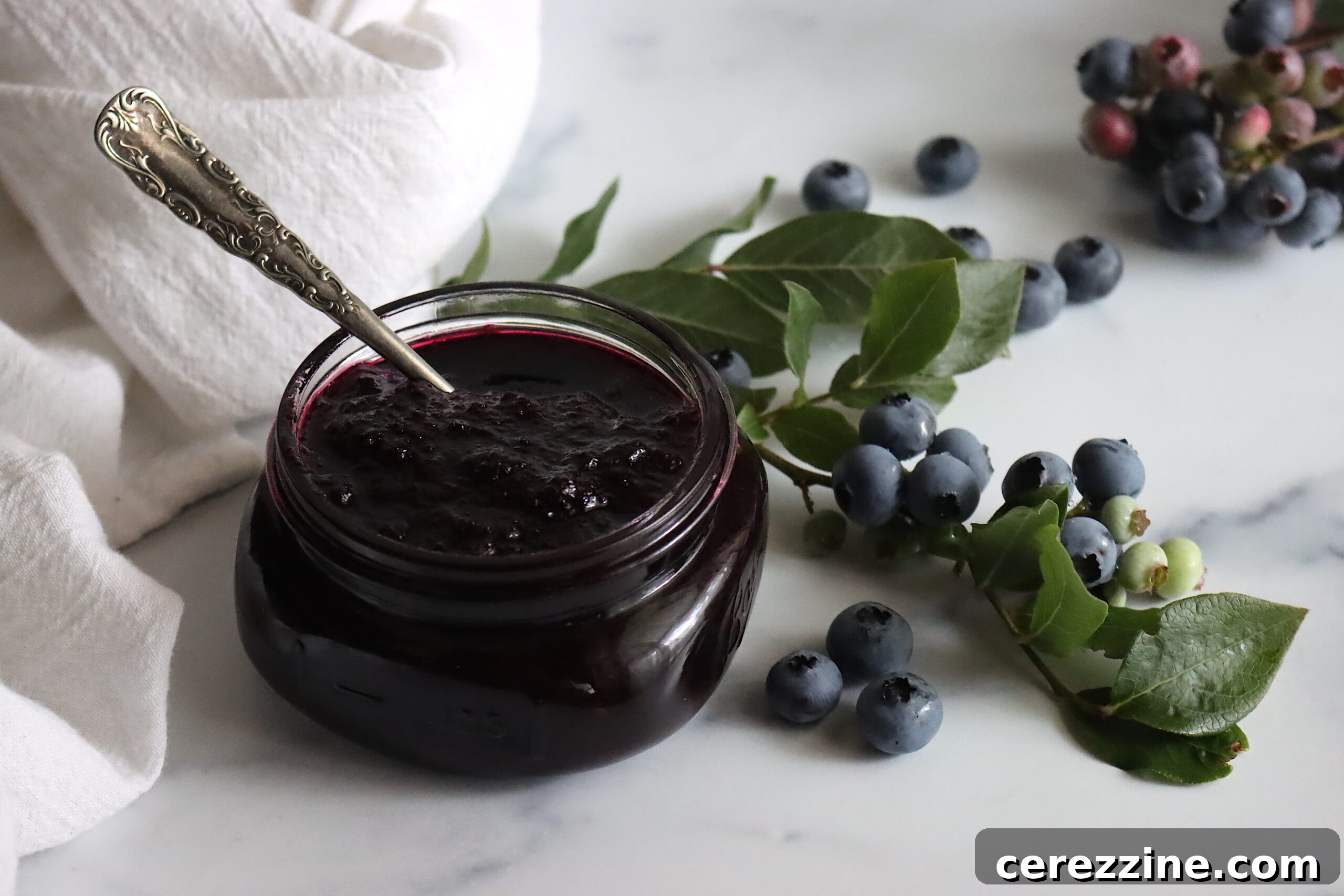
Indulge in the rich, sweet, and tangy delight of homemade Blueberry Butter, a versatile spread perfect for brightening any meal. This luscious fruit butter captures the essence of fresh blueberries, making it a delicious treat for year-round enjoyment, whether dolloped on warm biscuits or swirled into your favorite dessert.
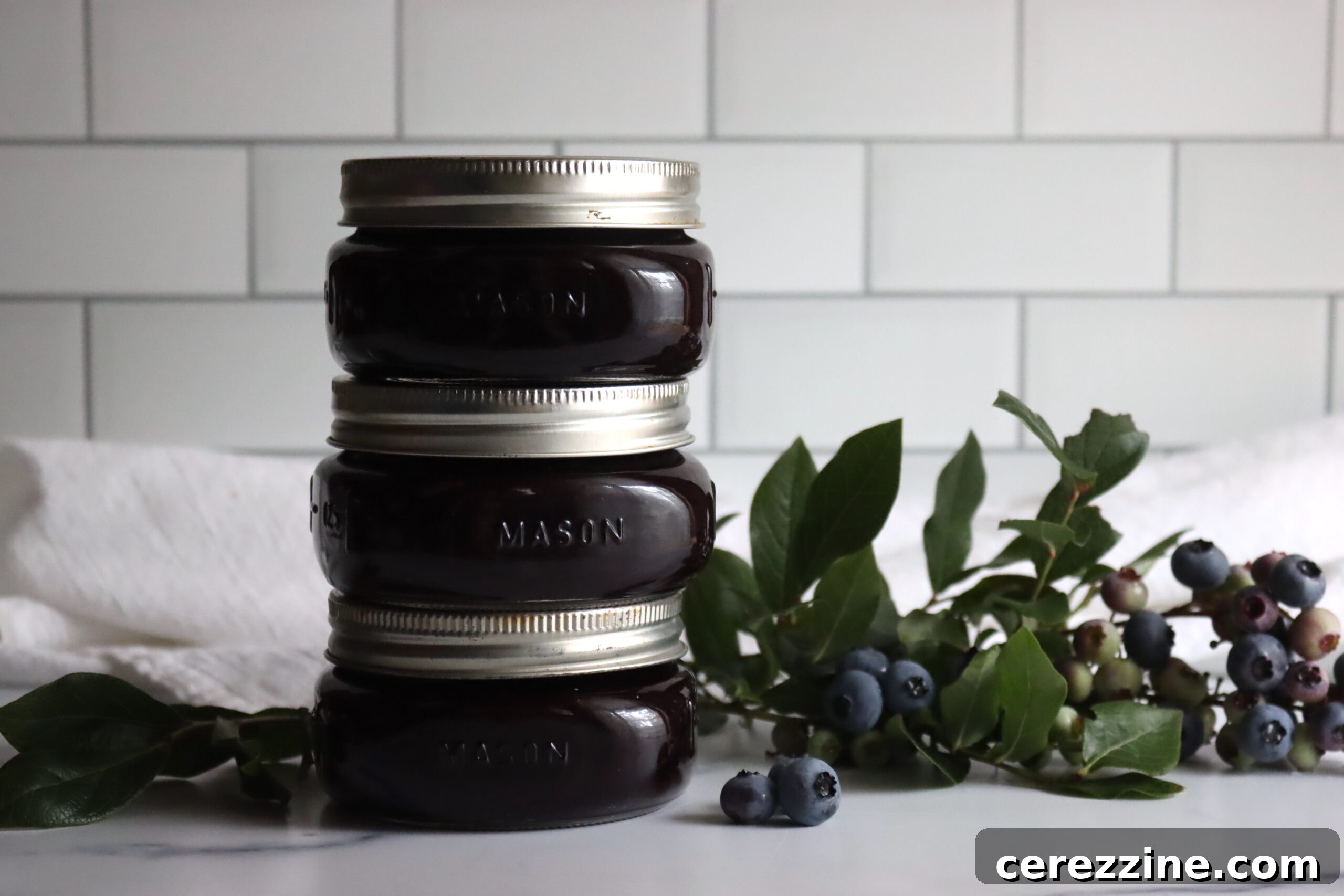
Blueberry butter is more than just a spread; it’s a celebration of seasonal bounty, transforming humble blueberries into a thick, creamy, and intensely flavorful preserve. Its unique balance of sweetness and tartness makes it an exceptional addition to your breakfast table, whether spread generously on toast, muffins, scones, or pancakes. Beyond breakfast, its versatility shines in baking, cooking, and as a sophisticated condiment to elevate a variety of dishes.
Imagine enjoying the vibrant taste of fresh summer blueberries even in the depths of winter. With homemade blueberry butter, this dream becomes a reality. This guide will walk you through the simple yet rewarding process of crafting this exquisite fruit butter from scratch and mastering the art of canning to preserve its freshness for months to come. You’ll discover that home canning is far less intimidating than it sounds, opening up a world of delicious, homemade pantry staples.
Why Make Blueberry Butter at Home?
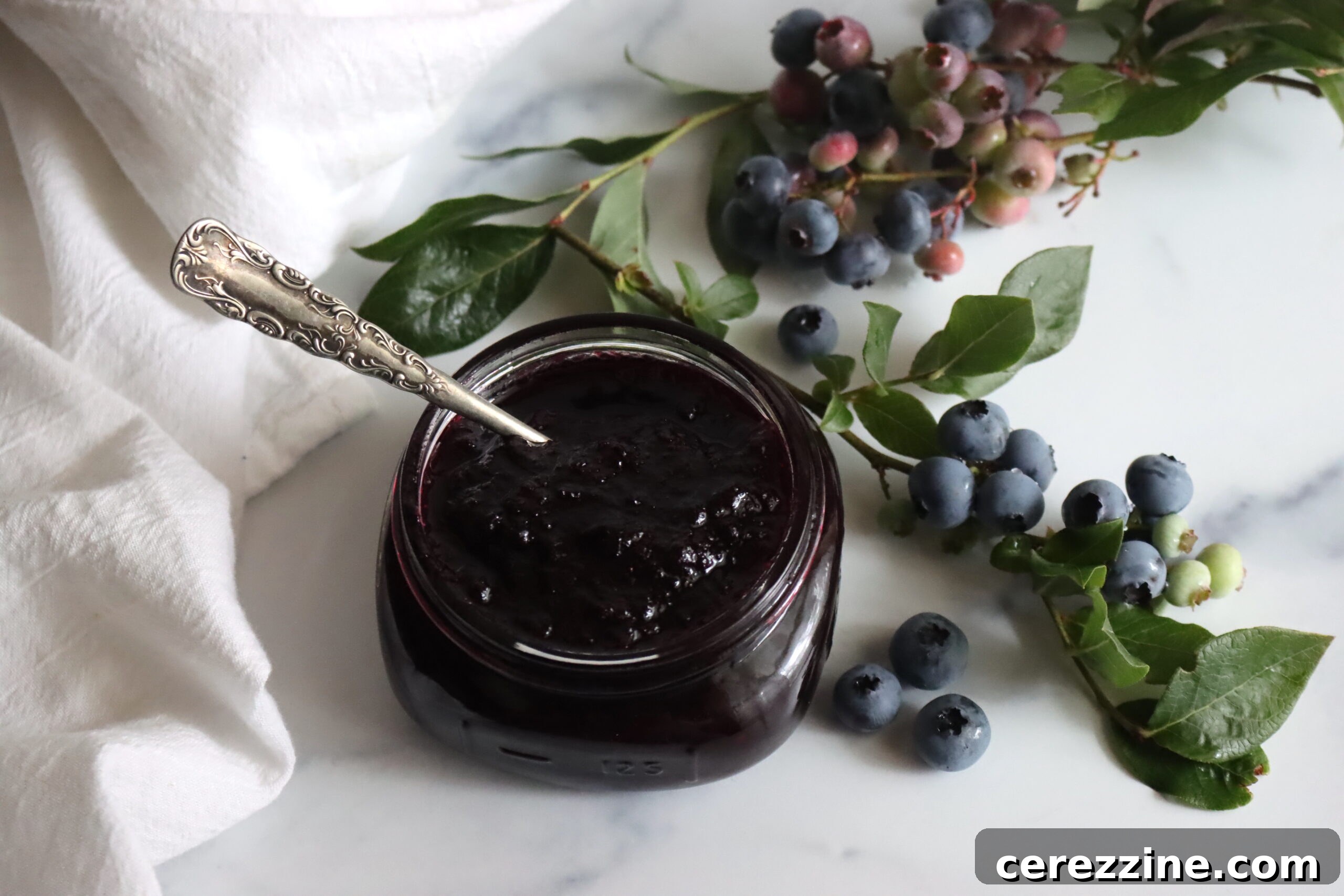
There’s an undeniable charm and satisfaction that comes with making your own preserves. Homemade blueberry butter offers several advantages over store-bought alternatives. Firstly, you have complete control over the ingredients, allowing you to choose fresh, high-quality blueberries and adjust sugar levels to your preference. This often results in a product free from artificial preservatives, colors, or flavors found in commercial options.
Secondly, the flavor profile of homemade blueberry butter is simply unparalleled. By carefully selecting ingredients and following proper techniques, you can achieve a depth of flavor that perfectly balances the fruit’s natural sweetness with a subtle tang. It’s a taste that embodies freshness and artisanal quality.
Lastly, home canning empowers you to extend the enjoyment of seasonal produce. Blueberries are abundant during certain times of the year, and transforming them into butter allows you to savor their taste long after their season has passed. It’s an economical and sustainable way to utilize fresh fruit, reducing waste and stocking your pantry with wholesome, delicious spreads.
Essential Ingredients for Perfect Blueberry Butter
Creating a batch of delightful blueberry butter requires just a few simple ingredients, many of which you likely already have on hand. For a standard canning batch yielding six half-pint (250 ml) jars, gather the following:
- 5 ½ cups (1.4 L) Blueberry Pulp: This is the star ingredient. For the best flavor and texture, it’s often reserved from making other blueberry preserves like blueberry jelly or blueberry syrup. Using pulp ensures a concentrated blueberry essence.
- 3 cups (750 ml) Granulated Sugar: Sugar not only sweetens the butter but also acts as a natural preservative, contributing to its smooth texture.
- 1 tbsp (15 ml) Lemon Zest: The zest of a fresh lemon adds a bright, aromatic counterpoint that enhances the blueberry flavor without making the butter overtly lemony.
- 1 ¼ tsp (1 ml) Ground Nutmeg: While optional, nutmeg imparts a warm, comforting spice note that beautifully complements the blueberries.
- 1 ½ tbsp (22 ml) Fresh Lemon Juice: This ingredient is highly recommended for its flavor-enhancing qualities. While not strictly necessary for preservation safety in this recipe (given the acidity of blueberries), it truly brightens the overall taste. Freshly squeezed lemon juice offers a superior flavor, but bottled lemon juice can be used as a convenient alternative.
Feel free to experiment with other dry spices that appeal to your palate. A touch of cinnamon, ginger, or even a hint of vanilla can add wonderful complexity to your blueberry butter. Remember to add these during the cooking process to allow their flavors to meld.
The Secret to Superior Blueberry Pulp
This recipe uniquely leverages blueberry pulp that’s typically left over from making blueberry jelly or syrup. While you could technically slow-cook whole blueberries until they thicken, this method often results in a less vibrant flavor. The lengthy cooking time required to concentrate whole berries tends to dissipate much of their delicate essence.
By first extracting the juice for jelly or syrup, you’re left with a pulp that is incredibly concentrated in blueberry flavor and natural pectin. This pulp then forms the perfect base for a rich, intensely flavored blueberry butter. It’s a fantastic way to maximize your harvest and get two delicious products from one batch of fruit!
How to Prepare Blueberry Pulp for Butter
If you don’t already have pulp reserved from another recipe, here’s how to make it specifically for blueberry butter:
- Start with Blueberries: Begin with approximately 4 pounds (about 1.8 kg) of fresh or frozen blueberries.
- Combine with Water: Place the blueberries in a large pot with 2 cups (500 ml) of water.
- Cook and Mash: Bring the mixture to a simmer over medium heat. Cook for about 10 to 15 minutes, mashing the fruit as much as possible with a potato masher or a sturdy spoon. This helps release the juices and soften the fruit.
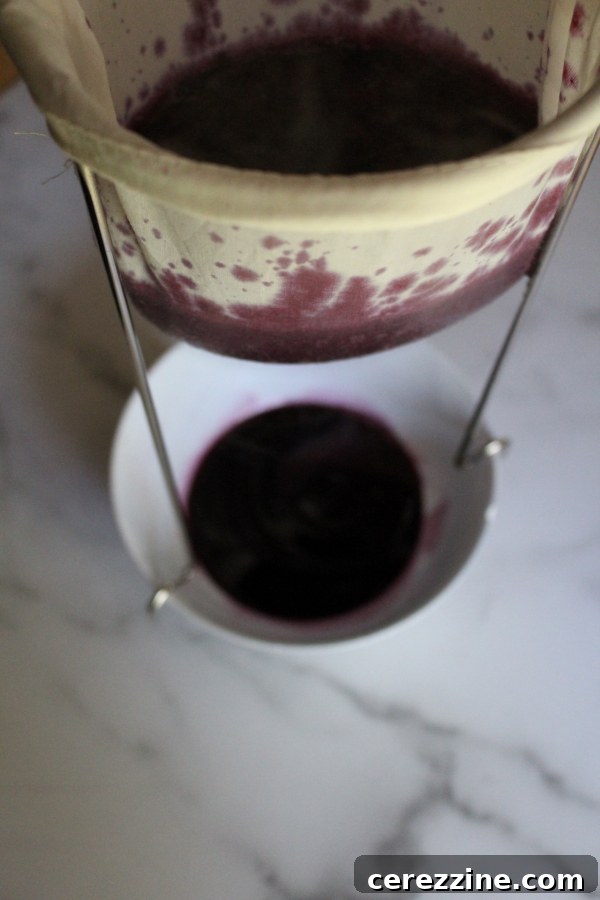
- Strain the Mixture: Carefully strain the cooked blueberries through a fine-mesh strainer or a jelly bag. Allow the juice to drip through naturally. Resist the urge to press the pulp if you intend to make clear jelly; however, for blueberry butter, you can gently press the pulp to extract more solids.
- Reserve the Pulp: The solids left in the strainer or jelly bag are your blueberry pulp, ready for making butter. Collect the strained juice separately to make delicious blueberry jelly or syrup.
Step-by-Step: Crafting Your Blueberry Butter
Once you have your strained blueberry pulp, the process of turning it into a rich, smooth butter is straightforward and enjoyable. Follow these steps carefully:
- Puree the Pulp: Transfer the reserved blueberry pulp to a food processor. Process until it achieves a wonderfully smooth, uniform consistency. This typically takes only one to two minutes. A smooth puree is key to the velvety texture of fruit butter.
- Combine Ingredients: In a large, six-quart (six-liter) stainless-steel or enameled Dutch oven (these materials prevent reactivity with the fruit’s acid and distribute heat evenly), combine the pureed blueberry pulp, granulated sugar, lemon zest, ground nutmeg, and fresh lemon juice. Stir all the ingredients together thoroughly until they are uniformly mixed.
- Simmer to Perfection: Place the Dutch oven over medium heat and slowly bring the mixture to a boil, stirring frequently to prevent scorching at the bottom. Once it reaches a rolling boil, reduce the heat to a gentle simmer. Continue to cook for approximately one hour, stirring often. The mixture will gradually thicken.
- Check for Thickness: To test for readiness, spoon a small amount of butter onto a chilled plate. If it holds its shape and doesn’t spread excessively, it’s ready. You can also run your finger through it; if the line remains, it’s sufficiently thick. The butter should be thick enough to coat the back of a spoon.
Preserving Your Blueberry Butter Through Canning
Canning is a safe and effective method to preserve your homemade blueberry butter, ensuring you can enjoy its fresh taste for an extended period. This recipe is suitable for water bath canning due to the natural acidity of blueberries combined with added lemon juice. Proper sterilization and sealing are crucial for food safety.
- Prepare Your Jars: Before you begin filling, ensure your canning jars, lids, and bands are meticulously clean and hot. Sterilize your jars by boiling them for at least 10 minutes, or by running them through a dishwasher’s sanitizing cycle. Keep them hot until ready to fill. Lids should be simmering in hot water (not boiling) to soften the sealing compound.
- Fill the Jars: Carefully ladle the hot blueberry butter into the hot, sterilized jars, leaving a precise quarter-inch (0.5 cm) of headspace from the rim. Headspace is essential to allow for expansion during processing and proper sealing.
- Remove Air Bubbles: Insert a non-metallic utensil (like a plastic chopstick or canning bubble remover) into the jar and gently run it along the inside edges to release any trapped air bubbles. Repeat this process around the entire circumference of the jar.
- Clean Rims and Seal: Use a clean, damp cloth to thoroughly wipe the rims of the jars. Any food residue can prevent a proper seal. Place a hot lid on each jar, followed by a band, tightened just to fingertip-tightness. Do not overtighten.
- Process in Water Bath Canner: Place the filled and sealed jars into a boiling water canner, ensuring they are fully submerged by at least one inch of water. Bring the water to a rolling boil.
- Processing Time: Process the jars for 10 minutes. If you are canning at altitudes above 6,000 feet (approximately 1,800 meters), increase the processing time to 15 minutes to account for lower boiling points.
- Cool Down: After the processing time is complete, turn off the heat and carefully remove the canner lid. Let the jars sit undisturbed in the hot water for an additional five minutes. This helps prevent siphoning and aids in a stronger seal.
- Final Cooling and Storage: Remove the jars from the canner and place them on a towel-lined counter, leaving space between them for air circulation. Let them cool for 24 hours without disturbing them.
- Check Seals: After 24 hours, check that the jars are properly sealed. The center of the lid should be concave and should not flex when pressed. If any jar has not sealed, refrigerate it and consume within a few weeks, or reprocess with a new lid.
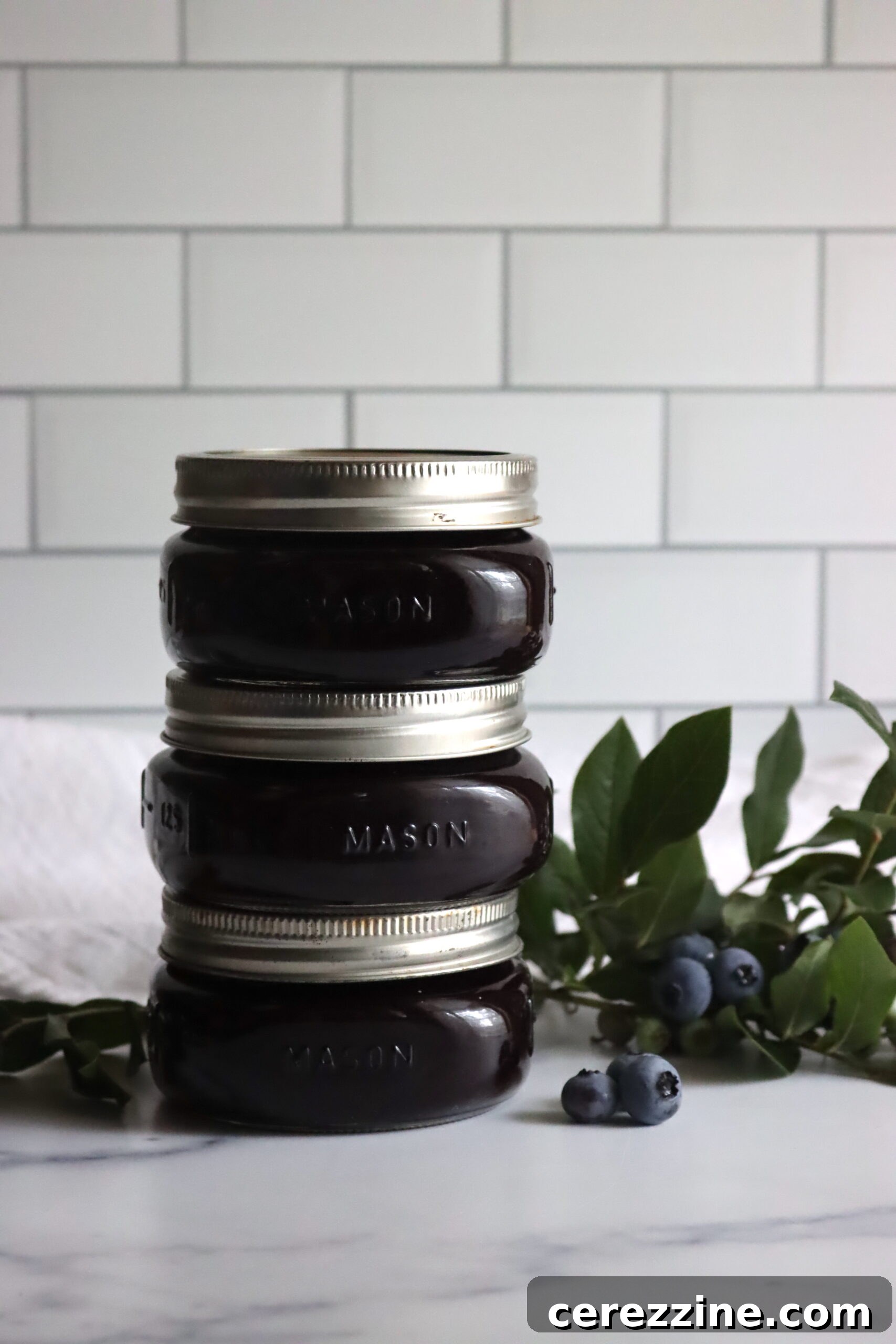
- Store: Once sealed, remove the bands (they can rust and interfere with the seal) and store the jars in a cool, dark place. Properly canned blueberry butter can last for up to 18 months.
Creative Ways to Enjoy Your Homemade Blueberry Butter
Whether it’s a bright summer morning or a cozy winter evening, there’s truly no wrong time to treat yourself to the delightful taste of homemade blueberry butter. This versatile spread goes far beyond a simple toast topping, offering endless culinary possibilities.
Most commonly, blueberry butter is served as a delicious condiment. It pairs beautifully with almost any breakfast item imaginable: from fluffy pancakes and crispy waffles to warm scones and freshly baked biscuits. It’s a fantastic alternative to traditional jam, jelly, or honey, offering a unique flavor profile that is both sweet and subtly tangy, with a wonderfully smooth texture.
But don’t stop there! Elevate your desserts by using it as a luscious topping for vanilla ice cream, or swirl it into plain yogurt for a fruity, healthy twist. It makes an exquisite filling for breakfast crepes or a vibrant addition to layered parfaits. Consider using it to enhance cakes, cheesecakes, or even as a flavorful spread in tart crusts for a quick fruit tart.
For those feeling adventurous, blueberry butter can venture into savory territory. Its fruity sweetness and slight acidity make it an excellent marinade or glaze for meats like pork chops, ham, or even roasted chicken. It can also be paired with cheeses – imagine a dollop on a cracker with baked brie or goat cheese for a delightful appetizer.
One of the great advantages of blueberry butter, especially when canned, is its “heat-and-eat” convenience. It’s ready to enjoy straight from the jar. However, if you wish to customize its flavor for a specific dish, you can always remix it just before serving. A dash of cinnamon, a pinch of allspice, a hint of cardamom, or an extra squeeze of fresh lemon juice can further enhance its profile. Remember, any additional ingredients should only be added *after* the canning process and when you are about to consume the butter. Introducing new ingredients before canning could alter the recipe’s acidity and render it unsafe for water bath canning, so it’s best to stick to the tried-and-true ingredients for preservation safety.
All in all, homemade blueberry butter is an incredible ingredient to keep in your pantry, inviting experimentation and adding a burst of fruity flavor to both sweet and savory creations.
Blueberry Butter
Ashley Adamant
10 minutes
1 hour
10 minutes
1 hour
20 minutes
Equipment
-
Water Bath Canner
-
Jelly Strainer with Bag
-
Crock Pot or Slow Cooker
Ingredients
-
5 ½
cups
blueberry pulp,
could be reserved from making blueberry jelly or blueberry syrup, see notes below -
3
cups
sugar -
1
tbsp
lemon zest -
1 ¼
tsp
ground nutmeg -
1 ½
tbsp
fresh lemon juice
Instructions
-
Puree the blueberry pulp in a food processor until it’s smooth. This should take just one or two minutes.
-
In a six-quart (six-liter) stainless-steel or enameled Dutch oven, combine the pureed blueberry pulp, sugar, and all the other ingredients.
-
Stir everything together until evenly combined.
-
Over medium heat, bring the mixture to a boil – make sure you’re stirring often.
-
Once it boils, you can reduce the heat and let the mixture simmer for about an hour. Stir it frequently. The mixture should begin to thicken and hold its shape when placed on a spoon.
-
Ladle hot blueberry butter into hot, sanitized jars, leaving a quarter-inch (0.5 centimeters) of headspace. Remove air bubbles by running a plastic utensil along the inside of the jar.
-
Once the bubbles are removed, wipe the rims of the jars with a clean damp cloth. Place sterilized lids and bands on jars, tightening to fingertip-tightness.
-
Place the jars in a boiling water canner. Process them for 10 minutes (or 15 minutes if above 6,000 feet in elevation).
-
After processing, turn off the heat, remove the lid, and let the jars sit in the canner for five minutes.
-
Remove the jars and cool them on the counter for 24 hours. Check that the jars are sealed properly, then store in a cool, dark place.
Notes
To Make Blueberry Pulp (if not reserving from other recipes)
To make blueberry pulp, start with about 4 pounds blueberries and 2 cups water. Cook them together, mashing the fruit as much as possible, for about 10 to 15 minutes.
Strain through a fine mesh strainer, reserving the pulp for blueberry butter and collecting the juice for syrup or jelly.
Nutrition (per serving)
- Calories: 58 kcal
- Carbohydrates: 15 g
- Protein: 0.1 g
- Fat: 0.1 g
- Saturated Fat: 0.02 g
- Polyunsaturated Fat: 0.03 g
- Monounsaturated Fat: 0.01 g
- Sodium: 0.3 mg
- Potassium: 14 mg
- Fiber: 0.4 g
- Sugar: 14 g
- Vitamin A: 9 IU
- Vitamin C: 2 mg
- Calcium: 1 mg
- Iron: 0.1 mg
Nutrition information is automatically calculated, so should only be used as an approximation.
More Delightful Blueberry Canning Recipes
If you’ve fallen in love with preserving blueberries, there are many other fantastic ways to capture their flavor in a jar! Explore these additional blueberry canning recipes to expand your pantry with delicious, homemade goodness:
- Canning Blueberry Pie Filling: Perfect for quick desserts on busy days.
- Blueberry Butter: (You’re already here! But a good reminder for future reference!)
- Blueberry Syrup: Ideal for pancakes, waffles, or cocktails.
- Blueberry Rhubarb Jam: A classic combination of sweet and tart.
- Simple Blueberry Jam (without Pectin): For a natural, fruit-forward jam.
- Blueberry Lemonade Concentrate: A refreshing base for homemade lemonade.
Conclusion: Savoring the Sweet Rewards
Crafting homemade blueberry butter is a delightful journey from fresh fruit to a pantry staple that brings joy to your table throughout the year. The process, from preparing the luscious blueberry pulp to the careful steps of water bath canning, is both meditative and immensely rewarding. You’ll not only create a spread that’s bursting with natural blueberry flavor but also gain the satisfaction of preserving nature’s bounty with your own hands.
This rich, spreadable fruit butter is more than just a condiment; it’s an invitation to elevate your meals, from simple breakfasts to elegant desserts and even innovative savory dishes. The vibrant color and irresistible taste of your homemade blueberry butter will be a testament to your culinary creativity and a treasured addition to your family’s table. So gather your ingredients, embrace the process, and prepare to savor the sweet rewards of this extraordinary homemade treat.