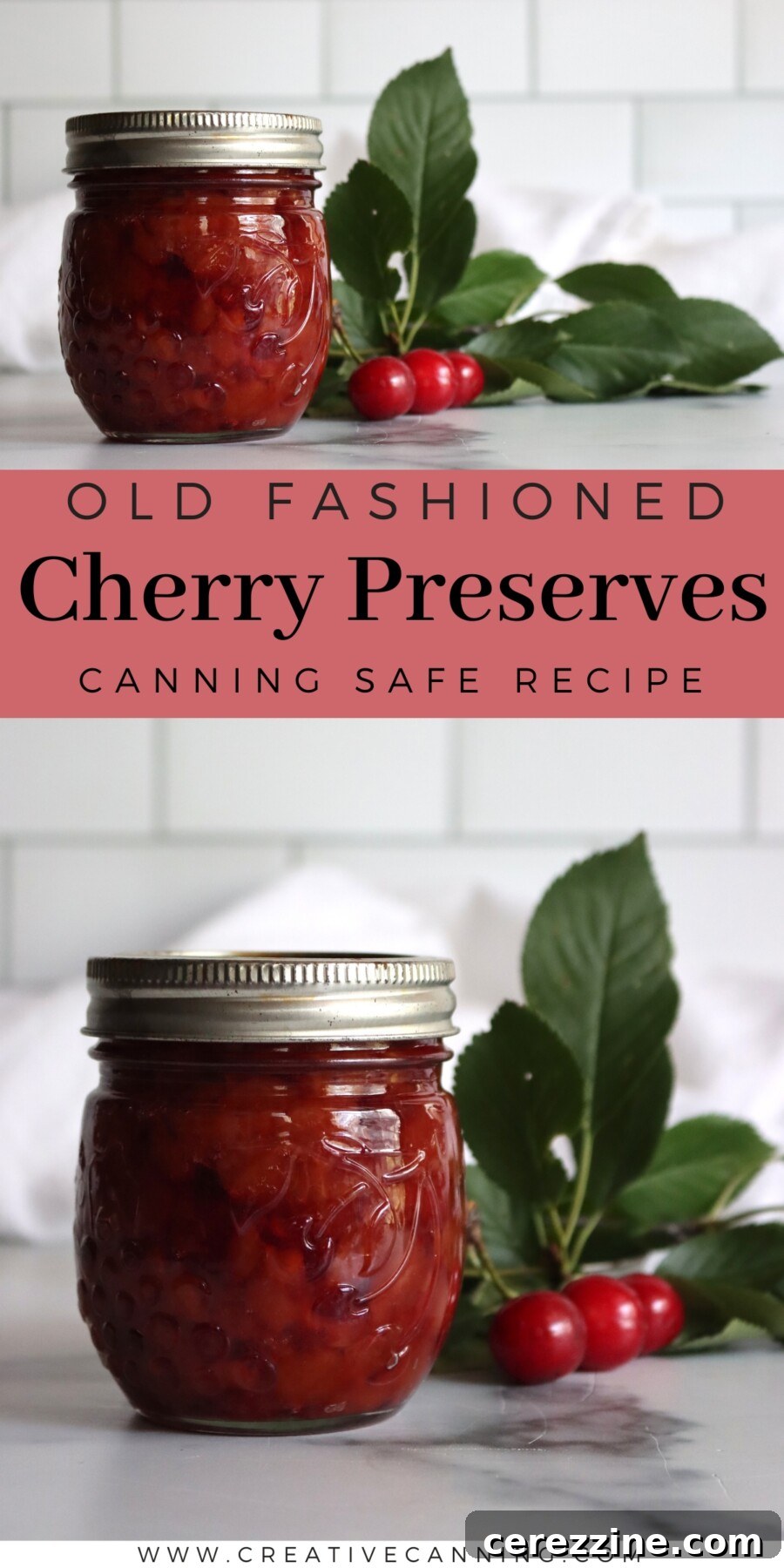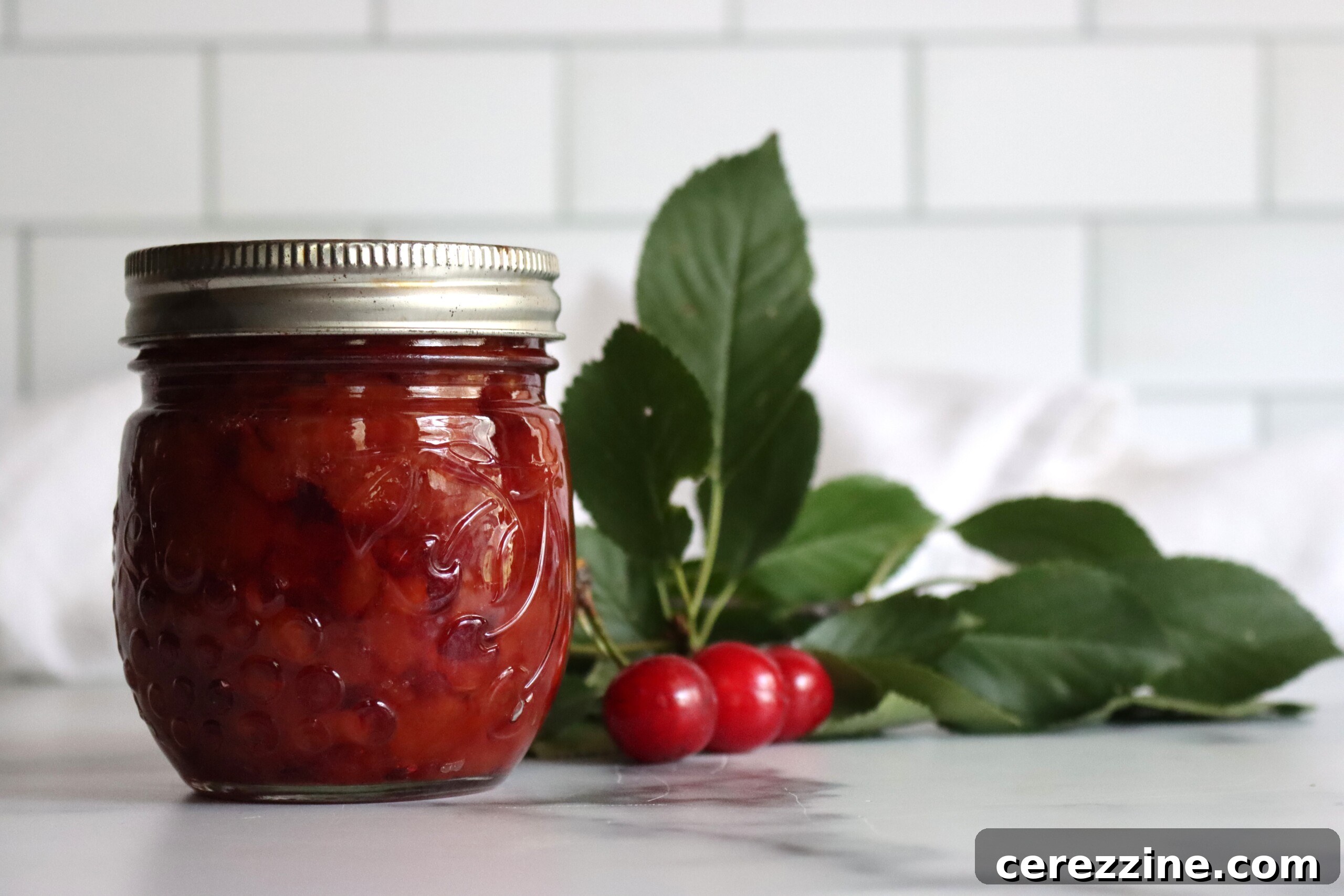
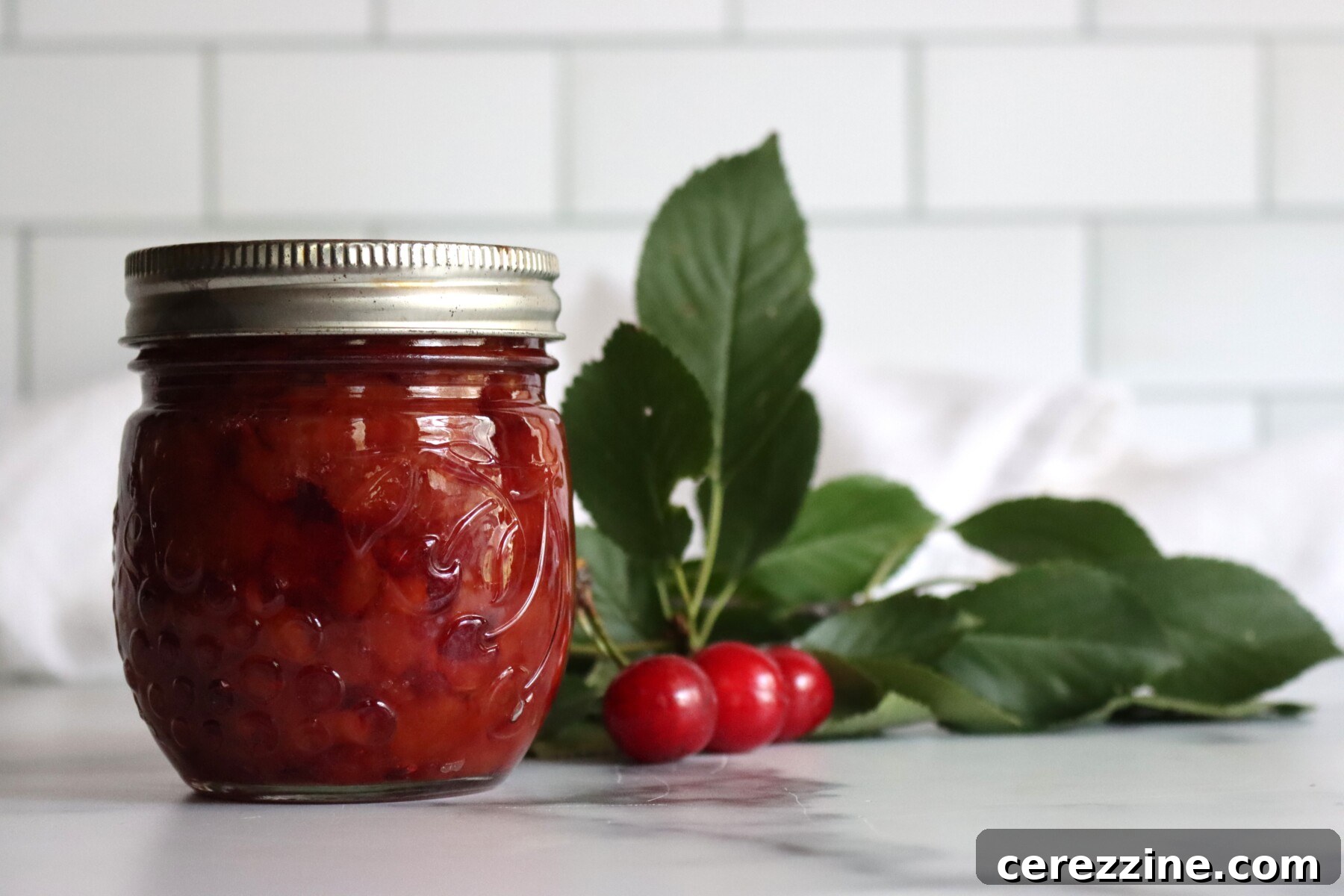
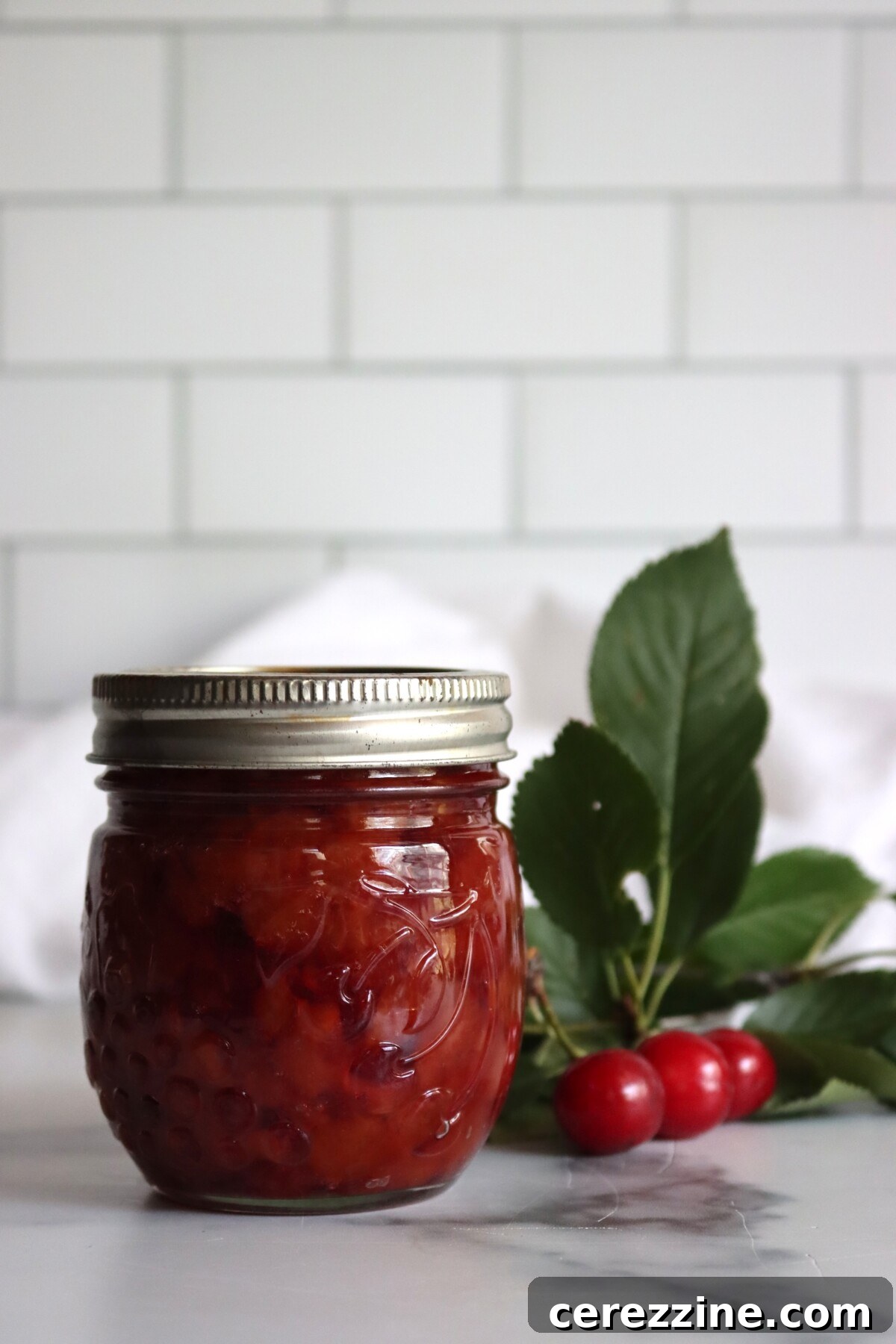
Cherry preserves are jars of whole cherries suspended in a thick, glossy syrup, so each spoonful looks and tastes like fruit rather than a spread. Set a jar beside cheesecake, spoon it over yogurt, or keep it on the breakfast table and the preserves do most of the work for you.
This recipe has been reviewed for safety and accuracy by a Master Food Preserver certified through the University of Cornell Cooperative Extension.
This version contains no added pectin. It belongs to the family of fruit spreads that rely on the fruit’s natural pectin and sugar to reach a gentle set, but it is distinct from jam because the fruit remains whole. The cherries are cooked twice with a long rest between the two cooks; that pause is what lets sugar migrate into the fruit and firm the cherries so they keep their shape through the second boil.
The recipe here is adapted from a traditional method found in classic canning references. It calls for equal parts fruit and a generous portion of sugar by weight—about two pounds of cherries and four cups of sugar—and works with either tart or sweet cherries, with a small adjustment in expectations depending on which you choose.
Notes from My Kitchen

Traditional preserves can be quite sweet, and some spreads—like strawberry or pear preserves—lean into that sweetness. Cherries, though, especially tart pie cherries, balance beautifully: the sugar lifts the fruit while their natural acidity keeps the result bright and lively.
Because the fruit remains intact, these preserves taste more fruit-forward than a jam made from crushed cherries. They are lovely on toast but especially striking as a topping for cheesecake, ice cream, or panna cotta.
Quick Look at the Recipe
- Recipe Name: Old Fashioned Cherry Preserves
- Recipe Type: Fruit preserves with whole fruit
- Canning Method: Water bath canning
- Prep Time: About 30 minutes
- Cook Time: About 45 minutes total, split across two sessions
- Resting Time: 12 to 18 hours refrigerated between cooks
- Canning Time: 10 minutes for half pints (adjust for altitude)
- Yield: About four half-pint jars
- Jar Sizes: Half pints or quarter pints
- Headspace: 1/4 inch
- Ingredients Overview: Cherries and granulated sugar, plus a splash of water only if needed
- Difficulty: Easy, but spread over two days
What Are Cherry Preserves?
Cherry preserves sit between canned whole fruit and jam. The cherries remain intact, suspended in a thick syrup that clings to the fruit rather than forming a uniform gel. A preserve should pour slowly and coat the cherries without becoming stiff—think glossy sundae topping rather than a firm spoonful that stands straight up.
Jam differs because the fruit is crushed or chopped and cooked in one long session until it breaks down and sets. Preserves are cooked twice, with a refrigerated rest in between so the sugar enters the fruit and helps it keep its shape.
Choosing Cherries for Preserves
Select firm cherries with taut skins. Overripe or soft fruit is likely to collapse during the second cook and become jam rather than preserves. Both tart and sweet cherries work: tart varieties hold their shape better and add a pleasant acidity, while sweet cherries give a milder, sweeter result—buy them a touch underripe if you choose them.
Two pounds of cherries will yield roughly five to six cups once pitted, which is an easy amount to handle by hand. If you’re working with small wild cherries that are hard to pit, they are better suited to jelly recipes where whole fruit doesn’t need to be removed cleanly.
Ingredients for Cherry Preserves
There are only a few ingredients; the simplicity is part of the appeal:
- Cherries: Two pounds, sweet or tart. Pit them over a bowl and reserve any juice that runs out.
- Sugar: Four cups granulated sugar. Sugar draws liquid from the fruit, firms it during the rest, and helps thicken the syrup in the final cook.
- Water: Optional. If the cherries provide very little juice, add a tablespoon or two to help dissolve the sugar; use only as much as needed.
You do not need bottled lemon juice for safety; cherries are high-acid fruit and can be processed safely in a water bath when handled correctly. Some cooks add a small spoonful of lemon juice for brightness with sweet cherries, but this is a flavor choice, not a safety requirement.
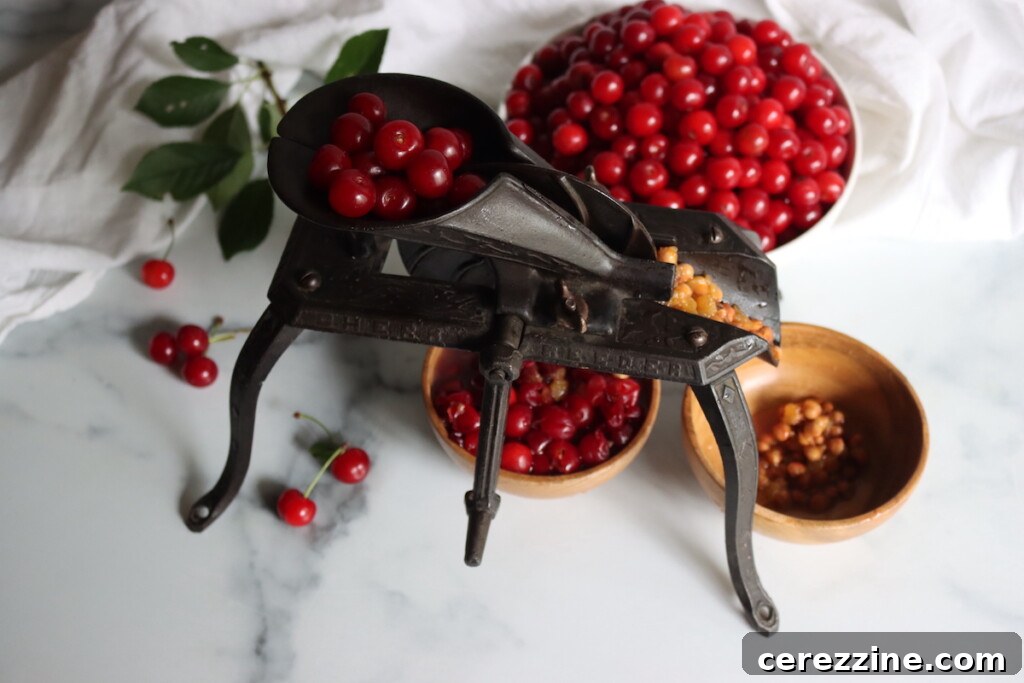
Sugar in Preserves
Sugar is essential here. There is no added pectin, so the syrup thickens as sugar concentrates along with the cherries’ natural pectin during the long cook. Sugar also contributes to preservation when jars are processed for shelf storage, so don’t reduce it if you intend to keep jars on the pantry shelf.
How to Make Cherry Preserves
Plan this as a two-day project: the hands-on work takes less than two hours total. Day one is pitting and a short cook; day two finishes with a vigorous boil to the set point and jarging.
Pit the Cherries and Save the Juice
Rinse two pounds of cherries and drain. Remove stems and pit the cherries over a bowl so you catch any juice. Keep the pitted cherries and the juice separate—use the juice to dissolve the sugar for the first cook.
Cook the Cherries in Syrup
Combine the reserved cherry juice and four cups of sugar in a large stainless or enameled saucepan. Bring to a boil, stirring until the sugar dissolves. If there’s not enough juice, add a tablespoon or two of water to help the sugar dissolve—only as much as needed. Add the cherries and boil over high heat until they look glossy; the skins will tighten and the fruit will shine. Remove from heat promptly.
Rest the Cherries Overnight
Cover the pan and refrigerate for 12 to 18 hours. During this rest the sugar migrates into the cherries and the fruit firms. This step is crucial—skip it and the cherries will usually fall apart during the second cook.
Cook to the Set Point
Return the mixture to a rolling boil that cannot be stirred down and cook rapidly over high heat, stirring constantly, until it reaches about 220°F at sea level (see altitude note below). Stop at the set point so the syrup thickens without becoming hard. Skim off any foam and transfer the hot preserves to hot jars immediately.
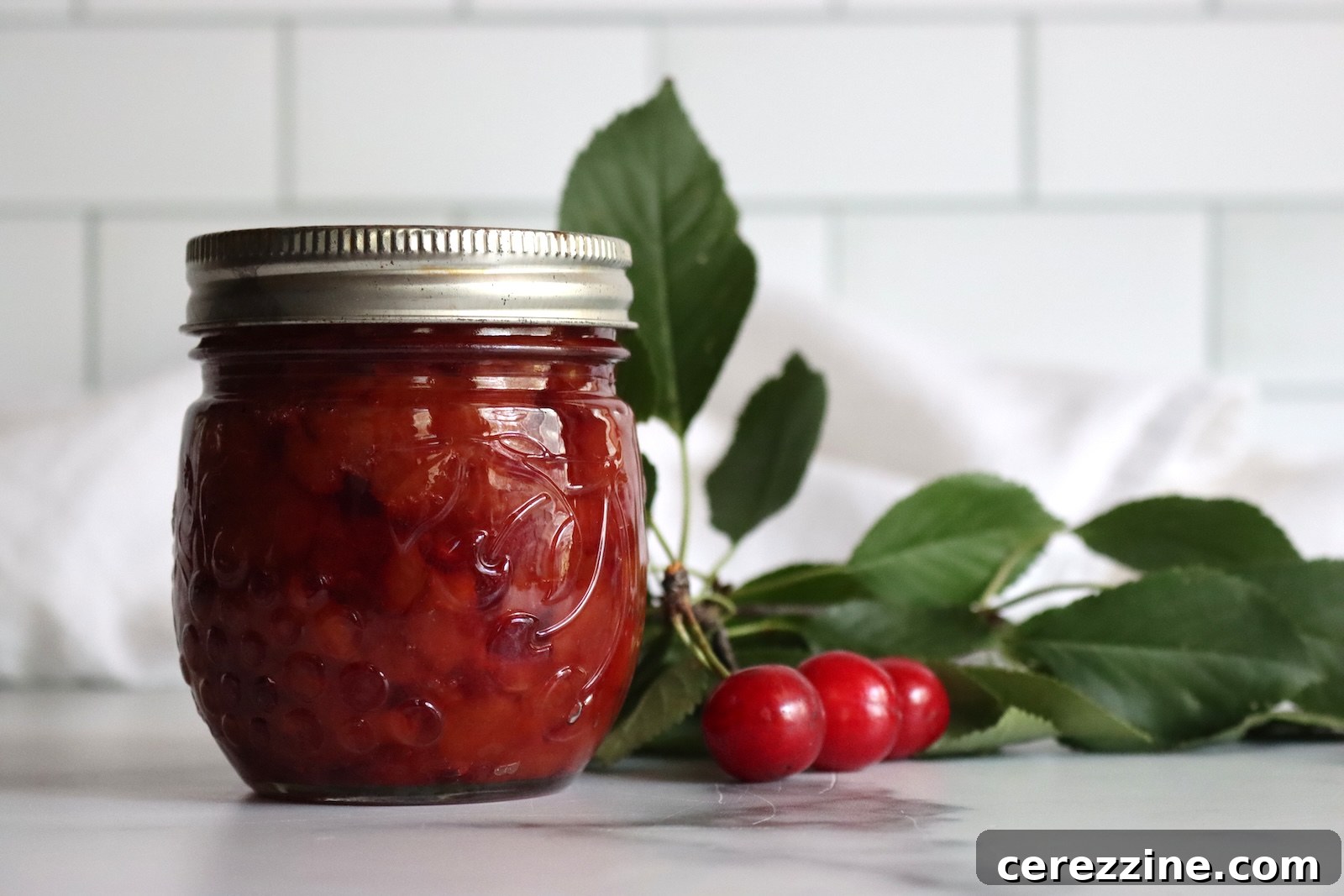
Setting Notes
The gel point is about 220°F at sea level, and it drops roughly 1°F for every 500 feet of elevation. Aim for that temperature and stop; overcooking will make cherries leathery and the syrup overly firm.
Second-cook time varies with how juicy the fruit was and the pan you use. Twenty minutes is common; forty minutes is not unusual. Rely on temperature and appearance rather than the clock.
Canning Cherry Preserves
If you don’t want to process jars, preserves will keep in the refrigerator for a few weeks or in the freezer for several months. To shelf-stable can, prepare a water bath canner and hot, clean jars while the preserves are on the second cook. Hot preserves should be ladled into hot half-pint jars, leaving 1/4 inch headspace. Remove air bubbles, wipe rims, center lids, and apply bands fingertip-tight.
Process in a boiling water bath for 10 minutes at elevations up to 6,000 feet; above that, increase processing time to 15 minutes. When processing is complete, turn off the heat, remove the canner lid, let jars rest for five minutes, then lift them out and cool undisturbed for 12 to 24 hours.
Altitude Adjustments
Processing times: 0–6,000 feet = 10 minutes; above 6,000 feet = 15 minutes.
Ways to Use Cherry Preserves
Because the cherries stay whole, these preserves look beautiful as a topping. Spoon them over cheesecake, panna cotta, pound cake, or vanilla ice cream. They also pair well with savory dishes: stir a spoonful into pan drippings for pork or duck sauce, or set a jar on a cheese board next to a sharp cheese.
For breakfast, try them on yogurt, oatmeal, or thick toast. A chunky preserve is less spreadable than a butter-style spread, so choose jar size and intended use accordingly.
Storing Cherry Preserves
Sealed jars keep 12 to 18 months in a cool, dark cupboard and taste best within the first year. Remove the bands before long-term storage to avoid masking a failed seal. Once opened, refrigerate and use within one to two weeks. Discard any jar with a bulging or unsealed lid, visible mold, or an off odor—do not taste suspect jars.
Yield Notes
Two pounds of cherries (pitted) is roughly five to six cups and yields about four half-pint jars. Juicier cherries and a narrow pan can stretch to a partial fifth jar; drier fruit may leave the final jar short. Make single batches rather than doubling: larger batches take longer to reach the set point and the fruit tends to break down.
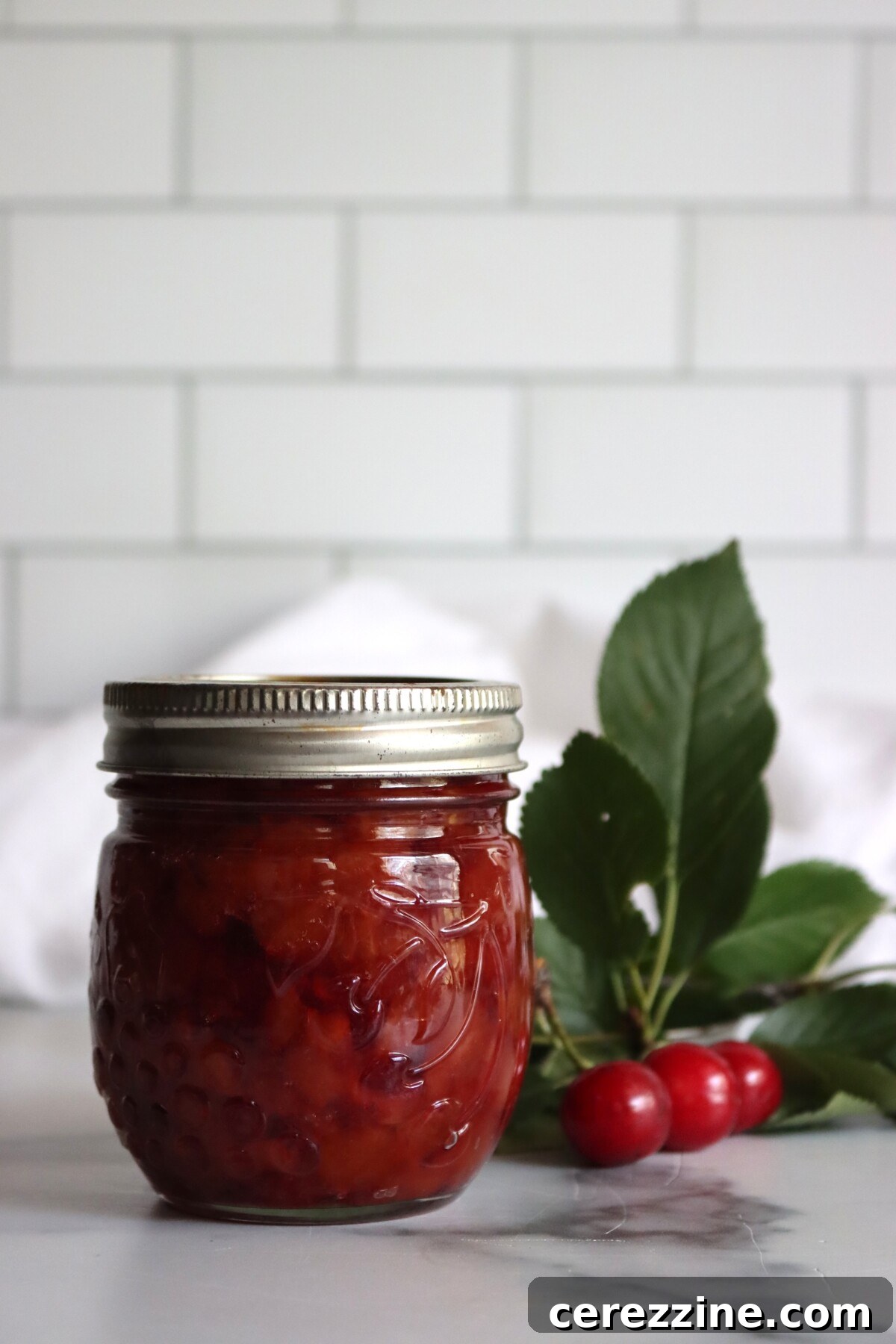
Common questions about this method appear below to help you get started with confidence.
Cherry Preserves FAQs
Preserves contain whole cherries in a thickened syrup and are cooked twice with a resting period between cooks. Jam is made from crushed or chopped fruit cooked in one session until it breaks down into a uniform spread.
No. This recipe relies on the cherries’ natural pectin and sugar concentration during a long cook to thicken the syrup.
Yes. Both work. Tart cherries keep their shape better and offer bright acidity; sweet cherries are milder and are best if slightly underripe to help them hold together.
Properly processed, sealed jars store 12 to 18 months in a cool, dark place. Once opened, refrigerate and use within one to two weeks. Discard any jar showing signs of spoilage.
Cherry Canning Recipes
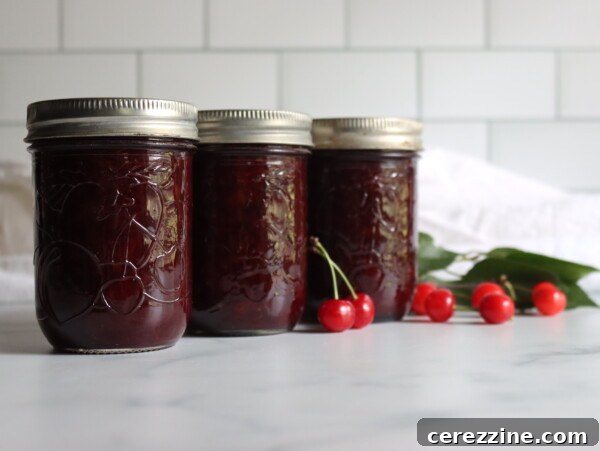
Sour Cherry Jam
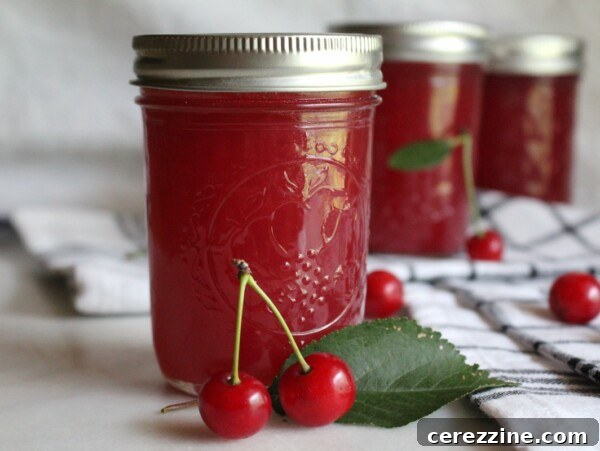
Cherry Jelly
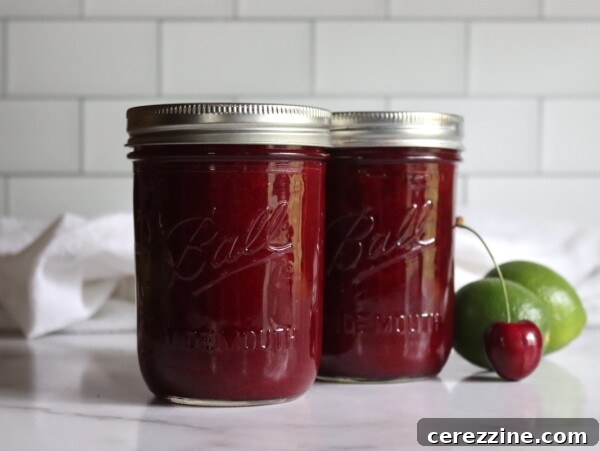
Canning Cherry Limeade Concentrate
If you try these Old Fashioned Cherry Preserves, leave a star rating and share your experience in the comments. I love hearing how readers use their jars.
Old Fashioned Cherry Preserves
Equipment
- Water bath canner
- Canning funnel
- Canning jars, lids, and bands
Ingredients
- 2 pounds cherries, sweet or tart
- 4 cups granulated sugar
- 1/4 to 1/2 cup water, only if needed to dissolve the sugar
Instructions
- Pit the cherries: Rinse, remove stems, and pit over a bowl to collect all the juice. Keep the juice separate from the fruit.
- Make the syrup: Combine the reserved cherry juice and the sugar in a large stainless or enameled saucepan. Heat and stir until the sugar dissolves. If the juice is insufficient, add a small amount of water to help dissolve the sugar.
- First cook: Add the cherries and boil over high heat until the fruit turns glossy. Remove from heat promptly.
- Rest overnight: Cover and refrigerate for 12 to 18 hours. This step firms the cherries so they stay whole.
- Cook to the set point: Return the mixture to a rolling boil that will not stir down. Cook rapidly, stirring constantly, until it reaches about 220°F at sea level (adjust for elevation). Remove from heat and skim foam.
- Fill the jars: Ladle hot preserves into hot half-pint jars, leaving 1/4 inch headspace. Remove bubbles, wipe rims, center lids, and apply bands fingertip tight.
- Process: Process in a boiling water bath for 10 minutes (15 minutes above 6,000 feet). Turn off heat, remove the canner lid, let jars sit for 5 minutes, then remove to cool undisturbed for 12 to 24 hours.
- Do not double: Make two separate batches rather than one large batch to avoid overcooking and fruit breakdown.
Notes
This recipe is adapted from a traditional canning method for cherry preserves.
Yield: Makes about four half-pint jars. Two pounds of cherries yields roughly five to six cups pitted.
Set point: 220°F at sea level; reduce target by about 1°F for every 500 feet of elevation.
Sugar: Do not reduce sugar if you plan to store jars on the shelf; sugar is part of the preservation and texture. Reduced-sugar versions belong in the refrigerator or freezer.
Storage: Sealed jars keep 12 to 18 months in a cool, dark place; once opened, refrigerate and use within 1 to 2 weeks.
Nutrition
Nutrition information is an approximation.
Preserves are one branch of a broad family of old-fashioned fruit spreads. If you enjoy this method, try similar recipes using other whole fruits for a variety of pantry treats.
Old Fashioned Jam Recipes
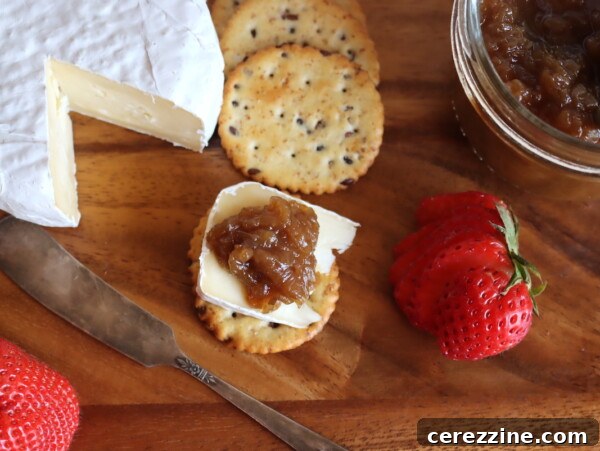
Caramelized Onion Jam
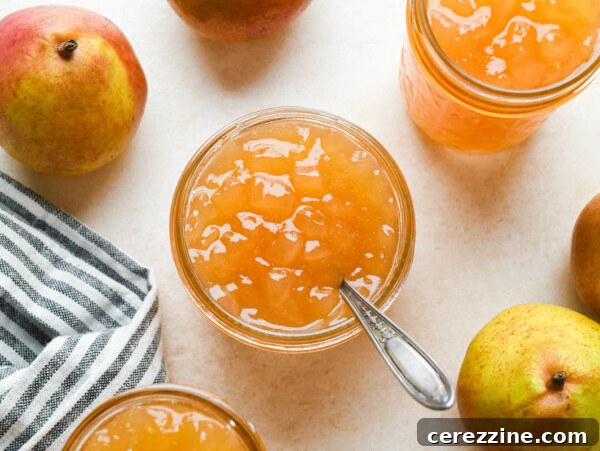
Pear Jam
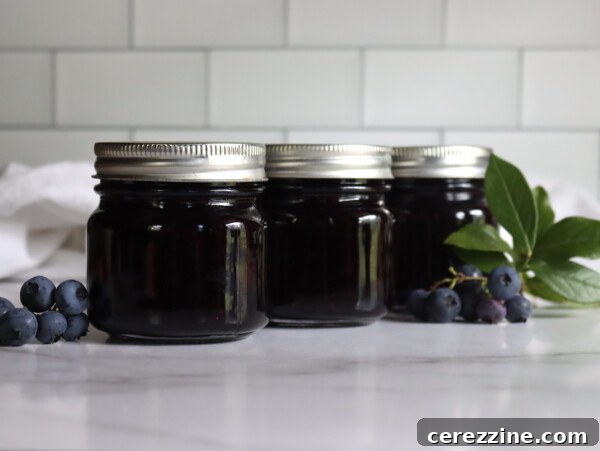
Blueberry Jam (without added pectin)
Find the perfect recipe
Looking for something else? Use the site search to find more canning and preserving recipes.