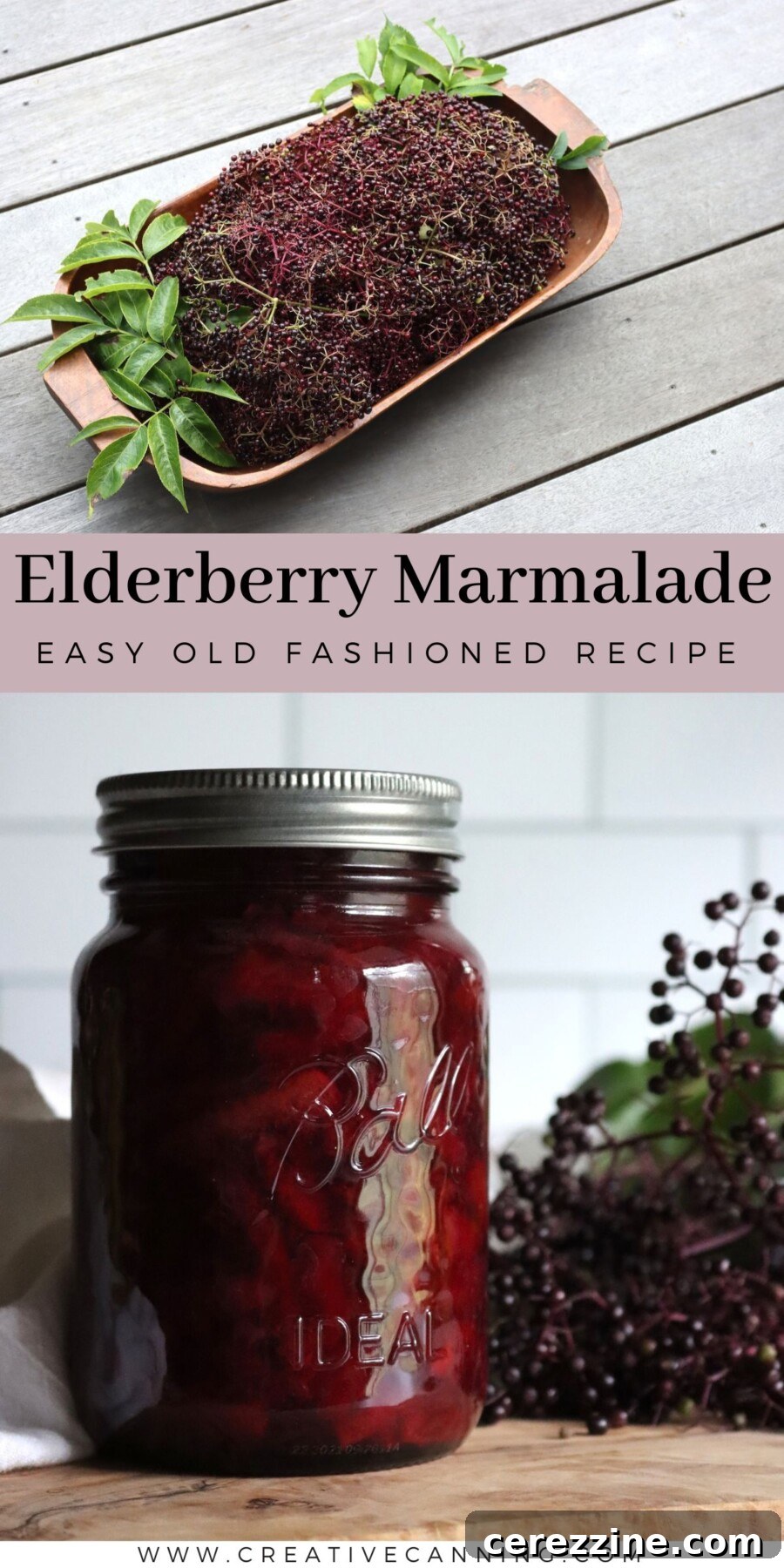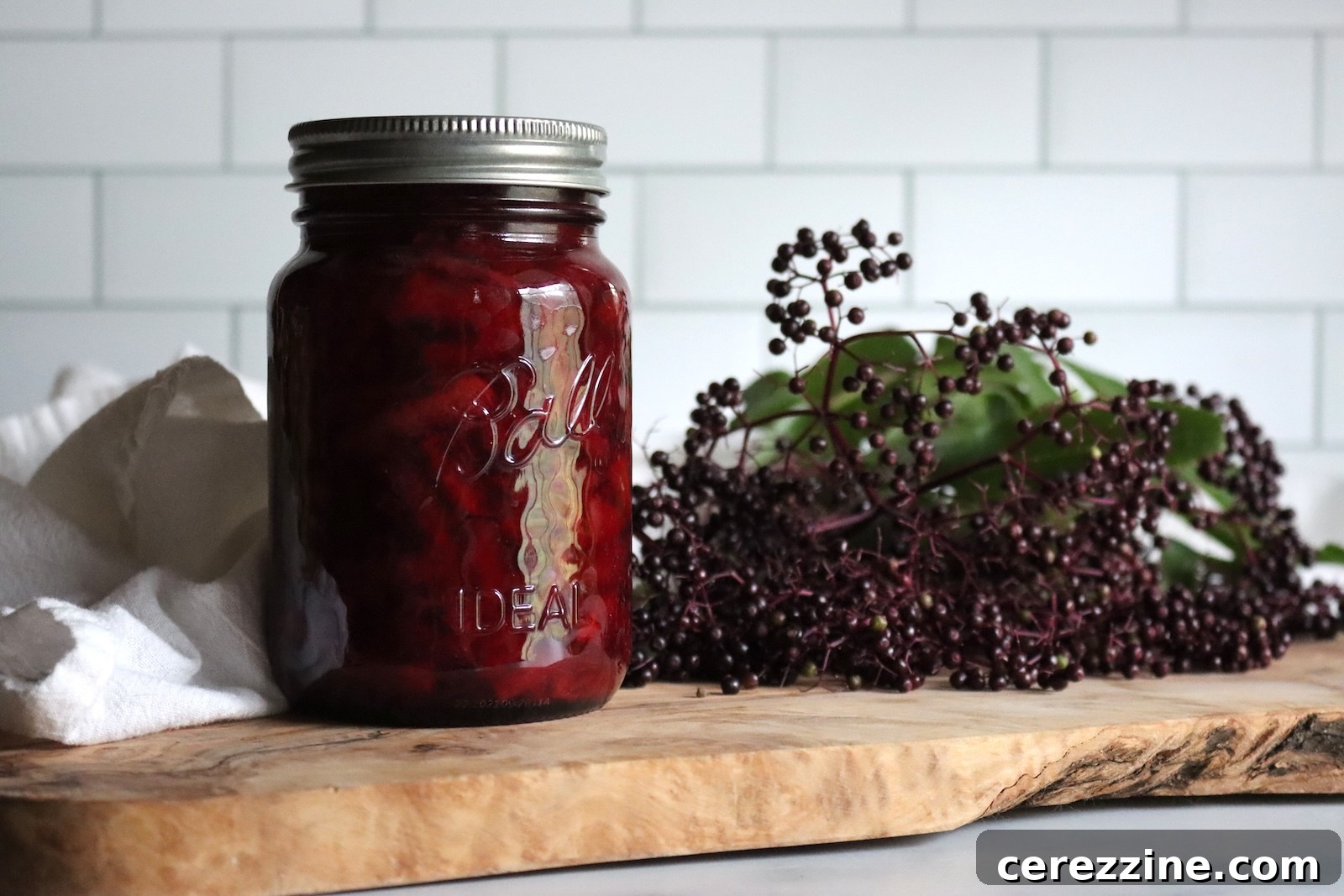
Elderberry marmalade transforms a late-summer elderberry harvest into a jarred preserve with thin slices of lemon and orange suspended in a deep, jewel-colored spread. It sets without boxed pectin because the whole citrus provides pectin and acid, and the result is a smooth, rounded preserve where the elderberry flavor is brightened by a clear citrus bite.
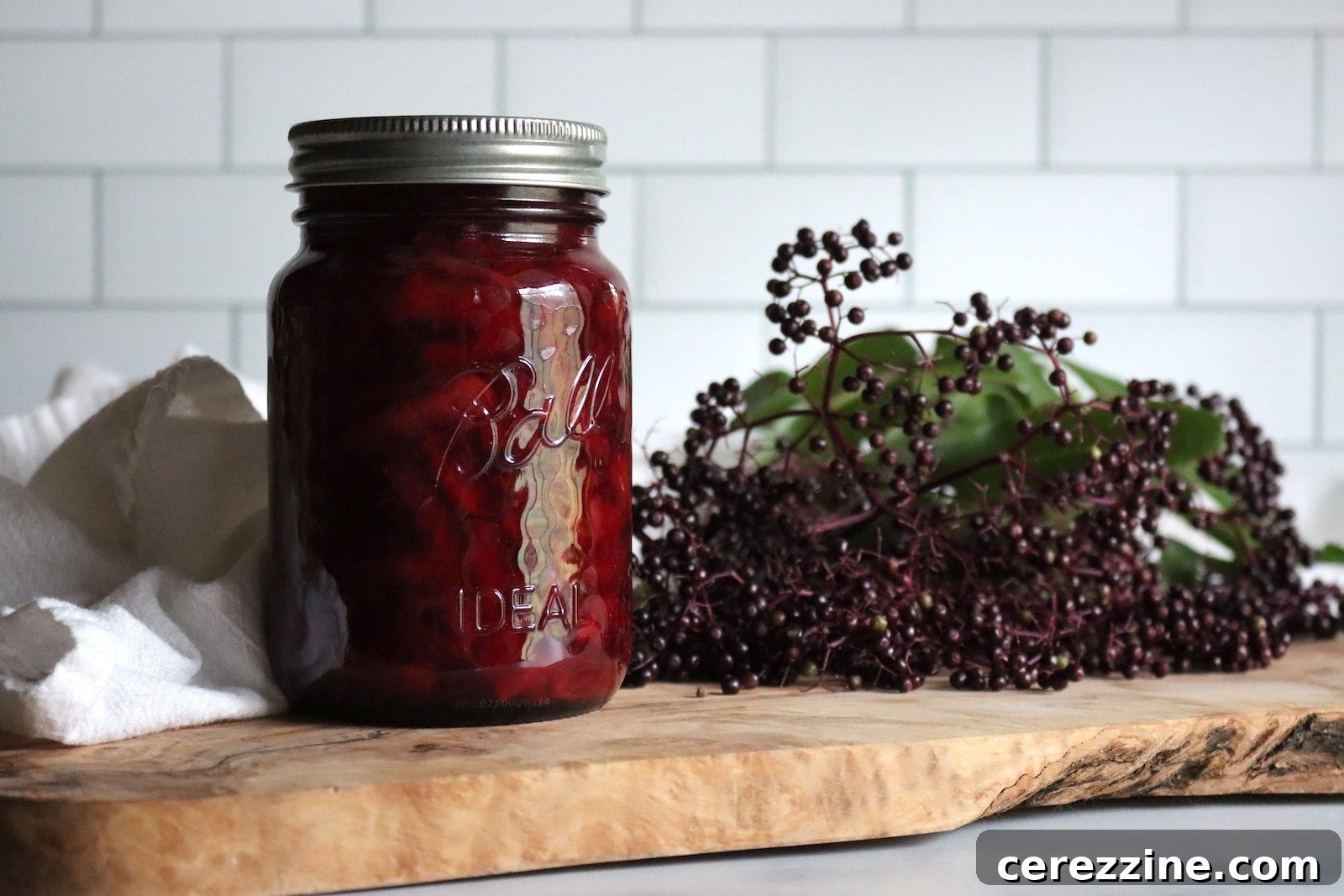
This recipe has been reviewed for safety and accuracy by a Master Food Preserver certified through the University of Cornell Cooperative Extension.
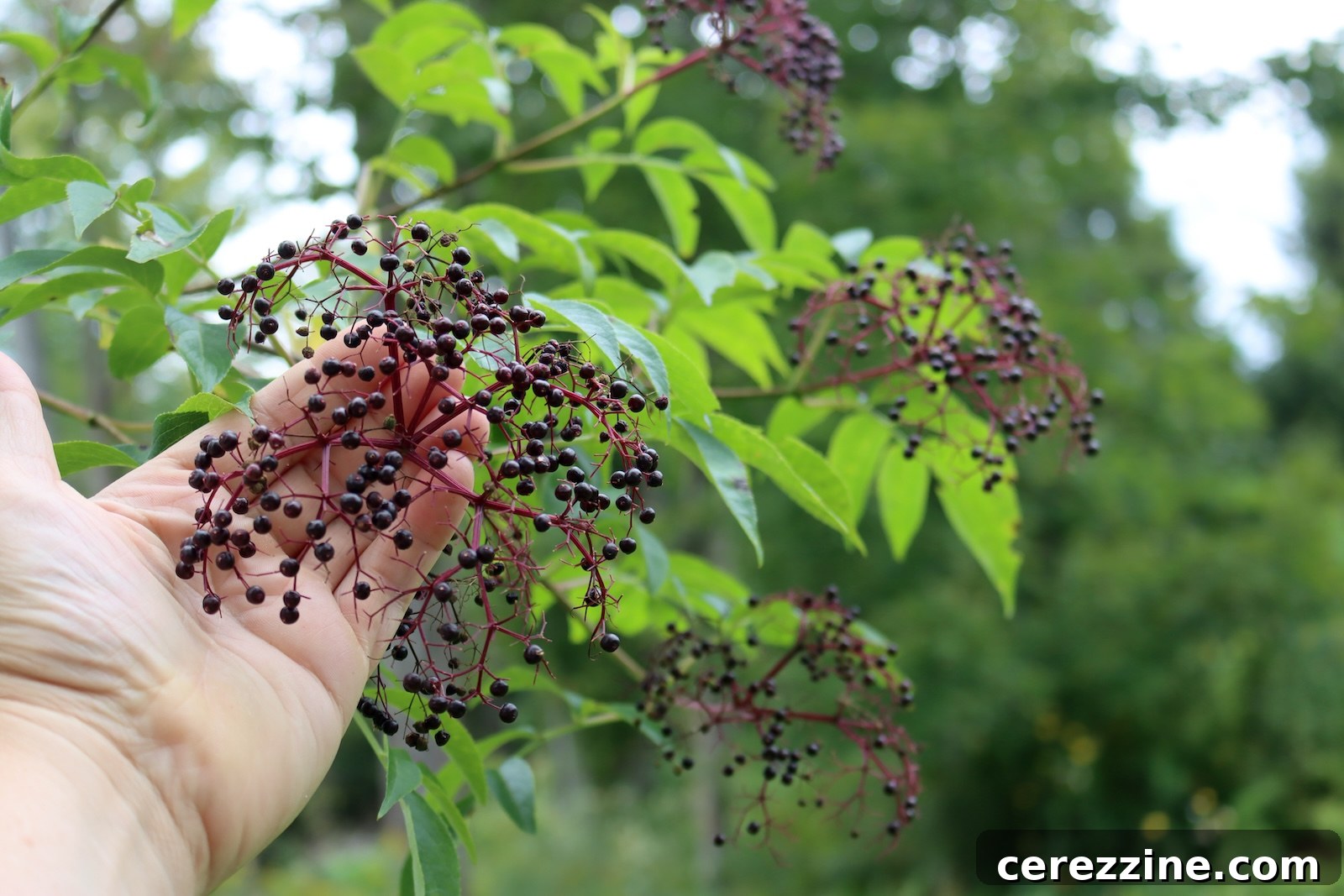
Elderberries typically ripen in late summer to early fall. A small batch like this is ideal when you don’t want a long canning day but still want a few jars to enjoy through the year. This marmalade sits between jelly and jam: it begins with strained elderberry juice for clarity and then includes thin slices of whole citrus—peel and all—for texture and pectin.
Elderberries have a rich, almost winey depth. Lemon and orange add brightness and balance the berry’s weight, producing a marmalade that spreads soft and glossy on toast while offering tender citrus ribbons throughout.
Notes from the Kitchen

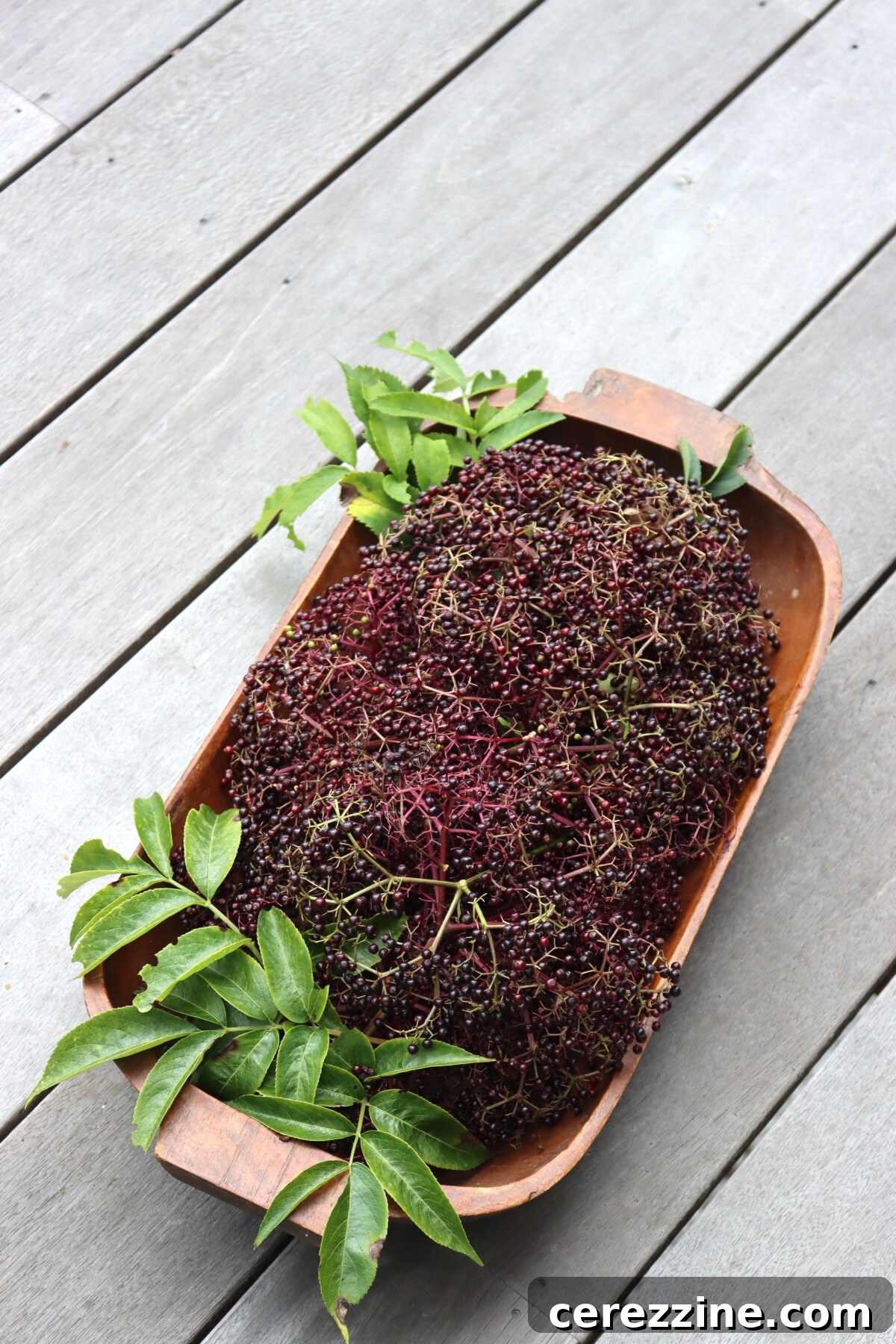
When we pick elderberries by the bucket, jelly and wine come first and drying for tea follows. Once those jars are filled, I experiment with smaller preserves like this marmalade; the citrus keeps the jars safe and stretches a little juice into several lovely spreads.
A Quick Look at the Recipe
- Recipe: Elderberry Marmalade
- Type: Marmalade (no added pectin)
- Canning: Water bath canning
- Prep: About 30 minutes active, plus an overnight citrus soak
- Cook: About 30 minutes
- Processing: 10 minutes for quarter- or half-pints (adjust for altitude)
- Yield: Approximately 3 half-pint jars
- Key ingredients: Elderberry juice, granulated sugar, 2 lemons, 1 orange, bottled lemon juice
Ingredients for Elderberry Marmalade
A short ingredient list captures the flavor: elderberry juice and sugar form the base; whole lemons and an orange supply pectin, acid, and the distinctive marmalade texture.
- Elderberries: Fully ripe, deep purple, completely de-stemmed. Remove every bit of stem and leaf because green parts are bitter. Freezing the clusters first makes de-stemming easier. Cook the berries into juice before using.
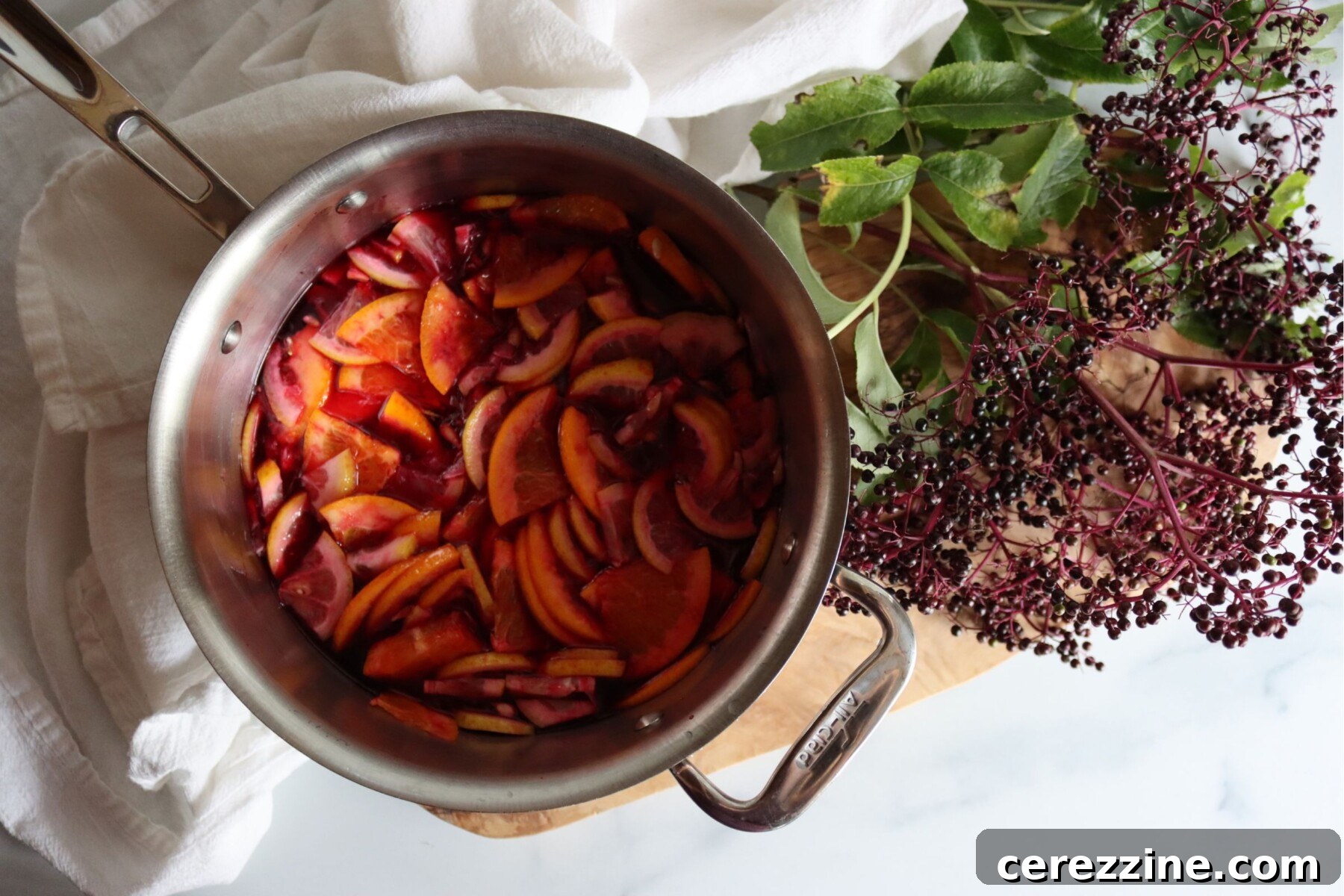
- Lemons: Two whole lemons, thinly sliced with peel. They provide acid and pectin. If waxed, scrub or briefly soak them in hot water to remove surface wax.
- Orange: One whole orange, sliced thin with peel. The orange softens the lemon’s sharpness and rounds the flavor.
- Bottled lemon juice: Use 1/2 cup for consistent acidity; it’s an important safety and flavor component.
- Sugar: Plain granulated sugar—measure carefully. The ratio here is important for both set and preservation.
- Water: A little for simmering berries and more for softening citrus peel; most of it cooks away before sugar is added.
Slice the citrus as thinly as possible so the peel becomes tender instead of chewy. A sharp knife or mandoline helps. A wide, heavy-bottomed pot prevents scorching during the boil, and a jelly bag yields clear elderberry juice free of seeds.
Citrus Swaps and Substitutions
You can adjust citrus as long as the total count per cup of elderberry juice does not decrease. Three oranges (no lemons) produce a sweeter, rounder marmalade. Substitute limes for a sharper result. Meyer lemons will be less bitter and produce softer peel. Do not reduce the bottled lemon juice or the sugar in this recipe; elderberries are not acidic enough on their own for safe low-sugar canning.
How to Make Elderberry Marmalade
This is essentially a two-day process: the citrus soaks overnight and cooking and canning happen the following day. The working ratio is 1 cup elderberry juice to 3 cups sugar, plus 2 lemons, 1 orange, and 1/2 cup bottled lemon juice. One pound of picked elderberries yields about 1 cup of juice.
Soak the Citrus
Trim the citrus ends, quarter lengthwise, remove seeds, and slice very thin with the peel on. Cover with cold water and leave on the counter overnight (an hour is a minimum). This reduces bitterness and softens peel.
Make the Elderberry Juice
Simmer de-stemmed elderberries with a small amount of water for at least 10 minutes, crushing them as they soften. Strain through a jelly bag and let the juice drip; do not force the bag dry. Measure the juice—save any extra for another use.
Soften the Peel
Drain the soaking water, place citrus slices in a wide pot with fresh water, and simmer until the peel is tender and most water has cooked away (10–15 minutes). Test by pressing a slice with a spatula—the spatula should cut through easily. Peel that is still firm when sugar is added will remain chewy after cooking.
Cook to the Gel Stage
Add the elderberry juice, bottled lemon juice, and sugar to the tender citrus. Return to a hard boil and cook until it reaches the gel stage—about 10 minutes, depending on equipment. The gel point is roughly 220°F at sea level (about 1°F lower per 500 feet elevation) or test on a frozen plate: if a spoonful wrinkles after cooling, it’s ready. Skim foam and jar hot.
Canning Elderberry Marmalade
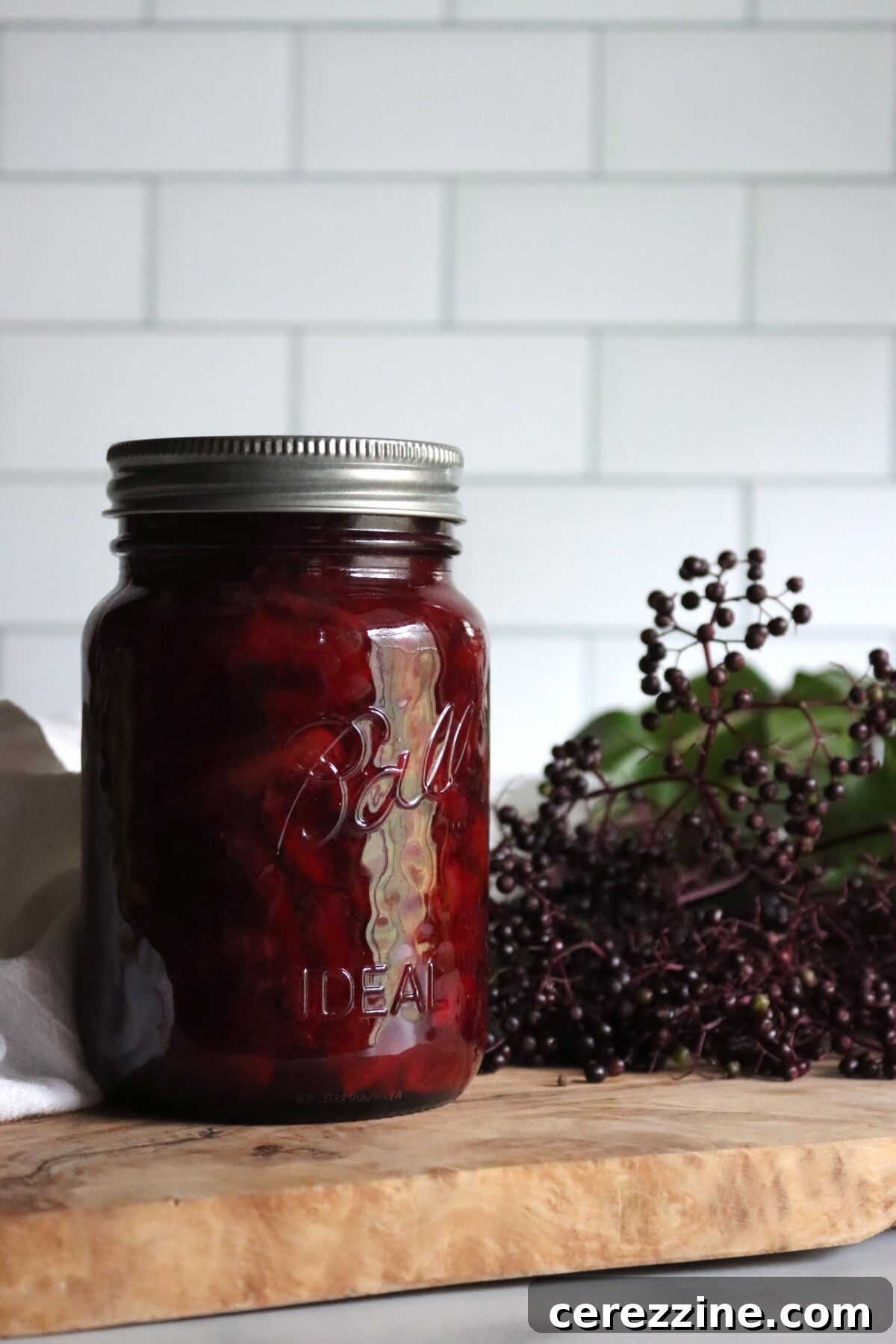
Prepare a water bath canner and keep jars hot. Ladle hot marmalade into hot jars, leaving 1/4 inch headspace. Remove air bubbles, wipe rims, and apply lids and bands fingertip-tight. Process quarter- and half-pints in boiling water for 10 minutes at elevations up to 6,000 feet; above 6,000 feet process for 15 minutes. After processing, turn off heat and let jars sit in the canner for 5 minutes before removing to cool on a towel for 12–24 hours.
Setting Notes
Marmalade sets as it cools; what you jar will be runny. Allow 24–48 hours before judging the final set. Aim for a soft, spreadable set with tender peel slices suspended throughout rather than a firm, spoon-standing texture. If it fails to set after two days, it may need to be recooked or repurposed as a syrup or glaze.
Ways to Use Elderberry Marmalade
Spread on buttered toast, English muffins, or biscuits. Serve with sharp aged cheddar or blue cheese on a cheese board. Warm with a splash of vinegar to make a glaze for pork or duck, or bake atop brie or into thumbprint cookies.
Storage and Shelf Life
After jars cool, press lids to confirm seals. Remove bands before storage. Label and store sealed marmalade in a cool, dark place; quality is best for 12–18 months. Refrigerate after opening and use within 1–2 weeks. Unsealed jars can be refrigerated and eaten within a week or two; alternatively freeze in straight-sided freezer-safe jars with 1 inch headspace for up to six months.
More Ways to Preserve Elderberries
Elderberries also make jelly (smooth, seed-free) and old-fashioned jam (whole berries, seeds included). Other options include homemade elderberry syrup, tincture, or fermenting into wine. Growing elderberries is straightforward if you want to plan for future seasons.