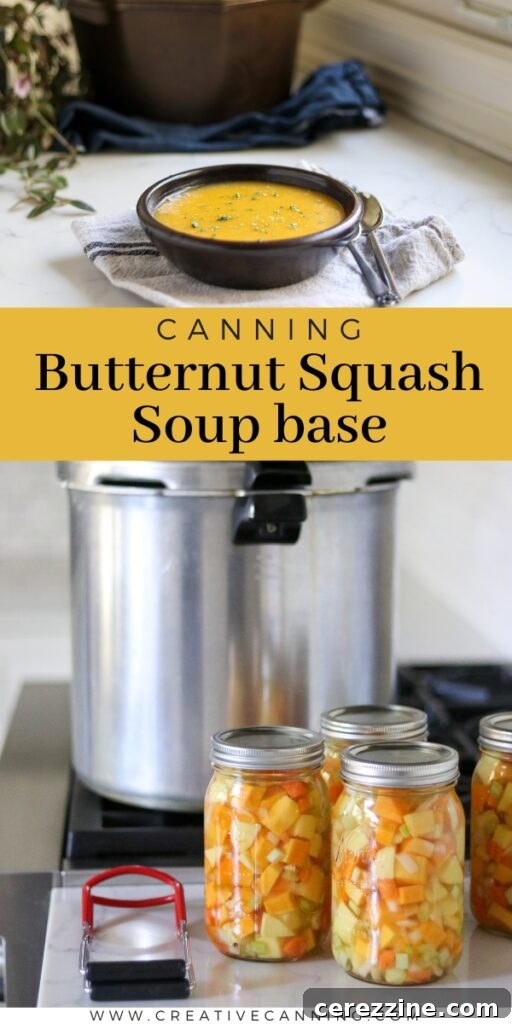
Canning Butternut Squash Soup Base: A Fall Favorite for Your Pantry
Imagine the cozy warmth of homemade butternut squash soup, rich and creamy, ready in minutes straight from your pantry shelf. Canning butternut squash soup base offers exactly that: a convenient, delicious, and nutritious meal in a jar, perfect for any season. While butternut squash cannot be safely canned as a smooth puree, this proven recipe allows you to preserve it as flavorful chunks, which you then effortlessly puree before heating and serving. This means all the goodness is sealed in the jar, pre-cooked and prepared for a quick transformation into a heartwarming meal.
Few dishes capture the essence of autumn quite like a bowl of comforting butternut squash soup. Its naturally sweet, earthy flavor is a hallmark of the cooler months. However, with the magic of home canning, you can enjoy this seasonal delight year-round. There’s truly nothing that compares to the taste and freshness of soup made from scratch, and this vegetarian soup canning recipe is an excellent staple to add to your pantry collection.
For preserving low-acid vegetables such as squash, pressure canning stands out as the safest and most effective method. This technique ensures that your food is properly sterilized, providing an extended shelf life of up to 18 months, often even longer, while retaining its quality and flavor. It’s a rewarding skill that transforms seasonal abundance into convenient, ready-to-eat meals.
The Versatility and Benefits of Butternut Squash for Canning
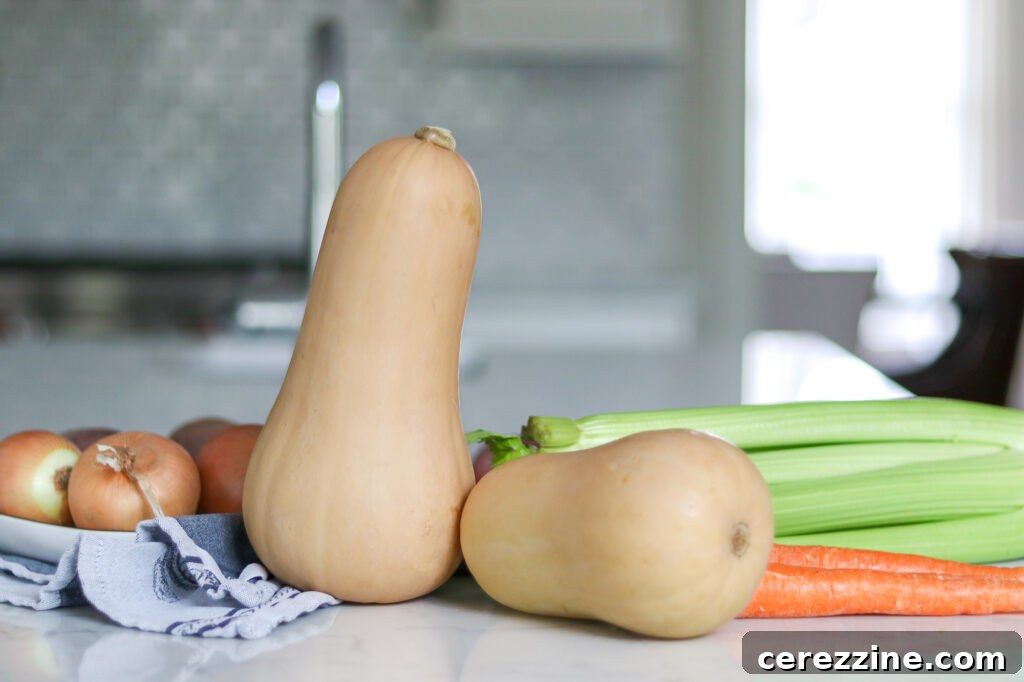
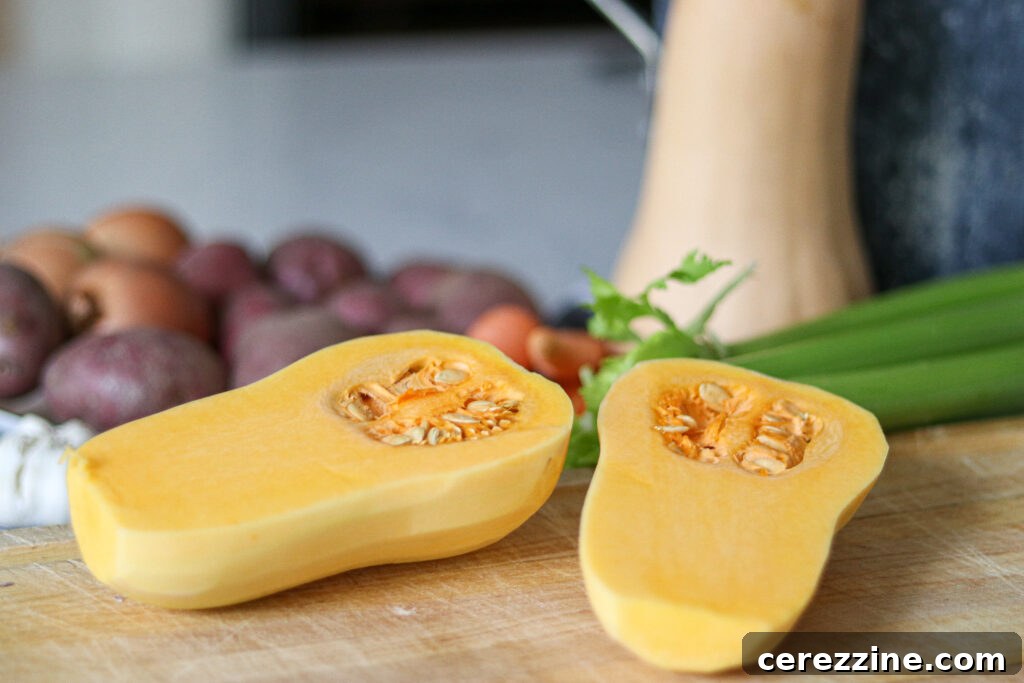
Butternut squash holds a special place among winter squashes, particularly for canning enthusiasts, largely due to its ease of preparation. Its smooth, thin skin is surprisingly simple to peel with a standard vegetable peeler, and its dense, vibrant orange flesh is straightforward to cube. The process involves just a few steps: peel the squash, cut it in half, and scoop out the seeds. As a bonus, those seeds can be roasted and seasoned for a delicious, crunchy snack later!
Beyond its easy preparation, butternut squash is packed with nutrients, including high levels of vitamins A and C, fiber, and potassium. By canning this soup base, you’re not just creating a convenient meal; you’re preserving a powerhouse of healthy goodness.
The true brilliance of this particular recipe lies in its design as a versatile soup base. It can certainly be enjoyed on its own as a simple, flavorful soup, but its potential extends far beyond that. This base serves as an ideal starting point for a myriad of culinary creations. Imagine incorporating it into hearty pasta sauces, enriching complex stews, or even crafting gourmet dips and gravies. Its adaptable nature and rich nutritional profile make it an invaluable addition to any home pantry.
In the following sections, we will guide you through the process of safely pressure canning this butternut squash soup base at home. You’ll learn how to transform fresh autumn produce into an incredibly delicious and nutritious “meal in a jar” that will sustain and delight you through the entire winter season and beyond.
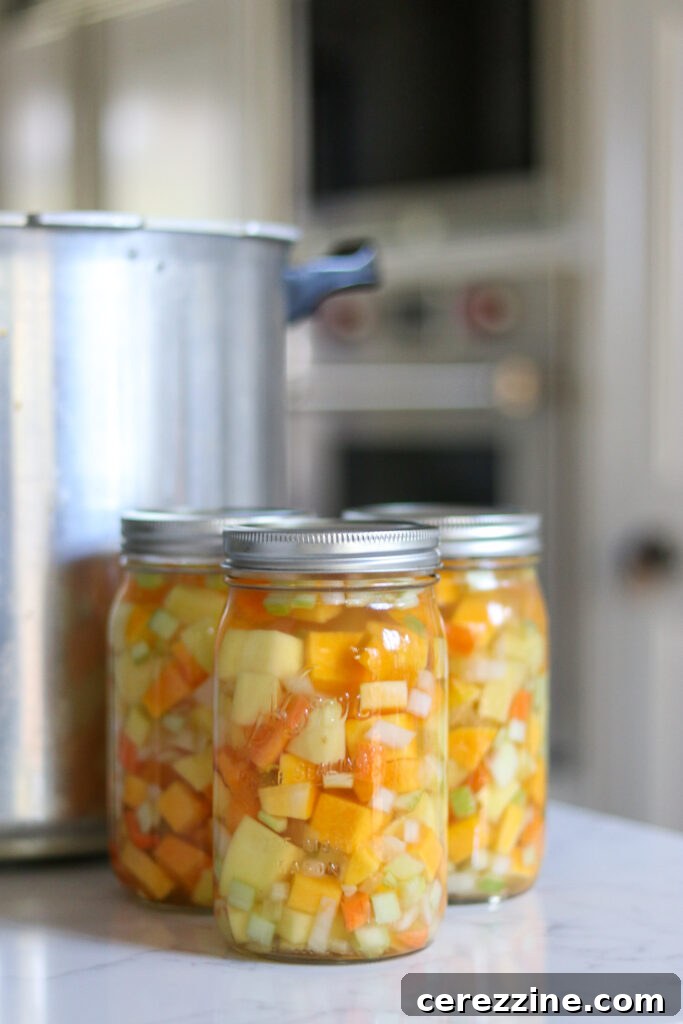
Essential Ingredients for Your Butternut Squash Soup Base
This recipe for canning butternut squash soup base is thoughtfully adapted from reliable sources, including the esteemed Homestead Canning Cookbook by Georgia Varozza. It also aligns with the rigorous guidelines set by the National Center for Home Food Preservation (NCHFP) for canning various types of winter squash and soups. Adhering to these established home canning principles, this recipe focuses on canning the squash as chunks within a soup base, which is then pureed *after* canning, ensuring optimal safety and texture.
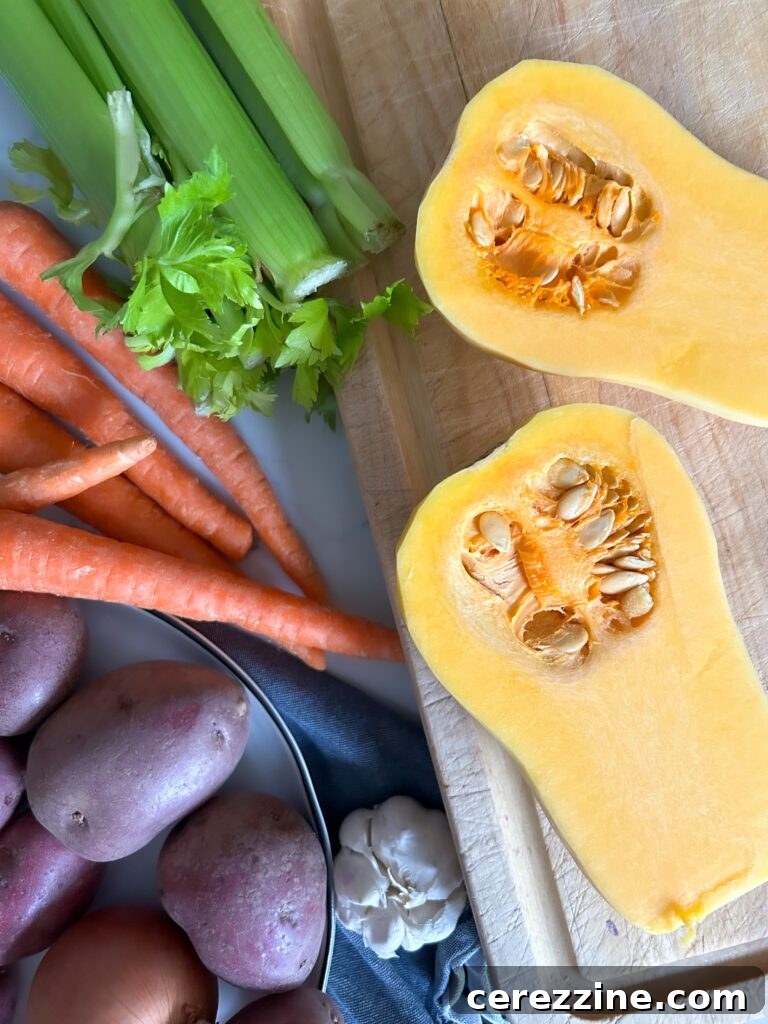
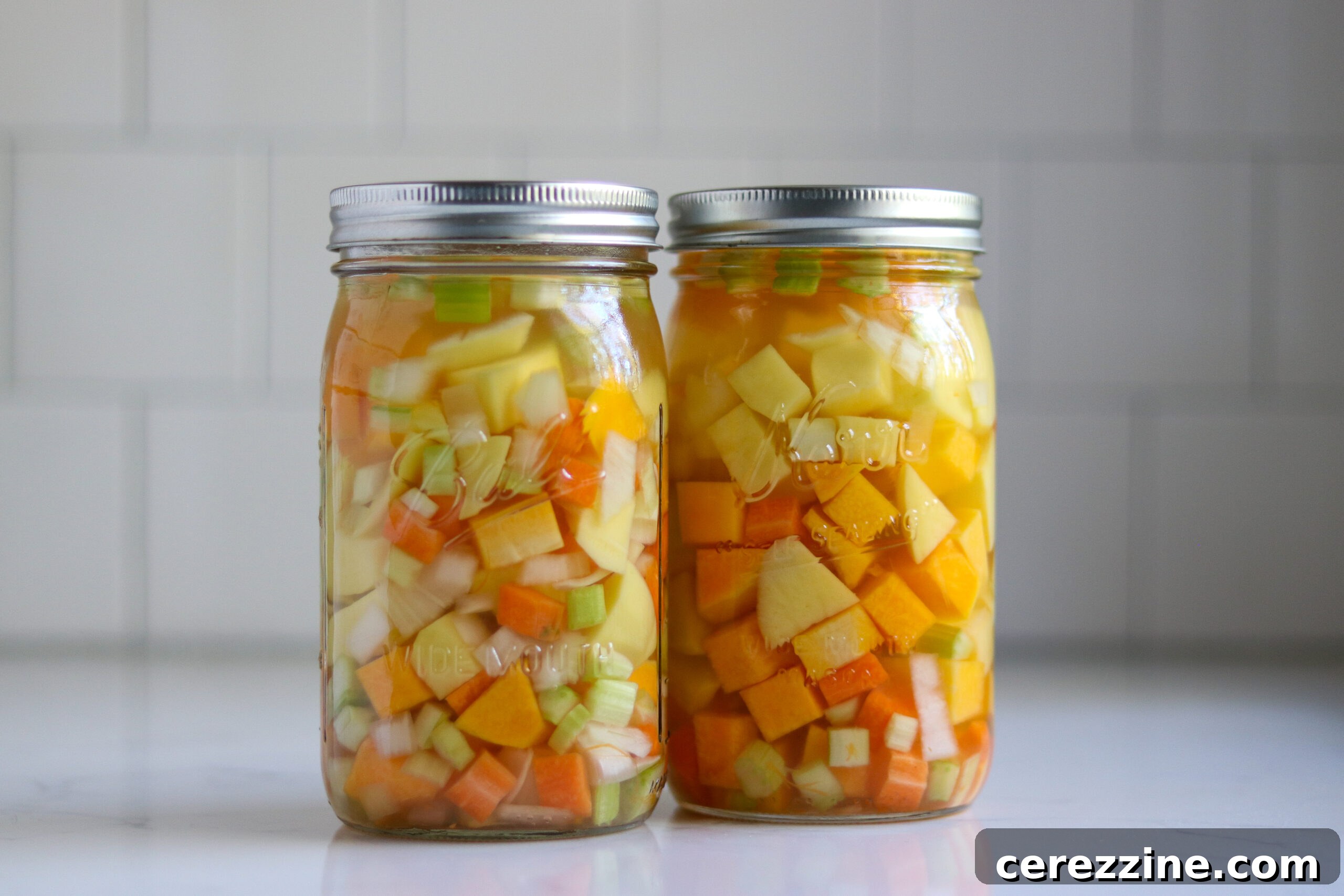
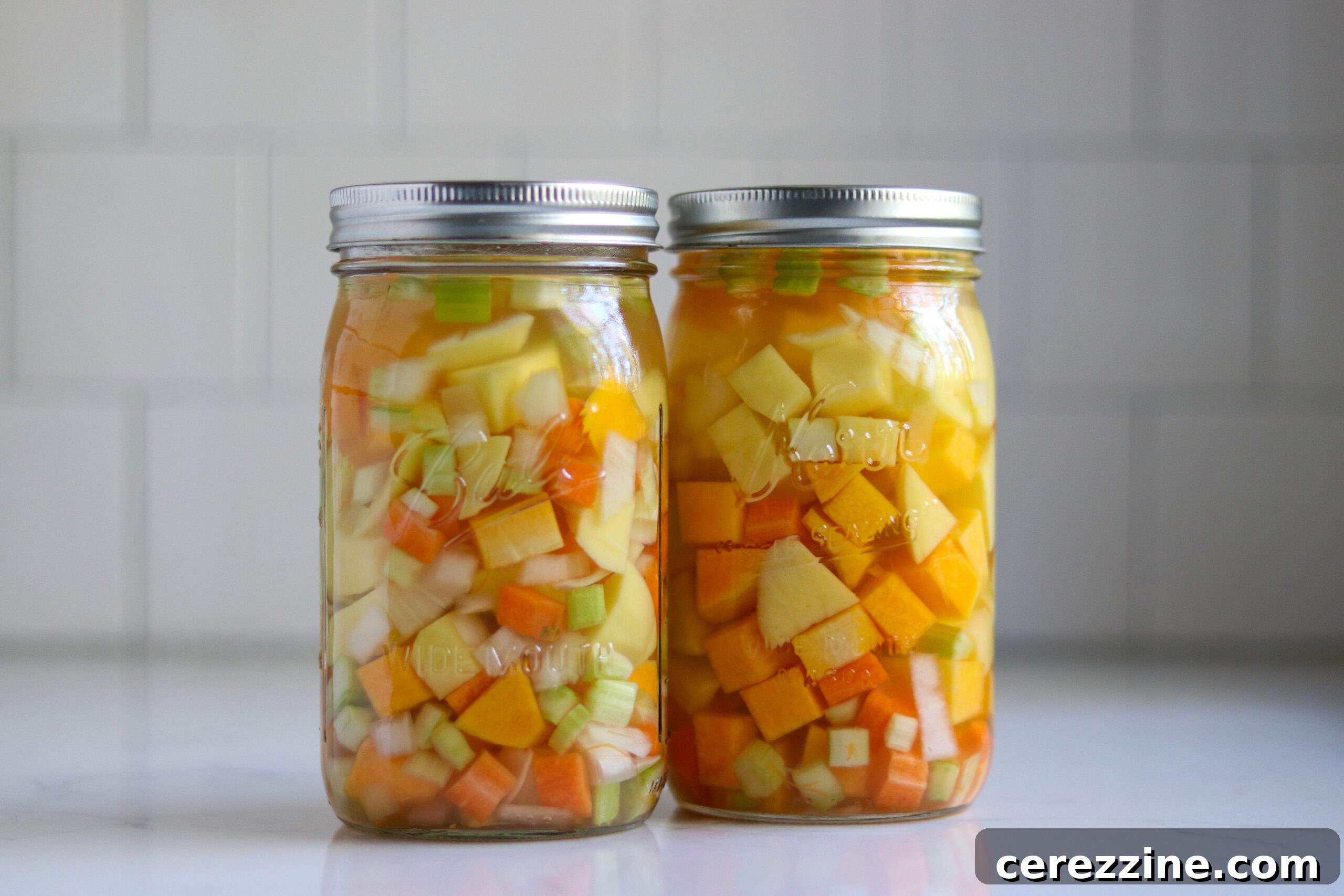
Our foundational recipe for butternut squash soup base is straightforward yet robust, featuring a harmonious blend of butternut squash, onions, celery, carrots, and potatoes. The potatoes are particularly key, contributing a natural body and creamy texture to the finished soup once pureed. This vegetable combination ensures a rich, well-rounded flavor profile even before any additional seasonings are introduced.
One of the delightful aspects of pressure canning soup recipes is the freedom to customize the flavor with dry spices and herbs. You are always welcome to add reasonable amounts of your favorite dry seasonings to any canning recipe without affecting its safety. This flexibility allows you to truly make the soup your own, tailoring it to your family’s preferences and culinary traditions.
Beyond savory spices, you can also introduce a touch of sweetness. Sugar, honey, or maple syrup are all excellent choices. A personal favorite for enhancing butternut squash soup is homemade apple cider syrup, which brings a unique depth and brightness to the squash’s natural sweetness. If you don’t have homemade, you can easily purchase high-quality cider syrup online. Even a small dash of these sweeteners can make the flavors in this simple soup truly sing.
For an even more profound apple infusion, consider replacing approximately one-third of the total broth volume with fresh apple cider. This substitution will impart an incredible aromatic and fruity note that beautifully complements the squash.
Recipe: Canning Butternut Squash Soup Base
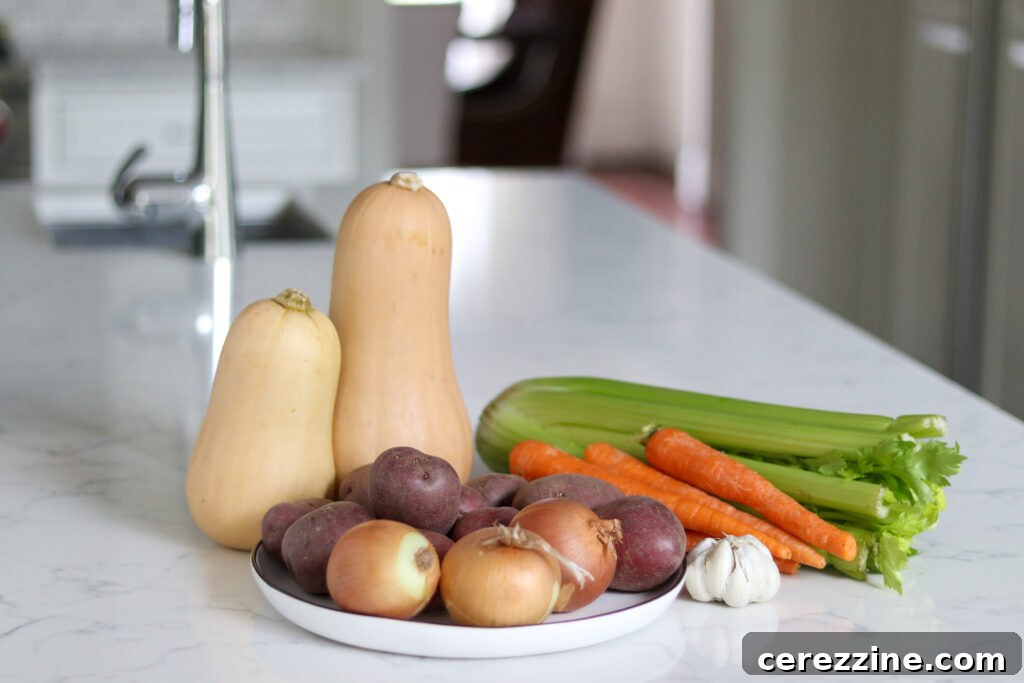
Preparing a batch of this home-canned butternut squash soup base is quite simple. This recipe yields a canner batch of approximately 10 pints or 5 quarts of soup. Here’s what you’ll need:
- 5 lbs butternut squash, peeled, deseeded, and cubed into ½ inch pieces
- 2 ½ lbs red potatoes, peeled and cubed into ½ inch pieces
- 5 stalks of celery, thoroughly washed and chopped
- 5 medium carrots, peeled and chopped
- 3 medium onions, peeled and chopped
- 2 tablespoons of salt
- About 3 quarts water or broth (vegetable or chicken) to cover the vegetables in the jars
Feel free to use your preferred varieties of butternut squash, potatoes, carrots, celery, and onions for this recipe; the specific type will not compromise canning safety.
Safe Customizations and Flavor Enhancements
This recipe is quite adaptable, allowing for various adjustments to suit your personal taste while strictly adhering to the safe canning guidelines established by the National Center for Home Food Preservation.
You have the option to omit some of the other vegetables from this recipe if you prefer a simpler squash base, and this will not affect the safety of the canned product. However, it is absolutely crucial that you *do not* mash or puree the squash or any other vegetables before the canning process. Mashed or pureed vegetables can create dense pockets that do not heat evenly within a canning jar during pressure processing, which could render your finished product unsafe to consume. Always keep vegetables in identifiable chunks.
For a richer, more savory profile, you can swap out vegetable broth for chicken stock. When canning, incorporate four cups of chicken stock for every five pounds of butternut squash, using this liquid to cover the jar contents instead of plain water or vegetable broth.
As previously mentioned, dry spices and herbs can be added freely to your soup base without concern for canning safety. They offer an easy way to explore diverse flavor profiles:
- Savory Classic: Infuse your soup with aromatic thyme and rosemary for a traditional, comforting taste.
- Earthy & Warm: A mere ¼ teaspoon of nutmeg per quart can transform the soup with a subtly earthy and warm undertone.
- Thai-Inspired: For an exotic twist, consider adding a tablespoon of red curry paste and two teaspoons of freshly chopped ginger to create a vibrant, aromatic Thai-style butternut squash soup base.
- Sweet & Spicy: Molasses, cinnamon, and a touch of allspice work harmoniously to create a rich, autumnal flavor reminiscent of pumpkin pie.
Step-by-Step Guide to Pressure Canning Butternut Squash Soup Base
Proper preparation is key to safe and successful home canning. Follow these steps carefully to create your delicious butternut squash soup base:
Preparation:
- Clean Your Produce: Begin by thoroughly washing all vegetables—squash, potatoes, celery, carrots, and onions—under cool running water. Washing before peeling is crucial to prevent dirt and bacteria from being transferred into the flesh during the peeling process.
- Peel and Deseed: Peel the butternut squash, carrots, and potatoes. Carefully cut the squash in half lengthwise, then scoop out all seeds and fibrous strands.
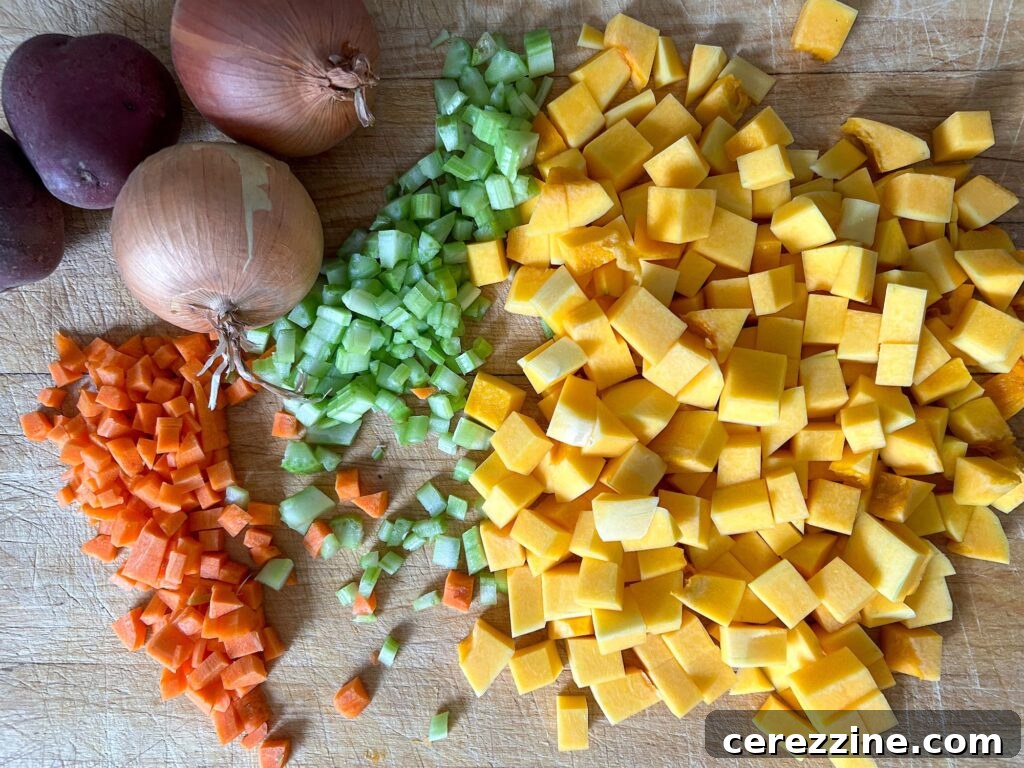
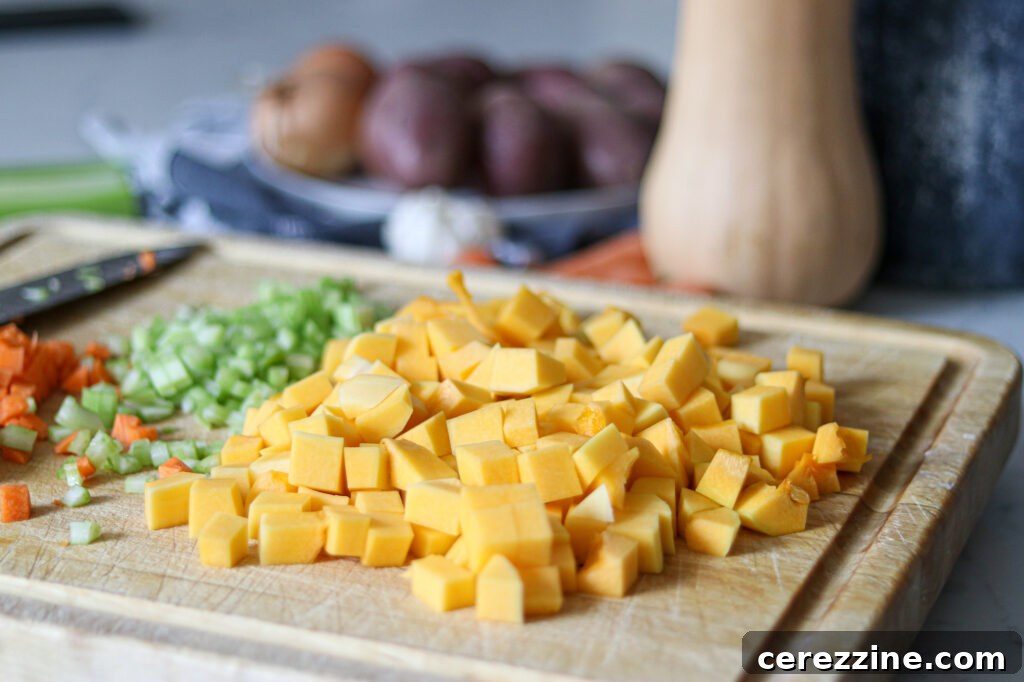
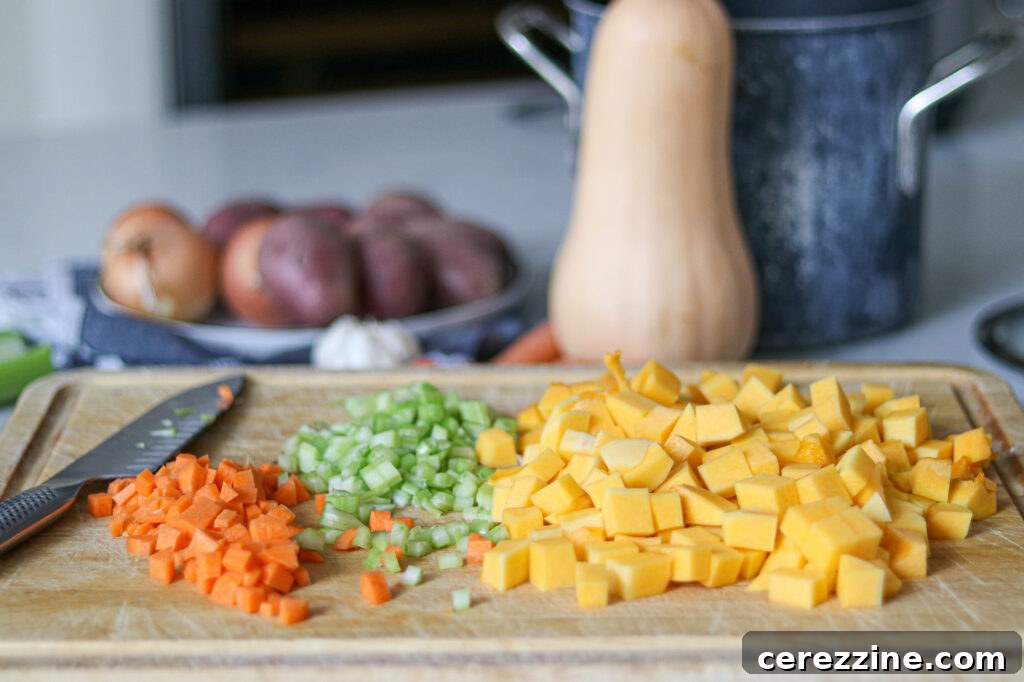
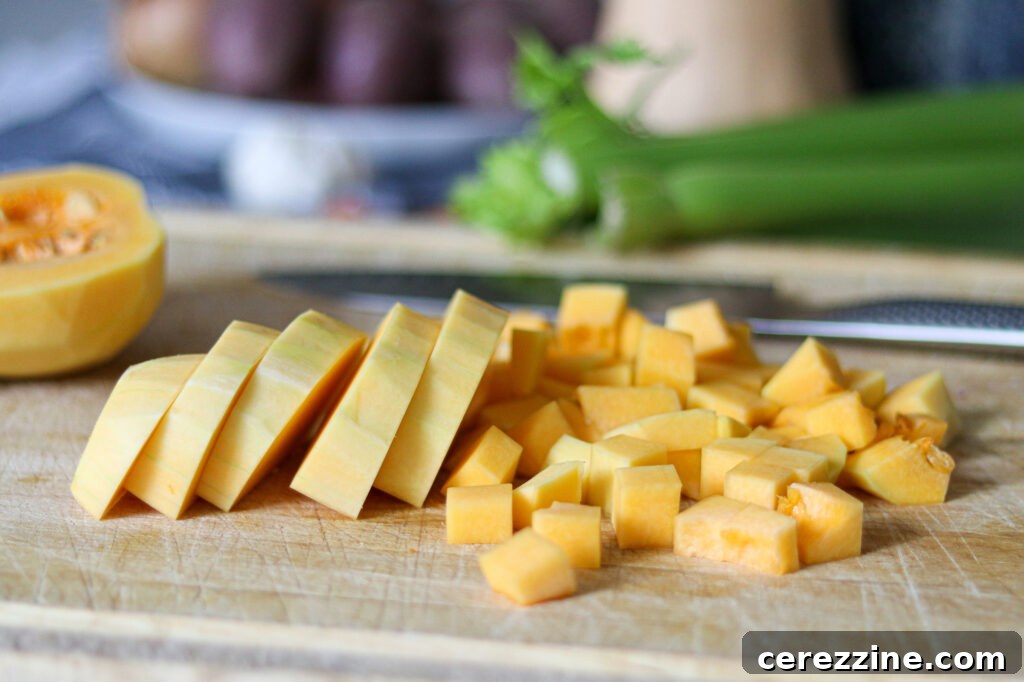
- Cube the Vegetables: Cut the peeled squash, potatoes, celery, carrots, and onions into uniform ½-inch cubes. Uniformity helps ensure even heating during the canning process.
Pre-Cooking and Hot Packing:
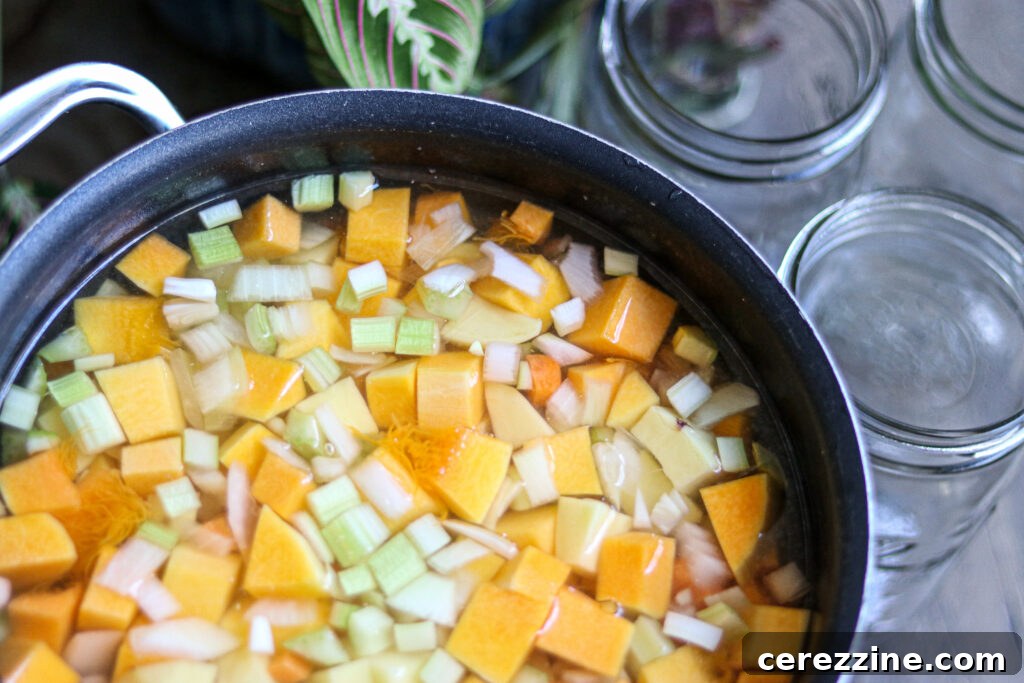
- Simmer Ingredients: Place all the cubed vegetables and salt into a large stockpot. Cover them with your chosen liquid (water, vegetable broth, or chicken broth). Bring the mixture to a gentle boil, then reduce the heat and simmer for exactly 5 minutes, stirring occasionally. This quick simmer is not meant to fully cook the vegetables, but rather to heat them through thoroughly.
- Why Simmer? This crucial pre-heating step serves multiple purposes. Firstly, it helps prevent thermal shock to your canning jars, reducing the risk of breakage when hot contents are added. Secondly, it ensures that all ingredients reach a consistent temperature before entering the pressure canner, leading to more even heat penetration during processing. Finally, simmering helps to drive out some of the air from the vegetable tissues. Raw vegetables contain a lot of trapped air, which can cause them to break down and become mushy under the rapid pressure changes of canning. Removing this air helps the vegetables maintain their structure better, resulting in a superior finished product.
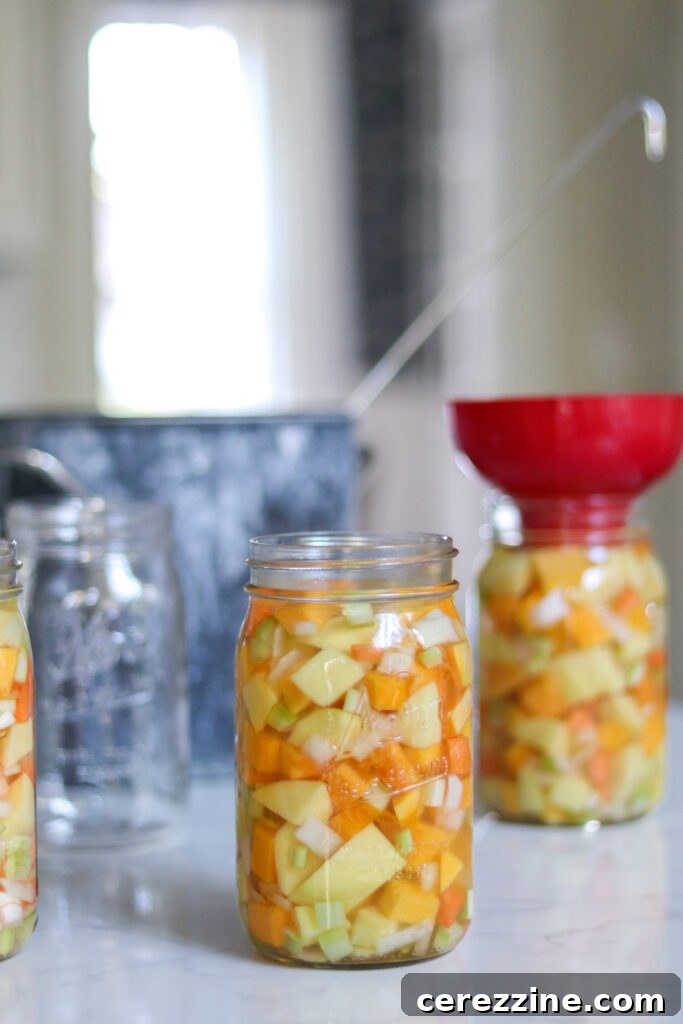
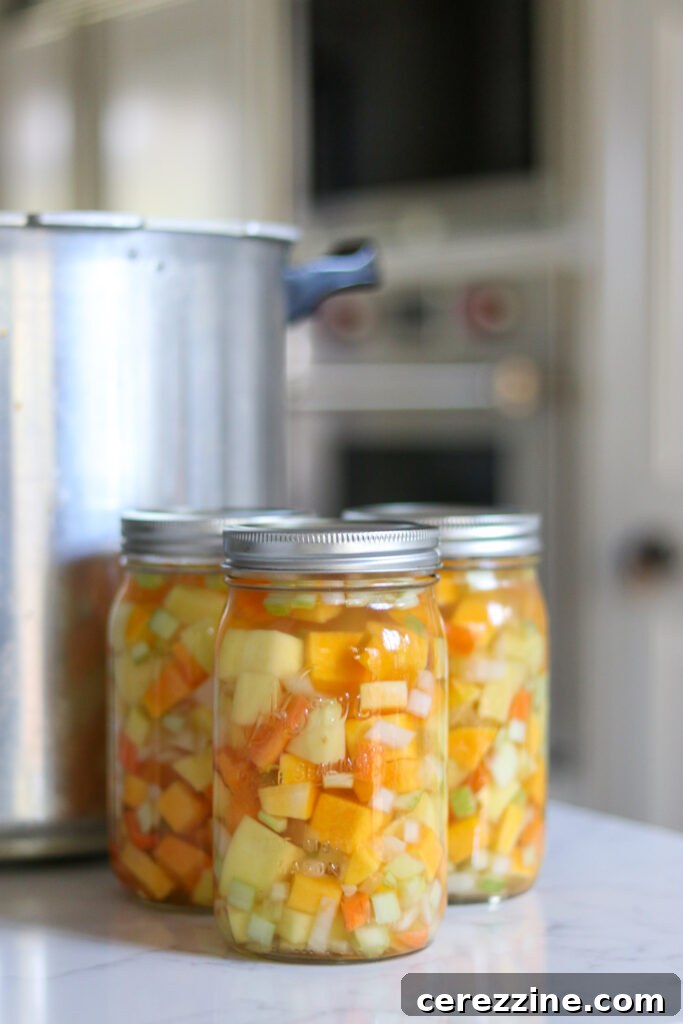
- Fill Jars: After the 5-minute simmer, use a slotted spoon to carefully transfer the hot vegetable solids into clean, hot canning jars. Pack them loosely, ensuring you leave a consistent 1-inch headspace from the top rim of the jar. This headspace is vital for proper sealing and to allow for expansion during processing.
- Add Liquid: Ladle the hot liquid (water or broth) from the stockpot over the vegetables in the jars, maintaining the 1-inch headspace. If you run short on liquid, have a kettle of boiling water or broth ready to top off the jars.
- Remove Air Bubbles: Use a non-metallic utensil (like a plastic spatula or chopstick) to gently remove any trapped air bubbles from the jars. Slide the utensil along the inside of the jar, pressing the contents slightly.
- Clean Rims: Wipe the rims of the jars thoroughly with a clean, damp cloth to remove any food particles. This ensures a perfect seal. Place new, clean lids and bands on the jars, tightening the bands finger-tight.
Pressure Canning and Cooling:
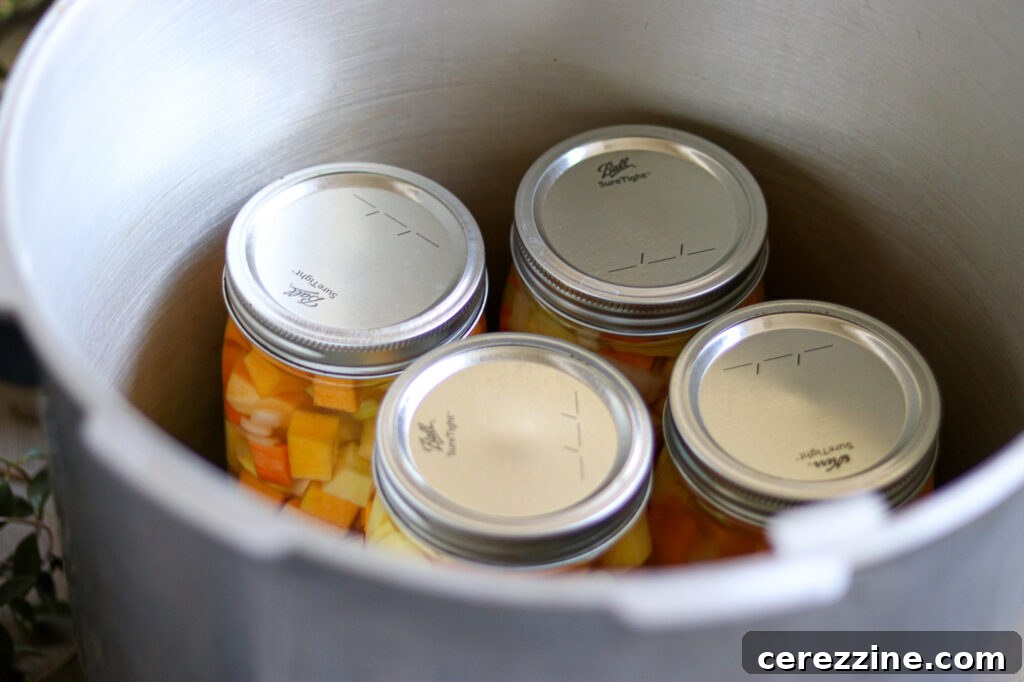
- Process in Canner: Place the filled jars into your pressure canner, ensuring there is sufficient water in the canner as per your canner’s instructions. Process quart-sized jars for 90 minutes and pint-sized jars for 75 minutes at 10 lbs of pressure. Remember to adjust the pressure according to your altitude, as outlined in the section below.
- Cool Down: Once the processing time is complete, turn off the heat and allow the pressure canner to depressurize naturally. Do not attempt to force depressurization. Once the pressure gauge reads zero, wait an additional 5-10 minutes before carefully removing the canner lid, tilting it away from your face to avoid steam burns.
- Final Cooling: Remove the hot jars from the canner using a jar lifter and place them on a clean towel or cooling rack, ensuring they are not touching each other. Allow the jars to cool undisturbed for a full 24 hours. During this time, you should hear the satisfying “ping” of the lids sealing. After 24 hours, check all seals. Any jars that have not sealed properly should be reprocessed or refrigerated for immediate consumption. Store sealed jars in a cool, dark place.
Altitude Adjustments for Canning Butternut Squash Soup Base
While the canning time for butternut squash soup base remains constant regardless of your altitude, the processing pressure must be adjusted. As elevation increases, the boiling point of water decreases, requiring higher pressure to achieve the necessary temperature for safe preservation. Please consult the following table to determine the correct processing pressure if you are canning at an elevation above 1,000 feet:
For dial gauge pressure canners:
- 0 to 2,000 feet in elevation – 11 lbs pressure
- 2,001 to 4,000 feet in elevation – 12 lbs pressure
- 4,001 to 6,000 feet in elevation – 13 lbs pressure
- 6,001 to 8,000 feet in elevation – 14 lbs pressure
For weighted gauge pressure canners:
- 0 to 1,000 feet in elevation – 10 lbs pressure
- Above 1,000 feet – 15 lbs pressure
Butternut Squash Soup Variations and Serving Suggestions
The beauty of canning a soup base lies in its incredible versatility, allowing for endless culinary creativity once it’s ready to serve. We’ve already explored various spice additions during the canning process, but your options for customization expand even further after the jars are sealed and stored.
Drawing inspiration from other well-loved squash and pumpkin soup recipes can lead to exciting new flavors. For example, if you’re looking for a heartier meal, consider preparing a butternut squash and white bean soup by adding cooked white beans and a touch more broth to your base. The beans contribute a wonderful texture and added protein, making it a fulfilling dish. For an exotic and aromatic experience, you might explore the flavors of Ball Canning’s Thai Coconut Squash soup recipe, incorporating coconut milk and authentic Thai spices post-canning.
Serving Your Canned Butternut Squash Soup Base
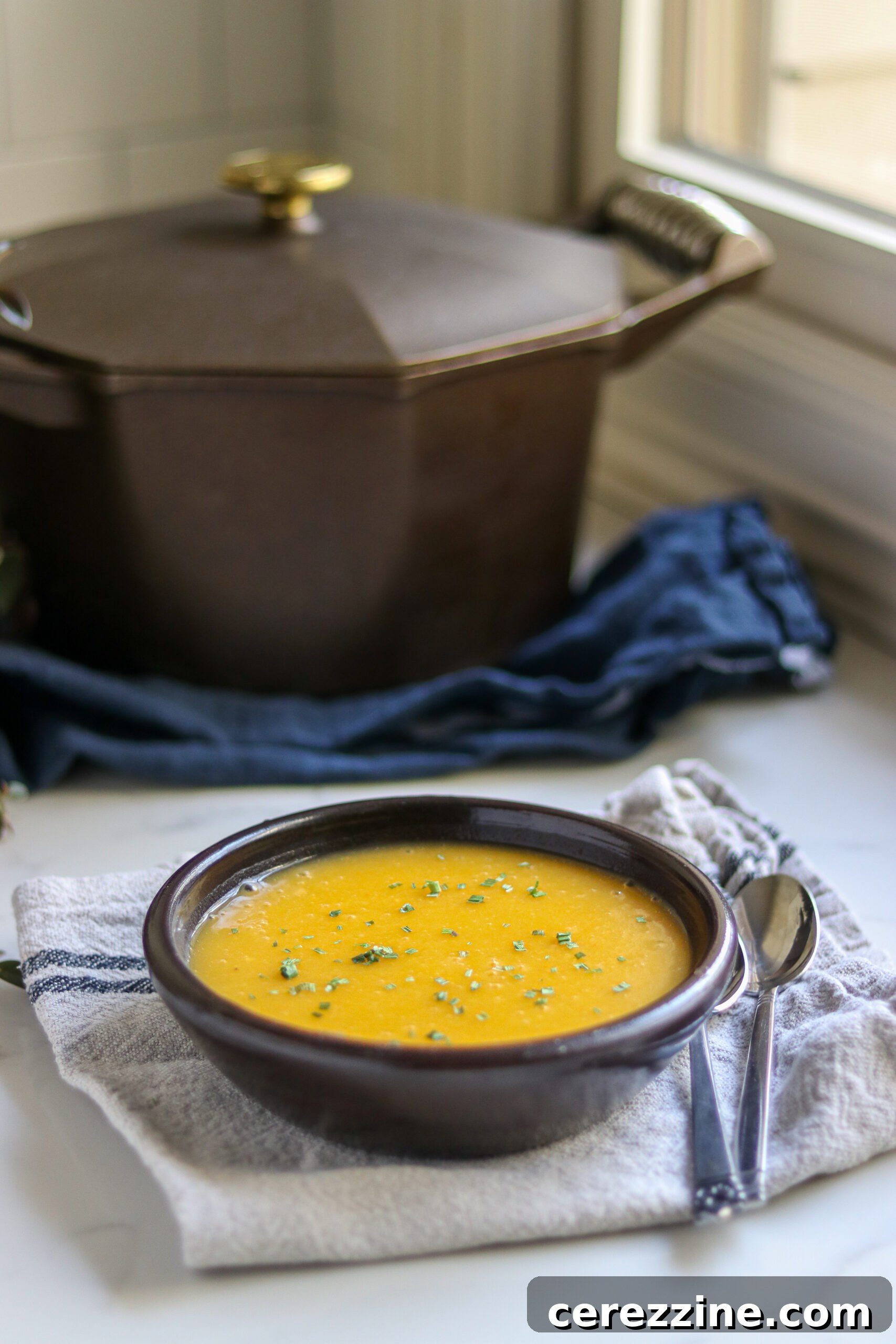
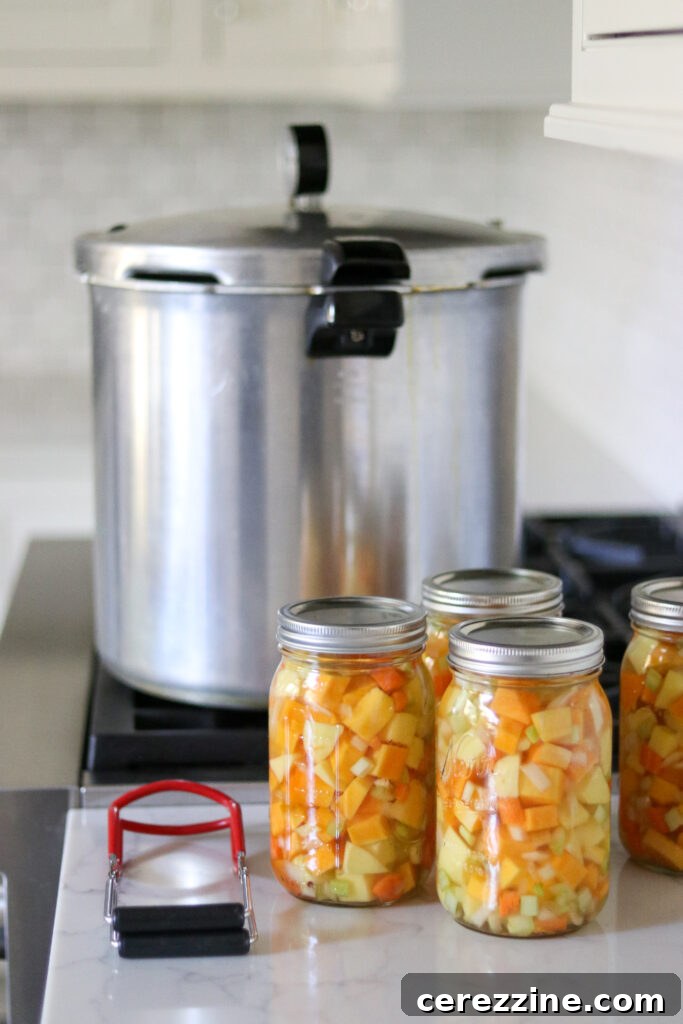
When you’re ready to enjoy your home-canned soup base, the first step is to prepare it for serving. Butternut squash is known for being one of the more watery winter squashes, so you will likely find excess liquid in your jars. To achieve the perfect consistency, drain this excess water before proceeding.

Next, transfer the drained solids to a blender and puree until silky smooth for a refined soup, or use a potato masher for a chunkier, more rustic texture. Once pureed to your liking, return the mixture to a pot, add about a cup of cream or milk (dairy or non-dairy), and gently heat it through. This is the perfect moment to adjust seasonings and add fresh herbs or spices. Excellent choices include fresh parsley, a dash of curry powder, a hint of grated ginger, or a sprinkle of nutmeg to further elevate the flavor.
For an added touch of indulgence, serve each bowl with a dollop of sour cream or a swirl of coconut cream, a sprinkle of toasted pumpkin seeds, or some crispy croutons. Enjoy a truly comforting and flavorful meal!

Beyond Soup: Culinary Uses for Your Canned Base
Don’t limit this versatile butternut squash base to just soup! It’s an incredible foundation for a variety of dishes, allowing you to elevate your dinnertime game effortlessly. Here are some inspiring ideas:
- Casseroles: Stir the pureed base into your favorite chicken or vegetable casserole recipes for added moisture, flavor, and nutrition.
- Pasta Sauce: Combine the base with roasted garlic, a touch of parmesan, and a splash of pasta water for a creamy, decadent pasta sauce that’s much healthier than store-bought options.
- Gourmet Soups: Use it as a starting point for more complex and sophisticated soups. Imagine a butternut squash soup enhanced with crisp apple chunks, tender kale, and crumbled bacon, or a luxurious version featuring creamy goat cheese and fragrant sage.
- Risotto or Grains: Fold the puree into a risotto or mix with cooked quinoa or farro for a savory and wholesome side dish.
- Dips & Spreads: Thicken it slightly and serve as a warm dip with crusty bread or vegetable sticks.

Butternut Squash Soup Base Recipe Summary
This recipe transforms fresh butternut squash and other wholesome vegetables into a convenient “puree, heat, and eat” meal, embodying the best flavors of fall in a ready-to-serve jar.
- Yields: 10 servings (Makes 5 quarts or 10 pints)
- Prep Time: 20 minutes
- Process Time: 1 hour 30 minutes (for quarts) or 1 hour 15 minutes (for pints)
- Total Time: Approximately 1 hour 50 minutes (includes prep and processing)
- Author: Ashley Adamant
Equipment
- Pressure Canner
- Large Stockpot
- Canning Jars (Pints or Quarts) with Lids and Bands
- Jar Lifter
- Slotted Spoon
- Non-metallic Utensil for Debubbling
Ingredients
- 5 lbs butternut squash, peeled, deseeded, and cubed into ½ inch pieces
- 2 ½ lbs red potatoes, peeled and cubed into ½ inch pieces
- 5 stalks celery, chopped
- 5 medium carrots, chopped
- 3 medium onions, chopped
- 2 Tbsp salt
- 3 Quart vegetable broth, chicken broth, or water* (for filling jars)
Instructions
- Wash the squash, onions, potatoes, celery, and carrots thoroughly. Peel the squash, carrots, and potatoes. Remove all seeds from the squash.
- Cut the squash, celery, carrots, onions, and potatoes into uniform ½-inch cubes.
- Place all the cubed ingredients and salt into a large stockpot. Cover with your chosen liquid (broth or water). Bring to a gentle boil, then lower the heat to a simmer and cook for 5 minutes to ensure everything is heated through.
- Using a slotted spoon, transfer the hot vegetable mixture into prepared canning jars, leaving a 1-inch headspace.
- Ladle the hot liquid from the pot over the vegetables in the jars, ensuring the 1-inch headspace is maintained.
- Remove any trapped air bubbles with a non-metallic utensil. Wipe the rims of the jars thoroughly with a clean, damp cloth. Apply new, clean lids and tighten bands finger-tight.
- Process in a pressure canner for 90 minutes for quarts or 75 minutes for pints, at 10 lbs pressure. Adjust pressure as needed for your altitude (refer to the Altitude Adjustments section above).
- Once processing is complete, allow the canner to depressurize naturally. After the pressure gauge reads zero, wait 5-10 minutes before carefully removing the lid.
- Remove the jars with a jar lifter and place them on a clean towel or cooling rack, ensuring they are not touching. Allow them to cool undisturbed for 24 hours before checking seals and storing.
Notes
- You will need approximately 3 quarts of broth or water to fill the jars. It’s advisable to have an extra kettle of broth or water heating on the side to top off jars if you run short of liquid. Ensure jars are filled to within 1 inch of the top rim with liquid for proper processing, maintaining precisely 1 inch of headspace.
- For serving, remember to drain excess liquid from the canned soup base before pureeing. Blend for a smooth consistency or mash for a chunkier soup. Add cream or milk, heat, and season with fresh herbs or spices like parsley, curry, ginger, or nutmeg. Garnish with sour cream and enjoy!
Nutrition (Approximate per serving)
- Calories: 224 kcal
- Carbohydrates: 55g
- Protein: 5g
- Fat: 1g
- Saturated Fat: 0.1g
- Polyunsaturated Fat: 0.2g
- Monounsaturated Fat: 0.03g
- Sodium: 2599mg
- Potassium: 1512mg
- Fiber: 8g
- Sugar: 12g
- Vitamin A: 29907 IU
- Vitamin C: 62mg
- Calcium: 147mg
- Iron: 3mg
Nutrition information is automatically calculated and should be used as an approximation.
Explore More Canning Recipes
If you’ve enjoyed the rewarding experience of canning butternut squash soup base, you’ll be thrilled to discover the vast world of home preservation. Expand your pantry with these other delightful canning ideas:
Soup Canning Recipes:
Dive into a variety of comforting soups that can be safely canned for quick meals:
- Sausage, Potato, and Kale Soup
- Carrot Soup
- Split Pea Soup
- Chicken Soup
Delicious Meal in a Jar Canning Recipes:
For ultimate convenience, these “meal in a jar” recipes offer complete dishes ready to heat and eat:
- Boston Baked Beans
- Thai Curry Duck
- White Bean Chicken Chili
- Cajun Red Beans and Sausage
Comprehensive Canning Recipe Lists:
Looking for even more inspiration? Explore these extensive collections:
- 100+ Canning Recipes from A to Z
- Pressure Canning Recipes
- Meat Canning Recipes
- 20+ Chicken Canning Recipes
- Soup Canning Recipes
- Meal in a Jar Canning Recipes
- Vegetable Canning Recipes
- Fruit Canning Recipes
- Root Vegetable Canning Recipes