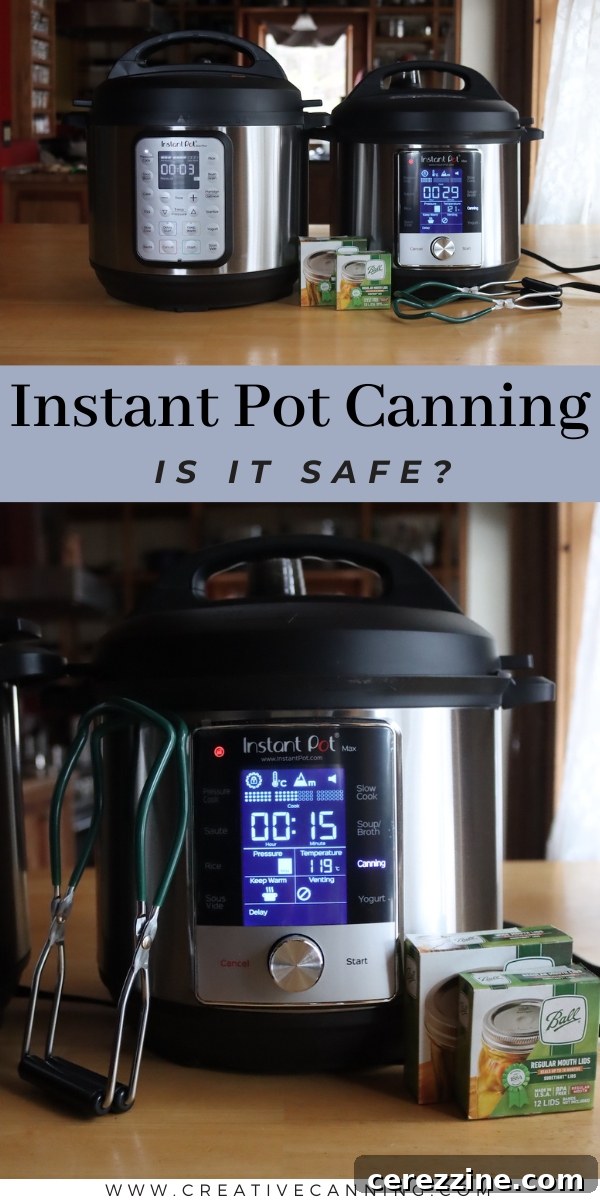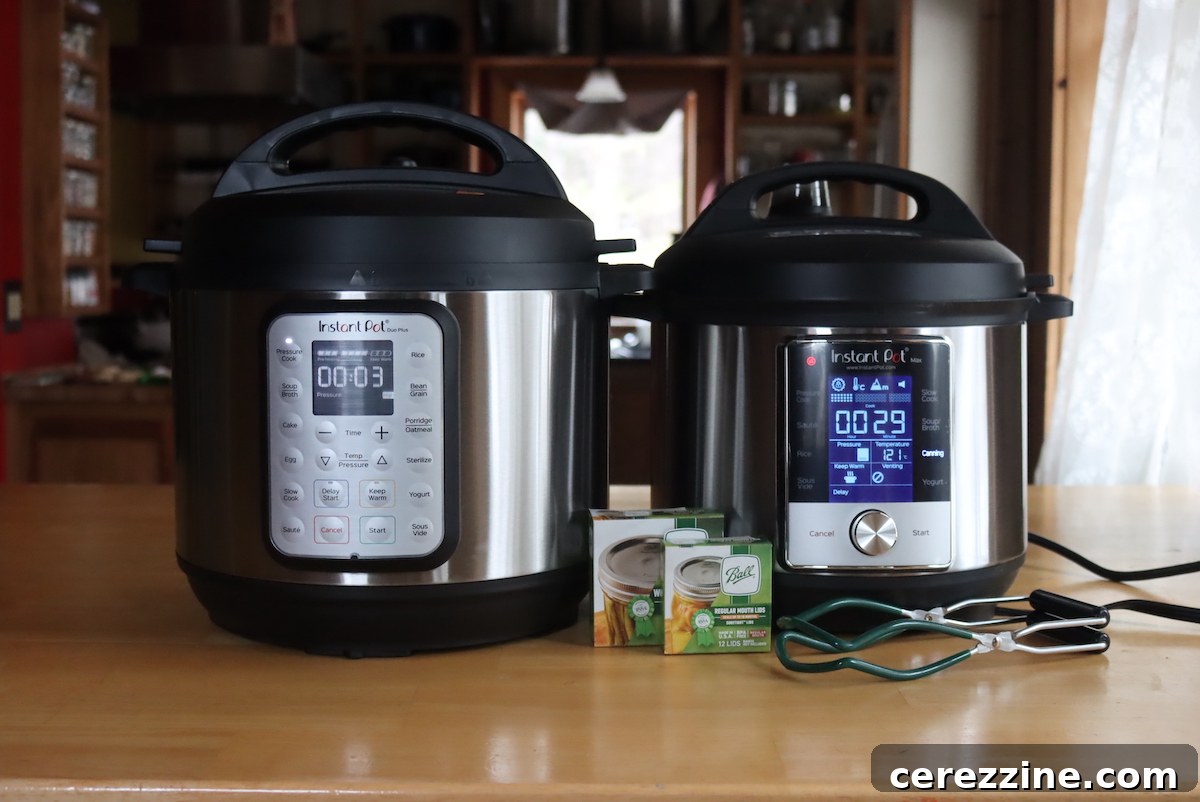
The Instant Pot has revolutionized kitchens, becoming a go-to appliance for quick, delicious meals. But amidst its versatility, a persistent question arises: can this beloved countertop wonder also be used for safe home canning? While the idea of Instant Pot canning sounds incredibly convenient, the reality is far more nuanced, especially when it comes to preserving food safely.
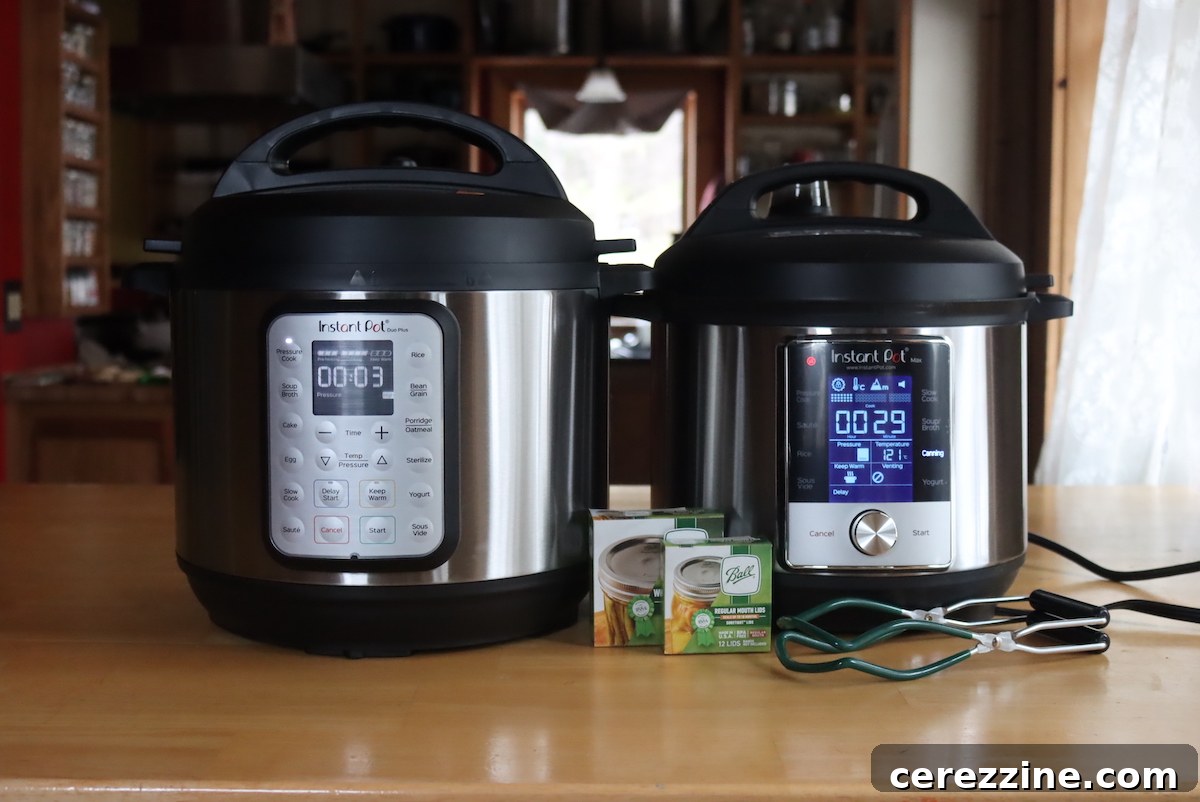
Since its launch in 2010, the Instant Pot has demystified pressure cooking for a new generation of home chefs. Suddenly, fear gave way to fascination as people discovered how to prepare tender meats, cook dried beans without pre-soaking, and whip up entire meals in a fraction of the traditional time. This innovative appliance has earned its place as a kitchen staple, known for its speed and efficiency.
Naturally, as users became more comfortable with their Instant Pots, curiosity led them to explore its full potential. People now use them for a surprising array of tasks, from proofing bread dough and making artisanal jams to steaming eggs and even crafting homemade cheeses. There are specialized models for yogurt, and entire cookbooks, like Instant Pot Cheese, dedicated to its diverse capabilities. The appliance’s versatility seems almost boundless.
However, when it comes to food preservation, particularly pressure canning, the stakes are significantly higher. The crucial question that many home preservers ask is: Can you safely pressure can in an Instant Pot? Given that Instant Pots are, at their core, pressure cookers, it’s a logical assumption. Yet, the difference between a pressure cooker and a pressure canner is critical and often misunderstood.
Understanding Instant Pot Canning: Is it Safe for Pressure Canning?
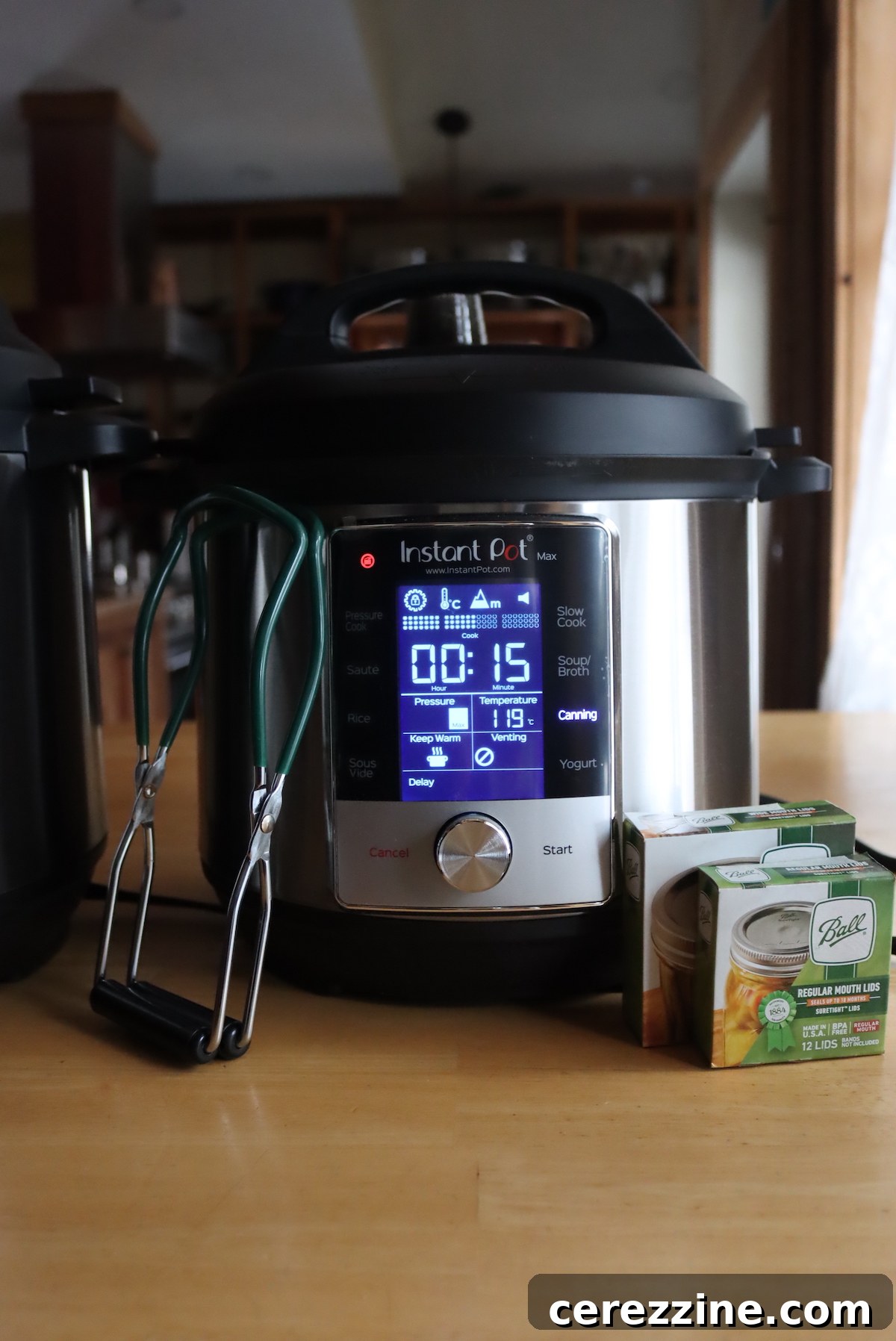
The unequivocal answer is no, the Instant Pot is not safe for pressure canning. This includes even advanced models like the Instant Pot Max, which misleadingly features a “canning” setting. While the marketing might suggest otherwise, Instant Pot’s own official website clarifies that this setting is only approved for water bath canning of high-acid foods such as jams, jellies, and pickles.
As of 2023, Instant Pot explicitly states that their devices are unsafe for pressure canning low-acid foods like meats, vegetables, and soups. This distinction is vital for food safety. While an Instant Pot can effectively perform water bath canning for acidic items (where boiling water is sufficient to inhibit spoilage), it lacks the precise control and sustained high temperatures required for safely preserving low-acid foods.
The fundamental difference lies in their design and operational capabilities: an Instant Pot is engineered as a pressure cooker, not a pressure canner. To truly grasp why this distinction is so crucial, we must first understand the core principles of water bath canning versus pressure canning, and the science behind effective food preservation. (It’s worth noting that while the Instant Pot isn’t suitable, there is one electric pressure canner on the market, the Presto Precise Digital Pressure Canner, that meets rigorous USDA guidelines for safety, which we will explore later).
Water Bath Canning vs. Pressure Canning: The Critical Distinction for Home Food Preservation
Home canning employs two primary methods, each tailored to different types of food based on their acidity levels: water bath canning and pressure canning. Understanding which method to use is paramount for preventing foodborne illnesses.
A key concept here is pH:
- High-acid foods have a pH of 4.6 or lower. Think fruits, jams, jellies, and most pickled vegetables. The lower the pH, the higher the acidity.
- Low-acid foods have a pH greater than 4.6. This category includes meats, poultry, seafood, most vegetables, soups, and beans.
Water Bath Canning is the method for preserving high-acid foods. It involves fully submerging sealed jars in a large pot of boiling water (212°F or 100°C) for a specific duration. The boiling temperature is sufficient to destroy molds, yeasts, and most bacteria that could cause spoilage in an acidic environment. This method is perfect for fruit preserves, salsas, tomatoes (often acidified with lemon juice), and many types of pickles.
Pressure Canning is the only safe method for preserving low-acid foods. Because these foods lack the natural acidity to inhibit harmful bacteria, they require much higher temperatures than boiling water can provide. A pressure canner creates a sealed environment that allows temperatures to reach 240°F (116°C) or higher. These extreme temperatures are essential for destroying spores of Clostridium botulinum, the bacteria responsible for botulism, a rare but deadly foodborne illness. Common items processed via pressure canning include green beans, corn, carrots, potatoes, all types of meats, broths, and combination meals like chili or stews.
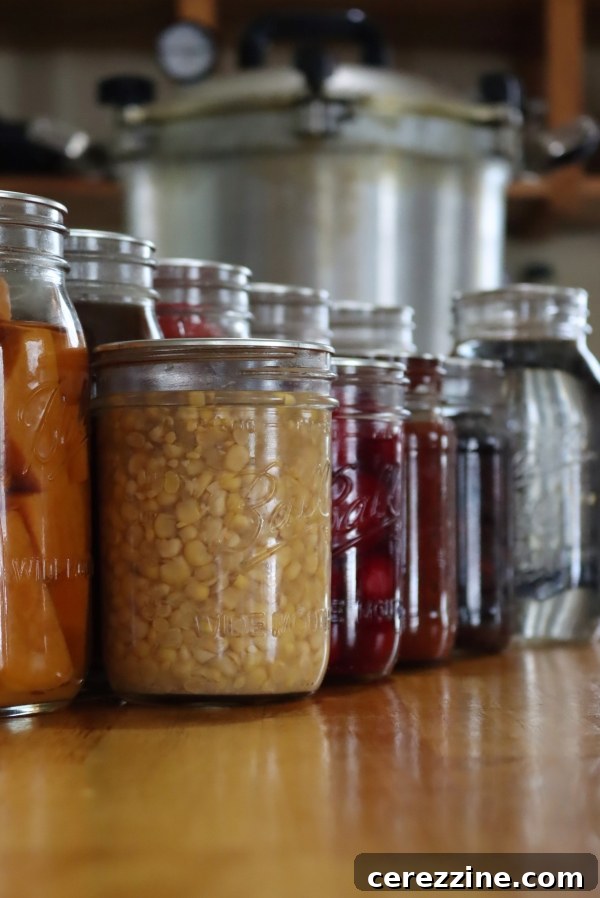
The Science Behind Safe Pressure Canning: Achieving and Maintaining 240°F
At its core, safe pressure canning is a precise scientific process. It requires elevating the food’s internal temperature to a minimum of 240°F (approximately 116°C) and maintaining that temperature for a specific, uninterrupted duration. This processing time is not arbitrary; it’s meticulously calculated based on the food’s density, composition, and jar size to ensure thorough heat penetration and the complete destruction of harmful pathogens.
The “magic number” of 240°F is critical because it’s the temperature at which botulism spores are reliably destroyed. Botulism is a severe and often fatal form of food poisoning caused by toxins produced by Clostridium botulinum bacteria. These spores are incredibly resilient and can survive boiling water temperatures (212°F). They thrive in low-acid, anaerobic (oxygen-free) environments, precisely the conditions found inside a sealed jar of low-acid food.
Therefore, simply reaching 240°F momentarily is insufficient. The canning chamber must sustain temperatures at or above 240°F for the entire prescribed processing time. This duration varies significantly: from about 20 minutes for pints of broth, to 75 minutes for denser soups, and up to 100 minutes for seafood. Any drop below 240°F during this period necessitates restarting the processing timer from the beginning to guarantee safety – a frustrating but vital rule for home canners.
Altitude also plays a significant role in pressure canning. At higher elevations, water boils at lower temperatures, and more pressure is required to reach the critical 240°F. This is why altitude adjustments are essential, instructing canners to increase the processing pressure (e.g., from 10.5 PSI at sea level to 15 PSI above 6,000 feet) to compensate and ensure the necessary internal temperature is achieved. The pressure itself is a means to an end; the sustained temperature is the ultimate goal.
In essence, pressure canning is a meticulously controlled sterilization process for low-acid foods, demanding sustained temperatures above 240°F for predetermined periods to neutralize dangerous microorganisms and ensure shelf stability and safety. (As a side note, the Presto Precise Digital Pressure Canner, released in 2020, addresses these complexities by automatically maintaining the correct temperature, making it the only electric pressure canner I currently recommend for USDA-approved guidelines).
Why an Instant Pot (Pressure Cooker) Falls Short as a Pressure Canner
Now that we’ve established the stringent requirements for safe pressure canning, let’s explore why a standard Instant Pot, designed as a pressure cooker, cannot fulfill these critical safety parameters.
An Instant Pot’s primary function is to cook food quickly under pressure, not to sterilize food at exact, sustained temperatures required for canning. Its “high” and “low” pressure settings operate within broad ranges, not precise, fixed points. For instance, the “low” setting might fluctuate between 4 psi and 7 psi, while the “high” setting typically ranges from 10 psi to 12 psi.
This fluctuation is the core problem. For safe pressure canning at sea level, you need to maintain at least 10.5 psi to reach the critical 240°F. The Instant Pot’s “high” setting, while getting close, frequently dips below this minimum safe threshold as its heating element cycles on and off. This creates a “sine wave” of temperature fluctuation rather than the steady, unwavering heat absolutely necessary for destroying botulism spores.
Furthermore, altitude significantly impacts the required pressure:
- 0 to 2,000 feet: ~11 pounds pressure
- 2,001 to 3,000 feet: ~12 pounds pressure
- 3,001 to 6,000 feet: ~13 pounds pressure
- 6,001 to 8,000 feet: ~14 pounds pressure
- 8,001 to 10,000 feet: ~15 pounds pressure
The Instant Pot offers no mechanism to precisely adjust pressure for varying altitudes. Even if the Instant Pot Max features an elevation setting on its screen, it’s merely a display of a *calculated* temperature based on its default pressure cycle, not an active adjustment of the internal pressure to meet higher altitude requirements. It doesn’t add more heat or pressure; it simply adjusts the displayed number, which is misleading and unsafe for actual pressure canning.
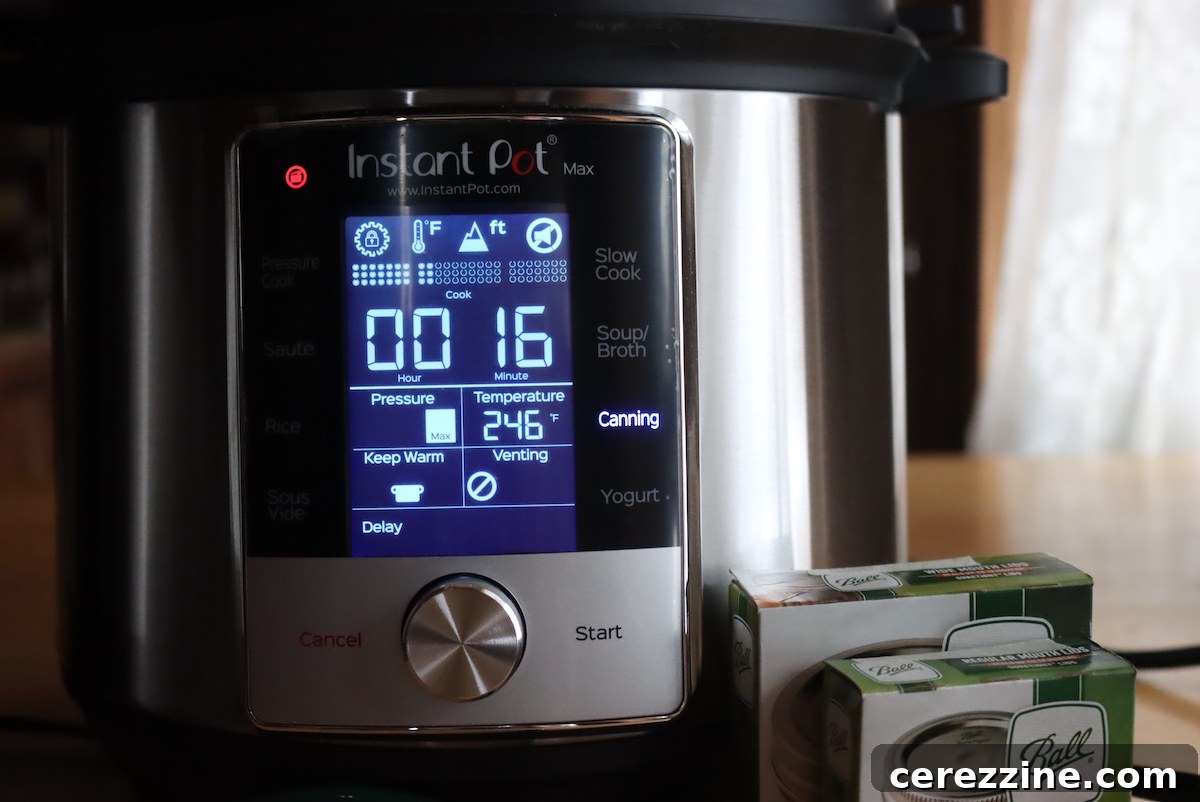
This inability to consistently maintain the precise pressure and temperature, especially at various altitudes, means that foods processed in an Instant Pot for pressure canning are highly likely to be under-processed, leaving dangerous botulism spores intact.
USDA and Extension Office Findings: Instant Pot Fails Pressure Canning Tests
The notion of using Instant Pots for pressure canning isn’t just a theoretical debate; it has been rigorously tested by authoritative bodies. In 2019, the Utah State University Extension conducted comprehensive tests on Instant Pots and similar multi-cookers. Their findings were conclusive: none of the tested devices adequately processed foods for safe pressure canning. Specific tests with chicken, pinto beans, and green beans consistently failed at every altitude, confirming the appliances’ inability to meet safety standards.
Beyond the fundamental temperature and pressure inconsistencies, the USDA has outlined several other critical reasons why multi-cookers like the Instant Pot are unsuitable for pressure canning. Their 2019 report unequivocally states that canning in an Instant Pot is unsafe, citing factors beyond just the inability to maintain proper temperature. Two significant concerns are chamber size and the heating/cooling profile:
Chamber Size and Cooling Time: Traditional stovetop pressure canners, which formed the basis for established processing times, have larger chambers. This larger volume means they take longer to heat up and, crucially, longer to cool down naturally to 0 PSI. This “retained heat” during the natural cooling process contributes significantly to the total sterilization value, actively continuing to kill bacteria even after the heat source is turned off. Instant Pots, with their much smaller chambers, heat and cool much faster. This accelerated cooling drastically shortens the critical sterilization phase, leading to under-processed food. The USDA specifically recommends using only pressure canners that can accommodate four or more quart-size jars to ensure proper heating and cooling dynamics.
Inadequate Venting and Steam Saturation: Safe pressure canning requires a pure steam environment within the canner. This is achieved through a critical venting process at the beginning of the cycle, where air is fully expelled. If the chamber isn’t thoroughly saturated with pure steam, air pockets can form. When air is mixed with steam, the actual temperature inside the canner can be significantly lower than what the pressure gauge might indicate for pure steam. The Instant Pot’s design and operational cycles do not guarantee this pure steam environment, further compromising temperature accuracy and safety. As the USDA states, “What matters is temperature, not pressure… Just producing an interior pressure is not sufficient data for canning recommendations.”
These scientific and empirical findings from trusted authorities reinforce that the Instant Pot, despite its many virtues, simply does not possess the precise control, consistent temperature maintenance, and proper thermal dynamics necessary for safe pressure canning.
The Instant Pot Max: A Misguided Attempt at Pressure Canning
The Instant Pot Max was introduced with a “Canning Smart Program,” leading many to believe it was a safe solution for pressure canning. This was, unfortunately, a significant marketing misstep that Instant Pot later had to clarify. While the Max *can* reach a maximum of 15 psi, it does so only briefly, typically cycling down to maintain pressure between 10 to 12 psi for the remainder of its cycle. This fluctuating pressure, as previously discussed, is fundamentally unsafe for pressure canning.
An official graphic from Instant Pot itself illustrates this pressure fluctuation:
This graphic clearly shows that the Instant Pot Max consistently dips below the necessary sustained pressure for safe processing, even at sea level. At higher altitudes, where greater pressure is required, the discrepancy becomes even more pronounced.
Initially, Instant Pot’s PR team enthusiastically promoted the Max for pressure canning. However, once challenged on the technical requirements for safe canning, it became apparent that the initial design and marketing overlooked the critical need for *sustained* pressure and temperature, not just momentary peaks. In 2018, Instant Pot announced that McGill University would be testing the canner for safety guidelines, but no public results from McGill ever surfaced.
By 2023, Instant Pot’s marketing materials and FAQ page had been updated to reflect a more cautious stance on the Max’s canning capabilities:
“Pressure canners require a minimum of 15 psi for safe canning of low-acid foods, such as meat.
Most Instant Pot electric pressure cookers operate within a range of 10-12 psi, which is safe for water bath canning of high-acid foods, such as jams and chutneys.
Modifying cooking times, ingredients, or temperatures can be dangerous. Use the exact time, temperature/pressure, and method specified in the recipe to protect the food from harmful bacteria, molds, and enzymes. Read and carefully follow the instructions provided in the USDA’s Complete Guide to Home Canning.
The Instant Pot Max is the only electric pressure cooker with a dedicated Canning Smart Program.”
This revised messaging carefully acknowledges that typical Instant Pots operate below the 15 psi minimum for low-acid foods and implicitly clarifies that the Max’s “Canning Smart Program” is only suitable for water bath canning. It’s a subtle but significant retraction from their initial claims, underscoring the vital distinction between pressure cooking and safe pressure canning.
Is the Instant Pot Safe for Water Bath Canning? (With Caveats)
While the Instant Pot is unsuitable for pressure canning, it can technically be used for water bath canning. Since it can reliably boil water, it meets the fundamental requirement for processing high-acid foods like jams, jellies, fruits, and pickles. In this regard, it functions similarly to any deep saucepan on your stovetop that can submerge jars in boiling water.
One perceived advantage of using an Instant Pot for water bath canning is the sealed chamber, which can minimize steam release into your kitchen. However, this convenience comes with significant drawbacks, particularly if you use the “canning” setting on models like the Instant Pot Max.
The Instant Pot Max, even when performing water bath canning, operates at pressures between 10-12 psi. While still insufficient for pressure canning, these temperatures are considerably hotter than a standard boiling water bath (212°F). For delicate high-acid foods, this elevated temperature can be detrimental:
- Jams and Jellies: The higher heat can cause pectin to denature, leading to a runny or improperly set product.
- Pickles: Pickles are particularly vulnerable. The excessive heat will over-process them, turning crisp cucumbers into soggy, unappetizing mush. Many pickle recipes even recommend low-temperature pasteurization (around 180°F) to maintain their crunch, a stark contrast to the Instant Pot’s higher temperatures.
Therefore, even for water bath canning, I do not recommend using the “canning” setting on an Instant Pot. If you choose to use your Instant Pot for water bath canning, a safer approach is to use the “Sauté” setting to bring the water to a full boil, ensuring jars are adequately submerged. Crucially, always use a canning trivet or rack at the bottom of the pot to prevent direct contact between the jars and the heating element, which can cause breakage due to intense, localized heat.
Embracing Safe Electric Pressure Canning: The Recommended Alternative
Let’s be clear: I am a huge admirer of the Instant Pot. It’s an indispensable tool in my kitchen for everyday cooking. However, its capabilities do not extend to safe pressure canning. Attempting to pressure can low-acid foods in an Instant Pot is akin to playing Russian roulette with your family’s health. While botulism spores may not always be present in every batch of food, processing below safe temperatures dramatically increases the risk. Eventually, inadequate processing will catch up, with potentially fatal consequences.
Fortunately, for those seeking the convenience of an electric appliance for pressure canning, there is a legitimate, USDA-approved option: the Presto Precise Digital Pressure Canner. Released in 2020, this innovative appliance is specifically designed to meet all federal guidelines for safe home pressure canning. (You can read my full review of the Presto Digital Pressure Canner here, and a step-by-step guide on how to use an electric pressure canner here).
What sets the Presto Digital Canner apart is its intelligent design:
- Automatic Temperature Monitoring: Instead of relying on pressure readings, it continuously monitors the internal temperature, ensuring it remains consistently above the critical 240°F (116°C) throughout the entire processing cycle.
- Automatic Altitude Adjustment: This eliminates the need for manual altitude adjustments. The canner automatically compensates to reach and maintain the necessary temperature, regardless of your elevation.
- Guided Canning Process: It guides you through each step, from proper jar warming to adequate venting, ensuring all safety protocols are meticulously followed.
- Quiet and Hands-Off Operation: Unlike noisy stovetop canners that require constant monitoring and adjustments, the Presto Canner operates silently and automatically once the process begins.
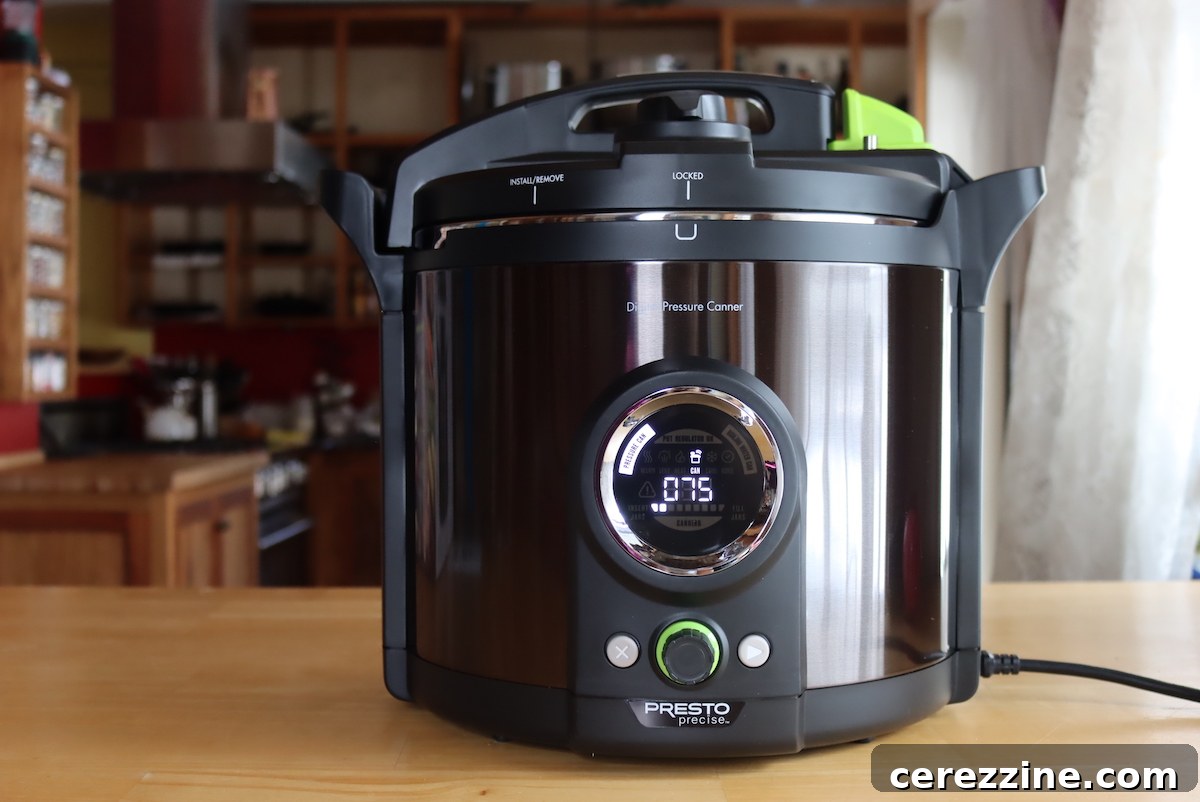
Having pressure canned for over a decade, I am incredibly enthusiastic about this electric pressure canner. It has truly revolutionized home food preservation, making the process accessible and less intimidating, especially for those accustomed to the simplicity of appliances like the Instant Pot. It makes it easy to process small batches of leftovers or garden bounty without the fuss and noise of traditional methods.
For your safety and peace of mind, please do not attempt to pressure can in an Instant Pot; it simply cannot reach or sustain the appropriate temperatures required for safe processing. If you are seeking an easy, dependable, and safe electric pressure canning solution, the Presto Precise Digital Pressure Canner is the only choice I recommend.
(Transparency Note: I am not affiliated with Instant Pot or Presto Canning, and I purchased these products with my own funds for review purposes. My opinions are always independent and based on rigorous testing.)
Further Canning Guides and Reviews for Home Preservers
Expand your knowledge and master the art of safe home canning with these comprehensive resources:
- Beginner’s Guide to Pressure Canning: Your First Steps to Safe Food Preservation
- How to Use an Electric Pressure Canner: A Step-by-Step Tutorial
- Presto Precise Digital Pressure Canner Review: An In-Depth Look at its Features and Safety
- What is Canning Salt? (And Safe Substitutions for Your Preserves)