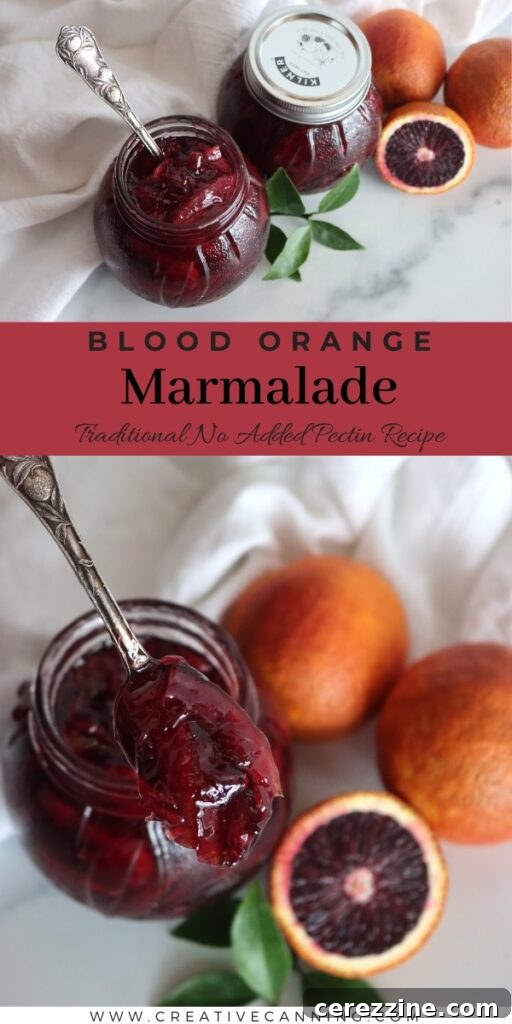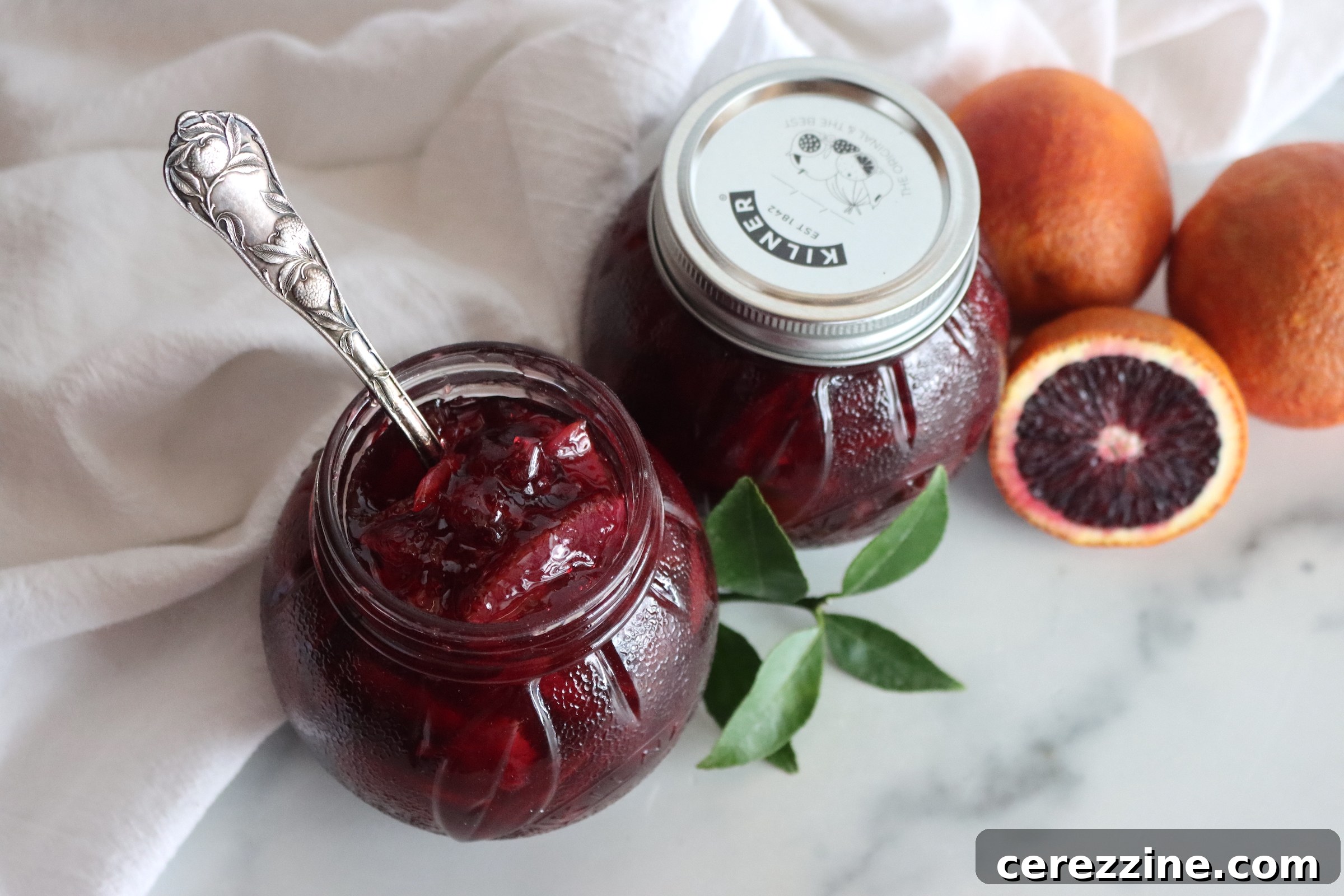
Unlock the vibrant flavors of winter with a jar of homemade **Blood Orange Marmalade**. This exquisite preserve, renowned for its dazzling deep crimson hue, offers a harmonious blend of sweetness and characteristic citrusy tartness. Beyond its stunning visual appeal, the rich, subtly berry-like undertones of blood oranges transform this marmalade into a versatile delight. It’s perfect for slathering on warm toast, elevating pastries, or even as a sophisticated glaze for roasted meats, adding a gourmet touch to any dish.
The Allure of Blood Orange Marmalade
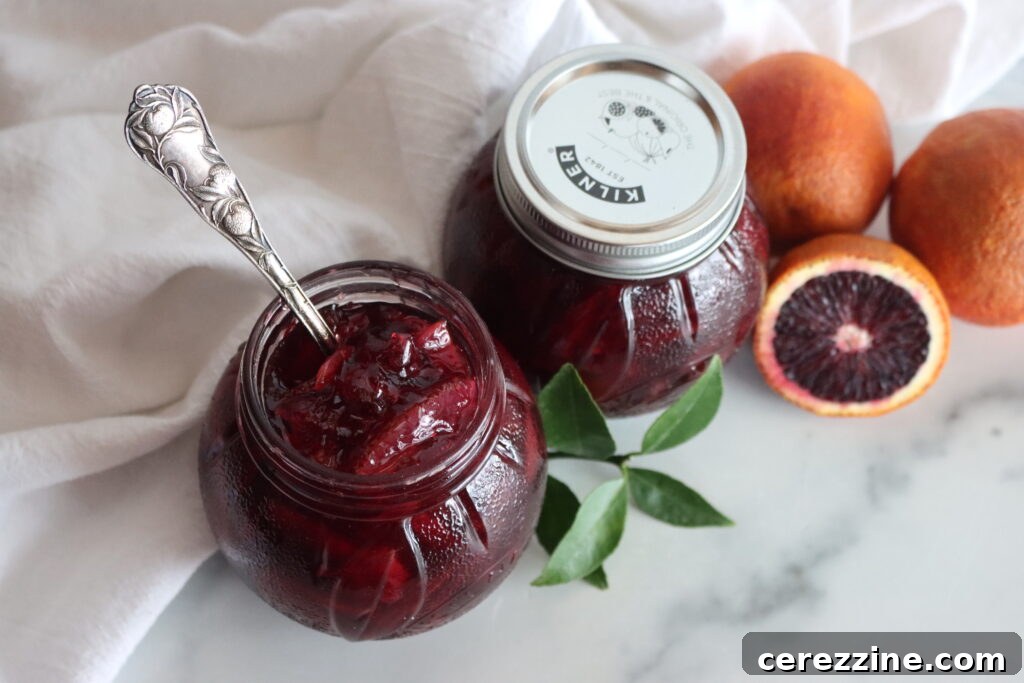
Blood oranges are a true winter marvel, offering a unique flavor profile that sets them apart from their common citrus relatives. Their striking red flesh delivers a surprising complexity, marrying bright citrus notes with hints of raspberry and a delicate floral sweetness. This distinctive taste, combined with their naturally high pectin content, makes them an ideal candidate for crafting exceptional marmalade. Pectin, a natural gelling agent found in citrus peels, is crucial for achieving that perfect, shimmering set in your preserve. By making your own blood orange marmalade, you gain complete control over the sweetness level, allowing you to perfectly balance the vibrant flavors to your preference, all while avoiding artificial preservatives found in many store-bought options.
Beyond the joy of creating a delicious treat, making blood orange marmalade is a fantastic way to utilize a bountiful seasonal harvest. Blood oranges are typically available for a limited window during winter, making marmalade an excellent method to preserve their unique taste and enjoy it throughout the year. Their thinner peel and naturally lower bitterness, compared to some other citrus varieties, also streamline the marmalade-making process. This means you can achieve a profound depth of flavor more quickly, without needing to embark on the full, often lengthy, traditional marmalade-making processes typically required for more bitter oranges.
With just a touch of patience and adherence to the time-honored methods, you can produce a beautifully textured blood orange marmalade that truly highlights the best qualities of these exceptional oranges. The result is a jar of liquid sunshine, bursting with complex flavors and a stunning ruby-red hue, ready to brighten your pantry and your palate.
Essential Ingredients for Your Blood Orange Marmalade
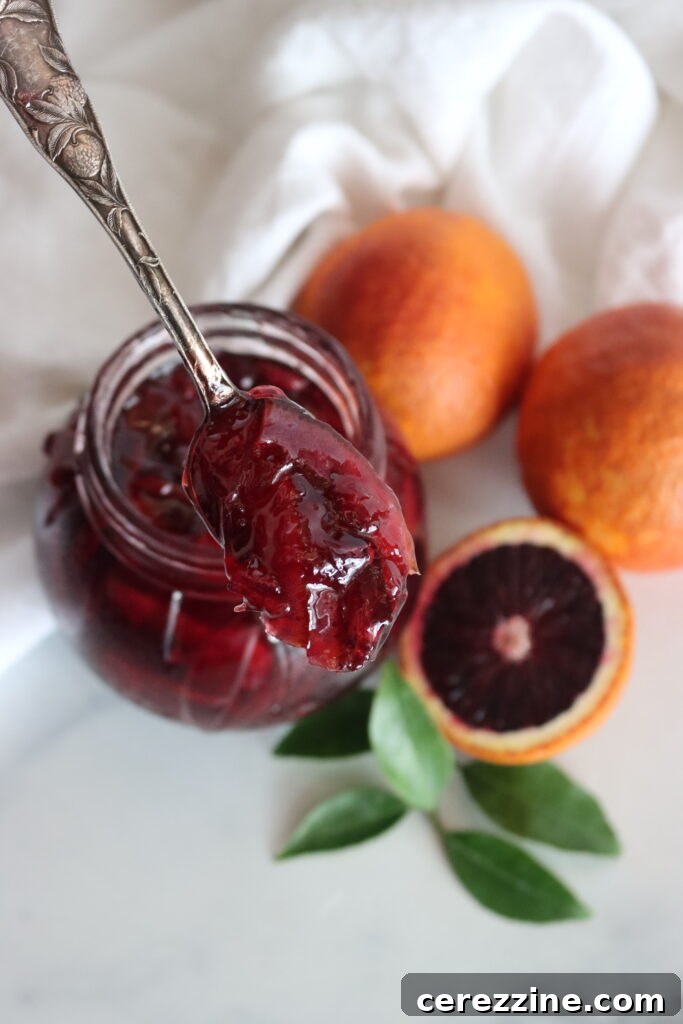
This recipe is a homage to the classic, “traditional” method of marmalade making, relying on the natural pectin within the fruit rather than added powdered pectin. This approach, while requiring a two-day preparation, yields a superior flavor and texture that truly celebrates the blood orange. The process involves soaking and boiling the peels to soften them and coax out their natural pectin, which is essential for the perfect set. This old-fashioned technique often produces a more robust and satisfying marmalade and can even be more economical than purchasing powdered pectin.
To make approximately 5 half-pint jars of exquisite blood orange marmalade, you’ll need just a few high-quality ingredients:
- 12 blood oranges, divided (approximately 4 ½ to 5 lbs.). Choose firm, brightly colored oranges for the best results.
- 8 cups granulated sugar. Standard white granulated sugar is ideal for achieving clarity and a balanced sweetness.
- ¼ cup fresh lemon juice. Squeezed from 2 to 3 fresh lemons. Lemon juice is vital for two reasons: it adds a bright, essential tartness that balances the sweetness, and its acidity helps activate the pectin, ensuring a proper set.
Patience is key with this recipe. Following each step meticulously is crucial since we are harnessing the fruit’s inherent pectin. The reward for your patience will be a batch of homemade blood orange marmalade far superior in taste and texture to anything you can buy.
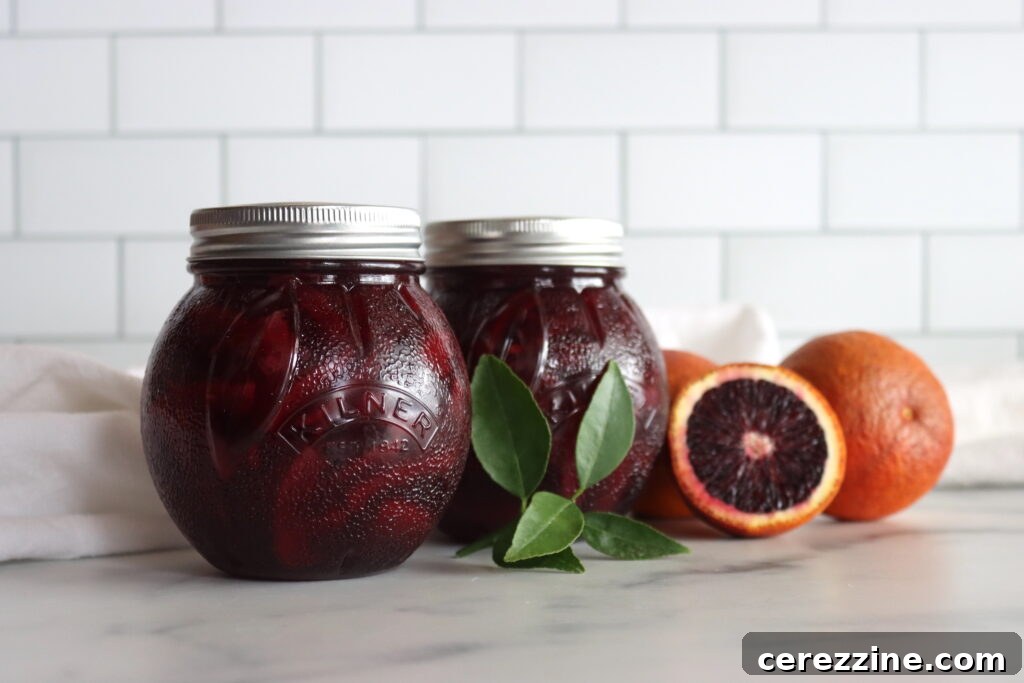
The Art of Making Blood Orange Marmalade: A Two-Day Journey
Crafting this blood orange marmalade is a delightful two-day process, designed to perfectly extract the natural pectin and infuse deep flavor without the need for artificial thickeners. Day one focuses on preparing the fruit and initiating the pectin extraction, while day two brings the marmalade to its glorious finish and readies it for canning or storage.
Day 1: Preparing the Fruit for Pectin Release
The first day is all about careful preparation to ensure maximum pectin extraction and flavor development:
- Wash the Blood Oranges Thoroughly: Begin by washing all 12 blood oranges meticulously. Use a soft vegetable brush or gently rub them with your hands under cool running water to remove any dirt or surface residues.
- Slice Six Oranges: Take six of the blood oranges (approximately half of your total quantity). Cut each of these six oranges into quarters lengthwise. Then, take these quarters and slice them crosswise into very thin pieces. The goal here is thinness, as thinner rind pieces will soften more effectively and release their pectin more readily into the soaking liquid. A mandoline can be incredibly helpful for achieving uniformly thin slices, which contributes to a more appealing final texture in your marmalade.
- Retain Juice and Combine: As you slice, make an effort to retain as much juice as possible. Place these thinly sliced orange pieces, along with any collected juice, into a large, non-reactive saucepan.
- Cover with Water: Add enough fresh water to the saucepan to ensure the orange slices are fully submerged.
- Bring to a Boil and Soak: Place the saucepan over high heat and bring the orange slices and water to a rolling boil. Once boiling, immediately remove the pot from the heat. Cover the saucepan tightly and allow this mixture to sit undisturbed on your counter overnight, or for a minimum of 8 hours, at room temperature. This prolonged soaking period is vital; it softens the peels and allows the natural pectin to begin leaching into the liquid, setting the stage for a perfectly gelled marmalade on day two.
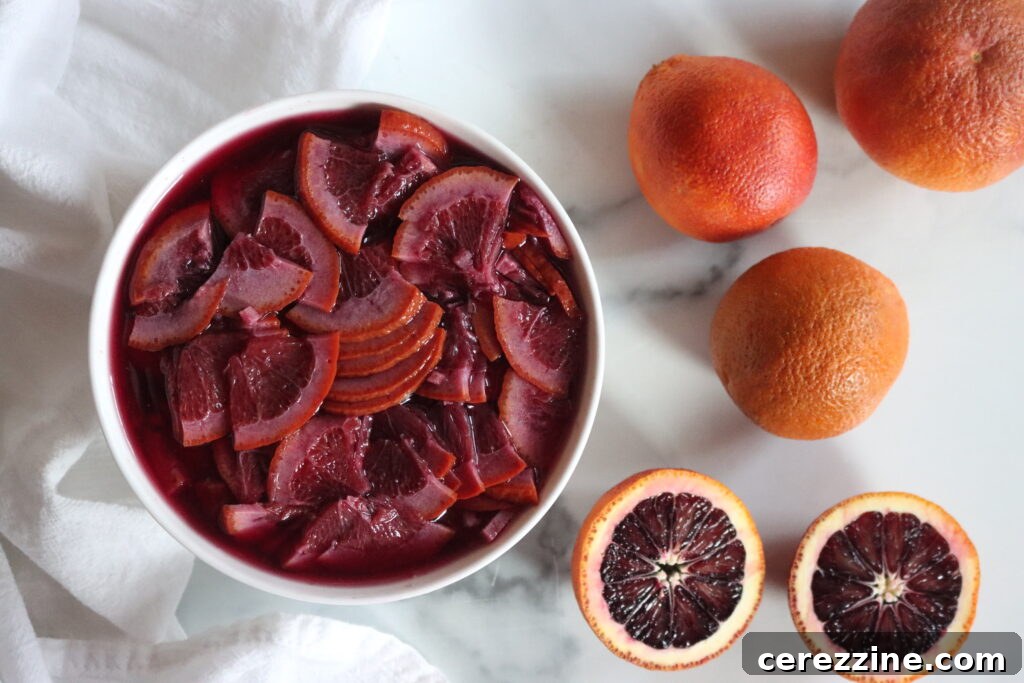
Day 2: Cooking the Marmalade to Perfection
With the pectin-rich fruit prepared, day two is dedicated to transforming it into luscious marmalade:
- Juice Remaining Oranges: Take the remaining six blood oranges (those not sliced on day one) and extract their juice. Aim to get as much juice as possible. Strain this fresh juice into a 1-quart glass measuring cup, discarding the remaining flesh and rind.
- Separate Orange Pieces and Liquid: Return to the saucepan containing the overnight-soaked orange slices. Using a slotted spoon or a small strainer, carefully separate the softened orange pieces (rind and pulp) from the soaking liquid. Place the strained orange slices into a large Dutch oven or a dedicated jam pot. Retain the soaking liquid; it’s rich in pectin!
- Measure and Combine Liquids: Measure the juice you extracted from the fresh oranges. Then, add enough of the reserved soaking liquid to this fresh juice until you have a total of 4 cups of liquid. Discard any excess soaking liquid.
- Add Liquids to Orange Pieces: Pour this combined 4 cups of juice mixture over the strained orange pieces in your Dutch oven or jam pot.
- Add Sugar and Lemon Juice: Measure out 8 cups of granulated sugar and stir it into the orange and liquid mixture in the pot. Next, extract ¼ cup of fresh lemon juice from your lemons and add this to the mixture. Lemon juice is crucial as its acidity helps activate the pectin, ensuring a proper gel.
- Begin Cooking: Place the pot over medium-high heat. Stir frequently to help the sugar dissolve completely and prevent it from scorching on the bottom of the pot. Bring the entire mixture to a full boil.
- Simmer to Set Point: Once boiling, reduce the heat to medium and allow the marmalade to simmer, uncovered, stirring occasionally. This simmering process allows the water to evaporate, concentrating the sugars and pectin until the marmalade reaches its “set point.” This typically takes about 20 minutes, but can sometimes extend a bit longer depending on your stove and the fruit’s pectin content.
- Test for Gel Stage: Determining the gel stage is the most critical step. You can use one of two reliable methods:
- Candy Thermometer Method: If using a candy thermometer, boil the mixture until it consistently reaches 220 degrees Fahrenheit (104 degrees Celsius) at sea level.
- Cold Plate Test: This is a traditional and highly effective method. Before you start cooking, place 3 or 4 small ceramic plates in your freezer. Once the marmalade has been simmering for about 15-20 minutes and appears to have thickened, retrieve one cold plate from the freezer. Drop approximately a tablespoon of the hot marmalade onto the plate. Return the plate to the freezer for two minutes. After two minutes, remove the plate and gently push or “nudge” the dollop of marmalade with your fingertip. If it has reached the set point, it will form a visible “skin” on top that wrinkles when nudged. If your finger slides right through the jam without wrinkling, the marmalade needs more cooking time. Continue to cook for a few more minutes, then repeat the cold plate test with a fresh cold plate until you achieve the desired gel.
- Prepare Jars and Fill: Once the marmalade reaches the desired gel stage, remove the pot from the heat immediately. If you plan to can the marmalade, ensure your canning jars are sterilized and hot (see canning instructions below). Carefully ladle or pour the hot blood orange marmalade into your prepared jars or freezer-safe containers, leaving ¼ inch of headspace at the top to allow for expansion. Stir the marmalade gently in the pot while distributing it to ensure an even mix of orange pieces in each jar.
- Clean Rims and Seal: Wipe the rims of each container with a clean, damp cloth to remove any drips. This is crucial for achieving a proper seal if you are canning. Securely place the lids on your jars or containers.
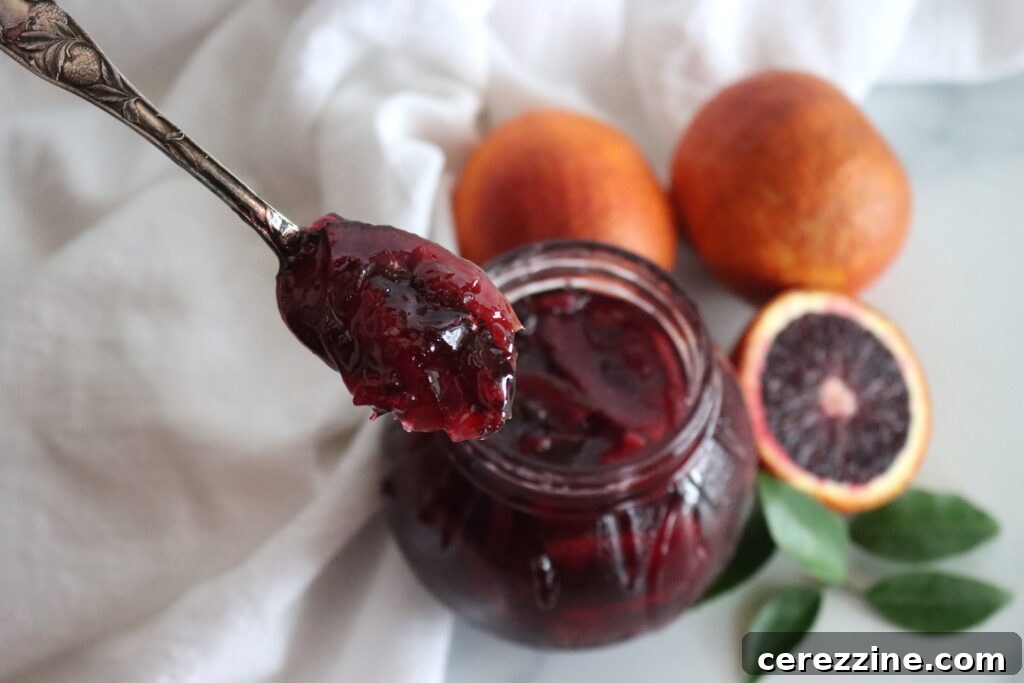
Canning Blood Orange Marmalade for Long-Term Storage
Canning your blood orange marmalade ensures shelf-stable preservation, allowing you to enjoy this vibrant treat for months to come. It’s essential to prepare your canning equipment in advance:
- Prepare Canning Equipment: Before you even start cooking your marmalade on Day 2 (ideally while the fruit is soaking overnight), prepare your water bath canner, jars, and lids. Wash jars thoroughly with hot soapy water and rinse well. Keep them hot in simmering water until ready to fill, or sterilize them according to your canner’s instructions. Lids should be prepared according to the manufacturer’s directions, usually by simmering in hot (not boiling) water.
- Fill Jars with Hot Marmalade: Once the marmalade has reached 220 degrees Fahrenheit or passed the cold plate test, remove it from the heat. Carefully ladle or pour the hot marmalade into the prepared hot jars, ensuring the beautiful orange peels are distributed relatively evenly among all the jars.
- Ensure Proper Headspace: It is critical to leave ¼ inch of headspace at the top of the jars. This space is necessary for a proper vacuum seal to form during processing. Do not overfill.
- Remove Air Bubbles: After filling, use a non-metallic utensil (like a plastic spatula or chopstick) to gently remove any trapped air bubbles from the marmalade. Run the utensil along the inside edge of the jar, gently pushing the marmalade to release bubbles.
- Clean Rims and Apply Lids: Wipe the rims of the filled jars thoroughly with a clean, damp cloth to remove any food residue. Any food particles on the rim can prevent a proper seal. Apply the two-part canning lids (flat lid and screw band) and tighten the screw bands finger-tight – don’t overtighten.
- Process in a Water Bath Canner: Using a jar lifter, carefully place the filled jars onto the rack in your preheated water bath canner. Ensure the jars are covered by at least 1-2 inches of water. Bring the water to a full, rolling boil. Once it begins boiling vigorously, set a timer for 10 minutes. If you are canning at altitudes above 6,000 feet, increase the processing time to 15 minutes.
- Cool and Check Seals: After the processing time is complete, turn off the heat and allow the jars to sit in the hot water for an additional 5 minutes. This helps prevent siphoning (liquid loss). Then, using the jar lifter, carefully remove the hot jars from the canning water and place them on a towel-lined surface on your counter. Allow them to cool undisturbed for 24 hours.
- Store Sealed Jars: After 24 hours, check the seals. The center of the lid should be concave and not flex when pressed. If a jar has not sealed, refrigerate it immediately and consume within a few weeks. Store properly sealed jars in a cool, dry, dark place (like a pantry) for up to 18 months for maximum peak quality. While marmalade may still be eaten after 18 months if it remains properly sealed, its flavor and color may degrade over time.
- Refrigerate After Opening: Once a jar of marmalade is opened, it should always be stored in the refrigerator.
Blood Orange Marmalade Variations and Flavor Boosts
While blood orange marmalade is glorious on its own, it also lends itself beautifully to creative variations:
- Ginger Infusion: Ginger is a natural companion to blood orange, adding a delightful warmth and subtle spice. For best results, use fresh, finely grated ginger. Add 2 teaspoons of grated ginger to the marmalade mixture when you add the sugar and lemon juice on Day 2. The rest of the recipe remains the same, resulting in a complex and aromatic preserve.
- Fruit Medley: Blood oranges pair exceptionally well with a variety of other fruits, including apricots, mangoes, peaches, and strawberries. To incorporate other fruits while maintaining the blood orange base:
- Prepare the recipe as shown, using six blood oranges to cut and soak for the liquid pectin mixture.
- When separating the blood orange pulp from the soaking liquid on Day 2, you can remove about 1 cup of orange pulp and replace it with 1 cup of mashed pulp from your chosen complementary fruit (e.g., mashed apricots or strawberries).
- Alternatively, you can retain the entire quantity of blood orange rinds and pulp and simply add 1-2 cups of your desired fruit pulp (mashed or finely chopped) when adding the lemon and sugar. Be mindful that adding too much other fruit might slightly alter the pectin balance, potentially resulting in a softer set, and will, of course, increase your overall yield.
- Floral Notes: Blood oranges are often noted for their subtle floral aroma. To enhance this, consider adding edible flowers. Fresh lavender buds (about 1-2 teaspoons, steeped in a tea infuser during the simmer and removed before jarring) or dried hibiscus flowers (1-2 tablespoons, added directly to the mixture during the simmer for a deeper color and tartness) can lend a distinct and elegant floral boost.
Creative Ways to Use Blood Orange Marmalade
Beyond the breakfast table, blood orange marmalade is surprisingly versatile in the kitchen:
- Savory Glazes and Marinades: The balance of sweet and tart makes blood orange marmalade an exceptional glaze. It brings fantastic flavor to grilled or broiled chicken, pork tenderloin, and lamb chops. Try spreading it over a rack of ribs as a gourmet alternative to traditional barbecue sauce. For a quick marinade, thin it with a splash of vinegar or orange juice and a hint of soy sauce.
- Breakfast and Brunch: Elevate your morning routine. Spread it on croissants, scones, or your favorite artisan bread. Stir a spoonful into Greek yogurt or oatmeal for a burst of flavor. For a fun twist on a classic, use it instead of grape jelly for a sophisticated PB&J sandwich.
- Baking and Desserts: Incorporate it into your baking. Use it as a filling for tarts, thumbprint cookies, or sponge cakes. Swirl it into cheesecake batter or dollop it onto individual panna cottas. It can also be warmed and drizzled over ice cream or pancakes.
- Cocktails and Drinks: Add a unique citrus kick to your beverages. A spoonful dissolved in hot water makes a comforting tea, while a dash in a gin fizz or an Old Fashioned can create a surprisingly delightful cocktail.
- Cheese Pairings: Serve blood orange marmalade alongside a cheese board. Its bright flavors cut through the richness of creamy cheeses like brie or goat cheese, and it complements aged cheddars beautifully.
Blood Orange Marmalade Recipe
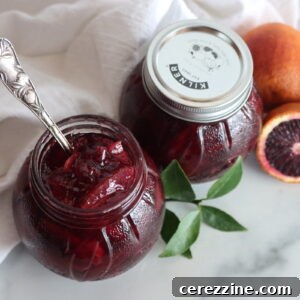
Blood Orange Marmalade
Blood orange marmalade is a stunning preserve with a deep crimson hue and a perfect balance of sweetness and citrusy tartness. This recipe is made the old-fashioned way, with just citrus, sugar, and patience. No boxed pectin needed!
Servings: 30 servings (about 5 half-pint jars)
Prep time: 1 day
Cook time: 20 minutes
Canning time: 10 minutes
Total time: 1 day, 30 minutes
Ingredients
- 12 blood oranges, divided (about 4.5 to 5 lbs)
- 8 cups granulated sugar
- ¼ cup fresh lemon juice, from 2-3 fresh lemons
Instructions
Day 1
- Wash all 12 blood oranges thoroughly. From this batch, select six oranges and cut them into quarters lengthwise.
- Slice the quartered oranges into very thin strips, ensuring you retain as much juice as possible during this process.
- Place the orange slices and any collected juice into a large saucepan and cover them completely with water.
- Over medium-high heat, bring the orange mixture to a boil. Once boiling, remove the pot from the heat, cover it, and let it stand overnight (or at least 8 hours) at room temperature to allow the pectin to release.
Day 2
- Using a small strainer or slotted spoon, scoop the softened orange rinds and pulp from the overnight mixture and place them into a large Dutch oven or jam pot. Retain the soaking liquid.
- Squeeze the juice from the remaining six blood oranges, discarding their rinds and pulp.
- Measure the freshly squeezed blood orange juice. Then, add enough of the retained soaking liquid until you have a total of 4 cups of liquid. Discard any remaining soaking liquid.
- Add the measured 4 cups of combined liquid to the strained orange pieces in the Dutch oven.
- Squeeze fresh lemons to yield ¼ cup of lemon juice and add this to the orange mixture in the pot.
- Stir in the 8 cups of granulated sugar. Place the pot over medium-high heat and bring the mixture to a rolling boil, stirring frequently to ensure the sugar dissolves and to prevent scorching.
- Once boiling, reduce the heat to medium and let the orange mixture simmer, uncovered, for approximately 20 minutes, or until it reaches the gel stage. Stir occasionally to prevent sticking.
- Test for the gel stage using either the cold plate method (marmalade wrinkles when nudged after chilling) or a candy thermometer (reaches 220 degrees Fahrenheit / 104 degrees Celsius).
- Prepare your canning jars or freezer containers by ensuring they are clean and hot. If canning, also prepare your water bath canner.
- Carefully ladle or pour the hot marmalade into the prepared jars or containers, leaving ¼ inch headspace. Stir the marmalade in the pot periodically to ensure an even distribution of orange pieces. Wipe the rims with a clean, damp cloth and apply the lids.
- If canning, process the filled jars in a boiling water bath canner for 10 minutes (or 15 minutes if above 6,000 feet in elevation). After processing, turn off the heat and let jars sit for 5 minutes before carefully removing them to cool on a towel for 24 hours. Check seals before storing.
Nutrition (Approximate per serving)
Calories: 208kcal, Carbohydrates: 54g, Protein: 0.1g, Fat: 0.2g, Saturated Fat: 0.001g, Polyunsaturated Fat: 0.002g, Monounsaturated Fat: 0.001g, Sodium: 1mg, Potassium: 13mg, Fiber: 0.1g, Sugar: 54g, Vitamin A: 12IU, Vitamin C: 4mg, Calcium: 3mg, Iron: 0.03mg
Nutrition information is automatically calculated, so should only be used as an approximation.
Like this? Leave a comment below!
Explore More Marmalade Recipes
Once you’ve mastered the delightful process of making blood orange marmalade, the world of citrus preserves truly opens up. Why not expand your repertoire and experiment with other fantastic citrus varieties?
Traditional Orange Marmalade remains a timeless classic, offering the quintessential bittersweet flavor that marmalade lovers adore. For those who appreciate a more pronounced bittersweet profile, Grapefruit Marmalade provides a refreshing and sophisticated alternative. And for a truly unique and aromatic experience, consider giving Buddha’s Hand Marmalade a try, with its distinctively fragrant citron flavor and minimal pulp.
If you’re mindful of sugar intake, our Low Sugar Orange Marmalade (which utilizes added pectin) is a fantastic, health-conscious alternative. You can even adapt this same low-sugar recipe successfully for blood oranges, enjoying their vibrant flavor with less sweetness. Remember, our comprehensive guide, Marmalade with Any Citrus recipe, provides the fundamental techniques that allow for endless experimentation with different citrus combinations, ensuring your pantry is always stocked with unique and delicious homemade preserves!