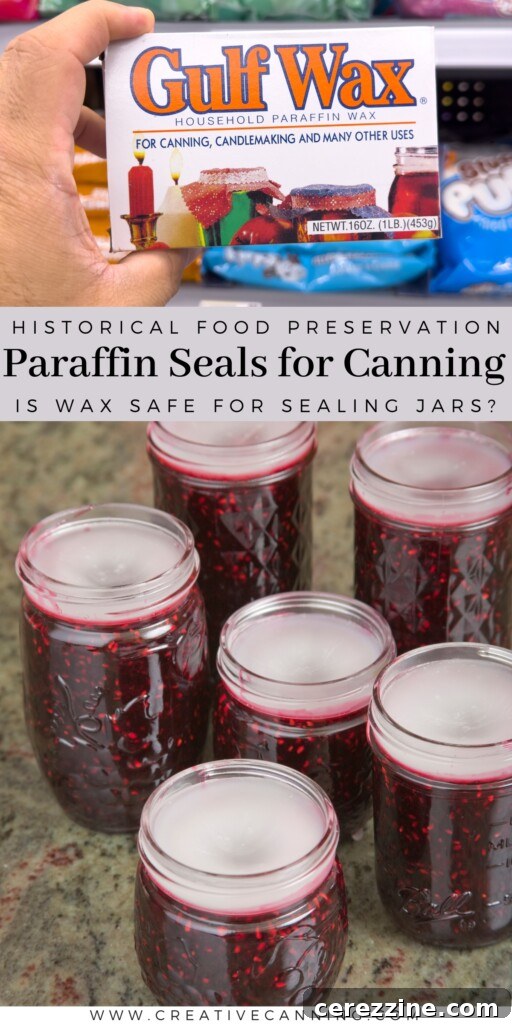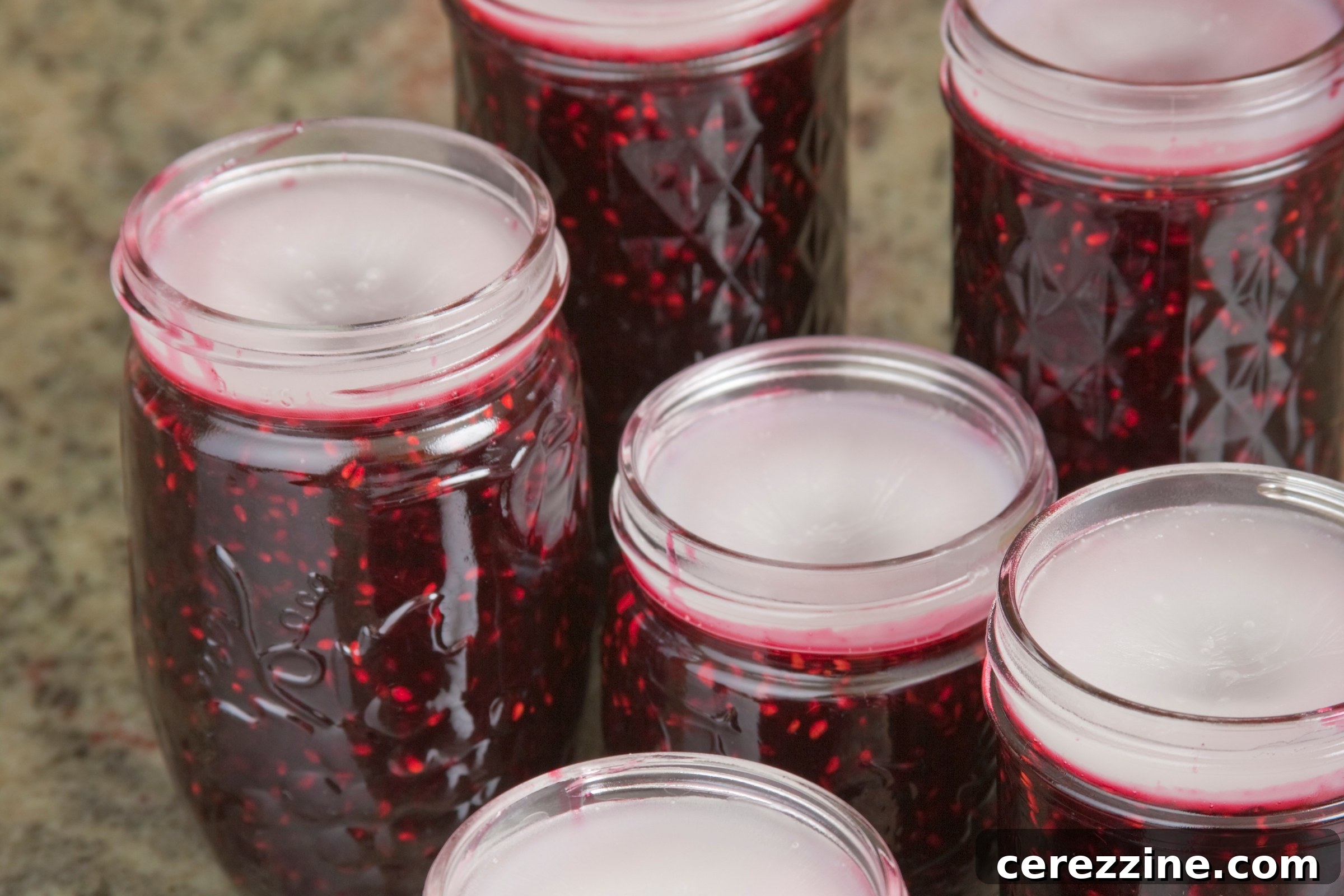
Sealing jam and jelly with paraffin wax was once a deeply ingrained tradition in many home kitchens, evoking nostalgic images of grandmothers meticulously capping jars of homemade preserves. However, what was once a common practice has now been firmly relegated to the past by food safety experts. Modern understanding and research unequivocally state that relying on paraffin wax for sealing jams and jellies is not only unreliable but also potentially unsafe. While the idea of a wax barrier might seem intuitive, it introduces significant risks of mold growth and spoilage, risks that modern canning lids and techniques have effectively eliminated.
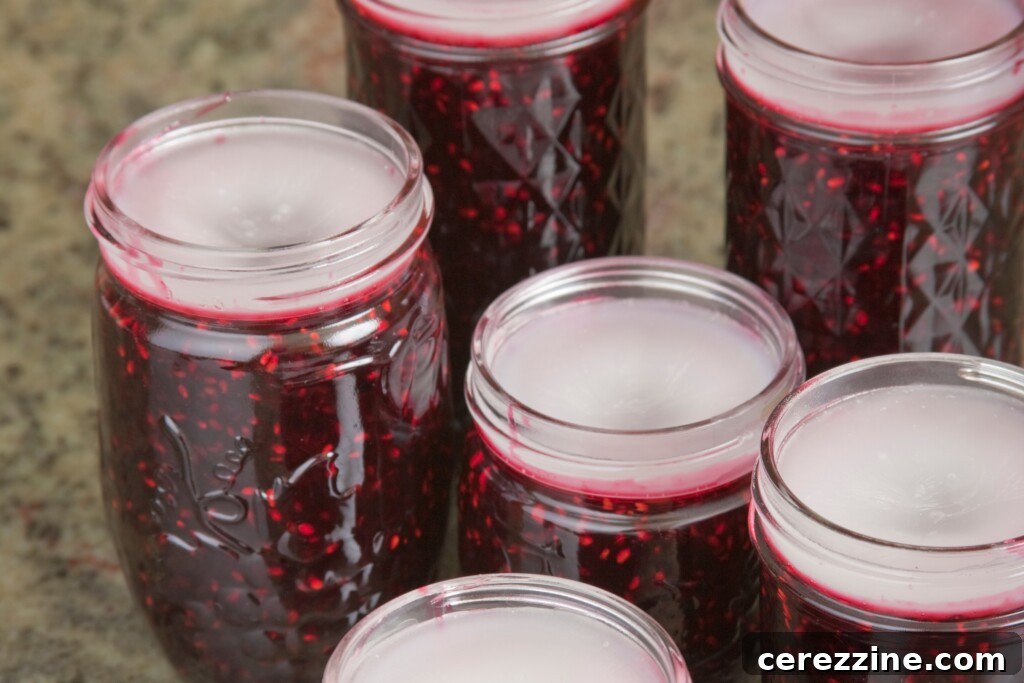
Delving into older home canning or preserving guides often reveals detailed instructions for pouring a layer of food-grade paraffin wax over the surface of fully filled jam or jelly jars. This method aimed to create an airtight seal, theoretically protecting the contents from air and spoilage. The aesthetic of a neat, opaque disk of wax atop vibrant preserves is undeniably charming and has a strong association with bygone eras of domesticity. Yet, in the realm of modern canning science and established food safety protocols, paraffin wax seals are considered fundamentally outdated and dangerously unreliable for long-term food preservation.
Leading authorities in food safety and home preservation, such as university Extension services and the National Center for Home Food Preservation (NCHFP), now explicitly advise against this method. They state that wax or paraffin seals are no longer recommended. The primary reasons cited are the significant risk of mold development and the inherent unreliability of the seal over time, which can lead to rapid spoilage of valuable homemade products.
Despite these clear warnings, many enthusiastic home preservers frequently inquire about paraffin sealing. They often wonder if it’s “safe enough” if performed with meticulous care or if it poses an existential threat to health. It’s crucial to understand the nuances of these recommendations.
As a steadfast advocate for safe canning practices, I neither endorse nor utilize this method in any capacity. There’s a critical distinction between a practice being “no longer recommended” due to reduced efficacy or increased risk, and one being inherently life-threatening. Some historical canning practices are indeed perilous, carrying immediate and severe health risks. Paraffin sealing, while not typically categorized as immediately “dangerous” in the same vein as improper low-acid canning (which can cause botulism), is nonetheless a poor choice due to its high propensity for spoilage and potential for toxin production. It represents a significant step down in reliability and safety compared to modern alternatives, demanding constant vigilance and accepting a high risk of product loss. The issue isn’t typically the wax itself being toxic, but rather its failure to adequately protect food from microbial growth.
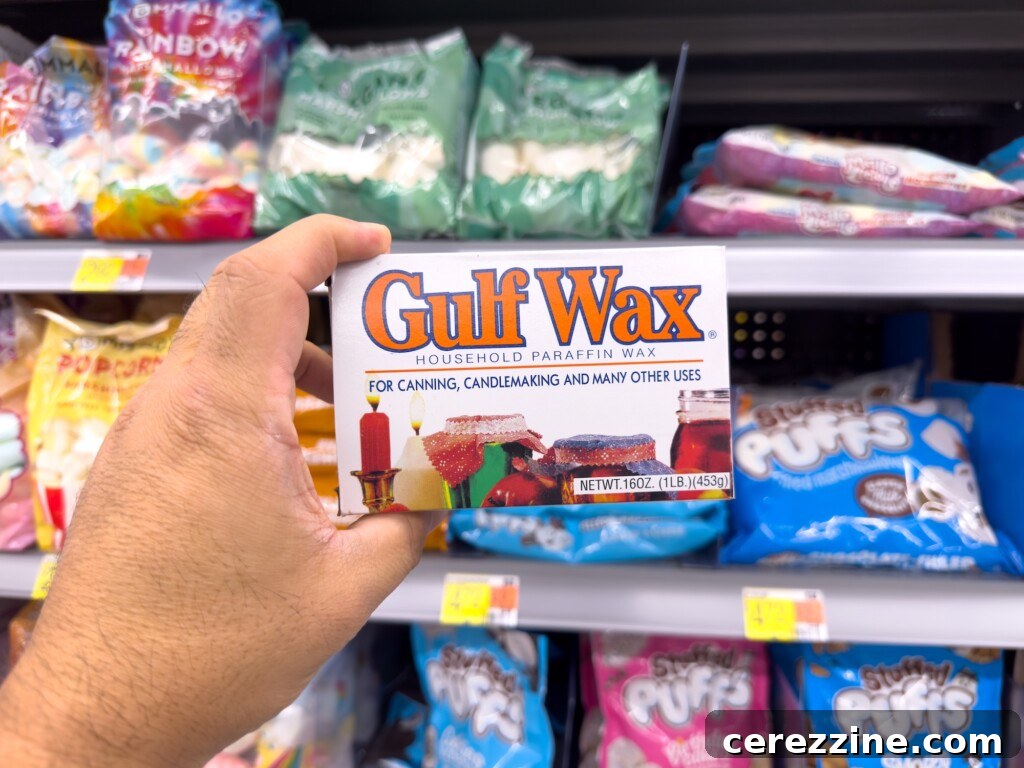
A Brief History: Why Paraffin Seals Once Made Sense
To fully grasp why paraffin seals were once so prevalent, we must transport ourselves back to an era predating the widespread availability and affordability of modern canning lids. For generations, home preservers wrestled with the challenge of how to effectively exclude air and inhibit the growth of spoilage-causing molds and yeasts in their fruit preserves. The solution was often born out of necessity and ingenuity.
Before paraffin gained popularity, historical recipes document far more rudimentary — and often less effective — sealing methods. Imagine a whiskey-soaked piece of parchment paper, meticulously tied over the jar’s opening with string, or even the use of dried animal bladders stretched and secured. These techniques, while innovative for their time, offered very limited protection. The introduction of paraffin wax marked a significant advancement. Pouring molten wax over the surface of cooled jellies and jams created a much more robust “cap” compared to its predecessors. It was relatively easy to apply, cheap, and appeared to create a solid barrier against the outside world.
However, it is vital to recognize that even at its best, a paraffin seal was never designed to be as effective or foolproof as modern canning lids. Traditional methods were often employed in specific environments, such as cool cellars or stable basements, where temperature fluctuations were minimal. These environments naturally retarded microbial growth, and jars were typically monitored with greater frequency. This contrasts sharply with modern canning, which emphasizes a “set it and forget it” approach, allowing preserves to be safely stored on shelves for extended periods without constant re-evaluation. Historical preservation techniques, including those using wax, often demanded cool storage and frequent checks, akin to the management required for root cellaring, rather than the long-term, ambient storage we expect today.
In its heyday, paraffin sealing was a useful technique for preserving foods in controlled environments. Nevertheless, its inherent flaws became increasingly apparent:
- The wax seal’s integrity was heavily dependent on its tight adhesion to both the fruit surface and the interior walls of the jar. Any shrinkage, cracking, or separation, which could occur due to minor environmental changes, created pathways for mold spores to infiltrate and thrive.
- A major drawback was the invisibility of the seal’s condition. Unlike modern lids that offer a clear visual or auditory indicator of a successful seal, a wax seal provided no easy way to confirm its integrity. Spoilage could be well underway beneath the wax without any outward signs.
- Temperature fluctuations, common even in cellars or standard home pantries, would cause the wax to expand and contract. This cyclical movement could weaken or entirely compromise the seal, allowing air and contaminants to enter.
As the decades progressed, the development of reliable two-piece canning lids, standardized jar designs, and extensive research into canned food safety rendered wax sealing increasingly obsolete. By comparison, it became a far riskier and less dependable method, prompting its official disrecommendation by food safety authorities.
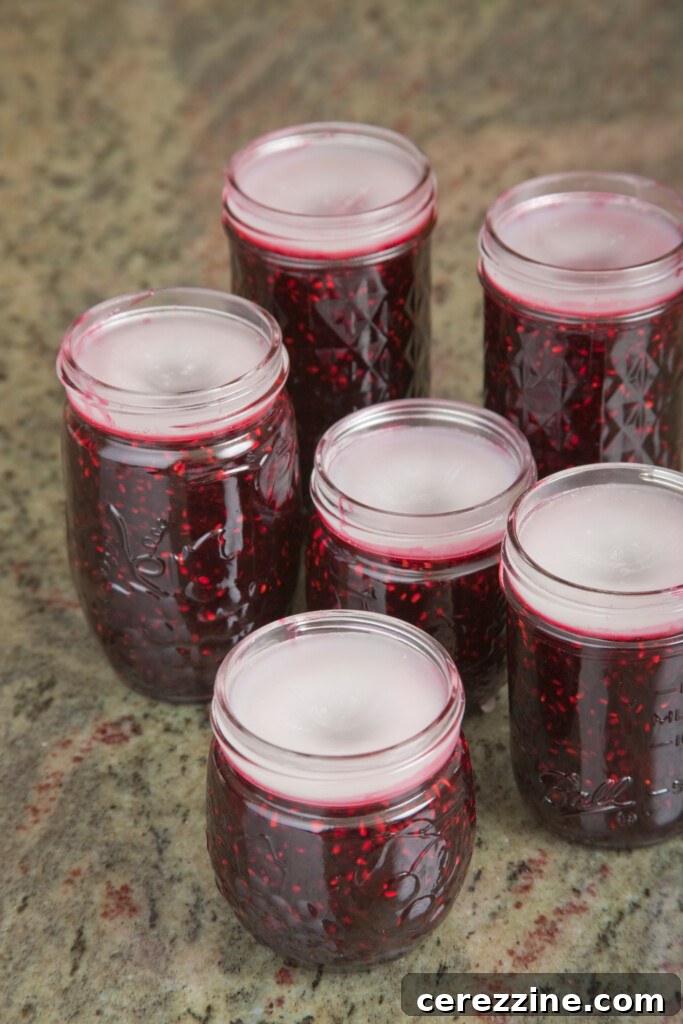
Why Today’s Experts Warn Against Paraffin Seals: The Risks Unpacked
The transition away from paraffin wax seals isn’t merely a matter of technological advancement; it’s rooted in robust scientific understanding of food spoilage and safety. Here are the principal risks and technical downsides that have led U.S. and university Extension publications to strongly advise against this method:
- Unreliable Seal Failure Over Time: The most critical flaw of paraffin wax is its inherent instability. Wax is a brittle material that is highly susceptible to shrinking, cracking, or pulling away from the jar rim and the surface of the preserve. This degradation can occur over time, particularly with even minor temperature fluctuations during storage. Once these microscopic (or sometimes visible) breaches occur, air, along with airborne mold and yeast spores, can easily penetrate the jar. This ingress of oxygen and microbes is the primary catalyst for spoilage, leading to unwanted fermentation and visible mold growth. Research from institutions like Michigan State Extension consistently highlights this as a major point of failure.
- Invisible Contamination & Mycotoxin Risk: Perhaps the most insidious danger of paraffin seals is their ability to mask spoilage. Because the opaque wax layer completely covers the surface of the jam or jelly, it is impossible to visually inspect the contents for signs of mold or microbial growth. By the time mold becomes visible through or around the wax, the spoilage is often extensive. More concerning, even superficial mold growth under the wax may produce mycotoxins. These are toxic secondary metabolites produced by certain fungi and are currently under extensive study for their potential adverse health effects on humans and animals. These toxins are often invisible, odorless, and tasteless, and scraping off the visible mold does not guarantee the removal of mycotoxins that may have permeated deeper into the food. The NCHFP explicitly warns about this hidden danger.
- Absence of Heat-Processed Assurance: A fundamental principle of safe home canning for high-acid foods (like jams and jellies) is processing them in a boiling water bath. This heat treatment serves two critical purposes: it destroys spoilage-causing microorganisms and helps to create a strong vacuum seal by expanding the air within the jar, which then contracts upon cooling. When you seal with only wax, foregoing a proper boiling water bath, you lose this built-in safety margin. The wax itself does not sterilize the food or the headspace. Many vintage wax methods entirely skipped full processing or relied solely on the wax as the protective barrier. By today’s scientifically validated standards, this approach is fundamentally unsafe and significantly elevates the risk of spoilage.
- Impracticality of Re-Seal or Repair: Unlike modern two-piece lids, which can sometimes be re-processed if a seal fails (under specific conditions and within a short timeframe), a failed wax seal offers no such recourse. Once the wax is poured, if the seal compromises, it’s nearly impossible to “fix” without disturbing the fruit surface, potentially introducing further contamination. Historical practices sometimes suggested pouring a new layer of wax, but this often simply traps existing contamination beneath a new barrier, doing nothing to prevent spoilage and potentially compounding the problem by concealing it further.
- Lack of Economic or Effort Payoff: In contemporary markets, paraffin wax is no longer a notably inexpensive commodity, nor does its application save significant time or effort compared to using modern two-piece canning lids. Given the numerous downsides and the high risk of losing an entire batch of preserves to spoilage, most food preservation experts conclude that wax sealing is simply not worth the gamble. The minor upfront cost of proper canning lids is a small investment for the peace of mind and significantly improved safety and shelf life they offer.
Due to these substantial factors, food safety organizations across the U.S., including various university Extension publications, unequivocally advise against the use of paraffin wax seals. Instead, they strongly recommend utilizing standard two-piece canning lids (comprising a flat lid with a sealing compound and a screw band ring) and ensuring proper processing in a boiling water bath for all high-acid preserves like jams and jellies.
When (If Ever) Could Paraffin Sealing Be Acceptable?
While the overwhelming consensus among food safety experts is to avoid paraffin sealing entirely, I acknowledge that some individuals may remain deeply committed to traditional methods or specific aesthetic preferences. If someone, fully informed of the inherent and significant risks, chooses to proceed with paraffin sealing, there are extremely narrow and cautious circumstances under which the practice might theoretically yield reasonable short-term results, though it is never truly “recommended” or without elevated risk:
- For Very Small Jars Consumed Quickly: This method is marginally more acceptable only for very small containers of preserves that are intended for immediate consumption, ideally within a few weeks, not months or years. The shorter the storage duration, the less time for seal failure and microbial growth to occur.
- In a Consistently Cool, Stable Environment: Jars must be stored in an exceptionally cool, dark, and stable environment, such as a dedicated cold basement or a traditional root cellar, where temperature fluctuations are minimal to non-existent. These conditions naturally inhibit microbial activity and reduce the chances of wax expansion and contraction. Avoid warm pantries or areas with significant temperature swings.
- With Regular and Diligent Inspection: The jars must be inspected frequently and meticulously for any signs of mold, separation of the wax from the jar or fruit, or other indications of spoilage. This requires a level of constant monitoring that is simply not necessary with modern canning methods.
- Acceptance of Significant Spoilage Risk: The individual must fully accept that, even under these controlled circumstances, seal failure and spoilage are highly probable. There is a high likelihood that entire batches of preserves may be lost due to mold or other microbial growth, representing a waste of ingredients, time, and effort.
It is imperative to reiterate that even under these highly specific and controlled conditions, virtually all food safety authorities continue to recommend and prefer the use of standard, tested lid sealing methods for superior safety and reliability.
What Modern Lid Seals Do Better (and Why They Are Preferred)
The evolution of canning technology has brought us vastly superior methods for preserving food, primarily centered around the two-piece canning lid system. These modern seals offer a comprehensive approach to food safety and convenience that paraffin wax simply cannot match:
- Verifiable Vacuum Seal: One of the most significant advantages of modern canning lids is the ability to easily test and confirm the integrity of the vacuum seal. After processing and cooling, a properly sealed lid will create a concave depression, often producing an audible “pop” as it seals. You can physically test this by pressing on the center of the lid; a properly sealed lid will not flex or pop up and down. This clear indication of a secure seal provides invaluable peace of mind and allows for immediate identification of any jars that failed to seal, which can then be safely reprocessed or refrigerated.
- Unparalleled Reliability and Durability: Modern canning lids are engineered for long-term storage. When properly applied and processed, they create a robust, airtight, and durable seal that can withstand typical pantry conditions for extended periods. This reliability means you can confidently place your jars on the shelf and genuinely “forget them” until they are needed, without the constant worry of spoilage. They are designed for consistency and longevity, significantly reducing the risk of product loss.
- Synergistic Safety Factors: Modern canning relies on a powerful combination of factors to ensure safety: sufficient heat penetration during processing, the inherent acidity of the food (for water bath canning), and an airtight vacuum seal. These elements work synergistically to eliminate spoilage-causing microorganisms and prevent their re-entry. In contrast, wax seals rely almost entirely on a fragile physical barrier, which provides no thermal processing benefits and is prone to compromise, offering only a fraction of the protection that a comprehensive canning method provides.
In essence, paraffin seals represent a historical compromise, a best-effort solution in a bygone era. They have been rendered entirely obsolete by the advent of vastly superior tools and, critically, by safer, scientifically validated preservation methods. Embracing modern canning is a choice for safety, reliability, and convenience.
Paraffin Canning FAQ
Absolutely not. This is a critical food safety hazard. Mold growth, even if it appears to be only on the surface, indicates that microscopic spores have likely penetrated deeper into the jam or jelly. More importantly, many molds produce invisible and tasteless toxins called mycotoxins, which can spread throughout the food. Scraping off the visible mold does not guarantee the removal of these dangerous toxins. For your safety, the entire jar of preserves must be discarded immediately if any mold is present.
For short-term, refrigerated products that you intend to consume within a few weeks (often called “refrigerator jams” or “freezer jams”), the risks associated with wax seals are lower compared to long-term pantry storage. This is primarily because the cooler environment of the refrigerator slows microbial growth significantly, and the shorter consumption window reduces the time for the wax seal to fail. However, even in these scenarios, a good, tight-fitting lid (like a standard screw-on lid) is still a safer, more reliable, and simpler option. It provides a more dependable barrier and reduces the already low risk of spoilage even further.
Yes, food-grade paraffin wax itself is considered non-toxic when used as intended. The primary concern is not the chemical safety of consuming small amounts of the wax (though it’s generally not meant to be eaten), but rather its complete lack of reliability as a safe sealing method for preserving food for extended periods. The issue lies in its inability to create and maintain an impenetrable barrier against air and microorganisms, leading to a high risk of mold and spoilage, which can then introduce toxins into the food.
While it’s true that some individuals have used paraffin seals for years without *apparent* issues, this often comes down to luck, highly stable storage conditions, or a phenomenon known as survivorship bias. Just because you haven’t encountered a problem doesn’t mean the method is safe or reliable. Modern food safety guidelines are based on extensive scientific research and testing, which have repeatedly shown the inherent flaws and elevated risks of wax seals. The potential for invisible mycotoxin contamination, even without visible mold, is a serious concern. Shifting to modern, tested canning methods provides a guaranteed level of safety and reliability that traditional wax seals simply cannot offer.
No, it is highly inadvisable to reuse paraffin wax for sealing food. Each time wax is melted and poured, it can pick up impurities, food particles, or even invisible mold spores from previous batches or the environment. Reusing it significantly increases the risk of contaminating new preserves. For any use, always use fresh, clean, food-grade paraffin wax that has not been previously melted or exposed to food.
Tips If You Try Paraffin Seals (With Extreme Caution)
Despite the strong recommendations against paraffin wax seals, if you are absolutely determined to use this method for reasons of tradition, aesthetics, or specific circumstances, it is paramount to proceed with the utmost caution and adhere to every possible measure to mitigate the substantial risks. Understand that these tips aim only to *reduce* risk, not eliminate it, and modern methods remain vastly superior for safety and reliability:
- Ensure Meticulous Cleanliness and Sterilization: This step is non-negotiable. Use only very clean, sterilized jars and ensure their rims are absolutely spotless and dry. Any speck of foreign material, dust, or moisture can act as a point of adhesion failure for the wax and introduce spoilage organisms.
- Pour Thin, Even Layers of Clean Wax: Melt only clean, fresh food-grade paraffin wax slowly and pour it in a thin, even layer over the cooled jam or jelly surface. A layer that is too thick is more prone to cracking and shrinking. Ensure the wax adheres completely to the glass jar all the way around the rim.
- Allow to Cool Undisturbed: After pouring the wax, allow the jars to cool and set completely undisturbed. Avoid any jarring, vibrations, or movement that could disrupt the forming seal or cause cracks in the cooling wax.
- Store in a Cool, Dark, and Stable Environment: This is perhaps the most critical mitigation factor. Jars sealed with paraffin must be stored in an environment that is consistently cool (ideally below 70°F/21°C), dark, and free from any significant temperature swings. Hot rooms or fluctuating temperatures are guaranteed to compromise wax seals. A traditional root cellar or a dedicated cool basement is preferable over a standard pantry.
- Inspect Periodically and Diligently: Regularly check each jar for any signs of seal separation (where the wax pulls away from the glass), cracks in the wax, or, most importantly, any visible mold growth beneath or around the wax. Given the opacity of the wax, this inspection is difficult, making visible mold a late indicator.
- Discard Any Suspect Jars Immediately: If you observe any of the above-mentioned issues, or if there is any doubt about the integrity of the seal or the freshness of the contents, discard the entire jar without hesitation. Do not attempt to salvage the contents by scraping off mold.
To reiterate with the strongest emphasis: it is unequivocally safer, more reliable, and ultimately more convenient to bypass wax seals entirely. Instead, commit to using scientifically tested canning methods with proper two-piece lids and recommended processing times.
While the image of paraffin sealing for homemade preserves possesses a certain charm and historical appeal, its practice carries significant, avoidable risks in the context of modern food preservation. The inherent weaknesses of wax – its tendency to shrink, crack, and detach over time – inevitably expose your cherished preserves to molds, yeasts, and other spoilage microorganisms. Furthermore, the opaque nature of the wax seal masks any internal contamination, potentially allowing dangerous mycotoxins to develop unnoticed. It is precisely for these compelling reasons that respected Extension services and leading food safety authorities around the world have definitively ceased recommending reliance on paraffin seals for jams and jellies.
To ensure the safety, longevity, and quality of your homemade jams and jellies, the best practice is to adhere strictly to contemporary, tested canning guidelines. This involves using immaculately clean, sterilized jars, utilizing new canning lids rated for vacuum sealing, leaving appropriate headspace, and meticulously following tested recipes with correct boiling water bath processing times. By embracing these proven methodologies, you gain both unparalleled safety and unmatched convenience – achieving true “set-it-and-forget-it” preservation that is immeasurably superior to any wax-top method. Your health and the integrity of your delicious creations are well worth the adherence to modern standards.
Common Canning Questions
Making Jam Without Added Pectin
How to Use Pomona’s Pectin
Homemade Pickling Spice Recipe