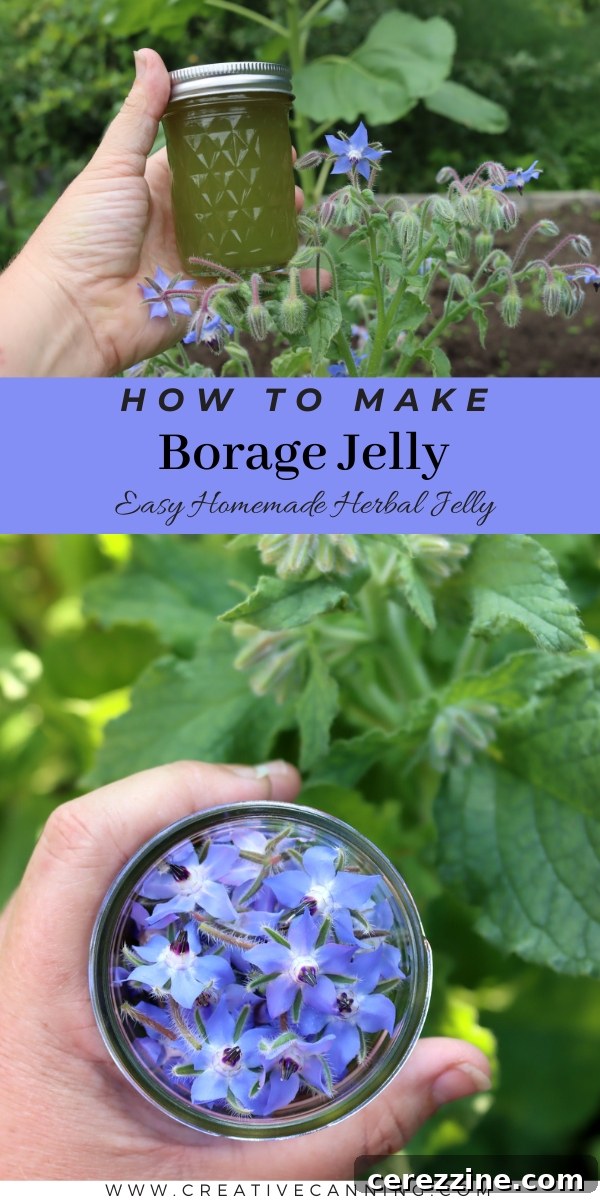
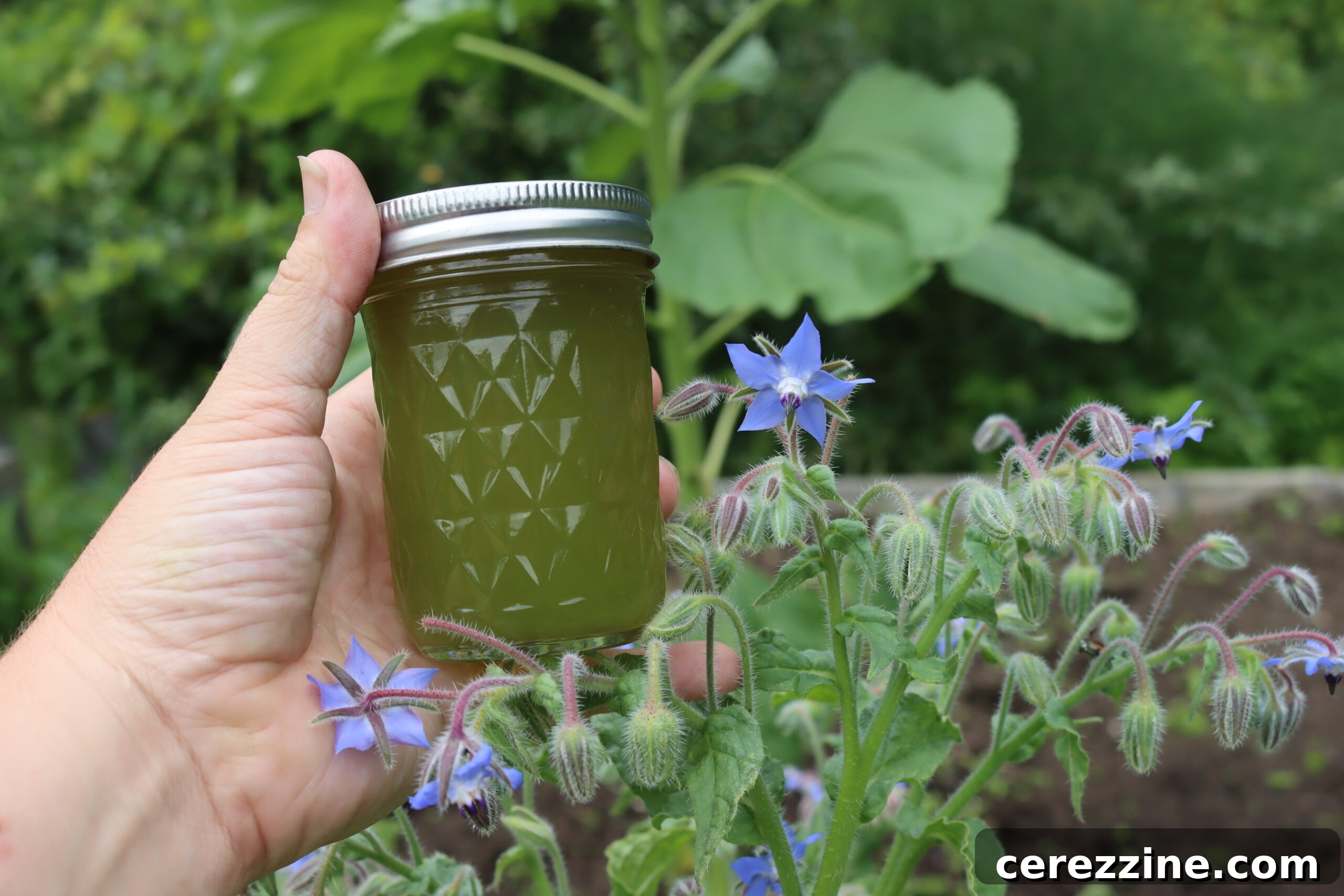
Welcome to the delightful world of homemade jellies, where garden fresh ingredients transform into irresistible spreads. This guide unveils the magic of Borage Jelly, a truly unique herbal creation boasting a distinct, sweet cucumber flavor that is simply perfect for slathering on warm spring biscuits or as a refreshing addition to your breakfast toast.
Herbal jellies offer a captivating way to enjoy the bounty of your garden, bringing unexpected flavors to your pantry. Over the years, many have discovered the sweet floral notes of lemon balm jelly, the vibrant warmth of calendula jelly, or even the surprising zest of savory chive blossom jelly. These unique preserves elevate simple meals and make fantastic gifts. So, why not explore the intriguing potential of borage jelly?
Borage, often known as the ‘starflower,’ is a truly remarkable herb that once established, will likely become a permanent resident in your garden due to its enthusiastic self-seeding nature. While some gardeners might view this as a challenge, we see it as an abundant opportunity! This means you’ll consistently have a generous supply of fresh borage on hand, making it the ideal candidate for culinary experimentation, especially for crafting this delightful jelly. Its prolific growth ensures you’ll never run out of the key ingredient for this recipe, allowing you to perfect your technique and share its unique flavor with friends and family.
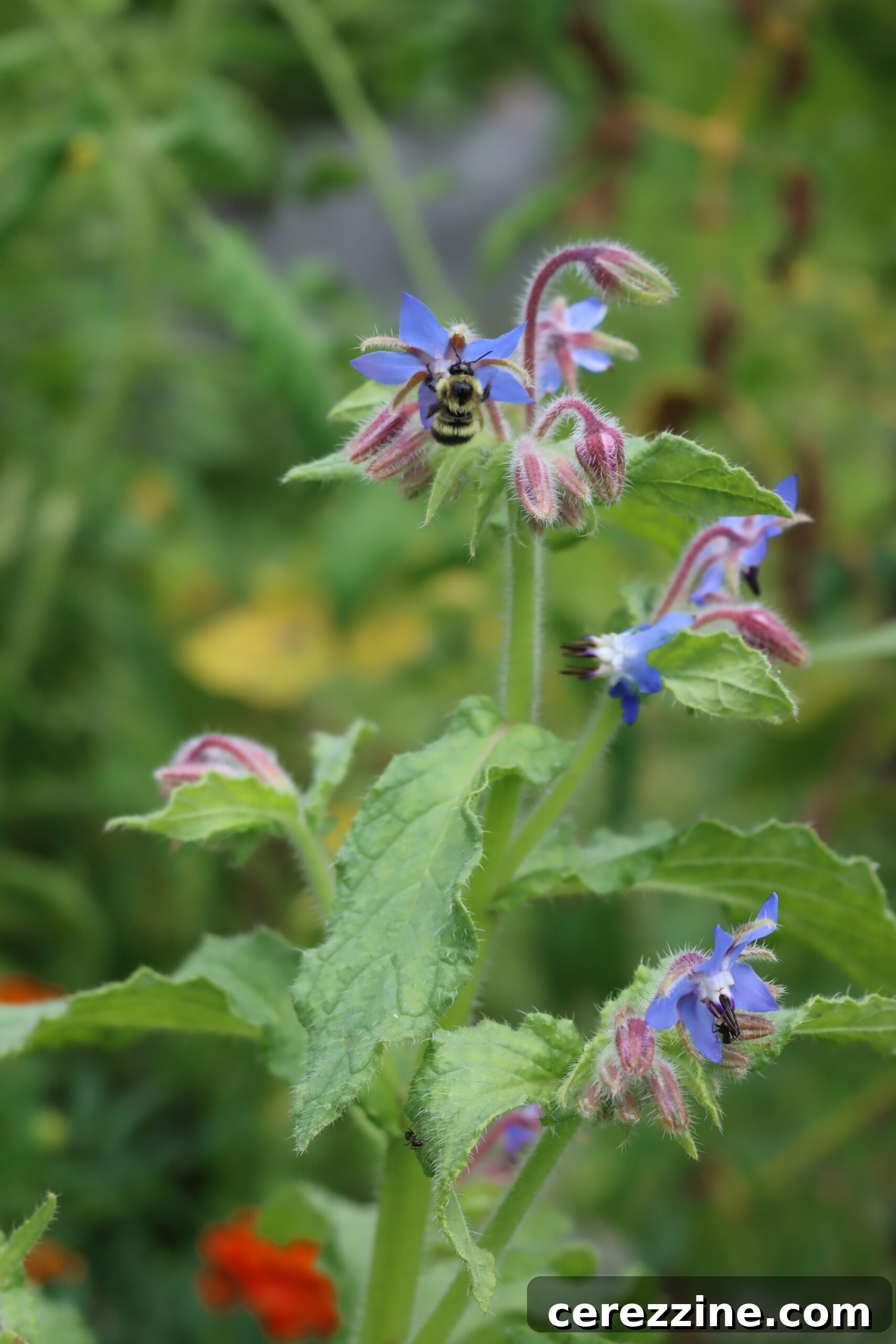
Your Borage Jelly Project at a Glance
- Recipe Name: Garden Fresh Borage Jelly
- Recipe Type: Flower & Herb Jelly Recipe
- Canning Method: Waterbath Canning (optional)
- Prep/Cook Time: Approximately 30 Minutes
- Canning Time: 10 Minutes (additional)
- Yield: 4 to 5 half-pint jars
- Recommended Jar Sizes: Quarter Pint, Half Pint, or Pint
- Headspace: 1/4 inch for proper sealing
- Ingredients Overview: Fresh Edible Borage Flowers & Leaves, Water, Essential Lemon Juice (not optional), and Granulated Sugar
- Difficulty: Easy! This recipe involves steeping a quick herbal tea and setting it with pectin, making it beginner-friendly.
- Similar Recipes: The preparation process closely mirrors that of other popular summertime floral jellies, including Chamomile Jelly, Calendula Jelly, Elderflower Jelly, Peony Jelly, Bee Balm Jelly, Lemon Balm Jelly, Nasturtium Jelly, or Rose Petal Jelly.
Unveiling the Flavor: What Does Borage Jelly Taste Like?
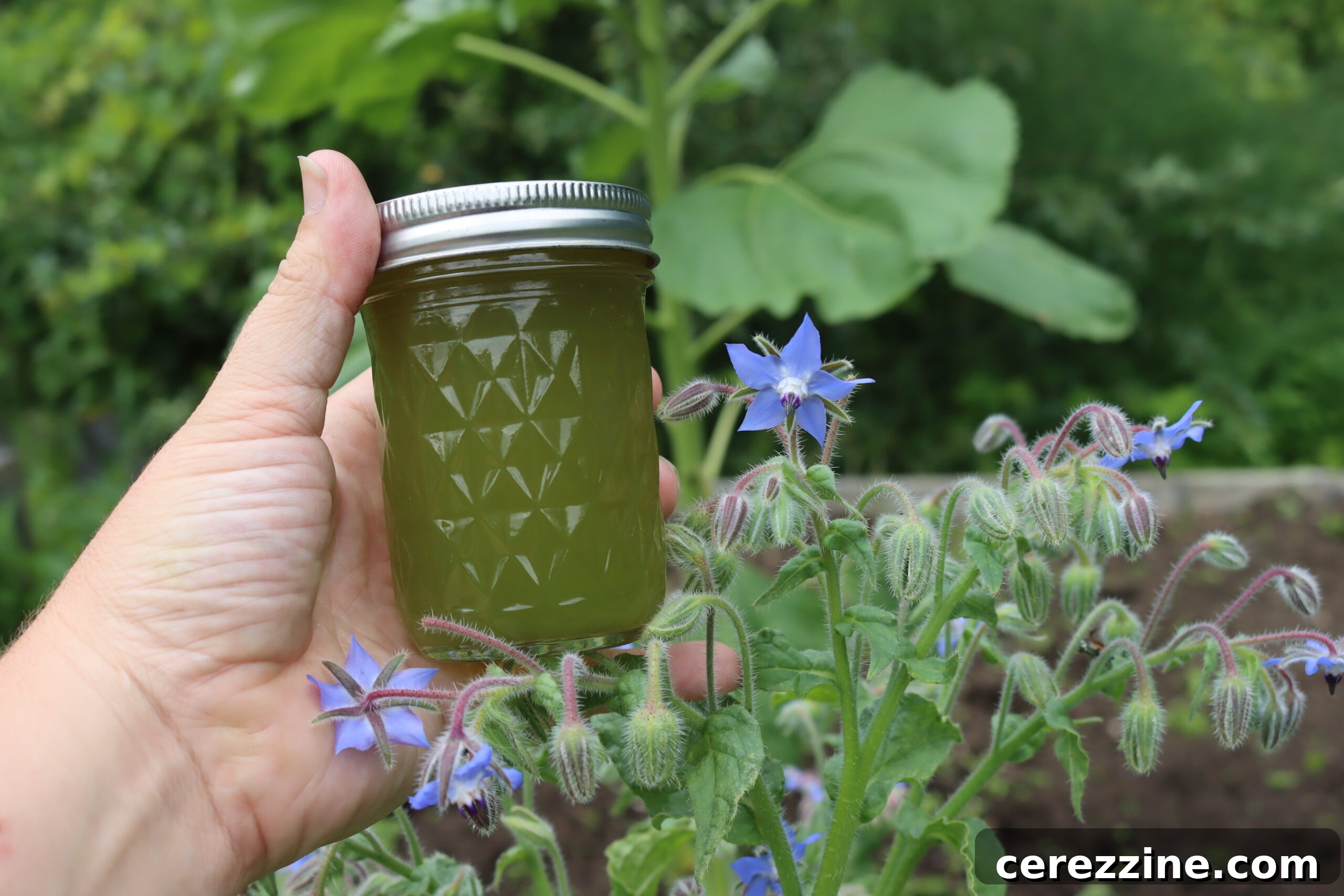
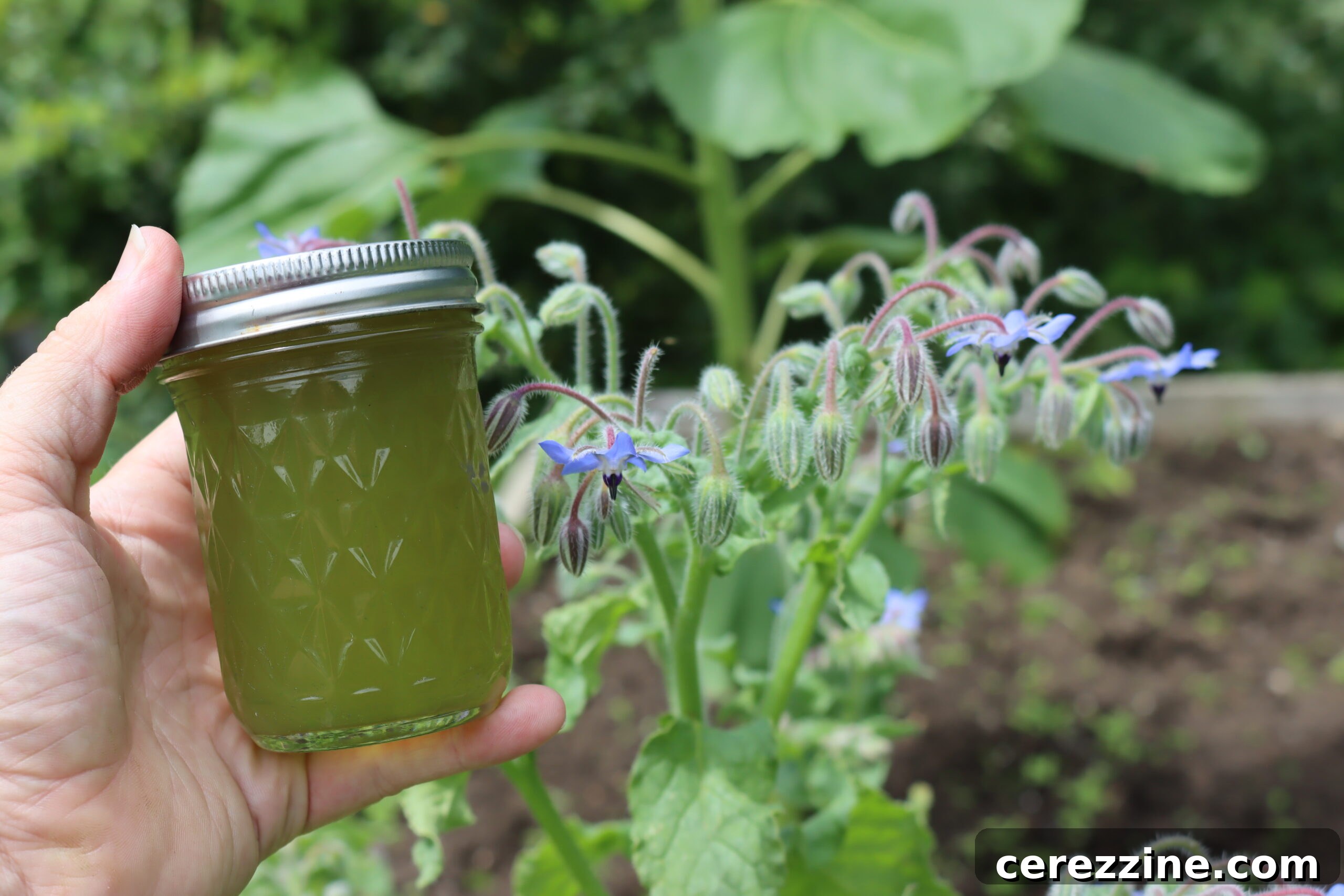
Borage is celebrated for its distinctive light, fresh cucumber flavor, and this unique characteristic truly shines through in this homemade borage jelly. The beauty of borage is its versatility: you can utilize either the vibrant blue star-shaped flowers or the tender young greens (or a combination of both), and the resulting flavor and subtle color remain consistently delightful. Expect a wonderfully refreshing, crisp taste reminiscent of a fresh cucumber, perfectly balanced by sweetness.
Naturally, borage jelly will always present a delicate, light green hue. For those who desire a more striking visual presentation, a few drops of natural green food coloring can be added to achieve a more vibrant and appealing shade, enhancing its fresh garden aesthetic without altering its exquisite flavor.
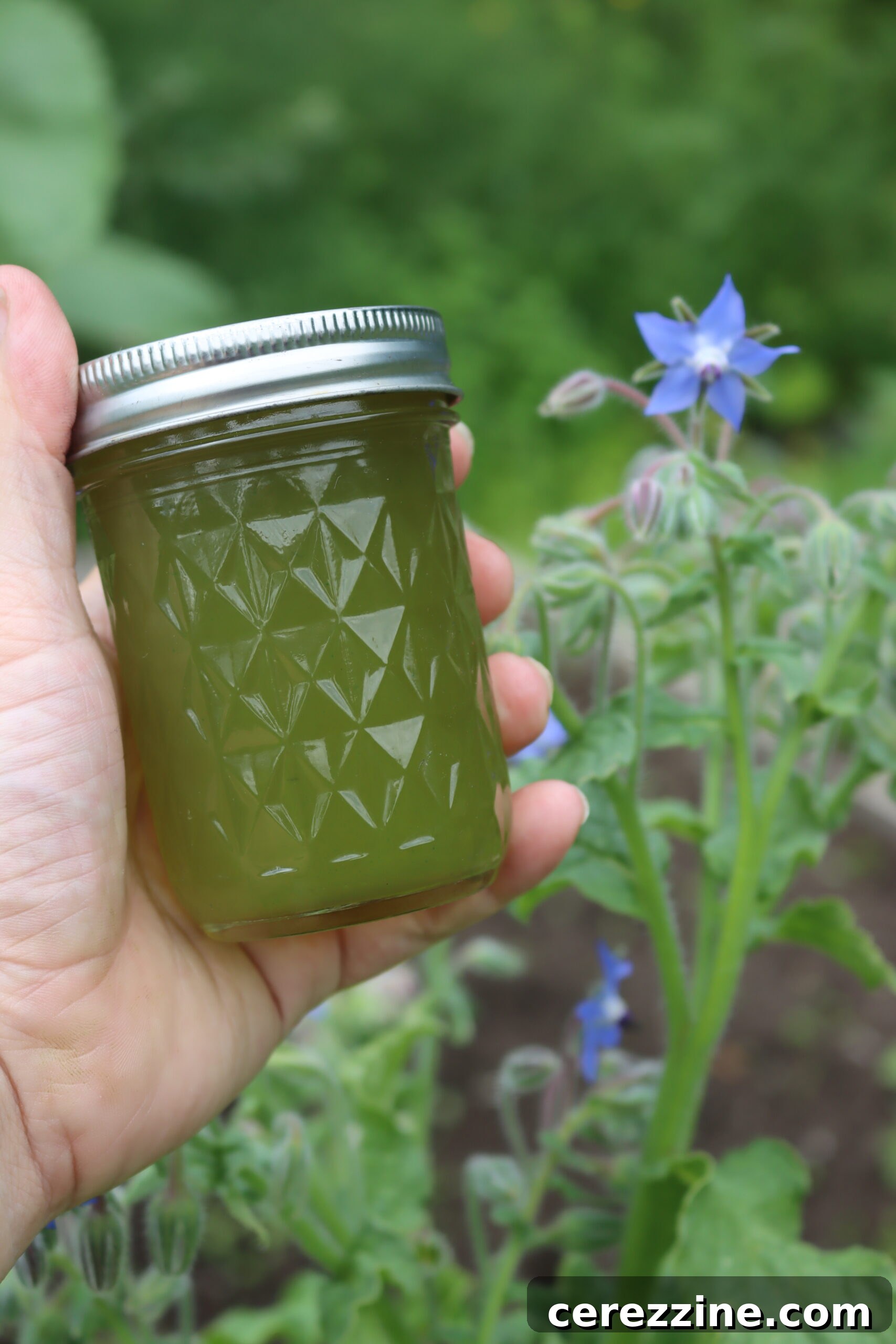
Cultivating Your Harvest: Harvesting Borage for Jelly Perfection
To perfect this borage jelly recipe, extensive experimentation was conducted with various harvesting methods and plant parts. Separate batches were prepared using only the delicate borage flowers, another with just the tender leaves, and a final recipe incorporating a thoughtful blend of both flowers and leaves. Interestingly, all variations yielded a remarkably similar flavor profile and characteristic light green color.
However, through careful tasting and evaluation, it was determined that a harmonious mix of both the vibrant flowers and the leafy greens provided the most balanced and nuanced borage essence for the finished jelly. When harvesting, aim for fresh, healthy plant material. The best time to pick borage is in the cool morning hours, after the dew has evaporated but before the sun’s heat causes the plant to wilt. Gently inspect your borage for any small insects, giving it a quick, gentle rinse if necessary before preparation.
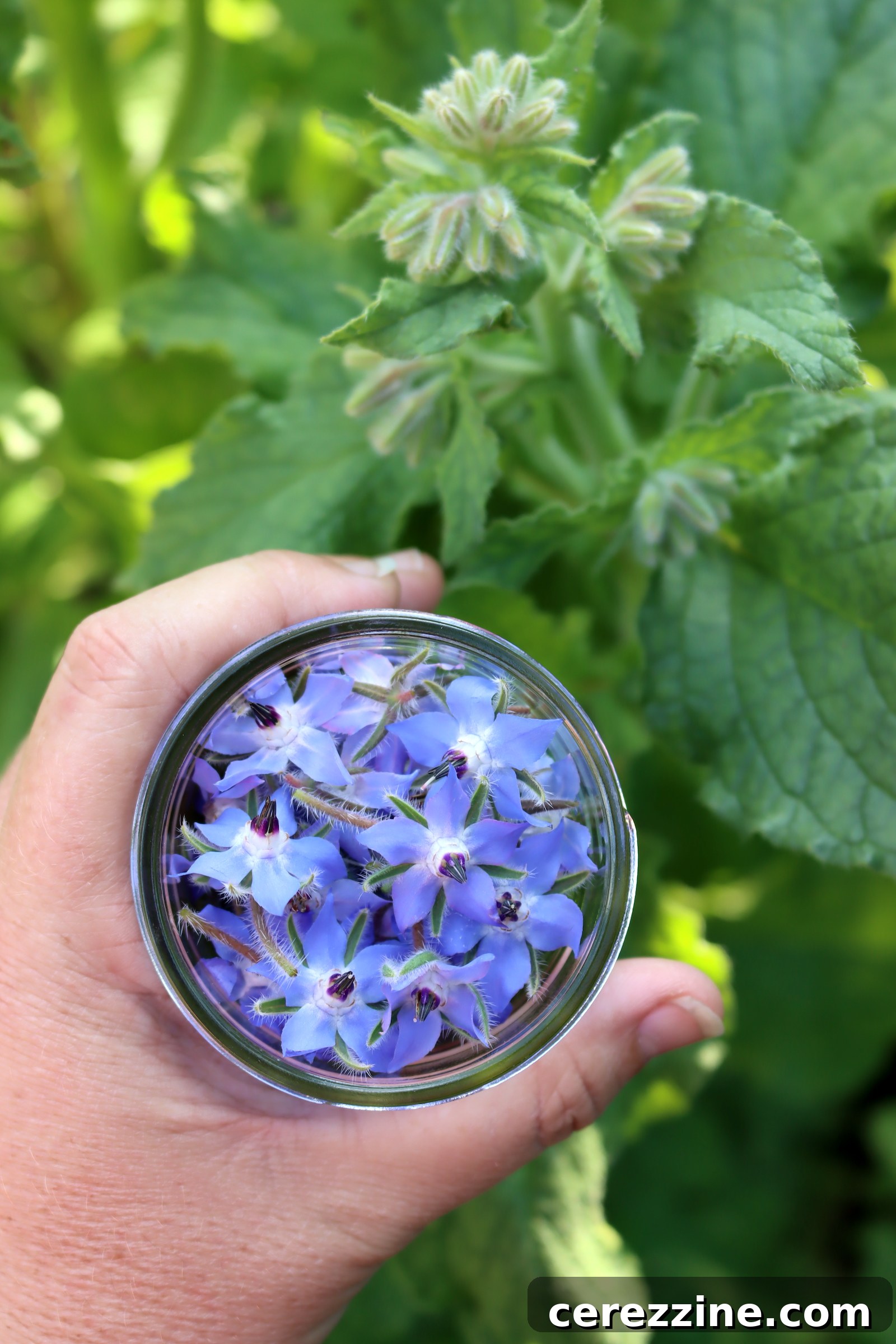
Essential Ingredients for Your Exquisite Borage Jelly
Crafting a delectable flower jelly from borage requires a select few, high-quality ingredients. You’ll need freshly harvested borage, encompassing either its leaves, flowers, or a preferred combination of both. Alongside this herbal star, you’ll require pure water for infusion, granulated sugar to sweeten and aid in setting, pectin for that perfect jelly texture, and a touch of lemon juice, which is far from optional.
For a standard batch yielding approximately 4 to 5 jars (each 8 oz or half-pint), gather the following:
- 4 cups Fresh Borage, finely chopped (a mix of leaves and flowers is recommended for the best flavor)
- 4 cups Water (for steeping the borage tea)
- 2 tablespoons Lemon Juice (freshly squeezed or bottled; a critical ingredient for flavor balance, pectin set, and canning safety) or ½ teaspoon Citric Acid powder (if substituting)
- 1 to 4 cups Granulated Sugar (adjust based on your pectin type and desired sweetness level – *see note below for detailed guidance*)
- 1 box (1.75 oz) Powdered Pectin (Ensure it’s suitable for Regular or Low Sugar recipes, depending on your sugar choice)
While the vibrant blue flowers of borage are visually stunning on the plant, they tend not to impart a strong blue or pink color to the finished jelly. Instead, the resulting hue will be a lovely, delicate light green, consistent whether you use predominantly leaves or flowers. Therefore, feel free to use whichever part of the plant you have in abundance, or a mixture for a well-rounded flavor profile.
If you’re set on achieving a more distinct pink or purple jelly, a creative approach is necessary. Try using just the borage flowers for the base, then add a small handful of muddled blueberries or blackberries during the steeping phase. For those who prefer an even more pronounced green herbal jelly, a few drops of natural green food coloring can be incorporated at the end of the cooking process to enhance its visual appeal.
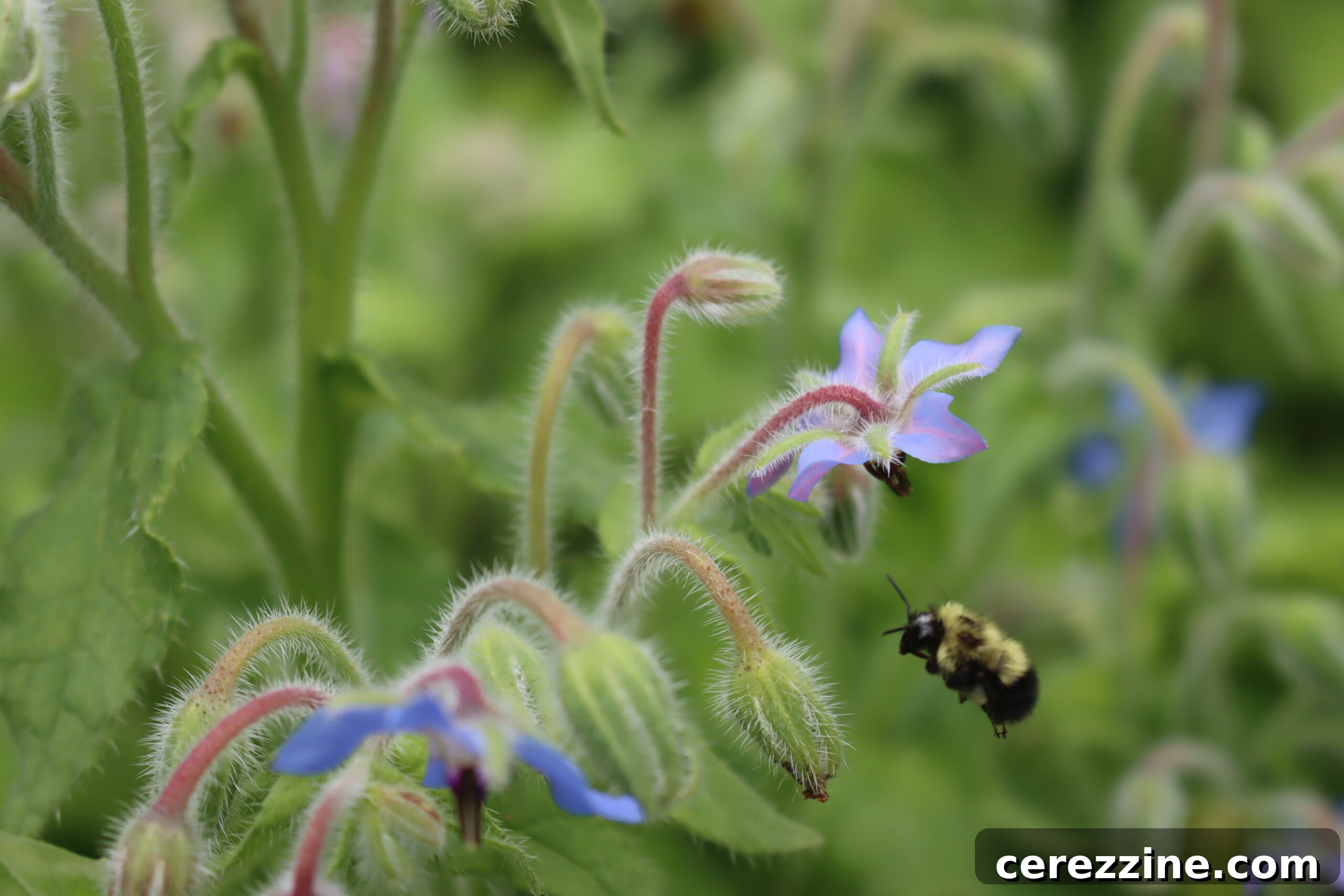
The role of lemon juice in this recipe cannot be overstated. It plays a multifaceted, crucial part: not only does it wonderfully balance the sweetness of the sugar, adding a touch of tart contrast that brightens and enhances the subtle cucumber notes of the borage, but it also serves a vital technical purpose. Lemon juice significantly lowers the pH of the mixture, which is absolutely essential for activating the pectin and ensuring your jelly sets properly. Furthermore, this increased acidity is critical for the preservation process, making your homemade borage jelly safe for canning and extending its shelf life considerably.
Even if you plan to store your jelly in the refrigerator and do not intend to can it, the inclusion of lemon juice remains non-negotiable for flavor and proper set. Should you desire a more neutral flavor profile without the distinct citrus note, you can effectively substitute lemon juice with citric acid powder. When using citric acid granules, remember they are much more concentrated than citrus juice. A general rule for substitution is 1/4 teaspoon of citric acid for every 1 Tablespoon of lemon juice (or lime juice) called for in a recipe. Given that this recipe specifies 2 Tablespoons of lemon juice, you would need precisely 1/2 teaspoon of citric acid powder per batch for the correct acidity.
When it comes to pectin, personal preference and desired sugar levels guide the choice. Generally, Sure-Jell regular pectin or Sure-Jell low sugar pectin are highly recommended. These brands are consistently dependable and, in my experience, yield the most desirable texture for homemade jellies, having experimented with nearly every type of pectin available on the market.
If you opt for **regular Sure-Jell pectin**, it’s crucial to understand its requirement for a minimum of 4 cups of sugar. This type of pectin is formulated to gel effectively with a 1:1 ratio of liquid to sugar, meaning for 4 cups of borage tea, 4 cups of sugar are necessary to achieve a firm set. This results in a classic, often very sweet, “old-fashioned” style jelly.
Conversely, Sure-Jell low sugar pectin offers greater flexibility. It is designed to gel with varying amounts of sugar, allowing you to use as little as 1/2 cup for a subtly sweet jelly, or up to 2 cups for a lower-sugar version that still provides ample sweetness. This versatility makes low-sugar pectin a staple in my pantry, as it performs admirably regardless of the sugar quantity chosen, even in full-sugar recipes.
For those utilizing Ball Flex Batch Pectin, you will need 6 tablespoons, which is equivalent to the contents of a standard 1.75-ounce box of other powdered pectin types. This measurement applies to both their regular and low-sugar canister varieties.
While the recipe card below provides instructions for liquid pectin, it typically demands a significantly higher amount of sugar—often around 7 cups of sugar for every 4 cups of liquid. Due to these astronomical sugar requirements for setting, liquid pectin is generally not recommended, but the option is included for those who specifically prefer or have access to this type of pectin.
Crafting Your Borage Jelly: A Step-by-Step Guide
Embark on the enjoyable process of making borage jelly by first preparing your borage. You’ll need approximately 2 to 4 cups of freshly harvested borage, thoroughly washed and finely chopped. This can be a mix of leaves, flowers, or whichever part of the plant you have readily available. A quart-sized jar is often ideal for collecting the chopped borage, as it’s perfectly sized for the subsequent steeping step. However, remember that fine chopping is key for optimal flavor extraction, so ensure leaves are torn or cut before steeping.
Step 1: Create Your Borage Infusion. Place the finely chopped borage into a heatproof container. Pour 4 cups of boiling water directly over the borage. Allow this herbal tea to steep for a good 15 to 20 minutes. This infusion time is crucial for extracting the borage’s delicate cucumber flavor and subtle green color.
Step 2: Strain and Acidify. After steeping, strain the borage tea through a fine-mesh sieve or cheesecloth into a clean jelly pot or large saucepan, ensuring all solid plant material is removed. Add 2 tablespoons of lemon juice to the strained tea. The lemon juice is vital: it not only brightens the flavor and helps the pectin set, but it also lowers the pH, making the jelly safe for canning. Even if you’re not canning, don’t skip this ingredient!
Step 3: Introduce Pectin. Bring the borage tea and lemon juice mixture to a rolling boil over high heat. Once boiling, thoroughly stir in one box (1.75 oz) of powdered pectin. Continue stirring vigorously until the pectin is completely dissolved. Maintain a full, rolling boil for precisely 1 minute. It is important to add the pectin and boil *before* adding the sugar, as this order is critical for the pectin to activate correctly and ensure your jelly sets.
Step 4: Add Sugar and Final Boil. Now, carefully add the granulated sugar to the boiling mixture. The amount of sugar will depend on the type of pectin you are using. For standard pectin, a 1:1 ratio of sugar to liquid is required; since you’re working with 4 cups of borage tea, you will need 4 cups of sugar. If you are using a “low sugar” pectin, such as Sure-Jell low sugar, you have the flexibility to use less sugar, typically between 1/2 to 2 cups for a 4-cup tea base, depending on your sweetness preference.
Stir the mixture continuously until all the sugar is completely dissolved. Once dissolved, return the jelly mixture to a vigorous, hard boil for exactly 1 minute. This final boil ensures the pectin is fully activated with the sugar.
Step 5: Ladle into Jars. After the 1-minute hard boil, remove the pot from the heat immediately. Carefully ladle the hot borage jelly into prepared, clean jars, leaving a precise 1/4 inch of headspace at the top of each jar. Wipe the rims clean to ensure a good seal.
Preserving Your Harvest: Canning Borage Jelly for Year-Round Enjoyment
While canning this delightful herbal jelly is entirely optional, it offers the immense benefit of long-term pantry storage. If you prefer not to can, your freshly made borage jelly can be simply stored in the refrigerator, where it will maintain its quality for several weeks. Freezing is another viable option, provided you use freezer-safe jars, extending its freshness for several months.
However, many home canners, myself included, highly value the convenience and simplicity of processing the jars in a water bath canner. This method allows you to store your vibrant borage jelly right on the pantry shelf, free from the constraints of refrigerator or freezer space. Imagine enjoying the sweet cucumber flavor of borage jelly any time of year, a true taste of spring no matter the season.
To safely can this borage jelly, it is absolutely imperative that you have included the lemon juice in the recipe. The acidity from the lemon juice is critical for lowering the pH of the mixture sufficiently, creating an environment that is safe for water bath canning and preventing the growth of harmful bacteria.
Water Bath Canning Process:
- Prepare Your Equipment: Before you even begin making the jelly, ensure your water bath canner is filled and heating. Wash your canning jars thoroughly in hot, soapy water and rinse well. Keep them hot in the canner or a separate pot of hot water. Prepare your canning lids by washing them and setting them aside; they do not need to be sterilized, just clean and ready.
- Fill Jars: Once your borage jelly is cooked, carefully ladle the hot jelly into the prepared hot canning jars, leaving precisely 1/4 inch of headspace at the top.
- Clean Rims and Apply Lids: Use a clean, damp cloth to wipe the rims of each jar clean. This prevents any residue from interfering with the seal. Center a clean lid on each jar, then screw on the bands until they are fingertip tight (just enough to secure the lid without overtightening).
- Process Jars: Gently place the filled and sealed jars into the simmering water bath canner, ensuring they are fully submerged by at least 1 inch of water. Bring the water to a rolling boil.
- Start Timer: Once the water reaches a full, steady boil, begin timing. Process half-pint or pint jars for 10 minutes. If you are canning at an altitude above 6,000 feet, increase the processing time to 15 minutes to ensure safety.
- Cool and Check Seals: After the processing time is complete, turn off the heat and carefully remove the canner lid. Allow the jars to rest in the hot water for 5 minutes before carefully removing them with a jar lifter. Place the hot jars on a clean towel on your counter, ensuring they are not touching each other, and allow them to cool undisturbed for 12 to 24 hours. As they cool, you will hear the satisfying “ping” sound as the lids seal.
Once cooled, check the seals by pressing the center of each lid. If the lid is concave and does not flex, it is properly sealed. Properly canned and sealed jars will maintain their quality on the pantry shelf for 12-18 months. Once a jar is opened, refrigerate it and consume within a few weeks.
Creative Twists: Borage Jelly Variations and Serving Inspirations
The refreshing, subtle cucumber flavor of borage jelly makes it surprisingly versatile, working equally well in both sweet and savory applications. Don’t limit yourself to just the classic sweet spread!
For a unique savory twist, consider adapting a savory herbal jelly recipe, incorporating fresh borage. You might add a pinch of black pepper, a hint of garlic powder, or even a touch of white wine vinegar (while maintaining the overall acidity for canning safety) to create a sophisticated accompaniment for cheeses, roasted meats, or as a glaze for poultry or fish.
Beyond variations, think creatively about serving your borage jelly:
- Classic: On warm scones, toast, or freshly baked biscuits.
- Sweet Applications: Swirled into plain yogurt, drizzled over vanilla ice cream, or layered in a trifle.
- Savory Pairings: A unique addition to a gourmet cheese board, paired with goat cheese or a mild cheddar.
- Culinary Enhancements: Whisked into a vinaigrette for a refreshing salad dressing, or melted slightly and brushed over grilled chicken or fish for a subtle, unexpected flavor boost.
Explore More Culinary Uses for Borage
Borage is a truly remarkable and underutilized herb with a wealth of culinary applications beyond just jelly. If you’re looking for more exciting ways to incorporate borage into your kitchen, consider these delightful ideas:
- Borage Leaves with Walnut Sauce: A sophisticated side dish that highlights the herbaceous notes of borage.
- Borage Tea: A simple, soothing beverage that captures the essence of the plant.
- Borage in Salads: The young leaves and flowers can be added fresh to salads for a refreshing, slightly crisp texture and cucumber flavor.
- Borage Lemonade: Muddle borage flowers and leaves into your lemonade for a unique twist and a beautiful presentation.
- Borage Infused Vinegar or Oil: Create flavored vinegars or oils for dressings and cooking.
If you tried this Borage Jelly Recipe, or any other recipe on Creative Canning, we’d love to hear from you! Please leave a ⭐ star rating and share your thoughts in the 📝 comments below!
Stay connected with our latest recipes and canning adventures by following us on social media!
More Edible Flower Jellies to Explore
Tulip Jelly: A Unique Spring Delight
Are Flower Jellies Safe for Canning? Essential Guidelines
Capturing Spring’s Scent: Homemade Lilac Jelly
Elegant Peony Jelly: A Floral Delicacy
Borage Jelly
Pin
Rate
Ingredients
- 4 cups borage leaves or flowers, chopped
- 4 cups water
- 2 tbsp lemon juice
- 1 to 4 cup sugar, see note
- 1 box powdered pectin, 1.75 oz pectin (Regular or Low Sugar)
Instructions
-
Harvest borage leaves and flowers, carefully picking them over to remove any bugs. Give them a quick wash and then chop finely.
-
Pour 4 cups boiling water over the top of the chopped borage and allow the tea to infuse for about 10 minutes.
-
Strain the borage tea into a saucepan or jam pot. Add the lemon juice, which will help bring out the best color in the jelly, but it’s also required to balance the sugar in the recipe and help the pectin set. Beyond that, it adds acidity to help preserve the jelly, so don’t skip the lemon!
-
Bring the mixture to a boil and add the powdered pectin, stirring to dissolve. Allow the mixture to boil for 1 minute before adding sugar. (Note: Do not add the sugar at the same time as the pectin, or before the pectin, or the jell will not set.)
-
Add the sugar, stirring to dissolve (See notes on quantity). Bring the mixture back to a full boil for 1 minute before ladling into jelly jars leaving 1/4 inch headspace.
-
If canning, process in a water bath canner for 10 minutes. Otherwise, allow the jars to cool completely on the counter before storing in the refrigerator (for up to a month) or the freezer for up to 6 months.
Notes
Sugar & Pectin Guidance
If using standard pectin, you must adhere to a 1:1 ratio of liquid to sugar for the jelly to set properly. This means for 4 cups of borage blossom tea, you would need a minimum of 4 cups of sugar. This creates a very sweet, traditional “old-fashioned” jelly. To achieve a lower sugar jelly, simply use a low-sugar pectin and follow its instructions for reduced sugar quantities. We highly recommend Sure-Jell Low Sugar Pectin for its reliability.
Reducing the sugar content will naturally result in a lower yield. The estimated yield of 5 half-pint jars is based on a full-sugar recipe.
If you choose to use Pomona’s Universal Pectin, please note that its instructions differ significantly as it is a two-part, low-sugar pectin system. Follow the specific instructions provided within the Pomona’s pectin box, typically under a similar herb jelly recipe like mint jelly.
For those opting for liquid pectin, the order of operations is reversed (sugar is added first, pectin last). Liquid pectin also necessitates a considerably higher amount of sugar to set, often requiring 7 cups of sugar for 4 cups of liquid. While it will work, we generally do not recommend liquid pectin due to these high sugar requirements.
If you are using Ball Flex Batch Pectin, you will need 6 tablespoons. This amount is equivalent to a 1.75 oz box of other powdered pectin brands and applies to both their regular and low-sugar varieties in canisters.
Nutrition Information
Nutrition information is automatically calculated, so should only be used as an approximation.
Like this? Leave a comment below!
Discover More Captivating Flower Jelly Recipes
Expand your pantry with these delightful and unique floral jellies, perfect for adding a touch of elegance and garden freshness to your table!
- Peony Jelly: A Luxurious Spring Treat
- Dandelion Jelly: Capturing Sunshine in a Jar
- Lilac Jelly: Infused with the Scent of Spring
- Violet Jelly: A Delicate and Enchanting Preserve
- Rose Petal Jelly: Elegance in Every Spoonful
- Elderflower Jelly: Sweet and Aromatic
Embrace the Garden: More Herbal Jellies to Savor
Flowers aren’t the only treasures from the garden that make exquisite jellies! Explore the rich and diverse world of herbal preserves.
- Savory Herbal Jelly: Unexpected Flavors for Culinary Adventures
- Lemon Balm Jelly: A Zesty and Soothing Spread
- Calendula Jelly (Marigold Jelly): Golden Sunshine in a Jar
- Mint Jelly (coming soon): The Classic Herb in a Sweet Form
- Tulsi Jelly (coming soon): An Aromatic and Medicinal Delight