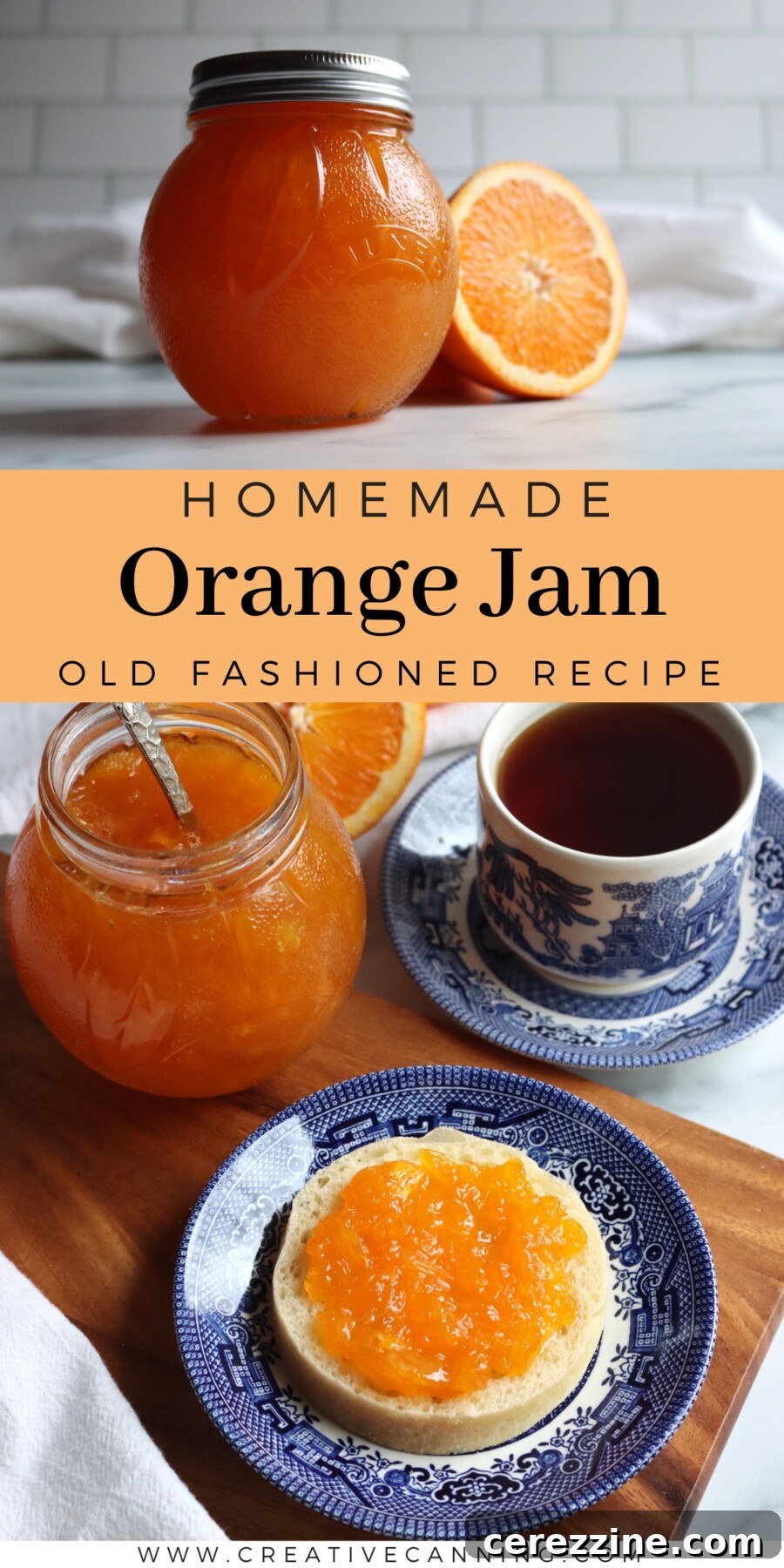
Orange jam offers a delightful escape into the vibrant world of citrus, delivering pure, concentrated orange flavor without the common bitterness found in traditional marmalade. Crafted with ripe, sweet oranges, fresh lemon juice, and granulated sugar, this exceptional jam comes together in under an hour and achieves a perfect, natural set without any added pectin. It promises a bright, zesty taste that will undoubtedly earn a permanent spot on your pantry shelves.
Its fresh, sun-kissed essence makes it a versatile preserve, perfect for spreading on toast, enhancing baked goods, or even adding a unique twist to savory dishes. This recipe prioritizes ease and flavor, ensuring that even novice preservers can achieve delicious results.
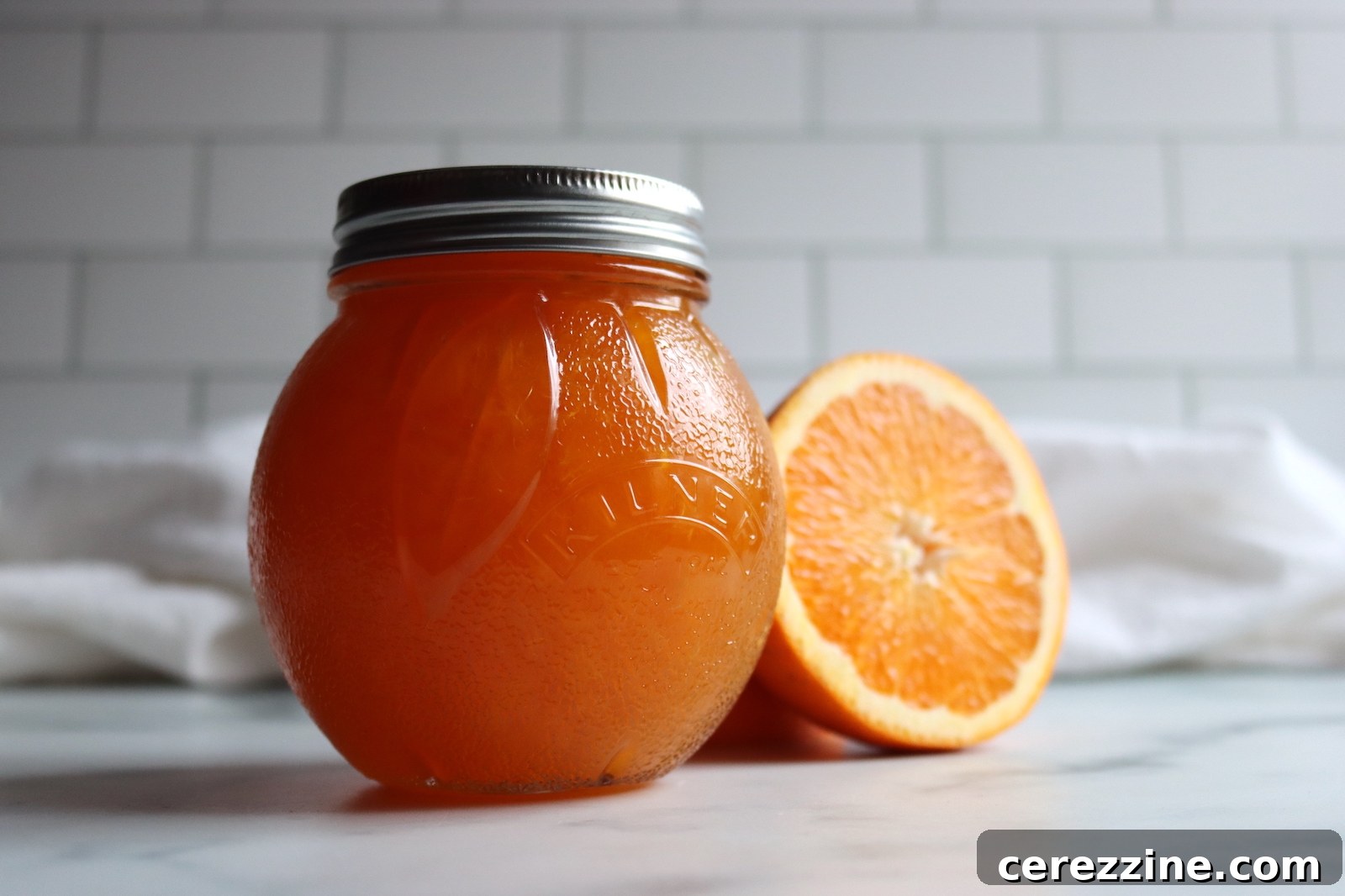
This recipe has been carefully reviewed for safety and accuracy by a Master Food Preserver, certified through the esteemed University of Cornell Cooperative Extension.
Orange Jam vs. Traditional Marmalade: A Sweet Revelation
While traditional orange marmalade often garners significant attention, orange jam presents a compelling alternative, offering that same bright, sunny citrus flavor without the inclusion of the bitter peel. Traditional marmalade recipes derive their distinctive bitterness from the orange peel and pith, a characteristic cherished by some but often disliked by others, especially children.
This particular orange jam recipe was developed to cater to those who prefer a purely sweet and bright citrus taste. By meticulously removing all pith and peel, we eliminate any source of bitterness, allowing the natural sweetness and aromatic qualities of the orange to shine through. The secret lies in using orange supremes – segments that are entirely free of peel, pith, and membrane. This preparation ensures a smooth, luscious texture and a flavor profile that is nothing short of pure orange bliss. The addition of fresh lemon juice is crucial here; it not only brightens the flavor but also aids significantly in the jam’s natural setting process, negating the need for artificial pectin.
Choosing the Perfect Oranges for Your Jam
Any sweet orange variety will yield excellent results for this jam. Navel oranges are typically the easiest to find and prepare, offering large, manageable segments that simplify the ‘supreming’ process. For those seeking a deeper hue and a more nuanced flavor, blood oranges are a fantastic choice. During the winter months, tangerines and clementines can also be used, though their higher sugar content may result in a more intensely sweet jam. When selecting your fruit, prioritize sweet, juicy varieties that are relatively easy to peel for the best outcome.
Notes from My Kitchen: The Art of Sweet Orange Jam

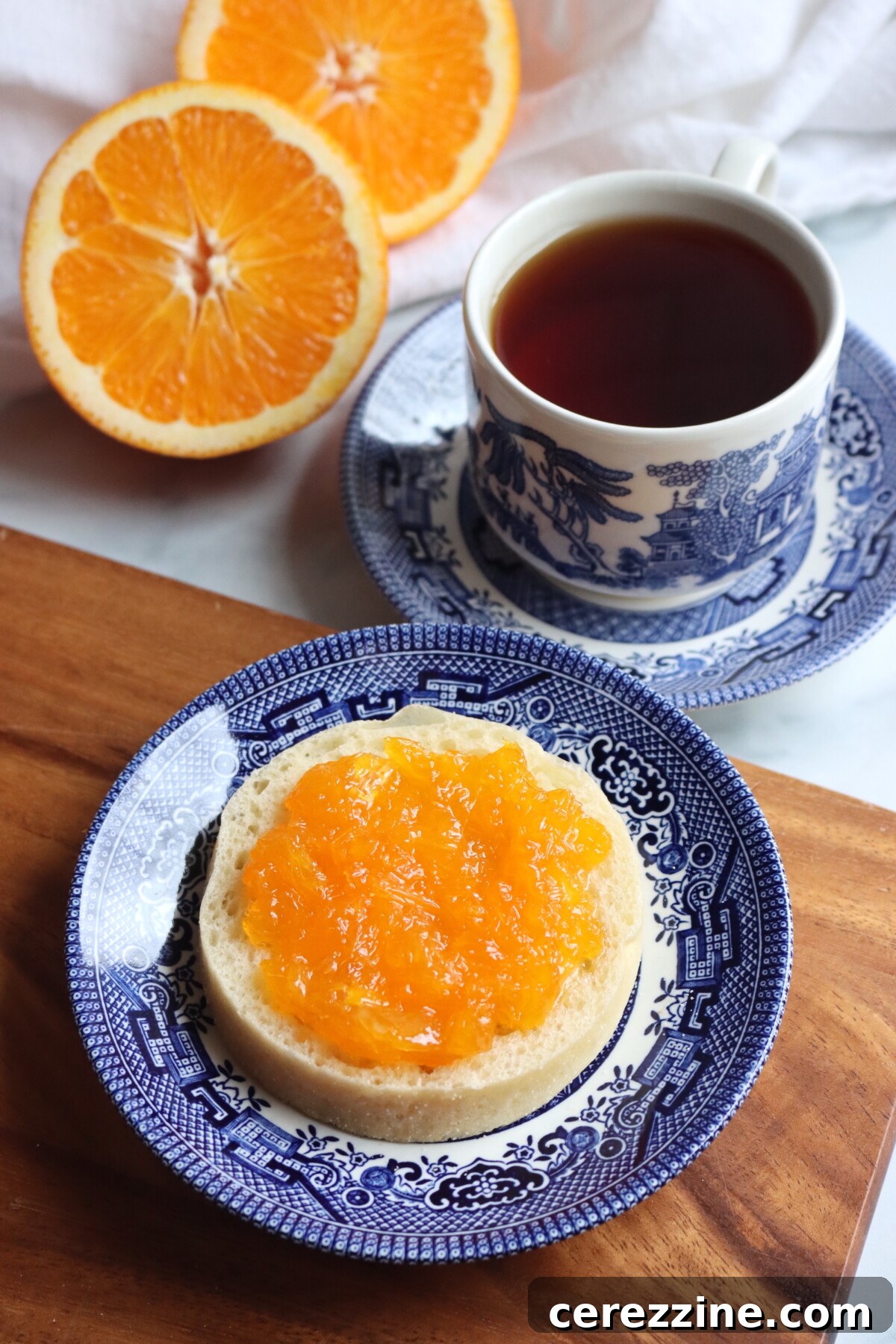
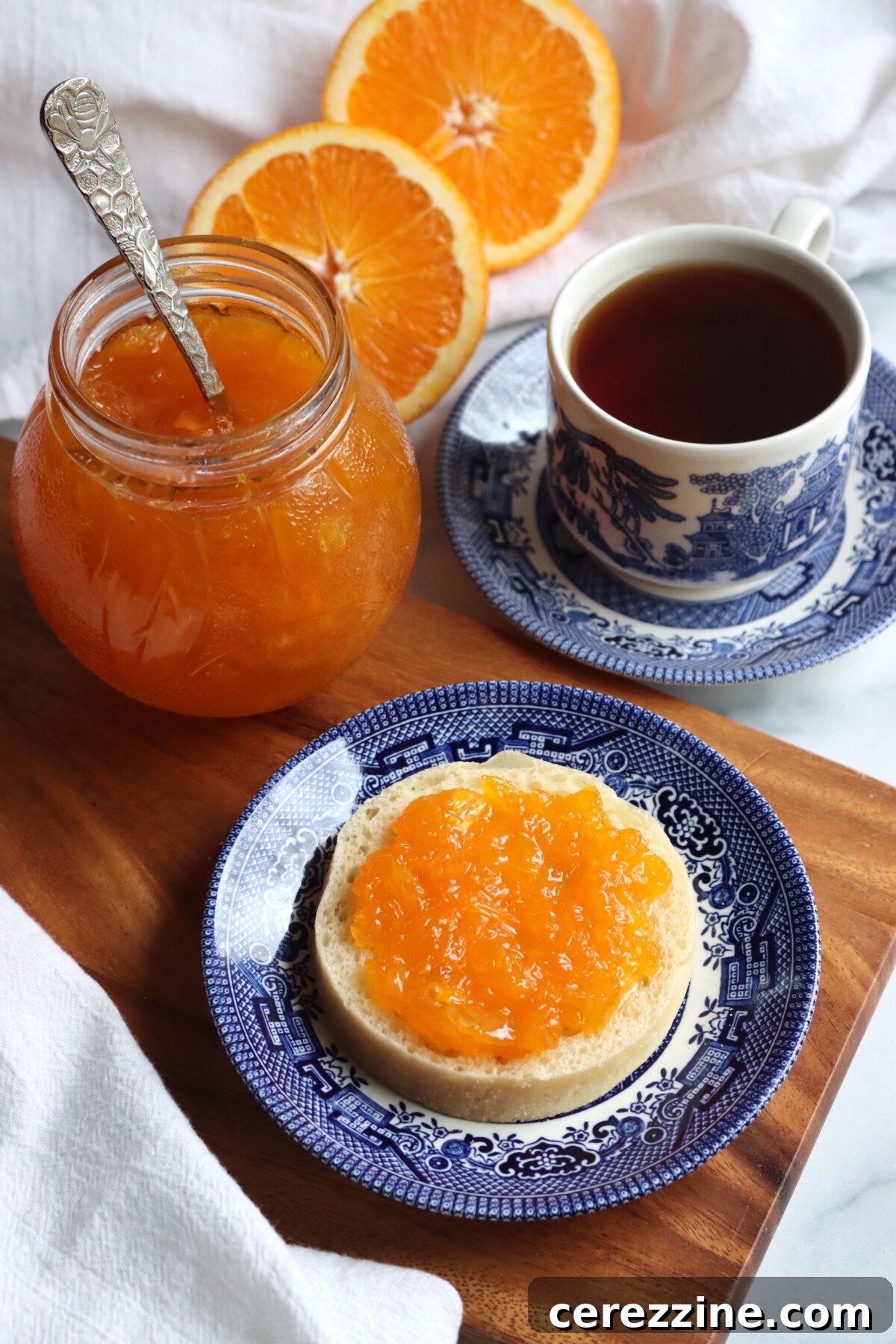
This orange jam truly bursts with intense orange flavor, artfully balanced by the acidity of lemon juice, which prevents it from becoming overly sweet. Don’t be tempted to skip the lemon juice; it’s a vital component for both taste and proper setting. Investing the time to meticulously cut proper orange supremes is absolutely worth the effort. By removing every trace of peel, pith, and membrane, the resulting jam achieves a delightful sweetness with absolutely no hint of bitterness. Its consistency is wonderfully chunky yet boasts a soft, spoonable set, which is precisely how we prefer it.
Just this week, my daughter used a jar of this homemade orange jam as a delectable filling for a birthday cake. She paired it with a classic vanilla cake and a rich cream cheese frosting, and the combination tasted remarkably like an orange creamsicle – truly divine! Of course, it’s also utterly fantastic slathered generously on warm toast, which is where most of our jars traditionally find their delicious end.
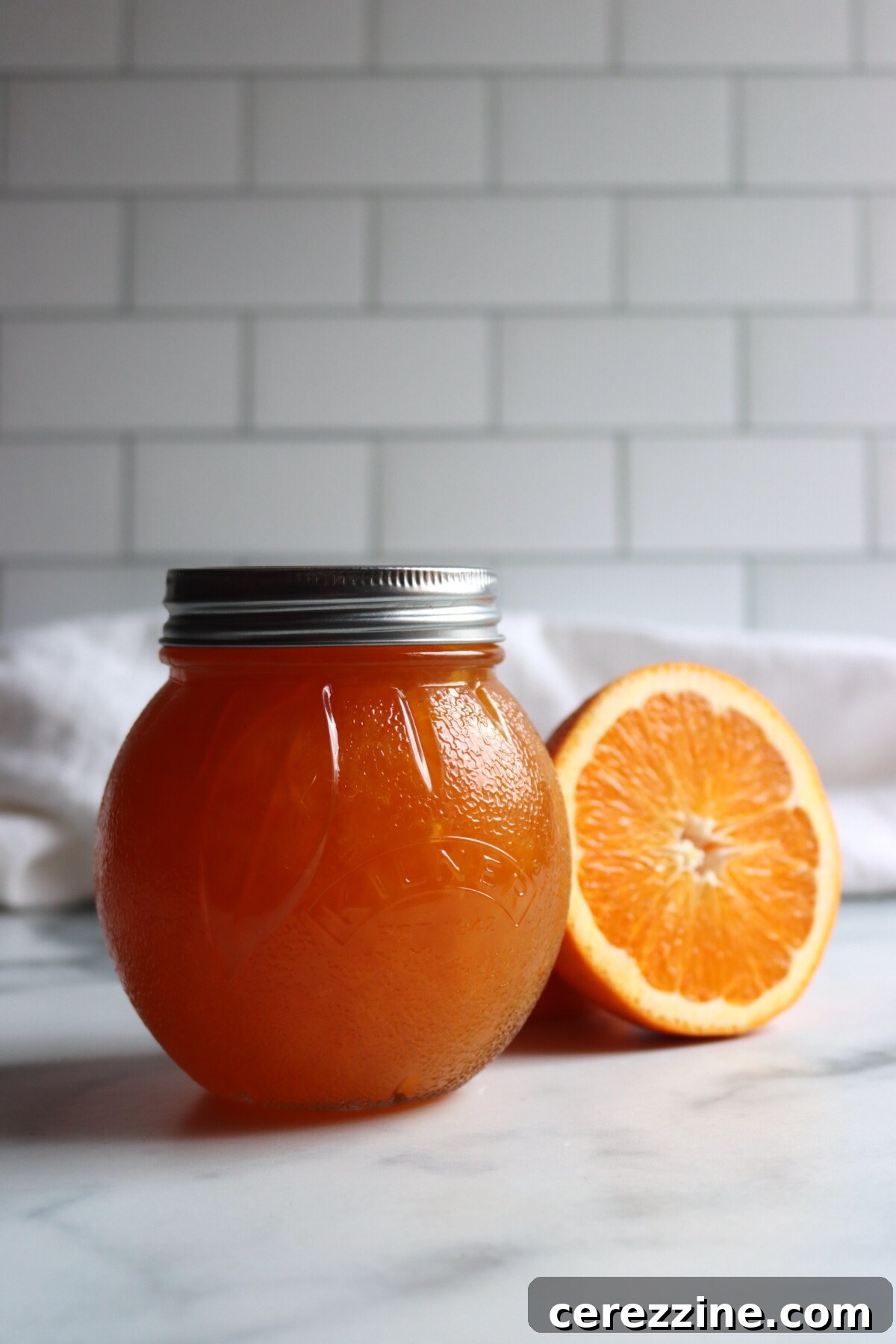
Quick Look: Orange Jam Recipe Essentials
- Recipe Name: Homemade Orange Jam (No Pectin)
- Recipe Type: Jam without Added Pectin
- Canning Method: Water Bath Canning (Optional)
- Preparation Time: Approximately 30-40 minutes (mostly for supreming oranges)
- Cooking Time: 8 to 10 minutes (actual boiling time)
- Canning Processing Time: 10 minutes for half-pint jars
- Yield: 3 to 4 half-pint (8 oz) jars
- Recommended Jar Size: Half-pint jars
- Headspace: 1/4 inch
- Key Ingredients: Sweet orange supremes, fresh lemon juice, and granulated sugar. No additional pectin is required for this recipe.
- Safety & Source: This recipe is home-developed, adhering strictly to standard jam ratios for no-pectin preserves and current NCHFP canning guidelines to ensure safety and quality.
- Difficulty Level: Easy. While the preparation of oranges takes a little time and care, the cooking and canning steps are quick and straightforward.
- Similar Recipes: If you appreciate this old-fashioned jam made without pectin, you might also enjoy other traditional preserves like Traditional Grape Jam, Homemade Blackberry Jam, and Strawberry Jam Without Pectin, all relying on just fruit, sugar, and lemon juice. For more citrus preserves, explore our other orange canning recipes, such as orange slices in honey syrup or canning orange segments.
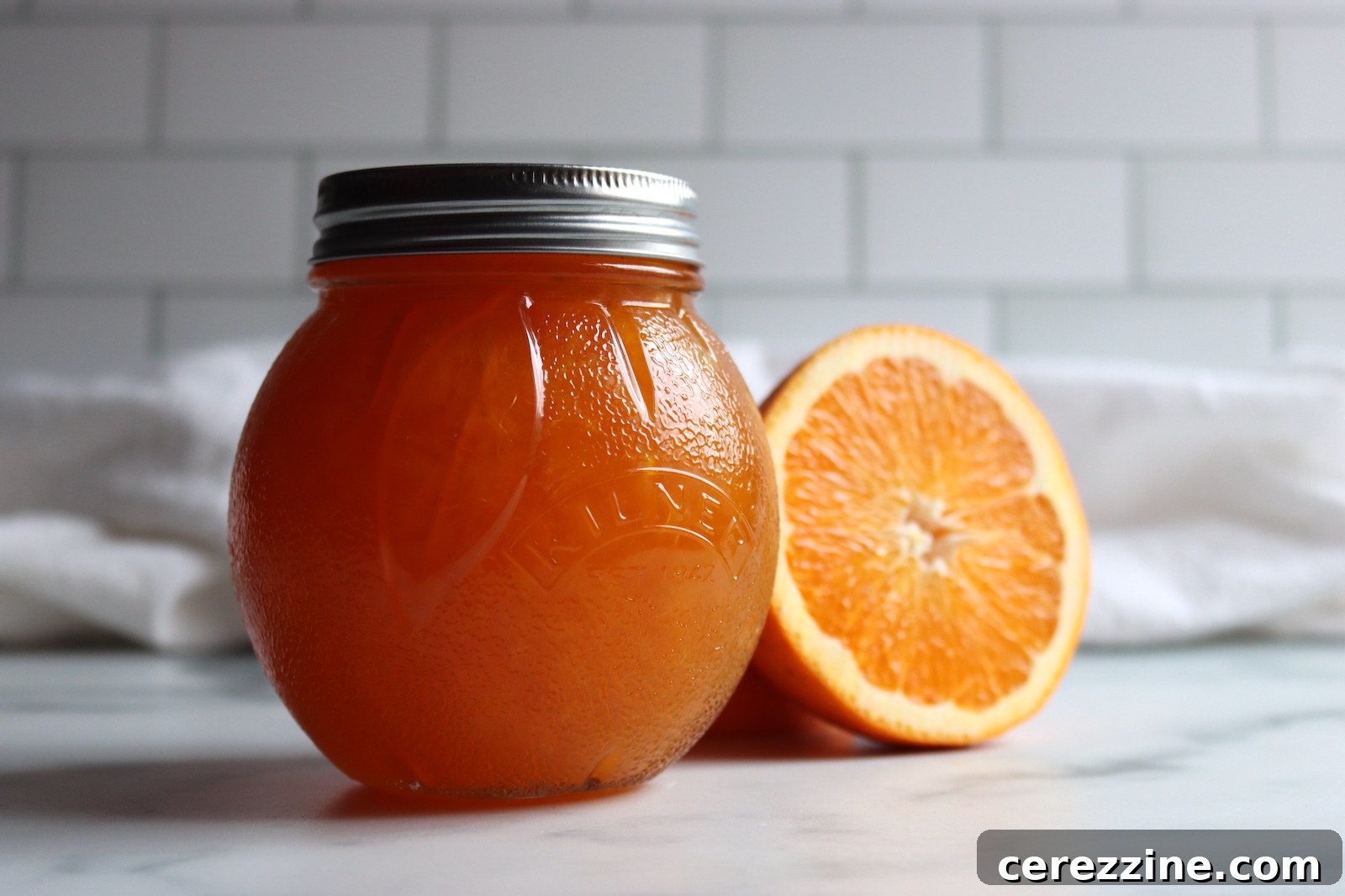
Essential Ingredients for Perfect Orange Jam
This simplified recipe calls for just three core ingredients, harnessing the natural pectin in oranges to achieve a beautiful set without any artificial additives. The precise ratio is 3 parts sugar to 4 parts prepared orange supremes by volume. This balance is critical for both achieving the optimal flavor and ensuring a proper set, so it’s important not to alter these proportions.
- Oranges: Start with sweet, easy-to-peel orange varieties. Navel oranges are widely available and their large segments make them the easiest to work with for supreming. Blood oranges will impart a captivating deeper color and a more complex, subtly tart flavor to your jam. Cara Cara oranges, with their milder and sweeter profile, offer a delicate option. Regardless of your choice, the ultimate goal is to yield 4 cups of prepared orange supremes, which typically translates to about 1.5 pounds of fruit. This usually requires purchasing approximately 5 pounds of medium-sized whole oranges. Remember to measure your supremes *after* preparation, and adjust the sugar quantity accordingly if your yield differs from the 4-cup target.
- Lemon Juice: This ingredient serves two absolutely vital functions: it brightens and balances the jam’s sweetness, preventing it from tasting cloying, and crucially, it contributes to creating the ideal acidic environment necessary for the jam to set without added pectin. Do not skip or reduce the lemon juice. While fresh lemon juice offers the best, most vibrant flavor, bottled lemon juice can be used as a convenient alternative. Though not strictly required for canning safety with high-acid fruit like oranges, its role in achieving the desired finished texture and balanced flavor is indispensable.
- Sugar: Use standard granulated white sugar for this recipe. The 3:4 ratio of sugar to fruit by volume is specifically designed to facilitate the jam’s natural set without the need for additional pectin. It is imperative not to reduce the amount of sugar, as it is fundamental to the jam’s setting properties, not just its sweetness. If you desire a lower-sugar preserve, it is recommended to use Pomona’s Pectin and follow their specific instructions, as they are formulated for reduced-sugar applications.
Step-by-Step Instructions for Homemade Orange Jam
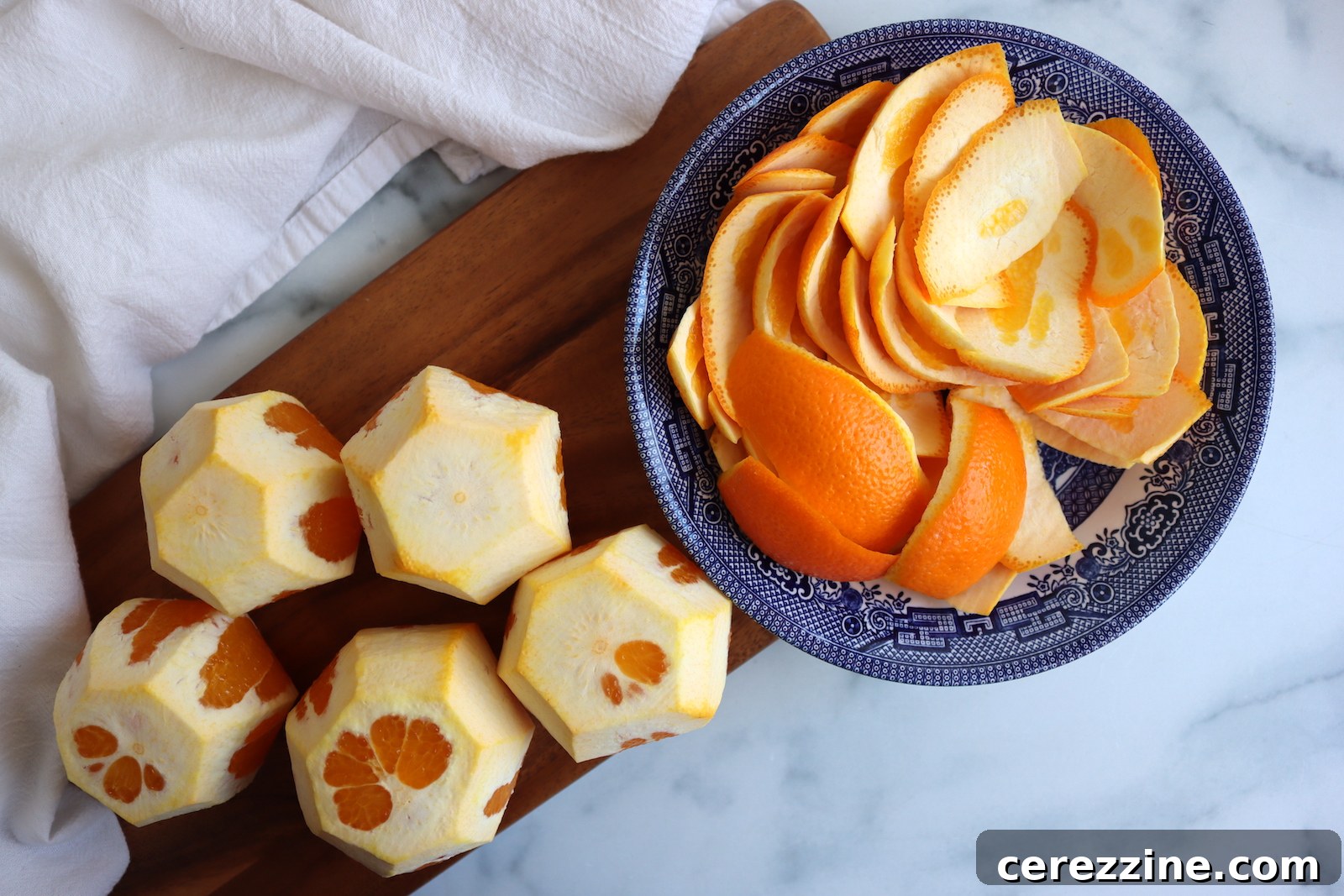
- Prepare the Oranges: Begin by thoroughly washing your oranges. Using a sharp knife, carefully remove the peel and all white pith from each orange. This initial step is crucial to prevent bitterness. Consider saving the peels; they can be wonderfully repurposed for candied orange peel.
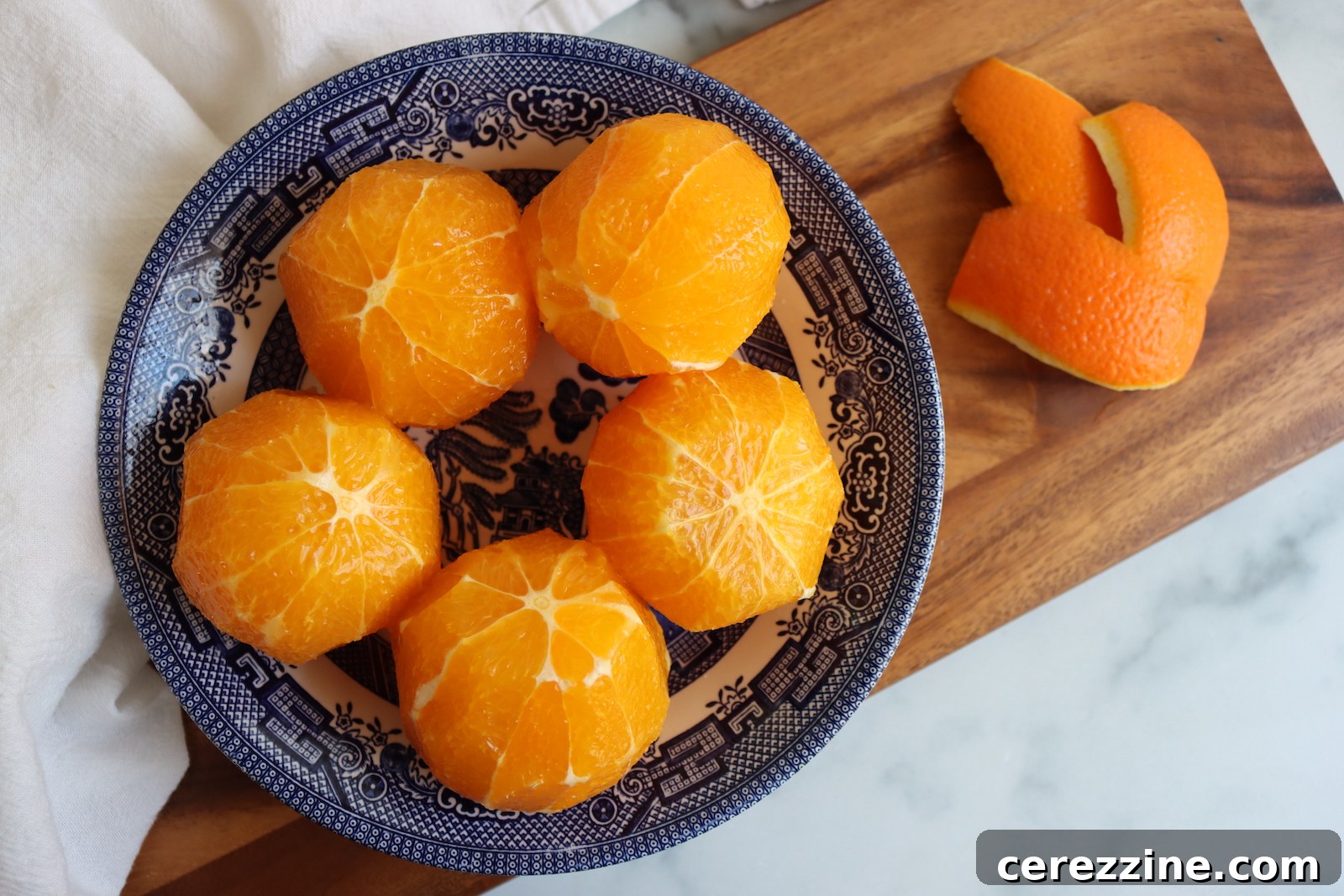
- Remove Pith and Membranes: Go over each peeled orange again with a smaller paring knife. Meticulously trim away any remaining bits of white pith and all internal membranes. It is essential to remove every last trace, as even small pieces of pith can introduce unwanted bitterness into your finished jam.
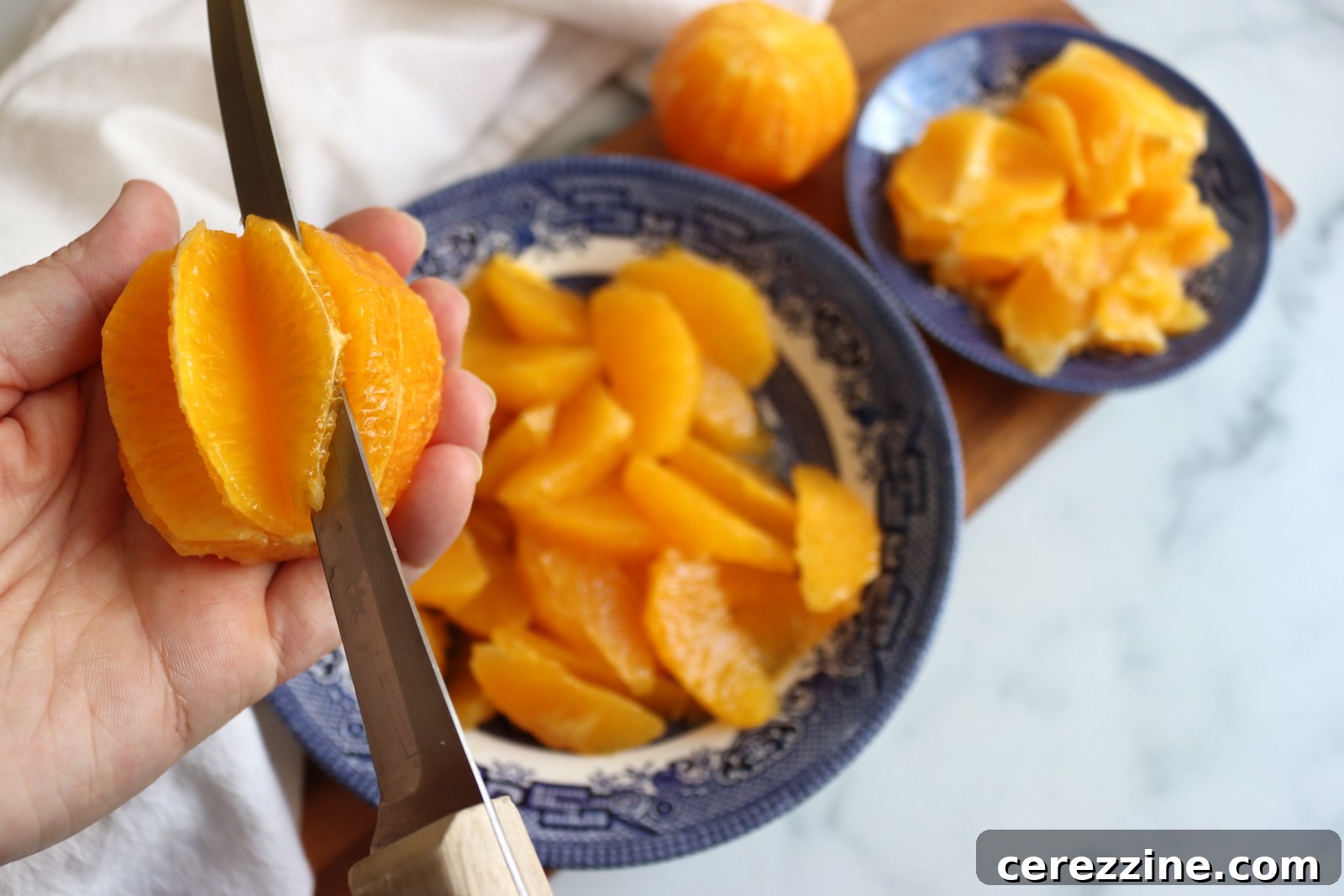
- Supreme the Oranges: Work over a bowl to collect any precious juice. Carefully slice along each membrane to release the pure, fleshy orange segments. These membrane-free segments are known as “supremes.”
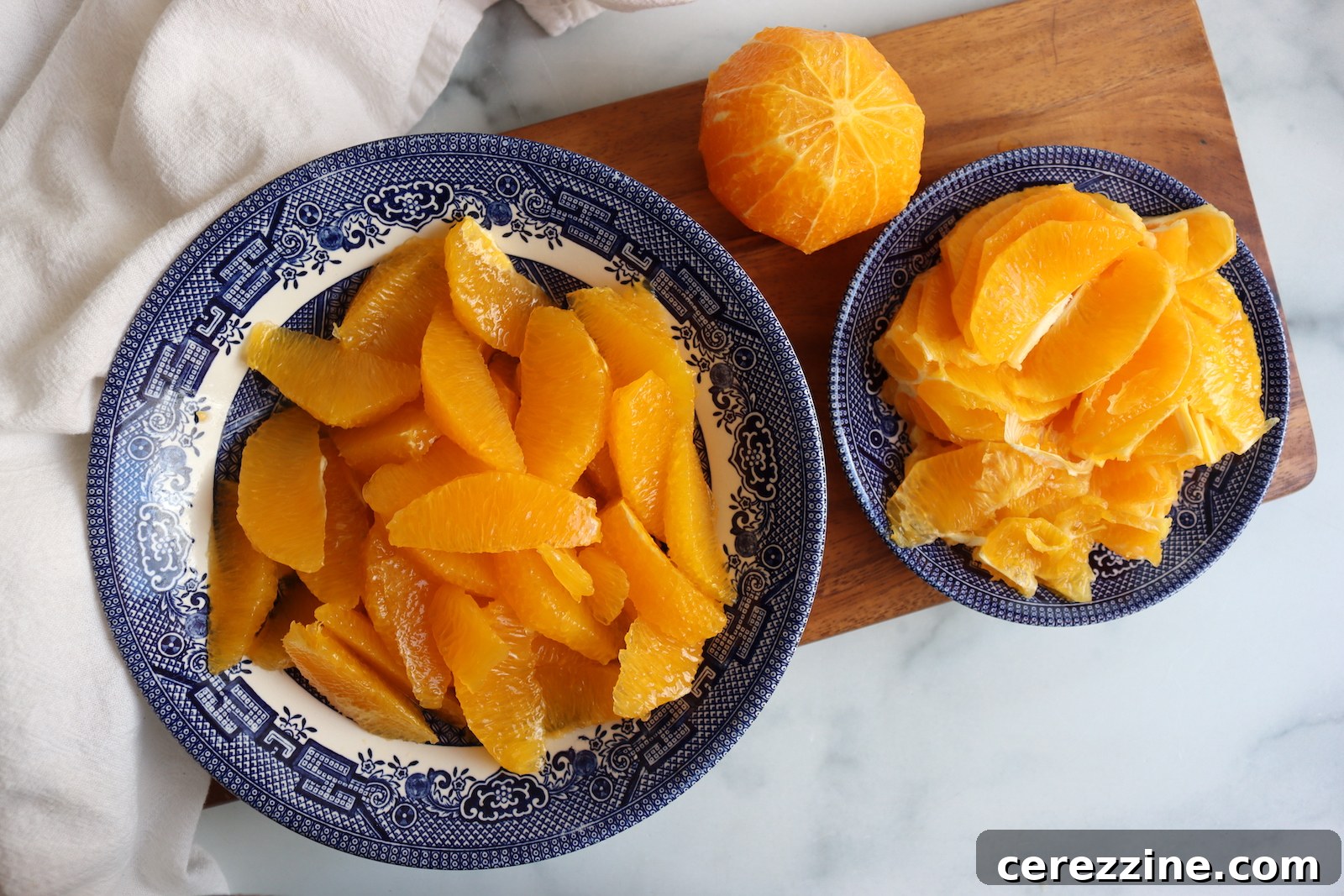
- Measure and Combine: Measure your prepared orange supremes. You will need exactly 4 cups. If your yield is slightly different, adjust the sugar proportionally to maintain the crucial 3:4 sugar-to-fruit ratio by volume. Combine the measured supremes, lemon juice, and sugar in a wide, heavy-bottomed pot or Dutch oven.
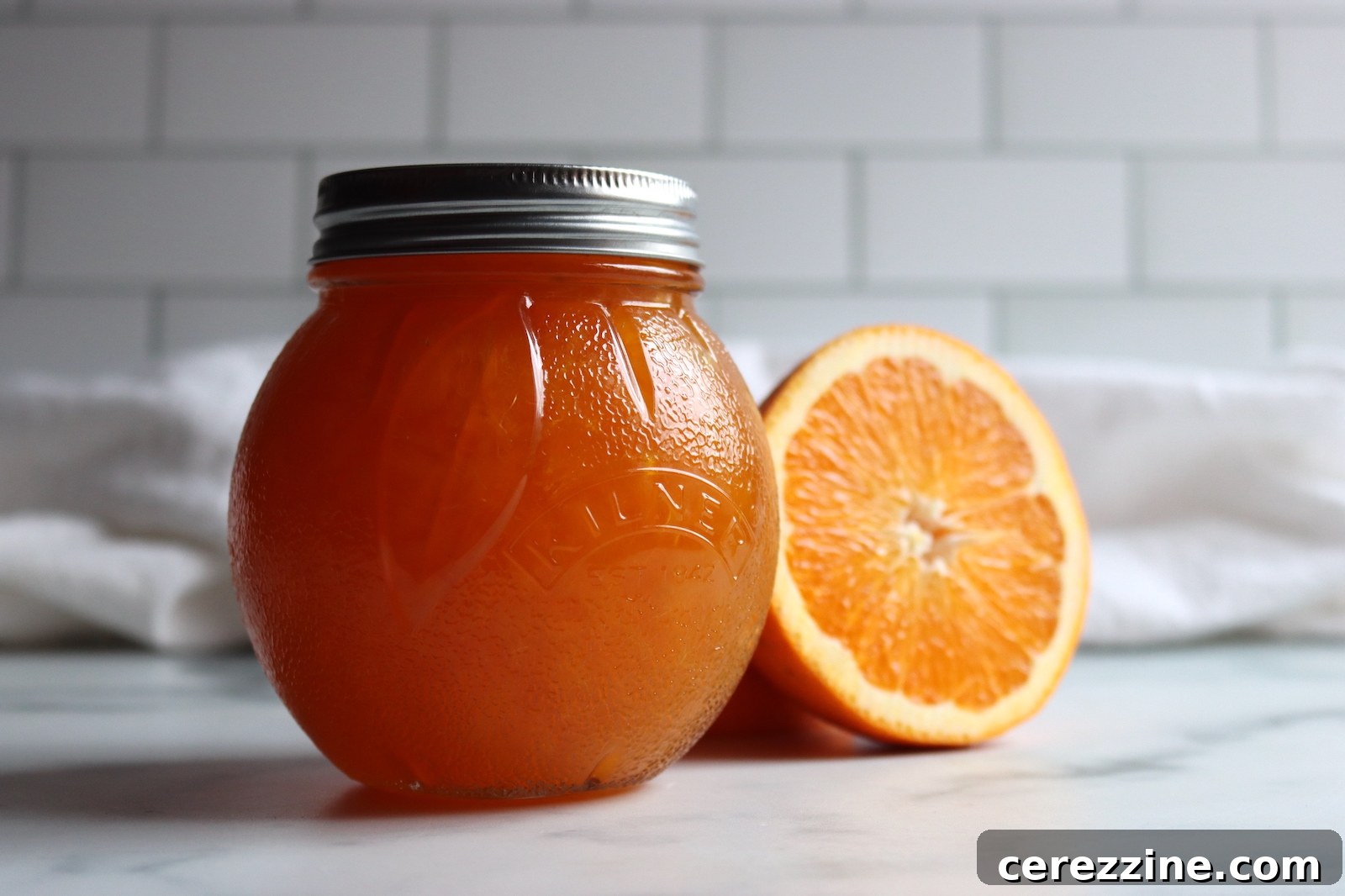
- Cook the Jam: Bring the mixture to a rapid boil over medium-high heat, stirring frequently to prevent scorching. Continue to cook for approximately 8 to 10 minutes, or until the jam reaches 220°F (104.5°C) on a reliable instant-read thermometer. This temperature indicates the gel point. Once the jam is ready, carefully ladle the hot jam into clean, hot half-pint canning jars, ensuring you leave precisely 1/4 inch of headspace. Wipe the jar rims meticulously clean, apply the lids, and screw on the rings fingertip tight.
- Process and Store: Carefully lower the filled jars into a boiling water bath canner. Process the jars for 10 minutes, making sure to adjust this time for your specific altitude as needed (see altitude adjustment notes below). After processing, remove the jars from the canner and allow them to cool undisturbed on a towel-lined counter for 12 to 24 hours. Before storing, verify that all lids have properly sealed. Properly sealed jars of orange jam will maintain their quality for up to 18 months when stored in a cool, dark pantry.
Achieving the Perfect Set: Important Notes
For this pectin-free orange jam, the ideal gel point is typically reached when the jam mixture measures 220°F (104.5°C) at sea level. An instant-read thermometer is your most reliable guide for this process. If you want an extra layer of confirmation, you can back it up with the traditional cold plate test.
It’s important to remember that above sea level, the set point will slightly decrease. As a general rule, the gel point drops by approximately 1 degree Fahrenheit for every 500 feet (152 meters) increase in elevation. For instance, if you are at an altitude of 1,000 feet (305 meters), the target set point would be around 218°F (103.3°C).
In my kitchen, this orange jam typically achieves its set point after boiling for about 8 to 10 minutes over medium-high heat. However, your specific cooking time may vary slightly. Factors such as the inherent water content of your oranges and the width of your cooking pot will influence how quickly the jam sets. A wider pot, for example, allows for faster evaporation, which generally leads to a quicker set time.
If you don’t have a reliable thermometer, the cold plate test is an excellent traditional method. Before you begin cooking, place a small ceramic plate in your freezer to chill thoroughly. Once you believe the jam is nearing its set point, drop a teaspoon of the hot jam onto the chilled plate. Allow it to cool for a minute, then gently push it with your finger. If the surface of the jam wrinkles, it has reached its gel point and is ready.
Canning Orange Jam for Long-Term Storage
Once your orange jam has reached the perfect set point, it’s ready to be preserved in jars. While canning offers the benefit of shelf-stable storage, it is entirely optional. You can also choose to keep this delicious preserve as a refrigerator or freezer jam instead. If stored in the refrigerator, it will remain fresh and delicious for several weeks. For longer-term storage without canning, you can freeze it for up to 6 months.
However, for the convenience of having jars readily available on my pantry shelf, I typically opt for water bath canning. This method ensures long-term preservation and allows me to enjoy homemade orange jam throughout the year.
To can, simply ladle the hot jam into clean, hot half-pint jars, leaving precisely 1/4 inch of headspace. Carefully wipe the jar rims clean with a damp cloth to remove any jam residue, then apply the canning lids and screw on the bands fingertip tight. Process the jars for 10 minutes in a boiling water bath canner, making sure to consult and apply any necessary altitude adjustments as outlined below. This recipe typically yields 3 to 4 half-pint jars of exquisite orange jam.
Crucial Altitude Adjustments for Water Bath Canning
When performing water bath canning, it is essential to increase the processing time if you live at higher elevations to ensure food safety:
- For elevations up to 6,000 feet (approx. 1,830 meters): Process for 10 minutes.
- For elevations above 6,000 feet (approx. 1,830 meters): Increase processing time to 15 minutes.
Yield and Ingredient Measurement Notes
This recipe starts with approximately 5 pounds of whole oranges, as purchased. This quantity typically yields about 4 cups of meticulously prepared orange supremes, which equates to roughly 1.5 pounds of ready-to-use fruit. Don’t discard the peels! They can be saved and ingeniously transformed into other delightful creations, such as homemade candied orange peels or a flavorful orange peel vinegar.
The golden rule for this recipe is to measure your *prepared* fruit first. Once you have your exact volume of supremes, add sugar at a ratio of 3 parts sugar for every 4 parts fruit. In this specific recipe, that means 3 cups of sugar for 4 cups of fruit. However, the actual amount of supremes you get can vary slightly depending on the size, juiciness, and variety of your oranges, as well as your efficiency in cutting them. Always adjust the sugar quantity to precisely match your prepared fruit’s volume to ensure the perfect set and flavor balance.
With 3 cups of sugar, 4 cups of prepared fruit, and 1/2 cup of lemon juice (approximately 1 tablespoon of lemon juice per cup of prepared fruit), this recipe consistently yields about 4 half-pint jars in my kitchen. I’ve listed the yield as 3 to 4 half-pint jars to account for potential variations; sweeter or juicier oranges and clementines might produce a slightly different volume.
Delightful Serving Ideas for Homemade Orange Jam
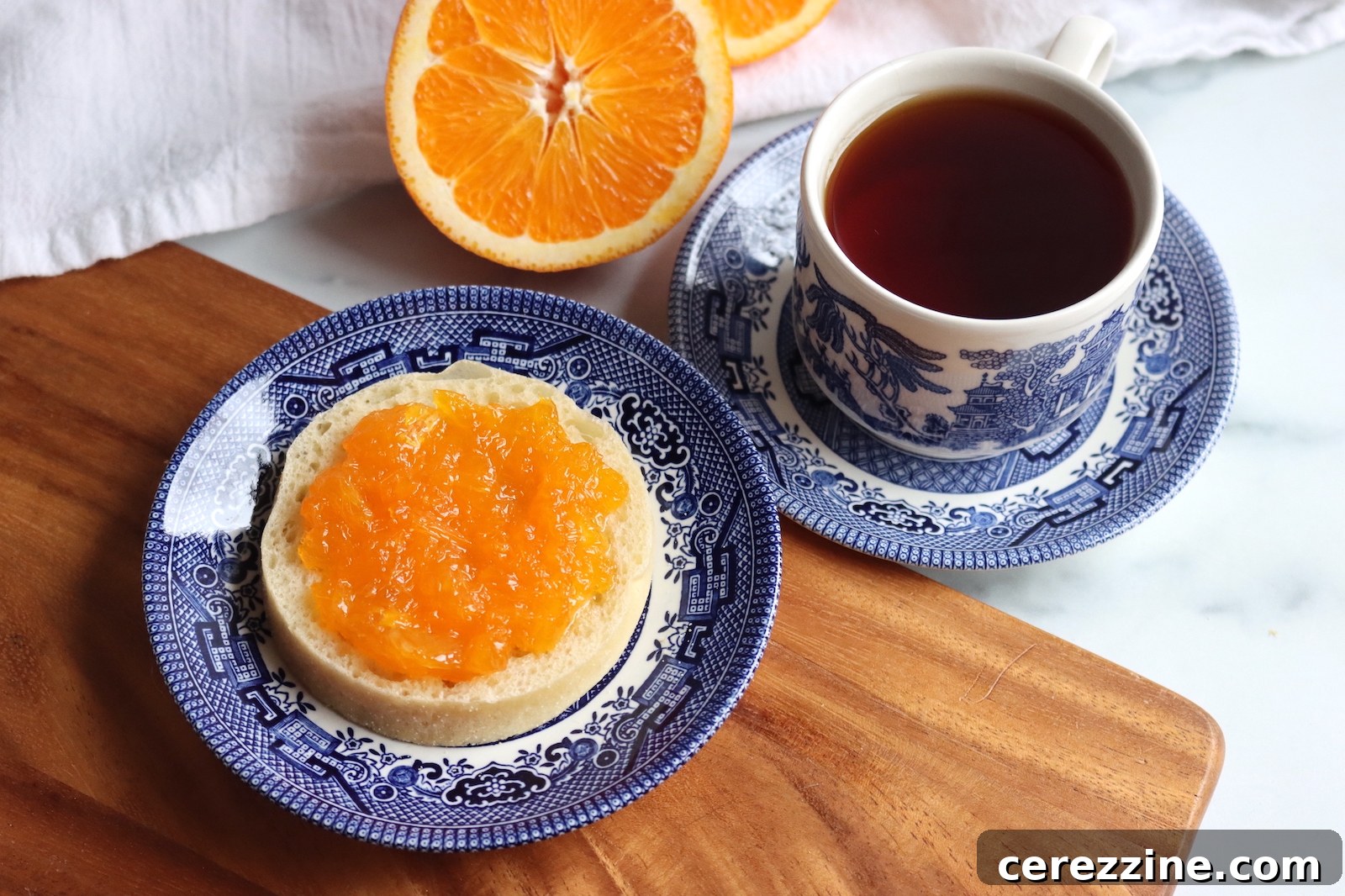
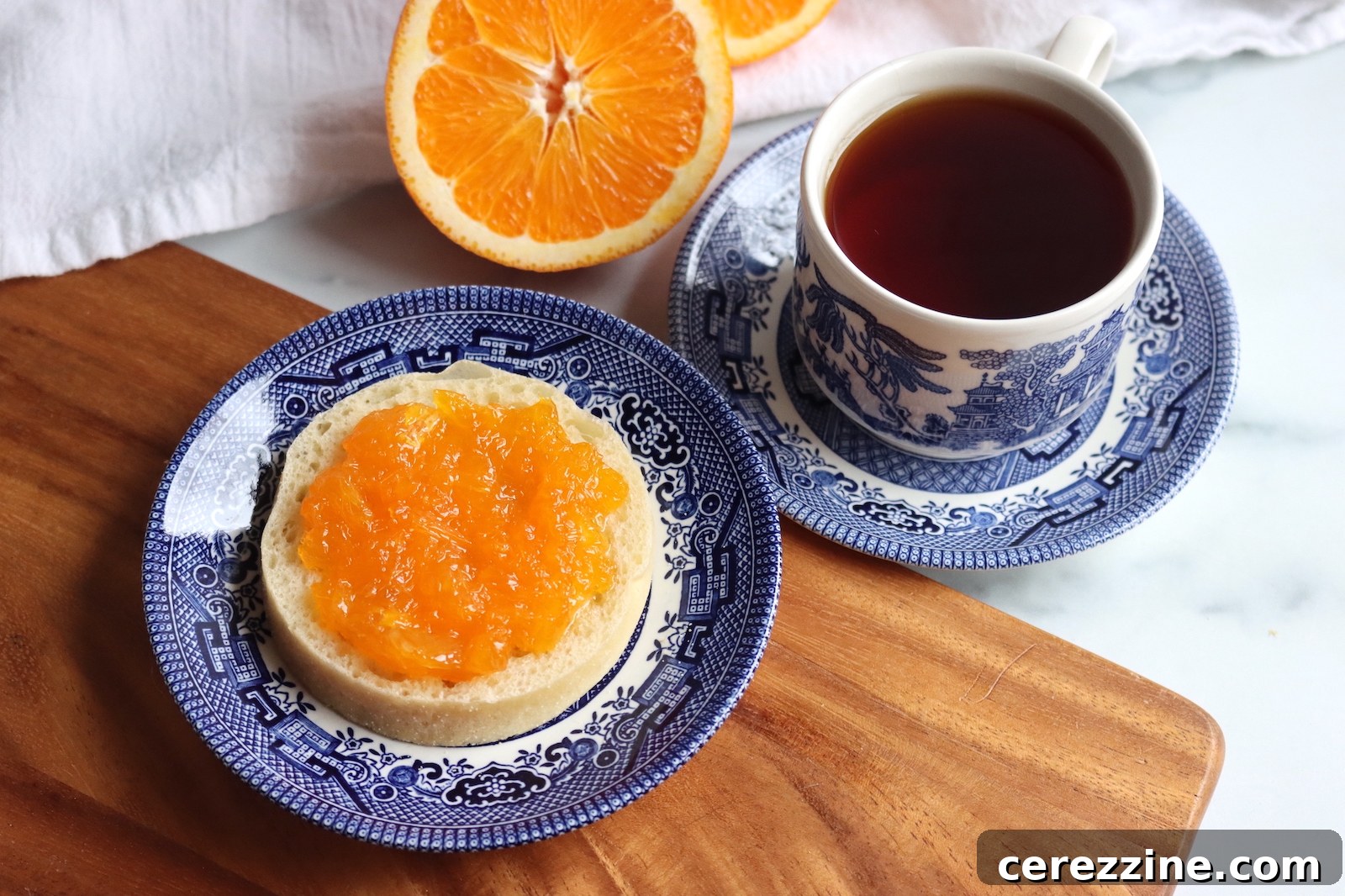
The most classic and undeniably delicious use for this orange jam is slathered generously on toast, particularly robust, crusty sourdough. Its soft, spreadable consistency and delightful chunky texture make it effortless to spread, while the bright, zesty citrus flavor wonderfully complements rich, salted butter. It’s equally fantastic on warm biscuits, fluffy pancakes, or toasted English muffins, elevating any breakfast or brunch experience.
This jam also shines as a superb cake filling. Its slightly looser set is actually an advantage here, allowing it to spread smoothly between cake layers without becoming stiff or gummy. For an unforgettable dessert, try it layered between a classic vanilla cake with a creamy cream cheese frosting – the resulting flavor profile is remarkably reminiscent of an orange creamsicle. For a sophisticated touch, pair it with Fig Jam on an artisanal cheese board, served alongside sharp cheddar or a creamy brie.
Beyond sweet applications, this versatile orange jam can lend its bright notes to savory dishes. Thin a spoonful with a splash of white wine or water and brush it over roasted chicken or pork during the final 15 minutes of cooking. The sugar caramelizes beautifully, the citrus cuts through the richness of the meat, and the resulting flavor is absolutely fantastic and unexpectedly gourmet.
Frequently Asked Questions About Orange Jam
No, you do not need added pectin to make this orange jam. Oranges naturally contain enough pectin to achieve a soft set, even after removing the peel and pith. When combined with the correct fruit-to-sugar ratio and cooked to the precise gel point, and with the essential addition of lemon juice to optimize the setting conditions, a beautiful set is easily achieved without any commercial pectin.
The most common reason for a jam not setting is an incorrect fruit-to-sugar ratio. If your oranges yielded more than 4 cups of supremes and you didn’t increase the sugar proportionally, there might not have been enough sugar present to facilitate a proper set. Another frequent issue is not reaching the critical temperature of 220°F (104.5°C). Relying solely on cooking time is not accurate; always use a reliable instant-read thermometer. If your jam has already cooled and is still runny, don’t despair! You can reprocess it: pour the unset jam back into a clean pot, bring it back to a full rolling boil, and cook it again until it reaches 220°F, then re-jar it. For more detailed assistance, consult our comprehensive guide on troubleshooting jam and jelly set issues.
The primary difference lies in the ingredients and texture. Orange marmalade traditionally includes the orange peel, which imparts a characteristic bitter note and a chewy texture. In contrast, orange jam, as made in this recipe, uses only the orange supremes (peeled, pith-free, and membrane-free segments). This results in a jam that is purely sweet, bright, and intensely fruity, with a smoother, chunkier texture and no bitterness. If you find marmalade too sharp or too chewy, this orange jam offers a wonderful, sweeter alternative.
Yes, most sweet orange varieties will work well. Navel oranges are highly recommended due to their ease of peeling and their classic, sweet orange flavor. Blood oranges are an excellent choice if you desire a deeper, more exotic color and a slightly more complex, tangy taste. Cara Cara oranges offer a milder and sweeter profile. However, it’s best to avoid thin-skinned juice oranges, as they are generally more challenging to supreme and often contain more seeds, yielding a less concentrated flavor for jam.
Explore More Orange Canning Recipes
Canning Oranges
Canning Citrus Sections in Syrup or Juice
Cranberry Orange Sauce
If you tried this Orange Jam Recipe, or any other recipe on Creative Canning, leave a ⭐ star rating and let me know what you think in the 📝 comments below!
And make sure you stay in touch with me by following on social media!
- Substack
Orange Jam
Equipment
-
Large pot or Dutch oven
-
Water Bath Canner
-
Half-pint canning jars with lids and bands
-
Jar lifter
-
Canning Funnel
-
Sharp paring knife
-
Instant Read Thermometer
Ingredients
- 5 lbs oranges, see notes for varieties and prep yield
- 1/2 cup lemon juice, preferably fresh
- 3 cups sugar, standard granulated, do not reduce
Instructions
-
Peel the oranges, meticulously removing all outer zest, then go back to remove every last bit of bitter white pith and internal membranes.
-
Cut the oranges into supremes by carefully slicing along each membrane to release the segments. Collect any juice in a bowl. Aim for about 4 cups of supremes (approximately 1.5 lbs prepared fruit) from 5 lbs of whole oranges.
-
Measure the prepared supremes. If you have more or less than 4 cups, adjust the sugar proportionally to maintain a 3:4 sugar-to-fruit ratio by volume.
-
Combine the orange supremes, lemon juice, and sugar in a wide, heavy-bottomed pot. Bring the mixture to a rapid boil over medium-high heat, stirring frequently, and cook for 8 to 10 minutes until the jam reaches 220°F (the gel point, refer to setting notes).
-
Ladle the hot jam into prepared hot half-pint jars, leaving 1/4 inch headspace. Wipe jar rims clean, apply lids and bands, tightening to fingertip tight.
-
Process the jars in a boiling water bath canner for 10 minutes, adjusting the time for altitude as necessary. Remove jars and let them cool undisturbed on the counter for 12 to 24 hours.
-
Check seals. Properly sealed jars can be stored in a cool, dark place for up to 18 months.
Notes
This jam naturally features a soft, spreadable set with delightful chunks of orange. A softer set is typical and desirable for jams made without added pectin.
Do not omit or reduce the lemon juice. It is essential for balancing the sweetness and facilitating the jam’s proper set. Without it, the jam will taste excessively sweet and may not gel correctly.
It is crucial not to reduce the sugar. The 3:4 ratio of sugar to fruit is what enables this jam to set naturally without commercial pectin. If a lower-sugar version is desired, use Pomona’s Pectin and follow their specific instructions for reduced-sugar preserves.
Ingredient Amounts
This recipe calls for 5 pounds of whole oranges, which should yield approximately 4 cups (or 1.5 lbs prepared weight) of orange supremes. This typically comes from about 10 medium oranges, but variations can occur based on the orange variety and your efficiency in preparing them. Always measure your prepared supremes and adjust sugar proportionally if your yield differs from 4 cups.
The 1/2 cup of lemon juice can be freshly squeezed or bottled. Approximately 2-3 juicy fresh lemons are usually needed to yield this amount.
Orange Varieties
Navel oranges are recommended for their ease of preparation and classic sweet flavor. Blood oranges impart a deeper color and complex taste. Cara Cara oranges are milder and sweeter. Avoid thin-skinned juice oranges, as they are harder to supreme and may contain more seeds, leading to a less ideal jam.
Testing for Set
The target gel point is 220°F (104.5°C) at sea level. At higher altitudes, the set point decreases by approximately 1°F for every 500 feet of elevation. For instance, at 1,000 feet, aim for 218°F (103.3°C). Always trust your instant-read thermometer over perceived cooking time, though it generally takes 8-10 minutes to reach the set point.
Alternatively, use the cold plate test: chill a small plate in the freezer. Drop a teaspoon of hot jam onto it, cool briefly, then push it with your finger. If it wrinkles, it’s set.
Yield & Storage
This recipe typically yields 3 to 4 half-pint jars, depending on the juiciness of the oranges and the cooking duration.
Properly sealed jars, stored in a cool, dark place, will maintain quality for 12 to 18 months. Once opened, refrigerate and consume within 3 to 4 weeks.
Altitude Adjustments for Canning
For water bath canning, increase processing times at higher altitudes:
- Under 6,000 feet: 10 minutes
- Above 6,000 feet: 15 minutes
Nutrition
Serving Size: 1 Tbsp
- Calories: 100 kcal
- Carbohydrates: 26g
- Protein: 1g
- Fat: 0.1g
- Saturated Fat: 0.004g
- Polyunsaturated Fat: 0.01g
- Monounsaturated Fat: 0.01g
- Sodium: 4mg
- Potassium: 101mg
- Fiber: 1g
- Sugar: 25g
- Vitamin A: 930IU
- Vitamin C: 26mg
- Calcium: 9mg
- Iron: 0.2mg
Nutrition information is automatically calculated and should only be used as an approximation.
More Old-Fashioned Jam Recipes to Savor
Pear Jam
Caramelized Onion Jam
Cranberry Apple Jam
Find Your Next Favorite Recipe
Searching for something specific? Enter keywords below to discover the perfect recipe for your pantry!