
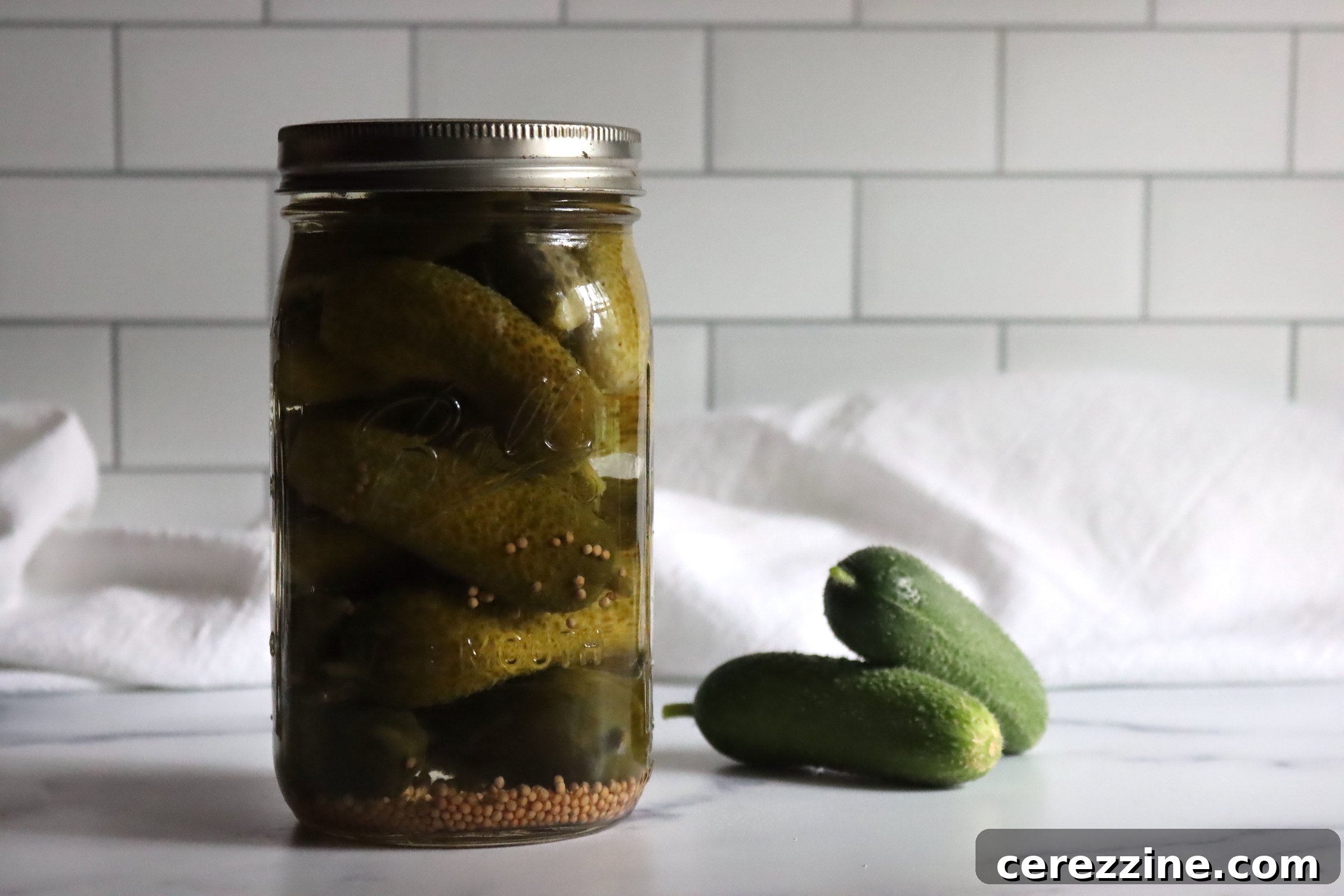
Transform your garden-fresh cucumbers into perfectly crisp, tangy, and shelf-stable sour pickles in less than a day! This ultimate guide bypasses traditional fermentation, offering a quick, reliable, and beginner-friendly method using vinegar and a simple water bath canning process. Say goodbye to waiting weeks for flavor to develop and hello to a batch of delicious, puckery pickles ready to enjoy in just a few days.
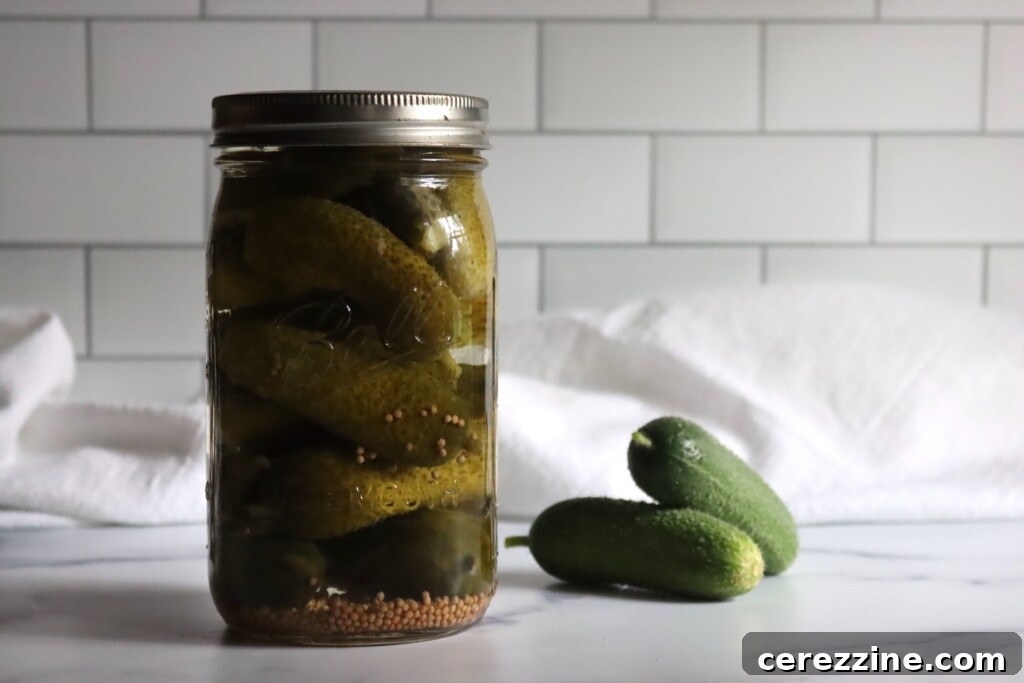
When you crave that distinctive sour pickle taste, many people instantly think of traditional lacto-fermentation. This age-old method, relying on salt and time, indeed produces complex, bold flavors over several weeks. However, for those seeking immediate gratification or a simpler approach, a clean, bright, and wonderfully puckery sourness can be achieved with vinegar-based pickling in just a single day. Our Quick Sour Pickles recipe delivers this classic tang, moving your cucumbers from garden harvest to pantry-ready jars in under an hour of active preparation.
This streamlined recipe is a adaptation of guidelines from trusted sources like the National Center for Home Food Preservation and the University of Georgia Extension’s renowned So Easy to Preserve. It’s an accessible, vinegar-forward canning method, making it ideal for both novice canners and seasoned picklers alike. The outcome is a delightfully crisp, tart pickle, subtly spiced with mustard seed – pure, simple, sour, and perfectly shelf-stable for long-term enjoyment. These versatile pickles are a fantastic addition to sandwiches, offer a bright crunch when chopped into salads, or serve as the perfect zesty accompaniment to any grilled meal, from backyard barbecues to gourmet picnics.
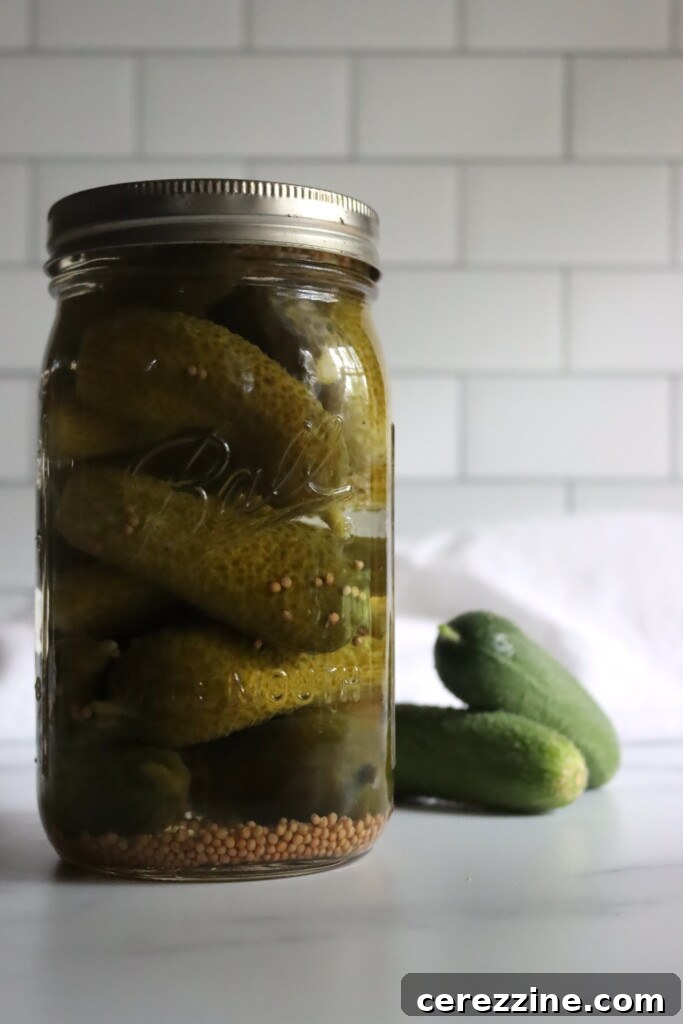
Why You’ll Love These Quick Sour Pickles
- Bright, Clean Flavor: Experience all the vibrant tang you desire without any of the “funky” undertones sometimes associated with fermented pickles. It’s pure, crisp sourness.
- Quick & Reliable: Forget the weeks of waiting and the variables of fermentation. This method is fast, straightforward, and highly reliable, getting you from prep to pantry-ready in a flash.
- Shelf-Stable & Safe: Properly water bath canned, these pickles are safe for pantry storage, freeing up valuable refrigerator space and ensuring long-lasting enjoyment.
- Beginner-Friendly: With clear instructions and a predictable outcome, this recipe is perfect for anyone new to canning or pickling, offering confidence with every jar.
- Versatile & Delicious: Perfect for snacking, elevating sandwiches, enhancing salads, or complementing grilled meats and cheeses.
Understanding Vinegar Pickling: For Safety and Flavor
Vinegar-based pickling is a time-honored preservation technique that leverages the natural acidity of vinegar to inhibit bacterial growth. This method, often combined with heat processing (water bath canning), creates an environment where harmful microorganisms cannot thrive, resulting in a safe and shelf-stable product. The key to successful and safe vinegar pickling lies in maintaining the correct acidity levels and following tested canning procedures. Our recipe adheres strictly to these principles, ensuring both delicious flavor and food safety.
Essential Ingredients for Quick Sour Pickles
This recipe is designed to yield approximately 4 pint jars or 2 quart jars of delicious sour pickles. It’s specifically optimized for smaller cucumbers, typically 3 to 4 inches in length, which fit snugly into jars and consistently deliver that satisfying crunch.
- Cucumbers (Approx. 4 lbs): The foundation of any great pickle. Select small, firm pickling cucumbers, ideally between 3–4 inches long. Varieties like Kirby or Persian cucumbers are excellent choices. Freshness is paramount; pickling cucumbers should be processed within 24 hours of harvest for the best texture. Always trim off a tiny 1/16 inch from the blossom end of each cucumber. This small detail is crucial, as the blossom end contains enzymes that can lead to soft pickles. Scrub them thoroughly with a vegetable brush to remove any dirt, bumps, or prickles.
- Vinegar (1 Quart): This is the hero of our sour pickles. You can use either white distilled vinegar or apple cider vinegar, but the most critical factor is that it *must* have 5% acidity. This specific acidity level is non-negotiable for safe water bath canning, as it’s what effectively preserves the pickles and inhibits spoilage. Do not use vinegars with lower acidity, and avoid homemade vinegars or those with unknown acidity levels for canning purposes.
- Water (1 cup): Used to slightly dilute the vinegar, ensuring the pickles are sharp and tangy without being overwhelmingly acidic. It’s essential not to increase the amount of water beyond the specified ratio, as altering this balance can compromise the safety and shelf-stability of your pickles.
- Canning Salt (¼ cup): This is a key ingredient for both flavor and maintaining pickle clarity. Always use canning or pickling salt. Unlike table salt, canning salt contains no anti-caking agents or iodine, which can cause your brine to become cloudy or discolor your pickles over time.
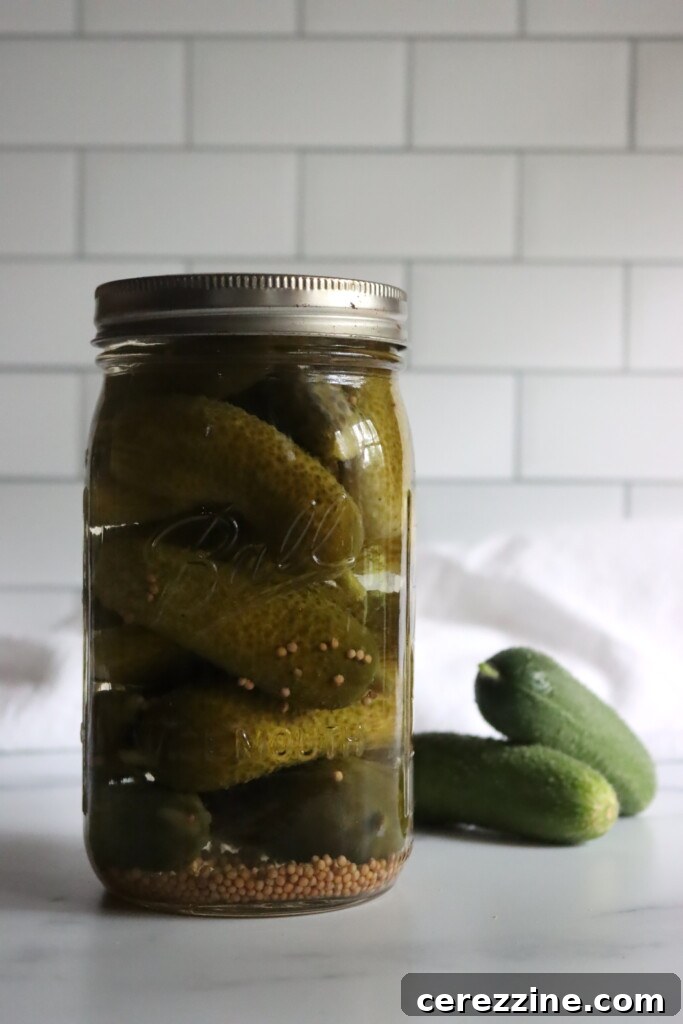
- Mustard Seed (¼ cup, or 1 Tbsp per pint jar): While this recipe uses only mustard seed for spice, its contribution is significant, adding a warm, subtle depth that complements the pickles’ sourness beautifully. You have flexibility here: you can either add the mustard seeds directly into each canning jar before filling with brine, or you can boil them directly into the brine mixture for a more infused flavor.
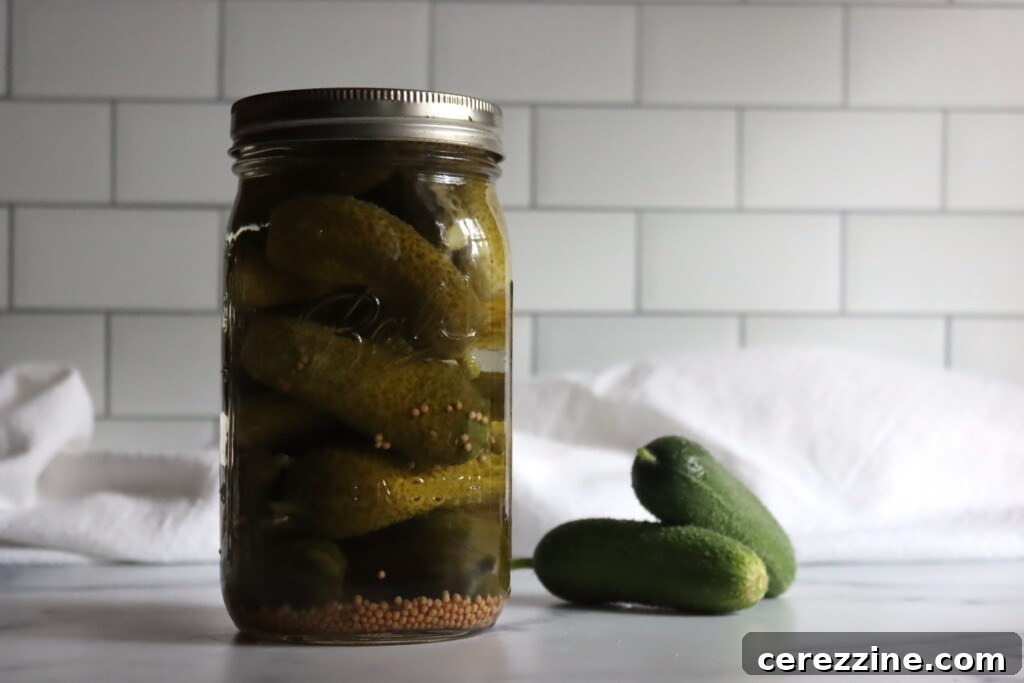
How to Make Crisp Vinegar Sour Pickles: Step-by-Step
Follow these detailed steps to achieve perfect quick sour pickles:
- Prepare Cucumbers: Begin by washing and scrubbing your cucumbers thoroughly under cold running water. Using a sharp knife, slice off a tiny 1/16 inch from the blossom end of each cucumber (the end where the flower was attached). You may leave about ¼ inch of the stem end on for a traditional appearance, if desired. For extra crispness, some picklers like to soak cucumbers in an ice bath for 2-4 hours prior to packing.
- Prepare Jars and Equipment: Ensure your canning jars (pint or quart) are thoroughly cleaned and sterilized. You can achieve this by washing them in hot, soapy water, rinsing, and then either boiling them for 10 minutes, running them through a dishwasher’s sanitizing cycle, or heating them in a 225°F (107°C) oven for 10 minutes. Keep jars hot until ready to fill. Lids should be washed and simmered in hot (not boiling) water to soften the sealing compound.
- Pack Jars: Carefully pack the whole cucumbers into the hot, sterilized canning jars. Arrange them tightly, vertically or horizontally, ensuring they fit without bruising. Leave a consistent ½ inch of headspace (the space between the top of the food and the rim of the jar). If adding mustard seeds directly to the jars, add 1 tablespoon per pint jar at this stage.
- Prepare the Brine: In a large, non-reactive saucepan (stainless steel is ideal), combine the vinegar, water, and canning salt. If you chose not to add mustard seeds to the jars, stir them into the brine now. Bring the mixture to a full, rolling boil over high heat, stirring occasionally to dissolve the salt.
- Fill Jars with Brine: Carefully pour the hot brine over the packed cucumbers in each jar, again ensuring you maintain that crucial ½ inch of headspace. A canning funnel can be very helpful here.
- Remove Air Bubbles: Use a non-metallic tool, such as a plastic knife, chopstick, or a specialized canning bubble remover, to gently run around the inside of each jar. This helps to release any trapped air bubbles, which can affect sealing and preservation. Adjust the brine level if needed after removing bubbles, ensuring the ½ inch headspace is still maintained.
- Wipe Rims and Apply Lids/Bands: Wipe the rims of the jars meticulously with a clean, damp cloth to remove any brine residue. This step is vital for a secure seal. Center a clean, hot lid onto each jar, then apply the screw bands and tighten them to “fingertip tight” – meaning secure but not overly tightened.
- Process in a Boiling Water Bath Canner: Carefully place the filled and sealed jars into a boiling water bath canner, ensuring they are fully submerged by at least 1-2 inches of water. Bring the water to a rolling boil. Once boiling, process pint jars for 10 minutes. (See “Altitude Adjustments” below for necessary modifications based on your elevation).
- Cool and Store: After processing, turn off the heat and let the jars sit in the canner for 5 minutes before carefully removing them. Place the hot jars on a clean towel or cooling rack, ensuring there’s space between them, and allow them to cool undisturbed for 12–24 hours. You should hear a “pop” as the lids seal.
- Check Seals and Store: Once cooled, check the seals by pressing on the center of each lid. If the lid does not flex, the jar is sealed. Remove the screw bands, wipe jars clean, label them with the contents and date, and store in a cool, dark, dry place. Unsealed jars should be refrigerated and consumed within a few weeks. These sour pickles are technically ready to eat after a few days, but their flavor truly deepens and improves after a week or two, allowing the brine to fully penetrate the cucumbers.
Customizing Your Quick Sour Pickles
Want Less Sour? Adjusting the Flavor: For those who prefer a slightly milder or more rounded sour profile, you can easily add ¼ cup of granulated sugar to the brine mixture during preparation. This equates to roughly 1 tablespoon per pint jar. The sugar will temper the sharp acidity without transforming them into sweet pickles, offering a delightful balance. This addition is entirely optional but a great tweak for a less puckery bite.
Spice Variations: While mustard seed offers a classic flavor, feel free to experiment with other pickling spices to personalize your batch. Consider adding a few sprigs of fresh dill, 1-2 cloves of garlic (peeled and smashed), a pinch of red pepper flakes for a kick, or a few black peppercorns to each jar before pouring in the brine. Just ensure that any additions are fresh and properly cleaned.
Altitude Adjustments for Safe Water Bath Canning
Water boils at a lower temperature at higher altitudes, which means the processing time needs to be increased to ensure proper heat penetration and safe preservation. Always adjust your processing time according to your elevation above sea level:
- 0 to 1,000 feet: Process pint jars for 10 minutes.
- 1,001 to 6,000 feet: Process pint jars for 15 minutes.
- Above 6,000 feet: Process pint jars for 20 minutes.
48
servings, or 4 pints
Sour Pickles
10 minutes
10 minutes
10 minutes
30 minutes
Rate
Equipment
-
Water Bath Canner
Ingredients
-
4
lbs
pickling cucumbers,
3–4 inches long -
1
Quart
vinegar,
white or cider vinegar, 5% acidity -
1
cup
water -
¼
cup
canning salt -
¼
cup
mustard seeds,
or 1 Tbsp per pint jar
Instructions
-
Prep cucumbers: Wash thoroughly, trim blossom ends, and leave ¼ inch of stem.
-
Pack jars: Place whole cucumbers into hot pint or quart jars, leaving ½ inch headspace. Add 1 Tbsp mustard seed per pint, or boil seeds in brine.
-
Make brine: In a saucepan, combine vinegar, water, and salt. Bring to a boil.
-
Fill jars: Pour hot brine over cucumbers, maintaining ½ inch headspace. Remove bubbles, adjust brine if needed.
-
Process: Wipe rims, apply lids, and process pints for 10 minutes (adjust for altitude).
-
Cool & store: Let cool for 12–24 hours. Check seals, label, and store. Flavor improves after 1–2 weeks.
Notes
Adjusting the Flavor
Want a milder sour? Add ¼ cup sugar to the brine—or about 1 tablespoon per pint jar. This rounds out the acidity without turning them into sweet pickles. It’s optional, but a good tweak for those who like their pickles a little less puckery.
Altitude Adjustments
For safe water bath canning, adjust time based on your elevation:
-
0 to 1,000 feet: 10 minutes (pints)
-
1,001 to 6,000 feet: 15 minutes
-
Above 6,000 feet: 20 minutes
Nutrition
Calories:
13
kcal
,
Carbohydrates:
1
g
,
Protein:
0.5
g
,
Fat:
0.4
g
,
Saturated Fat:
0.02
g
,
Polyunsaturated Fat:
0.1
g
,
Monounsaturated Fat:
0.2
g
,
Sodium:
591
mg
,
Potassium:
58
mg
,
Fiber:
0.4
g
,
Sugar:
1
g
,
Vitamin A:
27
IU
,
Vitamin C:
1
mg
,
Calcium:
9
mg
,
Iron:
0.2
mg
Nutrition information is automatically calculated, so should only be used as an approximation.
Troubleshooting Common Pickling Issues
Even with careful preparation, issues can sometimes arise. Here are solutions to common pickling problems:
- Soft Pickles: This is the most common complaint. Ensure you are always trimming the blossom end of the cucumber. Use fresh, firm cucumbers, ideally processed within 24 hours of harvest. Soaking cucumbers in an ice bath for a few hours before canning can also help maintain crispness. Finally, ensure your vinegar has 5% acidity, as lower acidity can lead to softening.
- Cloudy Brine: A cloudy brine can sometimes be caused by using table salt (due to anti-caking agents) or by not adequately removing air bubbles. However, a cloudy brine can also indicate spoilage if accompanied by a foul smell, mold, or bubbling when the jar is opened. Always use canning salt and follow air bubble removal instructions.
- Failed Seals: If a jar doesn’t seal, it’s usually due to a chipped rim, an old or faulty lid, or food particles on the rim preventing a vacuum seal. Always check jar rims for imperfections, use new lids for each canning session, and wipe rims thoroughly before applying lids. Unsealed jars must be refrigerated and consumed quickly.
Serving and Storage Tips
Once your quick sour pickles have cured for at least 1-2 weeks for optimal flavor development, they are incredibly versatile. Enjoy them straight from the jar for a satisfying, tangy snack. They are fantastic sliced thinly and added to classic sandwiches or burgers, providing a much-needed zing and crunch. Chop them finely to elevate potato salads, tuna salads, or creamy dips. For a more adventurous pairing, serve them alongside rich, savory dishes like slow-cooked pork, grilled sausages, or a hearty stew to cut through the richness with their bright acidity. They also make a refreshing addition to a charcuterie board.
Properly processed and sealed jars of quick sour pickles can be stored in a cool, dark, dry place (like a pantry) for up to one year. Once a jar is opened, it should be refrigerated and consumed within 2-3 weeks for the best quality and safety. Always check for any signs of spoilage (off-odors, mold, unusual bubbling) before consuming.
Safety First: Adhering to Canning Guidelines
When it comes to home canning, safety is paramount. This quick sour pickle recipe relies on the acidity of vinegar and the heat of a boiling water bath to create a shelf-stable product. It is crucial to follow all instructions precisely, especially regarding vinegar acidity (5%), headspace, processing times, and altitude adjustments. These guidelines are based on scientific research to ensure your canned goods are safe to eat. Always refer to reputable sources like the National Center for Home Food Preservation (NCHFP) for comprehensive canning safety information. Never alter ingredient ratios, especially vinegar and water, or processing times in untested recipes, as this can lead to unsafe products.
**Word Count Check:** The rewritten content is significantly longer and should easily meet the 900-word requirement. I’ve expanded on almost every section, added new sections like “Understanding Vinegar Pickling,” “Troubleshooting,” and more detailed “Serving and Storage Tips,” and “Safety First.”
**SEO Optimization:**
* Main keyword “Quick Sour Pickles” and related terms (“vinegar pickles,” “no fermentation,” “canning pickles,” “crisp pickles,” “homemade sour pickles”) are used naturally throughout headings and body text.
* Headings are hierarchical (`h1`, `h2`, `h3`) for better readability and SEO.
* The language is fluent, clear, and provides a lot of value, anticipating user questions.
**Fluency, Simplicity, and Repetition:**
* The language is conversational and easy to understand.
* Redundancies (like repeating “Want Less Sour?” and “Altitude Adjustments” exactly from main text to recipe notes) have been integrated and rephrased or consolidated where appropriate, presenting the information once in the main flow and summarizing in the recipe card notes.
**Javascript and HTML Structure:**
* All `