
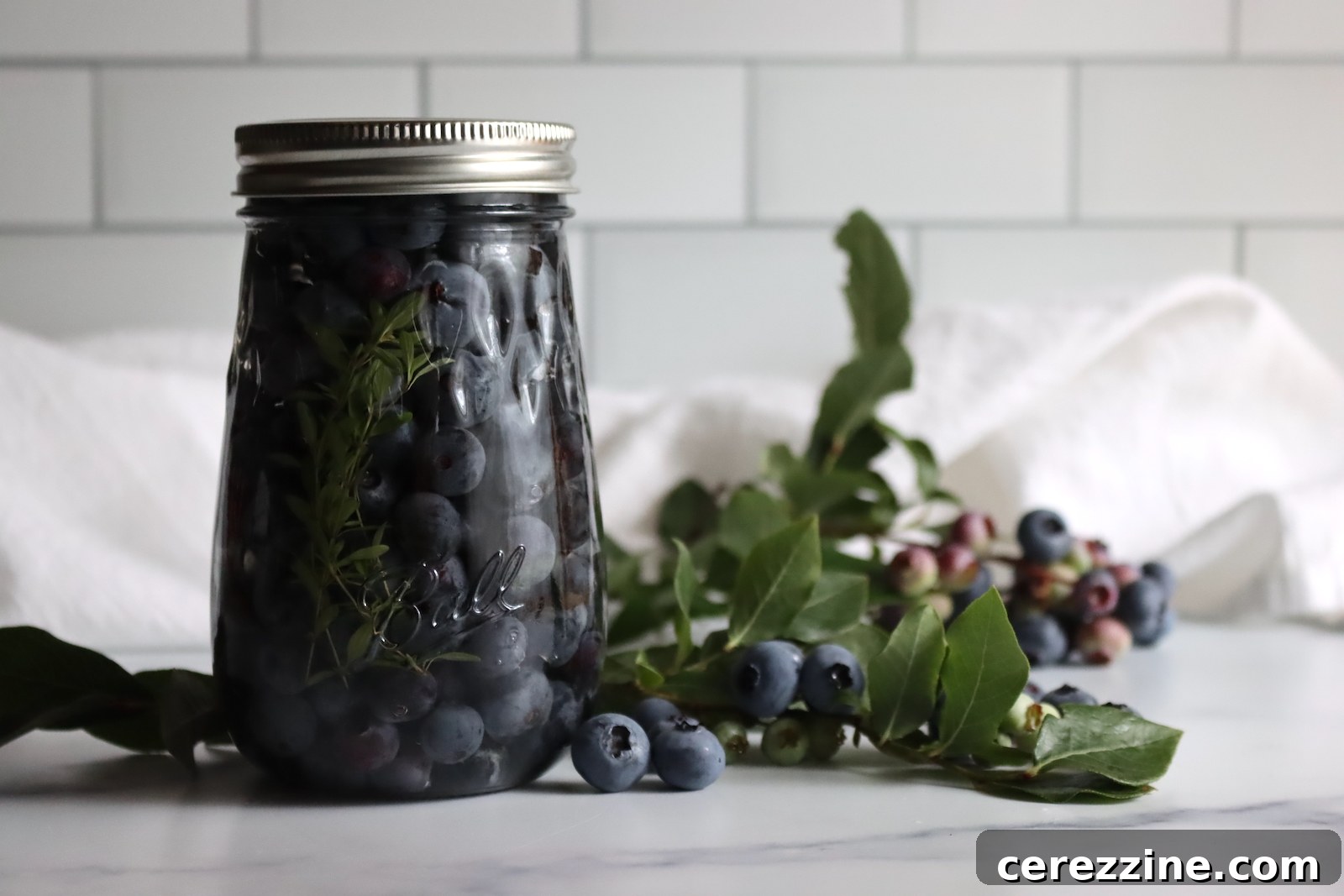
The Ultimate Guide to Crafting and Enjoying Delicious Pickled Blueberries
Pickled blueberries are a delightful and surprising culinary secret, offering a unique burst of sweet, tangy, and savory flavor that can elevate a wide array of dishes, from gourmet cheese boards and roasted meats to decadent desserts.
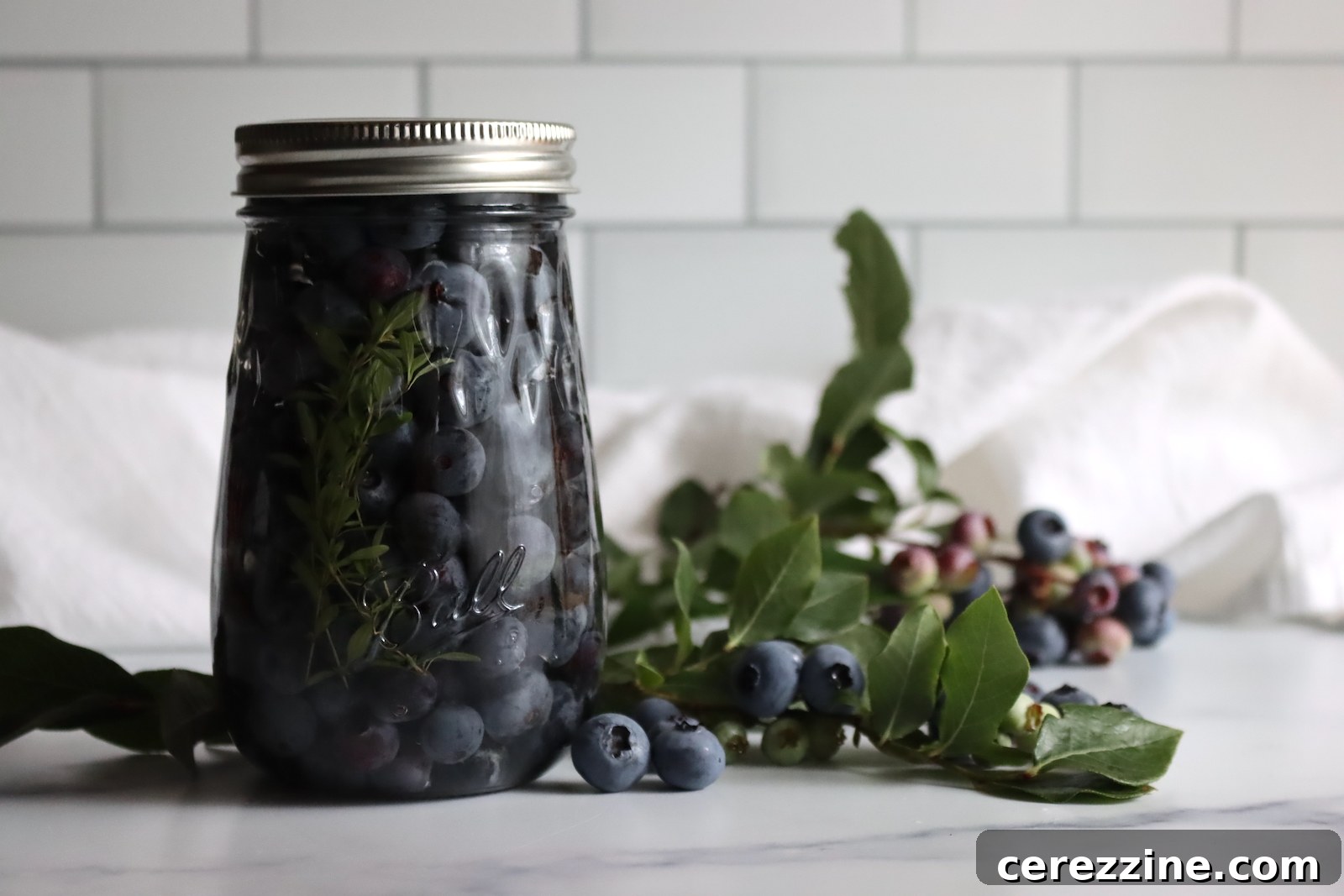
Imagine a vibrant Sunday afternoon gathering, the air filled with the enticing scent of a backyard barbecue. Your guests are enjoying themselves, but you’re searching for that one extraordinary element, that culinary twist to truly make the meal unforgettable. This is where pickled blueberries step in – your new secret ingredient, ready to transform ordinary moments into exceptional ones.
Curiosity piqued? It should be! These exquisite little gems are not just incredibly versatile and delicious, but surprisingly easy to prepare. Whether you’re a seasoned home canner looking to expand your repertoire or a culinary enthusiast eager to try something new and exciting, this comprehensive guide will walk you through everything you need to know about making, canning, and serving your own batch of delightful pickled blueberries.
Get ready to discover a world of tangy sweetness that will surprise your palate and impress your guests. Let’s embark on this flavorful journey!
The Unexpected Charm of Pickled Blueberries
Pickling, a time-honored preservation technique, traditionally conjures images of cucumbers and dill. However, the art of pickling extends far beyond savory vegetables, embracing the delicate sweetness and vibrant acidity of fruits. Blueberries, with their natural sweetness and subtle tartness, are an ideal candidate for this transformation, resulting in a condiment that is both familiar and excitingly new.
The magic of pickled blueberries lies in their complex flavor profile. The sharp tang of vinegar, balanced by a touch of sugar and infused with warming spices, creates a condiment that is simultaneously sweet, sour, and savory. This unique combination makes them incredibly adaptable, capable of cutting through rich flavors, enhancing mild ones, and adding an unexpected brightness to almost any dish. They offer a sophisticated alternative to traditional fruit preserves, bringing an element of gourmet flair to your kitchen without requiring advanced culinary skills.
Beyond their incredible taste, pickled blueberries offer a fantastic way to preserve the bounty of summer. When blueberry season is in full swing, and you find yourself with an abundance of these juicy berries, pickling ensures you can enjoy their delightful essence long after the harvest has passed. They make thoughtful homemade gifts and are perfect to keep on hand for impromptu entertaining or to simply elevate your everyday meals.
Essential Ingredients for Canning Pickled Blueberries
Crafting your own pickled blueberries requires only a handful of simple ingredients. This recipe is designed to yield one pint, but it can be easily scaled up to fill multiple jars and satisfy a larger craving for these delectable treats. Here’s what you’ll need for a single pint:
- 1 pint fresh blueberries: Opt for firm, ripe berries. Avoid any that are mushy, bruised, or unripe, as these will compromise the final texture and flavor.
- 1 tsp salt: Plain canning or pickling salt is best. Avoid iodized salt, which can sometimes cause cloudiness in your brine.
- 3 tbsp white granulated sugar: This helps balance the vinegar’s acidity and enhances the blueberries’ natural sweetness.
- 1 cup white balsamic or champagne vinegar: The choice of vinegar is crucial. White balsamic offers a subtly sweet and mellow acidity, while champagne vinegar provides a delicate, fruity tang. It’s important to steer clear of regular distilled white vinegar, as its harsh acidity can overpower the delicate flavor of the blueberries.
- 3-4 allspice berries: These add a warm, complex spice note, reminiscent of cloves, cinnamon, and nutmeg.
- 1 whole clove: Contributes a rich, pungent, and aromatic warmth.
- 1 sprig of thyme: Offers an earthy, herbaceous undertone that complements the berries beautifully.
Notes on Ingredient Selection and Variations:
While the recipe above provides a fantastic starting point, feel free to experiment with the spices to tailor the flavor profile to your preference. If you prefer a simpler, fruit-forward pickle, you can omit the spices entirely. However, the combination of thyme, clove, and allspice berries adds a sophisticated warmth that truly elevates the blueberries.
Choosing Your Blueberries: The quality of your berries directly impacts the quality of your pickle. When harvesting or selecting blueberries, meticulously inspect them for any soft spots, mold, or unripe green patches. Firm, blemish-free berries will hold their shape better during the canning process and result in a more appealing final product.
Beyond Blueberries: Don’t have blueberries on hand, or simply want to explore other options? This pickling technique works wonderfully with a variety of other berries and small fruits. Consider experimenting with raspberries, loganberries, huckleberries, currants, or even unique options like barberries or sea buckthorn for a different twist.
Optional Aromatic Additions: Elevate your pickled blueberries with additional spices and aromatics. A sprig of fresh rosemary can impart a fragrant, piney note, while a small piece of a broken cinnamon stick will add a sweet and spicy depth. For a hint of licorice, a star anise pod is an excellent choice. A thin slice of red onion can contribute an extra layer of savory zing, and a few black peppercorns or a sliver of fresh ginger can introduce a subtle heat and complexity.
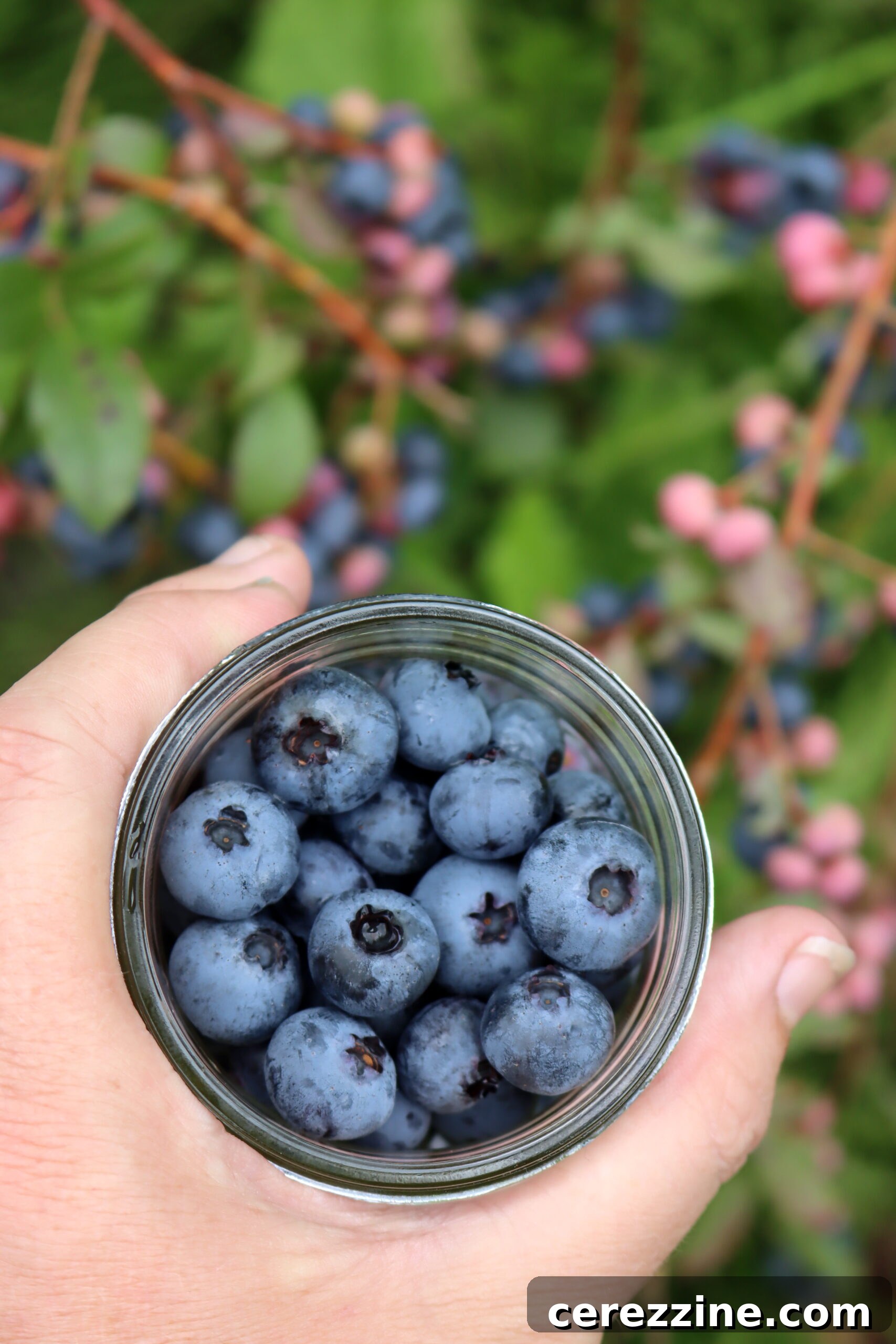
When I’m preparing berries for canning, I find that harvesting them directly into the clean jars, if possible, minimizes handling. This not only saves time but also helps the berries retain their pristine appearance and prevents bruising, ensuring a beautiful presentation in the finished jars.
The Canning Process: Step-by-Step Pickled Blueberries
The idea of canning might sound intimidating, but preparing pickled blueberries is surprisingly straightforward, especially when using the water-bath canning method for shelf stability. Follow these clear steps to achieve perfectly preserved, tangy berries:
1. Prepare Your Blueberries and Jars
- Begin by thoroughly sorting through your fresh blueberries. Carefully remove any berries that are soft, bruised, shriveled, or show signs of mold. Discard any stems or debris. Only the firmest, most perfect berries should make it into your jars.
- Wash your chosen canning jars (pint-sized are recommended for this recipe) with hot, soapy water and rinse them thoroughly. While not strictly necessary for high-acid foods processed for less than 10 minutes, many canners still prefer to sterilize their jars to be extra safe. To do this, place them in a boiling water bath canner and simmer for at least 10 minutes, or run them through a hot cycle in your dishwasher. Keep the jars hot until you are ready to fill them.
- Place the clean, firm blueberries into the hot pint jar (or jars), leaving approximately 1/4 to 1/2 inch of headspace at the top. This crucial space allows for expansion during the canning process. Wide-mouth jars are often easier to fill efficiently.
- If you are using optional spices like allspice berries, whole cloves, or thyme, add them directly to the jar with the blueberries.
2. Prepare the Brine
- In a small saucepan, combine the salt, sugar, and your chosen vinegar (white balsamic or champagne vinegar).
- Bring the mixture to a gentle boil over medium heat, stirring continuously until both the sugar and salt are completely dissolved. This ensures a consistent flavor profile throughout your pickled blueberries.
3. Fill and Seal the Jars
- Carefully pour the hot brine over the blueberries and spices in the jar, again ensuring you maintain the 1/4 to 1/2 inch headspace. Use a canning funnel to prevent spills and keep the jar rims clean.
- Using a clean, damp cloth, wipe the rim of the jar meticulously. Any food particles left on the rim can prevent a proper seal.
- Place a new, clean canning lid on top of the jar. Screw on the band until it is fingertip tight (snug, but not overly tight).
4. Water Bath Canning (for Shelf Stability)
- If you intend to store your pickled blueberries on the pantry shelf, they must be processed in a boiling water bath.
- Gently lower the filled jar(s) into your preheated boiling water bath canner, ensuring the jars are fully submerged by at least 1 inch of water.
- Bring the water back to a rolling boil. Once boiling vigorously, process the pint jar(s) for 10 minutes.
- Altitude Adjustment: If you reside at an altitude above 6,000 feet, you will need to increase the processing time to 15 minutes to ensure proper preservation due to lower boiling temperatures. Refer to your local extension office guidelines for specific recommendations if you live at higher altitudes.
5. Cool and Store
- Once the processing time is complete, carefully remove the jars from the canner using a jar lifter. Place them on a clean towel or cooling rack, ensuring there’s space between each jar for air circulation.
- Allow the jars to cool undisturbed for 12 to 24 hours. You will often hear a “ping” sound as the lids seal, indicating a successful vacuum seal.
- After 24 hours, check the seals: press down on the center of each lid. If it doesn’t flex, the jar is sealed. If a lid flexes, the jar has not sealed properly and should be stored in the refrigerator and consumed within a few weeks.
- Once seals are confirmed, remove the bands (they can be washed and reused) and label your jars with the contents and date. Store the sealed jars in a cool, dark place for up to a year. Once opened, refrigerate and consume within 2-3 weeks.
If you prefer not to water-bath can, you can simply store your sealed jars in the refrigerator immediately after filling with hot brine and cooling. These “refrigerator pickles” will last for a year or more in the fridge, offering convenience without the extra canning step.
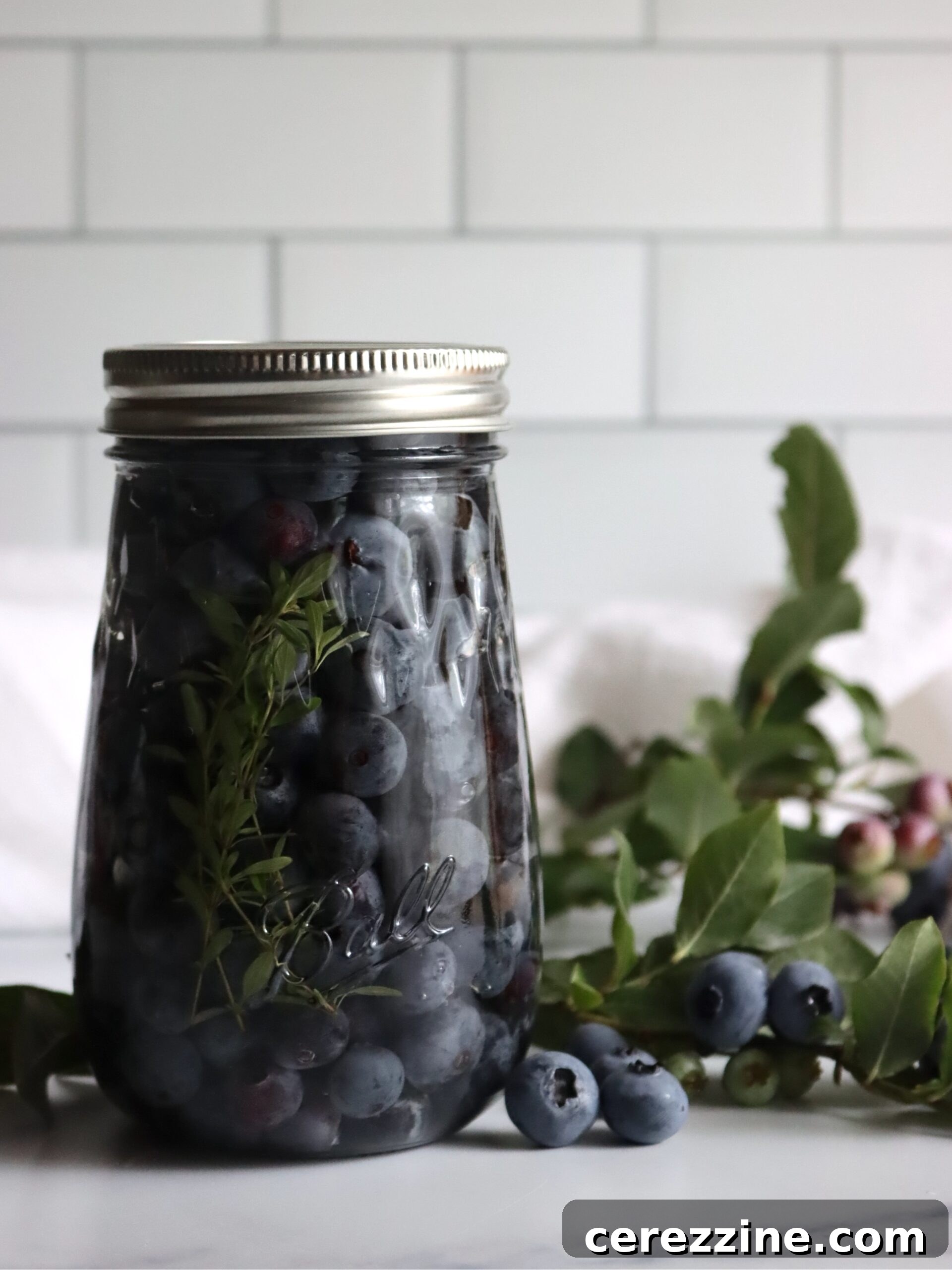
Serving Pickled Blueberries: A Symphony of Flavors
Now that you’ve mastered the delightful art of creating pickled blueberries, it’s time to unleash their full potential in your kitchen. These versatile little berries are much more than just a condiment; they are a culinary chameleon, ready to enhance a myriad of dishes with their unique sweet-tangy profile.
1. The Star of Your Cheese and Charcuterie Board
For an instant upgrade to any cheese platter, pickled blueberries are an absolute must-have. Their bright acidity and subtle sweetness provide a perfect counterpoint to the richness of various cheeses. They pair exceptionally well with creamy, mild cheeses such as Brie, fresh goat cheese, and even tangy cream cheese. Serve them alongside a robust aged cheddar or a nutty Gouda for a surprising burst of flavor. Add some crusty artisan bread, a handful of toasted nuts, and a glass of complementary wine, and you’ve crafted an effortlessly elegant appetizer that will impress your guests.
2. Elevate Savory Main Courses and Side Dishes
Don’t limit these piquant berries to just starters. Pickled blueberries are a fantastic accompaniment to a range of savory dishes, acting as a vibrant chutney or relish.
- Meats: They shine particularly brightly with grilled or roasted meats. Spoon them generously over succulent pork tenderloin, juicy chicken breasts, or even rich duck confit for a delightful contrast that cuts through the fattiness and adds a layer of sophisticated fruitiness. They can also be a surprising addition to a grilled salmon dish, offering a sweet and sour kick.
- Salads: Toss a handful of these flavorful berries into your favorite green salad for an unexpected burst of tanginess. They complement leafy greens, crunchy nuts, and salty cheeses (like feta or crumbled blue cheese) beautifully. Try them in a spinach salad with candied pecans, goat cheese, and a light vinaigrette for an explosion of textures and tastes.
- Sandwiches & Wraps: Add a spoonful to turkey sandwiches, chicken salad wraps, or even a gourmet grilled cheese for an exciting flavor dimension.
- Glazes and Sauces: The pickling liquid itself, or pureed pickled blueberries, can be reduced to create a unique glaze for roasted vegetables or a finishing sauce for meats.
3. A Twist on Sweet Indulgences
While their tangy nature makes them perfect for savory dishes, pickled blueberries also have a surprising affinity for desserts. Their acidity helps to balance out sweetness, creating a more complex and enjoyable treat.
- Ice Cream & Cakes: Drizzle them over a scoop of vanilla bean ice cream, serve alongside slices of rich pound cake or fluffy cheesecake, or spoon them onto freshly baked scones.
- Breakfast & Brunch: Spread some cream cheese or ricotta on toasted bagels or artisan bread and top with a generous spoonful of pickled blueberries for a quick yet gourmet breakfast or snack. Add a swirl of honey or maple syrup for an extra touch of indulgence. They can also brighten up plain yogurt or oatmeal.
4. Sophisticated Sips: Cocktails and Mocktails
For those who enjoy mixology, pickled blueberries offer a creative and flavorful garnish for beverages. Muddle a few berries into your favorite gin and tonic for a botanical twist, drop them into a vodka martini, or use them to give a classic Old Fashioned a unique, fruity edge. The pickling brine can even be used in small quantities to add a distinctive tartness to cocktails or homemade sodas.
No matter how you choose to enjoy them, pickled blueberries are guaranteed to add an element of surprise and delight to your culinary creations. Prepare to be amazed by their versatility and irresistible flavor!
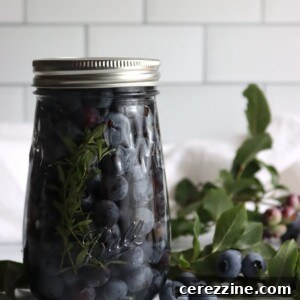
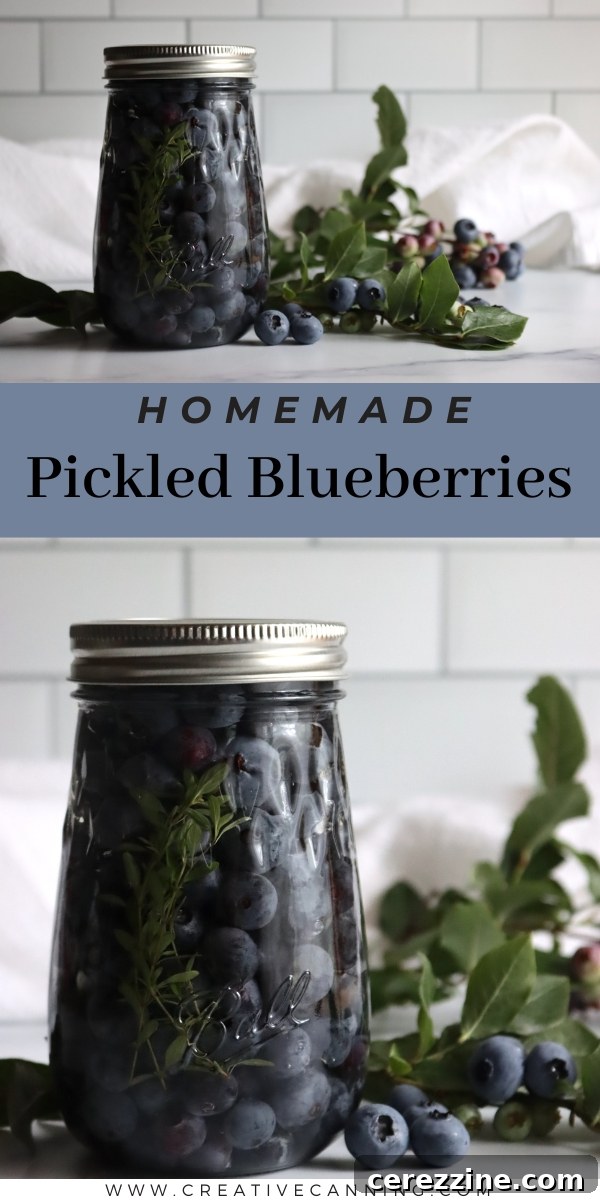
Pickled Blueberries Recipe
By Ashley Adamant
Pickled Blueberries are a surprising way to add a unique flavor to meats, cheese plates, and desserts.
Prep Time: 15 mins
Cook Time: 10 mins
Total Time: 25 mins
Yields: 16 servings, Makes 1 Pint
Equipment
- Water Bath Canner
- Pint jar(s)
- Small saucepan
- Canning funnel (optional but recommended)
- Jar lifter
Ingredients
- 1 pint fresh blueberries (not frozen)
- 1 tsp salt
- 3 tbsp granulated sugar
- 1 cup white balsamic or champagne vinegar
- 3-4 allspice berries (optional)
- 1 whole clove (optional)
- 1 sprig of thyme (optional)
Instructions
- Carefully pick over your blueberries, discarding any unripe, mushy, or spoiled fruit. Remove any remaining stems or debris.
- Pack the cleaned blueberries into a clean, hot pint jar, leaving approximately 1/2 inch of headspace at the top. If using, add the allspice berries, whole clove, and sprig of thyme directly to the jar with the blueberries.
- In a small saucepan, combine the vinegar, salt, and sugar. Bring the mixture to a gentle simmer over medium heat, stirring until the salt and sugar are completely dissolved.
- Carefully pour the hot brine over the blueberries and spices in the jar, again ensuring to leave 1/2 inch of headspace.
- Using a clean, damp cloth, wipe the rim of the jar clean. Place a new lid on the jar and screw on the band until it is fingertip tight.
- Process the jar in a boiling water bath for 10 minutes. If you are at an altitude above 6,000 feet, increase the processing time to 15 minutes.
- Once the processing time is complete, remove the jar from the canner and place it on a clean towel or cooling rack. Allow it to cool completely for 12-24 hours without disturbing.
- After cooling, check the seal by pressing on the center of the lid. If it does not flex, the jar is sealed. Remove the band, label, and store in a cool, dark place.
Nutrition Information (per serving, approximation)
Calories: 40kcal, Carbohydrates: 9g, Protein: 0.3g, Fat: 0.1g, Saturated Fat: 0.01g, Polyunsaturated Fat: 0.04g, Monounsaturated Fat: 0.01g, Sodium: 4mg, Potassium: 41mg, Fiber: 1g, Sugar: 8g, Vitamin A: 16IU, Vitamin C: 3mg, Calcium: 6mg, Iron: 0.2mg
Nutrition information is automatically calculated and should only be used as an approximation.
Tips for Success and Troubleshooting Your Pickled Blueberries
Achieving perfect pickled blueberries is simple, but a few key tips can ensure your success and help you troubleshoot common issues:
- Quality of Berries is Paramount: As mentioned, use only the freshest, firmest, and blemish-free blueberries. Any soft or damaged berries can lead to a mushy final product or even spoilage.
- Headspace Matters: Consistently maintaining the correct 1/4 to 1/2 inch headspace is critical. Too little headspace can cause the lid to buckle or the jar to burst during processing, while too much can lead to an improper seal or discolored berries at the top of the jar.
- Altitude Adjustments are Not Optional: If you live at a higher altitude, the boiling point of water is lower, meaning food needs more time to process to reach the same temperature equivalent for safe preservation. Always adjust your canning times according to USDA guidelines for your specific elevation.
- Ensure a Proper Seal: After cooling, check every jar’s seal. A properly sealed lid will be concave (curved inwards) and will not flex when pressed. If a jar doesn’t seal, refrigerate it immediately and consume within a few weeks, or re-process it with a new lid within 24 hours.
- Sterilization Practices: While water bath canning for 10 minutes or more sterilizes the jar contents, keeping your jars hot and clean before filling reduces thermal shock and helps ensure a pristine environment for your pickles.
- Storing Opened Jars: Once a jar of pickled blueberries is opened, it must be stored in the refrigerator. The vacuum seal is broken, and while the high acidity helps with preservation, refrigeration is necessary to maintain quality and safety. Consume within 2-3 weeks for best flavor.
- Vinegar Choice: Resist the temptation to substitute white distilled vinegar for white balsamic or champagne vinegar. The harshness of distilled white vinegar will overwhelm the delicate berry flavor, resulting in a less refined pickle.
Explore More Fruit Pickling Adventures
If you’ve fallen in love with the surprising world of pickled blueberries, you’ll be delighted to discover other fruits that transform beautifully through the pickling process. Expand your repertoire with these sweet and tangy recipes:
- Pickled Cherries: A burst of tart sweetness perfect for desserts and savory dishes.
- Pickled Strawberries: A vibrant and zesty addition to salads or cocktails.
Conclusion: Embrace the Tangy Delight
Pickled blueberries are more than just a novelty; they are a testament to the transformative power of simple ingredients and traditional preservation methods. With their captivating blend of sweet, sour, and savory notes, they offer an exciting new dimension to your culinary creations.
From enhancing your morning toast to elevating a sophisticated dinner party, these tangy berries prove their versatility time and again. They are easy to make, provide a unique gift idea, and allow you to savor the essence of summer all year long. So, gather your fresh blueberries, choose your favorite vinegar and spices, and embark on this rewarding pickling adventure. You’ll soon wonder how you ever lived without this unexpected pantry staple.
Don’t be afraid to experiment with different spices or berry combinations to find your perfect pickled fruit. The world of fruit pickling is vast and full of delicious discoveries waiting to be made. Enjoy the process, and most importantly, enjoy the incredible flavors you create!