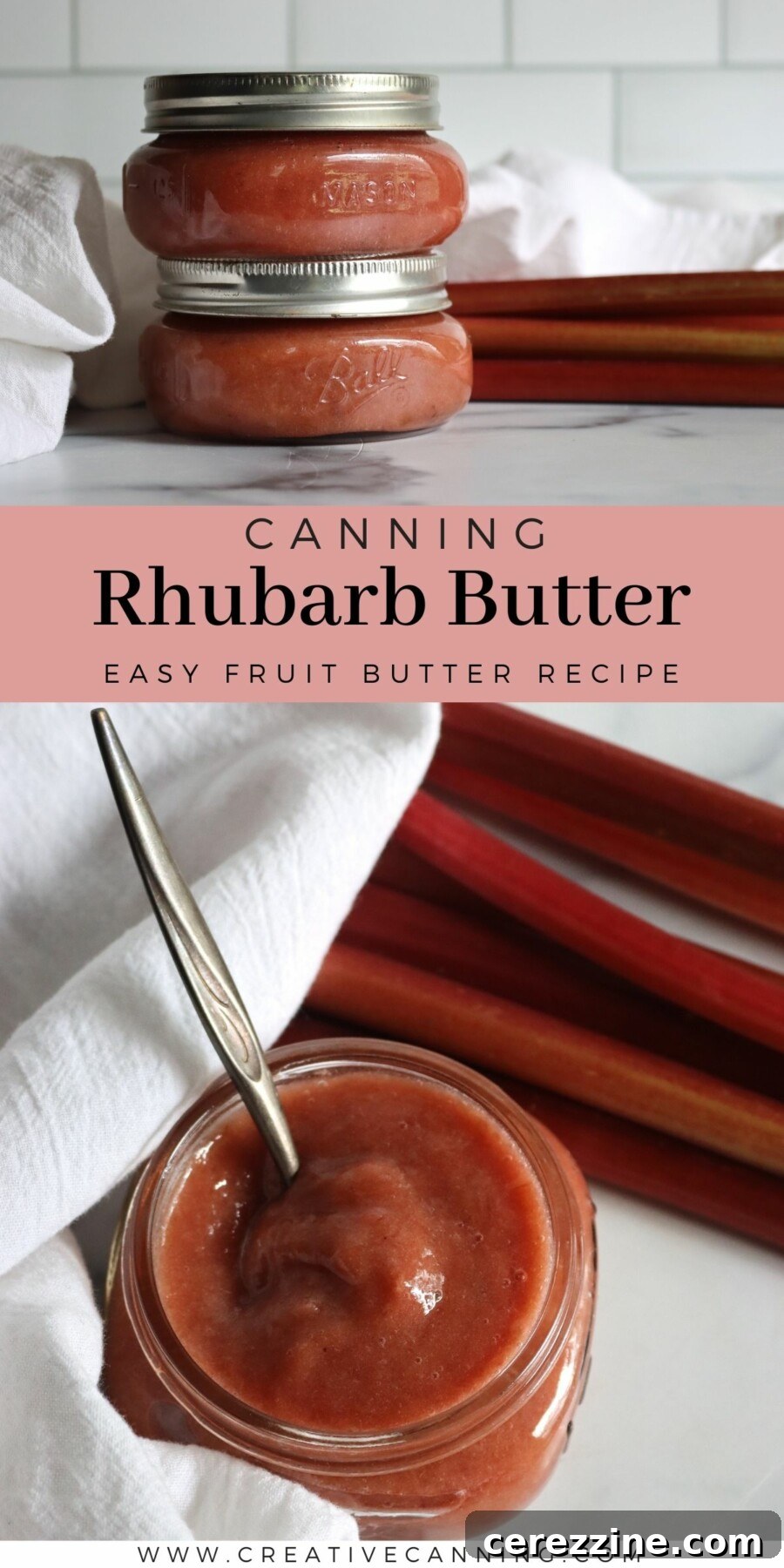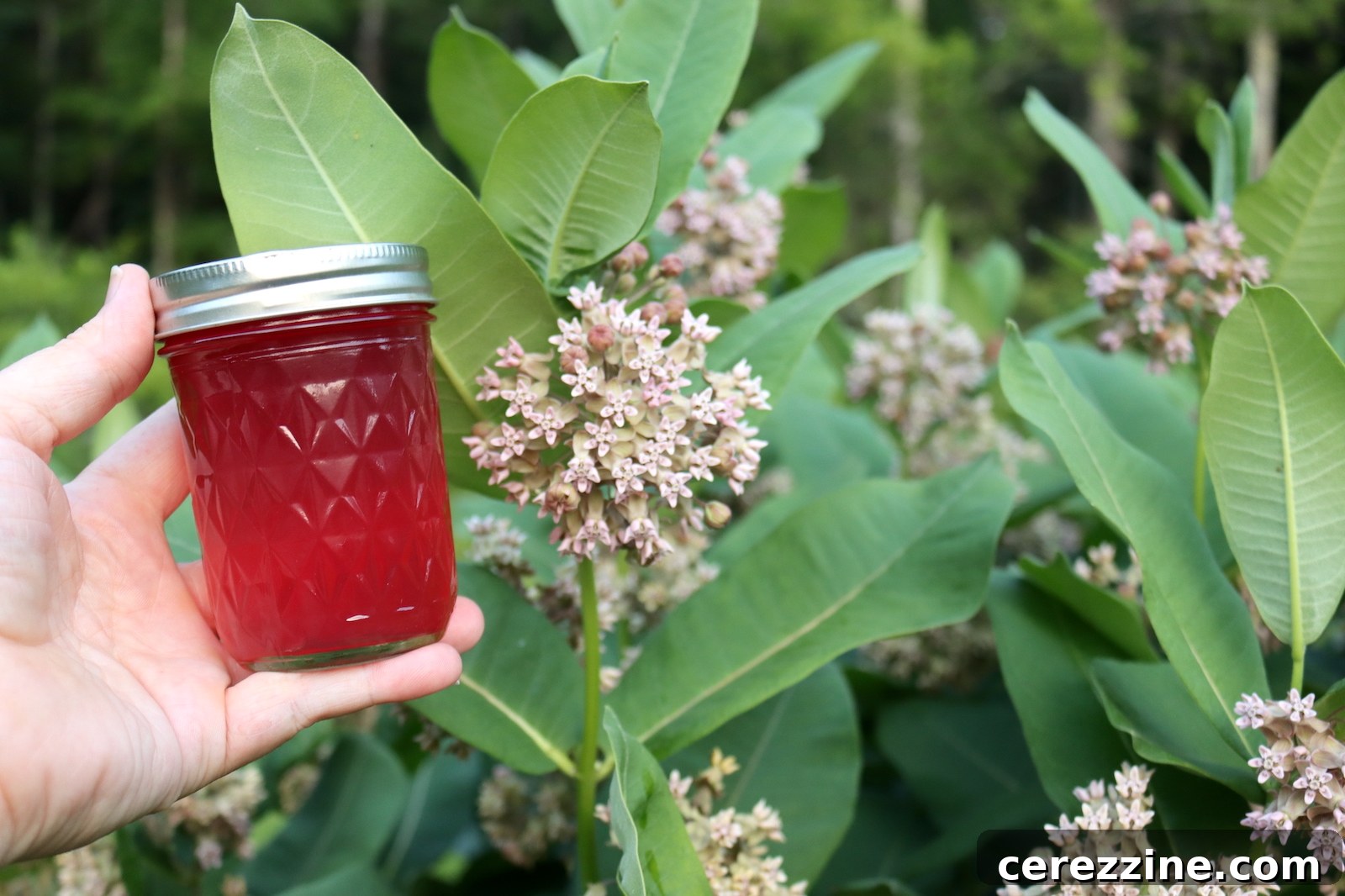
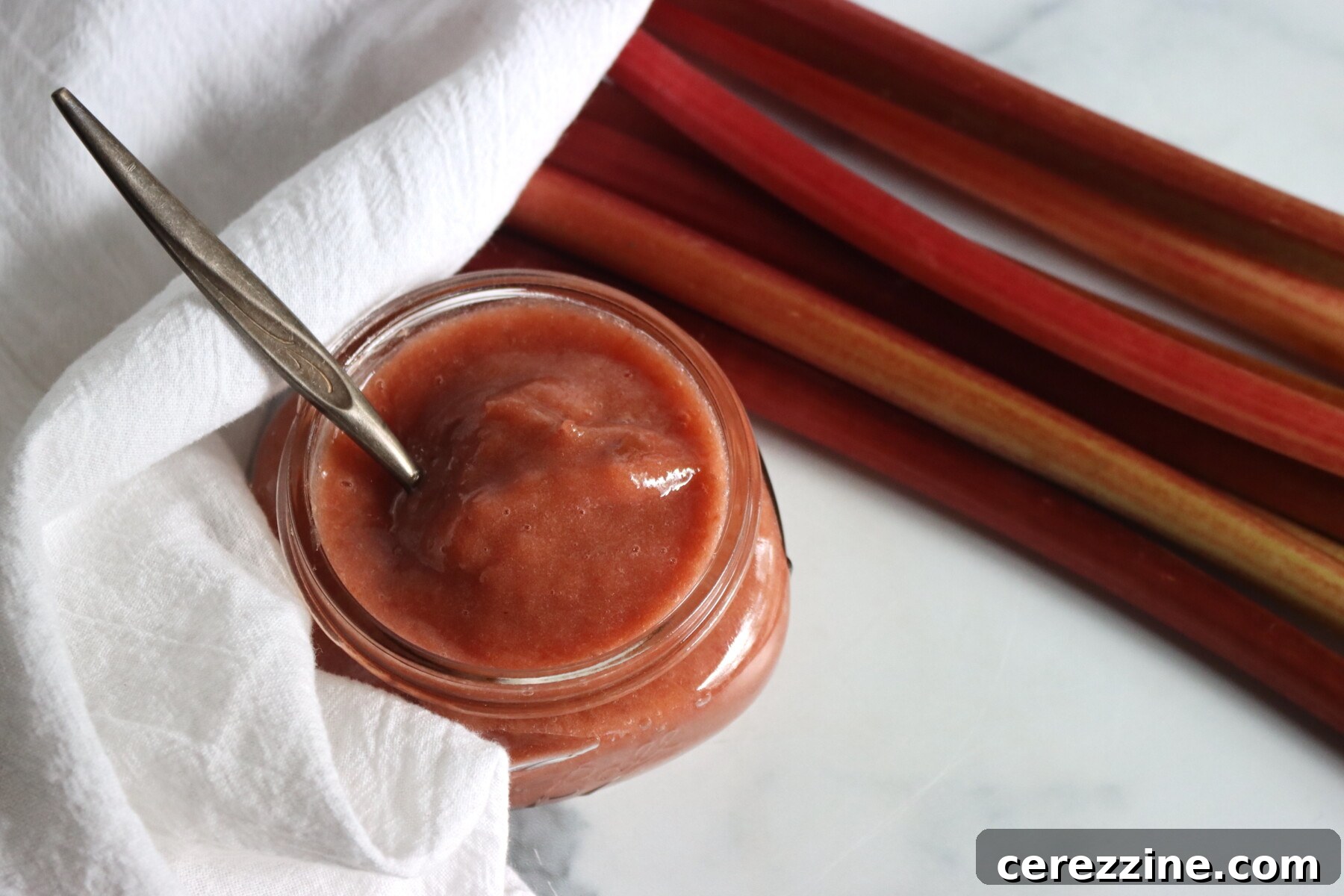
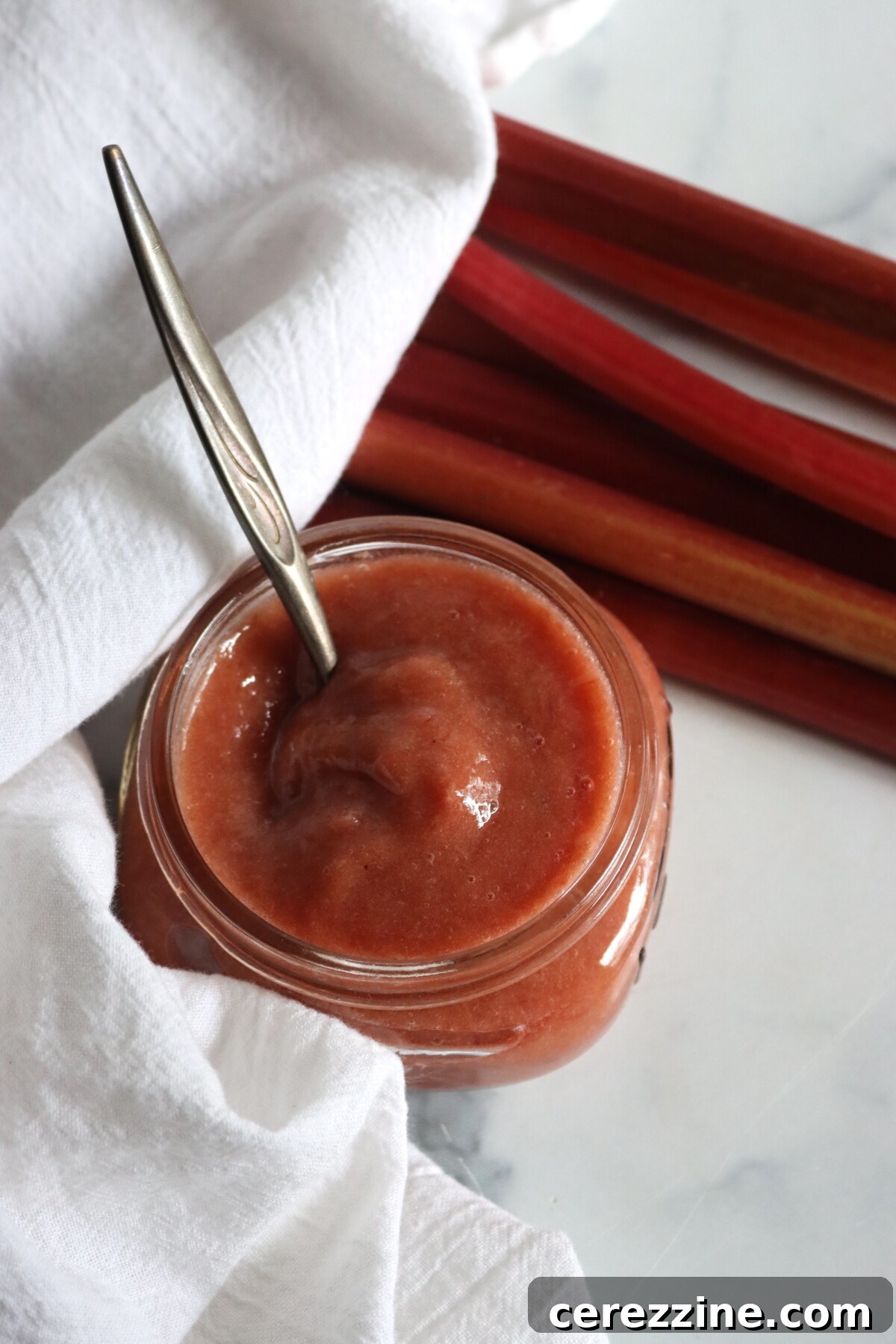
Rhubarb butter is a truly delightful and versatile preserve, renowned for its silky-smooth texture and concentrated sweet-tart flavor profile. Imagine a spread so luscious it glides effortlessly onto your morning toast, infuses your yogurt with a vibrant tang, or can even be enjoyed straight from the jar as a simple, unadulterated pleasure. Unlike traditional jams that often require the precise measurement of pectin and the careful monitoring of a gel point, making rhubarb butter is a far more forgiving process. The magic happens as the rhubarb slowly simmers, reducing down to a thick, glossy, and intensely flavorful butter without any complicated steps.
If you’re already familiar with crafting apple butter or pear butter, the method for rhubarb butter will feel incredibly familiar and intuitive. The process shares a similar rhythm, focusing on the slow reduction of fruit and sugar to achieve that signature rich consistency. For those new to the wonderful world of fruit butter recipes, rhubarb stands out as an excellent starting point. Its inherent tenderness means it breaks down quickly and effortlessly, demanding less hands-on attention until the final, crucial stages of thickening. This makes it an ideal introduction to the satisfying art of fruit preservation, promising delicious results even for beginners.
This particular recipe has undergone a rigorous review process, ensuring its safety and accuracy. It has been meticulously checked and approved by a Master Food Preserver, certified through the esteemed University of Cornell Cooperative Extension. This stamp of approval guarantees that you can confidently make and enjoy this homemade rhubarb butter.
The Timeless Tradition of Fruit Butters
Fruit butters represent one of the most ancient and cherished methods of preserving nature’s bounty. Originating in kitchens long before modern canning techniques, this preservation art relies on a beautifully simple principle: cooking fruit with sugar over an extended period until most of its natural moisture evaporates. What remains is a deeply concentrated, velvety spread, bursting with intense fruit flavor. This basic method for making fruit butter is remarkably adaptable and works wonderfully with almost any fruit imaginable. However, rhubarb, with its characteristic vibrant tartness, is exceptionally well-suited to this process. The slow cooking mellows its sharp edge while intensifying its unique sweet-sour notes, creating a complex and incredibly satisfying spread.
Perfect Batches for Every Kitchen
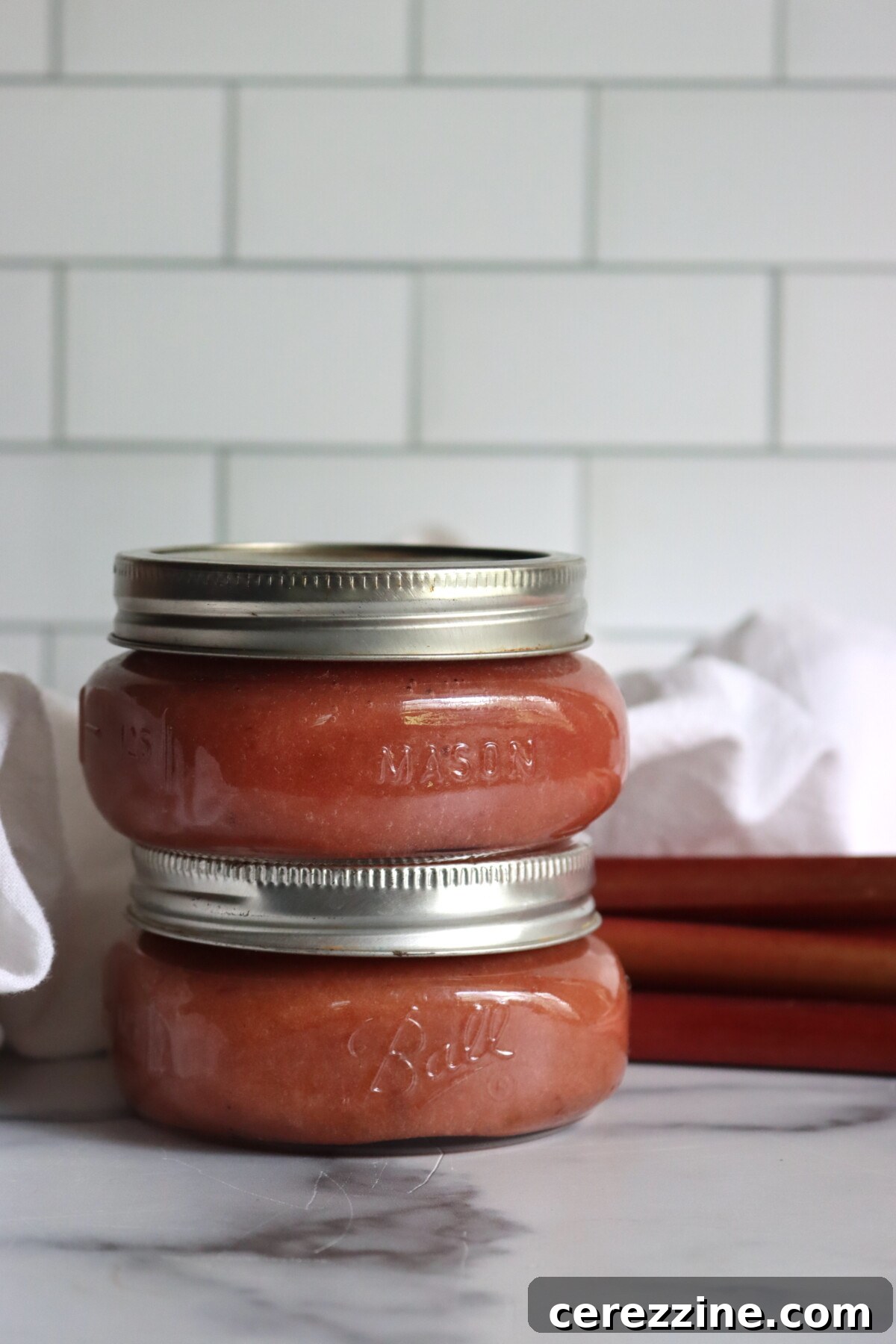
This rhubarb butter recipe is designed as a small batch, yielding approximately three half-pints of finished product. This manageable quantity is ideal for most households, providing enough delicious homemade preserve to enjoy without overwhelming your pantry space. Whether you’re making it for personal enjoyment, as thoughtful gifts, or simply to get acquainted with the process, a small batch is a great starting point. Should you find yourself with an abundance of rhubarb from a thriving garden or a generous farmers’ market haul, rest assured that this recipe is easily scalable. You can effortlessly multiply the ingredient quantities to produce a larger yield, and conveniently, the water bath canning processing time remains consistent regardless of the batch size, making large-scale preservation just as straightforward.
Notes from My Kitchen: Why I Love Rhubarb Butter

Learning to make fruit butters was one of the earliest and most rewarding skills I acquired when I first delved into the world of canning, and they’ve remained a beloved staple in my kitchen ever since. There’s a profound satisfaction in the process of slowly cooking fruit down into such a sumptuously silky spread, all without the usual anxieties of dealing with pectin or meticulously hitting a specific gel point. Rhubarb butter, for me, was a delightful discovery that came later, after I had happily mastered apple and pear butters. I’m incredibly glad I finally got around to making it, as its unique flavor quickly made it a household favorite.
This particular small batch recipe, yielding just three half-pints, hits that sweet spot. It provides enough rhubarb preserves to keep our family well-stocked for a while without taking over precious pantry space. My kids, in particular, prefer this smooth, chunk-free rhubarb butter over rhubarb jam. Its effortless spreadability on toast makes it a consistent hit at breakfast. What I especially appreciate is its versatility in utilizing late-season rhubarb. Just like with homemade syrups and jellies, even the stringier stalks from the end of the harvest are perfectly suitable for this recipe, ensuring that nothing from our garden goes to waste. Once you experience the ease and deliciousness of fruit butters, you’ll undoubtedly find yourself inspired to create them with a variety of fruits throughout the year.
The Appeal of Homemade Fruit Butter
Beyond the simple satisfaction of preserving, homemade fruit butter offers unparalleled flavor and quality. You control the ingredients, ensuring no artificial flavors, colors, or excessive sugars are used. The slow cooking process deepens the natural sweetness of the fruit while concentrating its essence, resulting in a product far superior to anything store-bought. It’s also an excellent way to use up an abundance of fruit that might otherwise go to waste, transforming it into a luxurious spread that can be enjoyed for months to come. The simplicity of the method means even novice cooks can achieve impressive results, building confidence in the kitchen and fostering a deeper connection to seasonal produce.
Quick Look at the Recipe: Rhubarb Butter Essentials
- Recipe Name: Rhubarb Butter
- Recipe Type: Fruit Butter (A silky, spreadable preserve without pectin)
- Canning Method: Water Bath Canning (For shelf-stable storage)
- Prep Time: Approximately 10 minutes (Quick and efficient chopping)
- Cook Time: Around 40 minutes (Relatively fast for a fruit butter)
- Canning Time: 10 minutes for both half pints or pints (Standard process)
- Yield: Approximately 3 half pints (Perfect for small batches)
- Jar Sizes: Half pints or pints (Versatile for storage needs)
- Headspace: 1/4 inch (Crucial for proper sealing)
- Ingredients Overview: Rhubarb, sugar, water, lemon juice (Simple, natural ingredients)
- Safe Canning Recipe Source: Adapted for canning based on standard fruit butter methods established by the National Center for Home Food Preservation (NCHFP). This ensures a reliable and safe recipe.
- Difficulty: Easy (Beginner-friendly for home preservers)
- Similar Recipes: Making rhubarb butter is closely related to other fruit butters that thicken naturally without pectin, such as cherry butter, blueberry butter, and peach butter. If you’re a devoted fan of rhubarb preserves, you’ll also enjoy exploring other rhubarb canning recipes like rhubarb jam or rhubarb jelly, each offering a distinct texture and experience.
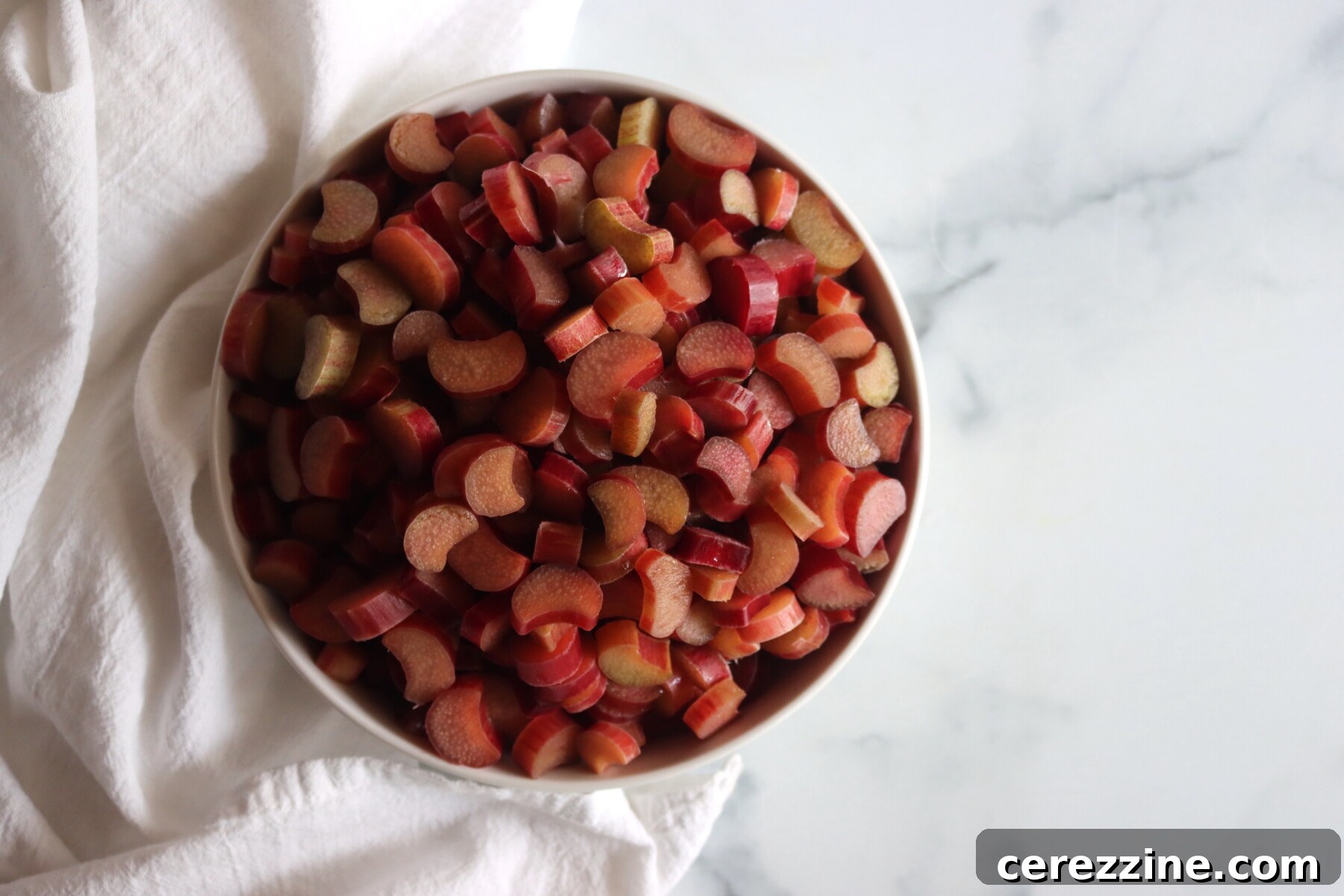
Essential Ingredients for Rhubarb Butter
Crafting exquisite rhubarb butter requires a surprisingly short list of ingredients, making it accessible and straightforward for any home cook. The beauty of this recipe lies in its simplicity, allowing the natural flavor of the rhubarb to truly shine. Furthermore, the process is forgiving enough that you can make minor adjustments to taste as you progress, ensuring a personalized result.
- Rhubarb: The star of our show! Both fresh and frozen rhubarb perform exceptionally well in this recipe, offering convenience no matter the season. For a butter with a deep, vibrant pink hue, select the reddest stalks you can find. However, don’t shy away from green or pale pink rhubarb; while its color may be less intense, its flavor will be equally delicious. Even late-season rhubarb that might have become a bit stringy is perfectly acceptable since the entire mixture will be blended to a smooth consistency. Always remember to remove and discard the leaves, as they are toxic and should never be consumed.
- Sugar: Standard granulated sugar plays a crucial role, not only by balancing the inherent tartness of the rhubarb but also by aiding in the thickening process as the butter slowly cooks down. For those who prefer alternative sweeteners, honey or maple syrup can be substituted. Be aware that these will impart a different flavor profile to the finished butter. When using natural sweeteners, start with a slightly smaller quantity than the recipe specifies, as they tend to be sweeter by volume, and adjust to your desired taste.
- Water: A small amount of water is essential at the beginning of the cooking process. It provides the initial moisture needed to get the rhubarb breaking down and helps prevent scorching before the fruit naturally releases its own juices. You’ll find that only a minimal quantity is required, just enough to kickstart the simmer.
- Lemon Juice: A splash of lemon juice is a culinary secret weapon here. It not only brightens the overall flavor of the rhubarb butter, enhancing its tanginess, but also helps prevent the beautiful pink color from oxidizing and turning dull during cooking and storage. Both freshly squeezed and bottled lemon juice are equally effective.
Optional Flavor Enhancements
While delicious on its own, rhubarb butter can be wonderfully enhanced with a few optional additions. For a warmer, more comforting flavor, consider adding a splash of vanilla extract at the very end of the cooking process, just before jarring. If you appreciate spiced fruit butters, a pinch of ground cardamom or cinnamon can introduce an intriguing depth. Start with about 1/4 teaspoon of any spice and taste as you go, allowing you to tailor the flavor to your personal preference without overpowering the delicate rhubarb.
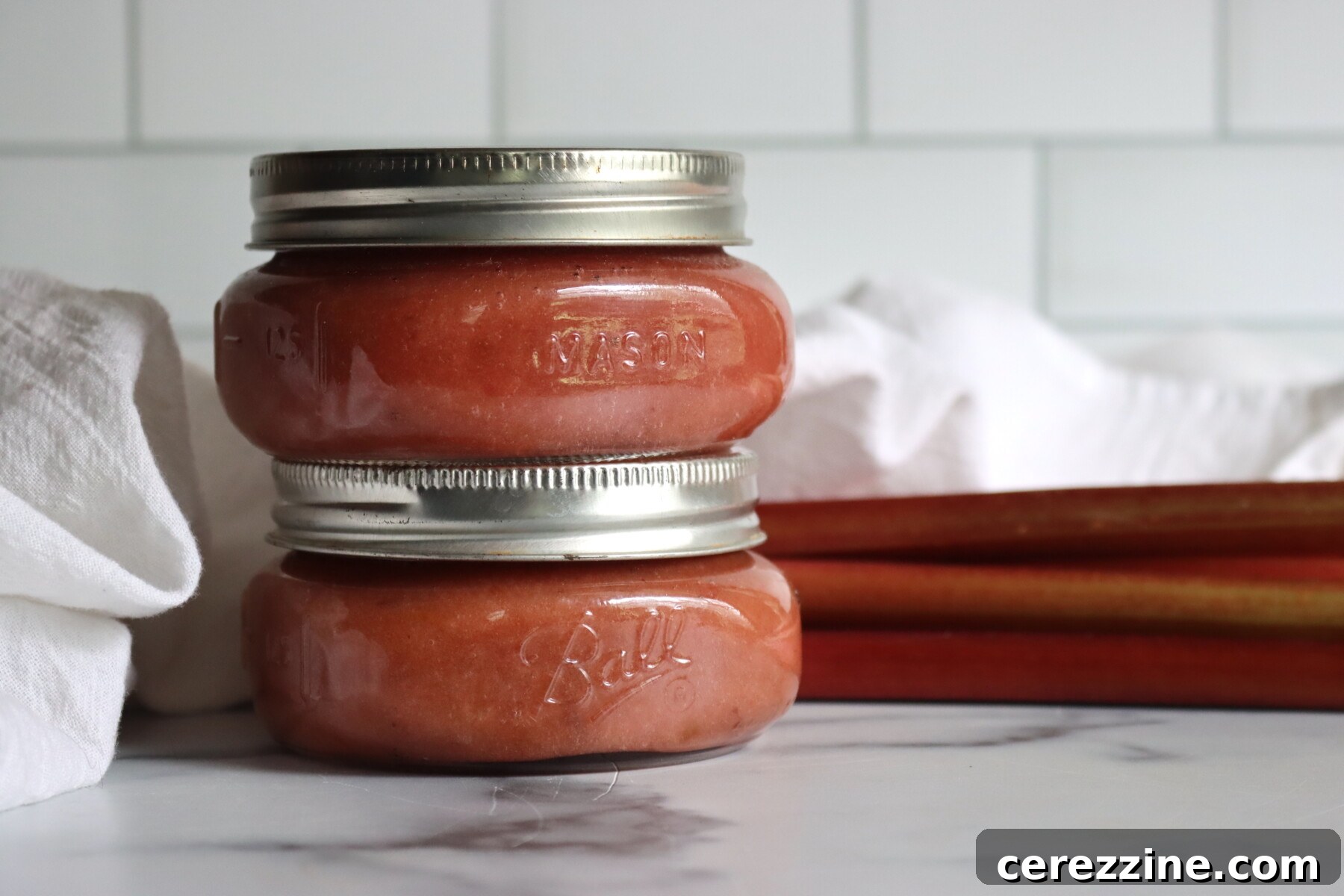
Step by Step Instructions: Crafting Your Homemade Rhubarb Butter
One of the many appealing aspects of this homemade rhubarb butter recipe is its relatively quick preparation time compared to other fruit butters. Rhubarb naturally contains less moisture than fruits like apples or peaches, which means it reduces and thickens more rapidly. The entire process is broken down into easily manageable steps: cooking the fruit until tender, blending it to a smooth puree, reducing it further until perfectly thick, and finally, ladling it into jars for preservation.
1. Cook the Rhubarb to Perfection
Begin by thoroughly rinsing your fresh rhubarb stalks under cool water. Trim off any ends and, crucially, discard all leaves as they are toxic. Slice the clean rhubarb into approximately 1-inch pieces; consistency in size will help it cook evenly. Place these sliced rhubarb pieces into a large, heavy-bottomed pot. The heavy bottom is important to prevent scorching as the fruit cooks. Add the granulated sugar, water, and lemon juice to the pot. Stir all the ingredients together until they are well combined, ensuring the sugar starts to dissolve and coat the rhubarb.
Heat the mixture over medium heat, stirring frequently. This initial stirring is vital to prevent the rhubarb from sticking to the bottom of the pot and to encourage the sugar to fully dissolve and the rhubarb to release its natural juices. Continue until the mixture comes to a gentle boil. Once boiling, reduce the heat to a simmer and let it cook for about 15 to 20 minutes, stirring occasionally. The goal here is to get the rhubarb pieces completely soft and thoroughly broken down. They should be tender enough to easily mash with the back of a spoon.
2. Blend Until Silky Smooth
Once the rhubarb is perfectly soft, carefully transfer the hot cooked rhubarb mixture to a blender. Alternatively, for a less messy approach, you can use an immersion blender directly in the pot, which saves on cleanup. Blend the rhubarb until it achieves a completely smooth and uniform consistency. For the silkiest, most luxurious texture, a high-powered blender is recommended, but a standard blender or even a food processor will yield excellent results. When blending hot liquids, always exercise caution: ensure the blender lid is securely fastened, but also make sure it is vented to allow steam to escape and prevent pressure buildup. Placing a kitchen towel over the top of the lid can provide an extra layer of safety, and always stand back when you switch the blender on.
3. Reduce Until Perfectly Thick
Pour the smooth rhubarb puree back into the same heavy-bottomed pot. Return the pot to the stove and bring the puree back to a gentle simmer over medium-low heat. This stage is crucial for achieving the desired thick, spreadable consistency of fruit butter. Cook, stirring frequently with a long-handled spoon or spatula, for another 15 to 20 minutes, or until the butter has significantly thickened and reduced in volume. As it cooks, the butter will deepen slightly in color and take on a beautiful, glossy sheen, indicating it’s nearing completion. It’s important to scrape the bottom of the pot often, especially in the later stages, to prevent any scorching.
To test for doneness, perform the “spoon test”: drag your spoon across the bottom of the pot. If the butter holds its shape and doesn’t immediately flow back to fill the gap created by your spoon, it has reached the ideal thickness. Keep in mind that the butter will continue to thicken further as it cools, so it’s often better to err on the side of slightly looser consistency if you’re unsure.
4. Fill and Prepare Jars for Canning
Once the rhubarb butter has reached its perfect consistency, it’s time to ladle it into your prepared canning jars. Ensure your jars are clean and warm. Ladle the hot butter into the jars, leaving a precise 1/4 inch of headspace from the rim. Headspace is vital for proper sealing during canning. To remove any trapped air bubbles, gently run a bubble remover tool or a clean chopstick around the inside edge of each jar. This helps prevent issues with sealing. Finally, wipe the rims of the jars meticulously clean with a damp cloth; even a tiny bit of butter on the rim can prevent a proper seal. Apply the clean canning lids and screw on the bands, tightening them only to “fingertip tight” – just until resistance is met, allowing air to escape during processing.
Canning Rhubarb Butter for Long-Term Storage
For immediate enjoyment, rhubarb butter can be stored in the refrigerator for 2 to 3 weeks, or frozen for up to a year. However, for a truly shelf-stable product that can be stored at room temperature for extended periods, processing the filled jars in a boiling water bath is the recommended method. This ensures safety and longevity, allowing you to savor the taste of homemade rhubarb butter all year round.
Before you even begin making the butter, it’s a good practice to prepare your water bath canner. Fill the canner with water and bring it to a gentle simmer (approximately 180°F, or 82°C). It should be ready to receive your jars as soon as you’ve filled and lidded them. Once your jars are filled, lidded, and banded, carefully lower them onto the rack inside the preheated canner. Ensure that the jars are completely covered by at least 1 inch of water. Bring the water to a full, rolling boil, then begin your processing time. Process for 10 minutes for either half-pint or pint jars. Remember to adjust this processing time if you live at a higher altitude, as specified below.
After the processing time is complete, turn off the heat, but allow the jars to remain undisturbed in the hot canner for an additional 5 minutes. This helps the contents equalize temperature and reduces the risk of siphoning. After 5 minutes, carefully remove the jars from the canner using a jar lifter and place them on a towel-lined counter, spaced apart, to cool completely. Let them cool for 12 to 24 hours without disturbing them. Once cooled, check the seals: the center of the lid should be concave and should not flex when pressed. Any jars that did not properly seal should be refrigerated immediately and consumed within a few weeks. Properly sealed jars can be stored in a cool, dark place at room temperature for 12 to 18 months, providing a taste of spring whenever you desire.
Altitude Adjustments for Water Bath Canning
When performing water bath canning, it’s crucial to adjust processing times based on your elevation. Water boils at a lower temperature at higher altitudes, requiring longer processing to achieve adequate sterilization. Ensure your homemade rhubarb butter is safe for storage by following these guidelines:
- 0 to 1,000 feet: Process for 10 minutes
- 1,001 to 6,000 feet: Process for 15 minutes
- Above 6,000 feet: Process for 20 minutes
Yield Notes and Consistency Tips
This rhubarb butter recipe typically begins with approximately 2 pounds of fresh rhubarb, which translates to roughly 6 to 8 cups of sliced pieces. After the cooking and reduction process, this amount will yield around 3 cups of finished rhubarb butter, enough to fill 3 half-pint jars. The precise yield, however, can fluctuate depending on several factors, including how long you choose to cook the butter and the natural moisture content of your specific batch of rhubarb.
For those who prefer a thicker, more intensely concentrated butter, simply extend the cooking time during the reduction phase. The longer it simmers, the more moisture will evaporate, resulting in a denser spread. Conversely, if you favor a slightly softer, more easily spreadable consistency, you can remove the butter from the heat a bit earlier. Remember, fruit butters will always thicken further as they cool, so when in doubt, it’s often wise to err on the side of slightly looser consistency, as it will firm up beautifully upon reaching room temperature or refrigeration.
Creative Serving Ideas for Rhubarb Butter
The sweet-tart complexity of rhubarb butter makes it an incredibly versatile ingredient, moving beyond a simple toast topper to enhance a wide array of dishes. Here are some inspiring ways to enjoy your homemade creation:
- Breakfast Classics: Elevate your morning routine by slathering rhubarb butter generously on hot buttered toast, warm English muffins, fluffy homemade biscuits, or delicate crumpets.
- Elegant Brunch: Serve it alongside freshly baked scones, perhaps with a dollop of whipped cream or clotted cream, for a truly delightful springtime treat that evokes a classic afternoon tea.
- Dairy Pairings: Swirl a spoonful of rhubarb butter into your morning oatmeal, Greek yogurt, or even cottage cheese for an instant burst of bright, fruity flavor and natural sweetness.
- Baked Goods Delight: Use it as a vibrant filling for classic thumbprint cookies, giving them a tangy surprise. Incorporate it between layers of a vanilla or almond cake for a sophisticated and moist filling, or as a glaze for pastries and tarts.
- Savory Adventures: Don’t limit rhubarb butter to sweet applications! It makes a fantastic, unexpected addition to a cheese board, where its tartness beautifully complements creamy cheeses like brie, goat cheese, or even a sharp cheddar.
- Unexpected Glaze: For a truly unique culinary experience, try using rhubarb butter as a glaze for roasted pork loin, chicken, or even duck. The acidity of the rhubarb cuts through the richness of the meat, creating a harmonious and unforgettable flavor profile.
- Cocktail Companion: Mix a small amount into a cocktail or mocktail for a unique tart sweetener, or serve a spoonful alongside pancakes, waffles, or French toast for a gourmet touch.
Rhubarb Butter FAQs: Your Questions Answered
The final color of your rhubarb butter is almost entirely dictated by the color of the rhubarb stalks you start with. Rhubarb varieties range significantly in hue, from deep crimson, which will produce a vivid pink butter, to paler pinks and even green. Rest assured, regardless of the color, the taste will be equally delicious and vibrant. If a more intense pink is desired, actively seek out the reddest stalks available. As a last resort, a tiny drop of red food coloring can be added at the very end of the cooking process to boost the color, but this is purely for aesthetics.
Absolutely, frozen rhubarb is an excellent choice for making fruit butter, and it offers great convenience, especially outside of rhubarb season. There’s no need to thaw it beforehand; simply add the frozen rhubarb directly to your pot along with the sugar and water, then proceed with the recipe as usual. You might find that you need slightly less initial water than specified for fresh rhubarb, as frozen rhubarb tends to release more liquid as it thaws during cooking.
The most reliable method to determine if your rhubarb butter is ready is the “spoon test.” Drag a spoon across the bottom of the pot; if the butter holds its shape and doesn’t immediately flow back to fill the gap left by the spoon, it’s done. You’ll also notice the butter will darken slightly and develop a beautiful, glossy appearance as it nears doneness. It’s important to remember that the butter will continue to thicken significantly as it cools, so it’s generally better to remove it from the heat when it’s just a bit looser than your desired final consistency, rather than risking overcooking it.
Yes, combining strawberries with rhubarb to create strawberry rhubarb butter is a fantastic idea and a very popular variation! For best results, use equal amounts of both strawberries and rhubarb, measured by weight or volume. The cooking process remains the same, and the delicious fusion of flavors will yield a lovely pink butter that perfectly balances the sweetness of strawberries with the tartness of rhubarb. This technique also works beautifully with other fruits; feel free to experiment with rhubarb and raspberries or even peaches for different delightful combinations.
The essential equipment for making rhubarb butter includes a large, heavy-bottomed pot to prevent scorching, a sturdy spoon or spatula for stirring, and a blender (either an immersion blender or a countertop blender) to achieve a smooth consistency. If you plan on canning, you’ll also need a water bath canner, canning jars (half-pints or pints), lids and bands, and a jar lifter. A bubble remover or chopstick is helpful for removing air bubbles from jars.
Absolutely! If you don’t want to go through the canning process, you can still enjoy homemade rhubarb butter. Simply store the finished, cooled butter in airtight containers in your refrigerator for up to 2-3 weeks. For longer storage without canning, rhubarb butter freezes exceptionally well. Portion it into freezer-safe containers or bags and it will keep for up to a year. Thaw in the refrigerator before use.
Explore More Rhubarb Canning Recipes
Rhubarb Juice Concentrate (with Canning Instructions)
Canning Rhubarb Pie Filling
Rhubarb Jelly
If you tried this Rhubarb Butter Recipe, or any other recipe on Creative Canning, leave a ⭐ star rating and let me know what you think in the 📝 comments below!
And make sure you stay in touch with me by following on social media!
- Substack
⭐
⭐
⭐
⭐
Rhubarb Butter
Rate
Equipment
-
Water Bath Canner
-
Half pint canning jars
-
Canning lids and bands
-
Jar lifter
-
Immersion Blender
-
Heavy-bottomed pot
Ingredients
- 2 lbs rhubarb, stalks only, leaves removed
- 1 cup sugar
- 1/4 cup water
- 2 Tbsp lemon juice, fresh or bottled
Instructions
-
Rinse the rhubarb and slice into 1-inch pieces, discarding any leaves. Place in a heavy-bottomed pot with sugar, water, and lemon juice. Heat over medium heat, stirring frequently, until the rhubarb releases its juices and comes to a boil. Reduce heat and simmer for 15 to 20 minutes until completely soft and broken down.
-
Carefully transfer the cooked rhubarb to a blender or use an immersion blender directly in the pot. Blend until completely smooth. Be careful when blending hot liquids: secure the lid, vent it, place a towel over the top, and stand back.
-
Return the puree to the pot and bring to a gentle simmer over medium-low heat. Cook, stirring frequently, until thickened and reduced, about 15 to 20 minutes more. The butter will darken slightly and become glossy. To test, drag a spoon across the bottom of the pot. If the butter holds its shape and doesn’t immediately fill in the gap, it’s ready.
-
Ladle the hot butter into prepared jars, leaving 1/4 inch headspace. Remove air bubbles, wipe rims clean, and apply lids and bands to fingertip tight.
-
Lower filled jars into a prepared water bath canner, ensuring they’re covered by at least 1 inch of water. Process for 10 minutes for half pints or pints, adjusting for altitude.
-
Turn off heat and let jars stand in canner for 5 minutes before removing. Place on a towel-lined counter and cool undisturbed for 12 to 24 hours. Check seals before storing. Refrigerate any unsealed jars for immediate use.
Notes
The color of your butter depends on the color of your rhubarb stalks. Red varieties produce a deeper pink butter, while green or pale pink stalks yield a paler result. The flavor is the same.
You can add a splash of vanilla extract or a pinch of cardamom or cinnamon at the end of cooking for a spiced variation.
Storage
Properly canned and sealed jars keep at room temperature for 12 to 18 months. Without canning, store in the refrigerator for 2 to 3 weeks or freeze for up to a year. Refrigerate after opening.
Altitude Adjustments
- 0 to 1,000 feet: 10 minutes
- 1,001 to 6,000 feet: 15 minutes
- Above 6,000 feet: 20 minutes
Nutrition
Nutrition information is automatically calculated, so should only be used as an approximation.
📝
Like this? Leave a comment below!
More Fruit Butter Canning Recipes
How to Make Fruit Butter (Apple, Pear, Peach & More!)
Peach Butter
Pear Butter
Find the perfect recipe
Searching for something else? Enter keywords to find the perfect recipe!