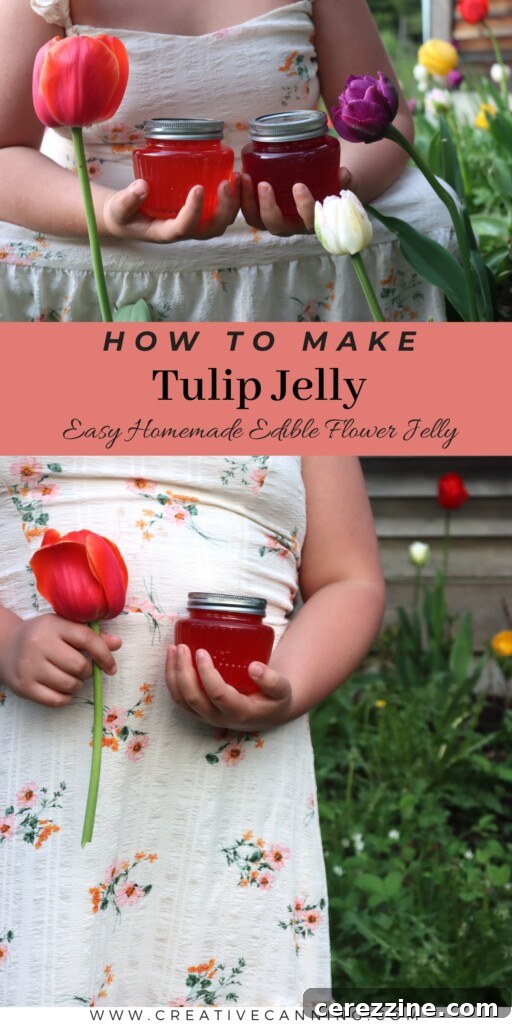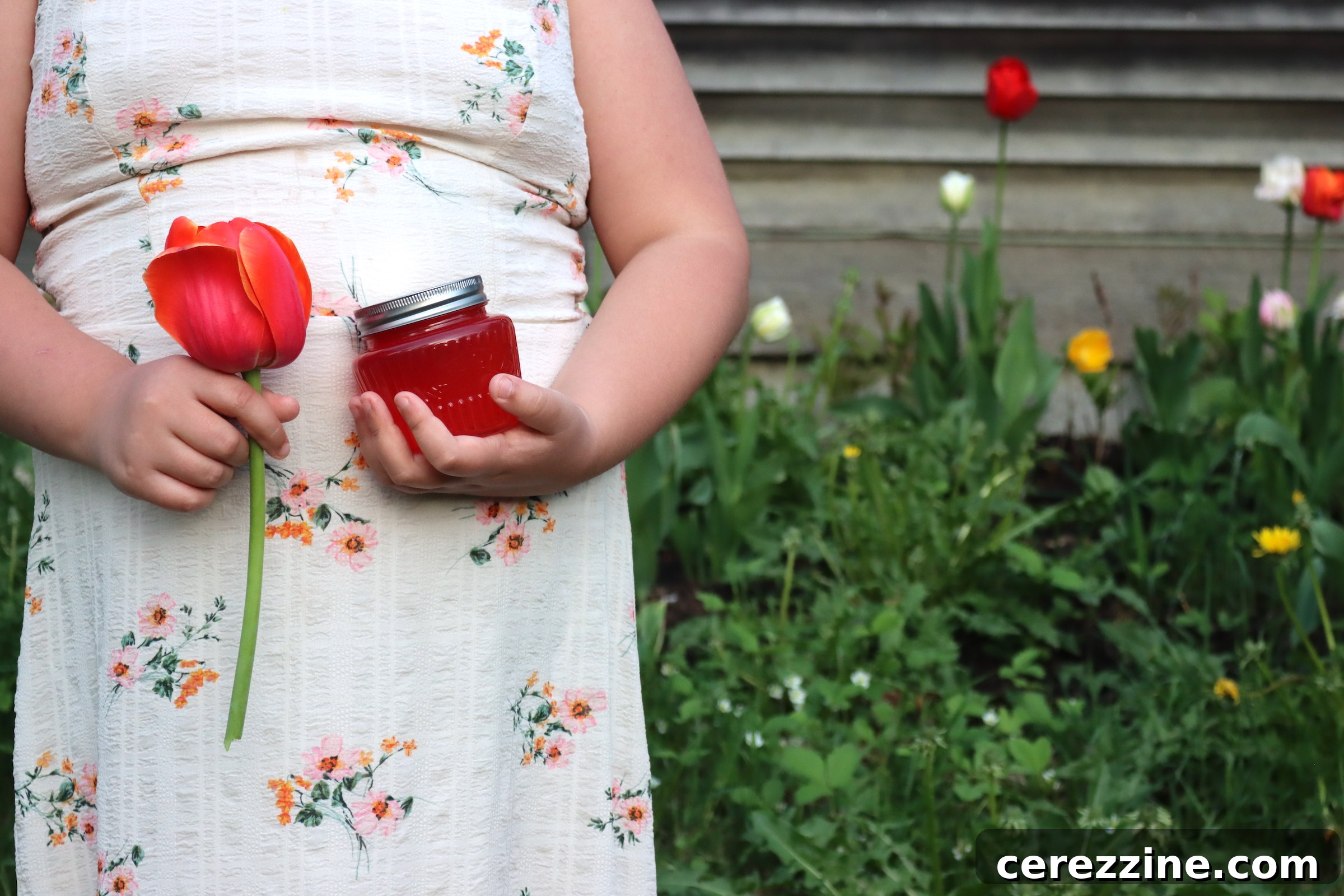
Tulip jelly is an exquisite and unexpectedly delightful floral preserve crafted from fresh tulip petals, offering a delicate, subtly fruity flavor and a soft, captivating jewel-toned hue. This unique creation provides a beautiful and innovative way to savor the fleeting splendor of edible spring flowers, transforming them into a sweet, gourmet treat perfect for any occasion.
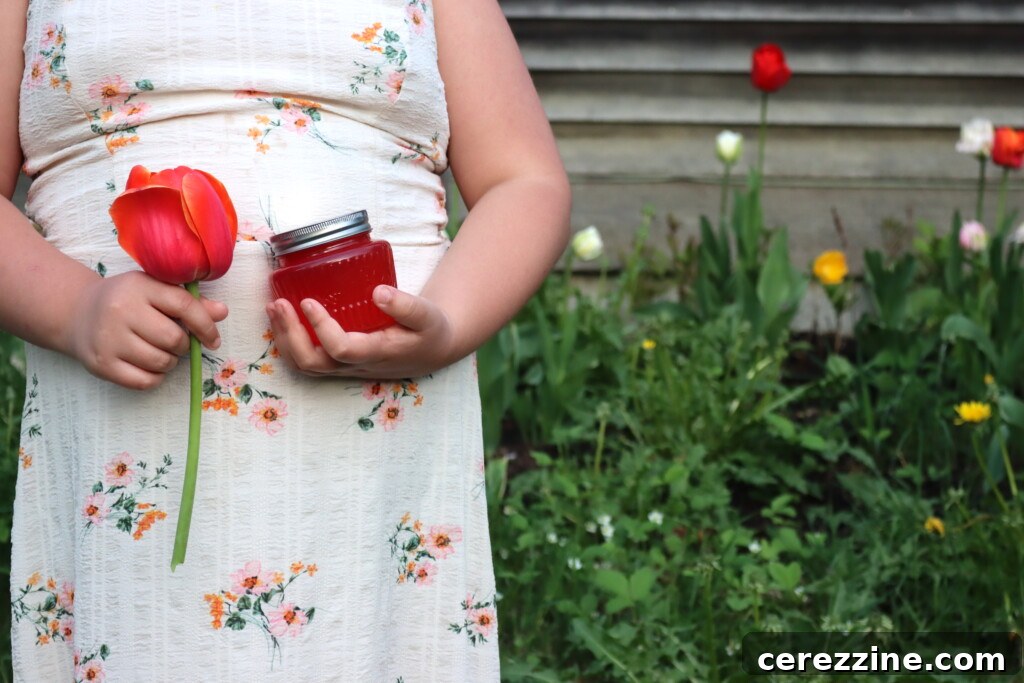
While the concept of tulip jelly might initially surprise many, these iconic spring blooms are not merely decorative garden staples; they are also remarkably edible and possess a wonderfully subtle flavor profile. Depending on the specific color and variety, tulip petals can present a light, crisp taste ranging from pleasantly sweet to a refreshing, cucumber-like essence. When skillfully transformed into jelly, tulips yield a mild floral preserve, infused with a delicate whisper of fruitiness and adorned with a visually stunning, vibrant color that truly captures the essence of spring in a jar.
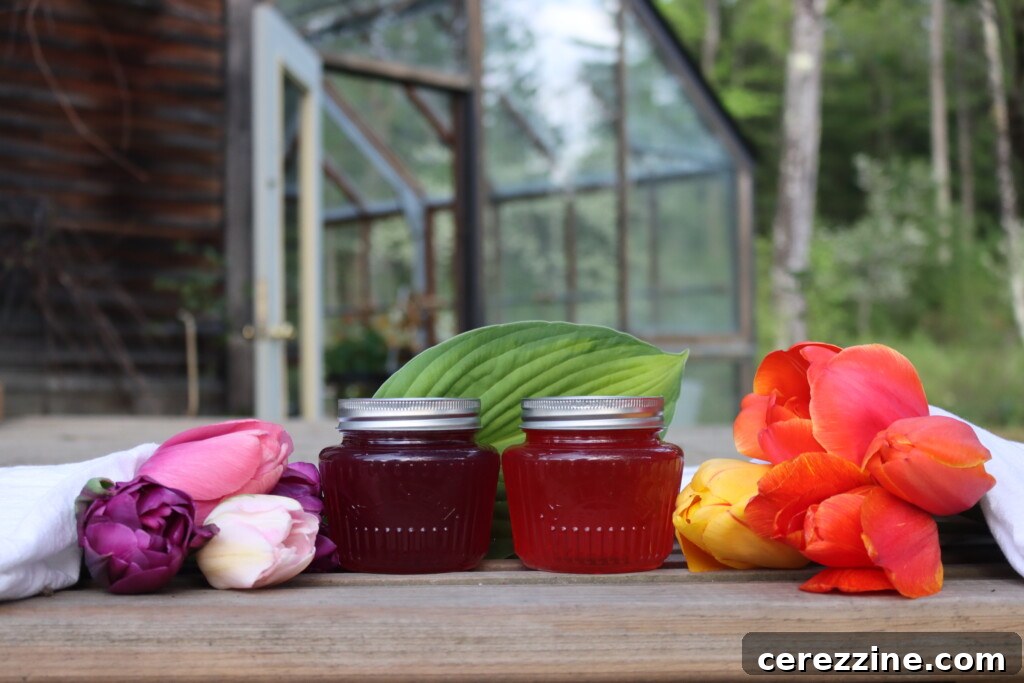
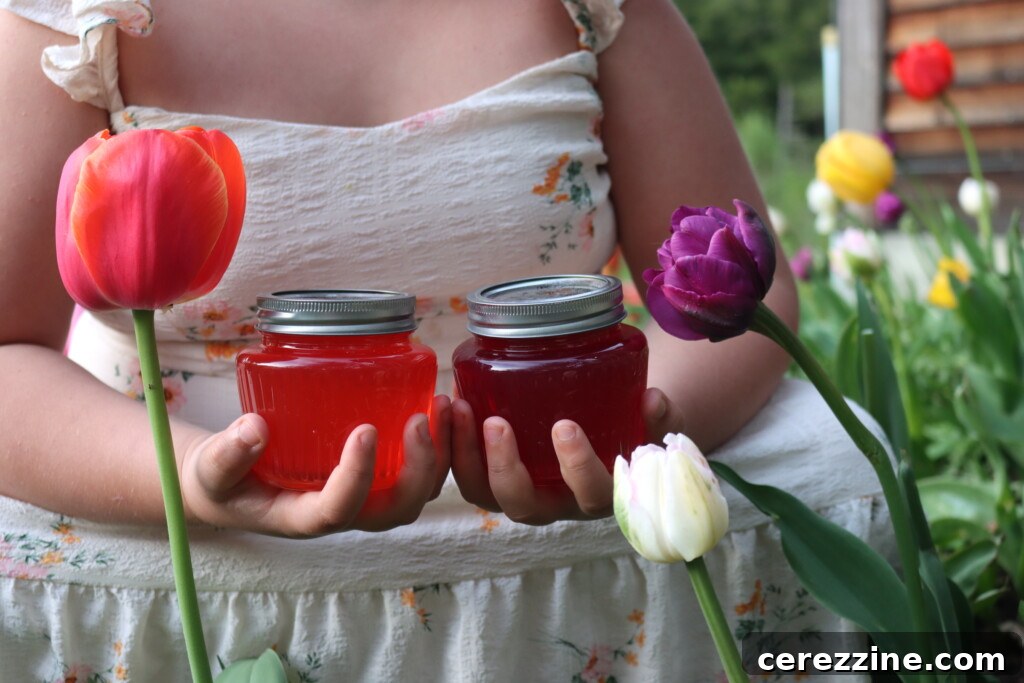
Crafting tulip jelly follows a process similar to that of other homemade flower jellies, beginning with a simple yet potent infusion extracted directly from the petals. The ultimate color of your finished jelly will be a direct reflection of the tulips chosen for your batch. Rich reds and deep purples will typically produce a jelly with a more profound, intense hue, whereas lighter yellow or pristine white petals will result in a luminous, golden jelly. A judicious splash of fresh lemon juice not only brightens the flavor but also plays a crucial role in the gelling process and can subtly shift the final color, creating a truly unique and artisanal preserve. This elegant confection offers an unexpectedly delightful method to extend the enjoyment of the vibrant spring tulip season, long after the flowers themselves have gracefully faded from your garden.
A Quick Look at the Recipe: Handmade Tulip Jelly
- Recipe Name: Tulip Jelly
- Recipe Type: Flower Jelly Recipe, Floral Preserve
- Canning Method: Waterbath Canning for extended shelf life
- Prep Time: Approximately 20 Minutes (for petal preparation and steeping)
- Cook Time: Approximately 10 Minutes (for boiling and gelling)
- Canning Time: 10 Minutes (in boiling water bath)
- Yield: Typically produces 4 to 5 half-pint (8 oz) jars
- Recommended Jar Sizes: Versatile with Quarter Pint (4 oz), Half Pint (8 oz), or Pint (16 oz) jars
- Headspace: Maintain a precise 1/4 inch for optimal sealing and preservation
- Ingredients Overview: Fresh, Edible Tulip Petals, Pure Water, Essential Lemon Juice (non-optional for safety and set), and Granulated Sugar
- Difficulty: Remarkably Easy! The process primarily involves creating a flavorful floral tea and setting it with pectin, making it accessible for beginners.
- Similar Recipes: The technique employed is highly comparable to making other exquisite edible garden flower jellies, including Peony Jelly, Pansy Jelly, Forsythia Jelly, Lilac Jelly, or Rose Petal Jelly, allowing for seamless adaptation.
Are Tulips Edible? Exploring the Culinary Potential of Spring’s Icon
Yes, tulips are undeniably edible, extending their beauty far beyond mere visual appeal! While their primary fame lies in adorning and enlivening spring gardens with their brilliant colors, the delicate petals of tulips can be wonderfully incorporated into culinary creations. Many people are genuinely surprised to discover that these cherished flowers are safe for consumption, yet historical records indicate their use as both food and elegant decoration across diverse cultures for many centuries. During times of scarcity, such as the Dutch “Hunger Winter” of 1944-45, tulip bulbs were famously consumed as a survival food, though it’s important to note that only the petals are typically used for their delicate flavor in contemporary recipes like jelly.
Tulip petals offer a mild, crisp flavor profile that beautifully adapts depending on the specific color and variety chosen. Some varieties are celebrated for their slightly sweet and fruity notes, while others impart a clean, refreshing, cucumber-like essence. Generally, red and pink tulips tend to possess a more pronounced floral aroma and taste, whereas yellow and white varieties often present a milder, more neutral palate. Their texture is pleasantly soft yet robust enough to hold its shape, making them incredibly versatile not only for creating vibrant jellies but also for enhancing fresh salads or serving as unique, natural cups for soft cheeses or various fillings. Exploring the edible side of tulips opens up a world of delightful spring flavors and textures.
Important Note: Sourcing Edible Tulips Safely
For any culinary application, it is absolutely paramount to use tulips that have been grown without the use of pesticides, herbicides, or any commercial floral preservatives. These chemicals are not safe for consumption. Always choose organically grown tulips, or ideally, cultivate your own without relying on synthetic chemicals to ensure a pure and safe ingredient for your delicious homemade tulip jelly.
Key Ingredients for Crafting Your Own Tulip Jelly
The core ingredients for tulip jelly are quite straightforward and closely mirror those used in other beloved homemade flower jellies. The star, of course, is the magnificent tulip!
- Tulip Petals: Begin with 2 to 4 cups of fresh, vibrant, and unsprayed tulip petals. It’s crucial to select fully opened flowers to ensure the best flavor and color. Carefully remove any bitter green parts at the base, as well as the inner reproductive structures like stamens and pistils, as these can impart an undesirable taste to your jelly.
- Water: This essential ingredient forms the base of your tulip infusion, which in turn becomes the flavorful liquid foundation for your jelly. Use filtered or good quality tap water.
- Lemon Juice: Far from optional, fresh lemon juice serves multiple critical functions. It provides a bright, tangy acidity that balances the floral sweetness, significantly aids the pectin in achieving a proper set, and can beautifully influence the final color of the jelly depending on the natural pigments present in your tulip petals. Furthermore, it is a non-negotiable component for ensuring your flower jelly is safe for water bath canning, so do not omit it!
- Powdered Pectin: This natural gelling agent is indispensable for transforming your floral infusion into a delightfully spreadable, firm jelly consistency. Ensure you use standard powdered pectin for this recipe, unless specifically adapting for low-sugar varieties.
- Granulated Sugar: Beyond simply sweetening the jelly to perfection, sugar acts as a vital preservative. The classic ratio for standard pectin is generally 1:1 with the liquid infusion, though, as discussed later, low-sugar pectin options are available for those preferring less sweetness.
The tulips themselves are primarily responsible for imparting that gorgeous color to your finished jelly. The aesthetic outcome will vary beautifully with the specific tulips you select. For the most vibrant and clear hues, I highly recommend using a single color of tulip or a harmonious range of similar colors (e.g., combining orange and yellow petals in one batch, or blue and purple in another). Blending too many disparate colors can sometimes result in a less appealing brownish tint, rather than the brilliant, distinct shades you achieve by sticking to a cohesive color palette for each batch.
How to Make Tulip Jelly: A Step-by-Step Guide to Floral Preservation
Making tulip jelly is a rewarding and relatively simple process that allows you to capture the essence of spring in a jar. Follow these steps for a perfect batch:
1. Harvest and Prepare Your Tulip Petals: Begin by carefully harvesting fresh tulip petals. It is paramount to use tulips that have not been treated with any pesticides, herbicides, or floral preservatives. The best sources are typically your own garden (if grown organically) or a trusted organic grower. Gently pull the individual petals from the flower heads. Crucially, remove any internal flower parts, such as the stamens and pistil, as these can introduce a bitter taste to your delicate jelly. Aim for 2 to 4 cups of cleaned petals.
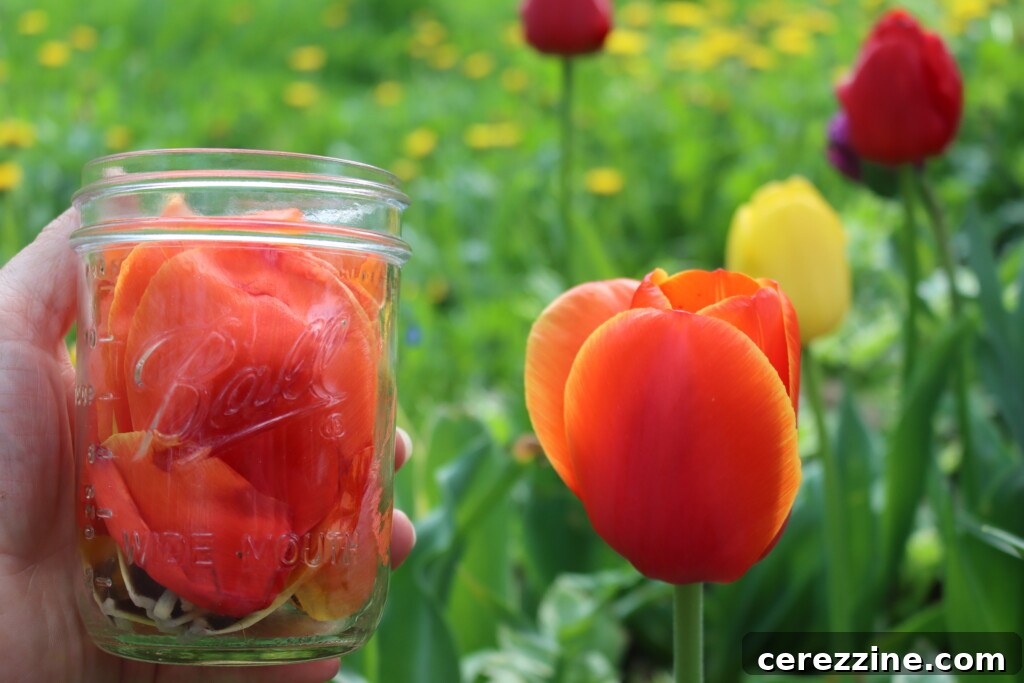
2. Create the Tulip Infusion: Place your prepared tulip petals into a heatproof bowl or a clean quart jar. Bring 4 cups of fresh water to a rolling boil, then immediately pour the boiling water directly over the petals. Cover the bowl or jar to trap the heat and allow the petals to steep for 15 to 20 minutes. During this infusion period, the petals will gracefully release their subtle flavor and beautiful color into the hot liquid, creating a fragrant and visually appealing tulip tea, which is the foundation of your jelly.
3. Prepare Your Canning Equipment (Optional, but Recommended): If you intend to preserve your jelly using the water bath canning method for long-term storage, now is the time to prepare your equipment. Ensure your water bath canner is filled with water and heating up. Sterilize your jars, lids, and rings by washing them thoroughly in hot, soapy water and then keeping them hot (either in the canner, a warm oven, or a dishwasher cycle) until ready for filling. Lids typically only need to be simmered, not boiled, to soften the sealing compound.
4. Strain the Infusion and Add Lemon Juice: Once the steeping time is complete, carefully strain the tulip tea through a fine-mesh sieve lined with several layers of cheesecloth into a clean bowl or measuring cup. This step removes all the spent petals, leaving you with a clear, fragrant floral infusion. You should have approximately 4 cups of liquid. Stir in 2 tablespoons of fresh lemon juice. The lemon juice is vital as it not only brightens the flavor profile but also activates the pectin, ensuring your jelly sets properly.
5. Cook the Jelly Base: Pour the strained tulip tea and lemon juice mixture into a large, heavy-bottomed saucepan. Bring the liquid to a full, rolling boil over high heat. Once boiling, stir in one box (1.75 oz, or roughly 6 tablespoons) of powdered pectin. Continue to boil hard for exactly one minute, stirring constantly to prevent scorching and ensure the pectin fully dissolves. It is crucial to add the sugar only after the pectin has been vigorously boiled and dissolved. Next, stir in 4 cups of granulated sugar until it is completely dissolved. Return the mixture to a full, rolling boil that cannot be stirred down, and cook for precisely one more minute.
6. Ladle and Seal Jars: Immediately remove the saucepan from the heat. Carefully ladle the hot tulip jelly into your prepared, hot, sterilized jars, leaving a precise 1/4 inch of headspace at the top of each jar. This headspace is essential for proper sealing. Wipe the rims of the jars clean with a damp cloth to ensure a perfect seal. Center the lids on the jars and apply the screw bands, tightening them only until they are fingertip-tight.
Canning Tulip Jelly for Long-Term Enjoyment
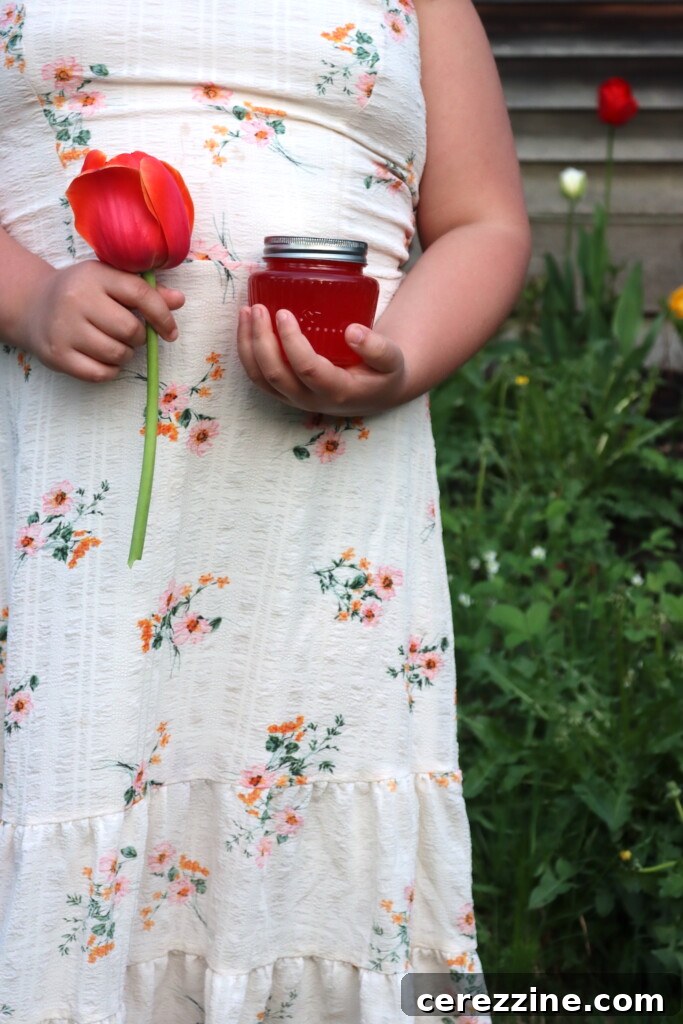
For safe, long-term storage, processing your tulip jelly in a boiling water bath canner is recommended. Carefully place the filled and sealed jars onto the rack in your boiling water bath canner. Ensure the jars are fully submerged under at least 1 inch of water. Bring the water back to a full boil, then process the jars for 10 minutes. If you reside at elevations above 6,000 feet, increase the processing time to 15 minutes to account for lower boiling points.
Once the processing time is complete, turn off the heat and carefully remove the canner lid. Allow the jars to rest in the hot water for another 5 minutes before carefully lifting them out and placing them on a towel-lined surface or a wire rack to cool undisturbed. Avoid moving or touching the lids during this critical cooling period, which should last for 12–24 hours.
As the jars cool, you will typically hear the satisfying “pop” sound, indicating that the vacuum seal has formed. After 24 hours, check the seals by pressing down on the center of each lid; if it doesn’t flex, the jar is sealed. Any jars that have not sealed properly should be refrigerated immediately and consumed within approximately one month. Properly processed and sealed jars of tulip jelly can be stored in a cool, dark pantry for up to 18 months, allowing you to enjoy the taste of spring well into the colder seasons.
Important Notes on Sugar, Pectin, and Yield for Tulip Jelly
Understanding the interplay between sugar and pectin is crucial for achieving the perfect consistency and flavor in your tulip jelly. The type of pectin you choose significantly impacts both the required sugar content and the final yield of your recipe.
When utilizing standard powdered pectin (such as the widely available Sure-Jell brand), anticipate a yield of around 5 half-pint jars (8 oz each). To achieve a reliable and firm gel with standard pectin, a 1:1 ratio of liquid to sugar is generally necessary. This means for 4 cups of tulip infusion, you will typically need 4 cups of granulated sugar. This combination results in a classic, sweet jelly with a familiar texture that many enjoy.
For those who prefer a less sweet preserve, or are looking to reduce their sugar intake, opting for low-sugar pectin (like Sure-Jell Low Sugar or Pomona’s Universal Pectin) is an excellent alternative. These pectins are formulated to gel effectively with significantly less sugar, or even with no added sugar at all. With low-sugar pectin, you can often reduce the sugar content to as little as 1 to 2 cups per batch, depending on the specific brand’s instructions. Keep in mind that reducing the sugar content typically leads to a slightly lower yield, usually producing around 3 to 4 jars instead of the standard 5. When using these alternative pectins, always refer to the package directions for precise measurements and preparation methods, as their activation processes can differ from standard pectin. For instance, if using Pomona’s Universal Pectin, their mint jelly recipe instructions can serve as a helpful guide for adapting your tulip jelly.
It is generally advisable to avoid using liquid pectin for delicate floral jellies like tulip jelly. Liquid pectin typically demands a much higher sugar content—often requiring as much as 7 cups of sugar for just 4 cups of liquid. This excessive amount of sugar can easily overwhelm the subtle, nuanced floral flavor of the tulip, masking its unique essence rather than complementing it. Sticking to powdered or low-sugar powdered pectin will help ensure that the delicate taste of your tulip petals truly shines through in your finished jelly.
If you tried this Tulip Jelly Recipe, or any other recipe on Creative Canning, we’d love to hear from you! Please leave a ⭐ star rating and share your thoughts in the 📝 comments section below!
And make sure you stay in touch with us by following on social media for more creative canning ideas and delicious recipes!
- Substack
More Edible Flower Jellies to Explore
Tulip Jelly: The Ultimate Floral Spread
Discover the delicate flavors of spring with our comprehensive guide to making beautiful and delicious tulip jelly. A truly unique floral preserve!
Are Flower Jellies Safe for Canning? Your Guide to Floral Preservation
Learn the essential safety guidelines and best practices for canning your homemade flower jellies, ensuring delicious and safe preserves every time.
Lilac Jelly: Capturing the Scent of Spring
Embrace the enchanting aroma of spring with this delightful lilac jelly recipe. A fragrant and beautiful spread that tastes as good as it smells.
Rated 5 out of 5 stars from 1 vote
48 servings, Makes 5 (8 oz) Jars
Tulip Jelly
20 mins
10 mins
10 mins
40 mins
Equipment
-
Water Bath Canner
-
Large Heatproof Bowl or Quart Jar
-
Fine Mesh Sieve or Cheesecloth
-
Large Saucepan
-
Sterilized Jars, Lids, and Rings
-
Ladle
Ingredients
- 2 to 4 cups fresh tulip petals, cleaned, stamens and pistils removed
- 4 cups boiling water
- 2 tbsp fresh lemon juice
- 1 box Powdered Pectin, 1.75 oz or 6 Tbsp standard powdered pectin (e.g., Sure-Jel)
- 4 cups granulated sugar, See Notes for low-sugar options
Instructions
-
Gently rinse and prepare 2 to 4 cups of tulip petals, ensuring all stamens and pistils are carefully removed. Place the cleaned petals in a large heatproof bowl or a quart-sized jar.
-
Pour 4 cups of boiling water directly over the petals. Cover the bowl or jar tightly and allow the petals to steep for 15–20 minutes, infusing the water with their delicate flavor and color.
-
After steeping, strain the tulip infusion through a fine mesh sieve or several layers of cheesecloth into a clean measuring cup or bowl. You should yield approximately 4 cups of fragrant tulip tea. Discard the petals.
-
Stir 2 tablespoons of fresh lemon juice into the tulip tea. Pour the mixture into a large, heavy-bottomed saucepan and bring it to a full, rolling boil over high heat.
-
Once boiling, add the entire box (1.75 oz) of powdered pectin to the saucepan. Continue to boil vigorously for 1 full minute, stirring constantly to ensure the pectin dissolves completely and prevents scorching.
-
Add 4 cups of granulated sugar to the boiling mixture and stir continuously until the sugar is fully dissolved. Return the jelly mixture to a full, rolling boil that cannot be stirred down, and cook for another full minute.
-
Remove the saucepan from the heat. Immediately ladle the hot jelly into hot, sterilized jars, leaving a precise 1/4 inch of headspace at the top of each jar. Carefully wipe the rims of the jars clean with a damp cloth, then apply the sterilized lids and screw on the bands until they are fingertip-tight.
-
If canning for long-term storage: Process the sealed jars in a boiling water bath canner for 10 minutes (or 15 minutes if you are at an elevation above 6,000 ft). After processing, remove the canner lid and let jars sit for 5 minutes before carefully removing them.
-
Allow the processed jars to cool undisturbed on a towel-lined surface for 12–24 hours to ensure proper sealing. Store sealed jars in a cool, dark pantry for up to 18 months. If not canned, the jelly will keep in the refrigerator for a few weeks once cooled. Refrigerate all jars after opening.
Recipe Notes & Tips
Tips on Sugar and Pectin Choices for Optimal Yield and Flavor
If you’re using regular powdered pectin (such as the popular Sure-Jell brand), it’s important to plan on using equal parts sugar and tulip tea infusion to achieve a firm, reliable set. This typically means using 4 cups of granulated sugar for every 4 cups of floral liquid. This traditional approach yields a classic, sweet jelly with a perfectly familiar and spreadable texture.
For those seeking a lighter, less sugary version of tulip jelly, opting for a low-sugar pectin, such as Sure-Jell Low Sugar, is an excellent choice. With this type of pectin, you have the flexibility to significantly reduce the sugar content, using as little as 1 to 2 cups while still ensuring a good, stable set for your jelly. However, keep in mind that reducing the sugar content generally results in a slightly smaller final yield for your batch, often closer to 3 or 4 jars rather than the standard 5.
Pomona’s Universal Pectin offers another fantastic option for greater control over sugar levels. This pectin operates through a different mechanism, involving calcium water, which makes it particularly effective for low- or no-sugar recipes. If you choose to use Pomona’s for your tulip jelly, following their general instructions for a basic fruit or mint jelly recipe (adjusting the calcium water amount as per their guidelines) provides a solid and reliable starting point.
For this delicate floral jelly, it is strongly advised to skip liquid pectin. Liquid pectin typically requires a much higher sugar content—sometimes up to 7 cups of sugar for just 4 cups of liquid. Such a large quantity of sugar can easily overpower and mask the subtle, elegant floral flavor of the tulip, detracting from the unique essence you are aiming to capture.
Nutrition Information
Carbohydrates: 18g,
Protein: 0.01g,
Fat: 0.1g,
Saturated Fat: 0.001g,
Polyunsaturated Fat: 0.001g,
Sodium: 2mg,
Potassium: 1mg,
Fiber: 0.1g,
Sugar: 17g,
Vitamin A: 0.1IU,
Vitamin C: 0.2mg,
Calcium: 0.3mg,
Iron: 0.04mg
Nutrition information is automatically calculated and should only be used as an approximation. Values may vary based on specific ingredients and preparation methods.
Enjoyed this unique recipe? Share your experience!
Leave a comment below to tell us what you think of this delightful Tulip Jelly Recipe.
Discover More Enchanting Flower Jelly Recipes
If you’ve been captivated by the art of making tulip jelly and found joy in preserving the delicate flavors of spring, you’ll undoubtedly appreciate exploring other delightful floral jellies. Each flower offers a unique essence, transforming into a truly special spread for your pantry.
Delve into the sunny taste of dandelion jelly, known for its bright, honeyed finish that perfectly embodies early spring. Experience the sweet, subtly grassy notes of clover jelly, a simple yet charming preserve. Our apple blossom jelly captures the soft, fragrant essence of blooming orchards, creating a truly ethereal spread. For those who appreciate a hint of spice, nasturtium jelly offers a delightful peppery twist, making it an intriguing pairing for both sweet and savory dishes.
Brighten your palate with the vibrant, lemony zest of forsythia jelly, a cheerful taste of late winter’s golden blooms. And don’t miss the opportunity to create stunning grape hyacinth jelly, which not only offers a gorgeous, deep purple color but also a delicate, light floral flavor. Each of these recipes is a beautiful way to extend the magic and bounty of your spring garden, transforming fleeting blossoms into enduring culinary treasures for your home pantry.