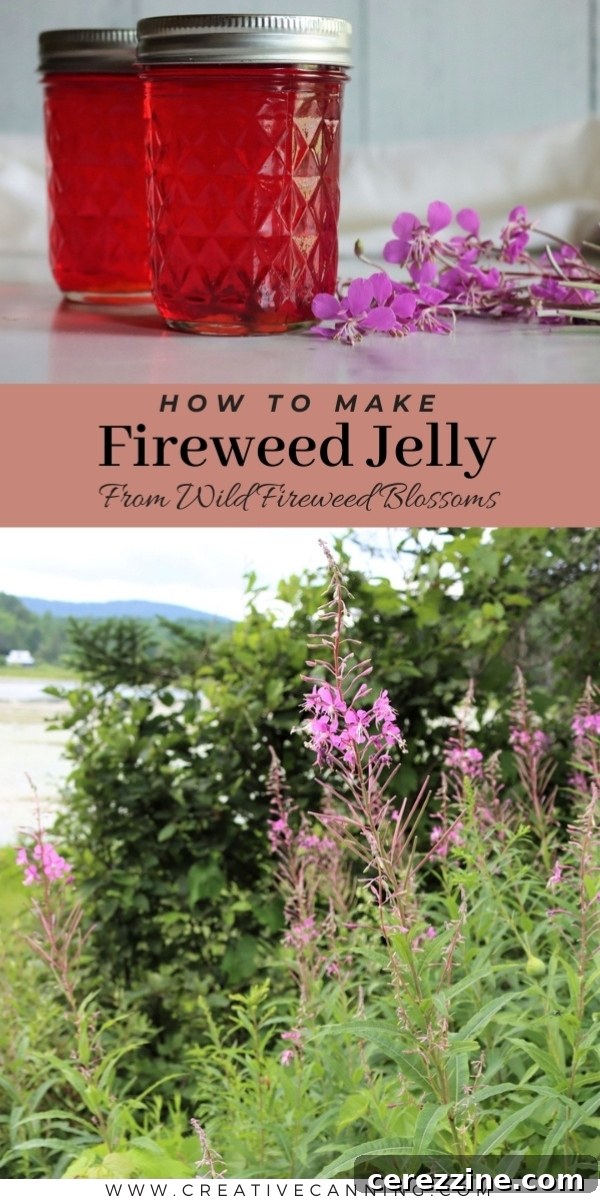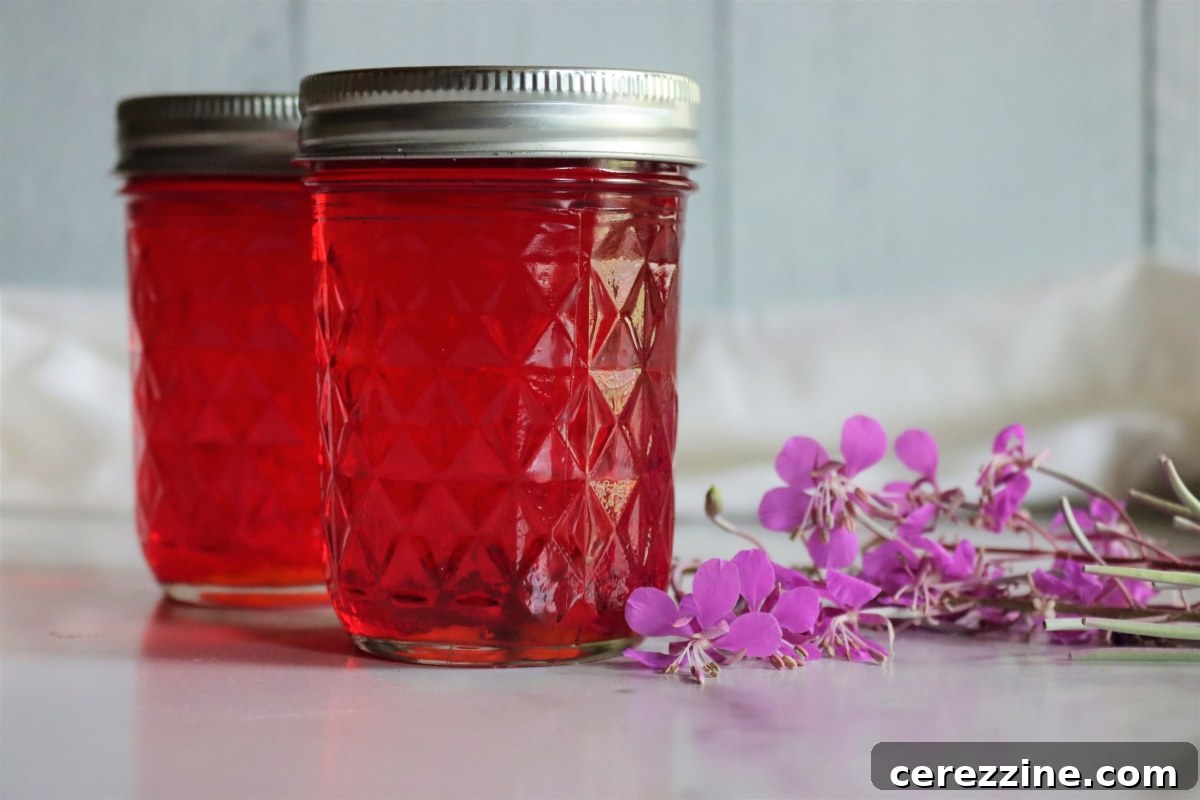
Delight in the vibrant taste of summer with homemade fireweed jelly, a truly exquisite way to capture the essence of fireweed blossoms in peak season. Often recognized by its botanical name, Rosebay Willowherb (Chamerion angustifolium), this remarkably resilient and beautiful plant is more commonly known as “fireweed” due to its pioneering spirit. It’s often among the first plants to reclaim and flourish in areas touched by environmental disturbances like wildfires, its robust growth signaling renewal and new life.
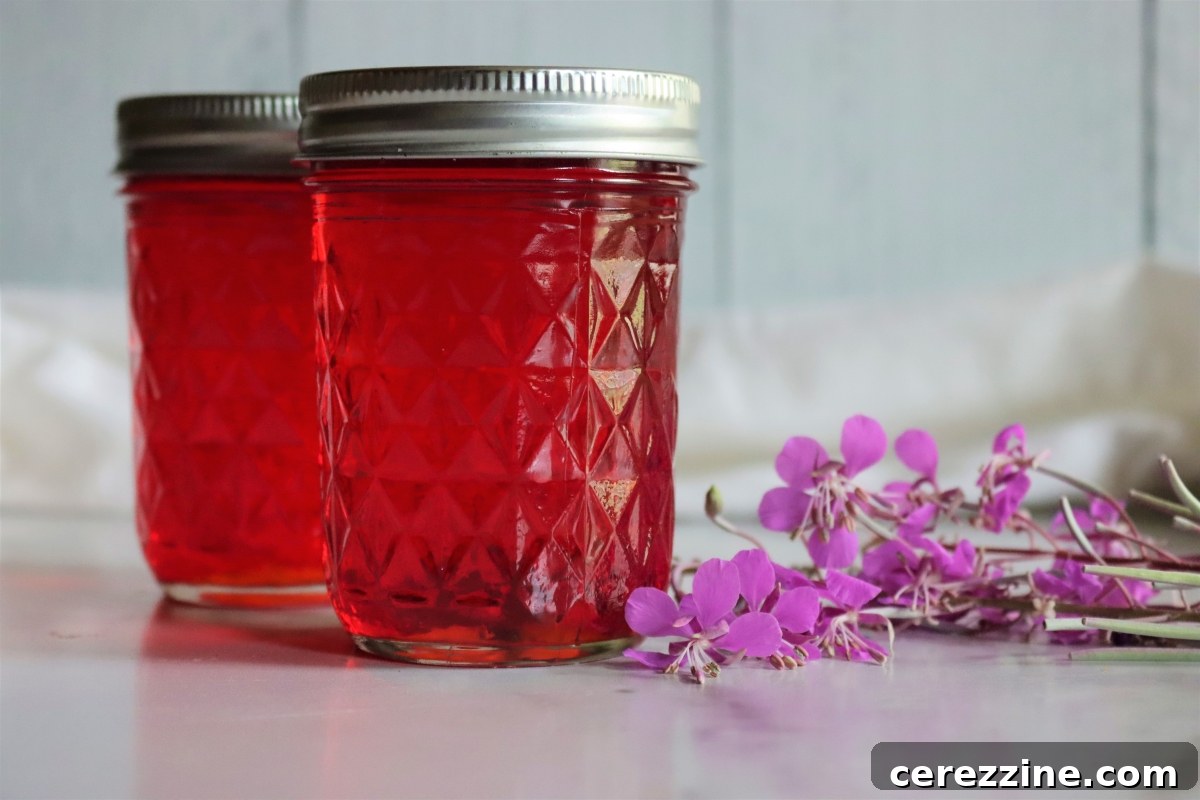
Fireweed is a ubiquitous sight across many landscapes, particularly thriving in disturbed soils, making it a common colonizer after events such as fires or floods. While its distinctive pink-purple spires grace roadsides, fields, and forest edges, many are unaware that these stunning blossoms are not only edible but also wonderfully versatile in the culinary world.
This remarkable plant holds a special place in northern regions, where its upward-climbing blossoms serve as a natural calendar, charting the fleeting progress of short summers. The final, late-blooming fireweed flowers, though magnificent, carry a bittersweet sentiment, gently reminding us that the long northern winter is just around the corner.
Crafting flower jellies is a time-honored tradition, allowing us to preserve the delicate flavors and vivid colors of summer throughout the year. There’s an undeniable joy in spreading a dollop of bright pink fireweed jelly on warm toast in the depths of January, its summery hue and unique taste instantly transporting you back to sunnier days and blooming meadows.
(For those new to identifying and harvesting fireweed, we strongly recommend consulting a comprehensive guide to foraging fireweed to ensure safe and responsible harvesting practices.)
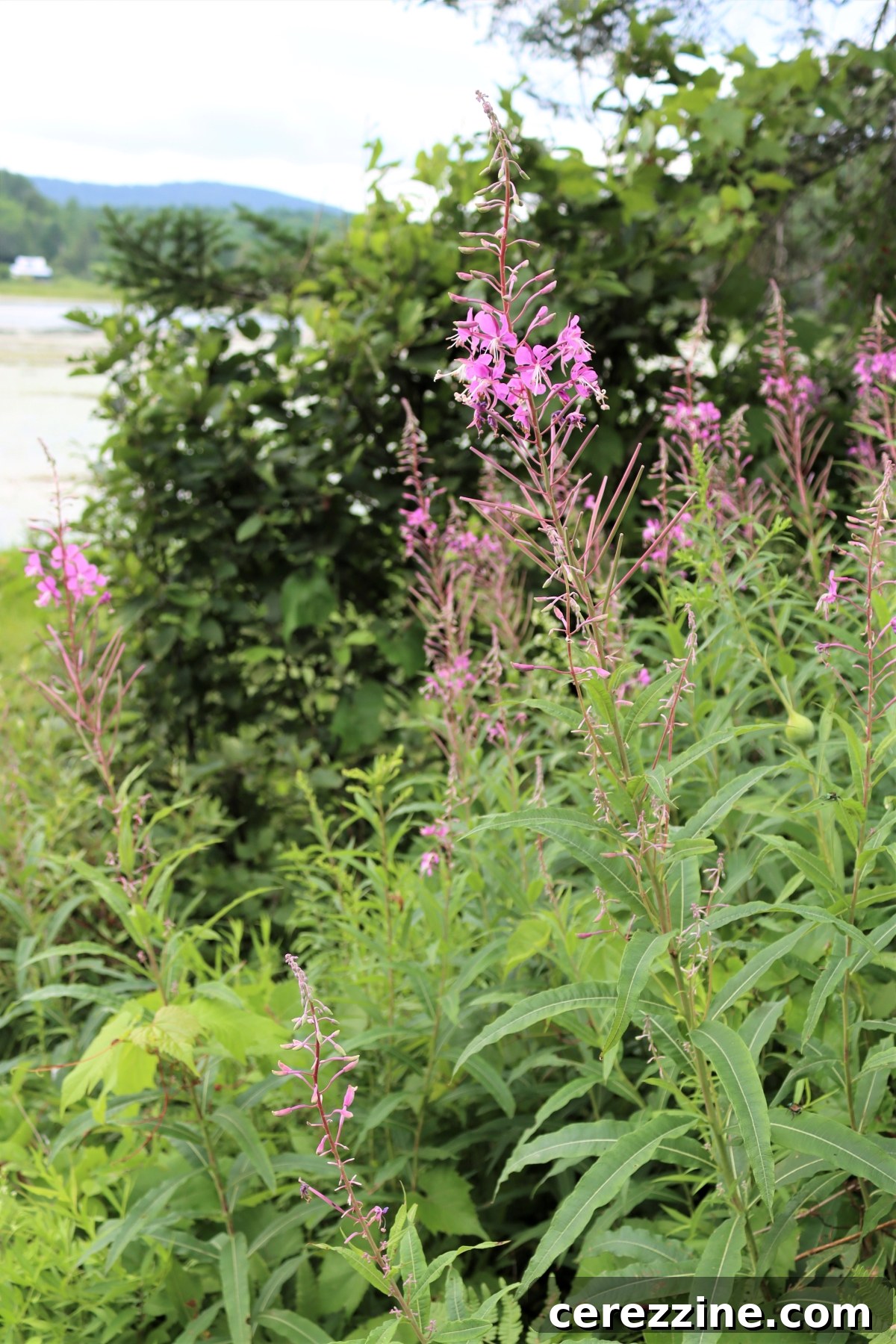
Fireweed Jelly: A Quick Recipe Overview
- Recipe: Fireweed Jelly
- Type: Flower Jelly
- Canning Method: Waterbath Canning
- Preparation & Cook Time: Approximately 30 Minutes
- Canning Time: 10 Minutes
- Yield: 4 to 5 half-pint (8 oz) jars
- Recommended Jar Sizes: Quarter-pint, half-pint, or pint
- Headspace: 1/4 inch
- Key Ingredients: Fresh Fireweed Blossoms, Water, Lemon Juice (essential for safety and flavor), Sugar, Pectin
- Difficulty Level: Easy. The process involves creating a simple herbal tea and setting it with pectin.
- Similar Recipes: This recipe follows a similar method to other wild foraged flower jellies, such as Clover Jelly, Elderflower Jelly, Dandelion Jelly, Redbud Jelly, Grape Hyacinth Jelly, and Violet Jelly.
Essential Ingredients for Homemade Fireweed Jelly
To prepare a delightful batch yielding approximately 5 half-pint jars (8 ounces each) of glistening fireweed jelly, you will need the following fresh and pantry staples:
- 3 to 4 cups of carefully cleaned and de-stemmed fireweed blossoms
- 1 box (1.75 oz) of powdered pectin (either regular or low-sugar varieties will work)
- 1 to 4 cups of granulated sugar (adjust according to your sweetness preference)
- 4 cups of fresh water
- 2 tablespoons of bottled lemon juice (this ingredient is crucial and not optional)
When selecting your pectin, you have the flexibility to choose between standard Sure-Jell pectin or its low-sugar counterpart. It’s important to understand that standard pectin typically requires a 1:1 sugar-to-liquid ratio for proper setting. Therefore, if you opt for standard pectin, you’ll need at least 4 cups of sugar to ensure your jelly achieves the desired consistency.
For those who prefer a less sweet spread, Sure-Jell low-sugar pectin is an excellent choice, allowing you to reduce the sugar content significantly—you can use as little as ½ cup. For a balanced, lower-sugar jelly, we generally recommend incorporating 1 to 2 cups of sugar. If you enjoy a richer, sweeter preserve, feel free to increase the sugar to 2, 3, or even 4 cups, customizing the sweetness to your personal taste.
The addition of lemon juice in this recipe serves a dual purpose. Beyond enhancing the delicate floral notes of the fireweed and contributing to the jelly’s beautiful bright pink hue, it is absolutely vital for the preservation process. Lemon juice provides the necessary acidity to ensure the jelly is safe for water bath canning, preventing spoilage and allowing for long-term storage. Do not omit this critical ingredient!
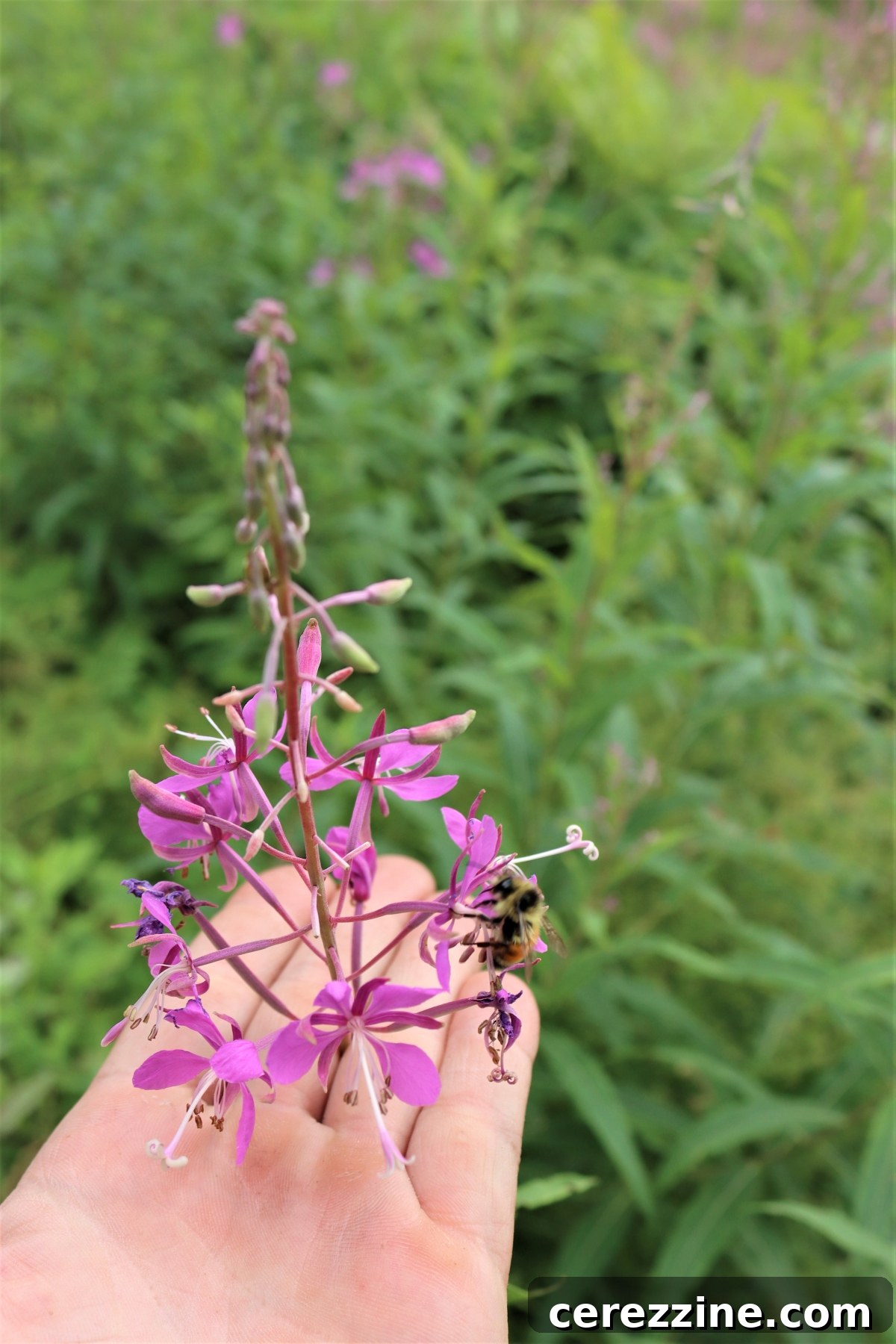
When out foraging for fireweed blossoms, remember to be mindful of nature’s busy workers. These ephemeral flowers are a favorite among pollinators, so observe and collect your blossoms respectfully, ensuring enough are left behind for the bees and other insects that rely on them.
Step-by-Step Guide: Crafting Your Own Fireweed Jelly
Embark on your jelly-making journey by first gathering your fireweed blossoms. Prioritize collecting from areas that are free from pesticides, herbicides, and environmental pollutants, such as those found near busy roadsides or drainage ditches. Before you begin, always confirm that the plants you are harvesting are indeed fireweed (Chamerion angustifolium) and not a toxic look-alike. Proper identification is paramount for safe foraging.
Once you’ve safely identified and collected your bounty, the next step is to prepare the fireweed petals. You’ll need approximately 3 to 4 cups of blossoms. Carefully pick the petals from their stems, discarding any green, leafy material or tough stem pieces. Thoroughly inspect your gathered petals, removing any lingering dirt, small debris, or tiny insects. Aim for about one quart (4 cups) of clean, vibrant blossoms.
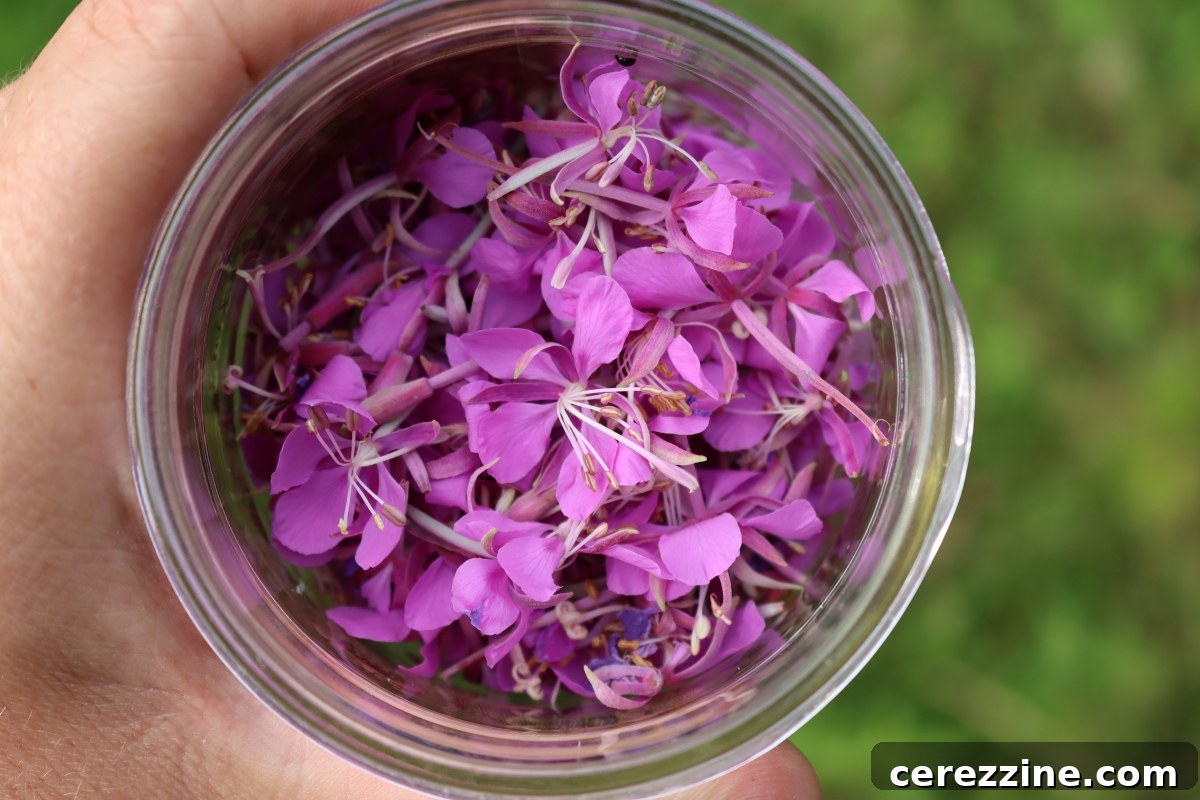
With your petals prepped, it’s time to create our aromatic fireweed blossom tea. Transfer the cleaned blossoms into a heat-safe container. Bring 4 cups of water to a rolling boil, then carefully pour the hot water over your petals. Allow the blossoms to steep and infuse for about 10 to 15 minutes. This gentle infusion extracts their delicate flavor and stunning natural color.
While some flowers require longer steeping times to release their essence, fireweed blossoms are quite delicate and readily impart their flavor and color. After 10 to 15 minutes, your fireweed tea should have transformed into a beautiful pinkish to light purple hue. Don’t worry if the color isn’t intensely bright yet; it will deepen and become a vibrant jewel-toned pink later with the addition of lemon juice.
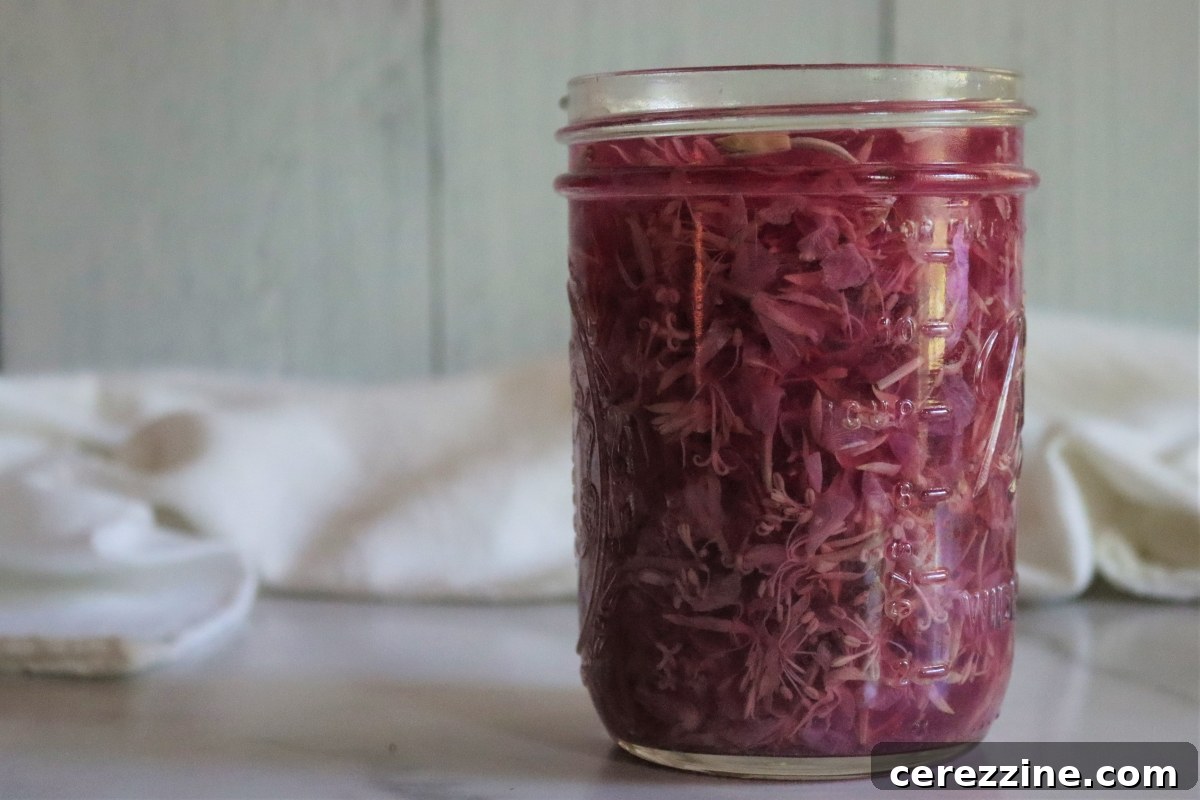
Next, carefully strain the infused liquid, separating the petals from the tea. You can use a fine mesh sieve, optionally lined with cheesecloth for a clearer liquid. Discard the spent blossoms. Pour the fragrant liquid into a clean jam pot or large saucepan. Now, add the 2 tablespoons of bottled lemon juice. As soon as the lemon juice is introduced, observe the magical transformation: your tea will shift to a striking, bright pink hue, a testament to the natural pigments in fireweed reacting to acidity. Bring this floral tea to a rolling boil and then whisk in your pectin.
It is crucial to allow the mixture of floral tea, lemon juice, and pectin to boil vigorously for at least one full minute before adding any sugar. This initial boiling period is essential for properly activating and incorporating the pectin into the liquid. If sugar is introduced too early, the pectin can “denature,” meaning it loses its gelling properties, potentially resulting in a jelly that fails to set properly.
After the tea, lemon juice, and pectin mixture has achieved a full, rolling boil for one minute, add the measured sugar. Stir continuously until the sugar is completely dissolved. Return the mixture to a full, rolling boil. Maintain this rapid boil for another full minute. At this point, your exquisite batch of fragrant fireweed jelly is complete and ready for the next step: ladling into prepared jars. Remember to leave a consistent ¼ inch of headspace in each jar.
This recipe, when made with the full 4 cups of sugar, typically yields approximately 40 ounces of fireweed jelly, which translates to about 5 half-pint jars. Should you choose to use less sugar for a lower-sugar option, anticipate a slightly smaller overall batch.
Once made, your fireweed jelly offers several storage options: it can be refrigerated, frozen, or canned for extended shelf life. For immediate enjoyment, simply allow the jars to cool to room temperature before placing them in the refrigerator, where the jelly will remain fresh for up to a month. If freezing, ensure you use freezer-safe jars and leave additional headspace (½ to 1 inch) to accommodate expansion, and your jelly will keep well for up to 6 months.
For long-term storage or for creating thoughtful homemade gifts, canning is the preferred method. Before you begin cooking your jelly, make sure your canning jars are properly prepared (cleaned and sanitized). Once the jelly is cooked, carefully ladle it into the prepared jars, ensuring the rims are perfectly clean of any residue to guarantee a secure, airtight seal. Process the filled jars in a boiling water bath canner for 10 minutes according to safe canning guidelines. Properly canned jams and jellies will maintain their peak quality for 12 to 18 months, though they remain safe for consumption beyond this period, albeit with some potential decline in texture or color.
Creative Fireweed Jelly Variations
While fireweed jelly is delightful on its own, it also provides a wonderful base for creative flavor enhancements. Many floral and herbal jelly recipes encourage adding complementary ingredients to achieve more complex or unique tastes. Fireweed jelly, with its inherently fruity undertones, pairs particularly well with various fruits and berries.
Consider elevating the natural fruit essence by trying a raspberry fireweed jelly. The tartness of raspberries beautifully complements fireweed’s sweetness, creating a more dynamic flavor profile. Another luxurious twist is fireweed champagne jelly; simply incorporate 2 cups of champagne along with your lemon juice to create this decadent and festive concoction. For a subtle aromatic note, a tiny sprig of fresh mint or a few rose petals steeped with the fireweed blossoms can also add intriguing layers of flavor.
Mastering Water Bath Canning for Fireweed Jelly
This exquisite jelly is so appealing that you might be tempted to simply refrigerate or freeze it for immediate enjoyment. Refrigerated jellies will maintain their freshness and quality for up to one month. Alternatively, they can be frozen for up to six months; just remember to use freezer-safe jars and allow ample headroom (at least ½ inch) to account for expansion during freezing.
However, if your intention is to share these bright, beautiful jellies as gifts or to store them at ambient room temperature for an extended period, then proper water bath canning is essential. Canning ensures a shelf-stable product that can be enjoyed months down the line.
Before you even begin preparing your jelly, ensure your water bath canner is set up and heating. Have your jars sterilized and ready. Once your fireweed jelly has reached the desired consistency and is piping hot, carefully ladle it into your prepped canning jars, maintaining a precise ¼ inch of headspace from the rim. Use a clean, damp cloth to meticulously wipe the rims of each jar, removing any trace of jelly residue. This step is critical for ensuring a perfect, airtight seal. Cap each jar with a two-part canning lid, tightening to fingertip-tight.
Carefully lower the filled jars into the simmering water bath canner, ensuring they are fully submerged by at least one inch of water. Bring the canner to a rolling boil, then process the jars for 10 minutes. If you are canning at an altitude above 6,000 feet, increase the processing time by an additional 5 minutes to ensure safety.
Once the processing time is complete, carefully remove the hot jars from the canner using a jar lifter. Place them on a clean towel in a draft-free area of your kitchen, allowing them to cool undisturbed for 12 to 24 hours. After this cooling period, check all seals. A properly sealed jar will have a lid that is concave and does not flex when pressed. Any unsealed jars should be immediately transferred to the refrigerator or freezer for storage.
When properly canned and stored in a cool, dark place, fireweed jellies will typically retain their quality for up to 18 months. While they often remain safe to eat beyond this timeframe, their peak flavor, color, and texture may begin to diminish. Always remember to refrigerate any opened jars after sealing, and consume within a few weeks.
Creative Ways to Enjoy Your Fireweed Jelly
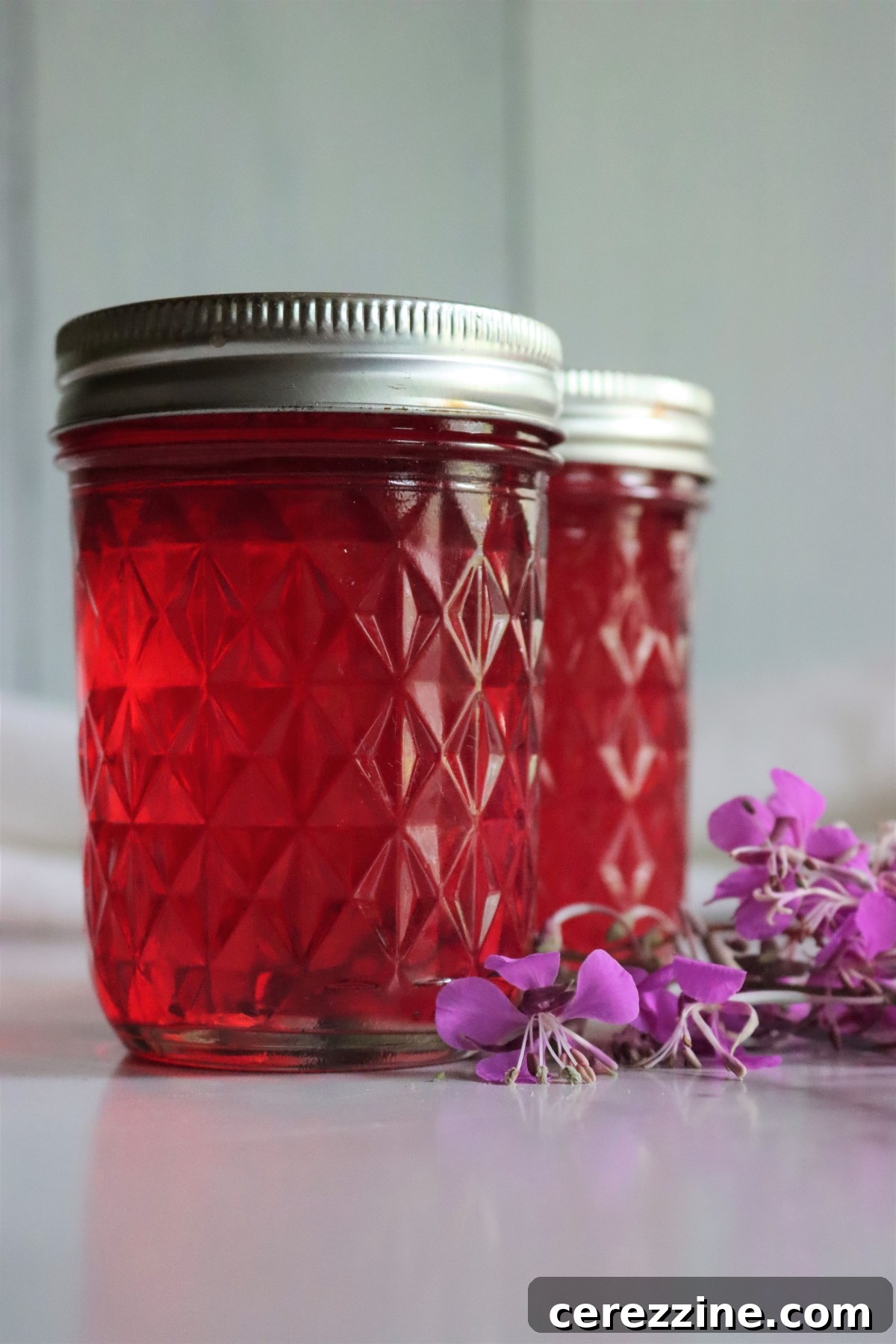
Fireweed jelly offers a uniquely delicate flavor profile—a subtle blend of citrusy tanginess intertwined with a distinct floral sweetness. Its mesmerizing, jewel-toned magenta hue makes it not only a treat for the palate but also a visual delight, especially when presented in gleaming glass jars, making it an ideal candidate for thoughtful homemade gifts. Beyond its aesthetic appeal, this versatile jelly pairs wonderfully with a wide array of culinary creations, transforming everyday meals into something special.
For a tranquil afternoon tea experience, generously slather fireweed jelly on warm scones, flaky croissants, light muffins, or classic toast, ideally accompanied by a dollop of clotted cream or a spread of rich, salted butter. The floral notes of the jelly perfectly complement baked goods.
Seeking a more savory pairing? Elevate your lunchtime favorite by spreading fireweed jelly on wholesome whole-grain bread, then adding a creamy swath of peanut butter and thinly sliced bananas. This unexpected combination creates a gourmet PB&J sandwich of truly delicious proportions, where the jelly’s unique flavor shines through.
Beyond breakfast and snacks, fireweed jelly can also be incorporated into more sophisticated dishes. Use it as a vibrant glaze for roasted poultry, particularly duck or chicken, adding a beautiful sheen and a sweet-tart finish. It can also be melted slightly and drizzled over fresh fruit salads, yogurt, or even panna cotta for an elegant dessert. For cheese enthusiasts, fireweed jelly is a fantastic accompaniment to a charcuterie board, pairing exceptionally well with soft, creamy cheeses like brie or goat cheese, providing a sweet contrast to their savory richness.
If you tried this Fireweed Jelly Recipe, or any other recipe on Creative Canning, we encourage you to leave a ⭐ star rating and share your thoughts in the 📝 comments below!
Stay connected for more preserving inspiration by following us on social media!
- Substack
Explore More Floral Jelly Recipes
Tulip Jelly: A Unique Spring Preserve
Are Flower Jellies Safe for Canning? Essential Guide
Capturing Spring: Homemade Lilac Jelly
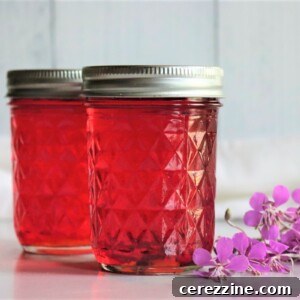
Fireweed Jelly Recipe
Equipment
-
Water Bath Canner
-
Large jam pot or saucepan
-
Fine mesh sieve or cheesecloth
-
Canning jars with lids and bands
Ingredients
- 3 to 4 cups fireweed blossoms, harvested and cleaned
- 1 box powdered pectin (1.75 oz or 6 Tbsp., regular or low sugar)
- 1 to 4 cups sugar, depending on preference (see notes below)
- 4 cups water
- 2 Tbsp bottled lemon juice
Instructions
- Begin by gathering and harvesting your fireweed. You’ll just be needing the blooms for this recipe, so carefully remove and discard any stems and green parts from your fireweed blossoms. Thoroughly clean the remaining blossoms of any lingering debris or dirt.
- Place the cleaned blossoms in a heat-safe container. Pour 4 cups of boiling water over the blossoms. Allow them to steep and infuse for 10 to 15 minutes.
- Strain the infused liquid, separating the flowers from the tea (using cheesecloth or a fine mesh sieve) and discard the spent blossoms. Pour your vibrant fireweed-infused tea into a large saucepan or jam pot. Add the 2 tablespoons of bottled lemon juice.
- Bring the tea mixture to a rolling boil over medium-high heat, then add the pectin, stirring constantly until it is fully dissolved.
- Allow the mixture of tea, lemon juice, and pectin to boil vigorously for a full minute to ensure the pectin is completely incorporated and activated.
- Next, add the measured sugar to the boiling mixture and stir continuously until the sugar is fully dissolved. Return the jelly to a full, rolling boil. Boil for another full minute.
- Your fireweed jelly is now ready! Carefully ladle the hot jelly into your prepared canning jars, leaving ¼ inch of headspace. If you plan to can the jelly for long-term storage, ensure jar rims are clean and process in a boiling water bath canner for 10 minutes. (Increase canning time to 15 minutes if you are above 6,000 feet in elevation.)
Recipe Notes
Sugar Amounts (and Low Sugar Options)
If using standard pectin, you must adhere to a 1:1 ratio of liquid to sugar. This means for 4 cups of flower blossom tea, you would typically need a minimum of 4 cups of sugar for the jelly to set properly. This results in a very sweet, traditional-style jelly. To achieve a lower sugar content, use low-sugar pectin instead. Follow the recipe instructions but reduce the sugar quantity to your preference. We recommend a dependable low-sugar pectin brand like Sure-Jell.
Reducing the sugar content will also slightly decrease the overall yield. The yield of 5 half-pints mentioned in the recipe is based on a full-sugar recipe. For a lower-sugar recipe, expect to yield around 3-4 jars.
If you opt for Pomona’s Universal Pectin, please note that the instructions differ as it is a two-part low-sugar pectin system. Follow the specific instructions provided within the Pomona’s pectin box for mint jelly, as the process is similar.
Should you choose to use liquid pectin, the order of operations for adding ingredients is different (pectin is typically added last, after the sugar). Liquid pectin also generally requires a significantly higher amount of sugar to set (often around 7 cups of sugar for 4 cups of liquid). While it will work, we typically do not recommend liquid pectin due to the high sugar levels required for a proper set, unless that is your specific preference.
Nutrition Information (Approximate Per Serving)
Note: Nutrition information is automatically calculated and should be used only as an approximation. Actual values may vary.
More Floral Jelly Recipes to Explore
Craving more delicate and delicious floral jellies to brighten your pantry?
- Dandelion Jelly: Sunshine in a Jar
- Violet Jelly: Capturing Spring’s Sweetness
- Lilac Jelly: Fragrant and Floral
- Elderflower Jelly: A Summer’s Delight
- Rose Petal Jelly: Elegance in a Jar
- Pansy Jelly: A Whimsical Treat
Discover Wild Foraged Canning Recipes
The wilderness offers a bounty of ingredients, and there are countless ways to preserve these wild treasures! Explore more recipes for putting up wild-foraged goodness:
- Autumn Olive Jam: A Late Season Harvest
- Pin Cherry Jelly: Tiny Fruit, Big Flavor
- Pickled Ramps (Wild Leeks): A Spring Delicacy
- Saskatoon Jelly: Taste of the Prairies
- Redbud Jelly: From Tree to Treat
- Clover Jelly: A Sweet Field Find