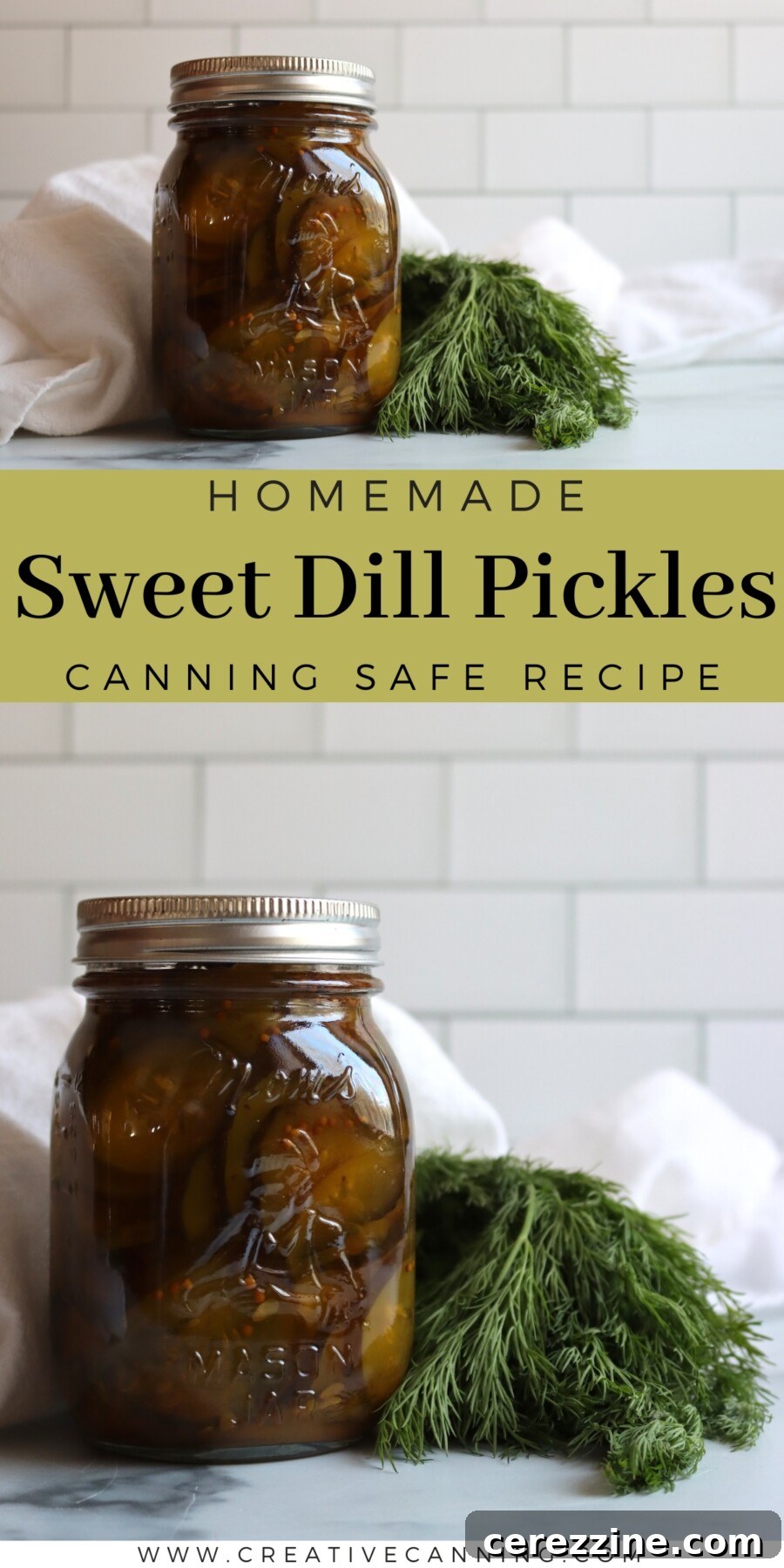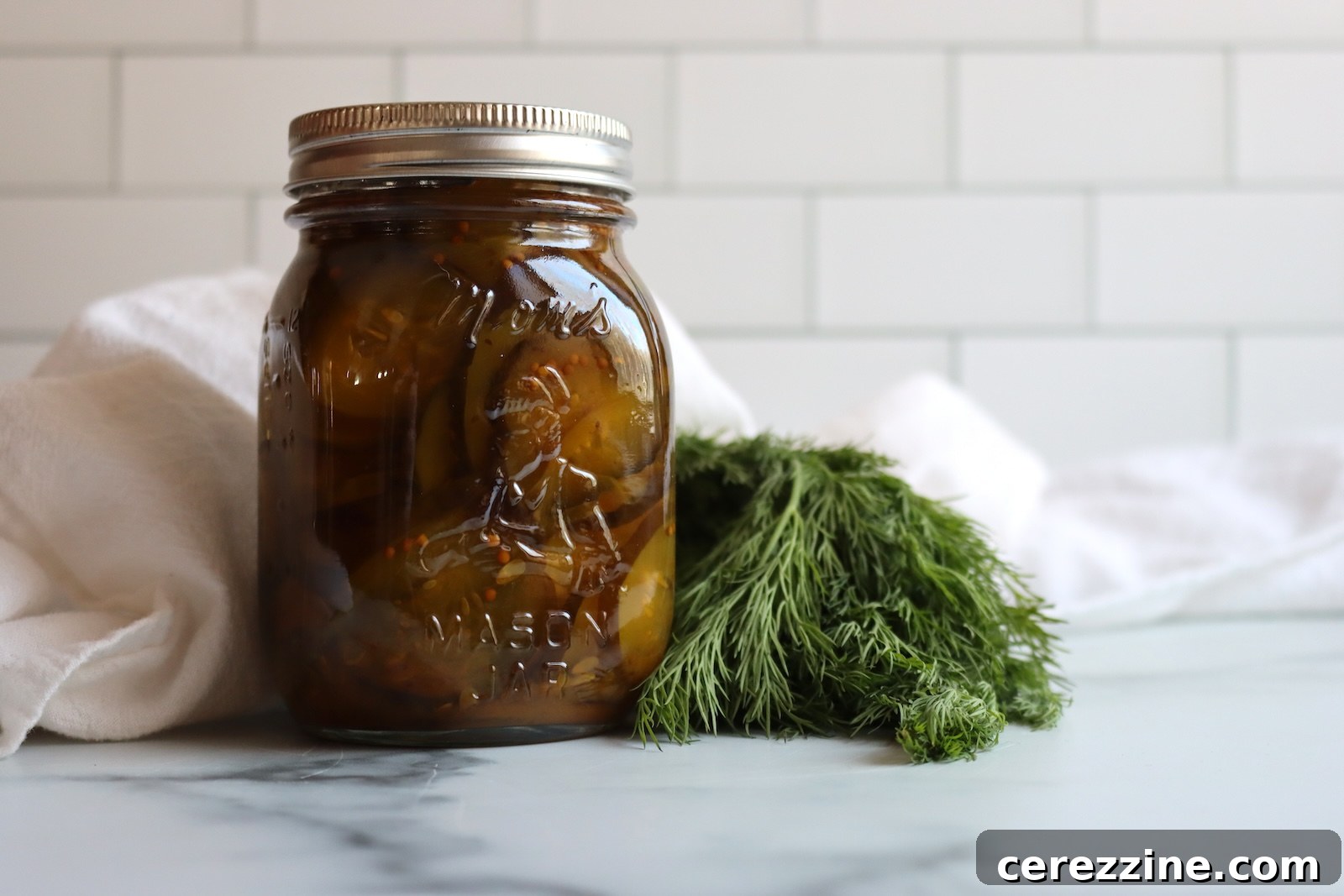
Sweet dill pickles strike a pleasing balance between bright, garlicky dill pickles and the sugary warmth of bread-and-butter pickles. The result is a thin, crunchy chip that reads as sweet and sour with a clean dill note throughout. These pickles disappear from a relish tray and transform an ordinary ham sandwich into something eagerly anticipated.
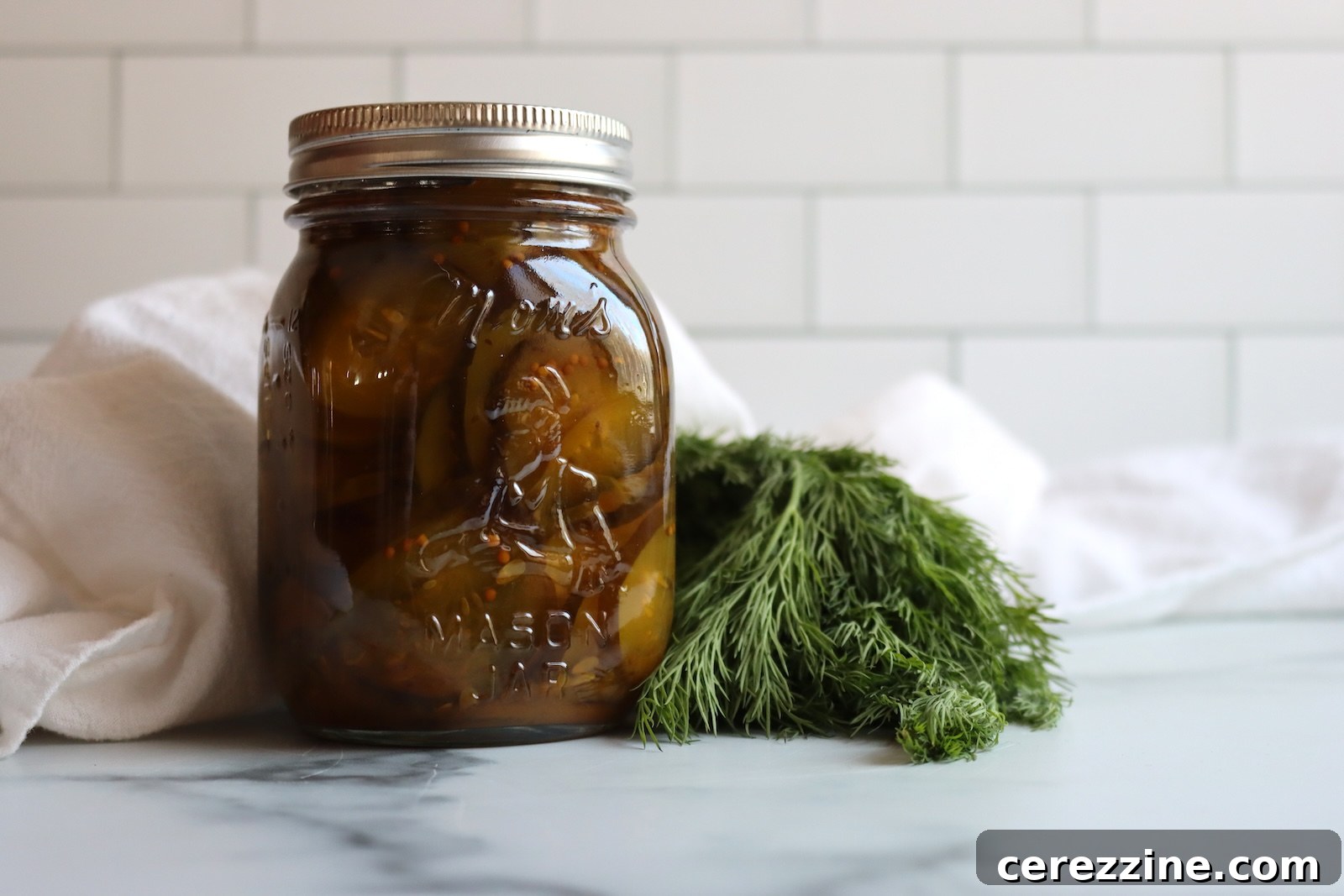
This recipe has been reviewed for safety and accuracy by a Master Food Preserver certified through the University of Cornell Cooperative Extension.
If you think of dill pickles and bread-and-butter pickles as opposite ends of a spectrum, sweet dill pickles live in the middle. They have the garlic and dill character you expect from dill pickles, but they sit in a warm, sweetened cider vinegar brine like bread-and-butter pickles. Each chip tastes sweet first, with dill and garlic shining through as a secondary layer.
This version adapts a sweet-hot pickle from Stephanie Peterson’s book Canning Cents, removing the heat while preserving the sweet-dill balance. The brine uses undiluted cider vinegar, so acidity remains high enough for safe water-bath processing when you choose to can the jars.
If you prefer a strictly savory pickle without added sugar, a garlic dill pickle recipe will cover that preference; conversely, for an even sweeter result, look for sweet cucumber pickles with a heavier sugar profile.
Notes from My Kitchen

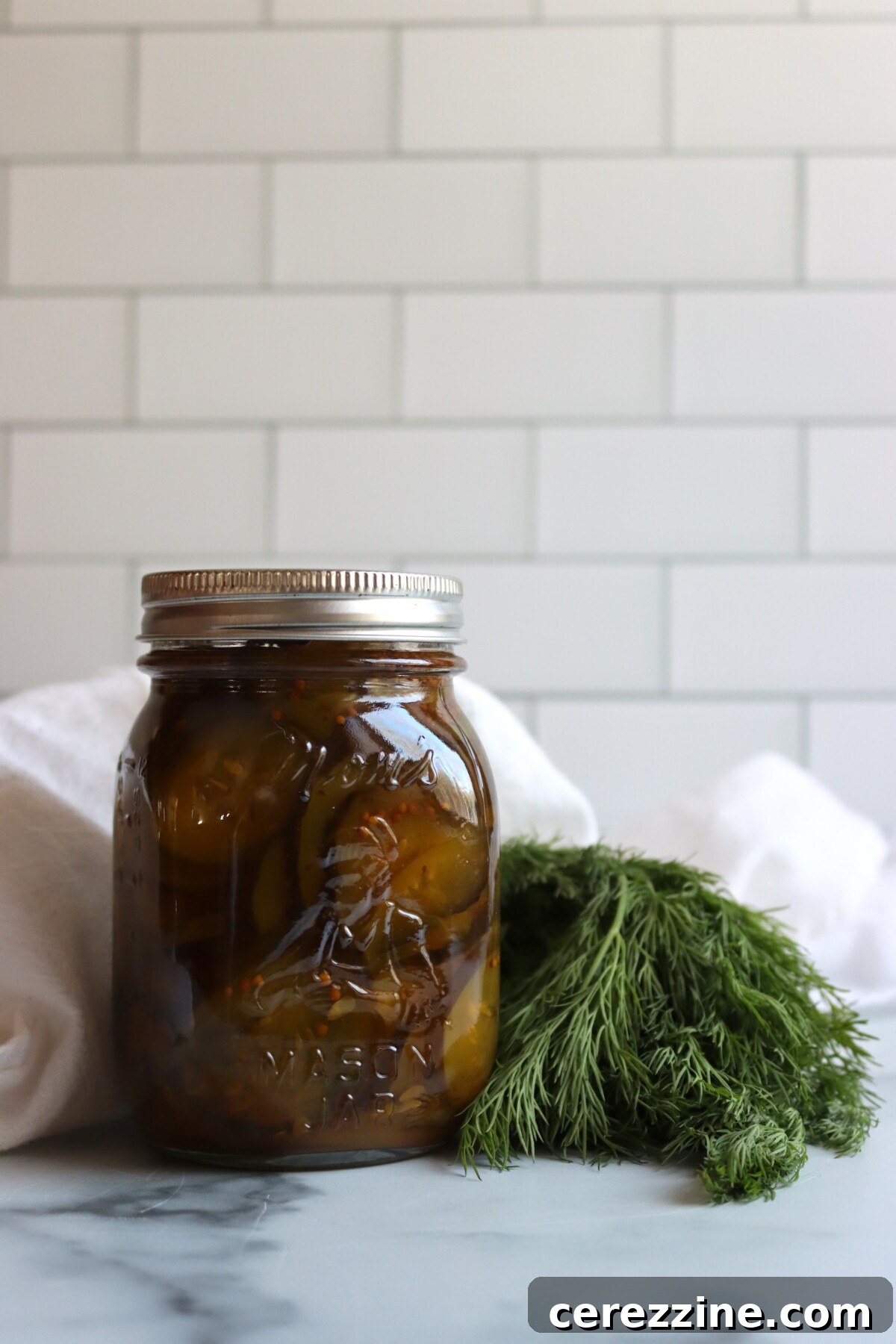
Around here, the sweet-dill jar is always the first to empty. The sweetness tempts even people who say they don’t enjoy pickles. I slice these cucumbers into thin chips so they layer neatly on sandwiches and burgers, and a touch of turmeric gives the brine a soft golden hue that brightens a relish tray beside plain dills.
These pickles are forgiving for new canners, as long as the brine remains at full strength and isn’t watered down. The jars improve for several weeks after sealing as the dill and sweet brine infuse the cucumbers, so give them a little time before opening the first jar.
Quick Look at the Recipe
- Recipe Name: Sweet Dill Pickles
- Recipe Type: Pickles
- Canning Method: Water bath canning
- Prep Time: About 30 minutes active, plus a 3 hour salt soak
- Cook Time: About 10 minutes for the brine
- Canning Time: 10 minutes for pints, 15 minutes for quarts (adjust for altitude)
- Yield: About 4 pints
- Jar Sizes: Pints or quarts
- Headspace: 1/2 inch
- Ingredients Overview: Pickling cucumbers, apple cider vinegar, sugar, pickling salt, garlic, dill, mustard seed, and turmeric
- Safety: Follows standard cucumber pickle guidance; use 5% acidity vinegar and do not dilute the brine
- Difficulty: Easy
Choosing Cucumbers
Pick pickling cucumbers—Kirby-type fruits about 3 to 4 inches long. They have thinner skins, fewer seeds, and less internal water than large slicing cucumbers; that lower water content helps them stay crisp through a hot water bath. Grocery-store slicing cucumbers tend to soften during canning, so seek pickling cukes at a farmers’ stand or grow a few yourself when possible.
Freshness matters as much as variety. Use cucumbers within a day of harvest when you can, since they begin to lose firmness after picking. Trim and discard a thin slice from each blossom end before slicing; enzymes concentrated there will soften pickles over time. Because these are thin chips, a mandoline gives consistent rounds that pack well and pickle evenly.
Ingredients for Sweet Dill Pickles
The ingredient list is short and composed mainly of pantry basics. The cucumbers plus the sweet brine define the pickles; the garlic, dill, and mustard seed placed in each jar shape the final flavor.
- Pickling Cucumbers: Firm, fresh Kirbys, 3–4 inches, sliced into thin chips; trim and discard the blossom end.
- Apple Cider Vinegar: 5% acidity—use the full amount. White vinegar is an acceptable substitute but will yield a sharper flavor and a paler brine.
- Sugar: Granulated white sugar sweetens the brine. Sugar is for flavor; reducing it changes the recipe away from the sweet-dill profile.
- Pickling Salt: Use pickling or canning salt, not iodized table salt; most of this salt is used in a pre-soak and rinsed away, helping the cucumbers stay crisp.
- Turmeric: A small amount (about 1/2 teaspoon) colors the brine a warm gold and adds a mild earthy note; measure carefully to avoid muddy color and staining.
- Garlic: Fresh cloves, thinly sliced—one slice per pint is a good baseline, increase to taste.
- Dill: Dill seed, fresh dill heads, or fresh fronds all work; each gives a slightly different appearance and intensity.
- Mustard Seed: Whole mustard seed adds a mild tang and texture; adjust quantity for taste.
- Pickle Crisp (Optional): A pinch of calcium chloride per pint can help preserve snap if desired.
Have cucumbers sliced, soaking, and jar spices portioned before you heat the brine. Since the garlic, dill, and mustard seed go into jars first, lining up warm jars and dropping in the spices before packing speeds the process when the cucumbers are hot.
Brine Strength and Substitutions
This brine uses straight vinegar and sugar with a dash of turmeric for color; no water is added. That undiluted vinegar is the safety control that allows safe water-bath canning. You may substitute white vinegar for cider vinegar if it is 5% acidity, but do not reduce the vinegar volume or add water. Sugar may be adjusted for taste, but large reductions will move the flavor away from the intended sweet-dill profile.
The salt in the pre-soak is rinsed away before packing, so it’s included for texture and seasoning rather than preservation. If you need lower-sodium results, follow a tested low-salt procedure. When altering any tested recipe, consult a trusted canning authority before making changes.
How to Make Sweet Dill Pickles
The process is simple: a salt-and-ice soak to firm the cucumbers, a quick sweet brine, a brief warm-through of the cucumber chips in that brine, and packing into jars that already hold garlic, dill, and mustard seed. Heating the chips in the brine warms them without overcooking, draws out enough cucumber liquid to fill jars, and helps the brine penetrate quickly.
You can stop at refrigerator pickles if you only need a few jars to eat soon, or process them in a water bath for long-term pantry storage. The steps up to packing are the same for both methods.
Salt the Cucumbers
Slice 8 cups of pickling cucumbers into thin chips, trimming and discarding the blossom ends. Place the slices in a large bowl, sprinkle with 1/4 cup pickling salt, then cover with cold water and a generous handful of ice. Let sit at room temperature about 3 hours; this firms the chips and draws out some internal water.
When the soak finishes, drain the cucumbers and rinse them well under cold running water to remove surface salt. Let them drain briefly while you prepare the brine; avoid carrying excess water into the pot.
Make the Sweet Brine
In a large pot, combine 2 cups granulated sugar, 2 cups apple cider vinegar (5% acidity), and 1/2 teaspoon ground turmeric. Bring to a boil, stirring until the sugar dissolves and the turmeric tints the liquid a soft gold.
Add the drained cucumber slices to the hot brine and heat just below boiling until the chips are hot through. You are warming them, not cooking them; remove the pot from heat as soon as the chips are heated and have absorbed a bit of the brine color.
Pack and Fill the Jars
Into each hot pint jar place 1 sliced garlic clove, about 1 1/2 teaspoons mustard seed, and 1/2 teaspoon dill seed, or substitute a fresh dill head or a few fronds. Add a scant 1/8 teaspoon Pickle Crisp per pint if you prefer extra snap. Pack hot cucumber slices snugly into the jars.
Ladle hot brine over the cucumbers, leaving 1/2 inch headspace and keeping the solids submerged. Remove air bubbles with a nonmetal tool, wipe the rims clean, and apply lids fingertip-tight. Working with hot jars and hot brine helps maintain temperature consistency going into the canner, which promotes good seals and crisp texture.
Canning Sweet Dill Pickles
If you only want a few jars to eat in the short term, refrigerate them: pack the jars, cool to room temperature, then chill for a few days before tasting. Refrigerator pickles will keep several weeks.
To make shelf-stable jars, prepare a water bath canner, clean jars, and lids while the brine heats. Fill and seal jars with 1/2 inch headspace, then process in a boiling water bath: 10 minutes for pints or 15 minutes for quarts, adjusted for altitude. Allow jars to rest five minutes in the canner, then cool undisturbed 12 to 24 hours. Check seals and wait about two weeks before opening so the flavors meld.
Altitude Adjustments
Adjust processing times for higher elevations:
- 0 to 1,000 feet: Pints 10 minutes, quarts 15 minutes
- 1,001 to 6,000 feet: Pints 15 minutes, quarts 20 minutes
- Above 6,000 feet: Pints 20 minutes, quarts 25 minutes
Tips for Crisp Pickles
Start with the cucumbers: fresh, firm pickling cukes used within a day of harvest will give the best crunch. Trim the blossom ends, do the salt-and-ice soak, and slice thin, even chips so they pickle uniformly and pack tightly. A scant 1/8 teaspoon Pickle Crisp per pint provides extra insurance for texture. Finally, avoid over-processing—follow the recommended times for your jar size and altitude rather than extending them, which softens the chips.
Ways to Use Sweet Dill Pickles
These are excellent straight from the jar as a snack, and they also lift a variety of dishes. Layer thin chips on ham or turkey sandwiches where sweetness offsets salt, or offer a bowl on a relish tray beside sharp cheeses and crackers; the sweet-sour bite refreshes other flavors.
Chopped finely, they act like sweet relish in tuna salads, egg salads, or potato salads, adding little pops of dill and tang. They pair well on a pantry shelf alongside more sour dill pickles so guests can choose between sweet and sour jars.
Yield Notes
This batch yields roughly 3 to 4 pints depending on cucumber size and slice thickness; thin chips pack more densely than thicker slices. To make more, scale cucumbers and brine together, keeping sugar and vinegar proportions equal so brine strength remains unchanged. It’s better to make additional full batches than to stretch a single brine over too many cucumbers.
A few frequently asked questions that often come up before starting a batch are collected below to help clarify common concerns.
Sweet Dill Pickle FAQs
Both use a sweet, turmeric-tinted brine, giving a golden color and sweet-sour profile. Sweet dill pickles emphasize dill seed and garlic for a dill-forward backbone, while bread-and-butter pickles typically include sliced onion and a heavier use of mustard and celery seeds. Sweet dills lean toward dill in flavor, with sweetness turned up.
Yes. Pack the jars, let them cool, and refrigerate. They will be ready in a few days and should keep for several weeks. Only water-bath processed jars are shelf stable for long-term storage.
Softness usually results from cucumbers that were not fresh, failing to trim the blossom end, skipping the salt-and-ice soak, or over-processing in the canner. Use fresh pickling cukes within a day of harvest, trim blossom ends, perform the soak, consider Pickle Crisp for extra snap, and follow the correct processing time for your jar size and altitude.
Cucumber Pickling
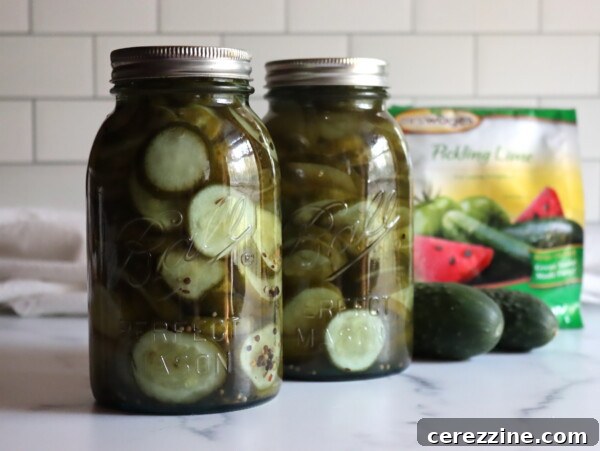
Old Fashioned Cucumber Lime Pickles (with Pickling Lime)
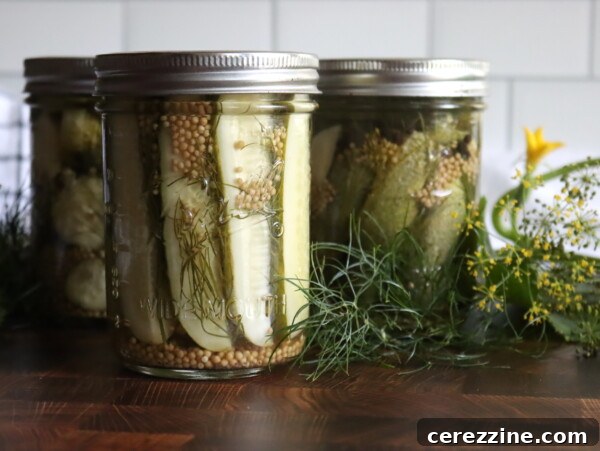
Dill Pickle Spears
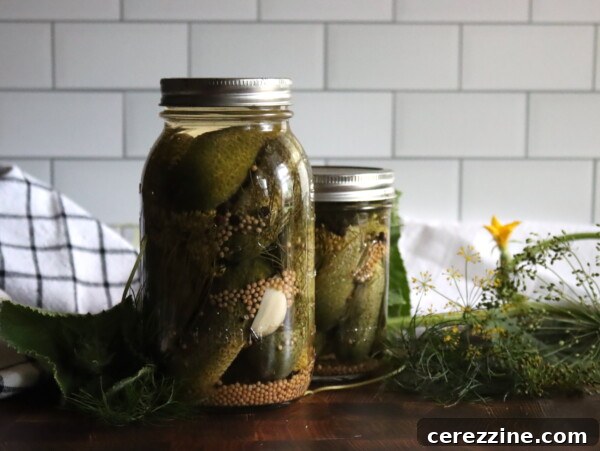
Kosher Dill Pickles
If you tried this Sweet Dill Pickle recipe, leave a star rating and a comment to share your results and any tweaks you made.
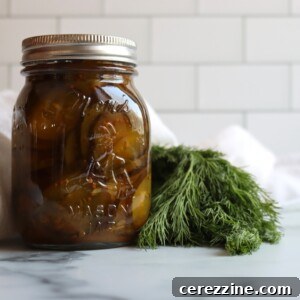
Sweet Dill Pickles
Equipment
- Water bath canner
- Canning funnel
- Canning jars, lids and bands
Ingredients
For the Salt Soak
- 8 cups pickling cucumbers, sliced into thin chips (blossom ends trimmed)
- 1/4 cup pickling salt
- Ice and cold water, to cover
For the Brine
- 2 cups granulated sugar
- 2 cups apple cider vinegar, 5% acidity
- 1/2 teaspoon ground turmeric
For the Jars
- 4 cloves garlic, sliced (about one per pint)
- 2 tablespoons mustard seed (about 1/2 tbsp per pint)
- 2 teaspoons dill seed (about 1/2 tsp per pint) or fresh dill heads/fronds
- 1/2 teaspoon Pickle Crisp, optional (about 1/8 tsp per pint)
Instructions
- Slice cucumbers into thin chips, trim and discard blossom ends. Layer in a large bowl with pickling salt, cover with cold water and ice, and soak about 3 hours.
- Drain and rinse cucumbers well under cold running water; let drain.
- Prepare jars, lids, and water bath canner if you plan to process.
- Combine sugar, cider vinegar, and turmeric in a large pot. Bring to a boil, stirring until sugar dissolves and turmeric colors the brine.
- Add drained cucumber slices to the brine and heat just below boiling until chips are hot through.
- Packed hot jars with sliced garlic, mustard seed, and dill seed (or fresh dill). Add Pickle Crisp if using. Pack hot cucumber slices into jars and ladle brine to 1/2 inch headspace.
- Remove air bubbles, wipe rims, and apply lids fingertip-tight. Process in a boiling water bath: 10 minutes for pints or 15 minutes for quarts (adjust for altitude). Rest 5 minutes, then cool undisturbed 12–24 hours before checking seals. Wait two weeks before opening.
Notes
Use 5% vinegar: Apple cider vinegar at 5% acidity is the safety control. Do not reduce vinegar or add water to the brine.
Pickling salt: The soak salt is rinsed off before packing; use pickling or canning salt, not table salt, so the brine stays clear.
Turmeric: Half a teaspoon colors the batch and adds a mild earthy note—measure carefully to avoid staining and muddy color.
Dill options: Use dill seed, fresh dill heads, or fronds. If using fresh dill for the entire batch, plan on about four dill heads or 1/4 cup fronds.
Per-jar spices: For pints, each jar gets roughly one sliced garlic clove, 1 1/2 teaspoons mustard seed, and 1/2 teaspoon dill seed. Double quantities for quarts.
For crisp pickles: Use very fresh cucumbers, trim blossom ends, do the salt soak, consider Pickle Crisp, and do not over-process.
Wait to open: Allow the jars to sit about two weeks before opening so flavor can develop.
Storage: Sealed jars keep 12–18 months in a cool, dark place. Refrigerate after opening.
Altitude adjustments:
- 0 to 1,000 feet: pints 10 minutes, quarts 15 minutes.
- 1,001 to 6,000 feet: pints 15 minutes, quarts 20 minutes.
- Above 6,000 feet: pints 20 minutes, quarts 25 minutes.
Nutrition
Calories: 30 kcal, Carbohydrates: 7 g, Protein: 0.2 g, Fat: 0.2 g, Sodium: 443 mg, Sugar: 7 g
Nutrition information is an approximation.
For more ways to preserve the harvest in vinegar, explore a full pickling collection that covers nearly every vegetable you might want to put up.
Pickling
Pickled Dilly Beans (Dill Pickled Green Beans)
Pickled Banana Peppers
Canning Sauerkraut
Find the perfect recipe
Searching for something else? Enter keywords to find the perfect recipe on the site.