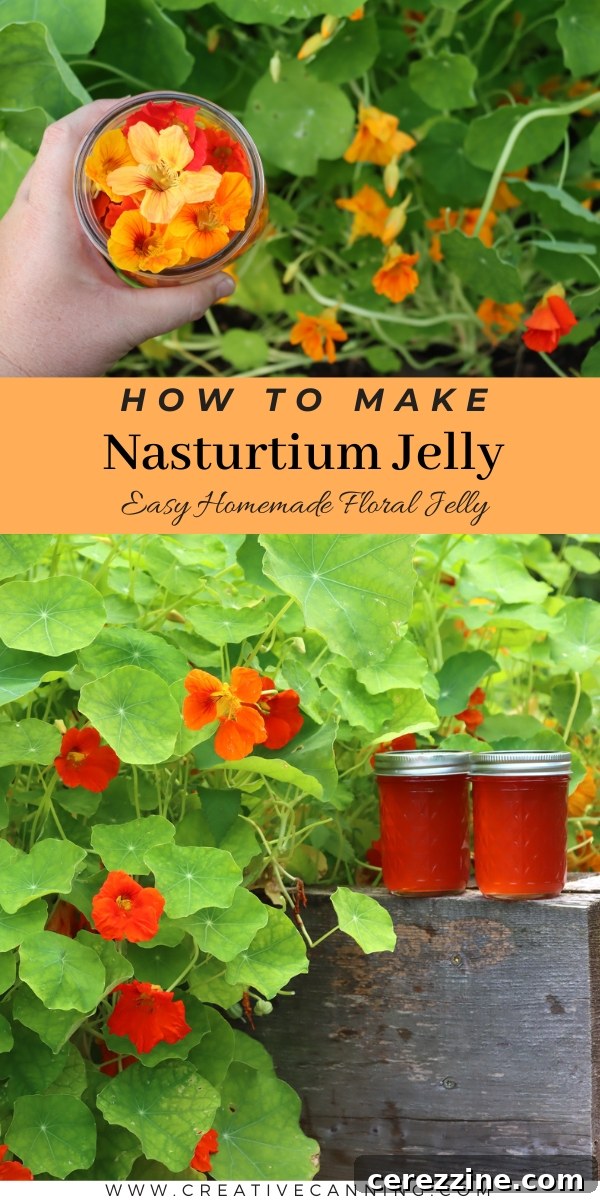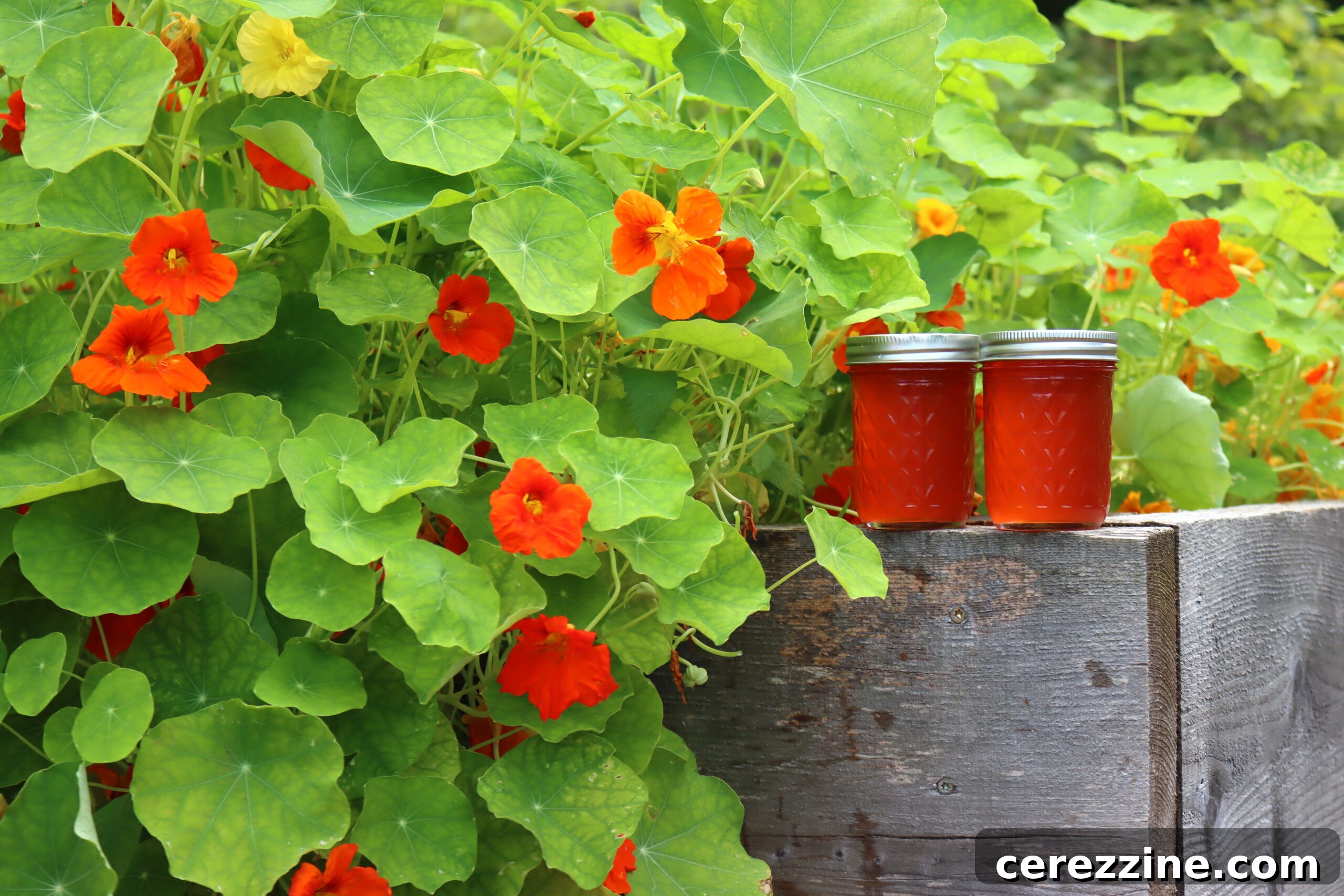
Nasturtium jelly offers a delightful and distinctive way to savor these vibrant, peppery edible flowers. Its unique flavor and beautiful color will undoubtedly add a touch of gourmet flair to any dish it graces.
Unveiling the Culinary Charm of Nasturtiums
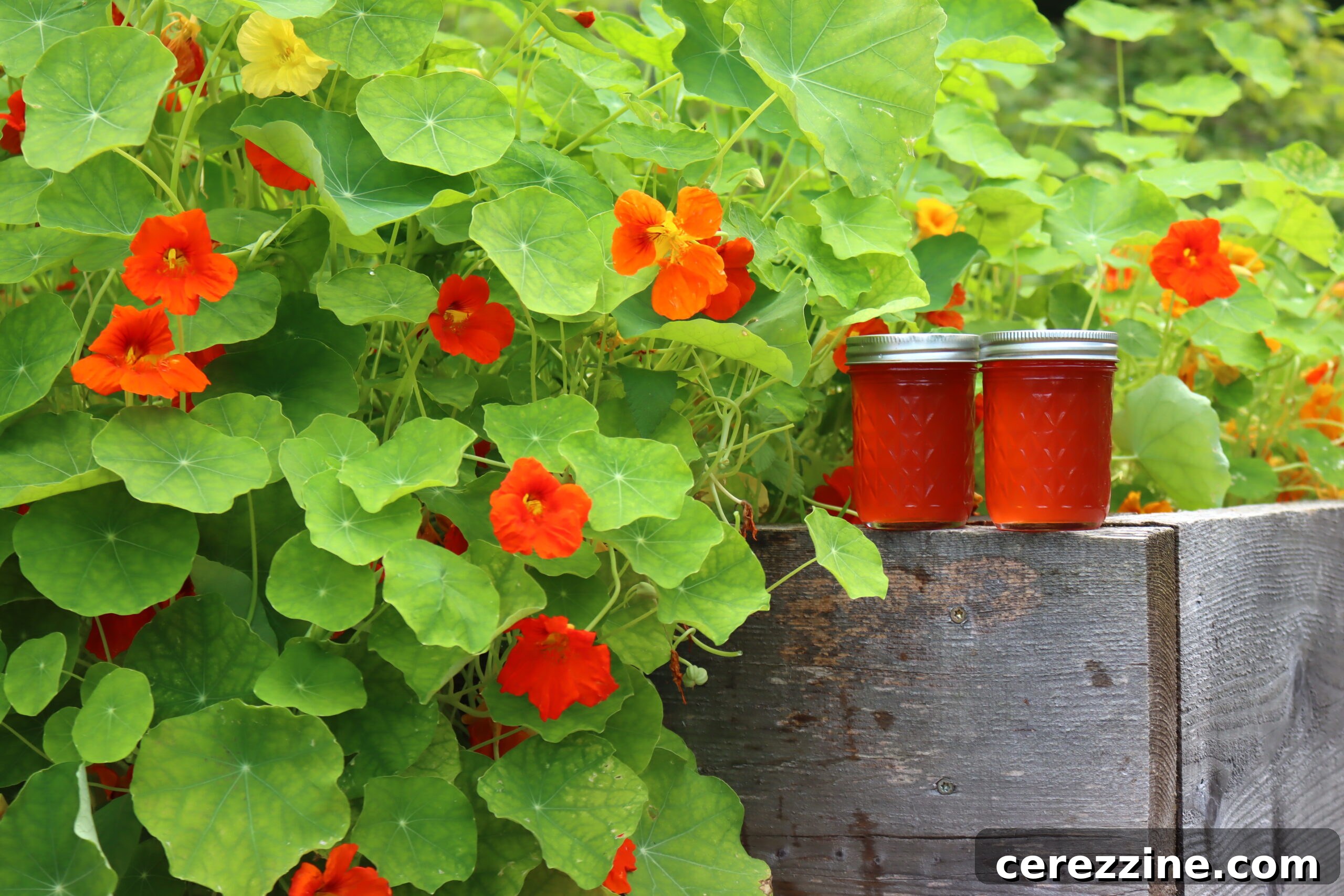
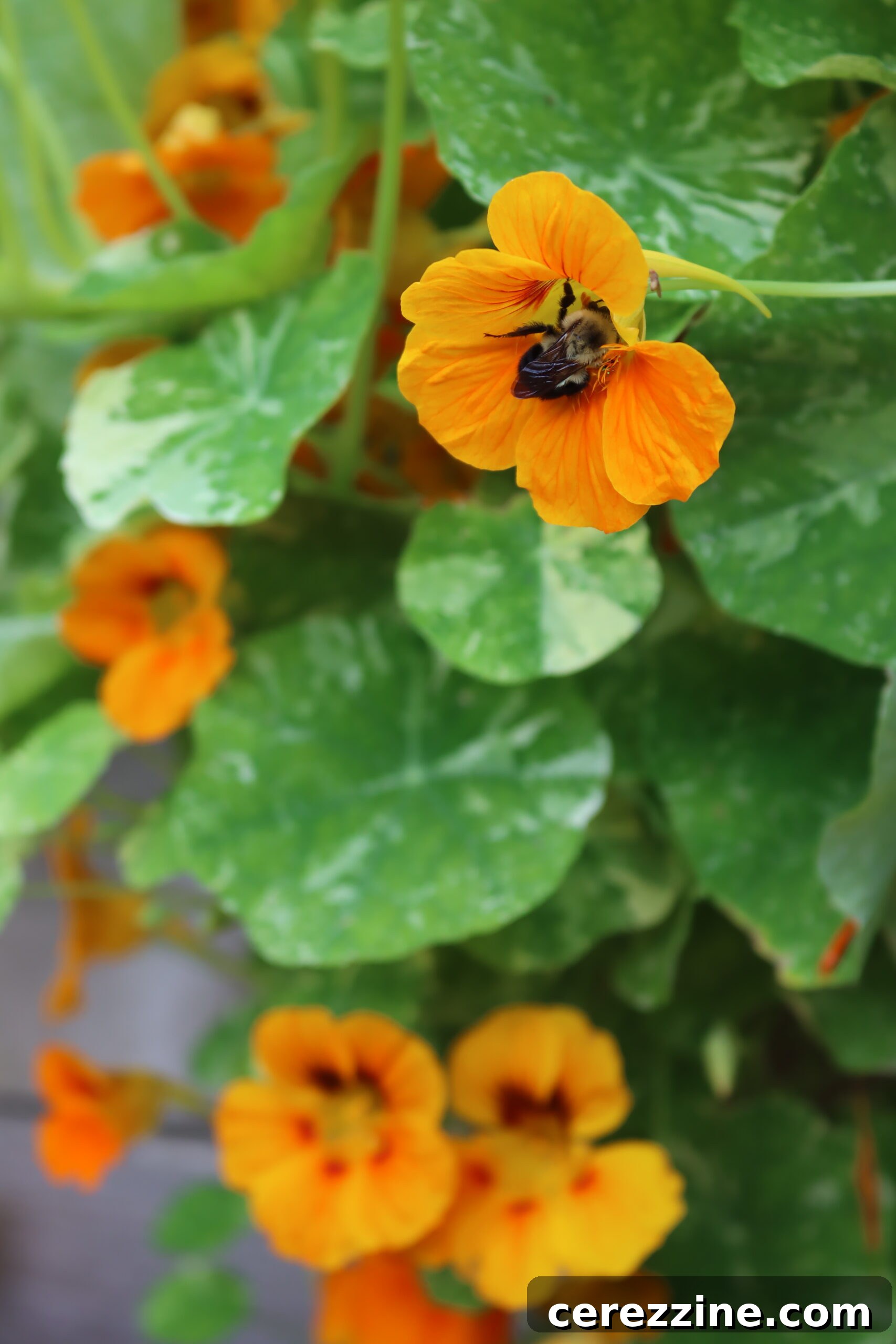
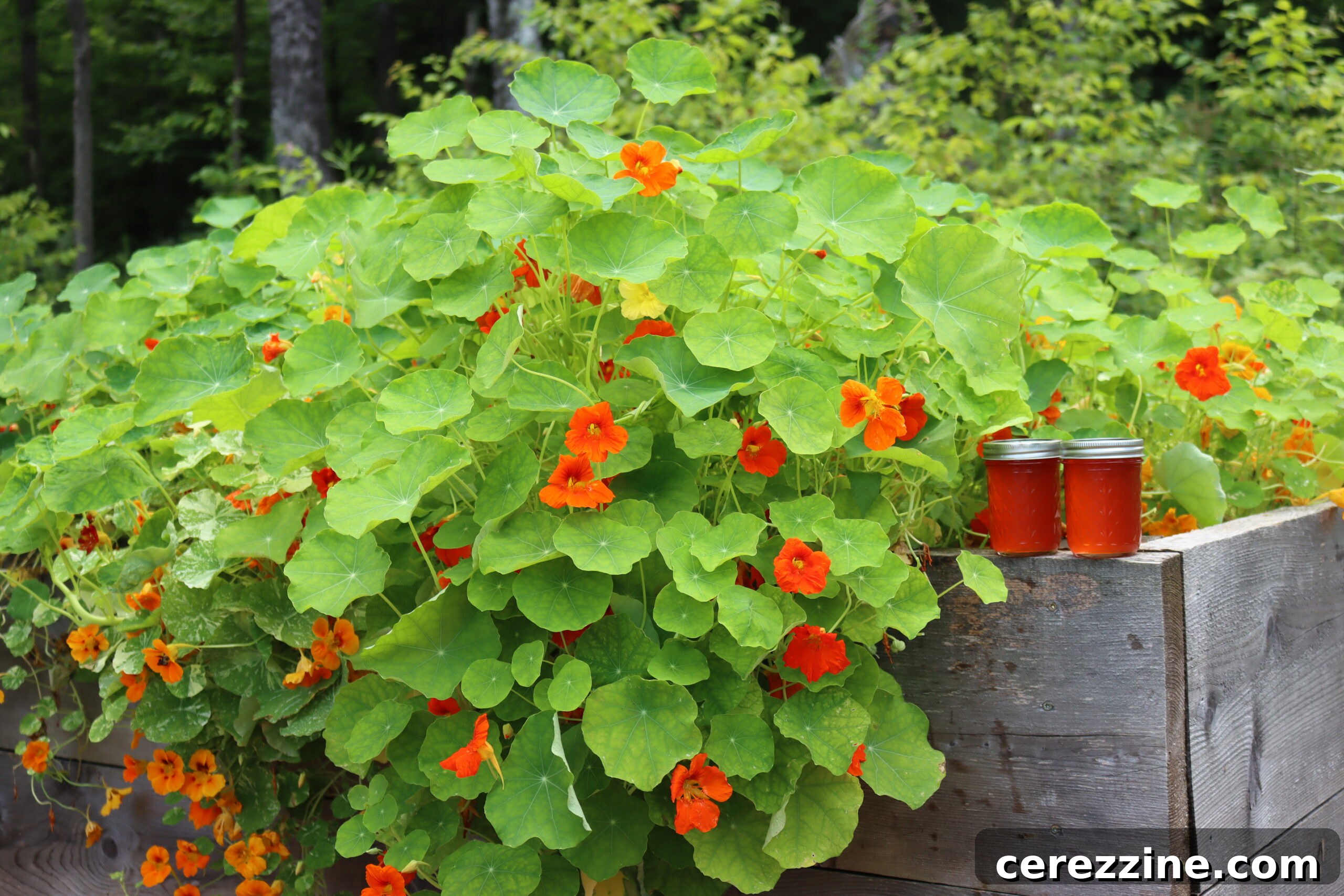
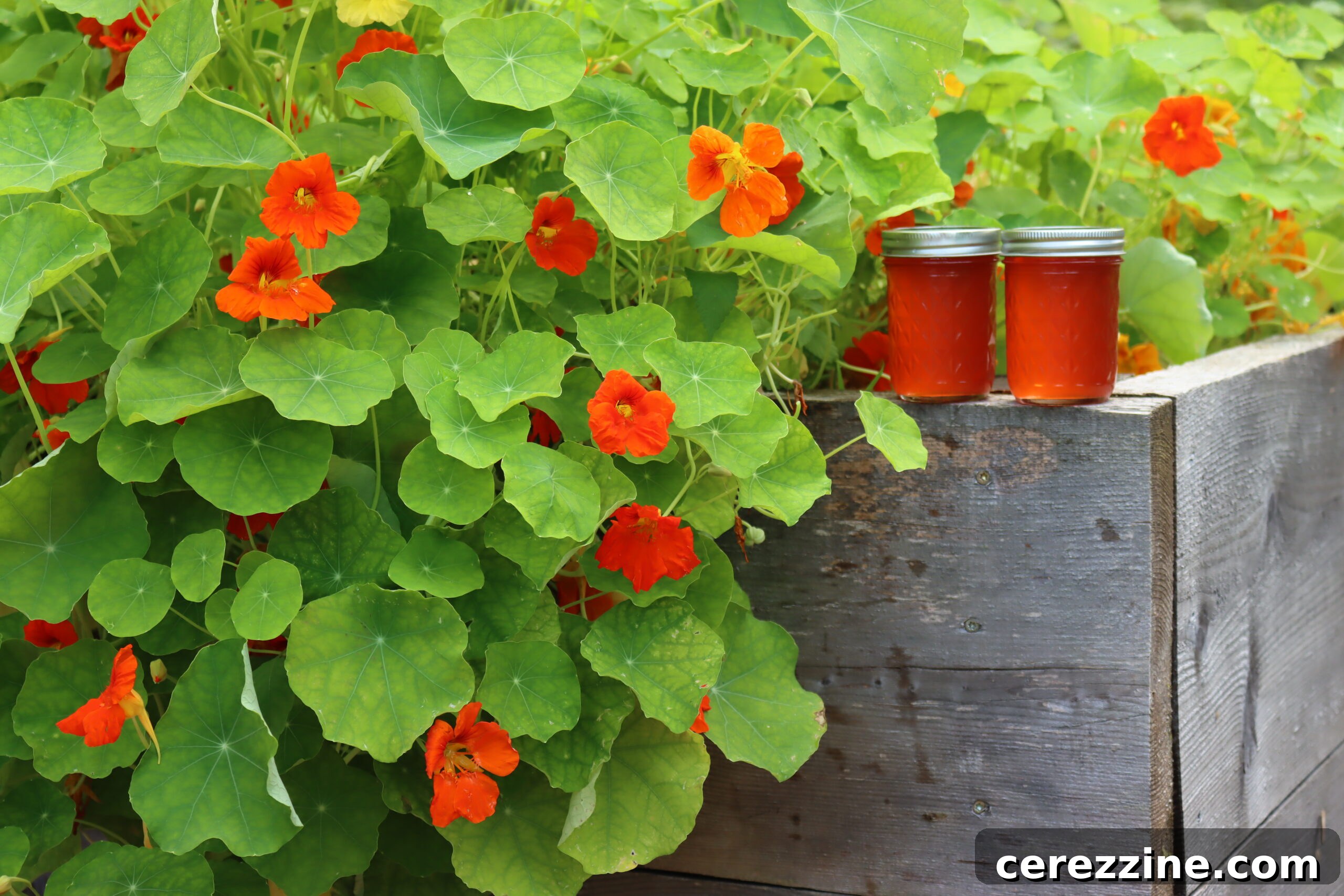
Nasturtiums are truly extraordinary plants, celebrated not just for their stunning, brightly colored blooms but also for their incredible edibility and versatility in the kitchen. While most commonly recognized as a vibrant garnish for salads, their spicy, slightly peppery flavor makes them a fascinating ingredient in a variety of culinary creations. Each year, we dedicate a portion of our garden to these prolific plants, not only for their beauty and taste but also because they are magnets for beneficial pollinators, drawing bees and butterflies to the yard.
Beyond their eye-catching flowers, every part of the nasturtium plant is edible. The tender green leaves can be transformed into a wonderfully zesty pesto, offering a unique twist on the traditional basil version. The unripe green seeds, with their distinct caper-like tang, are excellent when pickled or lacto-fermented, providing a homegrown alternative to store-bought capers. It’s no coincidence that the flavor is strikingly similar, as true capers are botanically related to nasturtiums.
But what about the star of the show – the flowers themselves? While often enjoyed raw in salads, their potential extends far beyond simple garnishes. We’ve experimented with adding them to stir-fries and simmering pots of rice, where their peppery notes provide an unexpected layer of flavor. However, a truly remarkable discovery came from an old cookbook: a recipe for nasturtium jelly. This revelation opened up a world of possibilities for preserving the vibrant essence of these flowers in a sweet yet spicy spread.
What Does Nasturtium Jelly Taste Like?
Nasturtium jelly delivers an unforgettable flavor profile that beautifully balances sweetness with a distinct peppery kick, reminiscent of subtle Sichuan peppercorns. It’s a truly unique floral jelly, offering sweet and delicate floral undertones that intertwine with its signature spicy notes. This intriguing combination makes it an exceptionally versatile condiment.
This jelly shines brightest when paired with dishes that allow its complex flavor to take center stage. Imagine spreading it generously on warm, plain butter biscuits or freshly baked scones, where its unique character can truly be appreciated. Beyond breakfast or afternoon tea, nasturtium jelly also complements savory dishes wonderfully. It can be used as a vibrant glaze for roasted meats, imparting a subtle heat and sweetness as it cooks, or spooned alongside a cheese board for an unexpected and sophisticated flavor pairing. While this recipe focuses on a standard sweet jelly, nasturtium flowers can also be incorporated into savory herbal jelly recipes for a more adventurous culinary experience.
A Quick Look at the Nasturtium Jelly Recipe
- Recipe Name: Nasturtium Flower Jelly
- Recipe Type: Unique Flower Jelly Recipe
- Canning Method: Water Bath Canning (Optional)
- Prep/Cook Time: Approximately 30 Minutes
- Canning Time: 10 Minutes
- Yield: 4 to 5 Half-Pint Jars
- Jar Sizes: Quarter Pint, Half Pint, or Pint
- Headspace: 1/4 inch
- Ingredients Overview: Fresh Nasturtium Flowers, Water, Lemon Juice (essential for flavor and preservation), and Sugar, along with Pectin.
- Difficulty: Easy! Essentially, you’re brewing a floral tea and setting it into a delicious jelly with pectin.
- Similar Recipes: The process mirrors other delightful summertime floral jellies, such as Chamomile Jelly, Calendula Jelly, Elderflower Jelly, Peony Jelly, Borage Jelly, or Rose Petal Jelly.
Harvesting Nasturtiums for Your Flower Jelly
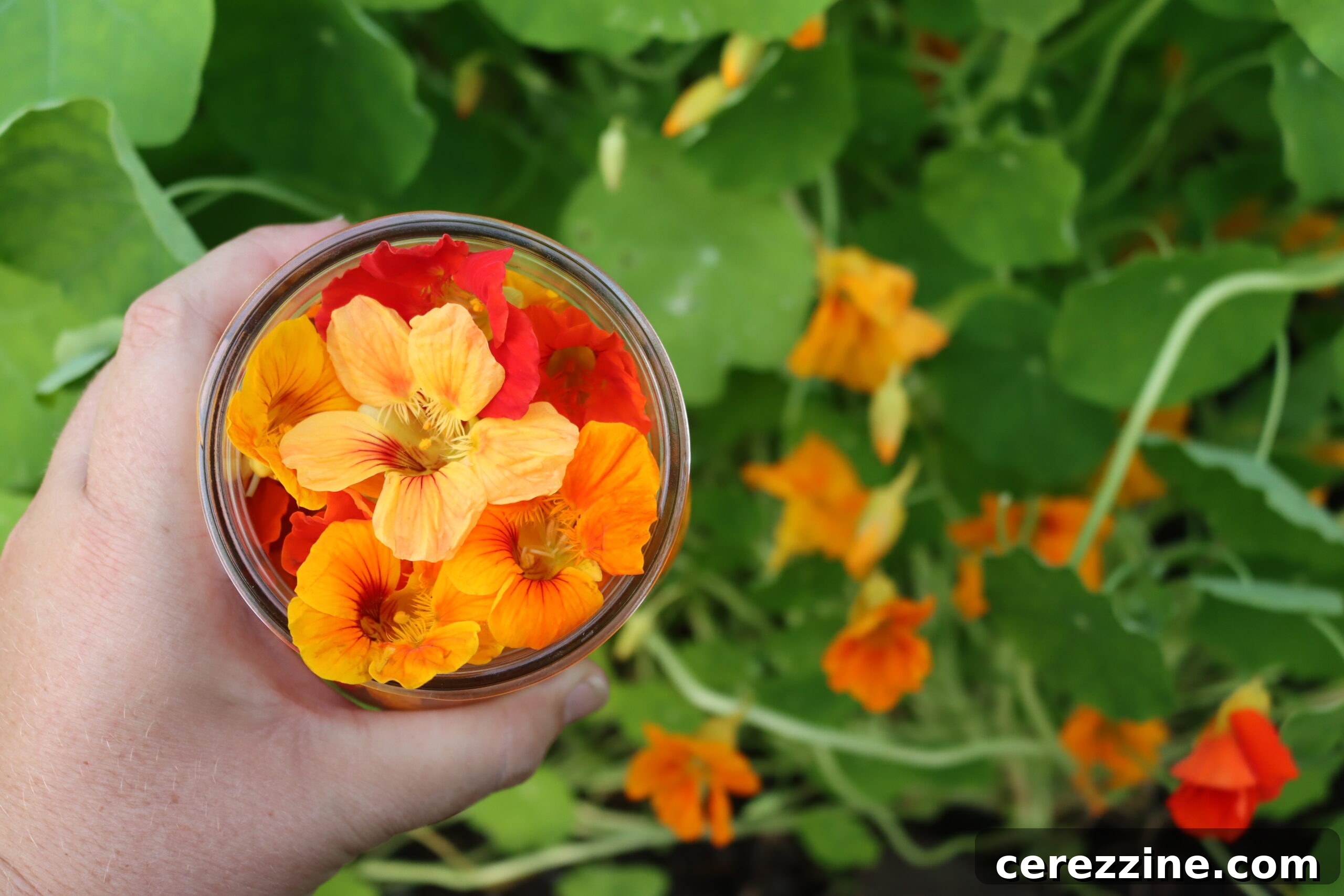
To prepare a full batch of this vibrant nasturtium jelly, you’ll need approximately four cups of fresh nasturtium flowers. While this might sound like a significant quantity, nasturtiums are incredibly prolific growers, especially when in peak bloom. You’ll likely be able to gather this amount even from a single hanging basket or a small garden bed dedicated to these cheerful plants. When harvesting, select healthy, fully opened blooms. It’s best to pick them in the morning after the dew has dried but before the heat of the day, as this is when their fragrance and flavor are most concentrated. Gently snip the flowers at the base of their stems.
If you find yourself short on flowers for a full batch, don’t worry. You can easily make a half batch of jelly by adjusting the ingredient quantities accordingly (e.g., using two cups of flowers and half a box of pectin). Alternatively, you can store freshly harvested nasturtium flowers in the refrigerator for a few days until more blooms emerge from your garden. Place them gently in a loosely sealed bag or container with a damp paper towel to maintain their freshness.
Remember that a standard box of powdered pectin typically contains 6 tablespoons. So, if you opt for a half batch, you’d use 3 tablespoons of pectin and reserve the remainder for other delicious jelly-making adventures.
Essential Ingredients for Nasturtium Jelly
Crafting exquisite nasturtium flower jelly requires a few simple yet crucial ingredients. For a batch that yields approximately 4 to 5 half-pint jars (8 oz each), gather the following:
- 4 cups of Fresh Nasturtium Flowers: Ensure they are clean and free of insects.
- 4 cups of Water: The base for infusing the floral essence.
- 2 tablespoons Lemon Juice: Or ½ teaspoon citric acid. This ingredient is NOT optional!
- 1 to 4 cups of Sugar: *Please see the note below on sugar quantities based on pectin type and desired sweetness.
- 1 box (1.75 oz) Powdered Pectin: Choose between regular or low-sugar pectin based on your preference.
The Crucial Role of Lemon Juice
Lemon juice is a cornerstone of this recipe, serving multiple vital functions. Firstly, it provides a delightful tartness that expertly balances the sweetness of the sugar, enhancing and brightening the delicate nasturtium flavor. Beyond taste, its acidity plays a critical role in the gelling process; pectin requires a certain pH level to set properly, and lemon juice ensures this environment is met. Furthermore, for those planning to preserve their jelly through canning, the acidity of lemon juice is absolutely essential for food safety, as it creates an environment unsuitable for bacterial growth.
Even if you don’t intend to can your nasturtium jelly and simply plan to store it in the refrigerator, lemon juice remains a necessary component for both flavor balance and proper setting. For a more neutral flavor profile without the distinct lemon taste, citric acid (dissolved in a small amount of water) can be used as a substitute. Keep in mind that citric acid is more concentrated than lemon juice, so you’ll typically use ¼ teaspoon of citric acid for every tablespoon of lemon juice (or lime juice) specified in the recipe. For this recipe, which calls for 2 tablespoons of lemon juice, you would use ½ teaspoon of citric acid.
Understanding Pectin and Sugar
For consistent and reliable results, I highly recommend using Sure-Jell or Sure-Jell low-sugar pectin. Through extensive experimentation, I’ve found these brands provide the best texture and most dependable set for jellies. If you opt for regular Sure-Jell, it’s important to understand that it requires a roughly 1:1 ratio of liquid to sugar to set correctly. This means for our 4 cups of nasturtium tea, you will need approximately 4 cups of sugar to achieve a firm, traditional jelly consistency. This will result in a very sweet jelly.
However, if you prefer a less sweet spread, Sure-Jell low-sugar pectin is an excellent choice. With low-sugar pectin, you have the flexibility to significantly reduce the sugar content, using as little as ½ cup for a barely sweet jelly, or 1 to 2 cups for a moderately sweet and flavorful product. (Sure-Jell low sugar pectin is a versatile pantry staple because it works effectively with both full-sugar and low-sugar recipes, offering great flexibility.)
For those who use Ball Flex Batch Pectin, note that 6 tablespoons of this product is equivalent to one standard 1.75 oz box of other powdered pectins. While this recipe focuses on powdered pectin, instructions for using liquid pectin are sometimes included in similar recipes. However, liquid pectin typically demands a much higher sugar content (often 7 cups of sugar for 4 cups of liquid), which is why I generally do not recommend it, though it can still be used if it’s your preferred type.
How to Make Nasturtium Jelly: A Step-by-Step Guide
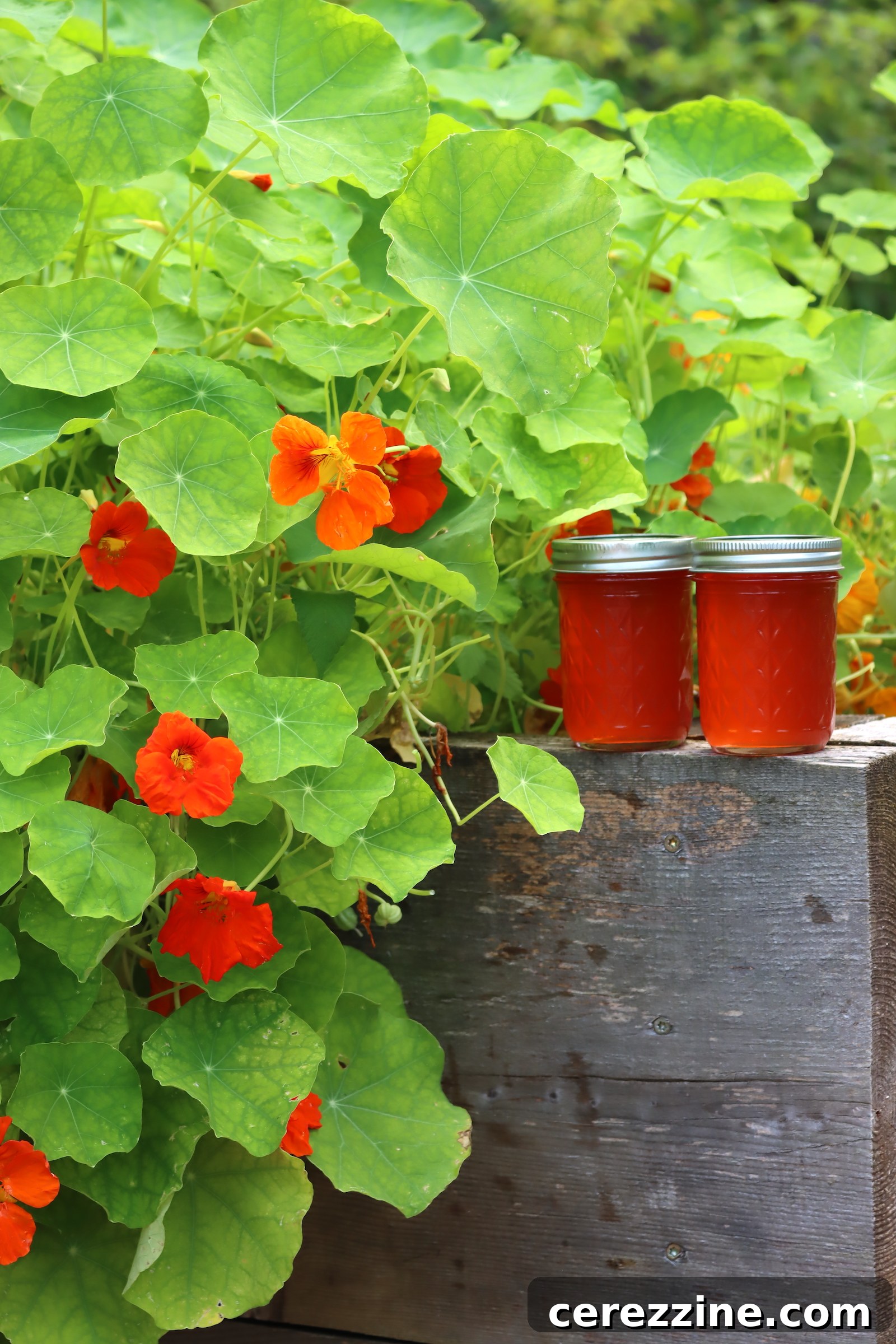
Making jelly from fresh nasturtium flowers is a rewarding process, very similar to preparing other flower jellies, but with the distinct advantage of nasturtiums’ vibrant color and uniquely spicy flavor that truly shines through.
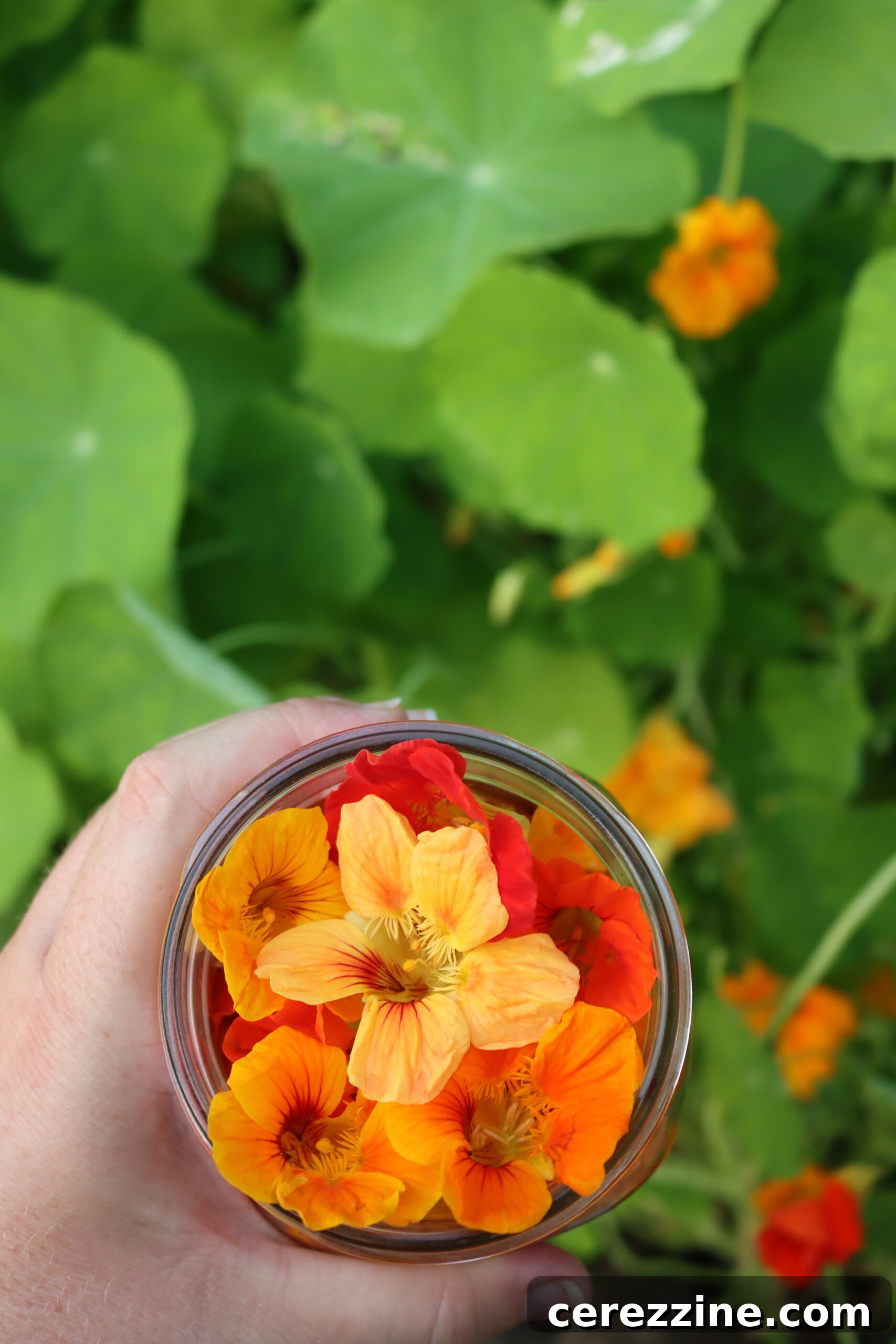
- Prepare the Flowers: Begin by carefully selecting and picking approximately 4 cups of fresh nasturtium flowers. Gently inspect each bloom for any tiny insects or debris, then give them a brief, gentle rinse under cold running water. I often find it convenient to pick them directly into a quart jar, as this container is ideal for the next steeping step.
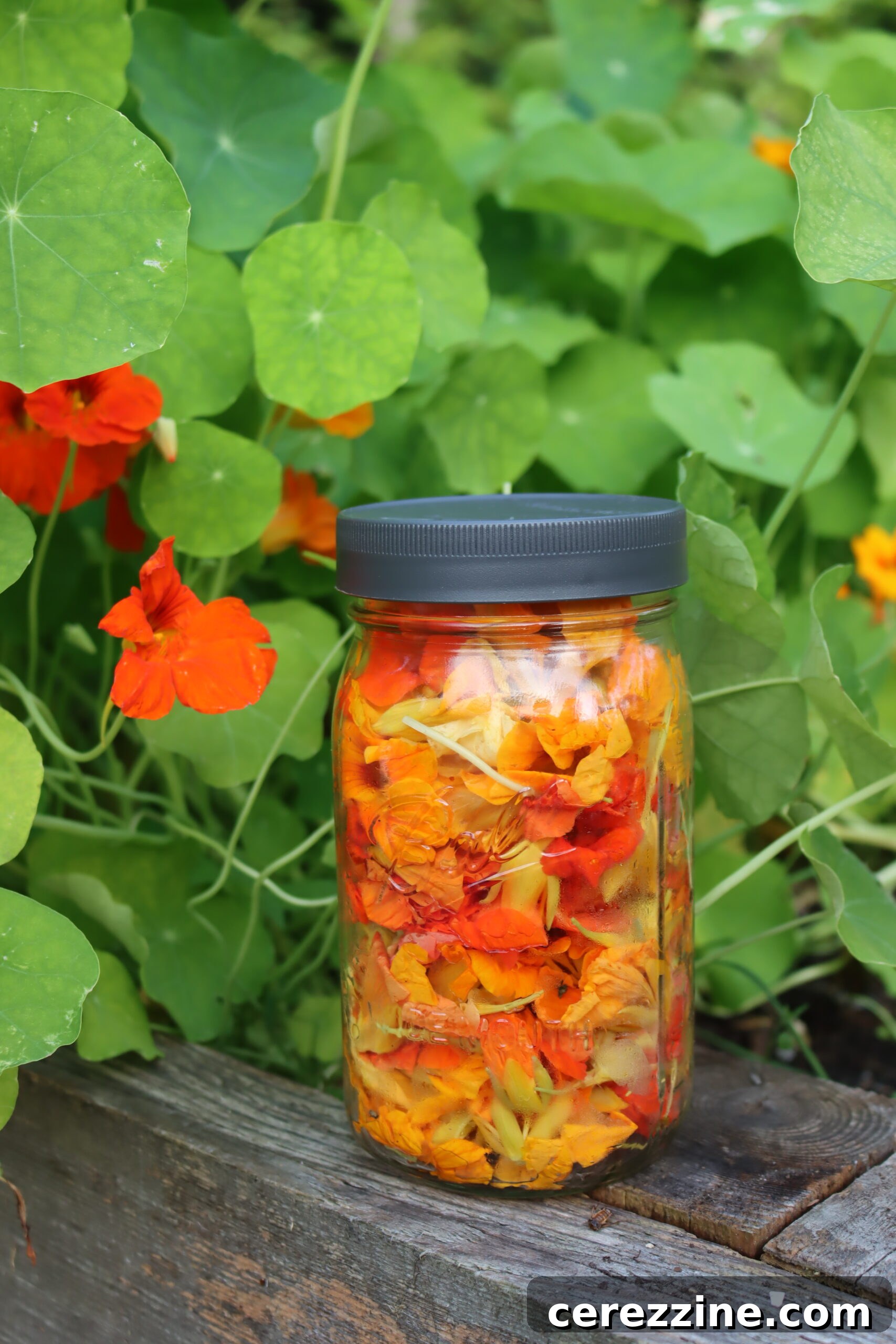
- Steep the Nasturtium Tea: Transfer the cleaned nasturtium flowers into a heatproof bowl or the quart jar. Bring 4 cups of water to a rolling boil, then carefully pour the boiling water over the flowers. Allow the nasturtium flowers to steep undisturbed for about 15 to 20 minutes. This infusion period allows the flowers to release their beautiful color and spicy, floral essence into the water, creating a vibrant “flower tea.”
- Strain and Acidify: Once steeped, strain the flower tea through a fine-mesh sieve or cheesecloth into a clean saucepan or a dedicated jelly pot. Press gently on the flowers to extract as much liquid as possible, but avoid squeezing too hard, which can sometimes release bitter flavors. To the strained liquid, add 2 tablespoons of fresh lemon juice. As discussed earlier, the lemon juice is absolutely essential; it balances the sweetness, brightens the jelly’s color, and most importantly, provides the necessary acidity for the pectin to set and for safe canning. Bring this mixture to a boil over medium-high heat.
- Incorporate Pectin: Once the nasturtium tea and lemon juice mixture is boiling vigorously, stir in one box (1.75 oz) of powdered pectin. I typically use Sure-Jell, but any standard powdered pectin brand will work effectively. Stir continuously and thoroughly until the pectin is completely dissolved, ensuring there are no lumps. Allow the mixture to maintain a rolling boil for a full minute after the pectin is dissolved. This step is crucial for activating the pectin. (Important: Never add the sugar before the pectin or at the same time, as this can prevent the pectin from dissolving properly and hinder the jelly from setting.)
- Add Sugar and Boil: After the pectin has boiled for one minute, add the sugar. The amount of sugar will depend on the type of pectin you’re using and your desired sweetness level (refer to the “Understanding Pectin and Sugar” section above). For regular pectin, you’ll need around 4 cups of sugar. For low-sugar pectin, you can use significantly less, from ½ to 2 cups. Stir the sugar into the boiling mixture until it is completely dissolved. Once the sugar is fully incorporated, bring the mixture back to a vigorous, rolling boil and let it boil hard for another full minute.
- Fill Jars: Carefully remove the jelly mixture from the heat. Skim off any foam that may have risen to the top using a spoon. Ladle the hot jelly into prepared, sterilized jelly jars, leaving precisely ¼ inch of headspace at the top of each jar. This headspace is vital for proper sealing during canning or for allowing room for expansion if freezing.
- Cool or Can: If you’re not canning, allow the jars to cool completely on your counter. Once cooled, store them in the refrigerator for up to a month or freeze them (using freezer-safe jars) for up to 6 months. For those planning to can, proceed to the canning instructions below.
Canning Nasturtium Flower Jelly for Long-Term Storage
While you can certainly store your freshly made nasturtium jelly in the refrigerator for several weeks or even freeze it in freezer-safe jars, I personally advocate for water bath canning. Canning offers the immense convenience of shelf-stable storage, allowing you to enjoy the unique, spicy-sweet flavor of nasturtium jelly year-round without occupying precious refrigerator or freezer space. If you choose to can, ensuring the inclusion of lemon juice is absolutely critical, as its acidity lowers the pH to a safe level for preservation.
Step-by-Step Water Bath Canning Process:
- Preparation: Before you even start making the jelly, prepare your water bath canner, canning jars, and lids. Wash jars, lids, and bands in hot, soapy water. Sterilize your jars by submerging them in boiling water for at least 10 minutes (or according to your canner’s instructions). Keep jars hot until ready to fill. Set new canning lids aside.
- Fill Jars: Once your nasturtium jelly is prepared according to the recipe steps, carefully ladle the hot jelly into the hot, sterilized jars, leaving exactly ¼ inch of headspace from the rim.
- Remove Air Bubbles: Use a non-metallic spatula or a bubble remover tool to gently slide along the inside of each jar to release any trapped air bubbles.
- Clean Rims: Wipe the rims of the jars clean with a damp cloth. Any jelly residue on the rim can prevent a proper seal.
- Apply Lids and Bands: Place a new, clean canning lid on each jar. Secure it with a canning band, tightening it fingertip-tight (just until you feel resistance, do not overtighten).
- Process in Water Bath Canner: Carefully place the filled jars onto the rack in your preheated water bath canner, ensuring they are fully submerged in water by at least 1 inch. Bring the water to a rolling boil.
- Process Time: Once the water is at a rolling boil, process the jars for 10 minutes. If you reside at an elevation above 6,000 feet, you will need to increase the processing time to 15 minutes to ensure proper sterilization.
- Cool and Check Seals: After the processing time is complete, turn off the heat and carefully remove the jars from the canner. Place them on a towel-lined counter, leaving space between each jar to cool undisturbed for 12 to 24 hours. As they cool, you should hear the satisfying “ping” sound as the lids seal. After cooling, check for proper seals by pressing down on the center of each lid; it should not flex or pop up.
- Storage: Properly sealed jars can be stored in a cool, dark pantry for 12 to 18 months. Once opened, refrigerate the nasturtium jelly and consume within a few weeks.
Nasturtium Jelly Variations to Explore
The beauty of homemade jelly lies in the ability to customize flavors. While the pure nasturtium jelly is exquisite on its own, you can easily introduce delightful variations. One particularly intriguing variation, inspired by an old recipe, involves adding a tablespoon of Sichuan peppercorns during the steeping process. The unique citrusy, numbing spice of Sichuan peppercorns remarkably complements the inherent peppery notes of nasturtiums, creating an incredibly complex and captivating flavor profile. To try this, simply add a tablespoon of Sichuan peppercorns to your quart jar along with the nasturtium flowers before pouring over the boiling water. They will infuse into the floral tea, lending an extraordinary dimension to your homemade jelly.
Beyond this, don’t be afraid to experiment with other complementary spices or even a touch of ginger for warmth. For those who enjoy savory spreads, remember that nasturtium flowers are also excellent additions to a savory herbal jelly recipe, offering an entirely different culinary application.
More Nasturtium & Flower Jelly Recipes
If you’re captivated by the versatility of nasturtiums and the charm of floral jellies, there’s a world of delicious possibilities waiting to be explored! Here are some additional recipes and resources to inspire your culinary journey:
Discovering More Nasturtium Recipes:
- 60+ Nasturtium Recipes: A comprehensive collection of ideas for utilizing every part of this incredible plant.
- Nasturtium Medicinal Uses: Explore the traditional health benefits and uses of nasturtiums.
If you tried this Nasturtium Jelly Recipe, or any other recipe on Creative Canning, we’d love to hear from you! Please leave a ⭐ star rating and share your thoughts in the 📝 comments section below!
Stay connected with us for more creative canning and culinary inspiration by following on social media!
- Substack
Explore More Flower Jelly Recipes
Tulip Jelly
Are Flower Jellies Safe for Canning?
Lilac Jelly
Peony Jelly
40
servings, Makes 5 (8 oz) Jars
Nasturtium Jelly
Ashley Adamant
15
mins
5
mins
10
mins
30
mins
Ingredients
-
4
cups
fresh nasturtium flowers -
4
cups
water -
2
tbsp
lemon juice (or ½ tsp citric acid) -
1 to 4
cups
sugar, see note on pectin types -
1
box
powdered pectin, (1.75 oz, Regular or Low Sugar)
Instructions
-
Pick 4 cups of fresh nasturtium flowers, carefully inspecting them for insects and rinsing them briefly under cold water.
-
Place the cleaned flowers into a bowl or quart jar and pour 4 cups of boiling water over them. Let the flowers steep for 15 to 20 minutes to infuse the tea.
-
Strain the flower tea into a saucepan or jam pot. Stir in the 2 tablespoons of lemon juice. This is crucial for flavor balance, pectin setting, and preservation. Bring the mixture to a boil.
-
Once boiling, stir in the powdered pectin until it is completely dissolved. Continue to boil vigorously for a full minute before adding the sugar. (Avoid adding sugar before or with pectin, as this can hinder setting.)
-
Add the sugar (1-4 cups, depending on pectin type and desired sweetness) and stir until it is fully dissolved. Return the mixture to a hard, rolling boil for another full minute.
-
Remove from heat and ladle the hot jelly into prepared, sterilized jelly jars, leaving ¼ inch of headspace.
-
If canning, process the jars in a water bath canner for 10 minutes (or 15 minutes if above 6,000 feet elevation). If not canning, allow the jars to cool completely on the counter before refrigerating (up to a month) or freezing (up to 6 months in freezer-safe jars).
Notes on Pectin and Sugar
When utilizing standard pectin (like regular Sure-Jell), it’s essential to maintain a 1:1 ratio of liquid to sugar for proper setting. This means for 4 cups of nasturtium tea, you will need at least 4 cups of sugar to achieve a firm, traditional-style jelly. This will yield a very sweet product. To reduce the sugar content, you must switch to a low-sugar pectin (such as Sure-Jell Low Sugar Pectin), which I find to be highly reliable. Follow the same process but adjust the sugar quantity to your preference.
Be aware that reducing the sugar content will also typically reduce the final yield. A full-sugar recipe usually yields about 5 half-pint jars.
If you’re using Pomona’s Universal Pectin, the method is slightly different. This two-part low-sugar pectin does not include citric acid like most other pectins, so you’ll need to increase the lemon juice to ½ cup (instead of the usual 2 tablespoons). Always follow the specific instructions provided on the Pomona’s box for making mint jelly, as these guidelines are applicable to other floral jellies as well.
For liquid pectin, the order of adding ingredients changes: sugar is added first, followed by the pectin. Liquid pectin also requires a significantly higher amount of sugar, typically 7 cups of sugar for 4 cups of liquid. While I personally don’t recommend liquid pectin due to its high sugar requirement, it will still work if that is your preference.
Finally, if you are using Ball Flex Batch Pectin, you will need 6 tablespoons, which is equivalent to a 1.75 oz box of other powdered pectin varieties. This measurement works for both their regular and low-sugar pectin products.
Nutrition
Carbohydrates: 6g,
Protein: 0.01g,
Fat: 0.02g,
Saturated Fat: 0.001g,
Polyunsaturated Fat: 0.002g,
Sodium: 4mg,
Potassium: 1mg,
Fiber: 0.1g,
Sugar: 5g,
Vitamin A: 0.1IU,
Vitamin C: 0.3mg,
Calcium: 1mg,
Iron: 0.04mg
Nutrition information is automatically calculated and should only be used as an approximation.
Enjoyed this recipe? Leave a comment below!
More Inspiring Jelly Recipes
Expand your home canning repertoire and stock your pantry with these delightful floral and herbal jellies!
Flower Jelly Recipes
- Apple Blossom Jelly
- Dandelion Jelly
- Lilac Jelly
- Forsythia Jelly
- Rose Petal Jelly
- Clover Jelly
Herbal Jellies
Don’t limit yourself to flowers! Many other fragrant and flavorful plants from your garden can be transformed into wonderful jellies.
- Savory Herbal Jelly
- Lemon Balm Jelly
- Calendula Jelly (Marigold Jelly)
- Chamomile Jelly