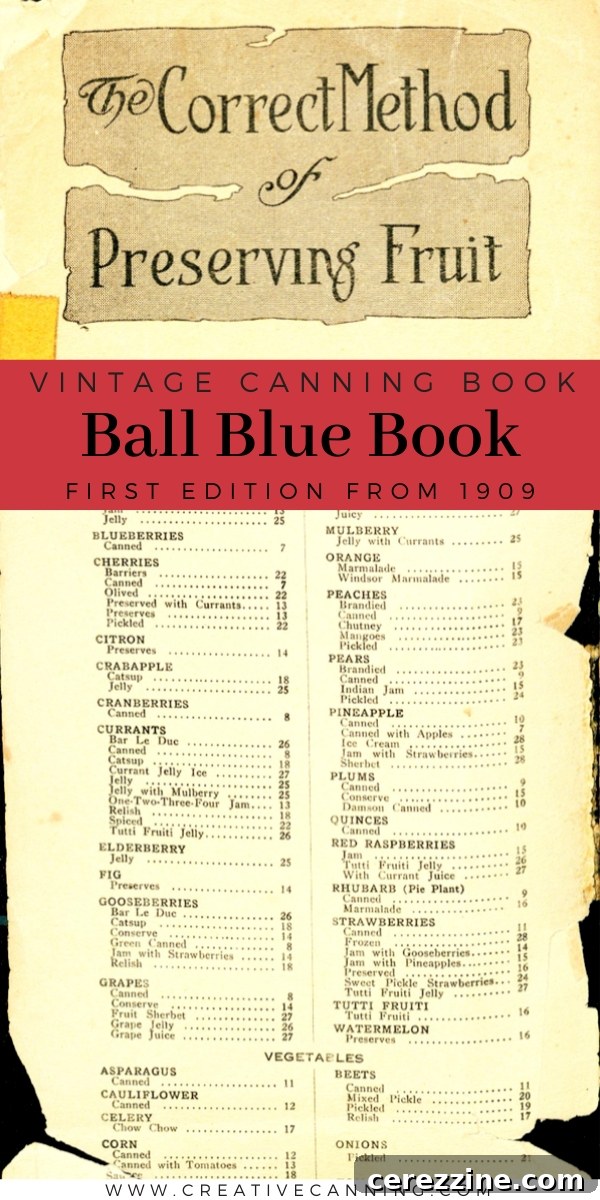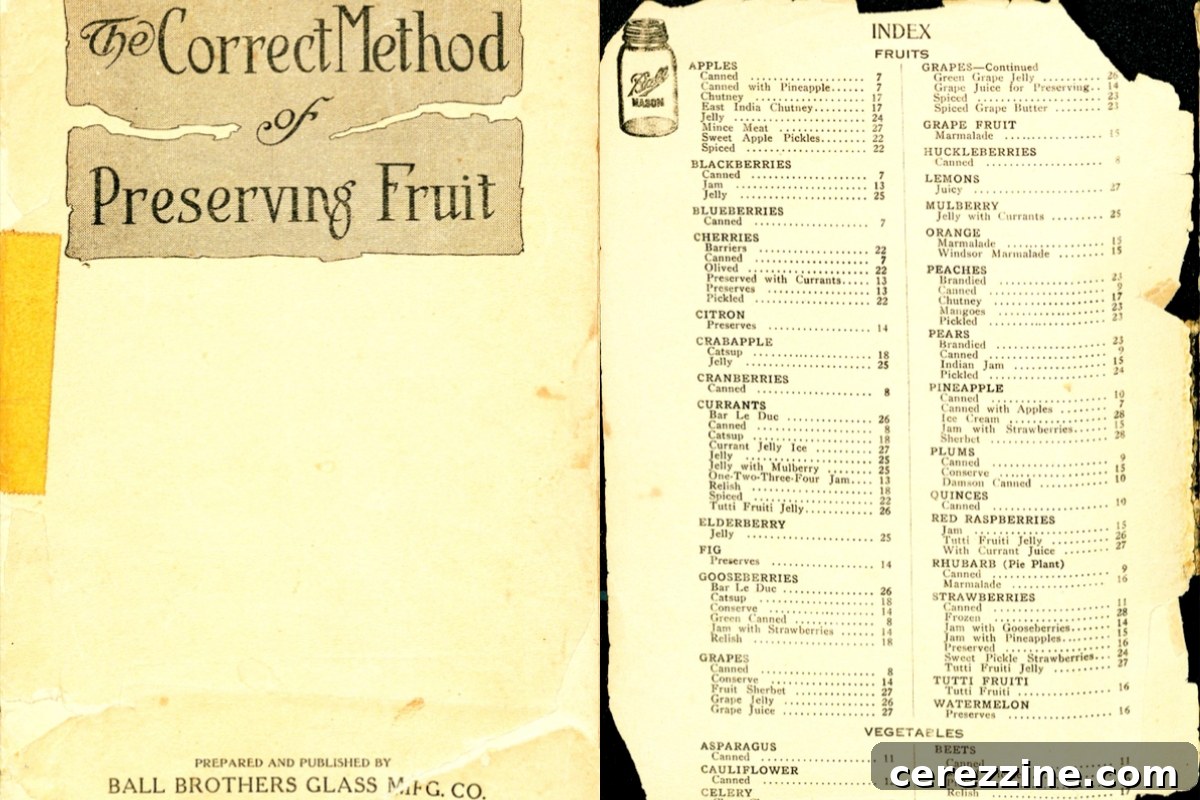
The culinary landscape of home food preservation has been profoundly shaped by one iconic publication: The Ball Blue Book of Preserving. What many home canners might not realize is that this trusted guide, which has graced kitchen shelves for generations, began its journey over a century ago. Its humble origins trace back to 1909, when it was first introduced under the title, “The Correct Method for Preserving Fruits.” This initial, slender volume was far more than just a recipe collection; it was a foundational text that would evolve into the comprehensive resource we know today, continually adapting to new scientific understanding and consumer needs.
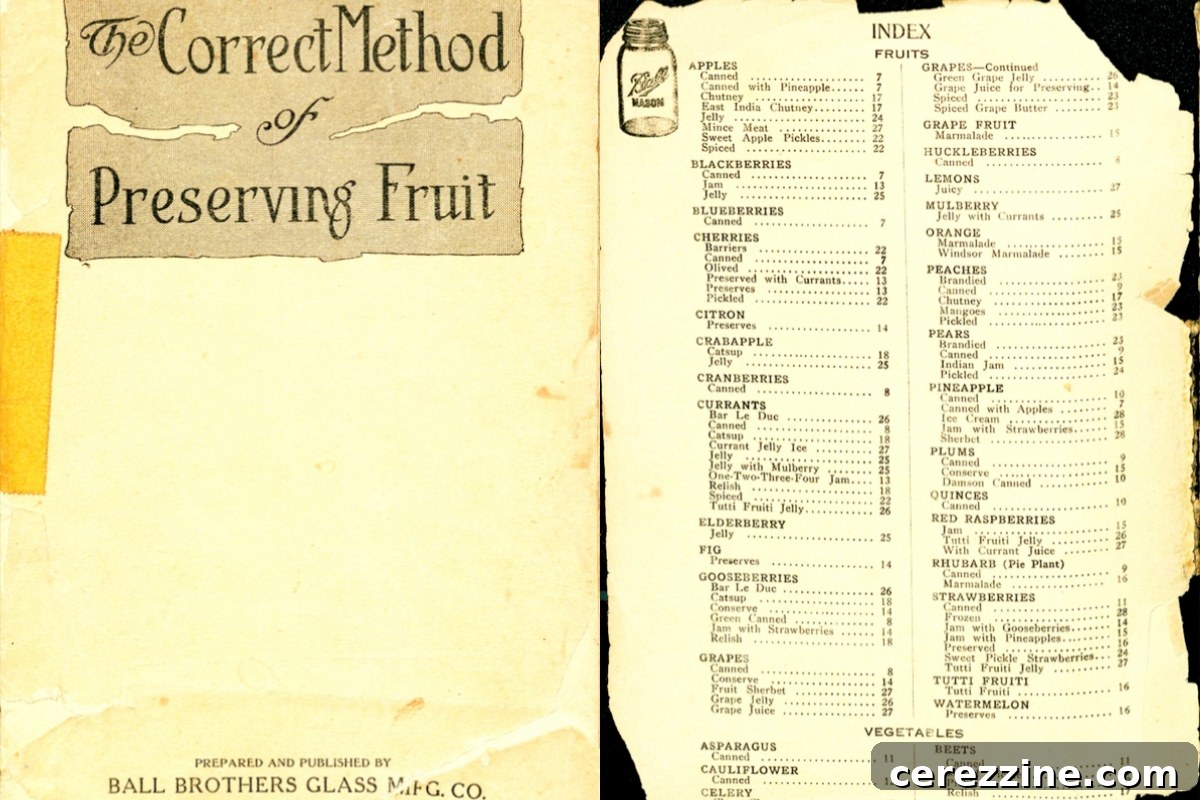
While home canning often evokes images of an age-old tradition, its widespread adoption as a reliable food preservation technique within households truly blossomed in the last century. Before the advent of modern canning, methods like salting, curing, smoking, and potting were the primary means of extending food shelf life. The innovation of sealing food in jars to prevent spoilage was, at the time, nothing short of revolutionary, democratizing food preservation for countless families. It offered a level of convenience and long-term storage previously unattainable for the average home.
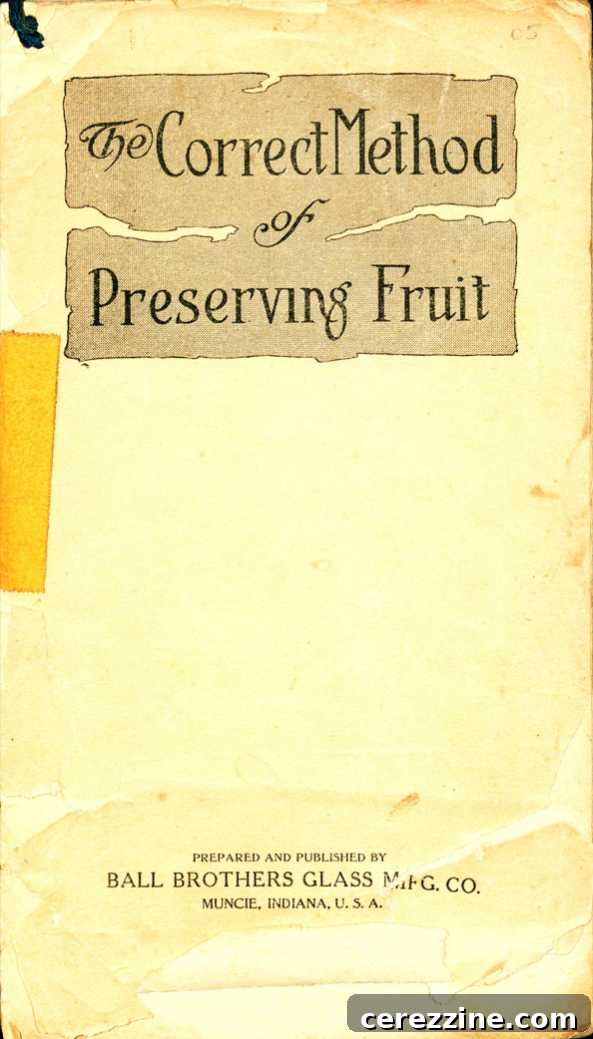
It was into this evolving landscape that “The Correct Method of Preserving Fruits” emerged in 1909. Initially, it was a modest, 30-page pamphlet, yet its impact was monumental. It provided clear, concise instructions for a method that promised to keep food safe and delicious for extended periods, empowering home cooks across America. This small publication laid the groundwork for what would become one of the most respected and indispensable guides in the world of home canning.
The evolution of this seminal work was swift and significant. By 1916, the title underwent its first major change, becoming the now-familiar “The Ball Blue Book of Preserving.” This rebranding reflected the growing prominence of the Ball Brothers Glass Manufacturing Company, whose canning jars were becoming synonymous with the practice. With the new title came an expanded collection of recipes and guidance, growing to approximately 50 pages. This was a substantial increase from its initial 30 pages, indicating a rising demand for more diverse and detailed canning information. Fast forward to today, and modern editions of the Ball Blue Book typically exceed 200 pages, a testament to the continuous advancements in canning science and the ever-expanding repertoire of recipes and techniques available to home canners.
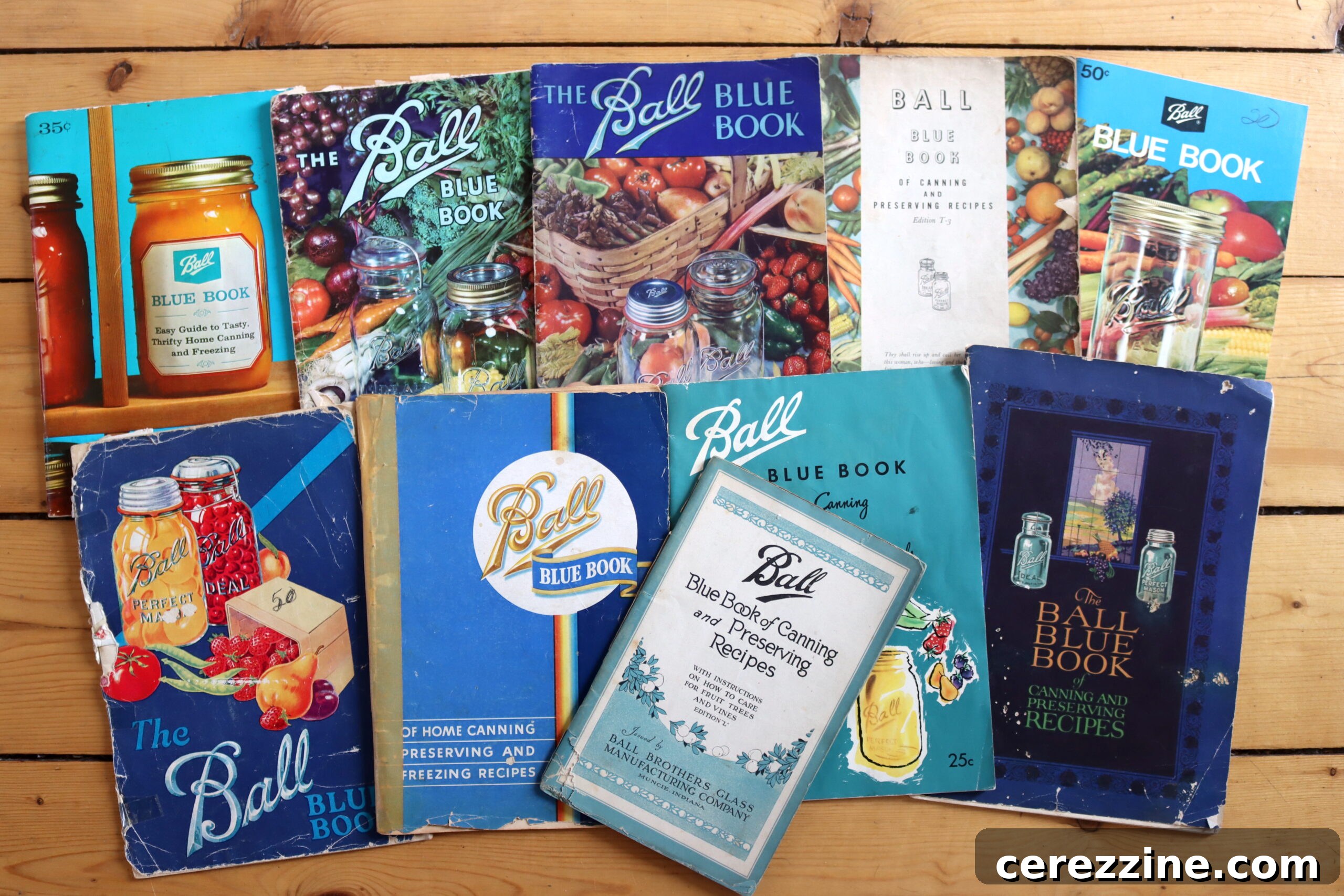
For enthusiasts and historians of home canning, the various editions of the Ball Blue Book offer a fascinating journey through time. As a passionate collector, I’ve amassed about a dozen different hard copies spanning various years, each telling a unique story of its era. There’s an undeniable charm in leafing through these vintage pages, observing how techniques and recipes have evolved. While newer editions are readily available, finding older versions can be a delightful treasure hunt on platforms like Etsy. However, securing a copy of that elusive first edition – “The Correct Method of Preserving Fruits” – has historically been an incredibly challenging feat, often considered an almost impossible find.
For many years, it was widely believed that all original versions of this inaugural publication had been lost to time. Imagine my excitement, then, when with the invaluable assistance of the diligent reference librarians at the University of Iowa, I finally tracked down and held an original copy. This discovery was akin to finding the holy grail for a canning history enthusiast.
This precious vintage copy of “The Correct Method of Preserving Fruit” is now well out of copyright, allowing us to share its contents for purely historical reference. It’s crucial, however, to address a vital point regarding the use of such antique guides for practical canning today. As emphatically stated by Penn State University Extension, “Canning books published prior to 1994 will not have safe processing times and/or methods.” This guideline applies unequivocally to all earlier editions of the Ball Blue Book, including the very first. The science of food safety has advanced significantly over the decades, leading to updated processing times, methods, and ingredient recommendations designed to prevent foodborne illnesses. Relying on pre-1994 canning instructions for current food preservation practices poses serious health risks.
Therefore, while we celebrate the rich history embodied in these early editions, it is paramount to emphasize that all new editions of the Ball Blue Book supersede earlier ones in terms of safety and accuracy. The most current and authoritative guide for safe home canning is the latest release: the Ball Blue Book of Preserving, 38th Edition. This edition, released on February 1st, 2024, features the most up-to-date safety standards and tested recipes, which have again been refined since the 37th edition in 2020. In honor of this continuous commitment to safety and innovation, there’s no better time to reflect on where it all began.
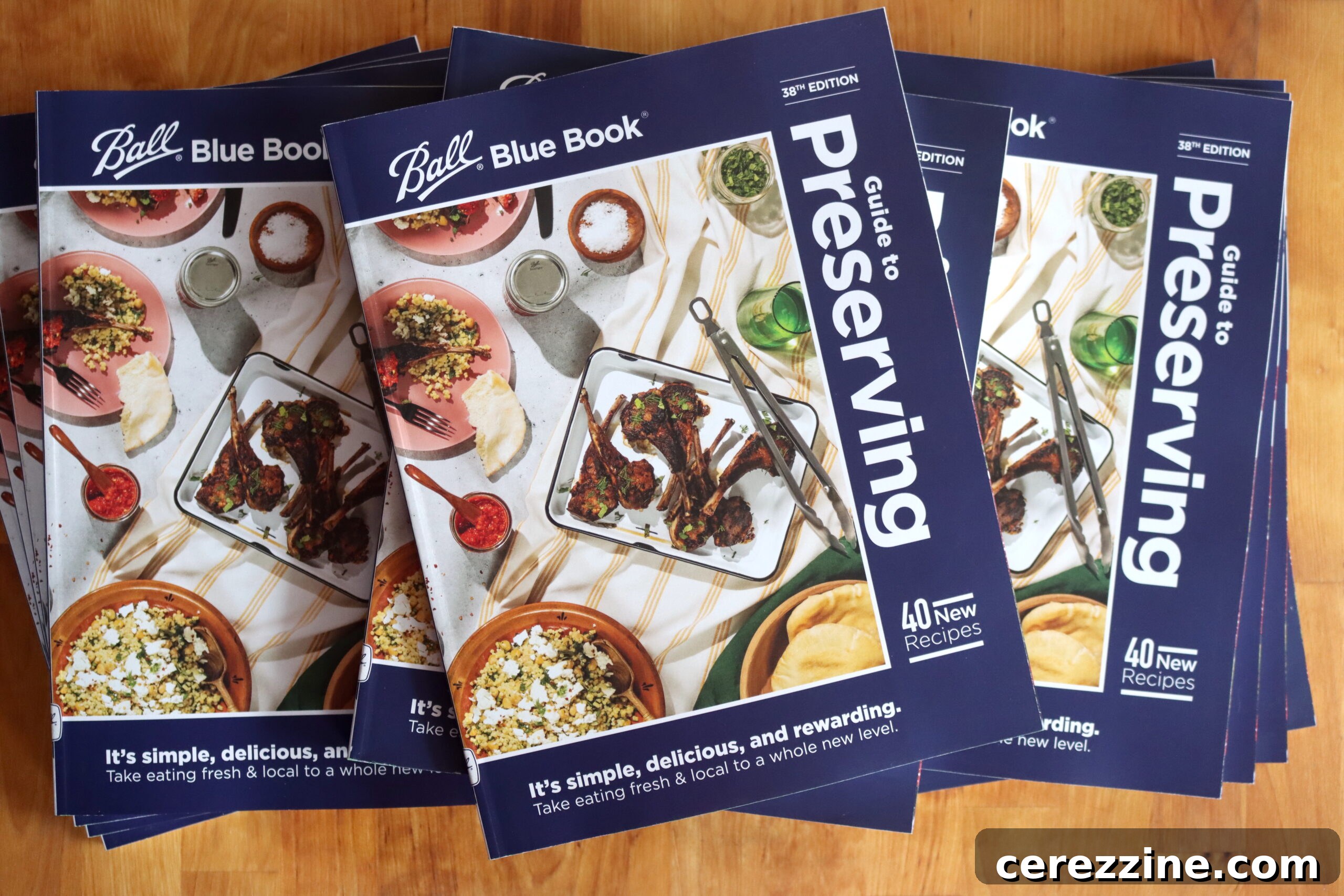
It is important to reiterate that the presentation of this first edition here is strictly for academic and historical reference. I neither endorse nor utilize these vintage canning methods for any contemporary food preservation. My fascination lies purely in exploring the historical evolution of canning practices, and for a “canning nerd” like myself, this inaugural edition represents an unparalleled find. Its pages offer a unique window into the foundational principles and societal context of home canning at the dawn of the 20th century. Having finally held this rare piece of history in my hands, I felt compelled to share it with fellow enthusiasts. I sincerely hope you enjoy this fascinating journey back in time, offering a rare glimpse into the very beginnings of modern home canning.
(For those looking to engage in safe, modern canning, the most up-to-date version of the Ball Blue Book is widely available wherever books are sold, and can often be found online for a very affordable price.)
Unveiling the Ball Blue Book of Preserving: The Historic First Edition
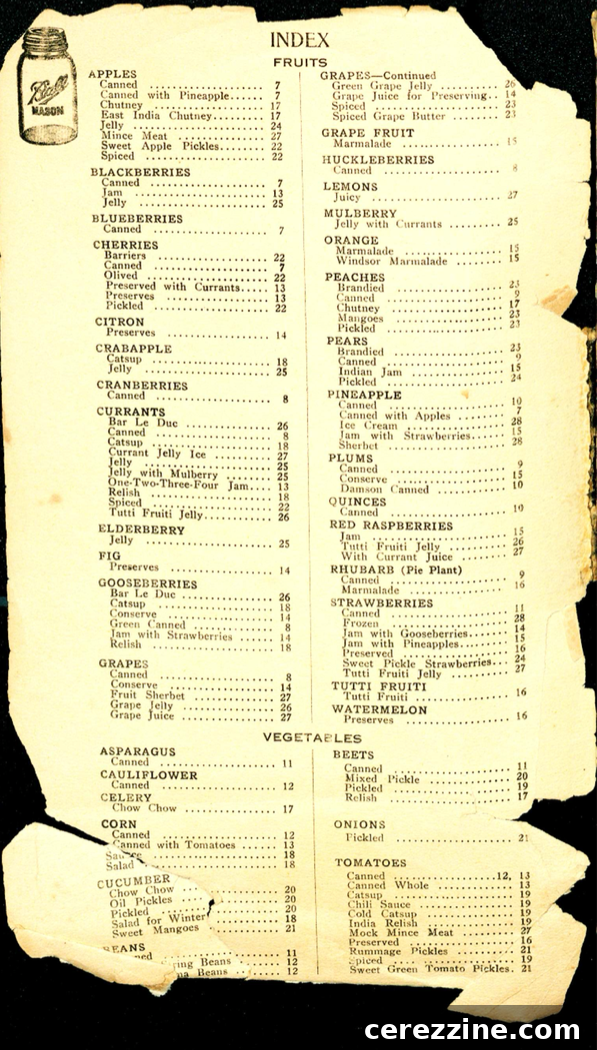
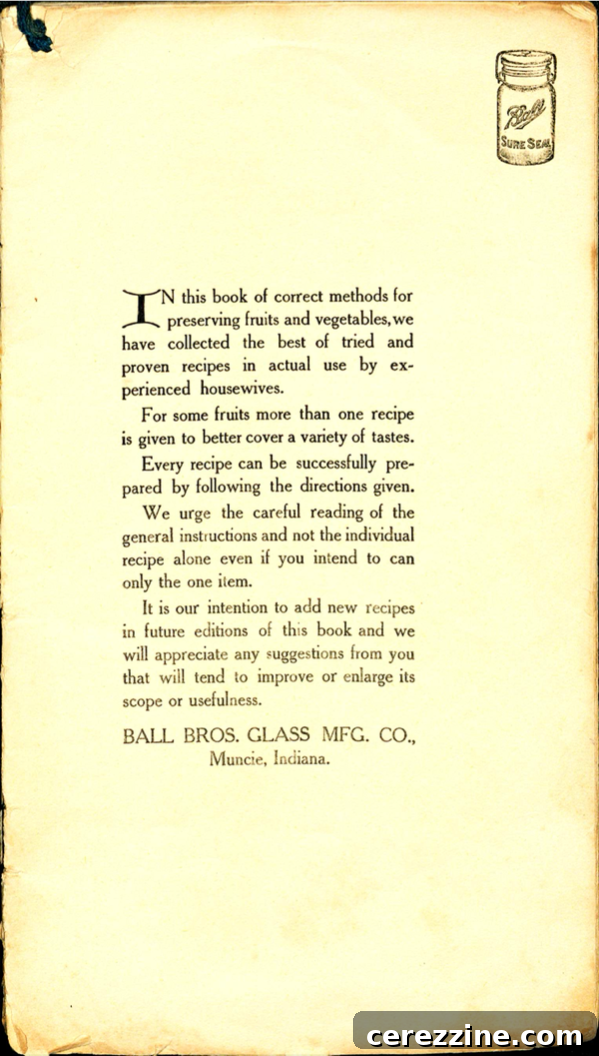
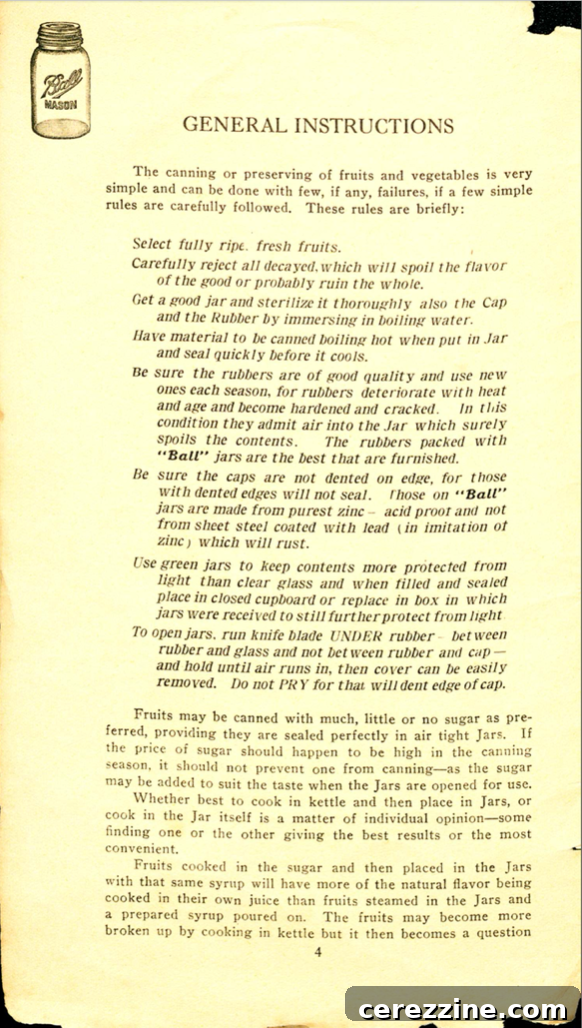
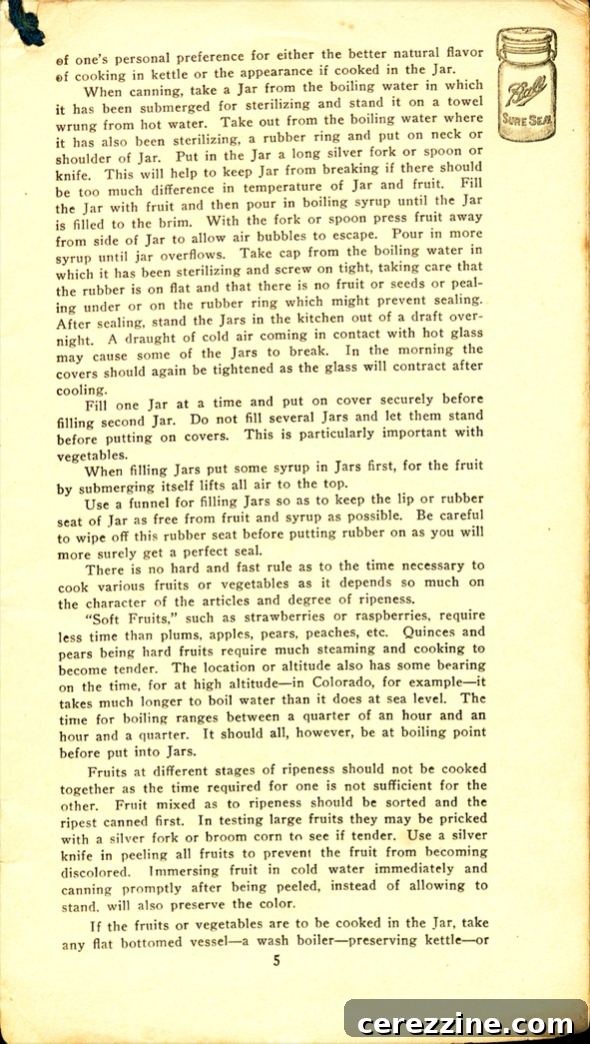
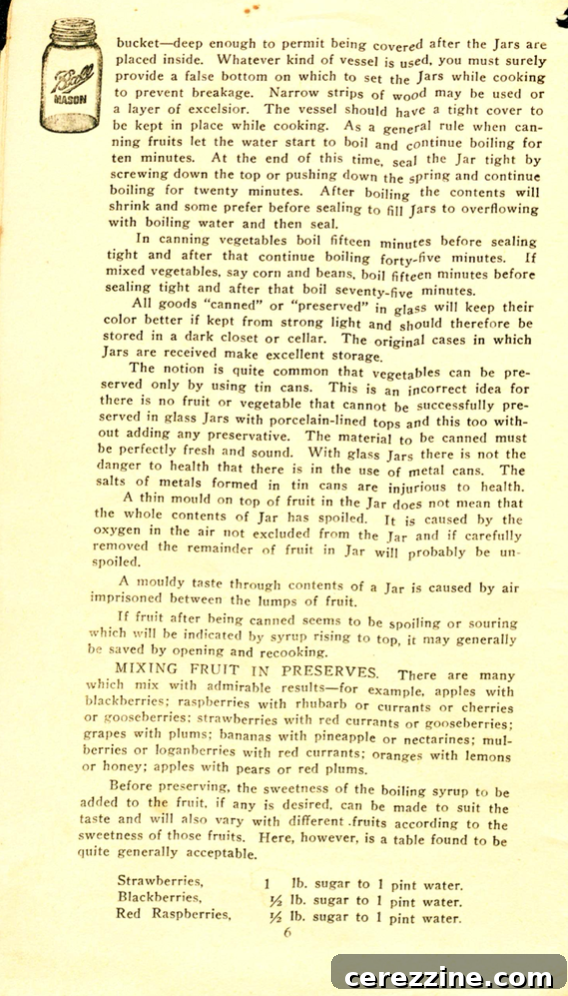
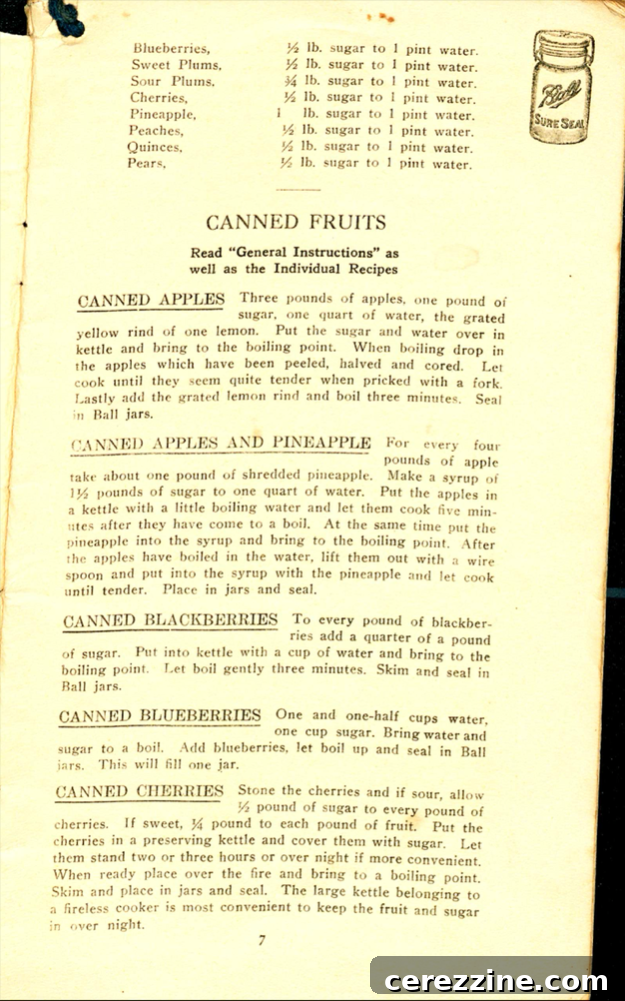
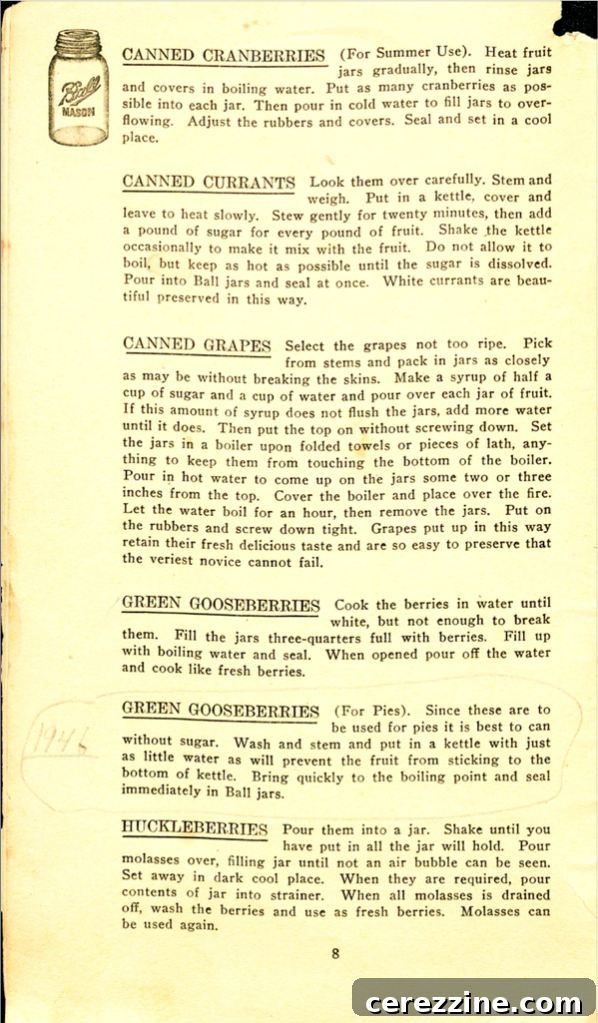
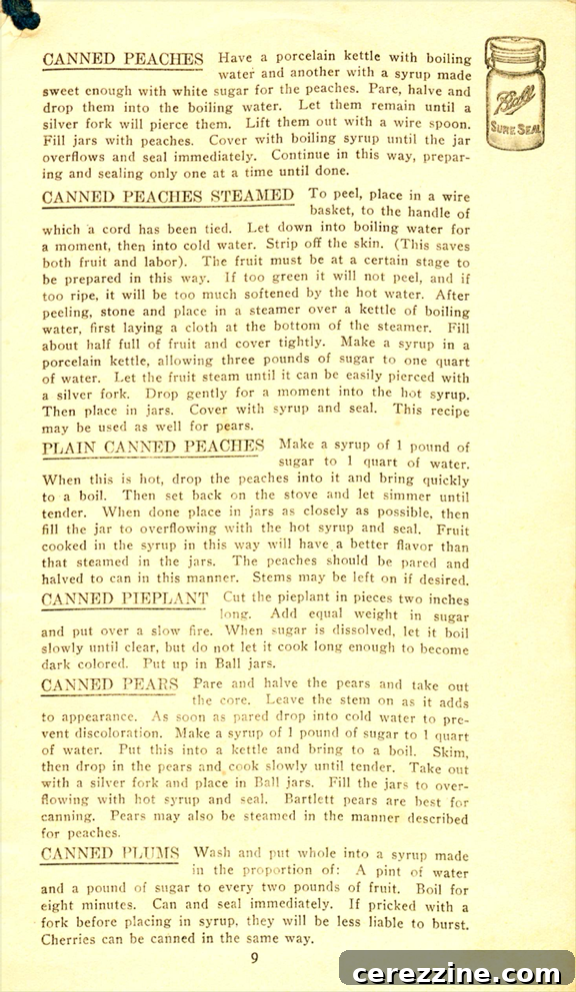
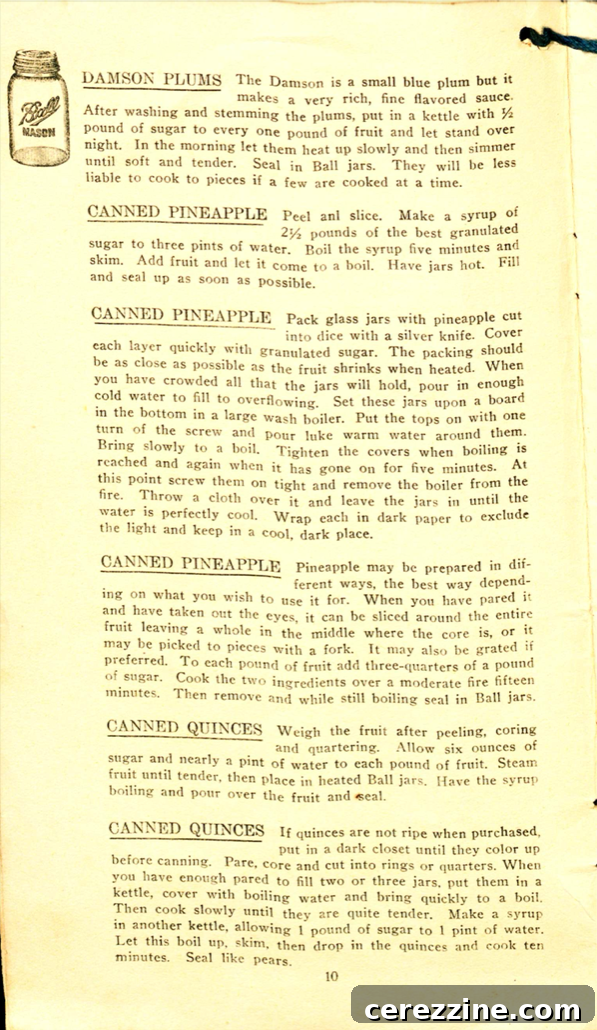
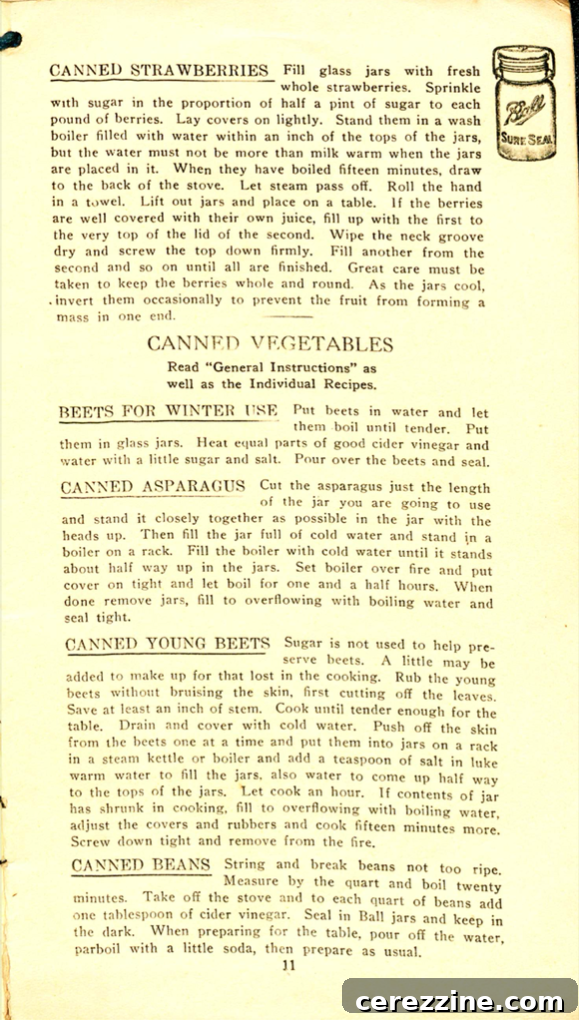
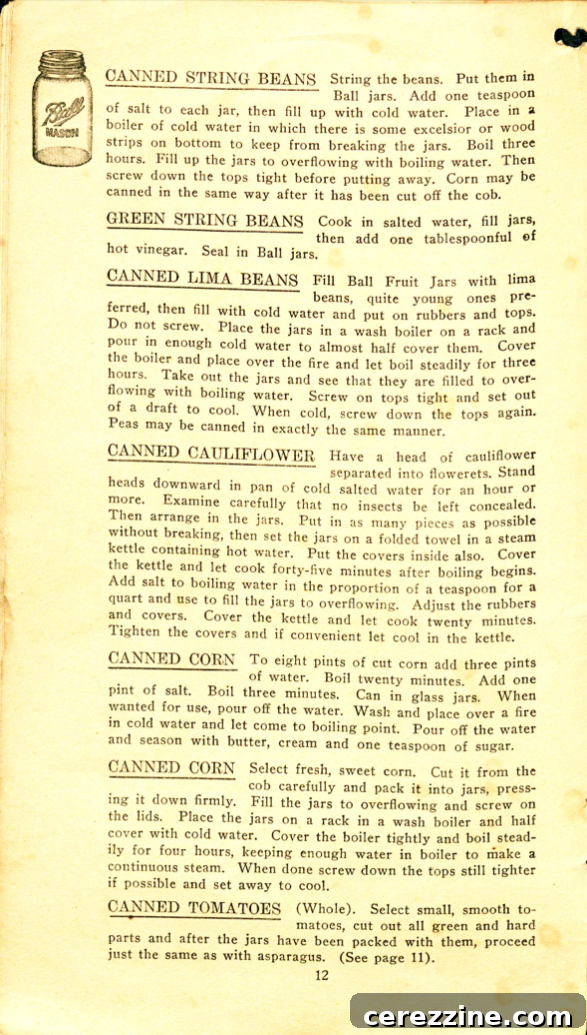
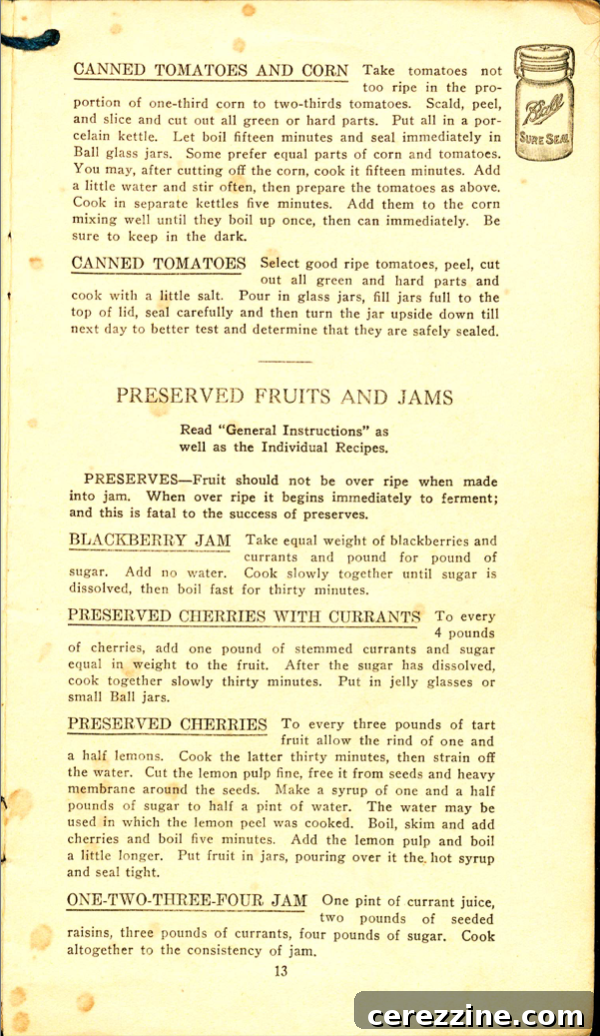
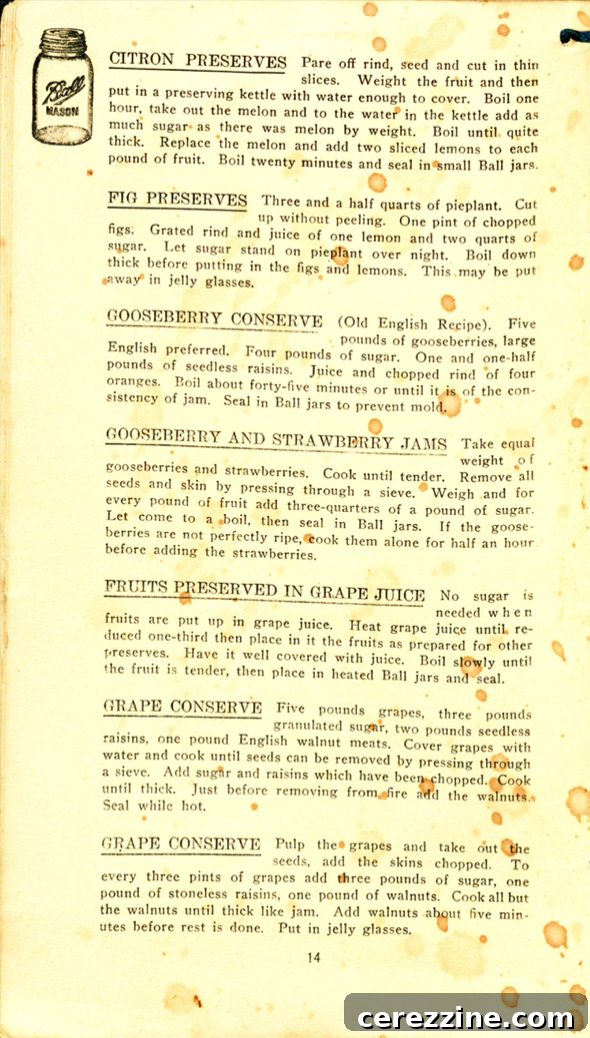
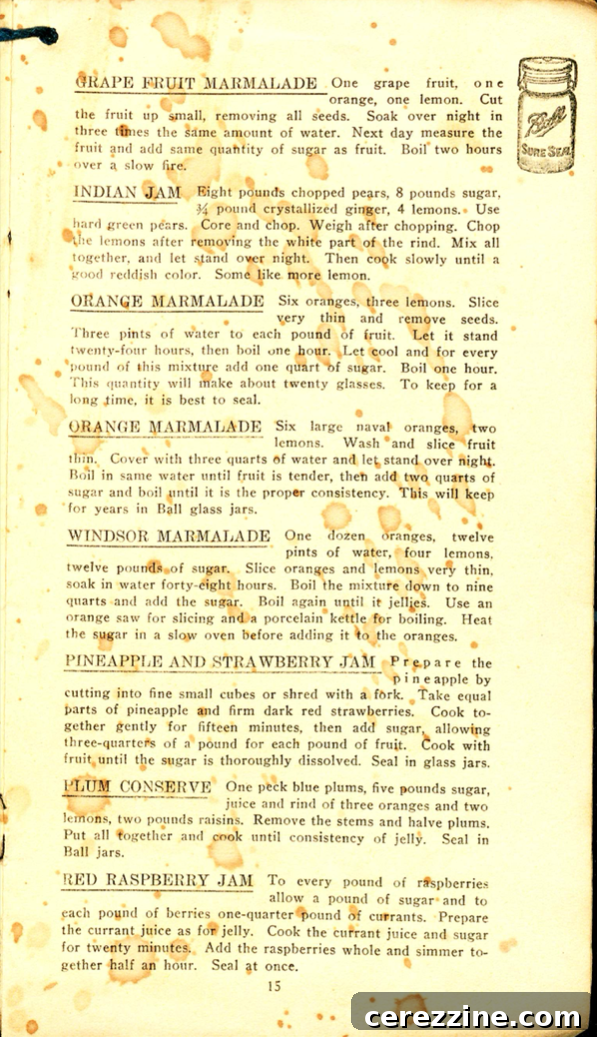
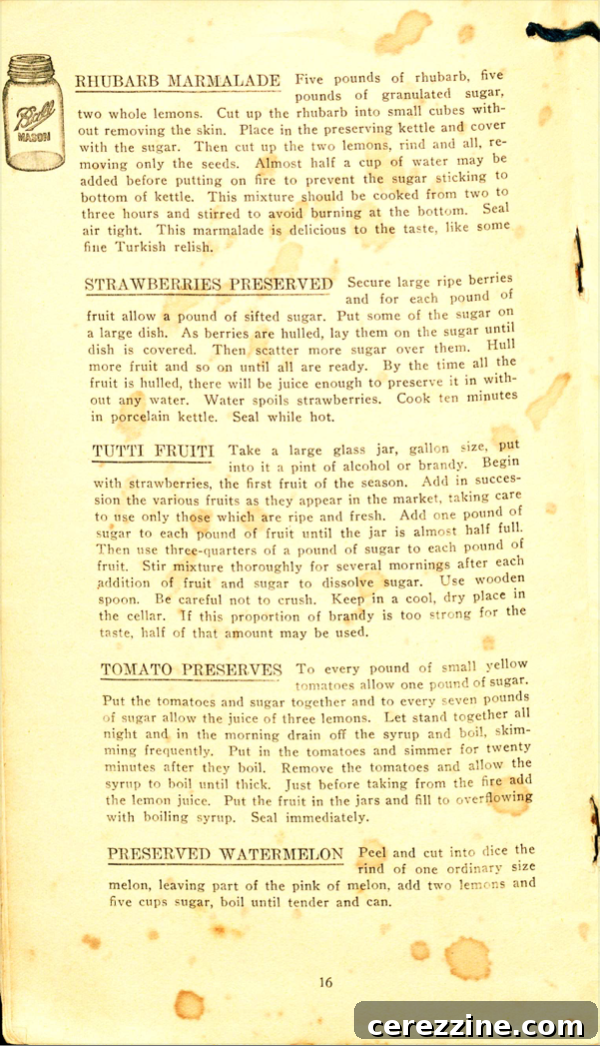
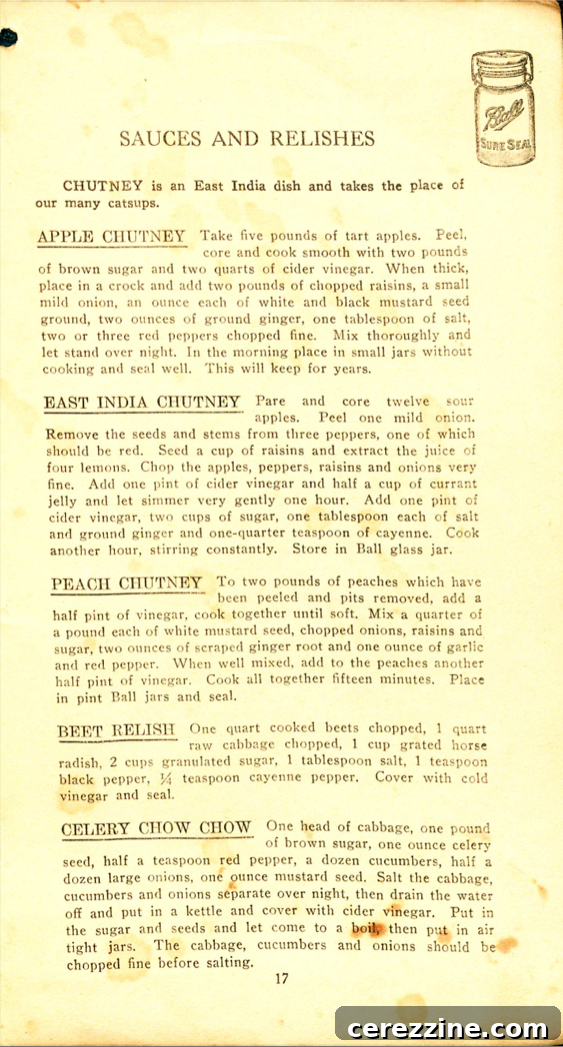
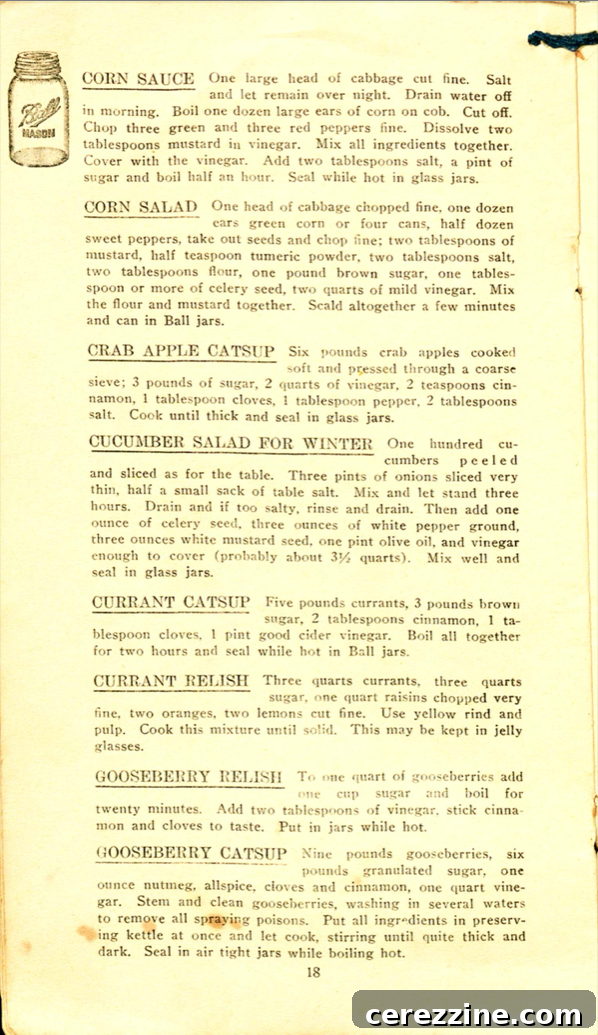
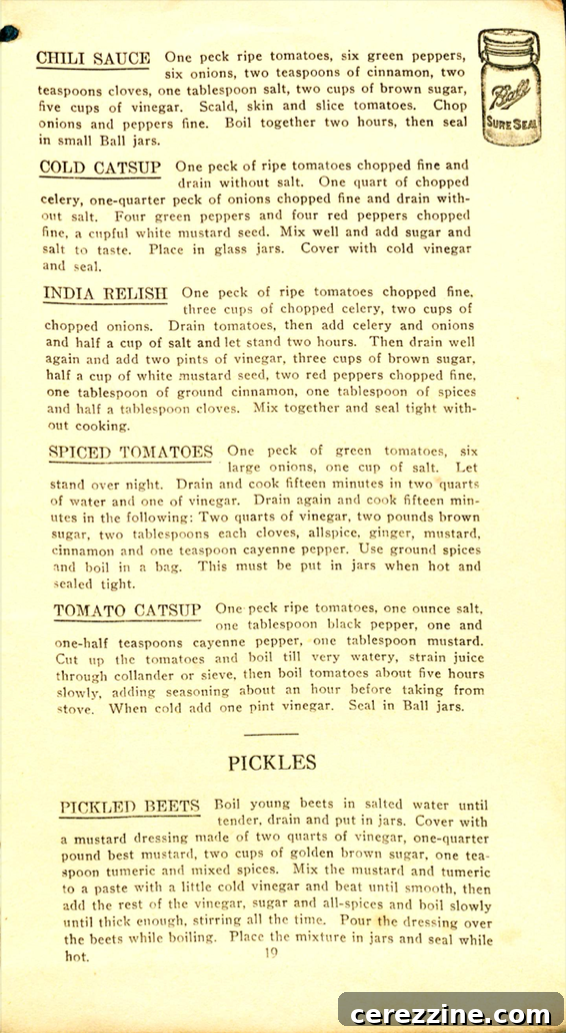
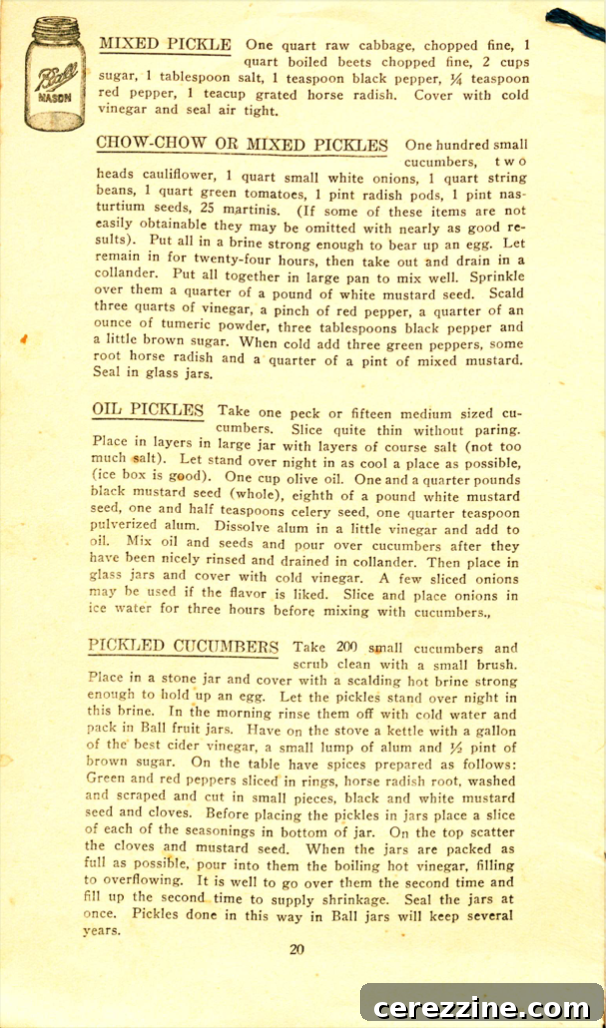
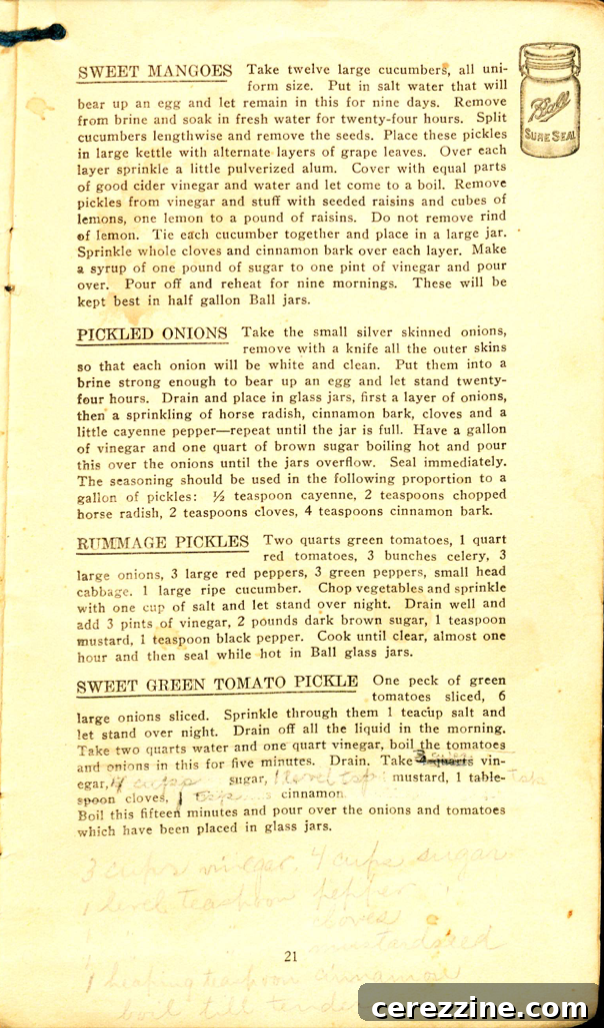
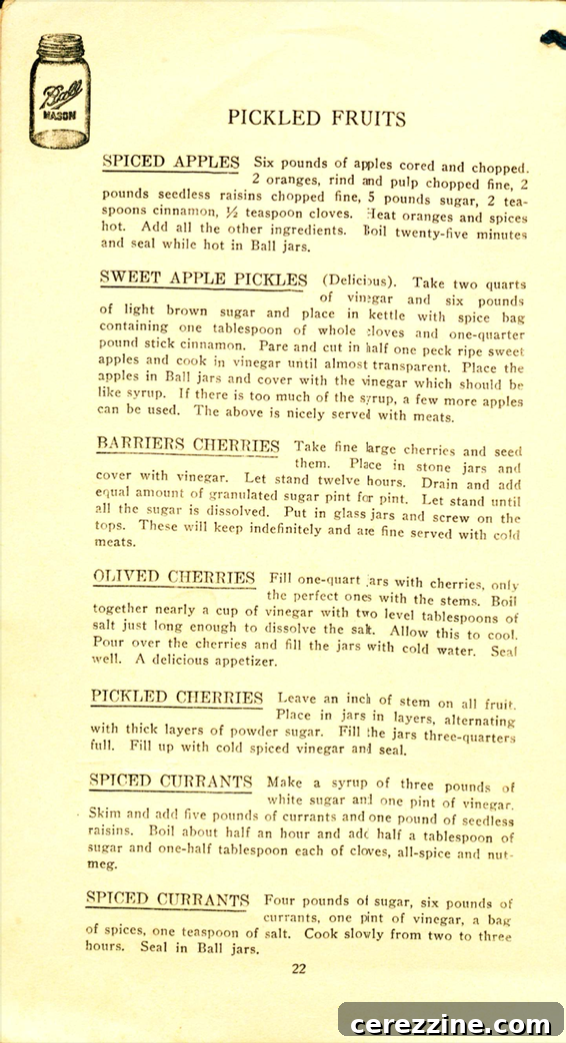
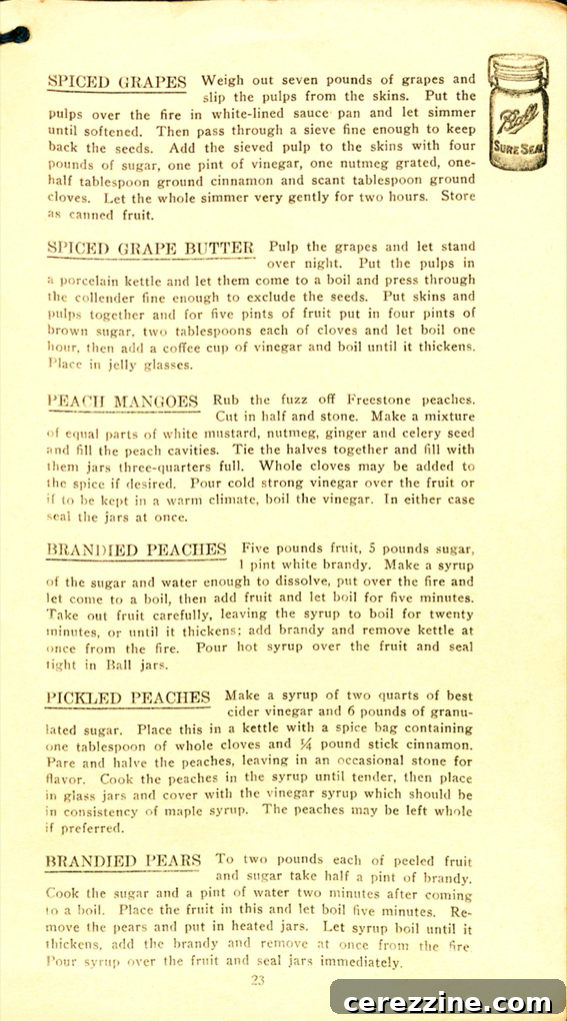
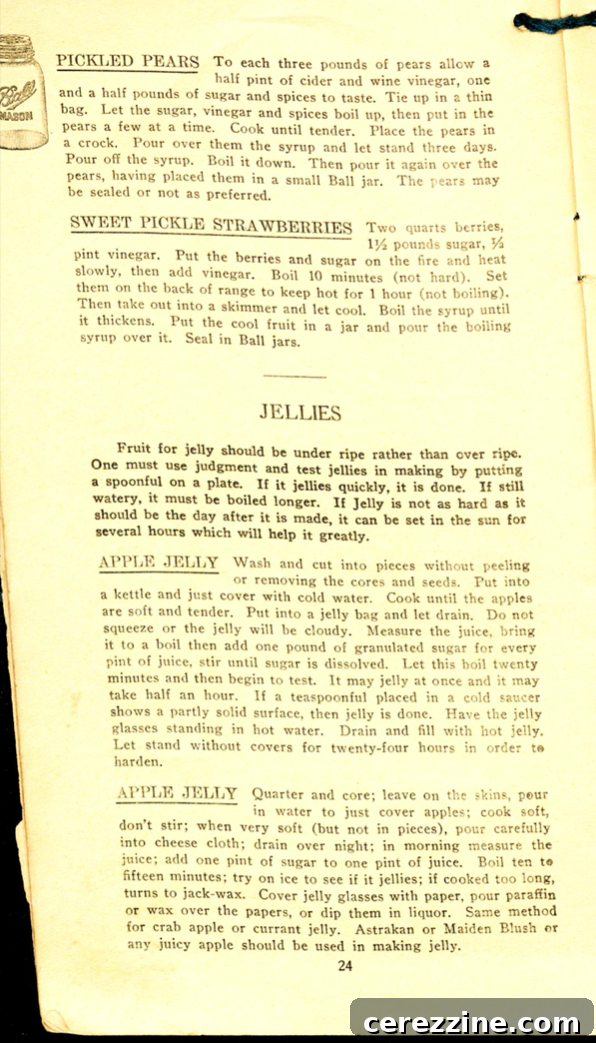
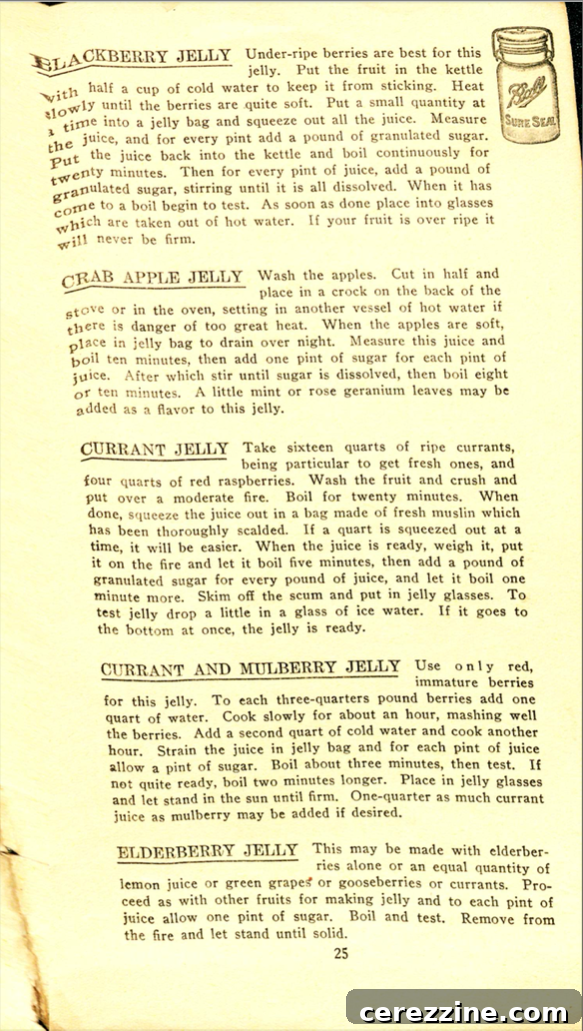
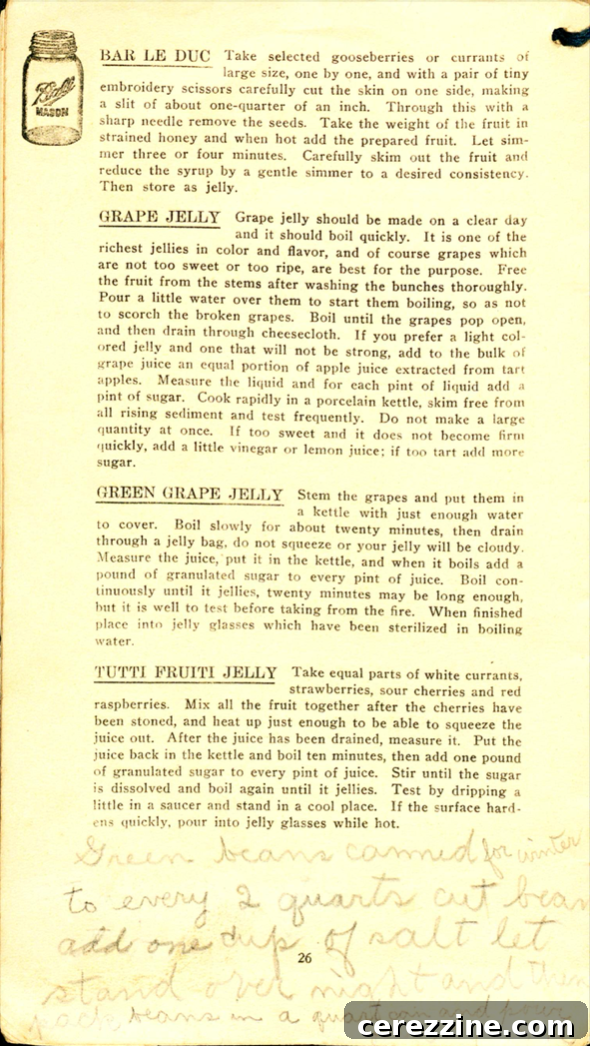
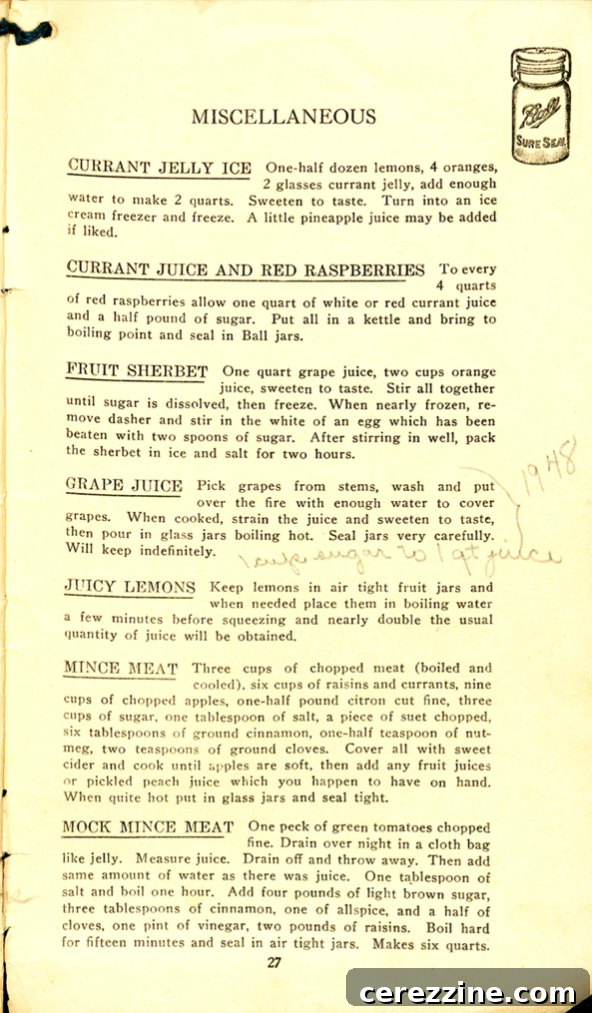
Below, you will find a complete digital reproduction of all 30 pages from the very first edition of the Ball Blue Book of Preserving. As we’ve discussed, it was originally published in 1909 under its initial title, “The Correct Method of Preserving Fruit.” This edition offers more than just recipes; it’s a treasure trove of historical insights. One particularly interesting detail for collectors and historians is the cover, which proudly displays “Ball Brothers Glass Mfg. Co.” This specific corporate name was in use only prior to 1922. The company underwent a name change to the Ball Brothers Company in 1922, and later, it was reincorporated as the Ball Corporation in 1969. Recognizing these distinct company names on vintage Ball canning ephemera is an invaluable trick for accurately dating old jars, labels, and publications, adding another layer of historical intrigue to the items you might encounter.
Should you be interested in exploring a slightly more recent, yet still distinctly vintage, Ball Blue Book, there are other historical versions available. For instance, a version known as “Edition M,” published between the end of World War I in 1919 and 1922, holds particular interest. This edition makes references to the recent war victory and, importantly, still features the pre-1922 company name on its cover. A fully scanned copy of all 52 pages of Edition M is accessible online through the esteemed University of Iowa Library Archives, providing another fantastic resource for those delving into canning history.
Beyond these specific editions, my extensive compilation includes links to the full text of more than 100 vintage canning books. This collection comprises works that are either old enough to have entered the public domain (out of copyright) or were originally produced as educational material by the federal government, thus exempt from copyright protections. These resources collectively offer an unparalleled repository for understanding the evolution of home food preservation techniques and the cultural significance of canning through the decades.
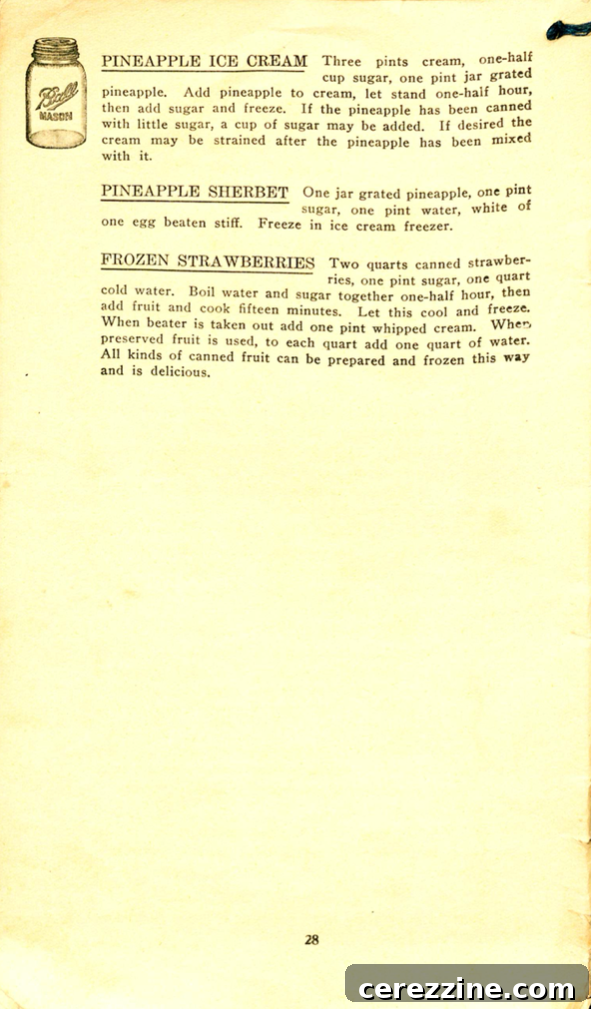
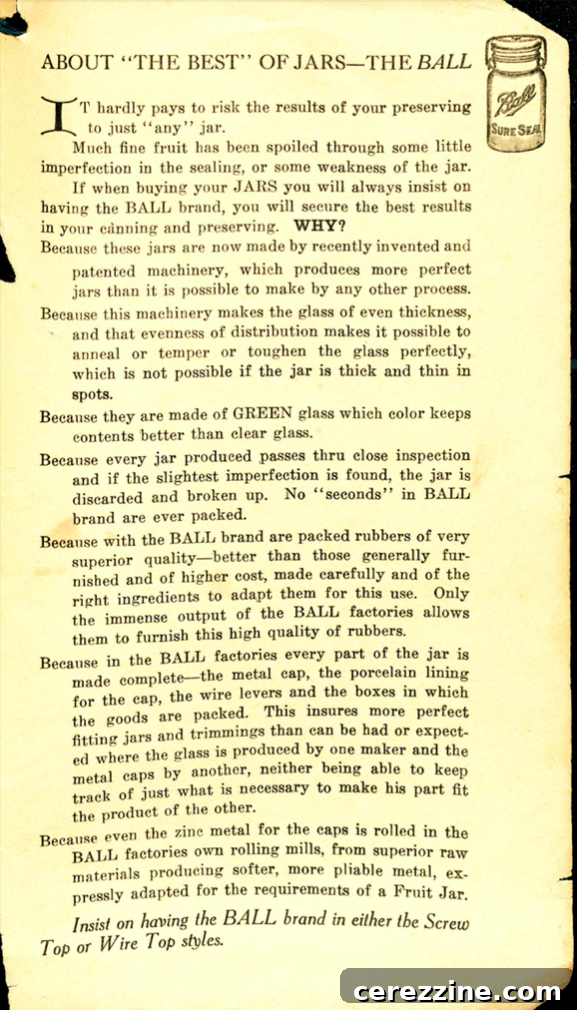
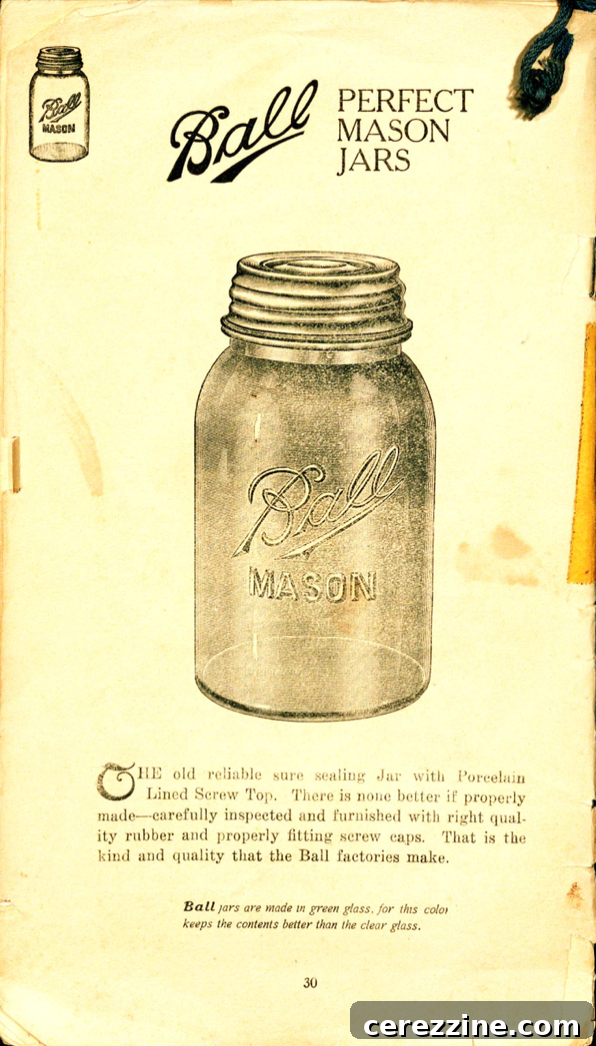
And now, we present the complete 30 pages of the groundbreaking first edition of the Ball Blue Book of Canning, allowing you to step directly into the canning kitchens of 1909:
Dive Deeper into Canning History with Vintage Resources
For those whose curiosity has been piqued by this journey through the history of the Ball Blue Book and the evolution of home canning, there’s a wealth of additional information waiting to be explored. Delving into more vintage canning books can offer further historical context, fascinating insights into past culinary practices, and a deeper appreciation for the advancements in food preservation science. These historical documents serve as invaluable educational tools, illuminating the ingenuity and perseverance of earlier generations.
If you’re eager to continue your exploration of canning history, consider these resources:
- 100+ Vintage Canning Books (Full Text Free Online): An extensive collection offering free access to historical texts that are either in the public domain or government-published educational materials, ensuring a rich and diverse archive for your research.
- The Comprehensive History of the Ball Blue Book of Preserving: A detailed look at the entire timeline and development of this singular influential publication, tracing its journey from a modest pamphlet to a modern canning bible.
These links provide excellent pathways for anyone interested in the broader historical context of home canning, offering not only a glimpse into the past but also a profound understanding of how this essential practice has shaped kitchens and communities for over a century. Happy exploring, and remember to always prioritize modern, tested safety standards for any current canning endeavors!