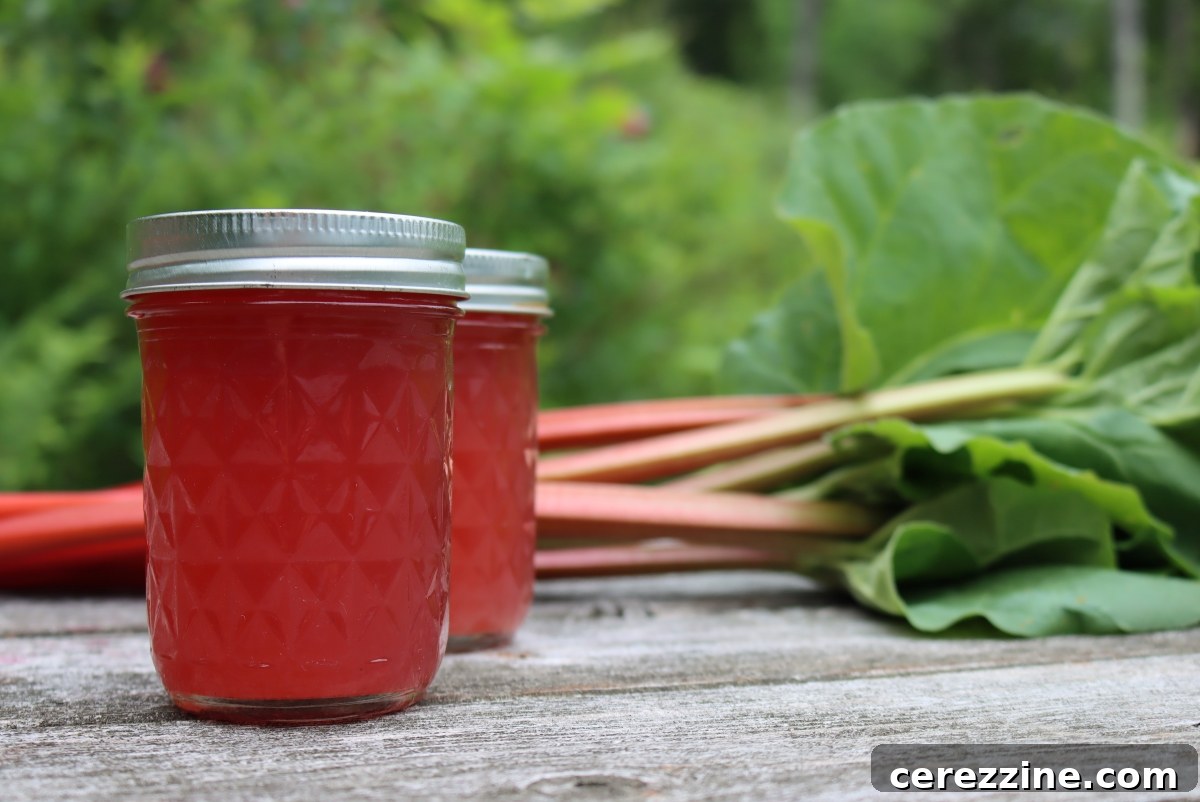
Rhubarb juice concentrate offers a delightful and practical way to savor the unique flavor of rhubarb, whether it’s freshly in season or preserved for year-round enjoyment. This versatile concentrate is a must-have for any home preserver looking to make the most of their rhubarb harvest.
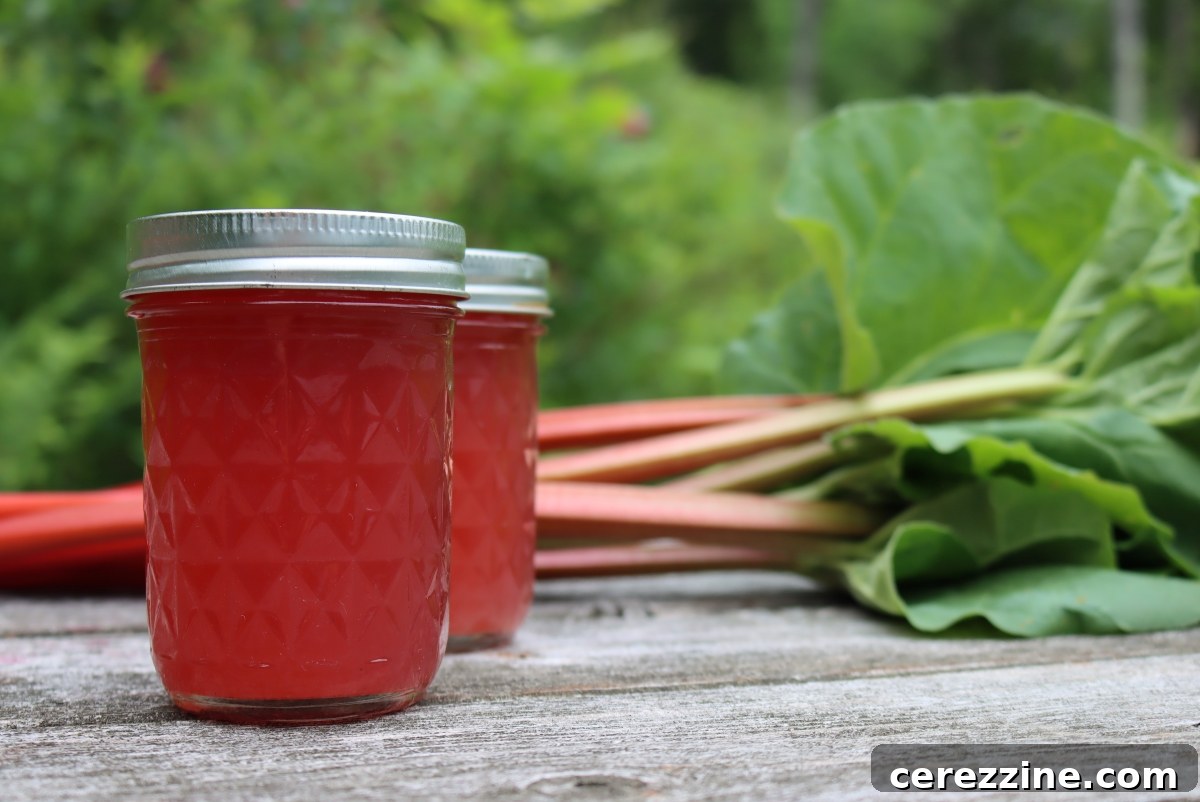
Mastering Rhubarb Preservation: Easy Homemade Juice Concentrate
Transforming fresh rhubarb into a vibrant juice concentrate is an incredibly simple and rewarding preservation method. Not only is it perfectly safe for water bath canning, ensuring pantry stability for months, but it also offers immediate gratification. If you’re not ready to can, simply store your homemade rhubarb juice in the refrigerator for up to two weeks, or freeze it for a longer shelf life of up to six months.
One of the greatest advantages of making rhubarb juice is its flexibility with harvest timing. While rhubarb stalks tend to become stringy and less ideal for chopping into pies or other traditional rhubarb recipes once summer temperatures arrive, this isn’t an issue for juicing. Because all the solids are filtered out, the texture of the raw rhubarb becomes irrelevant. You’re left with pure, intense rhubarb flavor, making this a fantastic rhubarb canning recipe even during the height of summer when your plants might be past their prime for other uses.
This straightforward recipe for rhubarb juice concentrate is adapted from the authoritative Ball Complete Book of Home Canning. While many canning guides focus on rhubarb jams and jellies, the Ball Book stands out as one of the few reliable sources that provides a tested recipe for canning rhubarb juice. Its simplicity and effectiveness make it an invaluable addition to your home preserving repertoire.
Essential Ingredients for Rhubarb Juice Concentrate
Crafting this delightful rhubarb juice concentrate requires minimal ingredients, making it an accessible project for any home cook. The core components are simply chopped rhubarb and water. The water plays a crucial role in initiating the juicing process, preventing the rhubarb stalks from scorching before they’ve softened sufficiently to release their tart, flavorful liquid.
**A crucial safety note:** Always ensure you remove all rhubarb leaves before beginning. Rhubarb leaves are toxic and should never be consumed. Only the vibrant, edible stalks are used for making rhubarb juice.
While optional, adding sugar is highly recommended for enhancing the flavor, especially if you plan to enjoy the concentrate as a beverage. Rhubarb is naturally quite tart, and sugar helps to balance this acidity, creating a more palatable and refreshing drink.
Following the guidelines from the Ball Book of Canning, the following ingredient proportions typically yield about 4 pints of concentrate:
- 12 Cups Rhubarb, sliced into 1-inch pieces (stalks only, leaves removed)
- 4 Cups Water
- 1 Cup Sugar (optional, see notes for alternatives)
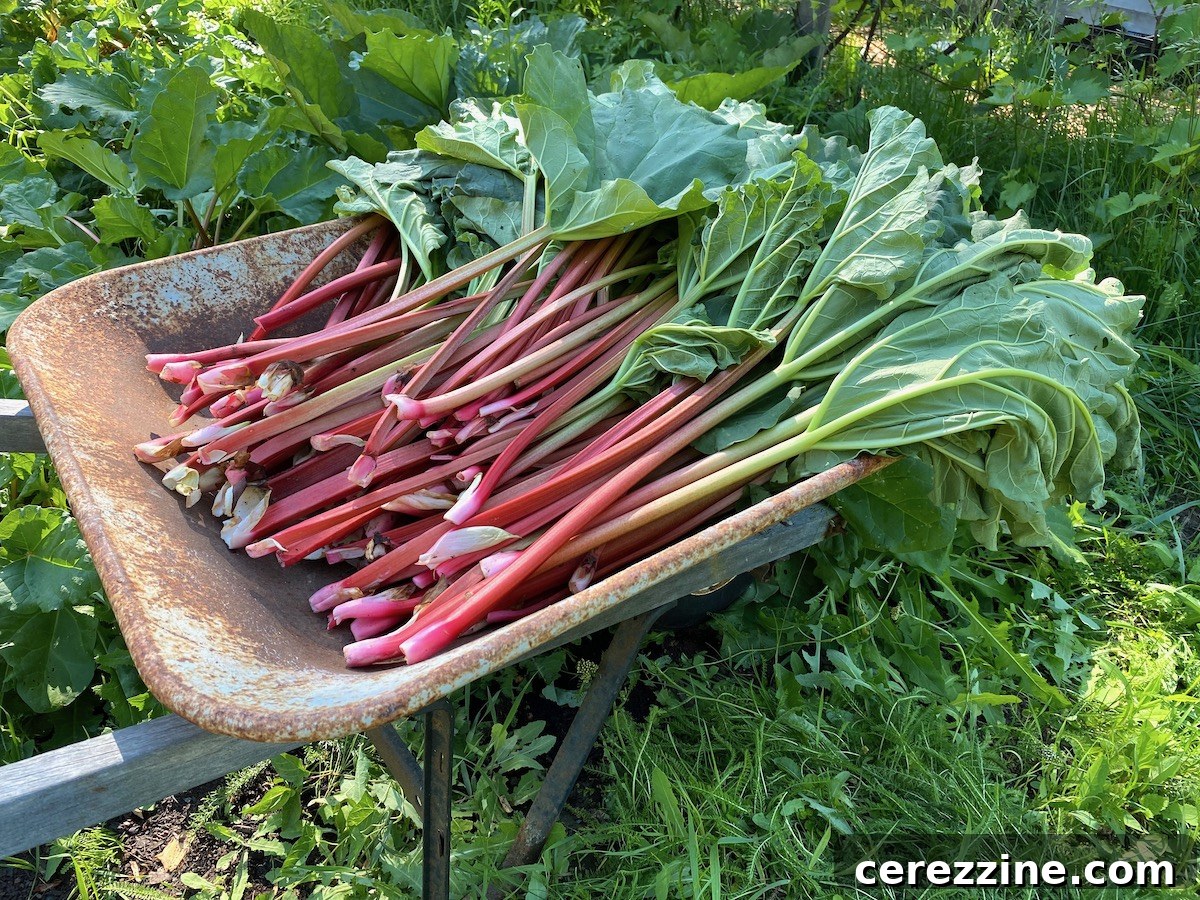
If you’re fortunate enough to have a thriving rhubarb patch, gathering 12 cups of stalks should be no challenge. These resilient plants are incredibly prolific once established, providing an abundance of harvesting opportunities throughout the growing season.
Sweetener Options and Considerations
As mentioned, sugar is entirely optional and not a requirement for safe canning of rhubarb juice, given its natural acidity. Feel free to prepare plain unsweetened rhubarb juice if preferred. However, be aware that unsweetened rhubarb juice is intensely sour and will require sweetening before consumption, unless you plan to incorporate it into savory rhubarb recipes or use it where its tartness is desired.
Alternative sweeteners can also be used effectively. Honey, maple syrup, or agave nectar are excellent choices and are generally safe for canning. When substituting these for granular sugar, remember they are typically sweeter ounce for ounce. A good starting point is to use approximately two-thirds the amount of alternative sweetener compared to the sugar quantity recommended.
For modern sweeteners like Splenda, Stevia, or Monk Fruit, recommendations for canning can vary and are often subject to change. As I don’t personally use these in my canning, I advise conducting a quick, up-to-date search to confirm their safety for water bath canning before proceeding. Most are believed to be fine, but a quick verification is always a wise precaution when preserving food.
Step-by-Step Guide: Crafting Rhubarb Juice Concentrate
The process of making rhubarb juice concentrate is refreshingly straightforward, relying on simple kitchen techniques to extract the maximum flavor from your rhubarb stalks. Here’s how to do it:
- Combine and Cook: Begin by placing your precisely 1-inch sliced rhubarb stalks and water into a large, heavy-bottomed stockpot. Bring the mixture to a rolling boil over medium-high heat. Once boiling vigorously, reduce the heat to a gentle simmer. Continue to cook for approximately 10 minutes, or until the rhubarb has become exceedingly soft and has started to break down significantly. At this point, turn off the heat.
- Strain for Clarity: Prepare your straining setup. The most effective method is to use a dedicated jelly bag, which allows for slow, passive dripping for maximum clarity. Alternatively, you can line a colander with a double layer of thoroughly dampened cheesecloth. Carefully pour the cooked rhubarb mixture into your chosen strainer, allowing the juice to drip naturally into a clean bowl or container. Resist the urge to press the rhubarb solids, as this can force cloudy particles into your juice. Allow it to drip for 1 to 2 hours, until the rhubarb solids appear quite dry. From the initial 12 cups of rhubarb and 4 cups of water, you should yield approximately 8 cups (or 4 pints) of pure rhubarb juice.
- Sweeten and Prepare for Canning: Once the juice has been fully strained, transfer it back into a clean saucepan. If you plan to add sugar, stir it into the juice at this stage. Gently heat the mixture over low heat, stirring continuously, just until the sugar completely dissolves. It’s important not to bring the juice to a boil again if you’re adding sugar, as this can affect the flavor and clarity. Remove any foam that may appear on the surface with a spoon. If you are canning, prepare your water bath canner by pre-heating it to a gentle simmer (around 180°F or 82°C).
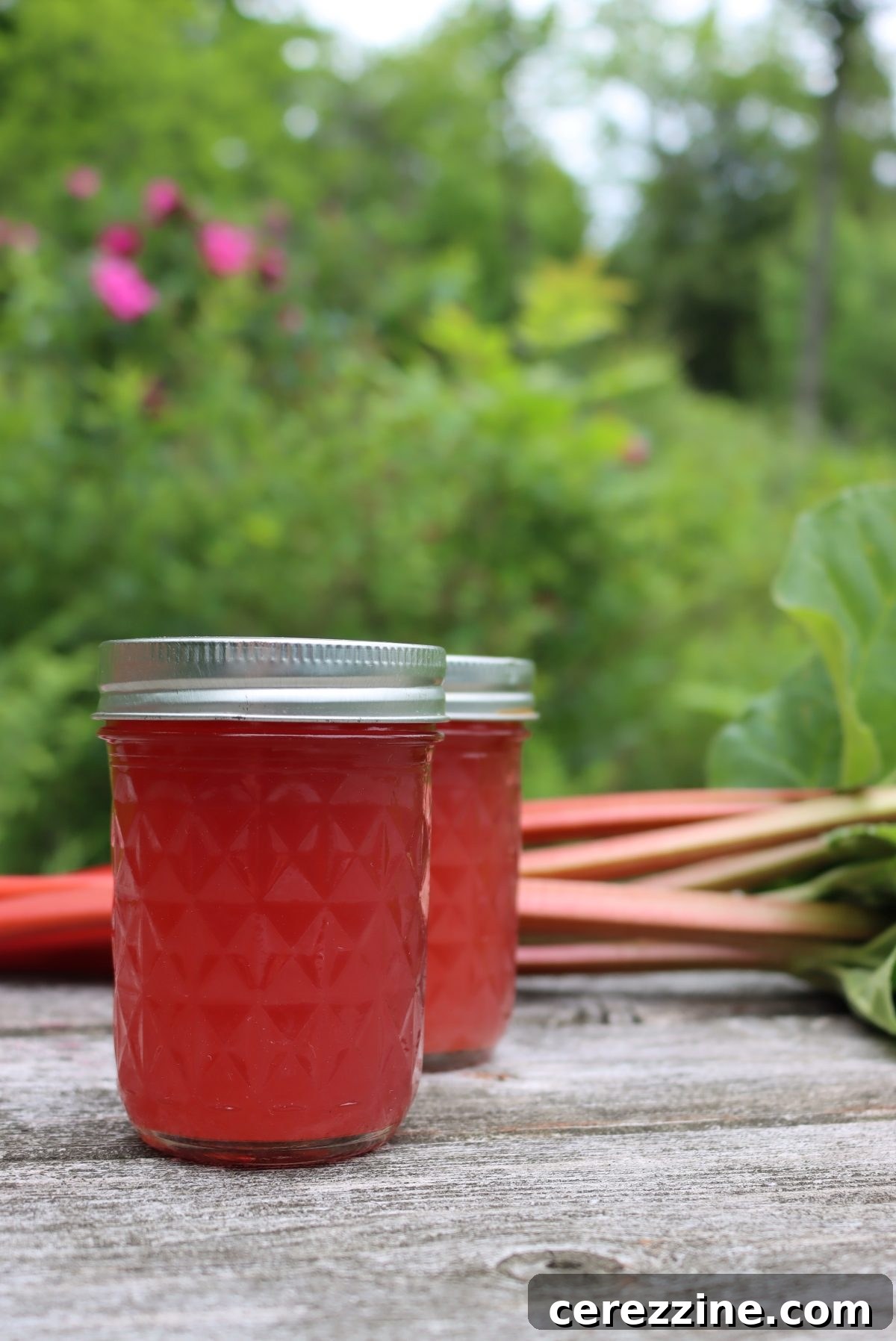
Exciting Rhubarb Juice Variations
While plain rhubarb juice concentrate is delicious on its own, its versatile flavor profile lends itself beautifully to various creative enhancements. The Ball Book of Home Canning features a “Sunshine Rhubarb Juice Concentrate” variation, which incorporates both the zest and juice of a lemon and an orange. The zest is, of course, filtered out along with the rhubarb solids during the straining process. Due to the added tartness of the citrus, this variation recommends increasing the sugar to 1 1/2 cups.
Beyond this classic, here are a few other delightful rhubarb juice canning variations I particularly enjoy:
- Rhubarb Lemonade Concentrate: For a zesty twist, add the juice of 2 to 4 lemons, or roughly 1/4 to 1/2 cup of fresh lemon juice, to your rhubarb juice. I often opt for the higher amount, which provides the juice of nearly one whole lemon per pint of concentrate, resulting in a wonderfully tart and bright flavor. Increase the sugar to 2 cups to balance the added acidity. This variation typically yields closer to 5 pints of concentrate and is much stronger, requiring more dilution when reconstituted, effectively making it go further.
- Strawberry Rhubarb Juice Concentrate: Embrace a classic pairing by adding 1 to 2 quarts of fresh strawberries to the rhubarb and water mixture when you begin the juice extraction process. Maintain the original sugar amount of 1 cup. Each quart of strawberries contributes approximately 1 to 1 1/2 cups of juice to the final concentrate. If you incorporate about 1 1/2 quarts (6 cups) of strawberries, you should achieve a total yield of around 5 pints of this luscious strawberry rhubarb juice concentrate.
- Sunshine Rhubarb Concentrate (Enhanced): To truly brighten your concentrate, add the zest and juice of 1 lemon and 1 orange to the cooking rhubarb mixture. As with the Ball Book’s variation, ensure the zest is filtered out. To perfectly balance the delightful citrus tartness, increase the total sugar to 1 1/2 cups. This creates a remarkably refreshing and complex flavor profile.
Safe Water Bath Canning for Rhubarb Juice
One of the best features of rhubarb juice is its natural acidity, which makes it inherently safe for water bath canning without the need for additional lemon juice or sugar for preservation purposes. Any additions are solely for flavor enhancement.
Detailed Canning Instructions:
- Prepare the Juice: Bring your prepared rhubarb juice concentrate to a gentle simmer, aiming for a temperature between 180°F to 190°F (82°C to 88°C). If you are using sugar, stir it in thoroughly until it is completely dissolved.
- Fill Jars: Carefully ladle the hot rhubarb juice into clean, hot pint or half-pint canning jars. Ensure you leave a precise 1/4-inch headspace at the top of each jar. This headspace is critical for proper sealing.
- Seal Jars: Wipe the rims of the jars clean to remove any juice residue. Place new, pre-warmed lids on top, followed by the screw bands. Tighten the screw bands to “finger-tight” – meaning tightened until resistance is met, then a slight quarter-turn more. Do not overtighten, as this can prevent proper sealing.
- Process in Water Bath: Carefully place the filled and sealed jars into your pre-heated water bath canner. Ensure the jars are fully submerged in water, with at least 1-2 inches of water covering them. Bring the water to a rolling boil. Once boiling vigorously, begin your processing time. Process pints and half-pints for 10 minutes. (Adjust for altitude if necessary: add 5 minutes for altitudes 1,001-3,000 ft; 10 minutes for 3,001-6,000 ft; 15 minutes for 6,001-8,000 ft; 20 minutes for 8,001-10,000 ft).
- Cool Down: After the processing time is complete, turn off the heat. Leave the jars undisturbed in the canner for an additional 5 minutes. This crucial cooling period helps to prevent siphoning and aids in a more reliable seal.
- Remove and Cool: Carefully remove the jars from the canner using a jar lifter. Place them on a towel-lined counter in a draft-free location, ensuring they are not touching each other. Allow them to cool completely for 12 to 24 hours.
- Check Seals and Store: After the cooling period, check all jar seals. A properly sealed lid will be concave (curved inwards) and will not flex when pressed. Any jars that have not sealed should be refrigerated and consumed within two weeks. Properly sealed jars can be stored in a cool, dark pantry for 12-18 months. Once opened, refrigerate the concentrate.
(If you are new to water bath canning, I highly recommend reviewing a comprehensive beginner’s guide to water bath canning before attempting this recipe to ensure all safety protocols are followed.)
Creative Ways to Use Rhubarb Juice Concentrate
Once you’ve made your delicious rhubarb juice concentrate, a world of culinary possibilities opens up. Its bright, tart, and uniquely sweet flavor makes it incredibly versatile.
The simplest and most refreshing way to enjoy it is by adding it to cold water or seltzer for an instant, invigorating drink. The ideal dilution ratio depends entirely on your personal taste, but a good starting point is about 1/4 cup of concentrate per pint of cold water. Adjust to achieve your desired intensity and sweetness.
Beyond simple drinks, rhubarb juice concentrate shines in a variety of beverage creations:
- Refreshing Mocktails: Combine it with ginger ale, mint, and a slice of lime for a sophisticated non-alcoholic cooler.
- Elegant Cocktails: Elevate your mixology game by incorporating it into fancy rhubarb cocktails. It pairs wonderfully with gin, vodka, or even sparkling wine for a festive spritzer.
- Homemade Sodas: Mix with carbonated water and a touch of extra sweetener for a healthier, natural homemade soda alternative.
But the versatility of rhubarb juice concentrate extends far beyond just drinks. Consider these culinary applications:
- Dessert Enhancer: Use it as a base for vibrant jellies, a glaze for cakes, or a tart sauce to drizzle over ice cream, yogurt, or panna cotta. It can also be reduced to a syrup for pancakes or waffles.
- Savory Dishes: Don’t limit rhubarb to sweet treats! Its acidity can brighten savory dishes. Incorporate it into marinades for chicken or pork, or whisk it into a vinaigrette for a unique salad dressing.
- Smoothies and Popsicles: Add a splash to your morning smoothie for an extra zing, or freeze it into delightful popsicles for a healthy summer treat.
32
servings, Makes about 4 Pints (8 cups total)
Rhubarb Juice Concentrate (with Canning Instructions)
Ashley Adamant
2 hours
10 minutes
10 minutes
2 hours
20 minutes
Rate
Equipment
-
Water Bath Canner
-
Half Pint Jars
Ingredients
-
12
cups
rhubarb,
sliced into 1” pieces, stalks only, leaves removed -
4
cups
water -
1
cup
sugar,
optional, see notes for alternatives
Instructions
-
In a large stockpot, combine sliced rhubarb and water.
-
Bring the mixture to a boil over medium-high heat. Once boiling, reduce heat to a simmer and cook until rhubarb is very soft and starting to fall apart, about 10 minutes. Turn off heat.
-
Prepare a jelly strainer bag, or line a colander with a double layer of dampened cheesecloth. Strain rhubarb and collect juice. You should have around 8 cups (4 pints) of juice. Allow the juice to drip until the rhubarb is quite dry, about 1 to 2 hours. Do not press the solids.
-
If canning, prepare a water bath canner by pre-heating it to just simmering (roughly 180 degrees F).
-
Place extracted rhubarb juice back in a clean saucepan and add sugar (if using). Warm gently to dissolve sugar; it should be just barely simmering, but do not boil. Remove from heat and skim off any foam.
-
Ladle hot rhubarb juice concentrate into hot, clean jars, leaving 1/4 inch headspace. Cap with 2-part canning lids (rings and lids) tightened to finger-tight.
-
If canning, process jars (pints and half-pints) in a water bath canner for 10 minutes. Turn off the heat and leave the jars in the canner for an additional 5 minutes to cool slightly before removing them with a canning jar lifter to cool completely on a towel on the counter.
-
Wait 12 to 24 hours, then check seals. Store any unsealed jars in the refrigerator for immediate use. Properly canned and sealed jars may be stored in the pantry. Refrigerate after opening.
Notes
Alternative sweeteners may be used, but always verify they are approved for canning if you plan to preserve the juice.
Try these variations for a slightly different flavor profile:
- Rhubarb Lemonade Concentrate: Add the juice of 2 to 4 lemons (about 1/4 to 1/2 cup) to the strained rhubarb juice. For a stronger concentrate, I prefer the higher amount. Increase sugar to 2 cups. Yield should be closer to 5 pints. This concentrate will be more tart and go further when diluted.
- Strawberry Rhubarb Juice Concentrate: Add 1 to 2 quarts of fresh strawberries to the rhubarb when initially extracting the juice. Keep sugar at 1 cup. Adding approximately 1 1/2 quarts (6 cups) of strawberries typically yields 5 pints of delicious strawberry rhubarb concentrate.
- Sunshine Rhubarb Concentrate: Incorporate the zest and juice of 1 lemon and 1 orange into the rhubarb mixture during the initial cooking phase. Add an extra 1/2 cup sugar (1 1/2 cups total) to balance the added citrus tartness.
Nutrition
Carbohydrates: 8g,
Protein: 0.4g,
Fat: 0.1g,
Saturated Fat: 0.02g,
Polyunsaturated Fat: 0.05g,
Monounsaturated Fat: 0.02g,
Sodium: 3mg,
Potassium: 132mg,
Fiber: 1g,
Sugar: 7g,
Vitamin A: 47IU,
Vitamin C: 4mg,
Calcium: 40mg,
Iron: 0.1mg
Nutrition information is automatically calculated and should only be used as an approximation.
Enjoyed this recipe? Leave a comment below!
Explore More Rhubarb Recipes
If you’re as enamored with rhubarb as we are, you’re likely always seeking new ways to incorporate its distinctive flavor into your cooking. Here are a few more popular rhubarb recipes to inspire you this season:
- Amish Rhubarb Custard Pie
- Maple Strawberry Rhubarb Pie
- Persian Lamb and Rhubarb Stew
Seasonal Spring Canning Recipes
Beyond rhubarb, spring offers a bounty of fresh produce perfect for preserving. Expand your canning skills with these seasonal favorites:
- Canning Strawberries
- Strawberry Jelly
- Old Fashioned Strawberry Jam (No Pectin)
- Canning Strawberry Pie Filling (coming soon!)
- Honeyberry Jam (Haskap Jam)
- Dandelion Jelly
- Violet Flower Jelly