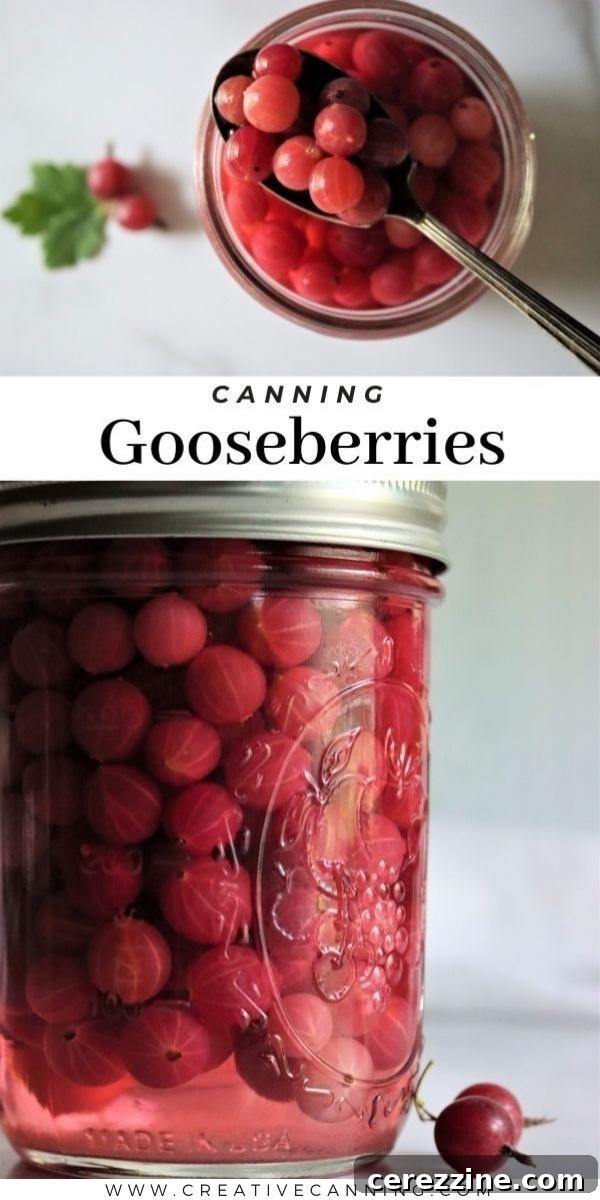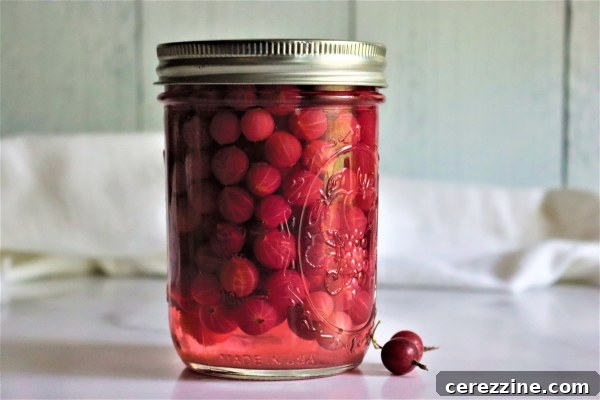
Canning gooseberries is an incredibly rewarding and straightforward method to preserve the vibrant, tart-sweet flavor of this delightful summer fruit. When your garden or local market offers an abundance of gooseberries, transforming them into shelf-stable jars allows you to savor their unique taste long after the season ends.
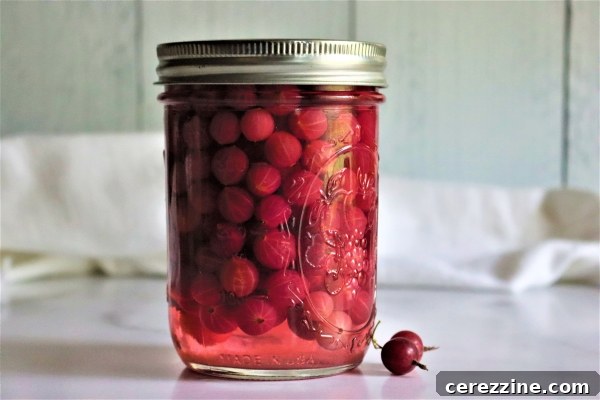
Fresh gooseberries are a true highlight of the warmer months, offering a distinctive tang that many cherish. While popular for making gooseberry jam and gooseberry jelly, canning them whole provides unmatched versatility. Imagine pulling a jar of perfectly preserved whole gooseberries from your pantry in the middle of winter, ready to transform into luscious muffins, pies, crumbles, or a vibrant topping for your breakfast granola. It’s a simple act of bottling summer’s bounty, ensuring that those cherished seasonal flavors are available whenever you desire.
These small, round fruits, ranging from brilliant green to deep purple or rosy pink, capture the essence of peak summer. Preserving them whole in jars makes for a stunning visual display and a wonderfully versatile ingredient for an array of culinary creations. The tartness of gooseberries, balanced with a carefully chosen canning syrup, truly comes alive when opened months later, offering a burst of summer sunshine on even the dreariest winter day.
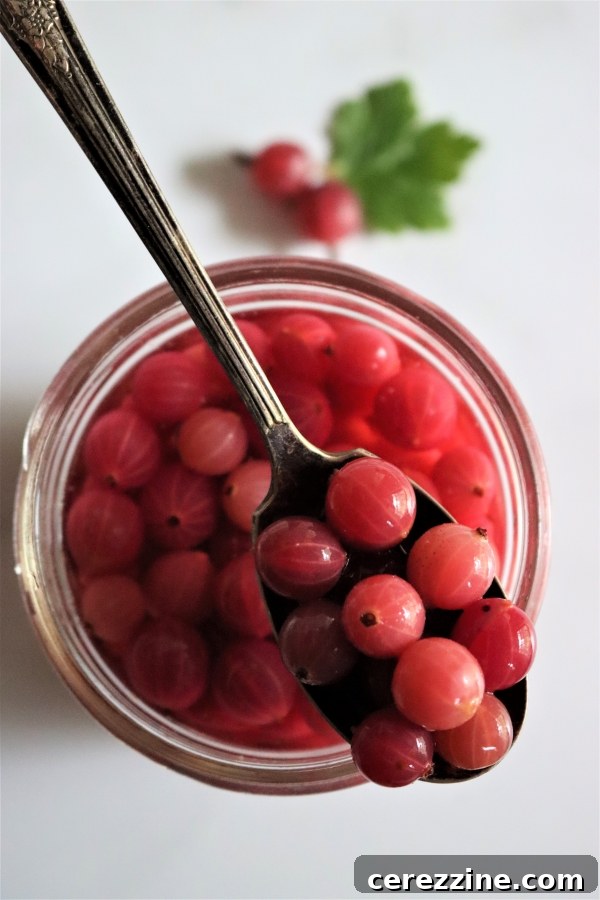
A Quick Look at the Recipe: Canning Whole Gooseberries
- Recipe Name: Canning Gooseberries
- Recipe Type: Fruit in Syrup or Juice (Water bath canned)
- Canning Method: Water Bath Canning
- Preparation Time: Approximately 25-30 Minutes
- Cooking Time (Syrup): 5-10 Minutes
- Processing Time: 15-35 Minutes (Varies by jar size and altitude)
- Yield: Varies depending on gooseberry quantity and jar size
- Jar Sizes: Half Pint, Pint, or Quart Jars
- Headspace: 1/2 inch
- Key Ingredients: Fresh Gooseberries, Water (or Fruit Juice), Sugar (optional, for syrup)
- Difficulty: Easy. Once gooseberries are prepared and syrup is made, the process involves simple filling and water bath processing.
- Similar Canning Processes: This method mirrors the canning of other berries and stone fruits like pineapple, grapes, apricots, and cherries.
Mastering the Art of Canning Whole Gooseberries
The process for safely canning whole gooseberries is largely consistent with preserving other berries and high-acid fruits. Following guidelines from reputable sources like the National Center for Home Food Preservation (NCHFP) ensures a safe and delicious product. While the general principles apply to many berries, gooseberries require a bit of specific preparation before they enter the canning jar. This guide will walk you through each essential step, from selection to sealing, ensuring your gooseberries are preserved to perfection.
Understanding the fundamental steps of water bath canning is crucial for success and safety. If you’re new to home canning, consider reviewing a comprehensive beginner’s guide to water bath canning before starting. This method is ideal for high-acid foods like gooseberries, providing a reliable way to create pantry-stable preserves without the need for a pressure canner. Though gooseberries can theoretically be pressure canned, the intense heat and pressure often cause them to break down more than desired, yielding a softer product. For maintaining the whole berry structure, water bath canning is the preferred method.
Selecting and Preparing Your Gooseberries
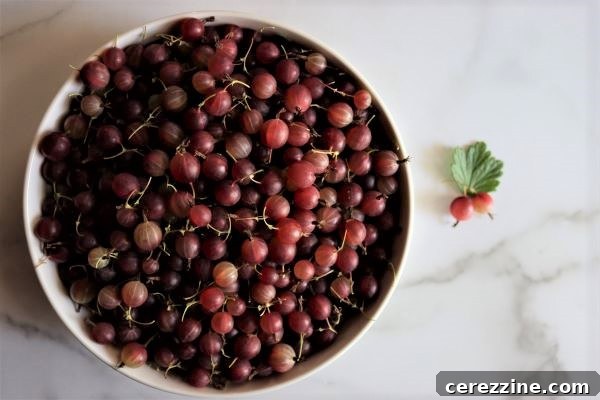
The first step to successful home canning begins with selecting the finest fruit. For canning whole gooseberries, it’s essential to harvest them when they are fully ripe. This differs from some jam or jelly recipes, where slightly under-ripe fruit might be included to boost pectin content for a better set. For whole fruit canning, ripeness is key for optimal flavor and texture. Fully ripe gooseberries will offer a delightful balance of sweetness and their characteristic tartness, a stark contrast to the very tart and hard unripe berries that resemble small green apples.
Gooseberry varieties vary widely in color; some ripen to a vibrant green, while others develop hues of purple, pink, or red. If you’re unsure about your specific variety’s ripeness indicators, a simple taste test throughout the season is your best guide. Another reliable sign of ripeness is when birds begin to show interest in picking them, indicating they’ve reached their peak sweetness and flavor. Visually, ripe gooseberries should be plump and give slightly to a gentle squeeze.
The Essential Prep: Topping and Tailing
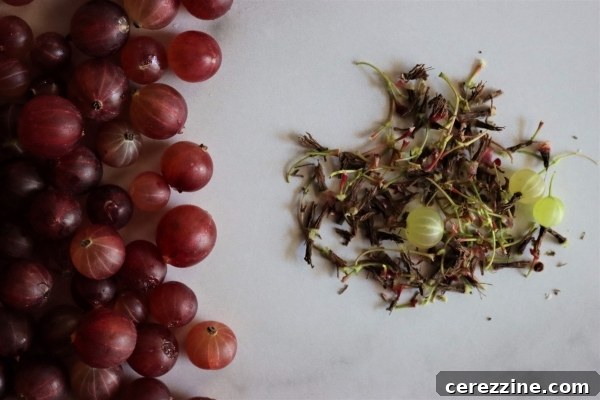
Before canning, gooseberries require a crucial preparation step known as “topping and tailing.” This involves removing both the small stem (the “top”) and the dried flower remnant (the “tail” or blossom end) from each berry. Both these ends are tough, woody, and undesirable for consumption. A small, sharp paring knife is the ideal tool for this task. Carefully snip or slice off just the very ends, taking care not to remove too much of the fruit itself. This meticulous process ensures that your canned gooseberries are pleasant to eat and visually appealing.
While this step can be time-consuming, especially with a large harvest, it’s a vital part of preparing gooseberries for most recipes. The only common exceptions where topping and tailing might be skipped are for products like gooseberry wine, jelly, or syrup, where the fruit solids are strained out later in the process. For whole fruit canning, however, it’s non-negotiable for the best results.
Crafting the Perfect Syrup for Canning Gooseberries
The liquid you choose for canning your gooseberries plays a significant role in their final flavor and texture. While plain water is an option, it often results in the fruit losing some of its natural sugars to the canning liquid, leading to a “washed out” flavor. To maintain or enhance the gooseberries’ inherent taste, processing them in a light syrup or even fruit juice is highly recommended.
Choosing Your Canning Liquid: Water, Syrup, or Juice
For naturally sweet fruits, an extra light syrup is often preferred, as it complements the fruit without overpowering it, much like when canning peaches or canning strawberries. However, given gooseberries’ inherent tartness, many canners opt for a slightly richer syrup to achieve a more balanced flavor profile. Options range from extra light to light, medium, or even heavy syrup, depending on your preference for sweetness. A heavy syrup will result in a much sweeter, almost candied fruit, which can be delightful for certain applications.
Alternatively, fruit juice offers a natural, added-sugar-free method of preservation. Apple, grape, cranberry, or pineapple juice can be used, each imparting its own subtle flavor notes to the gooseberries. This is an excellent choice if you’re aiming to avoid added sugars while still enhancing the fruit’s taste.
Syrup Ratios for Success
Here are general syrup ratios. You can find detailed sugar and water amounts for various canning syrups on the NCHFP website:
- Extra Light Syrup: Approximately 6½ cups water to ¾ cup sugar (sufficient for a 9-pint canner load).
- Light Syrup: Approximately 5¾ cups water to 1½ cups sugar.
- Medium Syrup: Approximately 4¼ cups water to 2¼ cups sugar.
- Heavy Syrup: Approximately 3½ cups water to 3¼ cups sugar.
Always ensure your syrup or juice is heated to a boil before pouring it over the gooseberries in the jars. This helps with heat transfer and ensures proper sealing.
The Water Bath Canning Process for Gooseberries
With your gooseberries prepped and your canning liquid ready, it’s time to assemble your jars for processing. This stage is critical for ensuring food safety and quality.
Hot Pack vs. Raw Pack: Which to Choose?
You have two primary methods for packing gooseberries into jars: hot pack or raw pack. Both are safe and yield excellent results, making the choice largely a matter of personal preference and convenience.
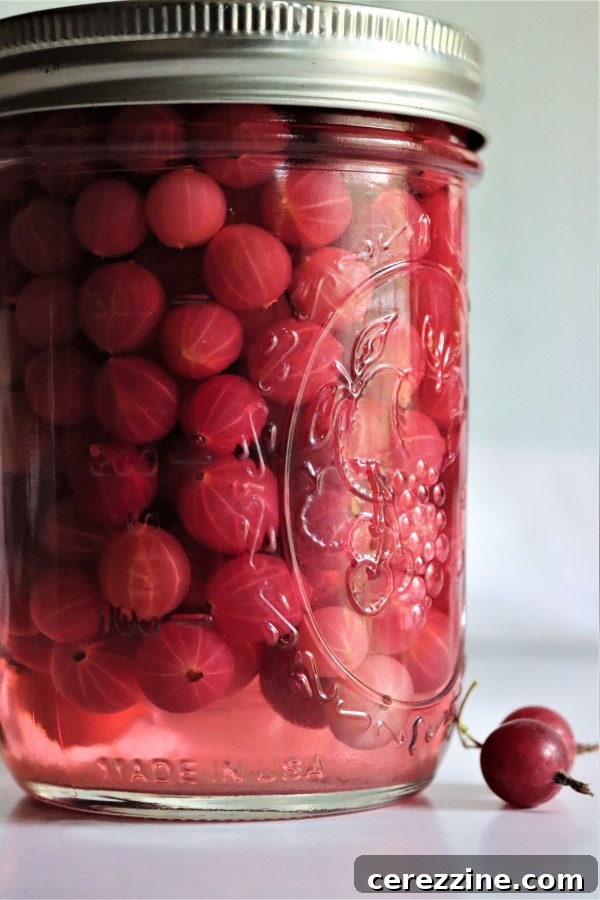
- Hot Pack: Involves briefly heating the gooseberries in boiling water or syrup for about 30 seconds before packing them into hot jars. This pre-shrinks the fruit, which can minimize “float” (fruit rising to the top of the jar) and leave less empty space after processing. Fill jars with hot berries using a slotted spoon, leaving ½ inch headspace, then cover with hot syrup or water, maintaining the headspace.
- Raw Pack: This simpler method involves filling canning jars directly with raw, prepared gooseberries. Gently shake the jars to settle the fruit, but avoid pressing them down too tightly. Once filled, pour boiling juice, water, or syrup over the berries, ensuring a ½ inch headspace. Raw packing is generally quicker at the canning stage, though it may result in slightly more fruit float or empty space in the jar post-processing.
While this recipe emphasizes the raw pack method for its ease, the hot pack method is equally valid and can be found in the notes section of the recipe card for those who prefer it. Keep in mind that raw-packed foods often require slightly longer processing times in the water bath canner.
Step-by-Step Canning Instructions (Raw Pack Focus)
- Prepare Gooseberries: Wash fruits thoroughly, discarding any spoiled or unripe berries. Carefully remove the tops and tails of each gooseberry using a sharp paring knife.
- Sanitize Jars and Lids: Ensure your canning jars are clean and hot. Lids should be prepared according to manufacturer instructions.
- Prepare Canner: Fill your water bath canner with water and heat it to approximately 140°F (60°C) for raw pack, or to a simmer for hot pack.
- Fill Jars (Raw Pack): Pack the prepared raw gooseberries into hot jars, shaking gently to settle them. Leave a ½ inch headspace from the rim of the jar.
- Add Canning Liquid: Carefully pour your boiling hot syrup, water, or fruit juice over the gooseberries, ensuring the ½ inch headspace is maintained. Use a bubble remover to remove any trapped air bubbles by sliding it along the inside of the jar.
- Clean Rims and Seal: Wipe the rims of the jars clean with a damp cloth. Center the prepared lids on the jars and apply screw bands until finger-tight.
- Process in Water Bath Canner: Carefully place the jars into the preheated water bath canner, ensuring they are fully submerged by at least 1 inch of water. Bring the water to a rolling boil and begin your processing time.
- Cool and Check Seals: Once the processing time is complete, turn off the heat and let the jars rest in the canner for 5 minutes before carefully removing them with a jar lifter. Place them on a towel-lined surface, undisturbed, for 12-24 hours to cool and seal. Check seals by pressing the center of the lid; it should be concave and not flex.
Crucial Processing Times for Gooseberries (with Altitude Adjustments)
Accurate processing times are essential for safe home canning. The time required varies depending on the jar size, the packing method (raw or hot pack), and your elevation above sea level. Always consult the most up-to-date guidelines from reliable sources like the NCHFP.
Below is a general timetable for water bath canning berries, including gooseberries:
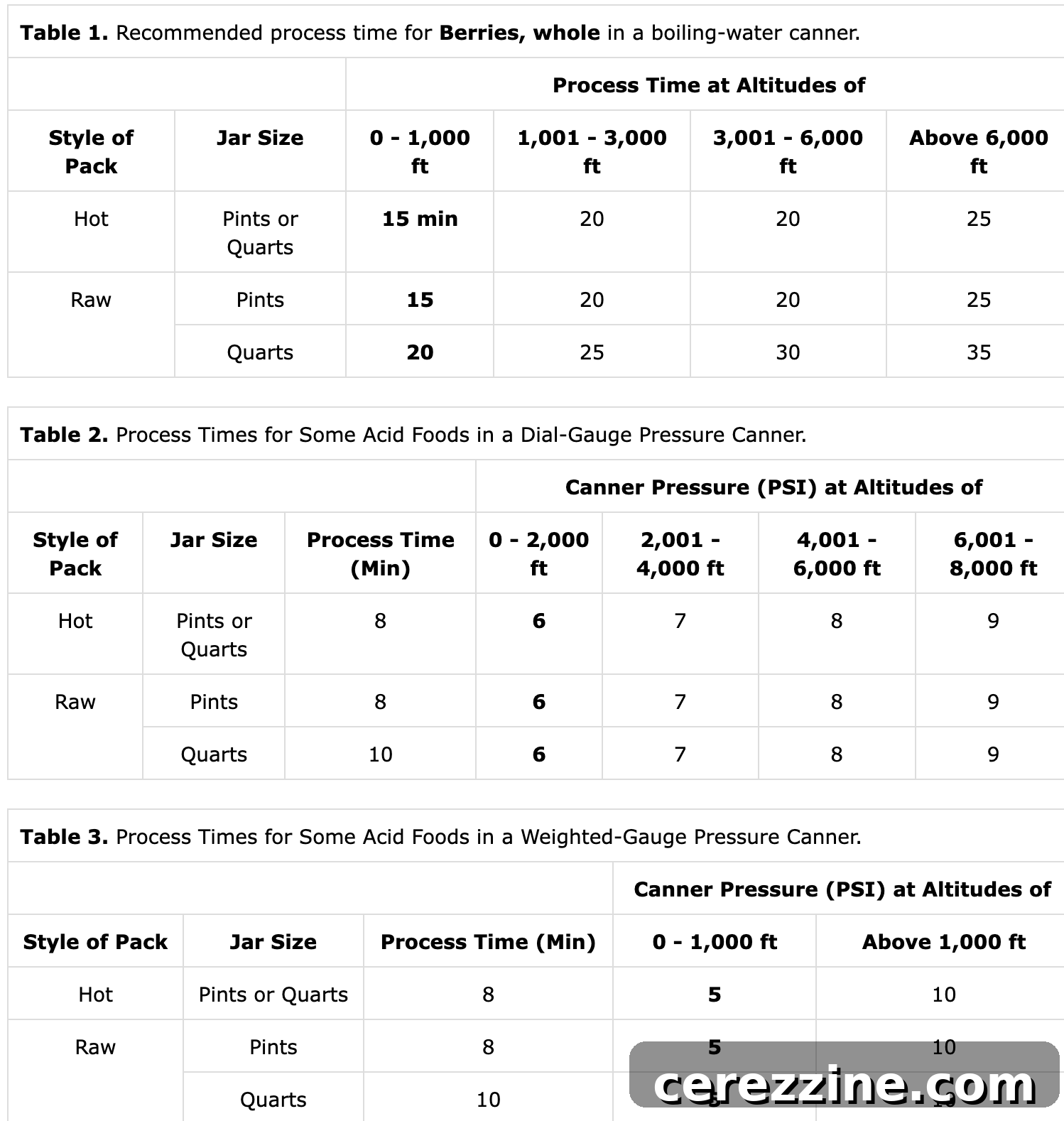
Standard Processing Times (Below 1,000 feet elevation):
- Pints: 15 minutes
- Quarts: 20 minutes
Altitude Adjustments: For elevations above 1,000 feet, increase processing times to ensure adequate heat penetration for safe preservation:
- 1,001 – 3,000 feet: Pints 20 minutes, Quarts 25 minutes
- 3,001 – 6,000 feet: Pints 25 minutes, Quarts 30 minutes
- Above 6,000 feet: Pints 30 minutes, Quarts 35 minutes
Always adjust your processing time according to your specific altitude to ensure food safety.
Savoring Your Home-Canned Gooseberries
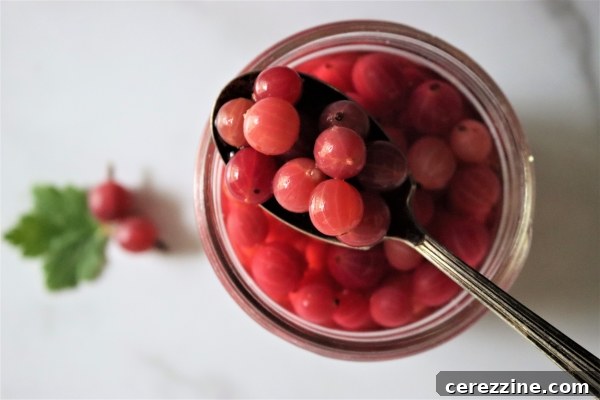
Once your gooseberries are safely preserved and sealed, a world of culinary possibilities opens up. Home-canned gooseberries can be used in almost any application where you would use fresh or frozen fruit, offering a bright, tart burst of flavor that evokes summer memories. They are fantastic straight from the jar, served as a simple topping, or incorporated into more elaborate recipes.
Consider these delightful uses for your preserved whole gooseberries:
- Desserts: Bake into classic gooseberry pies, crumbles, tarts, or muffins. Their tartness is a perfect counterpoint to sweet pastry.
- Breakfast Delights: Spoon over yogurt, oatmeal, pancakes, waffles, or French toast for a vibrant morning treat.
- Sauces and Compotes: Gently simmer with a touch of sugar and spices to create a quick compote or sauce for meats like pork or duck, or as an accompaniment to cheese boards.
- Jams and Jellies: Even though they are canned whole, they can still be transformed into smaller batches of gooseberry jam or jelly later, allowing for flexibility in your preservation strategy.
- Beverages: Muddle them into cocktails or non-alcoholic drinks for a tangy twist.
The versatility of whole canned gooseberries makes them a pantry staple for any adventurous home cook looking to extend the season’s bounty.
If you tried this Recipe for Canning Whole Gooseberries, or any other recipe on Creative Canning, we’d love to hear from you!
And make sure you stay in touch with us by following on social media!
More Gooseberry Canning & Preserving Recipes
Gooseberry Jam
Canning Gooseberry Pie Filling
Canning Gooseberries (This Recipe)
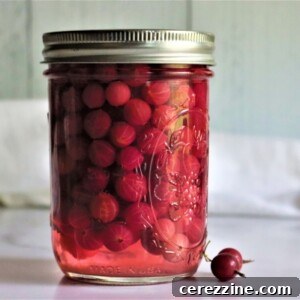
Canning Gooseberries
Print Recipe
Equipment
-
Water Bath Canner
-
Canning Jars (Half-pint, pint, or quart with lids and bands)
-
Large Pot (for syrup)
-
Paring Knife
-
Jar Lifter
-
Lid Wand (magnetic)
-
Canning Funnel
-
Headspace Tool / Bubble Remover
Ingredients
- Fresh gooseberries, quantity varies based on yield
- Water, sugar syrup, or fruit juice, see notes for options and ratios
Instructions
-
Gooseberries can be canned using either a raw pack or hot pack method. This recipe details the raw pack method due to its simplicity; hot pack instructions are provided in the notes section.
-
Begin by thoroughly washing your fresh gooseberries. Carefully sort through them, removing any fruit that is spoiled, bruised, or significantly under-ripe. Using a sharp paring knife, meticulously remove the small stem (top) and the dried flower remnant (tail) from each berry.
-
Prepare your water bath canner by filling it with water and heating it. For raw pack, bring the water temperature to about 140°F (60°C), which is scalding hot but not yet simmering. Ensure your canning jars, lids, and bands are clean and ready.
-
Carefully fill the hot canning jars with the prepared raw gooseberries. Gently shake the jars to settle the fruit, but avoid pressing them down too tightly. Leave a consistent 1/2 inch headspace from the rim of the jar.
-
Prepare your canning liquid (syrup, water, or fruit juice) and bring it to a rolling boil. For an extra light syrup suitable for a 9-pint canner batch, you would typically use ¾ cup sugar mixed with 6½ cups water. Refer to the notes for more options on syrup concentrations or using plain water/fruit juice.
-
Pour the boiling hot canning liquid over the gooseberries in each jar, ensuring that the 1/2 inch headspace is maintained. Use a bubble remover tool to gently dislodge any trapped air bubbles along the sides of the jar.
-
Wipe the rims of the jars clean with a damp cloth to ensure a proper seal. Center the prepared lids on the jars and apply the screw bands finger-tight. Place the filled jars into the preheated water bath canner, ensuring they are fully submerged by at least 1 inch of water. Bring the canner to a full, rolling boil and begin the processing time: 15 minutes for pint jars and 20 minutes for quart jars if you are below 1,000 feet in elevation. Adjust these times for higher altitudes as detailed in the notes below.
-
Once the prescribed canning time is complete, turn off the heat and carefully remove the canner lid. Allow the jars to rest in the hot water for 5 minutes before carefully lifting them out with a jar lifter. Place the hot jars on a clean towel on your counter, ensuring they are not touching each other, and allow them to cool undisturbed for 12-24 hours. After cooling, check all seals. Lids should be concave and not flex when pressed. Remove screw bands, wipe jars, and store in a cool, dark place.
Notes
The instructions above for syrup amounts are for an extra light syrup suitable for a 9-pint canner batch. You can choose a different concentration based on your sweetness preference. Detailed sugar and water amounts for various canning syrup concentrations can be found on the National Center for Home Food Preservation (NCHFP) website.
Hot Pack Method
If you prefer the hot pack method, bring your prepared gooseberries to a gentle boil in the chosen canning syrup (or water/juice) for approximately 30 seconds. Use a slotted spoon to fill your hot jars with these hot berries, maintaining a 1/2 inch headspace. Then, pour the hot boiling syrup over the fruit, again ensuring 1/2 inch headspace. Process both pint and quart jars using the processing times recommended for raw pack pint jars (adjusting for altitude as necessary).
Altitude Adjustments for Water Bath Canning
It is critical to adjust your canning times if you live above 1,000 feet in elevation to ensure the safety of your home-canned foods. The boiling point of water decreases at higher altitudes, requiring longer processing times to achieve proper sterilization.
- 1,001 to 3,000 feet: Process pints for 20 minutes; process quarts for 25 minutes.
- 3,001 to 6,000 feet: Process pints for 25 minutes; process quarts for 30 minutes.
- Above 6,000 feet: Process pints for 30 minutes; process quarts for 35 minutes.
Nutrition
Nutrition information is automatically calculated, so should only be used as an approximation.
Inspired to preserve? Leave us a comment!
More Inspiring Summer Canning Recipes
Looking to expand your home canning repertoire and make the most of your summer harvest? Explore these other simple and delicious canning recipes:
- Classic Peach Jam
- Canning Blackberries
- Canning Whole Tomatoes
- Canning Tomatillos (and Salsa Verde)
- Canning Plums
- Homemade Strawberry Jelly