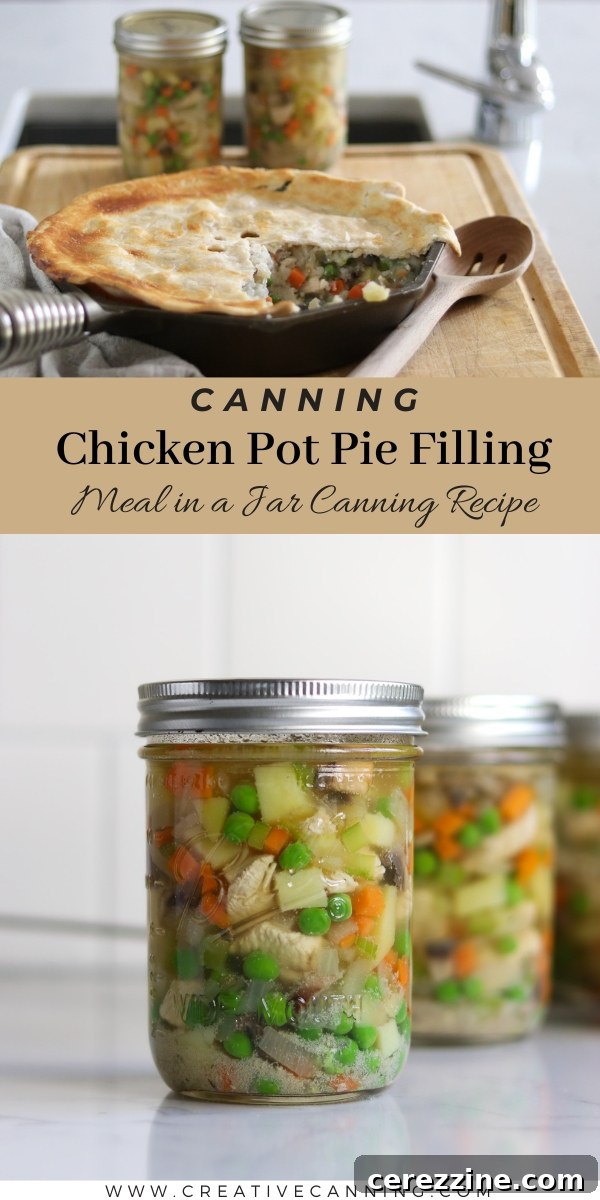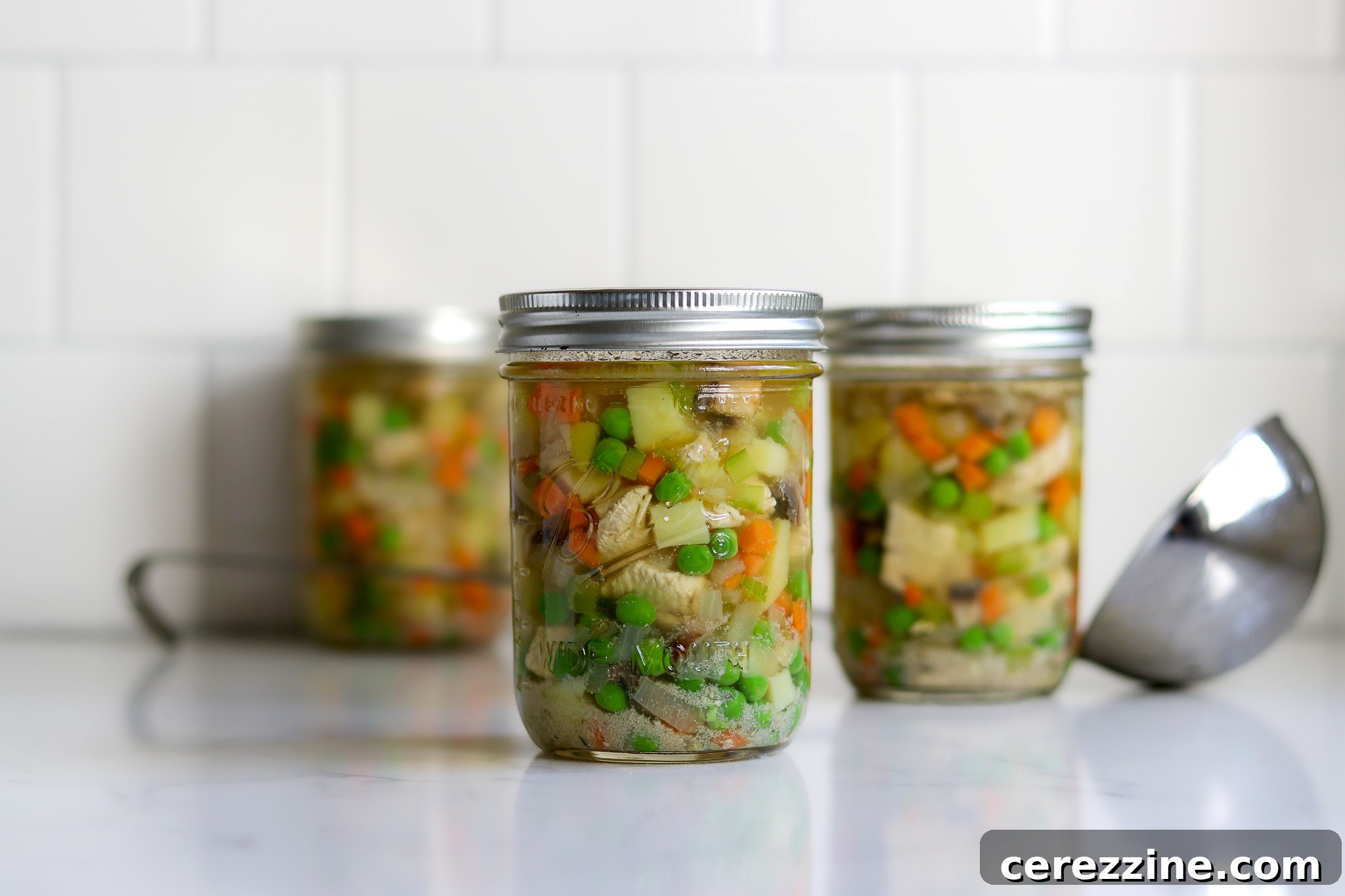
Effortless Meals on Your Shelf: Canning Delicious Chicken Pot Pie Filling
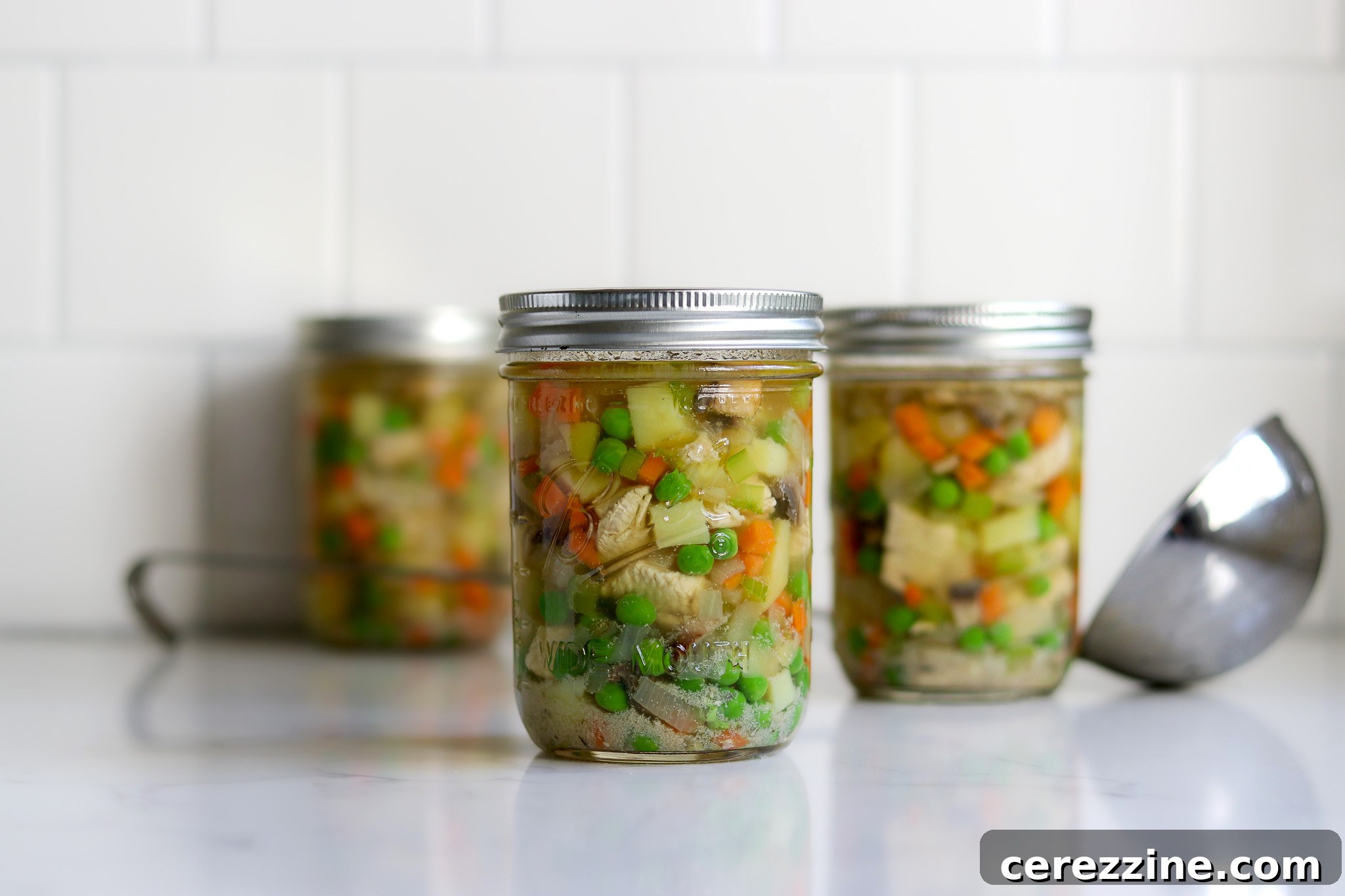
Imagine having a hearty, homemade meal ready in minutes, anytime you need it. Canning chicken pot pie filling makes this dream a delicious reality, allowing you to stock your pantry with savory goodness. This versatile chicken stew can be enjoyed as a comforting standalone dish, transformed into a classic pot pie with a flaky crust, or topped with warm, fluffy biscuits for an easy and satisfying dinner. It’s the ultimate convenience food, crafted right in your own kitchen.
Chicken pot pie is a beloved comfort food, celebrated for its tender chicken, an array of vegetables, and a rich, savory broth, all encased in a golden, flaky pastry. While undeniably delicious, preparing a traditional chicken pot pie from scratch can be a time-consuming affair. That’s where canning comes in, transforming this classic into an accessible meal that can be enjoyed at a moment’s notice.
By canning your chicken pot pie filling, you’re not just preserving food; you’re preserving flavor and convenience. The canning process locks in the fresh taste of the ingredients, creating a gourmet treat that’s ready whenever hunger strikes. With a bit of foresight and preparation, your pantry shelves can be lined with jars of this wholesome filling, ensuring that a warm, hearty meal is always within reach, perfect for busy weeknights, unexpected guests, or emergency situations.
Why Choose Home Canning for Your Chicken Pot Pie Filling?
While canning might seem like a daunting task at first glance, it’s actually a straightforward and incredibly rewarding process. Beyond the immense satisfaction of knowing exactly what goes into your food, home canning offers unparalleled convenience and flavor that store-bought options simply can’t match. Here are a few compelling reasons to embrace this culinary art:
- Time-Saving: The upfront effort of canning pays dividends later. On a busy day, you can have a nutritious meal on the table in minutes, rather than spending hours chopping and simmering.
- Emergency Preparedness: A well-stocked pantry of home-canned goods is a cornerstone of food security. In times of power outages or other emergencies, you’ll have delicious, ready-to-eat meals that require no refrigeration.
- Control Over Ingredients: You dictate the quality of your chicken, the freshness of your vegetables, and the absence of unwanted additives. This is especially valuable for those with dietary restrictions or a desire for organic, wholesome ingredients.
- Cost-Effectiveness: Buying ingredients in bulk when they are in season or on sale can significantly reduce your grocery bill over time, making homemade canned meals a budget-friendly option.
- Superior Flavor: There’s no substitute for the taste of homemade. Canning allows the flavors to meld and deepen, resulting in a richer, more satisfying meal than many commercial alternatives.
Given that this recipe contains both meat and a variety of vegetables, it is crucial to use a pressure canner for safety. Pressure canning is the only safe method for preserving low-acid foods like meats and most vegetables. If you’re new to pressure canning, I highly recommend reviewing a comprehensive beginner’s guide to pressure canning before you begin to ensure you understand the necessary safety protocols.
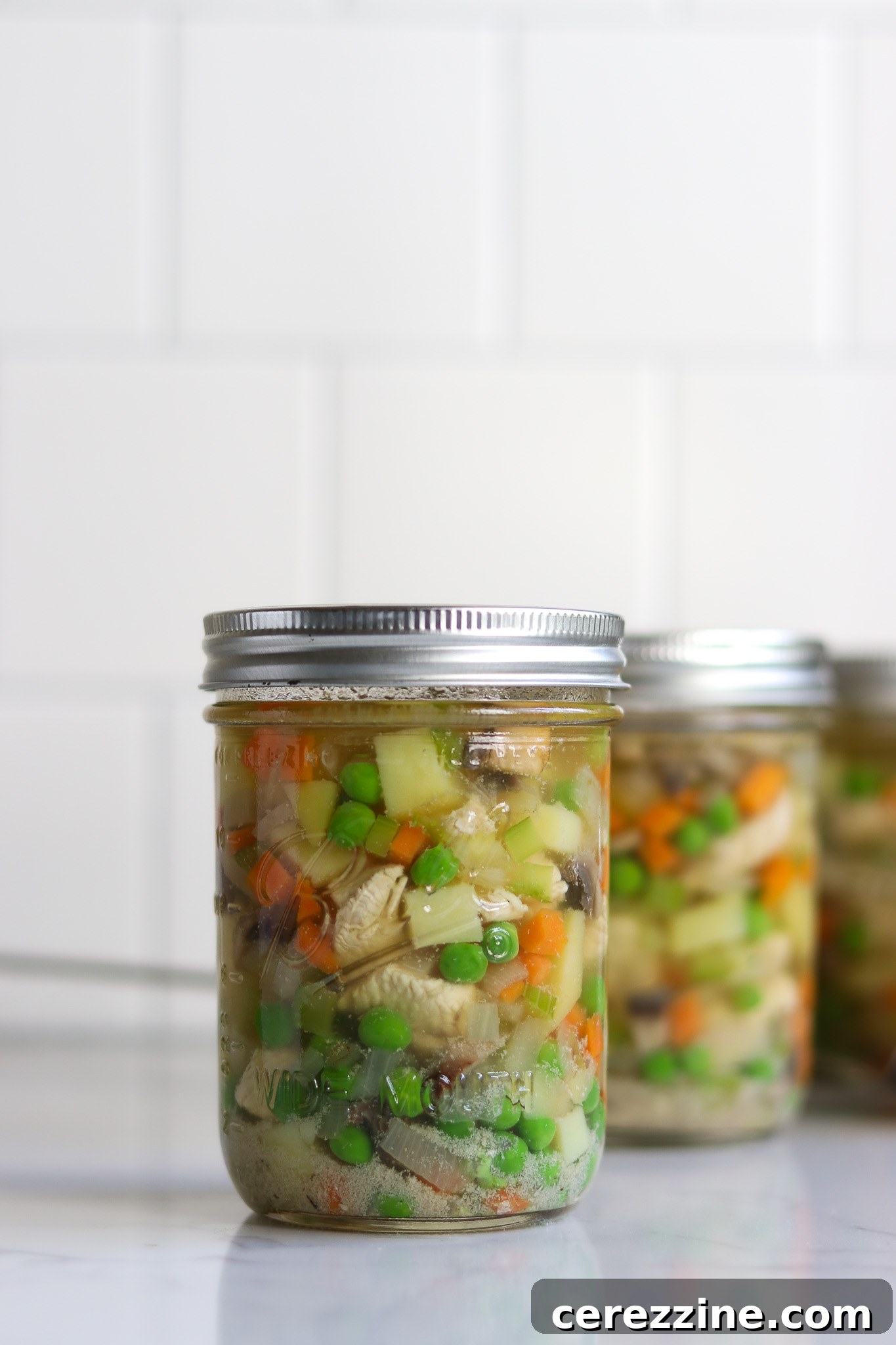
Ingredients for Perfect Chicken Pot Pie Filling
The beauty of this chicken pot pie filling recipe lies in its simplicity and adaptability. While the core ingredients provide a classic flavor profile, you have the flexibility to customize it with your favorite spices, herbs, and even other vegetables (within specific safety guidelines, which we’ll discuss below).
This recipe is adapted from a trusted source, The Ball All New Book of Canning and Preserving (page 283), a fantastic resource filled with a myriad of delicious canning recipes, encompassing both pressure canning and water bath canning methods.
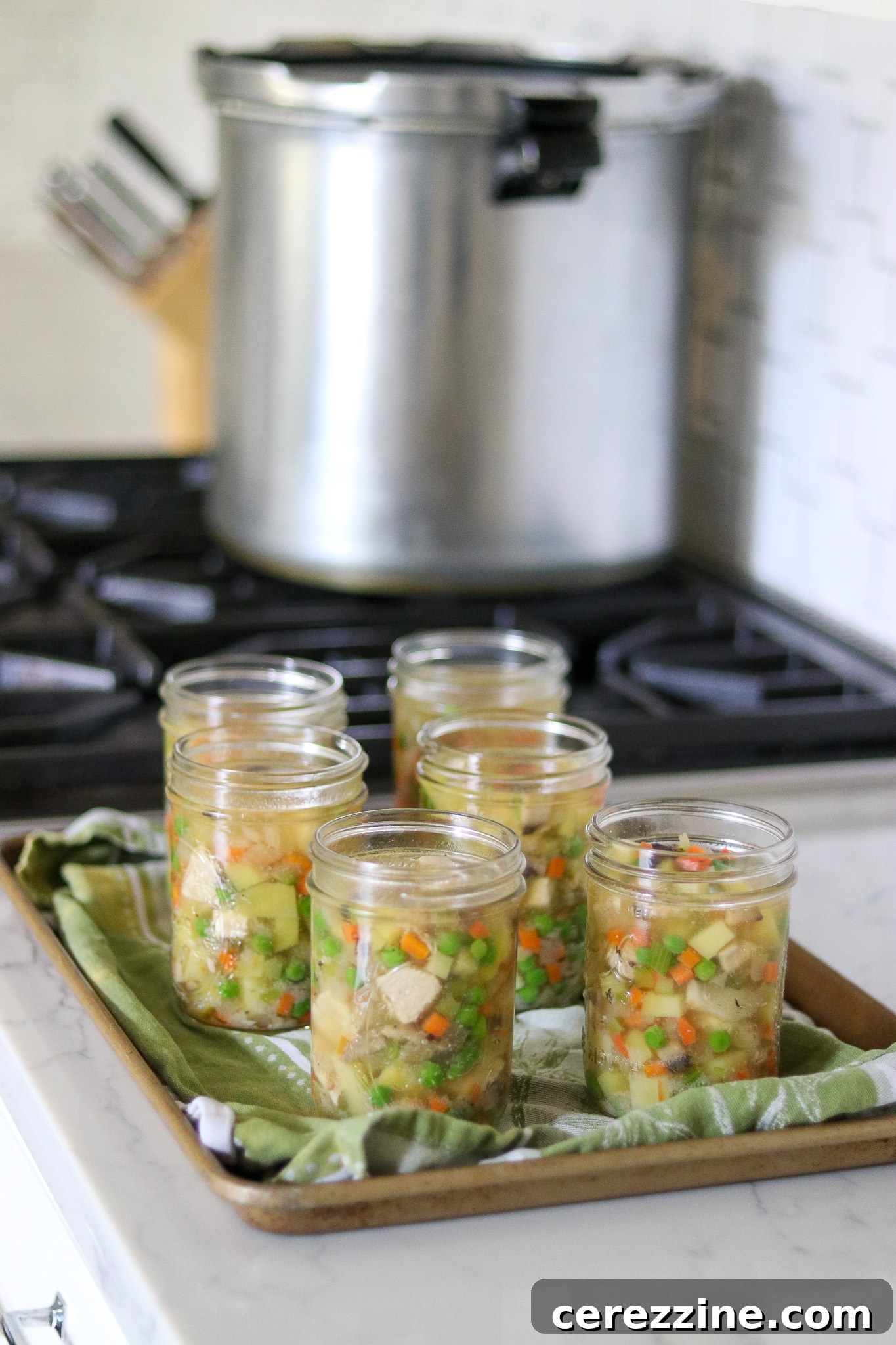
To prepare a canner batch yielding 6 pint-sized jars (each approximately 500 ml or 2 cups), you will need the following:
- 3 cups (750 ml) skinned and boned raw chicken, cut into 1-inch (2.5 cm) cubes
- 1 ½ cups (375 ml) diced onion (about 2 medium onions)
- ½ cup (125 ml) diced fresh mushrooms
- 1 ½ cups (375 ml) diced carrots (roughly 3 medium carrots)
- 1 cup (250 ml) diced Yukon gold potatoes
- ½ cup (125 ml) baby sweet peas (fresh or frozen)
- ½ cup (125 ml) diced celery
- 5 cups (1.25 liters) chicken stock or bone broth
- 3 tbsp (45 ml) unsalted butter
- 1 cup (250 ml) dry white wine
- 1 tsp (5 ml) dried thyme
- 1 tsp (5 ml) salt
- ½ tsp (2 ml) black pepper
- 1 bay leaf
- 1 tbsp (15 ml) bottled lemon juice
Ingredient Notes and Customization Tips
The lemon juice and dry white wine in this recipe are included primarily for their flavor-enhancing qualities. They add a bright, acidic note that beautifully complements the vegetables and chicken. While both increase the acidity of the broth, they are not strictly required for canning safety in this pressure canning recipe. You may substitute them with additional chicken stock or water if you prefer, though I find they contribute significantly to the overall deliciousness of the finished product.
Feel free to adjust the quantities of dry spices, such as thyme and black pepper, to suit your personal taste preferences. You can also experiment with other complementary dried herbs like sage or rosemary. However, when it comes to vegetables, it’s crucial not to increase the total quantity beyond what is specified in the recipe. You can omit vegetables that your family doesn’t enjoy (for example, skipping the mushrooms), but always ensure you maintain the recommended ratios of vegetables to other ingredients for safe canning.
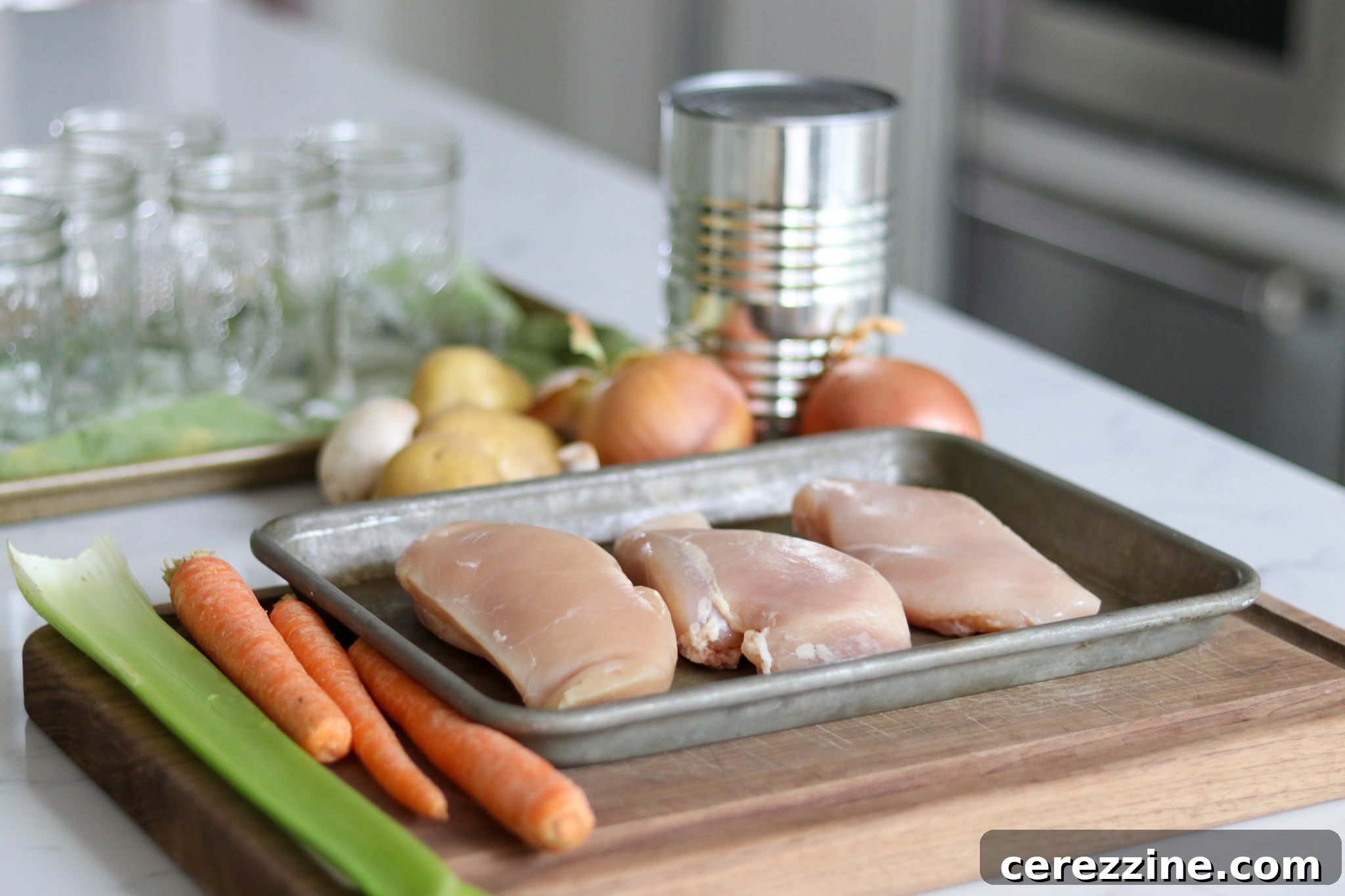
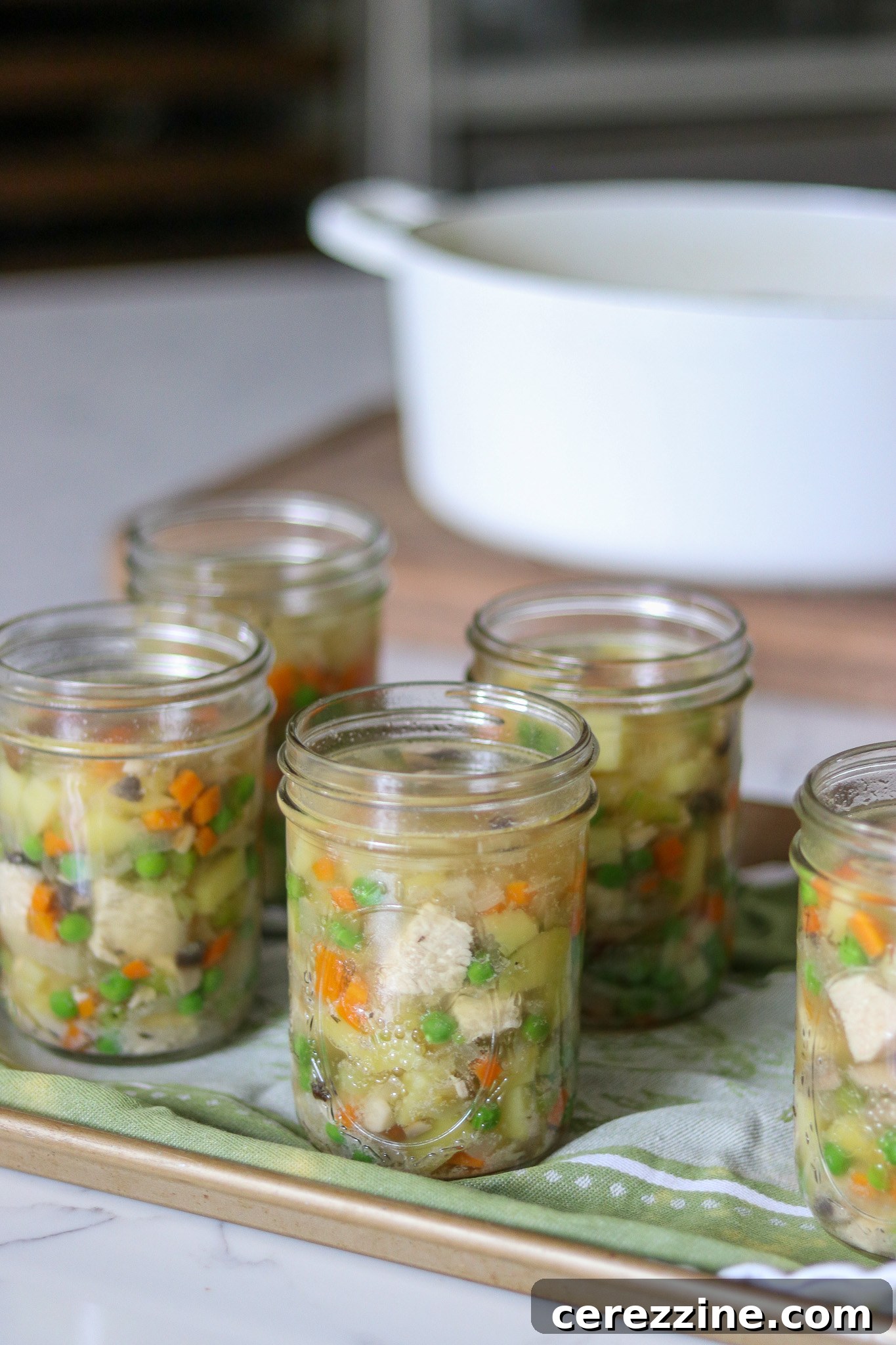
If you choose to omit a vegetable, you may need to have extra chicken stock or water on hand to top up your jars, ensuring they remain adequately filled with liquid. The Ball Canning recipe is meticulously developed to fill the jars perfectly, so generally, adjustments should be minor. The goal is to ensure jars are loosely packed, allowing for proper heat penetration during processing.
For the chicken, any boneless cut can be used. Chicken breast tends to offer a lean texture and mild flavor, while chicken thighs provide a slightly richer taste and a more succulent texture. Choose what best suits your preference. You can use either commercial canned or boxed chicken broth/stock, or opt for homemade chicken broth if you have it available. Vegetable broths or other types of broths can also be used as a substitute.
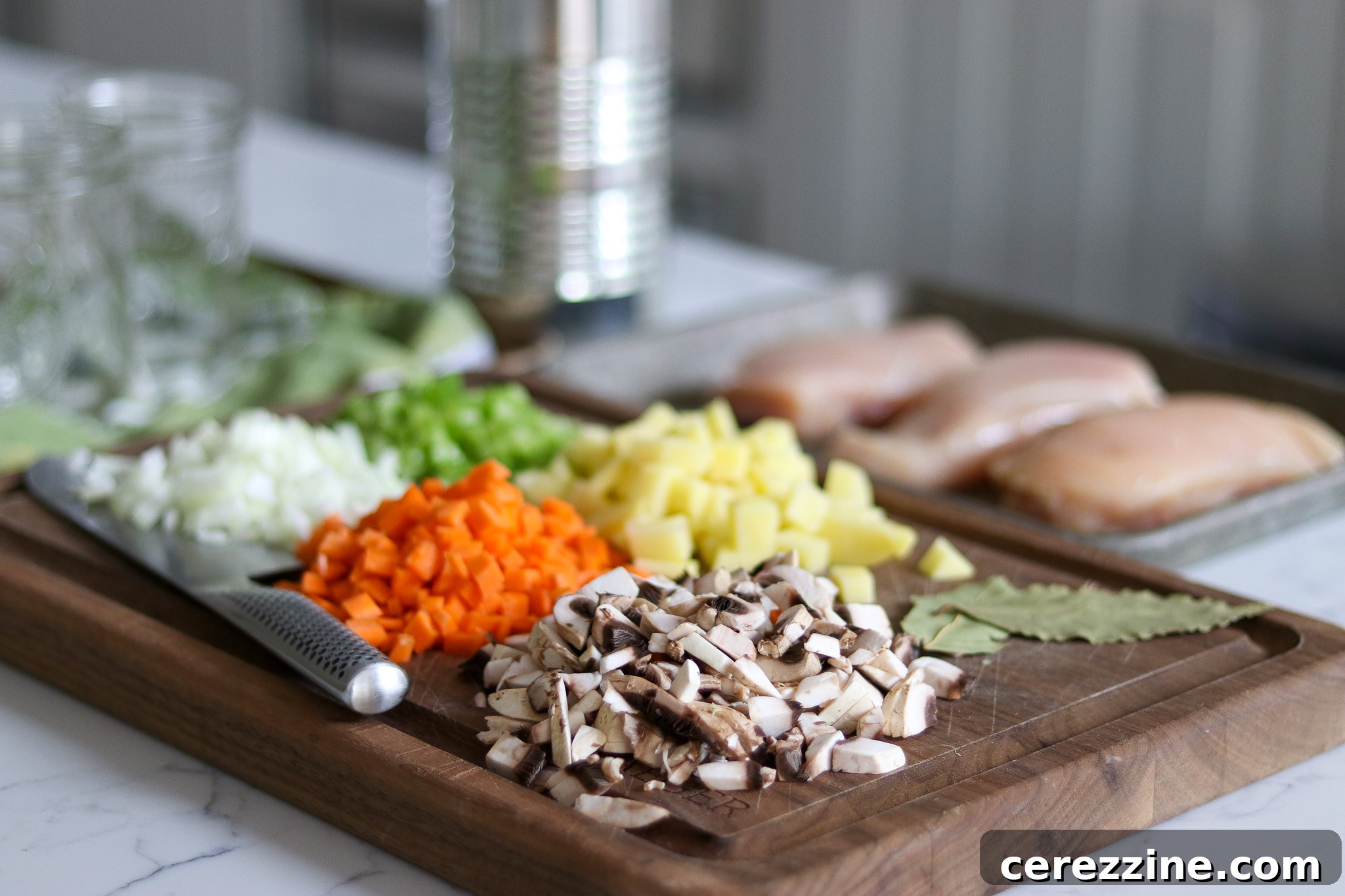
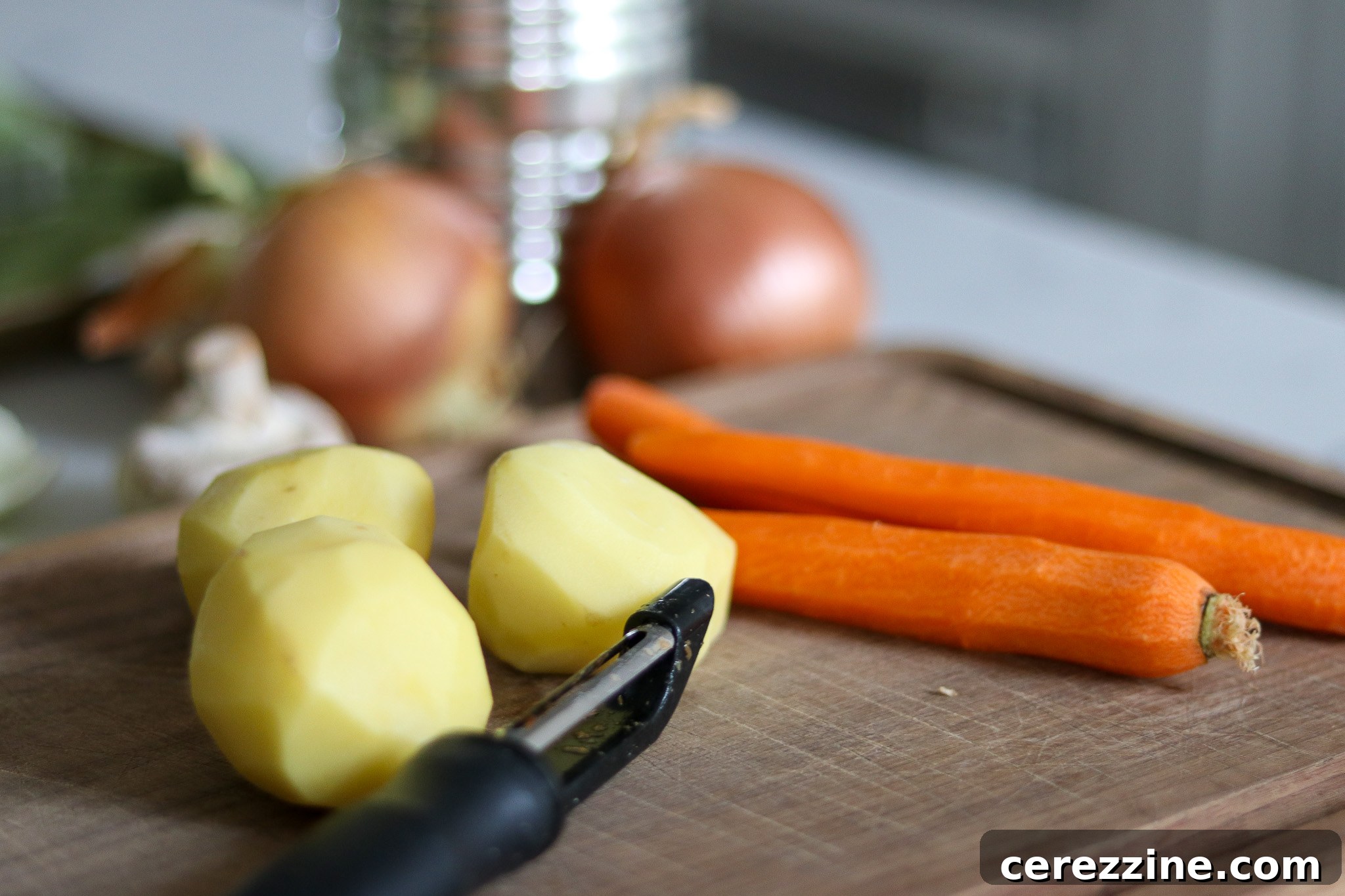
A critical step for any pressure canning recipe involving root vegetables is peeling. Peeling not only contributes to the visual appeal and texture of the finished dish (as peels can become tough and detach during canning) but, more importantly, it removes the outer layer of vegetables where potentially problematic bacteria are most concentrated. Therefore, always peel potatoes and carrots before pressure canning.
Canning Chicken Pot Pie Filling: A Step-by-Step Guide
With your ingredients prepped and your pressure canner at the ready, you’re set to transform these fresh components into shelf-stable, delicious chicken pot pie filling. Follow these steps carefully to ensure both safety and optimal flavor.
Preparation Steps
Begin by meticulously chopping all your vegetables. While the shape is a matter of personal preference, aiming for uniformly sized pieces is crucial. This ensures that all vegetables cook evenly during the initial preparation and subsequent canning process. A medium dice, yielding small cubes, generally offers the best finished presentation and texture.
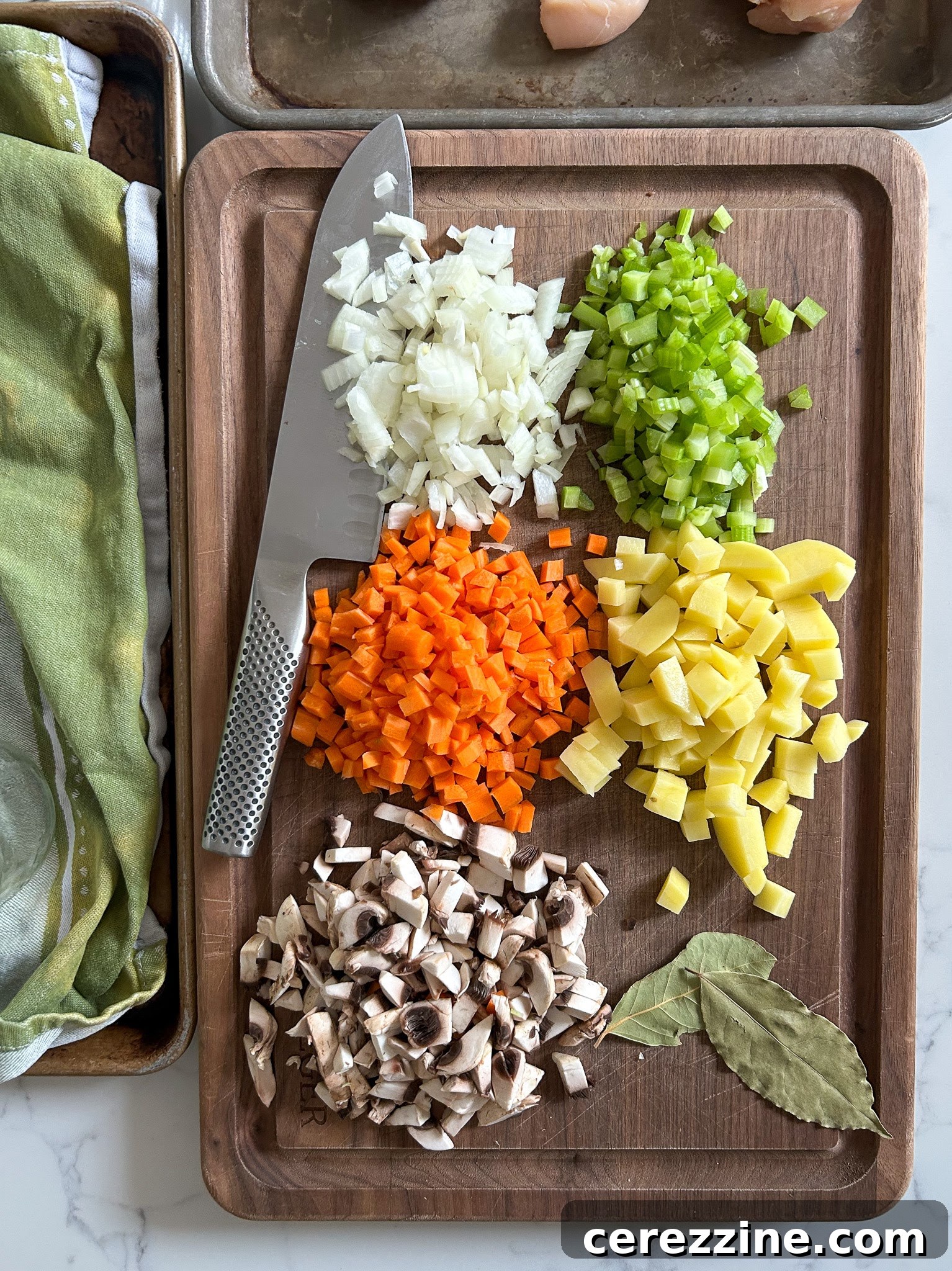
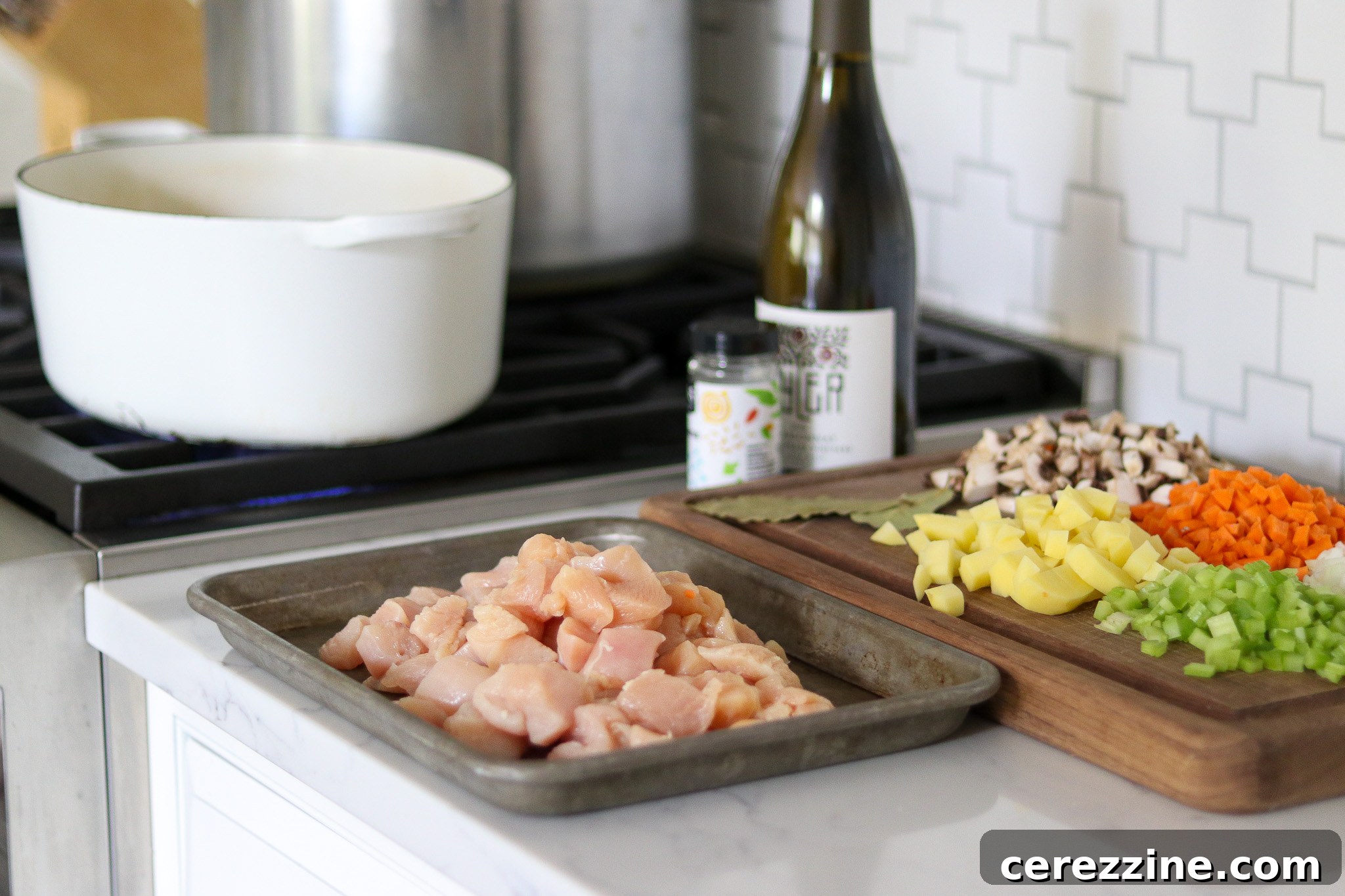
Once your vegetables are prepped, gather the remaining ingredients: your diced boneless chicken, dry white wine, chicken broth, and all specified spices. Having everything measured and within reach will make the cooking process smooth and efficient.
Cooking the Filling
1. In a large Dutch oven or a heavy-bottomed saucepan, melt the butter over medium heat. Add the diced mushrooms and onions, sautéing them until the mushrooms achieve a light golden brown color, which typically takes about three minutes.
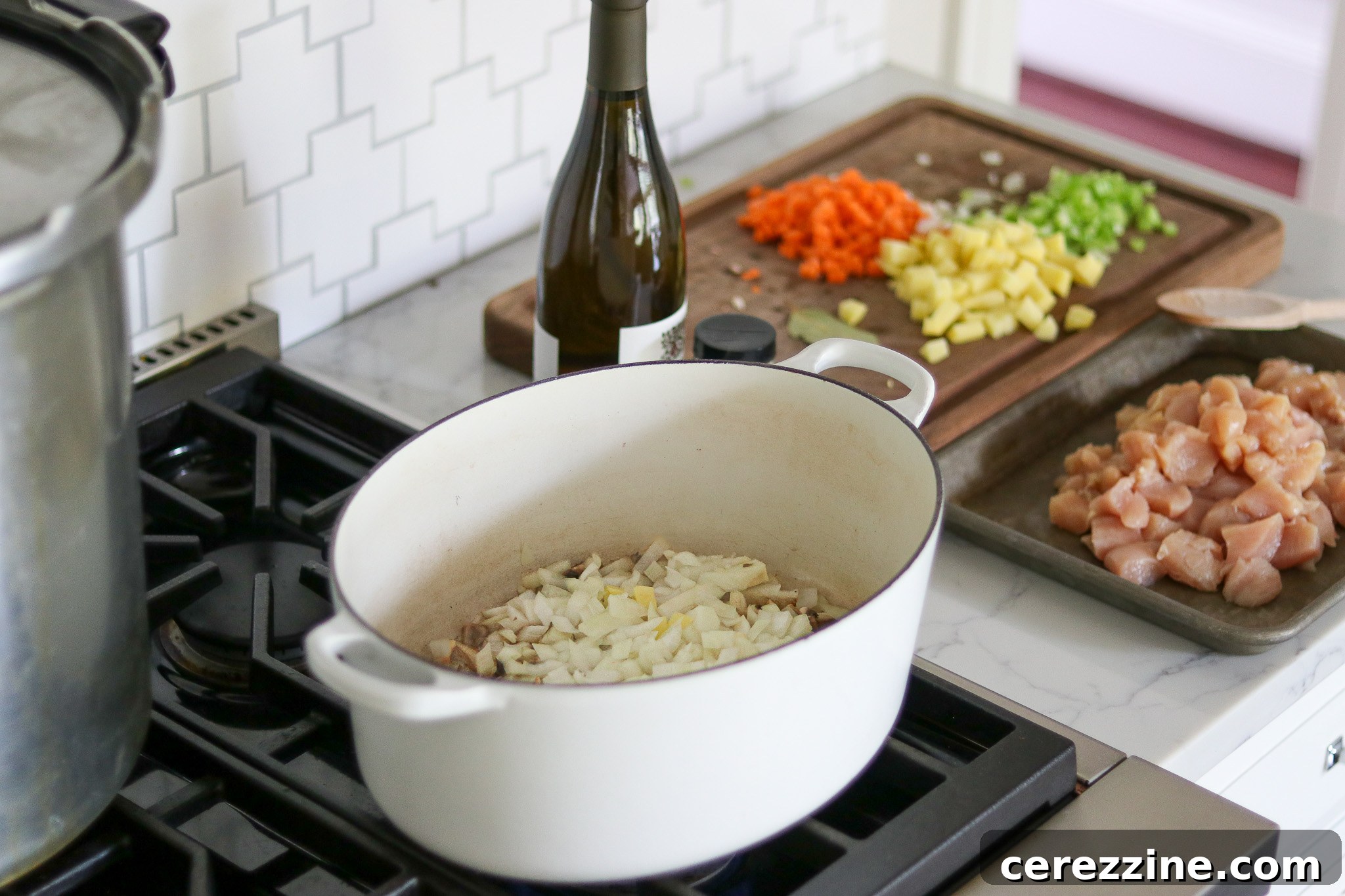
2. Next, add the diced chicken, carrots, potatoes, and celery to the pot. Continue to sauté these ingredients for approximately five minutes, or until they begin to turn golden brown.
3. Pour in the chicken stock, then add the dry white wine, thyme, salt, pepper, and bay leaf. Stir gently to combine all ingredients.
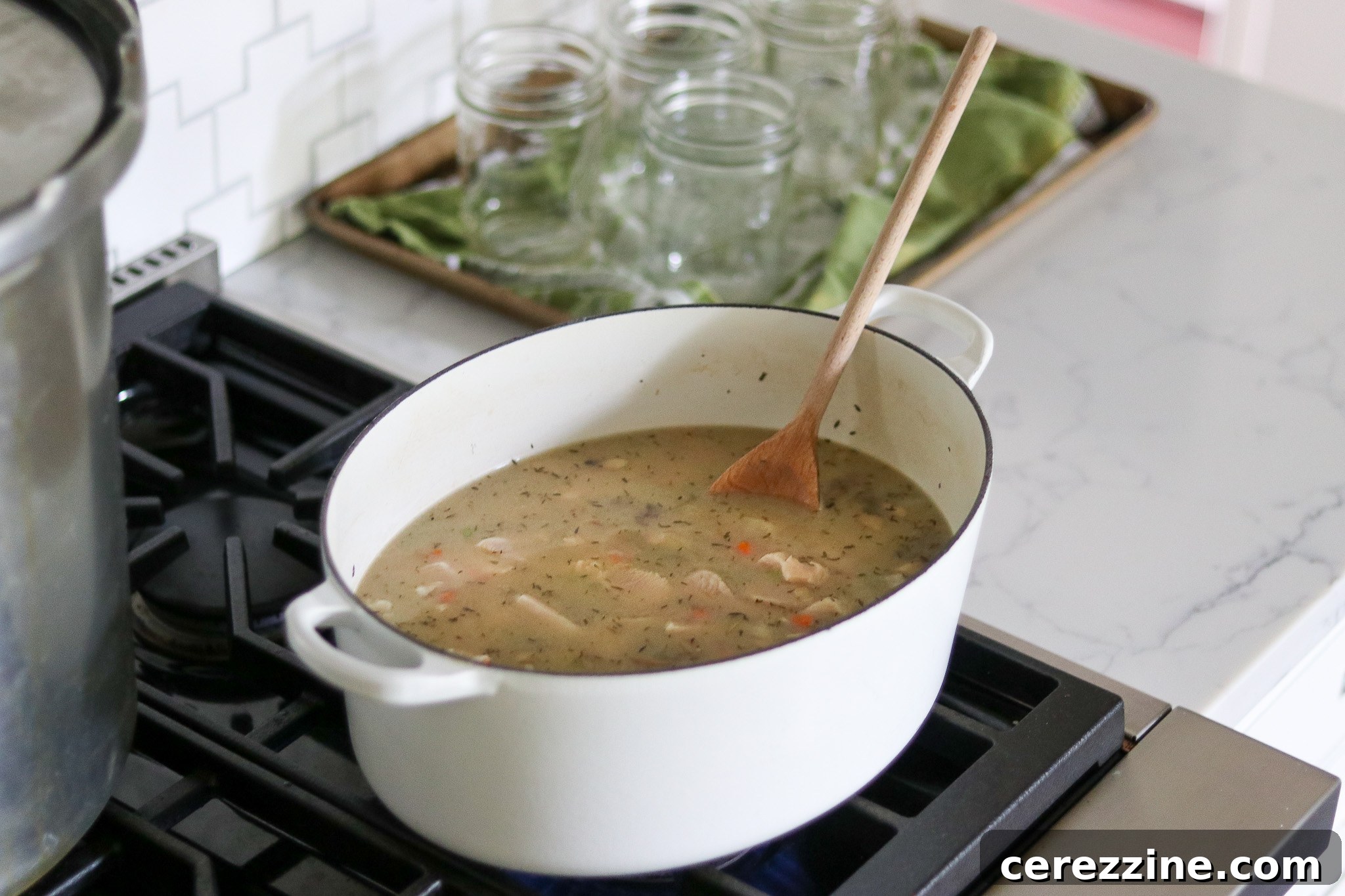
4. Bring the mixture to a rolling boil, then reduce the heat to medium. Allow the filling to cook uncovered for about 10 minutes, stirring occasionally, until the vegetables are tender-crisp and the chicken is thoroughly cooked. Once the chicken is cooked through, carefully remove the bay leaf from the pot and take the pan off the heat.
5. Finally, stir in the baby sweet peas and bottled lemon juice. The peas are added at this stage to maintain their vibrant color and texture, as they will cook further during the canning process.
Filling and Preparing Jars for Canning
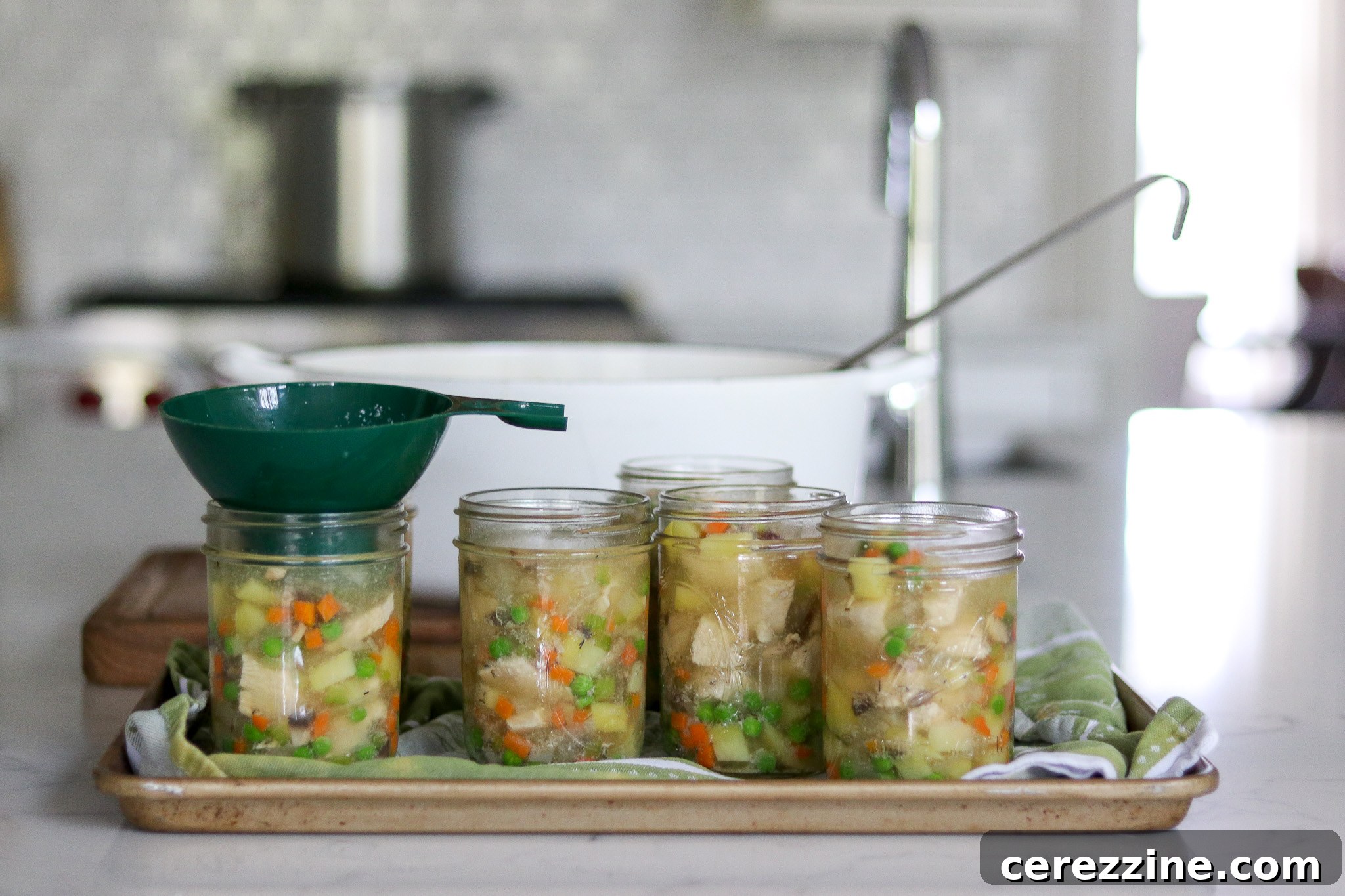
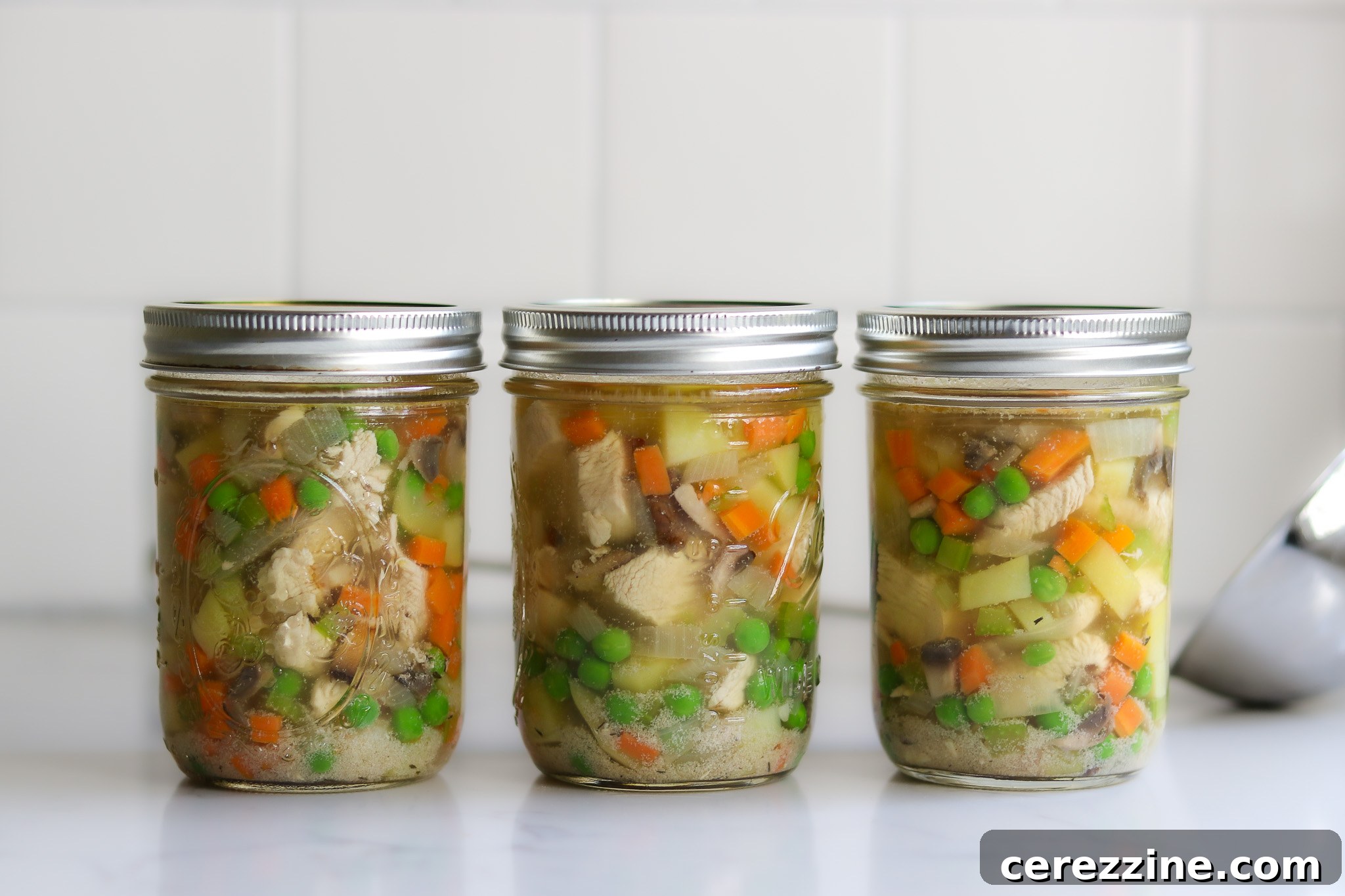
1. Ladle the hot chicken pot pie mixture into clean, hot canning jars, leaving precisely 1 inch (2.5 centimeters) of headspace from the rim of the jar. Headspace is crucial for proper sealing and to prevent liquid siphoning during processing.
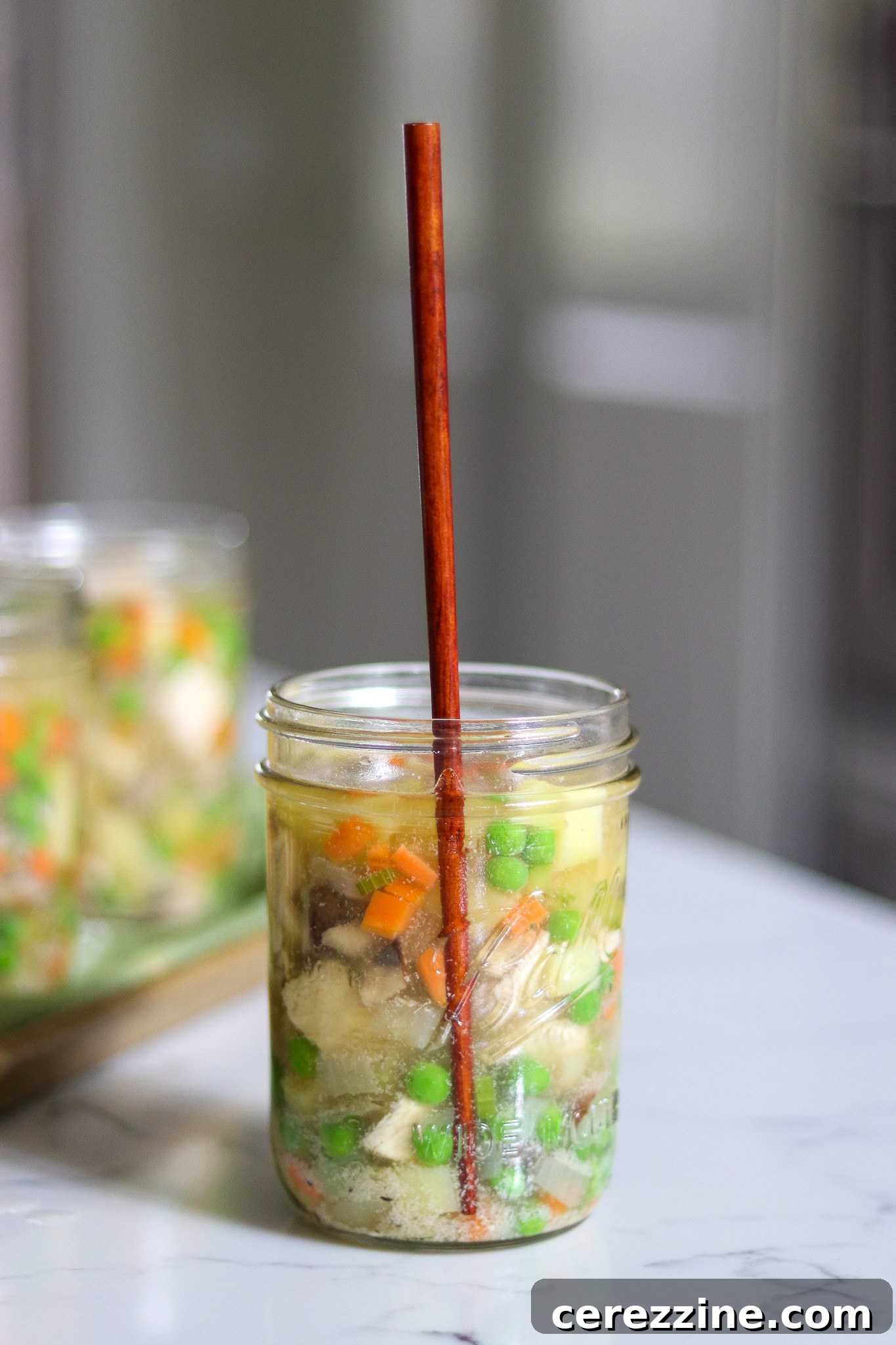
2. Use a specialized air bubble removal tool (or a non-metallic spatula) to gently remove any trapped air bubbles from the jars. Run the tool along the inside of the jar, pressing against the food. This step is important because trapped air can affect headspace and seal integrity. After debubbling, recheck the headspace and adjust if necessary, adding more liquid (broth or water) if the level has dropped below the 1-inch mark.
3. With a clean, damp cloth, meticulously wipe the rims of each jar to remove any food particles or grease. A clean rim is essential for creating a strong, airtight seal. Place new, pre-warmed lids on the jars, followed by screw bands, and tighten them to “fingertip tight” – just snug enough to hold the lid in place, but not overly tight. Repeat for all filled jars.
Pressure Canning Process
1. Load the prepared jars into your pressure canner, ensuring they are placed on the rack and not directly on the bottom of the canner. Add the amount of water recommended by your canner manufacturer (typically 2-3 inches). Put the canner lid on and turn it to the locked position, but do not place the weighted gauge or counterweight on the vent pipe yet.
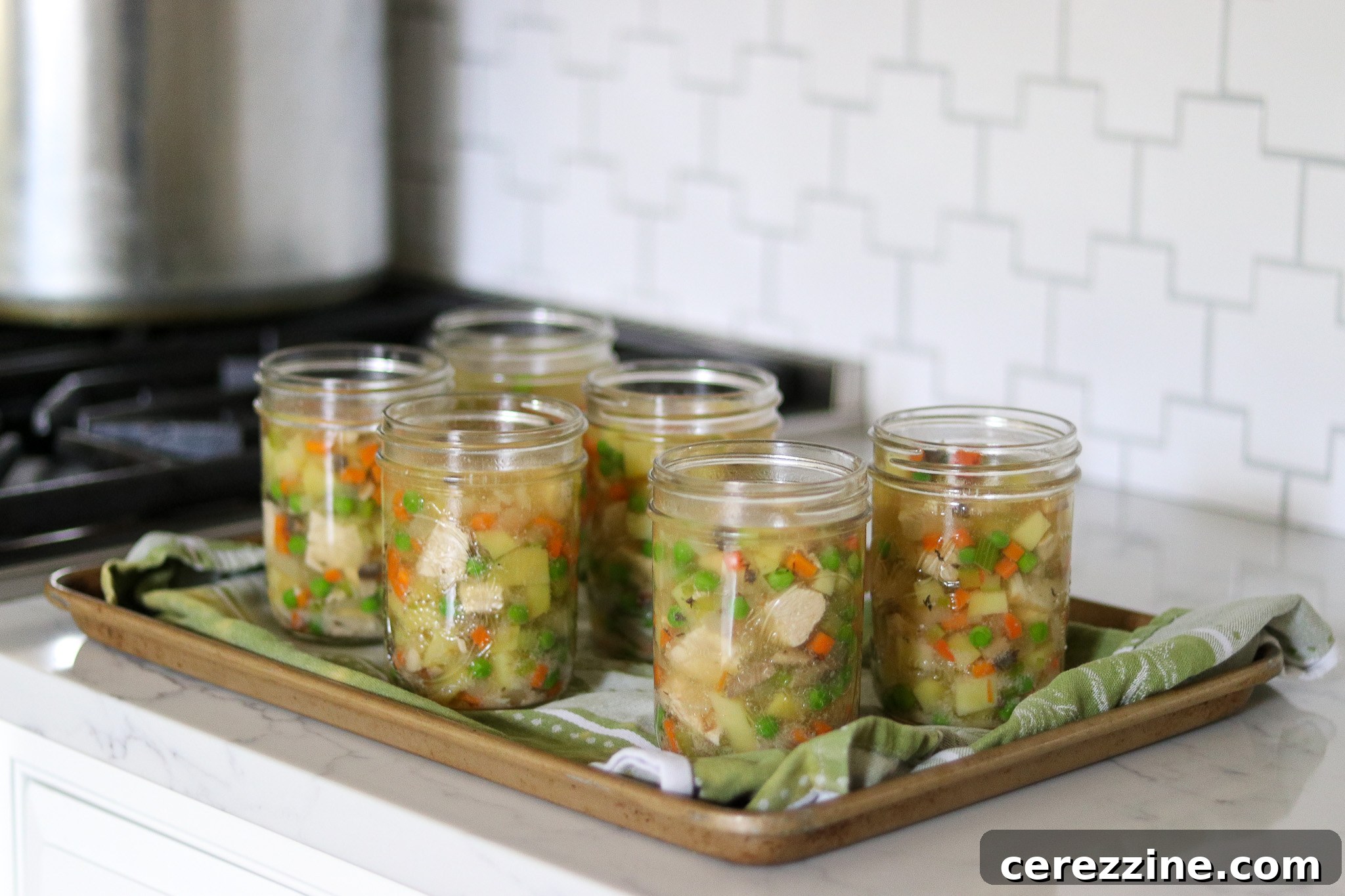
2. Adjust the heat to medium-high and allow the canner to heat up until a steady stream of steam vents from the vent pipe. Once steam begins to escape vigorously, let it vent continuously for 10 full minutes. This crucial step removes all air from the canner, ensuring pure steam pressure is built.
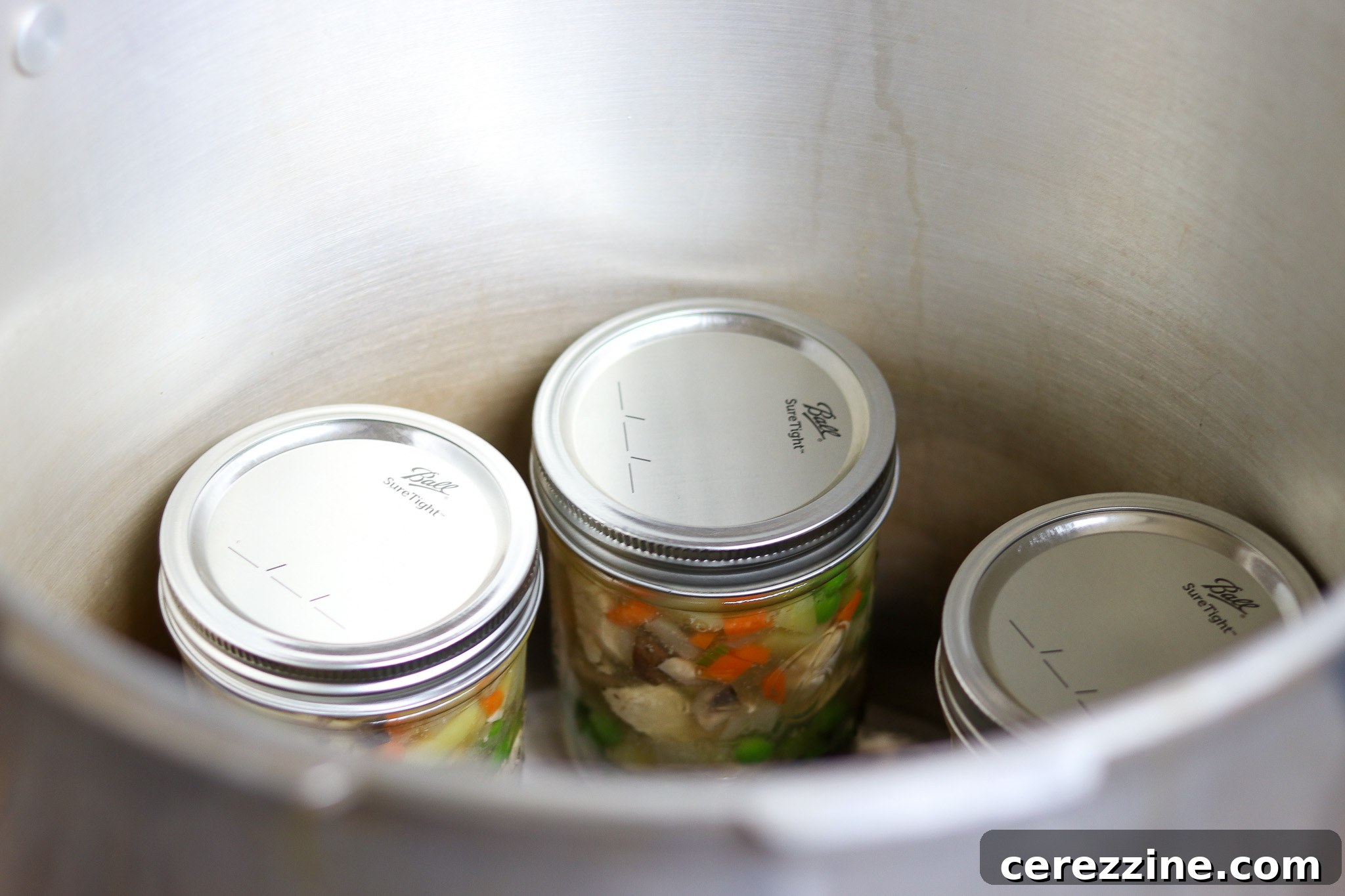
3. After venting for 10 minutes, place the counterweight or weighted gauge on the vent pipe, following your canner’s specific instructions. Bring the pressure up to 10 lbs for a weighted-gauge canner or 11 lbs for a dial-gauge canner. Maintain this pressure throughout the processing time, adjusting the heat as necessary. Remember to adjust the pressure for altitude if you are above 1,000 feet in elevation (refer to the altitude adjustment chart below).
4. Process pint jars for 75 minutes and quart jars for 90 minutes. Start your timer only when the canner reaches the target pressure.
Cooling and Storage
Once the processing time is complete, turn off the heat. Allow the pressure canner to cool naturally and return to zero pressure on its own. Do not force cool the canner, as this can lead to siphoning or seal failure. Let the canner sit undisturbed for an additional five minutes after the pressure gauge reads zero before carefully removing the lid.
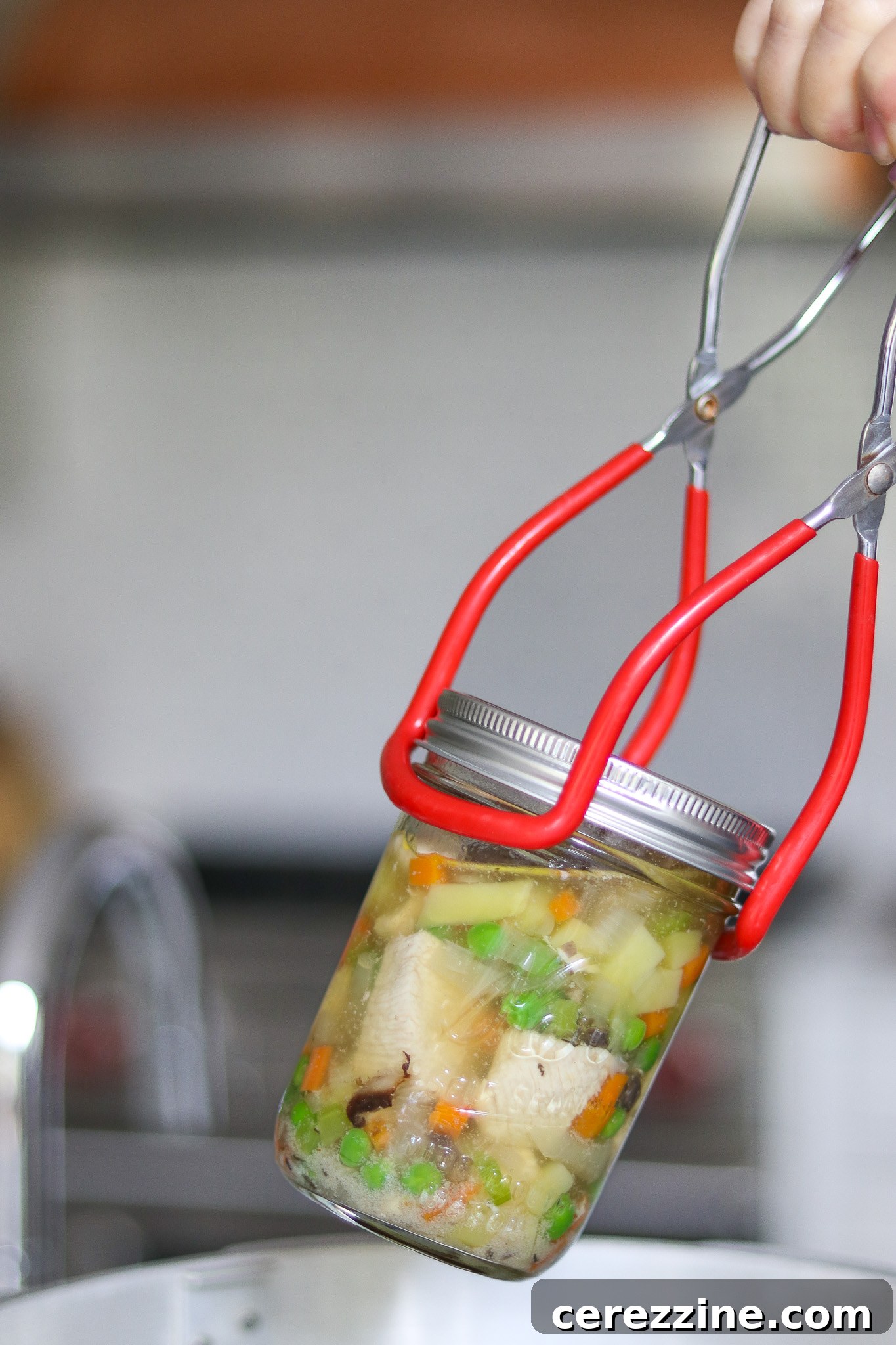
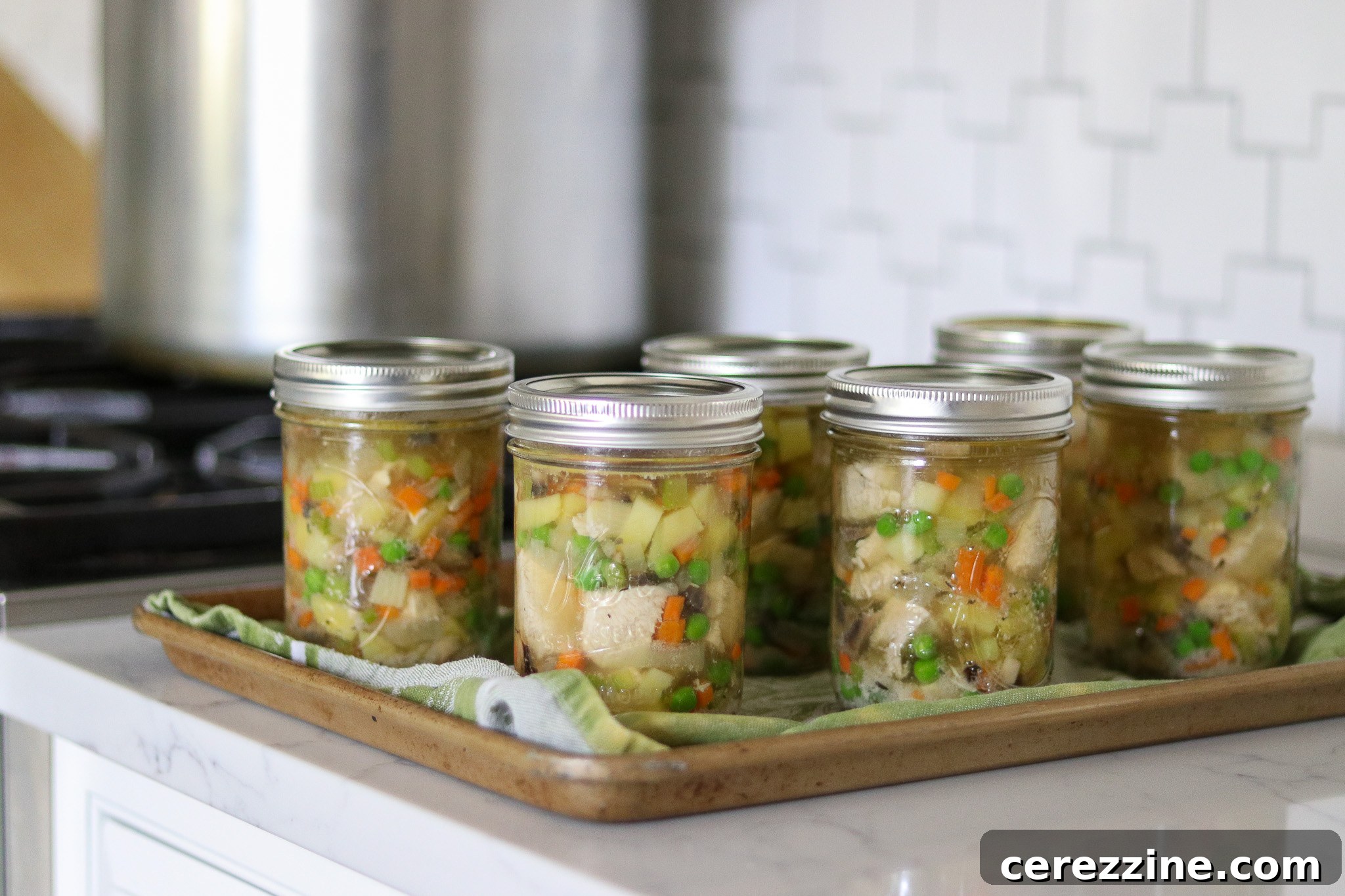
With the lid off, let the jars cool in the canner for another 10 minutes. Then, using a jar lifter, carefully remove the hot jars from the canner and place them on a towel-lined counter or wire rack, ensuring there’s space between each jar for air circulation. Allow the jars to cool completely for 12 to 24 hours without disturbing them. You’ll hear the satisfying “ping” sound as the lids seal.
After the cooling period, check all seals. A properly sealed lid will be concave and will not flex when pressed in the center. Any unsealed jars should be refrigerated immediately and used within a few days. Label your properly canned and sealed jars with the contents and date, and store them in a cool, dark, dry pantry. They will maintain their peak quality for 12 to 18 months. Once a jar is opened, refrigerate any unused portion.
Altitude Adjustments for Pressure Canning
Canning time remains constant regardless of your altitude. However, the processing pressure must be increased as altitude rises to ensure safety due to lower atmospheric pressure. Use the following table to determine the correct processing pressure if you are above 1,000 feet in elevation.
For dial gauge pressure canners:
- 0 to 2,000 feet in elevation – 11 lbs pressure
- 2,001 to 4,000 feet in elevation – 12 lbs pressure
- 4,001 to 6,000 feet in elevation – 13 lbs pressure
- 6,001 to 8,000 feet in elevation – 14 lbs pressure
For weighted gauge pressure canners:
- 0 to 1,000 feet in elevation – 10 lbs pressure
- Above 1,000 feet – 15 lbs pressure
Serving Your Home-Canned Chicken Pot Pie Filling
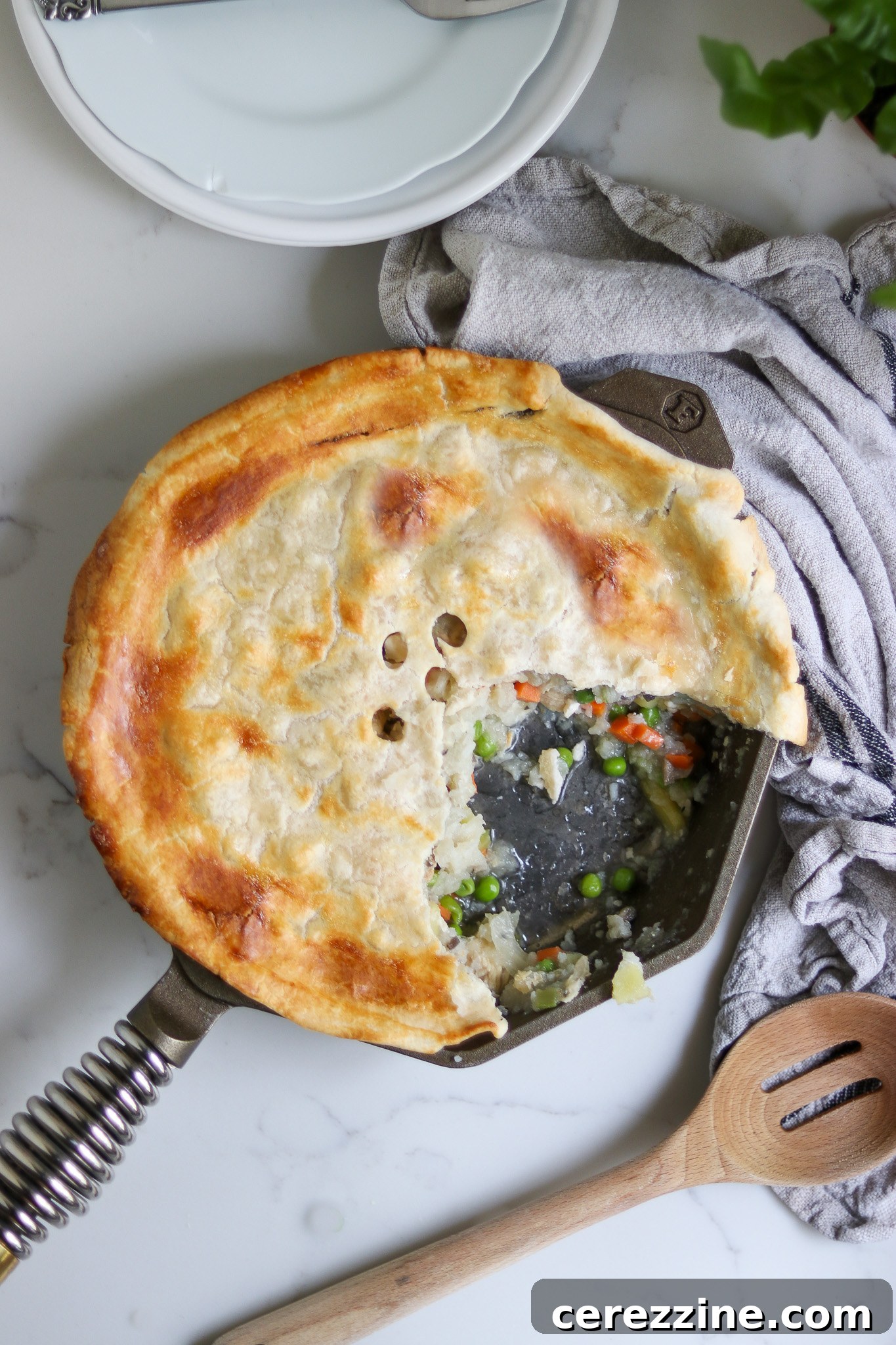
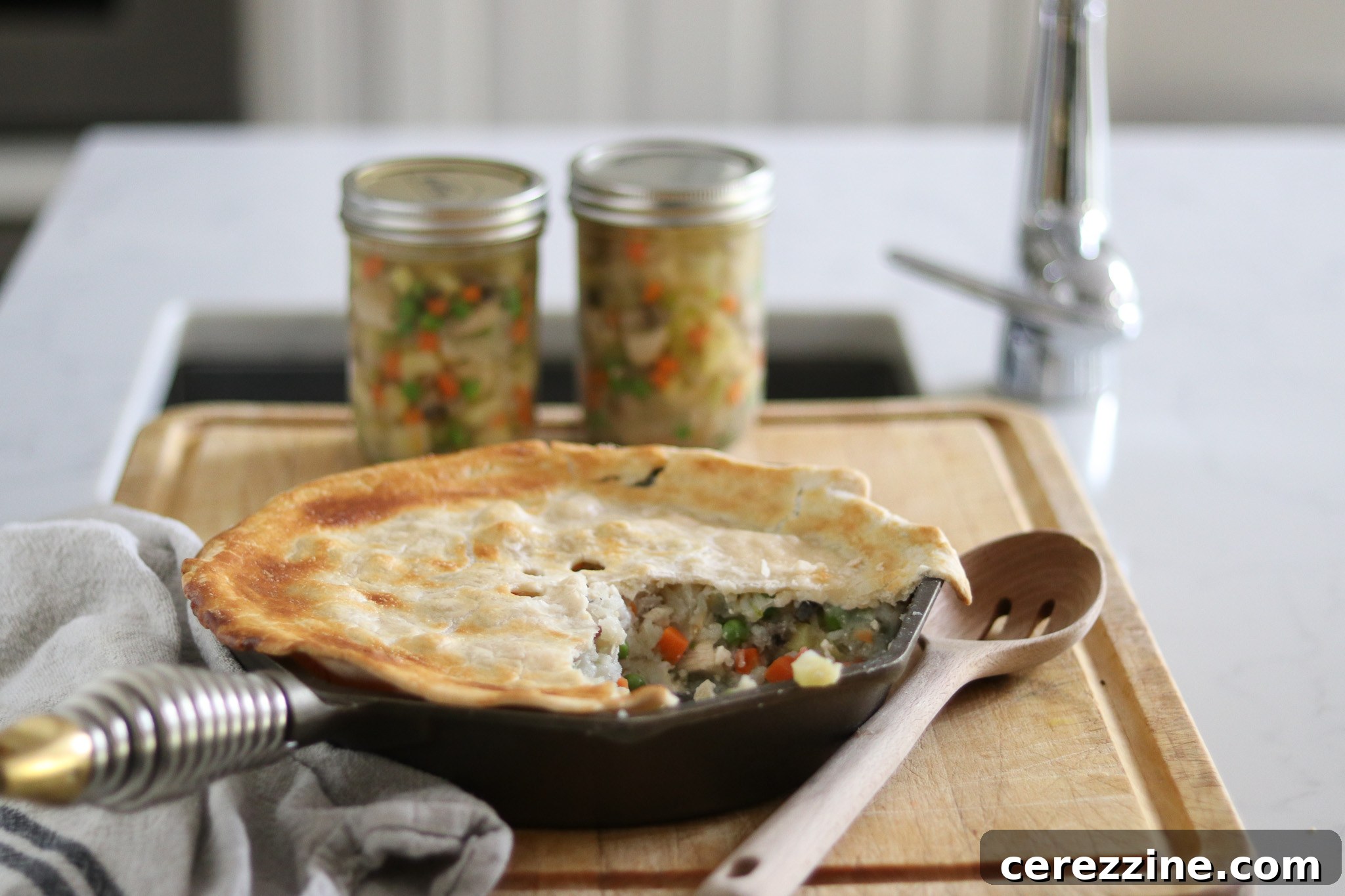
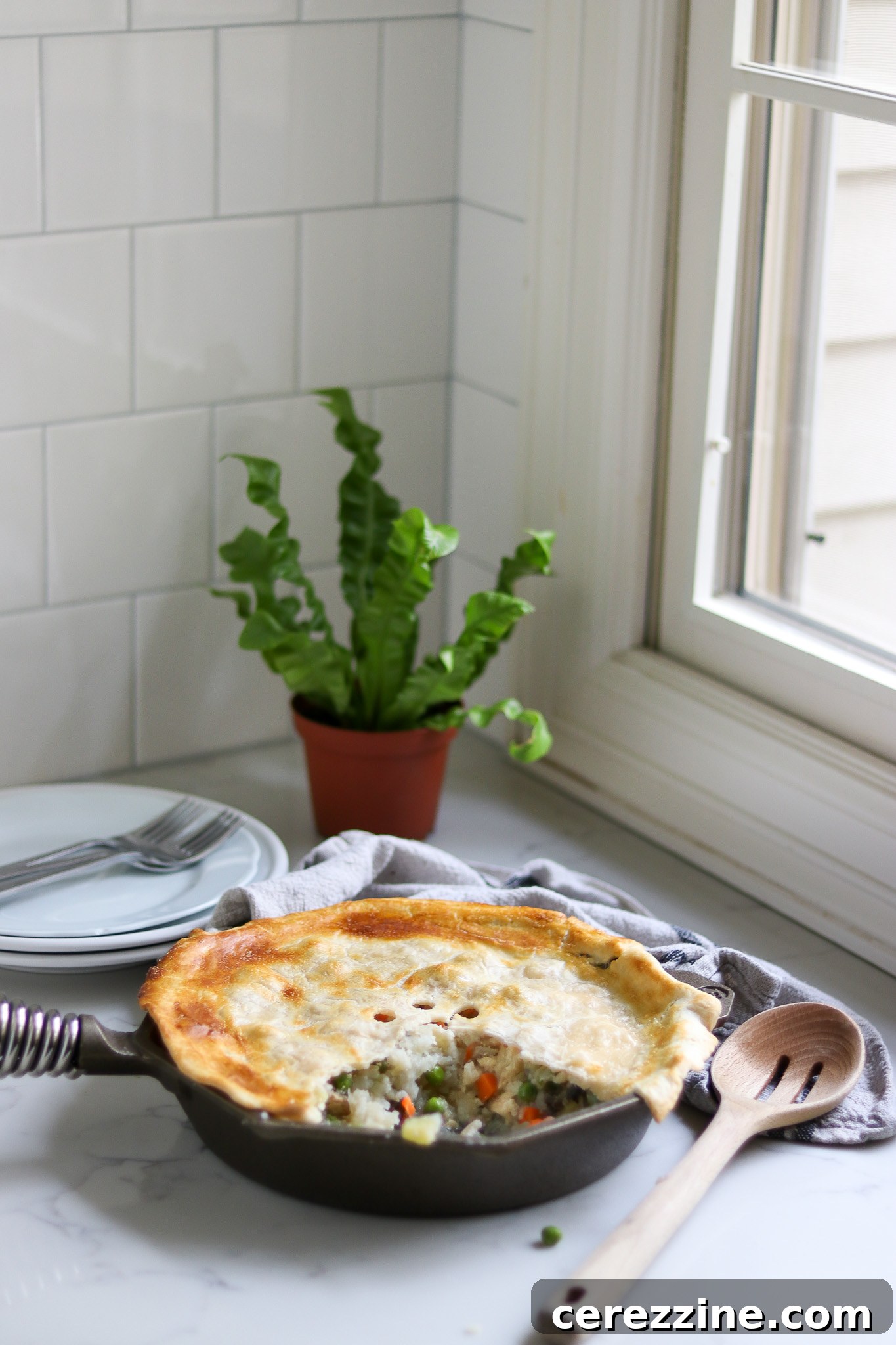
The culinary possibilities for your home-canned chicken pot pie filling are truly endless! Its inherent versatility makes it a pantry superstar, ready to be transformed into various delicious meals.
As a Hearty Stew or Soup
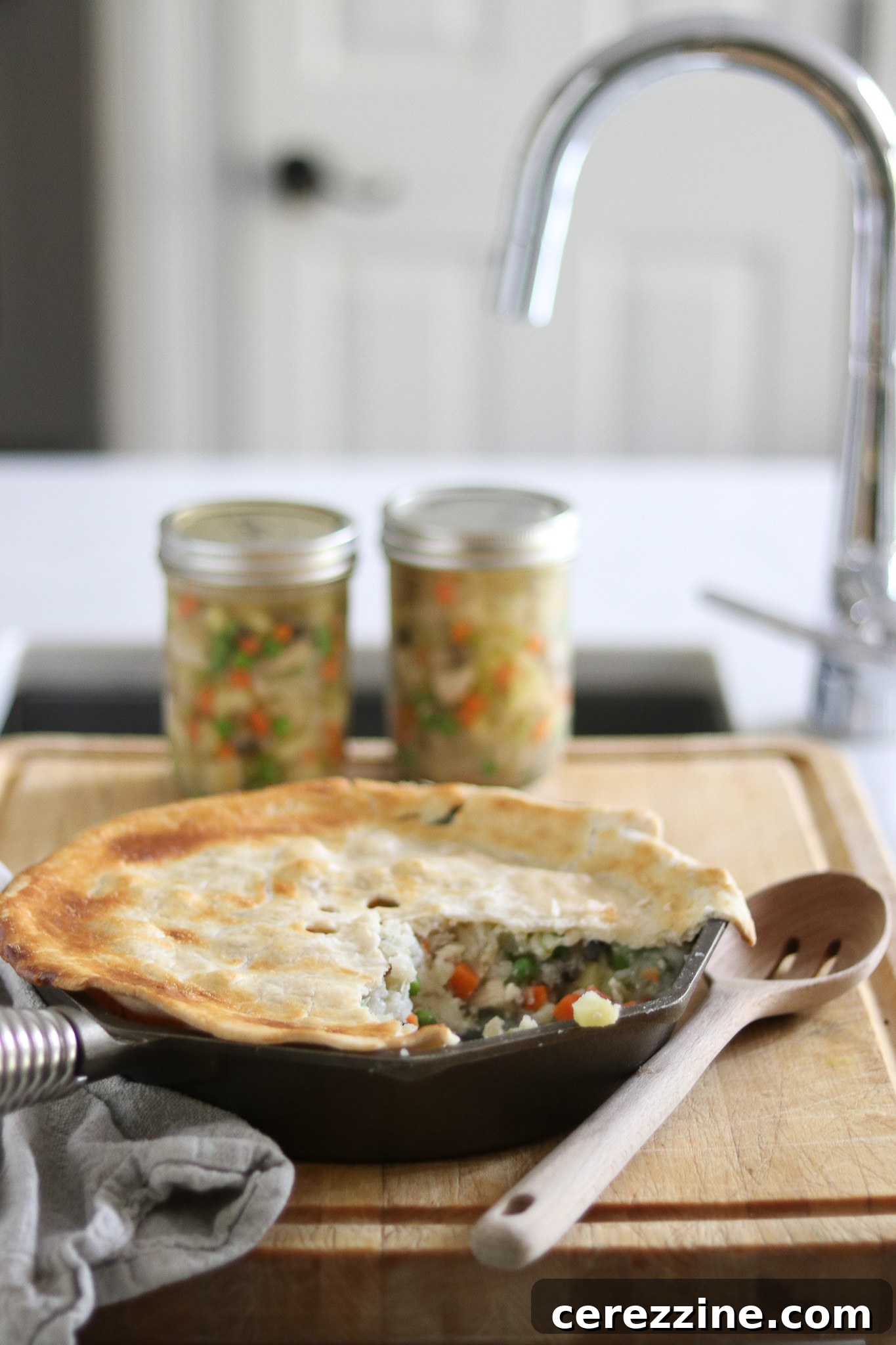
The simplest way to enjoy this filling is straight from the jar as a robust chicken and vegetable stew. Simply reheat it on the stovetop over medium heat until warmed through, or microwave it in a microwave-safe dish. Serve it alongside some crusty bread, a fresh green salad, or as a comforting soup and sandwich lunch. The rich broth and tender ingredients make for a deeply satisfying meal on its own.
The Classic Chicken Pot Pie
For a traditional and immensely satisfying chicken pot pie, follow these steps:
1. Preheat your oven to 400 degrees Fahrenheit (200 degrees Celsius).
2. Open a jar of your canned filling. Carefully strain the broth from the solid ingredients, reserving some of the broth in a separate bowl.
3. In a skillet over medium heat, melt two tablespoons of butter. Stir in two tablespoons (30 ml) of all-purpose flour to create a roux. Cook this mixture, stirring constantly, until it turns a light golden brown and smells slightly nutty. This will take a few minutes.
4. Gradually whisk in the reserved broth, continuing to stir until the mixture is smooth and begins to thicken to your desired consistency. Then, gently stir in the strained chicken and vegetable mixture. Remove the skillet from the heat.
5. Place one pie crust into the bottom of a pie dish. Pour the thickened chicken pot pie filling evenly over the crust. Top with a second pie crust, crimping the edges together to seal. Cut a few small slits in the top crust to allow steam to escape during baking, preventing a soggy crust.
6. Bake for approximately 20 minutes at 400 degrees Fahrenheit (200 Celsius), or until the pie crust is beautifully golden brown and the filling is hot and bubbling.
Enjoy this quintessential comfort food, made easy with your homemade canned filling!
More Chicken Canning Recipes
If you’re looking to expand your repertoire of chicken canning recipes, explore these other fantastic options:
- Canning Chicken Broth
- Canning Chicken Chunks
- Canning White Chicken Chili
- Canning Chicken Chili Verde
- Canning Chicken Soup
Delicious Meal-in-a-Jar Canning Recipes
Beyond chicken pot pie, there’s a whole world of convenient meal-in-a-jar canning recipes waiting to fill your pantry:
- Boston Baked Beans
- Thai Curry Duck (or Chicken)
- White Bean Chicken Chili
- Cajun Red Beans and Sausage
Canning Chicken Pot Pie Filling Recipe
By Ashley Adamant
Chicken pot pie filling is a hearty chicken stew that can be served as is, or baked into a quick pot pie for a delicious dinner in no time.
Yields: 12 servings (Makes 6 Pints)
Prep Time: 20 mins
Cook Time: 10 mins
Canning Time: 1 hr 15 mins
Total Time: 1 hr 45 mins
Equipment
- Pressure Canner
Ingredients
- 3 cups (750 ml) raw chicken, skinned and boned, cut into 1-inch (2.5 cm) cubes
- 1 ½ cups (375 ml) diced onion (about 2 medium onions)
- ½ cup (125 ml) diced fresh mushrooms
- 1 ½ cups (375 ml) diced carrots (roughly 3 medium carrots)
- 1 cup (250 ml) diced Yukon gold potatoes
- ½ cup (125 ml) peas (fresh or frozen)
- ½ cup (125 ml) diced celery
- 5 cups (1.25 liters) chicken stock or bone broth
- 3 tbsp (45 ml) butter
- 1 cup (250 ml) dry white wine
- 1 tsp (5 ml) dried thyme
- 1 tsp (5 ml) salt
- ½ tsp (2 ml) black pepper
- 1 bay leaf
- 1 tbsp (15 ml) lemon juice (bottled or fresh, for flavor)
Instructions
- Melt butter in a Dutch oven or large saucepan over medium heat. Add mushrooms and onions, then sauté until the mushrooms are lightly browned (about three minutes).
- Add the chicken, carrots, potatoes, and celery, again, sautéing until golden brown, or for about five minutes.
- Stir in the stock and then add the white wine, thyme, salt, pepper, and bay leaf.
- Bring to a boil, then reduce heat to medium and cook uncovered for about 10 minutes, or until the vegetables are tender and the chicken is cooked through, stirring often.
- Once the chicken is cooked through, remove the bay leaf and take the pan off the heat, then stir in the peas and lemon juice.
- Ladle the mixture into hot jars, leaving 1″ (2.5 centimeters) of headspace.
- Use an air bubble removal tool to remove any bubbles, then make sure adequate headspace remains. Wipe the rims of the jars to remove any food particles.
- Apply new lids and bands, then adjust to fingertip tight.
- Repeat until all jars are filled, then load each jar into your pressure canner. Put the lid on the canner and turn to the locked position.
- Adjust the heat to medium-high and allow steam to vent from the canner for 10 minutes.
- After venting, put the counterweight or weighted gauge on the vent (depending on manufacturer’s instructions), then bring the pressure to 10 lbs for a weighted-gauge canner or 11 lbs pressure for a dial-gauge canner. (Be sure to adjust for altitude, see notes below).
- Process pint jars for 75 minutes, and quart jars for 90 minutes.
- Turn off the heat, then allow the canner to return on its own to zero pressure. Let the canner sit for five more minutes before removing the lid. Cool the jars in the canner for 10 minutes, then remove them and let them cool on the counter for 12-24 hours.
- Check the seals and store properly sealed jars in a cool, dark place for up to one year. Refrigerate any unsealed jars for immediate use.
Notes
Altitude Adjustments for Canning Pot Pie Filling
Canning time remains the same regardless of altitude. However, the processing pressure increases as altitude increases. Use the following table to determine the correct processing pressure if you’re above 1,000 feet in elevation.
For dial gauge pressure canners:
- 0 to 2,000 feet in elevation – 11 lbs pressure
- 2,001 to 4,000 feet in elevation – 12 lbs pressure
- 4,001 to 6,000 feet in elevation – 13 lbs pressure
- 6,001 to 8,000 feet in elevation – 14 lbs pressure
For weighted gauge pressure canners:
- 0 to 1,000 feet in elevation – 10 lbs pressure
- Above 1,000 feet – 15 lbs pressure
To Serve:
To serve it as a soup, simply reheat it upon opening the jars, either on the stovetop or in the microwave.
If you’d like to enjoy it as a chicken pot pie, preheat the oven to 400 degrees Fahrenheit (200 degrees Celsius). Strain the broth from the jars, reserving some of the broth off to the side. Melt two tablespoons of butter in a skillet over medium heat, stirring in two tablespoons (30 ml) of flour as a thickener. Cook this mixture, stirring regularly, until golden brown. Add the reserved broth, continuing to stir, until the mixture is smooth and thickened. Stir in the strained chicken mixture, then remove from the heat.
Place a pie crust on the bottom of the pan. Pour the filling on top, then add an additional pie crust. Tuck the edges under and crimp with a fork. Cut slits in the top of the pie so steam can escape, then bake for 20 minutes at 400 degrees Fahrenheit (200 Celsius), or until the crust is golden and the filling is bubbly.
Nutrition
(Approximate values per serving)
- Serving: 1 cup
- Calories: 145 kcal
- Carbohydrates: 15g
- Protein: 7g
- Fat: 5g
- Saturated Fat: 1g
- Polyunsaturated Fat: 1g
- Monounsaturated Fat: 2g
- Trans Fat: 0.02g
- Cholesterol: 22mg
- Sodium: 495mg
- Potassium: 365mg
- Fiber: 2g
- Sugar: 6g
- Vitamin A: 2764 IU
- Vitamin C: 10mg
- Calcium: 32mg
- Iron: 1mg
Nutrition information is automatically calculated and should only be used as an approximation.
Delightful Soup Canning Recipes
If you enjoy the convenience of canned soups, there are many different soup canning recipes available to diversify your pantry:
- Sausage, Potato, and Kale Soup
- Canning Carrot Soup
- Canning Split Pea Soup
- Homemade Chicken Soup
Essential Pressure Canning Recipes
Once you’re comfortable with your pressure canner, you can explore other essential pressure canning recipes to keep your pantry fully stocked:
- Canning Beef
- Canning Potatoes
- Canning Pumpkin
- Canning Sweet Potatoes
- Canning Corn