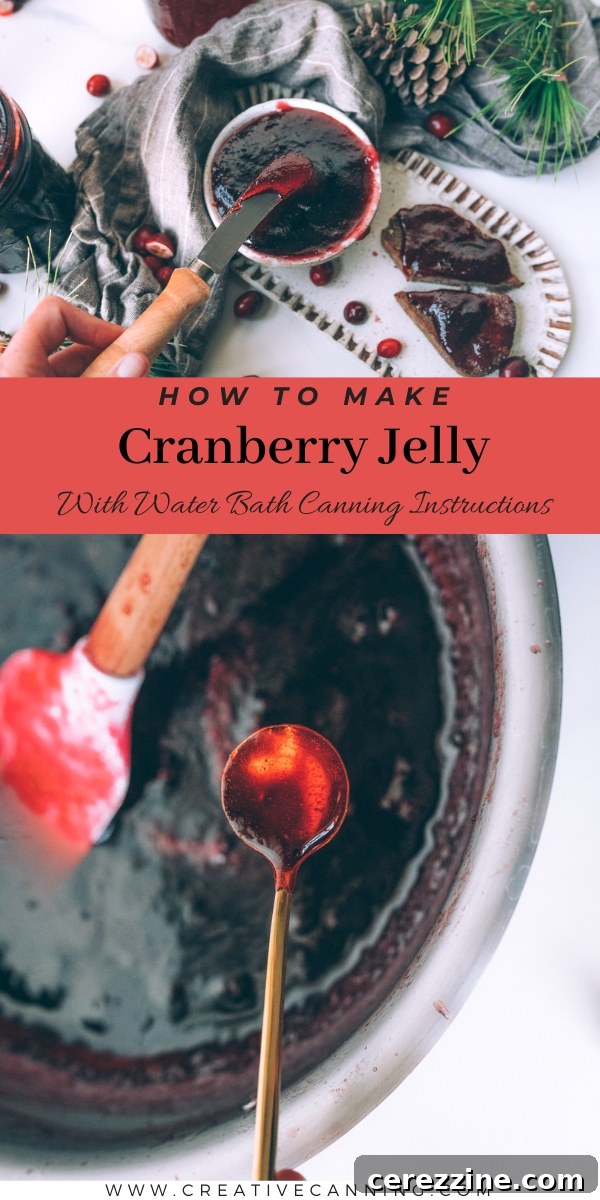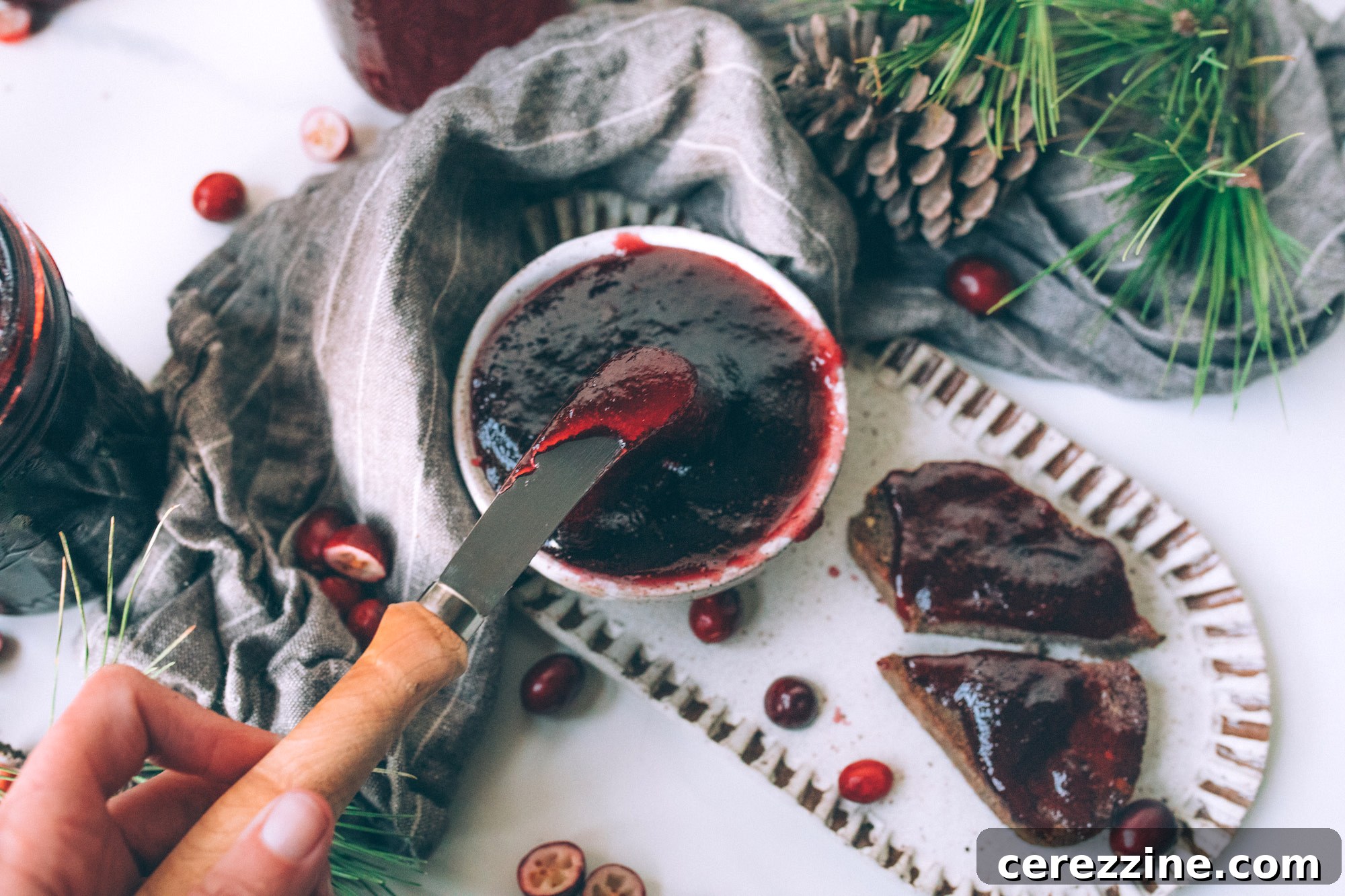
Welcome to the delightful world of homemade cranberry jelly – a truly exceptional early winter preserve brimming with vibrant flavor. Unlike the commercially produced, cylindrical “jellied cranberry sauce” that primarily serves as a side for holiday turkey, this versatile homemade jelly transcends seasonal boundaries. Imagine spreading its smooth, tart-sweet goodness on warm biscuits throughout the chilly months, incorporating it into elegant thumbprint cookies, or, of course, proudly featuring it on your festive holiday table alongside your roasted turkey.
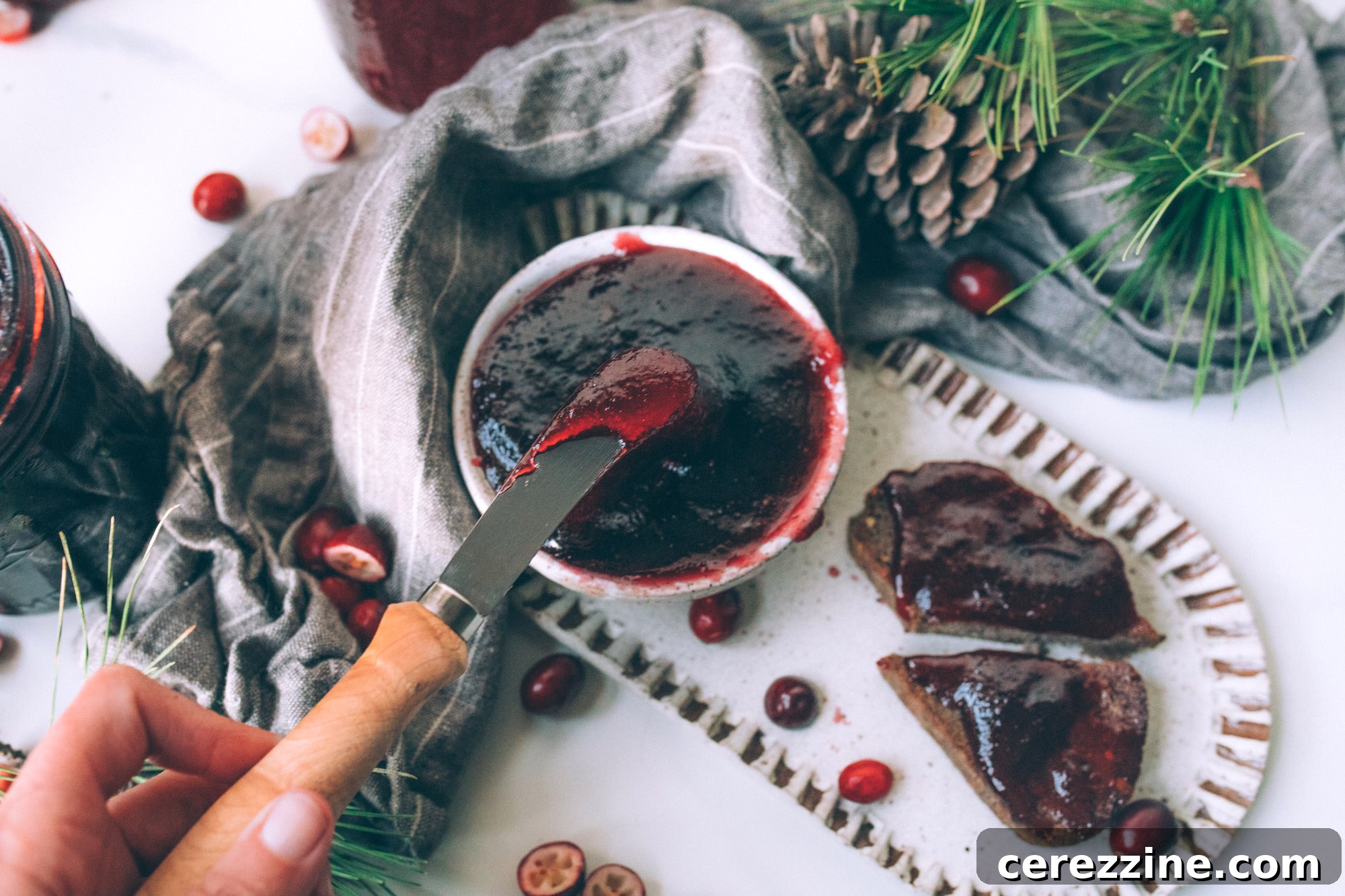
While the convenience of canned cranberry sauce has its undeniable place, especially during Thanksgiving dinner, it represents just one facet of cranberry’s culinary potential. Many home cooks are accustomed to the thick, sliceable variety, often made by pureeing whole berry cranberry sauce before canning. This method results in a dense, firm sauce that can be neatly slid out of a straight-sided jar, offering a distinct presentation.
However, if your culinary aspirations lean towards a silken, spreadable delight rather than a firm loaf, then authentic cranberry jelly is your answer. The process for crafting this exquisite jelly mirrors that of any other fruit jelly: the fruit is gently cooked, its precious juice is meticulously strained through a jelly bag, and this pectin-rich liquid is then simmered with sugar until it achieves its perfect, delicate set.
The outcome is a preserve with a wonderfully smooth consistency, devoid of the seeds and fibrous skins that can contribute bitter, highly acidic notes to whole berry sauces. This refined texture makes homemade cranberry jelly effortlessly spreadable – a perfect companion for toast, scones, or as an elevated condiment to slather generously over your holiday turkey. It truly offers the best of both worlds!
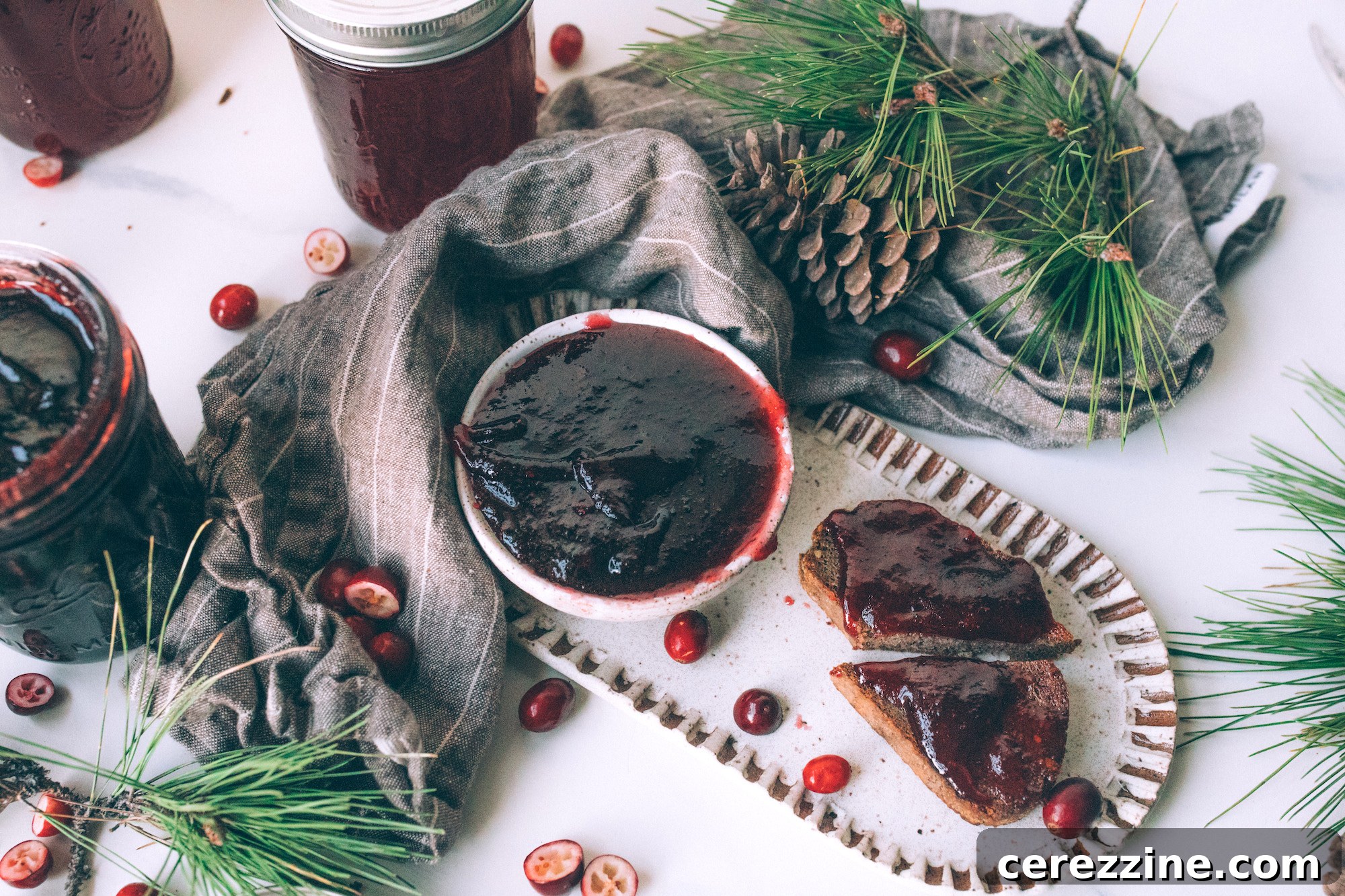
Essential Ingredients for Perfect Cranberry Jelly
Cranberries are nature’s gift for jelly making, boasting a naturally high pectin content and a distinctive tartness that creates a truly unparalleled preserve. This recipe expertly balances the cranberries’ tart profile with sugar, eliminating the need for any additional commercial pectin. You’ll be relying on the fruit’s inherent gelling power for a truly authentic taste and texture.
This recipe is designed for a small batch, yielding approximately two half-pint (8-ounce) jars of exquisite jelly. While you can confidently double the recipe for a larger yield of four half-pint jars, it’s generally advisable not to exceed this amount in a single batch. Larger volumes can sometimes hinder proper setting due to uneven heat distribution and evaporation rates.
To embark on your homemade cranberry jelly journey, you will need:
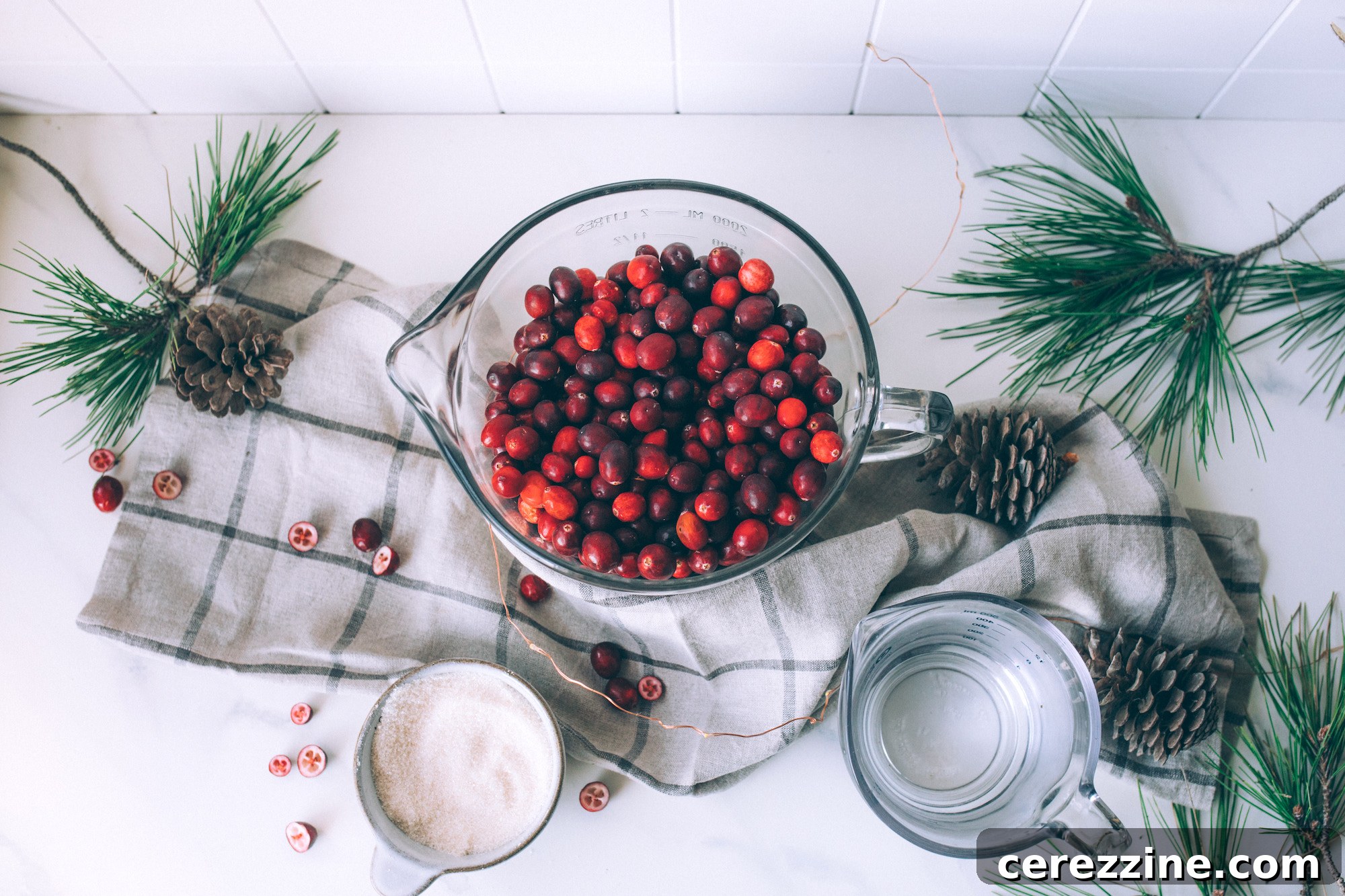
- 6 cups (approximately 680 grams) fresh, whole cranberries (typically two 12 oz bags as purchased)
- 2 cups water
- 1 Tbsp. lemon juice (optional, but recommended for brightness and pectin activation)
- 2 ¼ cups granulated sugar*
*A Note on Sugar: You might notice that the sugar ratio in this recipe is slightly higher than the conventional one-to-one ratio often found in other jelly recipes. For every 2 cups of cranberry juice you extract, you will be adding 2 ¼ cups of sugar. This precise ratio is crucial for achieving the ideal balance of tartness and sweetness, as well as ensuring a proper set without commercial pectin.
Should your cranberries yield slightly less than 2 cups of juice, you can supplement the liquid with 100% pure bottled cranberry juice (unsweetened) to reach the required volume. However, this recipe is typically formulated to produce just over 2 cups of juice, making adjustments rarely necessary. If you happen to extract more than 2 cups, you can either adjust the sugar quantity proportionally or save the excess juice for another culinary creation.
Crafting Jelly with Frozen Cranberries
While this recipe ideally utilizes fresh, whole cranberries, we understand that they aren’t always in season or readily available. It’s important to note that freezing fruit can significantly impact its natural pectin levels. After just about a week in the freezer, cranberries can lose up to half of their gelling capabilities, meaning they may not set properly without the assistance of added commercial pectin.
If you opt to use frozen cranberries, you can still create a beautiful jelly, but you will need to incorporate one box (1.75 oz) of standard powdered pectin (such as Sure-Jell) for every 4 cups of juice extracted. The method of preparation when using commercial pectin differs slightly:
- Begin by extracting the juice from your frozen cranberries as you would with fresh ones (details below). Doubling this recipe will help you achieve the 4 cups of juice needed for a full box of pectin. Alternatively, you can use half a box of pectin (approximately 3 tablespoons) for a 2-cup juice batch.
- Pour the extracted juice into a saucepan or jelly pan.
- Stir in the powdered pectin until it is completely dissolved. Do not add the sugar at this stage.
- Bring the juice and pectin mixture to a hard, rolling boil that cannot be stirred down, and maintain this boil for precisely 1 minute.
- Next, quickly add the measured sugar to the boiling mixture, stirring until it’s fully dissolved.
- Return the mixture to a hard, rolling boil for another 1 minute.
- Carefully ladle the hot jelly into your prepared canning jars, leaving ¼ inch of headspace at the top. Proceed with water bath canning or simply cool and freeze for longer storage, as per your preference.
Using Bottled Cranberry Juice for Jelly
For those seeking a quicker route, or when fresh cranberries are unavailable, using bottled cranberry juice is a viable option. However, careful selection is key. It is paramount to choose 100% pure cranberry juice with no added sugars, sweeteners, or corn syrup. Many commercially available cranberry “juices” are actually cranberry juice cocktails, which are predominantly corn syrup and contain minimal actual fruit juice. Always check the label and look for “100% Cranberry Juice,” often found in the health food aisle of grocery stores.
Brands like R.W. Knudsen offer a reliable 100% bottled cranberry juice that performs exceptionally well in jelly making.
As with frozen cranberries, bottled cranberry juice typically lacks sufficient natural pectin to set on its own. Therefore, you will need to follow the same pectin-addition instructions outlined above for frozen cranberries. Extracting juice from fresh or frozen cranberries ensures maximum pectin, but bottled juice, combined with commercial pectin, provides a convenient alternative.
Step-by-Step Guide: How to Make Smooth Cranberry Jelly
Creating homemade cranberry jelly is a rewarding process that yields a truly spectacular preserve. Follow these detailed steps to ensure a perfect batch every time:
Step 1: Cranberry Preparation
Begin by meticulously sorting through your fresh cranberries. Discard any berries that appear overripe, shriveled, or show brown spots, as these can negatively impact the jelly’s flavor and setting ability. Only use plump, firm, and blemish-free cranberries. Once sorted, rinse the cranberries thoroughly under cool, clean water.
Step 2: Simmering the Cranberries
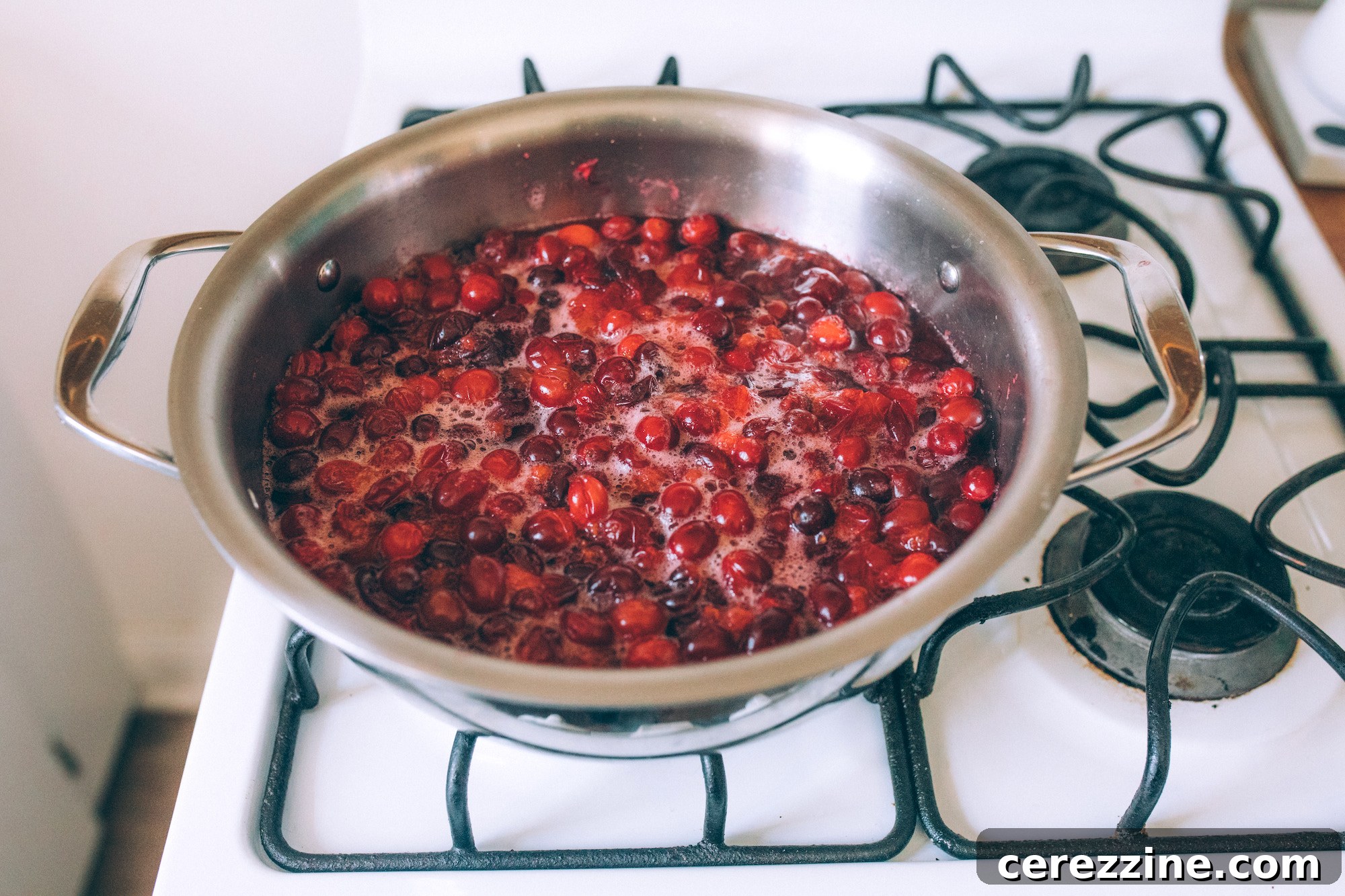
Place the cleaned cranberries into a medium to large saucepan or a dedicated jelly pot. Add 2 cups of water along with the optional (but recommended) 1 tablespoon of lemon juice. The lemon juice not only brightens the flavor but also aids in extracting and activating the cranberries’ natural pectin. Bring the mixture to a rolling boil over medium-high heat. Once boiling, reduce the heat to medium-low, cover the pot, and allow the cranberries to simmer gently for 10 to 15 minutes. The goal is for the cranberries to soften and visibly pop open. Keep in mind that frozen cranberries may soften more quickly than fresh ones.
Step 3: Mashing and Initial Juice Extraction
After simmering, remove the pot from the heat. Using a potato masher or a sturdy large spoon, thoroughly mash the softened berries. Ensure every cranberry has burst open to maximize juice extraction. The more thoroughly you mash, the more pectin-rich juice you will obtain.
Step 4: Straining for Clear Juice
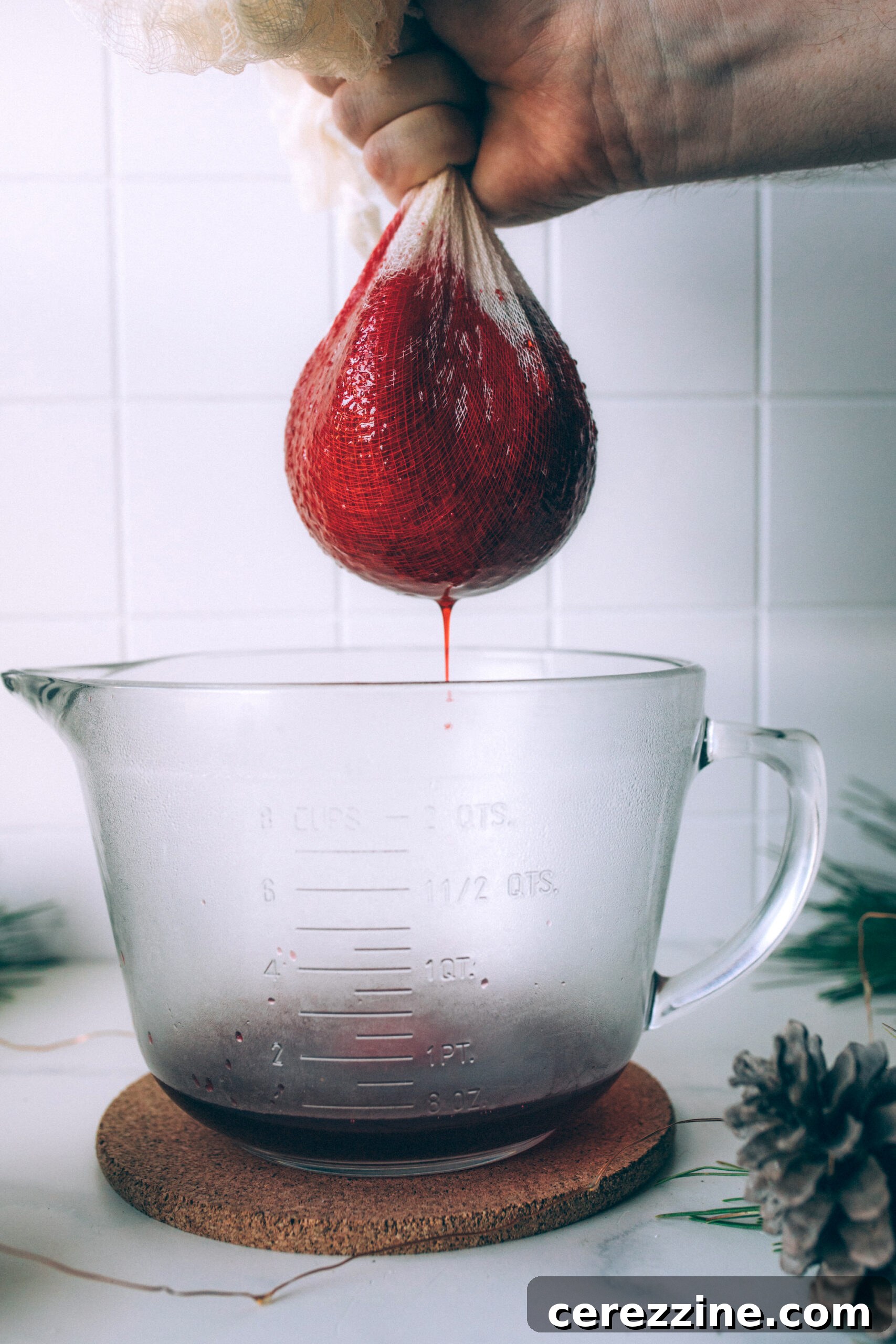
Carefully pour the mashed cranberry mixture into a prepared jelly bag suspended over a large bowl or pot. Allow the juice to drip naturally through the bag. This passive straining method is crucial for achieving clear, vibrant jelly. For those without a jelly bag, line a fine-mesh sieve or colander with several layers of clean cheesecloth and place it over a bowl.
Resist the temptation to squeeze the jelly bag or cheesecloth to expedite the process. Squeezing can force small pulp particles through the filter, resulting in a cloudy jelly. While a slightly cloudy jelly won’t affect the flavor, it won’t have the desired pristine clarity. Let the mixture sit and drip for several hours, or ideally, overnight, until the dripping has slowed considerably or stopped.
Step 5: Measuring Juice and Calculating Sugar
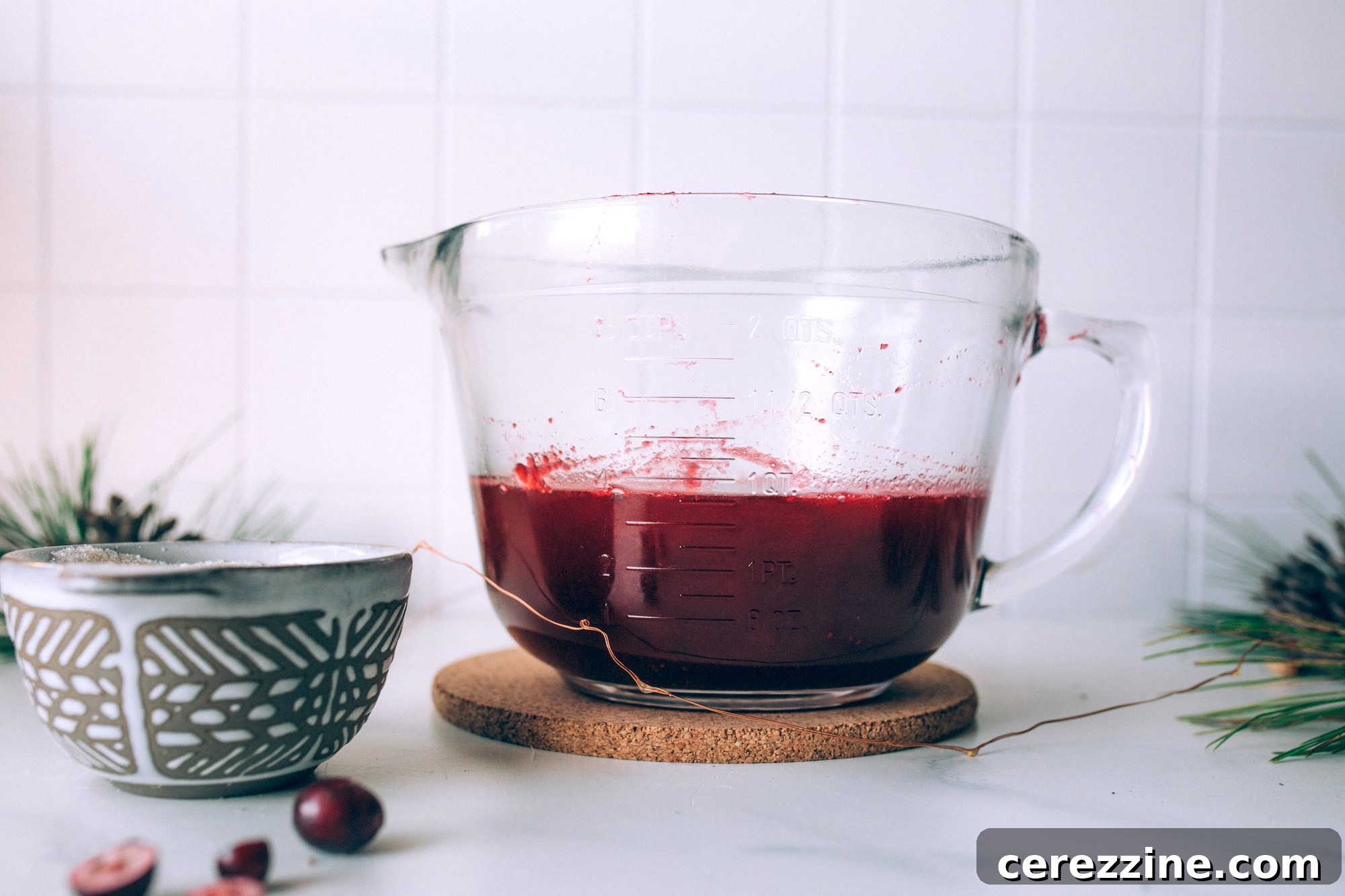
Once the juice has been fully extracted, measure the total volume of liquid you have collected. Remember, this recipe calls for a slightly higher than 1:1 sugar ratio. For every 2 cups of cranberry juice, you will add 2 ¼ cups of sugar.
If, by chance, you have less than 2 cups of juice, you can top it up to the 2-cup mark with 100% pure unsweetened bottled cranberry juice. Conversely, if you have more than 2 cups of juice (which is often the case with this recipe), multiply your total juice volume by 1.125 to determine the precise amount of sugar needed. Alternatively, you can simply save any excess juice for another use.
Step 6: Cooking the Jelly to Set
Pour the measured cranberry juice and sugar into a clean medium saucepan or jam pot. Place the pot over medium-high heat and stir continuously until all the sugar crystals are completely dissolved. It’s crucial that the sugar is fully dissolved before the mixture comes to a boil to prevent crystallization in the finished jelly.
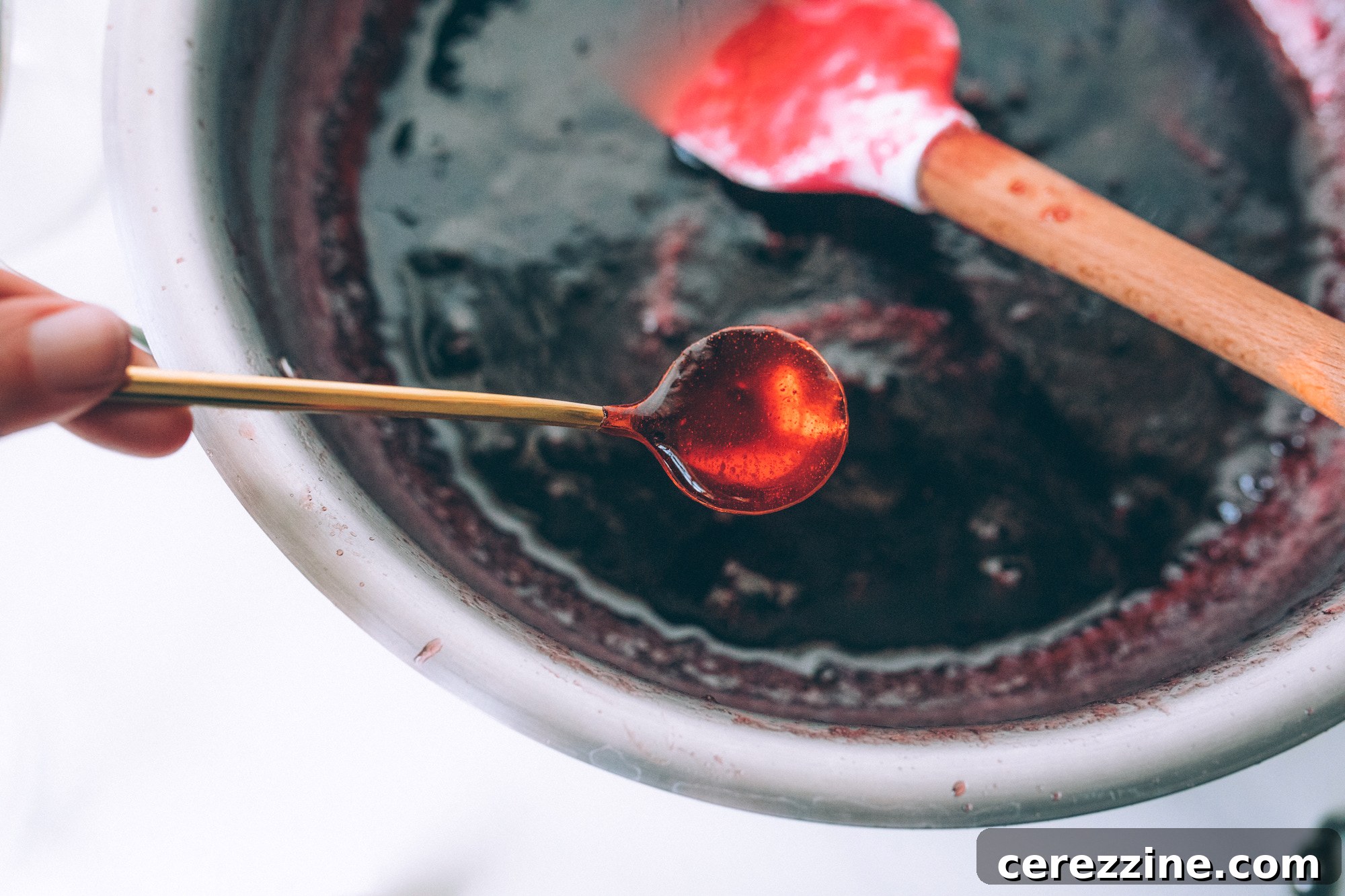
Bring the cranberry mixture to a vigorous, hard boil that cannot be stirred down. Continue to boil for 10 to 15 minutes, or until the jelly reaches 220 degrees Fahrenheit on a reliable candy thermometer. This temperature indicates that enough water has evaporated for the pectin to form a stable gel. If you don’t have a candy thermometer, you can use the plate test: place a small spoonful of hot jelly on a chilled plate (kept in the freezer), let it cool for a minute, then push it with your finger. If it wrinkles, it’s ready.
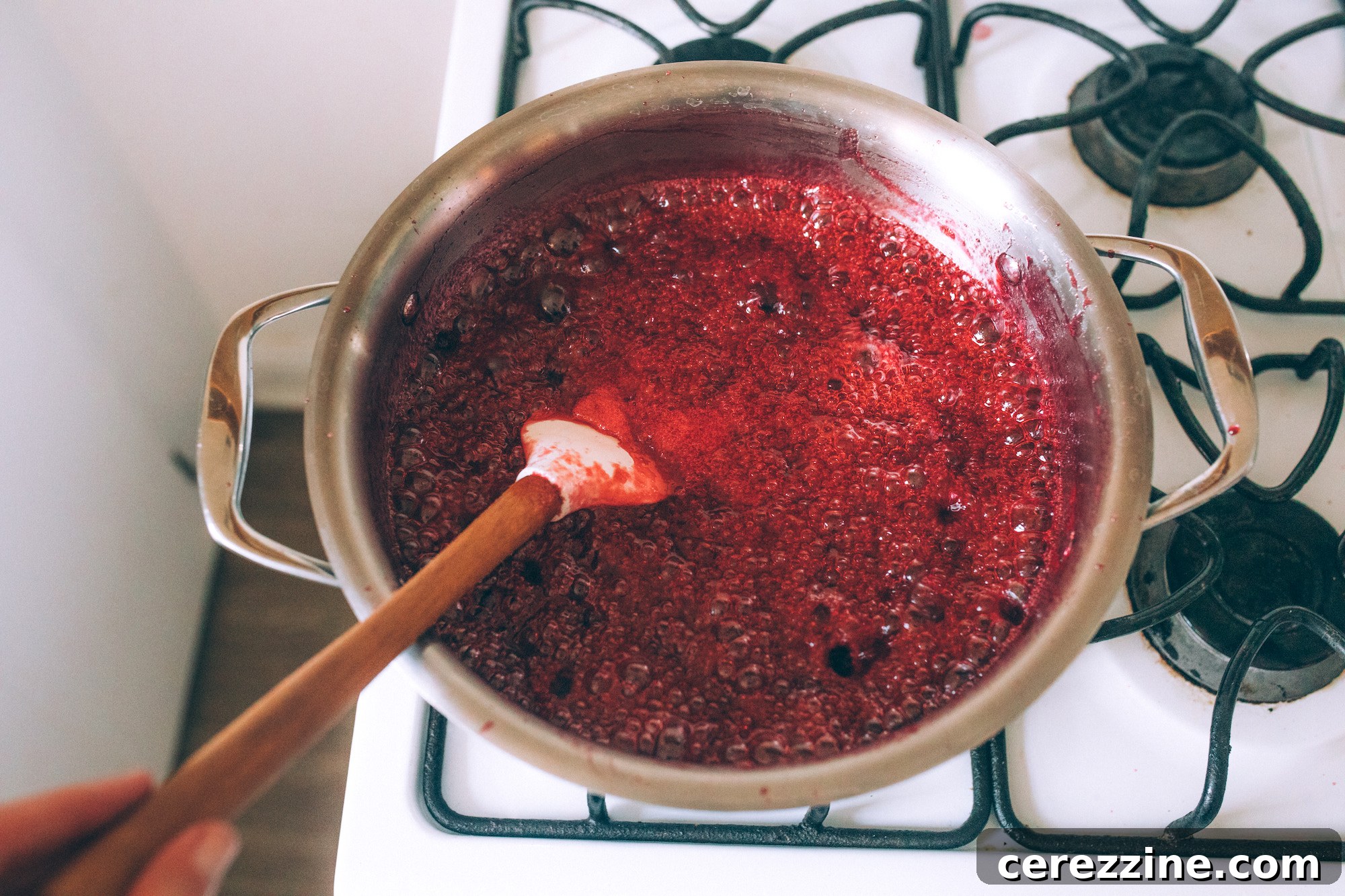
Pay close attention as your jelly cooks. If your cranberries were exceptionally rich in pectin, the jelly might begin to thicken visibly before it even reaches the 220°F mark. In such instances, you can stop boiling once you observe clear signs of thickening and a good “sheet” test (where the jelly drips off a spoon in a sheet rather than individual drops).
Step 7: Filling and Sealing Jars
Carefully ladle or pour the hot jelly into your prepared hot jelly jars. Leave exactly ¼ inch of headspace from the rim of each jar. This space is essential for proper sealing in canning and for expansion if freezing.
Wipe the rims of the jars meticulously with a clean, damp cloth to remove any jelly residue. This ensures a tight seal. Place the two-part canning lids (flat lid and screw band) onto the jars. Screw on the bands until they are “finger-tight” – firm but not overtightened.
Step 8: Canning or Storing
If you plan to can your jelly for shelf-stable storage, proceed directly to the canning instructions below. For refrigerator or freezer preserves, simply let the filled jars sit undisturbed on your counter for 24 hours to allow the jelly to fully set. Store this uncanned jelly in the refrigerator for up to 1 month, or freeze it for up to 6 months to maintain its peak quality and freshness.
Preserving Your Cranberry Jelly Through Water Bath Canning
Canning your cranberry jelly extends its shelf life significantly, allowing you to enjoy its delightful flavor months after preparation. If you’re new to canning, we highly recommend consulting a comprehensive beginner’s guide to water bath canning for detailed instructions on equipment, safety, and best practices. However, for the specific steps related to this cranberry jelly recipe, follow these instructions:
Step 1: Jar Preparation
Before you even begin cooking your jelly, ensure your canning jars and lids are properly sterilized and kept hot. Jars can be sterilized by boiling them in water for at least 10 minutes or running them through a dishwasher’s sanitizing cycle. Keep them hot until filling to prevent thermal shock when the hot jelly is added.
Step 2: Filling the Jars
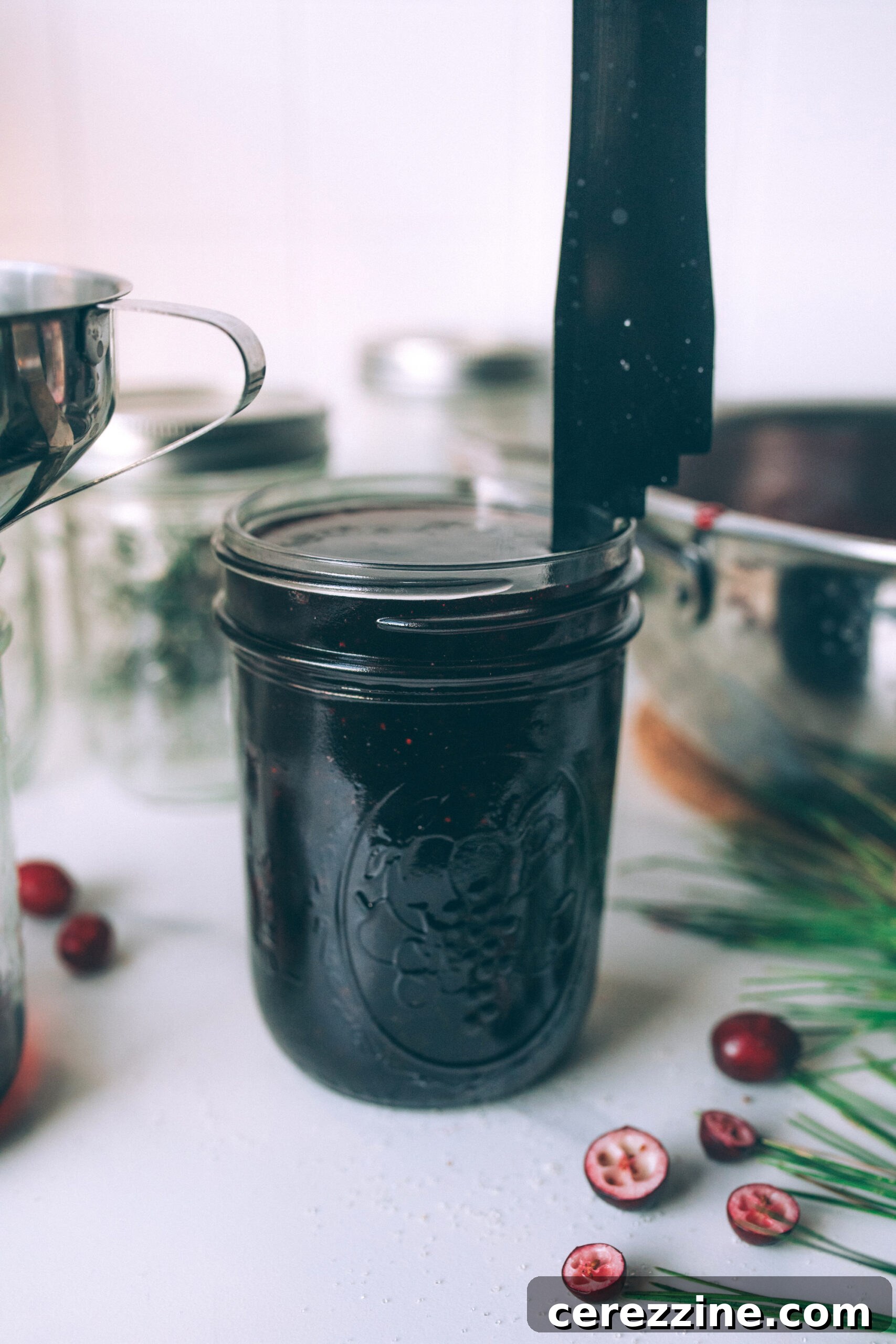
Once your cranberry jelly has reached its setting point and is still piping hot, carefully ladle or pour it into the prepared hot canning jars. Use a canning funnel to minimize spills and ensure cleanliness. Leave a precise ¼ inch of headspace from the rim of each jar. This headspace is critical for creating a vacuum seal.
Step 3: Cleaning Rims and Applying Lids
With a clean, damp cloth, thoroughly wipe the rims of each jar. Even a tiny speck of jelly can prevent a proper seal. Place the flat canning lids (which should also be warm, often from a simmer in hot water) centered on the jar rims. Then, screw on the canning rings (bands) until they are “finger-tight.” This means tight enough to secure the lid but not so tight that air cannot escape during processing.
Step 4: Water Bath Processing
Carefully place the filled and lidded jelly jars into your prepared hot water bath canner, using a jar lifter. Ensure there is at least 1-2 inches of water covering the tops of the jars. Bring the water in the canner back to a vigorous boil. Once boiling, begin your timer and process the jars for 10 minutes. If you reside at an elevation above 6,000 feet, increase the processing time to 15 minutes to account for lower boiling temperatures.
Step 5: Cooling and Sealing
After the processing time is complete, turn off the heat and allow the jars to remain in the hot canner water for an additional 5 minutes. This helps the contents equalize temperature and can aid in a better seal. Using the jar lifter, carefully remove the hot jars from the canner and place them upright on a towel-lined counter or a wire rack. Leave several inches of air space between each jar to allow for even cooling. Avoid disturbing the jars for at least 12-24 hours.
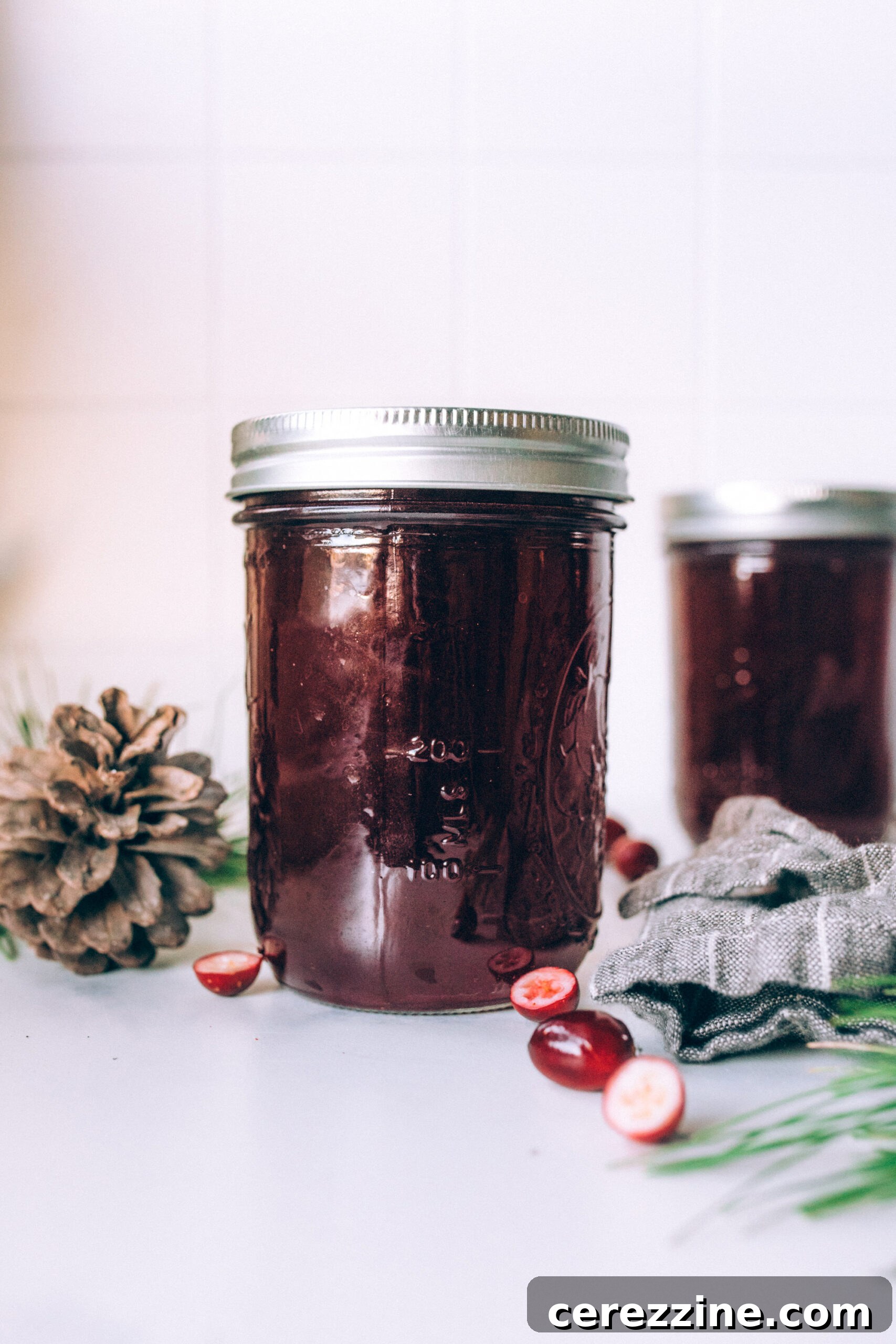
As the jars cool, you should hear satisfying “pinging” sounds, indicating that the lids are sealing. After 24 hours, check the seals by pressing down on the center of each lid. If the lid does not flex, it is sealed. Any jars that have not sealed properly should be stored in the refrigerator and consumed within a month. Sealed jars can be stored in a cool, dry, dark pantry for up to 18 months, or even longer if the seal remains intact. Always refrigerate once a jar has been opened.
Exciting Cranberry Jelly Variations
Cranberries offer a versatile base for blending with other flavors, as evidenced by the array of cranberry juice combinations found in stores. Homemade cranberry jelly provides an excellent opportunity to experiment and create unique flavor profiles.
Fruit Combinations:
One of my personal favorites is a cranberry-raspberry blend, offering a delightful balance of tartness and sweetness. To create this, simply add about 2 cups of fresh or frozen raspberries along with your 6 cups of cranberries, water, and lemon juice during the initial cooking phase. The raspberries will soften and become mushy alongside the cranberries. Proceed with mashing, straining, and sugar calculations as usual. Other excellent fruit pairings include apples, grapes, currants, peaches, oranges, or pineapple. When incorporating other fruits, a good rule of thumb is to stick with 6 cups of cranberries (as they provide the primary pectin) and add approximately 2 cups of your chosen complementary fruit.
Spiced Cranberry Jelly:
Elevate your cranberry jelly with aromatic spices. A touch of cinnamon, nutmeg, or even a hint of ground cloves can transform the flavor profile, making it even more festive. For an unexpected kick, a pinch of cayenne pepper can introduce a subtle warmth without overpowering the fruit. Add these spices during the final boiling stage with the sugar.
Pectin Considerations for Variations:
Remember that cranberries are the primary source of natural pectin in this recipe. If you decide to add a substantial amount of other fruits (more than 2 cups) that are lower in pectin, you might need to introduce commercial pectin to ensure a proper set. Alternatively, if you wish to maintain a strictly “no added pectin” recipe, keep the additional fruit quantities modest to rely on the cranberries’ inherent gelling power.
Versatile Ways to Enjoy Homemade Cranberry Jelly
Homemade cranberry jelly is far too delicious and versatile to be confined solely to the holiday table. Here are numerous delightful ways to incorporate this vibrant preserve into your everyday and celebratory meals:
- Classic Accompaniment: Serve it traditionally alongside roasted meats like turkey, chicken, or pork. Its tart zing beautifully cuts through the richness of poultry and complements savory dishes.
- Breakfast & Brunch Staple: Spread it generously on warm, flaky biscuits, toasted English muffins, croissants, or bagels. It’s also a fantastic topping for homemade or store-bought scones.
- Baking & Desserts: Use it as a filling for thumbprint cookies, tarts, or pastry turnovers. Swirl it into plain yogurt or oatmeal for a burst of fruity flavor. It can also be warmed slightly and drizzled over cheesecakes or vanilla ice cream.
- Gourmet Appetizers: Pair it with soft cheeses like brie or goat cheese on crackers or baguette slices for an elegant appetizer. A dollop of cranberry jelly can also elevate a charcuterie board.
- Glazes & Marinades: Whisk it into a glaze for roasted ham, duck, or chicken. Its sweet and tart notes make it an excellent ingredient for fruit-based marinades.
- Beverage Enhancer: A spoonful can be stirred into hot tea for a comforting drink or muddled into cocktails for a festive twist.
- Muffin & Bread Topping: Enhance the flavor of apple cinnamon muffins, bran muffins, or even plain quick breads with a generous spread of cranberry jelly.
More Cranberry Canning Recipes to Explore
Cranberry jelly is just the beginning of what you can preserve with these wonderful berries. The world of cranberry canning offers a multitude of delicious possibilities:
- Canning Whole Cranberries in Syrup
- Canning Cranberry Juice (Two Ways)
- Canning Cranberry Sauce
- Christmas Jam with cranberries, strawberries, orange, and warm spices.
Beyond Canning: Other Ways to Preserve Cranberries
Canning is a fantastic preservation method, but it’s not the only way to enjoy cranberries year-round. Explore these other creative techniques:
- Cranberry Wine
- Freezing Cranberries
- Dried Cranberry Raisins
Cranberry Jelly
Equipment
-
Water Bath Canner
-
Jelly Strainer with Bag
Ingredients
- 6 cups cranberries, fresh, whole, two 12 oz bags as purchased (see notes for frozen)
- 2 cups water
- 1 Tbsp. lemon juice
- 2 ¼ cups sugar
Instructions
-
Place clean, fresh or frozen cranberries in a medium saucepan and add water and lemon juice.
-
Place the pan on the stove on medium-high heat and bring the mixture to a boil.
-
Reduce the heat to medium-low, cover, and simmer for 10 to 15 minutes.
-
Remove the pan from the stove and use a potato masher or heavy spoon to mash the berries, ensuring all the cranberries have popped open.
-
Carefully pour the cranberry mixture into a jelly bag and let it sit for several hours or overnight until the juice has stopped dripping. Use several layers of cheesecloth and a strainer if you do not have a jelly bag.
-
If canning, prepare a water bath canner, jars, and lids before you start working with the extracted juice to make the jelly.
-
Measure the amount of liquid you have, then measure the appropriate amount of sugar. If you do not have 2 cups of liquid, add bottled juice to obtain 2 cups, and measure 2 ¼ cups of sugar.
-
If you have more than 2 cups, multiply the amount by 1.125 to determine your needed sugar.
-
In a medium saucepan or jam pot, stir the cranberry juice and sugar until the sugar is dissolved, and cook on medium-high heat, bringing it to a full boil, stirring often.
-
Continue to boil the mixture for 10-15 minutes or until it reaches 220 degrees Fahrenheit on a candy thermometer.
-
Pour the hot jelly into prepared jelly jars using a canning funnel, leaving ¼” headspace, then wipe the rims of the jars with a clean cloth.
-
Secure lids to the jars and continue the canning process using the hot water bath method. Process jars for 10 minutes, or 15 minutes if above 6,000 feet in elevation.
-
If you do not plan on canning your jelly, leave the jars to cool on the counter for 24 hours or until the jelly has set.
-
Jelly that has not been canned should be stored in the refrigerator for up to 1 month or in the freezer for six months. Jelly that has been processed and sealed using a canning method can be stored in a cool, dry place, where it will maintain quality for 18 months. For all jelly, refrigerate once opened.
Notes
With Frozen Cranberries
This recipe calls for fresh whole cranberries because freezing fruit dramatically decreases the pectin. After a week in the freezer, cranberries have lost about half their pectin, and they won’t set nicely without added boxed pectin. If you are using frozen cranberries, you can still make the jelly, but you will need to add 1 box of standard powdered pectin (like Sure-Jell) to every 4 cups of juice.
The order of operations is a bit different when working with pectin.
Extract the juice from the cranberries as you otherwise would. Doubling the recipe will help you get to 4 cups juice, or alternately, you can use half a box of pectin (3 tbsp). Pour the juice into a saucepan or jelly pan, and then stir in the pectin until fully dissolved (but don’t add the sugar yet). Bring the mixture to a hard rolling boil and boil for 1 minute.
Next, add the sugar and return the mixture to a boil for 1 minute.
Ladle the jelly into prepared jars, leaving 1/4 inch headspace and proceed with canning, or freezing, depending on your preference.
With Bottled Cranberry Juice
If you don’t want to extract the juice from fresh cranberries, you can use already-pressed juice. Be sure it’s 100% juice without added sugar, as most cranberry juices in the grocery store are mostly corn syrup, with no more than 10% juice. Don’t use sweetened cranberry juice or cranberry juice cocktail that contains sugar or corn syrup. Look for just cranberry juice, which is often in the health food section.
Next, proceed with pectin as you would using the instructions above. Bottled cranberry juice won’t have enough pectin to set on its own, so you’ll need to use pectin as you would if you’re working with frozen cranberries.
Nutrition
Nutrition information is automatically calculated, so should only be used as an approximation.
Heartwarming Winter Canning Recipes
Don’t let the colder months deter your canning adventures! There are still abundant opportunities to keep your canning pot bubbling and your pantry stocked with delicious preserves:
- Canning Quince
- Apple Jam
- Sweet Cider Apple Butter
- Pear Butter
- Caramelized Onion Jam
- Pear Jam
- Butternut Squash and White Bean Soup
Timeless Old-Fashioned Jelly Recipes (No Added Pectin)
If you cherish the traditional art of jelly making, relying solely on the natural pectin within the fruit, sugar, and a touch of culinary passion, these recipes are for you. Each jar is a testament to simple ingredients yielding extraordinary flavor:
- Gooseberry Jelly
- Black Raspberry Jelly (Seedless)
- Quince Jelly
- Raspberry Jelly
- Red Currant Jelly