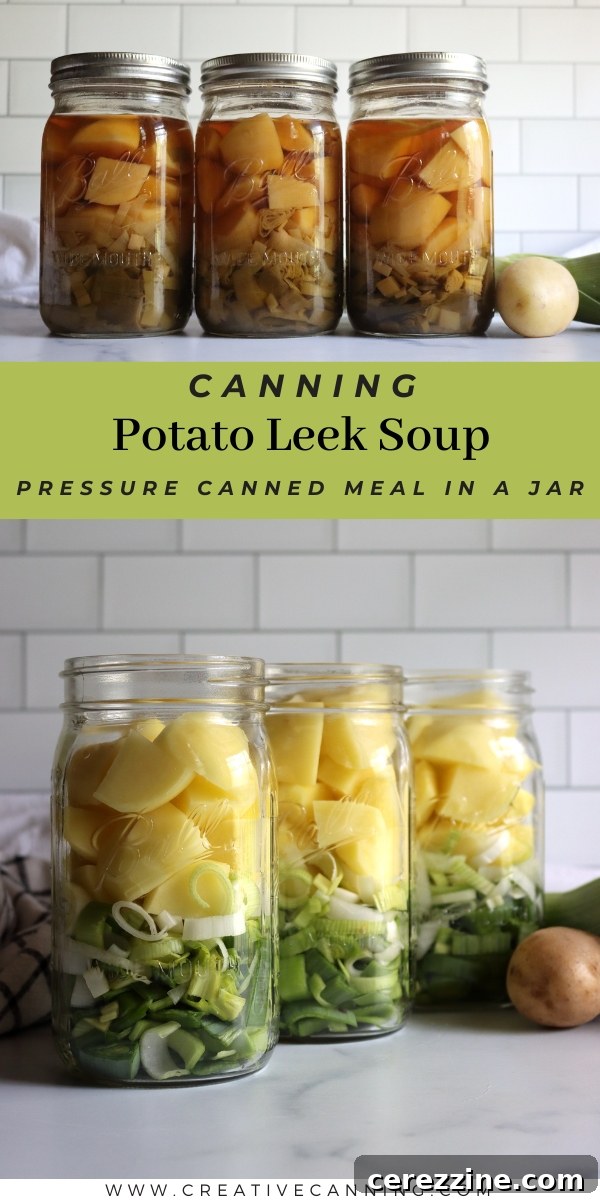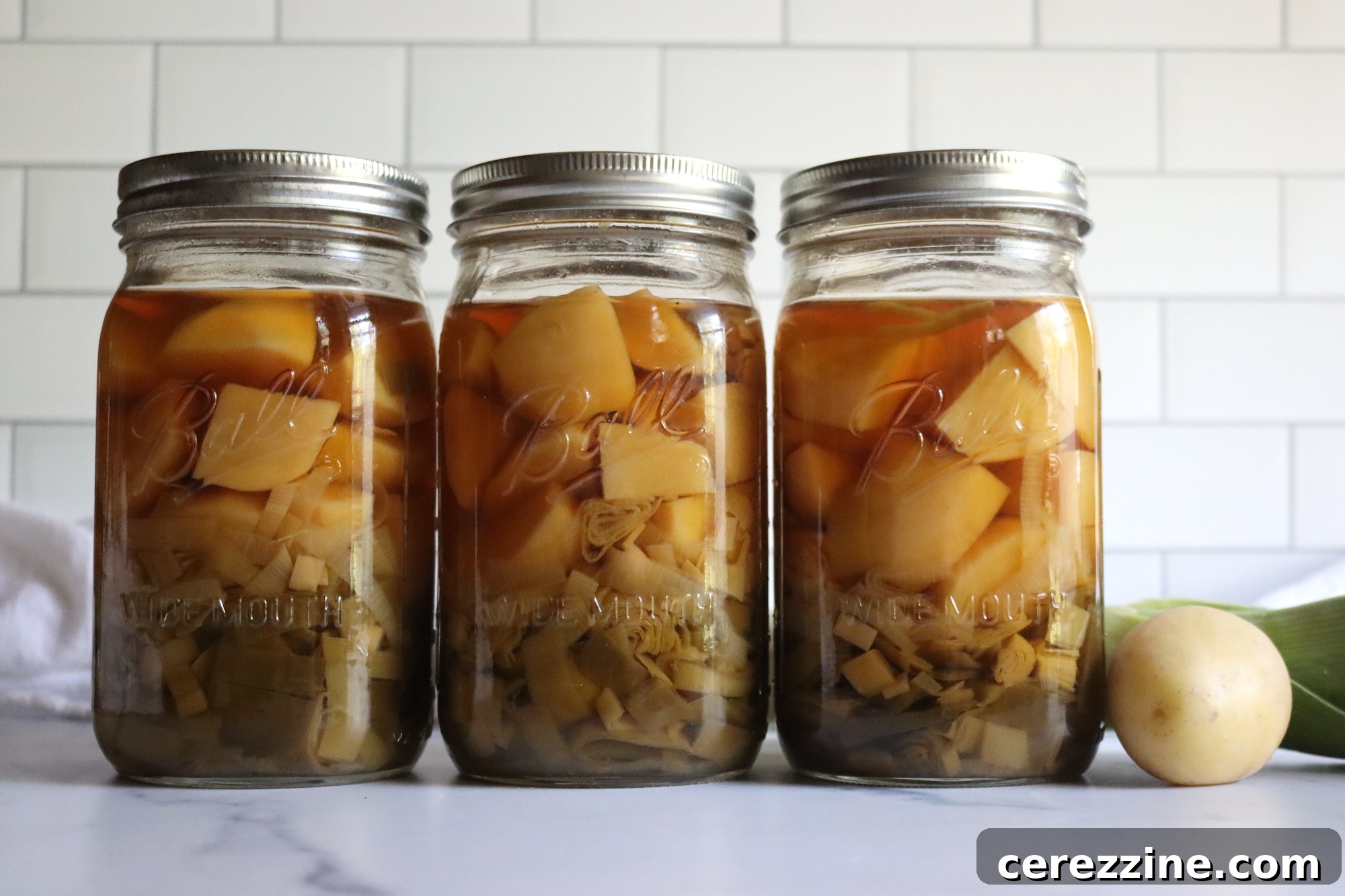
Embrace the comforting embrace of homemade soup, perfectly preserved for your pantry: Canning Potato Leek Soup. This timeless classic, celebrated for its delicate flavors and hearty texture, becomes an even more invaluable addition to your meal rotation when you learn the art of pressure canning. Imagine having ready-to-heat jars of this wholesome goodness on your shelf, offering a taste of home-cooked warmth at a moment’s notice.
Our comprehensive guide focuses on creating a delectable, shelf-stable potato leek soup that is not only delicious but also incredibly convenient. This recipe is designed to be a simple, yet robust, vegetarian soup canning recipe, though versatile enough to accommodate various preferences. The magic happens right in the jar as the vegetables gently cook and their flavors deepen, creating a harmonious blend that’s ready to serve. Whether you prefer a rustic, chunky style vegetable soup or a silky, pureed consistency, the choice is yours upon opening. Dive into the satisfying world of home food preservation and discover how effortless it is to keep your pantry stocked with this beloved, make-ahead comfort food.
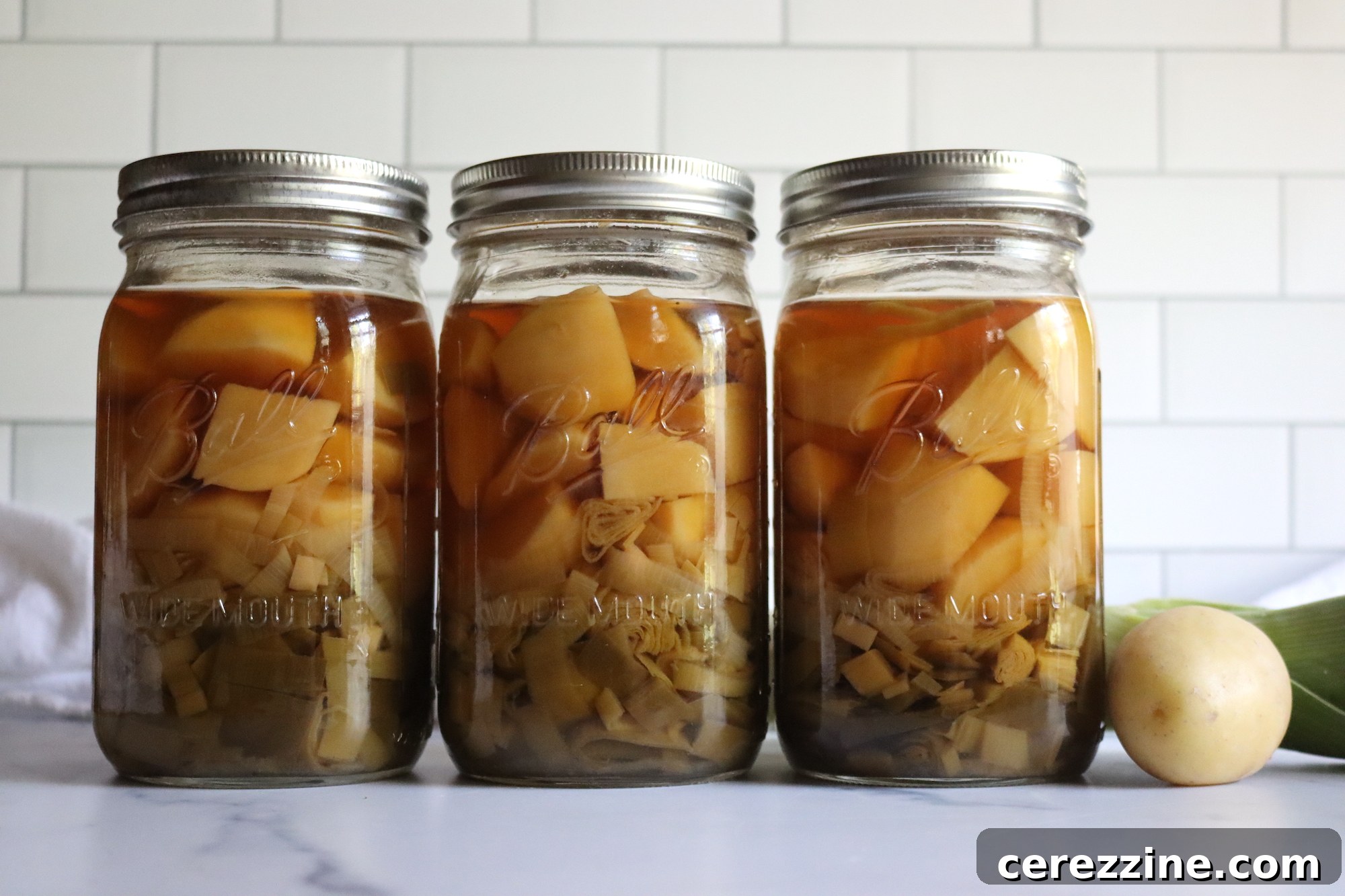
For many, homemade potato leek soup evokes cherished memories and provides unparalleled comfort. The subtle sweetness of leeks combined with the earthy richness of potatoes creates a flavor profile that is both simple and profoundly satisfying. However, the seasonal availability of fresh leeks or the sheer convenience of having a ready meal often poses a challenge for busy households.
This is where the transformative power of canning comes into play. By dedicating a bit of time to prepare and pressure can a batch, you unlock the ability to enjoy this exquisite soup any time of the year. Picture this: a sudden craving for something warm and nourishing on a chilly evening, and instead of a lengthy cooking process, you simply reach for a jar from your pantry. It’s a testament to the enduring value of food preservation, turning fresh, seasonal ingredients into a long-lasting, accessible culinary delight. This method ensures that the simple, heartwarming goodness of potato leek soup is always within your grasp, making meal planning effortless and your pantry a treasure trove of comfort.
Essential Ingredients for Canning Homemade Potato Leek Soup
Creating a perfectly balanced and safe canned potato leek soup starts with carefully selected ingredients. This recipe adheres to the robust and reliable soup canning guidelines established by the University of Alaska (Publication FNH-00065), ensuring both safety and quality. When pressure canning, the minimum batch size recommended is two quarts. Our recipe is scaled accordingly, providing precise measurements to achieve optimal results and fill your jars efficiently.
For a small two-quart canner batch, gather the following:
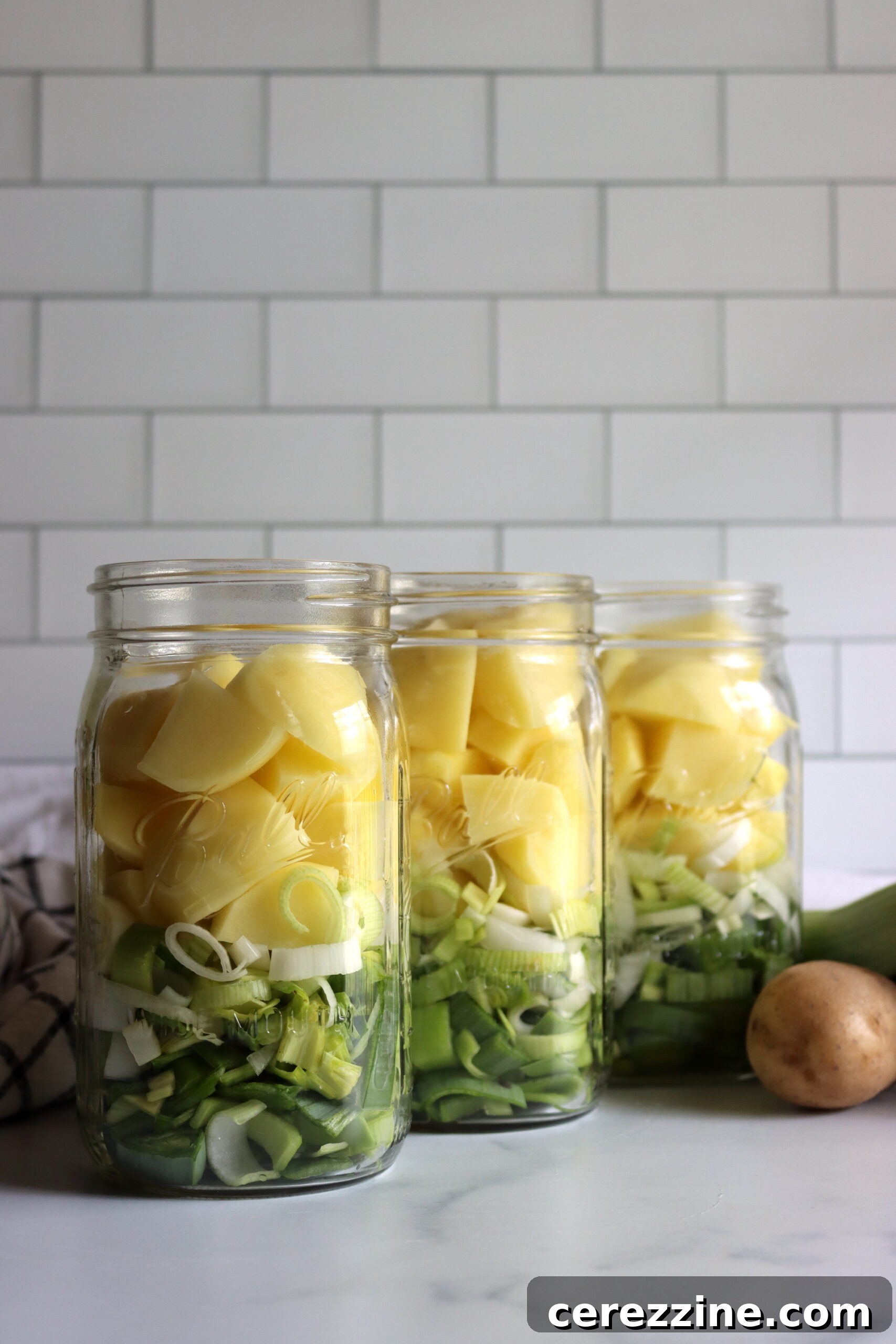
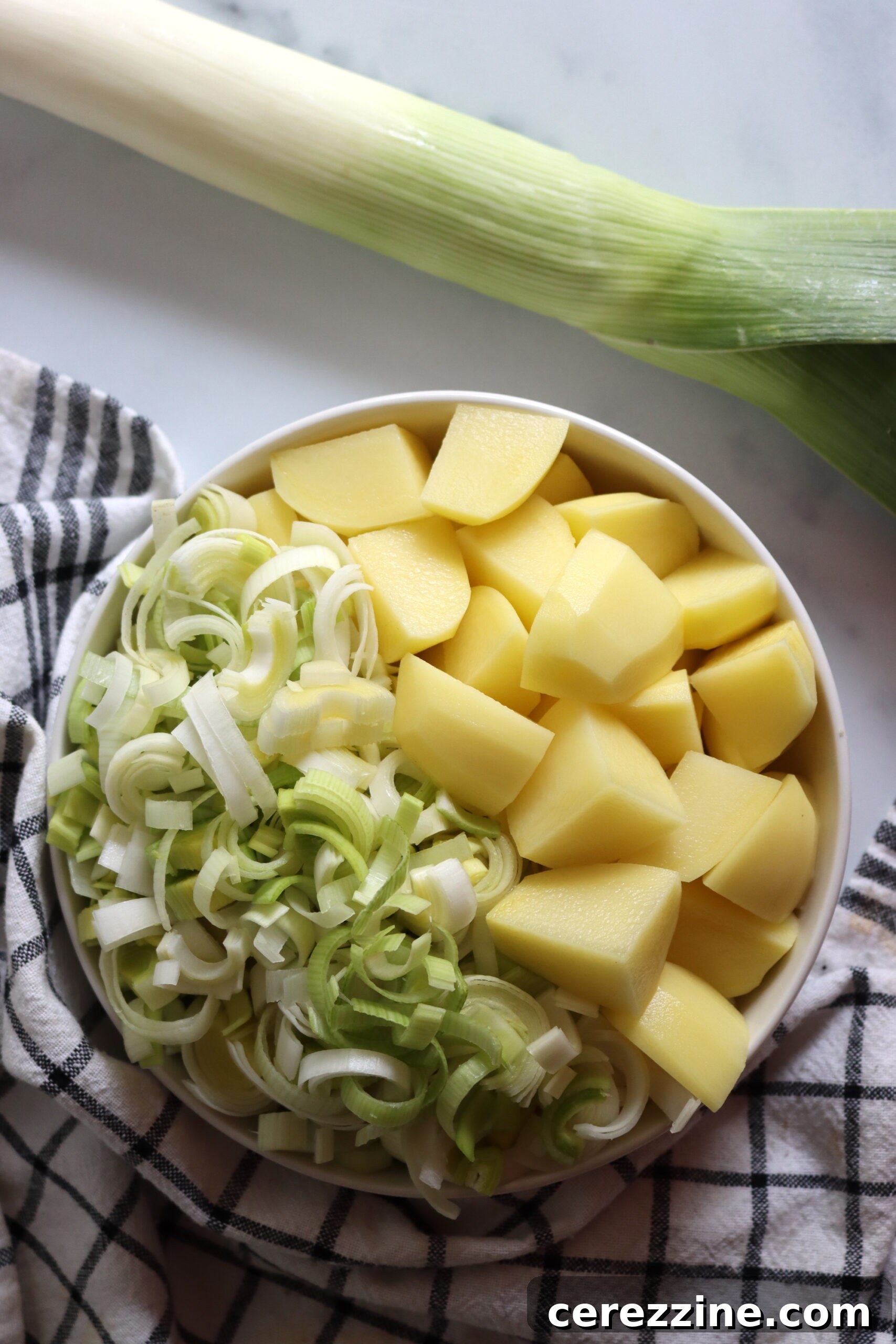
- 4 cups leeks, sliced (approximately 300 g): When selecting leeks, look for firm, white and light green stalks. Wash them thoroughly, paying special attention to removing any soil trapped between the layers. Slicing them into uniform pieces ensures even cooking during the canning process and a pleasant texture in your finished soup.
- 4 cups potatoes, diced (approximately 600 g): Opt for starchy potatoes like Russets or Yukon Golds, which hold their shape well after canning. Peel and dice them into bite-sized pieces, roughly 1/2 to 3/4 inch cubes. This size allows them to soften adequately without becoming mushy.
- 2 tsp salt (adjust to taste): Canning salt or pickling salt is recommended as it’s free of anti-caking agents and iodine, which can discolor your soup or create cloudiness. Start with the recommended amount and adjust to your preference, remembering you can always add more salt when serving.
- Vegetable broth to fill (approximately 4 cups): A high-quality vegetable broth forms the flavor base for this soup. Using homemade vegetable stock or a good store-bought option is crucial. Ensure it’s warmed or boiling when adding to the jars to facilitate proper sealing and processing.
To prepare each quart jar individually for packing, you’ll need:
- 2 cups leeks, sliced (approximately 150 g)
- 2 cups potatoes, diced (approximately 300 g)
- 1 tsp salt
- Vegetable broth to fill (approximately 1 1/2 to 2 cups)
The beauty of this recipe lies in its adaptability. Feel free to adjust the proportions of leeks and potatoes to suit your personal preference; some may enjoy a higher ratio of leeks for a more pronounced flavor, while others might prefer more potatoes for a creamier soup. To maintain its versatile vegetarian profile, using quality vegetable stock is key, making it suitable for a wider audience. However, if you desire an added layer of richness and depth, substituting with chicken stock is a perfectly safe and delicious alternative for pressure canning.
Enhancing the flavor with herbs is also highly encouraged and perfectly safe for pressure canning. Classic choices like fresh rosemary, thyme, or a bay leaf can elevate this rustic root vegetable canning recipe. Experiment with your favorite aromatic herbs to customize the taste to your liking, ensuring they are fresh and clean before adding them to your jars. These additions not only boost the aroma and taste but also contribute to the overall gourmet appeal of your home-canned soup.
Step-by-Step Guide to Pressure Canning Potato Leek Soup
Pressure canning homemade potato leek soup is a rewarding process that ensures a safe, delicious, and convenient meal solution. Follow these detailed steps to successfully preserve your soup:
1. Prepare Your Canning Equipment
Before beginning, ensure your pressure canner is in excellent working condition and that you have all necessary canning tools. Wash your canning jars, lids, and bands thoroughly with warm, soapy water. While modern canning guidelines often state that pre-sterilizing jars isn’t necessary for items processed for 10 minutes or more in a pressure canner, it’s good practice to ensure they are hot and clean. If you plan a hot pack, keep your jars simmering in hot water (around 180°F). For a raw pack, warm your jars to approximately 140°F.
2. Prepare the Vegetables
Begin by meticulously washing your leeks. Leeks tend to trap dirt between their layers, so it’s crucial to slice them lengthwise and rinse them under running water to ensure all grit is removed. Once clean, slice the leeks into uniform pieces. Next, peel your potatoes and dice them into consistent, bite-sized cubes (about 1/2 to 3/4 inch). Uniformity in size is important for even cooking during the canning process, preventing some pieces from becoming overcooked while others remain firm.
3. Choose Your Packing Method: Hot Pack or Raw Pack
You have two primary options for packing your jars: hot pack or raw pack. While both are safe for pressure canning, the hot pack method is generally recommended for soups as it helps to remove air from the food, improve flavor, and maintain food quality over time. It can also lead to less floating of solids in the jars and better liquid retention.
Hot Pack Method:
In a large stockpot, combine the prepared leeks, potatoes, and salt. Add enough vegetable broth to generously cover all the vegetables. Bring this mixture to a rolling boil over medium-high heat. Once boiling, reduce the heat and allow the soup base to gently simmer for about 5 minutes. This brief simmering step is key: it slightly softens the vegetables, which helps them retain their structure better during the intense pressure canning process and helps to release air from the vegetables, aiding in achieving a good vacuum seal. It also jumpstarts the flavor development.
Raw Pack Method (Alternative):
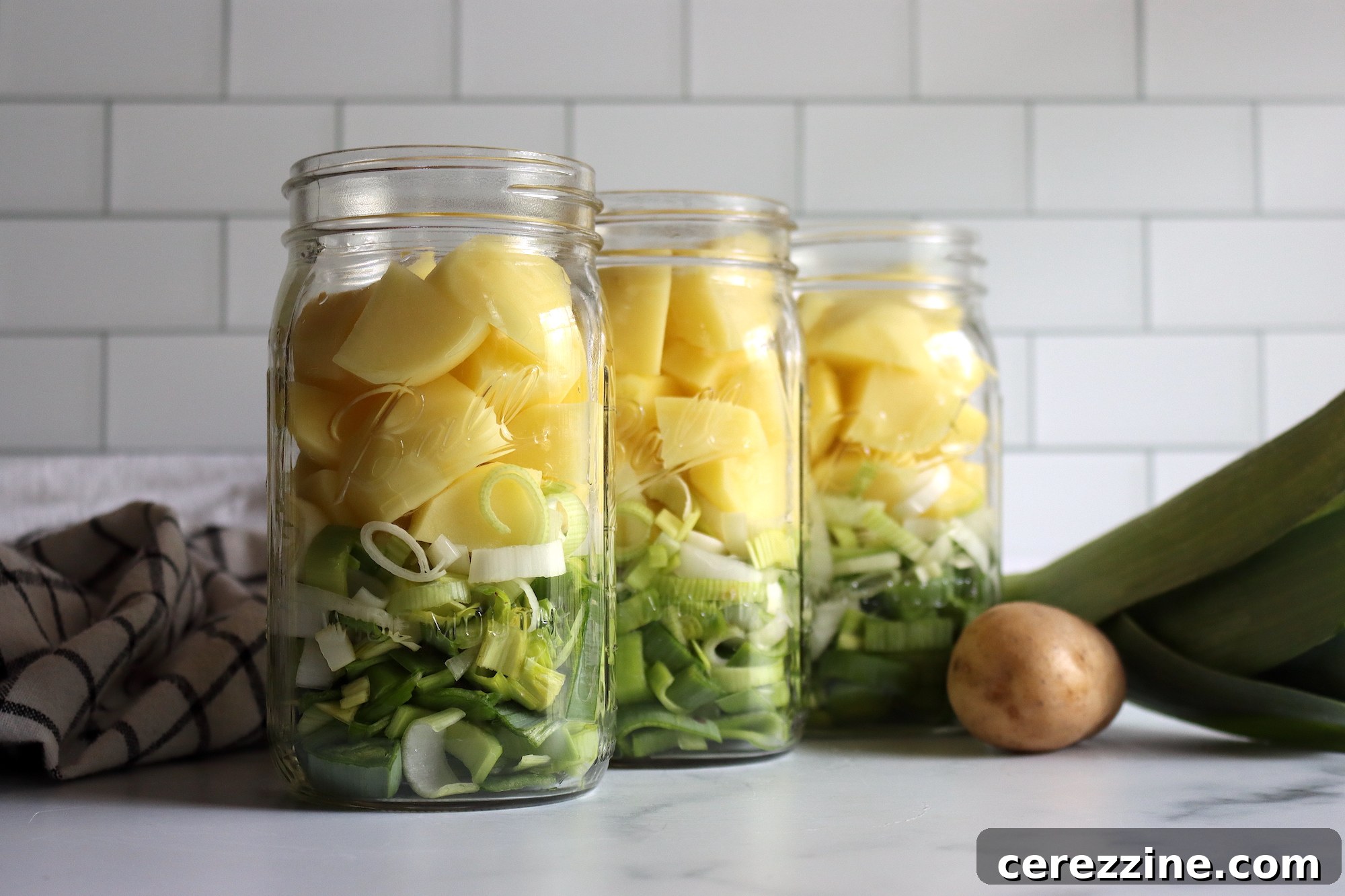
If you prefer to skip the pre-simmering step, you can opt for a raw pack. Simply place the raw, prepared leeks, potatoes, and salt directly into your canning jars. Separately, bring your vegetable broth to a rolling boil on the stove. This boiling broth will be poured over the raw vegetables in the jars.
4. Filling the Canning Jars
Carefully ladle your hot potato leek soup (from the hot pack method) or raw vegetables (from the raw pack method) into the prepared hot jars. Ensure you leave a crucial 1-inch headspace from the rim of the jar. This headspace is essential for proper sealing and to allow for food expansion during processing. For hot pack, it’s often helpful to use a slotted spoon to add the solids first, then pour in the hot broth to cover the vegetables, maintaining the 1-inch headspace.
After filling, use a clean bubble remover tool or a non-metallic spatula to gently remove any trapped air bubbles from the jars. Run the tool around the inside edge of the jar, pressing gently to release air. If necessary, add a little more hot broth to bring the liquid back up to the 1-inch headspace mark.
Wipe the rims of the jars thoroughly with a clean, damp cloth. Any food residue on the rim can prevent a proper seal. Place new, clean lids centered on the jar rims, and then screw on the metal bands until they are “fingertip tight”—meaning snug, but not overly tight, allowing air to escape during processing.
5. Pressure Canning Process
Place the filled and sealed jars onto the rack inside your pressure canner, ensuring they are not touching. Add the amount of water specified by your canner’s manufacturer (typically 2-3 inches). Secure the canner lid firmly. Turn the heat to high and allow steam to vent steadily from the canner’s vent pipe for 10 minutes. This step is critical for removing all air from the canner, which is necessary for achieving the correct pressure and temperature inside.
After venting for 10 minutes, place the weighted gauge or close the petcock (for dial gauge canners) and allow the pressure to build. Once the desired pressure is reached (10 pounds of pressure at sea level for weighted gauge canners, or as adjusted for altitude with a dial gauge), begin your processing time. Process quart jars for 90 minutes and pint jars for 75 minutes. Refer to the “Altitude Adjustments” section below to adjust pressure settings based on your elevation.
6. Cooling and Checking Seals
Once the processing time is complete, turn off the heat and allow the pressure canner to cool down naturally and completely. Do not attempt to force cool the canner, as this can cause siphoning (loss of liquid from jars) or seal failures. Once the pressure gauge reads zero and the lid safety lock has dropped, wait an additional 5-10 minutes before carefully opening the canner lid away from your face to avoid steam burns.
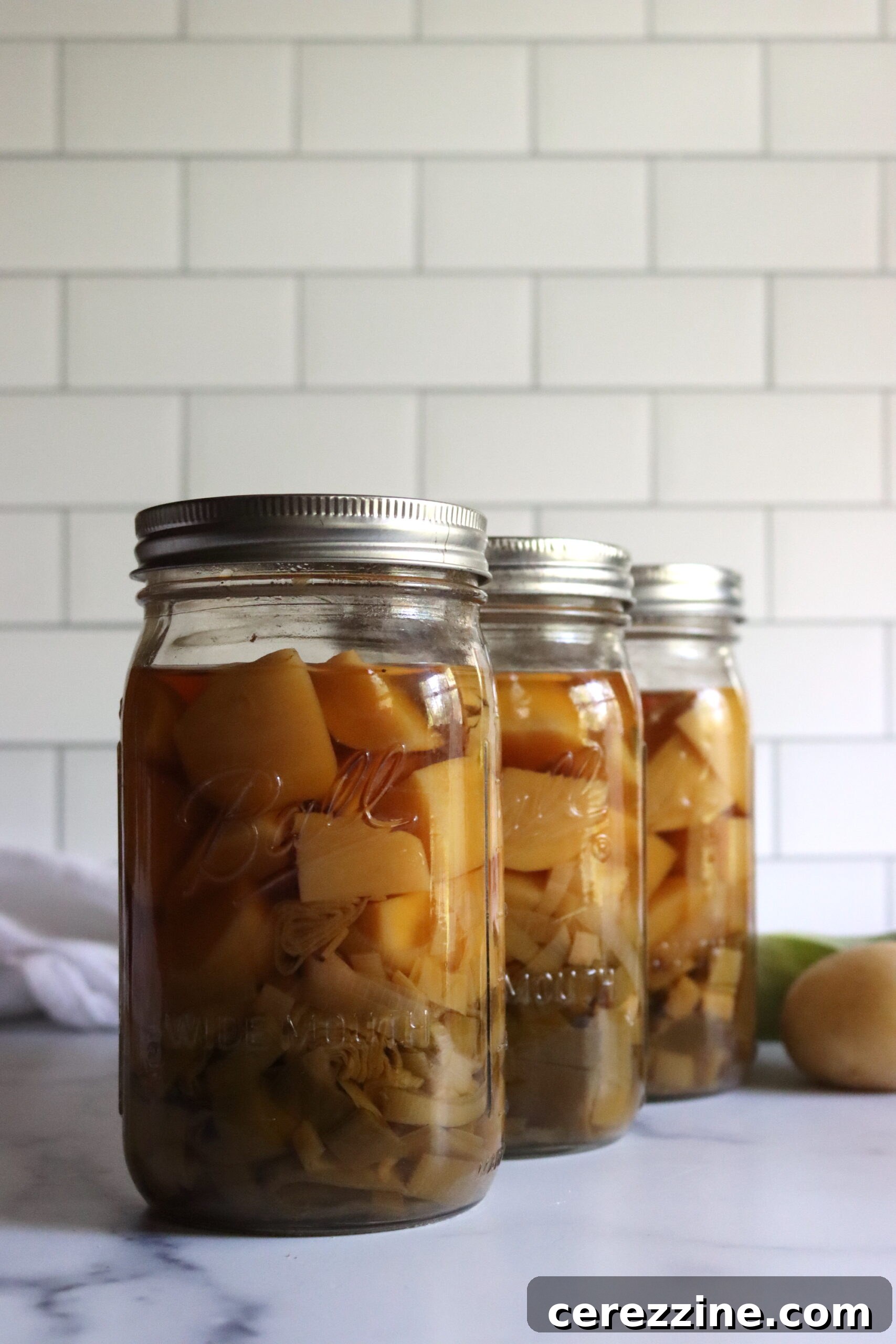
Carefully remove the hot jars using a jar lifter and place them on a clean towel or cooling rack, ensuring there is space between each jar for air circulation. Let them cool undisturbed for 12 to 24 hours. During this time, you should hear satisfying “ping” sounds as the lids seal. After cooling, check the seals by pressing down on the center of each lid. If the lid is concave and does not flex or pop when pressed, it is properly sealed. If any jar fails to seal, reprocess it within 24 hours with a new lid, or refrigerate it for immediate consumption.
7. Storage
Once sealed and cooled, remove the metal bands (they can be reused for future canning projects). Wash the jars and label them with the contents and date. Store your properly canned potato leek soup in a cool, dark, dry place, such as a pantry shelf. Under ideal conditions, home-canned foods will maintain peak quality for 12 to 18 months, though they remain safe to eat as long as the seal is intact. Always remember to refrigerate any opened jars, and any unsealed jars should be either reprocessed or consumed within a few days from the refrigerator.
Crucial Altitude Adjustments for Pressure Canning
For safe and effective pressure canning, it is absolutely vital to adjust the processing pressure based on your geographical altitude. Water boils at a lower temperature at higher elevations, which means that the internal temperature within your canner will be lower at a given pressure. To compensate and ensure food safety, the pressure must be increased to achieve the necessary internal temperature to destroy harmful bacteria. The processing times for pressure canning soup generally remain consistent regardless of altitude, but the required pounds of pressure change. Here are the precise altitude adjustments for pressure canning soups:
For dial gauge pressure canners:
- 0 to 2,000 feet in elevation – 11 lbs pressure
- 2,001 to 4,000 feet in elevation – 12 lbs pressure
- 4,001 to 6,000 feet in elevation – 13 lbs pressure
- 6,001 to 8,000 feet in elevation – 14 lbs pressure
For weighted gauge pressure canners:
- 0 to 1,000 feet in elevation – 10 lbs pressure
- Above 1,000 feet – 15 lbs pressure
Always double-check your elevation and consult your pressure canner’s instruction manual or a reputable canning guide (like those from the USDA or university extensions) to ensure you are using the correct pressure for your specific location. This small adjustment is a critical step in guaranteeing the safety and quality of your home-canned goods.
Delightful Serving Ideas for Your Canned Potato Leek Soup
Once you’ve successfully canned your potato leek soup, the delicious part begins: enjoying it! The convenience of having this gourmet-quality soup ready in your pantry is truly unparalleled. To savor your homemade canned potato leek soup, simply transfer the contents of a jar to a saucepan and gently heat it on the stove over medium heat until it’s simmering. Alternatively, you can heat individual portions in the microwave for a quicker option.
One of the best features of this soup is its versatility in texture. You can enjoy it directly from the jar as a rustic, chunky soup, allowing you to appreciate the distinct pieces of leek and potato. For those who prefer a more refined dining experience, puree the soup using an immersion blender directly in the pot, or transfer it to a stand blender and process until it reaches a silky-smooth consistency. If the soup appears too thick for your liking after heating, feel free to add a splash of extra vegetable broth or water until you achieve your desired consistency.
Elevate your serving with a variety of garnishes. A swirl of fresh cream, a dollop of sour cream or crème fraîche adds a luxurious touch and tangy counterpoint. For a burst of freshness, sprinkle with finely chopped fresh chives, parsley, or even a few sprigs of dill. A drizzle of high-quality extra virgin olive oil can enhance the aromatic notes, while a sprinkle of grated Parmesan cheese introduces a savory umami richness. Don’t forget crispy croutons, crunchy homemade breadcrumbs, or even a few crumbled bacon bits for added texture and flavor. Pair your hearty bowl of potato leek soup with a slice of warm, crusty bread for dipping, or a light side salad for a complete and satisfying meal.

4
servings, Makes 2 Quarts
Canning Potato Leek Soup
Ashley Adamant
10 mins
5 mins
1 hr 30 mins
1 hr 45 mins
Rate
Equipment
-
Pressure Canner
Ingredients
For a small two-quart canner batch, you’ll need:
- 4 cups leeks, sliced (about 300 g)
- 4 cups potatoes, diced (about 600 g)
- 2 tsp salt, adjust to taste
- Vegetable broth to fill, about 4 cups
Pack each quart jar with:
- 2 cup leeks, sliced (about 150 g)
- 2 cup potatoes, diced (about 300 g)
- 1 tsp salt
- Vegetable broth to fill, about 1 1/2 to 2 cups
Instructions
-
Before you get started, prepare a pressure canner and jars. If you’re doing a hot pack, the canner should be simmering at around 180°F. For a raw pack, use warm water, about 140°F.
-
For a hot pack, combine leeks, potatoes, and salt in a pot. Add broth and boil for 5 minutes. If you’re doing a raw pack, just pack the jars with the veggies and bring the broth to a boil separately on the stove.
-
Fill the jars with the veggie mix, leaving 1-inch headspace; then top with boiling broth. Remove air bubbles, wipe the rims, seal the jars, and process at 10 pounds pressure for 90 minutes for quarts or 75 minutes for pints (adjusting pressure for altitude).
-
Let the jars cool and check the seals before storing.
Notes
Store properly canned and sealed jars on the pantry shelf where they’ll maintain peak quality for 12 to 18 months, but they will still be good to eat as long as they’re sealed. Refrigerate after opening. Any unsealed jars should be reprocessed or stored in the refrigerator for immediate use.
Pressure Canning Altitude Adjustments
With pressure canning, the processing times stay the same at higher altitudes, but the pressures change. Here are the altitude adjustments for pressure canning soup:
For dial gauge pressure canners:
- 0 to 2,000 feet in elevation – 11 lbs pressure
- 2,001 to 4,000 feet in elevation – 12 lbs pressure
- 4,001 to 6,000 feet in elevation – 13 lbs pressure
- 6,001 to 8,000 feet in elevation – 14 lbs pressure
For weighted gauge pressure canners:
- 0 to 1,000 feet in elevation – 10 lbs pressure
- Above 1,000 feet – 15 lbs pressure
Nutrition
Carbohydrates: 49g,
Protein: 6g,
Fat: 0.5g,
Saturated Fat: 0.1g,
Polyunsaturated Fat: 0.2g,
Monounsaturated Fat: 0.01g,
Sodium: 1193mg,
Potassium: 1045mg,
Fiber: 6g,
Sugar: 5g,
Vitamin A: 1488IU,
Vitamin C: 52mg,
Calcium: 78mg,
Iron: 4mg
Nutrition information is automatically calculated, so should only be used as an approximation.
Like this? Leave a comment below!
More Delicious Soup Canning Recipes to Try
Expanding your repertoire of home-canned soups is a fantastic way to ensure your pantry is always stocked with wholesome, ready-to-eat meals. The world of soup canning recipes is vast and exciting, offering a diverse range of flavors and textures to suit every palate. Once you’ve mastered the technique of canning potato leek soup, consider exploring these other comforting and flavorful options to fill your shelves:
- Hearty Sausage, Potato, and Kale Soup
- Flavorful Taco Soup
- Sweet and Earthy Carrot Soup
- Classic Roasted Tomato Basil Soup
- Wholesome Split Pea Soup
- Nourishing Chicken Soup
Each of these recipes offers unique flavors and textures, making them perfect additions to your home canning journey. They provide convenience, control over ingredients, and the satisfaction of homemade goodness, all preserved safely for future enjoyment.
Explore More Vegetarian Canning Recipes
For those committed to plant-centered eating, home canning opens up a world of possibilities for preserving delicious and nutritious vegetarian dishes. Beyond soups, there are numerous ways to capture the fresh flavors of vegetables and legumes in a jar, making them accessible throughout the year. Broaden your food preservation skills with these fantastic vegetarian canning recipes:
- Hearty Vegetarian Baked Beans
- Creamy Carrot Soup
- Spicy Chipotle Black Bean Soup
- Versatile Vegetable Broth
Embracing vegetarian canning allows you to take control of your diet, reduce food waste, and always have healthy, plant-based options readily available. These recipes are not only practical but also incredibly satisfying, proving that preserving fresh produce can be both simple and immensely rewarding.