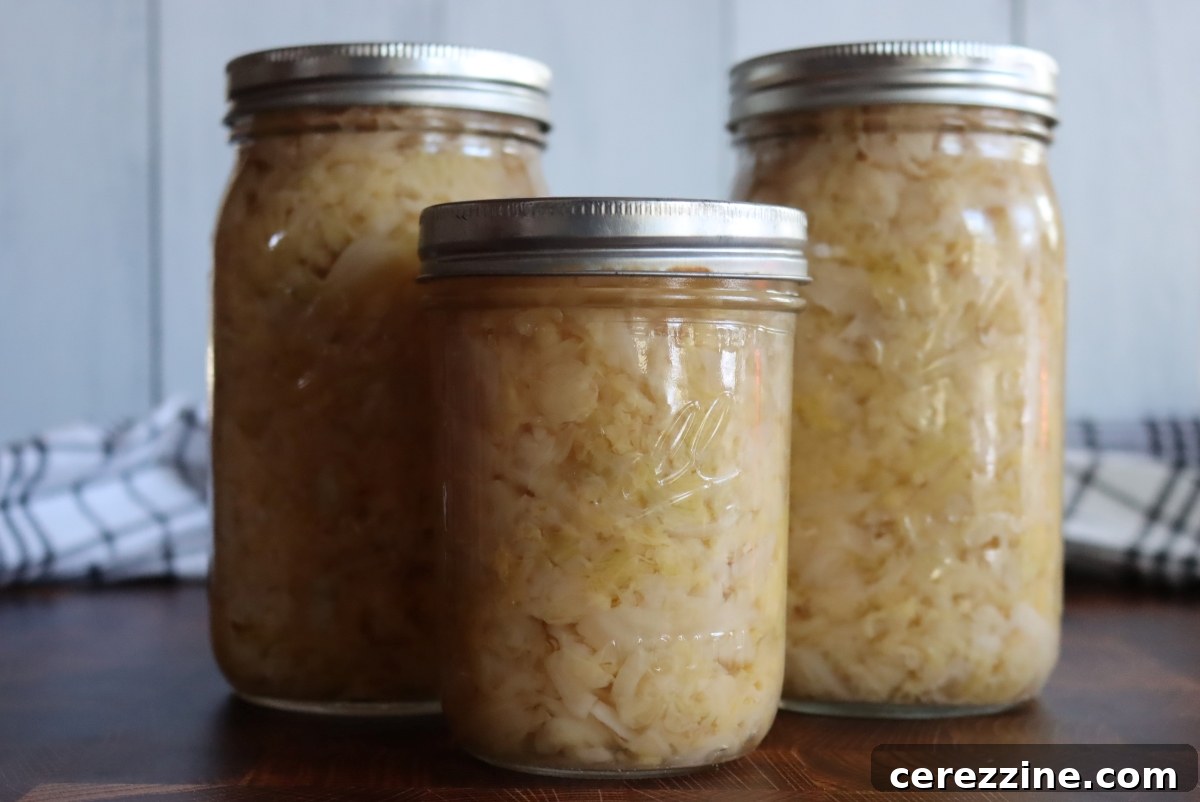
Canning sauerkraut is a time-honored tradition that offers a practical and delicious way to preserve an abundant cabbage harvest. While fresh cabbage is not suitable for traditional home canning methods, transforming it into sauerkraut through fermentation makes it acidic enough for safe water bath canning. This process locks in flavor and nutrition, allowing you to enjoy this versatile food year-round, right from your pantry shelf.
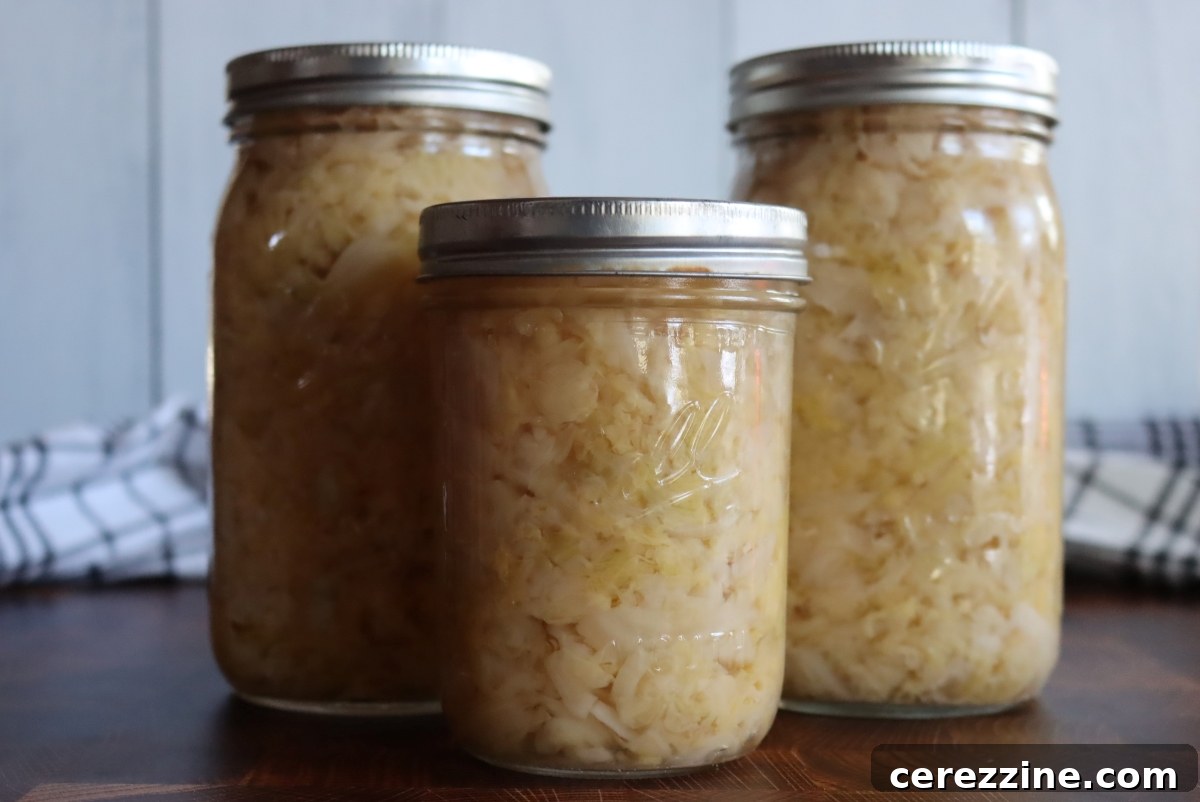
Once fermented, sauerkraut becomes a highly digestible and nourishing food. This guide will walk you through the entire process of making and canning your own sauerkraut, from selecting the right cabbage to proper processing techniques, ensuring a safe and delicious result.
Why Can Sauerkraut? The Enduring Benefits of Fermented Cabbage
Many fermentation enthusiasts often ask if canning destroys the beneficial probiotics found in fresh sauerkraut. The answer is yes, the heat involved in canning does eliminate live cultures. However, the benefits of sauerkraut extend far beyond its probiotic content, making home-canned sauerkraut a valuable addition to any pantry.
The fermentation process itself transforms cabbage into a more digestible food, and remarkably, increases its protein and vitamin content. Lactobacillus bacteria work diligently during fermentation, converting sugars within the cabbage into a more nutrient-rich form. Historically, sauerkraut was rarely eaten raw. Our ancestors fermented cabbage to preserve it, then cooked it as a staple ingredient in hearty meals, a practice that naturally eliminated live cultures but retained significant nutritional value.
Imagine a rich sausage and sauerkraut hash or a warming sauerkraut soup – these are traditional dishes where cooked sauerkraut shines, providing deep flavor and substantial nutrition without relying on live probiotics. Canning allows you to enjoy these nutrient-dense meals throughout the colder months, often in larger, more satisfying portions than you might consume as a simple condiment.
Furthermore, for those in warmer climates or with limited refrigerator and root cellar space, canning sauerkraut becomes an indispensable method for long-term cabbage storage. While fresh sauerkraut requires consistent cool temperatures to maintain its quality and prevent spoilage, canned sauerkraut is shelf-stable, making it accessible even in the heat of summer in places like Texas, where a cool basement might not be an option.
Considerations Before Canning Sauerkraut
While canning sauerkraut offers numerous advantages, it’s important to understand its limitations. As mentioned, the canning process is a sterilization method that heats the sauerkraut to a temperature sufficient to kill all microorganisms, including the beneficial probiotics. If your primary goal in making sauerkraut is to consume live probiotic cultures, then canning is not the ideal preservation method for you.
For those prioritizing live cultures, storing fresh, unpasteurized sauerkraut in the refrigerator is the best approach. Sauerkraut stored in a consistently cool environment, such as a refrigerator or a cool basement, can last for several months. It will continue to ferment slowly, developing a more complex and acidic flavor over time.
It’s also worth noting that if you’re looking for other ways to preserve cabbage on your pantry shelf that don’t involve fermentation, there are many traditional relish recipes. Varieties like chow chow or piccalilli, such as Southern Chow Chow or New England Piccalilli, offer delicious, shelf-stable options for preserved cabbage, though they don’t involve the fermentation step.
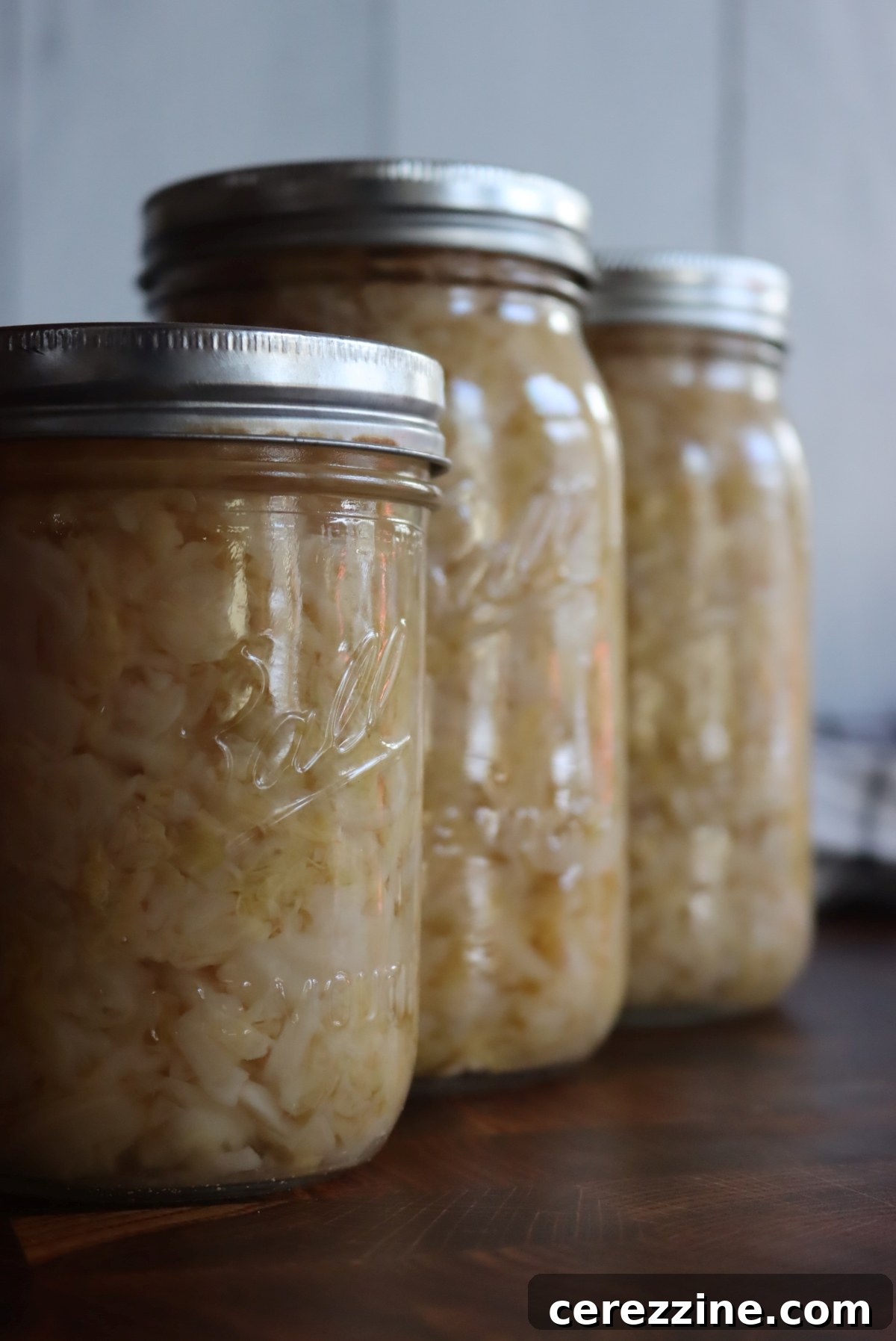
The Fermentation Journey: Preparing Sauerkraut for Canning
The journey to home-canned sauerkraut begins with successful fermentation. This crucial step develops the necessary acidity that makes the cabbage safe for water bath canning. It’s a process that requires patience, typically spanning several weeks, so planning ahead is key.
When preparing to ferment cabbage for canning, two primary factors beyond the ingredients themselves are paramount: the amount of space you have and the time required for fermentation. It’s a common misconception that you can ferment cabbage and can it within a day or two. True sauerkraut fermentation takes between 3 to 6 weeks, depending heavily on the ambient temperature where your fermentation container is stored. Generally, cooler temperatures prolong the fermentation process, while warmer temperatures can speed it up within a safe range.
According to the Complete Guide to Home Canning from the National Center for Food Preservation, “Sauerkraut fermentation can take place under variable temperature and time combinations. For obtaining a good quality sauerkraut at home, the USDA recommendation is to store at 70º to 75ºF while fermenting. At temperatures between 70º and 75ºF, kraut will be fully fermented in about 3 to 4 weeks; at 60º to 65ºF, fermentation may take 5 to 6 weeks. At temperatures lower than 60ºF, kraut may not ferment properly. Above 75ºF, kraut may become soft.” This guidance underscores the importance of maintaining appropriate temperatures for both safety and quality.
It is absolutely essential that your sauerkraut is fully fermented before you proceed to canning. The acidity produced during fermentation is what renders the sauerkraut safe for water bath canning. Rushing this process could result in a product that is unsafe for long-term shelf storage.
Choosing the Best Cabbage for Sauerkraut
The type of cabbage you choose will influence the texture and flavor of your finished sauerkraut. Here are the most popular and readily available varieties, along with their characteristics:
- Green Cabbage (White Cabbage): This is the most common choice and an excellent starting point for beginners. Green cabbage has a mild, clean flavor and a pleasant texture that remains crisp even after fermentation and canning. Its robust structure holds up well throughout the entire process.
- Red Cabbage (Purple Cabbage): Offering a beautiful vibrant color, red cabbage has a slightly earthier flavor profile compared to green cabbage. It is also packed with more nutrients, including higher levels of vitamins A and C, and iron. Notably, red cabbage contains powerful antioxidants, making it a nutritious choice.
- Napa Cabbage: Often used in Asian fermented dishes like kimchi, Napa cabbage has a softer, more delicate texture and a milder flavor than its rounder counterparts. While it can be fermented, be aware that it may result in a softer sauerkraut, which some prefer, but it might not offer the traditional crunch.
- Savoy Cabbage: Similar in taste to green cabbage, Savoy cabbage is distinguished by its crinkled, soft, and deeply textured leaves. While it is possible to ferment and can Savoy cabbage, there is a higher likelihood of the leaves becoming overly soft or even mushy during the extended fermentation and subsequent canning process. It is generally recommended for those with some prior experience in making fermented sauerkraut.
Essential Ingredients for Sauerkraut
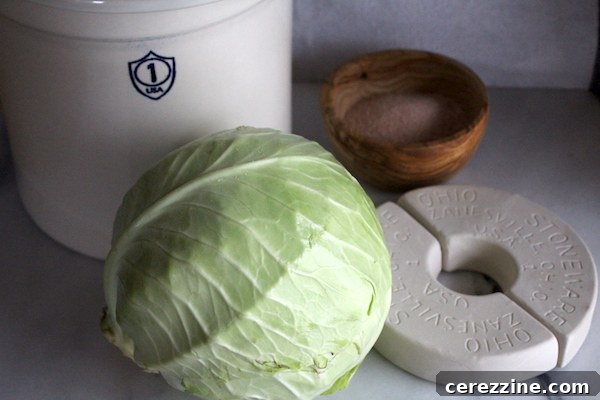
Beyond your chosen cabbage, the only other crucial ingredient for authentic fermented sauerkraut is pickling salt. This special salt, sometimes called canning salt, is free from anti-caking agents and iodine. These additives, found in regular table salt, can interfere with the fermentation process, cause cloudiness in the brine, or even impart off-flavors to your sauerkraut. Pickling salt dissolves easily and helps create a clear, clean brine essential for quality fermentation.
For a batch yielding approximately 9 finished quarts of fermented sauerkraut, you will need roughly 25 pounds of whole cabbage. To make the shredding process more manageable, it’s often easiest to work with 5-pound increments of cabbage at a time.
Step-by-Step Guide to Making Sauerkraut for Canning
Follow these steps to prepare your cabbage for a successful fermentation:
- Prepare the Cabbage: Begin by removing any bruised or damaged outer leaves from the cabbage heads and rinse them thoroughly under cool, running water. Using a sharp chef’s knife, cut each cabbage head into quarters and carefully remove the tough, woody core.
- Shred the Cabbage: Achieve thin, consistent ribbons of cabbage, roughly the thickness of a quarter. This can be done with a sharp knife, a food processor equipped with a shredding attachment, or an inexpensive kitchen mandolin (exercise extreme caution and use a safety guard to protect your fingers!).
- Salt and Pound: Transfer the shredded cabbage into your chosen fermentation container. A traditional fermentation crock is ideal, especially if it comes with a wooden pounder. If not, a sturdy wooden spoon works well. For every 5 pounds of shredded cabbage, add 3 tablespoons of pickling salt. Mix the salt thoroughly into the cabbage using clean hands, ensuring even distribution. Then, using your pounder or spoon, firmly pound the salted cabbage. This action helps to break down the cell walls and draw out the natural juices from the cabbage.
- Pack the Crock: Continue adding and salting cabbage in 5-pound increments, packing it tightly into the crock. Repeat the pounding process until all the cabbage is in the container. The crock should have about 4 to 5 inches of space left above the cabbage once it’s fully packed. The shredded, salted, and pounded cabbage should release enough liquid to create its own natural brine, completely submerging the cabbage within a few hours.
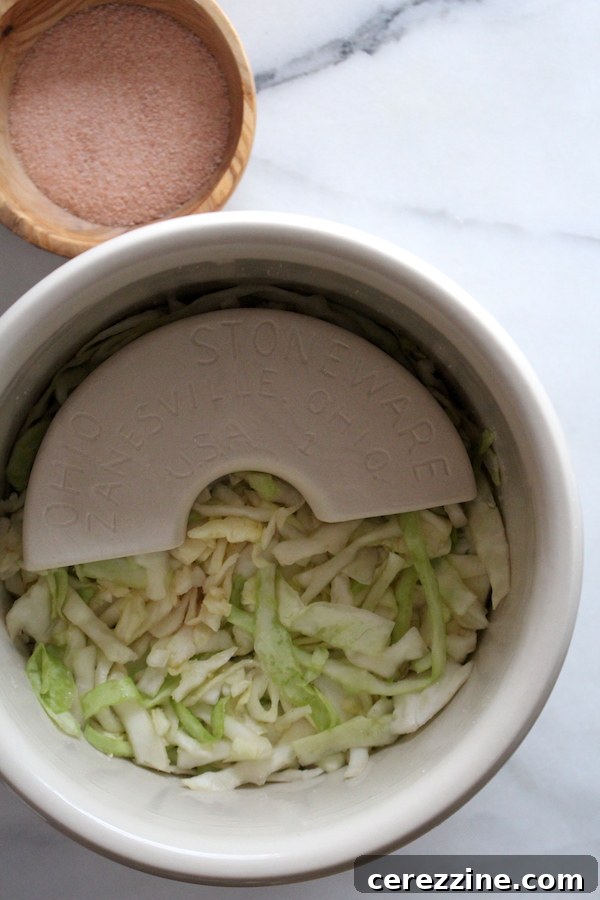
If you’re new to making sauerkraut or this process feels daunting, consider consulting a comprehensive guide on how to make sauerkraut, or specifically, how to make sauerkraut in a crock, for more detailed visual and textual instructions.
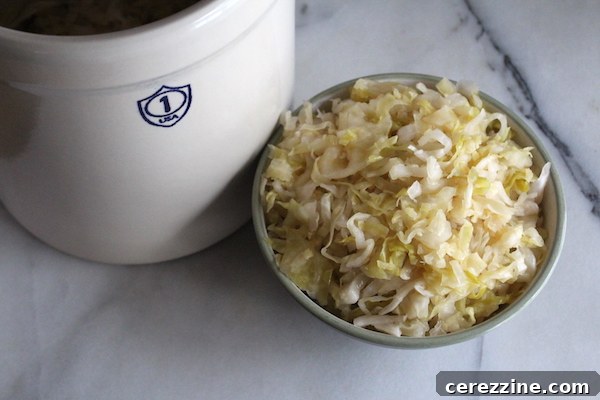
Depending on the volume of cabbage you’re fermenting, you might need more than one fermentation vessel. Factor this into your initial planning to ensure you have adequate space and equipment.
Optimal Fermentation Time and Temperature
The duration of fermentation is critical for both flavor and safety. As recommended by the USDA, maintaining ambient temperatures between 70°F and 75°F will allow your cabbage to fully ferment in approximately 3 to 4 weeks. If the temperature in your fermentation area is slightly cooler, ranging from 60°F to 65°F, expect the fermentation process to take a bit longer, typically 5 to 6 weeks.
It’s crucial to avoid extreme temperatures. Fermenting cabbage at temperatures exceeding 75°F can lead to undesirable results, often yielding mushy, unappetizing sauerkraut that may not be safe. Conversely, temperatures below 60°F are generally too cold for proper lactic acid fermentation to occur, meaning the cabbage may not acidify sufficiently. The acidic environment created during fermentation is not just for taste; it’s what makes the sauerkraut safe for water bath canning.
While technically you could pickle plain cabbage in vinegar for canning, it would lack the complex flavor and many of the nutritional enhancements that come from the natural fermentation process. The tangy, nuanced taste of true sauerkraut is a direct result of this slow transformation.
You should start to observe signs of fermentation around the one-week mark. Look for small bubbles rising through the brine; these indicate microbial activity. If the temperature is on the lower side of the recommended range, these bubbles might be subtle and easily missed. It’s important to ensure the cabbage remains submerged under its liquid at all times. If the brine level appears low due to evaporation, replenish it with a little fresh, unchlorinated water. Using more brine could make your sauerkraut excessively salty. Always keep the shredded cabbage weighed down with fermentation weights and cover the crock with a clean towel to protect it from dust and pests.
Determining When Your Sauerkraut is Ready
The exact timing for when sauerkraut is “done” is largely a matter of personal preference, though safety guidelines for canning must be met. Begin sampling your sauerkraut periodically after the initial 3-week mark. Generally, the longer the cabbage ferments, the more complex, tangy, and robust its flavor will become. For canning, ensure it has fermented for at least 3-4 weeks at optimal temperatures (or 5-6 weeks at cooler temperatures) to guarantee adequate acidity.
Once the fermented sauerkraut reaches your desired taste and meets the minimum fermentation time for safety, it’s ready for preservation. At this stage, you have the option to either proceed with canning or tightly cover the sauerkraut and store it in the refrigerator, where it will keep for several months while retaining its live cultures.
For more in-depth knowledge about fermentation tools and techniques, particularly for beginners, consider reading a beginner’s guide to lacto-fermentation. Specific posts on how to make sauerkraut and making large batches of sauerkraut in a crock can also provide invaluable insights.
The Canning Process: Preserving Your Homemade Sauerkraut
Once your sauerkraut has fully fermented to your liking and developed sufficient acidity, it is ready for water bath canning. You can choose between two methods: raw pack or hot pack. Both methods are safe and effective, but they differ slightly in preparation.
Canning Sauerkraut with Raw Pack Method
The raw pack method involves placing the cold sauerkraut directly into jars. To use this method:
- Fill nine clean, prepared quart jars with the fermented sauerkraut, making sure to pack it down gently but firmly.
- Pour the brine from the fermentation crock over the sauerkraut, ensuring the cabbage is completely submerged.
- Leave a 1/2-inch headspace at the top of each jar.
Canning Sauerkraut with Hot Pack Method
The hot pack method involves heating the sauerkraut before placing it into jars. This can help reduce floating and create a better seal.
- Transfer the fermented cabbage and its brine into a large, heavy-bottomed stock pot.
- Slowly warm the sauerkraut, stirring frequently, until it comes to a gentle boil.
- Remove the pot from the heat.
- Fill each prepared quart jar with the hot sauerkraut and its liquid, ensuring the cabbage is submerged.
- Leave a 1/2-inch headspace at the top of each jar.
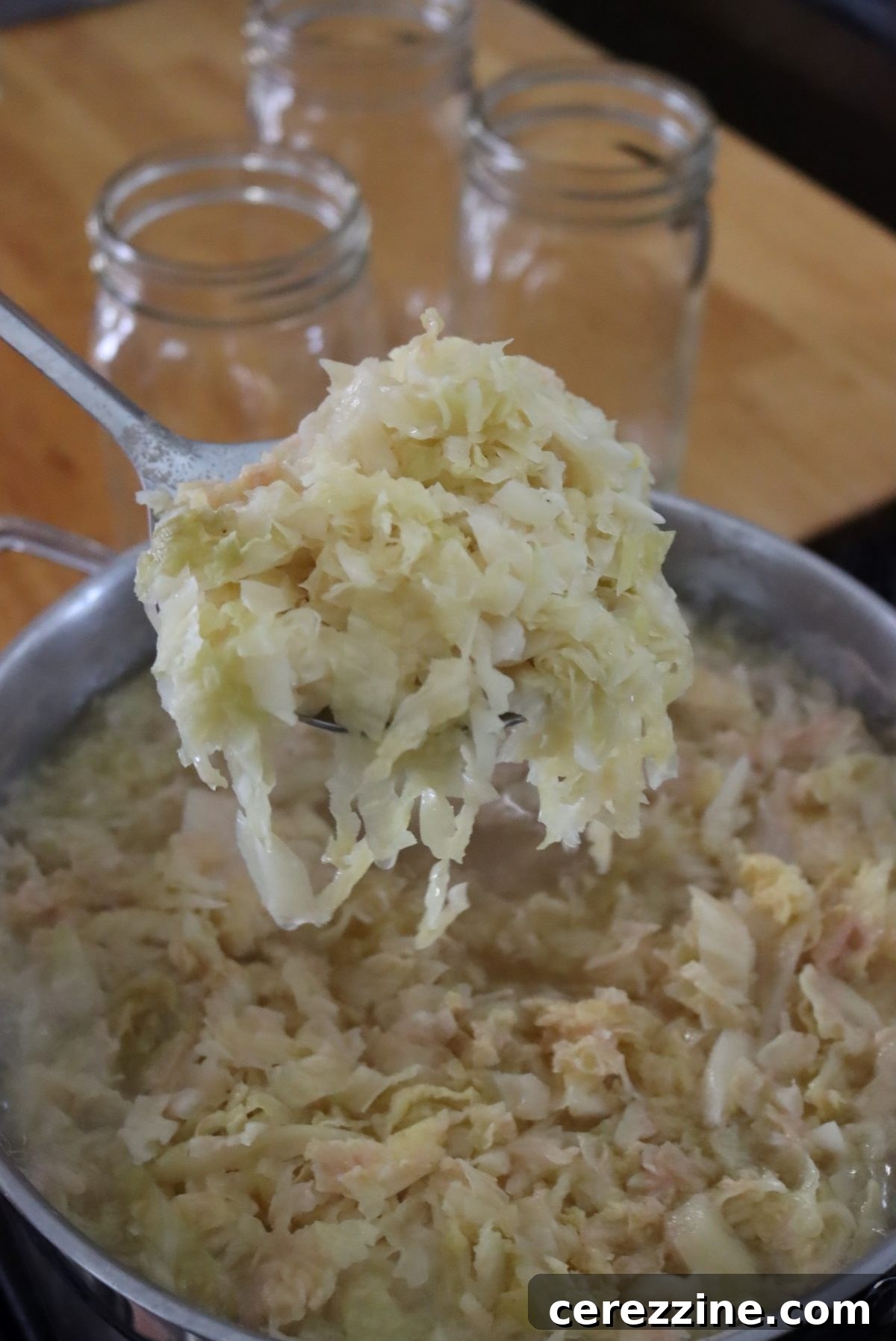
Regardless of whether you use the raw pack or hot pack method, the subsequent steps are the same:
- Wipe the rims of each jar with a clean, damp cloth to remove any food residue.
- Center a new, two-piece canning lid on each jar, and then apply the screw bands until they are fingertip tight.
- Carefully load the jars into a prepared hot water bath canner, ensuring they are covered by at least 1-2 inches of water.
- Bring the water in the canner to a full, rolling boil.
- Once boiling, begin timing the processing based on your chosen pack style, jar size, and altitude (refer to the altitude adjustment chart below). Maintain a consistent, hard boil throughout the entire processing time.
- When the processing time is complete, turn off the heat and allow the jars to remain in the hot water for an additional 5 minutes. This helps ensure a strong seal.
- Using a jar lifter, carefully remove each jar from the canner.
- Place the hot jars on a clean towel on your countertop, leaving at least an inch of space between each jar. Allow them to cool undisturbed to room temperature, which typically takes 12 to 24 hours. You’ll hear satisfying “ping” sounds as the lids seal.
- After 24 hours, check the seals. Press down on the center of each lid; if it doesn’t flex, the jar is sealed. Any jars that did not seal should be stored in the refrigerator and consumed within 3 weeks.
- For successfully sealed jars, remove the screw bands (these can be reused). Wipe down the jars and label them with the contents and date. Store your canned sauerkraut in a cool, dry, dark place away from direct light.
Crucial Altitude Adjustments for Canning Sauerkraut
Altitude significantly impacts canning processing times because water boils at a lower temperature at higher elevations. To ensure the safety of your home-canned sauerkraut, it is essential to adjust the processing time according to your altitude, jar size, and pack style. Always choose the correct processing time for your specific conditions.
| Pack Style | Jar Size | 0-1,000 ft | 1,001-3,000 ft | 3,001-6,000 ft | Above 6,000 ft |
|---|---|---|---|---|---|
| Hot Pack | Pints | 10 min | 15 min | 15 min | 20 min |
| Quarts | 15 min | 20 min | 20 min | 25 min | |
| Raw Pack | Pints | 20 min | 25 min | 30 min | 35 min |
| Quarts | 25 min | 30 min | 35 min | 40 min |
For easier reference, here are the altitude adjustments in a list format:
For Raw Pack:
- 0 to 1,000 feet elevation: 20 minutes for pints and 25 minutes for quarts
- 1,001 to 3,000 feet elevation: 25 minutes for pints and 30 minutes for quarts
- 3,001 to 6,000 feet elevation: 30 minutes for pints and 35 minutes for quarts
- Above 6,000 feet elevation: 35 minutes for pints and 40 minutes for quarts
For Hot Pack:
- 0 to 1,000 feet elevation: 10 minutes for pints and 15 minutes for quarts
- 1,001 to 6,000 feet elevation: 15 minutes for pints and 20 minutes for quarts
- Above 6,001 feet elevation: 20 minutes for pints and 25 minutes for quarts
Shelf Life of Canned Sauerkraut
Properly canned and stored sauerkraut boasts an impressive shelf life. Unopened jars, kept in a cool, dry, and dark location away from direct light and dampness, will easily last for 18 months or even longer. While it can often last beyond this, for optimal quality, it’s best to consume it within this timeframe. Once a jar of canned sauerkraut has been opened, transfer any remaining contents to an airtight container and store it in the refrigerator, where it should be eaten within 1 week. Always check for any changes in color or off-odors before consuming older canned goods.
Delicious Ways to Enjoy Your Home-Canned Sauerkraut
Canned sauerkraut is incredibly versatile and can be enjoyed in countless ways beyond its classic role as a hot dog or hamburger topping. Its tangy flavor and tender texture make it a fantastic ingredient in many savory dishes:
- Hearty Casseroles: Use it as a flavorful base for a Polish casserole, combining it with pasta, kielbasa, and shredded Swiss cheese for a comforting meal.
- Warming Soups: Create a traditional, deeply satisfying sauerkraut soup, perfect for chilly evenings.
- Classic Pairings: Naturally, bratwurst and sauerkraut are a match made in culinary heaven. Serve it with your favorite spicy mustard and a side of crisp pickles for a complete, German-inspired dish.
- Iconic Sandwiches: Elevate a homemade Reuben sandwich to gourmet status with the rich flavor of your own home-canned sauerkraut.
Alternative Storage Methods for Fresh Sauerkraut
If you prefer to enjoy your sauerkraut with its live probiotic cultures intact and are not planning to can it, there are several effective ways to store it for an extended period:
- Cool Storage: A cool, dark pantry, a back closet, or a not-too-damp basement can serve as excellent storage locations. In these environments, the sauerkraut will continue to ferment slowly, developing more acidity and flavor over time. It can last for many months if consistently kept cool and dark.
- Refrigeration: This is the most reliable method for preserving fresh, probiotic sauerkraut. Stored in an airtight container in the refrigerator, it can last for several months, with the cold temperatures significantly slowing down the fermentation process.
For those in hot climates, such as the American West, where consistently cool storage areas are rare, either refrigerating your sauerkraut or canning it for pantry shelf stability are the best options to prevent spoilage.
Regardless of the method chosen for storing fresh sauerkraut, the single most important rule is to ensure the sauerkraut remains completely submerged under its liquid (brine) at all times. Any portion of the sauerkraut exposed to air will quickly begin to mold and spoil. Therefore, it is crucial to keep the brine topped off. (This issue is not a concern with canned sauerkraut, as the jars are hermetically sealed, preventing liquid loss or air exposure).
More Cabbage Canning Recipes
24+ Relish Recipes for Canning (Beyond Pickle Relish)
Southern Chow Chow (Traditional Green Tomato Relish)
Amish Chow Chow
Canning Sauerkraut Recipe
Canning Sauerkraut
By: Ashley Adamant
Easy instructions for fermenting and canning homemade sauerkraut.
- Servings: 112 servings, Makes 9 (1-quart) jars
- Prep Time: 30 days (fermentation)
- Cook Time: 10 mins (for hot pack)
- Canning Time: 25 mins (for raw pack quarts at 0-1,000 ft)
Ingredients
- 25 lbs cabbage, whole
- 3/4 cup pickling salt (or canning salt or kosher salt)
Instructions
- Working with 5 pounds of cabbage at a time, remove outer leaves and carefully wash each cabbage. Quarter and core each cabbage.
- Using a sharp knife, mandolin, or food processor with a shredding attachment, shred the cabbage into thin ribbons the thickness of a quarter.
- Pack shredded cabbage into a fermentation crock.
- Add 3 tablespoons of canning/pickling salt to the cabbage in the crock and mix together with clean hands. (You’ll need about 3 tablespoons for every 5 lbs of cabbage, so keep adding in 3 tbsp increments for each 5lb batch you work thoroughly.)
- Using a fermentation pounder or wooden spoon, pack the shredded and salted leaves tightly into the crock. Leave 4 to 5 inches of space at the top.
- Repeat this process with the remaining cabbage and salt, packing it into each fermentation crock. The salt will work to draw liquid from the cabbage, which should be submerged in this natural brine after a couple of hours.
- Cover the cabbage with your choice of fermentation weights so that it is entirely covered by liquid.
- Allow the sauerkraut to ferment over 3 to 6 weeks, depending on the ambient temperature around the crock and how strong you like your sauerkraut. Colder temperatures mean the fermentation process will be slower; warmer temperatures can speed the process up. Do a taste test frequently to check on the fermentation process.
- If at any point you notice the liquid level decreasing, cover the sauerkraut with fresh, unchlorinated water to keep the sauerkraut below the brine level.
- The total fermentation time depends on your preference, but it should ferment at least 4 weeks at room temperature (68 to 72 degrees) to be acidic enough for canning (see notes). Most people opt for around 6 weeks for best flavor. When the sauerkraut is to your taste preference, it can be preserved using either a raw pack or a hot pack.
- Raw pack method: Fill each prepared quart jar with sauerkraut and its liquid (make sure the liquid is completely covering the sauerkraut). Leave 1/2-inch of headspace and apply two-part lids until fingertip tight.
- Hot pack method: Heat sauerkraut and juices in a large, heavy-bottomed pot until boiling, being sure to stir frequently. Fill prepared quart jars with the hot sauerkraut and liquid. Leave 1/2-inch of headspace and apply two-part lids until fingertip tight.
- Wipe the sides of each jar with a clean cloth and load into a prepared hot water bath canner. Bring the canner back up to a full rolling boil.
- Process the sauerkraut using the time recommended in the altitude chart above (e.g., 25 minutes for raw pack quarts at 0-1,000 ft, 15 minutes for hot pack quarts at 0-1,000 ft). If canning at a higher altitude, take note of longer processing times. Do not start timing until the canner is at a full rolling boil, and keep the canner at a hard boil for the entire processing time.
- When the timer goes off, turn off the heat and let the jars sit in the hot water canner for another 5 minutes.
- Carefully remove the jars from the hot water canner using a jar lifter.
- Place the jars on a clean towel, leaving 1-inch of space between each jar, and let the contents come to room temperature (12 to 24 hours).
- Check the seal on each lid, moving any unsealed jars to the refrigerator for storage.
- Remove the band from successfully canned jars of sauerkraut for another use and store in a cool, dry area away from direct light for up to 18 months.
Notes
Be aware that the fermentation process acidifies the sauerkraut, which makes it safe for water bath canning. The sauerkraut will need to be fermented at room temperature for a minimum of 3 to 4 weeks before canning. Do not attempt this recipe with plain cabbage, it is not safe for canning because it is not acidic enough.
According to the Complete Guide to Home Canning from the National Center for Food Preservation, “Sauerkraut fermentation can take place under variable temperature and time combinations. For obtaining a good quality sauerkraut at home, the USDA recommendation is to store at 70º to 75ºF while fermenting. At temperatures between 70º and 75ºF, kraut will be fully fermented in about 3 to 4 weeks; at 60º to 65ºF, fermentation may take 5 to 6 weeks. At temperatures lower than 60ºF, kraut may not ferment. Above 75ºF, kraut may become soft.”
Altitude Adjustments
Sauerkraut needs to be processed for longer times if you live at higher altitude. Quart jars and raw pack also result in longer processing times. Make sure you choose the right elevation, jar size and pack style below to determine your processing time.
For Raw Pack:
- 0 to 1,000 feet elevation: 20 minutes for pints and 25 minutes for quarts
- 1,001 to 3,000 feet elevation: 25 minutes for pints and 30 minutes for quarts
- 3,001 to 6,000 feet elevation: 30 minutes for pints and 35 minutes for quarts
- Above 6,000 feet elevation: 35 minutes for pints and 40 minutes for quarts
For Hot Pack:
- 0 to 1,000 feet elevation: 10 minutes for pints and 15 minutes for quarts
- 1,001 to 6,000 feet elevation: 15 minutes for pints and 20 minutes for quarts
- Above 6,001 feet elevation: 20 minutes for pints and 25 minutes for quarts
Nutrition
Calories: 25kcal, Carbohydrates: 6g, Protein: 1g, Fat: 0.1g, Saturated Fat: 0.03g, Polyunsaturated Fat: 0.02g, Monounsaturated Fat: 0.02g, Sodium: 776mg, Potassium: 172mg, Fiber: 3g, Sugar: 3g, Vitamin A: 99IU, Vitamin C: 37mg, Calcium: 41mg, Iron: 0.5mg
Nutrition information is automatically calculated, so should only be used as an approximation.
More Water Bath Canning Recipes
If you’ve enjoyed canning sauerkraut, you might be interested in these other easy water bath canning recipes:
- Canning Peaches
- Canning Apple Slices
- Canning Dill Pickles
- Canning Blackberries
Explore Other Food Preservation Techniques
Beyond canning, there are many traditional and modern methods to preserve your harvest. Consider trying these preservation recipes and techniques:
- Storing Eggs in Lime
- How to Make Cheddar Cheese
- Homemade Apple Cider Vinegar
- Salt Cured Egg Yolks
- Storing Cheese in Wood Ash