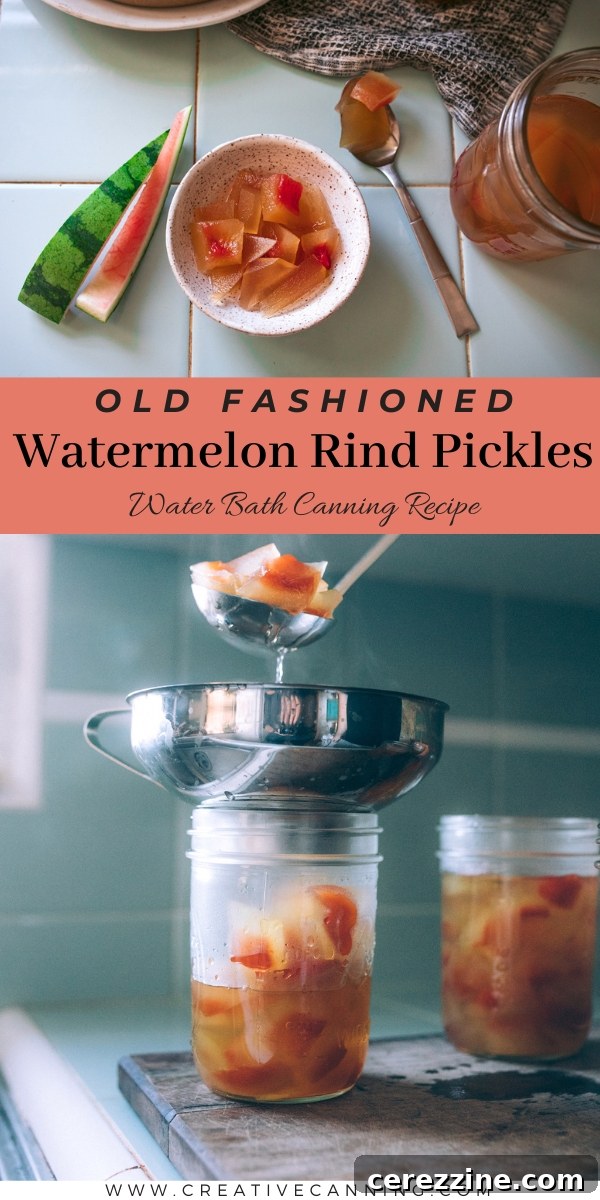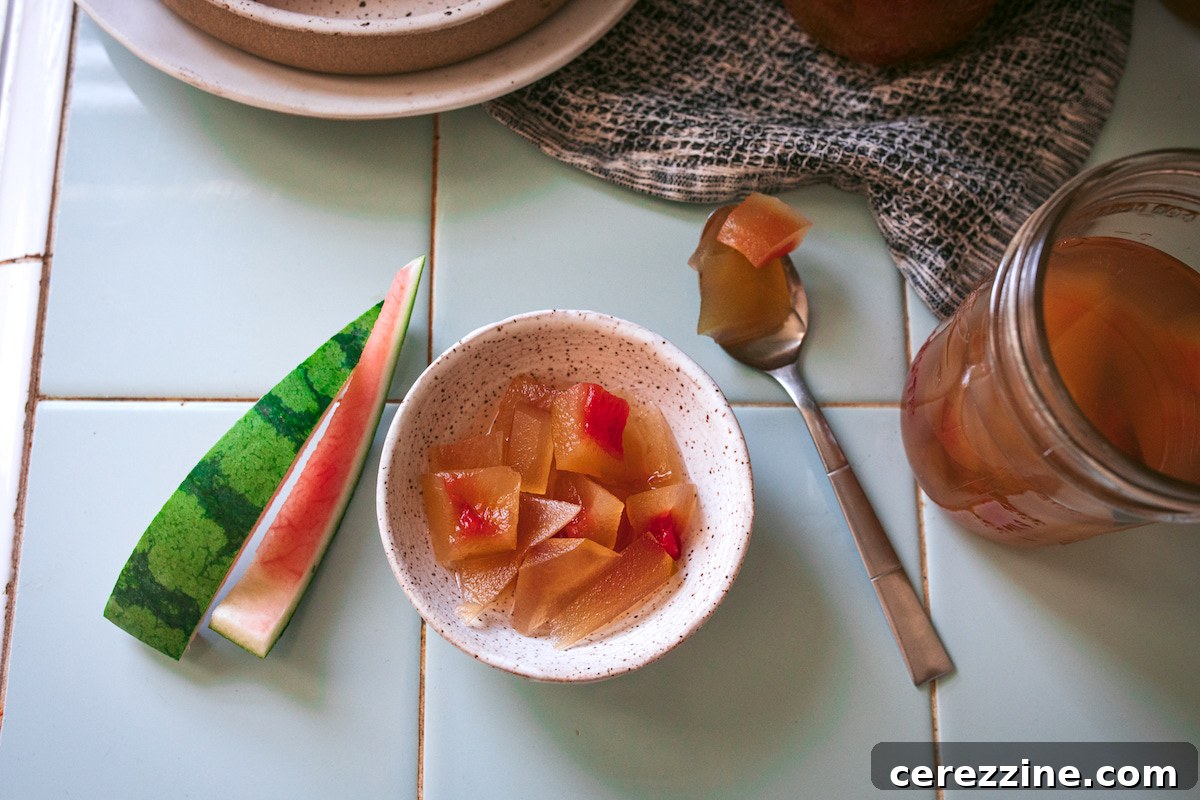
Watermelon rind pickles are a timeless delicacy, bridging the past with modern culinary curiosity. Far from a mere act of frugality, these sweet and tangy preserves represent a delicious legacy worth preserving in any contemporary pantry.
A Taste of History: The Enduring Appeal of Watermelon Rind Pickles
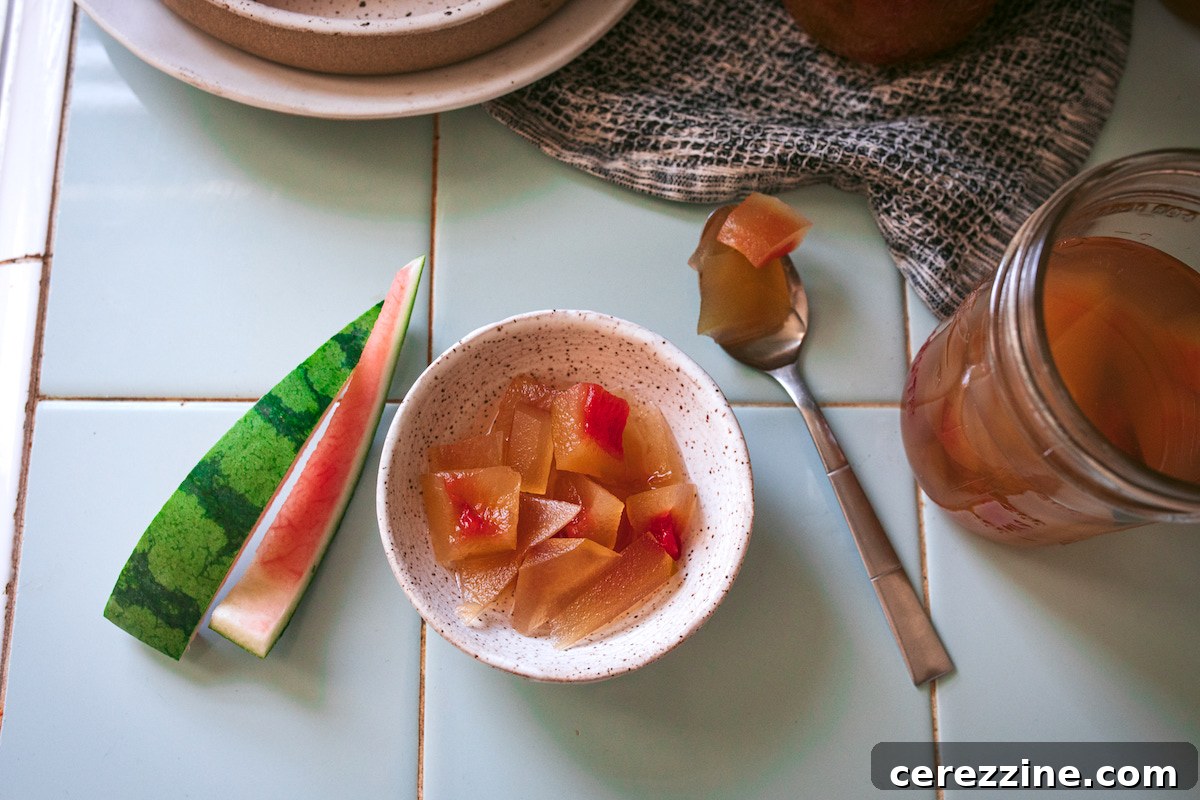
The tradition of pickling watermelon rinds stretches back to the pioneer era. Many assume this practice was born purely out of necessity – a “waste not, want not” philosophy applied to every part of the harvest. Yet, a closer look at the ingredients reveals a more nuanced story. Items like white sugar and cinnamon were considered luxuries on the frontier, often reserved for special occasions and company. Why, then, would precious resources be dedicated to preserving what might otherwise be discarded?
The simple truth is, watermelon rind pickles are unexpectedly delightful. Their unique blend of sweetness, tang, and spiced warmth made them a coveted treat, justifying the expense and effort even in challenging times.
From Frontier Necessity to Modern Delicacy
Imagine the monotonous diet of pioneer families – cornmeal mush, salt pork, and occasional coarse biscuits. In such a world, a simple pickle was a revelation. Stories from literature, like Laura Ingalls Wilder’s “Little House on the Prairie” series, vividly portray pickles as extraordinary treats, savored slowly and remembered fondly. They were not just food; they were a burst of flavor, a break from the mundane, and a testament to ingenuity.
Pickling, with its reliance on durable ingredients like sugar, salt, and spices, offered a reliable method for preserving fresh flavors. These ingredients, though costly, wouldn’t spoil, making them ideal for frontier life. They allowed settlers to capture the essence of seasonal bounty, including the often-overlooked watermelon rind, to enrich their diets throughout the long winters.
Watermelon rind might sound like an unusual candidate for pickling, but its texture and mild flavor make it exceptionally well-suited. It softens beautifully while retaining a satisfying crunch, and its porous nature allows it to absorb the pickling syrup’s complex flavors wonderfully.
In our modern world, where fresh produce from across the globe is available year-round, one might wonder if traditional watermelon rind pickles still have a place. The answer is a resounding yes. They are not merely a survival food; they are a gourmet delight, a sustainable way to minimize food waste, and a delicious connection to culinary heritage. Every bite is a journey back to a simpler time, a taste of history that enriches our contemporary palate.
Watermelon Rind Pickles: Recipe Overview
- Recipe Name: Watermelon Rind Pickles
- Recipe Type: Fruit Pickling Recipe
- Canning Method: Waterbath Canning
- Prep/Soak Time: 4 hours
- Cook Time: 1 hour 10 minutes (approx.)
- Canning Time: 10-20 Minutes (altitude adjusted)
- Yield: 4 to 5 pint jars
- Jar Sizes: Half Pint or Pint
- Headspace: 1/2 inch
- Key Ingredients: Watermelon Rind, Vinegar, Salt, Sugar, Cinnamon, Cloves, Lemon.
- Difficulty: Moderate. A crucial overnight pre-soak is required for best results.
- Similar Recipes: This method can be adapted for other old-fashioned fruit pickles such as pickled cherries, pickled peaches, pickled blueberries, and pickled strawberries.
Understanding Watermelon Rind Pickles
Watermelon rind pickles are crafted from the often-discarded white pith and faint pink flesh found just beneath the vibrant green skin of a watermelon. This recipe transforms these humble rinds through a meticulous process: first, a long, cold brine soak to tenderize and prepare them, followed by simmering until they achieve a delightful candy-sweetness in a rich, tangy syrup. The pickling syrup is traditionally infused with warming spices like cinnamon and whole cloves, complemented by bright, thinly sliced lemon, creating a complex flavor profile that is both comforting and exhilarating.
Essential Ingredients for Watermelon Rind Pickles
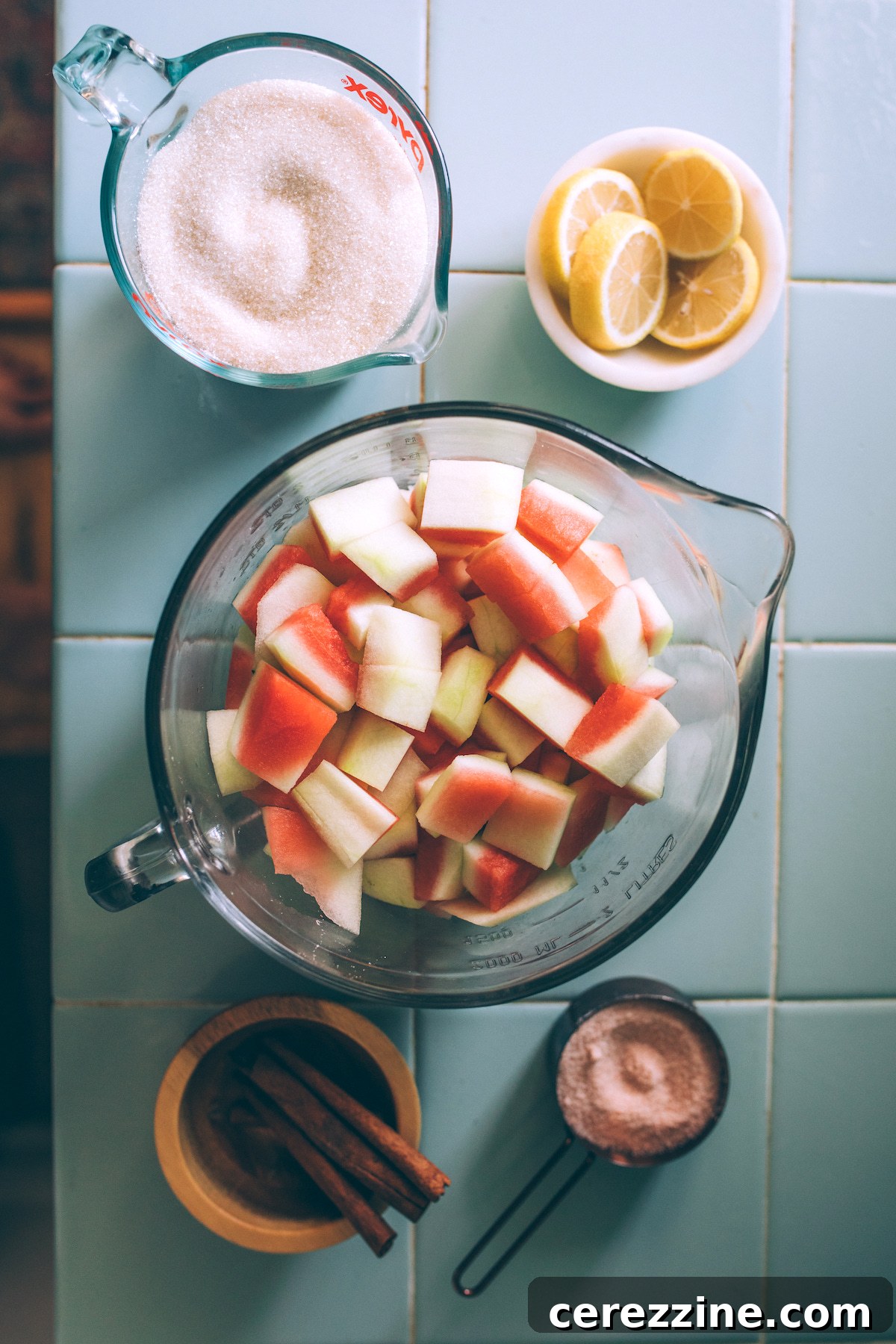
Whenever you enjoy a refreshing watermelon, consider saving the rinds for this remarkable recipe. You’ll need approximately 3 quarts or 6 pounds of unpeeled watermelon rind to yield 4 or 5 pints of these delectable pickled preserves. Here’s a detailed list of what you’ll need:
- Watermelon rind (unpeeled, about 6 lbs or 3 quarts)
- Salt (canning salt, sea salt, kosher salt, or pink Himalayan salt are all suitable)
- Ice cubes (approximately 2 quarts or 2 standard trays)
- Granulated sugar
- White vinegar (ensure it has at least 5% acidity for safe canning)
- Whole cloves
- Cinnamon sticks (preferably whole, to be broken)
- One fresh lemon
- Water (for brine and syrup)
Step-by-Step Guide: Crafting Your Watermelon Rind Pickles
Embarking on this pickling adventure is a rewarding experience. Follow these detailed steps to create your own batch of old-fashioned watermelon rind pickles.
Preparation: Cleaning and Cutting the Rind
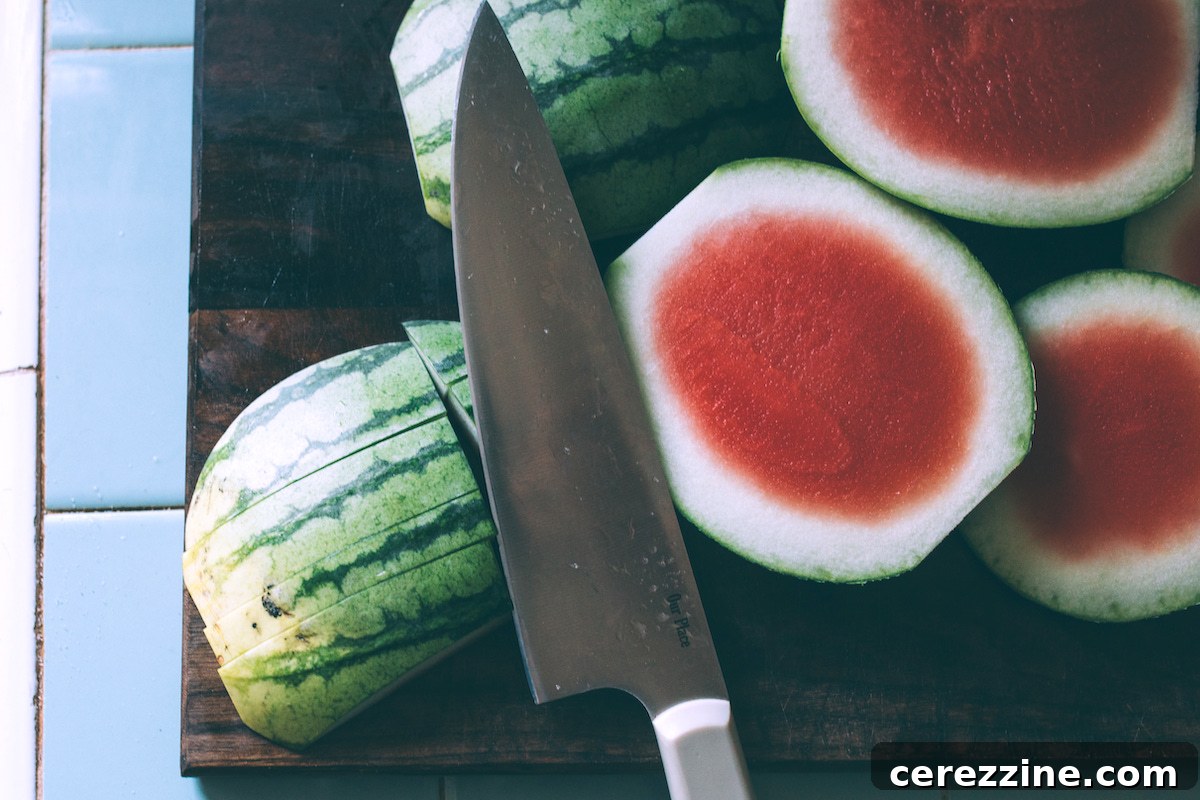
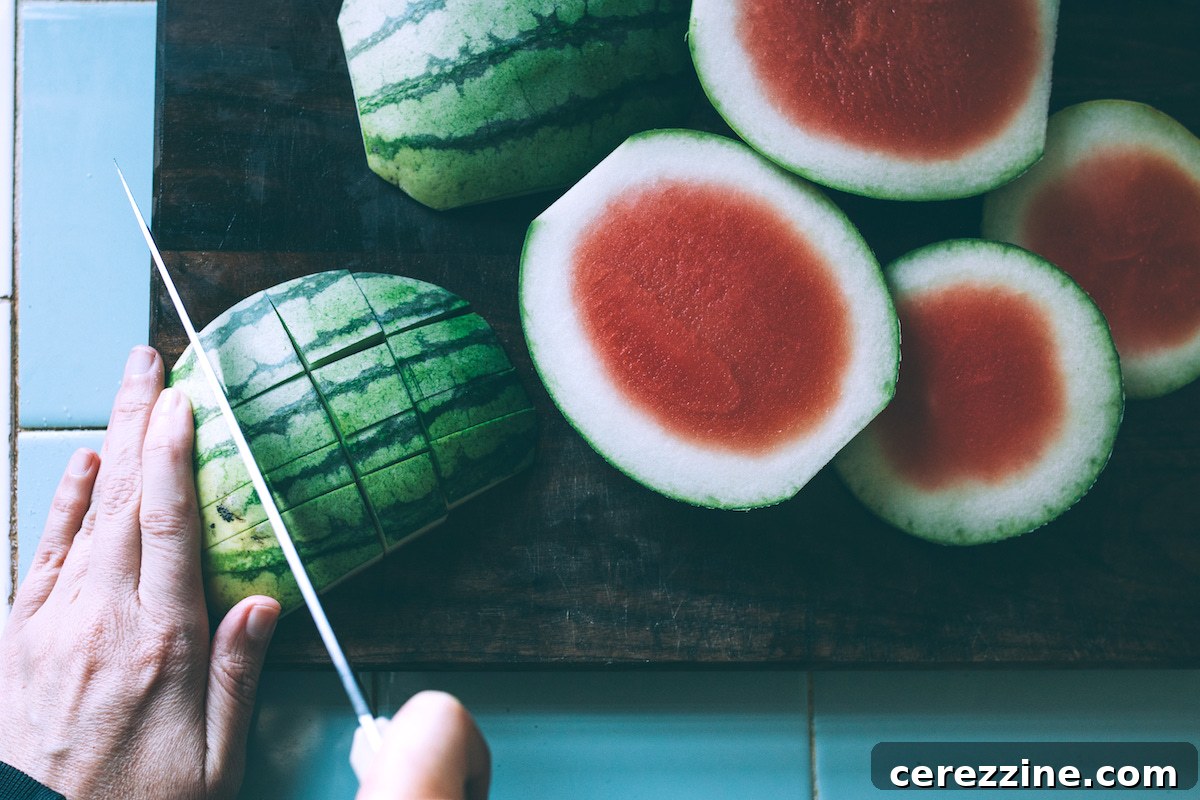
- Prepare the Watermelon Rind: Start by measuring your unpeeled watermelon rind, aiming for about 6 pounds or 3 quarts. Using a sharp paring knife, carefully remove the tough, dark green outer skin. Discard the green portion. You should be left with the white pith and any faint pink traces of melon flesh attached. Cut these prepared rinds into uniform 1-inch squares. This consistency ensures even pickling and a pleasant texture.
The Crucial Brine Soak
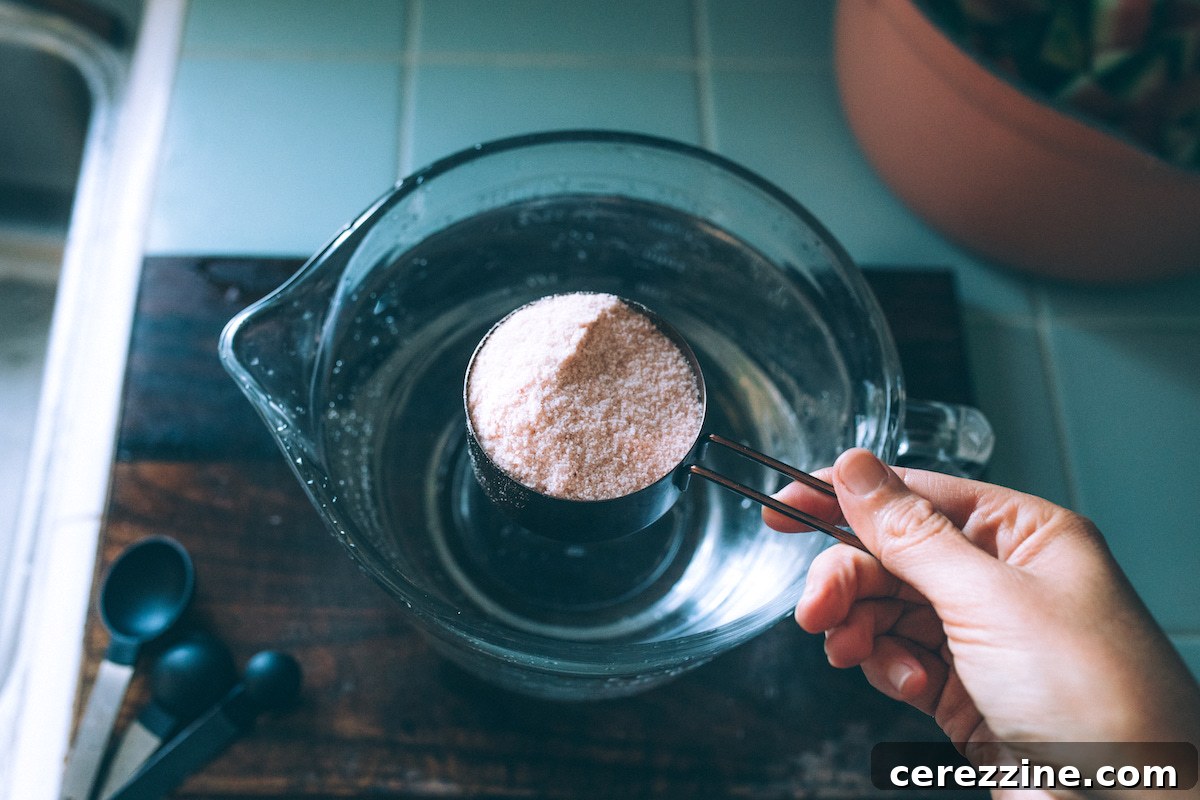
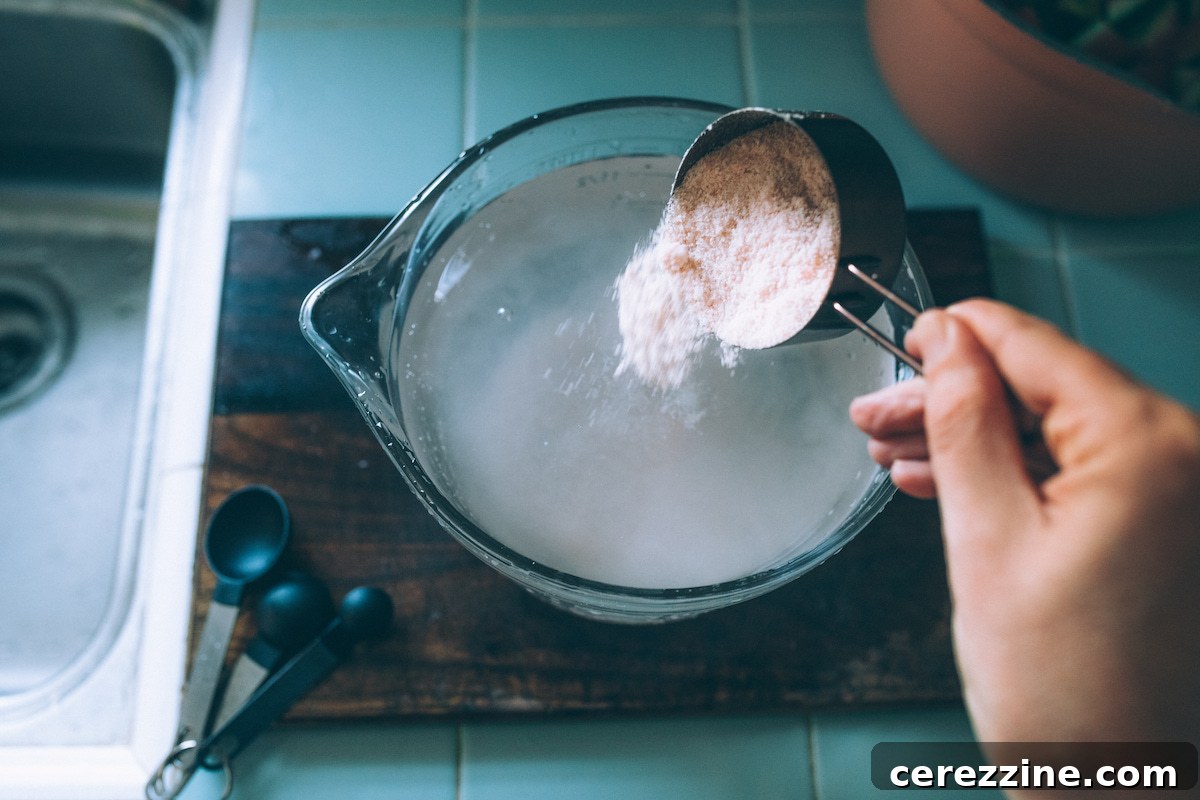
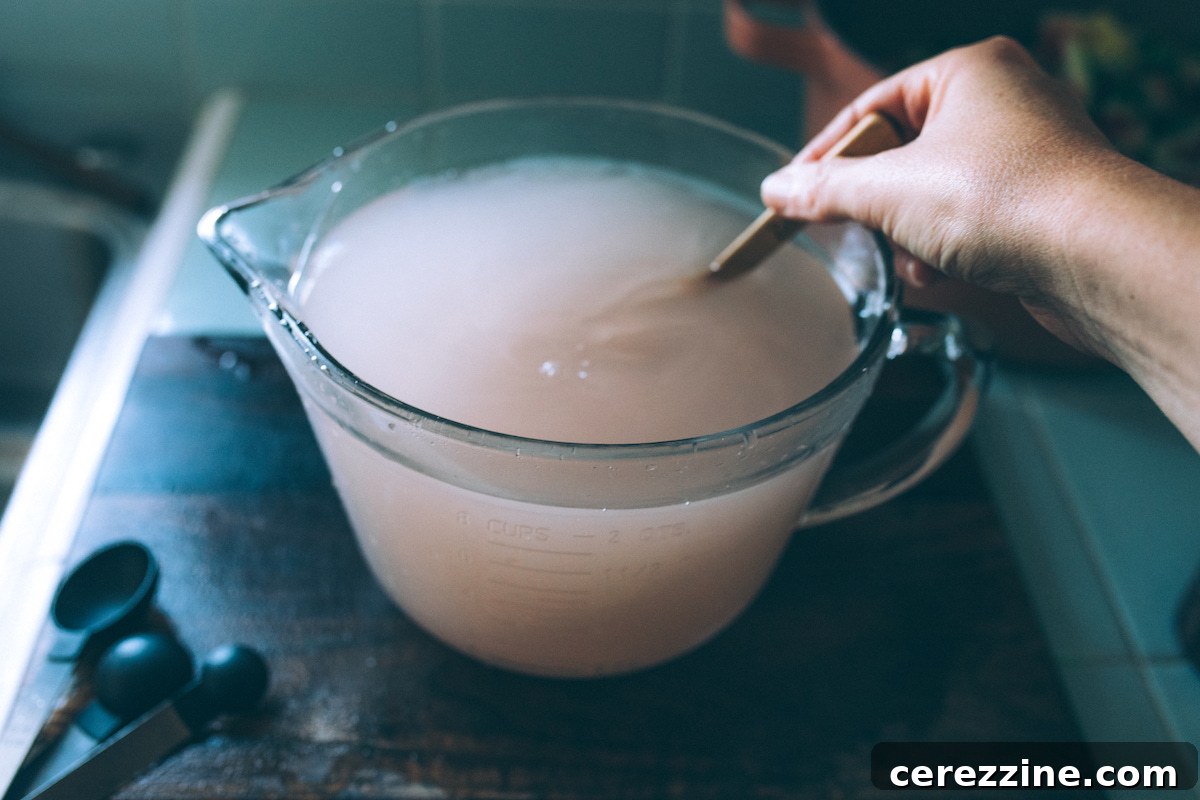
- Make the Brine: In a large mixing bowl or measuring cup, combine 3/4 cup of your chosen salt with 3 quarts of cold water. Whisk thoroughly until the salt is completely dissolved, forming a clear brine. If you’re using a coarse salt that struggles to dissolve in cold water, you can gently warm a portion of the water to dissolve the salt, then chill it completely before use. The brine must be very cold for the next step.
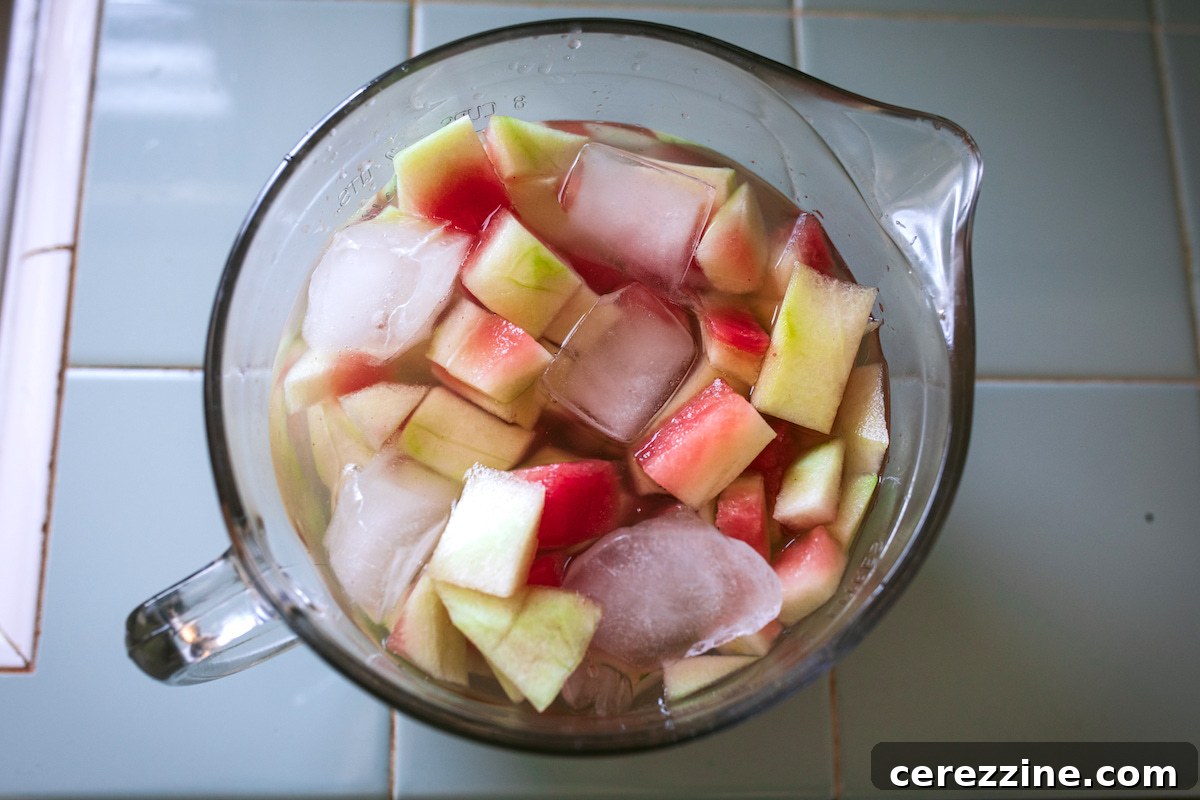
- Soak the Rinds: Add the prepared watermelon rind pieces directly to the cold brine. Stir to ensure all rinds are completely submerged. Next, add about 2 quarts (equivalent to two standard ice cube trays) of ice cubes over the rinds and brine, stirring again to distribute the ice evenly. Cover the bowl and refrigerate for 3 to 4 hours. This essential pre-soak tenderizes the rind and prepares it to absorb the pickling syrup.
- Blanch the Rinds: After soaking, drain the melon rind thoroughly in a colander and rinse meticulously under cold running water to remove excess salt. Transfer the rinsed rinds to a large saucepan and cover them with fresh cold water. Bring the water to a rapid simmer and cook until the rinds are fork-tender. This usually takes about 10 minutes. It’s crucial not to overcook them; they should be tender but still retain a slight firmness.
- Drain Again: Immediately after the rinds reach fork-tender stage, drain them once more in a colander. Return the blanched rinds to the original saucepan or a large, heat-proof bowl.
Crafting the Spiced Syrup
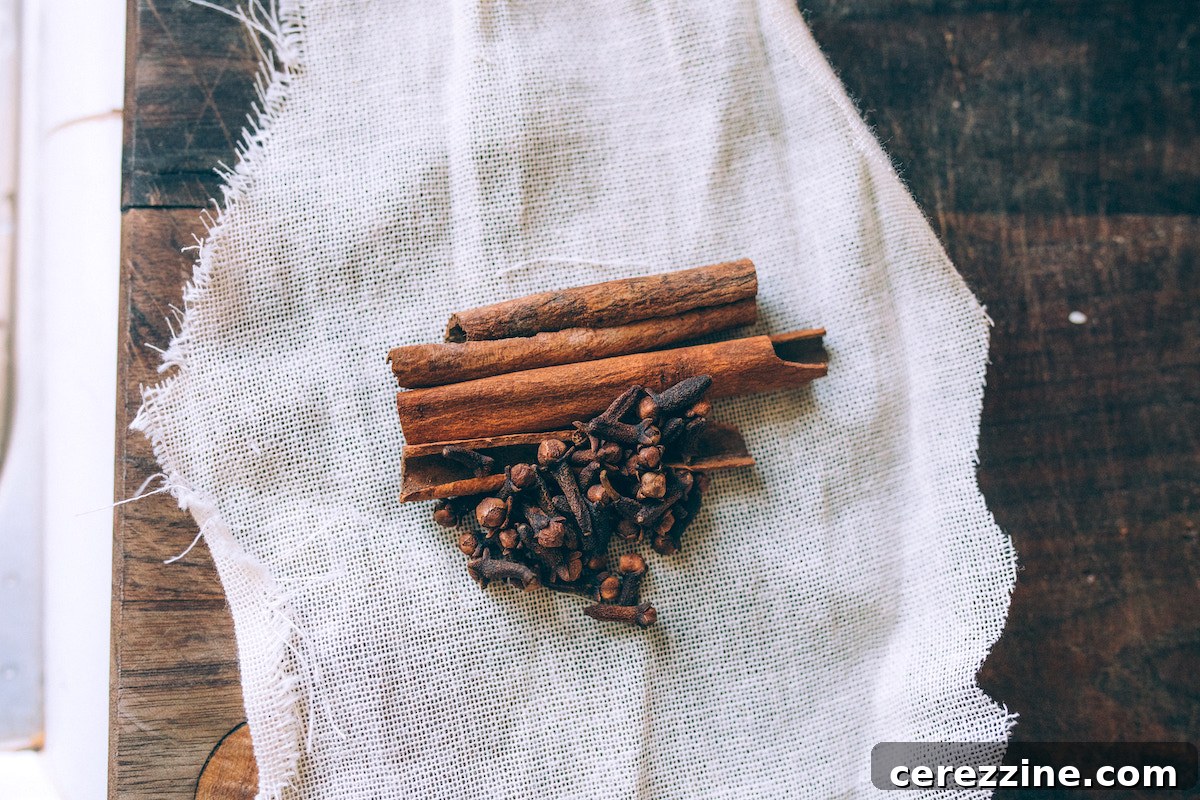
- Prepare the Spice Sachet: To infuse the pickles with aromatic spices without leaving debris, create a spice sachet. Break or cut six cinnamon sticks into smaller, manageable pieces (approximately 1-inch). Gather these cinnamon pieces and 1 tablespoon of whole cloves in a piece of cheesecloth and tie it securely to form a small bag.
- Cook the Syrup: In a separate large saucepan, combine 9 cups of sugar, 3 cups of white vinegar (at least 5% acidity), and 3 cups of water. Add the prepared spice sachet to this mixture. Bring the syrup to a rolling boil and allow it to boil vigorously for 5 minutes. This ensures the sugar dissolves completely and the spices begin to infuse.
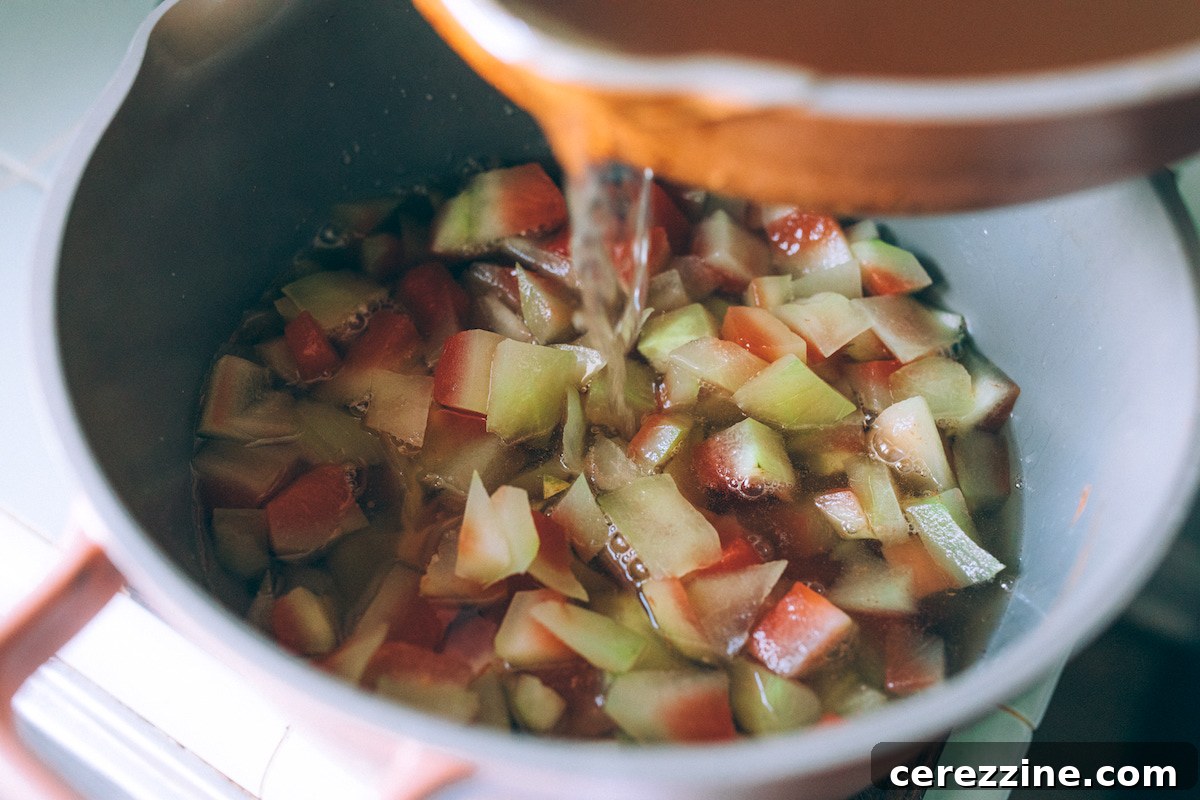
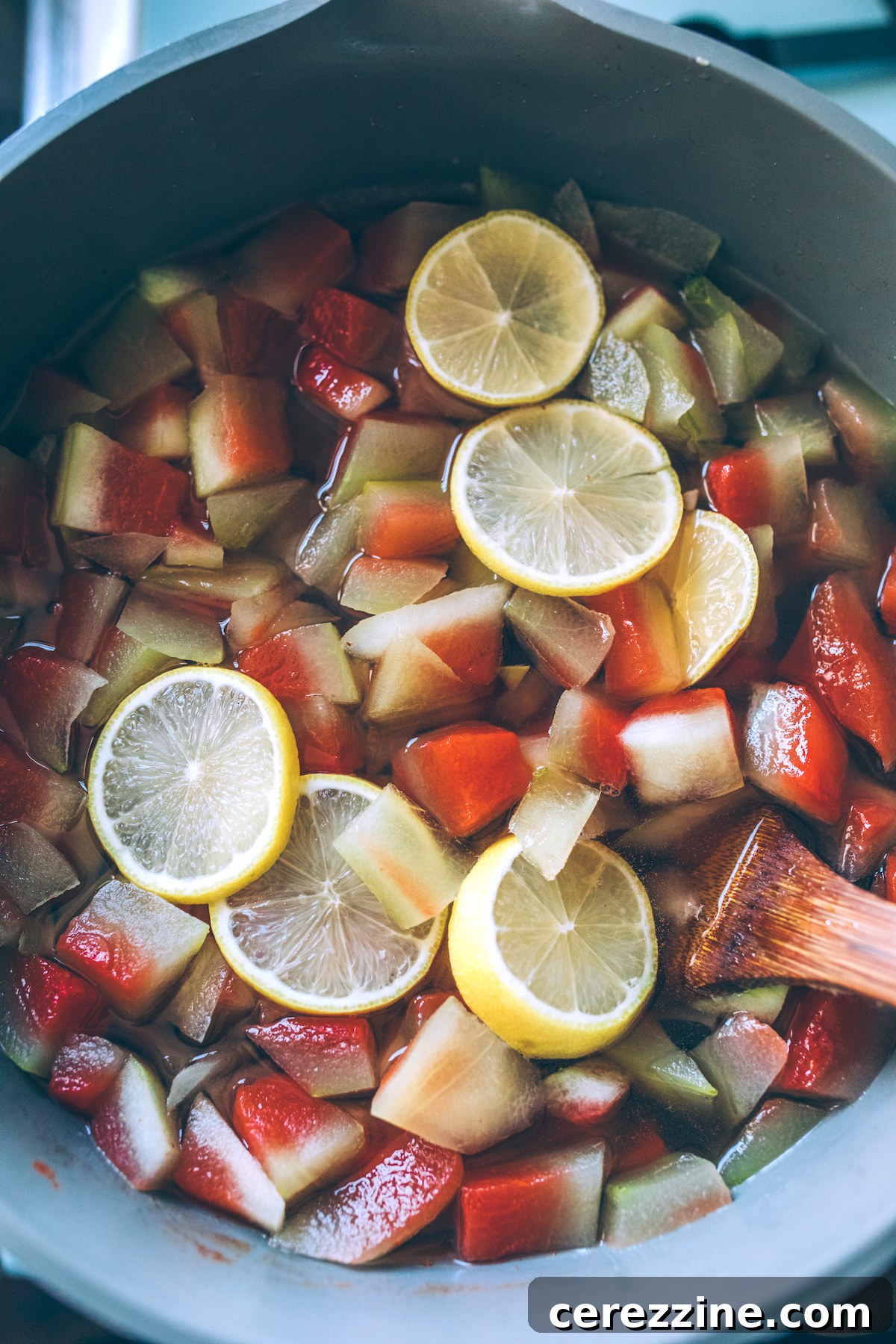
- Combine and Chill: Carefully pour the hot, spiced syrup over the blanched watermelon rinds in the other saucepan or heat-proof bowl. Add one thinly sliced lemon, ensuring any seeds have been removed. Stir gently to combine all ingredients. Cover the saucepan or bowl and refrigerate the mixture overnight. This extended marination allows the rinds to fully absorb the rich flavors of the syrup.
Final Cooking and Preparation for Canning
- Simmer to Perfection: The next day, place the saucepan containing the rinds, syrup, spice sachet, and lemon slices back on the stove. Bring the mixture to a boil, then reduce the heat to a low simmer. Continue to cook the watermelon rinds gently for approximately 1 hour, stirring occasionally. During this time, the rinds will begin to soften further and take on a delightful, translucent, candy-like texture, and the syrup will visibly thicken as it reduces.
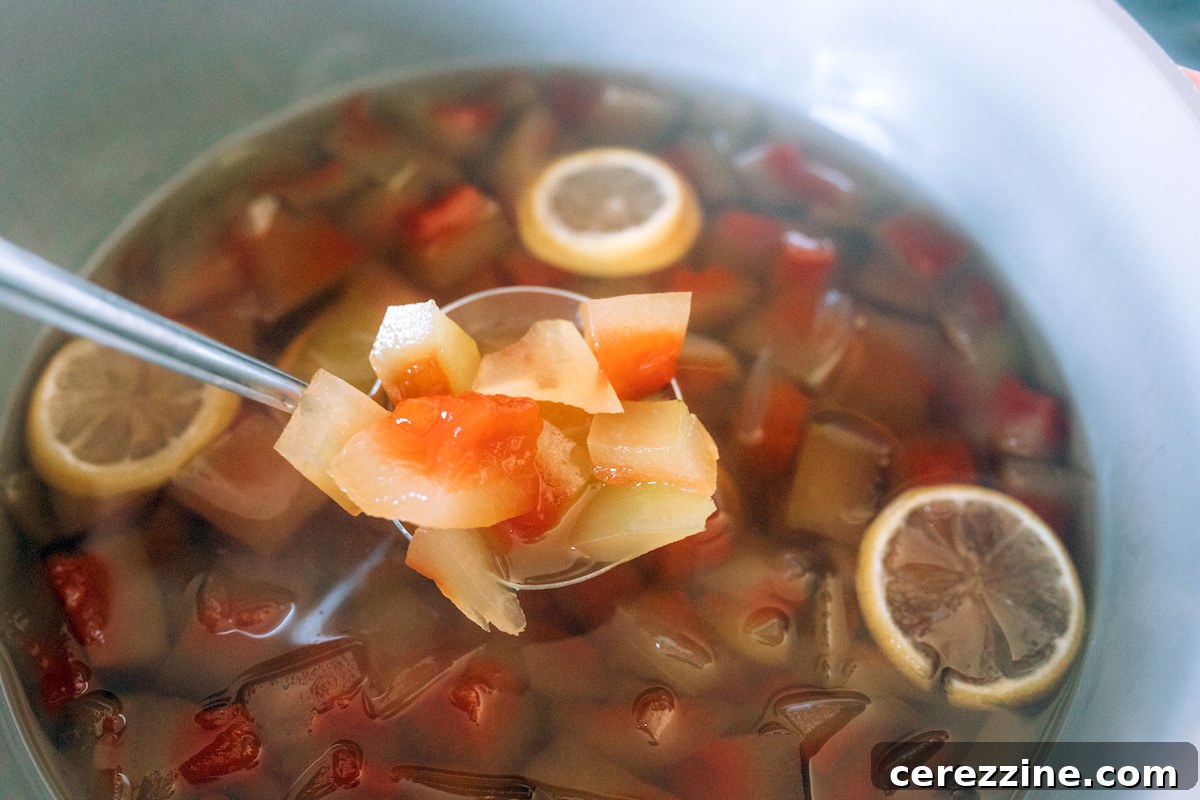
- Prepare Jars: Once the watermelon rinds become translucent around the edges and the syrup has thickened, they are ready for jarring. Carefully remove the spice sachet bag from the syrup and set it aside to cool.
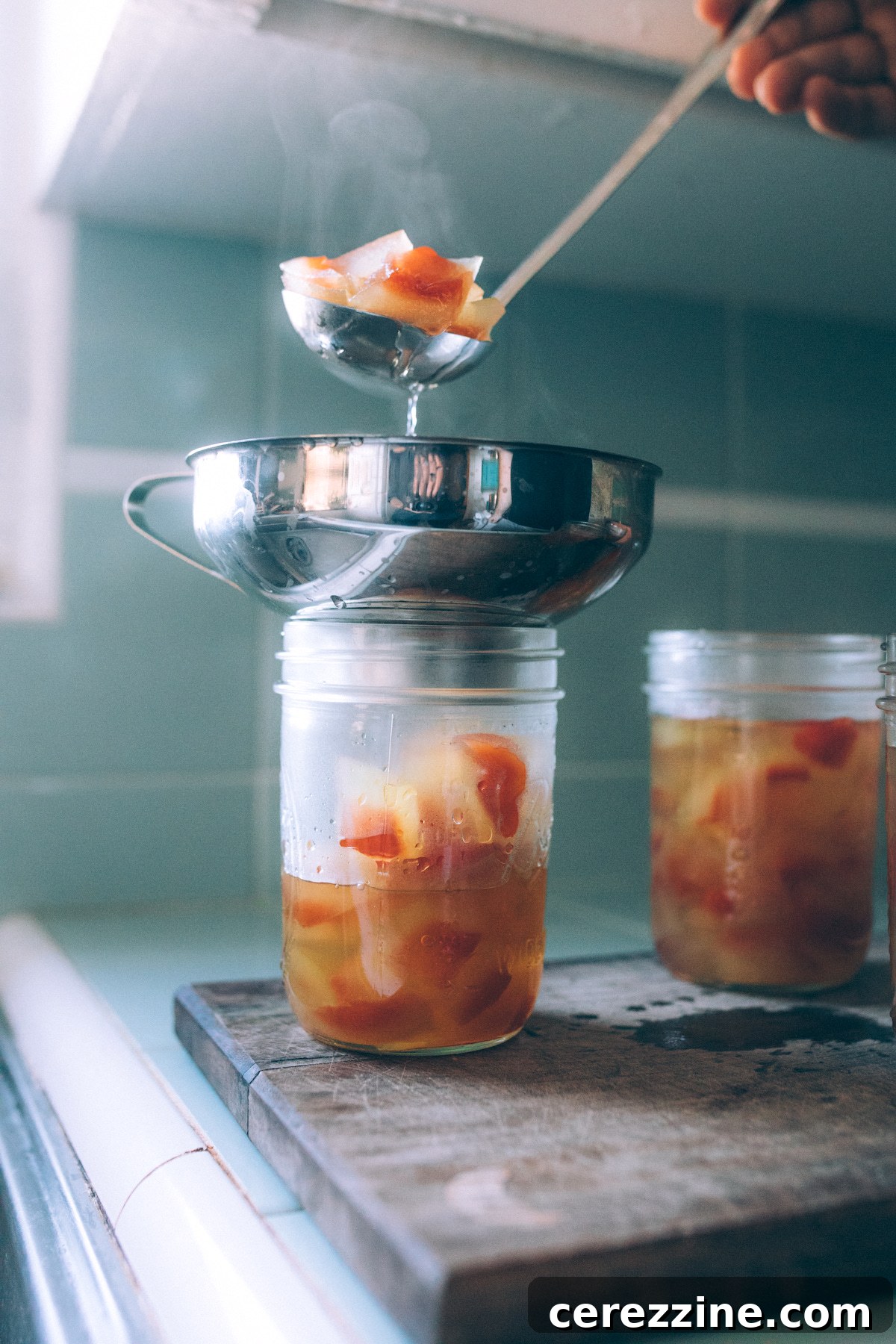
- Fill Jars: Using a ladle and a canning funnel, fill each sterilized pint or half-pint jar with the hot pickled rinds and syrup. Leave precisely 1/2-inch headspace at the top of each jar.
- Add Cinnamon and Remove Air Bubbles: Take a small piece of broken cinnamon stick from the cooled spice sachet and add one to each jar, ensuring it is fully submerged in the hot syrup. Use a wooden chopstick or a plastic debubbler tool to carefully remove any trapped air pockets by running it along the inside of the jar. Readjust the syrup level if necessary to maintain the 1/2-inch headspace.
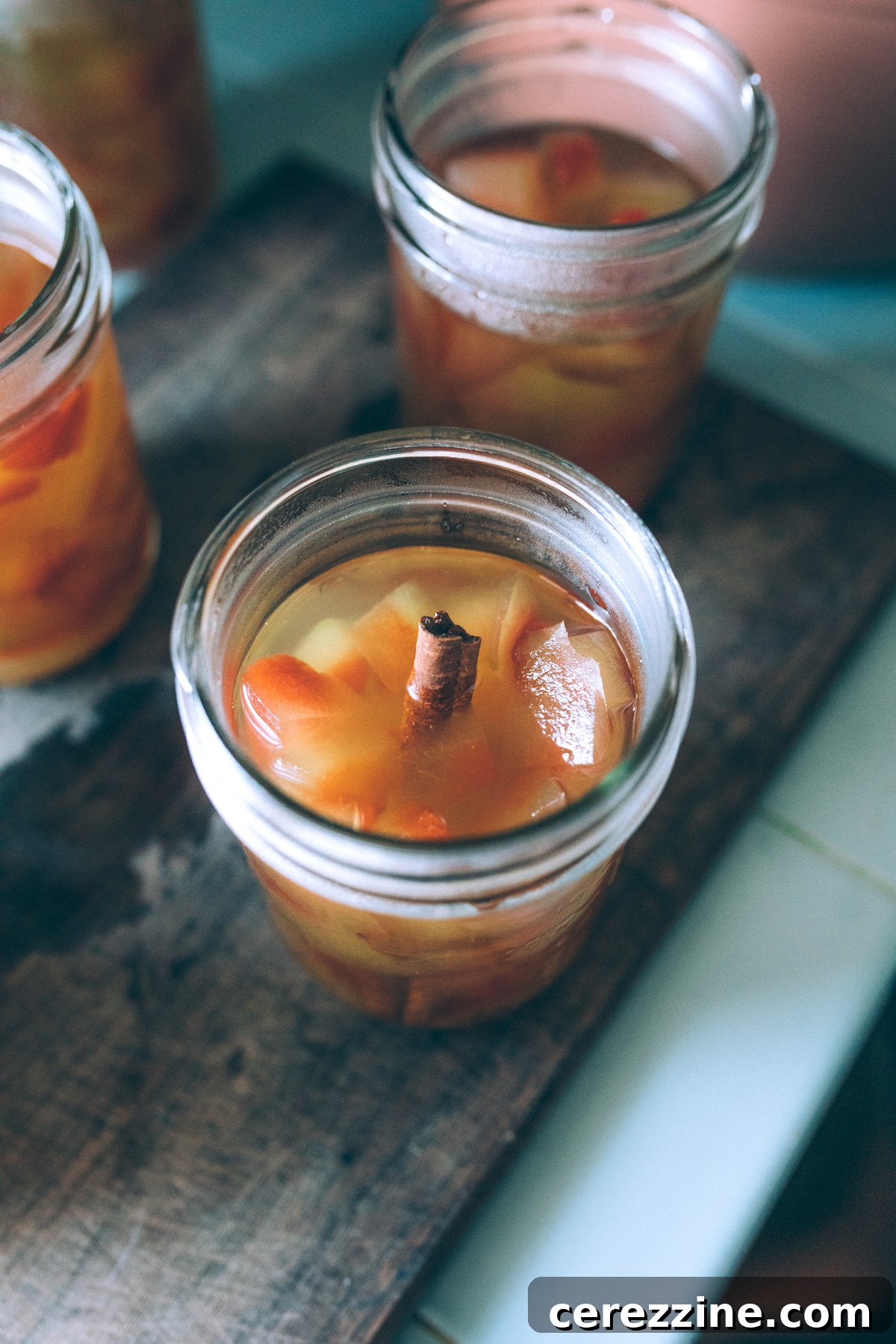
- Seal Jars: Use a clean, damp kitchen towel to wipe down the rims and sides of each jar thoroughly. This ensures a proper seal. Apply two-piece metal canning lids, tightening them only until “fingertip tight” (snug but not overtightened). At this point, your jars are ready for water bath canning.
Canning Watermelon Rind Pickles for Shelf Stability
Proper canning is essential for safely preserving your delicious watermelon rind pickles. Follow these instructions carefully:
- Load the Canner: Gently load the prepared pint jars into a preheated hot water bath canner, ensuring that each jar is completely covered by at least 1 inch of hot water.
- Process Jars: Bring the water in the canner to a full, rolling boil. Once boiling, begin timing the process for 10 minutes. Remember to adjust processing time for altitude:
- For altitudes between 1,001 and 6,000 feet, process for 15 minutes.
- For altitudes greater than 6,000 feet, process for 20 minutes.
- Cool and Check Seals: After the processing time is complete, turn off the heat and carefully remove the canner lid. Allow the jars to rest in the hot water for 5 minutes before carefully removing them with canning tongs. Transfer the hot jars to a clean kitchen towel-lined counter or a wire rack, ensuring there is at least 1 inch of space between each jar. Allow the jars to cool undisturbed at room temperature for 12 to 24 hours.
- Store: Once completely cool, check the seal on each jar lid. A properly sealed lid will be concave (curved inwards) and will not flex when pressed. Any unsealed jars should be stored in the refrigerator and consumed within a few weeks. Properly sealed watermelon rind pickles can be stored in a cool, dark, dry place away from direct light for up to 18 months.
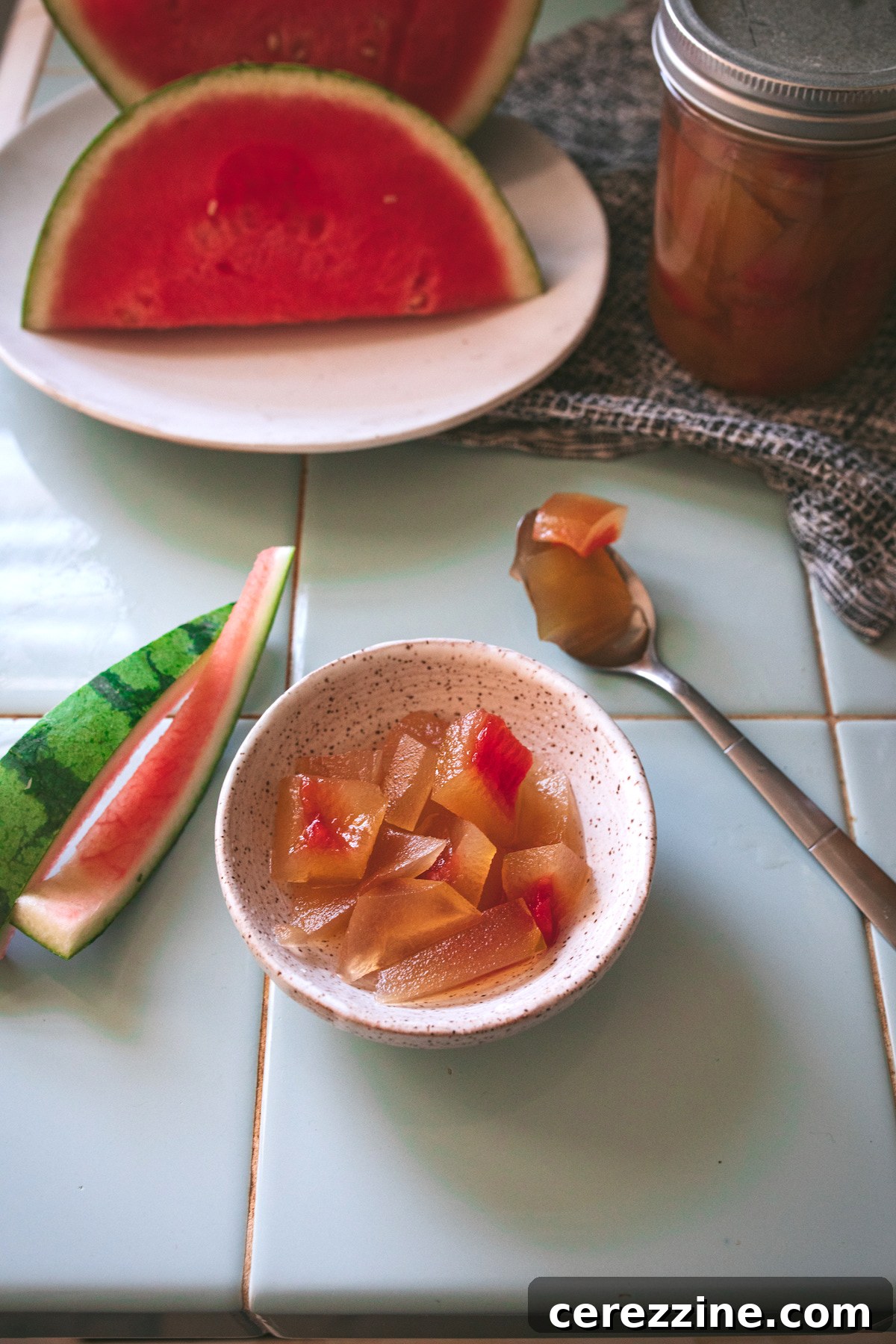
Delightful Ways to Enjoy Watermelon Rind Pickles
These sweet and tangy watermelon rind pickles are surprisingly versatile and can elevate a variety of dishes. Their unique flavor and delightful texture make them a fantastic addition to both savory and sweet preparations:
- As a Condiment: They pair exceptionally well with rich, roasted meats such as pork, duck, or wild boar, cutting through the fattiness with their bright acidity.
- Charcuterie Boards: Add a vibrant, unexpected element to your cheese and charcuterie platters.
- Cocktail Garnish: Use a slice or cube as a sophisticated garnish for cocktails, especially those with gin or bourbon.
- Salad Enhancer: Finely chop or thinly slice the pickles and add them to green salads, coleslaws, or kale salads for an intriguing twist. For an extra flavorful dressing, incorporate a few tablespoons of the pickling syrup.
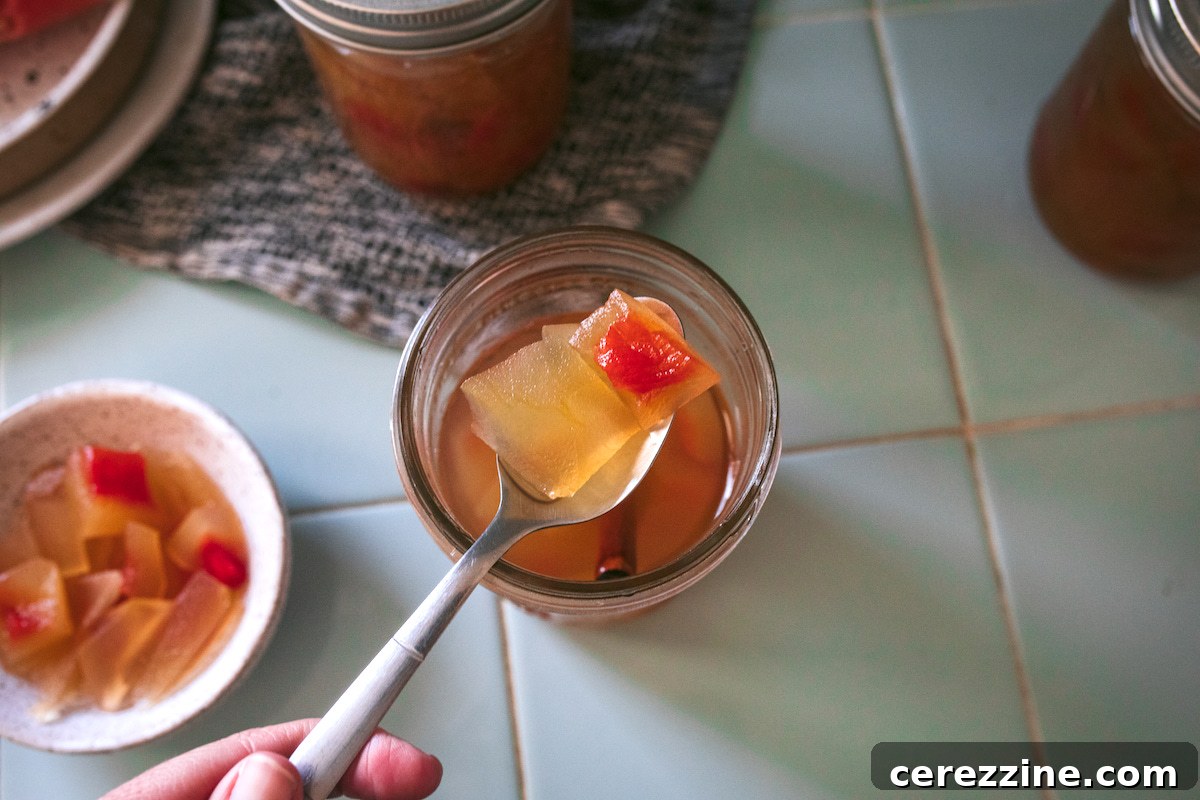
- Straight from the Jar: Of course, for the purest pleasure, enjoy them simply, right out of the jar – a true testament to their deliciousness!
If you tried this Watermelon Rind Pickles Recipe, or any other recipe, we’d love to hear from you! Please consider leaving a ⭐ star rating and sharing your thoughts in the comments below.
Stay connected with us for more canning tips and recipes!
- Substack
More Melon Canning Recipes
Watermelon Canning Recipes
Canning Watermelon Lemonade Concentrate
Watermelon Rind Preserves

No ratings yet
40
Servings, Makes 4 to 5 pints
Watermelon Rind Pickles
Ashley Adamant
4
hrs
20
mins
10
mins
4
hrs
30
mins
Print Recipe
Equipment
-
Water Bath Canner
- Large mixing bowls
- Large saucepans (2)
- Sharp paring knife
- Colander
- Cheesecloth
- Canning funnel
- Wooden chopstick or debubbler tool
- Sterilized pint or half-pint jars with lids
- Canning tongs
Ingredients
- 3 Quarts watermelon rind, about 6 lbs, green peel removed
- 3/4 cup salt, Himalayan, kosher, or canning salt
- 3 Quarts cold water (for brine)
- 2 Quarts ice cubes, about 2 trays
- 9 cups granulated sugar
- 3 cups white vinegar, at 5% acidity
- 3 cups water (for syrup)
- 1 Tbsp. whole cloves
- 6 whole cinnamon sticks, broken or cut into 1-inch pieces
- 1 whole lemon, thinly sliced with seeds removed
Instructions
- Using a sharp paring knife, remove the green outer rind from the watermelon rinds. Cut the white pith and light pink flesh into uniform 1-inch squares.
- Prepare a cold water brine by mixing together the 3/4 cup salt and 3 quarts of cold water, stirring until the salt is completely dissolved.
- Place the prepared watermelon rinds into the cold brine. Add 2 quarts of ice cubes over the rinds and stir. Let this mixture sit for 3-4 hours in the refrigerator.
- Drain the melon rind in a colander and rinse thoroughly under cold water.
- Transfer the soaked rinds back to a large saucepan, cover with fresh cold water, and bring to a rapid boil. Cook for 10 minutes or until the rinds are fork-tender. Immediately drain the rinds once more and return them to the saucepan or a large heat-proof bowl.
- In a separate saucepan, combine 9 cups of sugar, 3 cups of white vinegar, 3 cups of water, and a spice sachet* (made with cinnamon and cloves). Bring this mixture to a boil and let it boil for 5 minutes.
- Pour the hot syrup and spice sachet over the blanched watermelon rinds. Stir in the thinly sliced lemon. Cover the saucepan/bowl and allow the watermelon rinds and syrup to stand overnight in the refrigerator.
- The next day, place the saucepan with the watermelon rinds, syrup, spice sachet, and lemon slices back on the stove. Bring the ingredients to a boil, then reduce the heat and simmer slowly for 1 hour, stirring occasionally, until the rinds become translucent and the syrup thickens.
- Remove the spice sachet. Pack the hot pickled watermelon rinds into prepared, sterilized pint jars. Ladle the hot syrup over the rinds, ensuring 1/2-inch headspace is left at the top of each jar.
- Add one small piece of broken cinnamon (from the removed sachet) to each jar, ensuring it is covered by syrup. Use a wooden chopstick to remove any visible air pockets and adjust syrup levels as needed to maintain the 1/2-inch headspace.
- Wipe each jar rim and sides with a clean kitchen towel before applying two-piece metal canning lids until fingertip tight.
- Load the prepared jars into a hot water bath canner, making sure each jar is covered by at least 1-inch of hot water. Process the jars for 10 minutes**.
- Remove jars from the hot water canner using tongs, transferring them to a clean kitchen towel-lined space, leaving an inch of space between each jar. Let the jars cool completely to room temperature (between 12-24 hours).
- Check the seal of each metal jar lid. Transfer any unsealed jars to the fridge. Jars with properly sealed lids can be stored in a cool, dry place away from direct light for up to 18 months.
Notes
**Altitude adjustment for canning:
- If canning at an altitude between 1,001 and 6,000 feet, process jars for 15 minutes.
- If canning at an altitude greater than 6,000 feet, process jars for 20 minutes.
Nutrition
Nutrition information is an approximation per serving (based on 40 servings per recipe) and may vary based on specific ingredients and preparation methods:
- Calories: 199 kcal
- Carbohydrates: 51g
- Protein: 0.5g
- Fat: 0.3g
- Saturated Fat: 0.03g
- Polyunsaturated Fat: 0.1g
- Monounsaturated Fat: 0.03g
- Trans Fat: 0.001g
- Sodium: 2131mg
- Potassium: 86mg
- Fiber: 0.5g
- Sugar: 49g
- Vitamin A: 405 IU
- Vitamin C: 6mg
- Calcium: 16mg
- Iron: 0.3mg
Nutrition information is automatically calculated, so should only be used as an approximation.
The lovely photography in this post is by Stephanie at My Tiny Laguna Kitchen.
Seasonal Summer Canning Recipes
Keep your canner busy throughout the summer harvest season with these delightful seasonal canning recipes, perfect for preserving the flavors of summer:
- Canning Zucchini in Pineapple Juice
- Canning Raspberries
- Canning Rhubarb
- Nectarine Jam
Exploring Unique Pickling Recipes
While watermelon rind pickles stand out for their uniqueness, the world of pickling offers countless other fascinating and delicious options beyond the conventional cucumber. Expand your pickling repertoire with these adventurous recipes:
- Pickled Figs
- Pickled Green Tomatoes
- Pickled Fiddleheads