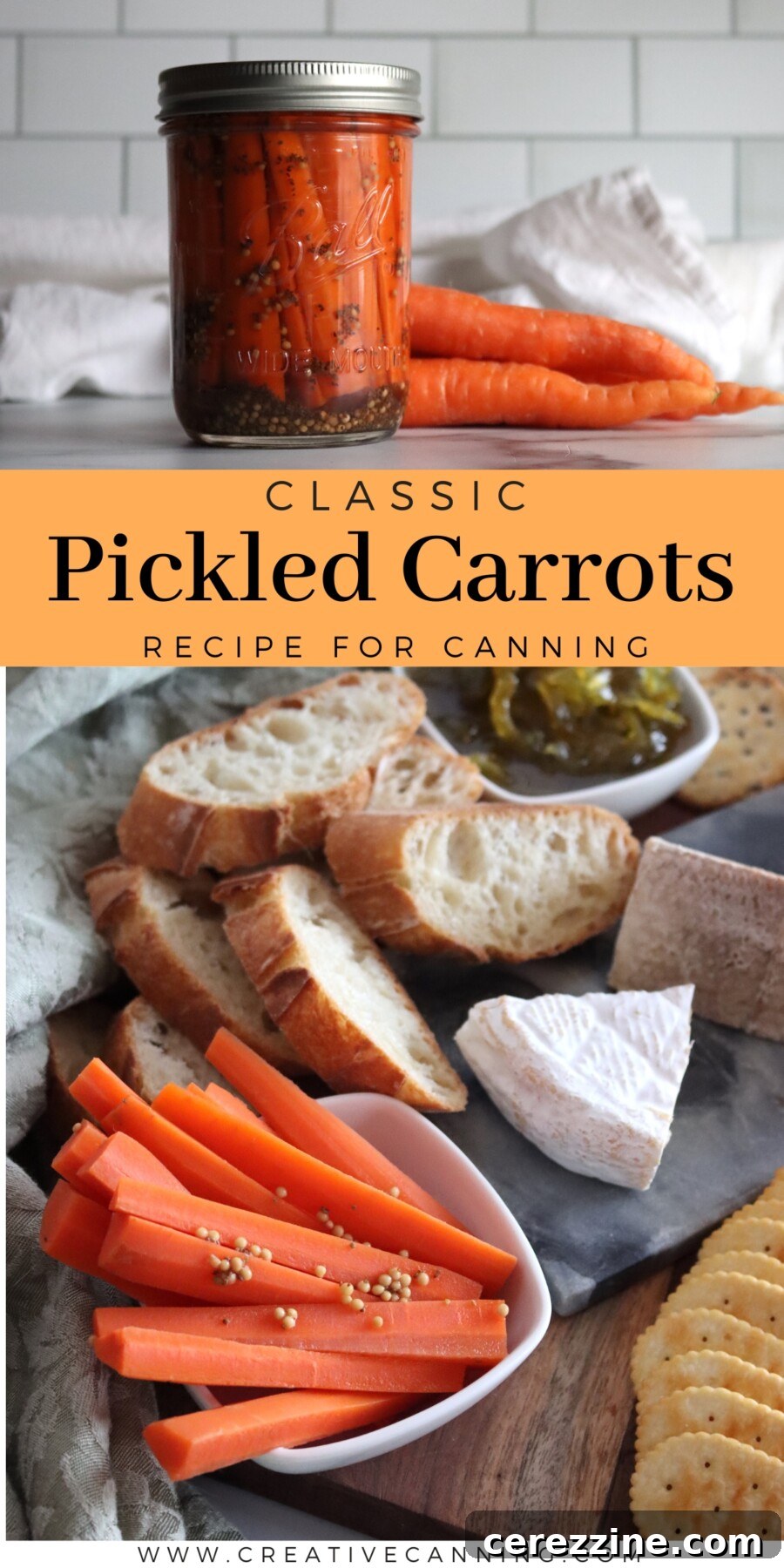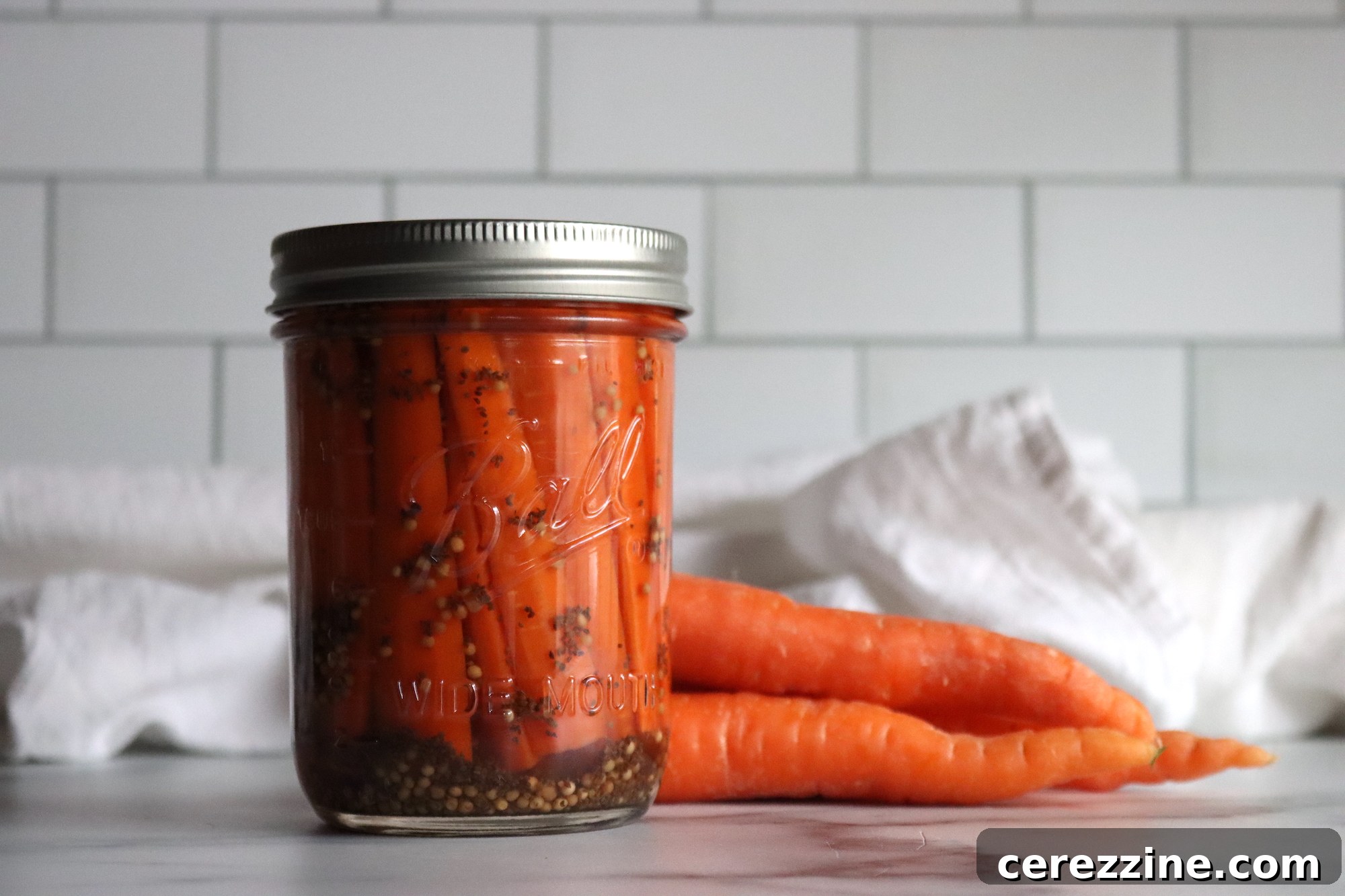
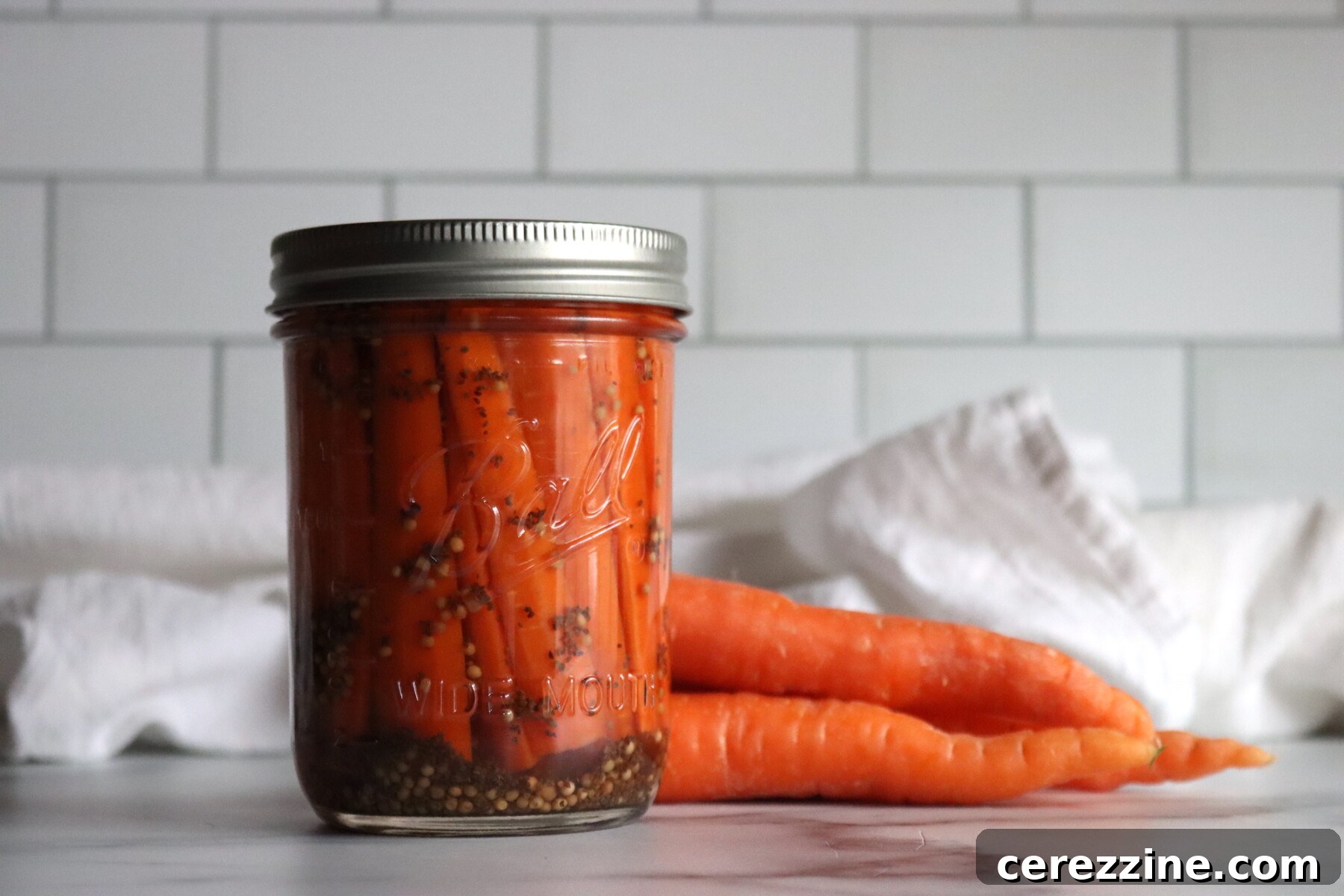
Homemade pickled carrots are a delightful addition to any pantry, instantly elevating meals with their vibrant color and irresistible sweet-tangy crunch. These crisp-tender carrots, infused with a lightly spiced brine, offer a refreshing bite that can awaken a simple sandwich or brighten an elaborate charcuterie board. They are not just a condiment; they are a flavorful secret weapon for any home cook looking to add a burst of freshness and zest to their culinary creations.
This recipe has been meticulously reviewed for safety and accuracy by a Master Food Preserver, certified through the esteemed University of Cornell Cooperative Extension. This ensures you are following tested, reliable methods for home food preservation.
Our featured pickled carrots recipe is derived from the classic, trusted guidelines of the National Center for Home Food Preservation (NCHFP). This means you’re relying on scientifically validated proportions for vinegar and water, alongside a canning process specifically designed for safe, long-term shelf-stable storage. It’s an easy, time-honored pickling method that yields surprisingly versatile results, making it an essential skill for any home preserver.
I initially embarked on making these sweet and tangy carrots because I craved a crunchy, punchy element that wasn’t a traditional cucumber pickle. Carrots excel in pickling, maintaining their firm texture beautifully, and their vibrant orange hue brings a joyful burst of color every time I open a jar from the pantry.
Beyond their aesthetic appeal, these canned pickled carrots have become my ultimate “emergency side dish.” If a dinner feels like it’s missing something – perhaps a touch of acidity or an extra layer of texture – a small bowl of these zesty carrots instantly completes the meal, transforming good into great with minimal effort.
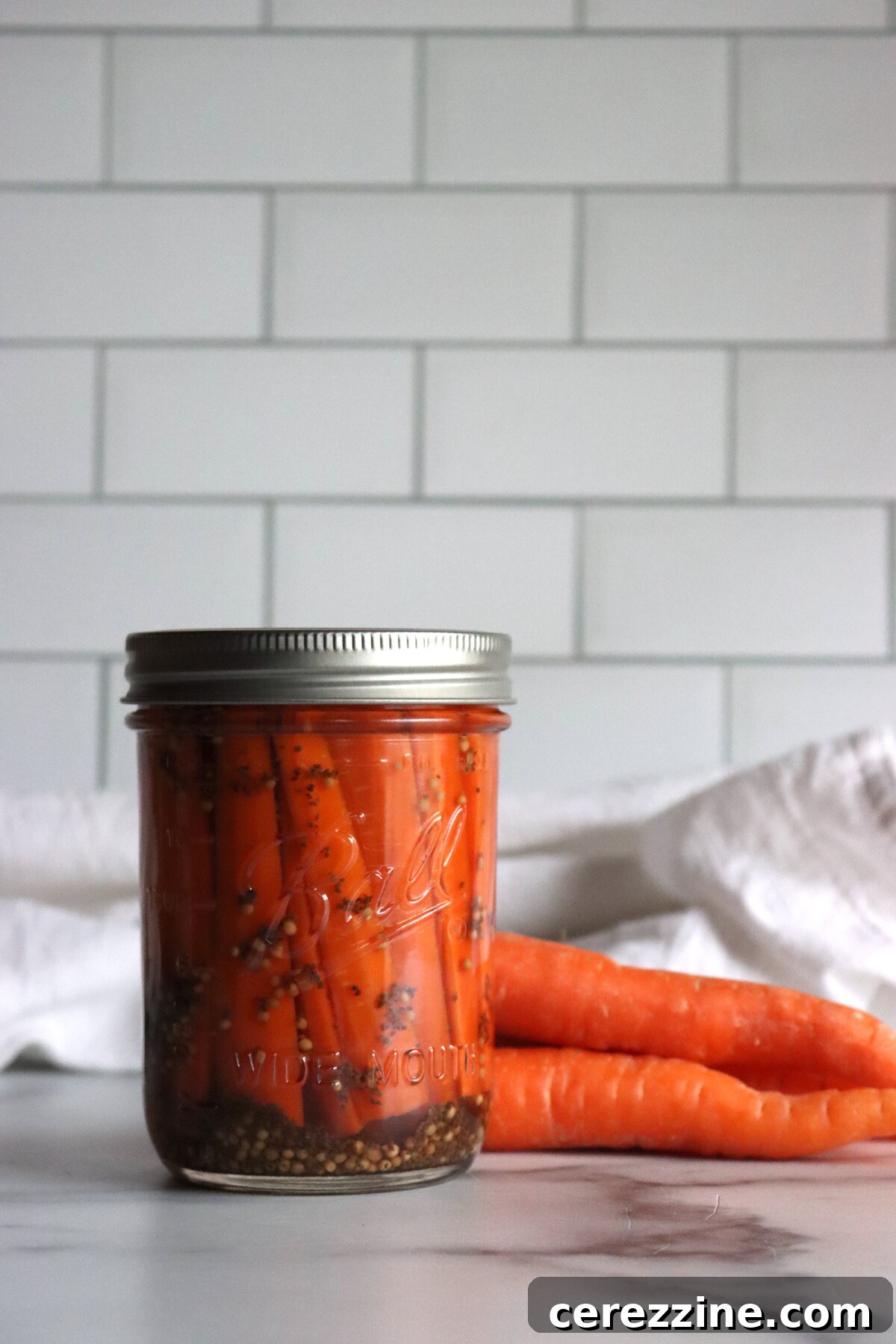
Why You’ll Love This Classic Pickled Carrots Recipe!

First and foremost, the flavor profile of these homemade pickled carrots achieves a perfect equilibrium. You’ll experience the bright tang of vinegar, complemented by a gentle sweetness, and the traditional aromatic notes of mustard and celery seed. This classic pickle spice blend provides a familiar, comforting taste, with just enough sugar to harmonize the flavors beautifully without making them overly sweet.
Secondly, this recipe offers an excellent method for preserving carrots, especially when you find yourself with an abundance from a garden harvest or a great market find. Instead of just another soup canning recipe, these pickled carrots offer a fresh, exciting alternative. I particularly appreciate that they are ready to enjoy relatively quickly after canning, but their flavor truly deepens and improves after a few days of resting in the jar, allowing the spices and brine to fully permeate the carrots.
A Quick Look at This Easy Pickled Carrots Recipe
- Recipe Name: Classic Pickled Carrots
- Recipe Type: Vegetable Pickles, Canning
- Canning Method: Water Bath Canning
- Estimated Time: Approximately 1 hour for prep/cook.
- Canning Process Time: 15 minutes (adjust for altitude)
- Yield: Approximately 4 pint jars
- Recommended Jar Sizes: Pint or half-pint
- Essential Headspace: 1/2 inch
- Ingredients Overview: Fresh carrots, vinegar (5% acidity), water, sugar, canning salt, mustard seed, celery seed.
- Safe Canning Recipe Source: National Center for Home Food Preservation (NCHFP)
- Difficulty Level: Easy! The process is straightforward: prepare brine, briefly simmer carrots, pack hot jars, and process in a boiling water canner.
- Similar Canning Recipes: The technique closely resembles other popular vegetable pickles like pickled beets, pickled dilly beans, pickled Brussels sprouts, and pickled garlic scapes. These crisp pickled carrots are also excellent served on a charcuterie board alongside other preserved vegetables such as pickled hot peppers and spicy pickled green tomatoes.
Key Ingredients for Flavorful Pickled Carrots
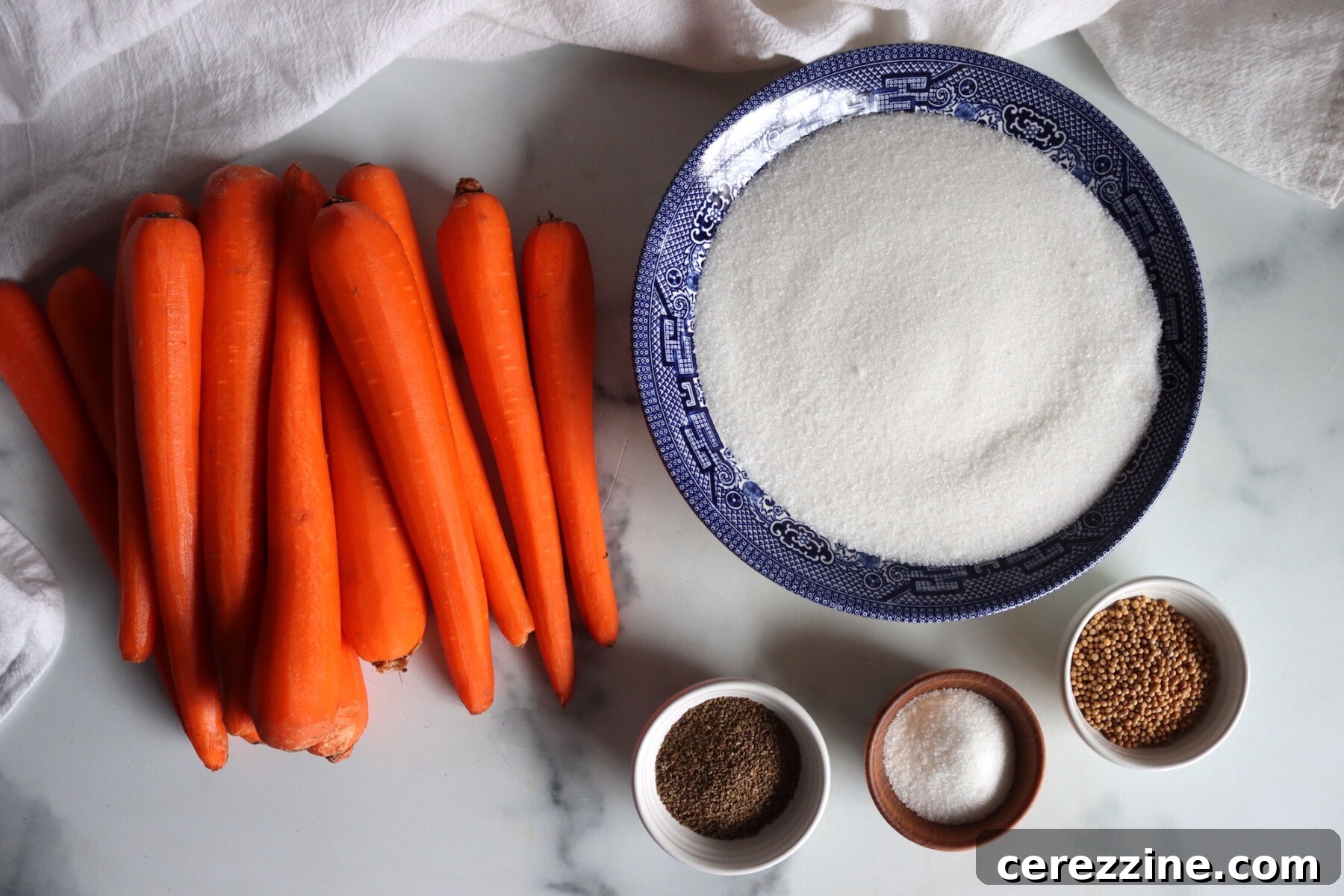
This easy pickled carrots recipe prioritizes simplicity and classic flavor, using a foundational sweet-tangy brine enhanced with just enough traditional pickling spices to evoke that nostalgic taste of old-fashioned pantry pickles.
- Carrots: The star of our recipe. We recommend cutting them into sticks or thick rounds. This preparation method ensures they remain pleasantly crisp-tender after simmering in the brine and going through the canning process. The uniform size also aids in even pickling.
- White Distilled Vinegar (5% Acidity): This is paramount for safety in water bath canning. The high acidity provides the necessary preservation and imparts that clean, bright tang characteristic of classic pickles. For a slightly warmer and fruitier flavor profile, apple cider vinegar (also 5% acidity) can be used as an alternative.
- Water: Essential for balancing the strong acidity of the vinegar, ensuring the brine is flavorful but not overly sharp.
- Sugar: Plays a crucial role in rounding out the vinegar’s tartness, creating the beloved sweet-and-sour taste. While sugar contributes to the overall flavor, it is not essential for preservation in this recipe, allowing for some adjustment to suit individual sweetness preferences.
- Canning Salt: Specifically chosen for pickling, canning salt is free from anti-caking agents and iodine, which can cloud the brine and potentially impart off-flavors over time. Do not substitute with iodized table salt.
- Mustard Seed: A cornerstone of traditional pickle flavor, adding a gentle warmth and characteristic aromatic depth.
- Celery Seed: Contributes that familiar “deli pickle” background note, complementing the mustard seed perfectly for an authentic taste.
For safe water bath canning, it is imperative to use vinegar with at least 5% acidity and to adhere strictly to the vinegar-to-water ratio. Do not reduce the vinegar quantity or increase the water, as this compromises the acidity required for safe preservation. While the sugar content can be adjusted to your taste (as it primarily impacts flavor, not safety), I generally stick to the recommended amount to maintain the clean, classic taste. Feel free to incorporate additional flavorings like a pinch of red pepper flakes for heat or a clove of garlic per jar, as long as these additions do not alter the vinegar-water balance. However, the mustard and celery seed alone provide ample, authentic flavor according to the tested recipe.
Step-by-Step Guide: How to Make Pickled Carrots
Making classic pickled carrots involves a few simple steps: preparing a quick brine, gently simmering the carrots until they are partially cooked, packing them into hot jars, and finally, processing them in a boiling water canner for safe, shelf-stable storage.
1. Prepping the Carrots
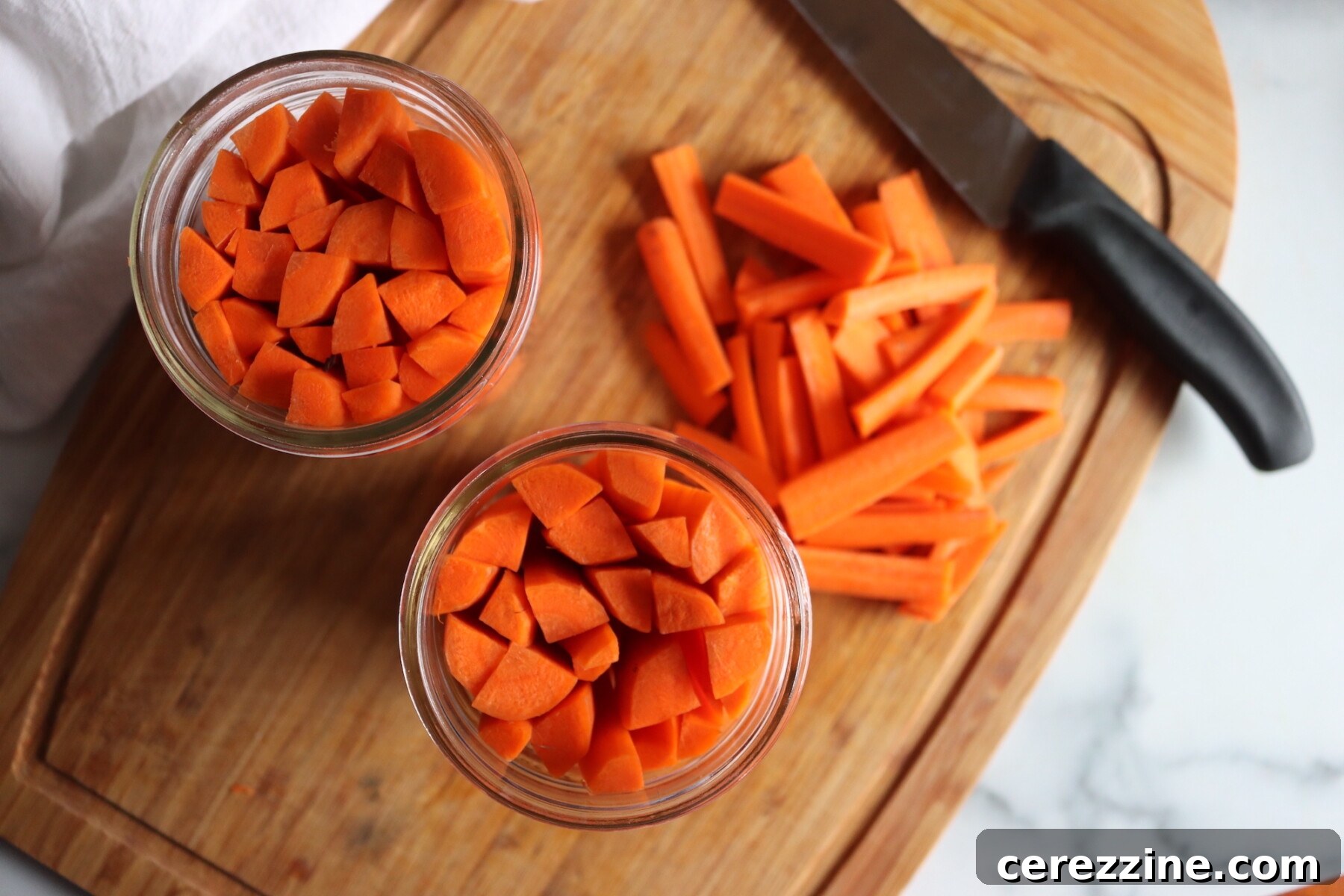
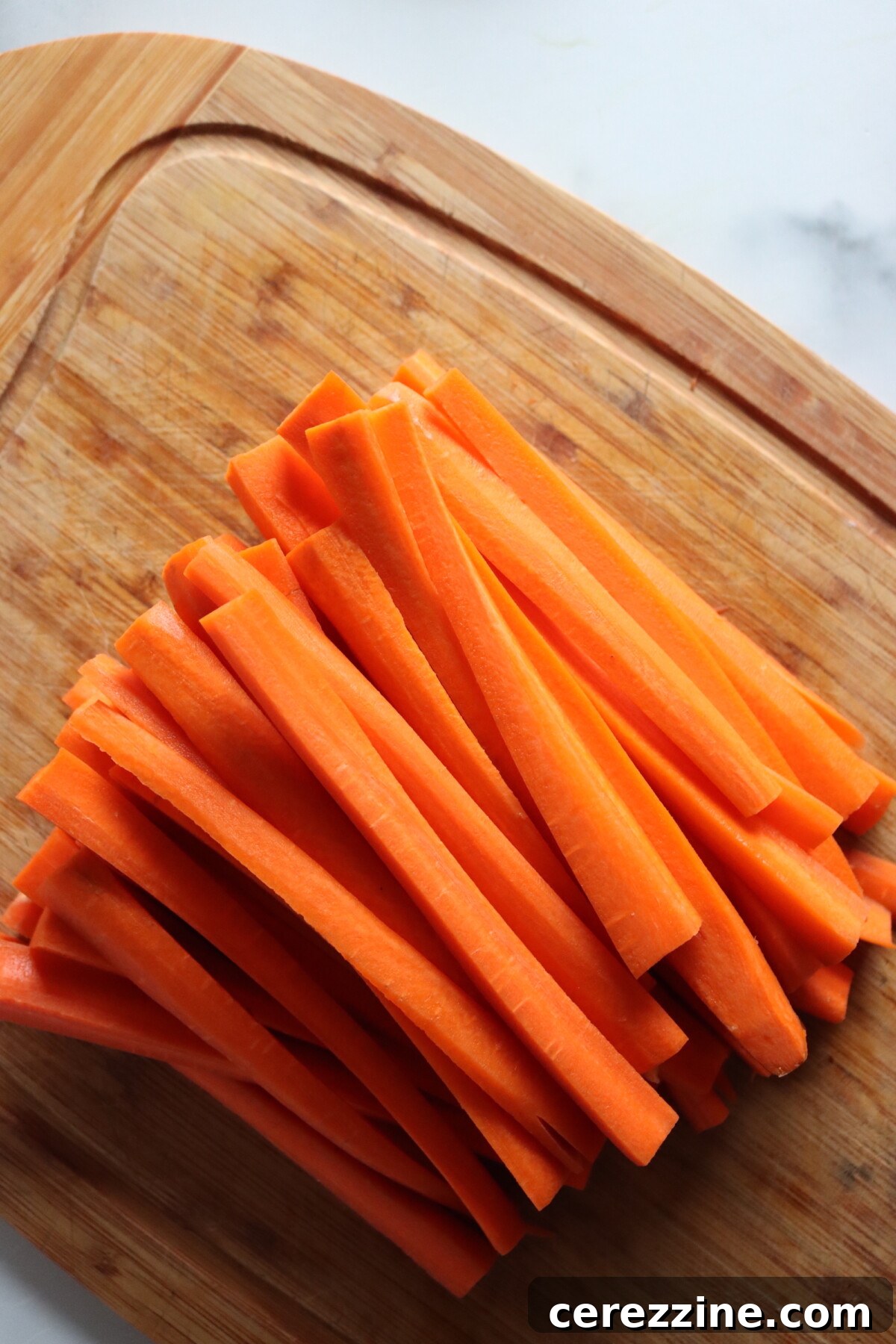
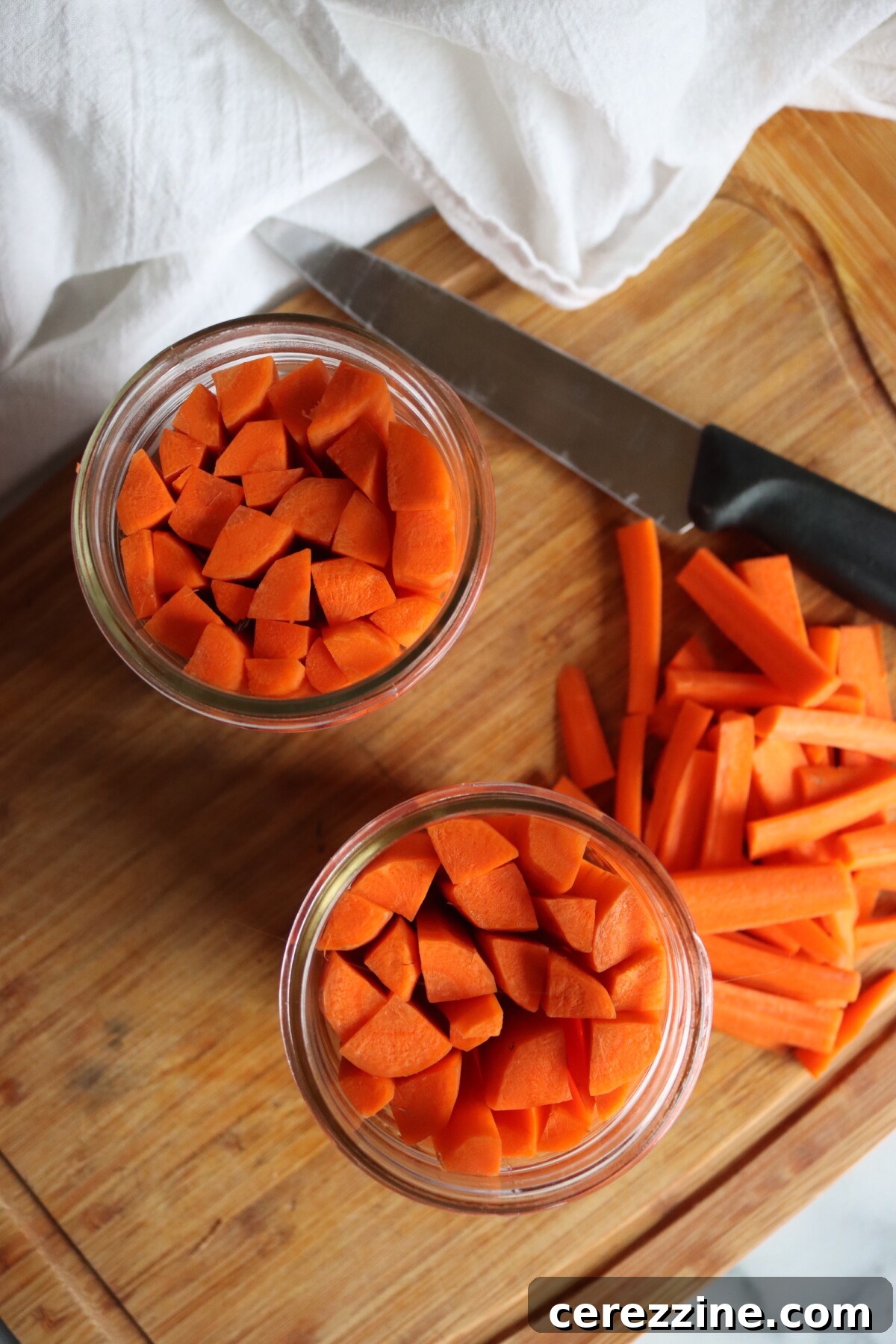
Begin by thoroughly washing your carrots to remove any soil. Next, peel them using a vegetable peeler. After peeling, give them another quick wash to ensure complete cleanliness. For cutting, you have a couple of options: you can slice them into uniform carrot sticks, approximately 1/2-inch thick and cut to fit your pint jars with adequate headspace, or opt for thick rounds, also about 1/2-inch thick. The goal is to ensure a consistent size that allows them to hold their texture well throughout the pickling process and pack neatly into the jars. Rounds are often easier to pack tightly, while sticks offer a more visually appealing presentation in the jar. The choice is yours!
2. Crafting the Perfect Brine
In a large, non-reactive pot, combine your white distilled vinegar (or apple cider vinegar, ensuring 5% acidity), water, sugar, and canning salt. Place the pot over medium-high heat and bring the mixture to a rolling boil. Allow it to boil gently for at least 3-5 minutes, stirring occasionally. This ensures that the sugar and salt are fully dissolved, and all the ingredients are thoroughly combined for a uniformly flavored pickling liquid.
3. Par-Cooking for Optimal Texture and Safety
Carefully add the prepared carrot pieces to the boiling brine. Bring the mixture back to a boil, then reduce the heat to a simmer. Continue to simmer the carrots until they are approximately half-cooked, which usually takes about 8 to 10 minutes, depending on their thickness. This crucial pre-cooking step is vital for two reasons: it ensures the carrots achieve that desirable crisp-tender texture after canning (rather than becoming overly soft or remaining unpleasantly raw in the center), and it helps the pickling liquid thoroughly infuse into the carrots, guaranteeing proper preservation even with a relatively short canning time. Do not skip this important step!
4. Filling and Preparing the Jars
Before filling, ensure your pint jars are clean and kept hot (e.g., in a simmering water bath). To each hot pint jar, add 2 teaspoons of mustard seed and 1 teaspoon of celery seed at the bottom. Then, using a jar funnel and a slotted spoon, carefully pack the hot, par-cooked carrots into the jars, leaving 1 inch of headspace between the top of the carrots and the rim of the jar. This headspace is important to prevent food from expanding too much during processing. Next, pour the hot pickling brine over the carrots, ensuring that all carrots are fully submerged and leaving 1/2 inch of headspace between the brine and the top of the jar rim. Use a non-metallic utensil (like a plastic spatula or chopstick) to remove any trapped air bubbles by gently running it around the inside of the jar. Adjust the headspace if necessary by adding more brine. Finally, wipe the jar rims clean with a damp cloth, center the lids, and apply the screw bands fingertip tight.
Canning Pickled Carrots: The Water Bath Method
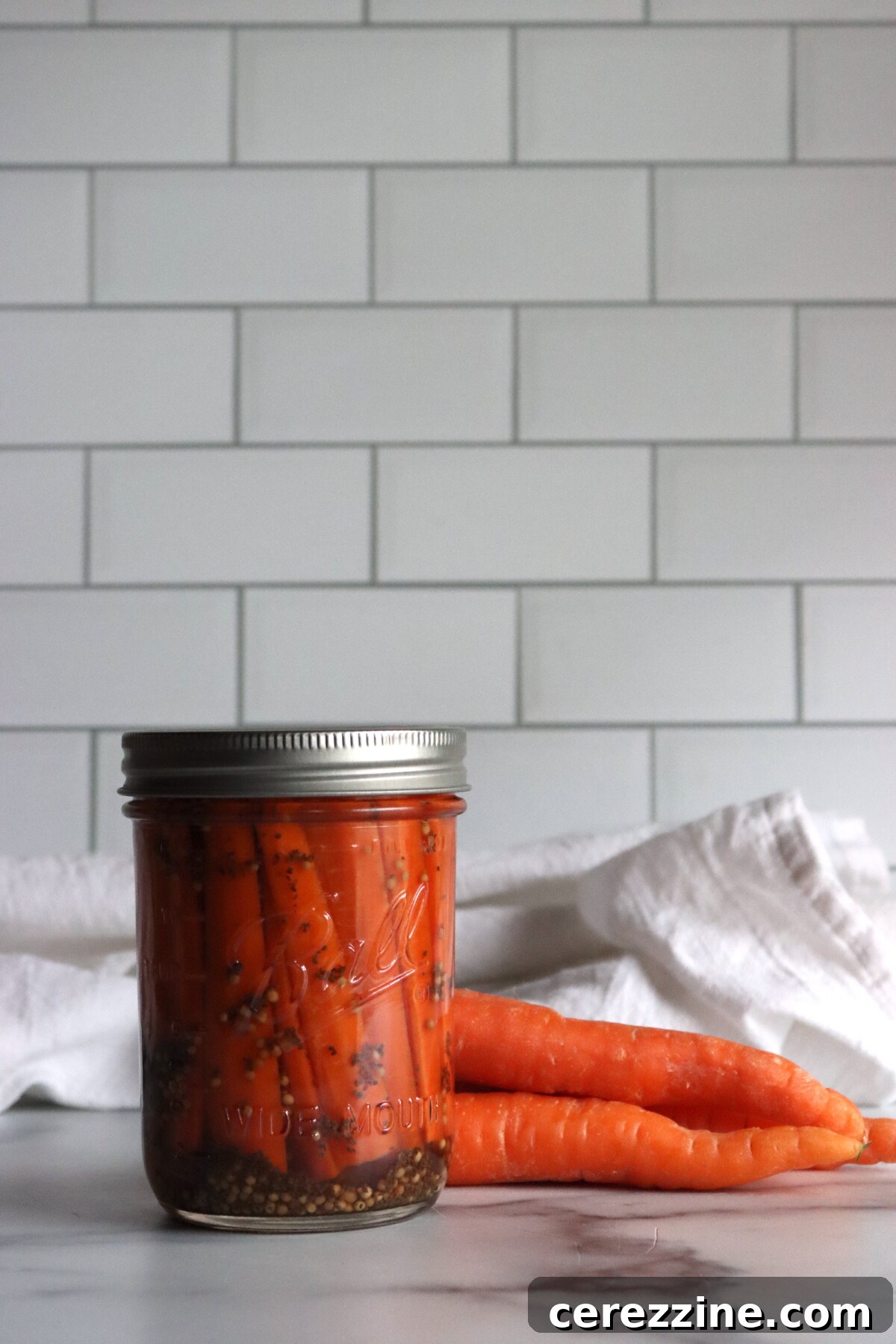
Once your jars are prepared, it’s time for the crucial water bath canning process to ensure shelf-stable pickled carrots. Fill your boiling water canner with enough water to cover the jars by at least 1-2 inches, and bring it to a rolling boil. Place the sealed jars into the canner, ensuring they don’t touch each other or the sides of the pot. Bring the water back to a full, vigorous boil, and then process the jars for 15 minutes. Remember to adjust the processing time according to your altitude, as outlined in the section below, to guarantee safety.
Upon completion of the processing time, turn off the heat but do not immediately remove the canner lid. Allow the jars to rest in the hot canning water for an additional 5 minutes. This gradual cooling period helps to stabilize the jar’s internal pressure, significantly reducing the risk of siphoning or liquid loss when the jars are finally removed from the canner. After this resting period, carefully remove the jars from the canner and place them on a clean towel on your countertop, ensuring they are not touching. Let them cool undisturbed for 12 to 24 hours. During this time, you should hear the satisfying “ping” as the lids seal. After cooling, check all seals to ensure they are concave and do not flex when pressed. Any unsealed jars should be refrigerated and consumed promptly.
For the absolute best flavor, resist the urge to open your homemade pickled carrots right away. While they are safe to eat as soon as they’re sealed and cooled, the flavors will deepen and meld beautifully if you allow the jars to sit for a few days – ideally a week – before enjoying them. This resting period allows the spices and brine to fully penetrate and flavor the carrots, resulting in a more complex and satisfying pickle.
Important Altitude Adjustments for Water Bath Canning
Proper altitude adjustment is critical for safe water bath canning. The processing times for our classic pickled carrots are as follows:
- For Under 1,000 Feet in Elevation – Process for 15 minutes for both pints and half-pints.
- For 1,001 to 6,000 Feet in Elevation – Process for 20 minutes for both pints and half-pints.
- Above 6,001 Feet in Elevation – Process for 25 minutes for both pints and half-pints.
Creative Serving Ideas for Pickled Carrots
These versatile pickled carrots are incredibly adaptable and can enhance a wide array of dishes. Their bright acidity and satisfying crunch make them a perfect counterpoint to rich flavors.
- Sandwiches & Wraps: They are fantastic tucked into sandwiches, especially with hearty fillings like pulled pork, roast beef, or a cheesy grilled cheese, adding a much-needed pop of brightness and tang. Imagine them sliced thinly into a chicken salad sandwich for an extra layer of texture and zest.
- Salads: Chop them and toss into potato salad, egg salad, or tuna salad to introduce a delightful crunch and a welcome tangy kick. They can also be a vibrant addition to green salads or grain bowls.
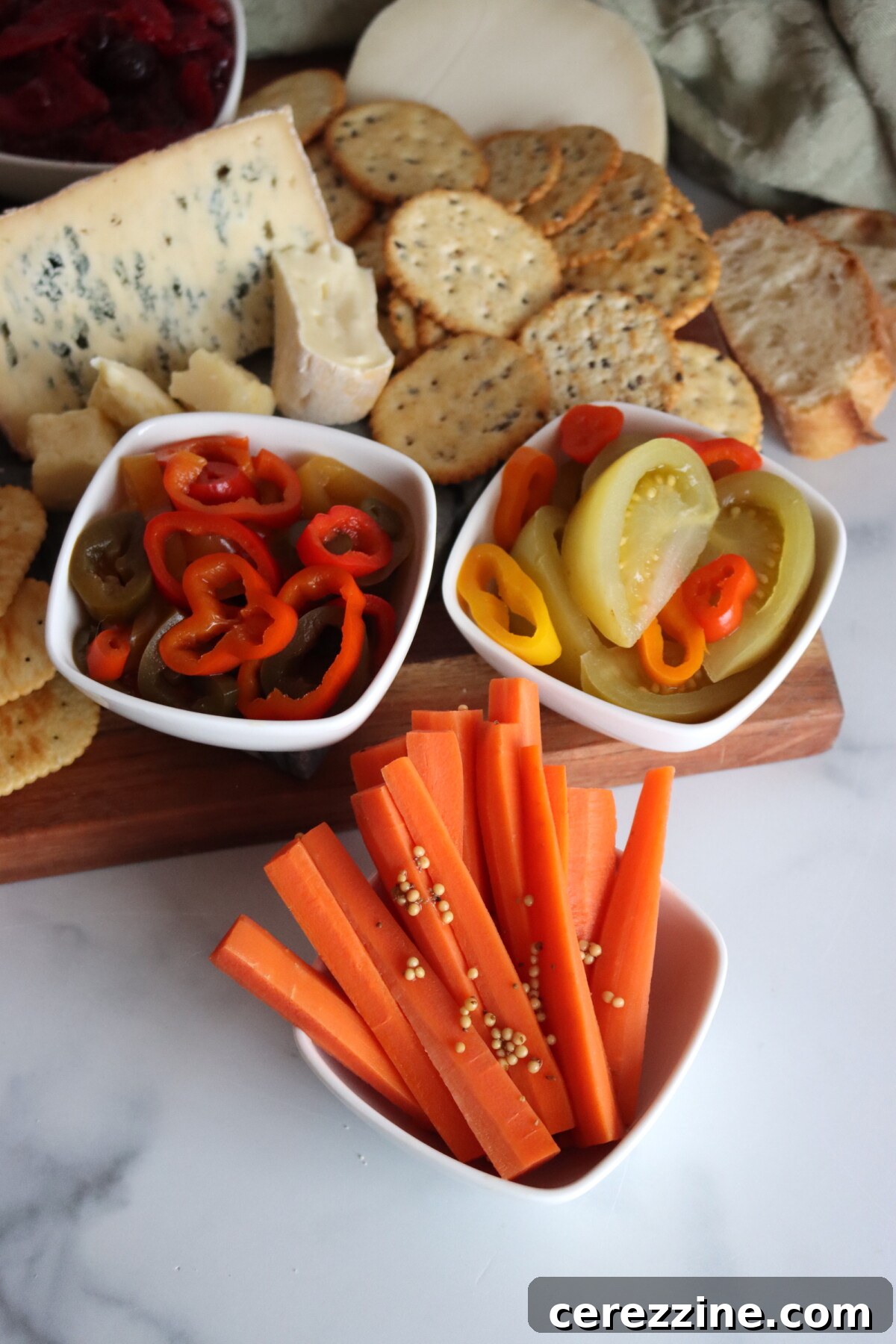
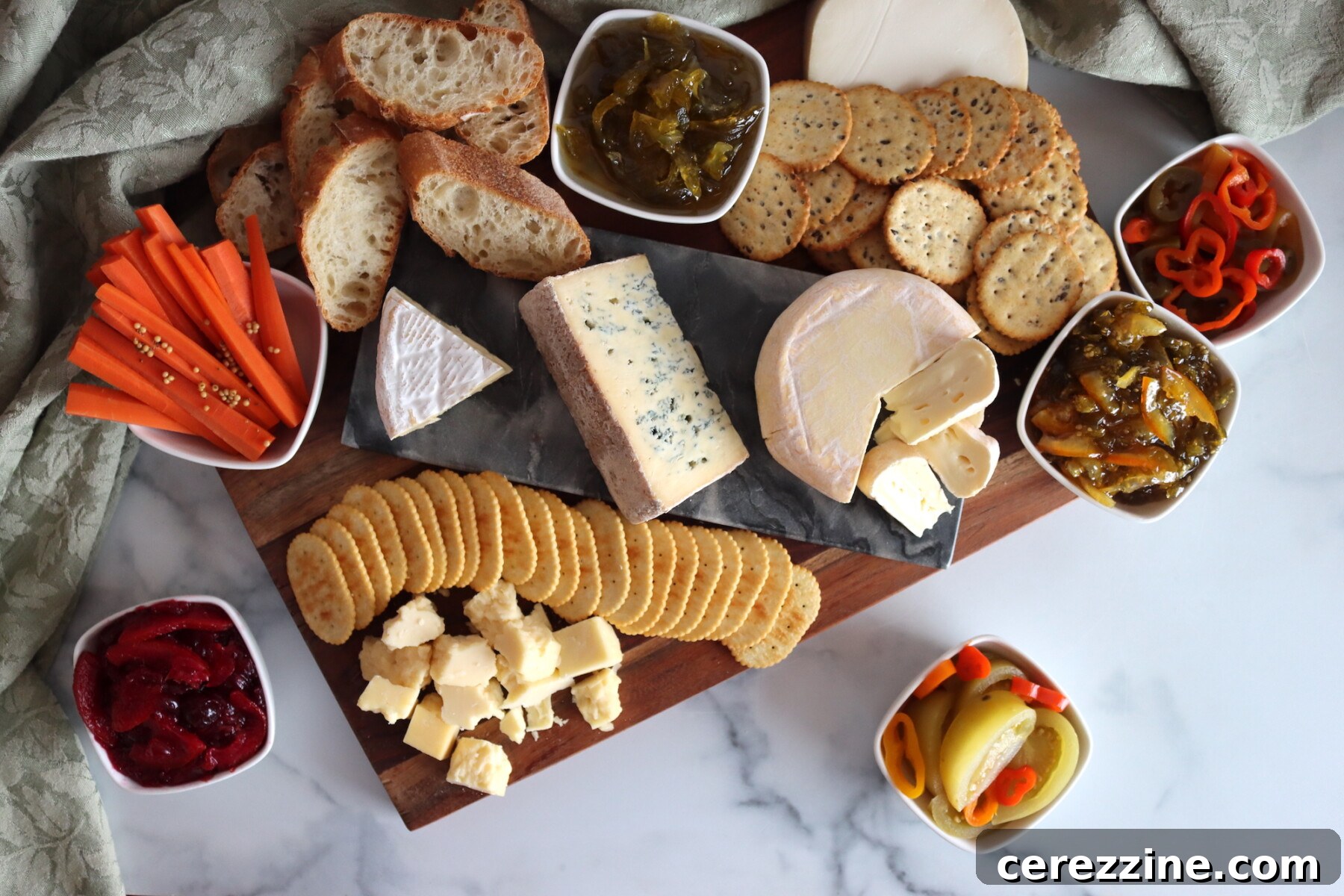
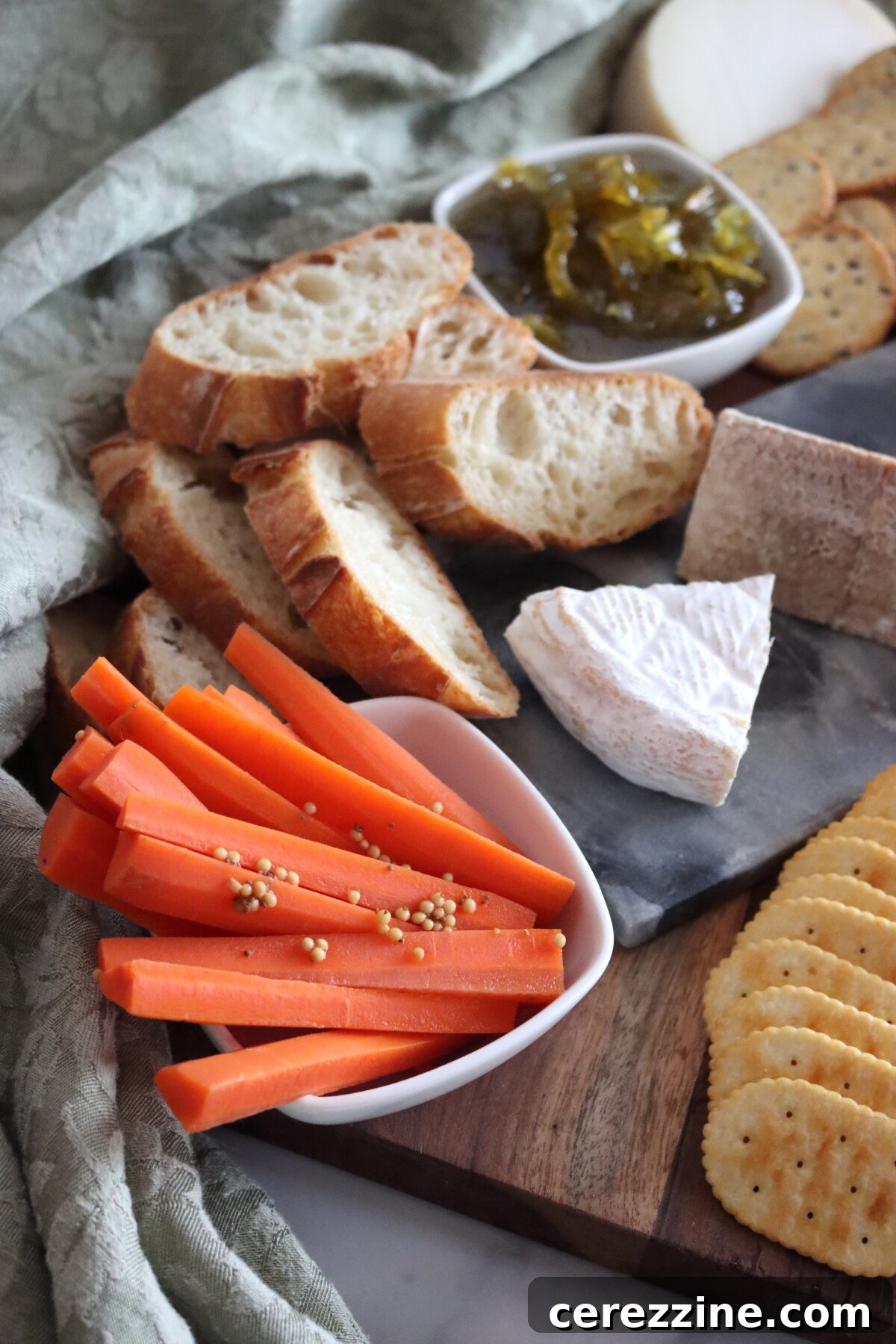
- Charcuterie & Snack Boards: For entertaining, pickled carrots are a star on charcuterie or cheese boards. Pair them alongside various cheeses, crackers, cured meats, and olives. As pictured above, they beautifully complement other pickled vegetables like hot peppers, spicy pickled green tomatoes, and fruit preserves such as green tomato marmalade or cranberry orange marmalade. Their vibrant color and texture make them visually appealing and a palate cleanser.
- Main Dish Accompaniment: Serve them alongside tacos, burritos, or burrito bowls, where their sweet-sour bite expertly balances spicy or smoky flavors. They are also a wonderful side for grilled meats, roasted chicken, or even a simple weeknight omelet.
- Breakfast & Brunch: Don’t limit them to lunch or dinner! A few slices of pickled carrot can add an unexpected twist to scrambled eggs or a breakfast burrito.
Exciting Pickled Carrot Variations to Explore
If you’ve fallen in love with the crisp texture and tangy flavor of our classic pickled carrots, you’ll be thrilled to discover several popular variations that offer distinct flavor profiles. While these aren’t the exact sweet-tart classic, they each bring something unique and delicious to your pantry.
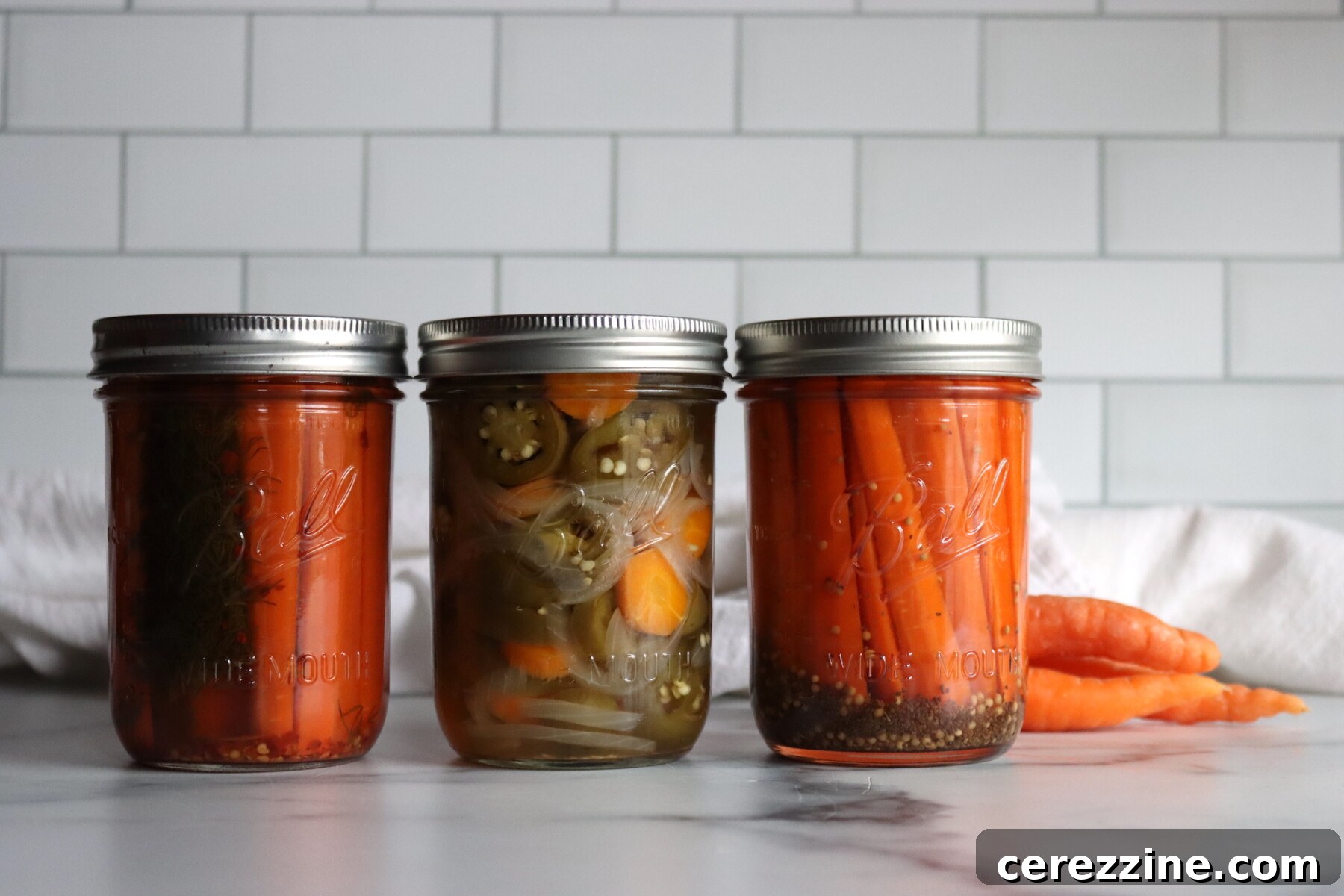
- Dill Pickled Carrots: Evoking the familiar “pickle spear” vibe, but with carrots as the star. Fresh dill, often paired with garlic, creates a savory, aromatic flavor that’s less sweet and incredibly snackable. These are perfect for relish trays, alongside burgers, or in any dish where you’d typically enjoy a dill pickle.
- Pickled Carrot and Daikon: A delightful Asian-inspired mix that’s crisp, lightly sweet-tart, and wonderfully refreshing. This combination is a staple in Vietnamese cuisine, excellent for topping banh mi sandwiches, complementing rice bowls, or as a quick, flavorful side. Daikon radish retains its crunch beautifully, and the contrasting colors make for a very attractive jar.
- Mexican Pickled Carrots with Jalapeños: These boast a bold, tangy, and spicy profile, typically featuring sliced jalapeños and often onions. They’re the kind of vibrant, fiery pickle that disappears rapidly when served alongside tacos, burritos, nachos, or any grilled Mexican-inspired dish, adding a much-appreciated kick and acidity.
Pickled Carrot FAQs
While these water bath canned carrots are safe to consume as soon as the jars have sealed and cooled, their flavor improves dramatically with time. We highly recommend allowing them to rest for a few days, ideally about a week, to allow the brine and spices to fully permeate the carrots. This patience will be rewarded with a much richer, more developed pickle flavor.
Simmering the carrots until they are half-cooked, also known as par-cooking, is a critical step in this pickled carrots recipe. This process ensures several things: it allows for better packing into jars, facilitates proper heat penetration during the canning process, and results in a desirable crisp-tender texture rather than a tough, raw crunch. Most importantly, it helps the pickling brine penetrate the carrot tissue more effectively, ensuring the carrots are thoroughly preserved and safe for long-term storage. Skipping this step could result in carrots that are not fully pickled in the center and therefore not safely preserved.
Yes, you can certainly use baby carrots for this easy pickled carrots recipe. The method remains the same, including the essential pre-cooking of the carrots in the brine. Baby carrots can be left whole, which creates a particularly attractive jar. Just ensure you use pint jars and follow the same processing times and headspace recommendations for safe canning.
For all home canning recipes, the acidity and vinegar-to-water ratio are paramount for safety and cannot be altered. Sugar, in this recipe, is primarily added for flavor – specifically to balance the tartness of the vinegar and create a more palatable sweet-and-sour profile. This recipe is not overly sweet, considering the vinegar concentration. However, you can safely adjust the amount of sugar (either increasing or decreasing it) to suit your personal taste preferences without compromising the safety of the product, as long as you do not change the vinegar-to-water ratio.
More Delicious Vegetable Pickling Recipes
Pickled Dilly Beans (Dill Pickled Green Beans)
Pickled Banana Peppers
Canning Sauerkraut
If you tried this Pickled Carrot Recipe, or any other recipe on Creative Canning, leave a ⭐ star rating and let me know what you think in the 📝 comments below!
And make sure you stay in touch with me by following on social media!
- Substack
Classic Pickled Carrots
These sweet-tangy pickled carrots are a classic pantry pickle with a bright vinegar bite and traditional mustard-and-celery seed flavor. They’re easy to make, water bath canned in pint jars, and taste even better after a few days of resting in the brine.
30 mins
15 mins
15 mins
1 hr
Pin
Rate
Equipment
-
Water Bath Canner
Ingredients (Yields 4 pints)
- 2 3/4 lbs carrots, topped and peeled (approximately 3 1/2 pounds as purchased)
- 5 1/2 cups white distilled vinegar, or Apple Cider Vinegar (5% acidity)
- 1 cup water
- 2 cups sugar
- 2 tsp canning salt
- 8 tsp mustard seed (2 teaspoons per pint jar)
- 4 tsp celery seed (1 teaspoon per pint jar)
Instructions
- Prepare a boiling water canner. Wash and rinse pint jars and keep them hot until ready to fill. Prepare lids and bands according to the manufacturer’s directions.
- Wash and peel the carrots. Wash again after peeling, then slice into rounds about 1/2-inch thick or carrot sticks about 1/2 inch across. If slicing sticks, be sure to measure them inside the jar and ensure that you have 1 inch headspace above the top of the carrots sticks.
- In a large pot, combine vinegar, water, sugar, and canning salt. Bring to a boil and boil gently for 3 minutes.
- Add carrots and return to a boil. Reduce heat and simmer until carrots are half-cooked, about 10 minutes.
- Place 2 teaspoons mustard seed and 1 teaspoon celery seed into each hot pint jar.
- Fill jars with hot carrots, leaving 1-inch headspace above the carrots. Cover with hot pickling liquid, leaving 1/2-inch headspace above the brine. Remove air bubbles and adjust headspace if needed. Wipe rims, then apply lids and rings.
- Process in a boiling water canner for 15 minutes if under 1,000 feet in elevation, adjusting for altitude (see notes for detailed altitude adjustments).
- Cool jars undisturbed for 12 to 24 hours and check seals. For best flavor, let the jars sit for 3 to 5 days before eating.
Notes
Use only vinegar labeled 5% acidity and do not increase the water or reduce the vinegar. Pint jars are the recommended jar size for this recipe, but half pint jars also work. Use pint processing times with half pints. Canning salt helps keep the brine clear and avoids additives found in some table salts. These pickles improve with a short rest; the flavor settles in after a few days.
Altitude Adjustments
The altitude adjustments for water bath canning Pickled Carrots are as follows:
- For Under 1,000 Feet in Elevation – 15 minutes for pints and half pints.
- For 1,001 to 6,000 Feet in Elevation – 20 minutes for pints and half pints.
- Above 6,001 Feet in Elevation – 25 minutes for pints and half pints.
Nutrition
Calories: 77kcal, Carbohydrates: 17g, Protein: 1g, Fat: 0.5g, Saturated Fat: 0.03g, Polyunsaturated Fat: 0.1g, Monounsaturated Fat: 0.2g, Sodium: 174mg, Potassium: 135mg, Fiber: 1g, Sugar: 14g, Vitamin A: 6512IU, Vitamin C: 2mg, Calcium: 22mg, Iron: 0.3mg
Nutrition information is automatically calculated, so should only be used as an approximation.
Like this? Leave a comment below!
More Delicious Carrot Canning Recipes
Canning Carrot Soup
Piccalilli (English Style Mustard Pickles)
Chicken Vegetable Soup
Find the perfect recipe
Searching for something else? Enter keywords to find the perfect recipe!