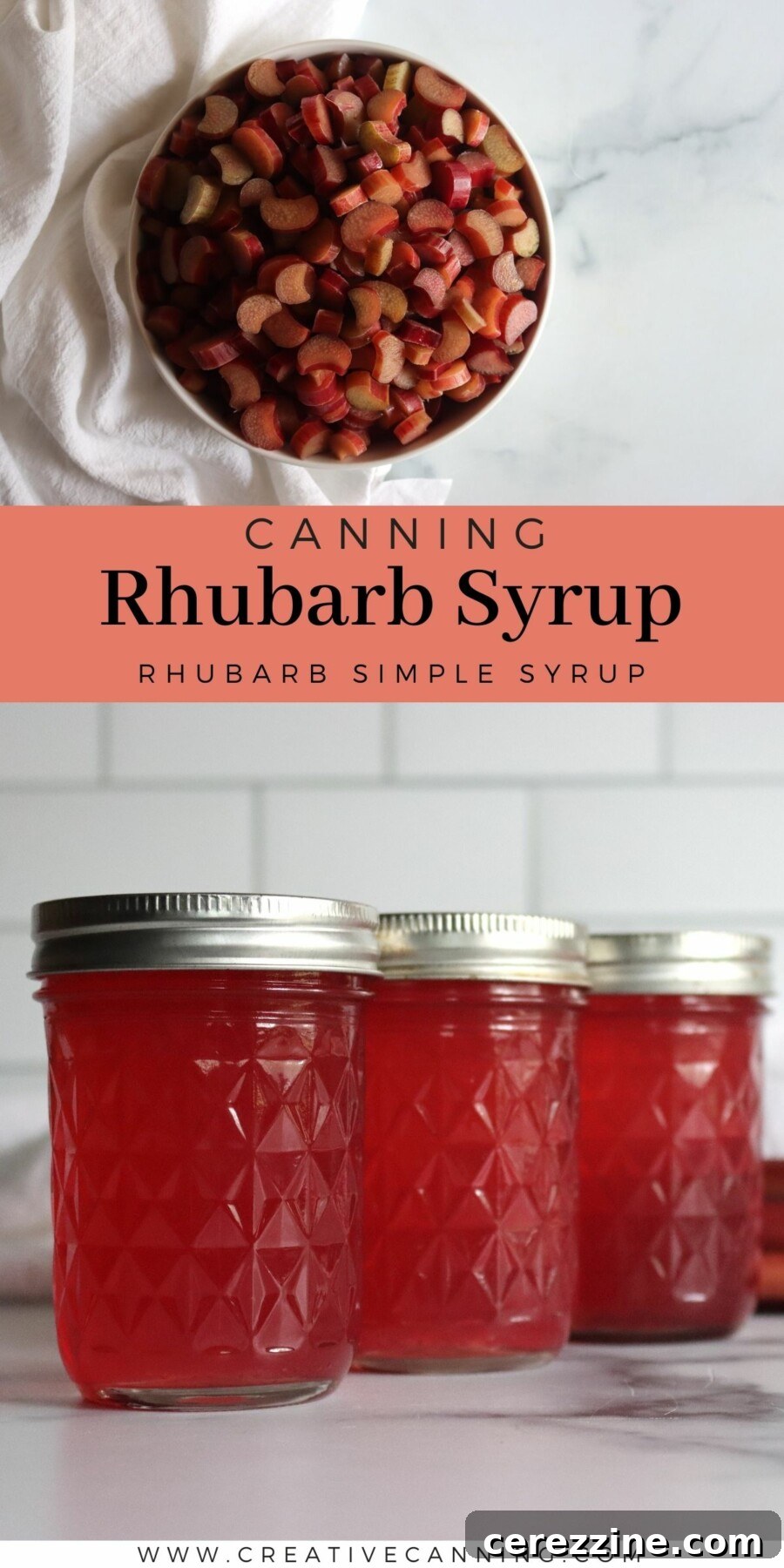
Rhubarb syrup is a delightful way to capture the distinct, tangy flavor of fresh rhubarb, bottling summer’s essence for year-round enjoyment. This vibrant, concentrated syrup is perfect for elevating everyday drinks and desserts, offering a garden-fresh burst of flavor whenever you desire.
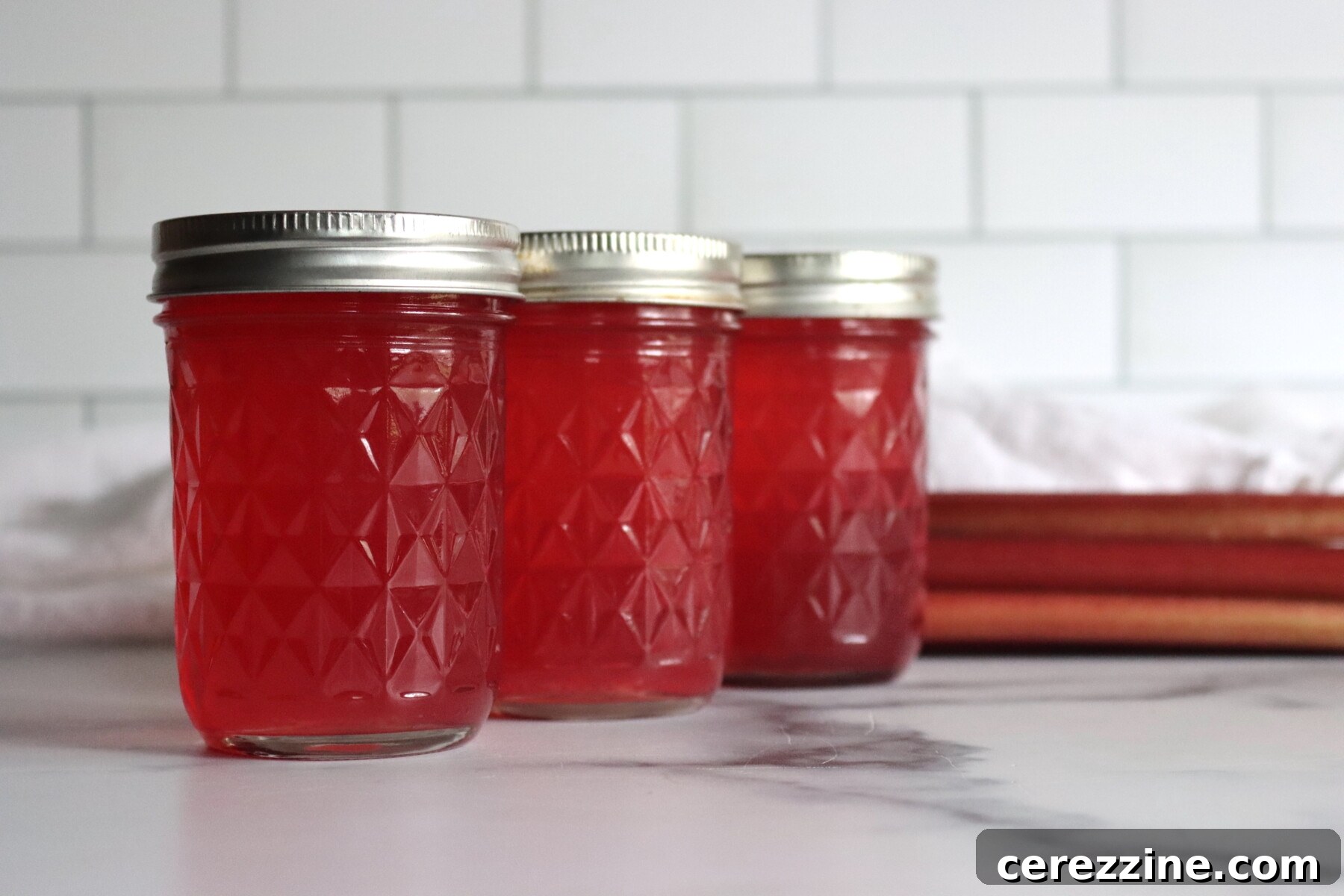
This recipe has been thoroughly reviewed for safety and accuracy by a Master Food Preserver, certified through the esteemed University of Cornell Cooperative Extension.
The Undeniable Charm of Homemade Rhubarb Syrup
There’s something truly satisfying about transforming fresh produce into shelf-stable delights. Homemade rhubarb syrup is not just a treat for your taste buds; it’s a smart and resourceful way to make the most of your garden’s bounty. While many enjoy rhubarb in pies and crisps, this syrup offers a unique versatility that extends its use far beyond traditional desserts.
Utilizing Late-Season Rhubarb with Ease
One of the greatest benefits of this rhubarb syrup recipe is its ability to utilize stringy, late-season rhubarb stalks. By mid-summer, rhubarb can become tough and fibrous, making it less ideal for baking where texture is paramount. However, for syrup, the texture is irrelevant since all solids are strained out, leaving you with pure, concentrated rhubarb flavor. This means absolutely nothing goes to waste, allowing you to maximize your harvest even when stalks are past their prime for other uses.
A Simple Solution for Bumper Crops
If you’re fortunate enough to have a prolific rhubarb patch, you know the challenge of managing a bumper crop. Rhubarb syrup is an excellent solution for preserving large quantities. This recipe, adapted from the trusted Ball Complete Guide to Home Canning, guides you through creating a true simple syrup. By adhering to a 1:1 ratio of juice to sugar, you achieve a syrup with ideal body and sweetness that effortlessly dissolves into cold beverages, making it a staple for your pantry.
Effortless Scaling for Any Harvest Size
This recipe is designed for a convenient small batch, yielding approximately 3 pints (or 6 half-pints), perfect for most home gardens. However, its simplicity makes it incredibly easy to scale up. Whether you’re dealing with a generous bumper crop or simply wish to stock a larger quantity for extended enjoyment, you can effortlessly double or even triple the batch. The water bath processing time remains consistent regardless of the number of jars you’re preserving, making large-scale canning just as straightforward as a smaller batch.
Notes from My Kitchen

My journey into making rhubarb syrup began as a quest to utilize the more fibrous, late-season stalks from our ever-productive rhubarb patch. While early spring rhubarb is tender and perfect for baking, by mid-summer, the stalks become quite tough. Instead of letting them go to waste, I discovered that they still harbored that delightful, tangy rhubarb flavor, which translates beautifully into a vibrant syrup.
We keep several jars of this homemade goodness in our pantry year-round. A simple splash into sparkling water instantly transforms it into a refreshing garden soda – a quick pick-me-up on a hot afternoon. The kids absolutely adore it mixed into their lemonade, adding a unique fruity twist. It’s truly incredible how much flavor a small amount of this concentrated syrup can impart. Plus, this versatile recipe can also be adapted to create Rhubarb Lemonade Concentrate, offering even more ways to enjoy your harvest!
Having a jar of this ruby-red syrup on hand means instant refreshment is always just seconds away, bringing a taste of summer to any season.
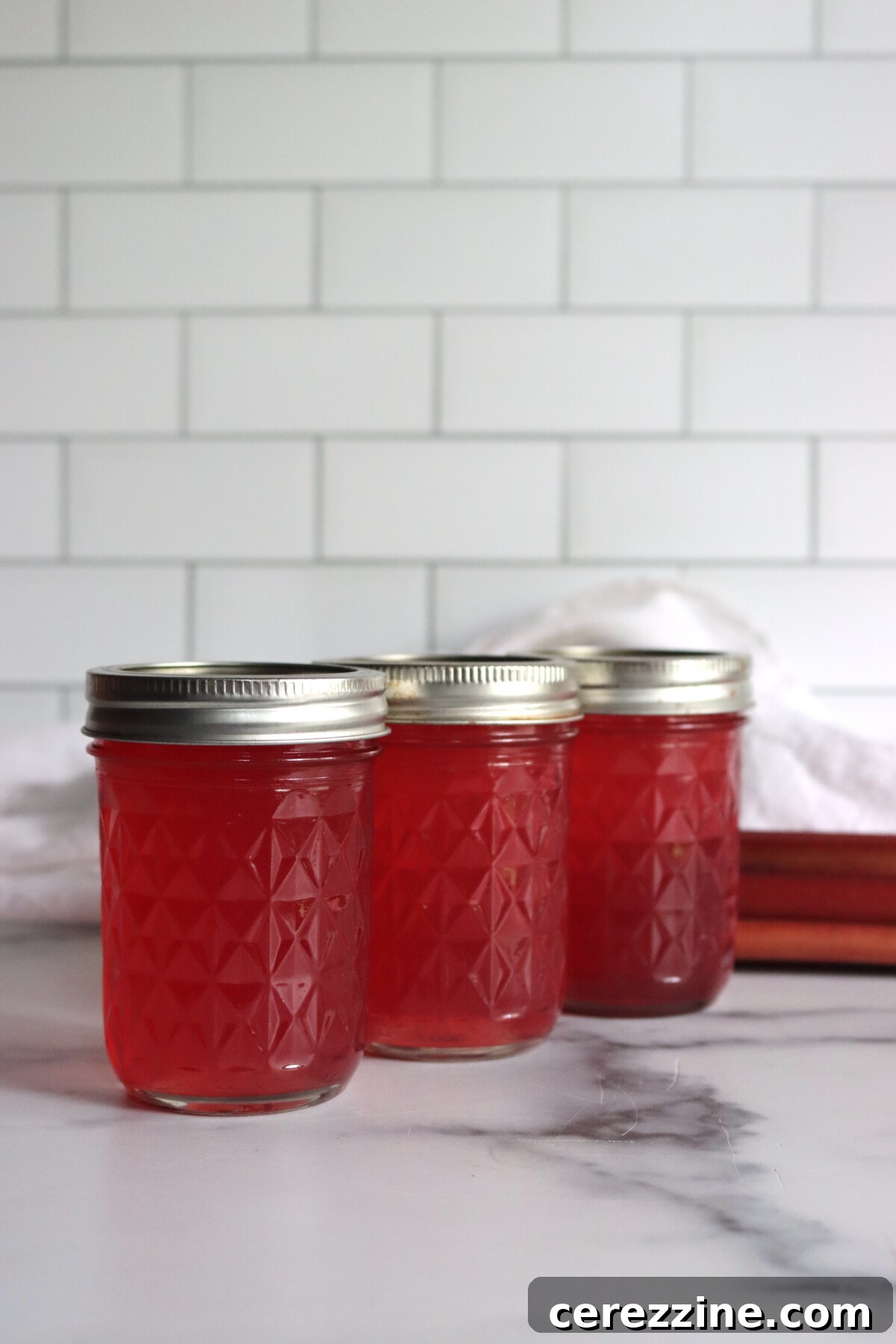
Quick Look at the Recipe
- Recipe Name: Rhubarb Syrup
- Recipe Type: Fruit Syrup
- Canning Method: Water Bath Canning
- Prep Time: Approximately 20 minutes of active work, plus 1 to 2 hours for straining.
- Cook Time: About 15 minutes.
- Canning Time: 10 minutes for pints or half-pints.
- Yield: Approximately 3 pints or 6 half-pints.
- Jar Sizes: Ideal for pint or half-pint canning jars.
- Headspace: 1/4 inch.
- Ingredients Overview: Rhubarb, water, and sugar, using a precise 1:1 juice to sugar ratio.
- Safe Canning Recipe Source: Ball Complete Guide to Home Canning.
- Difficulty: Easy (the straining process is passive and requires minimal attention).
- Similar Recipes: The process for making rhubarb syrup mirrors that of other fruit syrups and juice concentrates, such as Strawberry Syrup, Blueberry Syrup, or Raspberry Syrup. If you are a fan of rhubarb preserves, explore other delicious rhubarb canning recipes like rhubarb jam or rhubarb jelly.
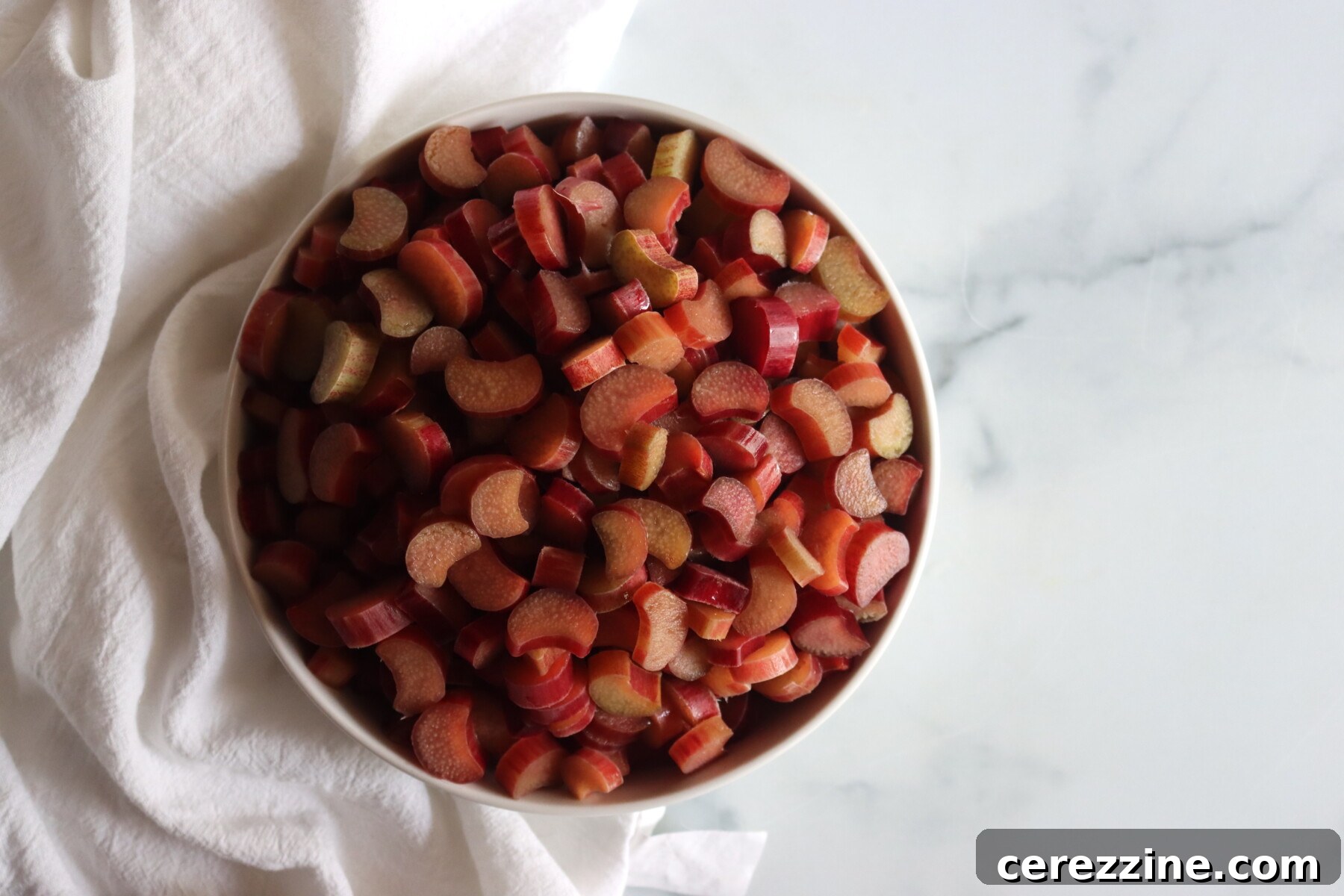
Essential Ingredients for Rhubarb Syrup
Crafting delectable rhubarb syrup requires only three fundamental ingredients. The beauty of this recipe lies in its simplicity and flexibility, allowing you to adapt based on what your garden provides while still achieving outstanding results.
- Rhubarb: Any variety of rhubarb will work splendidly for this syrup. In fact, this recipe is an excellent use for those stringy and tough late-season stalks that might not be suitable for other culinary applications. Since the solids are eventually strained out, the physical texture of the stalks is completely inconsequential. Your sole objective here is to extract their robust flavor. While red varieties will impart a more aesthetically pleasing pink hue to your syrup, green rhubarb delivers an equally delicious taste. Always remember to remove and discard the leaves, as they are toxic.
- Water: A modest amount of water is crucial to initiate the juice extraction process and prevent the rhubarb from scorching as it softens and releases its natural liquids. This water becomes an integral part of the final juice, so it’s important to use just the recommended amount to ensure the syrup’s intensity isn’t diluted.
- Sugar: Standard granulated sugar is used in a precise 1:1 ratio with the extracted rhubarb juice. This specific proportion is what defines a true simple syrup, imparting a desirable body, excellent pourability, and the perfect balance of sweetness to complement rhubarb’s tartness. While you can reduce the sugar content for a thinner, less sweet syrup, be aware that it will alter the overall consistency. For those seeking a significantly lower-sugar option, consider making rhubarb juice concentrate instead, which requires substantially less sugar.
Step-by-Step Instructions: Crafting Your Rhubarb Syrup
Making homemade rhubarb syrup is a surprisingly simple and rewarding process. With just a few clear steps, you’ll transform fresh rhubarb into a vibrant, versatile syrup ready for canning or immediate enjoyment.
Step 1: Extract the Pure Rhubarb Juice
Begin by thoroughly rinsing your rhubarb stalks under cool water. Slice the cleaned rhubarb into convenient 1-inch pieces, being absolutely sure to remove and discard all leaves, as they contain oxalic acid and are toxic. Place these sliced rhubarb pieces into a large, non-reactive pot along with the measured amount of water. Bring the mixture to a rolling boil over medium-high heat. Once boiling, reduce the heat to a gentle simmer and continue to cook for approximately 10 minutes, or until the rhubarb has become exceedingly soft and is visibly falling apart. This ensures maximum flavor extraction.
Step 2: Strain and Clarify the Juice
Prepare your straining setup by lining a colander with a double layer of dampened cheesecloth, or, if available, use a dedicated jelly bag for optimal results. Carefully pour the hot, cooked rhubarb mixture into the prepared colander, ensuring it is positioned over a large, clean bowl to collect the juice. Allow the juice to drip naturally through the cheesecloth or jelly bag for a period of 1 to 2 hours. For a beautifully clear syrup, resist the temptation to squeeze the bag or press down on the solids. While a slightly cloudy syrup tastes just as delicious, avoiding pressure ensures maximum clarity. From approximately 2 pounds of rhubarb (which yields 6 to 8 cups sliced) and 2 cups of water, you should expect to collect about 4 cups of pure rhubarb juice.
Step 3: Transform Juice into Sweet Syrup
Transfer the strained, clear rhubarb juice into a clean saucepan. Add the granulated sugar to the juice. Gently heat the mixture over medium heat, stirring continuously until all of the sugar has completely dissolved. Continue heating until the syrup reaches a gentle simmer, ideally between 180 to 190°F (82 to 88°C), but do not allow it to come to a full boil. Once simmering, remove the saucepan from the heat and carefully skim off any foam that may have risen to the surface. This step ensures a smooth, refined syrup.
Step 4: Prepare and Fill Canning Jars
Carefully ladle the hot rhubarb syrup into your pre-sterilized canning jars, leaving precisely 1/4 inch of headspace at the top of each jar. This headspace is crucial for proper sealing during the canning process. Using a clean, damp cloth, meticulously wipe the rims of each jar to remove any syrup residue. This ensures a clean surface for the lids to seal effectively. Center new, flat canning lids on each jar, then apply the screw bands and tighten them to “fingertip tight.” This means tightening until you feel resistance, then giving just a slight extra turn.
Canning Rhubarb Syrup for Long-Term Storage
While homemade rhubarb syrup can be stored in the refrigerator for several weeks or in the freezer for up to 6 months, water bath canning is the preferred method for achieving shelf-stable storage. This allows you to enjoy the taste of summer rhubarb all year long, straight from your pantry.
The Water Bath Canning Process
Before you even begin making your rhubarb syrup, ensure your water bath canner is prepared. Fill it with water and bring it to a gentle simmer (around 180°F or 82°C) so it’s ready when your jars are filled. Once your jars are filled with hot syrup, sealed with lids and bands, carefully lower them onto the rack inside the preheated canner. Ensure that the jars are completely submerged under at least 1 inch of water. Bring the water to a rolling boil, then begin your processing time. Process the jars for 10 minutes for both pint and half-pint sizes. Remember to adjust this processing time for your specific altitude, as detailed below, to ensure food safety.
Post-Processing and Storage
After the designated processing time is complete, turn off the heat but leave the jars in the canner for an additional 5 minutes. This allows the internal pressure to equalize, reducing the risk of siphoning (liquid loss from the jars). Carefully remove the jars from the canner using a jar lifter and place them on a towel-lined counter, ensuring they are not touching each other. Let them cool undisturbed for 12 to 24 hours. During this period, you should hear satisfying “pinging” sounds as the lids seal. After cooling, check all seals by pressing on the center of each lid; it should not flex. Any jars that did not seal properly should be refrigerated immediately for prompt use. Properly sealed jars can be stored in a cool, dark place at room temperature for 12 to 18 months, providing a delicious taste of summer long after the season ends.
Crucial Altitude Adjustments for Water Bath Canning
When performing water bath canning, it is absolutely essential to adjust your processing times based on your elevation to ensure the safety and effectiveness of your preservation method. Water boils at lower temperatures at higher altitudes, requiring increased processing times to achieve proper sterilization.
- 0 to 1,000 feet: Process for 10 minutes.
- 1,001 to 6,000 feet: Increase processing time to 15 minutes.
- Above 6,000 feet: Extend processing time to 20 minutes.
Understanding Your Rhubarb Syrup Yield
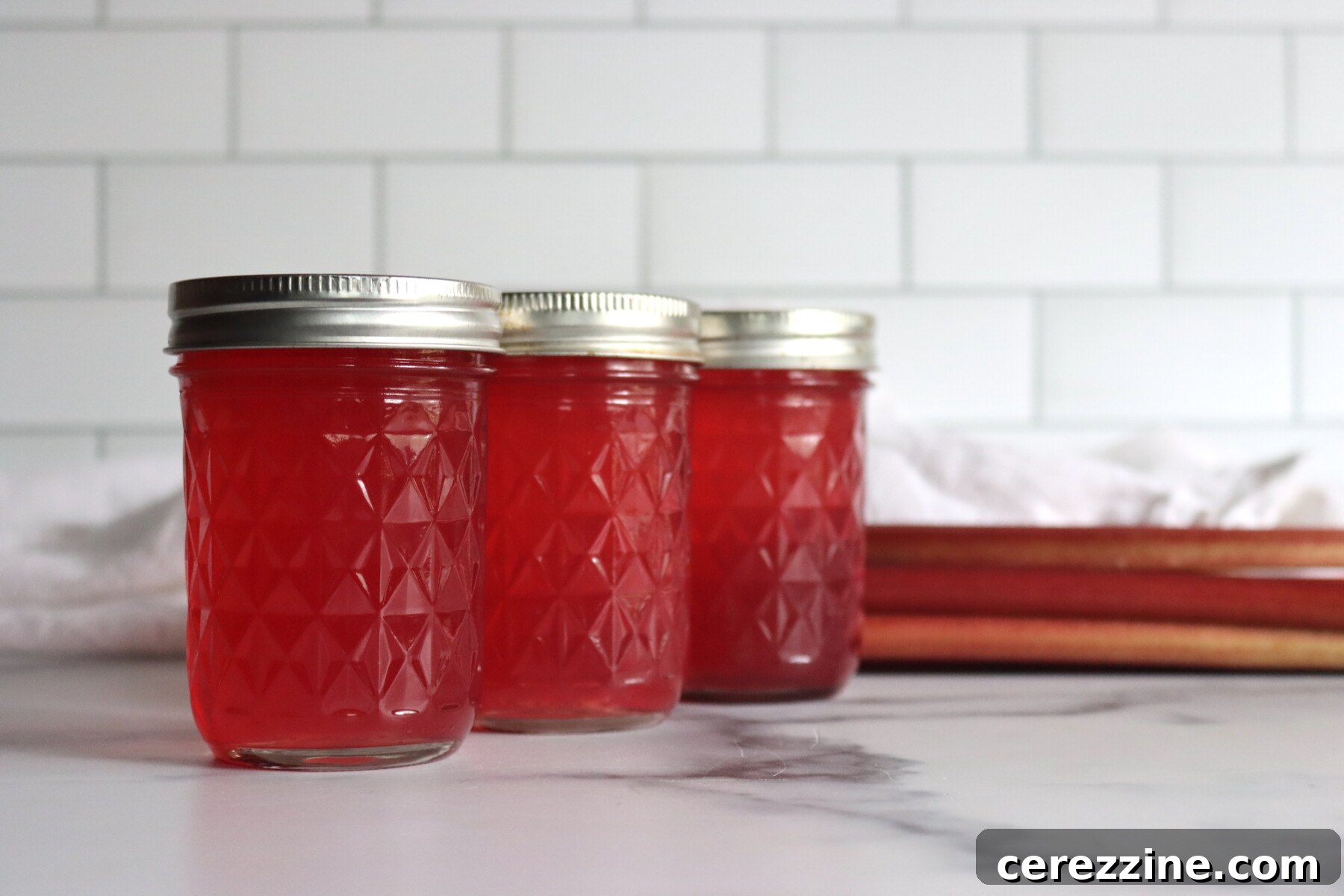
This recipe commences with approximately 2 pounds of sliced rhubarb, which translates to roughly 6 to 8 cups of prepared stalks. From this quantity, you can expect to yield about 4 cups of beautifully strained rhubarb juice. When this juice is combined with an equal volume of 4 cups of sugar, the final volume increases to approximately 6 cups of finished, concentrated rhubarb syrup. This amount is perfectly suited to fill 3 pint-sized canning jars or 6 half-pint jars.
It’s important to note that the exact yield can vary slightly depending on the juiciness of your rhubarb. For instance, late-season rhubarb may yield a marginally smaller amount of juice compared to its earlier, more succulent counterparts. Should you find yourself with slightly less than the anticipated 4 cups of juice, simply adjust the amount of sugar proportionally. Maintaining the crucial 1:1 ratio between juice and sugar ensures your syrup achieves the desired consistency, sweetness, and overall quality.
Delightful Ways to Enjoy Rhubarb Syrup
Rhubarb syrup is a surprisingly versatile ingredient that can add a unique, tangy-sweet dimension to a multitude of dishes and beverages. Its bright flavor makes it an indispensable pantry staple for creative culinary adventures.
Refreshing Beverages
Perhaps the most popular way to enjoy rhubarb syrup is by creating an instant, homemade rhubarb soda. Simply add a splash of the syrup to a glass of sparkling water, and adjust the sweetness to your preference. It’s a garden-fresh refreshment that takes mere seconds to prepare. Beyond sodas, the syrup is a fantastic addition to homemade lemonade, iced tea, or even a simple glass of chilled seltzer on a hot day. For a creamy Italian soda, combine rhubarb syrup with a touch of cream and sparkling water for a truly indulgent treat.
Elevating Breakfast & Desserts
Move beyond maple syrup and drizzle rhubarb syrup over your morning pancakes, waffles, or French toast for a delightful tart counterpoint. It’s also incredibly delicious stirred into plain Greek yogurt, adding both flavor and a vibrant color. For a simple yet elegant dessert, spoon it generously over vanilla ice cream, panna cotta, or a fresh fruit salad. The tartness of the rhubarb beautifully balances the sweetness of the sugar, creating a harmonious flavor profile.
Sophisticated Cocktails & Mocktails
Rhubarb syrup shines in the realm of mixology. Its unique flavor makes it an excellent mixer for a variety of adult beverages. Try it in a sophisticated rhubarb gin and tonic, a vibrant rhubarb whiskey sour, or simply mix it with chilled prosecco or cava for an exquisite springtime spritz. For non-alcoholic options, it can form the base of elegant mocktails, offering a complex flavor that goes beyond typical fruit syrups.
Frequently Asked Questions About Rhubarb Syrup
The primary distinction lies in their sugar content and consistency. Rhubarb syrup adheres to a 1:1 ratio of juice to sugar, resulting in a thick, rich simple syrup that pours beautifully and fully dissolves in cold drinks. Rhubarb juice concentrate, conversely, uses significantly less sugar (typically about 1 cup of sugar for 8 cups of juice), producing a much thinner liquid akin to sweetened juice. Syrup is ideal for direct use in beverages, drizzling over desserts, or in cocktails, while concentrate is better suited for reconstituting into a drink or as a base for other recipes.
Absolutely! This is one of the best and most efficient uses for late-season rhubarb. Because the syrup-making process involves straining out all the solids, the inherent texture of the stalks – whether they are tender or tough – becomes entirely irrelevant. Even the stringiest rhubarb stalks, which might be less desirable for pies or sauces, still retain their full, wonderful flavor, and it is precisely this flavor that is extracted and preserved in your delicious syrup.
While you technically can reduce the sugar, it will directly impact the syrup’s consistency and sweetness. Less sugar will result in a thinner syrup, more closely resembling a sweetened juice. The 1:1 ratio of juice to sugar is specifically chosen to achieve the classic, pourable simple syrup texture. If your goal is a significantly lighter or less sweet option, we recommend exploring our rhubarb juice concentrate recipe instead, which is formulated with a much lower sugar content (approximately 1 cup of sugar per 8 cups of juice) to deliver a different product entirely.
Properly canned and sealed jars of rhubarb syrup, stored in a cool, dark place, will maintain their quality and safety for 12 to 18 months. Once a jar is opened, it must be refrigerated and should be consumed within a few weeks. If you opt not to can the syrup, it will last for several weeks when stored continuously in the refrigerator, or it can be frozen for an extended period of up to 6 months.
More Rhubarb Canning Recipes to Explore
Rhubarb Juice Concentrate (with Canning Instructions)
Canning Rhubarb Pie Filling
Rhubarb Jelly
If you tried this Rhubarb Syrup recipe, or any other recipe on Creative Canning, leave a ⭐ star rating and let me know what you think in the 📝 comments below!
And make sure you stay in touch with me by following on social media!
- Substack
Rhubarb Syrup Recipe
20
15
10
45
Print Recipe
Equipment
-
Water Bath Canner
-
Pint or half-pint canning jars
-
Canning lids and bands
-
Jar lifter
-
Jelly Strainer with Bag
-
Stock Pot, 6 quart or larger
Ingredients
- 2 lbs rhubarb, sliced into 1-inch pieces, stalks only, leaves removed (approximately 6 to 8 cups sliced)
- 2 cups water
- 4 cups sugar, or equal to the amount of extracted juice
Instructions
-
Rinse the rhubarb and slice into 1-inch pieces, discarding any leaves. Place the sliced rhubarb in a large pot with the water. Bring to a boil over medium-high heat, then reduce to a simmer and cook until the rhubarb is very soft and falling apart, about 10 minutes.
-
Line a colander with a double layer of dampened cheesecloth, or use a jelly bag. Pour the cooked rhubarb into the lined colander set over a large bowl. Let the juice drip through for 1 to 2 hours. Don’t squeeze the bag if you want a clear syrup. You should get approximately 4 cups of juice.
-
Pour the strained rhubarb juice into a clean saucepan and add the sugar. Heat gently over medium heat, stirring until the sugar dissolves completely. Bring to a gentle simmer (around 180 to 190°F / 82-88°C) but do not boil. Remove from heat and skim off any foam.
-
Ladle the hot syrup into prepared jars, leaving 1/4 inch headspace. Wipe the rims clean with a damp cloth, apply lids and bands, and tighten to fingertip tight.
-
Lower the filled jars into a prepared water bath canner, making sure they’re covered by at least 1 inch of water. Bring to a rolling boil and process for 10 minutes for pints or half pints, adjusting for altitude as specified in the article.
-
Turn off the heat and let the jars stand in the canner for 5 minutes before removing them. Place on a towel-lined counter and let cool undisturbed for 12 to 24 hours. Check seals before storing. Refrigerate any jars that didn’t seal for immediate use.
Notes
Two pounds of rhubarb equates to about 6 to 8 cups when sliced into 1-inch pieces.
This recipe creates a 1:1 simple syrup with rhubarb juice, which results in a relatively sweet product. Late-season rhubarb is perfectly suited for this recipe because all solids are strained out, meaning the stalk’s texture is not a concern. The sugar in this recipe is not critical for safe canning, allowing you to adjust the amount to suit your personal taste preferences. You can also enhance the tartness by adding fresh or bottled lemon juice if desired.
This recipe is highly scalable. For larger batches, you can easily double all ingredients for 6 pints, or triple for 9 pints. The processing time for water bath canning remains constant regardless of the batch size.
Storage
Properly canned and sealed jars of rhubarb syrup will remain fresh and shelf-stable at room temperature for 12 to 18 months. Once a jar has been opened, it must be stored in the refrigerator and consumed within a few weeks. If you choose not to can the syrup, it will keep well in the refrigerator for several weeks or can be stored in the freezer for up to 6 months.
Altitude Adjustments for Canning
- 0 to 1,000 feet: 10 minutes processing time.
- 1,001 to 6,000 feet: 15 minutes processing time.
- Above 6,000 feet: 20 minutes processing time.
Nutrition
Calories: 34kcal
Carbohydrates: 9g
Protein: 0.1g
Fat: 0.05g
Saturated Fat: 0.01g
Polyunsaturated Fat: 0.01g
Monounsaturated Fat: 0.004g
Sodium: 1mg
Potassium: 27mg
Fiber: 0.2g
Sugar: 8g
Vitamin A: 10IU
Vitamin C: 1mg
Calcium: 8mg
Iron: 0.02mg
Nutrition information is automatically calculated, so should only be used as an approximation.
Enjoyed this recipe? Share your thoughts below!
Other Fruit Syrup Canning Recipes
Blueberry Syrup
Strawberry Syrup
Raspberry Syrup
Find the perfect recipe
Searching for something else? Enter keywords to find the perfect recipe!