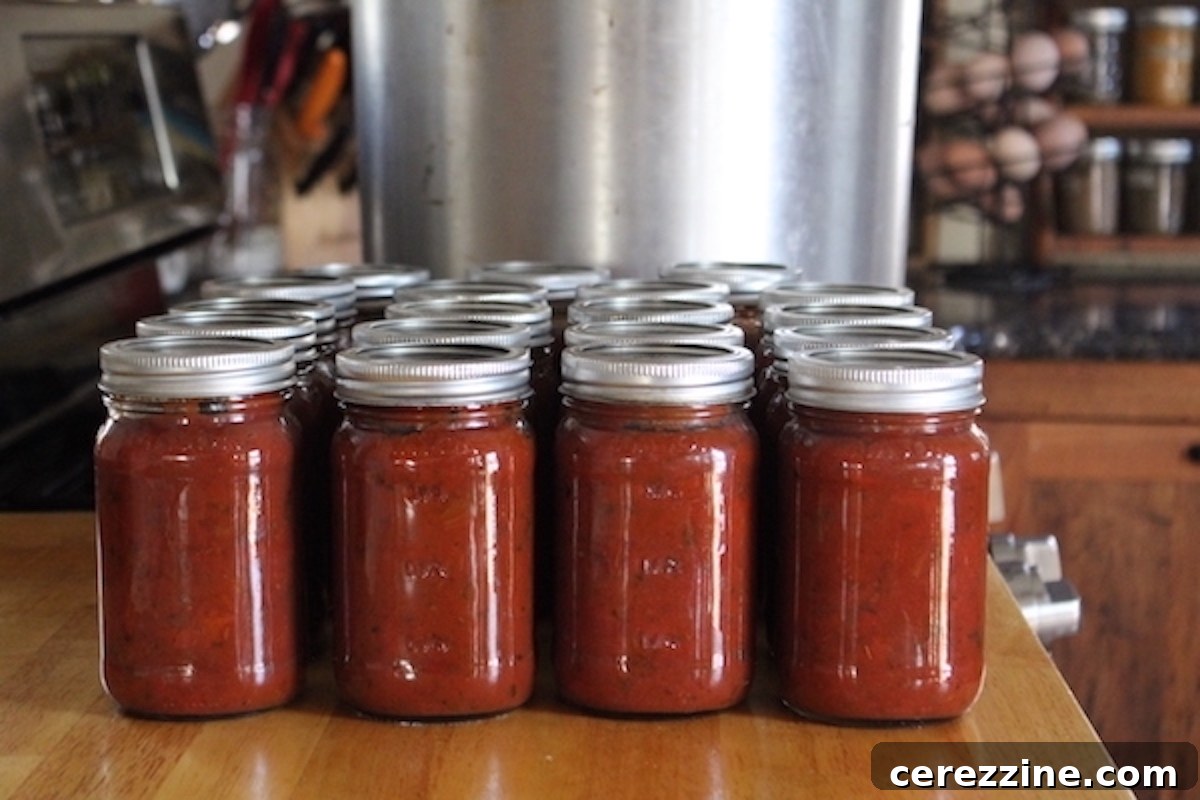
Transforming a simple weeknight pasta into a homemade feast becomes effortless when you have jars of your own canned spaghetti sauce ready to go. When you choose to can your own, you gain complete control over the ingredients, allowing you to add your preferred seasonings and customize the flavor profile to perfectly match your family’s unique taste. This makes every meal not just convenient, but truly special and uniquely yours.
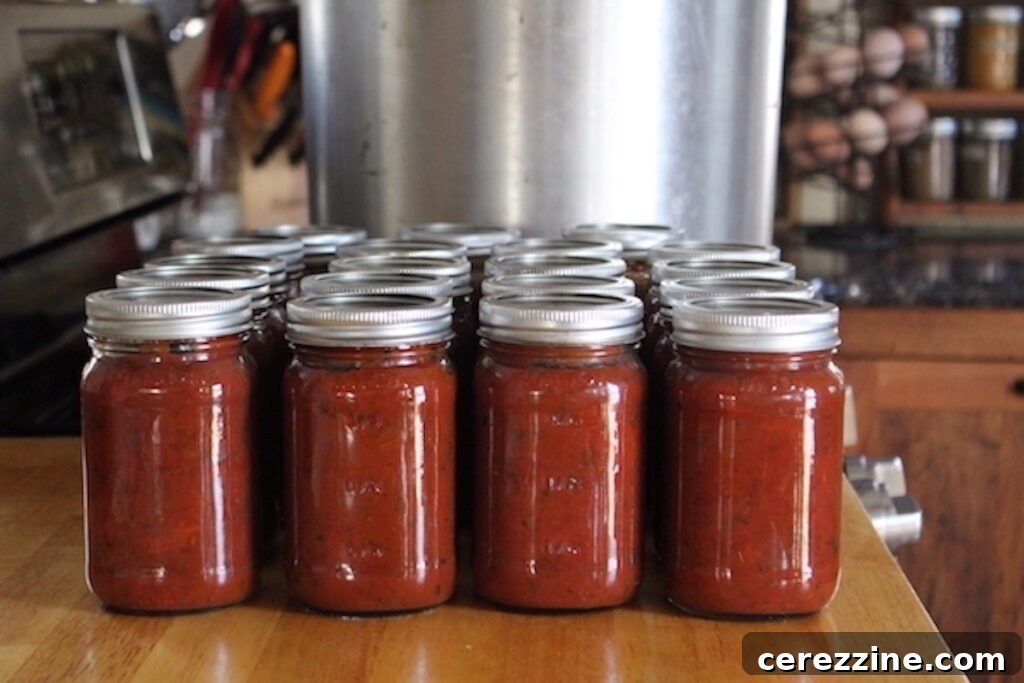
Why Embrace Canning Your Own Meatless Spaghetti Sauce?
Canning spaghetti sauce without meat offers a delicious, versatile, and incredibly useful method to maximize your fresh produce, especially for those embracing a plant-based diet or simply aiming to reduce meat consumption. It’s an excellent strategy for stocking your pantry, ensuring you always have ready-made, flavorful meals that can come together in a pinch, even on the busiest evenings.
Whether you’re harnessing the bounty of your garden with fresh, sun-ripened tomatoes and vegetables, or opting for high-quality canned alternatives from your local store, home canning empowers you with complete ingredient control. This means you can craft a sauce that is free from undesirable additives, perfectly seasoned, and tailored to any dietary needs. Moreover, a well-prepared meatless spaghetti sauce can be just as, if not more, vibrant and satisfying than traditional recipes that include ground beef or other meats.
Once you’ve prepared and safely canned your sauce, the culinary possibilities are endless. A single jar can serve as a flavorful base for a variety of other recipes, including those where you might choose to add cooked meat later. Alternatively, it stands perfectly on its own as the star of a super flavorful, wholesome meal. This adaptability makes homemade canned spaghetti sauce a true staple in any well-managed kitchen.
Critical Canning Considerations for Pasta Sauce Safety
This particular homemade pasta sauce canning recipe has been rigorously developed and tested by the National Center for Home Food Preservation (NCHFP). It is explicitly a pressure canning recipe, a crucial detail due to its generous inclusion of low-acid vegetables like onions and mushrooms, which contribute to its hearty texture and rich flavor. Consequently, this recipe cannot be safely processed in a water bath canner.
Understanding the difference between canning methods is vital for food safety. Low-acid foods, with a pH higher than 4.6, require the higher temperatures only achievable in a pressure canner to destroy dangerous bacteria like Clostridium botulinum. Tomatoes, despite their perceived acidity, hover on this borderline, and when combined with other low-acid vegetables, they necessitate pressure canning.
For those eager to explore a broader range of options, I’ve compiled a comprehensive list of every tested pasta sauce canning recipe available, featuring over 30 distinct recipes. Out of these, 19 are specifically designed as water bath canning recipes. The primary differentiation for water bath-safe sauces is either a significantly higher amount of added acidity (such as wine, balsamic vinegar, or lemon juice) or a reduced quantity of low-acid vegetables like bell peppers, onions, and mushrooms. Should your preference lean towards a more substantial, meat-inclusive sauce, a tested pressure canning recipe for spaghetti sauce with meat is also available to ensure safe preservation.
Discover More Tested Pasta Sauce Canning Recipes
Over 25 Tested Pasta Sauce Recipes for Canning
Reliable spaghetti sauce recipes for canning can be surprisingly difficult to locate, especially if you’re specifically searching for water bath canning options. Explore our comprehensive collection of thoroughly tested recipes, ensuring both safety and incredible flavor for your pantry.
Homemade Meatless Spaghetti Sauce: Recipe at a Glance
Prepare to create a versatile and delicious pantry staple with this detailed pressure canning recipe for meatless spaghetti sauce. Here’s a brief overview of the key specifications:
- Recipe Name: Basic Hearty Pasta Sauce (No Meat)
- Recipe Type: Classic Pasta Sauce (Tomato-Based)
- Canning Method: Pressure Canning (Essential for safety due to low-acid ingredients)
- Preparation & Cook Time: Approximately 1 hour to 1 hour and 30 minutes
- Canning Time: 20 minutes for pints, 25 minutes for quarts
- Yield: A batch typically produces 4 to 5 quarts, or about 9 pints.
- Recommended Jar Sizes: Ideal for Pint and Quart jars, though smaller quarter-pint and half-pint jars can also be used.
- Headspace Requirement: A precise 1-inch headspace is critical.
- Core Ingredients: Features a robust blend of fresh tomatoes, onions, bell peppers, mushrooms, aromatic garlic, and a medley of classic Italian spices.
- Difficulty Level: Moderate. Having a food mill or food strainer on hand will significantly simplify the process of achieving a smooth sauce.
Crafting Your Flavorful Meatless Spaghetti Sauce: Essential Ingredients
This carefully formulated recipe, endorsed by the National Center for Home Food Preservation, balances both safety and exceptional taste. Its inclusion of several low-acid ingredients, specifically onions, mushrooms, and bell peppers, is why pressure canning is not just recommended, but absolutely required. While tomatoes possess some natural acidity, their pH levels can hover near the borderline for safe water bath canning. Crucially, because this recipe avoids adding external acidity in the form of lemon juice, vinegar, or wine, it results in a naturally milder, less abrasive flavor profile. This delicious characteristic, however, means it does not qualify for the less intense heat of water bath canning.
For those embarking on their pressure canning journey, I highly advise reviewing my beginner’s guide to pressure canning before you start. If you’re in search of a beginner-friendly appliance, the Presto Electric Pressure Canner is renowned for its ease of use. You can find detailed instructions on how to operate an electric pressure canner, alongside my comprehensive review of the Presto Electric Pressure Canner. It is imperative to note that an Instant Pot cannot be used for safe pressure canning, as it does not consistently reach the necessary temperatures and pressures.
To prepare a batch yielding approximately 9 pints of this savory, meatless spaghetti sauce, you will need the following high-quality ingredients:
- 30 lbs ripe tomatoes: While any tomato variety can be used, paste tomatoes (such as Roma or San Marzano) are highly recommended. Their lower water content and meaty texture create a thicker sauce that generally requires less reduction.
- 1 cup chopped onions: (Optional) Adds a foundational aromatic sweetness.
- 1 cup chopped green/red bell peppers, or celery: (Optional) Contributes subtle flavor and additional texture.
- 1 lb fresh mushrooms: (Optional, sliced, *ensure they are fresh, not dried*) Provides an earthy depth and hearty substance.
- 5 cloves garlic: Minced, infuses the sauce with essential aromatic notes.
- 2 tbsp dried oregano: A cornerstone Italian herb for authentic flavor.
- 4 tbsp dried parsley: Offers a fresh, herbaceous complement.
- 2 tsp black pepper: Ground, for a touch of warmth and spice.
- 4 ½ tsp canning salt: Crucial for flavor balance and contributes to canning safety.
- ¼ cup olive oil: (or a neutral vegetable oil) Used for sautéing vegetables and enriching the sauce.
- ¼ cup brown sugar: (Optional) Helps to balance the acidity of the tomatoes and enhance their natural sweetness.
Crucial Safety Guidance: While you have the flexibility to omit the mushrooms, peppers, or onions from this recipe to suit your dietary needs or preferences, it is critically important that you do not increase the quantities of any of these low-acid vegetables. Altering these ratios can render the recipe unsafe for canning due to changes in pH and density. Additionally, under no circumstances should meat be added to this recipe, as the specified canning times are precisely calculated for a vegetable-based sauce and are insufficient for safely preserving a meat-based spaghetti sauce.
As noted, paste tomatoes excel in this recipe by producing a naturally thick sauce, often negating the need for further thickening after the canning process. This recipe is safely scaled for both pint and quart jars. Please be aware that a full batch yields approximately four and a half quarts, so if you’re exclusively using quart jars, you might have a small amount of sauce leftover.
Step-by-Step Guide: Pressure Canning Meatless Spaghetti Sauce
Follow these detailed instructions carefully to ensure a safe and delicious batch of home-canned meatless spaghetti sauce for your pantry.
1. Prepare Your Tomatoes for Peeling
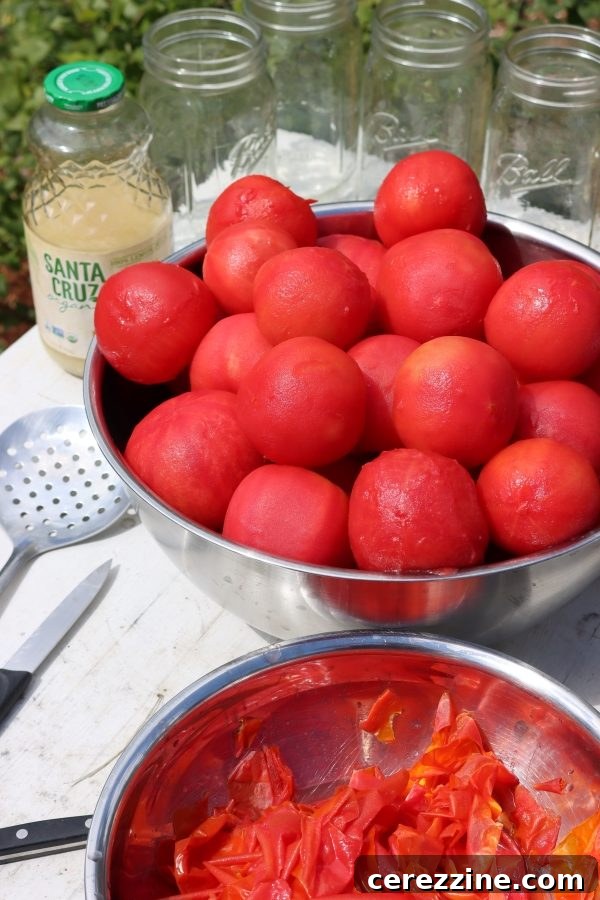
Begin by thoroughly washing all your tomatoes under cool running water. To facilitate easy peeling, gently dip each tomato into boiling water for approximately 30-40 seconds, or just until you observe the skins beginning to split and pucker. Immediately after, transfer the blanched tomatoes into a bowl of ice-cold water or an ice bath. This sudden temperature change, known as shocking, will halt the cooking process and make the skins incredibly easy to remove. For more detailed insights and tips on this process, you can consult my dedicated guide on peeling tomatoes for canning.
2. Cook and Process Tomatoes into Sauce Base
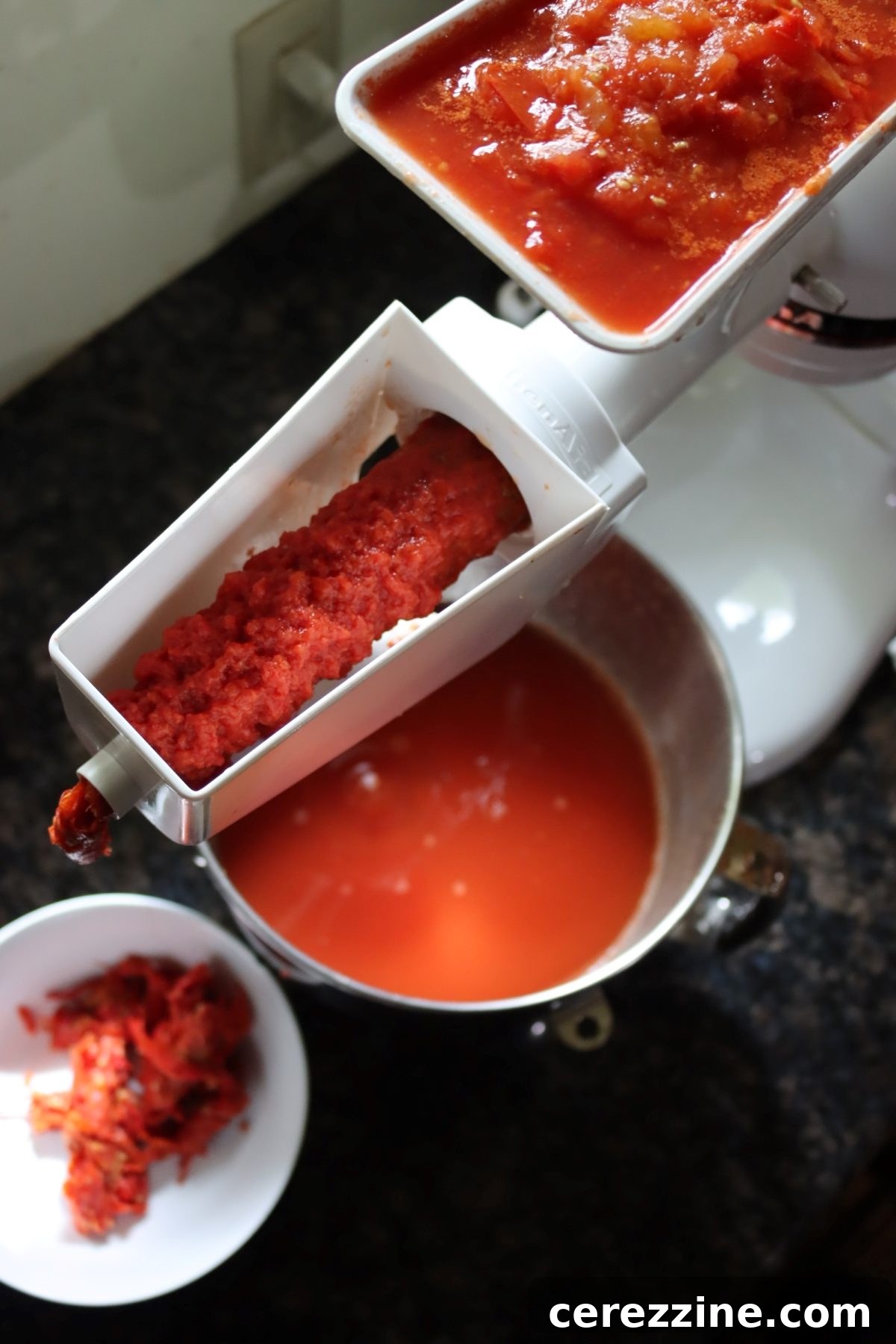
Once peeled, core each tomato and cut it into quarters. Place the quartered tomatoes in a large saucepan, ensuring it’s uncovered. Bring the tomatoes to a boil, then reduce the heat and simmer for about 20 minutes. This softens the tomatoes, making them easier to process. Next, carefully run the cooked tomatoes through a sieve or a food mill. This step effectively removes seeds and any remaining bits of skin, resulting in a smooth, consistent tomato sauce base. I frequently use the food mill attachment on my KitchenAid mixer for convenience, but a small hand-crank food mill, a manual countertop food mill, or a chinois sieve are all excellent alternatives that yield similar results.
If you prefer a chunkier sauce, you can modify this step. Instead of processing all tomatoes through a mill, manually squeeze out the seeds from up to half of your peeled and quartered tomatoes, then dice them into your desired size. Combine these chunks with the sauce base created from the milled tomatoes. It’s important not to use too many chunks without a sufficient amount of smooth sauce, as this can make the final product excessively thick. For those without a food mill or sieve, after seeding, you can finely chop the tomatoes with a sharp knife, or use a food processor or immersion blender to achieve a chunky or smooth consistency.
3. Sauté Vegetables and Simmer the Sauce
In a separate large, heavy-bottomed pot or Dutch oven, heat the ¼ cup of olive oil over medium heat. Add the chopped onions, celery (if using), bell peppers (if using), sliced fresh mushrooms (if using), and minced garlic. Sauté these vegetables gently until they are tender and fragrant, typically for about 5-7 minutes. Once softened, combine these sautéed vegetables with your prepared tomato sauce base. Stir in the remaining ingredients: 2 tbsp dried oregano, 4 tbsp dried parsley, 2 tsp ground black pepper, 4 ½ tsp canning salt, and ¼ cup brown sugar (if using). Bring the entire mixture to a vigorous boil, then reduce the heat to a simmer. Continue to simmer the sauce uncovered, stirring frequently to prevent it from scorching and sticking to the bottom of the pan. Simmer until the sauce reduces in volume by approximately 50% and reaches your desired thickness for serving. This reduction concentrates the flavors beautifully.
4. Prepare Your Pressure Canner and Canning Jars
While your spaghetti sauce is simmering and thickening, prepare your pressure canner. Follow your specific canner manufacturer’s instructions for operation. Generally, this involves adding 2-3 inches of water to the bottom of the canner, placing the bottom trivet, and heating the water to a simmer (approximately 180°F or 82°C) in anticipation of a hot pack recipe. Ensure your canning jars are meticulously clean and kept hot to prevent thermal shock when filled with hot sauce. Have new, clean canning lids and screw bands readily accessible.
5. Fill and Seal Jars
Once your rich, thick spaghetti sauce is ready and still hot, carefully ladle it into your prepared, hot, sterilized canning jars. It is crucial to leave a precise 1-inch headspace at the top of each jar (the space between the top of the food and the rim of the jar). After filling, use a clean, damp cloth or paper towel to thoroughly wipe the rims of the jars, removing any food particles or grease. This step is essential for ensuring a proper and secure seal. Center a new, flat canning lid onto each jar, then screw on the metal bands until they are “fingertip tight” – meaning securely tightened but not overly cranked down.
6. Load Canner and Begin Pressure Processing
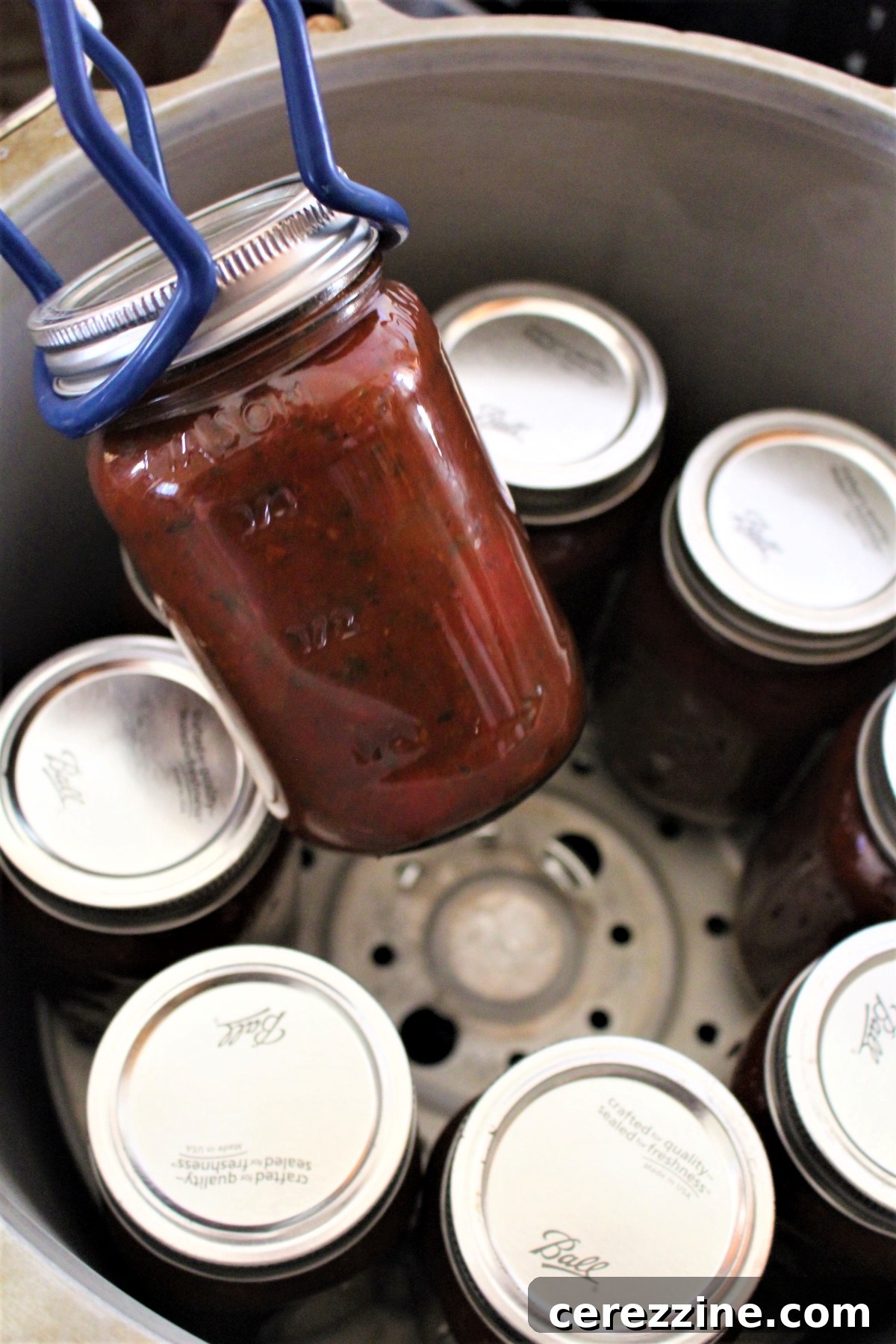
Carefully load the filled and sealed jars into your prepared pressure canner, ensuring they are not touching each other. Secure the canner lid firmly according to your model’s instructions. Turn the heat to high. Allow the canner to vent a steady, strong stream of steam for a full 10 minutes. This critical venting step purges all ambient air from the canner, preventing temperature inconsistencies. After the 10-minute venting period, place the weighted gauge onto the vent port (or close the petcock for a dial gauge canner) to allow pressure to build. Process pint jars at 11 lbs pressure (for a dial gauge canner) or 10 lbs pressure (for a weighted gauge canner, if you are below 1,000 feet in elevation) for 20 minutes. For quart jars, process for 25 minutes. Remember to adjust the pressure according to your specific altitude; please refer to the “Altitude Adjustments” section below for detailed guidance.
7. Cool Down and Check Seals
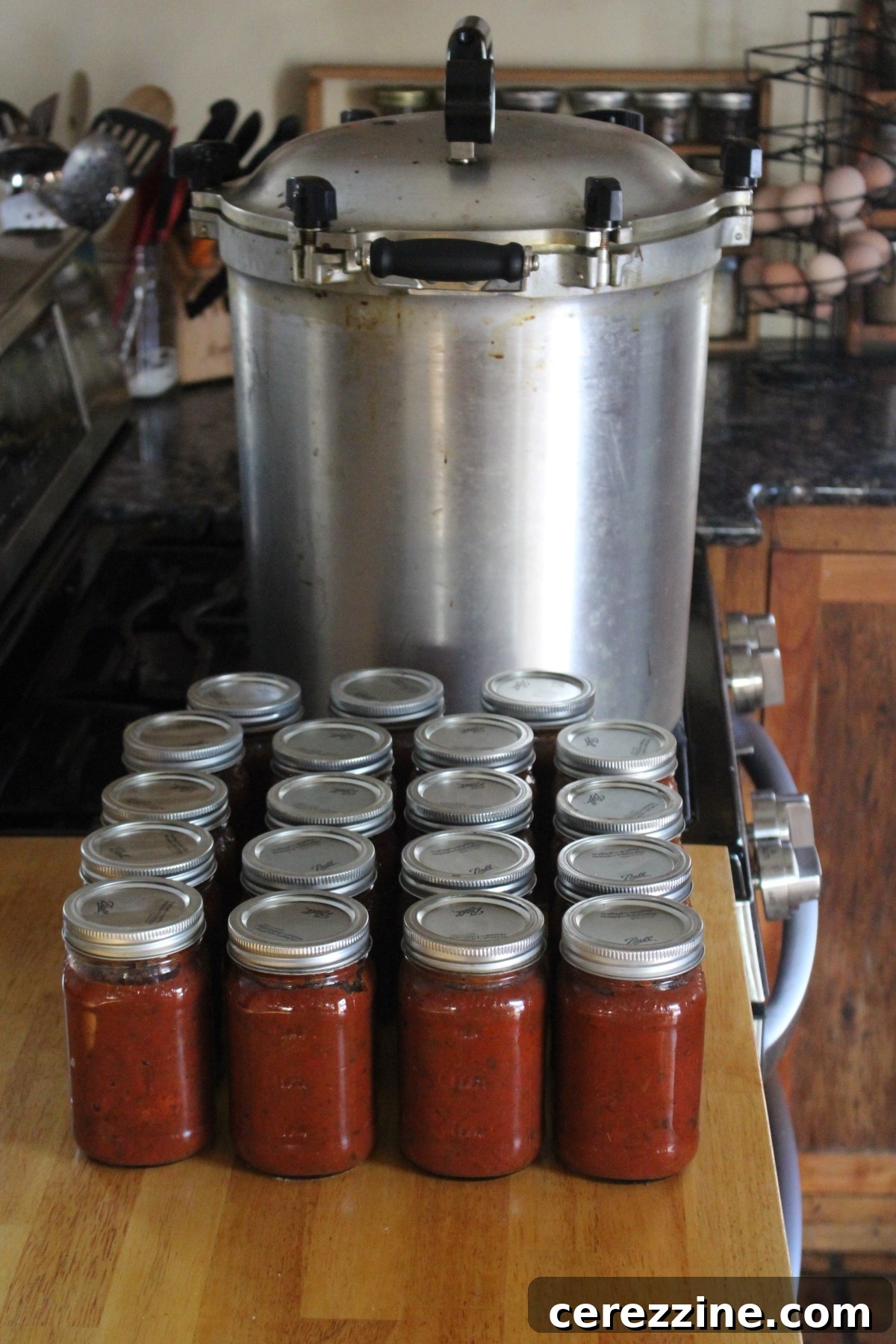
Once the required processing time has concluded, turn off the heat source. Allow the pressure canner to depressurize completely and naturally. Do NOT attempt to cool the canner quickly or open the lid prematurely, as this can be dangerous and may cause siphoning (liquid loss from jars) or seal failure. Wait until the pressure gauge reads zero (or the air vent/lock drops) before carefully removing the lid. Using a jar lifter, carefully remove the hot jars from the canner and place them upright on a towel-lined counter or rack, ensuring they are not touching each other. Let them cool undisturbed for 12 to 24 hours. After cooling, check the seals on all jars. A properly sealed lid will be concave (curved inward) and will not flex when pressed in the center. Remove the screw bands, wipe down the jars, label them with the contents and date, and store your delicious homemade spaghetti sauce in a cool, dark, dry place.
Essential Altitude Adjustments for Safe Pressure Canning
For safe and effective pressure canning, it is paramount to adjust the required pressure based on your geographical altitude. While the processing times for your spaghetti sauce remain constant, the pounds per square inch (PSI) of pressure must be increased at higher elevations to compensate for the lower boiling point of water. Here are the precise altitude adjustments for safely pressure canning spaghetti sauce:
For Dial Gauge Pressure Canners:
- 0 to 2,000 feet in elevation – Maintain 11 lbs pressure
- 2,001 to 4,000 feet in elevation – Increase to 12 lbs pressure
- 4,001 to 6,000 feet in elevation – Increase to 13 lbs pressure
- 6,001 to 8,000 feet in elevation – Increase to 14 lbs pressure
For Weighted Gauge Pressure Canners:
- 0 to 1,000 feet in elevation – Maintain 10 lbs pressure
- Above 1,000 feet in elevation – Use 15 lbs pressure
Always consult your specific canner’s instruction manual and your local extension office for any additional recommendations or guidelines.
Serving Your Delicious Homemade Canned Pasta Sauce
One of the most rewarding aspects of home canning is the incredible convenience it offers for meal preparation. Your homemade spaghetti sauce, once safely preserved, is remarkably easy to serve straight from the jar – simply heat it gently on the stovetop or in the microwave, and it’s ready to elevate any dish.
This versatile meatless sauce serves as an exceptional blank canvas for your culinary creativity. You can effortlessly transform it by adding cooked meat; typically, about half a pound of browned ground beef or sausage works perfectly for a pint of sauce, but you can easily adjust this quantity based on your family’s preferences. For an added boost of nutrition, color, or texture, feel free to stir in additional vegetables such as sautéed zucchini, fresh spinach, or extra bell peppers. If you found that your sauce was a bit on the thinner side when you canned it, this is the ideal moment to incorporate thickening agents like a cornstarch slurry, a roux made from flour and fat, or even a bit of tomato paste, ensuring it achieves your desired consistency to cling perfectly to pasta.
When it’s time to serve up your delectable sauce, consider pairing it with a variety of pasta shapes, from classic spaghetti to hearty rigatoni or delicate angel hair. For a healthier choice, opt for whole wheat pasta or even spiralized vegetable noodles. Don’t forget to enhance the dish with fresh garnishes like chopped basil, grated Parmesan cheese, or a drizzle of high-quality olive oil for an extra punch of flavor and aroma. Beyond pasta, this sauce is excellent as a base for lasagna, baked ziti, homemade pizza, or even as a flavorful dipping sauce for crusty bread.
If you tried this Spaghetti Sauce Canning Recipe, or any other recipe on Creative Canning, we would love to hear from you!
Please leave a ⭐ star rating and share your thoughts in the 📝 comments below!
And make sure you stay in touch with me by following on social media!
Canning Spaghetti Sauce (Basic Recipe without Meat)
Ashley Adamant
Home-canned spaghetti sauce can be a true lifesaver on busy weeknights. This basic canning recipe for a delicious meatless spaghetti sauce is designed to be a popular choice with the whole family, offering fantastic flavor and convenience.
1 hr
35 mins
25 mins
2 hrs
Yield: Approximately 9 Pints (or 4 to 5 quarts)
Equipment
-
Pressure Canner (e.g., All American Brand 930)
-
Food Mill (or a reliable sieve/food strainer)
-
Large stockpot(s)
-
Canning jars (pints or quarts), new lids, and bands
-
Standard canning tools: jar lifter, canning funnel, headspace tool, bubble remover
Ingredients
- 30 lbs ripe tomatoes (paste varieties like Roma or San Marzano are ideal)
- 1 cup chopped onions (optional)
- 1 cup chopped green/red bell peppers, or celery, diced (optional)
- 1 lb fresh mushrooms, sliced (optional, ensure they are fresh, not dried)
- 5 cloves garlic, minced
- 2 tbsp dried oregano
- 4 tbsp dried parsley
- 2 tsp ground black pepper
- 4 ½ tsp canning salt
- ¼ cup olive oil (or a neutral vegetable oil)
- ¼ cup brown sugar (optional)
Instructions
- Prepare Tomatoes: Wash tomatoes thoroughly. Dip them in boiling water for 30-40 seconds until skins split, then immediately transfer to an ice bath. Peel and discard skins.
- Cook & Process Tomatoes: Core and quarter the peeled tomatoes. Boil them for 20 minutes in a large, uncovered saucepan. Run the cooked tomatoes through a sieve or food mill to remove seeds and create a smooth sauce base.
- Sauté Vegetables: In a separate large pot, heat olive oil. Sauté chopped onions, celery (if using), peppers (if using), mushrooms (if using), and minced garlic until tender and aromatic.
- Combine & Simmer Sauce: Combine the sautéed vegetables with the processed tomato sauce. Add oregano, parsley, black pepper, salt, and brown sugar (if using). Bring the mixture to a boil, then reduce heat and simmer uncovered, stirring frequently, until the sauce thickens and reduces by about 50% for serving consistency.
- Prepare Canner & Jars: While sauce simmers, prepare your pressure canner for hot pack according to manufacturer instructions (2-3 inches of water, trivet, heated to 180°F/82°C). Ensure jars, lids, and bands are clean and ready.
- Fill Jars: Fill hot, sterilized jars with the hot spaghetti sauce, leaving precisely 1 inch of headspace.
- Seal Jars: Wipe jar rims clean with a damp cloth to ensure a perfect seal. Place new lids on jars, followed by bands, tightening them to “fingertip tight.”
- Load Canner: Carefully load the filled jars into the pressure canner.
- Vent Canner: Secure the canner lid. Turn heat to high and allow a steady stream of steam to vent for 10 minutes.
- Process Jars: After venting, add the weighted gauge (or close the petcock). Process pints at 11 lbs pressure (dial gauge) or 10 lbs pressure (weighted gauge, below 1,000 ft) for 20 minutes. Process quarts for 25 minutes. Adjust pressure for altitude as needed (refer to “Altitude Adjustments” section).
- Depressurize: When processing time is complete, turn off heat and allow the canner to depressurize naturally until the gauge reads zero. Do not force cool.
- Cool & Store: Remove jars and place on a towel-lined surface to cool undisturbed for 12-24 hours. Check all seals. Remove bands, wipe jars clean, label, and store in a cool, dark place.
Notes for Safe & Delicious Canning
This is strictly a pressure canning recipe. It is NOT safe for water bath canning due to the inclusion of multiple low-acid ingredients such as mushrooms, onions, and peppers.
The onions, peppers, mushrooms, and brown sugar are optional. You may omit any of these ingredients if they do not suit your family’s taste. However, do not substitute other ingredients or increase the quantities of any low-acid vegetables, as this can compromise the tested safety of the canning process.
For spices, feel free to substitute with any dry spices or add other dried herbs to tailor the flavor to your preferences. Importantly, do not add fresh spices or fresh herbs (e.g., fresh basil) before canning, as their density and uncertain acidity levels can impact the safety of the preserved product.
While the actual canning times for this spaghetti sauce recipe remain constant, the necessary pressure must be carefully adjusted based on your specific altitude. Please consult the “Altitude Adjustments for Safe Pressure Canning” section above for precise guidelines.
Approximate Yield: This recipe typically yields about 9 pints or between 4 to 5 quarts of finished sauce.
Nutrition Information
- Calories: 110 kcal
- Carbohydrates: 21g
- Protein: 4g
- Fat: 3g
- Saturated Fat: 0.4g
- Polyunsaturated Fat: 1g
- Monounsaturated Fat: 1g
- Sodium: 495mg
- Potassium: 1054mg
- Fiber: 5g
- Sugar: 15g
- Vitamin A: 3736 IU
- Vitamin C: 67mg
- Calcium: 54mg
- Iron: 1mg
Nutrition information is automatically calculated based on the ingredient list and should only be used as an approximation. Actual values may vary.
Enjoyed this recipe? Share your experience below!
Your feedback helps us continue to provide valuable content.
Expand Your Pantry: More Tested Pressure Canning Recipes
Once you’ve successfully mastered the art of canning spaghetti sauce, you’ll likely feel inspired to fill your pressure canner again with an array of other practical and delicious recipes. Explore these simple and thoroughly tested pressure canning options to further stock your pantry with homemade goodness:
- Canning Beef: Perfect for quickly preparing hearty stews, tacos, or casseroles.
- Canning Potatoes: Have ready-to-use potatoes on hand for soups, stews, or even a quick side dish.
- Canning Pumpkin: Ideal for baking pies, creating creamy soups, or adding to autumn-inspired recipes.
- Canning Sweet Potatoes: A wonderfully versatile ingredient for both sweet and savory culinary creations.
- Canning Corn: Preserve the sweet taste of summer corn to enjoy throughout the entire year.
Looking for a specific canning recipe?
If you’re searching for something else to preserve, use our search bar to discover the perfect recipe for your next home canning project!
Effortless Weeknights: Explore “Meal in a Jar” Canning Recipes
Homemade spaghetti sauce is, at its core, a perfect “meal in a jar” – requiring only the addition of cooked pasta for a complete and satisfying dinner. If you’re seeking even more convenient, heat-and-eat options to simplify your meal planning and revolutionize your pantry, these “meal-in-a-jar” canning recipes are an excellent next step. They provide quick, nutritious, and incredibly flavorful solutions for demanding schedules:
- Boston Baked Beans: A beloved classic comfort food, ready to heat and enjoy as a side or main dish.
- Thai Curry Duck: Bring exotic and rich flavors to your table with this conveniently canned global meal.
- White Bean Chicken Chili: A warm, hearty, and mildly spiced chili, perfect for cozy evenings.
- Cajun Red Beans and Sausage: A zesty, protein-packed meal with a kick, ready to be served in minutes.