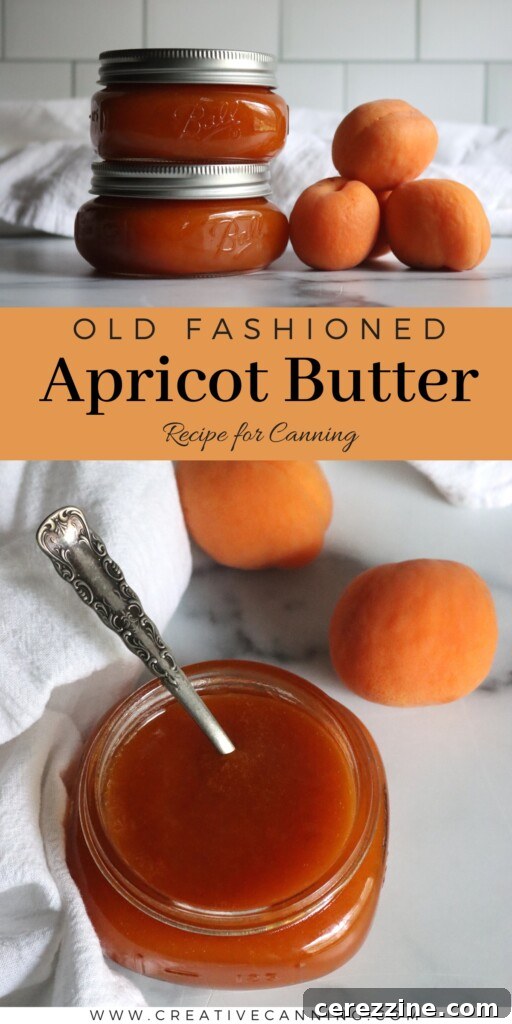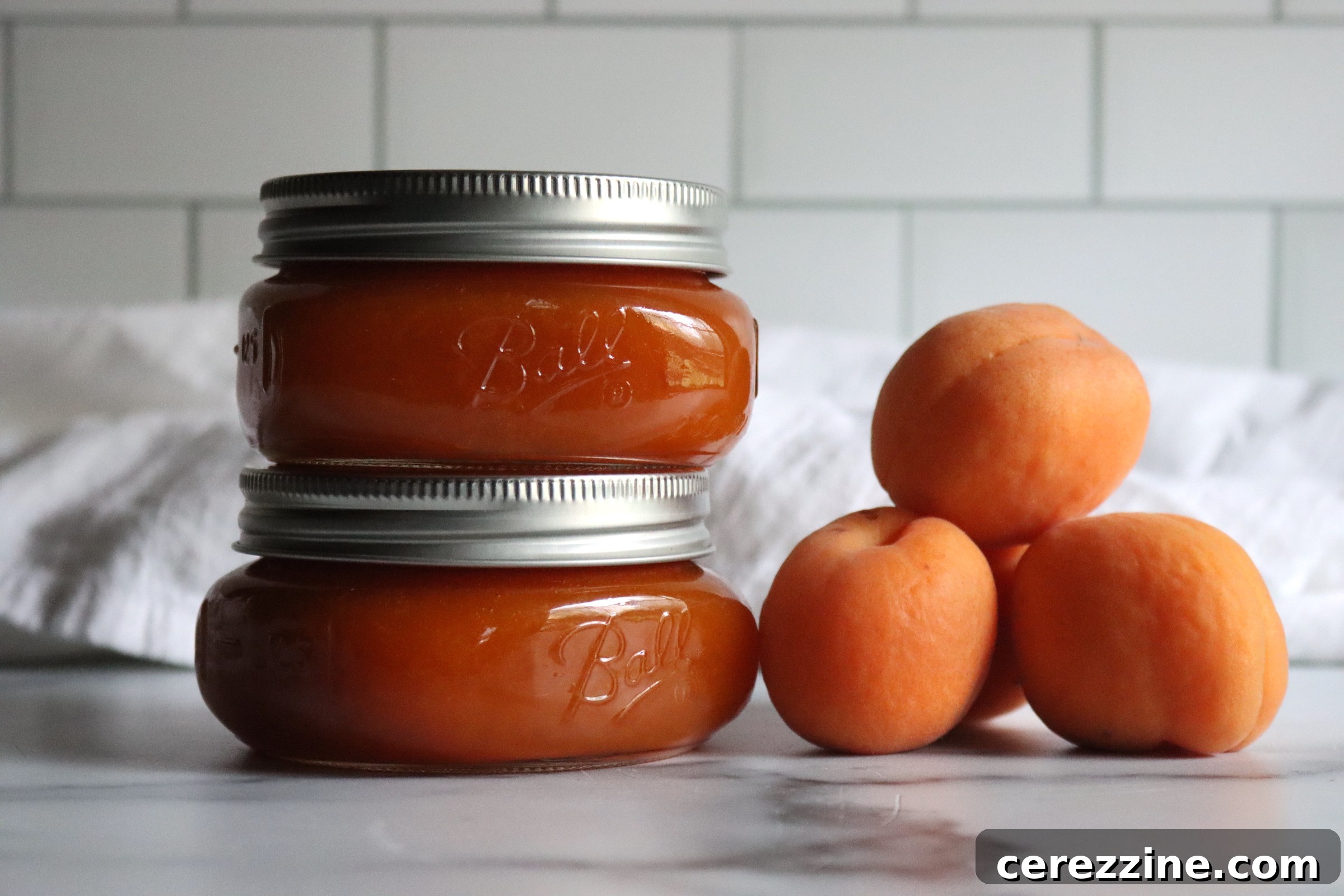
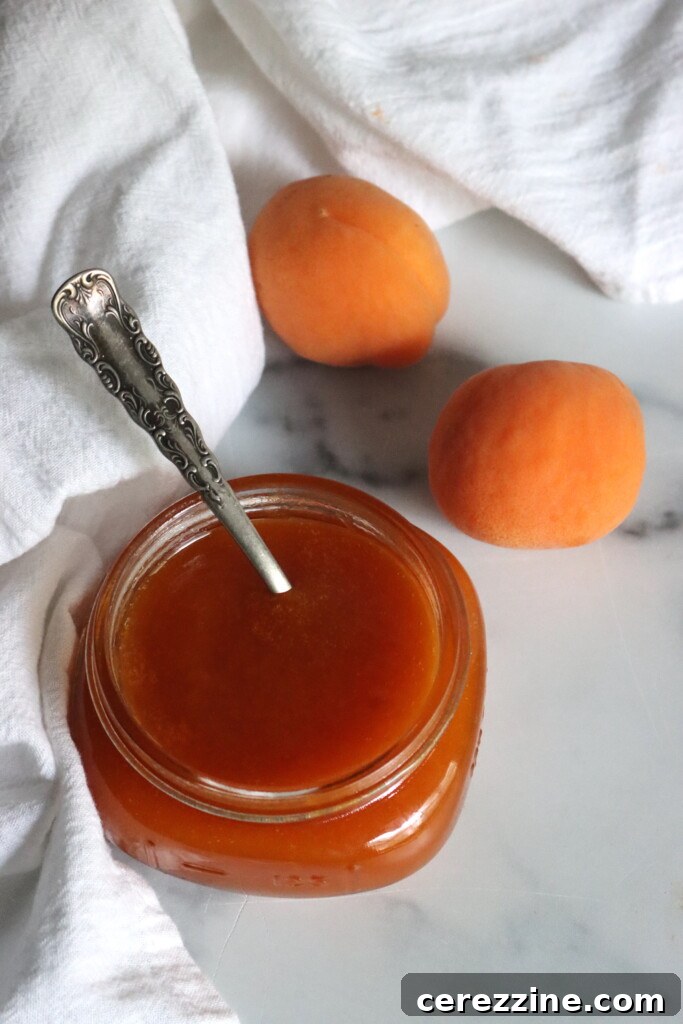
Unlock the vibrant essence of summer with homemade apricot butter, a truly delightful and surprisingly simple preserve that captures the sweet, tangy flavor of fresh apricots. This rich, spreadable fruit butter is a kitchen staple, perfect for elevating your breakfast routine, adding a gourmet touch to desserts, or creating thoughtful homemade gifts. What makes this recipe truly special? There’s no tedious peeling required, making the process incredibly easy while actually enhancing both the flavor and color of your finished preserve.
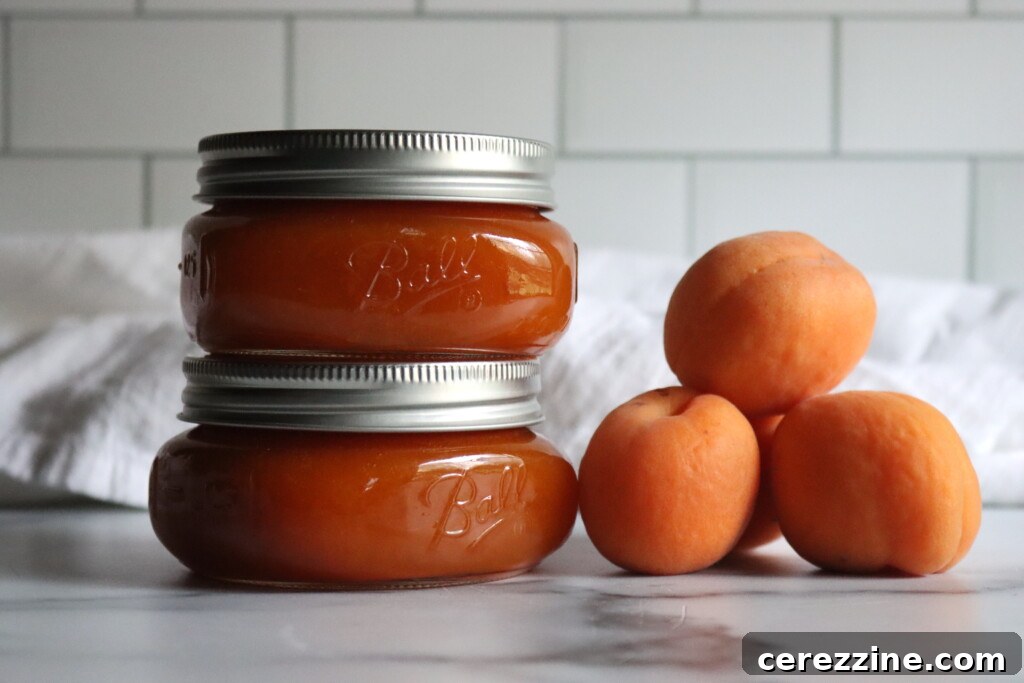
Diving into the world of homemade preserves can seem daunting, but apricot butter stands out as one of the most accessible and rewarding options. Unlike jams and jellies that often require specific pectin levels and precise setting points, fruit butters are more forgiving. They boast a lower sugar content than most jams, allowing the pure, intense apricot flavor to shine through beautifully. With just a handful of ingredients—fresh apricots, a touch of sugar, and a splash of lemon juice to brighten the fruit’s natural acidity—you can create a luscious, velvety spread that tastes like sunshine in a jar.
This particular recipe builds upon the trusted foundation of classic preserving guides, such as the Ball Blue Book of Preserving and the Ball Complete Book of Home Preserving. While these esteemed resources offer reliable methods, this adapted version incorporates a crucial improvement: we skip the arduous step of peeling the apricots. This simple omission not only streamlines the preparation but also delivers a superior final product. Let’s explore why this “easy way” is genuinely the “best way.”
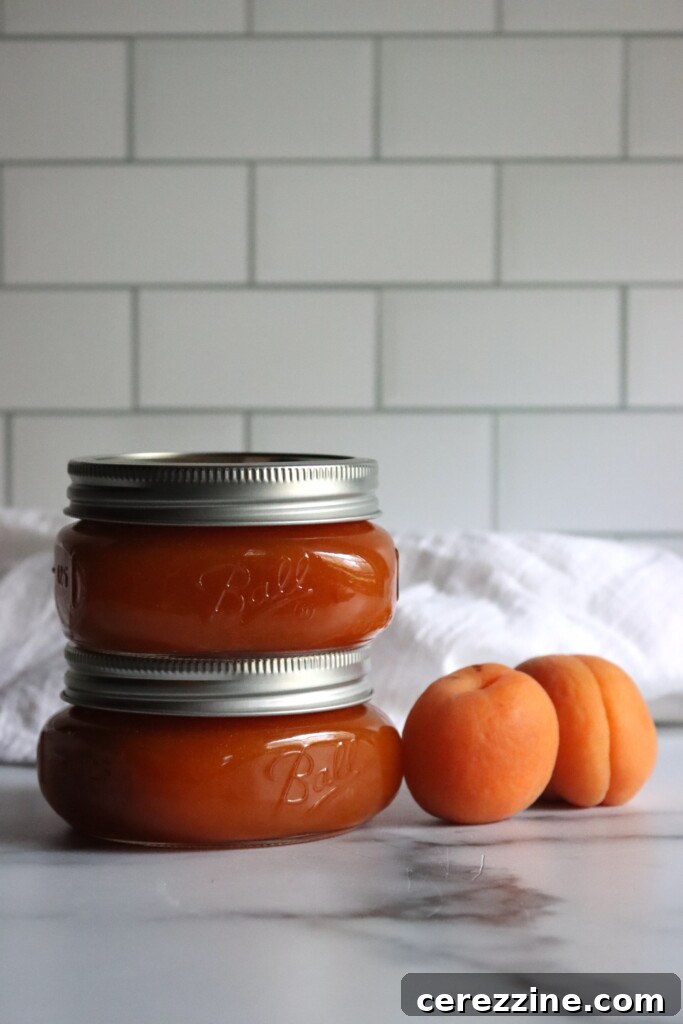
Why Skipping the Peeling Step is Best for Apricot Butter
When it comes to making apricot butter, the traditional advice often suggests blanching and peeling the fruit. However, years of experience in the kitchen have proven that this step is not only unnecessary but can actually be detrimental to the final taste and appearance of your apricot butter. The thin skins of ripe apricots are remarkably delicate; they practically melt away during the slow simmering process, integrating seamlessly into the fruit puree. The result is a wonderfully smooth, silky texture with no discernible skin fragments.
Beyond the convenience, leaving the skins on offers significant advantages for both flavor and color. Apricot skins contain a wealth of aromatic compounds and natural pigments that contribute to the fruit’s complex taste profile and its signature vibrant orange hue. When you peel apricots, you discard these valuable elements, often leading to a paler, less intensely flavored butter. Furthermore, peeled apricots are highly susceptible to oxidation; they brown almost instantly upon exposure to air. To counteract this, many recipes call for an excessive amount of lemon juice, which can inadvertently dull the delicate fruit flavor. By retaining the skins, you naturally protect the fruit from rapid browning, preserving its bright, appetizing color and ensuring a more authentic, robust apricot taste.
This innovative approach is a game-changer for home preservers. It eliminates the mess and frustration of peeling, a process that can be particularly fiddly with small, soft apricots. Instead of battling oxidation or compromising flavor with extra lemon juice, you embrace the fruit’s natural integrity. This method is supported by trusted sources, too. For instance, the University of Oregon Extension, a leading authority on safe home canning practices, confirms that leaving the peels on apricots is perfectly safe for all canning recipes. This endorsement provides peace of mind, allowing you to confidently embrace this simpler, superior technique.
So, if you find yourself with a bounty of beautiful, ripe apricots and a couple of hours to spare, making apricot butter without peeling is an excellent choice for preserving the harvest. It’s a testament to the idea that sometimes, less truly is more. Let’s delve into how to create this irresistible preserve.
Essential Ingredients for Perfect Apricot Butter
Crafting delicious apricot butter requires only a few fundamental ingredients, allowing the natural goodness of the fruit to take center stage. This recipe maintains the integrity of classic, tested preserving methods while incorporating our key improvement of skipping the peeling process.
- Apricots: The star of our show! Opt for fresh, ripe apricots that are fragrant and slightly soft to the touch. Don’t shy away from fruit that might be a little bruised or overly soft, as long as it’s free from mold and still packed with flavor. These imperfections often mean peak ripeness, which translates to the best-tasting butter.
- Water: A small amount of water is crucial at the beginning of the cooking process. It helps to prevent the apricots from scorching before they release their own natural juices, ensuring a smooth start to the simmering.
- Sugar: Standard granulated sugar is the traditional choice for apricot butter. It serves multiple purposes: balancing the apricots’ tartness, enhancing their flavor, and aiding in the thickening process. Sugar also plays a vital role in the preservation, contributing to the butter’s shelf stability.
- Lemon Juice: Fresh or bottled lemon juice is added to brighten the overall flavor of the apricot butter. It provides a delightful tang that cuts through the sweetness, creating a more balanced and complex taste. While lemon juice contributes to flavor, it is not strictly required for safety in this particular recipe, given the apricots’ natural acidity and the long cooking time for concentration.
For those who love to experiment with flavors, apricot butter is a fantastic canvas for additional spices. Consider infusing your butter with warming spices like a pinch of cinnamon, a hint of nutmeg, or a dash of cardamom to create a more complex, aromatic profile. A splash of pure vanilla extract added at the very end of cooking can also introduce a lovely depth. For an adult twist, a few tablespoons of quality brandy or whiskey can be stirred in for a sophisticated, warming note. However, even in its plain, unadorned form, homemade apricot butter is truly exceptional and incredibly versatile, which is why it’s often preferred that way.
Step-by-Step Guide to Making Homemade Apricot Butter
Making apricot butter is a straightforward process that transforms simple fruit into a luxurious spread. Follow these steps for a smooth and delicious result:
Preparation and Initial Simmer
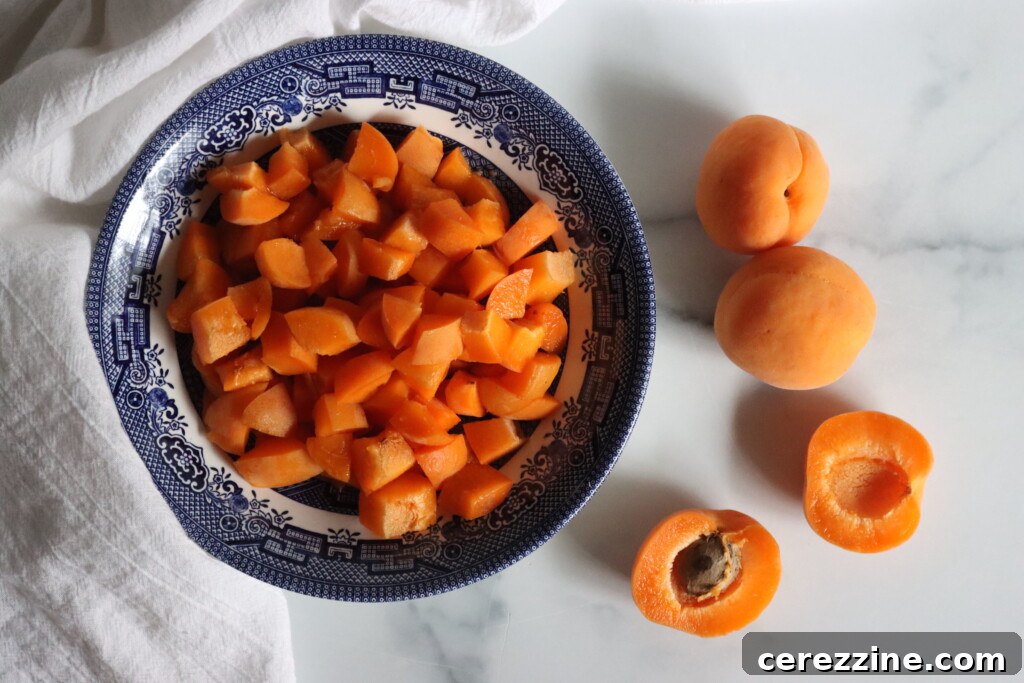
- Prepare the Apricots: Begin by thoroughly washing your apricots under cold running water. Halve each apricot and carefully remove the pits. There’s no need to peel them; the skins will soften and disappear during cooking, contributing to a richer flavor and color. Once pitted, coarsely chop the fruit into pieces roughly 1 inch in size. Precision isn’t critical here, but chopping helps the fruit cook down more quickly and evenly.
- First Simmer: Place the chopped apricots and the specified amount of water into a large, heavy-bottomed pot or Dutch oven, preferably made of stainless steel to avoid reactive metals. Bring the mixture to a gentle boil over medium-high heat. Once boiling, reduce the heat to low and simmer, stirring occasionally, for about 20 minutes. The goal is to soften the fruit until it’s very tender and easily falls apart, indicating it’s ready for pureeing.
Pureeing and Slow Reduction
- Puree the Fruit: Once the apricots are thoroughly softened, it’s time to create a smooth puree. The easiest tool for this is an immersion blender, which allows you to puree the fruit directly in the pot, minimizing cleanup. Alternatively, you can carefully transfer the softened apricots in batches to a food processor or a food mill. Process until the mixture is silky smooth. At this stage, you should have approximately 6 cups of vibrant apricot puree.
- Add Sugar and Lemon Juice: Return the smooth apricot puree to the pot (or transfer it to a crock pot if you’re opting for that cooking method). Stir in the granulated sugar and lemon juice. Continue stirring gently until the sugar has completely dissolved into the warm fruit mixture.
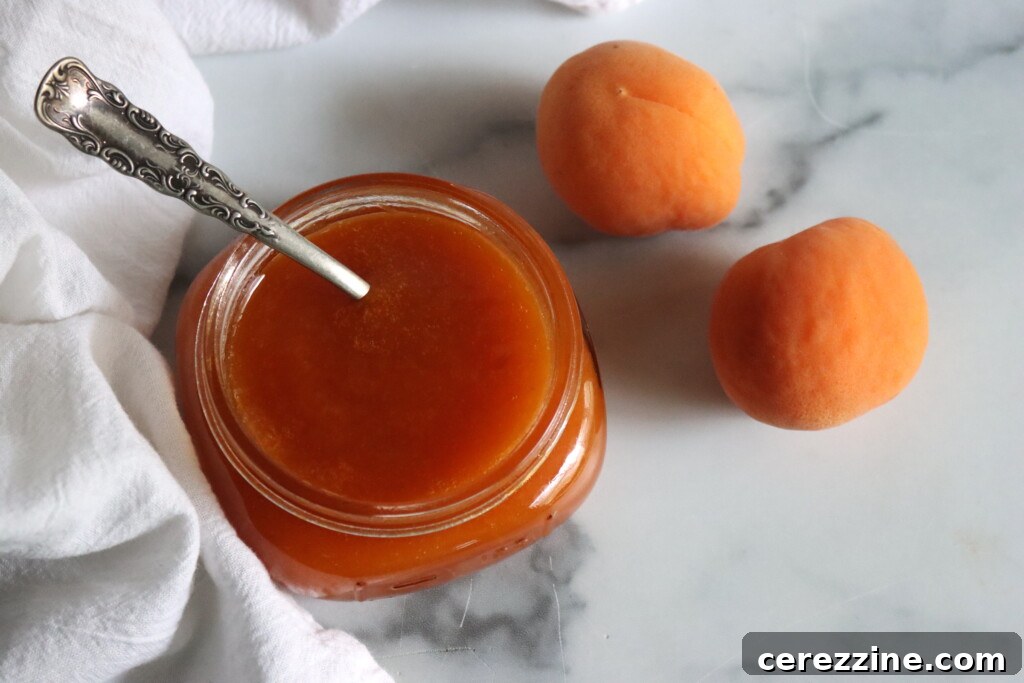
- Slow Simmer to Thicken: This is the most crucial stage for developing flavor and achieving the perfect consistency. Bring the mixture back to a boil over medium-high heat, then immediately reduce the heat to the lowest setting possible. Allow the apricot butter to simmer uncovered, stirring frequently to prevent it from sticking to the bottom and scorching. This slow reduction process can take anywhere from 1 to 2 hours on the stovetop, typically closer to 1½ hours. You’ll know it’s ready when the butter is thick, glossy, and holds its shape on a spoon, revealing the bottom of the pot when stirred. Patience is key here, as slow cooking concentrates the flavors and creates that desirable spreadable texture.
Crockpot Method for Apricot Butter
If you prefer a more hands-off approach and wish to avoid constant stirring, making apricot butter in a crock pot (slow cooker) is an excellent alternative. Simply combine the pureed apricots, sugar, and lemon juice in your slow cooker and cook on the “high” setting for 3 to 4 hours, leaving the lid ajar to allow moisture to escape and the butter to thicken. While it still requires occasional stirring, it’s significantly less prone to scorching than the stovetop method.
Canning Homemade Apricot Butter for Long-Term Storage
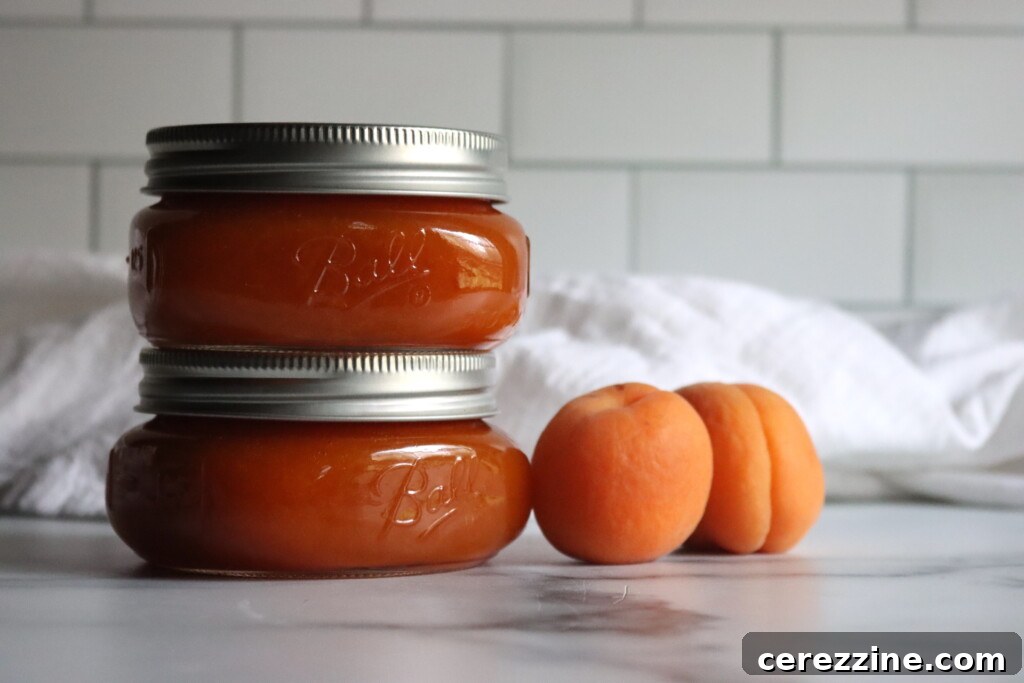
Once your apricot butter has reached its ideal thick, spreadable consistency, it’s time to preserve it through water bath canning, ensuring long-term shelf stability. This method is safe and effective for fruit butters due to their acidity and high sugar concentration.
- Prepare for Canning: As the apricot butter is nearing completion, begin preparing your water bath canner. Ensure it’s filled with enough water to cover your jars by at least 1 inch. Sterilize your canning jars (half-pint or pint sizes are ideal) by simmering them in hot water or running them through a dishwasher’s sanitize cycle. Gently warm your canning lids and rings in a separate saucepan of hot (not boiling) water; this softens the sealing compound, ensuring a proper seal.
- Fill and Seal Jars: Carefully ladle the hot apricot butter into the sterilized, warm jars, leaving precisely ¼ inch headspace from the rim. This headspace is critical for creating a strong vacuum seal during processing. Use a non-metallic utensil to remove any air bubbles, then wipe the rims of the jars clean with a damp cloth to ensure nothing interferes with the seal. Center the warmed lids on top of each jar, and screw on the rings fingertip-tight.
- Process in Water Bath: Carefully place the filled jars into the prepared water bath canner, ensuring they are fully submerged. Bring the water to a rolling boil. Once boiling, begin timing the process for 10 minutes. It is essential to adjust this processing time if you live at an altitude above 1,000 feet (see altitude adjustments below).
- Cool and Check Seals: After the processing time is complete, turn off the heat and carefully remove the jars from the canner. Place them on a towel-lined counter, spaced apart, and allow them to cool completely undisturbed for 12 to 24 hours. Once cooled, check the seals: the center of each lid should be concave and not flex when pressed. Any jars that haven’t sealed properly should be refrigerated and consumed within a few weeks. Properly sealed jars can be stored in a cool, dark pantry for up to a year, or even longer in optimal conditions.
Altitude Adjustments for Canning
Canning times must be adjusted for higher altitudes to ensure food safety, as water boils at lower temperatures as elevation increases. If you live above 1,000 feet, please refer to these adjustments for processing your apricot butter:
- 1,001 to 3,000 feet: Process for 15 minutes
- 3,001 to 6,000 feet: Process for 20 minutes
- 6,001 to 8,000 feet: Process for 25 minutes
- 8,001 to 10,000 feet: Process for 30 minutes
These adjusted times apply universally to both pint and half-pint jars of apricot butter.
Delicious Ways to Enjoy Your Homemade Apricot Butter
While a warm, buttered slice of sourdough toast remains an absolutely classic pairing, homemade apricot butter is far too versatile to be confined to the breakfast table. Its smooth texture, balanced sweetness, and subtle tang make it a fantastic ingredient in both sweet and savory culinary creations.
Sweet Applications
- Baking: Use it as a vibrant filling for traditional thumbprint cookies or elegant linzer-style sandwich cookies. It can also be swirled into muffin batter, cake batter, or quick bread doughs for an added fruity dimension.
- Breakfast & Desserts: Stir a generous dollop into your morning plain yogurt, oatmeal, or overnight oats for natural sweetness and a burst of fruit flavor. Spoon it generously over pancakes, waffles, or crepes. Layer it into parfaits with crunchy granola and fresh berries, or use it as a topping for vanilla ice cream or panna cotta.
- Spreads & Pastries: Beyond toast, spread it on scones, croissants, or brioche. It makes a wonderful filling for tarts or hand pies, either on its own or mixed with cream cheese.
Savory Pairings
- Glazes for Meats: The sweet and tangy profile of apricot butter makes it an exceptional glaze for grilled or roasted meats. Brush it onto chicken, pork loin, or even duck during the last few minutes of cooking for a beautiful caramelization and a delightful flavor boost. For a more complex savory flavor, consider my dedicated recipe for Apricot BBQ Sauce, but the butter itself provides a wonderful, simpler glaze.
- Cheese Boards: Elevate your charcuterie or cheese board by serving a small bowl of apricot butter alongside. It pairs exquisitely with creamy soft goat cheese, sharp cheddar, or even a robust blue cheese, offering a sweet counterpoint to salty and tangy flavors.
- Sandwiches & Wraps: Add a thin layer to turkey or ham sandwiches, especially when paired with a mild cheese, for an unexpected fruity twist.
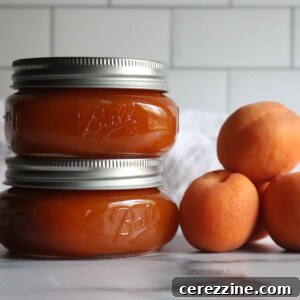
Apricot Butter
Equipment
-
Water Bath Canner
Ingredients
- 2 lbs Apricots, halved, pitted and diced (about 16 to 24 medium)
- ½ cup Water
- 3 cups Sugar
- 2 Tbsp Lemon Juice, fresh or bottled, for flavor—not preservation
Instructions
-
Wash the apricots under cold running water and drain well. Halve, pit and then coarsely chop the fruit. No need to peel them—the skins dissolve during cooking and enhance the flavor.
-
In a large stainless steel saucepan, combine the apricots and water. Bring to a boil over medium-high heat. Reduce heat and simmer gently, stirring occasionally, for about 20 minutes, or until the apricots are very soft.
-
Use an immersion blender directly in the pot to puree the mixture until smooth, or transfer in batches to a food mill or food processor. You should have about 6 cups of apricot puree at this stage.
-
Return the puree to the pot (or transfer to a crockpot if using that method). Add the sugar and lemon juice, stirring until the sugar dissolves completely.
-
Bring the mixture to a boil over medium-high heat, then reduce to the lowest heat and simmer uncovered, stirring frequently, until the butter thickens and holds its shape on a spoon. This takes 1 to 2 hours on the stovetop, usually closer to 1½ hours. Stir often to prevent scorching, especially toward the end.
-
Crockpot option: Cook on high for 3 to 4 hours, uncovered, until thick. Stir occasionally, but it’s less prone to burning in a slow cooker.
-
When the apricot butter is nearly done, prepare a water bath canner, sterilize your jars, and warm your lids and rings.
-
Ladle the hot butter into jars, leaving ¼ inch headspace. Wipe rims, apply lids and rings, and process in a boiling water bath for 10 minutes (for both half-pints and pints). Adjust processing time for altitude as needed.
Notes
- If peeling: Blanch apricots in boiling water for 30–60 seconds, then transfer to cold water. Peel, halve, and pit. But honestly, I don’t recommend it—the flavor and color are better without peeling.
- Pureeing: An immersion blender is by far the easiest and least messy option.
- Sugar adjustments: You can reduce the sugar slightly, but the consistency and yield may be affected.
- Storage: Store sealed jars in a cool, dark place for up to a year. Refrigerate after opening.
Altitude Adjustments:
- 1,001 to 3,000 feet: 15 minutes
- 3,001 to 6,000 feet: 20 minutes
- 6,001 to 8,000 feet: 25 minutes
- 8,001 to 10,000 feet: 30 minutes
Nutrition
Nutrition information is automatically calculated, so should only be used as an approximation.
Explore More Apricot Canning Recipes
If you’re fortunate enough to have an abundance of apricots, don’t let a single one go to waste! Apricot butter is just one of many fantastic ways to preserve this golden fruit. Expand your repertoire with these other tested apricot canning recipes, perfect for capturing the flavor of summer all year long:
- Canning Apricots: The simplest method for preserving whole or halved apricots in syrup. These canned fruits are wonderfully versatile for baking, desserts, or snacking straight from the jar.
- Apricot Pie Filling: Imagine having a ready-made pie filling on hand for those busy evenings! This recipe creates a perfectly spiced and thickened apricot filling, making homemade pie assembly a breeze.
- Apricot Jam: A classic preserve, offering a slightly different texture and sweetness profile than butter. This jam delivers a bright, tangy flavor with a beautiful, spoonable set.
- Apricot Salsa: Surprisingly delicious and incredibly unique! This fruit-based salsa is a fantastic savory preserve, offering a sweet, spicy, and tangy condiment perfect for grilled meats or as an appetizer.
Discover Other Delightful Fruit Butter Recipes
Once you’ve experienced the joy of making and enjoying homemade apricot butter, you might find yourself eager to explore the wider world of fruit butters. These smooth, concentrated fruit preserves offer a wonderful way to capture the essence of various fruits. Try these equally delicious fruit butter recipes next:
- Peach Butter: A truly summery spread made with sweet, ripe peaches. Like apricot butter, this recipe requires no added pectin and cooks down to a thick, fragrant preserve bursting with natural peach flavor.
- Apple Butter: A beloved fall classic, slow-cooked to a dark, caramelized perfection. Infused with warming spices, apple butter is a staple for toast, muffins, and adding to baked goods.
- Pear Butter: Delicately sweet and wonderfully aromatic, pear butter is a sophisticated spread. Its mild flavor makes it perfect for serving on pancakes, stirring into oatmeal, or pairing with cheeses.
Each of these fruit butter recipes follows a similar, simple process: ripe fruit, a touch of sugar, slow simmering, and a bit of care. Once you master the art of one fruit butter, you’ll be well-equipped and likely hooked on making them all, transforming seasonal gluts into pantry treasures.