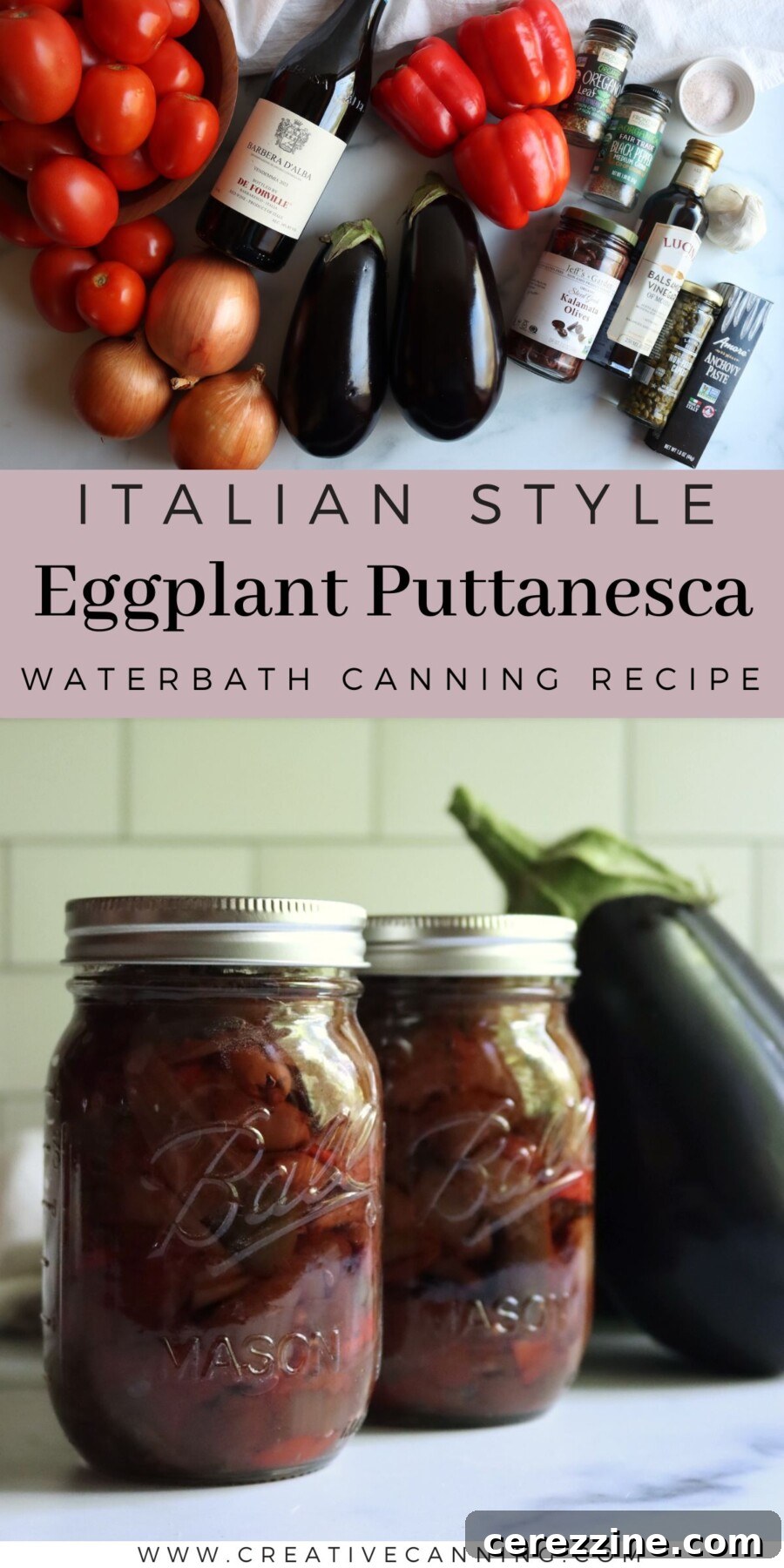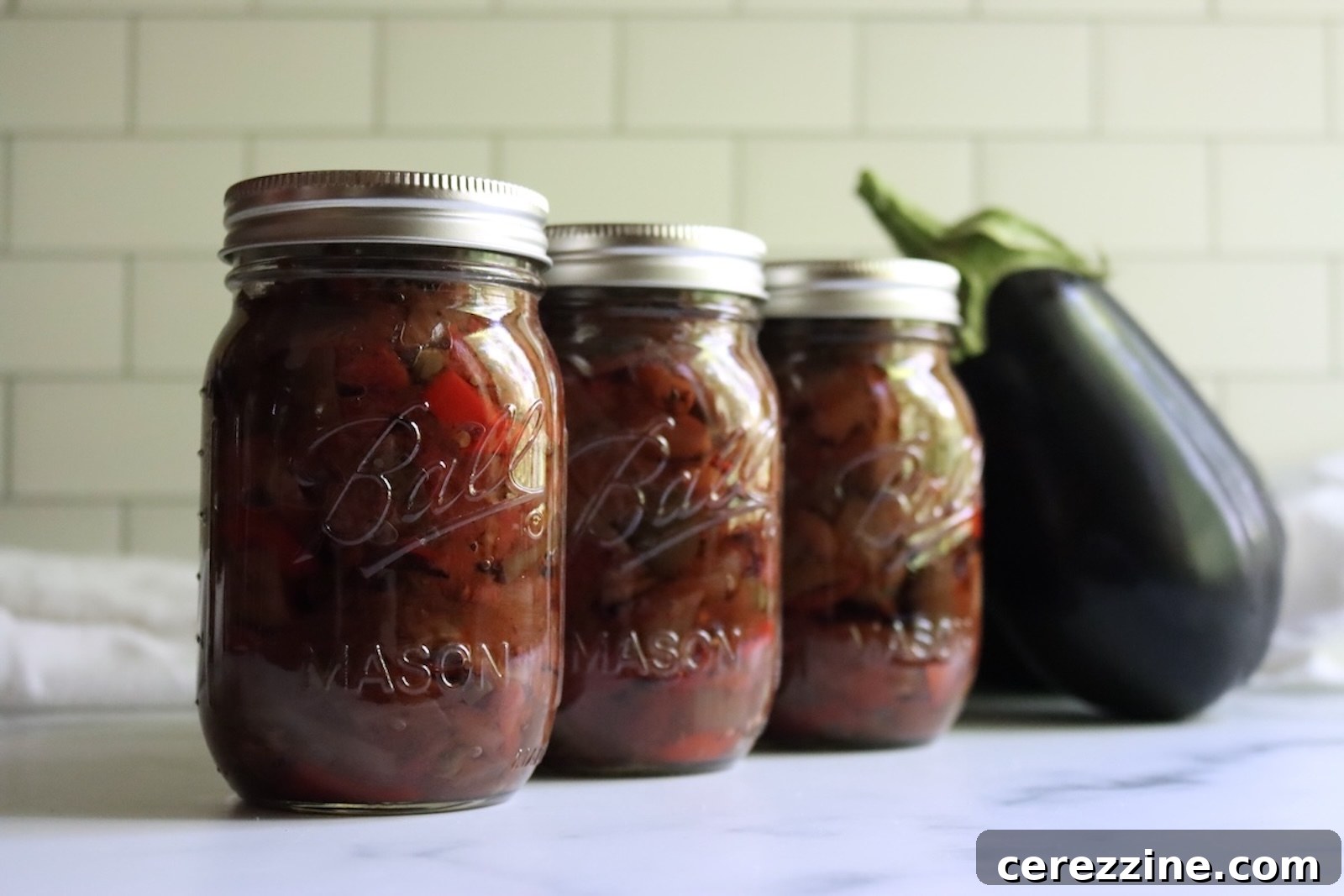
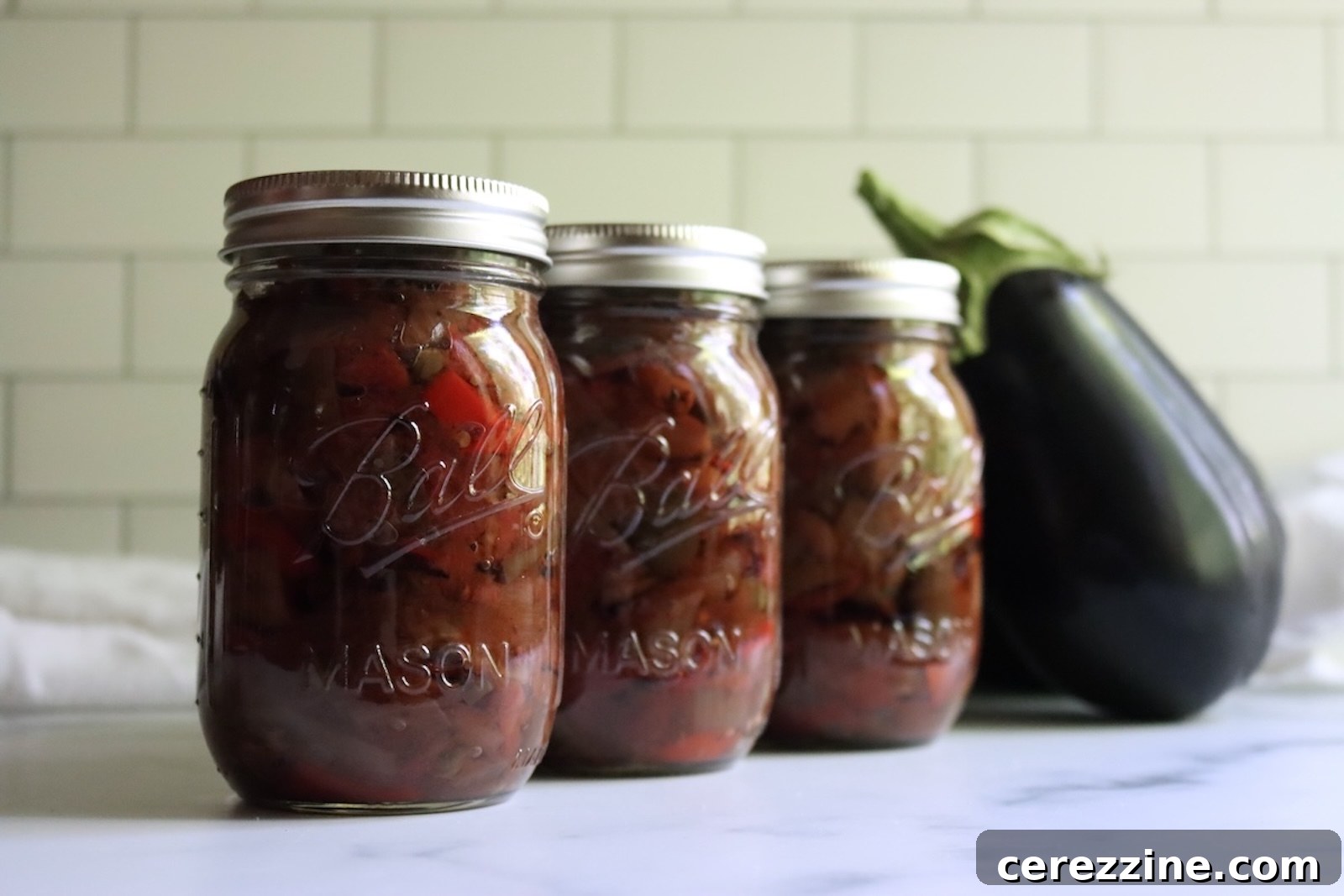
Eggplant puttanesca sauce is a chunky, savory pasta topping built from roasted eggplant, olives, capers, and tomatoes. It delivers a depth of salty, umami flavor that you rarely find in jarred sauces, and one batch yields about six pints to tuck into the pantry.
This recipe has been reviewed for safety and accuracy by a Master Food Preserver certified through the University of Cornell Cooperative Extension.
What makes this sauce stand out is that tomatoes are not the dominant ingredient. Roasted eggplant, onions, and olives shine through, supported by a bright, balanced tang from red wine and balsamic vinegar. The combination leaves you with a hearty, textured topping for pasta, sandwiches, or grilled proteins.
The recipe uses two cups of dry red wine and a half cup of balsamic vinegar. The eggplant soaks up those flavors and mellows the sharp edges, while roasting deepens the overall profile beyond what a stovetop-only sauce provides. Because the recipe relies on a substantial amount of low-acid vegetables, it follows a tested canning method to ensure safety.
Notes from My Kitchen

I love eggplant and preserve it in several ways when the garden produces a lot. Freezing spreads out winter meals, and sometimes I try other preservation methods, but water-bath canning this puttanesca variation is one of my favorites for flavor and shelf stability. The recipe delivers a rich, ready-to-serve jar that tastes like dinner.
We tried different preservation options over the years, but this roasted and jarred version is easy to store and convenient to use. It doesn’t require long hands-on simmering because the oven does the heavy lifting.
Quick Look at the Recipe
- Recipe Name: Eggplant Puttanesca Sauce
- Recipe Type: Savory pasta sauce, acidified with wine and vinegar
- Canning Method: Water bath canning for pints
- Prep Time: About 40 minutes
- Cook Time: About 60 minutes, mostly hands-off in the oven
- Canning Time: 45 minutes for pints
- Yield: About 6 pints
- Jar Sizes: Pints or smaller
- Headspace: 1/2 inch
- Ingredients Overview: Paste tomatoes, eggplant, red bell peppers, onions, kalamata olives, capers, garlic, dry red wine, balsamic vinegar, anchovy paste (optional), and dried oregano
- Difficulty: Easy—the oven does most of the work
Choosing Eggplant for Puttanesca Sauce
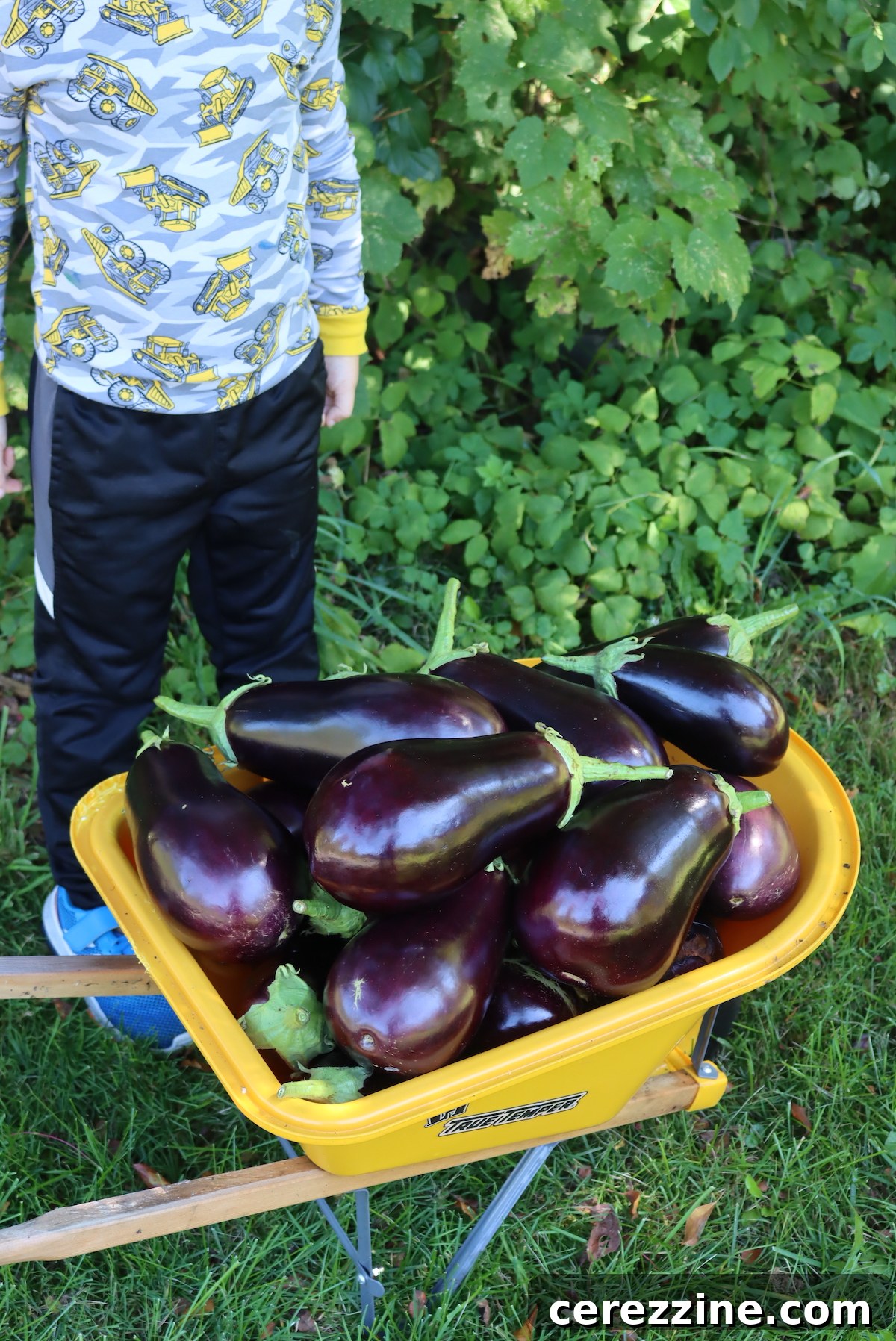
Two pounds of eggplant is roughly two medium to large globes, but sizes vary by variety and market, so weigh them if possible. Choose fruits that feel heavy for their size and have smooth, glossy skins. Wrinkled or dull-skinned eggplants are older and can be seedy or bitter; avoid those when you can.
Any variety will work. Long, slender Asian types tend to have fewer seeds and roast nicely, while classic Italian globes are also excellent. Keep the skins on; they soften during roasting and integrate into the sauce, helping the cubes hold their shape.
For tomatoes, use paste varieties (Roma, San Marzano, or similar). They roast down to a thick consistency without adding too much water. Slicing tomatoes hold more liquid and can thin the sauce.
Ingredients for Eggplant Puttanesca Sauce
Some common substitutions are flexible, while others are not. Anchovy paste is optional, and green olives can replace kalamatas if you keep the total volume the same. The quantities of dry red wine and balsamic vinegar are fixed: they provide the acidity needed for safe water-bath canning and should not be reduced.
Here’s what the main ingredients contribute:
- Paste tomatoes: Meaty varieties roast down into a concentrated base.
- Eggplant: Cubed with skin on; it absorbs wine and vinegar and becomes silky when roasted.
- Red bell peppers: Roasted and peeled, they add sweetness to balance the briny elements.
- Onions: Roasted unpeeled to keep them sweet and mellow.
- Dry red wine: Any drinkable dry red—used for flavor and acidity, full amount required.
- Balsamic vinegar: Adds acidity and balance; use 5% acidity balsamic at the full amount specified.
- Kalamata olives: Pitted and chopped; they bring the briny, savory character.
- Capers: Drained and added for briny brightness.
- Anchovy paste: Optional—adds savory depth without a fishy finish.
- Garlic, oregano, salt, and pepper: Season to taste; dried seasonings can be adjusted freely.
Treat the vegetable quantities as fixed for safety: processing time was tested against these amounts.
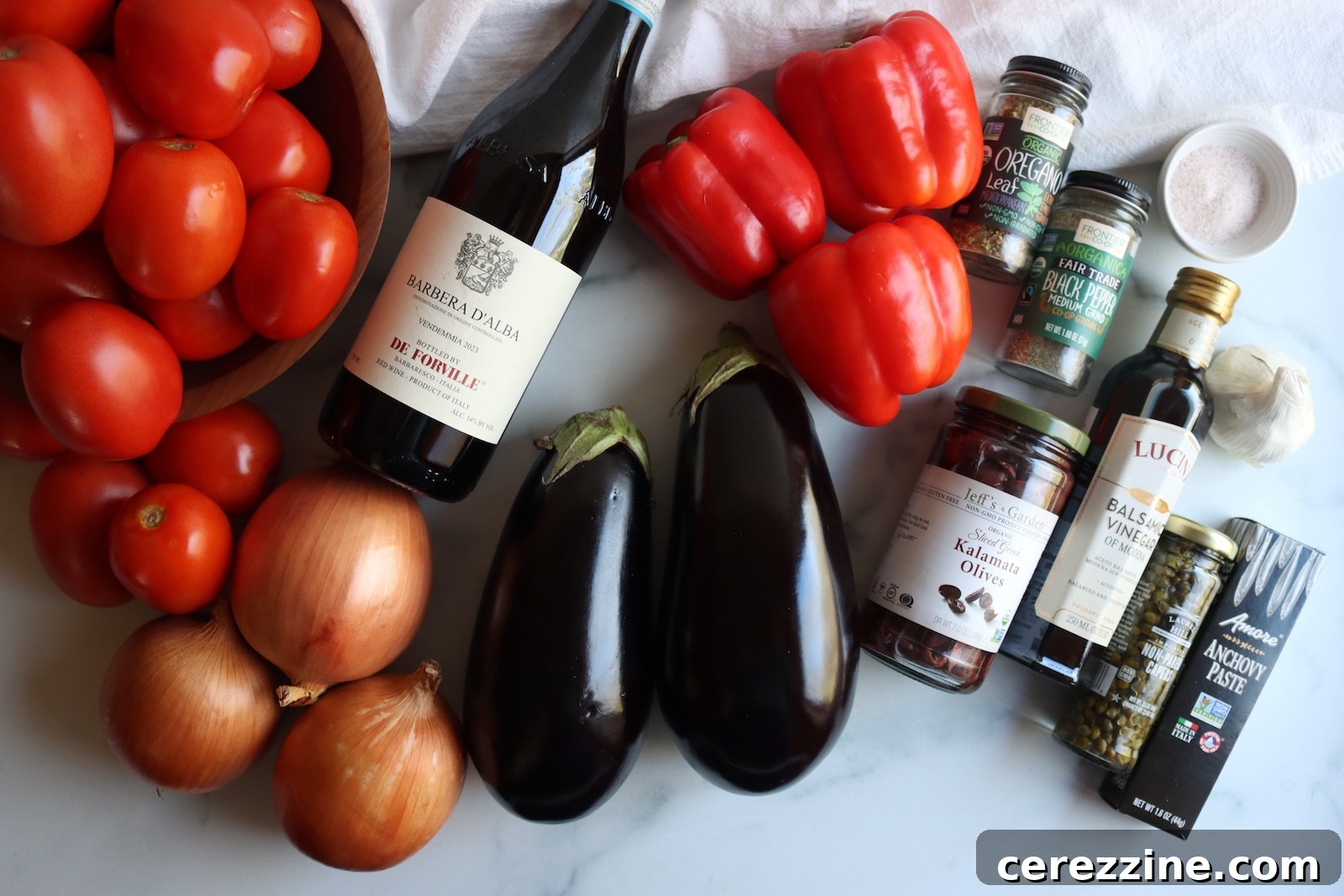
Eggplant Puttanesca Sauce Notes
The two cups of red wine and a half cup of 5% balsamic vinegar together supply the acidity that lets this vegetable-heavy sauce be safely processed in a boiling water bath. Do not reduce either quantity. The published correction to the tested recipe added the balsamic and lengthened processing time to 45 minutes for pints; follow those corrected amounts and times.
You can swap olives, omit anchovy paste, and adjust dried seasonings, but do not add other vegetables, increase the vegetable amounts, or cut the wine or vinegar.
How to Make Eggplant Puttanesca Sauce
The method is two-part: roast the vegetables, then simmer briefly with the wine, vinegar, olives, and seasonings before canning. Start the canner before you begin prep so it’s up to temperature when the jars are ready.
Roast the Vegetables
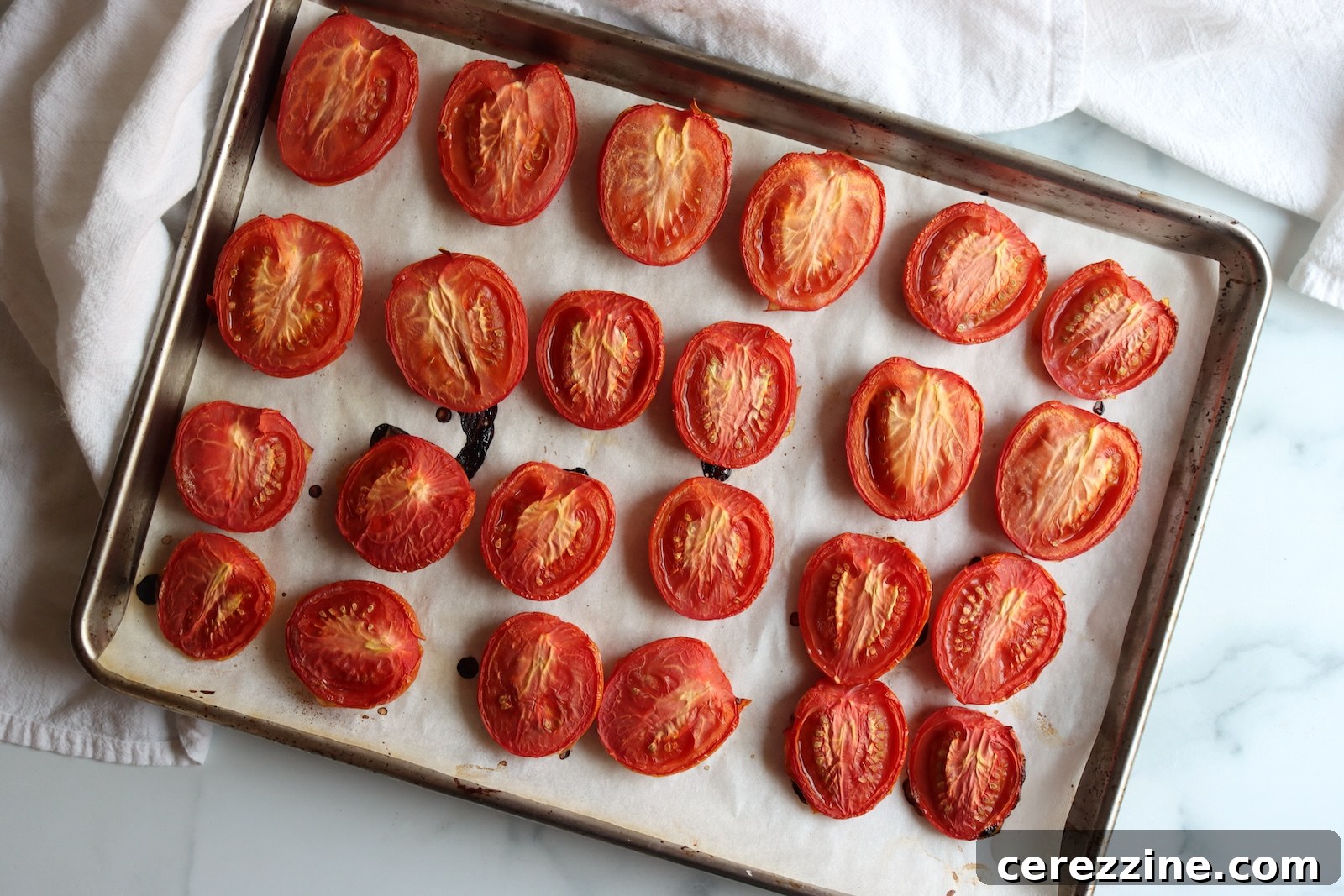
Preheat the oven to 400°F and line three rimmed baking sheets with foil. Wash and core the tomatoes, cut them in half, and arrange them on one sheet. Roast the tomatoes about 45 minutes until the skins begin to char.
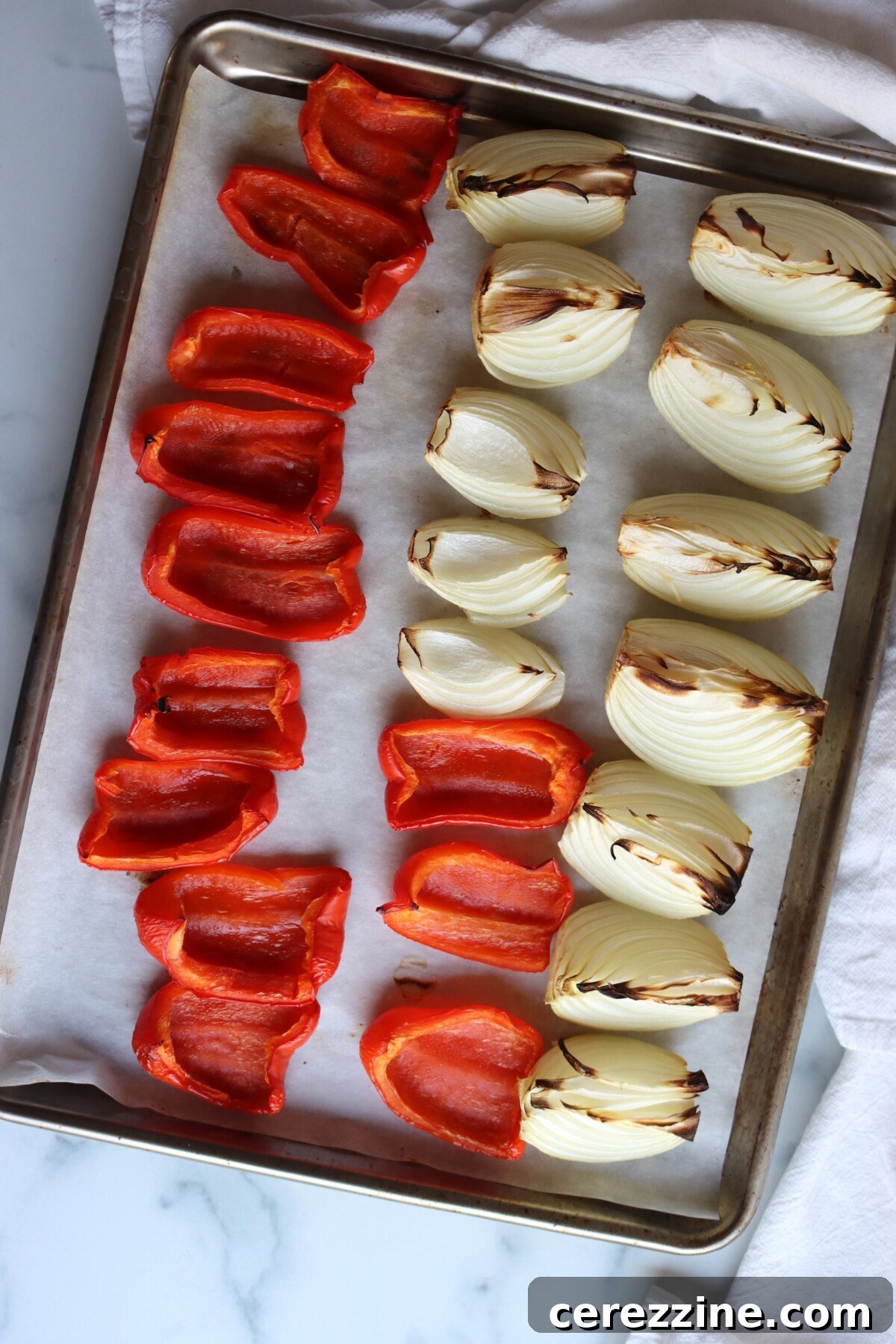
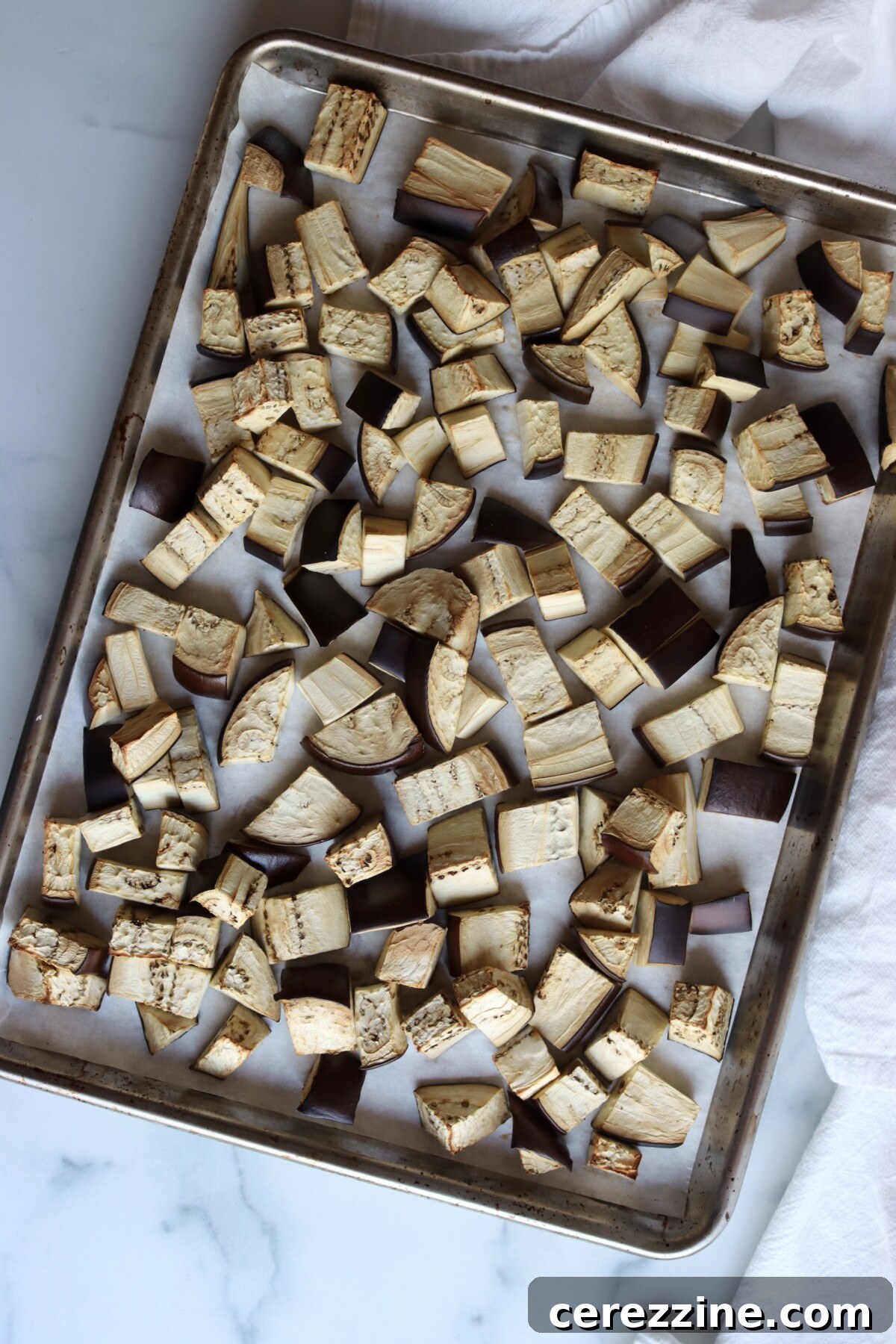
Halve and seed the peppers and place them skin-side down on a second sheet. Quarter the onions and leave their skins on; add them to the same sheet. Cut the eggplant into even 1‑inch cubes, spread them on the third sheet, and lightly spray that pan with oil. Roast the peppers, onions, and eggplant about 30 minutes, until the eggplant is golden and the peppers are tender.
Allow everything to cool enough to handle. Slip off the skins from the tomatoes, peppers, and onions and discard the skins. Coarsely chop the tomatoes, keeping the seeds and juices—those go into the pot.
Simmer the Sauce
In a 6-quart (or larger) pot, combine the chopped tomatoes with the roasted eggplant, chopped onions, and chopped peppers. Add the dry red wine, balsamic vinegar, chopped olives, drained capers, minced garlic, anchovy paste if using, and the dried seasonings. Stir to combine.
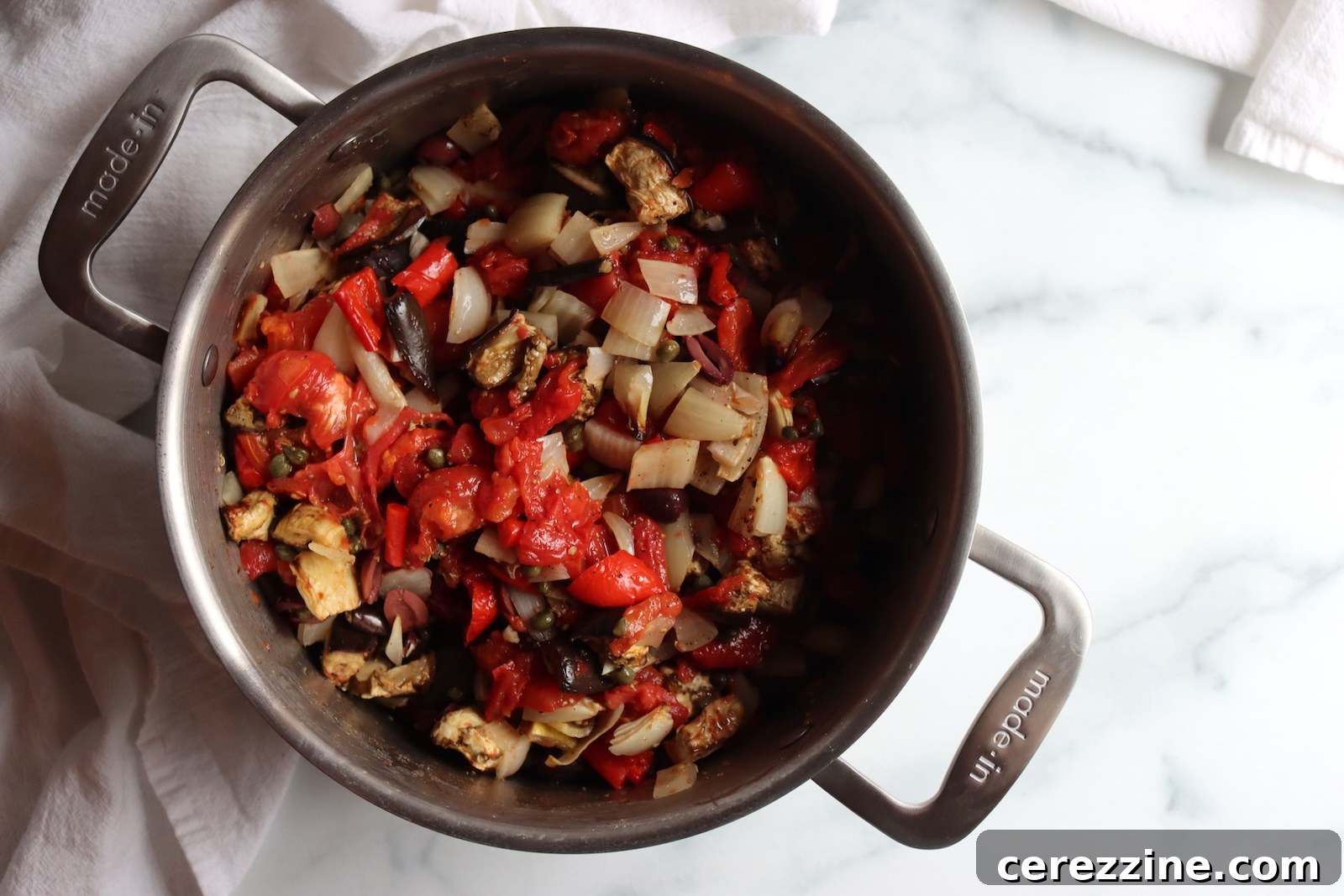
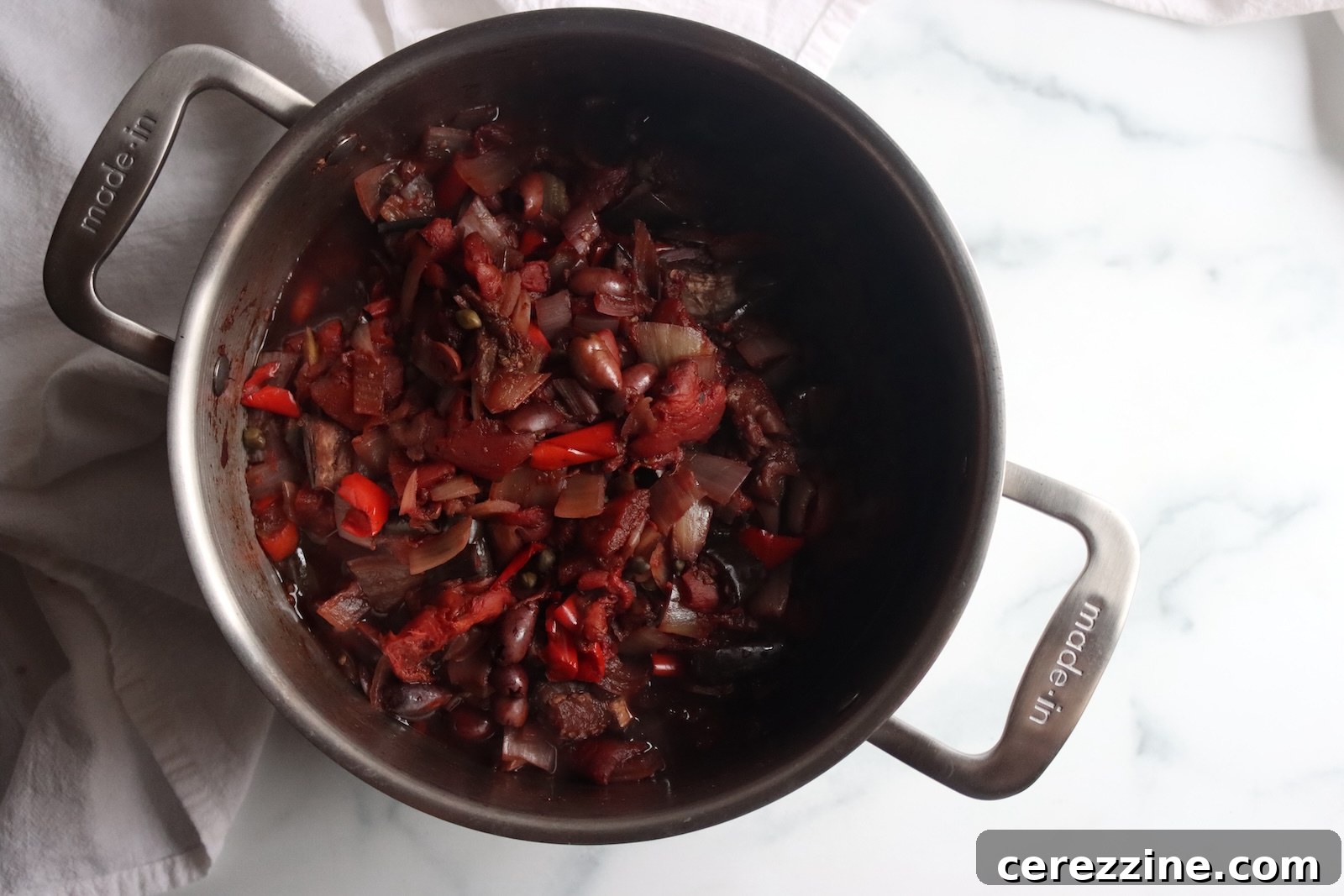
Bring the mixture to a boil, then reduce to a gentle simmer and cook uncovered for 15 minutes. The roasting concentrated the ingredients, so this short simmer is only meant to marry flavors and heat everything through. Taste and adjust oregano, salt, or pepper if desired, but do not alter the wine or vinegar amounts.
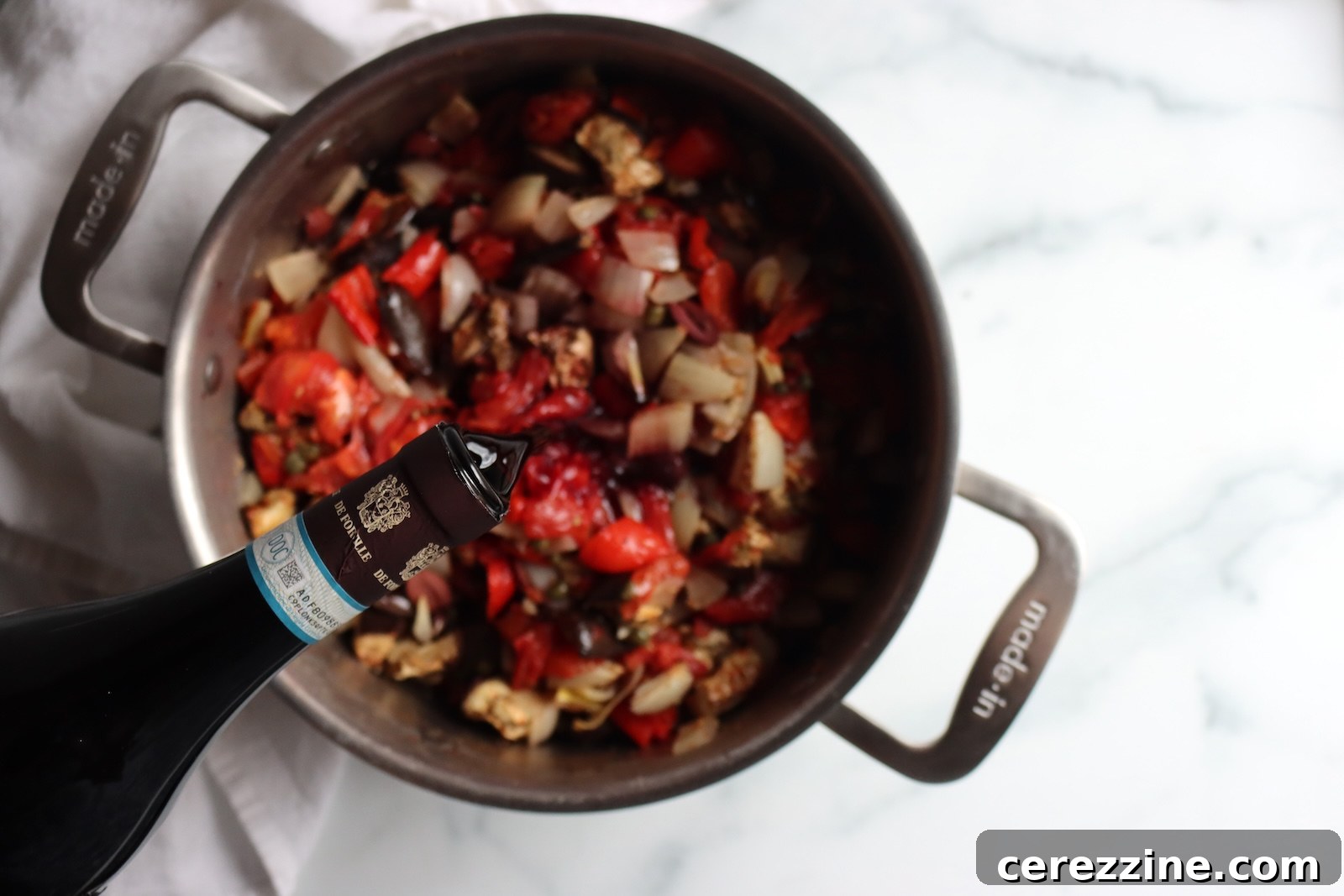
When the simmer is complete, the sauce is ready to ladle into jars while hot.
Canning Eggplant Puttanesca Sauce
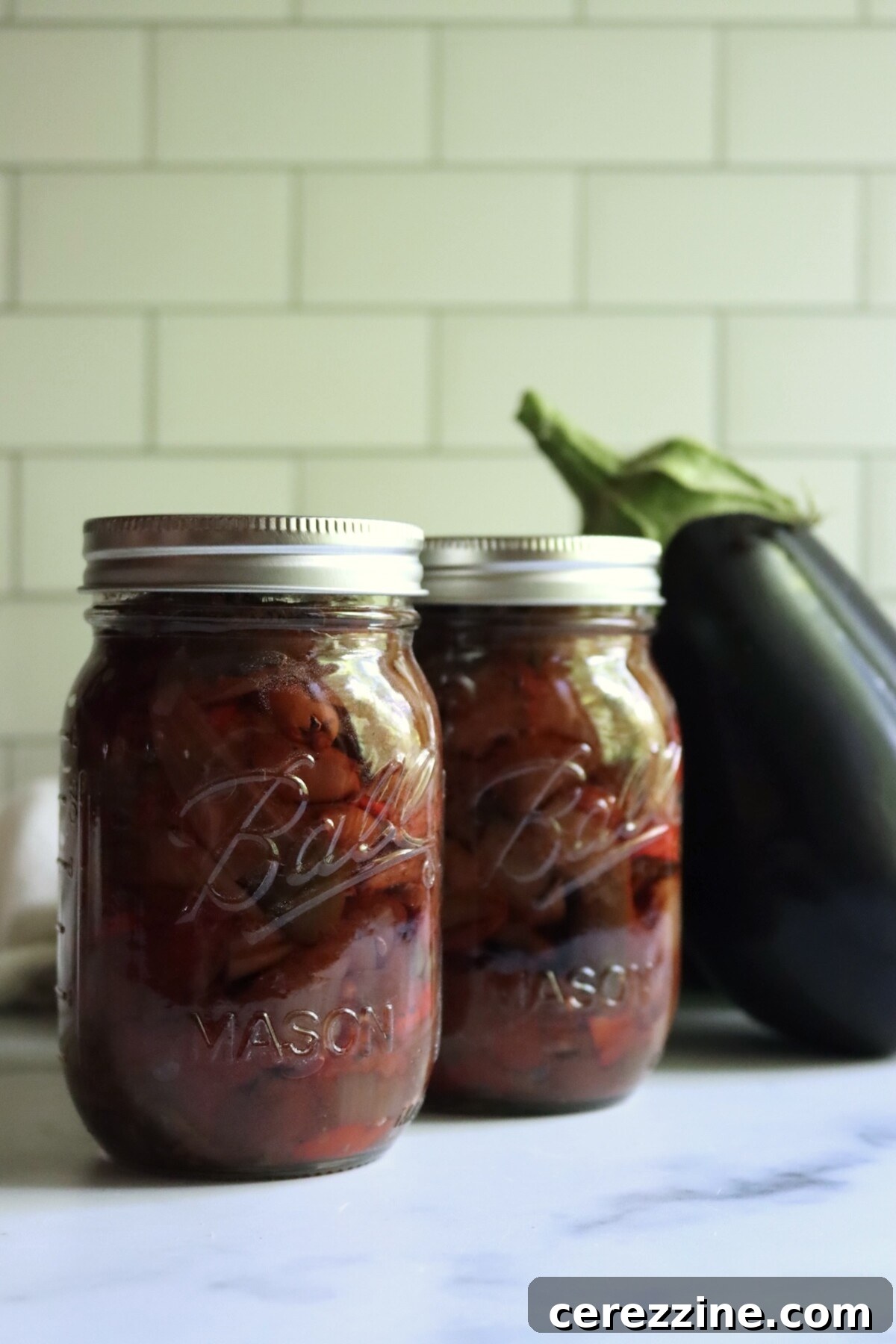
Keep jars and lids hot in the canner or in simmering water. Use wide-mouth jars and a ladle or funnel to fill pints, leaving 1/2 inch headspace. Release trapped air bubbles, recheck headspace, wipe rims clean, apply lids, and screw bands fingertip-tight.
Process pints for 45 minutes in a boiling water bath canner with at least 1 inch of water covering the jars. After processing, turn off heat, remove the canner lid, and let jars sit for 5 minutes before lifting them out. Cool jars undisturbed on a towel for 12 to 24 hours, then check seals and remove the rings before storing.
Altitude Adjustments
Adjust processing time for altitude. Water boils at lower temperatures at higher elevations, so allow extra minutes as follows for pints:
- 0 to 1,000 feet: 45 minutes
- 1,001 to 3,000 feet: 50 minutes
- 3,001 to 6,000 feet: 55 minutes
- 6,001 to 8,000 feet: 60 minutes
- Above 8,000 feet: 65 minutes
Tips for the Best Eggplant Puttanesca Sauce
Cut eggplant into even cubes. Uniform pieces roast evenly; small bits will collapse while large pieces stay underdone.
Use three sheet pans and avoid crowding. Crowded pans steam instead of roast, which produces bland eggplant. If your oven is small, roast in batches.
Keep the sauce chunky. This recipe is intended as a topping with visible pieces of eggplant and olive. For a smooth tomato-based sauce, choose a different recipe better suited to that texture.
Ways to Use Eggplant Puttanesca Sauce
A jar warmed and poured over hot pasta makes a quick, satisfying meal. The chunky texture clings to rigatoni, penne, or other short pastas; finish with grated Parmesan if you like. It also pairs well with grilled chicken or fish, stirred into cooked beans, or served on toasted bread as an appetizer. Leftover jars are great mixed into scrambled eggs for a savory breakfast.
For an informal dip, warm a jar and serve with crusty bread and a few marinated vegetables on the side.
Storage and Shelf Life
After jars cool, press the center of each lid. A properly sealed lid will not flex or pop. Remove the screw bands before shelving jars so any future seal failure is obvious. Unsealed jars should be refrigerated and used within a week, or reprocessed within 24 hours with a new lid.
Sealed jars keep best for about 12 to 18 months in a cool, dark place. Expect the sauce color to darken slightly over time because of the wine. Refrigerate after opening and use within 1 to 2 weeks.
Yield Notes
Six pounds of paste tomatoes roast down to about three pounds (roughly 6 cups chopped). Two pounds of eggplant roast down to approximately one pound, about 5 cups. Three large red peppers roast to about 1 1/2 cups, and three large onions yield about 4 cups. The full recipe fills about six pints; wash seven jars so you have one spare for any leftover sauce.
Eggplant Puttanesca Sauce FAQs
Here are answers to common questions about substitutions and safety.
No. The red wine and balsamic vinegar together provide the acidity necessary to safely water-bath can this vegetable-heavy sauce. Both amounts must remain as written; dried seasonings can be adjusted.
Mostly, but traces remain. The wine contributes flavor and acidity more than a noticeable alcoholic character; after simmering and processing, the finished sauce tastes rounded rather than boozy.
Yes. Anchovy paste is optional; it adds savory depth without a fishy finish. Omitting it does not affect safety.
No. The skin softens with roasting and the brief simmer and blends into the sauce. Leaving the skin on helps the cubes hold their shape.
No. The recipe is tested for pints and half-pints only. Do not process quarts using the same time.
If you make a batch, please let me know how it turned out—I love hearing about readers’ experiences and adaptations.
If you tried this Eggplant Puttanesca Sauce, leave a star rating and share your notes in the comments.
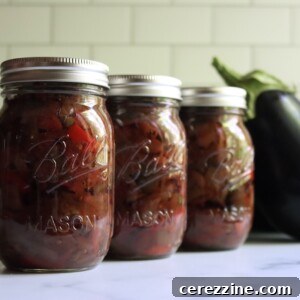
Eggplant Puttanesca (Canning Recipe)
Equipment
- Water Bath Canner
- Canning jars, lids, and bands
Ingredients
- 6 lbs paste tomatoes, as purchased (see notes)
- 2 lbs eggplant, cut into 1-inch cubes
- 3 large onions, unpeeled, quartered
- 3 large red bell peppers, halved and seeded
- 1 1/2 cups kalamata olives, pitted and chopped
- 6 cloves garlic, minced
- 2 cups dry red wine
- 1/2 cup balsamic vinegar (5% acidity)
- 5 Tbsp capers, drained
- 1 Tbsp anchovy paste (optional)
- 2 tsp salt
- 2 tsp dried oregano
- 1 tsp ground black pepper
Instructions
- Prepare the water bath canner, jars, and lids. Fill the canner and set it over heat before you start prepping.
- Heat the oven to 400°F and line three rimmed baking sheets with foil. Leave the tomato sheet ungreased.
- Wash, core, and halve the tomatoes. Roast for about 45 minutes, until skins begin to char.
- Halve and seed the peppers and set skin-side down on the second sheet. Quarter onions with skins on and add them to the same sheet.
- Cut eggplant into 1-inch cubes, spread on the third sheet, and lightly spray with oil.
- Roast the peppers, onions, and eggplant about 30 minutes, until eggplant is golden and peppers are tender.
- Cool enough to handle, then slip off and discard skins from tomatoes, peppers, and onions.
- Chop tomatoes coarsely, keeping seeds and juices, and place them in a 6-quart pot.
- Coarsely chop roasted onions and peppers and add them to the pot with the eggplant.
- Add wine, balsamic vinegar, olives, capers, garlic, anchovy paste (if using), salt, oregano, and black pepper. Stir well.
- Bring to a boil, then simmer uncovered for 15 minutes. Taste and adjust dried seasonings if desired.
- Ladle hot sauce into hot pint jars, leaving 1/2 inch headspace. Release air bubbles, check headspace, wipe rims, and apply lids and bands fingertip-tight.
- Process pints for 45 minutes in a boiling water bath canner, adjusting for altitude as needed.
- When processing is complete, turn off heat and let jars rest in the canner for 5 minutes before removing them. Cool undisturbed 12–24 hours, then check seals and remove rings before storing.
Notes
Recipe source: This version follows the corrected, tested canning instructions: balsamic vinegar added and processing time set to 45 minutes for pints.
Yield and measuring: Expect about 6 pints; wash seven jars so you have one spare for any leftover sauce.
Acid: The red wine and 5% balsamic vinegar together provide the acidity necessary for safe water-bath canning. Do not reduce either amount.
Produce: Use paste tomatoes. Any eggplant variety works; cut into even cubes and do not salt and drain.
Jar sizes: Pints or half-pints only. No quart process is tested.
Storage: Sealed jars keep 12–18 months in a cool, dark place. Refrigerate after opening and use within 1–2 weeks.
Nutrition
Approximate per serving: Calories: 72 kcal; Carbohydrates: 10 g; Protein: 2 g; Fat: 2 g; Sodium: 404 mg. Nutrition is calculated automatically and should be used as an approximation.
Once the canner is hot, use any remaining space for other water-bath recipes so you maximize each batch. If you give this sauce a try, I’d love to hear how it turned out.