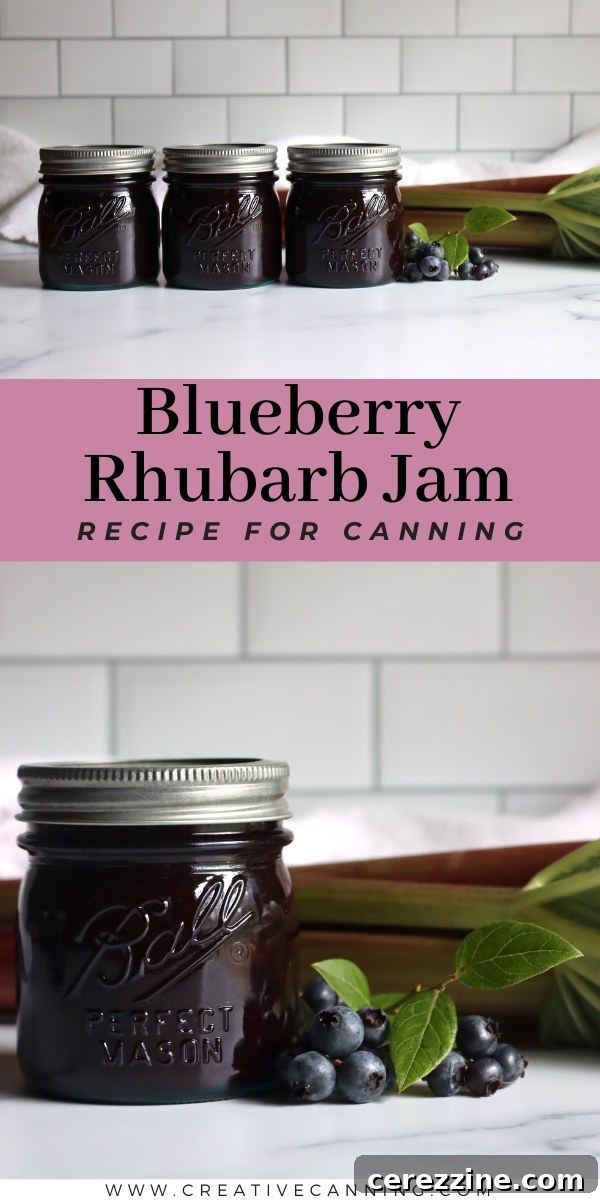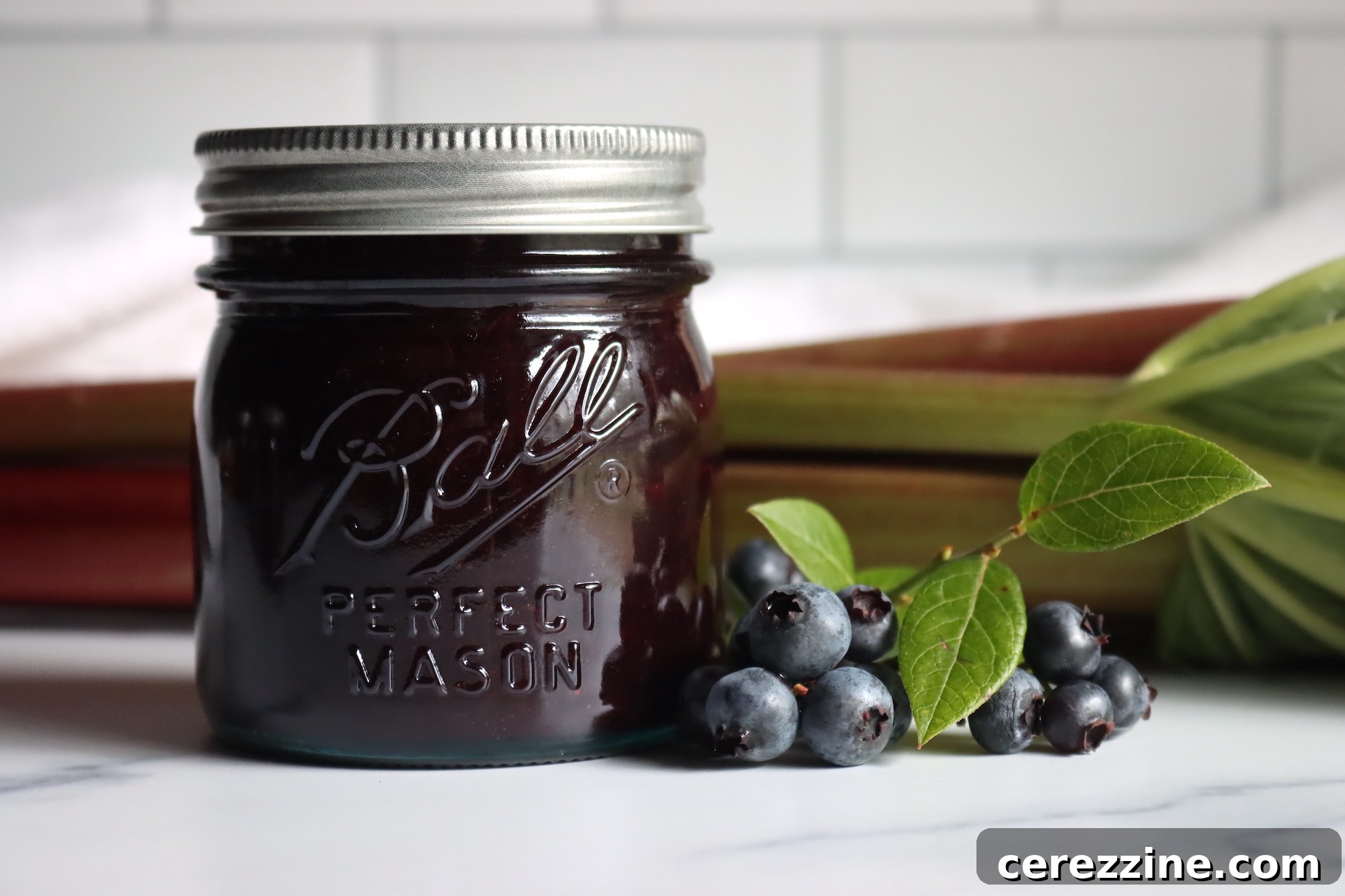
Blueberry rhubarb jam, often affectionately known as “Bluebarb Jam,” is a delightful culinary creation that harmoniously combines the succulent sweetness of blueberries with the crisp, bright acidity of rhubarb. This perfect marriage results in a homemade jam that is exquisitely balanced, bursting with flavor, and wonderfully vibrant.
Homemade Blueberry Rhubarb Jam: The Ultimate Sweet & Tart Preserve Recipe
Forget everything you thought you knew about classic fruit preserves; it’s time to make room for a new favorite. If you’re a connoisseur of homemade jams and jellies, or simply looking for an exciting new flavor to try, you absolutely must experience the magic of canning blueberry rhubarb jam. This exquisite blend of juicy, ripe blueberries and tangy, crisp rhubarb creates a taste sensation that is truly unparalleled – a perfect equilibrium of sweet and tart that dances on your palate. Beyond its incredible flavor, the stunning bright purple hue of this jam is a feast for the eyes, making it an irresistible spread for virtually anything.
Crafting your own blueberry rhubarb jam isn’t just a treat for your taste buds; it’s also an excellent and resourceful way to utilize any abundant rhubarb stalks you might have harvested from your garden or picked up at the farmer’s market. Rhubarb, often overlooked, is a nutritional powerhouse, rich in essential vitamins and potent antioxidants. This means that every spoonful of this delicious jam is not only a delightful indulgence but also contributes a little boost of goodness to your day.
The art of canning this jam allows you to capture the very essence of summer’s bounty, preserving those peak flavors to be enjoyed throughout the entire year. There’s an undeniable charm and superior quality to homemade jams and preserves that store-bought varieties simply cannot match. When you make it yourself, you have complete control over the ingredients, allowing you to fine-tune the sweetness level to perfectly suit your preferences. This customizable aspect ensures that your blueberry rhubarb jam will be exactly as you envision it – a personalized masterpiece.
So, the next time you encounter a beautiful display of fresh blueberries and vibrant rhubarb at your local farmer’s market or grocery store, don’t hesitate. Seize the opportunity to gather these magnificent ingredients and embark on the rewarding journey of canning your own delectable blueberry rhubarb jam. It’s an experience that promises both culinary satisfaction and a pantry stocked with liquid sunshine.
Why Blueberry Rhubarb Jam is Your Next Canning Project
While strawberry rhubarb jam holds a cherished place in many kitchens, the blueberry and rhubarb combination offers a distinctly sophisticated twist that is truly captivating. Blueberries bring a deep, complex sweetness and a lovely plump texture to the mix, while rhubarb contributes its signature tartness and a subtle earthy note. Together, they create a nuanced flavor profile that is both comforting and exciting, making this jam a gourmet experience waiting to happen in your kitchen.
Beyond the exceptional taste, consider the inherent health benefits. Blueberries are renowned for their powerful antioxidant properties, contributing to overall wellness, supporting heart health, and even boosting cognitive function. Rhubarb, though celebrated for its tartness, is surprisingly rich in fiber, vitamin K, and other vital nutrients, making it a valuable addition to your diet. By combining these two incredible ingredients, you’re not just creating a delicious spread, but one that also packs a nutritious punch. It’s a fantastic and flavorful way to incorporate more wholesome fruits into your daily meals.
Furthermore, mastering the art of water bath canning allows you to extend the fleeting bounty of spring rhubarb and summer blueberries, making their peak flavors available for enjoyment long after their seasons have passed. Imagine savoring a spoonful of homemade bluebarb jam on a cold winter morning, the vibrant flavors instantly transporting you back to warmer, sunnier days. It’s a sustainable and economical practice that reduces food waste, saves money on store-bought alternatives, and ensures you always have a wholesome, preservative-free option on hand. This homemade jam also makes for a thoughtful and much-appreciated gift, perfect for sharing the taste of summer with friends and family.
Essential Equipment for Canning Blueberry Rhubarb Jam
Before you dive into the delightful process of making your blueberry rhubarb jam, it’s crucial to ensure you have all the necessary tools for a successful and safe canning experience. Water bath canning is a simple and accessible method, but having the right equipment on hand streamlines the process and ensures a shelf-stable, high-quality product.
- Water Bath Canner: This is a large, deep pot specifically designed for canning. It comes with a lid and a rack that fits in the bottom, which prevents jars from touching the direct heat source and allows water to circulate evenly. Ensure it’s large enough to accommodate your jars and cover them with at least 1-2 inches of water.
- Canning Jars: Use standard glass canning jars, such as half-pint (8 oz) or pint (16 oz) sizes. They must be specifically designed for canning. You will also need new two-piece canning lids (flat lids and screw bands). The flat lids can only be used once for canning, but the screw bands can be reused. Always check jars for cracks or chips before use.
- Jar Lifter: An indispensable tool for safely placing hot jars into and removing them from the boiling water canner. Its rubber-coated grips provide a secure hold, preventing burns and accidental drops.
- Canning Funnel: This wide-mouthed funnel is designed to fit snugly into canning jar openings, making it easy to ladle hot jam cleanly into the jars without spilling or getting food on the rims. A clean rim is essential for a proper seal.
- Bubble Remover / Headspace Tool: A non-metallic utensil (often a plastic wand or wooden chopstick) used to gently release trapped air bubbles from around the food in the jars. The other end often has measurements to ensure you leave the correct headspace, which is critical for creating a vacuum seal.
- Clean Cloths or Paper Towels: Essential for meticulously wiping the rims of your jars after filling. Even a tiny bit of jam residue can prevent the lid from sealing correctly.
- Large Non-Reactive Pot: For cooking the jam itself. Stainless steel or enamel-coated cast iron pots are ideal as they do not react with acidic foods like fruit, preventing metallic off-flavors. Avoid aluminum pots for this purpose.
- Measuring Cups and Spoons: For accurate and consistent measurement of all your ingredients, which is particularly important in canning recipes for both safety and optimal results.
- Chopping Board and Sharp Knife: For efficiently preparing your rhubarb and ensuring uniform pieces.
Ingredients for Your Irresistible Blueberry Rhubarb Jam
This tried-and-tested water bath canning recipe is adapted from reliable preserving guides, ensuring a safe and delicious outcome. To yield a canner batch of approximately three to four half-pint (8 oz) jam jars, totaling about 3 ½ to 4 cups, you will need the following fresh and high-quality ingredients:
- 2 cups Blueberries: Opt for fresh, plump, and firm blueberries for the best flavor and texture. Approximately ¾ to 1 pound of fresh blueberries will yield two cups. If using frozen, do not thaw them completely before adding to the pot, and be aware that the cooking time might vary slightly.
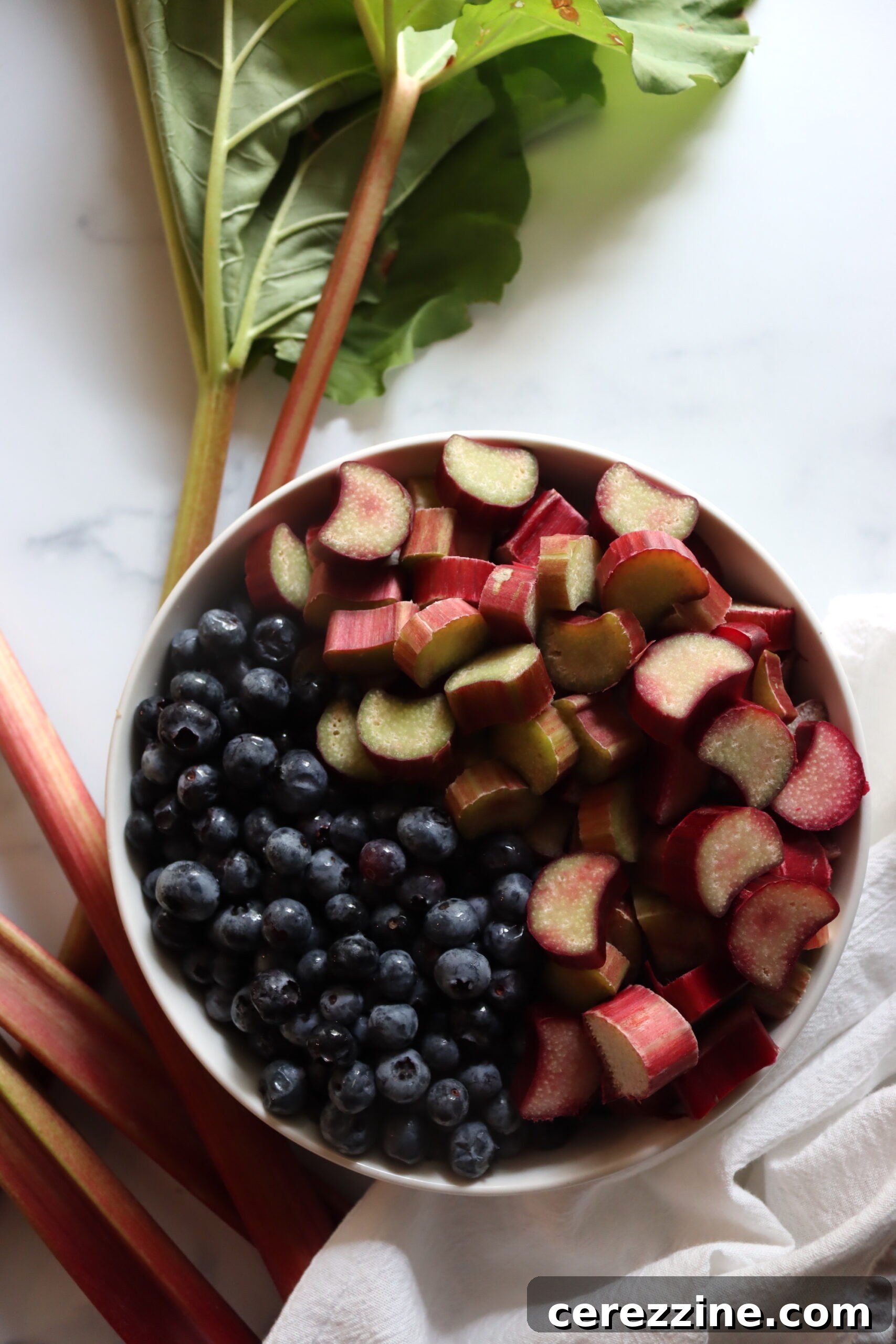
- 4 cups Rhubarb (finely chopped): Choose firm, vibrant pink or red rhubarb stalks. Avoid any limp or discolored pieces, as these may indicate older or less flavorful rhubarb. This quantity typically equates to about 1 pound or three to five medium stalks. Fine chopping, into pieces about ¼ to ½ inch in size, helps the rhubarb break down evenly and integrates well into the jam’s texture.
- 3 ½ cups Granulated Sugar: Sugar serves multiple crucial roles in jam making: it acts as a natural preservative, contributes significantly to the jam’s final texture, and, of course, provides the beloved sweetness that balances the fruit’s tartness. While you can adjust the sweetness slightly, remember that sugar also plays a role in the jam’s set and canning safety, so drastic reductions are not recommended for tested recipes.
- 2 tbsp Lemon Juice: Freshly squeezed lemon juice is paramount in this recipe. It’s crucial not just for balancing the sweetness and adding a bright tang, but more importantly, for providing the necessary acidity for safe water bath canning, especially in recipes without added commercial pectin. The acidity helps activate the natural pectin in the fruit, ensuring the jam sets properly and inhibits the growth of harmful bacteria. Always use bottled lemon juice for canning as its acidity level is consistent, unlike fresh lemons which can vary.
Using high-quality, fresh ingredients is paramount for a jam that truly shines. Select ripe blueberries at their peak and crisp, colorful rhubarb stalks to capture the most vibrant essence of their individual flavors. This attention to detail will elevate your homemade jam from good to absolutely extraordinary.
Step-by-Step Guide: How to Make Blueberry Rhubarb Jam
Crafting this vibrant and flavorful jam is a straightforward process, but careful attention to each step ensures a perfect consistency and flavor profile. Follow these detailed instructions for a rewarding and successful jam-making experience, leading to jars of homemade goodness.
- Prepare Your Canning Setup (If Canning): If you intend to water bath can your jam for long-term storage, begin by setting up your canning equipment. Fill your water bath canner with water, ensuring there will be at least 1-2 inches of water covering the tops of your jars once they are submerged. Place the rack in the bottom and bring the water to a gentle simmer (around 180°F or 82°C) while you prepare the jam. Wash your canning jars, lids, and screw bands in hot, soapy water and rinse them thoroughly. Keep the jars warm in a pot of hot water or in the canner itself to prevent thermal shock when you fill them with hot jam.
- Fruit Preparation: Thoroughly wash your fresh blueberries under cool running water. Meticulously sort through them, removing any stems, leaves, or berries that are soft, damaged, or shriveled. Discard any compromised fruit to ensure the highest quality and safety of your jam. For the rhubarb, give the stalks a good wash as well. Trim off any tough or fibrous ends. Chop the rhubarb stalks into fine, relatively uniform pieces, ideally about ¼ to ½ inch in size. Uniformity in chopping is key, as it helps the rhubarb cook down evenly and integrate smoothly into the jam, preventing large, stringy pieces in your finished product.
- Combine and Cook: In a large, heavy-bottomed, nonreactive pot (stainless steel or enamel-coated is highly recommended to prevent any metallic taste), combine the prepared blueberries, finely chopped rhubarb, granulated sugar, and bottled lemon juice. Stir all the ingredients together thoroughly until the sugar begins to dissolve and coat the fruit. This initial stirring helps prevent scorching. Bring the mixture to a full rolling boil over medium-high heat, stirring constantly. Once a vigorous, full rolling boil is achieved (meaning it cannot be stirred down), reduce the heat to a medium simmer and continue to cook for approximately 15 to 20 minutes, or until the jam has thickened to your desired consistency. Stir frequently during this stage to prevent scorching on the bottom of the pot. To test for doneness, you can use the cold plate test: place a small dollop of hot jam on a chilled plate, let it sit for a minute, then push it with your finger – if it wrinkles, it’s ready.
- Fill the Jars: Carefully ladle the hot jam into your warm, prepared canning jars. Use a canning funnel to ensure a clean fill and to prevent any jam from getting onto the jar rims. This is crucial for achieving a proper seal. Leave precisely ½ inch of headspace at the top of each jar. Headspace is the empty space between the surface of the jam and the rim of the jar, which is essential for creating a strong vacuum seal during the processing stage.
- Clean Jar Rims: With a dampened, clean, lint-free cloth or paper towel, meticulously wipe the rims of each filled jar. Any food residue, no matter how small, on the jar rim can prevent the lid from sealing properly, compromising the jam’s shelf stability and safety.
- Cap and Load Jars: Place new, clean two-part canning lids onto the jars. Apply the screw bands finger-tight – this means tightening until resistance is met, then just a quarter turn more. Do not overtighten, as this can prevent air from escaping during processing, which can lead to seal failure. Carefully lower the filled and capped jars into your preheated water bath canner, ensuring they are placed on the rack and not directly on the canner bottom. Make sure the water level covers the tops of the jars by at least 1 to 2 inches; add more boiling water if necessary.
- Process the Jam: Increase the heat on your canner and bring the water back to a full, rolling boil. Once the water is boiling vigorously, start your timer. Process the jars for 10 minutes. If you are canning at an altitude above 6,000 feet (1,829 meters), you must adjust the processing time to 15 minutes to account for the lower boiling point of water at higher elevations.
- Cool and Check Seals: After the processing time is complete, turn off the heat and carefully remove the canner lid. Allow the jars to rest in the hot water for 5 minutes before carefully lifting them out with a jar lifter. Place the hot jars on a towel-lined surface or a wire rack, ensuring they are not touching each other, and allow them to cool undisturbed for 12 to 24 hours. As they cool, you will often hear characteristic “ping” sounds, which indicate that the lids are sealing.
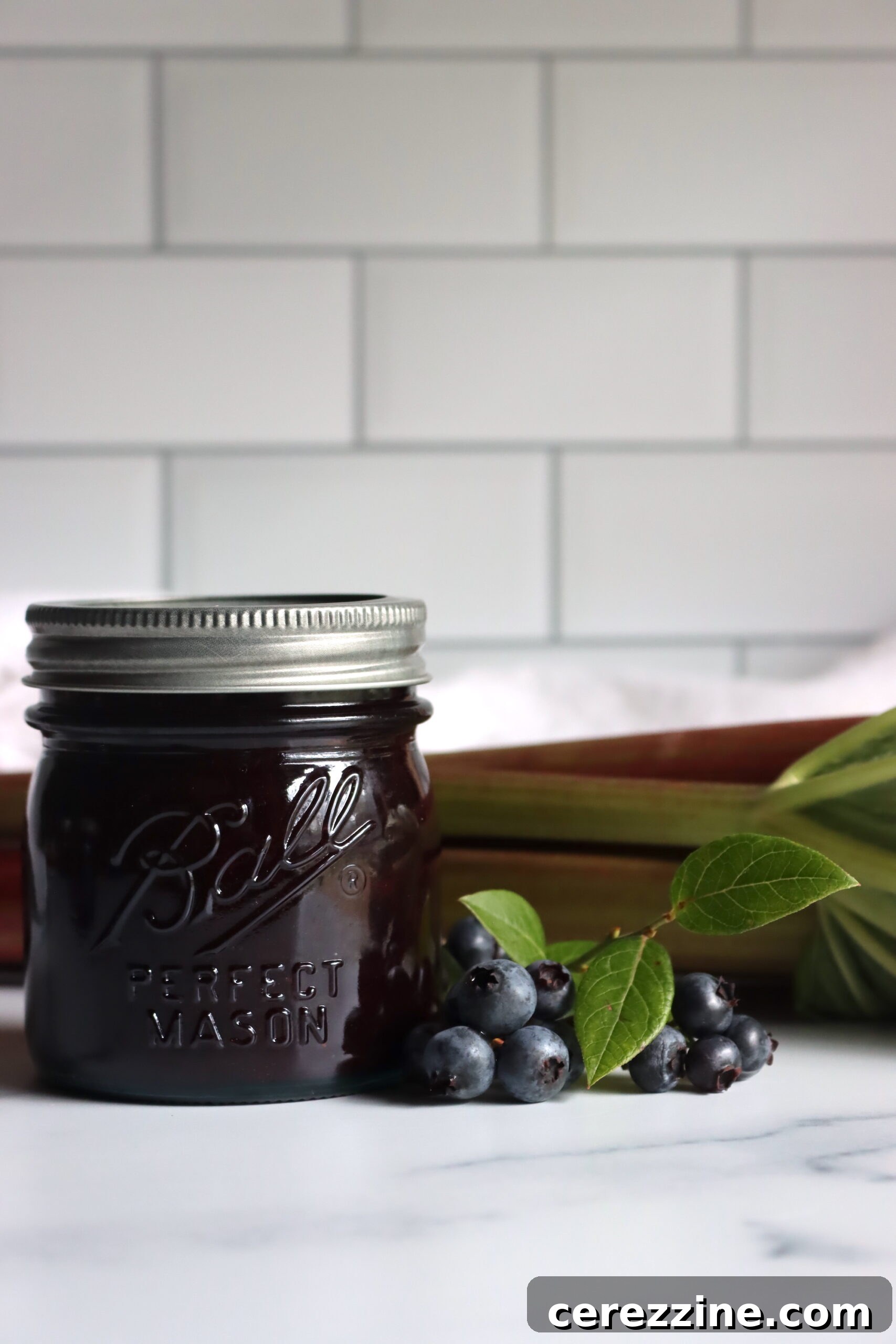
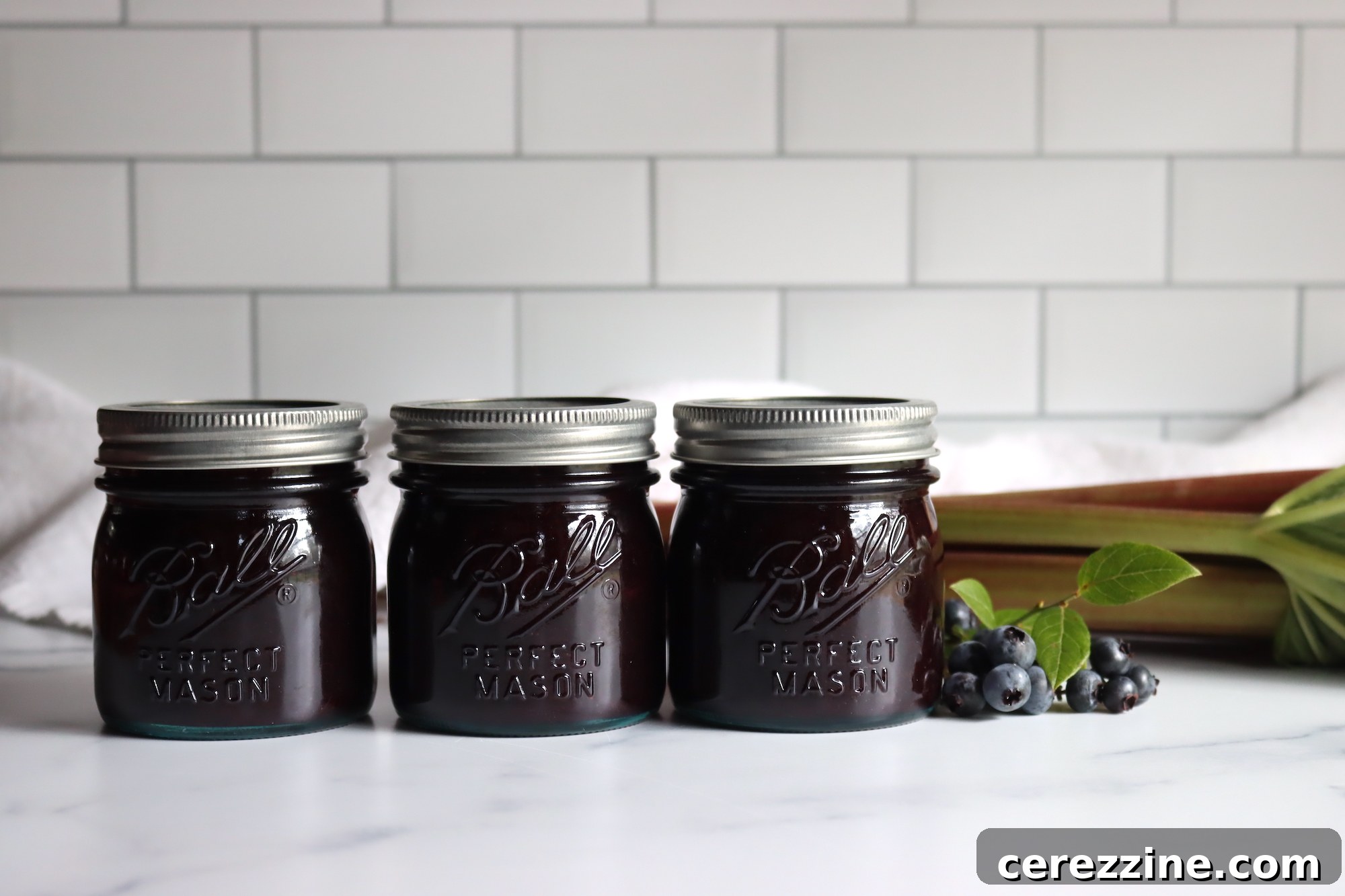
- Final Seal Check and Storage: After the cooling period, it’s time to check all jar seals. Press the center of each lid; if it doesn’t flex or spring back, the jar is sealed. You can also carefully remove the screw band and gently lift the jar by its lid; if it holds, it’s sealed. If a lid can be depressed or does not hold, it has not sealed properly. Refrigerate any unsealed jars and consume them within a few weeks. For properly sealed jars, remove the screw bands, wipe down the jars to remove any water marks or residue, label them with the jam name and date, and store them in a cool, dark place (like a pantry or cupboard) for up to one year. Once opened, refrigerate the jam and enjoy it within a month for best quality.
Creative Ways to Savor Your Homemade Blueberry Rhubarb Jam
Your freshly made blueberry rhubarb jam is an incredibly versatile condiment, ready to elevate a wide array of dishes from breakfast to dinner and everything in between. While simply spreading it on your favorite crusty toast, warm scone, flaky croissant, or fluffy muffin is a classic and utterly satisfying way to enjoy its vibrant flavors, don’t limit yourself to just the basics. This jam’s unique sweet-tart profile makes it a fantastic addition to both sweet and savory applications, offering endless culinary possibilities.
Beyond breakfast staples, imagine dolloping this luscious, vibrant jam over a stack of golden waffles, a plate of light and airy pancakes, or swirling it into creamy Greek yogurt with a sprinkle of granola for an instant gourmet upgrade. It’s also an exceptional ingredient for baking. Use it as a luscious, fruity filling for thumbprint cookies, delectable tarts, or even as the flavorful layer in a tender sponge cake, between delicate pastry sheets, or in hand pies. For a quick yet elegant dessert, warm a spoonful gently and serve it over a scoop of rich vanilla ice cream, a silky panna cotta, or a slice of cheesecake.
For those who appreciate the interplay of contrasting flavors, this jam pairs exquisitely with various cheeses, making it a star on any cheese board or as a sophisticated appetizer. Spoon it onto a crisp cracker and top with a rich, creamy brie, a sharp aged cheddar, a tangy goat cheese, or a salty feta for a delightful bite that is both elegant and effortless. The jam’s sophisticated sweetness and bright acidity beautifully cut through the richness of the cheese, creating a harmonious and addictive balance of tastes and textures.
Feeling particularly adventurous? Don’t shy away from incorporating this dynamic jam into savory recipes. A homemade glaze made with a spoonful of blueberry rhubarb jam can add a surprising depth, sheen, and fruity complexity to roasted chicken, tender pork tenderloin, or even succulent duck breast. For a delightful gourmet twist on a classic, try spreading a thin layer of this jam on the inside of a grilled cheese sandwich, perhaps paired with some sharp white cheddar or smoked gouda. The tartness of the rhubarb and the inherent sweetness of the blueberries will introduce a unique and complex flavor profile that truly elevates any dish, transforming ordinary meals into extraordinary culinary experiences. It’s also fantastic as a vibrant condiment alongside a hearty charcuterie board, a holiday ham, or a comforting Sunday roast.
Troubleshooting and Tips for Perfect Jam
Even seasoned canners can encounter challenges when making jam. Here are some common issues and practical tips to ensure your blueberry rhubarb jam turns out perfectly every time, achieving the ideal set and flavor:
- Jam Not Setting (Too Runny): This is a common concern and can be due to insufficient cooking time, not enough natural pectin in the fruit, or incorrect measurements. Ensure your fruit is ripe but firm, as overripe fruit has less pectin. The lemon juice is critical for activating natural pectin. If, after cooling for 24 hours, your jam is still too thin, you can try reprocessing it. Return the jam to a clean pot, bring it back to a rolling boil, and cook for an additional 5-10 minutes, checking for the gel point more frequently. For future batches, consider using a high-pectin sugar or adding a small amount of commercial pectin if you consistently prefer a firmer set.
- Jam Too Thick: If your jam becomes excessively thick during cooking, it might be slightly overcooked. While a thicker jam is still delicious, it can be harder to spread. If it’s still hot, you can try to thin it slightly with a small amount of boiling water (1-2 tablespoons at a time), stirring it thoroughly, and bringing it back to a boil before proceeding with canning. Generally, it’s better to slightly undercook and allow for cooling to assess the set, rather than overcooking.
- Lids Not Sealing: This issue can arise for several reasons, including food residue on the jar rims, faulty lids, or incorrect headspace. Always clean jar rims meticulously with a clean, damp cloth before applying lids. Ensure you are using new flat lids for each canning project, as the sealing compound degrades with use. Verify that you have the correct headspace (½ inch for jam) and that screw bands are tightened to finger-tight, not overtightened. If jars don’t seal after the cooling period, refrigerate them and consume the jam within a few weeks, or reprocess with new lids immediately (within 24 hours) if you desire shelf-stable storage.
- Preventing Scorching: Jam, especially as it thickens, is prone to scorching at the bottom of the pot. To prevent this, always use a heavy-bottomed, non-reactive pot that distributes heat evenly. Stir the jam frequently and consistently, especially during the simmering stage, scraping the bottom and sides of the pot. Keep the heat at a medium simmer, not a vigorous boil, after the initial full boil.
- Altitude Adjustment: This is a critical safety consideration for canning. Remember to adjust processing times for higher altitudes. Water boils at a lower temperature at higher elevations, meaning foods require longer processing times in a boiling water bath to ensure proper sterilization and food safety. Consult a reliable canning guide for specific adjustments based on your altitude.
Homemade Blueberry Rhubarb Jam Recipe Card
32
servings, Makes 3-4 half pint (8 oz) jam jars
Blueberry Rhubarb Jam
Ashley Adamant
10 minutes
20 minutes
10 minutes
40 minutes
Save
Saved
Pin
Rate
Equipment
-
Water Bath Canner
Ingredients
-
2
cups
blueberries -
4
cups
rhubarb,
finely chopped -
3 ½
cups
granulated sugar -
2
tbsp
lemon juice
Instructions
-
If canning, prepare your water bath canner and jars before you begin making the jam. The canner should be at a simmer, about 180°F (82°C).
-
Wash your berries and remove any stems. Discard any soft or damaged berries. Wash the rhubarb and chop it into fine, relatively uniform pieces.
-
Mix all your ingredients together in a large, nonreactive pot. Stir well and bring to a full rolling boil. Once boiling, turn down the heat to a medium simmer for about fifteen to twenty minutes, stirring frequently, or until it’s thick and reaches your desired gel point.
-
Ladle the hot jam into warm, prepared jars, using a funnel to prevent spills. Leave about ½ inch of headspace at the top of each jar.
-
Clean the rims of your jars thoroughly with a dampened, clean, lint-free cloth or paper towel to ensure no food residue remains.
-
Cap the jars with two-part canning lids, tightening the screw bands to finger-tight.
-
Carefully place the filled jars into the preheated water bath canner, ensuring they are on the rack and fully submerged by 1-2 inches of water.
-
Increase the heat and process the jars in a boiling water bath canner for 10 minutes. If canning above 6,000 feet in elevation, process for 15 minutes.
-
Once the processing time is complete, turn off the heat and let the jars rest in the canner for 5 minutes. Then, use a jar lifter to carefully remove them and place them on a towel-lined counter for 12 to 24 hours without disturbing them.
-
After the jars have cooled completely, check the seals. Label, date, and store in a cool, dark place for up to one year. Refrigerate after opening.
Nutrition
Calories:
93
kcal
Carbohydrates:
24
g
Protein:
0.2
g
Fat:
0.1
g
Saturated Fat:
0.01
g
Polyunsaturated Fat:
0.03
g
Monounsaturated Fat:
0.01
g
Sodium:
1
mg
Potassium:
52
mg
Fiber:
0.5
g
Sugar:
23
g
Vitamin A:
21
IU
Vitamin C:
2
mg
Calcium:
14
mg
Iron:
0.1
mg
Nutrition information is automatically calculated, so should only be used as an approximation.
Like this? Leave a comment below!
Explore More Rhubarb Canning Recipes
If you’ve found yourself with a surplus of rhubarb or simply want to explore more ways to preserve this wonderful, versatile stalk, these recipes are perfect for expanding your canning repertoire and enjoying rhubarb’s unique flavor year-round:
- 12+ Rhubarb Canning Recipes: Sweet & Savory Ideas
- Canning Rhubarb: Simple & Effective Methods for Long-Term Storage
- Canning Rhubarb Juice for Refreshing Drinks and Cocktails
- Canning Rhubarb Pie Filling: A Taste of Spring Anytime for Quick Desserts
Delightful Blueberry Canning Recipes
Blueberries are truly incredible and incredibly versatile for preserving! Beyond this delicious jam, there are numerous other ways to capture their vibrant flavor and nutritional benefits in a jar. Discover more fantastic blueberry canning recipes to enjoy this antioxidant-rich superfood all year long, whether in savory dishes or sweet treats:
- Canning Blueberry Pie Filling: Easy & Delicious for Anytime Baking
- Homemade Blueberry Butter: Smooth, Rich, and Flavorful Spread
- Rich Blueberry Syrup for Pancakes, Waffles, and Desserts
- Blueberry Lemonade Concentrate: Your Perfect Summer Drink Base
- Simple Blueberry Jam (without Pectin): Pure Fruit Flavor & Easy Recipe
Timeless Old-Fashioned Jam Recipes (No Pectin Needed!)
For those who cherish the traditional art of jam making, creating preserves the old-fashioned way – with just fruit, sugar, and a touch of lemon juice, completely without added commercial pectin – offers a deeply satisfying and authentic experience. Each jar is filled with pure, concentrated fruit flavor, allowing the natural essence of the ingredients to shine through, accompanied by a whole lot of homemade love. Explore these classic, timeless recipes that capture fruit at its best:
- Simple & Sweet Raspberry Jam: A Classic Favorite
- Harvest Cranberry Apple Jam: Perfect for Fall Flavors
- Sunshine Nectarine Jam: Capturing Summer’s Sweetness
- Golden Apricot Jam: A Taste of Mediterranean Sunshine
- Exotic Persimmon Jam: A Unique and Flavorful Preserve