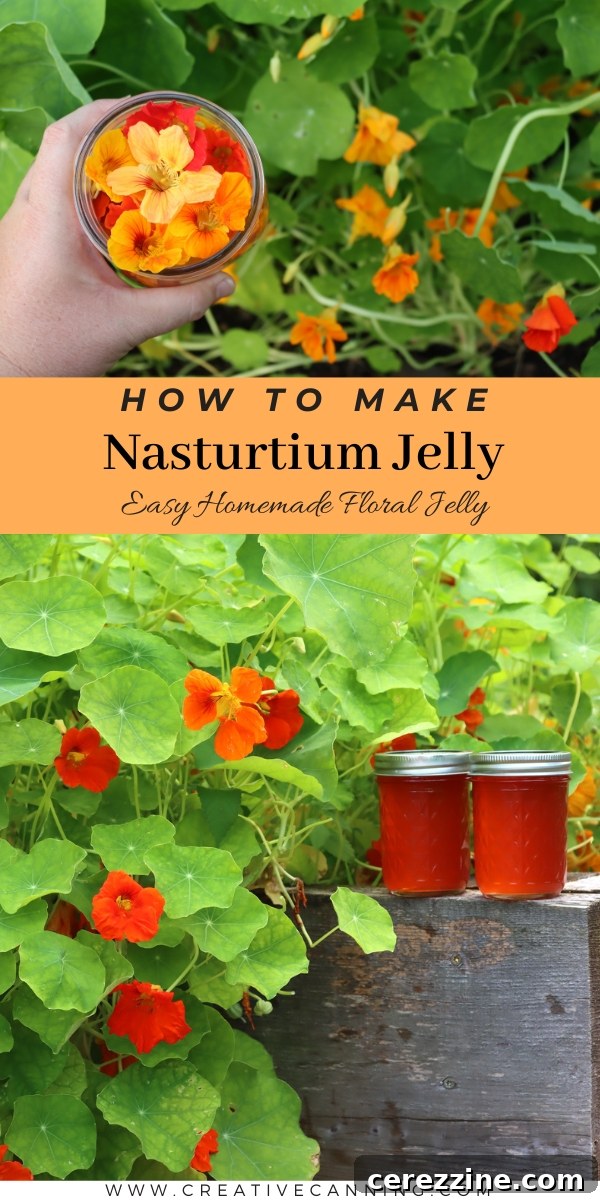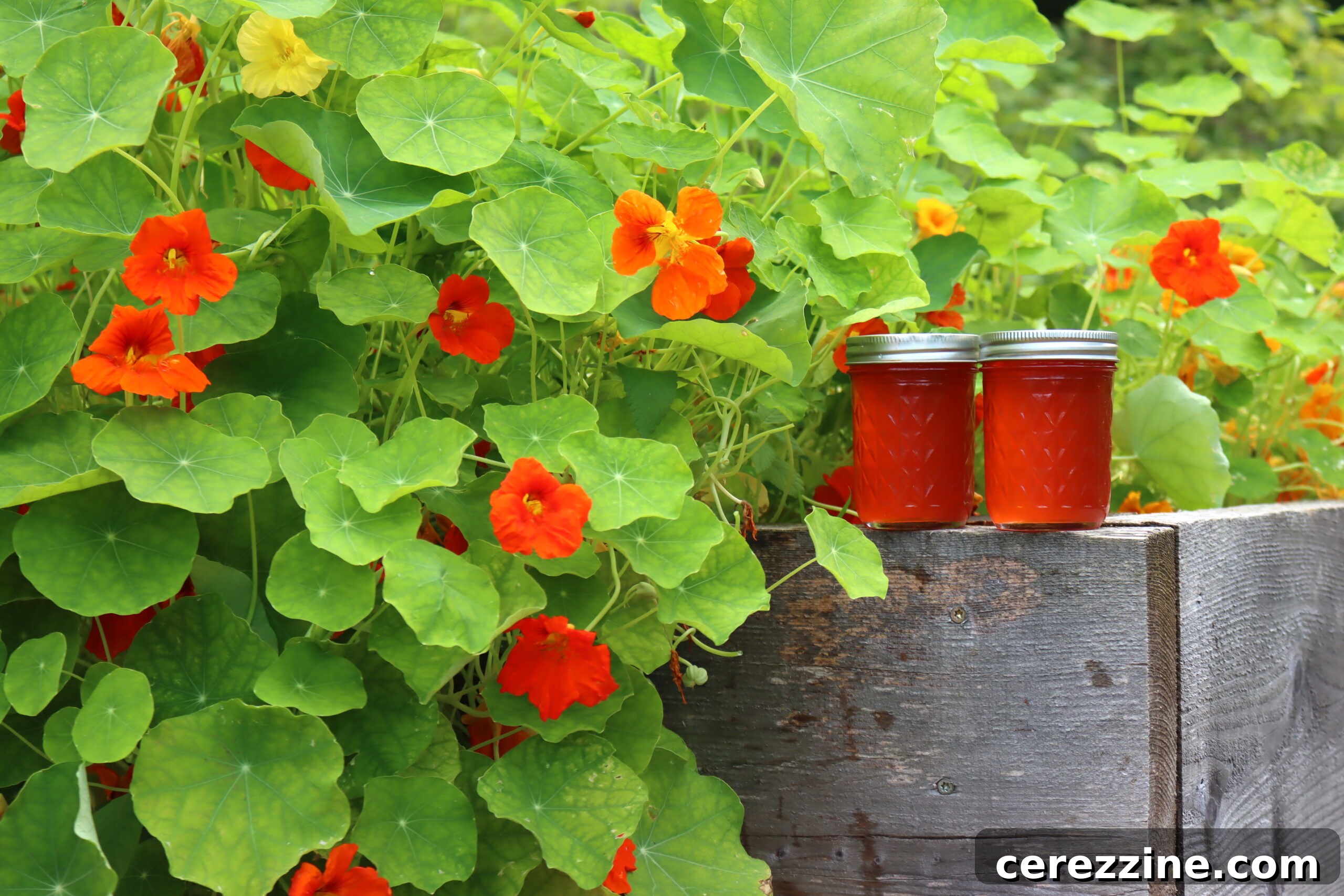
Nasturtium jelly is a delightful and vibrant way to savor the unique, peppery flavor of these edible garden flowers. More than just a colorful condiment, this homemade jelly brings a burst of zest and an unexpected warmth to your culinary creations, transforming simple dishes into gourmet experiences.
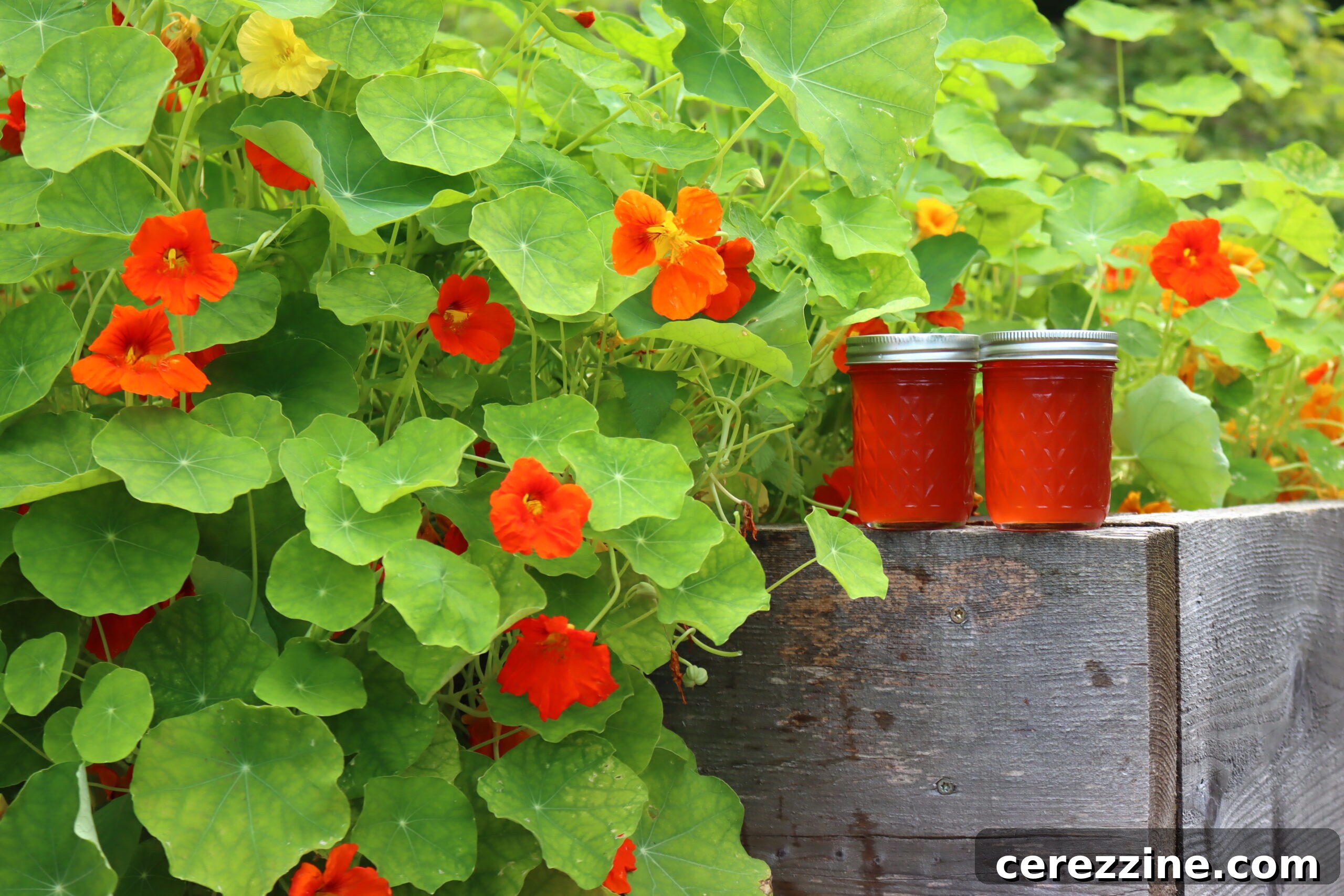
Discovering the Versatility of Nasturtiums: Beyond the Salad Bowl
Nasturtiums (Tropaeolum majus) are truly one of nature’s most generous plants, offering beauty, flavor, and practicality in equal measure. Best known for their striking, brightly colored blooms that adorn summer salads, these edible flowers also pack a delightful peppery punch, making them a favorite snack directly from the garden. For years, we’ve cultivated nasturtiums primarily for their ability to attract beneficial pollinators to our yard, a crucial element for a thriving garden ecosystem. This year, however, we dedicated an entire bed to these versatile plants, determined to explore their full culinary potential.
Indeed, every part of the nasturtium plant is edible and surprisingly delicious. Beyond the blossoms, the tender green leaves make a wonderfully zesty pesto, offering a milder, yet still distinctive, peppery note. The underripe green seeds, often called “nasturtium capers,” are particularly exciting. When pickled or lacto-fermented, these small, green spheres develop a tangy, briny flavor strikingly similar to traditional capers—a testament to their botanical kinship. Supermarket capers, after all, come from a plant that shares a close lineage with nasturtiums, explaining the delightful flavor parallel.
But what about the magnificent flowers? While commonly enjoyed raw, adding a vibrant splash of color and spice to salads, their potential often goes untapped in more complex dishes. My initial forays involved cooking them into stir-fries and infusing them into simmering pots of rice, both of which yielded unexpectedly delicious results. Yet, it was an old cookbook that truly sparked my imagination, revealing a fascinating recipe for nasturtium jelly.
The culinary world often overlooks the complex flavor profile of nasturtium flowers, which presents a unique blend of spicy and subtly sweet notes, reminiscent of the aromatic tingle of Sichuan peppercorns. The author of that vintage recipe brilliantly leveraged this connection, suggesting an optional pinch of Sichuan peppercorns to amplify the jelly’s intriguing spice. This nasturtium jelly recipe can be crafted to highlight the pure floral and peppery essence of the flowers, or you can elevate it with additional seasonings, tailoring it to your palate and adventurous spirit.
Nasturtium Jelly: Recipe at a Glance
- Recipe Name: Nasturtium Jelly
- Recipe Type: Flower Jelly Recipe, Edible Preserve
- Canning Method: Water Bath Canning (Optional)
- Prep Time: Approximately 15-20 Minutes
- Cook Time: Approximately 5-10 Minutes
- Canning Time: 10 Minutes (Standard), 15 Minutes (High Altitude)
- Yield: 4 to 5 half-pint jars (adjusts with sugar content)
- Recommended Jar Sizes: Quarter Pint, Half Pint, or Pint
- Headspace: 1/4 inch (essential for canning safety)
- Key Ingredients: Fresh Nasturtium Flowers, Water, Lemon Juice (crucial), Sugar, Pectin
- Difficulty: Easy! Essentially, you’re making a floral tea and setting it with pectin.
- Similar Recipes: The preparation mirrors other delightful summertime floral jellies like Chamomile Jelly, Calendula Jelly, Elderflower Jelly, Peony Jelly, Borage Jelly, or Rose Petal Jelly.
What Does Nasturtium Jelly Taste Like? A Flavor Revelation
A jelly crafted from nasturtium flowers offers a truly distinctive sensory experience. It’s an exquisite balance of sweet and spicy, with underlying floral notes that make it unlike any other preserve you’ve tasted. The initial sweetness is quickly followed by a pleasant peppery kick, much like the fresh flower itself, but mellowed and harmonized within the jelly’s smooth texture. This unique profile allows nasturtium jelly to shine in a variety of culinary applications.
Its vibrant and assertive flavor pairs exceptionally well with neutral backdrops, allowing its complexity to truly come forward. Imagine it spread generously on a warm, plain butter biscuit or a freshly baked scone – a delightful contrast that awakens the palate. Beyond sweet applications, nasturtium jelly is an incredible companion to savory dishes. It can be used as a sophisticated glaze for roasted meats like chicken or pork, imparting a subtly spicy, tangy, and sweet crust as the meat cooks. It’s also fantastic served alongside a gourmet cheese board, offering a piquant counterpoint to creamy brie or sharp cheddar.
While this recipe is designed for a standard sweet jelly, don’t limit your imagination. Nasturtium flowers can also be incorporated into savory herbal jelly recipes, opening up a whole new world of culinary possibilities, perhaps with herbs like rosemary or thyme for an even more complex savory spread.
Harvesting Nasturtiums for Your Homemade Flower Jelly
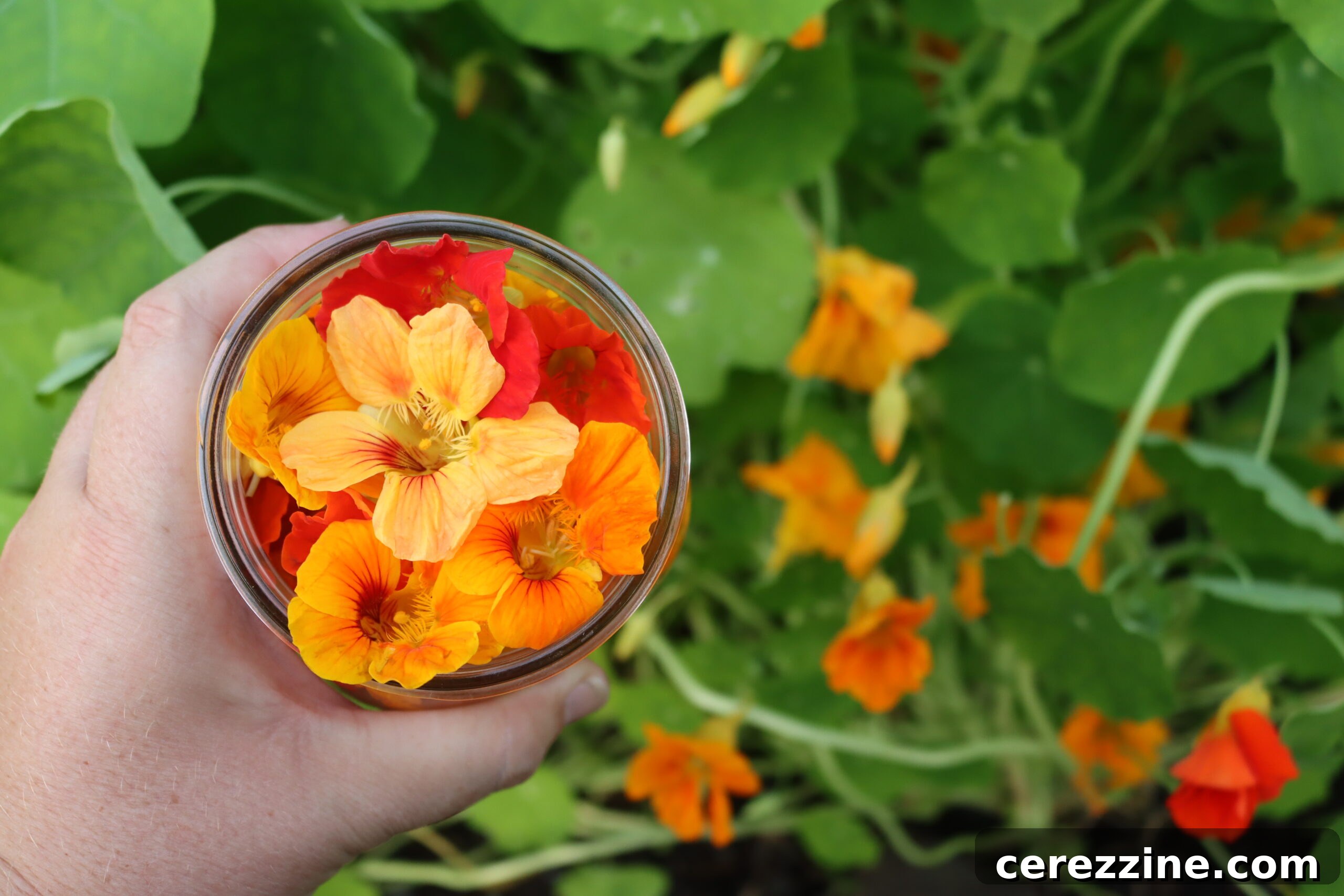
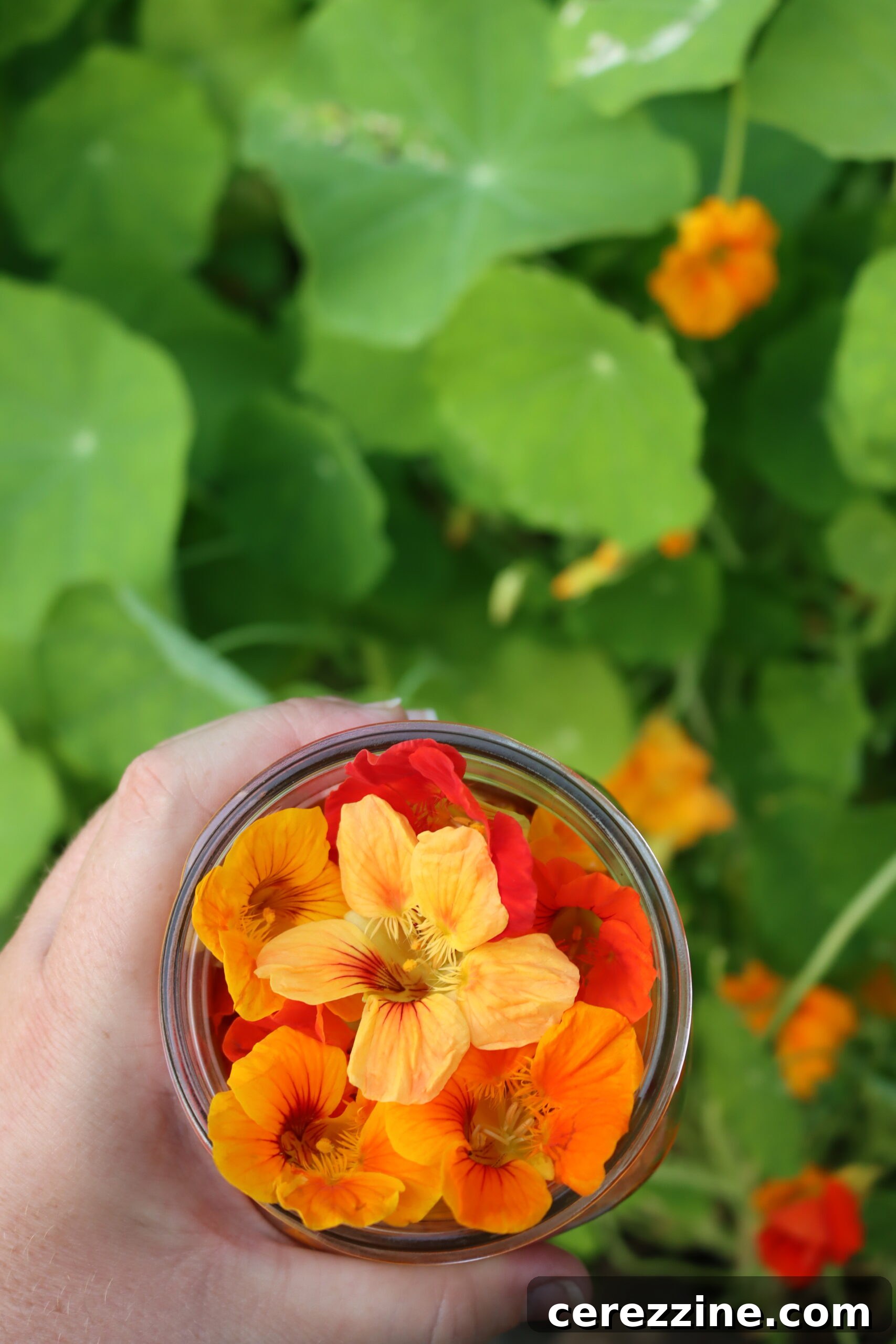
The success of your nasturtium jelly begins with a bountiful harvest of fresh, vibrant flowers. For a full batch of this unique preserve, you’ll typically need about a quart of nasturtium blossoms. While this might sound like a significant quantity, nasturtium plants are incredibly prolific growers, especially once they reach their peak bloom. Even a single healthy plant in a hanging basket can yield enough flowers over a few days to make a batch. When harvesting, select fully open, fresh flowers, making sure to gently inspect them for any small insects. It’s best to harvest them in the morning after the dew has dried but before the heat of the day sets in, as this is when their flavor and fragrance are most potent.
If your garden is a bit shy on blossoms, don’t worry! You can easily make a half batch of jelly by adjusting the ingredients accordingly. Simply halve the amount of flowers, water, lemon juice, and pectin. For instance, a standard box of pectin usually contains around 6 tablespoons, so a half batch would only require 3 tablespoons. Any extra flowers can be stored in the refrigerator for a few days in a loosely covered container to keep them fresh until you have enough for a full batch.
Nasturtiums come in a beautiful array of colors, from bright yellows and oranges to fiery reds and even some variegated varieties. While the color of the flowers will slightly influence the final hue of your jelly, their peppery flavor remains consistent across most common varieties, ensuring your jelly will always have that signature nasturtium kick.
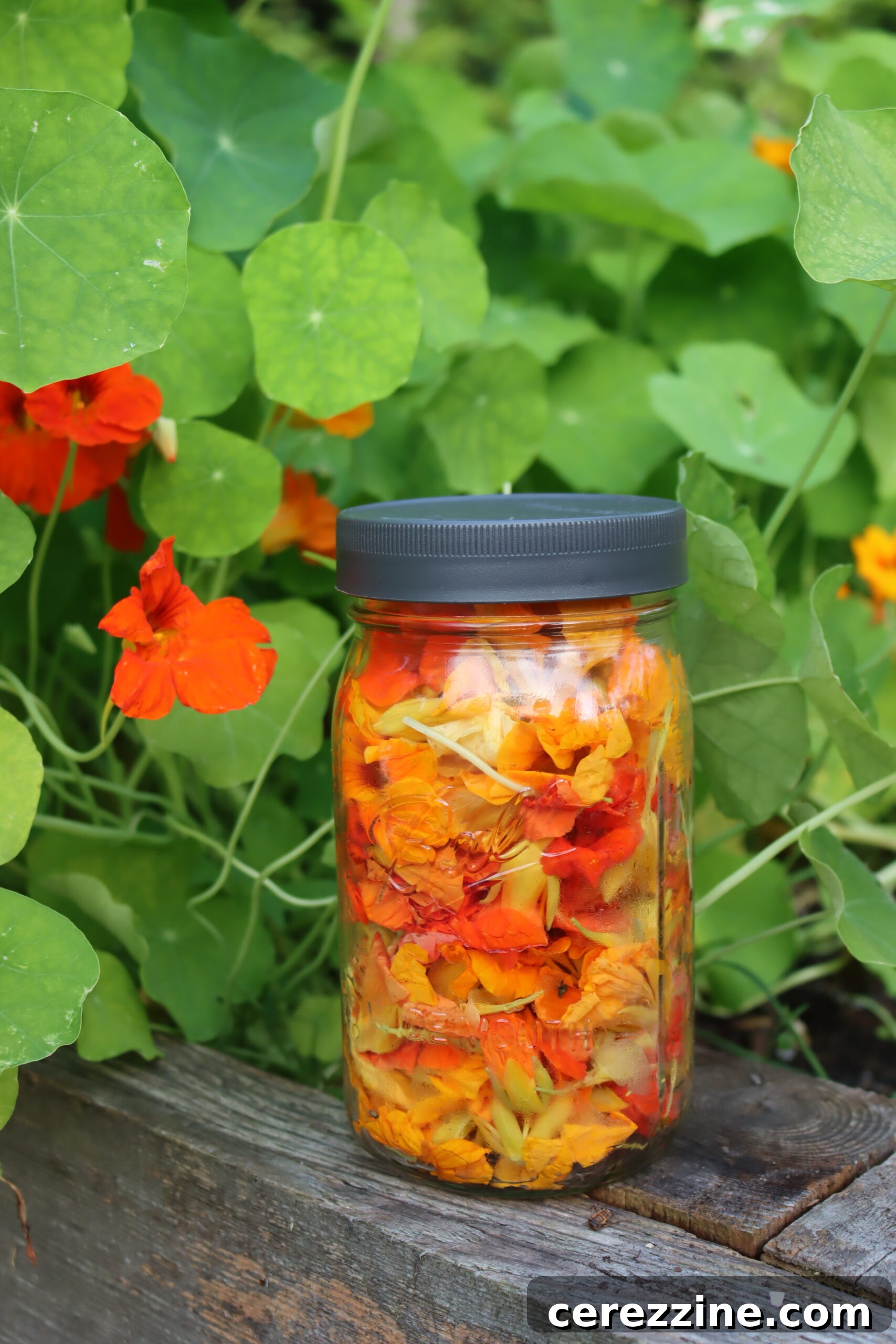
Essential Ingredients for Nasturtium Jelly
Crafting delicious nasturtium flower jelly requires a few key components that work in harmony to create its distinctive flavor, vibrant color, and perfect set. You’ll need fresh nasturtium blooms, pure water for infusion, sugar for sweetness and preservation, pectin for gelling, and a vital touch of lemon juice for balance and safety.
For a standard batch, yielding approximately 4 to 5 half-pint (8 oz) jars, gather the following:
- 4 cups of Fresh Nasturtium Flowers: Ensure they are clean and free of insects.
- 4 cups of Water: Used to create the fragrant nasturtium tea.
- 2 tablespoons Lemon Juice: Freshly squeezed or bottled; this ingredient is NOT optional.
- 1 to 4 cups of Sugar: *See detailed note below regarding pectin type.
- 1 box (1.75 oz) powdered pectin: (Choose regular or low-sugar variety based on your sweetness preference.)
The Crucial Role of Lemon Juice
Lemon juice is far more than just a flavor enhancer in this recipe; it’s an indispensable ingredient for both taste and chemistry. It introduces a subtle tartness that beautifully complements and brightens the unique floral-spicy flavor of the nasturtiums, preventing the jelly from tasting overly sweet or flat. More importantly, lemon juice is crucial for the successful setting of the jelly, especially when using standard pectins. Pectin requires an acidic environment (a lower pH) to activate and form a proper gel. Without adequate acidity, your jelly simply won’t set, regardless of how much pectin you add. Furthermore, for those planning to water bath can their jelly, lemon juice plays a critical role in increasing the acidity of the preserve, ensuring it is safe for long-term storage and inhibiting the growth of harmful bacteria. Even if you don’t intend to can, including lemon juice is still highly recommended for optimal flavor and texture.
For a more neutral acidity profile, citric acid can be used as a substitute. Remember that citric acid is significantly more potent than lemon juice; typically, ¼ teaspoon of citric acid, dissolved in a small amount of water, is equivalent to one tablespoon of lemon or lime juice. For this recipe, which calls for 2 tablespoons of lemon juice, you would use ½ teaspoon of citric acid.
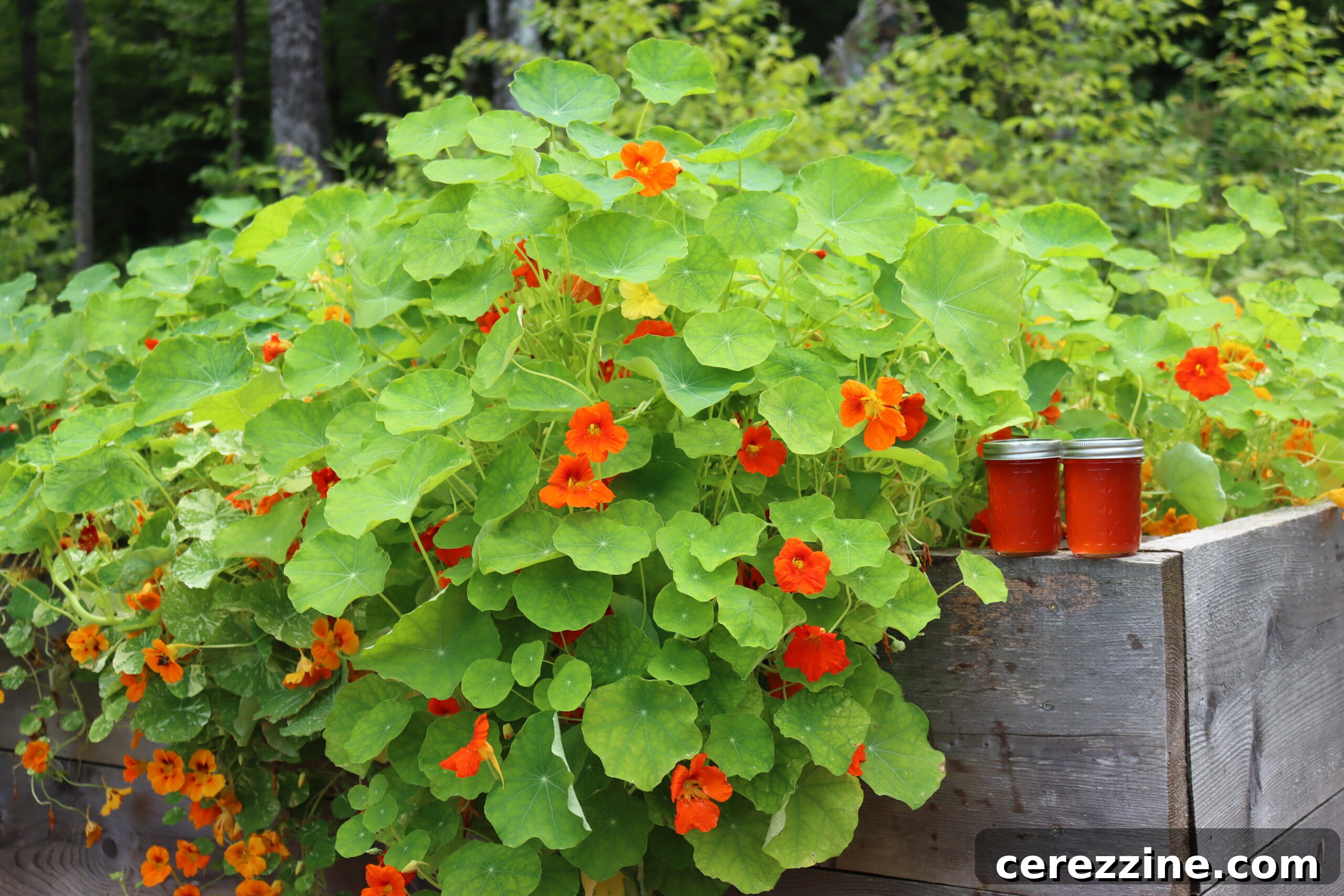
Understanding Pectin and Sugar Ratios
Pectin is the gelling agent that gives jelly its characteristic consistency. The type of pectin you choose will dictate the amount of sugar required for a proper set. I personally recommend using Sure-Jell or Sure-Jell low-sugar pectin. In my extensive experience with various pectin brands, these consistently deliver reliable results and an excellent texture.
- Regular Pectin (e.g., standard Sure-Jell): This type of pectin requires a specific sugar-to-liquid ratio to activate and set correctly. For 4 cups of nasturtium tea, you will need at least 4 cups of sugar. This results in a traditionally sweet jelly, firm and satisfying.
- Low-Sugar Pectin (e.g., Sure-Jell low-sugar pectin): This is an excellent choice if you prefer a less sweet jelly or want to control your sugar intake. Low-sugar pectin is formulated to set with significantly less sugar. For this recipe, you can use anywhere from as little as ½ cup to 2 cups of sugar to achieve a lightly to moderately sweet jelly. (A helpful tip: Sure-Jell low-sugar pectin is versatile and works for both full-sugar and low-sugar recipes, which is why I often keep it stocked in my pantry.)
- Ball Flex Batch Pectin: If you’re using this brand, 6 tablespoons of their powdered pectin is equivalent to one 1.75 oz box of standard pectin.
- Liquid Pectin: While the original recipe card includes instructions for liquid pectin, it typically requires a much larger quantity of sugar (often around 7 cups for 4 cups of liquid). I personally don’t use liquid pectin due to its high sugar demand, but it is an option if you prefer it. The preparation method also differs, with sugar typically added *before* liquid pectin.
- Pomona’s Universal Pectin: This two-part low-sugar pectin works differently. It usually doesn’t include citric acid, so you would need to increase the lemon juice to ½ cup (instead of the usual 2 tablespoons) and follow the specific instructions on the Pomona’s box for making fruit or floral jellies.
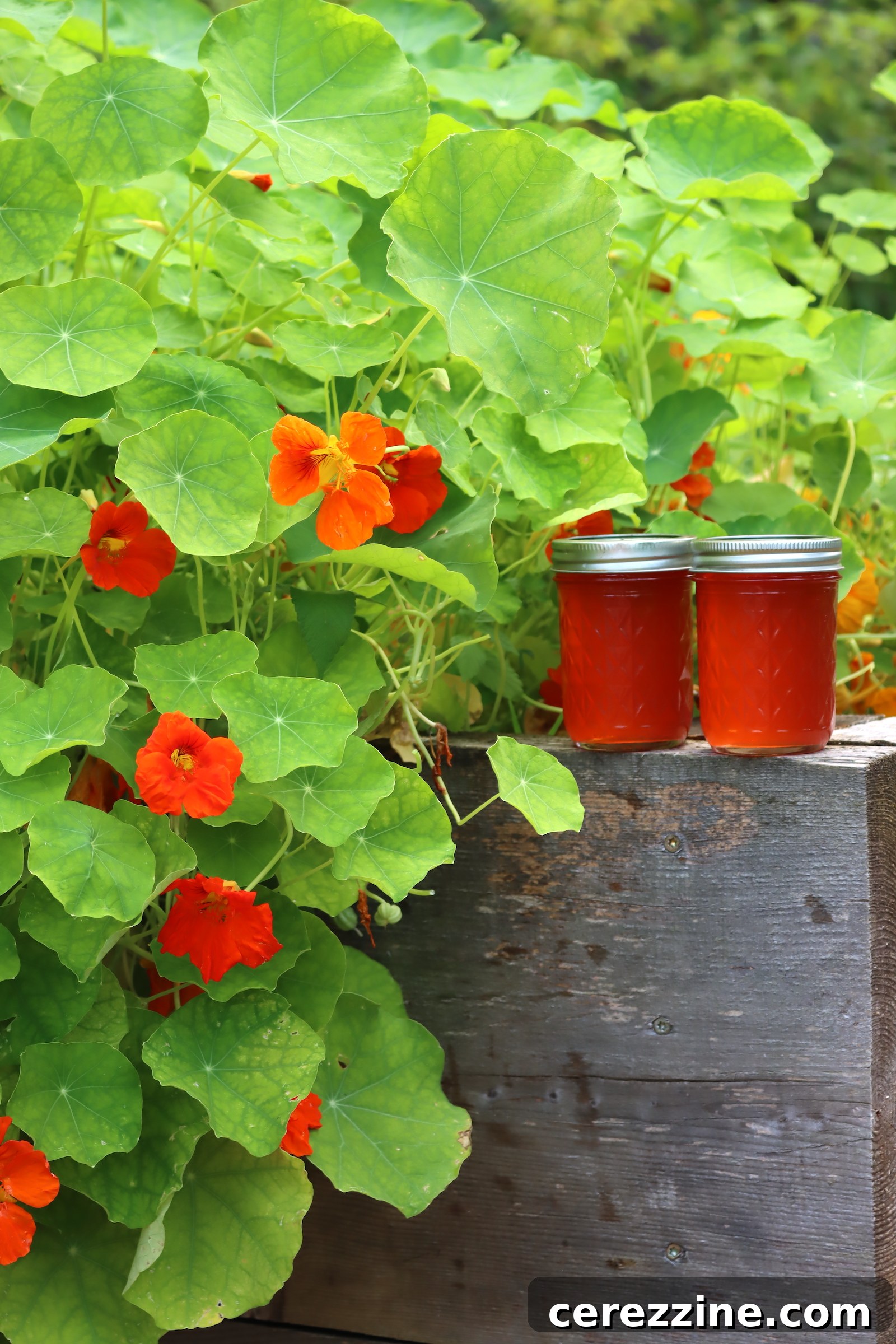
Step-by-Step Guide: How to Make Nasturtium Jelly
Making jelly from nasturtium flowers is a rewarding process, largely similar to crafting other flower jellies, but with the distinct advantage of nasturtiums’ naturally strong, spicy flavor that truly shines through. Precision and attention to detail are key to achieving a perfect set and delightful taste.
Phase 1: Preparing the Nasturtium Infusion
- Harvest and Prepare Flowers: Begin by collecting about 4 cups of fresh nasturtium flowers. Gently pick them, ensuring they are free from any dirt or insects. A good tip is to pick them directly into a quart-sized jar or a heat-proof bowl, as this container will be ideal for the steeping process. Give the flowers a brief, gentle rinse under cool water if needed, and pat them dry.
- Create the Infusion: Bring 4 cups of water to a rolling boil. Carefully pour the boiling water over the prepared nasturtium flowers in your chosen container.
- Steep for Flavor: Allow the nasturtium flowers to steep in the hot water for 15 to 20 minutes. This steeping time is crucial for extracting their vibrant color and unique spicy-floral flavor into the tea.
- Strain the Liquid: Once steeped, carefully strain the liquid into a clean jelly pot or a large, heavy-bottomed saucepan. Discard the spent flowers. You should have approximately 4 cups of infused nasturtium tea.
Phase 2: Cooking the Jelly
- Add Lemon Juice: To the nasturtium tea in your jelly pot, add 2 tablespoons of lemon juice. As discussed, this step is vital for balancing the sweetness, enhancing the flavor, and ensuring the pectin sets properly, especially if you plan to can the jelly. Bring this mixture to a boil over high heat.
- Incorporate Pectin: Once the liquid is boiling, slowly sprinkle in one box (1.75 oz) of powdered pectin, stirring continuously to prevent clumps. (Remember to use either regular or low-sugar pectin based on your preference and planned sugar content.) Continue stirring until the pectin is completely dissolved.
- Boil Pectin Mixture: Bring the mixture back to a full, rolling boil that cannot be stirred down. Let it boil vigorously for exactly one full minute. (Important: Do not add sugar before or simultaneously with pectin when using powdered pectin, as this can prevent proper gelling.)
- Add Sugar: After the one-minute pectin boil, add the sugar. If using regular pectin, add 4 cups of sugar. If using low-sugar pectin, add ½ to 2 cups of sugar, according to your desired sweetness.
- Dissolve Sugar and Final Boil: Stir the sugar into the mixture until it is completely dissolved. Return the jelly mixture to a hard, rolling boil for another full minute. This ensures the sugar is fully integrated and the pectin activates correctly.
Phase 3: Filling Jars and Setting
- Remove from Heat: After the final minute of boiling, remove the jelly mixture from the heat.
- Fill Jars: Carefully ladle the hot jelly into your prepared, sterilized jelly jars, leaving precisely ¼ inch of headspace at the top of each jar. This headspace is critical for proper sealing if canning.
- Clean Rims: Wipe the rims of the jars clean with a damp cloth to ensure a perfect seal.
- Apply Lids and Rings: Place a new, clean lid on each jar, followed by a canning ring, tightened only to fingertip-tight.
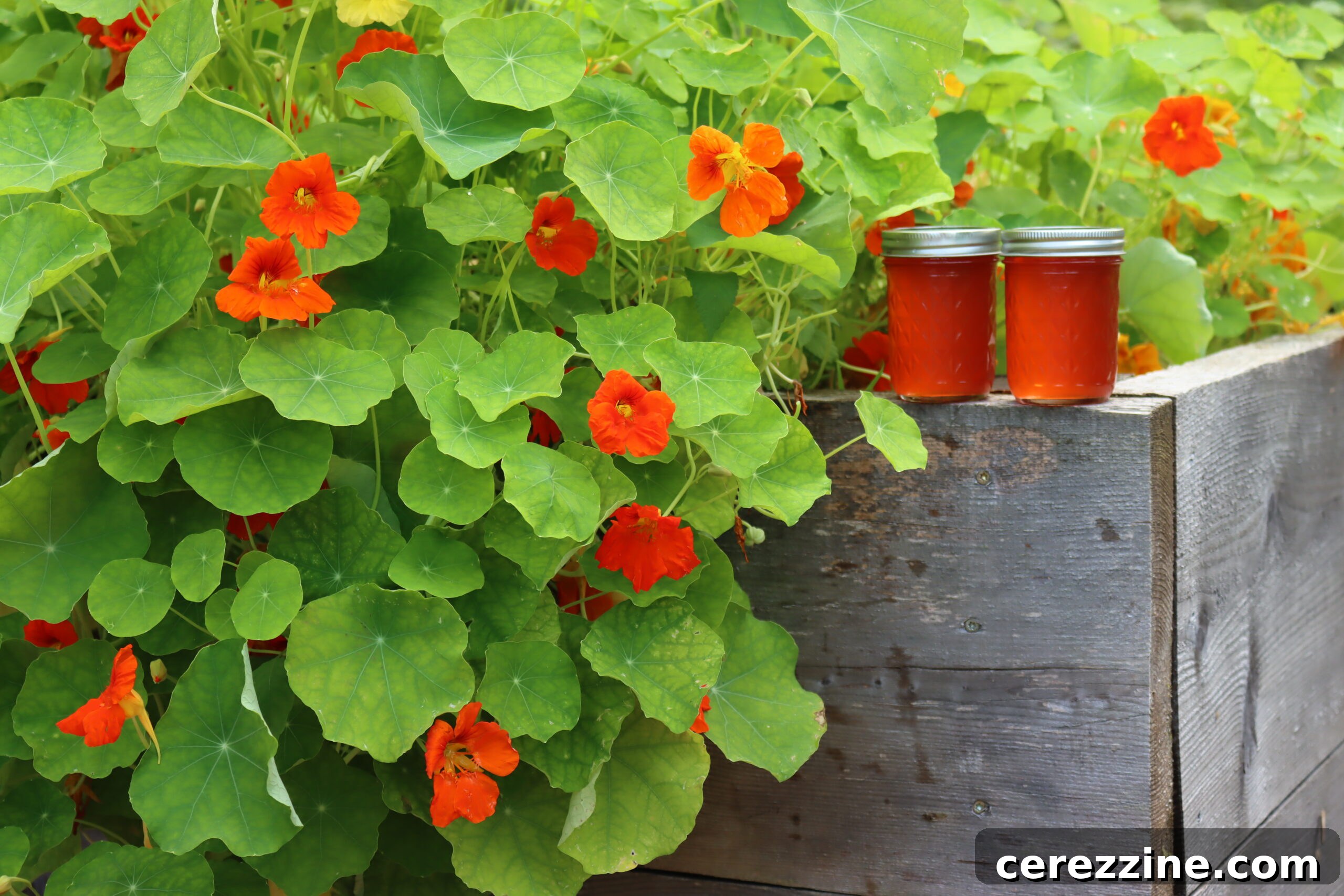
Canning Nasturtium Flower Jelly for Long-Term Storage
Once your nasturtium jelly is made, you have several options for storage. Canning is a popular choice for those who wish to preserve their jelly for an extended period, allowing them to enjoy this unique flavor year-round. However, canning is optional, and you can also store your jelly in the refrigerator or freezer.
Storage Without Canning:
- Refrigeration: If you’re not canning, simply allow the filled jars to cool completely on the counter. Once cooled, store them in the refrigerator, where the jelly will keep fresh for several weeks (typically up to a month).
- Freezing: For longer-term storage without canning, freezing is an excellent option. Ensure you use freezer-safe jars (leaving a slightly larger headspace of ½ inch to account for expansion) or plastic freezer containers. Frozen jelly can last for up to 6 months.
Water Bath Canning for Pantry Storage:
I personally favor the convenience and security of water bath canning my jellies. This method allows me to store jars in my pantry for 12 to 18 months, freeing up valuable refrigerator and freezer space. The lemon juice included in the recipe is crucial for canning, as it ensures the jelly’s pH level is low enough for safe processing, inhibiting the growth of spoilage microorganisms.
Canning Steps:
- Prepare Canner: Before you start cooking your jelly, ensure your water bath canner is ready. Fill it with water and bring it to a simmer (180°F / 82°C) or boil, depending on your altitude. Have your clean canning jars and lids nearby.
- Fill and Seal Jars: Once the jelly is cooked, carefully ladle it into the prepared jars, leaving ¼ inch of headspace. Wipe the jar rims clean, place new lids on top, and secure with screw bands, tightening them fingertip-tight.
- Process Jars: Carefully place the filled jars into the canning rack, then lower them into the simmering water bath canner. Ensure the jars are covered by at least 1 inch of water. Bring the water to a full, rolling boil.
- Processing Time: Process the jars for 10 minutes. If you are located above 6,000 feet in elevation, you will need to increase the processing time to 15 minutes to ensure safety.
- Cool and Store: After the processing time is complete, turn off the heat and carefully remove the jars from the canner. Place them on a towel-lined counter, ensuring they are not touching, and allow them to cool completely for 12 to 24 hours. As they cool, you will hear the satisfying “pop” as the lids seal.
- Check Seals and Store: Once fully cooled, check that all lids have sealed (the center should be indented and not flex when pressed). Any unsealed jars must be refrigerated and consumed within a few weeks. Properly sealed jars can be stored in a cool, dark pantry for 12 to 18 months. Always refrigerate any opened jars.
Nasturtium Jelly: Creative Variations and Serving Suggestions
The beauty of homemade preserves lies in the ability to customize them. While the classic nasturtium jelly is a treat in itself, you can easily introduce variations to create even more complex and intriguing flavors.
Flavor Enhancements:
- Sichuan Peppercorn Infusion: As mentioned, the spicy, tingly notes of nasturtiums beautifully complement Sichuan peppercorns. To incorporate this, add about a tablespoon of whole Sichuan peppercorns to your quart jar or bowl along with the fresh nasturtium flowers before pouring in the boiling water. Allow them to steep with the flowers, then strain them out with the flowers. This will infuse a unique, citrusy-spicy depth into your jelly.
- Ginger Kick: For a warming, zesty twist, add a few thin slices of fresh ginger to the nasturtium tea during the steeping phase.
- Citrus Zest: Introduce an extra layer of brightness by adding the finely grated zest of one organic lemon or lime to the nasturtium tea during steeping.
- Herbal Infusions: Experiment with complementary herbs. A sprig of fresh thyme or a few mint leaves could add an interesting dimension to the floral-spicy profile. Add these during the steeping process and strain them out.
Savory Applications:
While often thought of as a sweet condiment, nasturtium jelly’s inherent peppery quality makes it a fantastic candidate for savory applications. Beyond glazing meats, consider these ideas:
- Cheese Boards: Pair it with sharp, aged cheeses, goat cheese, or creamy brie for a sophisticated appetizer.
- Sandwich Spread: Add a dollop to turkey or ham sandwiches for an unexpected gourmet touch.
- Vinaigrettes: Whisk a spoonful into your homemade salad dressings for a sweet and spicy kick.
- Marinades: Incorporate it into marinades for grilled chicken, fish, or tofu.
- Cocktails: A small amount can add a unique twist to gin-based cocktails or spicy margaritas.
Don’t forget that nasturtium flowers can also be the star in my savory herbal jelly recipe, which provides a framework for creating savory preserves with various garden herbs and spices.
More Nasturtium Recipes and Edible Flower Ideas
If you’ve been inspired by the versatility of nasturtiums, there’s a whole world of culinary exploration waiting. These incredible plants offer so much more than just pretty petals.
- 60+ Nasturtium Recipes: Dive deeper into using every part of the nasturtium plant with this extensive collection of recipes.
- Nasturtium Medicinal Uses: Explore the traditional health benefits and uses of nasturtiums.
If you tried this Nasturtium Jelly Recipe, or any other recipe on Creative Canning, leave a ⭐ star rating and let me know what you think in the 📝 comments below!
And make sure you stay in touch with me by following on social media!
- Substack
More Flower Jelly Recipes
Ready to stock your pantry with even more unique and tasty floral jellies?
Tulip Jelly
Are Flower Jellies Safe for Canning?
Lilac Jelly
Peony Jelly
40
servings, Makes 5 (8 oz) Jars
Nasturtium Jelly
Ashley Adamant
15
5
10
30
Pin Recipe
Print Recipe
Ingredients
- 4 cups nasturtium flowers (freshly picked and cleaned)
- 4 cups water
- 2 tbsp lemon juice (essential for flavor, pH, and canning safety)
- 1 to 4 cups sugar (adjust based on pectin type; see notes for guidance)
- 1 box powdered pectin (1.75 oz, regular or low sugar)
Instructions
- Pick 4 cups of fresh nasturtium flowers, inspecting them carefully for any insects. Give them a brief rinse under cold water.
- Place the cleaned flowers into a heat-proof bowl or quart jar. Pour 4 cups of boiling water over them. Let the flowers steep for about 10 to 15 minutes, allowing the tea to fully infuse with color and flavor.
- Once infused, strain the nasturtium tea into a large saucepan or jam pot. Stir in the 2 tablespoons of lemon juice. The lemon juice is critical for balancing sweetness, enhancing color, and ensuring proper pectin set and canning safety. Bring this mixture to a boil.
- While boiling, slowly stir in one box (1.75 oz) of powdered pectin until it is completely dissolved. Continue to boil vigorously for a full minute. (Do not add sugar yet, as this will prevent the pectin from setting properly.)
- After the pectin has boiled for one minute, add the sugar (1 to 4 cups, according to your pectin type and sweetness preference). Stir constantly until the sugar is fully dissolved. Return the mixture to a hard, rolling boil and boil for another full minute.
- Remove the jelly from the heat. Carefully ladle the hot jelly into prepared, sterilized jelly jars, leaving ¼ inch of headspace at the top of each jar.
- If canning: Wipe jar rims clean, apply new lids and screw bands (fingertip-tight). Process in a boiling water bath canner for 10 minutes (or 15 minutes if above 6,000 feet elevation). Remove jars and let cool completely on the counter for 12-24 hours. Check seals before storing.
- If not canning: Allow jars to cool completely on the counter. Once cooled, refrigerate for up to a month or freeze in freezer-safe jars for up to 6 months.
Notes on Pectin and Sugar
When using standard pectin (e.g., regular Sure-Jell), you need to maintain a 1:1 ratio of liquid to sugar for the jelly to set properly. This means for every 4 cups of flower blossom tea, you’ll need at least 4 cups of sugar. This will give you a very sweet, traditional-style jelly. Reducing the sugar will also reduce the final yield, with a full-sugar recipe yielding about 5 half-pints.
If you want to reduce the sugar content, switch to low-sugar pectin (e.g., Sure-Jell Low Sugar Pectin). This type of pectin is formulated to set with less sugar. You can use as little as ½ to 2 cups of sugar for a less sweet jelly, though the exact amount may vary based on your preference for sweetness and consistency.
For those using Pomona’s Universal Pectin, the method differs slightly as it’s a two-part low-sugar pectin that typically does not include citric acid. You’ll need to increase the lemon juice to 1/2 cup (instead of the usual 2 tablespoons) and always follow the specific instructions provided on the Pomona’s box for making fruit or floral jellies.
If you prefer liquid pectin, the process changes: you typically add the sugar first, followed by the pectin. Liquid pectin also requires a significantly higher amount of sugar, usually around 7 cups of sugar for 4 cups of liquid. While it works, I generally recommend powdered pectin due to the lower sugar requirement for low-sugar varieties.
Lastly, if you’re using Ball Flex Batch Pectin, you’ll need 6 tablespoons, which is equivalent to a 1.75 oz box of other powdered pectin varieties. This amount works for both their regular and low-sugar pectin products.
Nutrition Information (Approximate per serving)
Calories: 23 kcal
Carbohydrates: 6g
Protein: 0.01g
Fat: 0.02g
Saturated Fat: 0.001g
Polyunsaturated Fat: 0.002g
Sodium: 4 mg
Potassium: 1 mg
Fiber: 0.1g
Sugar: 5g
Vitamin A: 0.1 IU
Vitamin C: 0.3 mg
Calcium: 1 mg
Iron: 0.04 mg
Nutrition information is automatically calculated and should only be used as an approximation. Exact values may vary based on ingredients and preparation methods.
Explore More Flower Jelly Recipes
Expand your repertoire of homemade preserves! These delightful floral jellies are perfect for gifting, enjoying with breakfast, or adding a unique touch to your culinary creations.
- Apple Blossom Jelly
- Dandelion Jelly
- Lilac Jelly
- Forsythia Jelly
- Rose Petal Jelly
- Clover Jelly
Beyond Flowers: Herbal Jellies
Don’t limit your jelly-making to flowers alone! Many herbs from the garden also make fantastic, aromatic, and sometimes savory jellies that can surprise and delight your taste buds.
- Savory Herbal Jelly
- Lemon Balm Jelly
- Calendula Jelly (Marigold Jelly)
- Chamomile Jelly